



Explore by activity
Not listed yet

We run Motorbiking & Overland trips — we just haven’t put the itinerary on the site yet. Tell us your dates and we’ll send a costed day-by-day plan.

Explore by experience
Explore by region
by gomayu
Search Tours or Places

Everest Base Camp Trek Difficulty: How Hard Is It?

15 min read Posted 28 Oct 2026Updated 28 Oct 2026
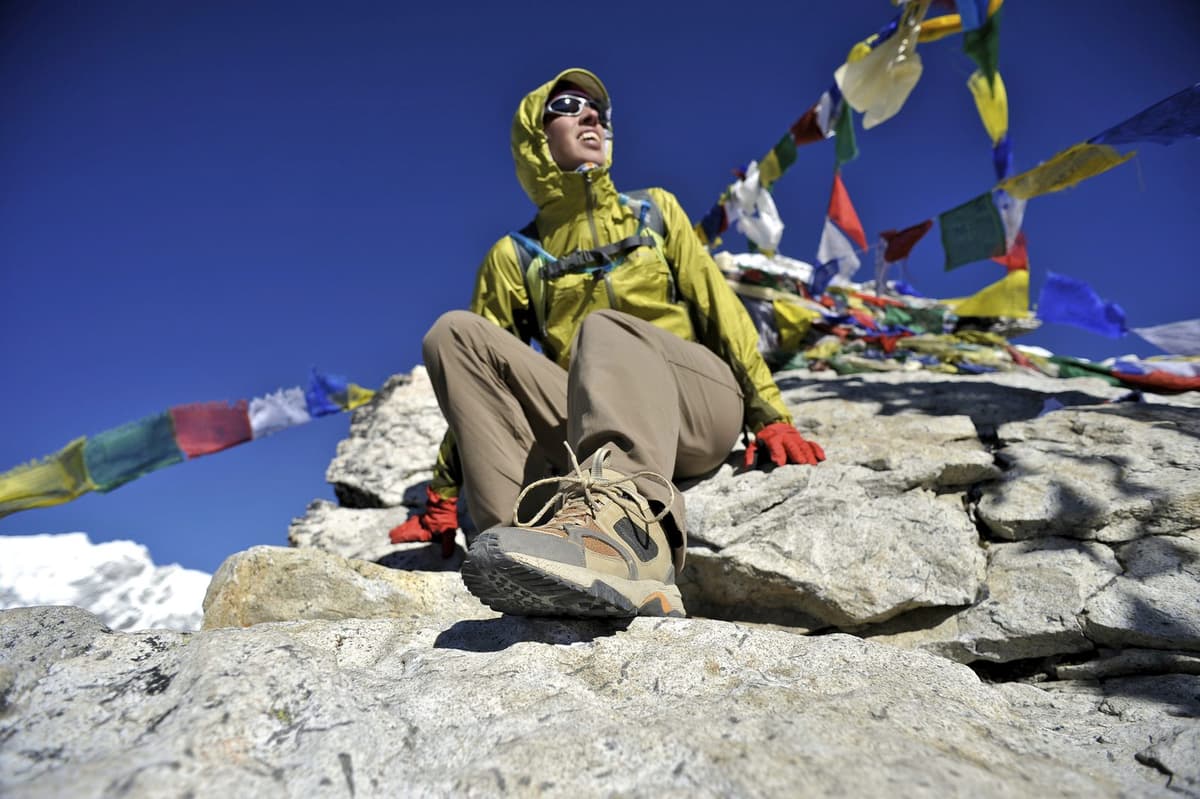
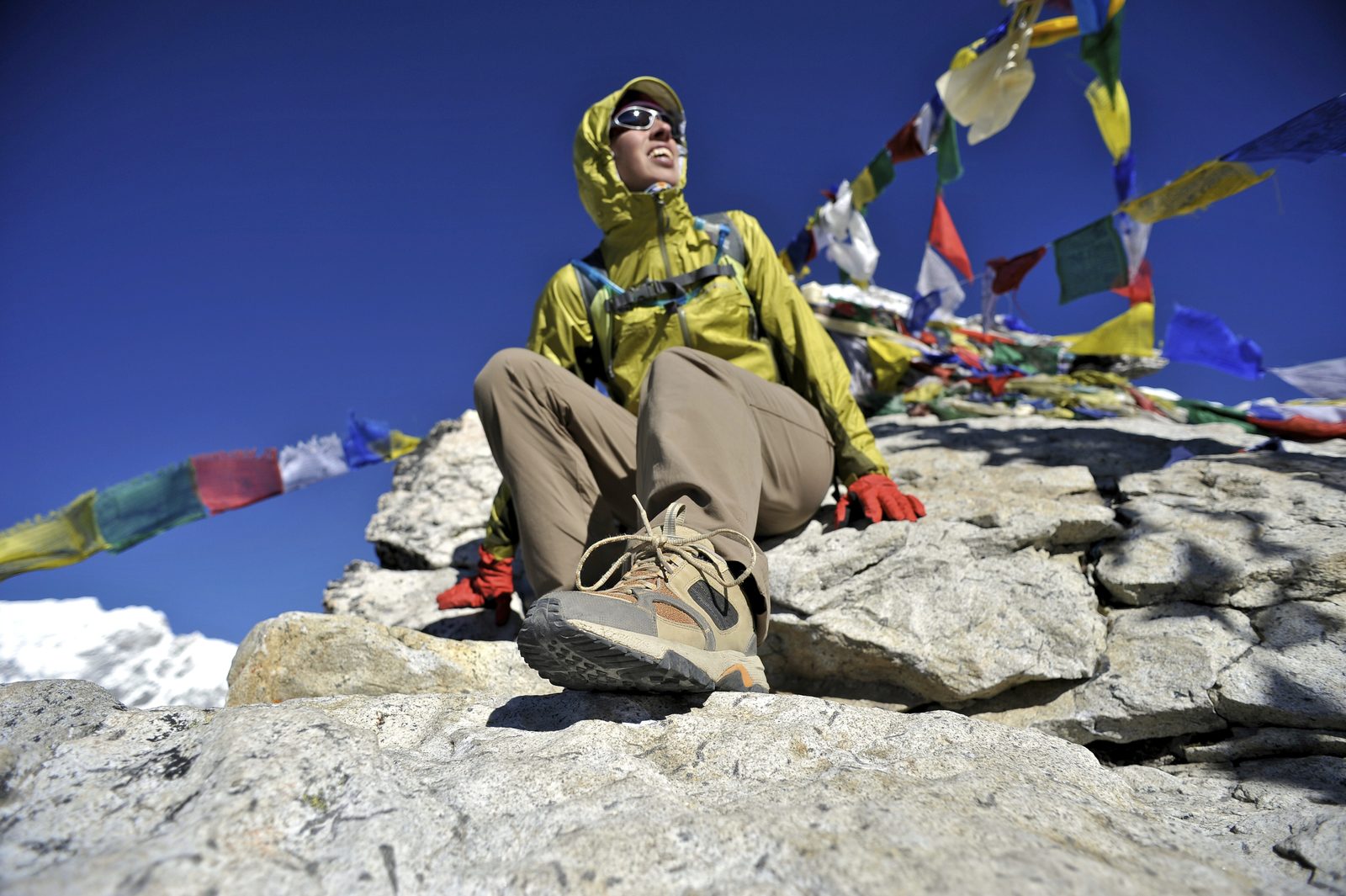
A trekker resting among prayer flags on the rocky top of Kala Patthar, the high point of most Everest Base Camp treks

By Uncover Nepal Team · Checked by our Kathmandu travel team · Last checked 29 October 2026

From Lukla the trail drops to the Dudh Koshi river and follows it north, over several suspension bridges, towards Namche Bazaar. A week later it runs over grey rock beside the Khumbu Glacier to Gorak Shep, the last village with teahouses (simple trail lodges) before base camp.

Everest Base Camp trek difficulty sits at the challenging end of trekking, but the route is not technical: you need no ropes or climbing skill. What makes it hard is the altitude, with nights up to about 5,164 m at Gorak Shep, and five to eight hours of walking a day, day after day.

For routes, dates and what we arrange, start with our Everest Base Camp trek page. This guide explains how hard each part is and how to prepare.

Key facts

Our grade
Challenging; "a demanding but non-technical trek" (UncoverNepal Everest Base Camp trip page, 29 Oct 2026)
Official grade
None. Nepal has no government difficulty scale (UncoverNepal desk rule, 29 Oct 2026)
Everest Base Camp
5,364 m (17,598 ft) (Wikipedia "Everest base camps", site-wide figure, 29 Oct 2026)
Kala Patthar (trek high point)
About 5,545 m (some GPS readings give about 5,644 m) (UncoverNepal trip page; Wikipedia "Kala Patthar", 29 Oct 2026)
Highest night
Gorak Shep, about 5,164 m (Wikipedia "Gorakshep"; NepaliTelecom, 29 May 2025; checked 29 Oct 2026)
Start of the walk
Lukla airstrip, 2,846 m (CAAN AIP AMDT 02/2026 (site-wide figure), 29 Oct 2026)
Walking per day
Five to eight hours, up and down, on consecutive days (UncoverNepal trip page, 29 Oct 2026)
Length of our trek
12 days, Kathmandu to Kathmandu, with rest days at Namche and Dingboche (UncoverNepal trip page, 29 Oct 2026)
Permits
Sagarmatha National Park, NPR 3,000 (foreign) or NPR 1,500 (SAARC) per entry; Khumbu Trek-Card, NPR 3,000 or NPR 2,000 (SAARC and China) (NTB Sagarmatha National Park page, 29 Oct 2026; Khumbu Pasang Lhamu Rural Municipality, last verified 30 Sep 2026)
Lukla flights
Weather-dependent; in peak season they may leave from Ramechhap (Manthali) (Site-wide figure; Ekantipur, 4 Oct 2026; checked 29 Oct 2026)

In this guide

  • How is Everest Base Camp trek difficulty graded?
  • Is the altitude or the walking the hard part?
  • How high do you sleep each night?
  • What is a walking day like on the trail?
  • How do flights, cold and weather add to the challenge?
  • Can a beginner do the Everest Base Camp trek?
  • What does a good training plan look like?
  • Do you need a guide, and which permits apply?
  • What should you do if altitude sickness starts?
  • Is it anything like climbing Mount Everest?
  • Frequently asked questions

How is Everest Base Camp trek difficulty graded?

We grade the Everest Base Camp trek "Challenging" and call it a demanding but non-technical trek. Each company sets its own grade, because Nepal has no official scale, and two overseas operators we checked put this trek in the same band. The table compares them side by side.

Operator Grade given Trip length What they say
UncoverNepal Challenging 12 days, Kathmandu to Kathmandu "The difficulty is not the terrain ... but the altitude and the sheer number of days on your feet"
KE Adventure (UK) 7 to 9, Challenging 16 days "Physically challenging holidays, where you need to be prepared before you go"
G Adventures 5, Challenging 15 days "within the capabilities of any healthy person with an established level of walking fitness"

Grade numbers do not translate between firms, so read the description behind each difficulty level rather than the number.

Is the altitude or the walking the hard part?

The altitude is the hard part. The path is well trodden, but you spend four nights in a row at Dingboche (4,410 m) or higher and stand at about 5,545 m on Kala Patthar. Fitness makes the walking easier. It does not protect you from altitude sickness, so pace matters more than strength.

The US Centers for Disease Control and Prevention (CDC) says altitude illness can start from a sleeping height of about 2,450 m (8,000 ft), sometimes lower, and names this trek directly:

"Itineraries along some trekking routes in Nepal, particularly Everest base camp, push the limits of many people's ability to acclimatize."

US Centers for Disease Control and Prevention, CDC Yellow Book, "High-Altitude Travel and Altitude Illness", last reviewed 23 April 2025

The same page states, "Training and physical fitness do not affect risk."

The walking is the second layer: the long hill up to Namche on day 2, then the long descent and the steep drop out of Namche on the way back. Train for both directions.

How high do you sleep each night?

On our 12-day route you first sleep above 3,000 m at Namche Bazaar (3,440 m) on day 2, and highest at Gorak Shep, about 5,164 m, on day 8. Rest days at Namche and Dingboche break the climb. The table shows every night, so you can see where the big steps in height come.
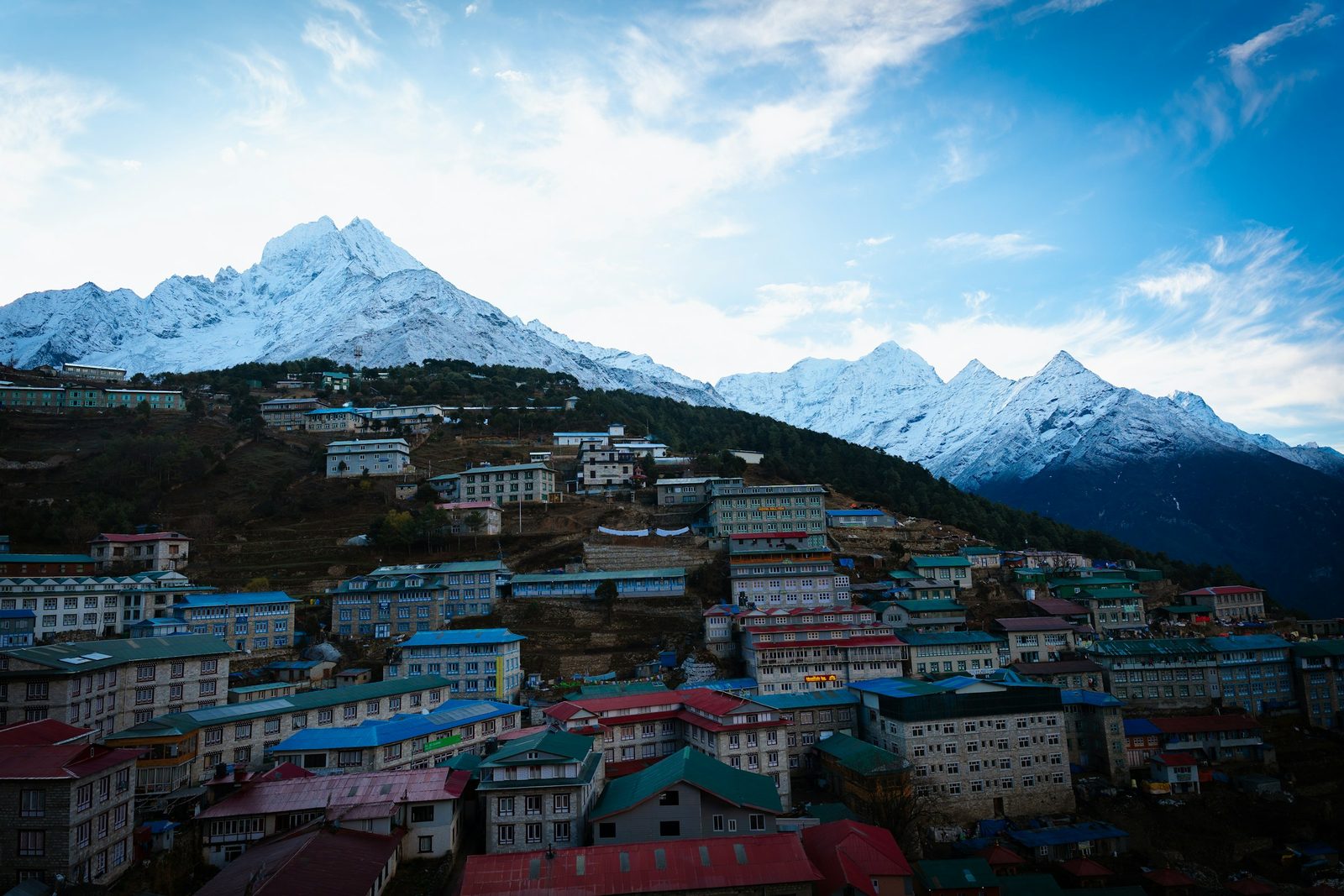
Namche Bazaar on its hillside below snow peaks in the Khumbu, the first overnight stop above 3,000 m on the Everest Base Camp trek
Namche Bazaar, 3,440 m: two nights here on the way up, with an acclimatisation hike in between.
Day Route Sleep at Sleeping height Change from the night before
1 Fly to Lukla (airstrip 2,846 m), walk along the Dudh Koshi to Phakding Phakding 2,610 m Lower than Lukla
2 Enter Sagarmatha National Park at Monjo, climb to Namche Bazaar Namche Bazaar 3,440 m +830 m
3 Rest day, hike towards the Everest View Hotel Namche Bazaar 3,440 m None
4 Down to the river, then up to Tengboche Tengboche About 3,860 m About +420 m
5 Through rhododendron forest to Deboche, then on to Dingboche Dingboche 4,410 m About +550 m
6 Rest day, hike up towards Nangkartshang Dingboche 4,410 m None
7 Past the memorials at Thukla, up the moraine to Lobuche Lobuche About 4,940 m +530 m
8 Beside the Khumbu Glacier to Gorak Shep, then up Kala Patthar (about 5,545 m) Gorak Shep About 5,164 m About +224 m
9 Everest Base Camp (5,364 m), then down the valley Pheriche or Pangboche About 4,371 m at Pheriche Down
10 Long descent to Namche Bazaar Namche Bazaar 3,440 m Down
11 Down the steep hill out of Namche to Lukla Lukla Airstrip 2,846 m Down
12 Morning flight to Kathmandu, weather permitting; in busy months it may land at Ramechhap Trek ends

Above 3,000 m (9,800 ft), the CDC and the Wilderness Medical Society advise raising your sleeping height by no more than about 500 m (1,650 ft) a night, with a rest day every three to four days. The jump to Namche starts below 3,000 m and a rest day follows. Higher up, two days on our route go a little over: Tengboche to Dingboche and Dingboche to Lobuche. That is why the rest days matter. Want more margin? Ask us about an extra night at Namche or Dingboche; the CDC says extra days can make the trek safer and more enjoyable.

What is a walking day like on the trail?

Most days mean five to eight hours on foot, with plenty of up and down and no technical climbing. KE Adventure describes the path as "relatively easy, following good paths and yak trails". Near base camp it turns to rock and moraine beside the Khumbu Glacier.
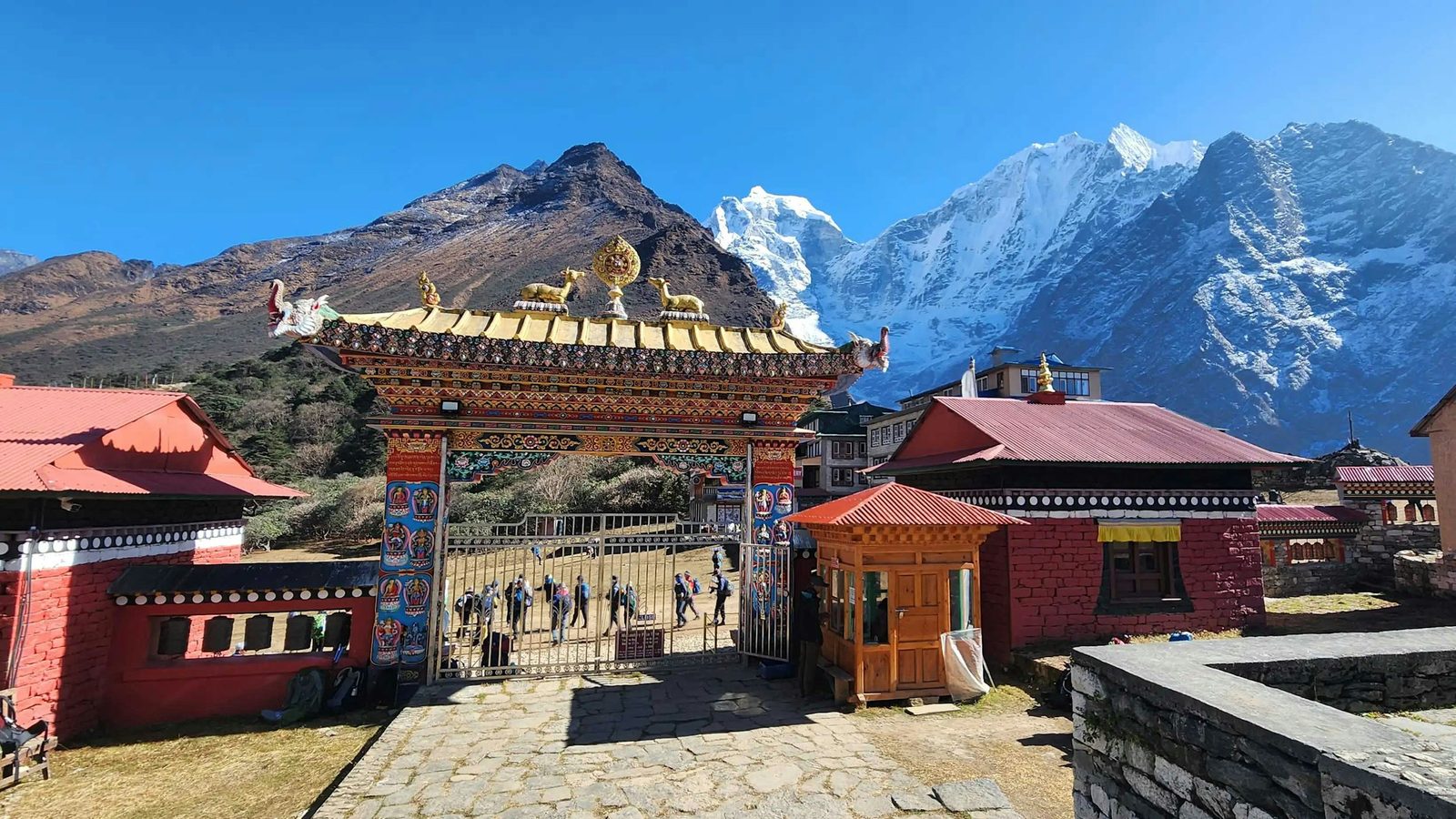
The painted entrance gate of Tengboche monastery in the Khumbu, with snow peaks behind, on the Everest Base Camp trail
The gate of Tengboche monastery, where day 4 ends on our route.

Day 4 drops to the river and climbs again to Tengboche and its monastery, which our Tengboche Monastery guide covers.

How long and how far each day?

We give a range rather than a time for each stage. KE Adventure, on its own 16-day itinerary, lists 3 hours for the first walk to Phakding, 6 to 7 hours for its base camp day and 4 to 18 km a day. Total distance depends on the route and side trips, so we do not quote one figure.

How do flights, cold and weather add to the challenge?

Weather is the part nobody controls. Lukla flights depend on the weather, and in peak season they may leave from Ramechhap (Manthali), usually about 4 to 5 hours' drive from Kathmandu. Nights turn cold above Namche. The Nepal Tourism Board (NTB) says the clearest skies come after the monsoon, in October and November.
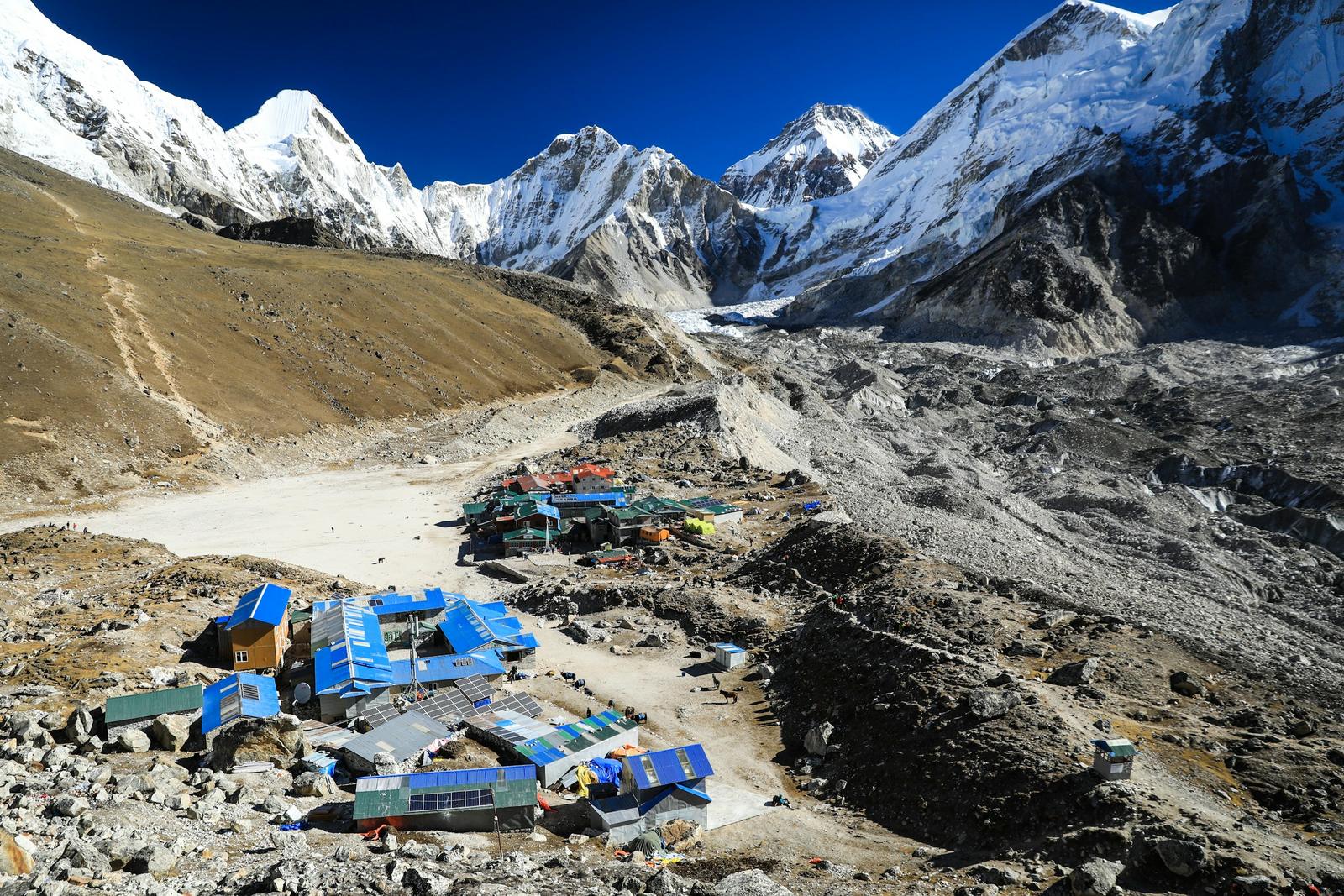
Blue-roofed teahouses at Gorak Shep beside the moraine of the Khumbu Glacier, the highest overnight stop on the Everest Base Camp trek
Gorak Shep, about 5,164 m: the highest night of our trek.

Lukla flights and Ramechhap

The flight takes about 25 to 30 minutes from Kathmandu and about 15 to 20 minutes from Ramechhap. This autumn, Manthali to Lukla flights have increased since late September 2026 (Ekantipur, 4 Oct 2026). In October 2023, flights to Lukla were cancelled for five days in a row because of bad weather, and over 700 tourists were stuck in Ramechhap at one point (The Himalayan Times, 11 Oct 2023). In October 2022 they had been halted for five days (The Himalayan Times, 14 Oct 2022). Leave spare days at the end of your trip; our Lukla Airport guide explains how the flights work.

How cold it gets

These are long-term average daily highs and lows from weather stations on the route.

Station (height) October max / min November max / min January max / min Source
Lukla (station 2,786 m, at the airport) 16.8 / 7.4 °C 13.8 / 2.4 °C 8.3 / -2.9 °C DHM normals 1991 to 2020
Namche Bazaar (3,450 m) 12.5 / 1.2 °C 9.1 / -3.8 °C 6.9 / -8.5 °C FAO, period unstated
Tengboche (3,857 m) 12.0 / -1.7 °C 8.1 / -6.9 °C 3.7 / -9.7 °C FAO and Nayava (ANU), period unstated

Higher up it is colder again. The Pyramid research station at 5,035 m, near Lobuche, records a mean annual temperature of -2.5 °C, a yearly average rather than a night low. In winter the NTB expects snow and daytime temperatures around 5 °C in Sagarmatha National Park. Our best time to trek Everest Base Camp guide goes month by month.

Can a beginner do the Everest Base Camp trek?

Yes, a fit beginner with no climbing experience can do it, but it is not an easy first walk. No ropes or climbing skill are needed. You do need to be comfortable walking five to eight hours a day on consecutive days at altitude, and patient enough to slow down when your body asks you to.

It suits you if:

  • You already walk regularly and can manage long days back to back.
  • You are fine with 11 nights in teahouses.

Talk to us first if:

  • Your return date is fixed, with no spare days for flight delays.
  • You have a heart, lung or other medical condition and have not yet asked your doctor.
  • You mainly want to see Everest up close in a short time. Our Everest helicopter tour cost guide explains that option.

Want something harder? Our Cho La Pass guide explains the high crossing. On a high pass, your guide, who knows the route, decides when and how to cross, based on snow and the forecast.

What does a good training plan look like?

Start several months ahead and train for long, steady days rather than speed, building up to five to six hours of continuous walking on hills. Fitness makes each day easier, but unless you live at altitude you cannot train for thin air, and being fit does not lower your risk of altitude sickness.

A simple plan, based on advice from UK operator Global Adventure Challenges:

  1. Walk three times a week, building up the distance each time.
  2. Train downhill as much as uphill, for the long descents out of Namche.
  3. Add squats, lunges and step-ups.
  4. Wear your walking boots and day pack in training, so both are broken in.

Do you need a guide, and which permits apply?

There are two positions on guides in the Khumbu, the upper Everest region. NTB's 2023 trekking rule, in force from 1 April 2023, bars foreign trekkers from national parks and conservation areas "without a guide or a porter", in The Kathmandu Post's words. The local municipality says a guide is not compulsory and issues its Trek-Card to solo trekkers.

Its press statement was direct: "It is not mandatory to hire a guide for trekking in the Everest region" (The Kathmandu Post, 3 April 2023). On our trips the question does not arise. A licensed guide walks with you on every trek we run.

Two permits apply. The Sagarmatha National Park permit costs NPR 3,000 per person per entry for foreigners and NPR 1,500 for SAARC nationals, according to the NTB Sagarmatha National Park page. The Khumbu Pasang Lhamu Rural Municipality Trek-Card costs NPR 3,000, or NPR 2,000 for SAARC countries and China, and is issued at Lukla. Our trip page lists both among its inclusions. For the full budget, see our Everest Base Camp trek cost guide.

What should you do if altitude sickness starts?

Tell your guide at the first headache, do not go higher, and go down if it gets worse. The Wilderness Medical Society lists the common signs as headache, loss of appetite, nausea, fatigue, and light-headedness or dizziness. It calls descent "the single best treatment" for HAPE, fluid on the lungs.

Step by step:

  1. Keep a slow, even pace from the first day, even when you feel strong.
  2. Drink enough water, and skip alcohol in the first days at height.
  3. Never go up to sleep higher while you have symptoms.
  4. If symptoms get worse despite rest, go down.
  5. With severe symptoms, descend at once and get help. Our guide arranges a rescue if needed.
  6. Before the trip, ask your doctor about preventive medicine such as acetazolamide.

Garlic soup is a comforting local habit: like any hot soup it helps you drink more, but it is not a proven cure.

Help exists on the trail, but only in season. The Himalayan Rescue Association (HRA), a voluntary non-profit, runs an aid post at Pheriche, at 14,343 ft (about 4,371 m), this autumn until the end of November 2026; it closes outside the main seasons. Its base camp clinic has run in spring, not autumn.

Take travel insurance that covers trekking to the height you will reach and helicopter evacuation, and check the altitude limit in the policy. Read more on altitude sickness on Nepal treks and how to avoid altitude sickness.

Is it anything like climbing Mount Everest?

No. The trek takes you to the foot of the mountain, not up it. Base camp sits at 5,364 m, while the summit of Mount Everest is 8,848.86 m, the height Nepal and China announced jointly on 8 December 2020. Kala Patthar is considered the highest point most people reach without a climbing permit.
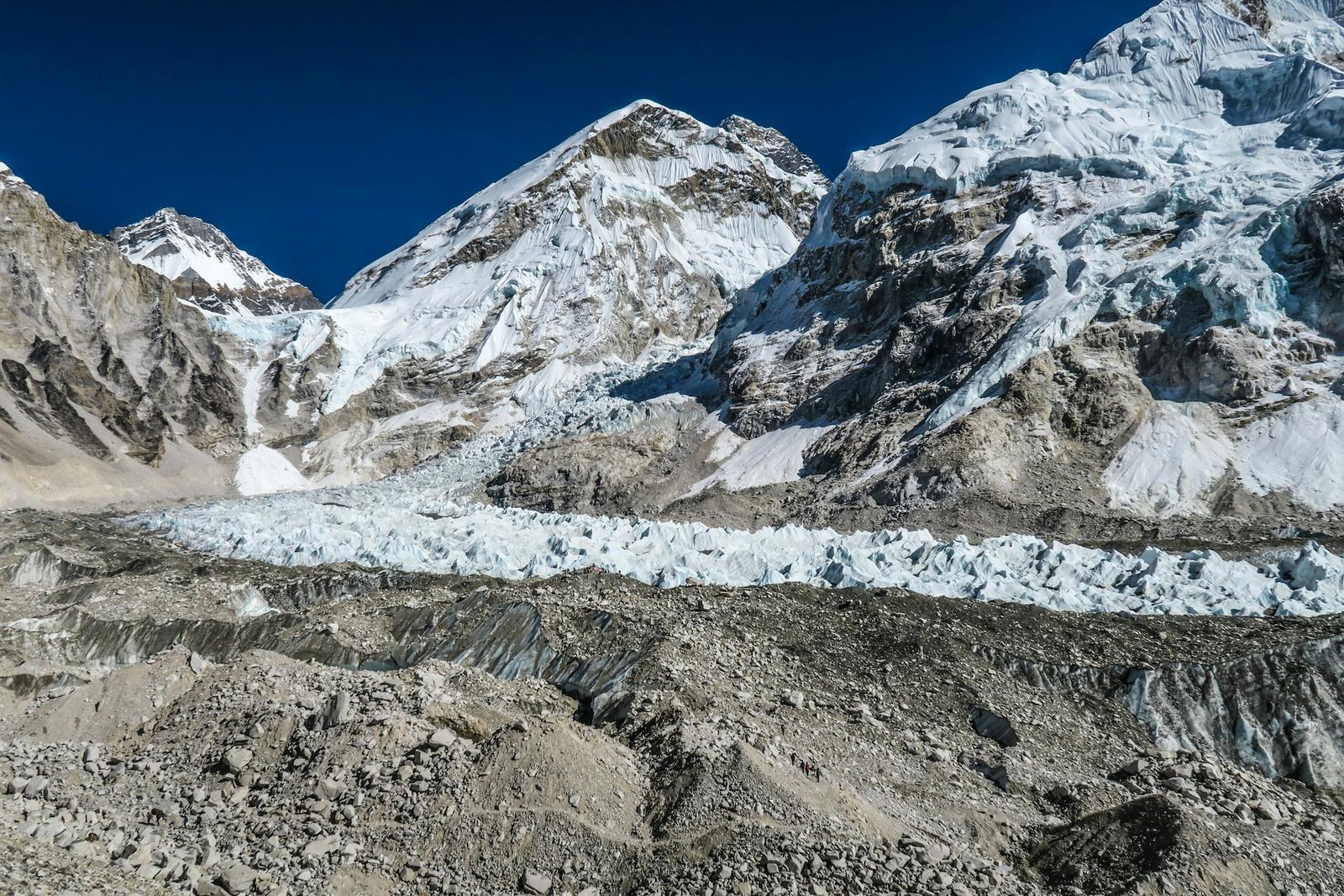
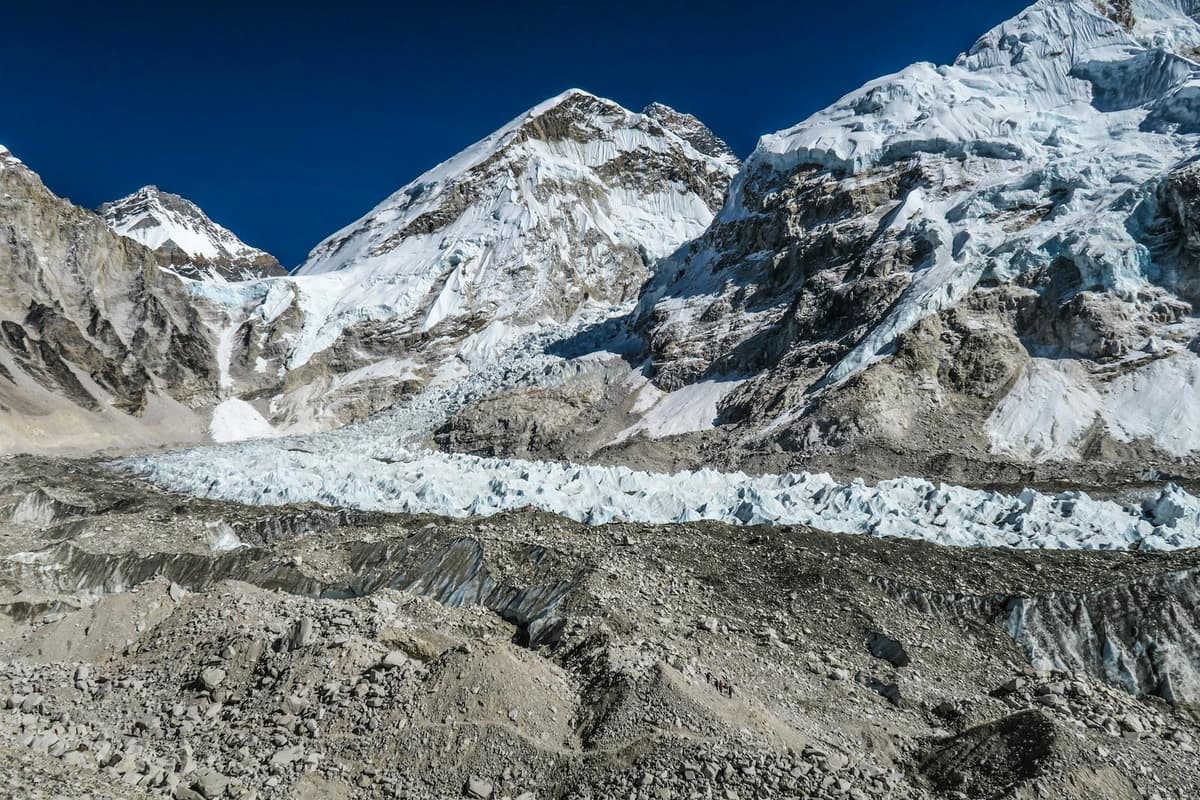
The Khumbu Icefall and the ice of the Khumbu Glacier near Everest Base Camp, Nepal
The Khumbu Icefall near Everest Base Camp, 5,364 m. Climbers go on from here; trekkers turn back.

The summit is hidden from base camp, which is why most itineraries, ours included, also climb Kala Patthar for the view. For another angle on Everest, see our Gokyo Lakes guide. Comparing it with Annapurna? Our Annapurna Base Camp trek difficulty guide covers that lower trek.

Frequently asked questions

How difficult is the Everest Base Camp trek, and can a beginner do it?

It is challenging but not technical. A fit beginner with no climbing experience can do it, but it is not an easy first walk: the altitude and long days back to back are what make it hard.

How high is Everest Base Camp, and how high is Kala Patthar?

Everest Base Camp is 5,364 m (17,598 ft). Kala Patthar, the viewpoint above Gorak Shep, is the highest point of the trek. Sources disagree on its height: most guidebooks and our trip page give about 5,545 m, while GPS readings in 2006 and 2008 recorded about 5,644 m. You sleep lower, at Gorak Shep, about 5,164 m.

How long is the Everest Base Camp trek, and how many days do I need?

Our classic route takes 12 days from Kathmandu back to Kathmandu, including rest days at Namche and Dingboche. Other operators we checked run 15 and 16 days. Add spare days after the trek for Lukla flight delays.

Is there Wi-Fi and phone signal on the Everest Base Camp trek?

Yes, on much of the trail, but do not rely on it. Many lodges sell Wi-Fi through Everest Link, a local provider covering the trail from Lukla towards base camp; it can be slow or down in bad weather. Nepal Telecom and Ncell have signal on parts of the trail, but it gets weaker the higher you go and is patchy around Gorak Shep and base camp (reported May 2025).

How should I train for the Everest Base Camp trek?

Start several months before and walk three times a week, building up to five to six hours at a time on hills, downhill as well as up. The plan above sets out the steps. Training makes the days easier but does not lower your risk of altitude sickness.

Which Everest Base Camp trek suits you?

To see how the days fit together, our Everest Base Camp trek page shows the routes we run. The 12-day Everest Base Camp trek is the classic version; the Gokyo, Cho La Pass and Everest Base Camp trek adds the Gokyo valley and a high pass, and the Everest Base Camp and Ama Dablam Base Camp trek adds a second base camp. Not sure which suits your fitness? Ask us on WhatsApp or through the enquiry form.
Tags
Everest Base CampEverest regionTrek difficultyAltitude sicknessTrek trainingKhumbu
Share
U
Uncover Nepal Team
Writer at Uncover Nepal
More in TreksSee all Treks

Everest Base Camp Trek Difficulty: How Hard Is It?

15 min read Posted 28 Oct 2026Updated 28 Oct 2026
A trekker resting among prayer flags on the rocky top of Kala Patthar, the high point of most Everest Base Camp treks

By Uncover Nepal Team · Checked by our Kathmandu travel team · Last checked 29 October 2026

From Lukla the trail drops to the Dudh Koshi river and follows it north, over several suspension bridges, towards Namche Bazaar. A week later it runs over grey rock beside the Khumbu Glacier to Gorak Shep, the last village with teahouses (simple trail lodges) before base camp.

Everest Base Camp trek difficulty sits at the challenging end of trekking, but the route is not technical: you need no ropes or climbing skill. What makes it hard is the altitude, with nights up to about 5,164 m at Gorak Shep, and five to eight hours of walking a day, day after day.

For routes, dates and what we arrange, start with our Everest Base Camp trek page. This guide explains how hard each part is and how to prepare.

Key facts

Our grade
Challenging; "a demanding but non-technical trek" (UncoverNepal Everest Base Camp trip page, 29 Oct 2026)
Official grade
None. Nepal has no government difficulty scale (UncoverNepal desk rule, 29 Oct 2026)
Everest Base Camp
5,364 m (17,598 ft) (Wikipedia "Everest base camps", site-wide figure, 29 Oct 2026)
Kala Patthar (trek high point)
About 5,545 m (some GPS readings give about 5,644 m) (UncoverNepal trip page; Wikipedia "Kala Patthar", 29 Oct 2026)
Highest night
Gorak Shep, about 5,164 m (Wikipedia "Gorakshep"; NepaliTelecom, 29 May 2025; checked 29 Oct 2026)
Start of the walk
Lukla airstrip, 2,846 m (CAAN AIP AMDT 02/2026 (site-wide figure), 29 Oct 2026)
Walking per day
Five to eight hours, up and down, on consecutive days (UncoverNepal trip page, 29 Oct 2026)
Length of our trek
12 days, Kathmandu to Kathmandu, with rest days at Namche and Dingboche (UncoverNepal trip page, 29 Oct 2026)
Permits
Sagarmatha National Park, NPR 3,000 (foreign) or NPR 1,500 (SAARC) per entry; Khumbu Trek-Card, NPR 3,000 or NPR 2,000 (SAARC and China) (NTB Sagarmatha National Park page, 29 Oct 2026; Khumbu Pasang Lhamu Rural Municipality, last verified 30 Sep 2026)
Lukla flights
Weather-dependent; in peak season they may leave from Ramechhap (Manthali) (Site-wide figure; Ekantipur, 4 Oct 2026; checked 29 Oct 2026)

In this guide

  • How is Everest Base Camp trek difficulty graded?
  • Is the altitude or the walking the hard part?
  • How high do you sleep each night?
  • What is a walking day like on the trail?
  • How do flights, cold and weather add to the challenge?
  • Can a beginner do the Everest Base Camp trek?
  • What does a good training plan look like?
  • Do you need a guide, and which permits apply?
  • What should you do if altitude sickness starts?
  • Is it anything like climbing Mount Everest?
  • Frequently asked questions

How is Everest Base Camp trek difficulty graded?

We grade the Everest Base Camp trek "Challenging" and call it a demanding but non-technical trek. Each company sets its own grade, because Nepal has no official scale, and two overseas operators we checked put this trek in the same band. The table compares them side by side.

Operator Grade given Trip length What they say
UncoverNepal Challenging 12 days, Kathmandu to Kathmandu "The difficulty is not the terrain ... but the altitude and the sheer number of days on your feet"
KE Adventure (UK) 7 to 9, Challenging 16 days "Physically challenging holidays, where you need to be prepared before you go"
G Adventures 5, Challenging 15 days "within the capabilities of any healthy person with an established level of walking fitness"

Grade numbers do not translate between firms, so read the description behind each difficulty level rather than the number.

Is the altitude or the walking the hard part?

The altitude is the hard part. The path is well trodden, but you spend four nights in a row at Dingboche (4,410 m) or higher and stand at about 5,545 m on Kala Patthar. Fitness makes the walking easier. It does not protect you from altitude sickness, so pace matters more than strength.

The US Centers for Disease Control and Prevention (CDC) says altitude illness can start from a sleeping height of about 2,450 m (8,000 ft), sometimes lower, and names this trek directly:

"Itineraries along some trekking routes in Nepal, particularly Everest base camp, push the limits of many people's ability to acclimatize."

US Centers for Disease Control and Prevention, CDC Yellow Book, "High-Altitude Travel and Altitude Illness", last reviewed 23 April 2025

The same page states, "Training and physical fitness do not affect risk."

The walking is the second layer: the long hill up to Namche on day 2, then the long descent and the steep drop out of Namche on the way back. Train for both directions.

How high do you sleep each night?

On our 12-day route you first sleep above 3,000 m at Namche Bazaar (3,440 m) on day 2, and highest at Gorak Shep, about 5,164 m, on day 8. Rest days at Namche and Dingboche break the climb. The table shows every night, so you can see where the big steps in height come.

Namche Bazaar on its hillside below snow peaks in the Khumbu, the first overnight stop above 3,000 m on the Everest Base Camp trek
Namche Bazaar, 3,440 m: two nights here on the way up, with an acclimatisation hike in between.
Day Route Sleep at Sleeping height Change from the night before
1 Fly to Lukla (airstrip 2,846 m), walk along the Dudh Koshi to Phakding Phakding 2,610 m Lower than Lukla
2 Enter Sagarmatha National Park at Monjo, climb to Namche Bazaar Namche Bazaar 3,440 m +830 m
3 Rest day, hike towards the Everest View Hotel Namche Bazaar 3,440 m None
4 Down to the river, then up to Tengboche Tengboche About 3,860 m About +420 m
5 Through rhododendron forest to Deboche, then on to Dingboche Dingboche 4,410 m About +550 m
6 Rest day, hike up towards Nangkartshang Dingboche 4,410 m None
7 Past the memorials at Thukla, up the moraine to Lobuche Lobuche About 4,940 m +530 m
8 Beside the Khumbu Glacier to Gorak Shep, then up Kala Patthar (about 5,545 m) Gorak Shep About 5,164 m About +224 m
9 Everest Base Camp (5,364 m), then down the valley Pheriche or Pangboche About 4,371 m at Pheriche Down
10 Long descent to Namche Bazaar Namche Bazaar 3,440 m Down
11 Down the steep hill out of Namche to Lukla Lukla Airstrip 2,846 m Down
12 Morning flight to Kathmandu, weather permitting; in busy months it may land at Ramechhap Trek ends

Above 3,000 m (9,800 ft), the CDC and the Wilderness Medical Society advise raising your sleeping height by no more than about 500 m (1,650 ft) a night, with a rest day every three to four days. The jump to Namche starts below 3,000 m and a rest day follows. Higher up, two days on our route go a little over: Tengboche to Dingboche and Dingboche to Lobuche. That is why the rest days matter. Want more margin? Ask us about an extra night at Namche or Dingboche; the CDC says extra days can make the trek safer and more enjoyable.

What is a walking day like on the trail?

Most days mean five to eight hours on foot, with plenty of up and down and no technical climbing. KE Adventure describes the path as "relatively easy, following good paths and yak trails". Near base camp it turns to rock and moraine beside the Khumbu Glacier.

The painted entrance gate of Tengboche monastery in the Khumbu, with snow peaks behind, on the Everest Base Camp trail
The gate of Tengboche monastery, where day 4 ends on our route.

Day 4 drops to the river and climbs again to Tengboche and its monastery, which our Tengboche Monastery guide covers.

How long and how far each day?

We give a range rather than a time for each stage. KE Adventure, on its own 16-day itinerary, lists 3 hours for the first walk to Phakding, 6 to 7 hours for its base camp day and 4 to 18 km a day. Total distance depends on the route and side trips, so we do not quote one figure.

How do flights, cold and weather add to the challenge?

Weather is the part nobody controls. Lukla flights depend on the weather, and in peak season they may leave from Ramechhap (Manthali), usually about 4 to 5 hours' drive from Kathmandu. Nights turn cold above Namche. The Nepal Tourism Board (NTB) says the clearest skies come after the monsoon, in October and November.

Blue-roofed teahouses at Gorak Shep beside the moraine of the Khumbu Glacier, the highest overnight stop on the Everest Base Camp trek
Gorak Shep, about 5,164 m: the highest night of our trek.

Lukla flights and Ramechhap

The flight takes about 25 to 30 minutes from Kathmandu and about 15 to 20 minutes from Ramechhap. This autumn, Manthali to Lukla flights have increased since late September 2026 (Ekantipur, 4 Oct 2026). In October 2023, flights to Lukla were cancelled for five days in a row because of bad weather, and over 700 tourists were stuck in Ramechhap at one point (The Himalayan Times, 11 Oct 2023). In October 2022 they had been halted for five days (The Himalayan Times, 14 Oct 2022). Leave spare days at the end of your trip; our Lukla Airport guide explains how the flights work.

How cold it gets

These are long-term average daily highs and lows from weather stations on the route.

Station (height) October max / min November max / min January max / min Source
Lukla (station 2,786 m, at the airport) 16.8 / 7.4 °C 13.8 / 2.4 °C 8.3 / -2.9 °C DHM normals 1991 to 2020
Namche Bazaar (3,450 m) 12.5 / 1.2 °C 9.1 / -3.8 °C 6.9 / -8.5 °C FAO, period unstated
Tengboche (3,857 m) 12.0 / -1.7 °C 8.1 / -6.9 °C 3.7 / -9.7 °C FAO and Nayava (ANU), period unstated

Higher up it is colder again. The Pyramid research station at 5,035 m, near Lobuche, records a mean annual temperature of -2.5 °C, a yearly average rather than a night low. In winter the NTB expects snow and daytime temperatures around 5 °C in Sagarmatha National Park. Our best time to trek Everest Base Camp guide goes month by month.

Can a beginner do the Everest Base Camp trek?

Yes, a fit beginner with no climbing experience can do it, but it is not an easy first walk. No ropes or climbing skill are needed. You do need to be comfortable walking five to eight hours a day on consecutive days at altitude, and patient enough to slow down when your body asks you to.

It suits you if:

  • You already walk regularly and can manage long days back to back.
  • You are fine with 11 nights in teahouses.

Talk to us first if:

  • Your return date is fixed, with no spare days for flight delays.
  • You have a heart, lung or other medical condition and have not yet asked your doctor.
  • You mainly want to see Everest up close in a short time. Our Everest helicopter tour cost guide explains that option.

Want something harder? Our Cho La Pass guide explains the high crossing. On a high pass, your guide, who knows the route, decides when and how to cross, based on snow and the forecast.

What does a good training plan look like?

Start several months ahead and train for long, steady days rather than speed, building up to five to six hours of continuous walking on hills. Fitness makes each day easier, but unless you live at altitude you cannot train for thin air, and being fit does not lower your risk of altitude sickness.

A simple plan, based on advice from UK operator Global Adventure Challenges:

  1. Walk three times a week, building up the distance each time.
  2. Train downhill as much as uphill, for the long descents out of Namche.
  3. Add squats, lunges and step-ups.
  4. Wear your walking boots and day pack in training, so both are broken in.

Do you need a guide, and which permits apply?

There are two positions on guides in the Khumbu, the upper Everest region. NTB's 2023 trekking rule, in force from 1 April 2023, bars foreign trekkers from national parks and conservation areas "without a guide or a porter", in The Kathmandu Post's words. The local municipality says a guide is not compulsory and issues its Trek-Card to solo trekkers.

Its press statement was direct: "It is not mandatory to hire a guide for trekking in the Everest region" (The Kathmandu Post, 3 April 2023). On our trips the question does not arise. A licensed guide walks with you on every trek we run.

Two permits apply. The Sagarmatha National Park permit costs NPR 3,000 per person per entry for foreigners and NPR 1,500 for SAARC nationals, according to the NTB Sagarmatha National Park page. The Khumbu Pasang Lhamu Rural Municipality Trek-Card costs NPR 3,000, or NPR 2,000 for SAARC countries and China, and is issued at Lukla. Our trip page lists both among its inclusions. For the full budget, see our Everest Base Camp trek cost guide.

What should you do if altitude sickness starts?

Tell your guide at the first headache, do not go higher, and go down if it gets worse. The Wilderness Medical Society lists the common signs as headache, loss of appetite, nausea, fatigue, and light-headedness or dizziness. It calls descent "the single best treatment" for HAPE, fluid on the lungs.

Step by step:

  1. Keep a slow, even pace from the first day, even when you feel strong.
  2. Drink enough water, and skip alcohol in the first days at height.
  3. Never go up to sleep higher while you have symptoms.
  4. If symptoms get worse despite rest, go down.
  5. With severe symptoms, descend at once and get help. Our guide arranges a rescue if needed.
  6. Before the trip, ask your doctor about preventive medicine such as acetazolamide.

Garlic soup is a comforting local habit: like any hot soup it helps you drink more, but it is not a proven cure.

Help exists on the trail, but only in season. The Himalayan Rescue Association (HRA), a voluntary non-profit, runs an aid post at Pheriche, at 14,343 ft (about 4,371 m), this autumn until the end of November 2026; it closes outside the main seasons. Its base camp clinic has run in spring, not autumn.

Take travel insurance that covers trekking to the height you will reach and helicopter evacuation, and check the altitude limit in the policy. Read more on altitude sickness on Nepal treks and how to avoid altitude sickness.

Is it anything like climbing Mount Everest?

No. The trek takes you to the foot of the mountain, not up it. Base camp sits at 5,364 m, while the summit of Mount Everest is 8,848.86 m, the height Nepal and China announced jointly on 8 December 2020. Kala Patthar is considered the highest point most people reach without a climbing permit.

The Khumbu Icefall and the ice of the Khumbu Glacier near Everest Base Camp, Nepal
The Khumbu Icefall near Everest Base Camp, 5,364 m. Climbers go on from here; trekkers turn back.

The summit is hidden from base camp, which is why most itineraries, ours included, also climb Kala Patthar for the view. For another angle on Everest, see our Gokyo Lakes guide. Comparing it with Annapurna? Our Annapurna Base Camp trek difficulty guide covers that lower trek.

Frequently asked questions

How difficult is the Everest Base Camp trek, and can a beginner do it?

It is challenging but not technical. A fit beginner with no climbing experience can do it, but it is not an easy first walk: the altitude and long days back to back are what make it hard.

How high is Everest Base Camp, and how high is Kala Patthar?

Everest Base Camp is 5,364 m (17,598 ft). Kala Patthar, the viewpoint above Gorak Shep, is the highest point of the trek. Sources disagree on its height: most guidebooks and our trip page give about 5,545 m, while GPS readings in 2006 and 2008 recorded about 5,644 m. You sleep lower, at Gorak Shep, about 5,164 m.

How long is the Everest Base Camp trek, and how many days do I need?

Our classic route takes 12 days from Kathmandu back to Kathmandu, including rest days at Namche and Dingboche. Other operators we checked run 15 and 16 days. Add spare days after the trek for Lukla flight delays.

Is there Wi-Fi and phone signal on the Everest Base Camp trek?

Yes, on much of the trail, but do not rely on it. Many lodges sell Wi-Fi through Everest Link, a local provider covering the trail from Lukla towards base camp; it can be slow or down in bad weather. Nepal Telecom and Ncell have signal on parts of the trail, but it gets weaker the higher you go and is patchy around Gorak Shep and base camp (reported May 2025).

How should I train for the Everest Base Camp trek?

Start several months before and walk three times a week, building up to five to six hours at a time on hills, downhill as well as up. The plan above sets out the steps. Training makes the days easier but does not lower your risk of altitude sickness.

Which Everest Base Camp trek suits you?

To see how the days fit together, our Everest Base Camp trek page shows the routes we run. The 12-day Everest Base Camp trek is the classic version; the Gokyo, Cho La Pass and Everest Base Camp trek adds the Gokyo valley and a high pass, and the Everest Base Camp and Ama Dablam Base Camp trek adds a second base camp. Not sure which suits your fitness? Ask us on WhatsApp or through the enquiry form.
Tags
Everest Base CampEverest regionTrek difficultyAltitude sicknessTrek trainingKhumbu
Share
U
Uncover Nepal Team
Writer at Uncover Nepal
More in TreksSee all Treks