
By Uncover Nepal Team · Checked by our Kathmandu travel team · Last checked 4 Oct 2026
In the busy autumn months, the day often starts in the dark, on the road out of Kathmandu to Manthali airport in Ramechhap, about 130 km away. At the check-in counter, trekkers repack their duffel bags, because the small planes to Lukla usually allow 15 kg per person, hand luggage included. Then everyone looks at the sky. The flight goes when the weather says so, and not before.
The short answer. The Everest Base Camp trek cost, for an independent trek with a hired licensed guide, adds up to USD 1,375 at the low end and USD 2,669 at the high end per person. That covers permits, Lukla flights, teahouses, guide, porter, tips and a 30-day visa, but not international flights, insurance or Kathmandu hotels.
For the route and the trips we run, see our Everest Base Camp trek guide. This article is only about money. Every figure below carries its source and the date we checked it. Where we found no reliable number, we say so instead of guessing.
Key facts
- Sagarmatha National Park entry, foreign nationals
- NPR 3,000 per entry (about USD 19), plus any VAT charged at issue (Nepal Tourism Board, park entry fees, 4 Oct 2026)
- Sagarmatha National Park entry, SAARC nationals (incl. India)
- NPR 1,500 per entry; children under 10 free (Nepal Tourism Board, 4 Oct 2026)
- Khumbu municipality Trek-Card, other nationals
- NPR 3,000 (Khumbu Pasang Lhamu Rural Municipality, 4 Oct 2026)
- Kathmandu to Lukla, one way, foreign passport
- About USD 253–255, reported by trekking operators in August–September 2026, checked 4 Oct 2026; fares change, check on booking (Three agency fare pages, 4 Oct 2026)
- Teahouse spend per day (room, food, drinks)
- About USD 25–55, reported by trekking operators (Agency and trekker price guides, 4 Oct 2026)
- Nepal tourist visa, 30 days (information only)
- USD 50 (NTB and Department of Immigration, 4 Oct 2026)
- Exchange rate used in this article
- USD 1 = NPR 154.41 (Nepal Rastra Bank sell rate) (Nepal Rastra Bank, 4 Oct 2026)
- Everest Base Camp (South)
- 5,364 m (Reference (Everest base camps), 4 Oct 2026)
- Trek high point, Kala Patthar
- About 5,545 m; GPS readings put the flagged summit near 5,644 m (Reference (Kala Patthar), 4 Oct 2026)
What makes up the Everest Base Camp trek cost
The Everest Base Camp trek cost is built from five things: permits, the Lukla flights, daily teahouse spending, the people who walk with you, and tips. Everything else, from a Wi-Fi card to a hot shower, is small change.
The table below adds those items up for two styles of trip. It assumes 12 days on the trail from Lukla and back, the short end of the usual 12–14 days. "Budget" uses the lower figure we used for each item and no porter. "Mid-range" uses the highest reported figure and adds a porter. These are sums of sourced ranges, not quotes, and certainly not our price.
| Item | How we worked it out | Budget (USD) | Mid-range (USD) |
|---|---|---|---|
| Sagarmatha National Park permit + Khumbu Trek-Card (foreign) | NPR 3,000 + NPR 3,000 = NPR 6,000, about USD 19.4 + 19.4 at the NRB rate of 4 Oct 2026 | 39 | 39 |
| Lukla flights, from Kathmandu | 2 one-way fares × USD 253 / × USD 255 | 506 | 510 |
| Teahouse spend (room, food, drinks) | 12 days × USD 25 / × USD 55 | 300 | 660 |
| Licensed guide, hired independently | 12 days × USD 25 / × USD 45 | 300 | 540 |
| Porter | none / 12 days × USD 35 | 0 | 420 |
| Tip for the guide | 12 days × USD 15 / × USD 20 | 180 | 240 |
| Tip for the porter | none / 12 days × USD 15 | 0 | 180 |
| Wi-Fi card | skipped / USD 30 | 0 | 30 |
| Nepal visa, 30 days (your own arrangement) | USD 50 | 50 | 50 |
| Sum of the sourced items | 39 + 506 + 300 + 300 + 0 + 180 + 0 + 0 + 50 / 39 + 510 + 660 + 540 + 420 + 240 + 180 + 30 + 50 | 1,375 | 2,669 |
What the table does not count, because we have no sourced figure for it:
- Your international flight to Kathmandu, and hotel nights in Kathmandu.
- The road transfer to Ramechhap in the months flights leave from there.
- An extra night in Kathmandu if Lukla flights are delayed.
- Travel insurance (see below), trekking gear and snacks beyond the daily range.
One honest note: whether a hired guide's day rate covers the guide's own food and room varies, so confirm it before you agree a price.
Takeaway: permits are cheap. Flights and people are where the money goes.
How much are the permits for Everest Base Camp?
For a foreign trekker flying into Lukla, two permits are needed: the Sagarmatha National Park entry permit at NPR 3,000 and the Khumbu municipality Trek-Card at NPR 3,000. Together that is NPR 6,000, about USD 39 at the Nepal Rastra Bank rate on 4 Oct 2026. SAARC nationals pay less.
| Permit | Foreign nationals | SAARC nationals | Issued by |
|---|---|---|---|
| Sagarmatha National Park entry | NPR 3,000 | NPR 1,500 | National park (fee list on NTB) |
| Khumbu Pasang Lhamu Trek-Card | NPR 3,000 | NPR 2,000 (also Chinese nationals) | Khumbu Pasang Lhamu Rural Municipality |
A few details that change what you pay:
- Children under 10 enter Sagarmatha National Park free.
- VAT. Some agencies quote the park fee as NPR 3,000 plus VAT. Nepal Tourism Board's fee page does not mention VAT, so budget NPR 3,000 plus any VAT charged at issue.
- Where the Trek-Card is issued. The municipality issues it at the Tourist Information Centre in Lukla. You need your passport, and processing takes about 15 minutes.
- The Jiri approach. Walking in from Jiri adds a Gaurishankar Conservation Area permit (NPR 3,000 foreign, NPR 1,000 SAARC). A fly-in trek does not need it.
Is a guide required? Nepal Tourism Board's 2023 rule lists the Everest Base Camp trek among routes that need a licensed guide. The Khumbu municipality, which issues the local Trek-Card, has said since 2023 that a guide is not compulsory in the Everest region, and it still issues Trek-Cards to trekkers walking without one, according to reports updated in September 2026. The two positions have not been reconciled officially, and we found no 2025 or 2026 notice from either side changing them. A licensed guide walks with you on every trek we run.
Your visa is your own arrangement. We do not arrange visas or international flights. For information, a 15-day tourist visa on arrival costs USD 30, 30 days USD 50 and 90 days USD 125, according to Nepal Tourism Board and the Department of Immigration. A 12 to 16 day Everest trip normally fits the 30-day visa. Indian nationals need no visa; NTB lists a passport, an Election Commission card, or a PAN card, driving licence or ration card with photo as accepted ID, and says Aadhaar is not accepted. Check the official NTB tourist visa page before you travel.
Takeaway: for a foreign trekker, permits are about USD 39 of the whole trip. Check the fee on the day; it is set in rupees.
How much is the Lukla flight?
Operators report a one-way Kathmandu to Lukla fare of about USD 253–255 for a foreign passport, and about USD 208–210 from Ramechhap (reported by trekking operators in August–September 2026, checked 4 Oct 2026). If you fly both ways, the return trip is two of these fares. Fares change; check on booking.
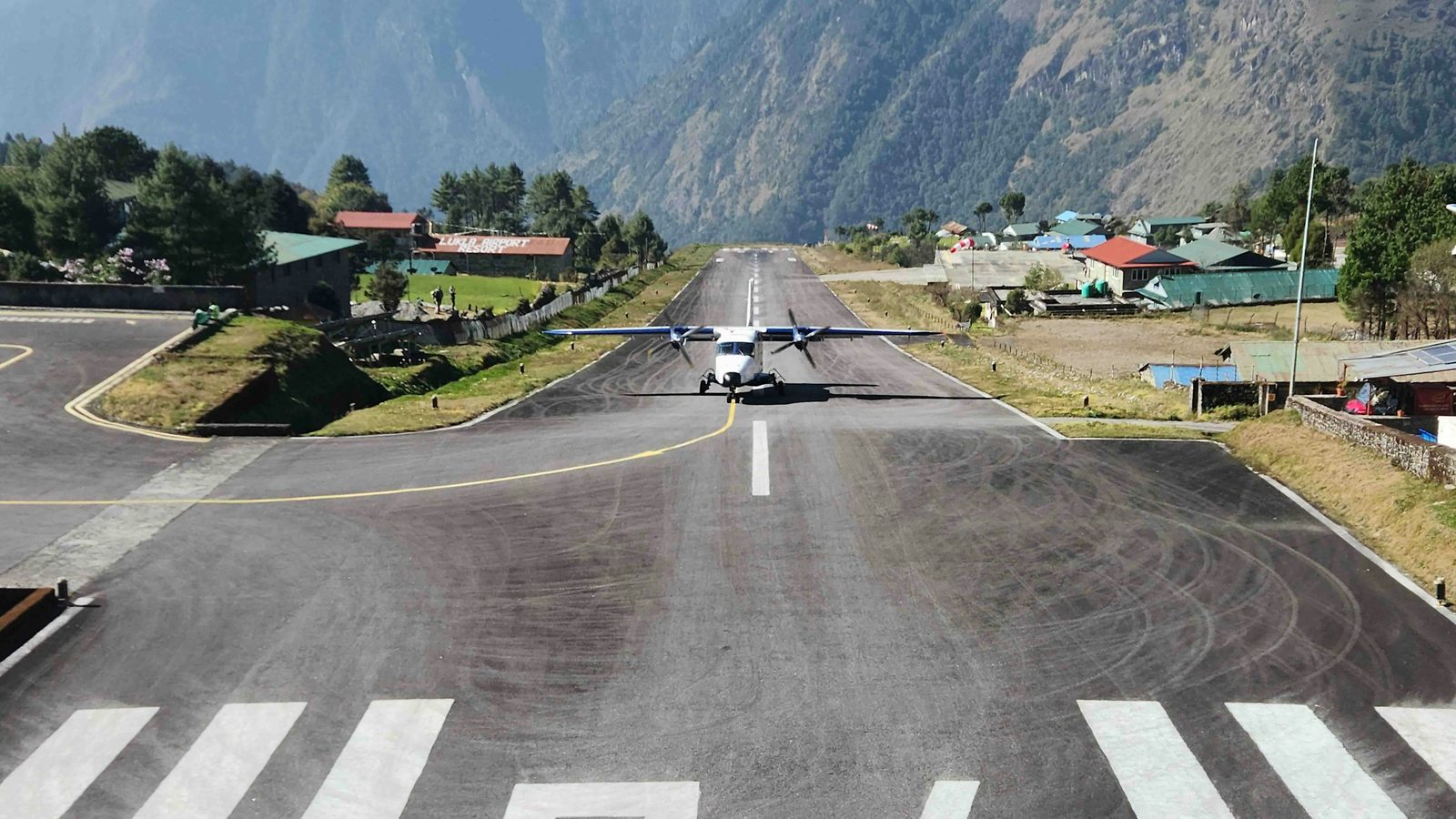
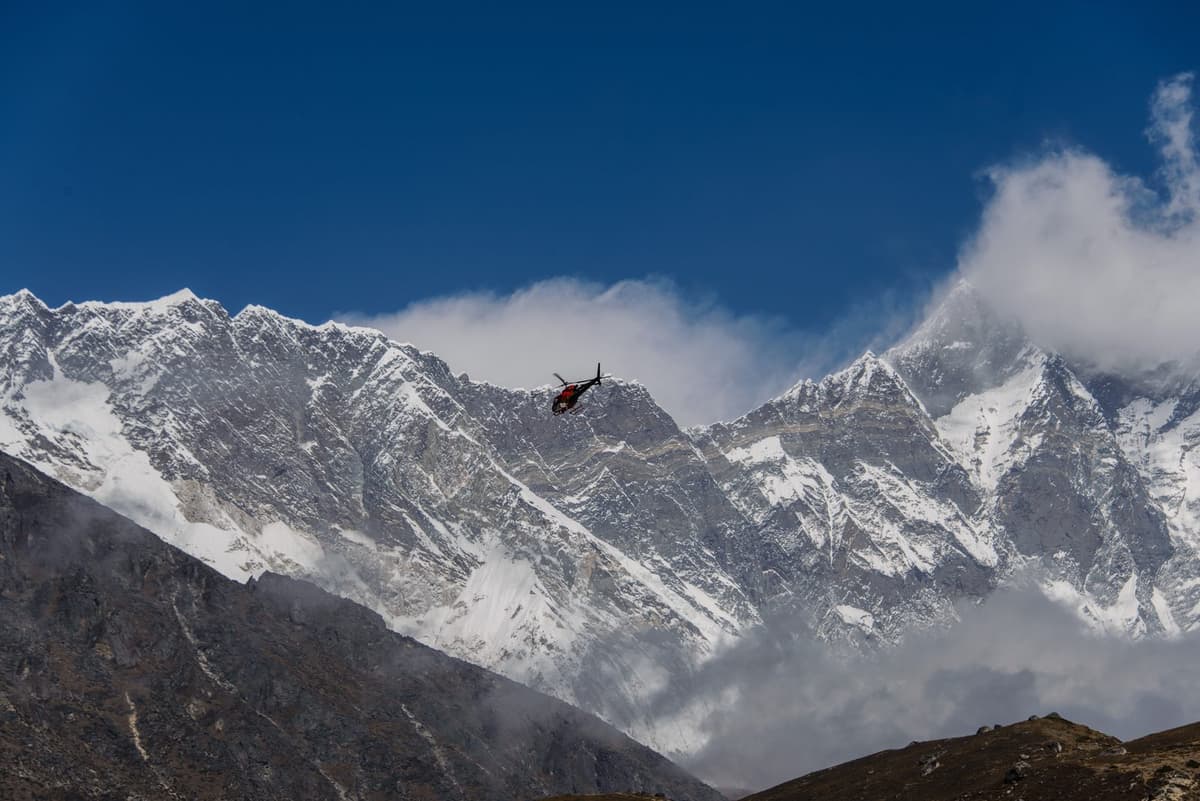
The airlines on the Lukla sector are Tara Air, Summit Air and Sita Air. On the airlines' filed schedules the flight takes about 25 to 30 minutes from Kathmandu, or about 15 to 20 minutes from Ramechhap. The airport at Lukla, Tenzing-Hillary, sits at 2,845 m (9,334 ft).
The Ramechhap rule. In the busiest months (typically spring and autumn), Lukla flights usually leave from Manthali Airport in Ramechhap instead of Kathmandu. Exact dates are set each season. Ramechhap is about 130 km by road, usually about 4 to 5 hours, leaving before dawn. The fare from Ramechhap is lower, but you add the road trip, and we could not source a reliable price for that transfer, so it is not in our sums.
Weather decides. Lukla flights are weather-dependent, in both directions. Keep a spare day at the end of the trek, and money for an extra night in Kathmandu.
Baggage. Tara Air's published allowance is 10 kg checked plus 5 kg hand luggage. Other airlines set their own limits, so check yours.
For Indian travellers. Indian nationals are charged a rupee fare, reported at about NPR 21,300–22,000 one way from Kathmandu and NPR 16,800–17,000 from Ramechhap. Fares change; check on booking.
Helicopter instead. A shared seat between Kathmandu and Lukla is reported at about USD 500–710 one way, varying with season, load and fuel.
Takeaway: the Lukla flight is the largest single line in the budget. Leave a buffer day.
How much does a teahouse cost per day on the EBC trek?
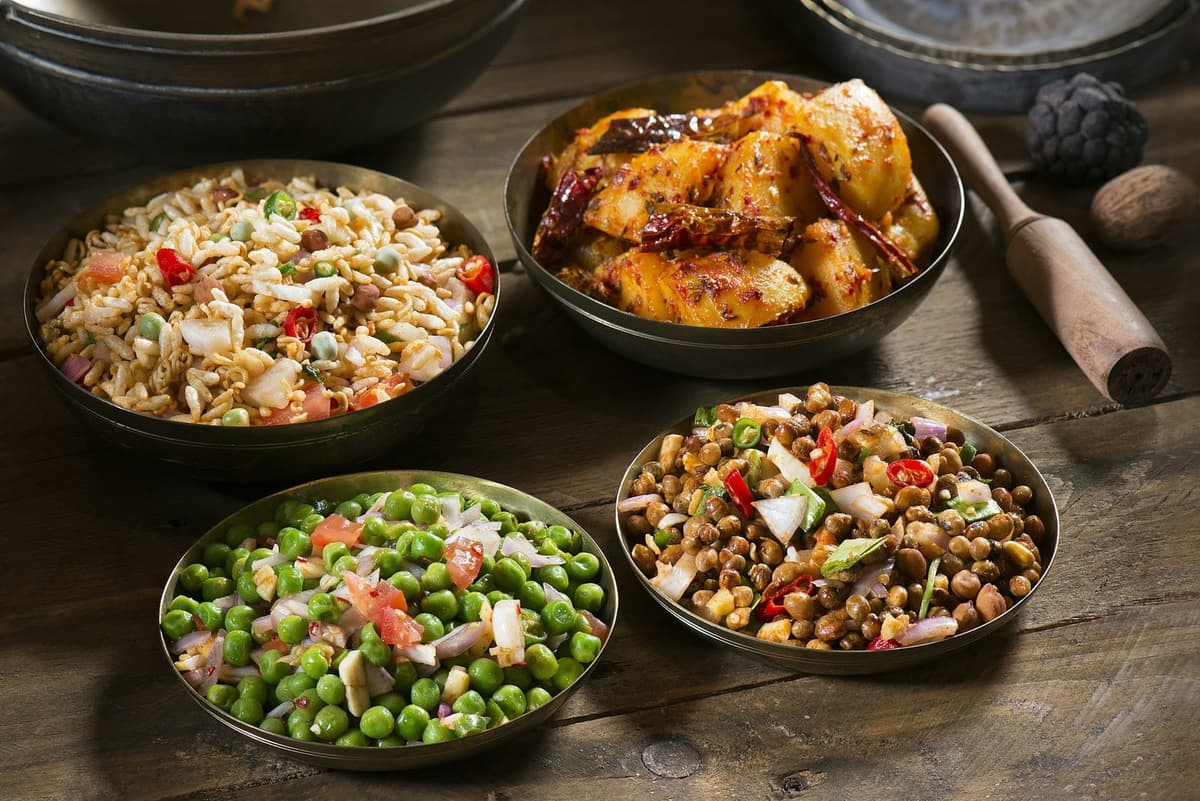
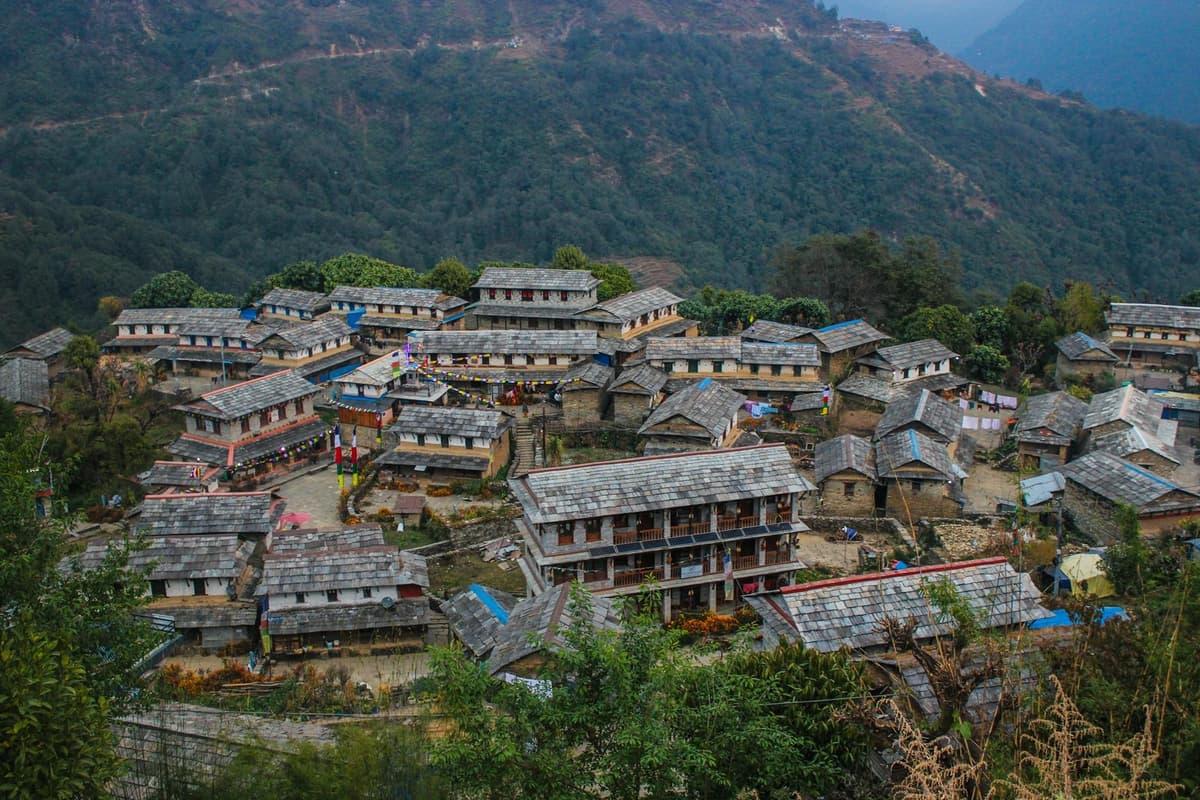
Operators and trekkers report spending about USD 25–55 a day on a room, food and drinks in Everest teahouses. A teahouse is a simple trekking lodge with rooms upstairs and a shared, stove-warmed dining room. Rooms are cheap; food is where the money goes, and it gets dearer the higher you climb.
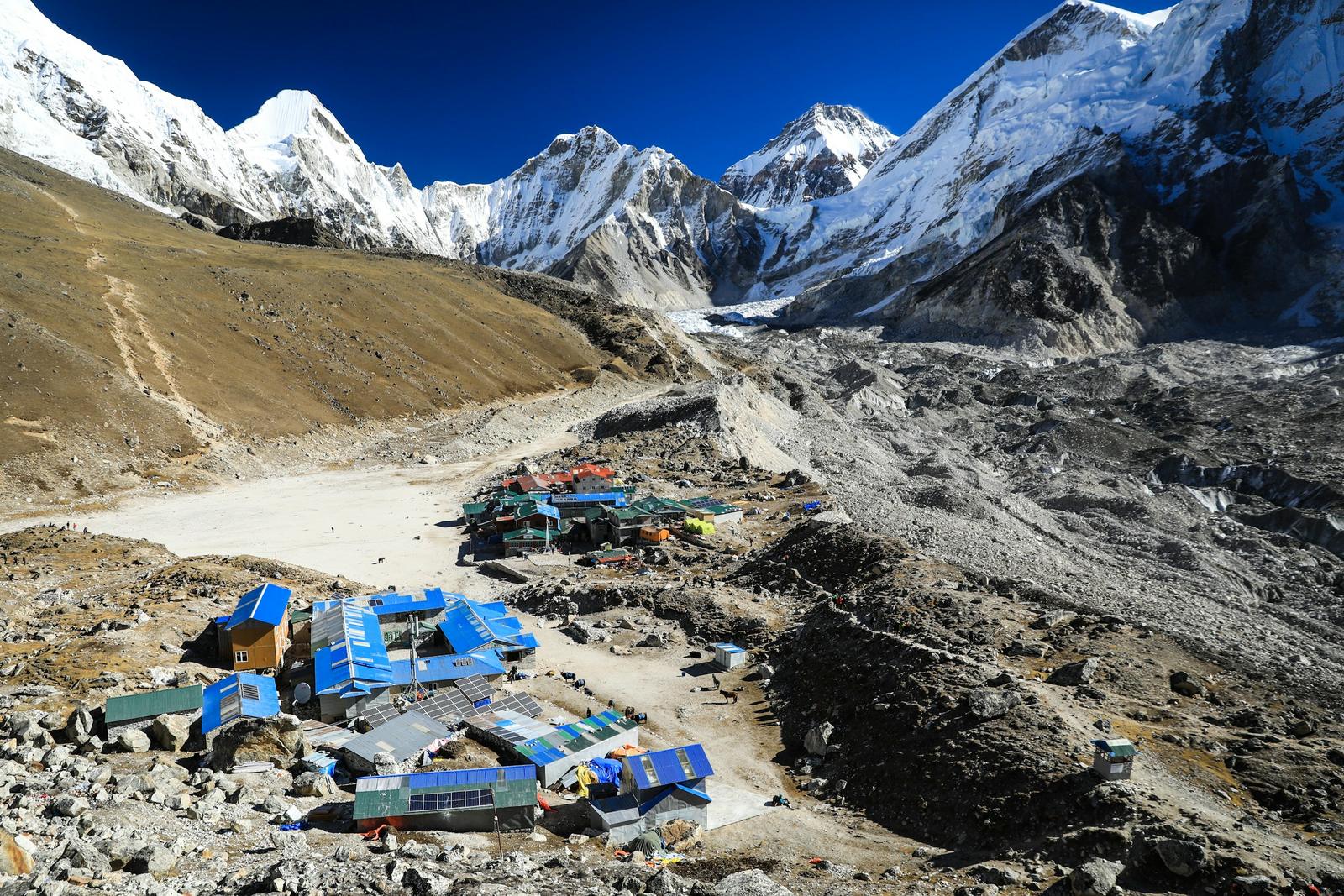
Rooms are usually inexpensive, often a few hundred to a couple of thousand rupees for a basic room, on condition that you eat at the lodge. Ensuite and "luxury" lodges cost much more. Food prices rise because supplies are carried up by porters and yaks. Dal bhat, the everyday Nepali meal of rice, lentil soup and vegetables, roughly doubles or more in price between the lower villages and Gorak Shep, reaching around NPR 1,000–1,200 at the top.
We wanted a village-by-village price table here. The sources disagree, and many of their room prices are years old, so we show only what we can stand behind.
| Stretch (sleeping altitude) | Rooms | Dal bhat | Extras |
|---|---|---|---|
| Lukla 2,845 m to Namche Bazaar 3,440 m | Cheapest on the route if you eat in | Lowest prices on the trek | Charging free at some lodges lower down |
| Tengboche 3,867 m to Dingboche, approx. 4,410 m | Wider range; ensuite rooms cost much more | Rising; we found no reliable Namche figure, so we do not print one | Wi-Fi speeds fall above Dingboche |
| Lobuche, about 4,900 m, to Gorak Shep, approx. 5,164 m | Basic rooms; the eat-in condition still applies | Around NPR 1,000–1,200 | Wi-Fi coverage weak at Base Camp itself |
The small extras, as reported by operators in October 2026:
- Hot shower: a few hundred rupees, more higher up. Often solar or gas, and not available every day.
- Charging a phone or battery: NPR 100–400 per charge.
- Wi-Fi: an Everest Link card is reported at around USD 20–30 for 10–20 GB, valid 30 days.
Takeaway: eat where you sleep, carry a power bank, and expect your daily spend to climb with the trail.
What does a guide or porter cost on the Everest trek?
Hired independently, a licensed guide is reported at around USD 25–45 a day and a porter at around USD 20–35 a day. Confirm what is included before you agree, because whether the guide's own food and room are covered varies between agencies.
What guides and porters are paid. In 2023 the Trekking Agencies' Association of Nepal (TAAN) and the trekking workers' unions agreed minimum daily wages, effective 17 Jul 2023:
| Wage category (as named in the 2023 agreement) | Agreed minimum daily wage (2023) |
|---|---|
| Mountain guide | NPR 3,100 |
| Assistant trekking guide | NPR 2,800 |
| Porter-guide | NPR 2,500 |
| Porter | NPR 2,400 |
These are the wage floors agencies pay their staff, not the price a trekker is charged. We found no later revision, but one may exist.
Tips. Tipping is customary. It is usually given at the end of the trek, in an envelope, and pooled when you travel as a group. One operator suggests about USD 15–20 a day for a guide and USD 10–15 a day for a porter; others suggest totals of USD 100–250. These are suggestions, not rules, and the figures vary a lot.
Takeaway: after flights, the people who walk with you are the biggest cost, and the best value.
Do you need travel insurance for Everest Base Camp?
Yes, in practice. Your policy should cover trekking to the trek's high point at Kala Patthar, about 5,545 m, with GPS readings near 5,644 m, and helicopter evacuation. Without it, a rescue is billed to you. We recommend insurance; we do not sell it.
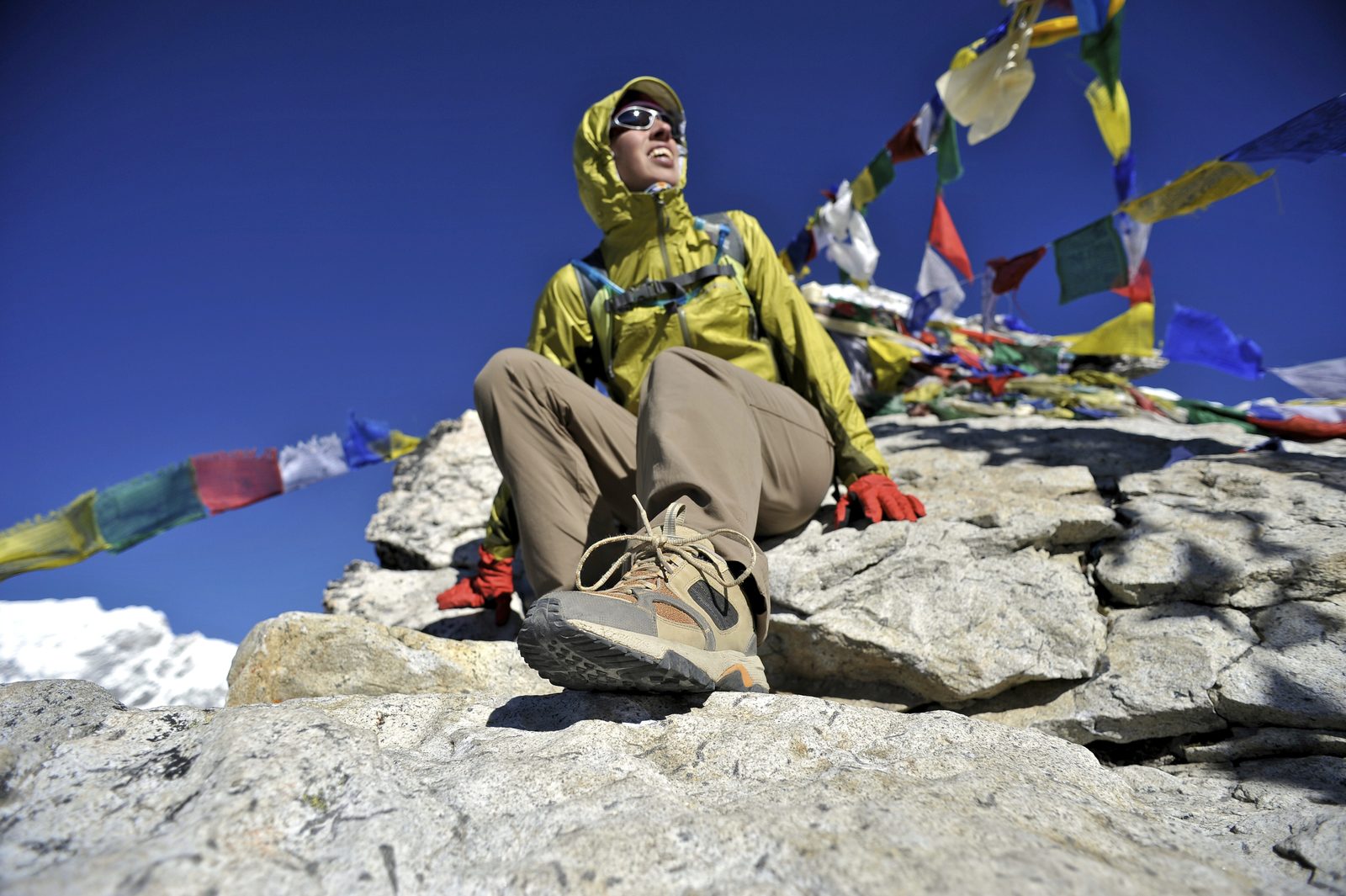
Operators report that a helicopter evacuation from the Base Camp area to Kathmandu, without insurance, costs several thousand US dollars. There is no official tariff.
Insurers read Nepal claims closely, after a 2026 Nepal Police investigation into about USD 20 million of fraudulent rescue claims. Keep your insurer's emergency number on paper, and call them before any evacuation if you can.
Takeaway: read the altitude limit and the helicopter clause in your policy before you buy it.
How much cash should you carry on the EBC trek?
Carry enough Nepali rupees for every day on the trail plus tips. At the reported USD 25–55 a day, 12 days on the trail is USD 300–660 in rupees, before tips. Draw it in Kathmandu. Namche Bazaar has ATMs, but they are often unreliable, and none are reported above Namche.
- Cards are rarely accepted on the trail.
Takeaway: relying on the Namche ATM means relying on luck.
Altitude: the cost nobody budgets for
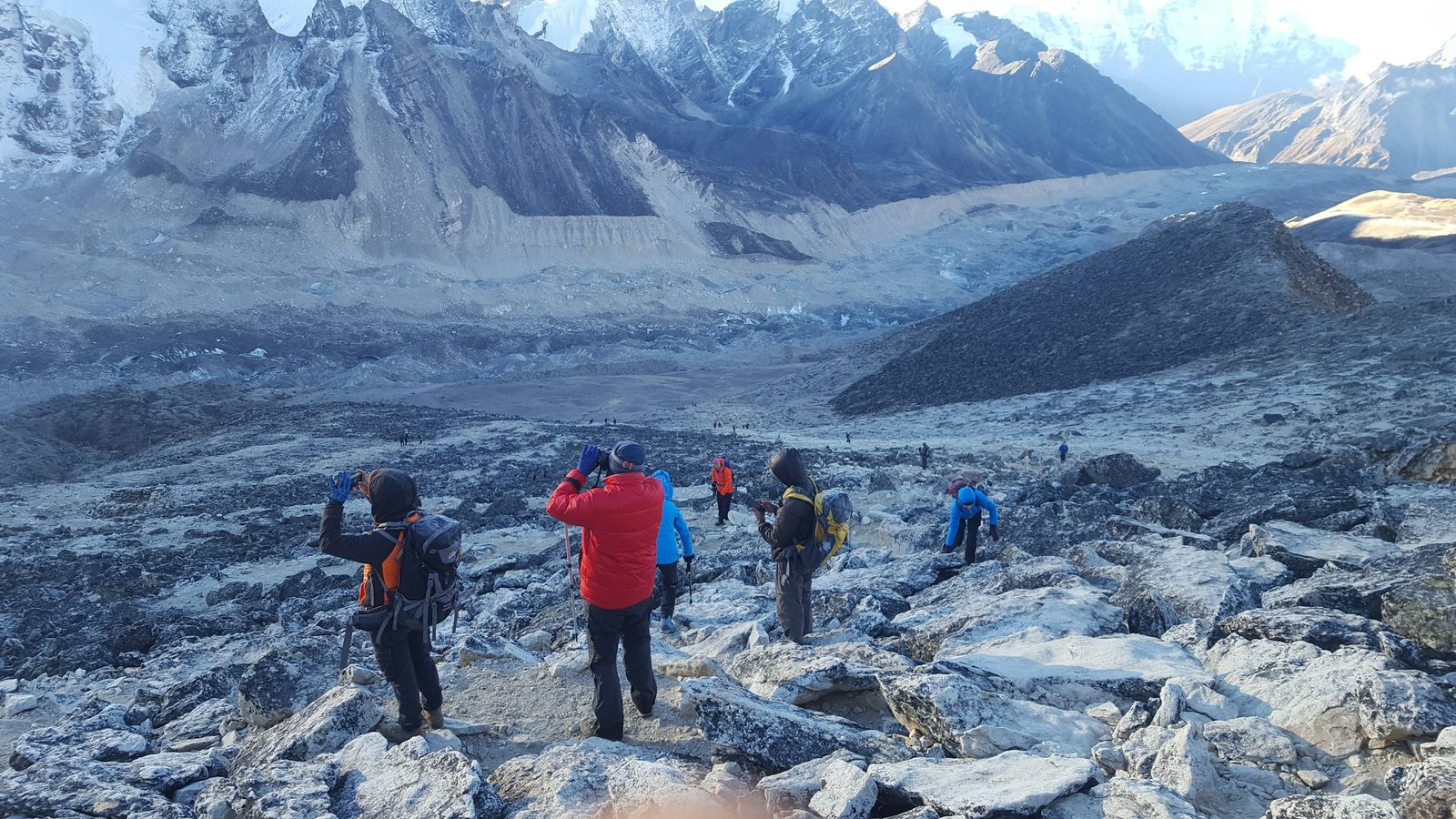
The cheapest way to avoid an expensive rescue is to go up slowly. Altitude sickness is a real risk on this trek, because you sleep at Dingboche (approx. 4,410 m), Lobuche (about 4,900 m) and Gorak Shep (approx. 5,164 m), and the most serious costs on the trail come from ignoring it.
"Ascending at a rate of no greater than 500 m (1,650 ft) per night in sleeping altitude once above 3,000 m (9,800 ft)."
CDC Yellow Book 2026, High-Altitude Travel and Altitude Illness
What works, according to the CDC and the Wilderness Medical Society:
- Go up slowly. Above 3,000 m, do not raise your sleeping height by more than about 500 m a night, and take a rest day every 3 to 4 days. The CDC adds an extra night to acclimatise for every 1,000 m of sleeping height gained.
- Walk slowly. On the trail you will hear "bistarai, bistarai", Nepali for "slowly, slowly". If you cannot talk while you walk, you are going too fast.
- Drink enough water, and avoid alcohol for the first days at altitude.
- Know the symptoms: headache, nausea, tiredness and poor sleep. The CDC notes risk from sleeping heights of about 2,450 m and above.
- Never go higher with symptoms. Rest where you are. If they get worse, go down.
- Ask your doctor before the trip about preventive medicine, for example acetazolamide. Take only what your doctor prescribes.
A local habit. Garlic soup and other hot soups are on almost every teahouse menu. They are warming and help you drink more fluid. It is a comforting local tradition, not a proven cure.
Emergency. Severe symptoms, such as confusion, breathlessness at rest or unsteady walking, mean you descend at once and get medical help. Your guide arranges the rescue if one is needed.
For the full prevention guide, with what to eat, drink and ask your doctor, read how to avoid altitude sickness in Nepal.
Takeaway: a rest day costs one more night of teahouse spending. A rescue costs thousands of dollars.
What pushes the cost up, and how to save
What pushes the Everest Base Camp trek cost up:
- Flying from Kathmandu in months when flights still run from there, instead of Ramechhap.
- A helicopter seat to or from Lukla, at about USD 500–710 one way.
- More days. Every extra day adds teahouse spending, guide and porter fees, and tips.
- Ensuite or "luxury" lodges, which cost much more than basic rooms.
- A rescue without insurance.
How to save money, honestly:
- Eat where you sleep. Many lodges keep rooms cheap on that condition.
- Pack light. Staying inside the 15 kg flight allowance avoids excess-baggage charges.
- Travel as a group and share a porter.
- Treat your own water instead of buying bottles higher up, where everything costs more.
- Bring a power bank and a small solar charger to cut charging fees.
- Skip the Wi-Fi card if you can live without it.
Do not save on acclimatisation days, the guide or insurance. Those three keep the other costs from exploding.
Package or independent: what a package usually covers
A package bundles most lines of the cost table into one price, so you know the total before you leave. Going independent lets you choose every line, but you carry the paperwork and the risk of delays.
As an example, our own 12-day trip from Kathmandu to Kathmandu has 11 teahouse nights. Its page lists these inclusions: Kathmandu to Lukla flights and back with the Kathmandu airport tax, a licensed guide, teahouse nights with meals, park and local permits, and Kathmandu transfers. It lists as extras: lunch on the last day, drinks and snacks, travel insurance, tips, personal expenses, an extra hotel night if flights are delayed, and the jeep to Ramechhap if needed.
Package prices change with dates and group size, so the current price for our trek is on the Everest Base Camp trek trip page.
Takeaway: compare packages line by line: flights and the Ramechhap transfer, meals, porter, and what happens if the flight is delayed.
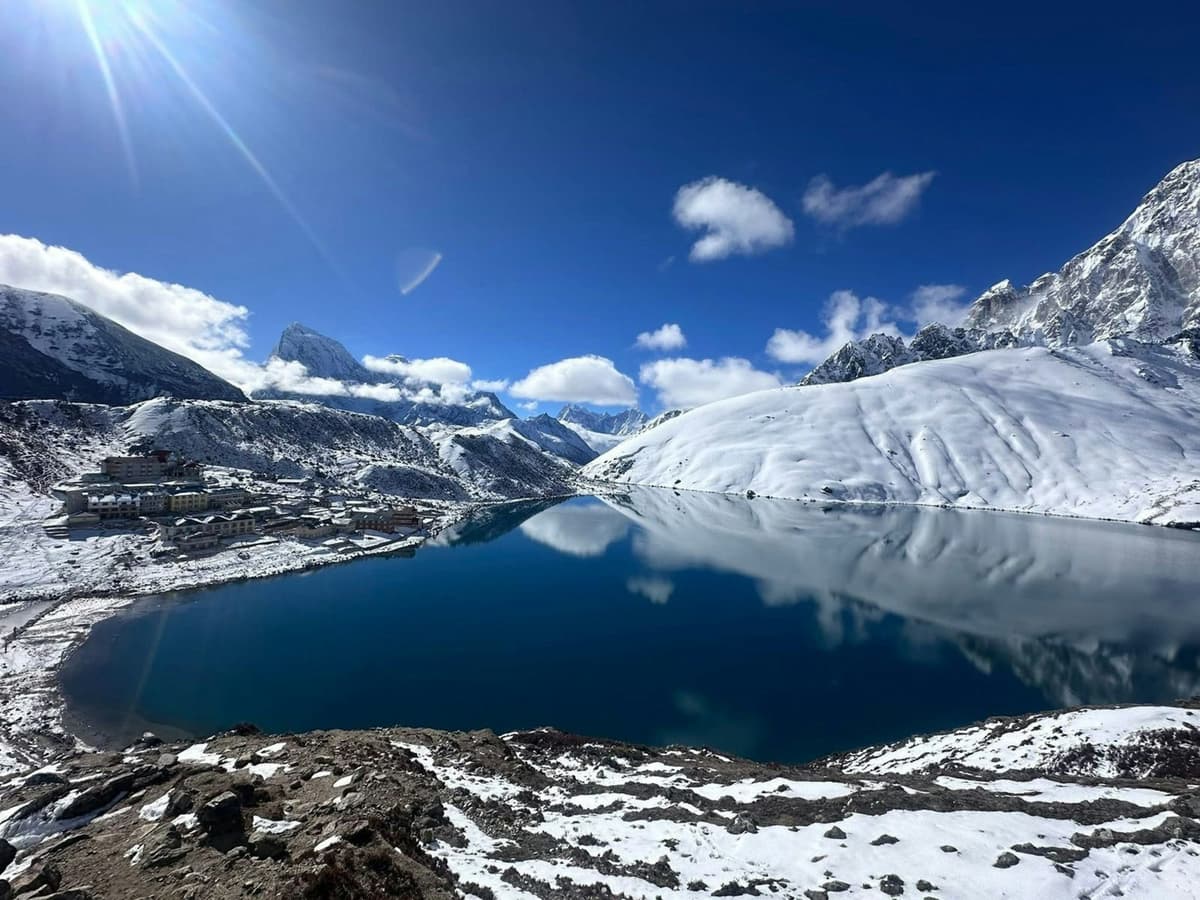
Read next: the best time to trek Everest Base Camp, altitude sickness on Nepal treks, Lukla airport explained, Gokyo Lakes guide and Tengboche Monastery guide.
Frequently asked questions
How much does the Everest Base Camp trek cost?
Adding up only sourced items for 12 days on the trail, an independent trek with a hired licensed guide comes to about USD 1,375 at the low end and USD 2,669 at the high end per person. That excludes international flights, insurance and Kathmandu hotels. The cost table above shows every line.
Can you do the Everest Base Camp trek on a budget?
Yes, within limits. Permits are only about USD 39 for a foreign trekker. The Lukla flight is the cost you cannot avoid. Save by eating where you sleep, packing light, sharing a porter and skipping extras. Do not cut acclimatisation days, the guide or insurance, because those keep a cheap trip from becoming an expensive one.
Is a guide required for the Everest Base Camp trek?
The position is disputed. Nepal Tourism Board's 2023 rule lists the trek among routes needing a licensed guide, while the Khumbu municipality says a guide is not compulsory in the Everest region. The two have not been reconciled officially. A licensed guide walks with you on every trek we run.
How much cash should I carry for the EBC trek?
Carry rupees for every trail day plus tips. At the reported USD 25–55 a day, 12 days comes to USD 300–660, before tips. Draw it in Kathmandu. Namche Bazaar has ATMs, but they are often unreliable, none are reported higher up, and cards are rarely accepted on the trail.
How much is the flight to Lukla?
Operators report about USD 253–255 one way from Kathmandu and about USD 208–210 from Ramechhap for a foreign passport (reported by trekking operators in August–September 2026, checked 4 Oct 2026). Fares change, so check on booking. In the busiest months, flights usually leave from Ramechhap, and all Lukla flights depend on the weather.
Do you need travel insurance for the Everest Base Camp trek?
Yes. Choose a policy that covers trekking to Kala Patthar, about 5,545 m, and helicopter evacuation. Operators report that an uninsured helicopter rescue costs several thousand US dollars. We recommend insurance but do not sell it. Read the altitude limit and the helicopter clause before you buy.
Your next step
If you want the trip without managing each line yourself, look at the Gokyo and Cho La Pass Everest Base Camp trek, which adds the Gokyo lakes and a high pass, or the Everest Base Camp and Ama Dablam Base Camp trek. The classic route is in our Everest Base Camp trek guide, with every trip we run in the region.
Still deciding when to go? Read the best time to trek to Everest Base Camp, how hard the Everest Base Camp trek really is, and our month-by-month best time to visit Nepal.
Send us your dates and group size on WhatsApp or through the enquiry form. We will tell you honestly which trip fits your days and budget, and send an exact quote in US dollars.