

By Uncover Nepal Team · Checked by our Kathmandu travel team · Last checked 27 October 2026
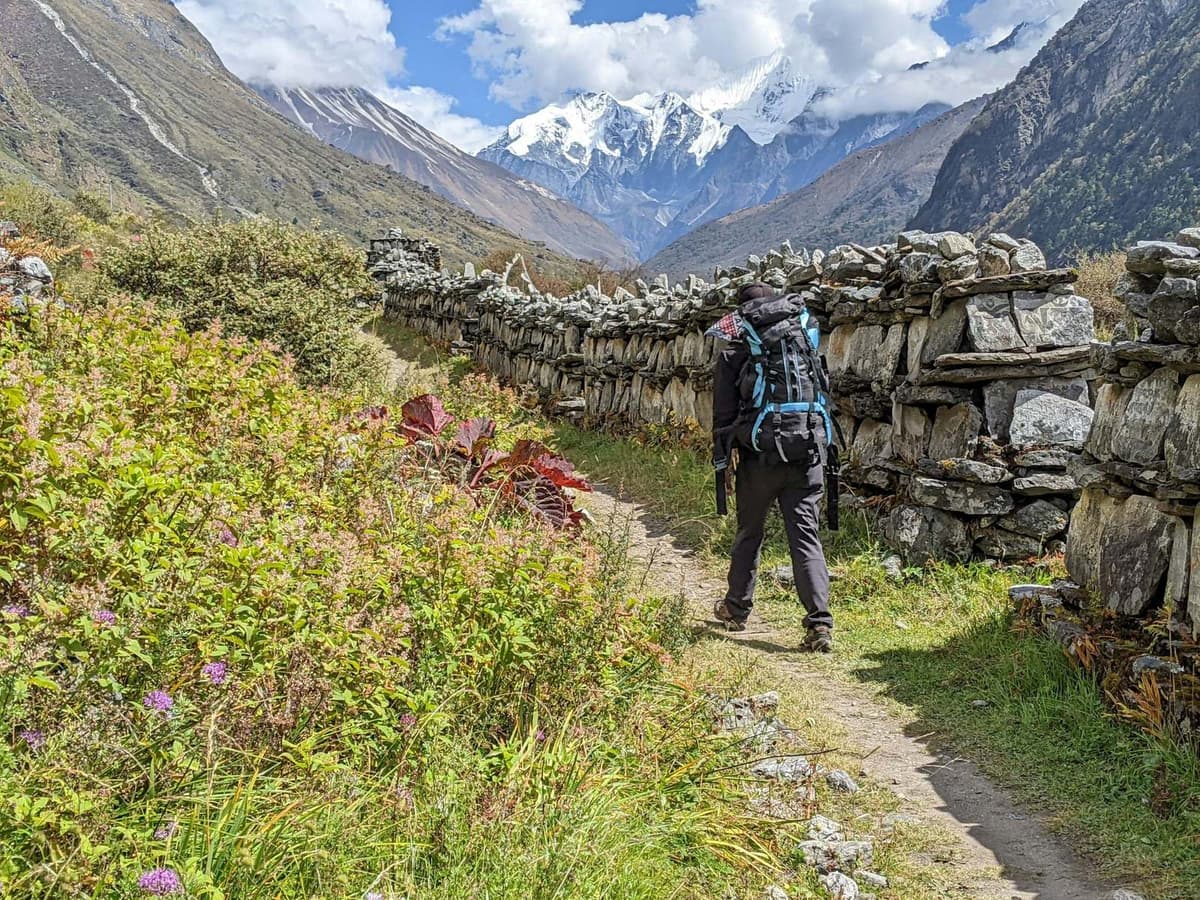
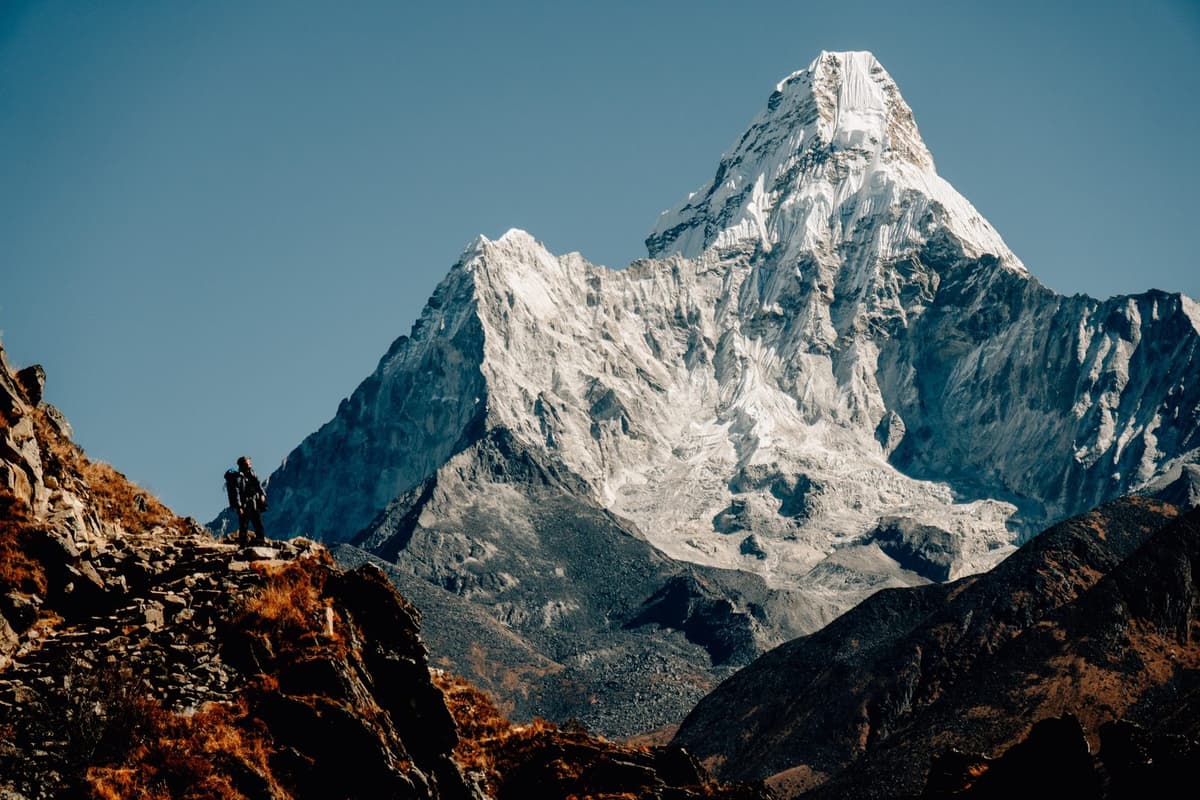
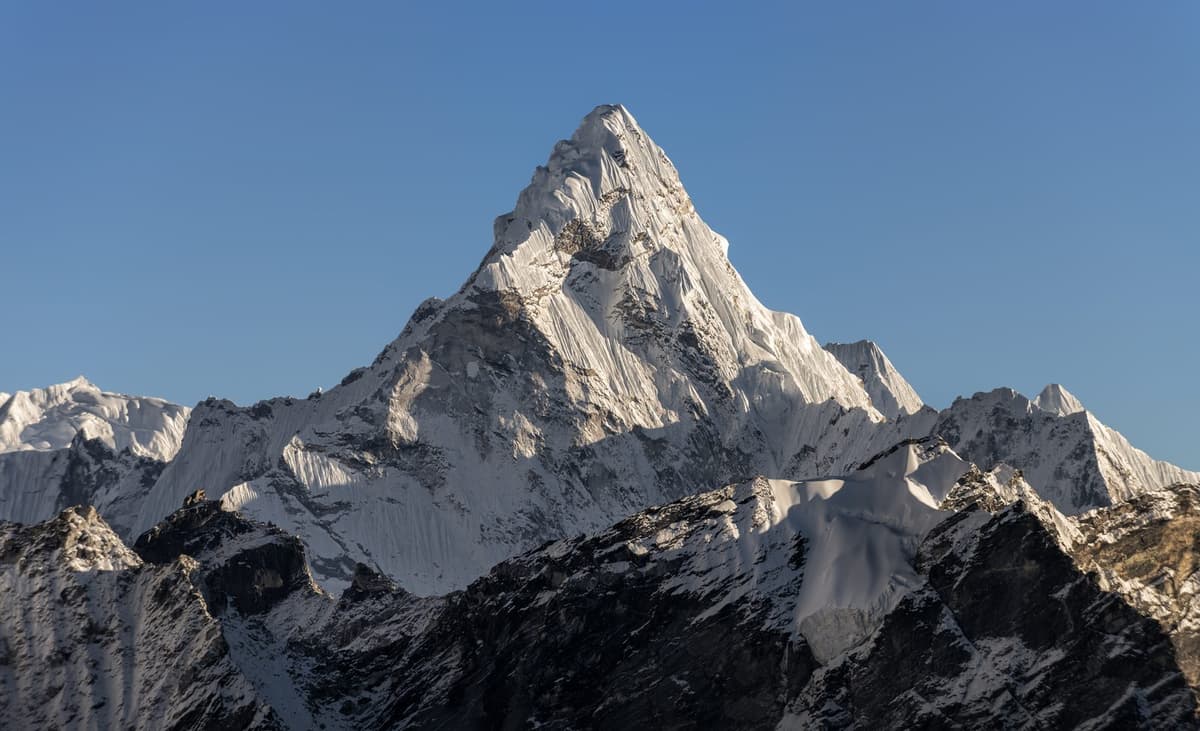
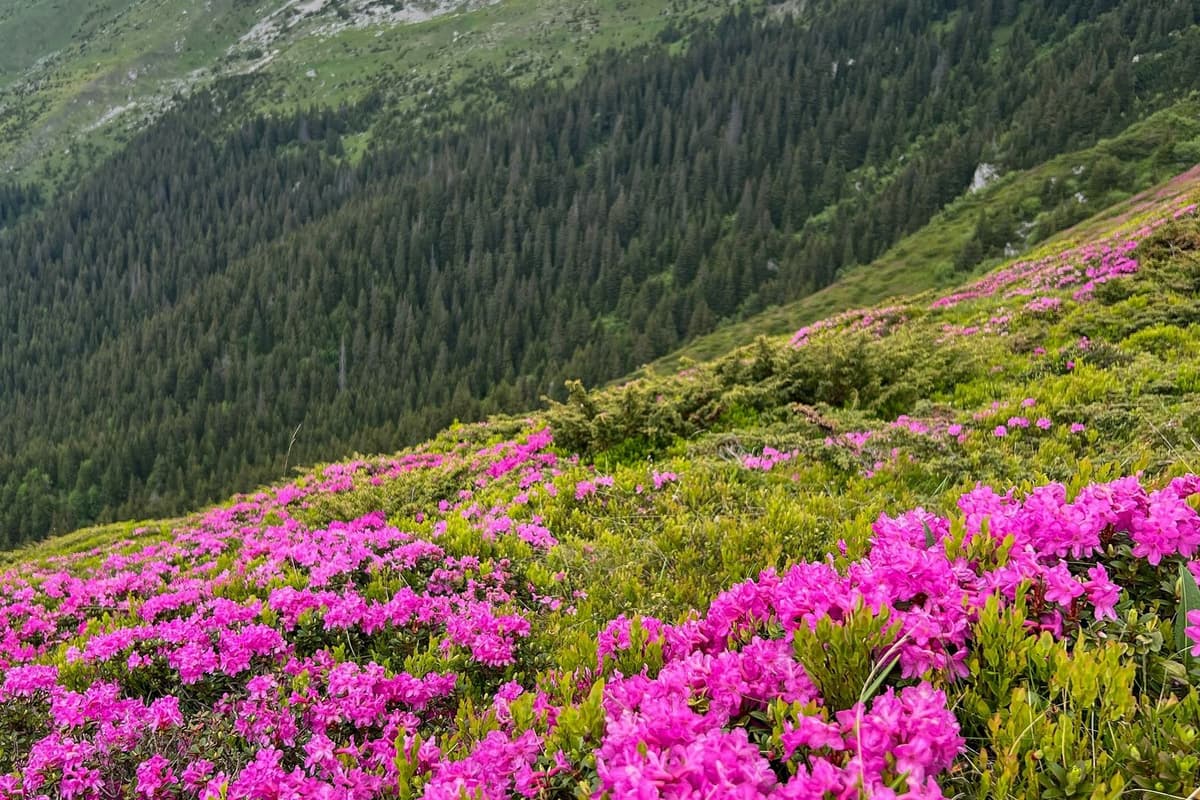
From the river crossing on the Dudh Koshi, the trail climbs steadily through rhododendron forest. At the top the ground opens onto a high ridge with lodges, a bakery and the gompa, and Ama Dablam stands across the valley. Most trekkers heading for Everest Base Camp spend the night here, the day after Namche Bazaar.
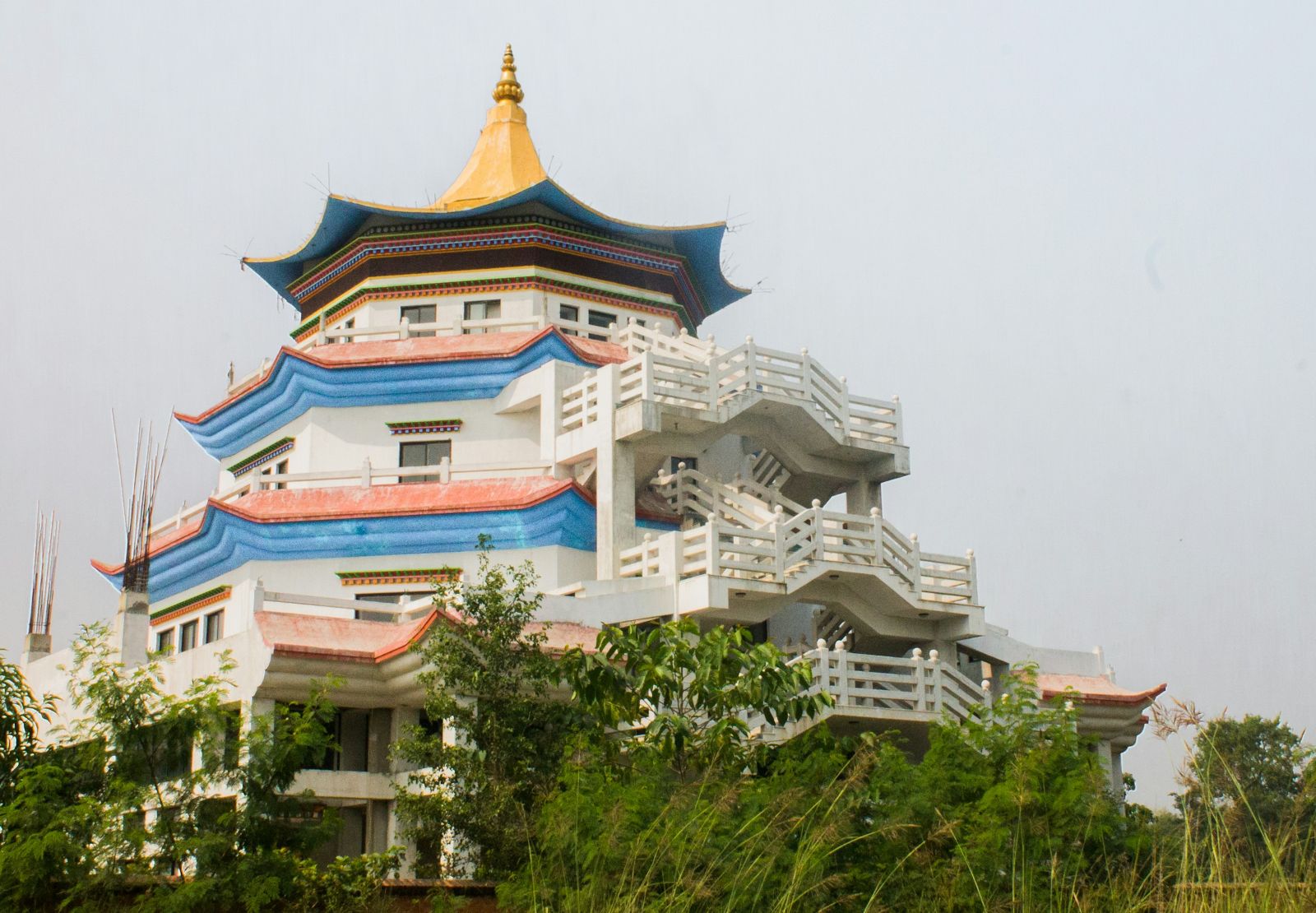
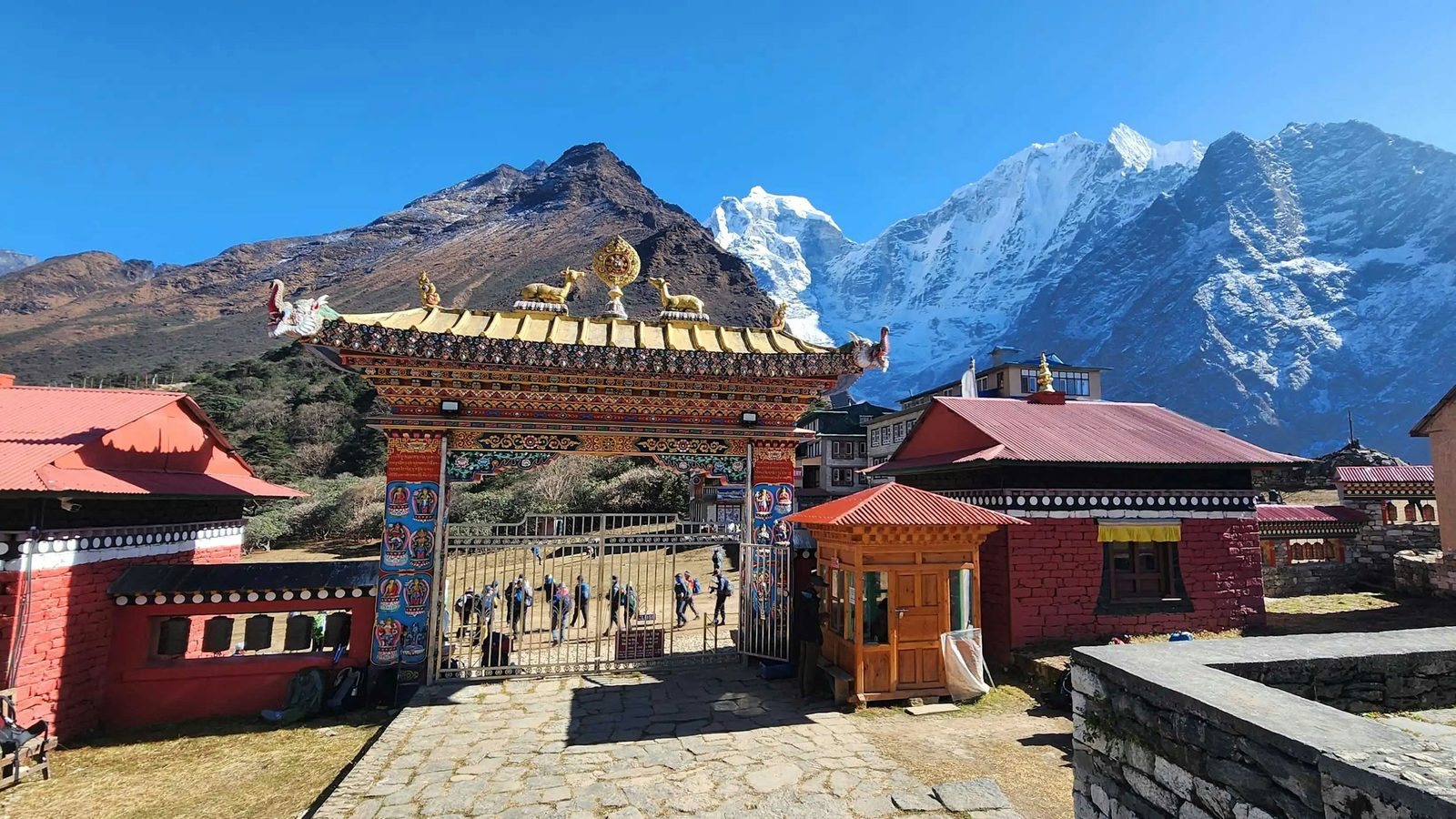
Tengboche Monastery is a Tibetan Buddhist gompa of the Nyingma tradition at about 3,860 m (12,660 ft), inside Sagarmatha National Park. Lama Gulu founded it in 1916. It is the usual night stop after Namche Bazaar on the Everest Base Camp trek, and it hosts the Mani Rimdu festival each October or November.
In this guide
- Key facts
- Where is Tengboche Monastery?
- A short history of Tengboche Monastery
- What can you see from Tengboche Monastery?
- Mani Rimdu at Tengboche Monastery
- Visiting Tengboche Monastery: prayers, etiquette and photos
- How do you get to Tengboche from Namche Bazaar?
- Tengboche or Deboche: where should you sleep?
- Will you feel the altitude at Tengboche?
- How to plan your visit, step by step
- Frequently asked questions
Key facts
- Height
- About 3,860 m (12,660 ft); no official survey figure (Our Everest View Trek page; Wikipedia, 27 Oct 2026)
- Tradition
- Tibetan Buddhist, Nyingma; linked to Rongbuk Monastery in Tibet (Wikipedia, 27 Oct 2026)
- Founded
- 1916, by Lama Gulu; inaugurated in 1919 (Nepali Times; Frances Klatzel, The Record, 27 Oct 2026)
- Destroyed and rebuilt
- Earthquake in 1934; fire on 19 January 1989; consecrated again in 1993 (The Record; Nepali Times, 27 Oct 2026)
- Setting
- Sagarmatha National Park, a UNESCO World Heritage Site since 1979 (UNESCO, 27 Oct 2026)
- Mani Rimdu
- October or November, by the Tibetan lunar calendar (Nepali Times, 27 Oct 2026)
- Visits
- "Tours of the monastery are conducted every afternoon" (Nepal Tourism Board, 27 Oct 2026)
- Permits
- Sagarmatha National Park entry and the Khumbu municipality Trek-Card (Nepal Tourism Board; the municipality, 27 Oct 2026)
Where is Tengboche Monastery?
Tengboche Monastery stands in the Khumbu, the Sherpa homeland below Everest, inside Sagarmatha National Park, which UNESCO inscribed as a World Heritage Site in 1979. The Nepal Tourism Board (NTB) places it "atop a hill across Imja Khola", "on the lap of sacred Khumbila", and calls it "the most common night halt after Namche".
It is often described as the largest monastery in the Khumbu, and NTB calls it "one of the most famous monasteries of Nepal". Its formal name is Dawa Choling Gompa, and older books, including John Hunt's account of the 1953 Everest expedition, spell it Thyangboche.
We give the height as about 3,860 m, the figure on our own trip page. You will also see 3,867 m, and published figures run from about 3,857 m to 3,870 m.
Around the gompa is a small village. NTB notes that "Tengboche has many rest houses and lodges as well as spacious camping sites", and there is a bakery. You sleep in the lodges, not in the monastery.
A short history of Tengboche Monastery
Tengboche's story begins on the Tibetan side of Everest, at Rongbuk Monastery. With the blessing of the Rongbuk lama Ngawang Tenzin Norbu, Lama Gulu founded Tengboche in 1916, and local Sherpa patrons paid for the building. Frances Klatzel, writing at the request of the monastic community, gives 1919 as the year it was inaugurated.
Tenzing Norgay, later famous on Everest, was once sent to Tengboche to become a monk, but decided the life was not for him and left, as Sherry Ortner records in her book Life and Death on Mt. Everest.
Earthquake, fire and rebuilding
The great earthquake of 1934 destroyed the main prayer hall, and Lama Gulu died that night, Klatzel writes. The monks and the Sherpa community rebuilt it under his successor, Umze Gelden.
Late on the night of 19 January 1989 the monastery burned to the ground. The fire was blamed on an electrical fault from the new micro-hydro supply, and old scriptures, statues, murals and carvings were lost; a few trekkers managed to save some books and paintings.
The Rinpoche turned to Sir Edmund Hillary and other friends for help with the rebuild, and support came from abroad as well as from the Khumbu. The new monastery was consecrated in 1993, with Prime Minister Girija Prasad Koirala and Hillary at the ceremony, Lisa Choegyal wrote in Nepali Times. In NTB's words, the original building was "replaced with a more solid structure".
"Tengboche has brought the Sherpa community together three times (1919, 1934, 1990) now to build and rebuild it."
The Tengboche Rinpoche, quoted by Frances Klatzel in The Record, 5 November 2020
The Tengboche Rinpoche
For most of the monastery's modern life it was led by Ngawang Tenzin Zangbu, the Tengboche Rinpoche. Born in Namche in 1935, he was recognised as a child as the reincarnation of Lama Gulu, studied at Rongbuk and came back to head Tengboche in the 1950s. Nepali Times wrote that he "blessed hundreds of passing mountaineering expeditions", and he helped set up the Sagarmatha Pollution Control Committee.
He died in Namche Bazaar on 10 October 2020. In 2020 Nepali Times reported that Sakya Trichen would name his successor, and that the Defuk Rinpoche of Pangboche would carry out his duties in the meantime. For who leads the monastery today, ask when you are there.
What can you see from Tengboche Monastery?
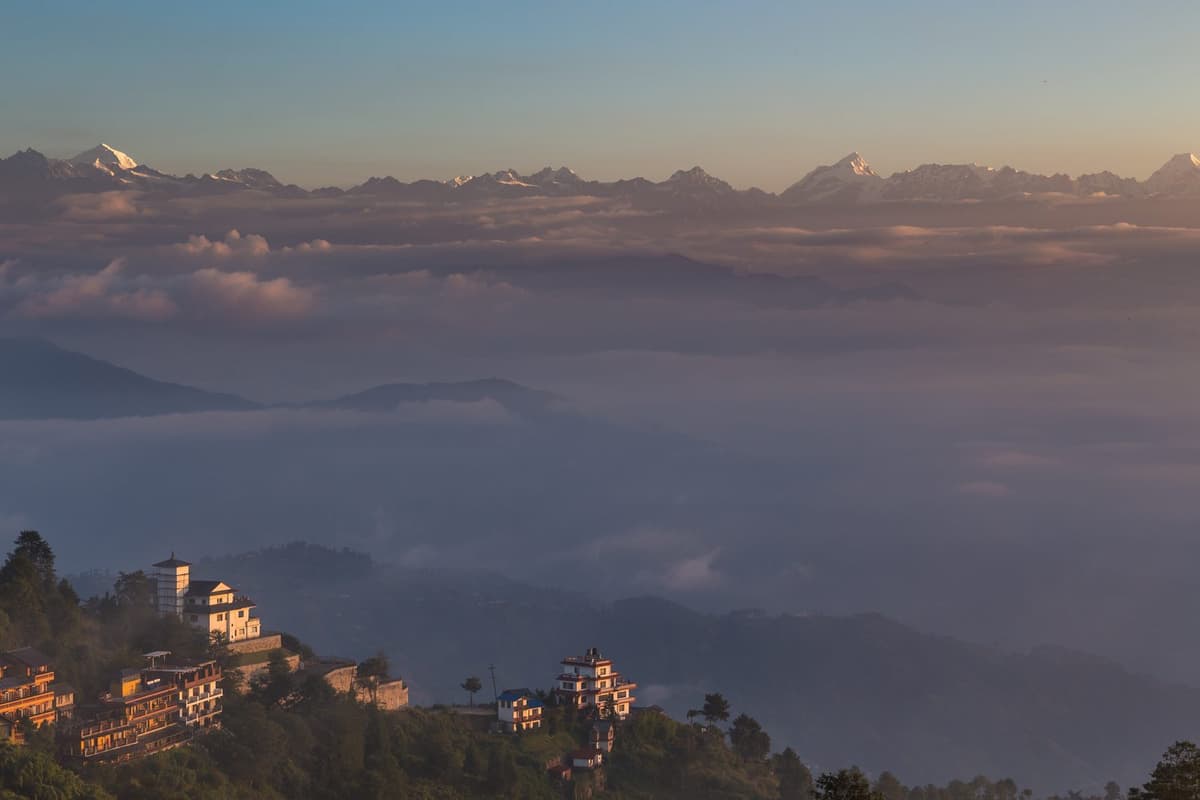
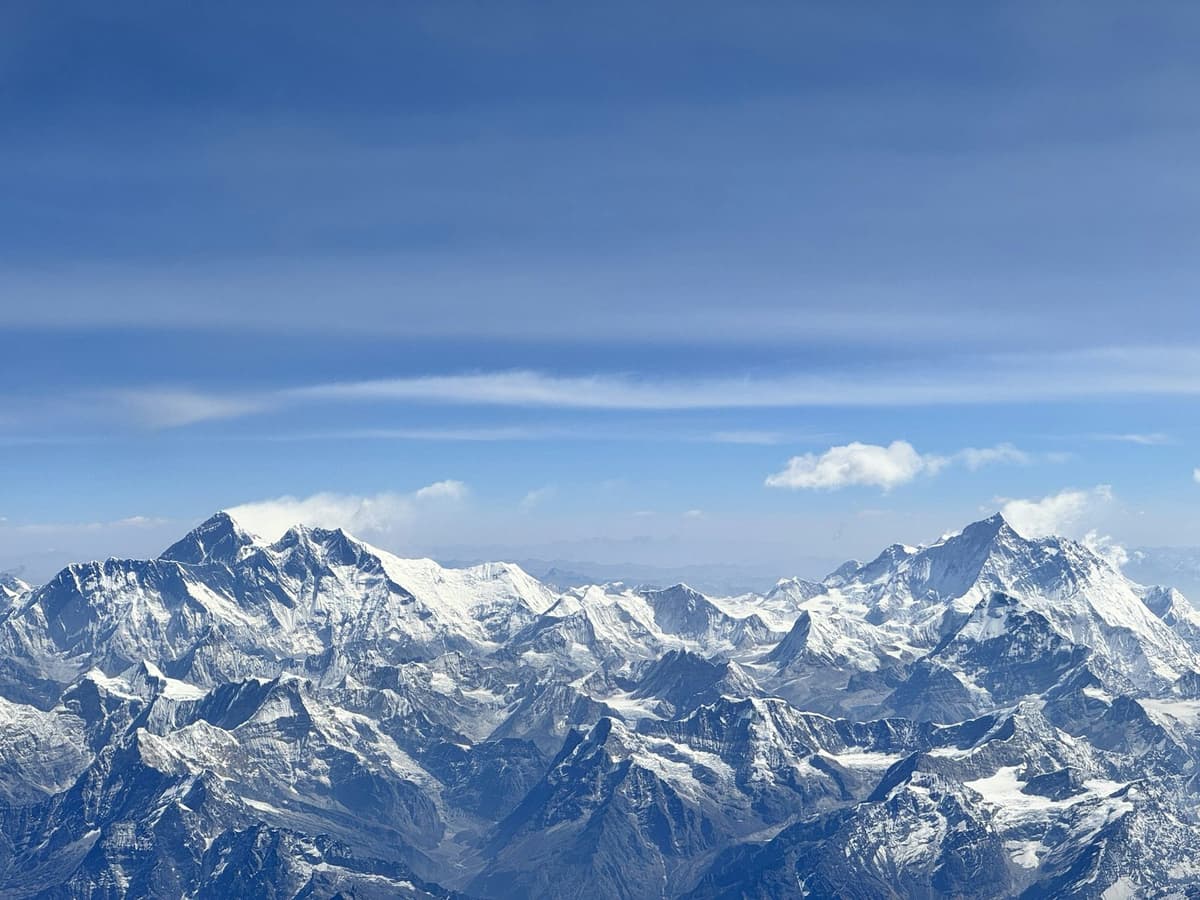
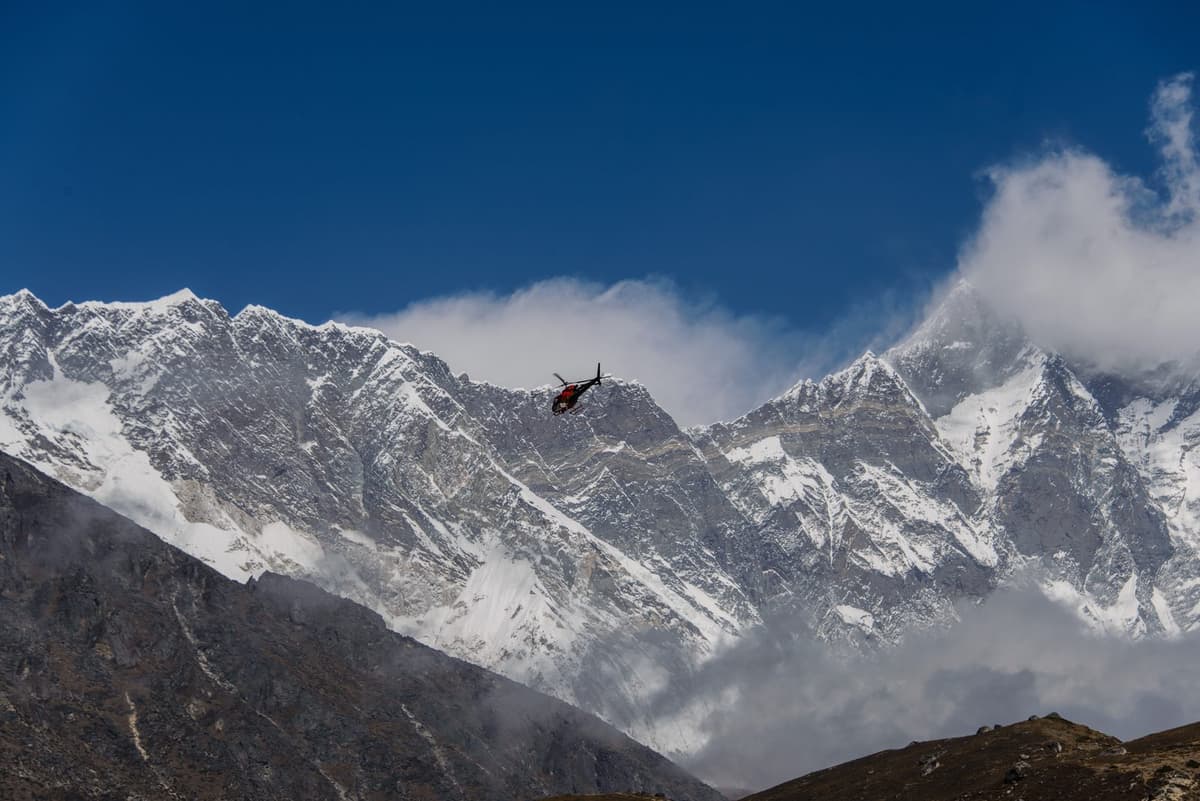
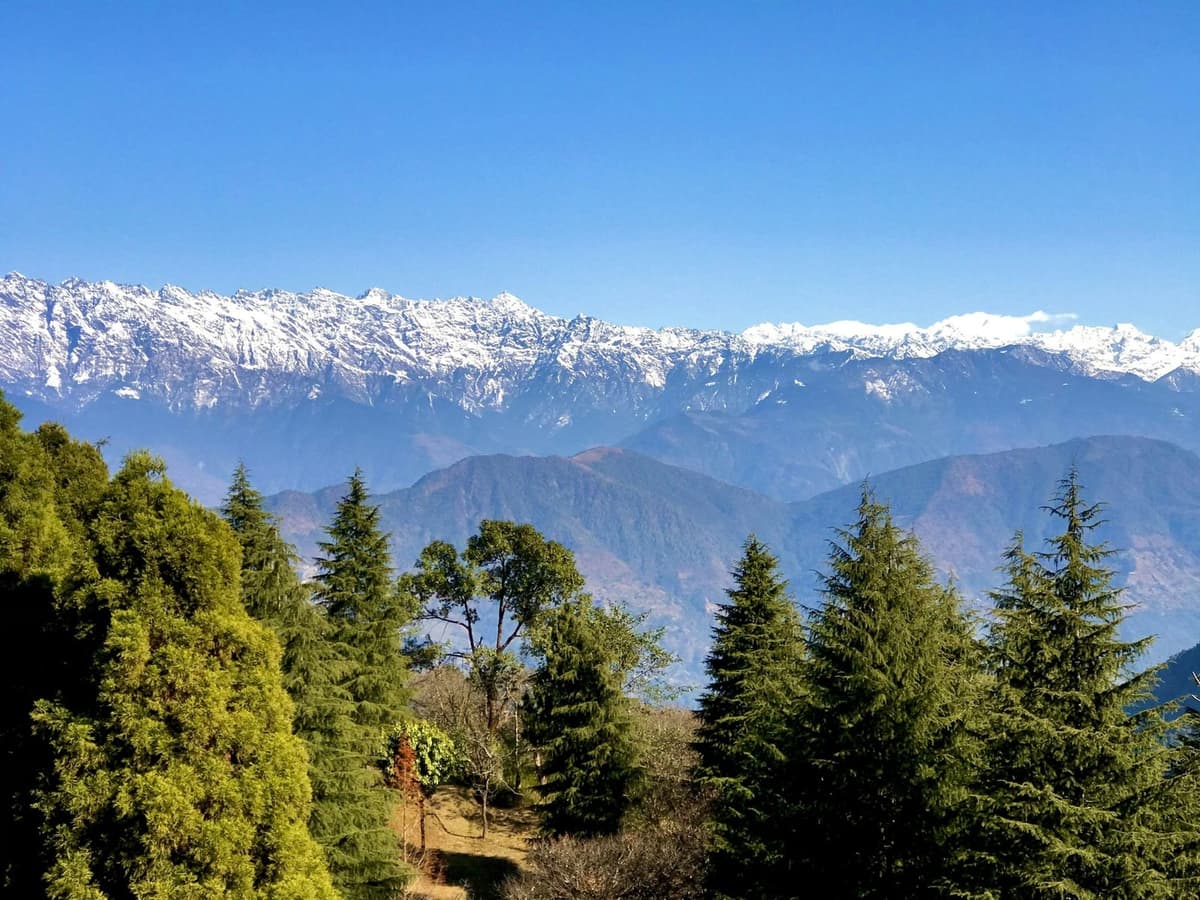
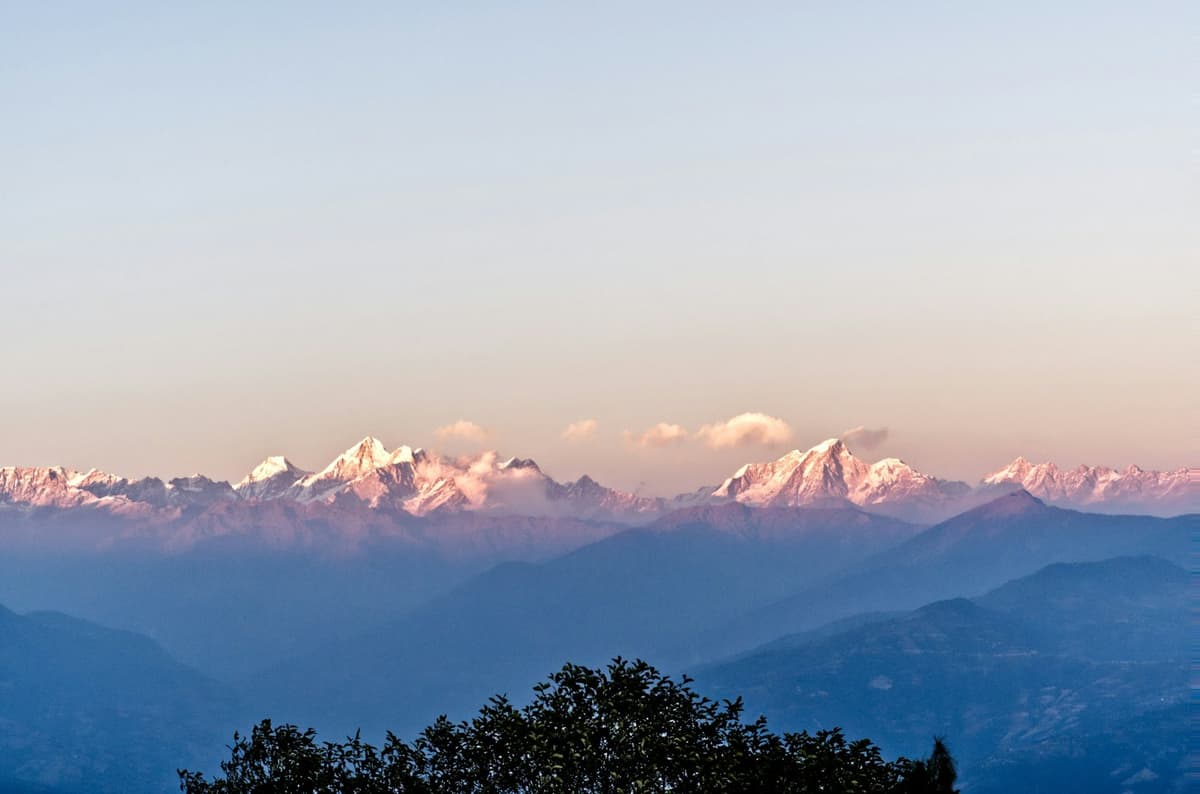
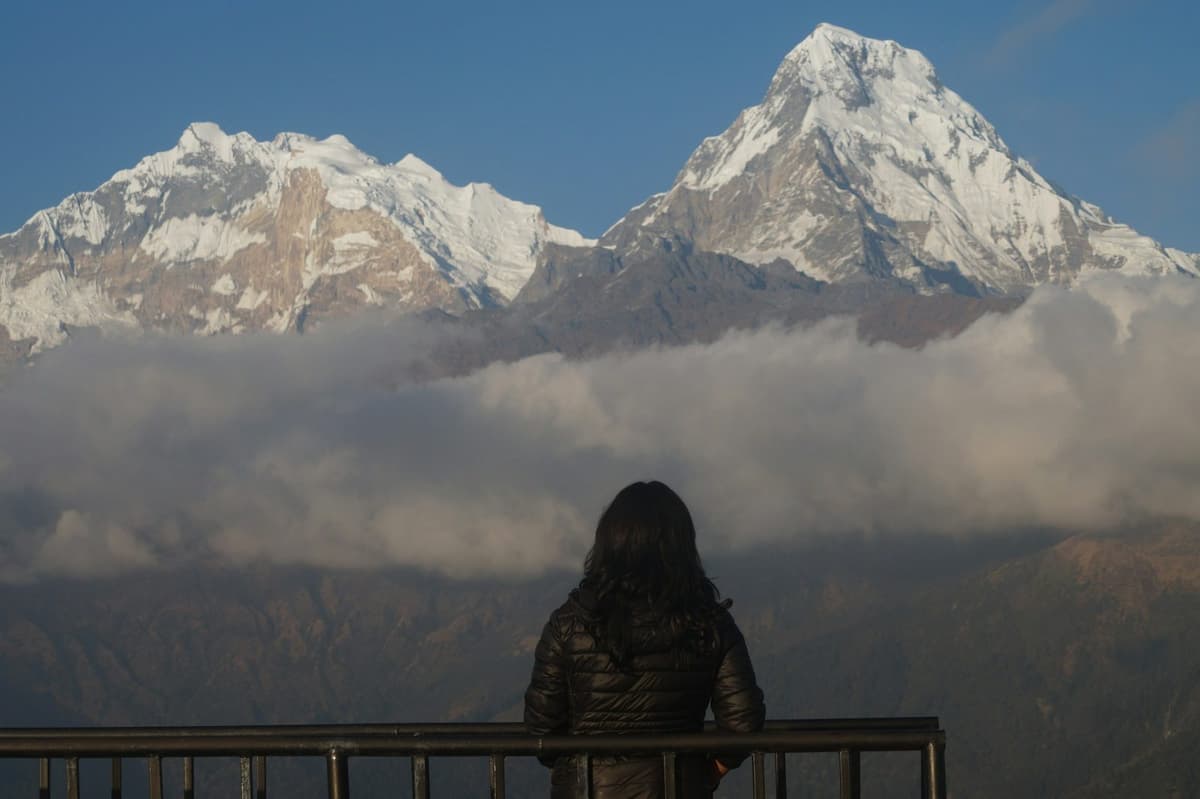
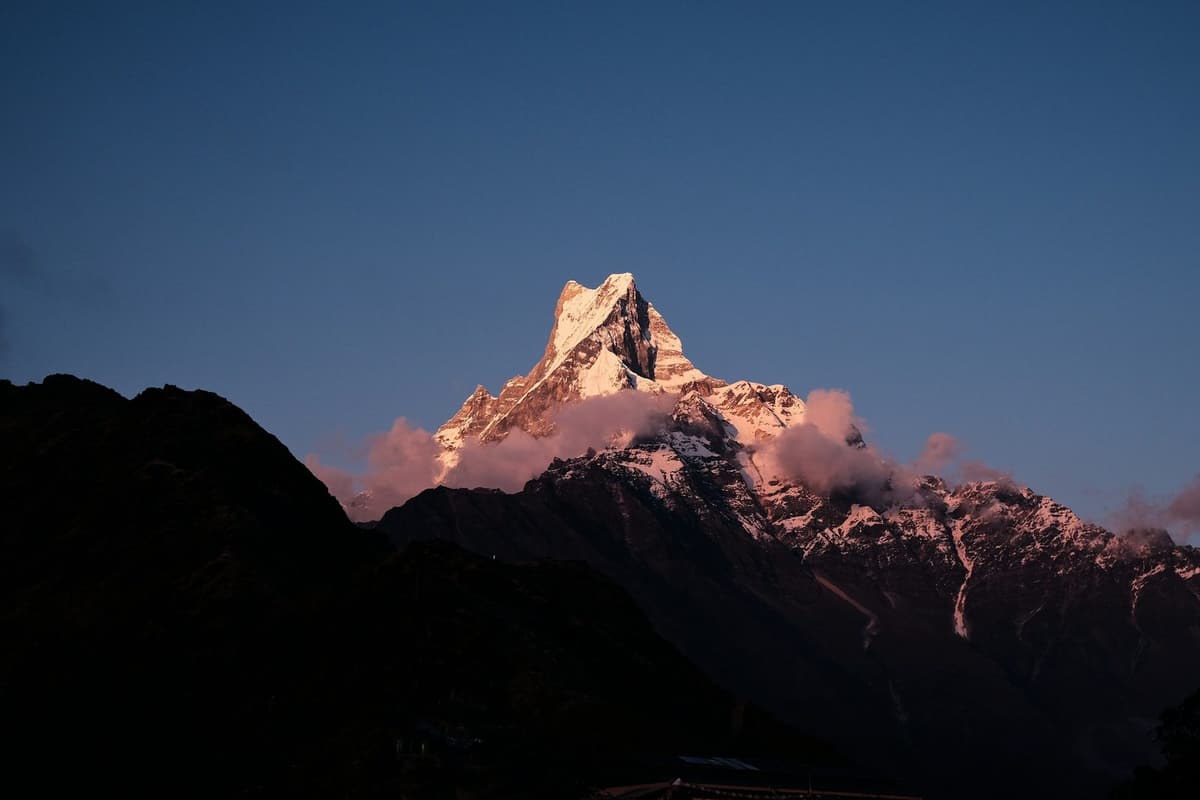
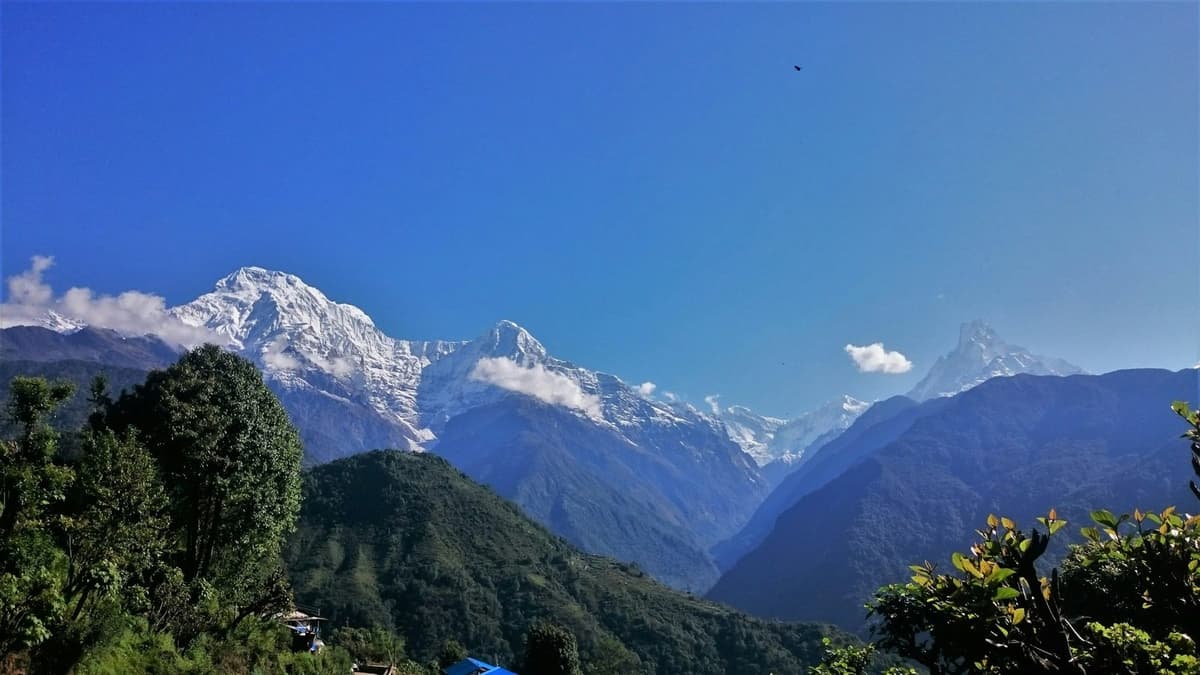
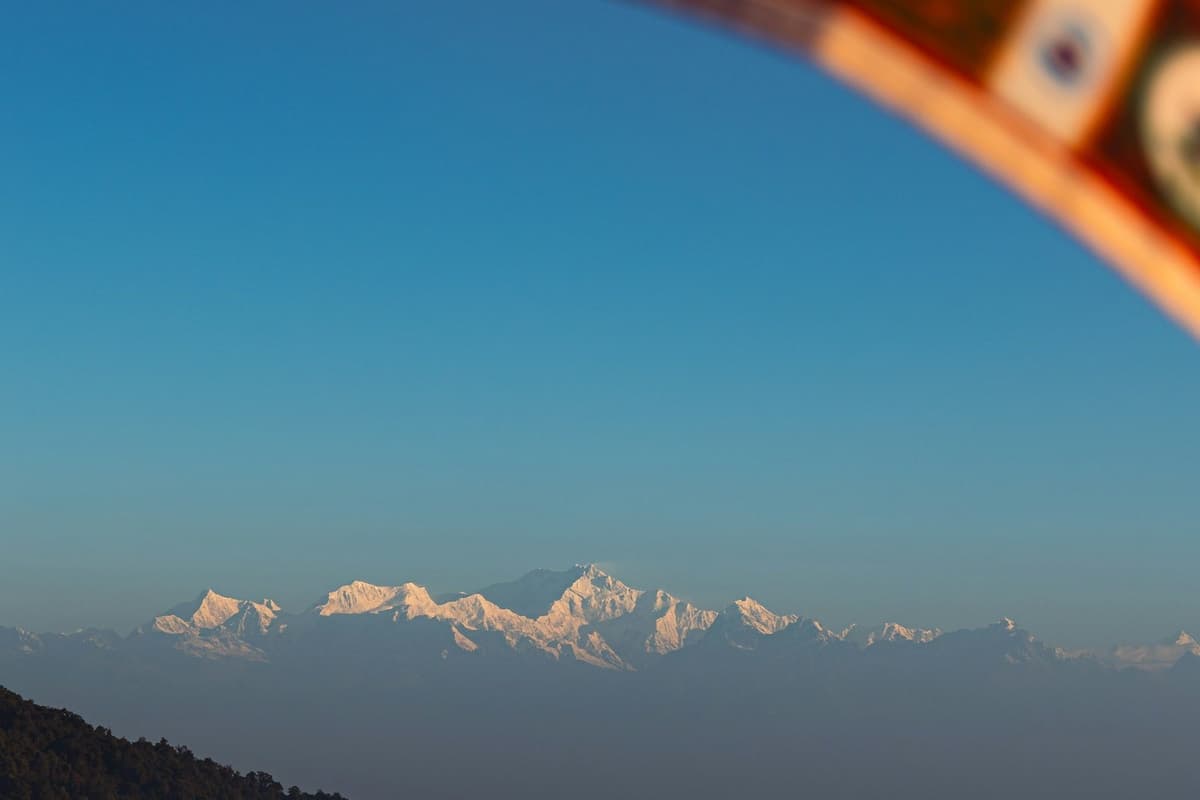
On a clear day you see Everest, Lhotse and Ama Dablam, the three peaks NTB names in its panorama. Reference works add Nuptse, Thamserku and Taboche. Ama Dablam is the one that holds your eye, right across the valley.
| Peak | Height | Source |
|---|---|---|
| Everest | 8,848.86 m | Nepal and China joint announcement, December 2020 |
| Lhotse | 8,516 m | Nepalese and Chinese mapping |
| Nuptse | About 7,860 m | Reference sources |
| Ama Dablam | 6,812 m | Department of Tourism |
| Thamserku | 6,623 m | Nepa Maps |
| Taboche (Tawache) | No reliable figure | None we trust |
"Thyangboche must be one of the most beautiful places in the world."
John Hunt, The Ascent of Everest (1953)
NTB says "the clearest skies are found after the monsoon in October and November". Get up for sunrise: the mountains are usually clearest early, and cloud often builds later in the day. Nobody can promise a clear morning, and we will not. For a month-by-month picture, see our guide to the best time to trek Everest Base Camp.
Mani Rimdu at Tengboche Monastery
Mani Rimdu is the monastery's great festival. NTB describes "a religious gathering, songs, ritual dances, and enactments of the lives of legendary figures", and notes that "many trekkers book their trek to coincide with the festival". NTB says every October, but the date follows the Tibetan lunar calendar, so it falls in October or November.
The festival began at Rongbuk in the early 1900s, at the initiative of Ngawang Tenzin Norbu, and Nepali Times wrote in 2020 that it had been held at Tengboche every year for more than a century. The full ritual cycle runs about 19 days, most of it private, including the making of a sand mandala; visitors come for the three public days.
| Public day | Name | What happens |
|---|---|---|
| Day 1 | Wong | An empowerment and blessing on the full moon; blessed pills, called rilwu, are handed out |
| Day 2 | Chham | The masked dances: a long day, and the main event for most visitors |
| Day 3 | Jinsak | A fire ritual; the sand mandala is dismantled and the sand offered to the river |
Dates. Trekking companies gave the 2026 public days as 26 to 28 October 2026. We have no reliable date for 2027. Dates are usually announced through trekking companies in the months before, so ask us when you start planning. Mani Rimdu is also held at Thame and Chiwong monasteries; trekking companies say Thame's is in spring.
What it is like to attend. A first-hand account from 2025 says photographing the masked dances is not a problem, but ask before close-ups of people. The same writer found the crowd at the empowerment "quite chaotic", and lodges fill up and cannot be booked online, so arrive a day or two early.
"The Rinpoche always celebrated the festival and would never have wanted us to miss it for any reason."
Pemba Gyanzen Sherpa, custodian of Tengboche Monastery, to Nepali Times, 31 October 2020, three weeks after the Rinpoche's death
Visiting Tengboche Monastery: prayers, etiquette and photos
NTB says: "Tours of the monastery are conducted every afternoon." The monks hold prayers, called puja, early in the morning and again in the afternoon. Times vary, so ask at the monastery for the day's time. Sitting quietly at the back through a puja is one of the best things you can do here.
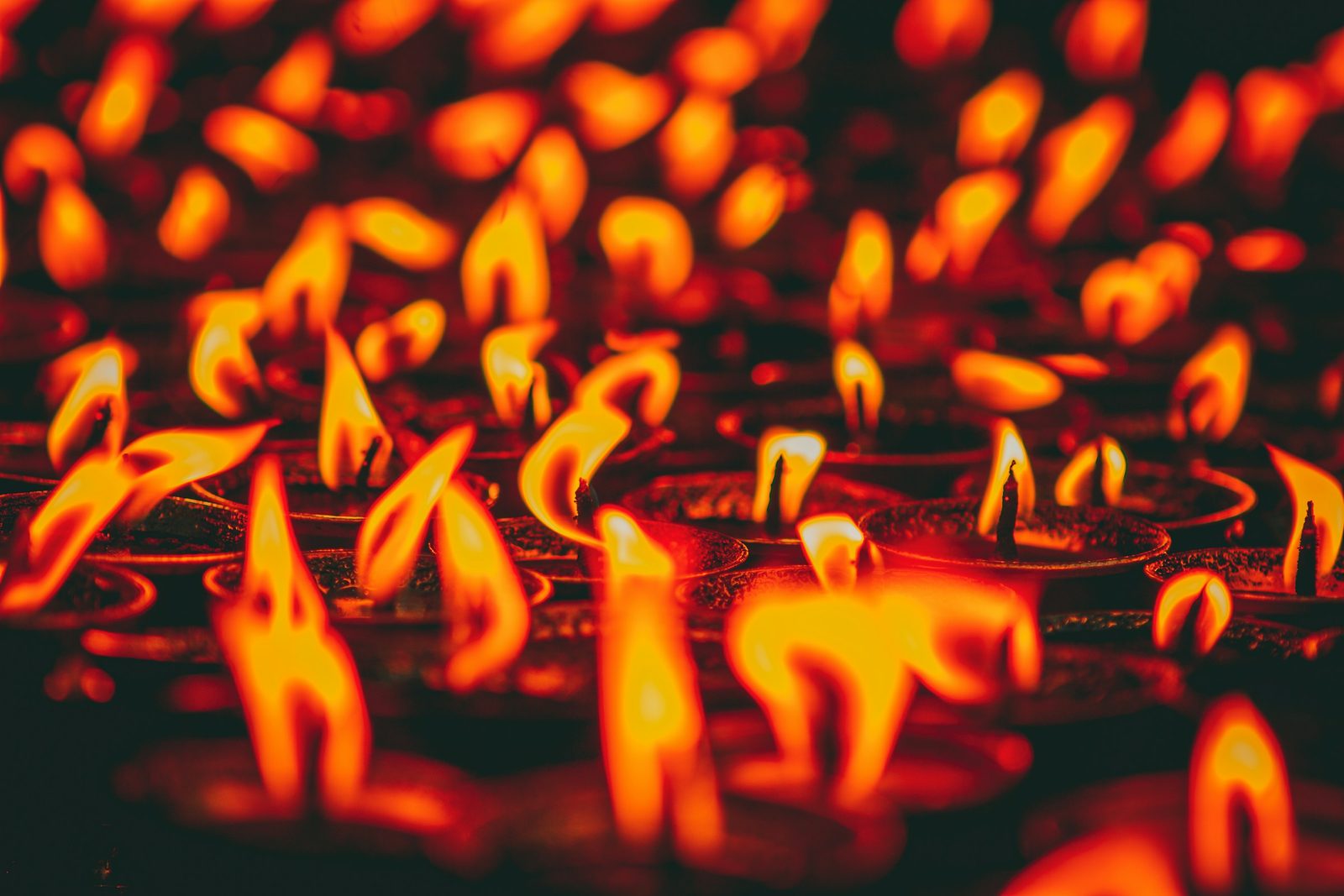
Etiquette in the prayer hall:
- Take your shoes off before you enter.
- Walk clockwise round the stupa and the chortens (small Buddhist shrines).
- During puja, sit quietly at the back, with your phone on silent.
- Ask before you photograph a monk, and dress modestly.
Photos. Photography inside the prayer hall is generally not allowed; the courtyard and the outside are fine. If in doubt, ask a monk.
Fee or donation. You may be asked for a small fee or donation for the prayer hall, so carry some Nepali rupees in small notes.
How do you get to Tengboche from Namche Bazaar?
You walk. Most people fly to Lukla, whose airstrip sits at 2,846 m, then walk up to Namche Bazaar, at about 3,440 m. In the busy seasons most fixed-wing Lukla flights leave from Manthali airport in Ramechhap rather than Kathmandu, and all of them depend on the weather. Our Lukla airport guide explains the flights and the delays.
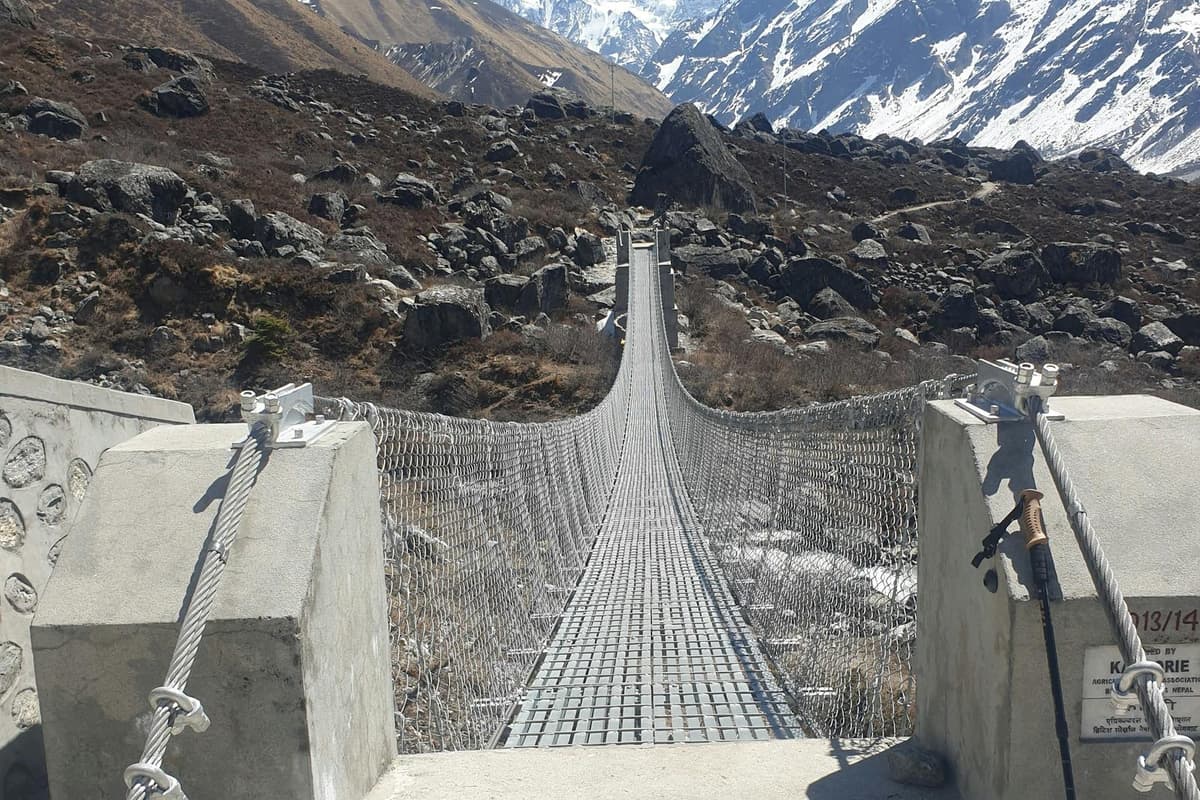
From Namche the trail drops to the Dudh Koshi, crossing at about 3,250 m, then climbs roughly 600 m through rhododendron forest to Tengboche. Most operators allow four to six hours, and give the distance as 9.5 to 11 km.
On our Everest Base Camp trek you spend a second night in Namche to acclimatise, walk to Tengboche on day four and sleep there, then descend through forest to Deboche the next morning on the way to Dingboche. Our shorter Everest View Trek reaches Tengboche on day four before heading back down towards Monjo.
Which permits do you need?
Two, and you need them for the trek rather than for the monastery.
| Permit | Foreign nationals | SAARC nationals | Notes |
|---|---|---|---|
| Sagarmatha National Park entry | NPR 3,000 | NPR 1,500 | Per person per entry; children under 10 free |
| Khumbu Pasang Lhamu Rural Municipality Trek-Card | NPR 3,000 | NPR 2,000 (SAARC countries and China) | Issued at the Tourist Information Centre in Lukla; bring your passport and a recent photo |
On our Everest treks we arrange both. A licensed guide walks with you on every trek we run.
Tengboche or Deboche: where should you sleep?
Sleep at Tengboche if you want the morning puja and the sunrise on the doorstep. Choose Deboche if you would rather have a quieter night in the forest.
Deboche is a short walk below Tengboche, in rhododendron and juniper forest, at about 3,800 m. It has a small nunnery that Tengboche administers, on land Lama Gulu gave to the nuns. One trekking company describes "several calm forest lodges" there, and some groups sleep there instead. On our Everest Base Camp trek we sleep at Tengboche and pass through Deboche the next morning. During Mani Rimdu both fill up.
Will you feel the altitude at Tengboche?
Possibly. The CDC says any unacclimatised traveller going to a sleeping altitude of 2,450 m (8,000 ft) or more is at risk, and Tengboche is well above that. Sleeping there puts you about 400 m higher than Namche, within the CDC's advice of no more than 500 m (1,650 ft) a night in sleeping height once you are above 3,000 m (9,800 ft).
- Go up slowly, and allow an extra night for every 1,000 m (3,300 ft) of sleeping height you gain.
- Walk slowly and drink water.
- Avoid alcohol for the first 48 hours at altitude.
- Know the symptoms: headache, nausea, dizziness and poor sleep.
- Never go higher with symptoms, and go down if they get worse.
- Ask your doctor about preventive medicine such as acetazolamide.
Garlic soup is a comforting local tradition, not a proven cure. Our guide to altitude sickness on Nepal treks covers it in full.
The nearest Himalayan Rescue Association aid post is at Pheriche, about 4,370 m (14,343 ft), a day beyond Tengboche. Volunteer doctors staff it in the trekking seasons, and this autumn it was due to stay open until the end of November, with a daily altitude talk at 3 pm.
How to plan your visit, step by step
- Pick your season. October and November usually bring the clearest skies; for Mani Rimdu, ask us for the year's dates.
- Build in a second Namche night before Tengboche, to help your body adjust.
- Sort the two permits. On our Everest treks we arrange both.
- Carry small rupee notes for a fee or donation at the prayer hall.
- Arrive by early afternoon for the monastery tour, and ask about the puja time.
- Get up for sunrise, and in late October keep an eye on the forecast.
Frequently asked questions
How high is Tengboche Monastery?
About 3,860 m (12,660 ft). You will see 3,867 m quoted most often, and published figures run from about 3,857 m to 3,870 m; there is no official survey figure. Either way, it is well above the 2,450 m (8,000 ft) at which the CDC says altitude illness becomes a risk, so climb slowly.
When is the Mani Rimdu festival at Tengboche?
In October or November, on dates set by the Tibetan lunar calendar. Trekking companies gave the three public days in 2026 as 26 to 28 October. No reliable date for 2027 has been published. Dates usually come out through trekking companies in the months before, so ask us when you start planning.
Can you see Everest from Tengboche Monastery?
Yes, on a clear day. NTB names Everest, Lhotse and Ama Dablam in the view from Tengboche, and you also see Nuptse, Thamserku and Taboche. Skies are usually clearest after the monsoon, in October and November. Get up for sunrise, when the mountains are usually clearest. Nobody can promise a view.
Is there an entrance fee for Tengboche Monastery, and can you take photos inside?
You may be asked for a small fee or donation for the prayer hall, so carry some Nepali rupees in small notes. Photography inside the prayer hall is generally not allowed. The courtyard and the outside are fine, and the masked dances at Mani Rimdu can be photographed. Always ask before you photograph a monk.
How long is the walk from Namche Bazaar to Tengboche?
Most operators allow four to six hours. Published distances run from 9.5 to 11 km. The trail drops to the Dudh Koshi, crossing at about 3,250 m, then climbs roughly 600 m through rhododendron forest. Most of the effort is in that final climb, so take it slowly and stop to drink water.
Visit Tengboche with us
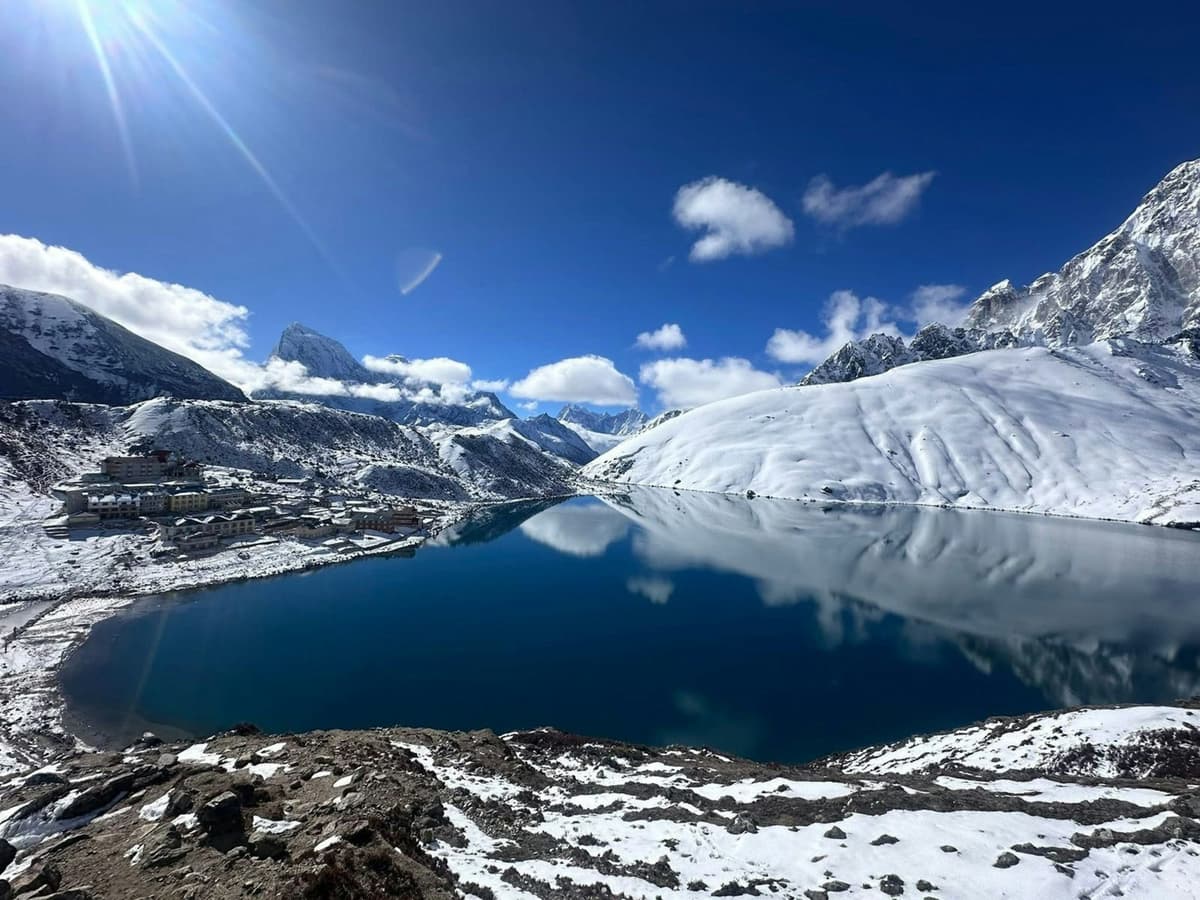
Tengboche is a night on our Everest Base Camp trek and the turning point of our shorter Everest View Trek. For the full route, start with our Everest Base Camp trek guide. If you are weighing the base camp route against the lakes, our Gokyo Lakes guide covers that trek. Send us your dates on WhatsApp or through our enquiry form, and we will tell you honestly which trip suits you and if your dates fall near Mani Rimdu.