




By Uncover Nepal Team · Checked by our Kathmandu travel team · Last checked 30 October 2026
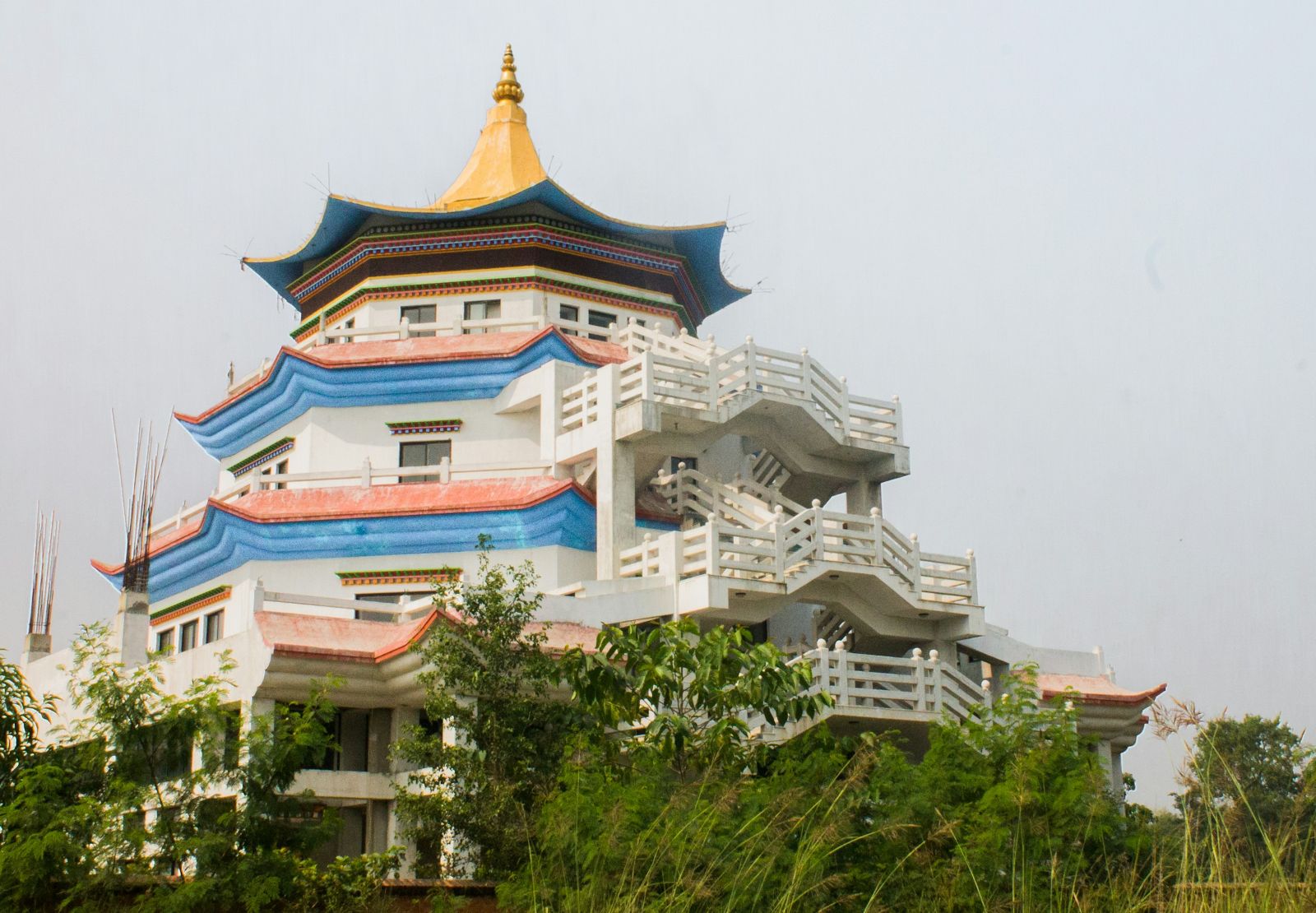
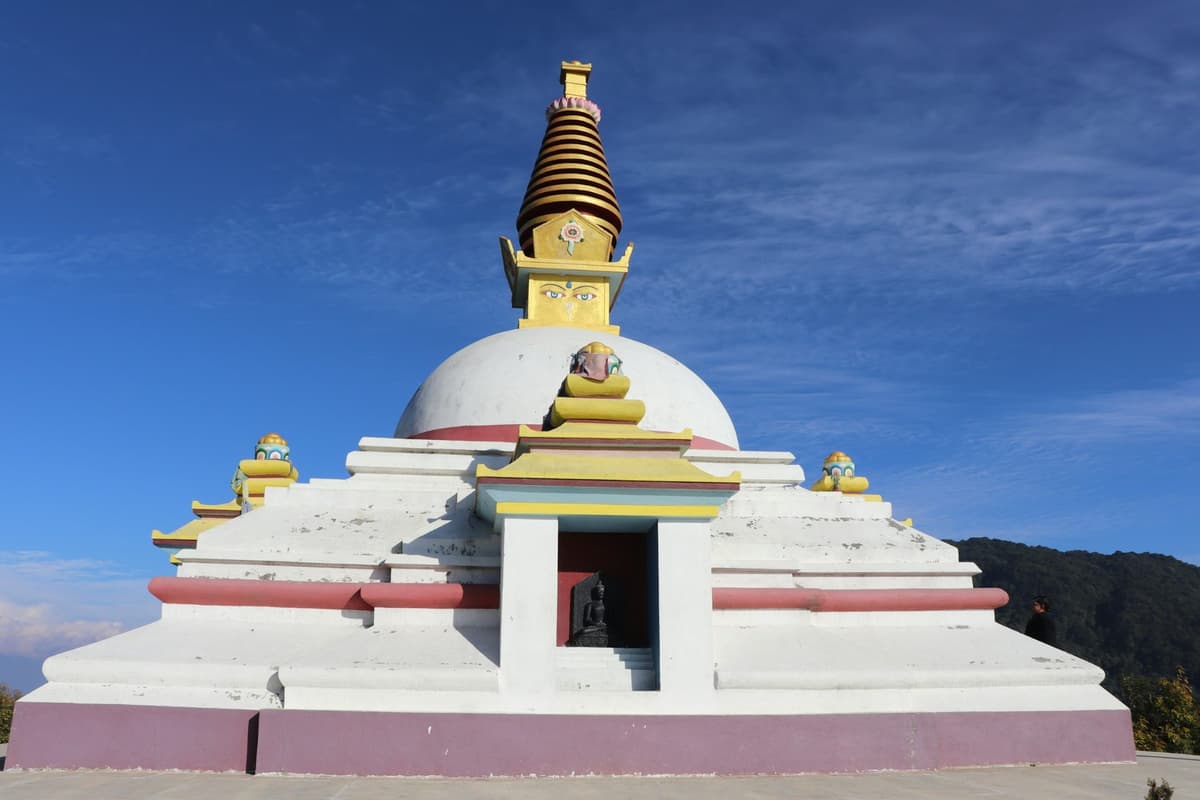
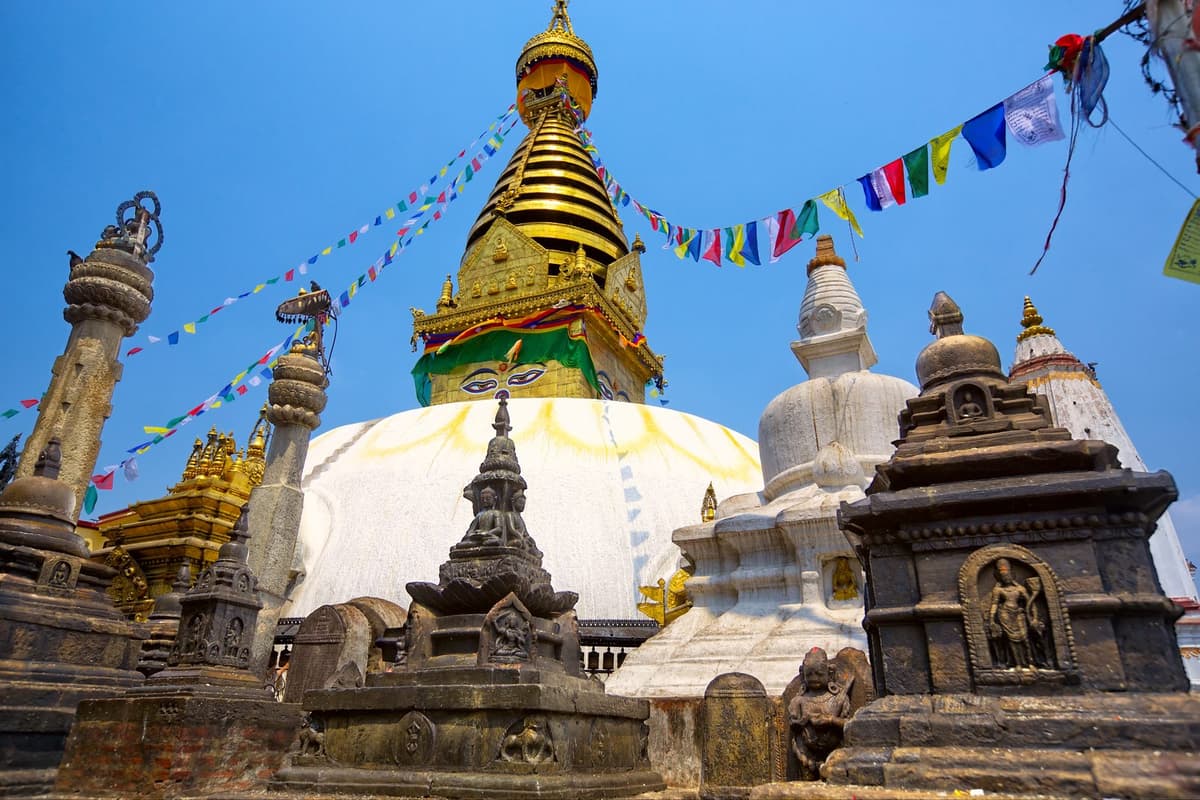
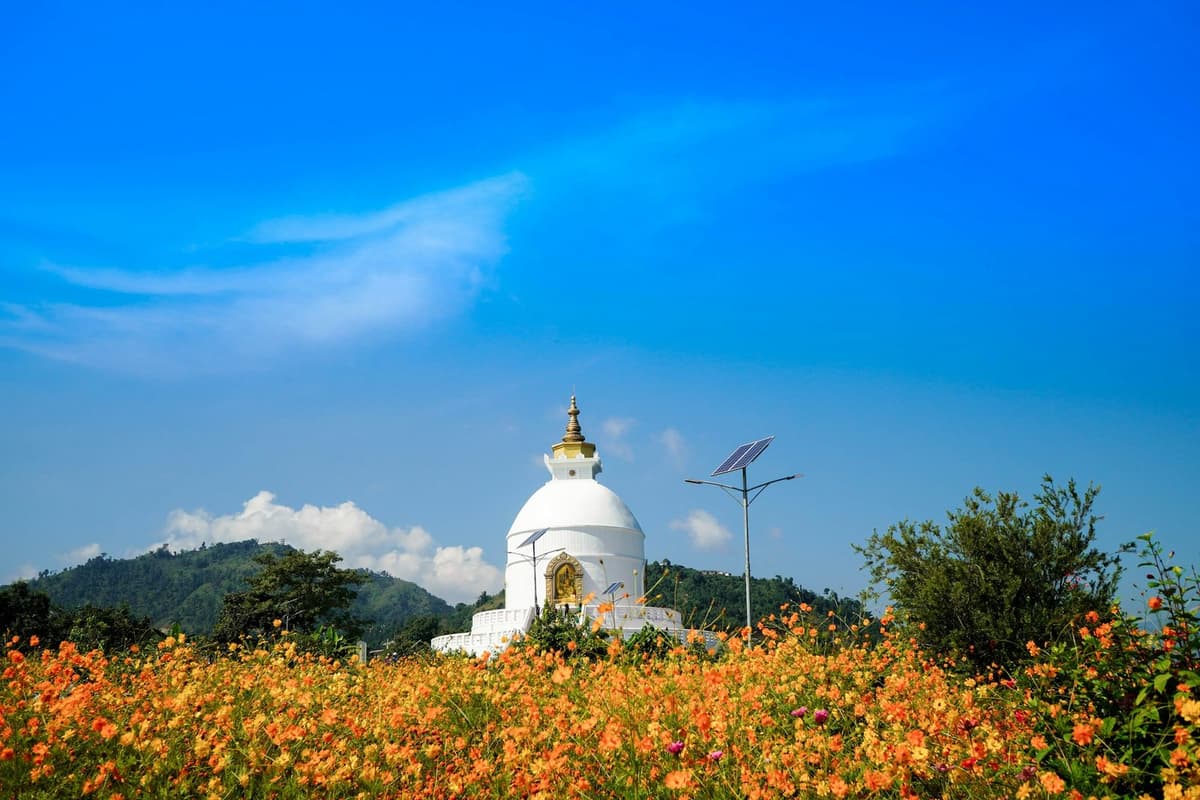
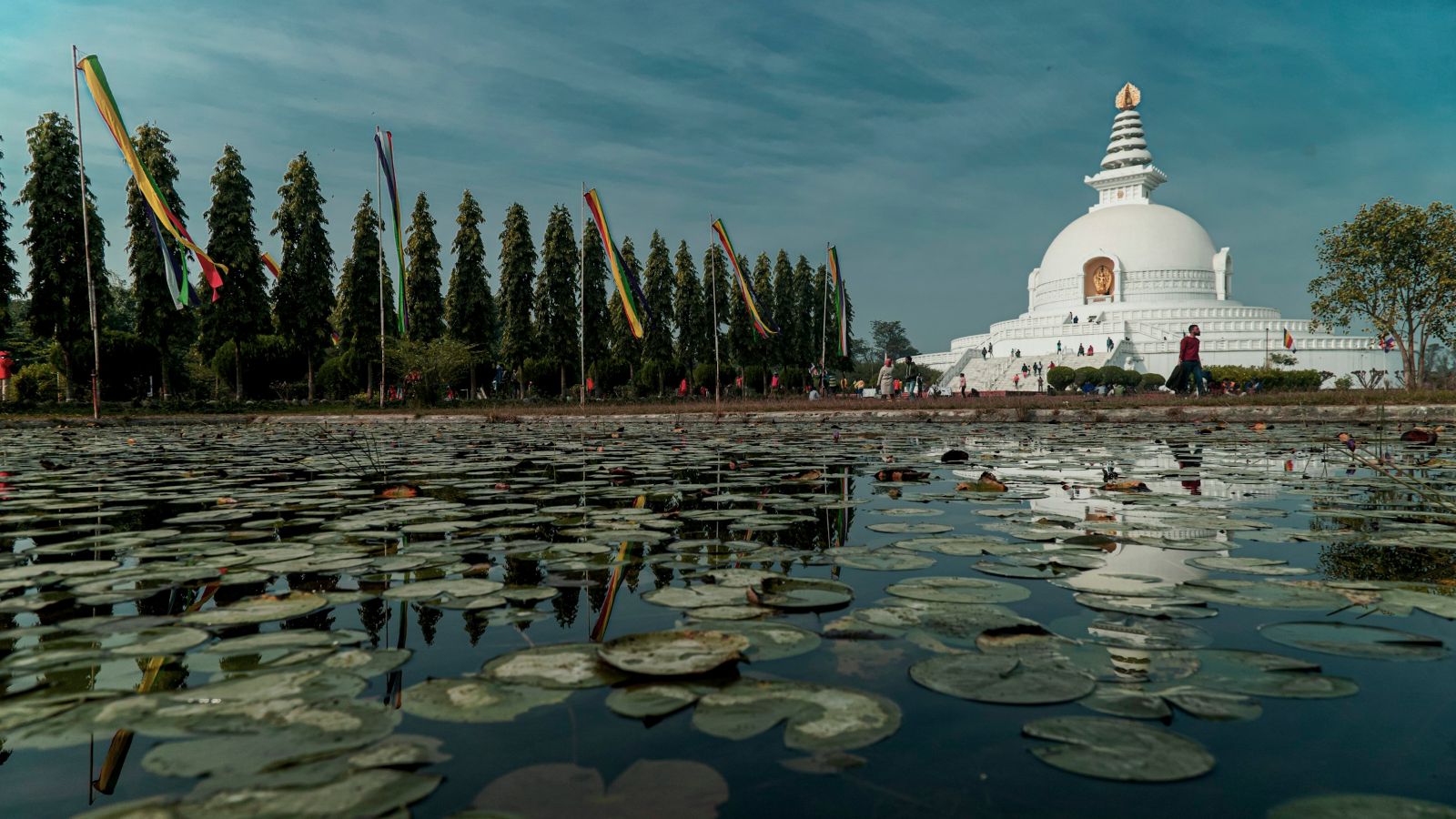
At the northern end of Lumbini's planned site, the opposite end from the Maya Devi Temple, a great stupa rises over the flat Terai plain, with a gold-plated Buddha looking out from it. "May peace prevail" was the message at its inauguration in November 2001, the Nepali Times reported.
The World Peace Pagoda in Lumbini is a stupa built by Nipponzan Myohoji, a Japanese Buddhist organisation, and inaugurated in November 2001, the Nepali Times reported. It stands in the Cultural Centre and New Lumbini Village zone, at the north end of the master plan, so treat it as a separate stop from the Sacred Garden.
This guide sits under our Lumbini travel guide, which covers the whole site, the fees and the seasons. Here we stay with the pagoda: who built it, what you see, how it fits into a visit, and what we could not find published, such as opening hours or any fee. It is not the World Peace Pagoda in Pokhara, a separate stupa that the same Japanese order built.
Key facts
- Who built it
- Nipponzan Myohoji, a Japanese Buddhist organisation; the Trust calls it "the World Peace Pagoda of Japan" (Nepali Times, 9 Nov 2001; Lumbini Development Trust (LDT), checked 30 Oct 2026)
- Inaugurated
- November 2001, as reported at the time (Nepali Times, 9 Nov 2001, checked 30 Oct 2026)
- Size
- 41.5 m high, 59 m in diameter, as reported in 2001; no official figure (Nepali Times, 9 Nov 2001, checked 30 Oct 2026)
- Where
- Cultural Centre and New Lumbini Village, the northern zone of the master plan (LDT; Nepali Times (2013), checked 30 Oct 2026)
- Pagoda fee and hours
- We found neither published by an official source (LDT and NTB searched, 30 Oct 2026)
- Buddha Jayanti 2027
- Expected Thursday 20 May 2027 (Office Holidays; Prokerala, 30 Oct 2026)
In this guide
- Who built the World Peace Pagoda in Lumbini, and when?
- What will you see at the pagoda?
- Where is the World Peace Pagoda in Lumbini's master plan?
- What else is near the pagoda?
- How do you get to the World Peace Pagoda?
- When is the best time to visit?
- Is there an entry fee, and when is the pagoda open?
- How long should you allow for the pagoda?
- Frequently asked questions
- Planning your visit to Lumbini
Who built the World Peace Pagoda in Lumbini, and when?
Nipponzan Myohoji, a Japanese Buddhist organisation following the vision of Nichidatsu Fujii, built the pagoda, and the Nepali Times reported its inauguration in early November 2001. The Lumbini Development Trust, which manages Lumbini, lists it as "the World Peace Pagoda of Japan". We found no fuller history from an official body.
The 2001 report gave the stupa a height of 41.5 m and a diameter of 59 m; the Trust publishes no dimensions, so read these as figures reported on the day. Other dates circulate, including "built in 1993" in a 2013 Nepali Times guide. We use the November 2001 inauguration because it was reported at the time, and we give no year for when building started or finished.
"May peace prevail."
The message at the inauguration, as reported by the Nepali Times, 9 November 2001
What will you see at the pagoda?
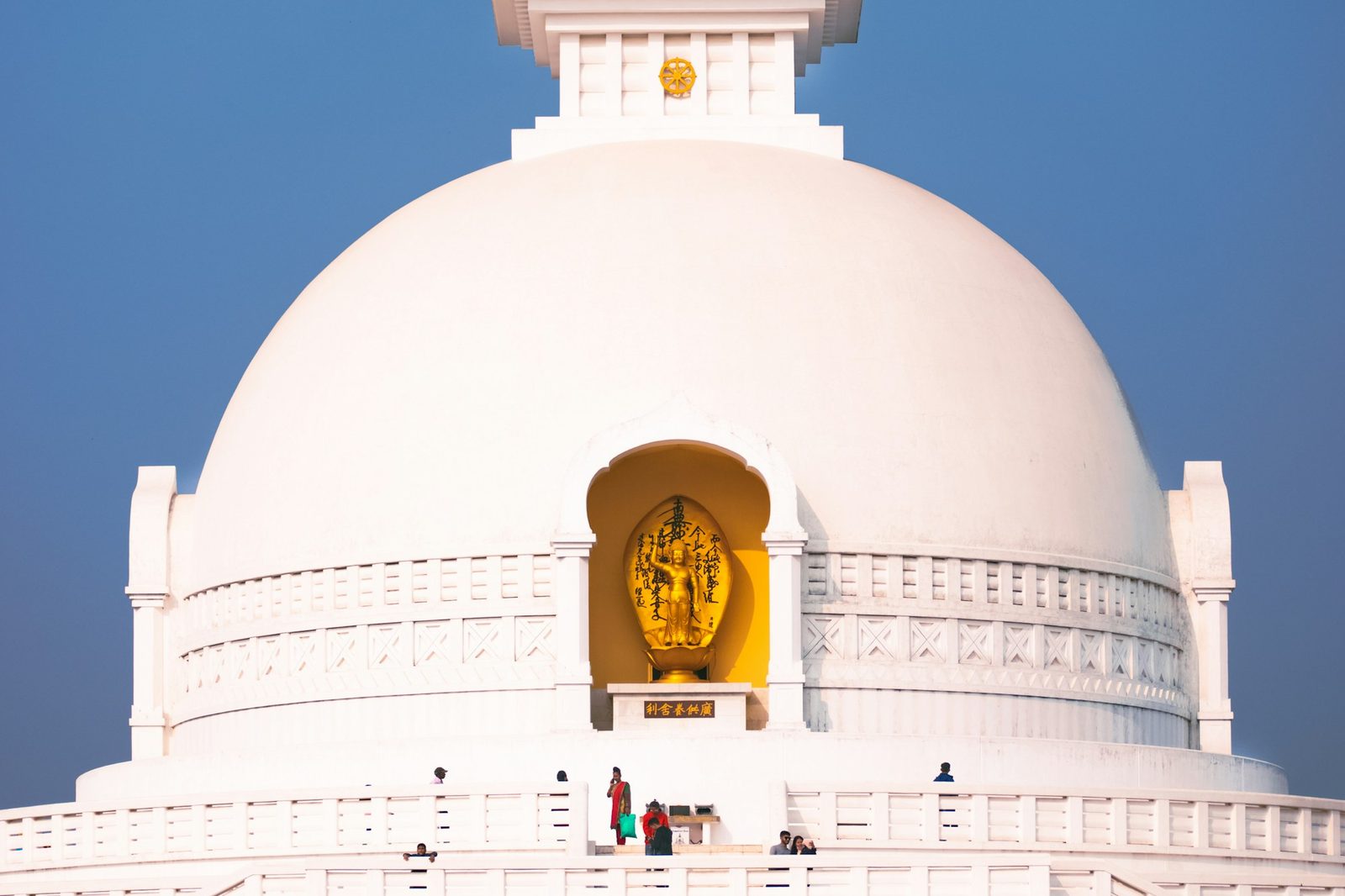
You see a large stupa with a gold-plated Buddha, in the planned New Lumbini Village zone. It is a modern monument, not an excavated site: the ancient remains, the Ashoka pillar and the Marker Stone are all in the Sacred Garden, at the other end of the plan.
A stupa is a dome-shaped Buddhist monument. We found no reliable source for how many Buddha statues it has or the pose of each, so we leave that to what you see.
A 2013 Nepali Times guide suggested going in the late afternoon, when the low sun falls on the gold-plated Buddha. That timing also suits the heat: from April to June the average daily high at the nearest weather station is above 35 °C.
Courtesy, cameras and drones
No dress rules for the pagoda are published. At the Maya Devi Temple the Trust asks visitors to remove shoes, dress modestly and leave food and drink at the entrance, and the same courtesy sits well here. Flying a drone over Buddhist heritage sites in the Greater Lumbini Area needs permission from the District Administration Office, the Civil Aviation Authority of Nepal and the Trust. The Trust charges daily camera fees in Lumbini; ask at the Visitor Information Centre whether they apply here.
Where is the World Peace Pagoda in Lumbini's master plan?
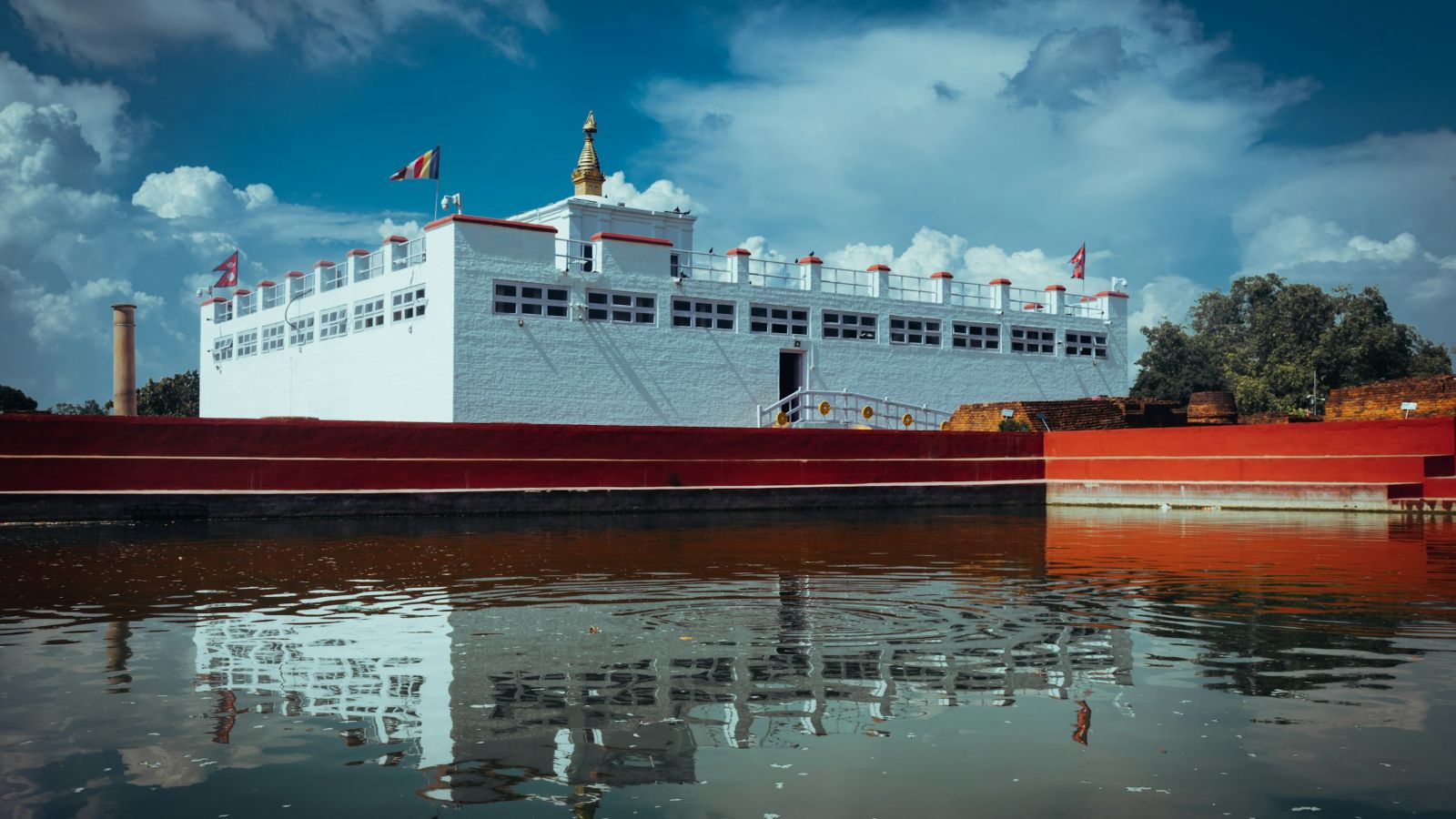
The pagoda sits in the northernmost of the master plan's three zones, the Cultural Centre and New Lumbini Village. The Sacred Garden, with the Maya Devi Temple, is at the southern end and the Monastic Zone lies between them, so going from the temple to the pagoda takes you along the length of the planned site.
UN Secretary-General U Thant visited Lumbini in 1967 and urged its development as an international pilgrimage centre. The Japanese architect Kenzo Tange designed the master plan, which the Government of Nepal approved in 1978, and the Lumbini Development Trust, set up by the government in 1985, runs the site today. The Trust describes a plan of over 7.7 square kilometres on a north to south axis, in three zones of about one square mile each.
On the way north you pass through the Monastic Zone, where Theravada monasteries stand east and Mahayana monasteries west of a 1.6 km walkway and canal. The Eternal Peace Flame burns there; the Nepal Tourism Board says it was lit in 1986, during the International Year of Peace. Our guide to places to visit in Lumbini covers the monasteries, and our Maya Devi Temple guide covers the Sacred Garden.
We give no distance from the temple to the pagoda: the only figure we found has no source.
What else is near the pagoda?
The Lumbini Crane Sanctuary is in the same zone, a 256-hectare protected area for the sarus crane. The Lumbini International Research Institute and the Lumbini Museum, now under renovation, are here too.
"Pay homage to Buddha at the World Peace Pagoda in New Lumbini Village. Conclude your day with a visit to the Lumbini Crane Sanctuary"
Lumbini Development Trust, suggested Greater Lumbini tour, checked 30 October 2026
The Lumbini Crane Sanctuary
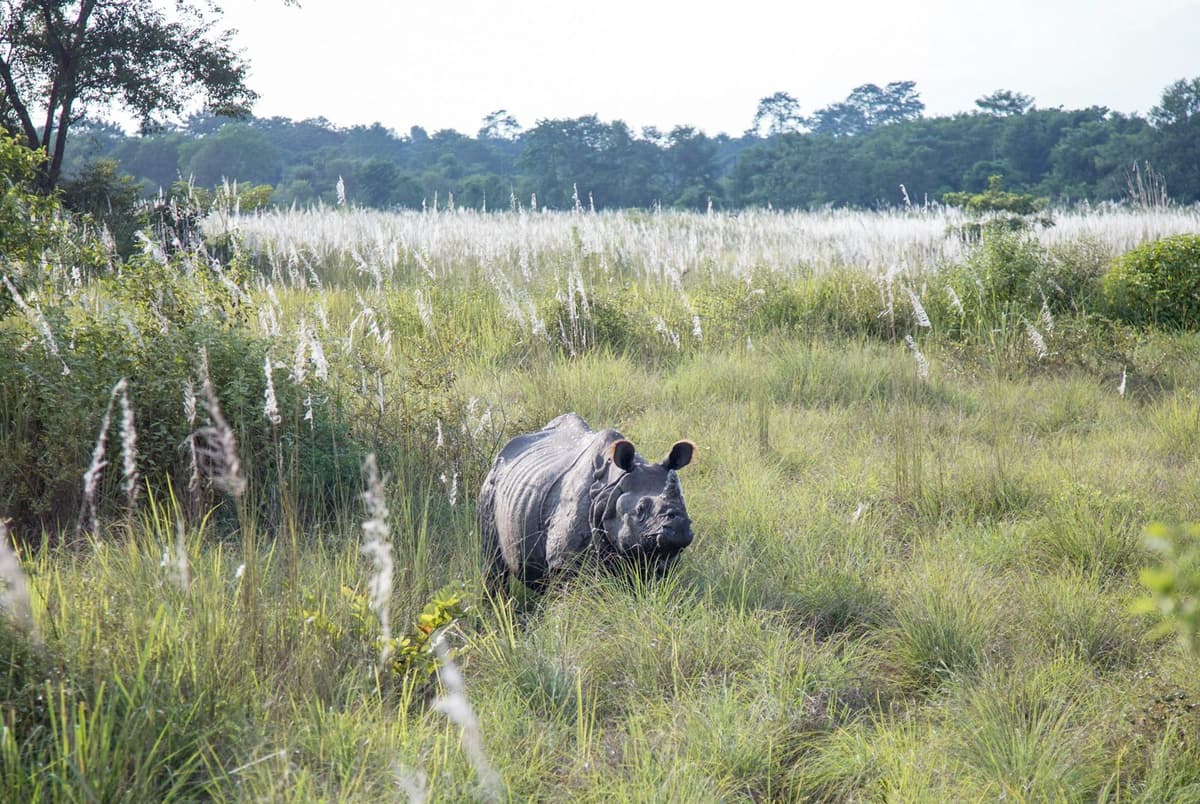
The sanctuary is managed by the Lumbini Crane Foundation with the International Crane Foundation. The Trust says it holds over 210 bird species, 300 breeding pairs of sarus cranes and five artificial wetlands, with guided birdwatching, nature trails and an annual Sarus Festival. We found no published times or charges for birdwatching, so ask locally or ask us.
The research institute and the museum
The Lumbini International Research Institute, built with support from the Japanese organisation Reiyukai, which also runs it, holds a library of Buddhist texts; ask before you call in. The Lumbini Museum, in a building designed by Kenzo Tange, was still "Currently under renovation" on its own website on 30 October 2026; our Lumbini Museum guide explains what is planned.
How do you get to the World Peace Pagoda?
First get to Lumbini. The quickest way is a flight from Kathmandu to Gautam Buddha International Airport at Bhairahawa, about 30 to 35 minutes in the air, then about 18 km by road. Inside Lumbini, a rickshaw or a hired vehicle is the practical way to reach the pagoda at the northern end, especially in the heat.
| Route | Time or distance | Source |
|---|---|---|
| Flight, Kathmandu to Bhairahawa | About 30 to 35 minutes | Buddha Air (30); LDT (35) |
| Flight, Pokhara to Bhairahawa | About 20 minutes; check the schedule | Buddha Air |
| Bhairahawa airport to Lumbini | About 18 km; about a 30-minute drive | LDT; Buddha Air |
| Road, Kathmandu to Lumbini | About 280 km; around 10 to 11 hours by bus | LDT |
| Road, Pokhara to Lumbini | About 227 km; no sourced driving time | LDT |
Getting around inside Lumbini
Rickshaws operate inside Lumbini, and the Trust names a Lumbini Rickshaw Association. In April 2026 the Trust also announced an electric van service for visitors "at an affordable price", covering Lumbini, Kapilavastu, Devadaha and Ramagrama. No fares are published, so agree the price before you set off.
Fog in winter
In December and January, fog on the plains can delay flights at Bhairahawa, so keep a spare half day before any onward connection.
Arriving from abroad (information only)
Entry to Nepal, visas and international flights are your own arrangement, not a service we offer. As of late October 2026 we found no scheduled international service at Bhairahawa, so you may need to fly into Kathmandu first; our Kathmandu airport arrival guide covers that, and visa rules are on the Nepal Tourism Board tourist visa page.
When is the best time to visit?
November to February suits most visitors. At the Bhairahawa airport station, the nearest to Lumbini, November is the driest month at 4.9 mm of rain and December's average high is 23.5 °C. From April to June average highs pass 35 °C, and July is the wettest month at 497.4 mm.
| Months | Mean daily max | Rain per month | What it means at the pagoda |
|---|---|---|---|
| November to February | 20.1 to 29.1 °C | 4.9 to 27.8 mm | Mild, mostly dry; winter fog |
| March to May | 31.3 to 36.6 °C | 18.7 to 87.6 mm | Hot; go early or late |
| June to September | 33.4 to 35.5 °C | 216.8 to 497.4 mm | Monsoon rain |
| October | 32.6 °C | 65.5 mm | Drying out, still warm |
Source: Department of Hydrology and Meteorology (DHM) 1991 to 2020 normals for the Bhairahawa airport station, as reproduced on Wikipedia, checked 30 October 2026.
The station's record high is 45.2 °C, set in May, and Buddha Jayanti falls in the heat: expected on 20 May in 2027 (see the FAQ). For the country as a whole, see our guide to the best time to visit Nepal.
Is there an entry fee, and when is the pagoda open?
We could not find either. We found no official source that publishes a fee or opening hours for the World Peace Pagoda, and no opening hours from the Trust for any part of Lumbini. Ask at the Visitor Information Centre, where, the Trust says, staff "offer free information and guide visitors", or ask us before you go.
What is published is the Trust's mandatory daily conservation fee for Lumbini: NPR 1,000 for most foreign visitors, NPR 700 for SAARC and Myanmar citizens, NPR 80 for Indian citizens and NPR 20 for Nepali citizens, per person per day, payable in cash, by QR code or online. The Trust does not say whether the pagoda falls inside the ticketed area, so we do not say either.
How long should you allow for the pagoda?
Give the pagoda its own half-day, ideally the late afternoon, rather than treating it as a quick add-on to the temple. One full day covers the Sacred Garden and the monastic zones; the Trust's suggested three-day tours put the pagoda on a later day, with the museum area and the Crane Sanctuary.
If you have only one night, as most visitors do according to hoteliers quoted by The Rising Nepal in 2024, our suggestion is the Sacred Garden at first light, a rest through midday, and the pagoda and Crane Sanctuary in the late afternoon. For Lumbini's place among Nepal's other Buddhist sites, see our guide to Buddhist pilgrimage sites in Nepal.
Frequently asked questions
Can I combine Lumbini with Kapilvastu, Namobuddha and other Buddhist sites?
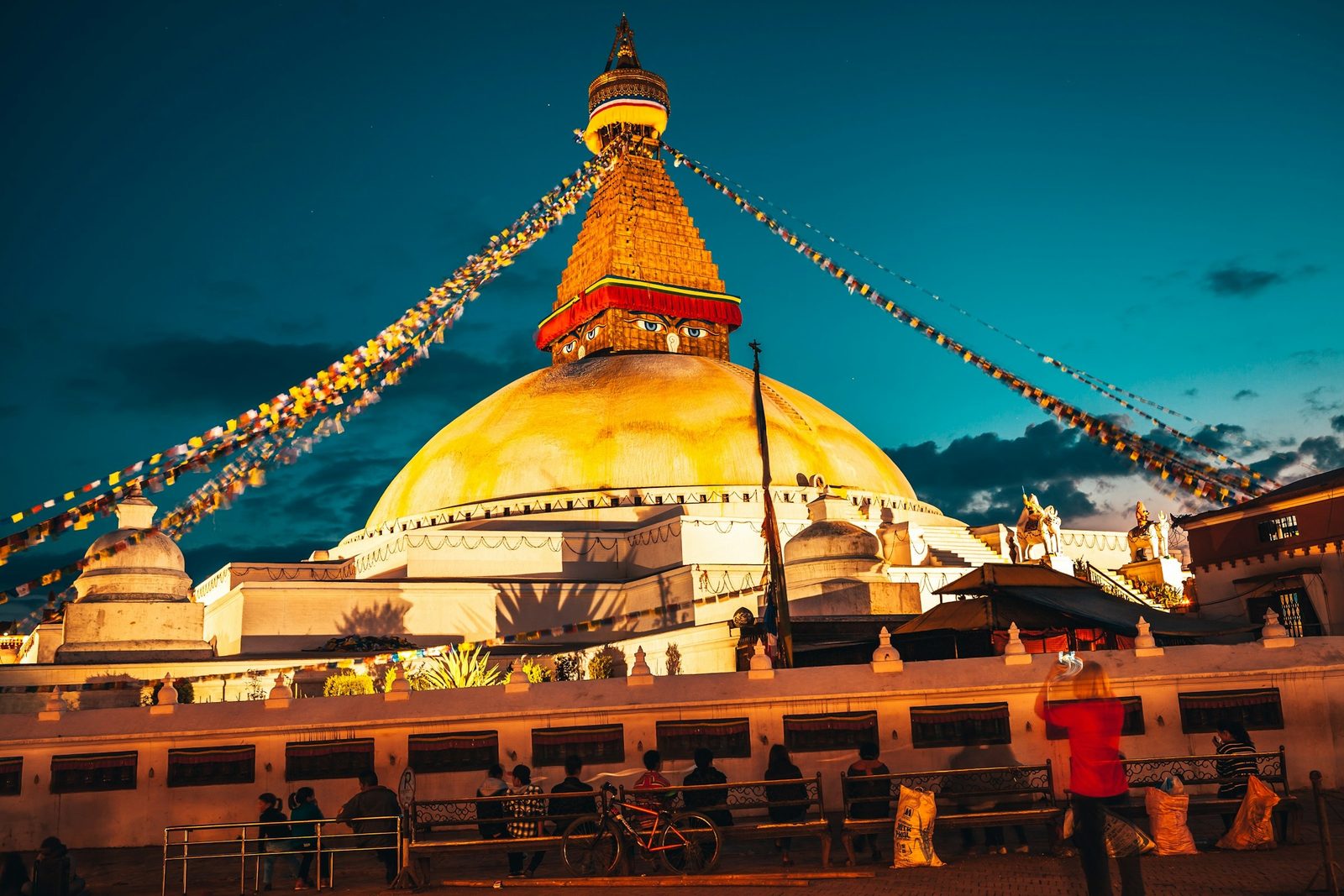
Yes for Kapilvastu and Ramagrama; Namobuddha belongs to your Kathmandu days. Tilaurakot, which many scholars identify as the ancient Sakya capital, is 29 km west of Lumbini, and Ramagrama is about 50 km east; both have been on UNESCO's Tentative List since 1996. Kudan, Gotihawa and Niglihawa lie within about 7 km of Taulihawa. Namobuddha, Boudhanath, Swayambhunath and Kopan are in or near Kathmandu.
How many days do I need in Lumbini?
One full day covers the Sacred Garden and the monastic zones, but the World Peace Pagoda and Crane Sanctuary at the northern end need their own half-day, such as a late afternoon. The Lumbini Development Trust's suggested tours run three days and add the Kapilvastu or Ramagrama sites. The conservation ticket is per day, and most visitors stay one night, hoteliers told The Rising Nepal in 2024.
How do I get to Lumbini from Kathmandu or Pokhara?
Fly to Gautam Buddha International Airport at Bhairahawa, about 30 to 35 minutes from Kathmandu or about 20 minutes from Pokhara with Buddha Air, then drive about 18 km to Lumbini. By road, Kathmandu is about 280 km away, around 10 to 11 hours by bus according to the Lumbini Development Trust, and Pokhara about 227 km. In winter, fog can delay flights.
When is the best time to visit Lumbini, and how hot is summer?
November to February suits most visitors: November is the driest month, averaging 4.9 mm of rain at the Bhairahawa station, and December highs average 23.5 °C. Summer is very hot. From April to June average highs are 35.5 to 36.6 °C, and the record is 45.2 °C, in May. July is the wettest month, averaging 497.4 mm.
When is Buddha Jayanti in Lumbini?
Buddha Jayanti falls on Baisakh Purnima, the full moon of the first Nepali month, and marks the Buddha's birth, enlightenment and passing. In 2027 it is expected on Thursday 20 May; confirm when Nepal's government publishes its 2084 BS holiday list. In 2026 it fell on 1 May, when the Lumbini Development Trust celebrated the 2570th Buddha Jayanti at Lumbini.
Planning your visit to Lumbini
We have no fixed Lumbini trip page yet, so ask us about a visit around your dates, about transfers, hotels and a licensed guide, and about what this guide cannot promise: opening times, any fee at the pagoda and the confirmed Buddha Jayanti date. Our Lumbini travel guide covers the rest of the site, and our cultural heritage tours show how we run temple and heritage trips. Ask us on WhatsApp or through the enquiry form.