



Explore by activity
Not listed yet

We run Motorbiking & Overland trips — we just haven’t put the itinerary on the site yet. Tell us your dates and we’ll send a costed day-by-day plan.

Explore by experience
Explore by region
by gomayu
Search Tours or Places

Buddhist Pilgrimage Sites in Nepal: Lumbini and Beyond

13 min read Posted 29 Oct 2026Updated 29 Oct 2026
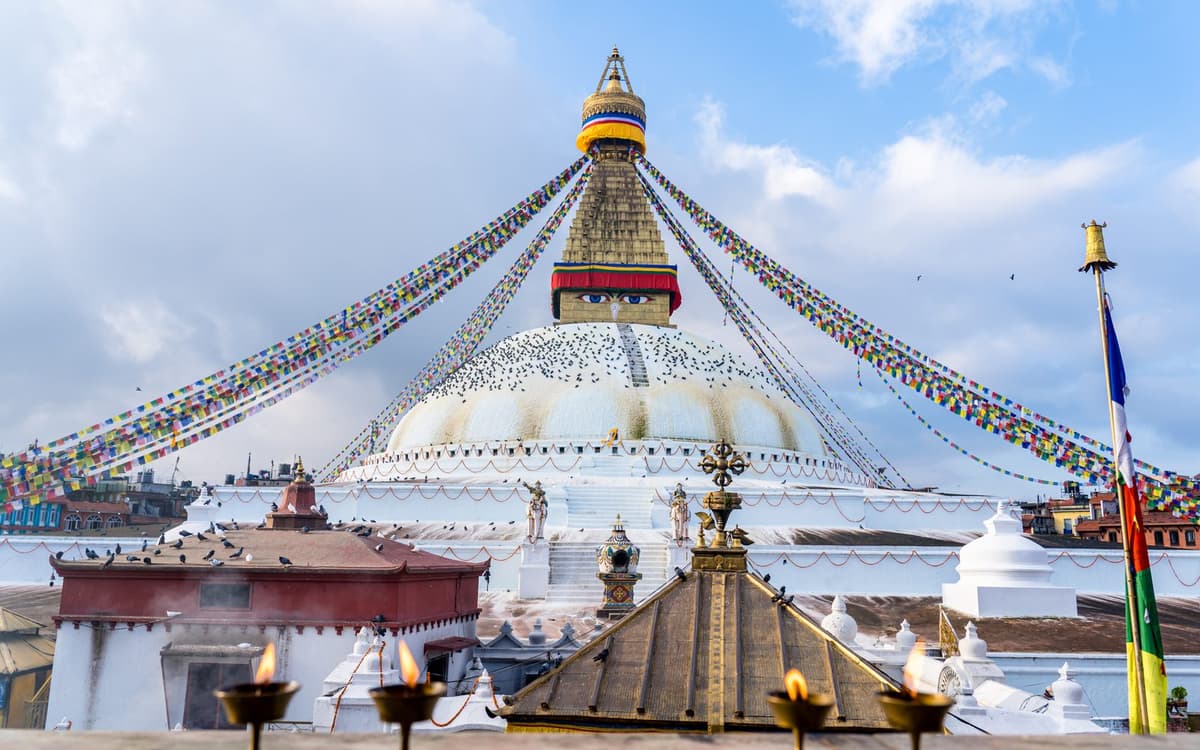
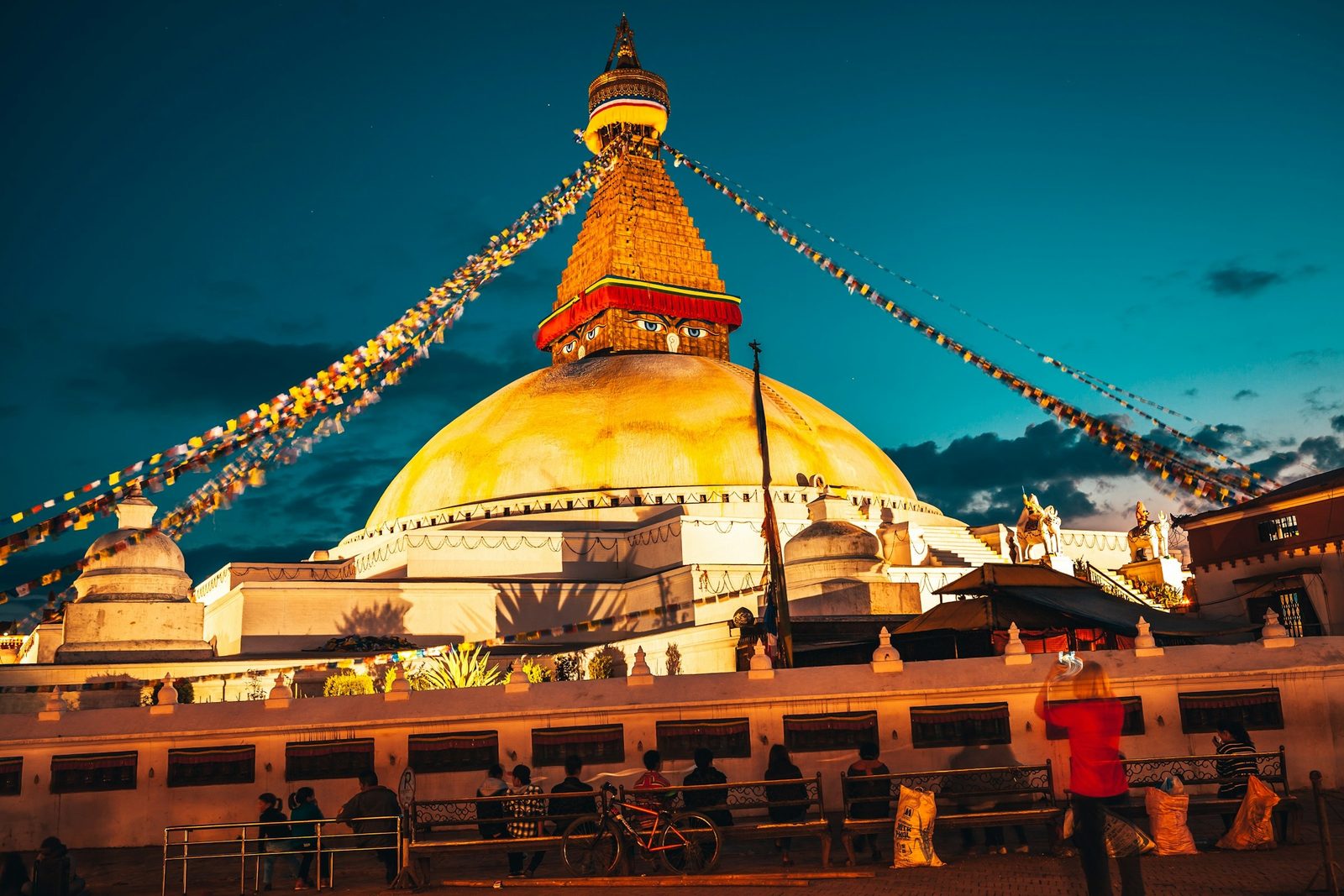
Boudhanath stupa in Kathmandu at dusk, one of the Buddhist pilgrimage sites in Nepal

By Uncover Nepal Team · Checked by our Kathmandu travel team · Last checked 30 October 2026

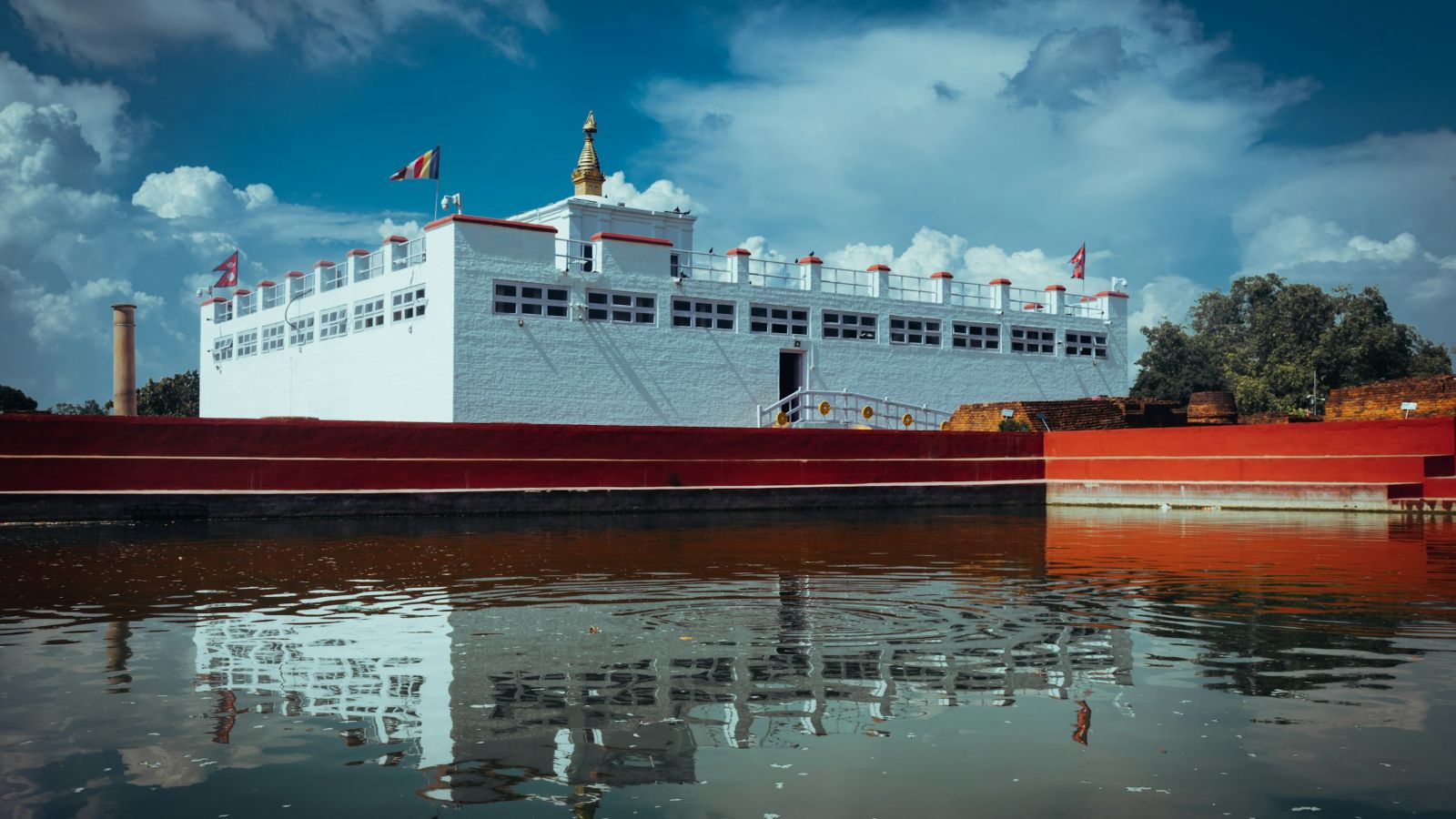
On 1 May 2026, rain held up the main Buddha Jayanti programme at Lumbini until about 8.30 in the morning. When it began, the Lumbini Development Trust marked the 2570th Buddha Jayanti at the Maya Devi Temple, and visitors meditated under the Bodhi tree there.

The main Buddhist pilgrimage sites in Nepal are Lumbini, where by Buddhist tradition the Buddha was born, and the ruins of ancient Kapilavastu around Tilaurakot, with Ramagrama and Devadaha on the same southern plains. In and near Kathmandu, pilgrims add Boudhanath, Swayambhunath, Kopan, Pharping and Namobuddha, while Muktinath and Halesi lie further out.

This guide follows the Buddhist circuit in depth, from Lumbini outwards. For the practical detail of Lumbini itself, from fees to flights and weather, read our Lumbini travel guide. For Hindu and Buddhist sites side by side, see our Nepal pilgrimage guide.

Key facts

Lumbini status
World Heritage Site since 1997 (UNESCO; Lumbini Development Trust, 30 Oct 2026)
Lumbini entry, per person per day
NPR 1,000 most foreign visitors; NPR 700 SAARC and Myanmar; NPR 80 Indian (Lumbini Development Trust, 30 Oct 2026)
Getting there
Fly Kathmandu to Bhairahawa (about 30 to 35 minutes), then about 18 km by road (Buddha Air; Lumbini Development Trust, 30 Oct 2026)
Tilaurakot
29 km west of Lumbini; UNESCO Tentative List since 1996 (Lumbini Development Trust; UNESCO, 30 Oct 2026)
Ramagrama
About 50 km east of Lumbini; UNESCO Tentative List since 1996 (Lumbini Development Trust; UNESCO, 30 Oct 2026)
Boudhanath entry
NPR 400 foreign; NPR 100 SAARC (Nepal Tourism Board, 30 Oct 2026)

In this guide

  • Which are the Buddhist pilgrimage sites in Nepal, at a glance?
  • What should pilgrims see in Lumbini?
  • What are the Kapilvastu sites around Tilaurakot?
  • Why do pilgrims go to Ramagrama and Devadaha?
  • Which Buddhist sites are in the Kathmandu Valley?
  • Are Muktinath and Halesi Buddhist sites too?
  • How do you plan a Lumbini pilgrimage circuit?
  • Frequently asked questions
  • Planning your pilgrimage with a local team

Which are the Buddhist pilgrimage sites in Nepal, at a glance?

Nepal's Buddhist sites fall into three groups. The Lumbini circuit on the southern plains holds the birthplace and the places tied to the Buddha's family. The Kathmandu Valley holds the great stupas and monasteries of Himalayan Buddhism. Muktinath and Halesi each need their own journey.

Distances come from the Lumbini Development Trust, which measures the smaller Kapilvastu sites from Taulihawa, a town about 3 km from Tilaurakot; Pharping's is NTB's. UNESCO's Tentative List is not World Heritage status.

Site What it is Distance (from Lumbini unless stated) Status
Lumbini The Buddha's birthplace by tradition Starting point World Heritage Site, 1997
Tilaurakot Ruined city many scholars identify as Kapilavastu 29 km west Tentative List, 1996
Kudan Where the Buddha met his father after his enlightenment, by tradition About 3 km south of Taulihawa Archaeological site
Gotihawa Ashoka pillar; birthplace of Krakuchhanda Buddha by tradition About 5 km south-west of Taulihawa Archaeological site
Niglihawa Broken Ashoka pillar; birthplace of Kanakamuni Buddha by tradition About 7 km north-east of Taulihawa Archaeological site
Sagarahawa Site identified with the massacre of the Sakyas Around 12 km north of Taulihawa Archaeological site
Ramagrama Relic stupa of the Buddha About 50 km east Tentative List, 1996
Devadaha Koliya capital, Maya Devi's maternal home 57 km east Capital not yet pinpointed (the Trust)
Boudhanath Great stupa of Himalayan Buddhism Kathmandu, about 280 km by road World Heritage Monument Zone, 1979
Swayambhunath Hilltop stupa Kathmandu World Heritage Monument Zone, 1979
Kopan Gelugpa monastery with courses Kathmandu Working monastery, since 1970
Pharping Cave linked to Padmasambhava 18 km south of Kathmandu Pilgrimage site
Namobuddha Stupa of the tigress legend Near Panauti, Kavre Pilgrimage site
Muktinath Temple sacred to Hindus and Buddhists Lower Mustang; no sourced distance Annapurna Conservation Area
Halesi-Maratika Cave and Nyingma monastery Eastern Nepal; no sourced distance Shared with Hindus

What should pilgrims see in Lumbini?

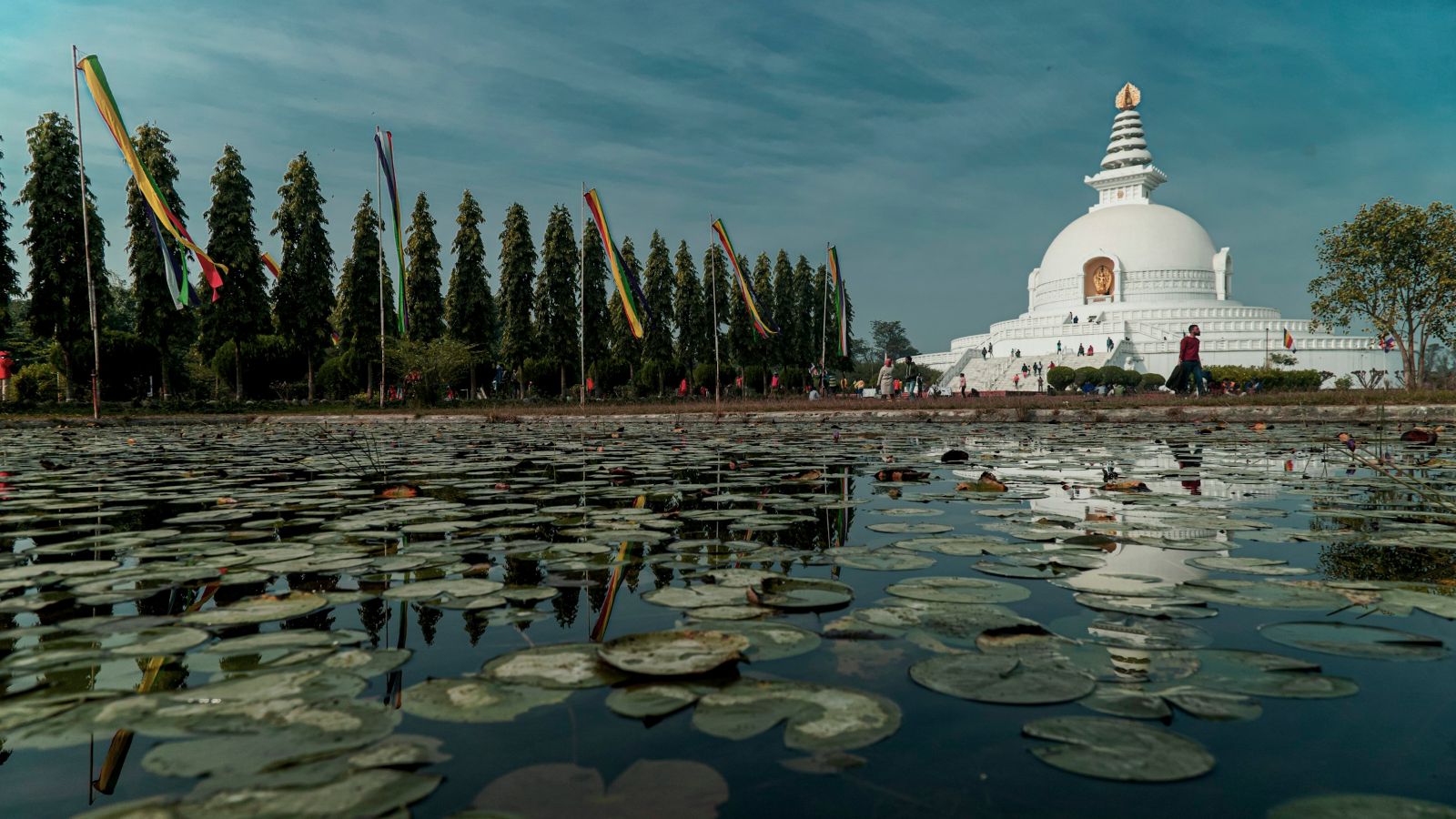
Start in the Sacred Garden: the Maya Devi Temple over the Marker Stone, the Puskarini pond, the Ashoka pillar of 249 BC and 31 excavated stupas. Then walk north through the Monastic Zone, where Buddhist communities from many countries have built monasteries, to the World Peace Pagoda at the far northern end.

The present temple "was reconstructed in 2003 by the Lumbini Development Trust", and inside it the Trust says the Marker Stone "designates the exact spot where Prince Siddhartha was born". The pillar beside it, erected by the Emperor Asoka, says in the Trust's translation that "Sakyamuni Buddha was born here". Our Maya Devi Temple guide covers the temple and the excavations in depth.

"Ananda, This (Lumbini) place is where the Tathagata was born, this is a place, which should be visited and seen by a person of devotion and which would cause awareness and apprehension of the nature of impermanence."

Mahaparinirvana Sutta, as quoted by the Lumbini Development Trust, checked 30 October 2026

The Monastic Zone and the north

A 1.6 km walkway and a canal divide the Monastic Zone: the east has 13 plots for Theravada monasteries such as the Royal Thai Monastery, the west 29 plots for Mahayana ones such as the Great Lotus Stupa. NTB says the Eternal Peace Flame here was lit in 1986. For longer stays, the Panditarama and Dhamma Janani centres run meditation courses. Our guide to places to visit in Lumbini takes you round the monasteries.

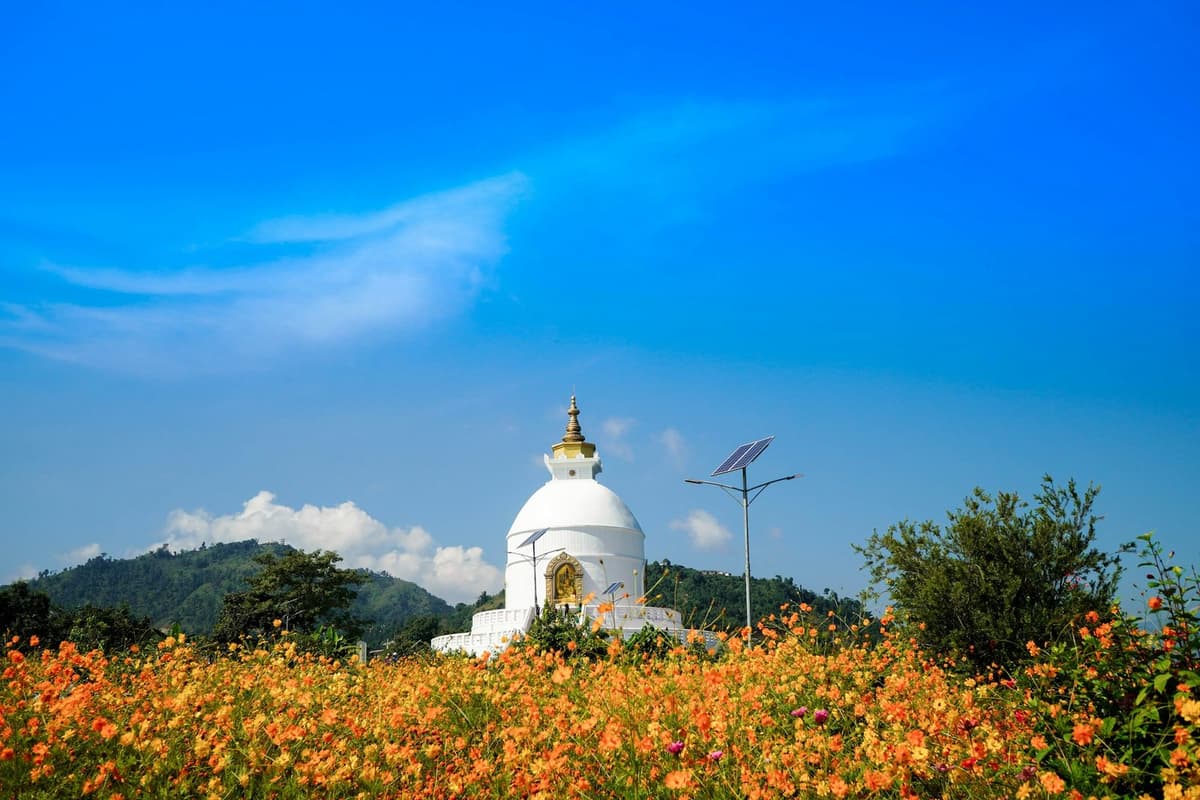
At the far end stands the World Peace Pagoda, built by the Japanese order Nipponzan Myohoji and inaugurated in November 2001, the Nepali Times reported; see our World Peace Pagoda guide. The Trust places the Lumbini Crane Sanctuary and the museum, still under renovation, in this northern zone too.

The Trust's rules: buy a ticket (it is per day), take off your shoes before the temple premises, dress modestly and leave food and drink at the entrance. It publishes no opening hours, so ask at the Visitor Information Centre.

What are the Kapilvastu sites around Tilaurakot?

Tilaurakot, 29 km west of Lumbini, is the walled site many scholars identify as Kapilavastu, the Sakya capital where Prince Siddhartha grew up. Around the nearby town of Taulihawa lie Kudan, the pillar sites of Gotihawa and Niglihawa, and Sagarahawa, all within about 12 km of the town, according to the Trust.

Kapilvastu is today's district; Kapilavastu is the ancient city, where the Trust counts more than 130 archaeological sites.

Tilaurakot

The Trust says Tilaurakot was rediscovered in 1899 and is "recognized by many scholars as the ancient capital city of the Sakya kingdom where Prince Siddhartha spent his early life". The identification is debated: Nepal and India have both claimed the ancient capital, India for Piprahwa, a 2024 Tribhuvan University study notes. Scientific dating led by Durham University places the city's origins in the eighth century BCE. It has been on UNESCO's Tentative List since 1996, and Durham reported in March 2023 that Nepal's government was preparing a World Heritage nomination. The Kapilvastu Museum here shows coins, pottery, jewellery and terracotta figures, the Trust says.

Kudan, Gotihawa, Niglihawa and Sagarahawa

  • Kudan is where, by tradition, the Buddha met his father, King Suddhodana, for the first time after his enlightenment.
  • Gotihawa is by tradition the birthplace of Krakuchhanda Buddha; its Ashoka pillar, 3.25 m high, still stands in place.
  • Niglihawa is by tradition the birthplace of Kanakamuni Buddha; its inscribed Ashoka pillar is now broken in two.
  • Sagarahawa is identified as the place where King Virudhaka of Kosala massacred the Sakyas.

The Trust calls the Greater Lumbini Area the "Land of Three Buddhas". Buses link Taulihawa with Lumbini and Bhairahawa, and e-rickshaws can be hired in Taulihawa for the nearby sites. No drive times are published, so we give none.

Why do pilgrims go to Ramagrama and Devadaha?

Ramagrama, about 50 km east of Lumbini in Nawalparasi, is a relic stupa that the Trust calls one of the eight original stupas over the Buddha's relics, and the only one to keep its original form. Devadaha, 57 km east of Lumbini, was the capital of the Koliya kingdom and the maternal home of Queen Maya Devi.

Ramagrama is a brick mound 7 m high. It was first discovered in 1899, Nepal's Department of Archaeology confirmed it as a stupa in 1997, and it has been on UNESCO's Tentative List since 1996.

At Devadaha, the Trust is candid that more investigation is needed to pinpoint the ancient capital. In April 2026 the Trust announced an electric van service for visitors covering Lumbini, Kapilavastu, Devadaha and Ramagrama, without publishing fares; ask the Trust, or ask us, what is running when you travel.

Which Buddhist sites are in the Kathmandu Valley?

Boudhanath and Swayambhunath are the two great stupas, both Monument Zones of the Kathmandu Valley World Heritage Site, inscribed in 1979. Kopan Monastery, of the Gelugpa order and founded in 1970, sits on a hillock north of Boudhanath, Pharping on the southern rim holds a cave linked to Padmasambhava, and Namobuddha lies beyond the valley near Panauti.
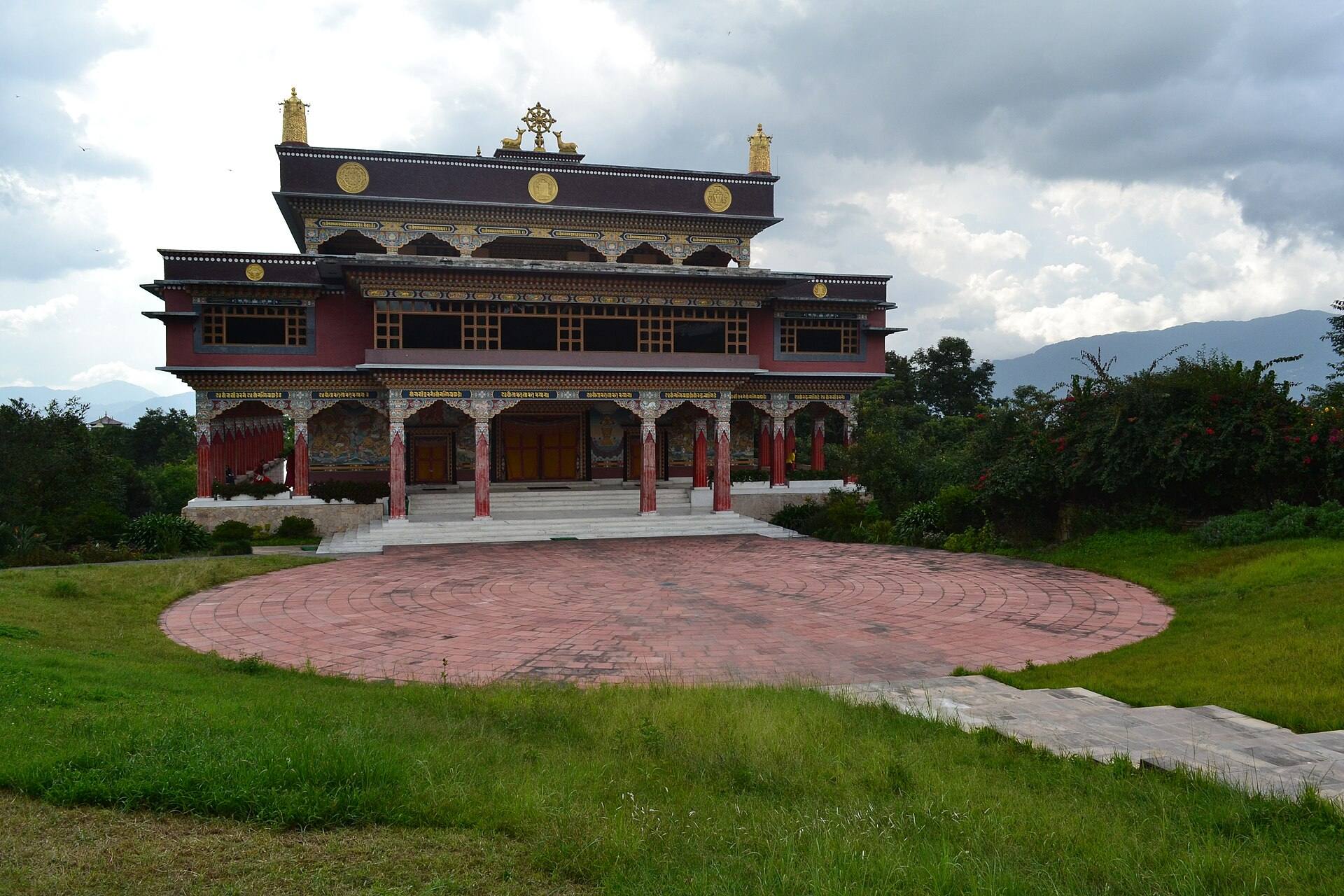
Kopan Monastery main gompa on Kopan Hill, north of Boudhanath, Kathmandu
Kopan Monastery on its hill north of Boudhanath.

NTB calls Boudhanath "the largest stupa in the Kathmandu Valley" and "the center of Himalayan Buddhism"; walk its kora, the clockwise circuit (Boudhanath Stupa guide). Swayambhunath stands on a hillock 3 km west of Kathmandu, with Hindu and Buddhist shrines side by side (Swayambhunath guide). At Pharping, NTB describes a cave with Padmasambhava's hand-imprint on the rock over its entrance.
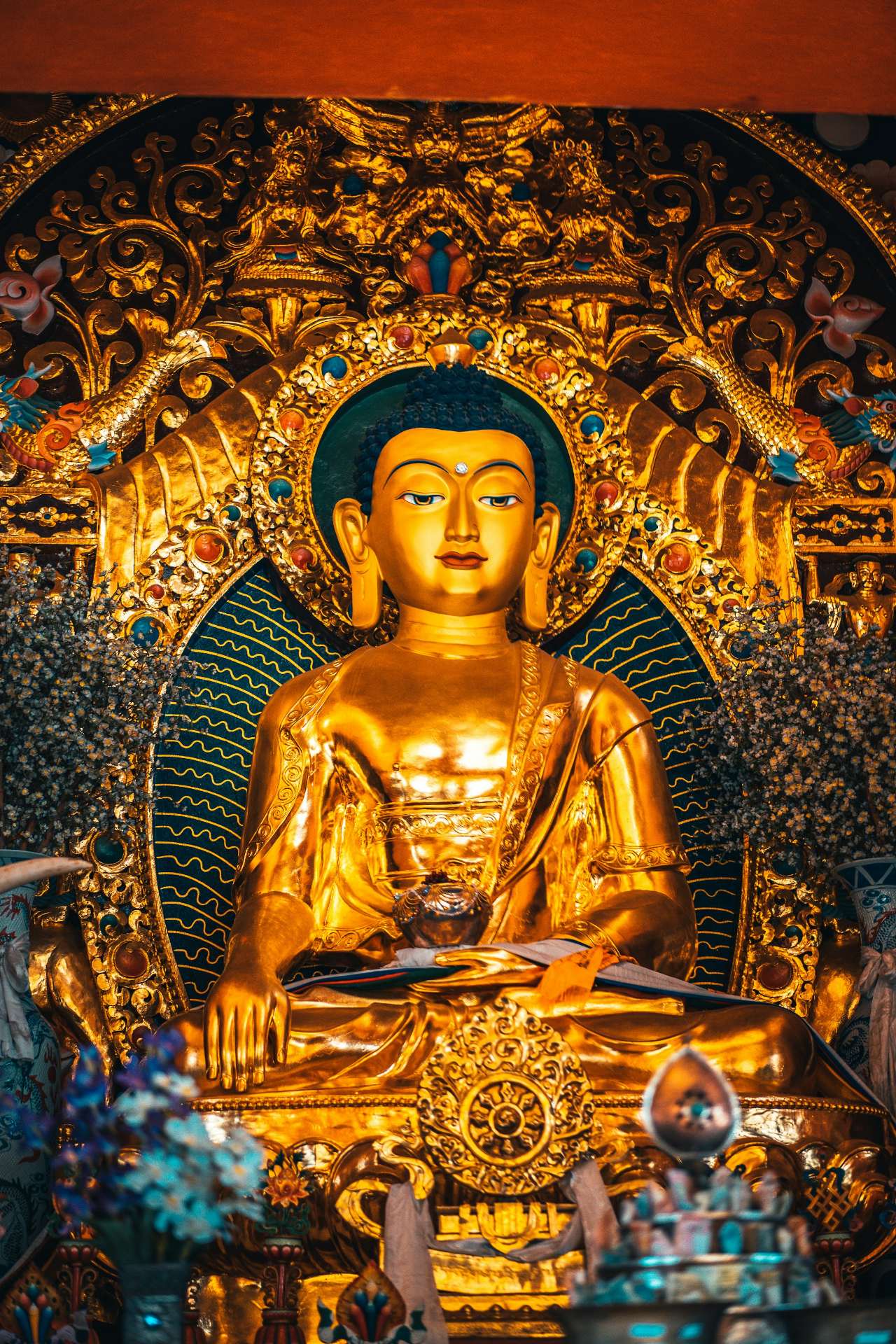
Golden Buddha inside Thrangu Tashi Yangtse monastery at Namobuddha
Inside the Thrangu Tashi Yangtse monastery at Namobuddha.

Namobuddha marks the place where, by legend, one of the earlier Buddhas gave his own flesh to a starving tigress and her cubs. NTB describes it as a three-hour walk from Dhulikhel or Panauti, each about an hour's drive from Kathmandu; see our Kathmandu day trips guide.

Are Muktinath and Halesi Buddhist sites too?

Yes, both are shared sites. Muktinath, in Lower Mustang, stands at about 3,800 m, according to NTB, which says the site "is sacred to both Hindus and Buddhists"; Buddhists worship Vishnu there as Avalokiteshwar. Halesi-Maratika in eastern Nepal is a cave and Nyingma monastery linked to Padmasambhava, also revered by Hindus.

Muktinath is well above the 2,450 m at which the CDC says altitude illness can begin, so go up slowly and ask your doctor about preventive medicine (for example acetazolamide). You need an Annapurna Conservation Area Permit (ask us about it), and Pokhara to Jomsom flights were suspended in mid-October 2026 with no restart date announced. See our Muktinath Temple guide. At Halesi, Padmasambhava and Mandarava are said to have had visions of Amitayus and stayed three months performing long-life rituals (Treasury of Lives). Ask us about access before you plan it.

How do you plan a Lumbini pilgrimage circuit?

Fly to Bhairahawa, base yourself in Lumbini, and give the Sacred Garden and monasteries one full day. Then add a day for Tilaurakot and the Kapilvastu sites, and another for Ramagrama or Devadaha. The Trust's own suggested tours run three days.
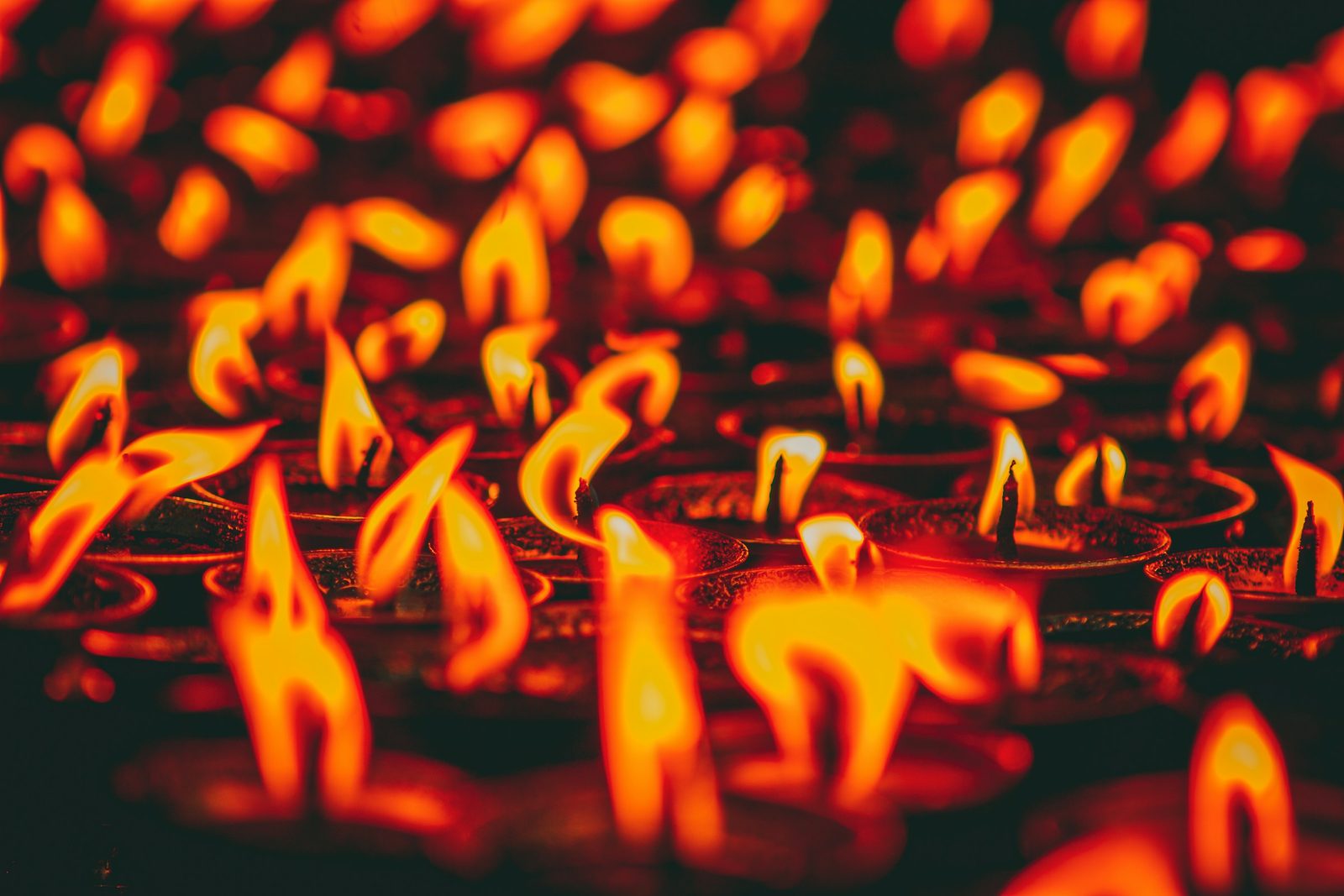
Butter lamps burning in a monastery in the Kathmandu Valley (library photo, not taken in Lumbini)
Butter lamps in a Kathmandu Valley monastery.

The flight from Kathmandu takes about 30 to 35 minutes and the airport is about 18 km from Lumbini; by road, Kathmandu is about 280 km away, around 10 to 11 hours by bus, the Trust says. If your pilgrimage continues in India, the Trust gives road distances from Lumbini of 181 km to Kushinagar, 337 km to Sarnath and 525 km to Bodhgaya. Border crossings, visas and international travel are your own arrangement; see the Nepal Tourism Board tourist visa page for official information.

In Lumbini, electric rickshaws operate; no fares are published, so agree the price first. November to February suits most people: November averages 4.9 mm of rain, while December and January bring fog that can delay flights, and April to June average highs top 35 °C. Buddha Jayanti is expected on 20 May 2027; confirm when the official calendar is out.

Frequently asked questions

Can I combine Lumbini with Kapilvastu, Namobuddha and other Buddhist sites?

Yes. Tilaurakot is 29 km west of Lumbini and Ramagrama about 50 km east, and Kudan, Gotihawa and Niglihawa lie within about 7 km of nearby Taulihawa. Namobuddha, Boudhanath, Swayambhunath and Kopan are in or near Kathmandu, about 280 km away by road, so they fit your Kathmandu days rather than a Lumbini day.

How do I reach Lumbini from the Sunauli and Bhairahawa border?

Cross at Sunauli into Belahiya, the Nepali side, about 20 km from Lumbini; it has the immigration office non-Indian foreigners must use, The Rising Nepal reported. The Kalidaha-Kakarhawa crossing is closer but has no immigration office. Your entry is your own arrangement: NTB lists visas on arrival at entry points, and Indian nationals need no visa.

Can I visit Lumbini as a day trip?

It is possible but rushed, in our view. The flight from Kathmandu takes about 30 to 35 minutes and Lumbini is about 18 km from the airport, which leaves time for the Sacred Garden but little for the monasteries. Winter fog can delay flights, and hoteliers told The Rising Nepal in 2024 that most visitors stay one night.

What is the Lumbini Museum and what does it hold?

It is a brick building designed in the 1970s by the Japanese architect Kenzo Tange. Since 2018 the Buddha Foundation has held the right to run it, and renovation began in 2020. Its collection of over 300 objects includes terracotta figurines, stone sculptures and coins; the earliest date from the 6th century BC and most from the 1st to 3rd century AD, the museum says. On 30 October 2026 its website still said "Currently under renovation". Our Lumbini Museum guide has more.

What is there to see in Lumbini?

The Sacred Garden holds the Maya Devi Temple over the Marker Stone, the Puskarini pond, the Ashoka pillar of 249 BC and 31 excavated stupas. North of it, a 1.6 km walkway and a canal divide the Monastic Zone into Theravada monasteries on the east side and Mahayana on the west. Further north are the World Peace Pagoda and the Crane Sanctuary.

Planning your pilgrimage with a local team

A Lumbini pilgrimage rewards slow days. We have no fixed Lumbini trip page yet, so ask us to plan one around your dates, and ask what we can arrange for transfers, hotels and a licensed guide. Our Lumbini travel guide has the full practical detail, and our cultural heritage tours show how we run temple and heritage days. Ask us on WhatsApp or through the enquiry form.
Tags
LumbiniBuddhist pilgrimageKapilvastuRamagramaBoudhanathNepal pilgrimage
Share
U
Uncover Nepal Team
Writer at Uncover Nepal
More in Temples & cultureSee all Temples & culture

Buddhist Pilgrimage Sites in Nepal: Lumbini and Beyond

13 min read Posted 29 Oct 2026Updated 29 Oct 2026
Boudhanath stupa in Kathmandu at dusk, one of the Buddhist pilgrimage sites in Nepal

By Uncover Nepal Team · Checked by our Kathmandu travel team · Last checked 30 October 2026

On 1 May 2026, rain held up the main Buddha Jayanti programme at Lumbini until about 8.30 in the morning. When it began, the Lumbini Development Trust marked the 2570th Buddha Jayanti at the Maya Devi Temple, and visitors meditated under the Bodhi tree there.

The main Buddhist pilgrimage sites in Nepal are Lumbini, where by Buddhist tradition the Buddha was born, and the ruins of ancient Kapilavastu around Tilaurakot, with Ramagrama and Devadaha on the same southern plains. In and near Kathmandu, pilgrims add Boudhanath, Swayambhunath, Kopan, Pharping and Namobuddha, while Muktinath and Halesi lie further out.

This guide follows the Buddhist circuit in depth, from Lumbini outwards. For the practical detail of Lumbini itself, from fees to flights and weather, read our Lumbini travel guide. For Hindu and Buddhist sites side by side, see our Nepal pilgrimage guide.

Key facts

Lumbini status
World Heritage Site since 1997 (UNESCO; Lumbini Development Trust, 30 Oct 2026)
Lumbini entry, per person per day
NPR 1,000 most foreign visitors; NPR 700 SAARC and Myanmar; NPR 80 Indian (Lumbini Development Trust, 30 Oct 2026)
Getting there
Fly Kathmandu to Bhairahawa (about 30 to 35 minutes), then about 18 km by road (Buddha Air; Lumbini Development Trust, 30 Oct 2026)
Tilaurakot
29 km west of Lumbini; UNESCO Tentative List since 1996 (Lumbini Development Trust; UNESCO, 30 Oct 2026)
Ramagrama
About 50 km east of Lumbini; UNESCO Tentative List since 1996 (Lumbini Development Trust; UNESCO, 30 Oct 2026)
Boudhanath entry
NPR 400 foreign; NPR 100 SAARC (Nepal Tourism Board, 30 Oct 2026)

In this guide

  • Which are the Buddhist pilgrimage sites in Nepal, at a glance?
  • What should pilgrims see in Lumbini?
  • What are the Kapilvastu sites around Tilaurakot?
  • Why do pilgrims go to Ramagrama and Devadaha?
  • Which Buddhist sites are in the Kathmandu Valley?
  • Are Muktinath and Halesi Buddhist sites too?
  • How do you plan a Lumbini pilgrimage circuit?
  • Frequently asked questions
  • Planning your pilgrimage with a local team

Which are the Buddhist pilgrimage sites in Nepal, at a glance?

Nepal's Buddhist sites fall into three groups. The Lumbini circuit on the southern plains holds the birthplace and the places tied to the Buddha's family. The Kathmandu Valley holds the great stupas and monasteries of Himalayan Buddhism. Muktinath and Halesi each need their own journey.

Distances come from the Lumbini Development Trust, which measures the smaller Kapilvastu sites from Taulihawa, a town about 3 km from Tilaurakot; Pharping's is NTB's. UNESCO's Tentative List is not World Heritage status.

Site What it is Distance (from Lumbini unless stated) Status
Lumbini The Buddha's birthplace by tradition Starting point World Heritage Site, 1997
Tilaurakot Ruined city many scholars identify as Kapilavastu 29 km west Tentative List, 1996
Kudan Where the Buddha met his father after his enlightenment, by tradition About 3 km south of Taulihawa Archaeological site
Gotihawa Ashoka pillar; birthplace of Krakuchhanda Buddha by tradition About 5 km south-west of Taulihawa Archaeological site
Niglihawa Broken Ashoka pillar; birthplace of Kanakamuni Buddha by tradition About 7 km north-east of Taulihawa Archaeological site
Sagarahawa Site identified with the massacre of the Sakyas Around 12 km north of Taulihawa Archaeological site
Ramagrama Relic stupa of the Buddha About 50 km east Tentative List, 1996
Devadaha Koliya capital, Maya Devi's maternal home 57 km east Capital not yet pinpointed (the Trust)
Boudhanath Great stupa of Himalayan Buddhism Kathmandu, about 280 km by road World Heritage Monument Zone, 1979
Swayambhunath Hilltop stupa Kathmandu World Heritage Monument Zone, 1979
Kopan Gelugpa monastery with courses Kathmandu Working monastery, since 1970
Pharping Cave linked to Padmasambhava 18 km south of Kathmandu Pilgrimage site
Namobuddha Stupa of the tigress legend Near Panauti, Kavre Pilgrimage site
Muktinath Temple sacred to Hindus and Buddhists Lower Mustang; no sourced distance Annapurna Conservation Area
Halesi-Maratika Cave and Nyingma monastery Eastern Nepal; no sourced distance Shared with Hindus

What should pilgrims see in Lumbini?

Start in the Sacred Garden: the Maya Devi Temple over the Marker Stone, the Puskarini pond, the Ashoka pillar of 249 BC and 31 excavated stupas. Then walk north through the Monastic Zone, where Buddhist communities from many countries have built monasteries, to the World Peace Pagoda at the far northern end.

The present temple "was reconstructed in 2003 by the Lumbini Development Trust", and inside it the Trust says the Marker Stone "designates the exact spot where Prince Siddhartha was born". The pillar beside it, erected by the Emperor Asoka, says in the Trust's translation that "Sakyamuni Buddha was born here". Our Maya Devi Temple guide covers the temple and the excavations in depth.

"Ananda, This (Lumbini) place is where the Tathagata was born, this is a place, which should be visited and seen by a person of devotion and which would cause awareness and apprehension of the nature of impermanence."

Mahaparinirvana Sutta, as quoted by the Lumbini Development Trust, checked 30 October 2026

The Monastic Zone and the north

A 1.6 km walkway and a canal divide the Monastic Zone: the east has 13 plots for Theravada monasteries such as the Royal Thai Monastery, the west 29 plots for Mahayana ones such as the Great Lotus Stupa. NTB says the Eternal Peace Flame here was lit in 1986. For longer stays, the Panditarama and Dhamma Janani centres run meditation courses. Our guide to places to visit in Lumbini takes you round the monasteries.

At the far end stands the World Peace Pagoda, built by the Japanese order Nipponzan Myohoji and inaugurated in November 2001, the Nepali Times reported; see our World Peace Pagoda guide. The Trust places the Lumbini Crane Sanctuary and the museum, still under renovation, in this northern zone too.

The Trust's rules: buy a ticket (it is per day), take off your shoes before the temple premises, dress modestly and leave food and drink at the entrance. It publishes no opening hours, so ask at the Visitor Information Centre.

What are the Kapilvastu sites around Tilaurakot?

Tilaurakot, 29 km west of Lumbini, is the walled site many scholars identify as Kapilavastu, the Sakya capital where Prince Siddhartha grew up. Around the nearby town of Taulihawa lie Kudan, the pillar sites of Gotihawa and Niglihawa, and Sagarahawa, all within about 12 km of the town, according to the Trust.

Kapilvastu is today's district; Kapilavastu is the ancient city, where the Trust counts more than 130 archaeological sites.

Tilaurakot

The Trust says Tilaurakot was rediscovered in 1899 and is "recognized by many scholars as the ancient capital city of the Sakya kingdom where Prince Siddhartha spent his early life". The identification is debated: Nepal and India have both claimed the ancient capital, India for Piprahwa, a 2024 Tribhuvan University study notes. Scientific dating led by Durham University places the city's origins in the eighth century BCE. It has been on UNESCO's Tentative List since 1996, and Durham reported in March 2023 that Nepal's government was preparing a World Heritage nomination. The Kapilvastu Museum here shows coins, pottery, jewellery and terracotta figures, the Trust says.

Kudan, Gotihawa, Niglihawa and Sagarahawa

  • Kudan is where, by tradition, the Buddha met his father, King Suddhodana, for the first time after his enlightenment.
  • Gotihawa is by tradition the birthplace of Krakuchhanda Buddha; its Ashoka pillar, 3.25 m high, still stands in place.
  • Niglihawa is by tradition the birthplace of Kanakamuni Buddha; its inscribed Ashoka pillar is now broken in two.
  • Sagarahawa is identified as the place where King Virudhaka of Kosala massacred the Sakyas.

The Trust calls the Greater Lumbini Area the "Land of Three Buddhas". Buses link Taulihawa with Lumbini and Bhairahawa, and e-rickshaws can be hired in Taulihawa for the nearby sites. No drive times are published, so we give none.

Why do pilgrims go to Ramagrama and Devadaha?

Ramagrama, about 50 km east of Lumbini in Nawalparasi, is a relic stupa that the Trust calls one of the eight original stupas over the Buddha's relics, and the only one to keep its original form. Devadaha, 57 km east of Lumbini, was the capital of the Koliya kingdom and the maternal home of Queen Maya Devi.

Ramagrama is a brick mound 7 m high. It was first discovered in 1899, Nepal's Department of Archaeology confirmed it as a stupa in 1997, and it has been on UNESCO's Tentative List since 1996.

At Devadaha, the Trust is candid that more investigation is needed to pinpoint the ancient capital. In April 2026 the Trust announced an electric van service for visitors covering Lumbini, Kapilavastu, Devadaha and Ramagrama, without publishing fares; ask the Trust, or ask us, what is running when you travel.

Which Buddhist sites are in the Kathmandu Valley?

Boudhanath and Swayambhunath are the two great stupas, both Monument Zones of the Kathmandu Valley World Heritage Site, inscribed in 1979. Kopan Monastery, of the Gelugpa order and founded in 1970, sits on a hillock north of Boudhanath, Pharping on the southern rim holds a cave linked to Padmasambhava, and Namobuddha lies beyond the valley near Panauti.

Kopan Monastery main gompa on Kopan Hill, north of Boudhanath, Kathmandu
Kopan Monastery on its hill north of Boudhanath.

NTB calls Boudhanath "the largest stupa in the Kathmandu Valley" and "the center of Himalayan Buddhism"; walk its kora, the clockwise circuit (Boudhanath Stupa guide). Swayambhunath stands on a hillock 3 km west of Kathmandu, with Hindu and Buddhist shrines side by side (Swayambhunath guide). At Pharping, NTB describes a cave with Padmasambhava's hand-imprint on the rock over its entrance.

Golden Buddha inside Thrangu Tashi Yangtse monastery at Namobuddha
Inside the Thrangu Tashi Yangtse monastery at Namobuddha.

Namobuddha marks the place where, by legend, one of the earlier Buddhas gave his own flesh to a starving tigress and her cubs. NTB describes it as a three-hour walk from Dhulikhel or Panauti, each about an hour's drive from Kathmandu; see our Kathmandu day trips guide.

Are Muktinath and Halesi Buddhist sites too?

Yes, both are shared sites. Muktinath, in Lower Mustang, stands at about 3,800 m, according to NTB, which says the site "is sacred to both Hindus and Buddhists"; Buddhists worship Vishnu there as Avalokiteshwar. Halesi-Maratika in eastern Nepal is a cave and Nyingma monastery linked to Padmasambhava, also revered by Hindus.

Muktinath is well above the 2,450 m at which the CDC says altitude illness can begin, so go up slowly and ask your doctor about preventive medicine (for example acetazolamide). You need an Annapurna Conservation Area Permit (ask us about it), and Pokhara to Jomsom flights were suspended in mid-October 2026 with no restart date announced. See our Muktinath Temple guide. At Halesi, Padmasambhava and Mandarava are said to have had visions of Amitayus and stayed three months performing long-life rituals (Treasury of Lives). Ask us about access before you plan it.

How do you plan a Lumbini pilgrimage circuit?

Fly to Bhairahawa, base yourself in Lumbini, and give the Sacred Garden and monasteries one full day. Then add a day for Tilaurakot and the Kapilvastu sites, and another for Ramagrama or Devadaha. The Trust's own suggested tours run three days.

Butter lamps burning in a monastery in the Kathmandu Valley (library photo, not taken in Lumbini)
Butter lamps in a Kathmandu Valley monastery.

The flight from Kathmandu takes about 30 to 35 minutes and the airport is about 18 km from Lumbini; by road, Kathmandu is about 280 km away, around 10 to 11 hours by bus, the Trust says. If your pilgrimage continues in India, the Trust gives road distances from Lumbini of 181 km to Kushinagar, 337 km to Sarnath and 525 km to Bodhgaya. Border crossings, visas and international travel are your own arrangement; see the Nepal Tourism Board tourist visa page for official information.

In Lumbini, electric rickshaws operate; no fares are published, so agree the price first. November to February suits most people: November averages 4.9 mm of rain, while December and January bring fog that can delay flights, and April to June average highs top 35 °C. Buddha Jayanti is expected on 20 May 2027; confirm when the official calendar is out.

Frequently asked questions

Can I combine Lumbini with Kapilvastu, Namobuddha and other Buddhist sites?

Yes. Tilaurakot is 29 km west of Lumbini and Ramagrama about 50 km east, and Kudan, Gotihawa and Niglihawa lie within about 7 km of nearby Taulihawa. Namobuddha, Boudhanath, Swayambhunath and Kopan are in or near Kathmandu, about 280 km away by road, so they fit your Kathmandu days rather than a Lumbini day.

How do I reach Lumbini from the Sunauli and Bhairahawa border?

Cross at Sunauli into Belahiya, the Nepali side, about 20 km from Lumbini; it has the immigration office non-Indian foreigners must use, The Rising Nepal reported. The Kalidaha-Kakarhawa crossing is closer but has no immigration office. Your entry is your own arrangement: NTB lists visas on arrival at entry points, and Indian nationals need no visa.

Can I visit Lumbini as a day trip?

It is possible but rushed, in our view. The flight from Kathmandu takes about 30 to 35 minutes and Lumbini is about 18 km from the airport, which leaves time for the Sacred Garden but little for the monasteries. Winter fog can delay flights, and hoteliers told The Rising Nepal in 2024 that most visitors stay one night.

What is the Lumbini Museum and what does it hold?

It is a brick building designed in the 1970s by the Japanese architect Kenzo Tange. Since 2018 the Buddha Foundation has held the right to run it, and renovation began in 2020. Its collection of over 300 objects includes terracotta figurines, stone sculptures and coins; the earliest date from the 6th century BC and most from the 1st to 3rd century AD, the museum says. On 30 October 2026 its website still said "Currently under renovation". Our Lumbini Museum guide has more.

What is there to see in Lumbini?

The Sacred Garden holds the Maya Devi Temple over the Marker Stone, the Puskarini pond, the Ashoka pillar of 249 BC and 31 excavated stupas. North of it, a 1.6 km walkway and a canal divide the Monastic Zone into Theravada monasteries on the east side and Mahayana on the west. Further north are the World Peace Pagoda and the Crane Sanctuary.

Planning your pilgrimage with a local team

A Lumbini pilgrimage rewards slow days. We have no fixed Lumbini trip page yet, so ask us to plan one around your dates, and ask what we can arrange for transfers, hotels and a licensed guide. Our Lumbini travel guide has the full practical detail, and our cultural heritage tours show how we run temple and heritage days. Ask us on WhatsApp or through the enquiry form.
Tags
LumbiniBuddhist pilgrimageKapilvastuRamagramaBoudhanathNepal pilgrimage
Share
U
Uncover Nepal Team
Writer at Uncover Nepal
More in Temples & cultureSee all Temples & culture