


By Uncover Nepal Team · Checked by our Kathmandu travel team · Last checked 28 October 2026
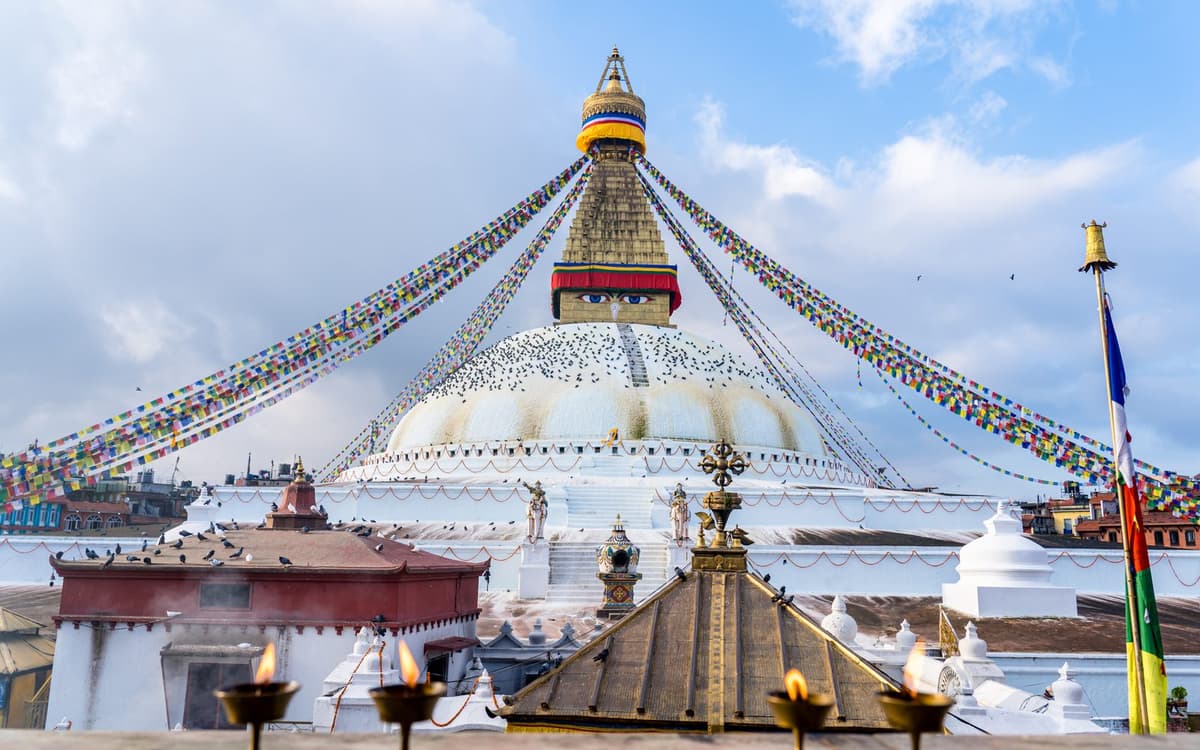
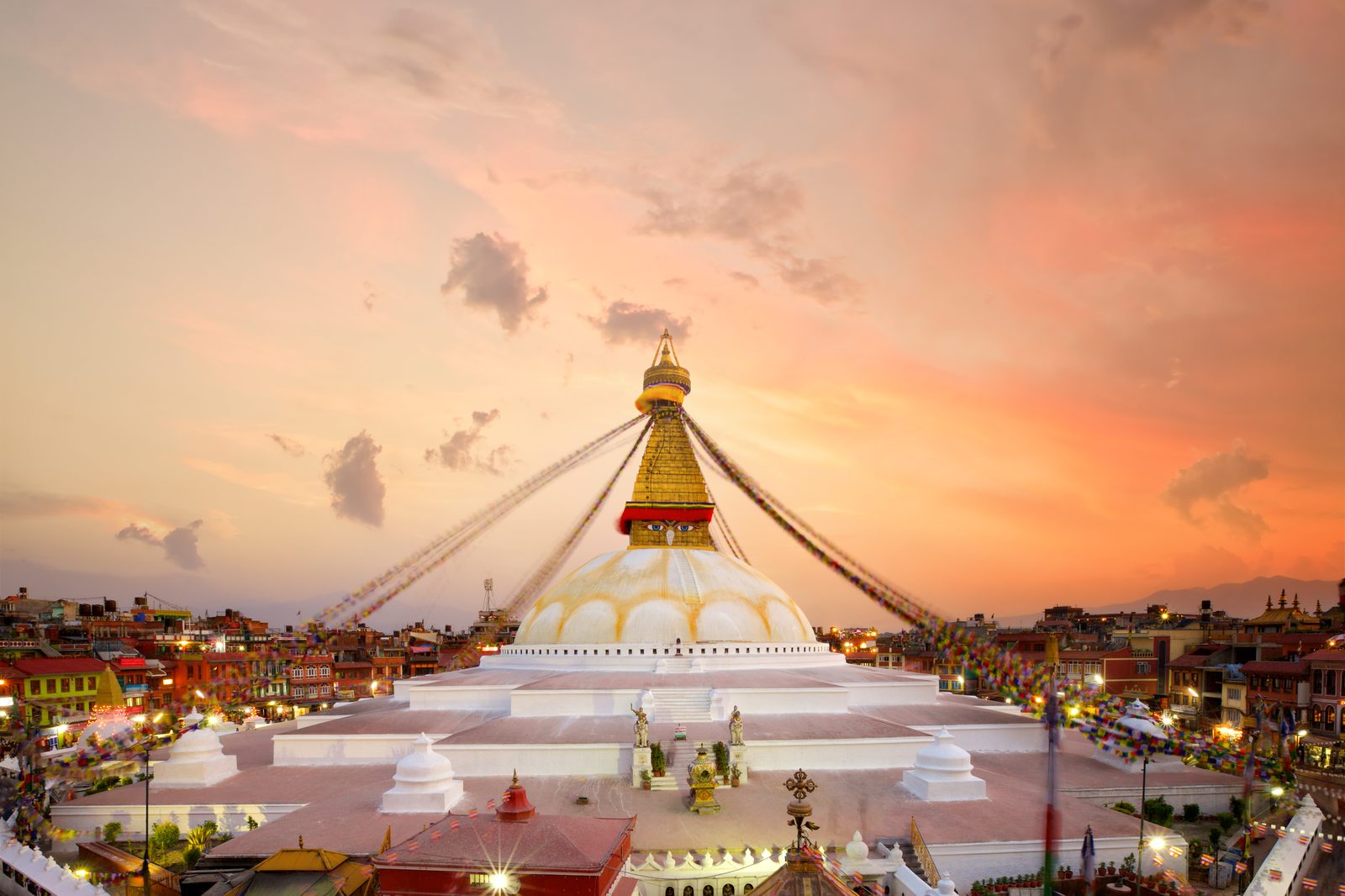
Early in the morning, before most shops around the square open, the first pilgrims are already walking. They move in a slow, steady stream around a great white dome, turning prayer wheels as they pass, and the painted Buddha eyes on the gilded tower look down on all of it. By evening the same circuit fills again.
Boudhanath Stupa is a Buddhist stupa in Boudha, in the northeast of the Kathmandu Valley, and one of the seven Monument Zones of the Kathmandu Valley UNESCO World Heritage property. UNESCO says its ensemble includes the largest stupa in Nepal. Foreign visitors pay a small entry fee, and pilgrims walk around it every morning and evening.
Our guide to places to visit in Kathmandu covers it alongside the other six zones. This guide goes deeper: what the stupa is, the history and the legends kept apart, the 2015 earthquake and rebuild, what you pay, how to walk the kora, and how to visit with respect.
Key facts
- World Heritage status
- One of seven Monument Zones of the "Kathmandu Valley" property; UNESCO spells it "Bauddhanath" (UNESCO World Heritage Centre, 28 Oct 2026)
- Year the Kathmandu Valley was inscribed
- 1979 (UNESCO World Heritage Centre (state of conservation page), 28 Oct 2026)
- Size, in UNESCO's words
- The Bauddhanath ensemble "includes the largest stupa in Nepal" (UNESCO World Heritage Centre, 28 Oct 2026)
- Location
- Boudha, in the northeast of the Kathmandu Valley (Wikipedia (citing Snellgrove), 28 Oct 2026)
- Earliest stupa on the site
- "Sometime after AD 600", per the Ministry of Culture, Tourism and Civil Aviation; chronicles disagree (MoCTCA, 28 Oct 2026)
- Entry fee, foreign visitors
- NPR 400 per person, as reported (2022); check at the counter (Boudhanath Area Development Committee via Rising Nepal, 28 Oct 2026)
- Entry fee, SAARC visitors
- NPR 100 per person, as reported (2022); check at the counter (Boudhanath Area Development Committee via Rising Nepal, 28 Oct 2026)
- Earthquake
- Damaged on 25 April 2015 (Kathmandu Post (2016) and Wikipedia, 28 Oct 2026)
- Reopened
- 22 November 2016, after a community-led rebuild (Kathmandu Post (2016), 28 Oct 2026)
- Busiest kora times
- Mornings and evenings (MoCTCA, 28 Oct 2026)
- Kora direction
- Clockwise, stupa on your right (Uncover Nepal Kathmandu team; Wikipedia ("Kora"), 28 Oct 2026)
In this guide
- What Boudhanath Stupa is, and its names
- The UNESCO listing
- History: what the records say
- The legends of Boudhanath, kept as legends
- What the dome, the eyes and the 13 steps mean
- The 2015 earthquake and the rebuild
- The entry fee and who pays it
- When to go, by time of day and time of year
- How to walk the kora
- Monasteries around the stupa, including Kopan
- Etiquette, photography and the rooftop cafes
- Getting there from Thamel
- Frequently asked questions
What is Boudhanath Stupa?
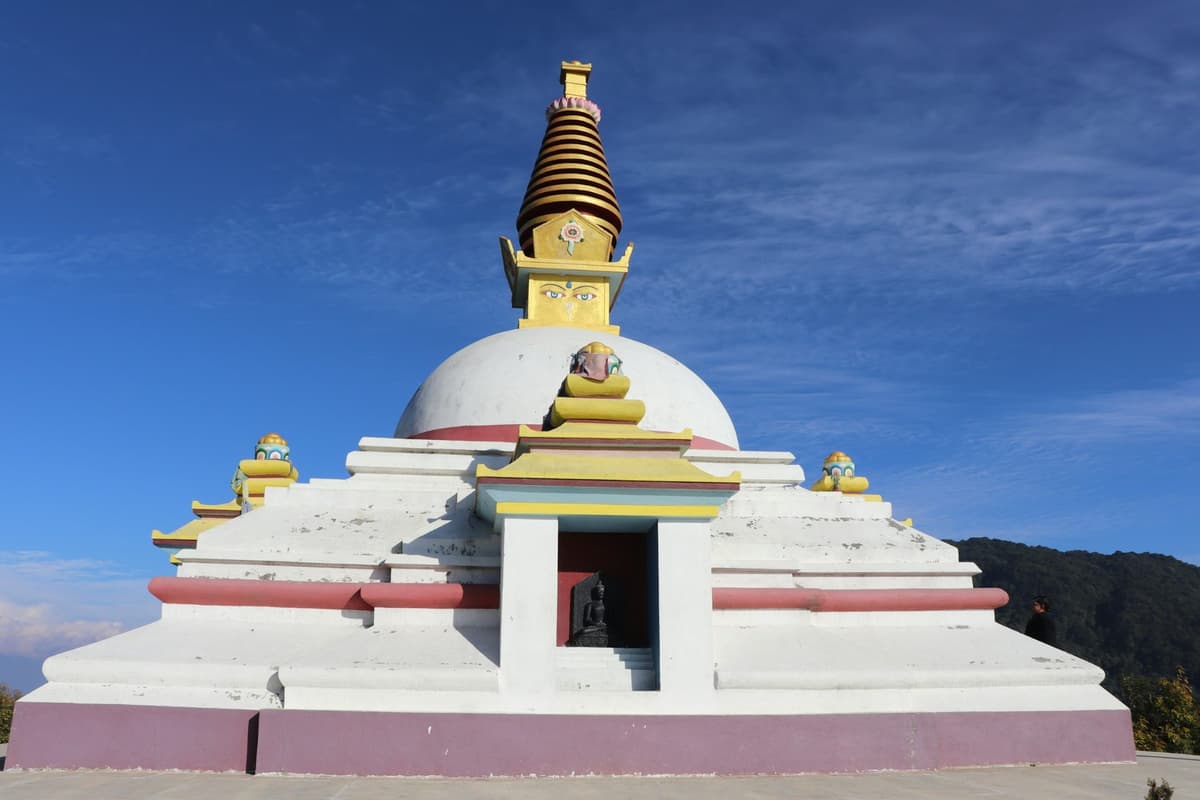
Boudhanath Stupa is a large Buddhist stupa, a dome-shaped shrine, at the centre of the Boudha neighbourhood in Kathmandu. It has a whitewashed dome topped by a gilded tower painted with the eyes of the Buddha, and it is a centre of Tibetan Buddhism in Nepal.
A few names are worth knowing before you go, because you will see all of them on signs and maps:
- Boudhanath is the common English spelling, and the one we use.
- Bauddhanath is how UNESCO spells it in the World Heritage listing.
- Boudha is what people in Kathmandu call the whole area around the stupa.
- Jarung Khashor is the Tibetan name used in the stupa's founding legend.
- Chaitya is another word for a stupa, used in Nepal and in the Newar legend of its founding.
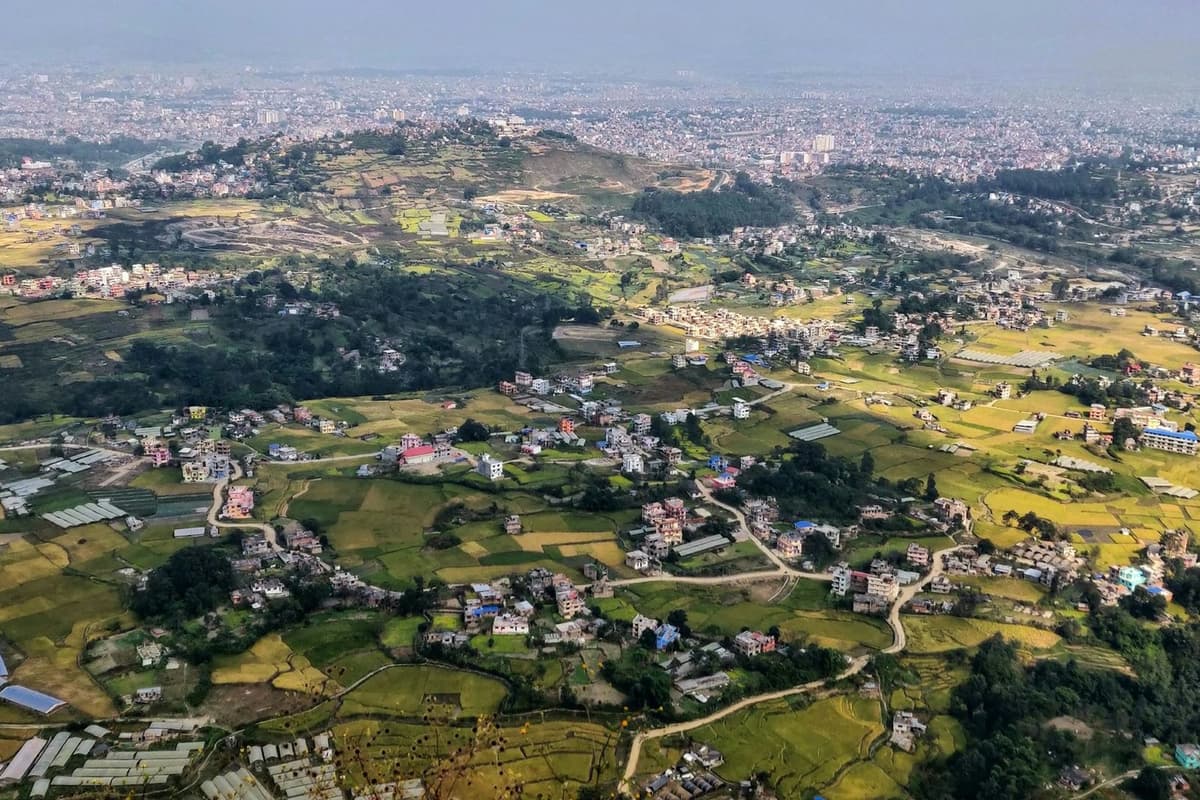
The stupa stands inside the city of Kathmandu, in the northeast of the valley. The area was once surrounded by rice paddies. Today it is a dense neighbourhood. Houses, shops, monasteries and cafes ring the square, and the dome sits in the middle of it.
Two things make Boudha feel different from other heritage sites in the valley. The first is that it is a living place of worship, not a museum. People come to walk, pray and light lamps, and visitors walk among them. The second is the Tibetan character of the area. After 1959, a large number of Tibetan refugees came to Nepal and settled around the stupa, and Boudha grew into a centre of Tibetan Buddhism. Many monasteries now stand around the square.
Is Boudhanath a UNESCO World Heritage Site?
Yes. Boudhanath is one of seven Monument Zones that together make up the "Kathmandu Valley" World Heritage property. The valley was inscribed on the World Heritage List in 1979, and the seven zones were set by a boundary modification accepted in 2006. UNESCO says the Bauddhanath ensemble includes the largest stupa in Nepal.
The seven Monument Zones are:
- Hanuman Dhoka (Kathmandu Durbar Square)
- Patan Durbar Square
- Bhaktapur Durbar Square
- Swayambhu
- Bauddhanath
- Pashupati
- Changu Narayan
The property is listed under UNESCO criteria (iii), (iv) and (vi), which are set out in full on the UNESCO listing page. UNESCO's own text describes how Buddhism and Hinduism blended in the valley from at least the 5th century AD, with a peak between 1500 and 1800 AD. It also describes the valley's stupas as having whitewashed domes and gilded cubes bearing the eyes of the Buddha, which is exactly what you see at Boudha.
"...that of Bauddhanath includes the largest stupa in Nepal."
UNESCO World Heritage Centre, Kathmandu Valley listing (checked 2026)
You will often read that Boudhanath is one of the largest stupas in the world. That wording appeared in the Kathmandu Post's report when the stupa reopened in 2016, which called it "one of the largest of its kind in the world". We stick to UNESCO's wording for Nepal and attribute the world claim, because we have not found a published measurement we trust. For the same reason, this guide gives no height or diameter.
Our guide to Swayambhunath, the Monkey Temple covers the other Buddhist stupa in the listing. Many people see Boudhanath and Pashupatinath Temple, the Hindu temple zone, in one visit.
History: what the records say
Nobody knows exactly when the first stupa at Boudha was built. The written records disagree, and the stupa you see today is much younger than the earliest dates suggest. Here is what the sources actually say, kept separate from the legends in the next section.
Chronicles and inscriptions
Nepal's old chronicles, called vamsavali (also spelt bansawali), give two different kings as founders.
- Shivadeva. The Gopalarajavamsavali, a chronicle of Nepal's early kings, credits the Licchavi king Shivadeva, who ruled from about 590 to 604 CE. An inscription links Shivadeva to the stupa and says he may have restored it rather than built it.
- Manadeva. Other Nepalese chronicles credit King Manadeva, who ruled from 464 to 505 CE.
The Ministry of Culture, Tourism and Civil Aviation dates the first stupa on the site to "sometime after AD 600". Newar chronicles are said to mention a stupa here as early as the 5th century, which fits UNESCO's account of Buddhism and Hinduism mixing in the valley from at least that century. The honest answer is that the chronicles disagree, and no single founding year can be given as fact.
The stupa you see today
Historians think the present structure was most likely built in the 14th century. Its most recent major rebuilding followed the 2015 earthquake.
Boudha after 1959
The modern character of Boudha dates from after 1959, when a large number of Tibetan refugees came to Nepal and settled around the stupa. The area became a centre of Tibetan Buddhism, and many monasteries now stand in the streets around it. That is why the square today feels as much Tibetan as Nepali.
History and legend side by side
| Question | What the records say | What legend says |
|---|---|---|
| Who built it? | Chronicles credit King Shivadeva or King Manadeva | A woman and her four sons (Tibetan legend); a king's son atoning for his father's death (Newar legend) |
| When? | First stupa "sometime after AD 600" per MoCTCA; present structure most likely 14th century | No date given in our sources |
| What is inside? | Not recorded in our sources | Relics of the earlier Buddha Kassapa (Tibetan legend) |
The legends of Boudhanath
Two founding stories are told about Boudhanath, one Tibetan and one Newar. Both are legends, passed down in religious texts and local tradition. They matter to the people who tell them, but they are not history, and we tell them here as stories.
The Tibetan legend of Jarung Khashor
Tibetan tradition knows the stupa as Jarung Khashor. A Tibetan religious text, attributed to Padmasambhava and titled The History of the Great Jarung Kashor Stupa, tells the legend.
Legend says that a woman, named Samvari in the text, built the stupa with her four sons. In the story, the stupa holds relics of Kassapa (also written Kashyapa), a Buddha said to have lived before the historical Buddha. The legend goes on to say that the sons were reborn, and Tibetan tradition links the story to the early Tibetan kings.
The Newar legend of the flying hen
The Newar people of the Kathmandu Valley tell a different story, and the Ministry of Culture, Tourism and Civil Aviation records it.
A Newar legend tells that water would not flow from a hiti, a stone water spout, so King Vikramjit ordered a sacrifice. His son, not knowing who the victim would be, carried out the sacrifice and killed his own father. The priests then told the son to release a flying hen and build a chaitya, a stupa, where it landed. The hen landed where the stupa stands today.
Another version of the same legend names the son as Manadeva, son of King Dharmadeva, and says he built the stupa as atonement for killing his father. The ministry's page ties both versions together. It is worth noticing that Manadeva is also one of the kings the chronicles credit, which shows how history and legend have grown around each other at Boudha.
What the dome, the eyes and the 13 steps mean
A stupa is a Buddhist monument built to hold relics and to be walked around in prayer. Here is how to read Boudhanath, from the ground up, using only what our sources confirm.
The plan: a mandala
Seen from above, the plan of Boudhanath forms a mandala, the circular and square diagram used in Buddhist meditation. You cannot see this from the square, but you get a better sense of it from one of the rooftops around it.
The dome
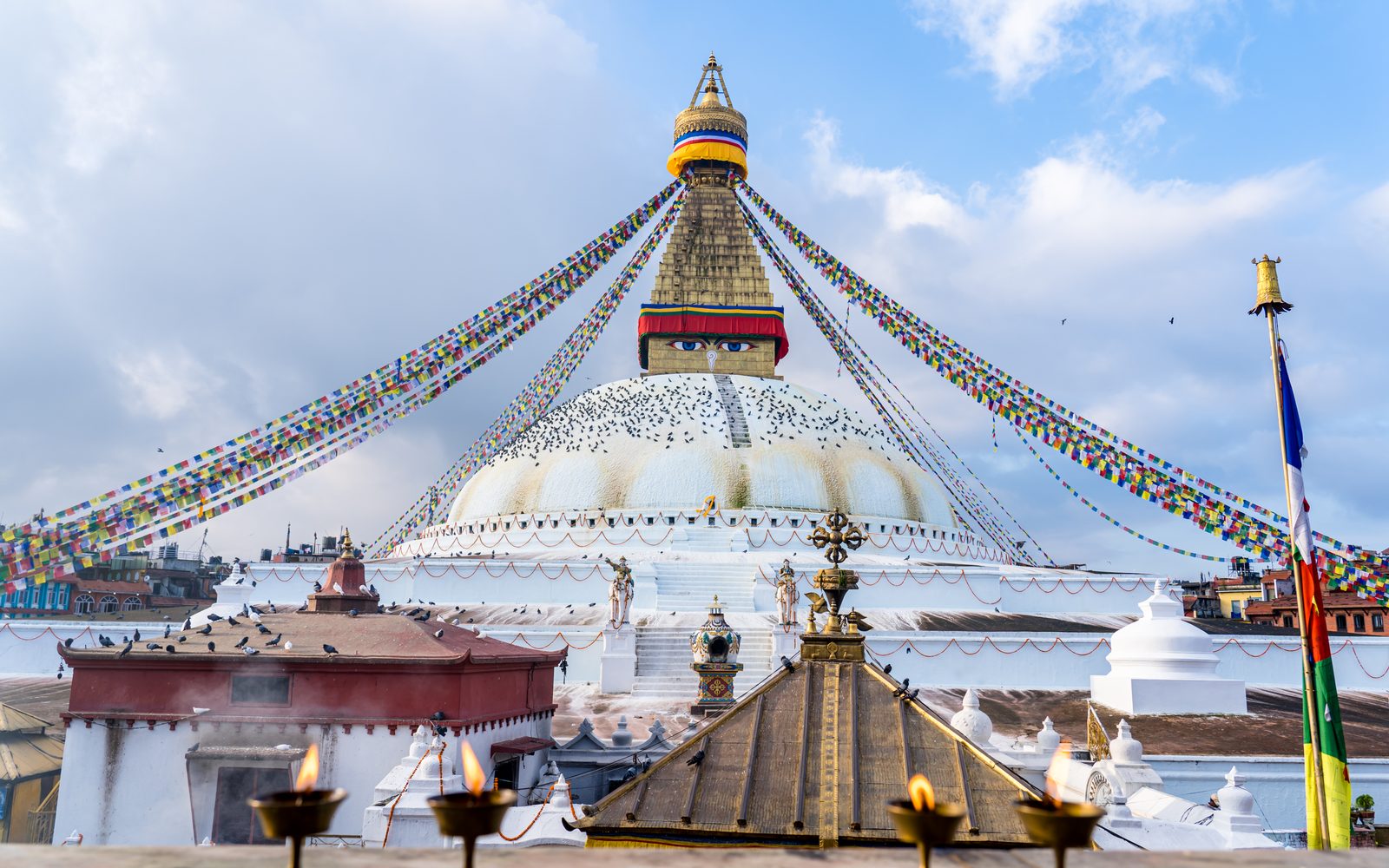
The great dome is whitewashed, as UNESCO describes for the valley's stupas. It is the part most people photograph first, and in 2015 it was largely spared.
The harmika and the Buddha eyes
Above the dome sits the harmika, the square tower that carries the eyes. It is gilded, and on it are painted the eyes of the Buddha. You will hear several explanations of the other painted marks on the harmika from guides and shopkeepers. We have not found a source we trust for them, so we leave them out here and suggest you ask a monk.
The 13 steps
Above the harmika rises the spire, or finial, with 13 steps. The 13 steps represent the Buddhist path to enlightenment. The spire was the part most badly damaged in the 2015 earthquake and the part that was rebuilt with donated gold.
Prayer wheels
Prayer wheels are set around the stupa, and pilgrims turn them as they walk. Our guides ask you to turn them clockwise as you walk the kora.
The 2015 earthquake and the rebuild
On 25 April 2015, the Gorkha earthquake struck Nepal. A Kathmandu Post report in 2016 put the death toll at nearly 9,000. At Boudhanath, the upper part of the stupa was damaged and the dome cracked. The gold spire took the worst of it, while the white dome was largely spared.
"The earthquake caused damage to the upper portion and caused cracks to the dome-structure of the stupa."
Sampurna Kumar Lama, chairperson, Boudhanath Area Development Committee, Kathmandu Post, 2016
Who rebuilt it, and how
What happened next is a story of community, not government. The work was led by the Boudhanath Area Development Committee with local community support, and the Department of Archaeology gave technical support. Rebuilding began in May 2015, within weeks of the earthquake.
"we did not want to wait for the government support and started working on our own."
Sampurna Kumar Lama, chairperson, Boudhanath Area Development Committee, Kathmandu Post, 2016
The money came from donors and religious leaders, not from the government. Donors gave more than USD 2 million, according to the Kathmandu Post's report at the reopening. More than 30 kg of gold was donated for the new pinnacle.
The stupa was partly taken apart and stood in scaffolding for months. The builders used traditional materials: brick, limestone and surkhi, a mortar made from ground burnt brick or clay.
Reopening in November 2016
Boudhanath reopened on 22 November 2016. The then Prime Minister, Pushpa Kamal Dahal, inaugurated it, praised the private restoration effort and said it offered "proof that we can rebuild our heritage". He added:
"This example puts pressure on us in government to reconstruct all the houses and temples that have been damaged."
Pushpa Kamal Dahal, then Prime Minister, Kathmandu Post, 2016
Not everyone was entirely comfortable with the speed. Christian Manhart, UNESCO's representative to Nepal, said the UN had not been consulted on the rebuild, and UN experts worried that a new concrete platform might be too heavy. The same report quoted him: "It's better to do it slowly and do it well, than to do it too quickly." We include this not to take sides, but because it is part of the record.
The stupa you walk around today is the rebuilt one.
How much is the Boudhanath entry fee?
Foreign visitors pay NPR 400 per person and visitors from SAARC countries pay NPR 100, as reported in 2022 by the Boudhanath Area Development Committee. At the Nepal Rastra Bank rate of 27 October 2026, NPR 400 is under USD 3. Fees can change, so check the amount at the counter.
The fee is collected at the ticket counter of the Boudhanath Area Development Committee, the same body that led the rebuild.
| Visitor | Entry fee | Notes |
|---|---|---|
| Foreign visitors (non-SAARC) | NPR 400 per person | As reported in 2022; check at the counter |
| Visitors from SAARC countries (the South Asian regional group) | NPR 100 per person | As reported in 2022; check at the counter |
| Nepali citizens and children | Not stated in our sources | Ask at the counter |
A few practical points:
- Pay at the counter as you arrive, and keep your ticket until you leave.
- Every foreign and SAARC visitor pays, whatever the hour. The committee has said it will act against guides and hotels that bring tourists in without tickets, including guests who stay overnight in Boudha and walk in early. If you stay in a guesthouse near the square, buy a ticket like everyone else.
- Carry small notes so paying is quick.
- The committee's ticket counter was reported open 10 am to 5 pm in 2022. That tells you when to find staff, not that you can skip the ticket outside those hours.
If you visit Boudhanath on one of our tours, the entry fee is not included in the tour. You can add it as an optional extra when you enquire, or pay at the counter.
When to visit Boudhanath
The best time to visit is early morning or late afternoon into dusk. Those are the hours when pilgrims walk their kora, the light is softer, and the square feels most alive. Midday is quieter for worship and more crowded with day visitors, in our team's experience.
By time of day
| Time of day | What you see | Our team's view |
|---|---|---|
| Early morning | Pilgrims walking the morning kora | The best time to feel Boudha as a place of worship |
| Midday | Fewer pilgrims, more tour groups and shoppers | Fine for a quick look and the monasteries; harsh light for photos |
| Late afternoon to dusk | The evening kora fills; butter lamps are lit; rooftop cafes catch the last light | Our favourite time; pair it with an early dinner on a rooftop |
By time of year
Boudhanath is a year-round visit, since it is in the city and most of it is outdoors. October and November usually bring the clearest skies after the monsoon. Winter mornings are cold: at Kathmandu airport, the long-term average in January is a high of 19.2 °C and a low of 2.8 °C (1991 to 2020 normals). If you plan to walk the dawn kora in winter, bring a warm layer and a hat.
In the monsoon, expect rain. The stupa is still worth seeing; bring an umbrella.
Lhosar and Buddha Jayanti
Boudha is at its busiest during the big Buddhist festivals, in our team's experience.
- Lhosar means new year. At Boudha the main celebration is Gyalpo Lhosar, the Tibetan and Sherpa new year. In our team's experience the kora is crowded with families and the monasteries hold ceremonies.
- Buddha Jayanti, also called Buddha Purnima, is the full-moon festival of the Buddha's birth. In our team's experience the kora stays busy from morning to night.
Festival dates follow the lunar calendar and change every year. Check the Government of Nepal's public holiday list for your year, or ask us when you share your travel dates. Expect crowds, and arrive early if you want space on the kora.
How to walk the kora at Boudhanath
Walk the kora clockwise, keeping the stupa on your right. That is the direction pilgrims walk, and our guides ask our guests to do the same. A kora is a walking circuit of a sacred site, and at Boudha pilgrims walk it in the morning and evening.
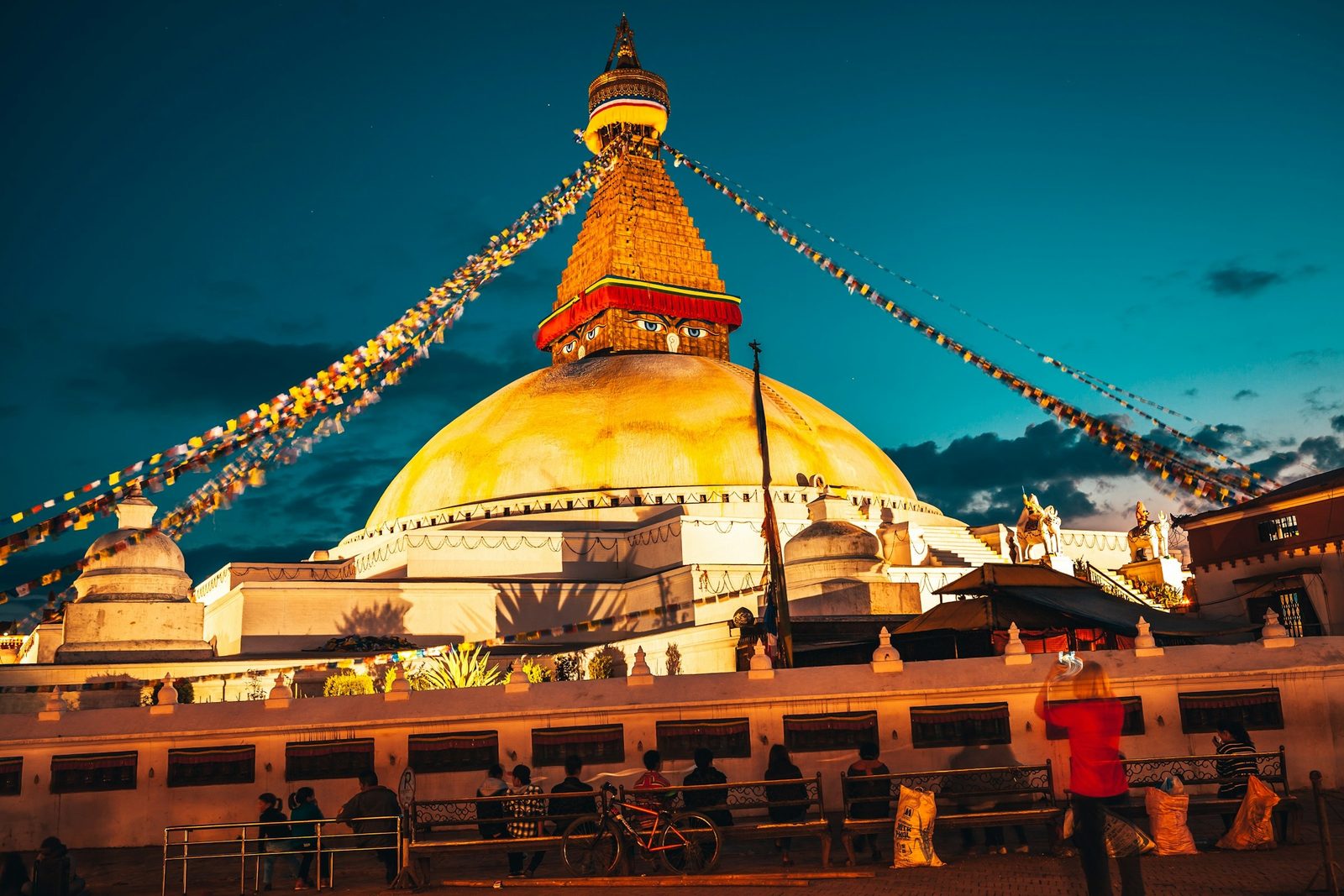
Here is how to do it, step by step:
- Enter the square and turn left. That puts the stupa on your right, so you are walking clockwise.
- Join the flow. Walk at the pace of the people around you. Do not cut across the stream or walk against it.
- Turn the prayer wheels clockwise as you pass. If a wheel is already spinning, let it run.
- Go round more than once if you like. One slow circuit lets you see the stupa from every side.
- Step out to the edge to stop. If you want to take photos or look up at the eyes, move to the outer edge of the path so you do not block anyone.
- Visit a monastery. Gompas, or monasteries, stand around the square and in the lanes off it. Shoes come off before the shrine room.
- Finish on a rooftop. Climb to one of the cafes around the square and look back at the dome.
Monasteries around the stupa
Boudha is ringed by many gompas, the Tibetan word for a monastery. Some open their courtyards and shrine rooms to respectful visitors; others are private. You can usually tell by whether the door is open and whether other visitors are inside. If you are not sure, ask at the gate.
Inside a gompa you will find the shrine room, often with large statues, wall paintings and rows of butter lamps. Butter lamps are lit as offerings in Tibetan Buddhist shrines, and you will see them burning in the monasteries around Boudha. If you want to light one, ask a monk or the person looking after the lamps how it is done there.
The etiquette section below covers shoes, dress and photography inside a gompa.
If monasteries draw you, our guide to White Gumba covers another monastery visit, and our Nepal pilgrimage guide brings Buddhist and Hindu sacred sites together in one place.
Kopan Monastery
Kopan Monastery is a well-known monastery near Boudhanath. Its own visitor page says it is about a 40-minute walk from Boudha, with no signposts, so ask locals for "Kopan Gompa". It also describes Kopan as about 5 km from the airport.
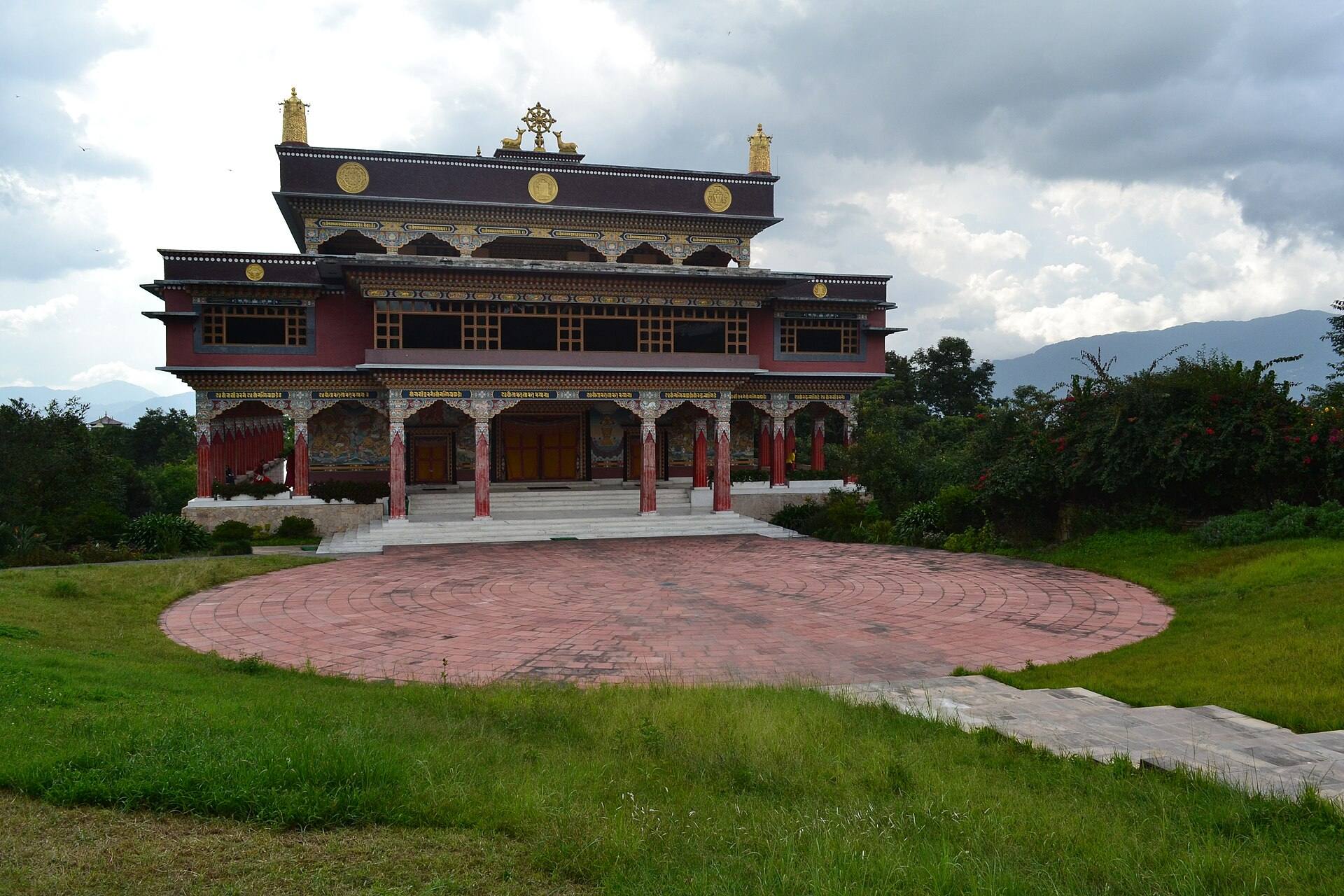
Getting there:
- On foot: about 40 minutes from Boudha, according to the monastery's page.
- By taxi: a short ride from Boudha, or a longer one across the city from Thamel. Agree the fare before you get in.
- By public bus: the monastery's page lists buses from Ratna Park to Kopan village, then about a 10-minute uphill walk.
The monastery's page gives office hours of 9:00 to 11:30 and 13:00 to 16:30, and says the gate is closed from 17:00. Check before you go, as times can change for courses and ceremonies. Kopan pairs well with Boudhanath in one day: the monastery in the morning, the stupa for the evening kora.
Etiquette and photography at Boudhanath
Boudhanath is a place of worship first. The rules are simple and mostly common sense, and our team gives every guest the same advice.
Dress and behaviour
- Dress modestly. Cover your shoulders and knees, especially if you plan to enter a monastery.
- Walk clockwise around the stupa, and inside monasteries too.
- Remove your shoes before entering a shrine room.
- Do not touch or point your feet at statues, images or offerings.
- Keep your voice low near people praying.
Photography
Photographing the stupa from the square and the rooftops is normal. Inside monastery shrine rooms, rules vary from one monastery to the next and are often posted at the door. Check the sign, or ask.
- Ask before photographing monks, nuns or people praying. A smile and a gesture with the camera is usually enough; accept a no.
- Avoid flash in shrine rooms; our team's advice, as it disturbs people at prayer.
Rooftop cafes
Cafes with rooftop terraces ring the square and give you a view over the dome. They are the easiest way to see the mandala shape of the stupa and the pilgrims moving round it. Stop at one for tea, a meal or the evening light. We do not name businesses here; walk round the square and pick one with an open terrace and a seat facing the eyes.
How to get to Boudhanath from Thamel
A taxi from Thamel crosses the city to Boudha, and how long it takes depends heavily on traffic. Ask your hotel to call one, agree the fare before you get in, and ask for Boudha stupa. If you would rather not deal with taxis, ask us and we will arrange a car and driver.
A few tips for the journey:
- Leave a margin. Kathmandu traffic is hard to predict, so set off early if you want to be there for the evening kora.
- Pair it with Pashupatinath. The two sites are often seen in one visit.
Frequently asked questions
Which way do you walk around Boudhanath Stupa?
Walk clockwise, keeping the stupa on your right. Pilgrims walk the kora in that direction, and our guides ask our guests to do the same. Enter the square and turn left to start, turn the prayer wheels clockwise as you pass, and step to the outer edge of the path if you want to stop for a photo.
What is the best time of day to visit Boudhanath?
Early morning and late afternoon into dusk are the best times. Pilgrims walk their koras in the morning and evening, so the square is busy with worship rather than only sightseeing. The evening has the bonus of butter lamps being lit and soft light on the dome for photos from the rooftop cafes.
Is Boudhanath Stupa a UNESCO World Heritage Site?
Yes. Boudhanath, which UNESCO spells Bauddhanath, is one of the seven Monument Zones of the Kathmandu Valley World Heritage property, inscribed in 1979. UNESCO describes the Bauddhanath ensemble as including the largest stupa in Nepal. The same listing covers Swayambhu, Pashupati, Changu Narayan and the three Durbar Squares.
Was Boudhanath damaged in the 2015 earthquake?
Yes. The 25 April 2015 earthquake damaged the upper part of Boudhanath and cracked the dome; the gold spire took the worst of it. The Boudhanath Area Development Committee led a community-funded rebuild that began in May 2015, and the stupa reopened on 22 November 2016. More than 30 kg of donated gold went into the new pinnacle.
Can you take photos at Boudhanath?
Yes, photographing the stupa from the square and the rooftop cafes is normal. Inside monastery shrine rooms the rules vary and are often posted at the door, so check the sign or ask. Always ask before photographing monks or people praying, and avoid flash in shrine rooms.
How long should I spend at Boudhanath?
Give it enough time to walk the kora slowly at least once, step into a monastery and sit on a rooftop as the light changes. Rushing it misses the point, because the feel of the place comes from the pilgrims around you. Many people pair Boudhanath with Pashupatinath in the same visit.
Plan your visit to Boudhanath
Boudhanath is easy to see on your own, and better with someone who can explain what you are looking at and pick the right hour. For more of the city, go back to our guide to places to visit in Kathmandu.
If you want us to arrange it, three of our trips include the stupa:
- The Boudhanath and Pashupatinath aarti tour pairs the stupa with the aarti prayer ceremony at Pashupatinath.
- The Kathmandu UNESCO World Heritage sites day tour takes in Boudhanath with other World Heritage sites in the valley.
- The Patan, Bhaktapur and Boudhanath tour adds Patan and Bhaktapur, whose Durbar Squares are two more of the valley's Monument Zones.
Not sure which one fits your days, or want to check the current entry fee or a festival date before you travel? Message us on WhatsApp or send an enquiry with your dates, and our Kathmandu team will reply with an honest answer.