






Explore by activity
Not listed yet

We run Motorbiking & Overland trips — we just haven’t put the itinerary on the site yet. Tell us your dates and we’ll send a costed day-by-day plan.

Explore by experience
Explore by region
by gomayu
Search Tours or Places

Maya Devi Temple, Lumbini: The Buddha's Birthplace

19 min read Posted 29 Oct 2026Updated 30 Oct 2026
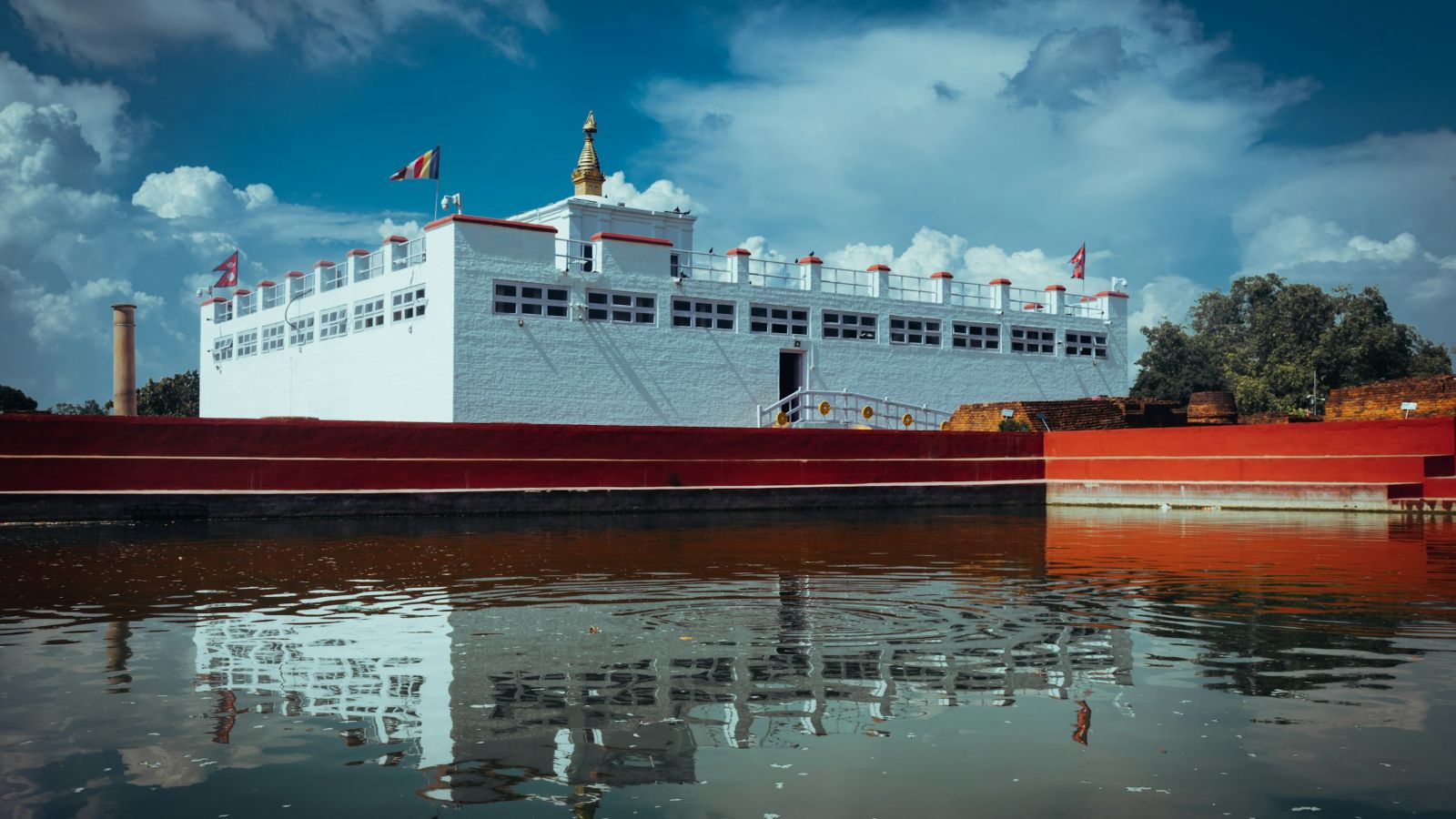
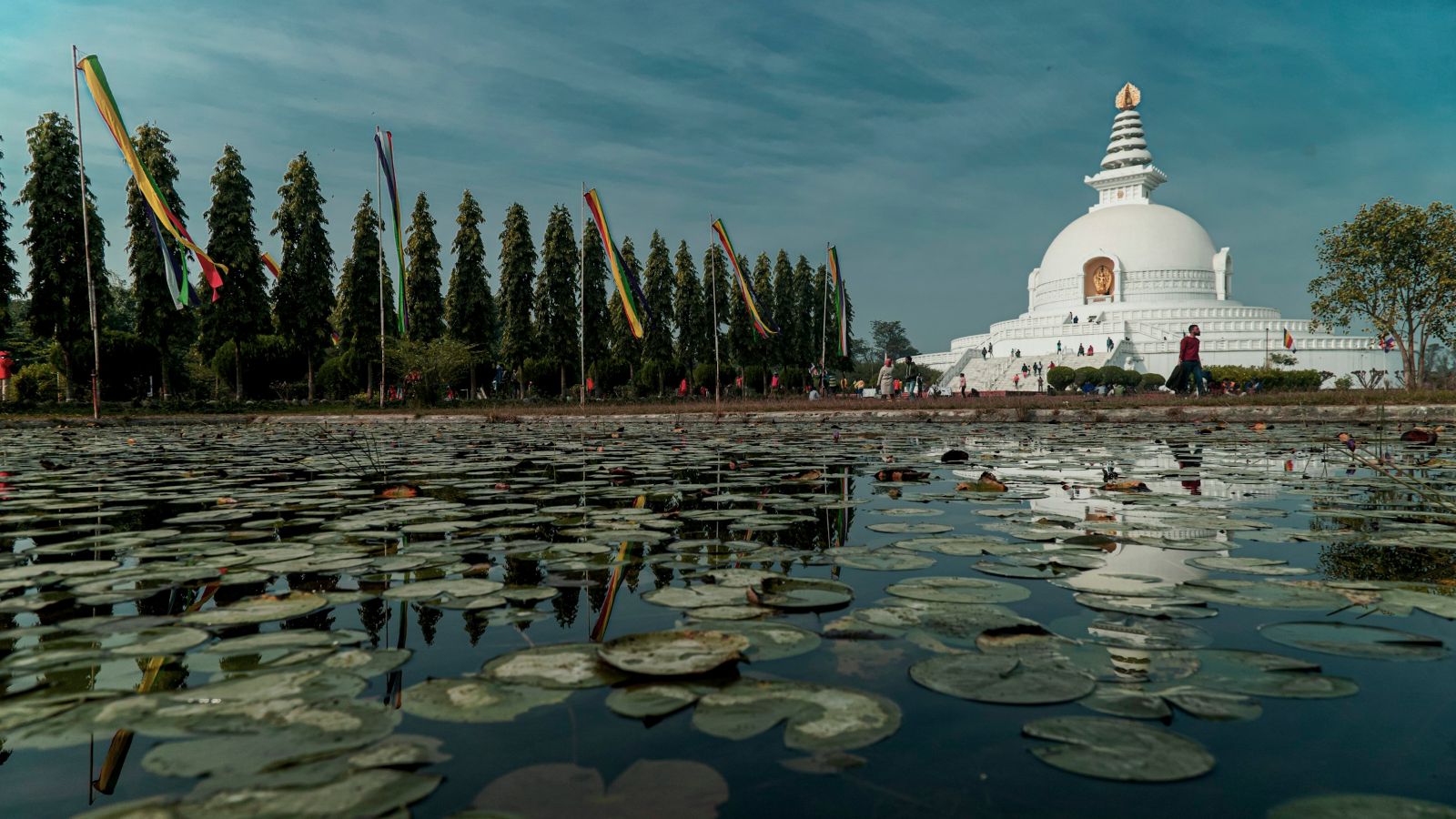
Maya Devi Temple reflected in the sacred Puskarini pond at Lumbini, birthplace of the Buddha

By Uncover Nepal Team · Checked by our Kathmandu travel team · Last checked 30 October 2026

Inside the Maya Devi Temple in Lumbini, pilgrims look down on excavated brick foundations, and at their centre a small stone rests on bricks laid more than two thousand years ago. Outside, the brick-lined Puskarini pond lies still in the Sacred Garden. On Buddha Jayanti in May 2026, visitors sat in meditation under the Bodhi tree at the temple.

The Lumbini Maya Devi Temple shelters the Marker Stone, which the Lumbini Development Trust says designates the exact spot where Prince Siddhartha, who became the Buddha, was born. The Trust rebuilt the temple in 2003 over remains that reach back to the sixth century BC. The Trust's daily fee is NPR 1,000 for most foreign visitors.

This guide covers the temple and the Sacred Garden around it in depth. For the wider site, from the monastic zones to hotels and seasons, start with our Lumbini travel guide.

Key facts

Status
Part of "Lumbini, the Birthplace of the Lord Buddha", a UNESCO World Heritage Site since 1997 (UNESCO; Lumbini Development Trust (LDT), 30 Oct 2026)
Where
The Sacred Garden, at the southern end of the Lumbini master plan, Rupandehi district (LDT, 30 Oct 2026; Nepali Times, 2013)
Marker Stone
70 cm by 40 cm by 10 cm, on a platform of seven layers of 3rd-century BC bricks (LDT, 30 Oct 2026)
Ashoka pillar
Erected by Emperor Asoka in 249 BC; rediscovered in 1896 (UNESCO; LDT, 30 Oct 2026)
Fee, per person per day
NPR 1,000 most foreign visitors; NPR 700 SAARC and Myanmar; NPR 80 Indian; NPR 20 Nepali (LDT Entry Formalities page, 30 Oct 2026)
Opening hours
Not published online by the Trust (LDT; NTB, 30 Oct 2026)
Nearest airport
Gautam Buddha International Airport, Bhairahawa, about 18 km away (LDT, 30 Oct 2026)
Buddha Jayanti 2027
Expected on Thursday 20 May 2027 (Office Holidays; Prokerala, 30 Oct 2026)

In this guide

  • Who was Maya Devi, and why is this temple sacred?
  • How old is the Maya Devi Temple, and when was it rebuilt?
  • What did archaeologists find under the temple in 2013?
  • What is the Marker Stone, and what else should you look for?
  • What does the Ashoka pillar in the Sacred Garden say?
  • What else is in the Sacred Garden at Lumbini?
  • Why is Lumbini a UNESCO World Heritage Site?
  • How much does it cost to enter the Lumbini Maya Devi Temple in 2026?
  • How should you behave at the Maya Devi Temple in Lumbini?
  • When is the best time to visit, and when is Buddha Jayanti?
  • How do you get to the Maya Devi Temple?
  • Frequently asked questions

Who was Maya Devi, and why is this temple sacred?

The temple is named after Queen Maya Devi, the Buddha's mother, and it stands where Buddhist tradition says she gave birth to Prince Siddhartha. The Trust gives the birth as Baisakh Purnima, the full moon of the first Nepali month, in 623 BC, the date in the Sri Lankan chronicles that UNESCO also uses. Many historians, working from Asoka's era and the archaeological evidence, consider 563 BC correct, the Trust notes; the exact year is still debated.

You may hear it called simply the Lumbini Buddha temple, and you will see both spellings, Maya Devi and Mayadevi, on signs and in the Trust's pages.

The Trust calls Devadaha, 57 km east, her maternal home and the ancient capital of the Koliya kingdom.

The Trust quotes the Mahaparinirvana Sutta, a scripture on the Buddha's last days, in which he names Lumbini as a place his followers should see:

"Ananda, This (Lumbini) place is where the Tathagata was born, this is a place, which should be visited and seen by a person of devotion and which would cause awareness and apprehension of the nature of impermanence."

Lumbini Development Trust, Lumbini page, checked 30 October 2026

"Tathagata" is a title the Buddha used for himself; Ananda was his attendant. After Nepal and India, the most visitors in 2025 came from Sri Lanka, Thailand and Myanmar, the Trust says, and many people around you will be there to pray.

How old is the Maya Devi Temple, and when was it rebuilt?

The building you walk into dates from 2003, but the site under it is far older. The Trust says excavations show the temple was rebuilt in phases over many centuries, with the earliest evidence from the sixth century BC, including a brick structure from before the Mauryan empire of Emperor Asoka.

P.C. Mukherji excavated here in 1899, three years after the Ashoka pillar was rediscovered. From 1992 to 1995 the Lumbini Development Trust, Nepal's Department of Archaeology and the Japan Buddhist Federation excavated inside the Mayadevi complex itself, and the Marker Stone, now the centre of the temple, came to light in excavations in the 1990s.

The 2003 rebuilding

In the Trust's own words, "The current Mayadevi Temple was reconstructed in 2003 by the Lumbini Development Trust." The Nepali Times reported in May 2003 that King Gyanendra was due to inaugurate the new temple, a Rs 60 million construction, on the Buddha's birthday, and that it let pilgrims climb up to view the excavations.

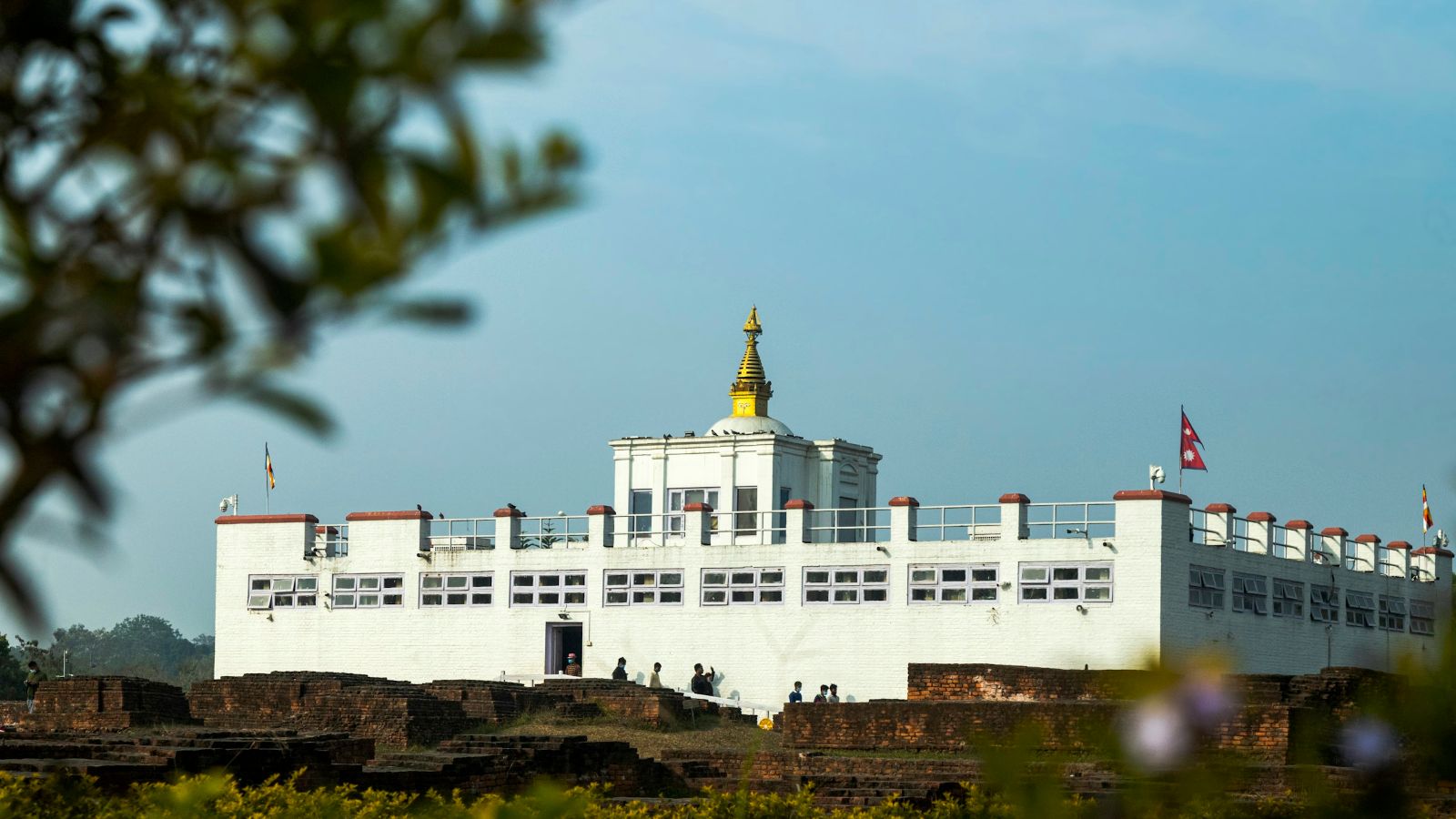
Inside, it is less a decorated shrine room than a cover over an archaeological site.
The white Maya Devi Temple in the Sacred Garden of Lumbini under a clear blue sky
The white Maya Devi Temple in the Sacred Garden at Lumbini.

What did archaeologists find under the temple in 2013?

In November 2013 a National Geographic Society release reported that excavations inside the Maya Devi Temple had "uncovered the remains of a previously unknown sixth-century B.C. timber structure under a series of brick temples". The open space at its centre "may have accommodated a tree", the researchers proposed, which fits the story of a birth in a garden.

Robin Coningham of Durham University and Kosh Prasad Acharya co-led the team. They dated the remains by radiocarbon and optically stimulated luminescence, which measures when buried sediment last saw daylight, and published the work in the December 2013 issue of the journal Antiquity. It was a UNESCO-backed project funded by the government of Japan in partnership with the government of Nepal, with support from the National Geographic Society and the universities of Durham and Stirling.

Coningham explained why the dig mattered:

"Very little is known about the life of the Buddha, except through textual sources and oral tradition"

Robin Coningham, National Geographic Society release, via ScienceDaily, 25 November 2013

"Now, for the first time, we have an archaeological sequence at Lumbini that shows a building there as early as the sixth century B.C.," he added in the same release. Before this, the earliest Buddhist structures found at Lumbini dated from Asoka's time, the third century BC. The release presented the find as support for an early date for the Buddha's life; historians still debate the exact year.

What is the Marker Stone, and what else should you look for?

The Trust says "The Marker Stone designates the exact spot where Prince Siddhartha was born in Lumbini." It is a sandstone-based conglomerate measuring 70 cm by 40 cm by 10 cm, and it "rests atop a platform made of seven layers of bricks from the 3rd century BC".

The stone is small and plain. Follow the line of people and the staff's directions, and do not linger in front of it while others wait to pray.

A pilgrim's description from 636 AD

The Chinese pilgrim Hsuan Tsang described the Marker Stone in 636 AD as lying 25 steps north of the sacred pond, the Trust says. Today the Trust places the pond 25 paces south-west of the stone.

The Nativity Sculpture

The temple also houses the Nativity Sculpture, a birth scene carved in red sandstone in the style of the Mathura School. The Trust dates it to the 4th century and says P.C. Mukherji found it in 1899. It shows Maya Devi holding the branch of a tree, with Prajapati Gautami supporting her, the newborn Buddha standing on a lotus pedestal, and the gods Brahma and Indra receiving him.
Maya Devi Temple behind the excavated brick ruins of the Sacred Garden in Lumbini, Nepal
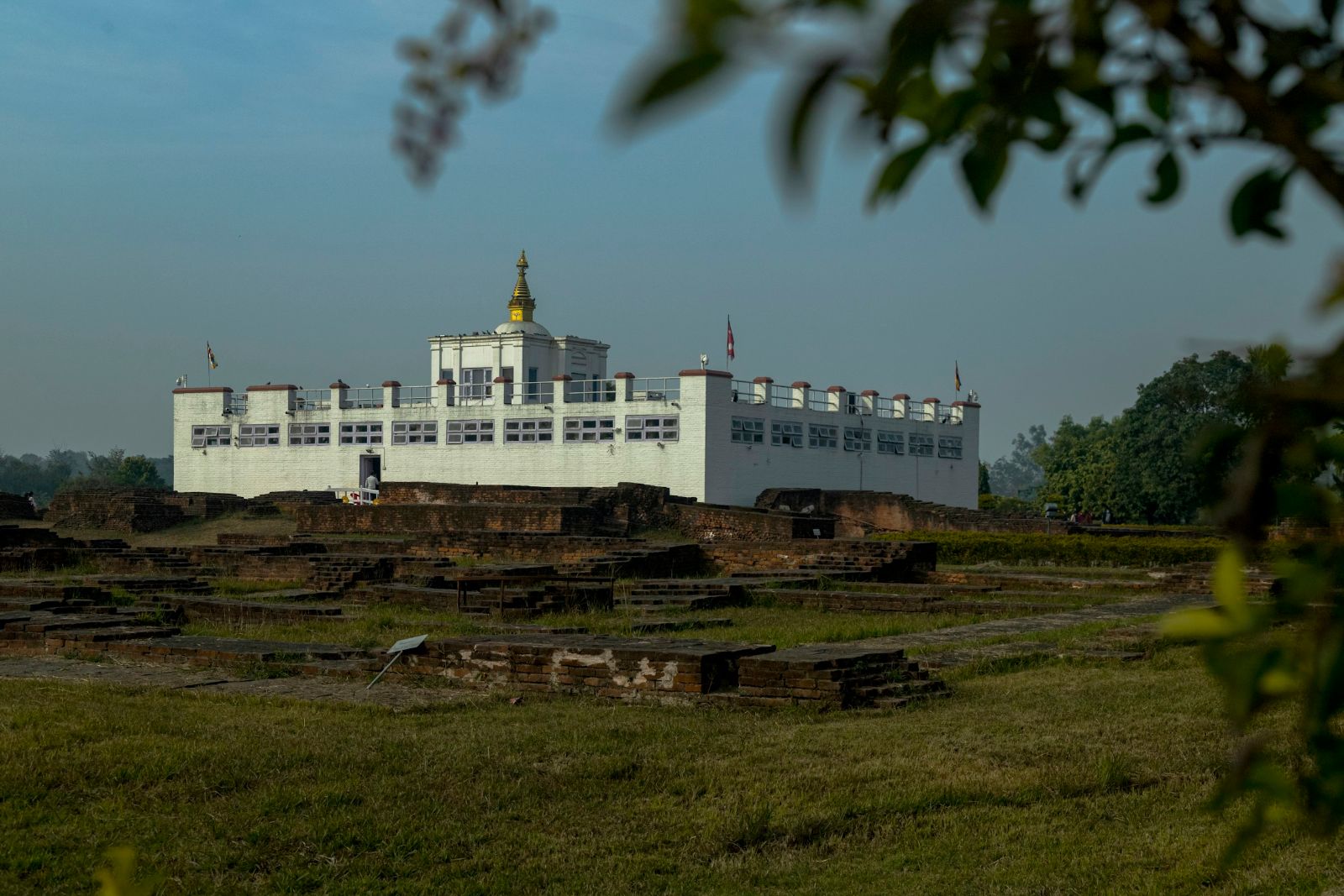
The Maya Devi Temple behind the excavated brick ruins of the Sacred Garden.

What does the Ashoka pillar in the Sacred Garden say?

The Ashoka pillar is the written evidence at the heart of Lumbini's claim. Emperor Asoka erected it in 249 BC, according to UNESCO and the Trust, and its inscription, in Brahmi script and the Pali language, records his royal visit, states that the Buddha was born here, and cuts the village's tax to an eighth.

The inscription calls Asoka, also spelt Ashoka, King Piyadasi. The Trust's translation reads:

"King Piyadasi (Asoka), the beloved of the Gods, in the twentieth year of his reign, himself made a royal visit. Sakyamuni Buddha was born here, therefore the (birth spot) marker stone was worshipped and a stone pillar was erected. The lord having been born here, the tax of the Lumbini village reduced to the eighth part (only)."

Lumbini Development Trust, Lumbini page, checked 30 October 2026

"Sakyamuni" means the sage of the Sakyas, Siddhartha's clan. In the Trust's translation, the inscription mentions a marker stone already worshipped in Asoka's time.

How the pillar was found, and what it looks like now

The pillar was rediscovered in 1896. The Trust credits General Khadga Shamsher Jung Bahadur Rana, then governor of Palpa, and Dr Alois Führer.

The Trust gives the present pillar's height as 30 feet 10.5 inches (9.41 m), with almost half of it buried underground. The lotus bracket that once sat on top is displayed on a nearby brick platform. The crowning figure, possibly a horse, has never been found.

You may see 245 BC on a Nepal Tourism Board page; UNESCO and the Trust both give 249 BC.

What else is in the Sacred Garden at Lumbini?

Besides the temple and the Ashoka pillar, the Sacred Garden holds the Puskarini pond, the remains of 31 stupas and two groups of monasteries, two working monasteries, a Bodhi tree, and a Circular Pond and Levee around it all.

A stupa is a dome-shaped Buddhist monument; a vihara is a monastery.

The Puskarini, or Sacred Pond

The Puskarini lies 25 paces south-west of the Marker Stone, the Trust says, and it is believed that Maya Devi bathed here before the birth. UNESCO calls it the Shakya Tank.

Its outline is modern: originally oval, it was remodelled with a brick embankment between 1933 and 1939 by Keshar Shumsher Rana, and the Trust gives its present measurements as 24.90 m by 24.85 m by 4.83 m. Two wells were found in its corners during cleaning in 1996.

Stupas and monastery ruins

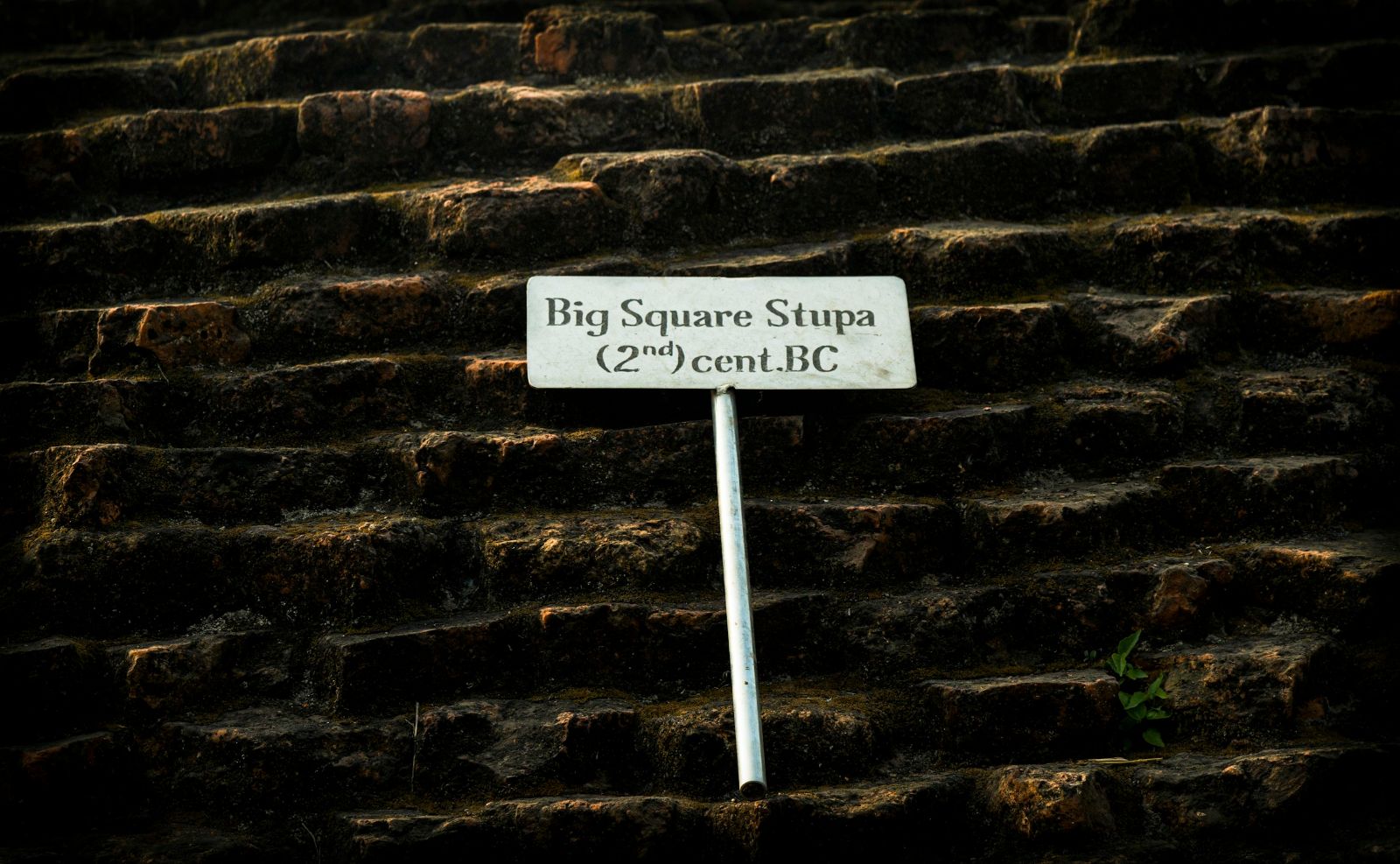
The Trust counts 31 excavated stupas in the Sacred Garden: 29 votive stupas, built as offerings, one relic stupa and one dhamma stupa. They date from the 3rd century BC to the 8th or 9th century AD. Two groups of monasteries have been excavated south and south-east of the temple.

Two working monasteries

The Dharmaswami Maharaja Buddha Vihara, established in 1968, belongs to the Sakya school of Tibetan Buddhism and hosts the annual Sakya Monlam Puja, a 10-day world peace ceremony. The Rajkiya, or Royal, Buddha Vihara is Theravada and was built in 2011 BS (Bikram Sambat, the Nepali calendar) by Dharmodaya Sabha.

The Bodhi tree and the Circular Pond

Pilgrims meditate under the Bodhi tree by the temple, as they did on Buddha Jayanti in 2026, the Trust reported. Around the garden, the Trust built a Circular Pond and Circular Levee, which it says "symbolize the purity and simplicity of the mandala".

Beyond the garden lie the monastic zones, the Eternal Peace Flame and more. Our guide to places to visit in Lumbini covers them, and the World Peace Pagoda in Lumbini has its own guide.
Excavated brick base of the Big Square Stupa in the Sacred Garden at Lumbini
The excavated brick base of the Big Square Stupa in the Sacred Garden.

Why is Lumbini a UNESCO World Heritage Site?

UNESCO inscribed "Lumbini, the Birthplace of the Lord Buddha" in 1997 under two criteria. Under criterion (iii), it recognises Lumbini as the Buddha's birthplace, testified by the inscription on the Asoka pillar. Under criterion (vi), it cites the remains of Buddhist viharas and stupas from the 3rd century BC to the 15th century AD as important evidence of early Buddhist pilgrimage centres.

How the modern Lumbini was planned

The garden is part of a larger plan. The UN Secretary-General U Thant visited Lumbini in 1967 and urged its development as an international pilgrimage centre. The Japanese architect Kenzo Tange then designed a master plan, which the Government of Nepal approved in 1978. The Lumbini Development Trust, set up by the government in 1985, runs the site and sells the tickets.

The plan covers 1 by 3 miles on a north to south axis, over 7.7 square kilometres, in three zones of about one square mile each: the Sacred Garden, the Monastic Zone, and the Cultural Centre and New Lumbini Village. The Sacred Garden is at the southern end, a 2013 Nepali Times guide noted, and the World Peace Pagoda at the northern.

Lumbini drew a little over 1.1 million visitors in 2025, the Trust says, most of them Nepali and Indian. The Lumbini Museum, designed by Tange, is in the northern zone; on 30 October 2026 its website still said it was "Currently under renovation". Our Lumbini Museum guide tracks its status.

How much does it cost to enter the Lumbini Maya Devi Temple in 2026?

The Lumbini Development Trust charges a conservation fee per person per day: NPR 1,000 for most foreign visitors, NPR 700 for SAARC and Myanmar citizens, NPR 80 for Indian citizens and NPR 20 for Nepali citizens. Cameras carry a separate daily fee. The Trust publishes no opening hours.

NPR is the Nepali rupee. SAARC is the South Asian regional grouping of countries.

Ticket Who Fee
Conservation fee, per person per day Most foreign visitors ("other nationals") NPR 1,000
Conservation fee, per person per day SAARC and Myanmar citizens NPR 700
Conservation fee, per person per day Indian citizens NPR 80
Conservation fee, per person per day Nepali citizens NPR 20
Still camera, per day SAARC and other foreign visitors USD 3
Still camera, per day Nepali and Indian visitors NPR 100
Video camera, per day SAARC and other foreign visitors USD 25
Meditation Pass, 12 days Other foreign visitors NPR 1,500
Conservation fee waived Monks, nuns, persons with disabilities and residents of the three surrounding districts No charge

Source: Lumbini Development Trust, Entry Formalities page, checked 30 October 2026.

  • It is compulsory. The Trust says "Entrance tickets are mandatory and must be purchased."
  • It is per day. Come back the next day and you pay again.
  • Three ways to pay. Cash, QR code, or online at tickets.lumbinidevtrust.gov.np.
  • It rose in 2026. The Trust raised the fee in May 2026, Kantipur reported. Older Trust pages and the Nepal Tourism Board's fee table still show old rates.
  • Visitor Information Centre. Here visitors "get information, register, and pay fees before exploring the Mayadevi Temple and other sites", the Trust says.
  • No published hours. Ask at the Visitor Information Centre or the gate, or ask us.

How should you behave at the Maya Devi Temple in Lumbini?

Take your shoes off before the temple premises, dress modestly, and leave food and drink at the entrance, as the Trust asks. Beyond that, follow the signs and the staff, and keep your voice low. This is a working place of worship.

  • Shoes. Off before the temple premises, and at any monastery door where shoes are lined up.
  • Dress. The Trust asks for modest clothing; we suggest covering shoulders and knees. Loose cotton suits the heat.
  • Photography. Cameras carry a daily fee. We found no published Trust rule on photography inside the temple, so follow the signs and the staff on the day.
  • People. Ask before photographing monks, nuns or pilgrims, and never interrupt prayer.
  • Ruins. Keep to the paths around the excavated foundations.
  • Drones. Only with permission from all three of the District Administration Office, the Civil Aviation Authority of Nepal and the Trust.

When is the best time to visit, and when is Buddha Jayanti?

November to February suits most visitors. November is the driest month, averaging 4.9 mm of rain, and December's average high is 23.5 °C. April to June is very hot, with average highs of 35.5 to 36.6 °C, and July is the wettest month. Buddha Jayanti fell on 1 May in 2026.

Month Average daily max (°C) Average daily min (°C) Rain (mm)
January 20.1 8.7 20.8
April 36.2 20.2 30.4
May 36.6 23.9 87.6
July 33.5 26.3 497.4
November 29.1 14.6 4.9
December 23.5 10.2 8.2

Source: Department of Hydrology and Meteorology 1991 to 2020 normals for the Bhairahawa airport station, the nearest to Lumbini, as reproduced on Wikipedia, checked 30 October 2026.

The station's record high is 45.2 °C, set in May. In December and January, fog can delay flights, so leave slack before onward connections. A 2018 Trust visitor report found April the busiest month.

Buddha Jayanti at the Maya Devi Temple

Buddha Jayanti falls on Baisakh Purnima, the full moon of the first Nepali month, and marks the birth, enlightenment and passing (Mahaparinirvana) of the Buddha, the Trust says. In 2026 it fell on 1 May, when the Trust celebrated the 2570th Buddha Jayanti at Lumbini.

In 2027, Buddha Jayanti is expected on Thursday 20 May; confirm the date when Nepal's government publishes its 2084 BS holiday calendar.

On the day, expect crowds and heat. Go very early, and be patient at the Marker Stone.

How do you get to the Maya Devi Temple?

The quickest way is to fly from Kathmandu to Gautam Buddha International Airport at Bhairahawa, about 30 to 35 minutes in the air, then drive about 18 km to Lumbini. By road from Kathmandu it is about 280 km, and the Trust says the bus takes around 10 to 11 hours.

Route Time or distance Source
Flight, Kathmandu to Bhairahawa About 30 to 35 minutes Buddha Air (30); LDT (35)
Flight, Pokhara to Bhairahawa About 20 minutes Buddha Air
Bhairahawa airport to Lumbini About 18 km; about a 30-minute drive LDT; Buddha Air
Road, Kathmandu to Lumbini About 280 km; around 10 to 11 hours by bus LDT

Sources checked 30 October 2026. Schedules change; check with the airline. From India, the Trust gives 122 km from Gorakhpur, 181 km from Kushinagar and 525 km from Bodhgaya.

Overland from India (information only)

Entry to Nepal is your own arrangement; we do not arrange visas or international travel. Overland travellers usually cross at Sunauli and Belahiya, about 20 km from Lumbini, The Rising Nepal reported; Belahiya, the Nepali side, has the immigration office. The Kalidaha to Kakarhawa crossing, about 10 km away, has none, so non-Indian foreigners must use Belahiya. Indian nationals need no visa, says the Nepal Tourism Board; for everyone else, see the NTB tourist visa page.

Gautam Buddha International Airport (information only)

The airport opened in May 2022. Several domestic airlines fly there from Kathmandu, including Buddha Air, which also flies from Pokhara. Thai AirAsia resumed a twice-weekly Bangkok service on 26 October 2025, The Rising Nepal reported, but despite the airport's name, as of 30 October 2026 we found no scheduled international service. Nepal Airlines was preparing to base an aircraft there "under the winter flight schedule", New Spotlight reported in August 2026. International flights are your own arrangement; check with the airlines.

Frequently asked questions

What are the Maya Devi Temple entry fee and opening hours?

The Lumbini Development Trust's conservation fee is NPR 1,000 per person per day for most foreign visitors, NPR 700 for SAARC and Myanmar citizens, NPR 80 for Indian citizens and NPR 20 for Nepali citizens, checked 30 October 2026. The Trust publishes no opening hours online, so ask at the Visitor Information Centre or the gate.

Is Lumbini really the birthplace of the Buddha?

Buddhist tradition, UNESCO and the Lumbini Development Trust all place the Buddha's birth at Lumbini. The Ashoka pillar, erected in 249 BC, states that "Sakyamuni Buddha was born here", and in 2013 archaeologists reported a sixth-century BC timber structure beneath the Maya Devi Temple. The year of his birth is still debated: the Trust and UNESCO use the traditional 623 BC, and the Trust notes that many historians consider 563 BC correct.

Can I combine Lumbini with Kapilvastu, Namobuddha and other Buddhist sites?

Yes, but in two different parts of Nepal. Tilaurakot, which many scholars identify as the ancient Sakya capital, is 29 km west of Lumbini, and Ramagrama is about 50 km east; both have been on UNESCO's Tentative List since 1996. Namobuddha, Boudhanath, Swayambhunath and Kopan are in or near Kathmandu, so they fit your Kathmandu days. Our guide to Buddhist pilgrimage sites in Nepal maps them all.

When is Buddha Jayanti in Lumbini?

Buddha Jayanti falls on Baisakh Purnima, the full moon of the first Nepali month. In 2027 it is expected on Thursday 20 May; confirm the date when Nepal's government publishes its 2084 BS holiday calendar. In 2026 it fell on 1 May, when the Lumbini Development Trust marked the 2570th Buddha Jayanti at Lumbini.

Which flights serve Gautam Buddha airport at Bhairahawa?

Domestic flights link Bhairahawa with Kathmandu (about 30 to 35 minutes) and Pokhara (about 20 minutes), Buddha Air among them. As of 30 October 2026 we found no scheduled international service at the airport, despite its name. International flights are your own arrangement; check with the airlines before you book.

Planning your visit to the Maya Devi Temple

Plan on a morning for the Maya Devi Temple and the Sacred Garden, then add the monasteries, the Peace Pagoda or a day trip to Tilaurakot or Ramagrama. For the whole of Lumbini, read our Lumbini travel guide. We have no fixed Lumbini trip page yet, so ask us to plan a visit around your dates, and ask us what we can arrange for transfers, hotels and a licensed guide. You can see how we run temple and heritage trips in our cultural heritage tours. Ask us on WhatsApp or through the enquiry form.
Tags
LumbiniMaya Devi TempleSacred GardenAshoka pillarBuddha JayantiBuddhist pilgrimage
Share
U
Uncover Nepal Team
Writer at Uncover Nepal
More in Temples & cultureSee all Temples & culture

Maya Devi Temple, Lumbini: The Buddha's Birthplace

19 min read Posted 29 Oct 2026Updated 30 Oct 2026
Maya Devi Temple reflected in the sacred Puskarini pond at Lumbini, birthplace of the Buddha

By Uncover Nepal Team · Checked by our Kathmandu travel team · Last checked 30 October 2026

Inside the Maya Devi Temple in Lumbini, pilgrims look down on excavated brick foundations, and at their centre a small stone rests on bricks laid more than two thousand years ago. Outside, the brick-lined Puskarini pond lies still in the Sacred Garden. On Buddha Jayanti in May 2026, visitors sat in meditation under the Bodhi tree at the temple.

The Lumbini Maya Devi Temple shelters the Marker Stone, which the Lumbini Development Trust says designates the exact spot where Prince Siddhartha, who became the Buddha, was born. The Trust rebuilt the temple in 2003 over remains that reach back to the sixth century BC. The Trust's daily fee is NPR 1,000 for most foreign visitors.

This guide covers the temple and the Sacred Garden around it in depth. For the wider site, from the monastic zones to hotels and seasons, start with our Lumbini travel guide.

Key facts

Status
Part of "Lumbini, the Birthplace of the Lord Buddha", a UNESCO World Heritage Site since 1997 (UNESCO; Lumbini Development Trust (LDT), 30 Oct 2026)
Where
The Sacred Garden, at the southern end of the Lumbini master plan, Rupandehi district (LDT, 30 Oct 2026; Nepali Times, 2013)
Marker Stone
70 cm by 40 cm by 10 cm, on a platform of seven layers of 3rd-century BC bricks (LDT, 30 Oct 2026)
Ashoka pillar
Erected by Emperor Asoka in 249 BC; rediscovered in 1896 (UNESCO; LDT, 30 Oct 2026)
Fee, per person per day
NPR 1,000 most foreign visitors; NPR 700 SAARC and Myanmar; NPR 80 Indian; NPR 20 Nepali (LDT Entry Formalities page, 30 Oct 2026)
Opening hours
Not published online by the Trust (LDT; NTB, 30 Oct 2026)
Nearest airport
Gautam Buddha International Airport, Bhairahawa, about 18 km away (LDT, 30 Oct 2026)
Buddha Jayanti 2027
Expected on Thursday 20 May 2027 (Office Holidays; Prokerala, 30 Oct 2026)

In this guide

  • Who was Maya Devi, and why is this temple sacred?
  • How old is the Maya Devi Temple, and when was it rebuilt?
  • What did archaeologists find under the temple in 2013?
  • What is the Marker Stone, and what else should you look for?
  • What does the Ashoka pillar in the Sacred Garden say?
  • What else is in the Sacred Garden at Lumbini?
  • Why is Lumbini a UNESCO World Heritage Site?
  • How much does it cost to enter the Lumbini Maya Devi Temple in 2026?
  • How should you behave at the Maya Devi Temple in Lumbini?
  • When is the best time to visit, and when is Buddha Jayanti?
  • How do you get to the Maya Devi Temple?
  • Frequently asked questions

Who was Maya Devi, and why is this temple sacred?

The temple is named after Queen Maya Devi, the Buddha's mother, and it stands where Buddhist tradition says she gave birth to Prince Siddhartha. The Trust gives the birth as Baisakh Purnima, the full moon of the first Nepali month, in 623 BC, the date in the Sri Lankan chronicles that UNESCO also uses. Many historians, working from Asoka's era and the archaeological evidence, consider 563 BC correct, the Trust notes; the exact year is still debated.

You may hear it called simply the Lumbini Buddha temple, and you will see both spellings, Maya Devi and Mayadevi, on signs and in the Trust's pages.

The Trust calls Devadaha, 57 km east, her maternal home and the ancient capital of the Koliya kingdom.

The Trust quotes the Mahaparinirvana Sutta, a scripture on the Buddha's last days, in which he names Lumbini as a place his followers should see:

"Ananda, This (Lumbini) place is where the Tathagata was born, this is a place, which should be visited and seen by a person of devotion and which would cause awareness and apprehension of the nature of impermanence."

Lumbini Development Trust, Lumbini page, checked 30 October 2026

"Tathagata" is a title the Buddha used for himself; Ananda was his attendant. After Nepal and India, the most visitors in 2025 came from Sri Lanka, Thailand and Myanmar, the Trust says, and many people around you will be there to pray.

How old is the Maya Devi Temple, and when was it rebuilt?

The building you walk into dates from 2003, but the site under it is far older. The Trust says excavations show the temple was rebuilt in phases over many centuries, with the earliest evidence from the sixth century BC, including a brick structure from before the Mauryan empire of Emperor Asoka.

P.C. Mukherji excavated here in 1899, three years after the Ashoka pillar was rediscovered. From 1992 to 1995 the Lumbini Development Trust, Nepal's Department of Archaeology and the Japan Buddhist Federation excavated inside the Mayadevi complex itself, and the Marker Stone, now the centre of the temple, came to light in excavations in the 1990s.

The 2003 rebuilding

In the Trust's own words, "The current Mayadevi Temple was reconstructed in 2003 by the Lumbini Development Trust." The Nepali Times reported in May 2003 that King Gyanendra was due to inaugurate the new temple, a Rs 60 million construction, on the Buddha's birthday, and that it let pilgrims climb up to view the excavations.

Inside, it is less a decorated shrine room than a cover over an archaeological site.

The white Maya Devi Temple in the Sacred Garden of Lumbini under a clear blue sky
The white Maya Devi Temple in the Sacred Garden at Lumbini.

What did archaeologists find under the temple in 2013?

In November 2013 a National Geographic Society release reported that excavations inside the Maya Devi Temple had "uncovered the remains of a previously unknown sixth-century B.C. timber structure under a series of brick temples". The open space at its centre "may have accommodated a tree", the researchers proposed, which fits the story of a birth in a garden.

Robin Coningham of Durham University and Kosh Prasad Acharya co-led the team. They dated the remains by radiocarbon and optically stimulated luminescence, which measures when buried sediment last saw daylight, and published the work in the December 2013 issue of the journal Antiquity. It was a UNESCO-backed project funded by the government of Japan in partnership with the government of Nepal, with support from the National Geographic Society and the universities of Durham and Stirling.

Coningham explained why the dig mattered:

"Very little is known about the life of the Buddha, except through textual sources and oral tradition"

Robin Coningham, National Geographic Society release, via ScienceDaily, 25 November 2013

"Now, for the first time, we have an archaeological sequence at Lumbini that shows a building there as early as the sixth century B.C.," he added in the same release. Before this, the earliest Buddhist structures found at Lumbini dated from Asoka's time, the third century BC. The release presented the find as support for an early date for the Buddha's life; historians still debate the exact year.

What is the Marker Stone, and what else should you look for?

The Trust says "The Marker Stone designates the exact spot where Prince Siddhartha was born in Lumbini." It is a sandstone-based conglomerate measuring 70 cm by 40 cm by 10 cm, and it "rests atop a platform made of seven layers of bricks from the 3rd century BC".

The stone is small and plain. Follow the line of people and the staff's directions, and do not linger in front of it while others wait to pray.

A pilgrim's description from 636 AD

The Chinese pilgrim Hsuan Tsang described the Marker Stone in 636 AD as lying 25 steps north of the sacred pond, the Trust says. Today the Trust places the pond 25 paces south-west of the stone.

The Nativity Sculpture

The temple also houses the Nativity Sculpture, a birth scene carved in red sandstone in the style of the Mathura School. The Trust dates it to the 4th century and says P.C. Mukherji found it in 1899. It shows Maya Devi holding the branch of a tree, with Prajapati Gautami supporting her, the newborn Buddha standing on a lotus pedestal, and the gods Brahma and Indra receiving him.

Maya Devi Temple behind the excavated brick ruins of the Sacred Garden in Lumbini, Nepal
The Maya Devi Temple behind the excavated brick ruins of the Sacred Garden.

What does the Ashoka pillar in the Sacred Garden say?

The Ashoka pillar is the written evidence at the heart of Lumbini's claim. Emperor Asoka erected it in 249 BC, according to UNESCO and the Trust, and its inscription, in Brahmi script and the Pali language, records his royal visit, states that the Buddha was born here, and cuts the village's tax to an eighth.

The inscription calls Asoka, also spelt Ashoka, King Piyadasi. The Trust's translation reads:

"King Piyadasi (Asoka), the beloved of the Gods, in the twentieth year of his reign, himself made a royal visit. Sakyamuni Buddha was born here, therefore the (birth spot) marker stone was worshipped and a stone pillar was erected. The lord having been born here, the tax of the Lumbini village reduced to the eighth part (only)."

Lumbini Development Trust, Lumbini page, checked 30 October 2026

"Sakyamuni" means the sage of the Sakyas, Siddhartha's clan. In the Trust's translation, the inscription mentions a marker stone already worshipped in Asoka's time.

How the pillar was found, and what it looks like now

The pillar was rediscovered in 1896. The Trust credits General Khadga Shamsher Jung Bahadur Rana, then governor of Palpa, and Dr Alois Führer.

The Trust gives the present pillar's height as 30 feet 10.5 inches (9.41 m), with almost half of it buried underground. The lotus bracket that once sat on top is displayed on a nearby brick platform. The crowning figure, possibly a horse, has never been found.

You may see 245 BC on a Nepal Tourism Board page; UNESCO and the Trust both give 249 BC.

What else is in the Sacred Garden at Lumbini?

Besides the temple and the Ashoka pillar, the Sacred Garden holds the Puskarini pond, the remains of 31 stupas and two groups of monasteries, two working monasteries, a Bodhi tree, and a Circular Pond and Levee around it all.

A stupa is a dome-shaped Buddhist monument; a vihara is a monastery.

The Puskarini, or Sacred Pond

The Puskarini lies 25 paces south-west of the Marker Stone, the Trust says, and it is believed that Maya Devi bathed here before the birth. UNESCO calls it the Shakya Tank.

Its outline is modern: originally oval, it was remodelled with a brick embankment between 1933 and 1939 by Keshar Shumsher Rana, and the Trust gives its present measurements as 24.90 m by 24.85 m by 4.83 m. Two wells were found in its corners during cleaning in 1996.

Stupas and monastery ruins

The Trust counts 31 excavated stupas in the Sacred Garden: 29 votive stupas, built as offerings, one relic stupa and one dhamma stupa. They date from the 3rd century BC to the 8th or 9th century AD. Two groups of monasteries have been excavated south and south-east of the temple.

Two working monasteries

The Dharmaswami Maharaja Buddha Vihara, established in 1968, belongs to the Sakya school of Tibetan Buddhism and hosts the annual Sakya Monlam Puja, a 10-day world peace ceremony. The Rajkiya, or Royal, Buddha Vihara is Theravada and was built in 2011 BS (Bikram Sambat, the Nepali calendar) by Dharmodaya Sabha.

The Bodhi tree and the Circular Pond

Pilgrims meditate under the Bodhi tree by the temple, as they did on Buddha Jayanti in 2026, the Trust reported. Around the garden, the Trust built a Circular Pond and Circular Levee, which it says "symbolize the purity and simplicity of the mandala".

Beyond the garden lie the monastic zones, the Eternal Peace Flame and more. Our guide to places to visit in Lumbini covers them, and the World Peace Pagoda in Lumbini has its own guide.

Excavated brick base of the Big Square Stupa in the Sacred Garden at Lumbini
The excavated brick base of the Big Square Stupa in the Sacred Garden.

Why is Lumbini a UNESCO World Heritage Site?

UNESCO inscribed "Lumbini, the Birthplace of the Lord Buddha" in 1997 under two criteria. Under criterion (iii), it recognises Lumbini as the Buddha's birthplace, testified by the inscription on the Asoka pillar. Under criterion (vi), it cites the remains of Buddhist viharas and stupas from the 3rd century BC to the 15th century AD as important evidence of early Buddhist pilgrimage centres.

How the modern Lumbini was planned

The garden is part of a larger plan. The UN Secretary-General U Thant visited Lumbini in 1967 and urged its development as an international pilgrimage centre. The Japanese architect Kenzo Tange then designed a master plan, which the Government of Nepal approved in 1978. The Lumbini Development Trust, set up by the government in 1985, runs the site and sells the tickets.

The plan covers 1 by 3 miles on a north to south axis, over 7.7 square kilometres, in three zones of about one square mile each: the Sacred Garden, the Monastic Zone, and the Cultural Centre and New Lumbini Village. The Sacred Garden is at the southern end, a 2013 Nepali Times guide noted, and the World Peace Pagoda at the northern.

Lumbini drew a little over 1.1 million visitors in 2025, the Trust says, most of them Nepali and Indian. The Lumbini Museum, designed by Tange, is in the northern zone; on 30 October 2026 its website still said it was "Currently under renovation". Our Lumbini Museum guide tracks its status.

How much does it cost to enter the Lumbini Maya Devi Temple in 2026?

The Lumbini Development Trust charges a conservation fee per person per day: NPR 1,000 for most foreign visitors, NPR 700 for SAARC and Myanmar citizens, NPR 80 for Indian citizens and NPR 20 for Nepali citizens. Cameras carry a separate daily fee. The Trust publishes no opening hours.

NPR is the Nepali rupee. SAARC is the South Asian regional grouping of countries.

Ticket Who Fee
Conservation fee, per person per day Most foreign visitors ("other nationals") NPR 1,000
Conservation fee, per person per day SAARC and Myanmar citizens NPR 700
Conservation fee, per person per day Indian citizens NPR 80
Conservation fee, per person per day Nepali citizens NPR 20
Still camera, per day SAARC and other foreign visitors USD 3
Still camera, per day Nepali and Indian visitors NPR 100
Video camera, per day SAARC and other foreign visitors USD 25
Meditation Pass, 12 days Other foreign visitors NPR 1,500
Conservation fee waived Monks, nuns, persons with disabilities and residents of the three surrounding districts No charge

Source: Lumbini Development Trust, Entry Formalities page, checked 30 October 2026.

  • It is compulsory. The Trust says "Entrance tickets are mandatory and must be purchased."
  • It is per day. Come back the next day and you pay again.
  • Three ways to pay. Cash, QR code, or online at tickets.lumbinidevtrust.gov.np.
  • It rose in 2026. The Trust raised the fee in May 2026, Kantipur reported. Older Trust pages and the Nepal Tourism Board's fee table still show old rates.
  • Visitor Information Centre. Here visitors "get information, register, and pay fees before exploring the Mayadevi Temple and other sites", the Trust says.
  • No published hours. Ask at the Visitor Information Centre or the gate, or ask us.

How should you behave at the Maya Devi Temple in Lumbini?

Take your shoes off before the temple premises, dress modestly, and leave food and drink at the entrance, as the Trust asks. Beyond that, follow the signs and the staff, and keep your voice low. This is a working place of worship.

  • Shoes. Off before the temple premises, and at any monastery door where shoes are lined up.
  • Dress. The Trust asks for modest clothing; we suggest covering shoulders and knees. Loose cotton suits the heat.
  • Photography. Cameras carry a daily fee. We found no published Trust rule on photography inside the temple, so follow the signs and the staff on the day.
  • People. Ask before photographing monks, nuns or pilgrims, and never interrupt prayer.
  • Ruins. Keep to the paths around the excavated foundations.
  • Drones. Only with permission from all three of the District Administration Office, the Civil Aviation Authority of Nepal and the Trust.

When is the best time to visit, and when is Buddha Jayanti?

November to February suits most visitors. November is the driest month, averaging 4.9 mm of rain, and December's average high is 23.5 °C. April to June is very hot, with average highs of 35.5 to 36.6 °C, and July is the wettest month. Buddha Jayanti fell on 1 May in 2026.

Month Average daily max (°C) Average daily min (°C) Rain (mm)
January 20.1 8.7 20.8
April 36.2 20.2 30.4
May 36.6 23.9 87.6
July 33.5 26.3 497.4
November 29.1 14.6 4.9
December 23.5 10.2 8.2

Source: Department of Hydrology and Meteorology 1991 to 2020 normals for the Bhairahawa airport station, the nearest to Lumbini, as reproduced on Wikipedia, checked 30 October 2026.

The station's record high is 45.2 °C, set in May. In December and January, fog can delay flights, so leave slack before onward connections. A 2018 Trust visitor report found April the busiest month.

Buddha Jayanti at the Maya Devi Temple

Buddha Jayanti falls on Baisakh Purnima, the full moon of the first Nepali month, and marks the birth, enlightenment and passing (Mahaparinirvana) of the Buddha, the Trust says. In 2026 it fell on 1 May, when the Trust celebrated the 2570th Buddha Jayanti at Lumbini.

In 2027, Buddha Jayanti is expected on Thursday 20 May; confirm the date when Nepal's government publishes its 2084 BS holiday calendar.

On the day, expect crowds and heat. Go very early, and be patient at the Marker Stone.

How do you get to the Maya Devi Temple?

The quickest way is to fly from Kathmandu to Gautam Buddha International Airport at Bhairahawa, about 30 to 35 minutes in the air, then drive about 18 km to Lumbini. By road from Kathmandu it is about 280 km, and the Trust says the bus takes around 10 to 11 hours.

Route Time or distance Source
Flight, Kathmandu to Bhairahawa About 30 to 35 minutes Buddha Air (30); LDT (35)
Flight, Pokhara to Bhairahawa About 20 minutes Buddha Air
Bhairahawa airport to Lumbini About 18 km; about a 30-minute drive LDT; Buddha Air
Road, Kathmandu to Lumbini About 280 km; around 10 to 11 hours by bus LDT

Sources checked 30 October 2026. Schedules change; check with the airline. From India, the Trust gives 122 km from Gorakhpur, 181 km from Kushinagar and 525 km from Bodhgaya.

Overland from India (information only)

Entry to Nepal is your own arrangement; we do not arrange visas or international travel. Overland travellers usually cross at Sunauli and Belahiya, about 20 km from Lumbini, The Rising Nepal reported; Belahiya, the Nepali side, has the immigration office. The Kalidaha to Kakarhawa crossing, about 10 km away, has none, so non-Indian foreigners must use Belahiya. Indian nationals need no visa, says the Nepal Tourism Board; for everyone else, see the NTB tourist visa page.

Gautam Buddha International Airport (information only)

The airport opened in May 2022. Several domestic airlines fly there from Kathmandu, including Buddha Air, which also flies from Pokhara. Thai AirAsia resumed a twice-weekly Bangkok service on 26 October 2025, The Rising Nepal reported, but despite the airport's name, as of 30 October 2026 we found no scheduled international service. Nepal Airlines was preparing to base an aircraft there "under the winter flight schedule", New Spotlight reported in August 2026. International flights are your own arrangement; check with the airlines.

Frequently asked questions

What are the Maya Devi Temple entry fee and opening hours?

The Lumbini Development Trust's conservation fee is NPR 1,000 per person per day for most foreign visitors, NPR 700 for SAARC and Myanmar citizens, NPR 80 for Indian citizens and NPR 20 for Nepali citizens, checked 30 October 2026. The Trust publishes no opening hours online, so ask at the Visitor Information Centre or the gate.

Is Lumbini really the birthplace of the Buddha?

Buddhist tradition, UNESCO and the Lumbini Development Trust all place the Buddha's birth at Lumbini. The Ashoka pillar, erected in 249 BC, states that "Sakyamuni Buddha was born here", and in 2013 archaeologists reported a sixth-century BC timber structure beneath the Maya Devi Temple. The year of his birth is still debated: the Trust and UNESCO use the traditional 623 BC, and the Trust notes that many historians consider 563 BC correct.

Can I combine Lumbini with Kapilvastu, Namobuddha and other Buddhist sites?

Yes, but in two different parts of Nepal. Tilaurakot, which many scholars identify as the ancient Sakya capital, is 29 km west of Lumbini, and Ramagrama is about 50 km east; both have been on UNESCO's Tentative List since 1996. Namobuddha, Boudhanath, Swayambhunath and Kopan are in or near Kathmandu, so they fit your Kathmandu days. Our guide to Buddhist pilgrimage sites in Nepal maps them all.

When is Buddha Jayanti in Lumbini?

Buddha Jayanti falls on Baisakh Purnima, the full moon of the first Nepali month. In 2027 it is expected on Thursday 20 May; confirm the date when Nepal's government publishes its 2084 BS holiday calendar. In 2026 it fell on 1 May, when the Lumbini Development Trust marked the 2570th Buddha Jayanti at Lumbini.

Which flights serve Gautam Buddha airport at Bhairahawa?

Domestic flights link Bhairahawa with Kathmandu (about 30 to 35 minutes) and Pokhara (about 20 minutes), Buddha Air among them. As of 30 October 2026 we found no scheduled international service at the airport, despite its name. International flights are your own arrangement; check with the airlines before you book.

Planning your visit to the Maya Devi Temple

Plan on a morning for the Maya Devi Temple and the Sacred Garden, then add the monasteries, the Peace Pagoda or a day trip to Tilaurakot or Ramagrama. For the whole of Lumbini, read our Lumbini travel guide. We have no fixed Lumbini trip page yet, so ask us to plan a visit around your dates, and ask us what we can arrange for transfers, hotels and a licensed guide. You can see how we run temple and heritage trips in our cultural heritage tours. Ask us on WhatsApp or through the enquiry form.
Tags
LumbiniMaya Devi TempleSacred GardenAshoka pillarBuddha JayantiBuddhist pilgrimage
Share
U
Uncover Nepal Team
Writer at Uncover Nepal
More in Temples & cultureSee all Temples & culture