




By Uncover Nepal Team · Checked by our Kathmandu travel team · Last checked 30 October 2026
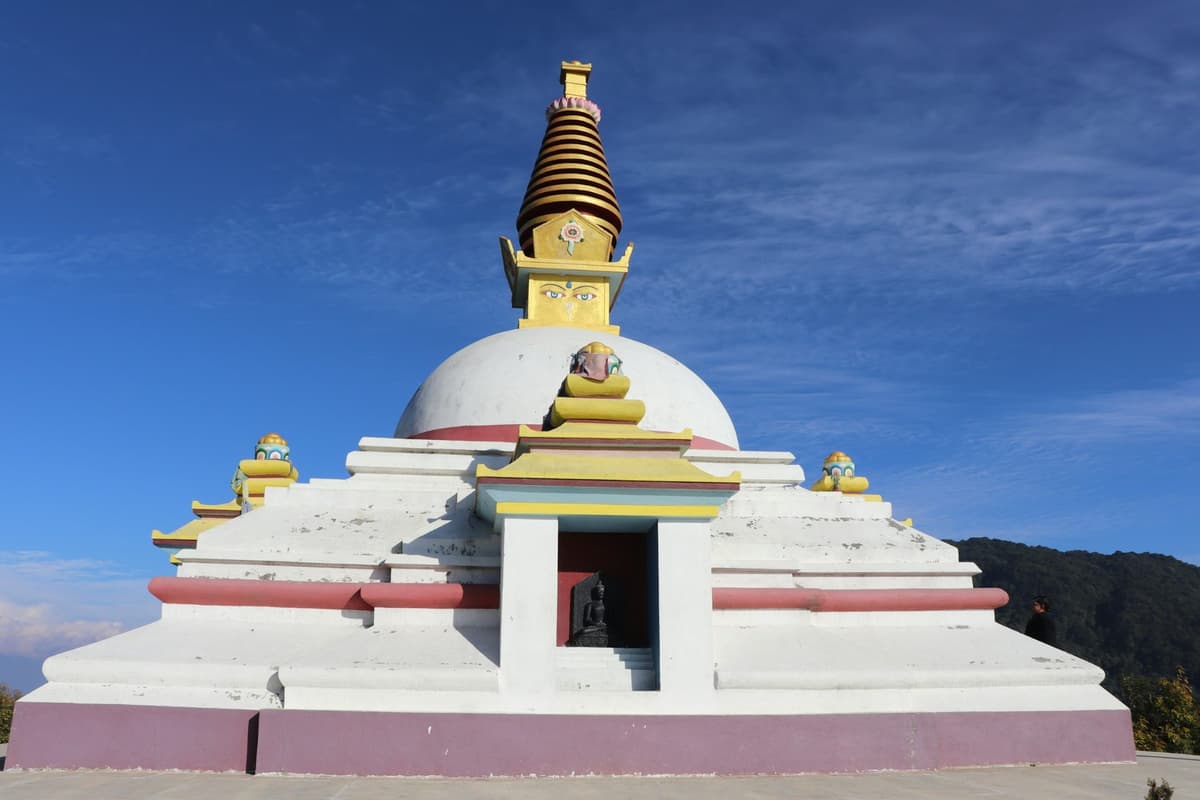
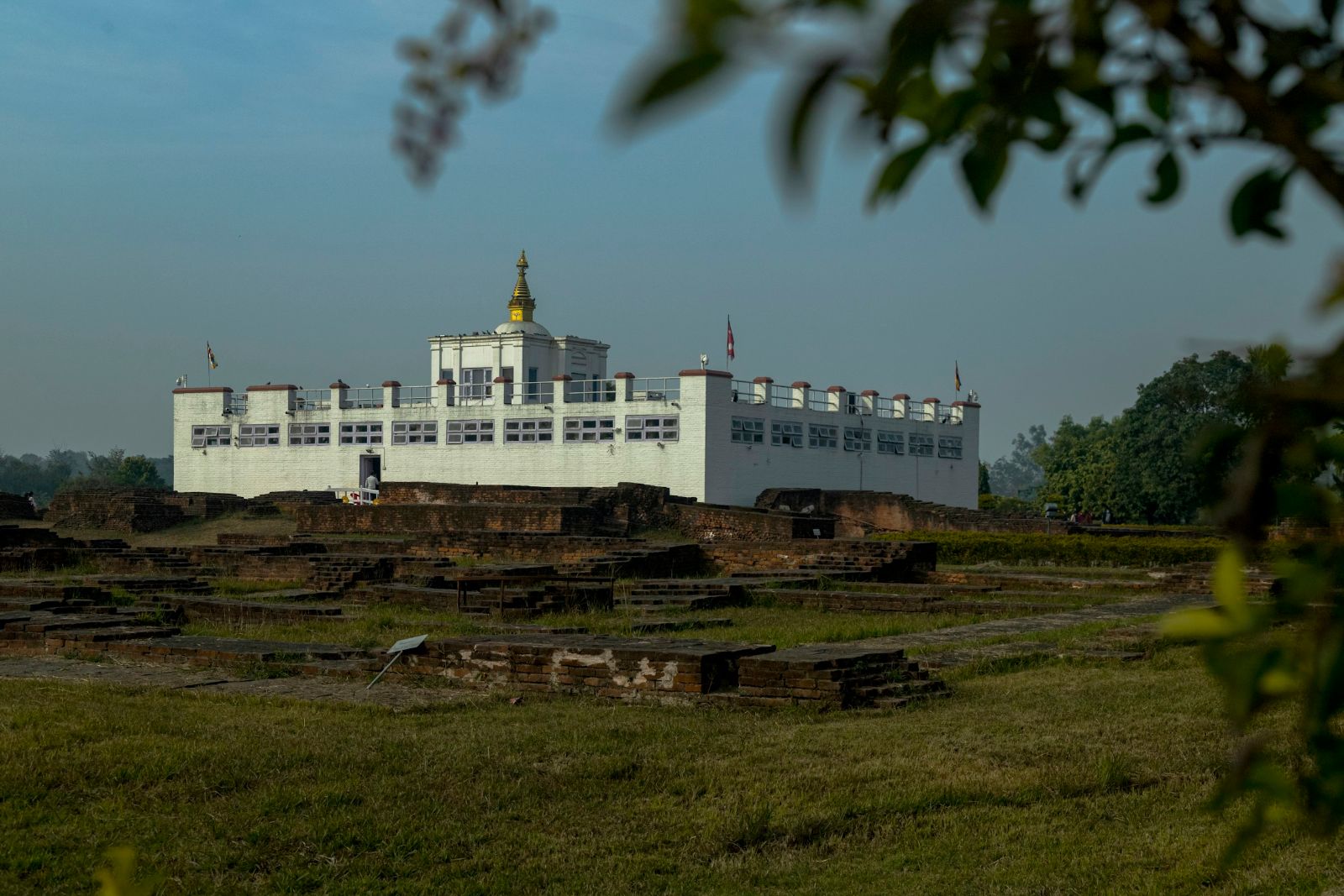
At the south end of Lumbini, pilgrims leave their shoes at the edge of the temple premises and walk past low brick foundations of ancient stupas to the Sacred Pond. Walk north and the plan opens into a straight canal and walkway, with monasteries built by Buddhist communities from many countries on either side. At the far northern end stands the World Peace Pagoda.
The main places to visit in Lumbini are the Sacred Garden, with the Maya Devi Temple, the Marker Stone, the Ashoka pillar and the Puskarini pond; the Monastic Zone, with the Eternal Peace Flame and Theravada and Mahayana monasteries on either side of a canal; and, further north, the World Peace Pagoda and the Lumbini Crane Sanctuary.
For the background, fees, weather and travel to Lumbini, start with our Lumbini travel guide. This page goes zone by zone through what to see: each monastery by the name the Trust uses, the northern zone, how to move between the sites, and the Kapilvastu sites you can add.
Key facts
- Monastic Zone
- 1.6 km walkway and canal; East (Theravada) 13 plots, West (Mahayana) 29 plots (Lumbini Development Trust (LDT), 30 Oct 2026)
- Entry fee, per person per day
- NPR 1,000 most foreign visitors; NPR 700 SAARC and Myanmar; NPR 80 Indian; NPR 20 Nepali (LDT Entry Formalities, 30 Oct 2026)
- Opening hours
- Not published online; ask at the Visitor Information Centre (LDT, 30 Oct 2026)
- Lumbini Museum
- Under renovation; no reopening date found (Lumbini Museum website; NTB, 30 Oct 2026)
- Getting around
- Electric rickshaws; electric van service announced 15 Apr 2026; no fares published (LDT, 30 Oct 2026)
- Nearest airport
- Gautam Buddha International Airport, Bhairahawa, about 18 km by road (LDT, 30 Oct 2026)
- Border crossing with an immigration office
- Sunauli and Belahiya, about 20 km (The Rising Nepal (2023), checked 30 Oct 2026)
In this guide
- What are the main places to visit in Lumbini, zone by zone?
- What is in the Sacred Garden?
- Where are the Eternal Peace Flame and the central canal?
- Which monasteries are in the West Monastic Zone?
- Which monasteries are in the East Monastic Zone?
- Is the World Peace Pagoda worth the trip north?
- Is the Lumbini Museum open, and can you visit the research institute?
- Which other things to do in Lumbini are worth your time?
- Which Kapilvastu sites can you add from Lumbini?
- How do you get around Lumbini's sites?
- What should you wear and how should you behave?
- How long does Lumbini sightseeing take, and can you do it as a day trip?
- How far is Lumbini from the Indian border and nearby cities?
- Frequently asked questions
- Planning your Lumbini visit with us
What are the main places to visit in Lumbini, zone by zone?
Lumbini is laid out on one long north to south plan in three zones: the Sacred Garden at the south end, the Monastic Zone in the middle, and the Cultural Centre and New Lumbini Village to the north. Most of what you came for sits in the first two; the northern zone adds the World Peace Pagoda and the crane sanctuary.
The layout is deliberate. After UN Secretary-General U Thant visited in 1967, the Japanese architect Kenzo Tange drew up a master plan, which the Government of Nepal approved in 1978. It covers 1 by 3 miles, over 7.7 square kilometres, in three zones of about one square mile each. The Lumbini Development Trust, set up by the government in 1985, runs the site and sells the tickets.
| Site | Zone | What you see | Before you go |
|---|---|---|---|
| Maya Devi Temple and Marker Stone | Sacred Garden | A temple rebuilt in 2003 over the stone tradition marks as the birth spot | Shoes off; daily fee |
| Ashoka pillar | Sacred Garden | A pillar of 249 BC whose inscription records the Buddha's birth here | Same walk as the temple |
| Puskarini pond and excavated stupas | Sacred Garden | A brick-lined pond and 31 excavated stupas | Keep to the paths |
| Eternal Peace Flame and Central Canal | Monastic Zone | A flame NTB says was lit in 1986; a canal with boating facilities | Ask whether boats are running |
| West Monastic Zone | Monastic Zone, west | Mahayana monasteries, including the Great Lotus Stupa and Chinese Monastery | No published hours |
| East Monastic Zone | Monastic Zone, east | Theravada monasteries, including the Royal Thai Monastery and Myanmar Golden Temple | No published hours |
| World Peace Pagoda | Cultural Centre and New Lumbini Village | A pagoda by the Japanese order Nipponzan Myohoji, inaugurated in 2001 | No published fee |
| Lumbini Museum | Cultural Centre and New Lumbini Village | A Kenzo Tange building | Closed for renovation |
| Lumbini Crane Sanctuary | Cultural Centre and New Lumbini Village | A 256-hectare protected area for the sarus crane | Birdwatching |
Source: LDT; NTB; Nepali Times (2001); Lumbini Museum; checked 30 October 2026.
What is in the Sacred Garden?
The Sacred Garden is the reason Lumbini is a pilgrimage site. It holds the Maya Devi Temple with the Marker Stone, the Ashoka pillar of 249 BC, the Puskarini pond and the brick foundations of ancient stupas and monasteries, ringed by a Circular Pond and a Circular Levee. Buy the daily ticket at the Visitor Information Centre, or online, first.
We keep this section short; our Maya Devi Temple guide covers the temple and the excavations in depth.
"Ananda, This (Lumbini) place is where the Tathagata was born, this is a place, which should be visited and seen by a person of devotion and which would cause awareness and apprehension of the nature of impermanence."
Mahaparinirvana Sutta, as quoted by the Lumbini Development Trust, checked 30 October 2026
The Maya Devi Temple and the Marker Stone
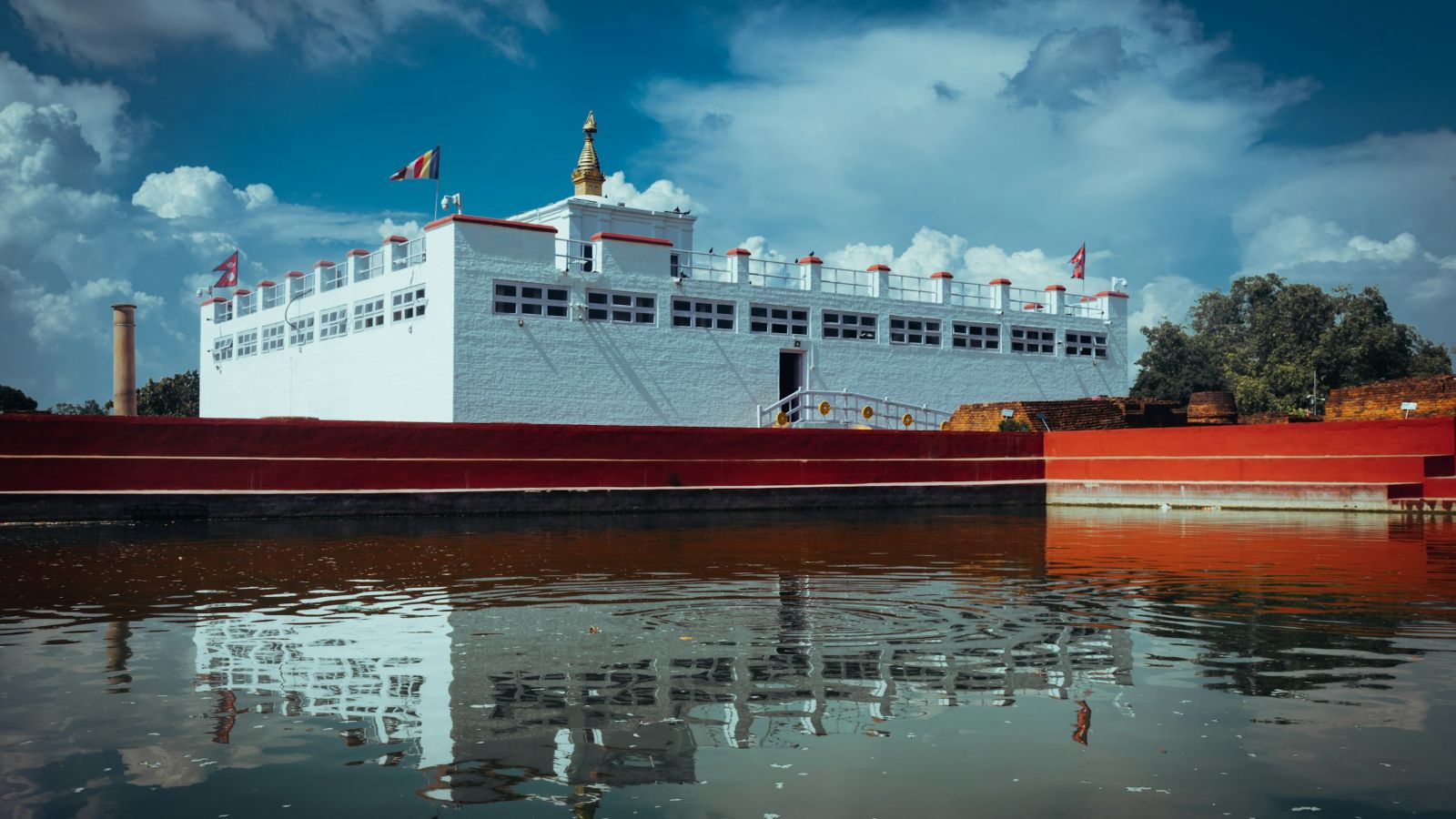
The present temple "was reconstructed in 2003 by the Lumbini Development Trust", over remains that show the shrine was rebuilt in phases from the 6th century BC. Inside, the Marker Stone, which the Trust says "designates the exact spot where Prince Siddhartha was born", rests on a platform of 3rd-century BC bricks.
The Ashoka pillar
The Mauryan Emperor Asoka erected the pillar in 249 BC, according to UNESCO and the Trust, and its Brahmi inscription says that "Sakyamuni Buddha was born here". Rediscovered in 1896, it stands 9.41 m (30 feet 10.5 inches) today, with almost half of it buried underground, the Trust says. Its crowning figure, possibly a horse, has never been found.
Puskarini, the stupas and two working monasteries
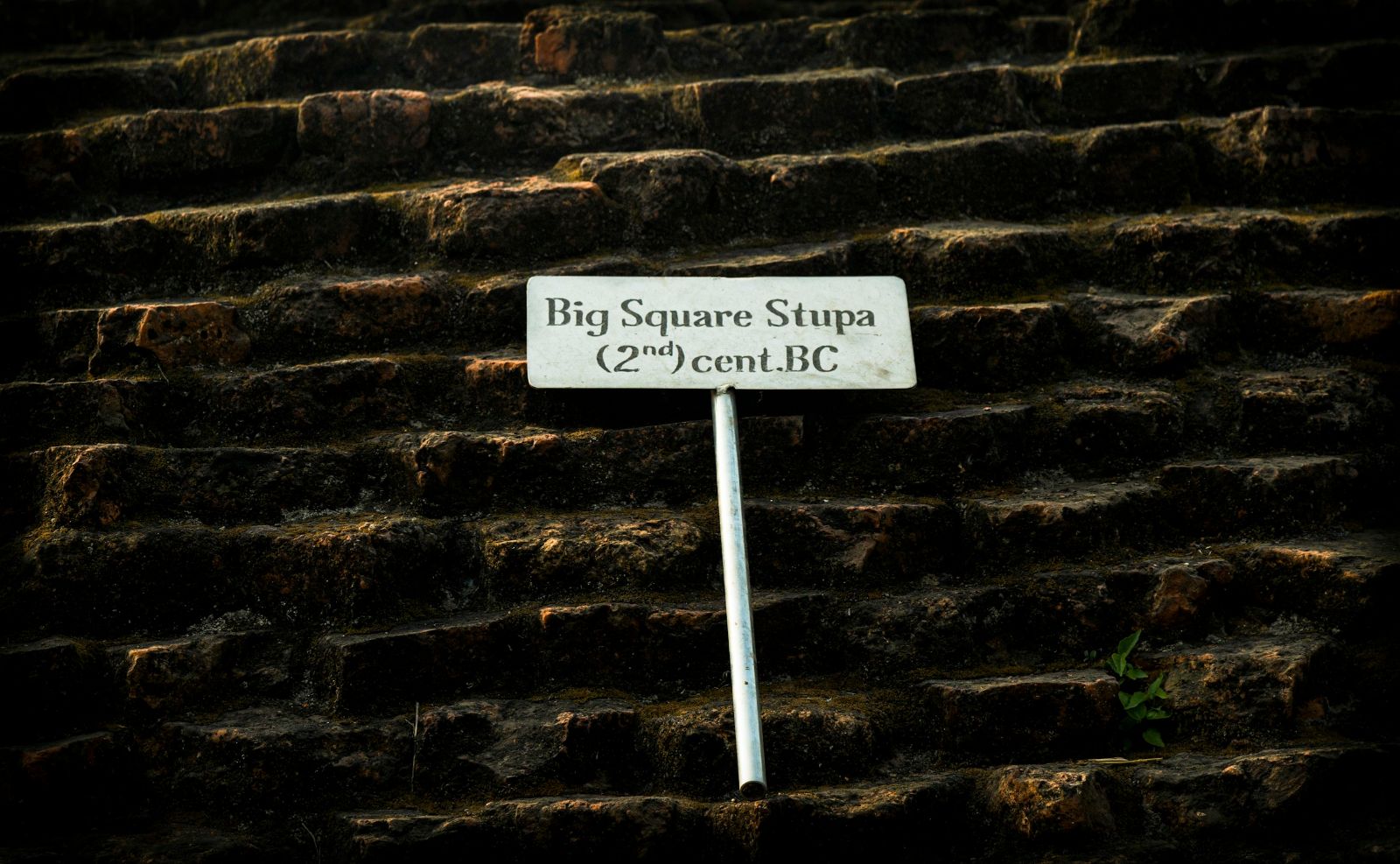
The Sacred Pond, Puskarini, lies 25 paces south-west of the Marker Stone, inside a brick embankment from the 1930s. Around it the Trust counts 31 excavated stupas, built between the 3rd century BC and the 8th or 9th century AD. Two working monasteries stand close by: the Dharmaswami Maharaja Buddha Vihara, of the Sakya school of Tibetan Buddhism, and the Theravada Rajkiya (Royal) Buddha Vihara.
Where are the Eternal Peace Flame and the central canal?
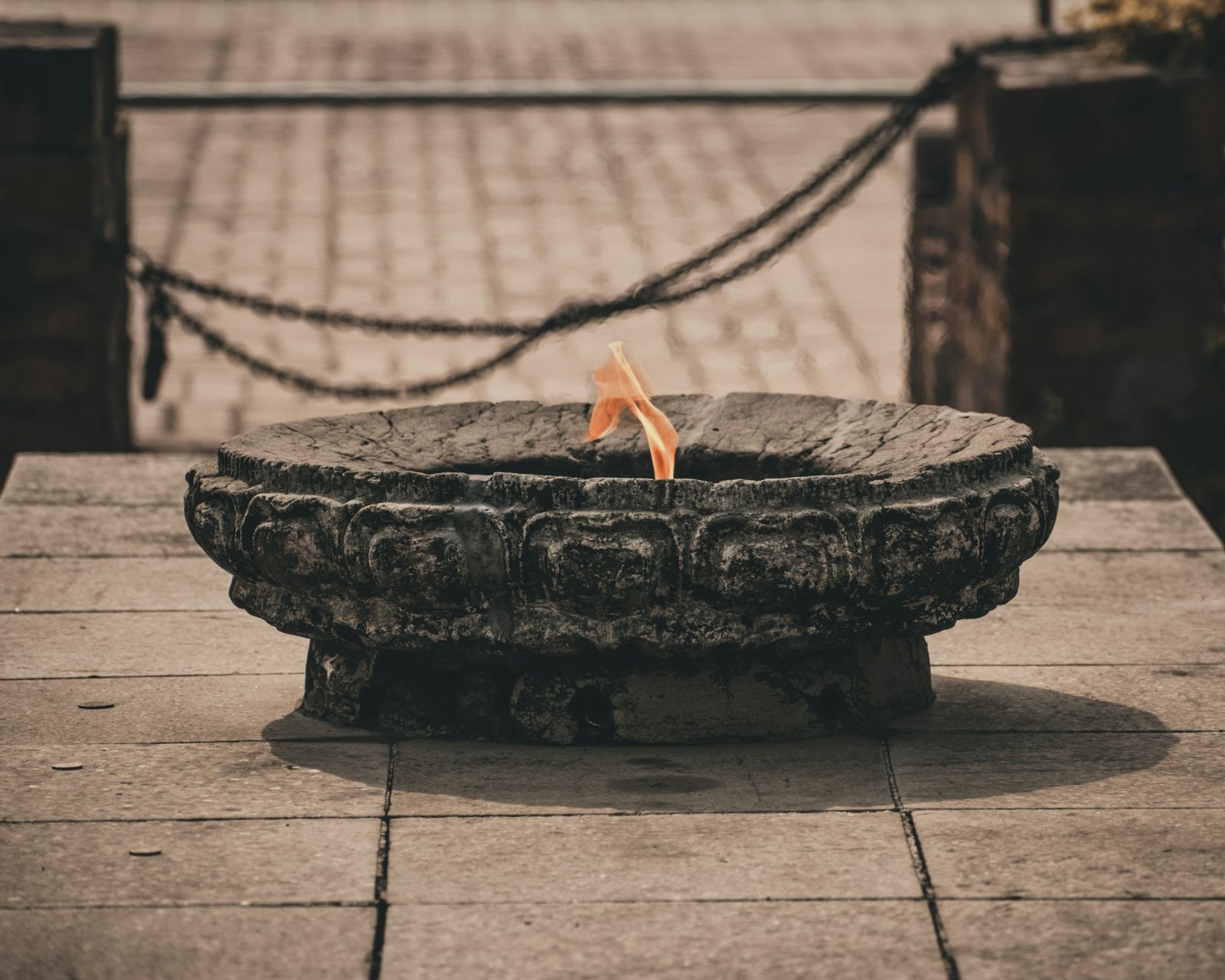
Both are in the Monastic Zone, the middle of the three zones. A 1.6 km pedestrian walkway and a canal run through it, splitting it into east and west, and the Trust lists the Eternal Peace Flame, the Peace Bell and the Central Canal, with boating facilities, among its features.
"The Eternal Peace Flame, lit in 1986 during the International Year of Peace, burns continuously as a reminder of humanity's aspiration for nonviolence and unity."
Nepal Tourism Board, "Sacred Monasteries of Lumbini", checked 30 October 2026
NTB also says the World Peace Bell was installed in 2005. Lumbini Square, in the middle of the canal, hosts the Trust's lamp-lighting events. A Bhutanese monastery is also being built in Lumbini: its foundation stone was laid on 27 June 2026, the Trust reported, and Bhutan aims to finish it within two years.
Ask at the Visitor Information Centre whether the boats are running. From April to June the average daily maximum at Bhairahawa, the nearest weather station, is 35.5 °C to 36.6 °C (DHM), so walk early or late.
Which monasteries are in the West Monastic Zone?
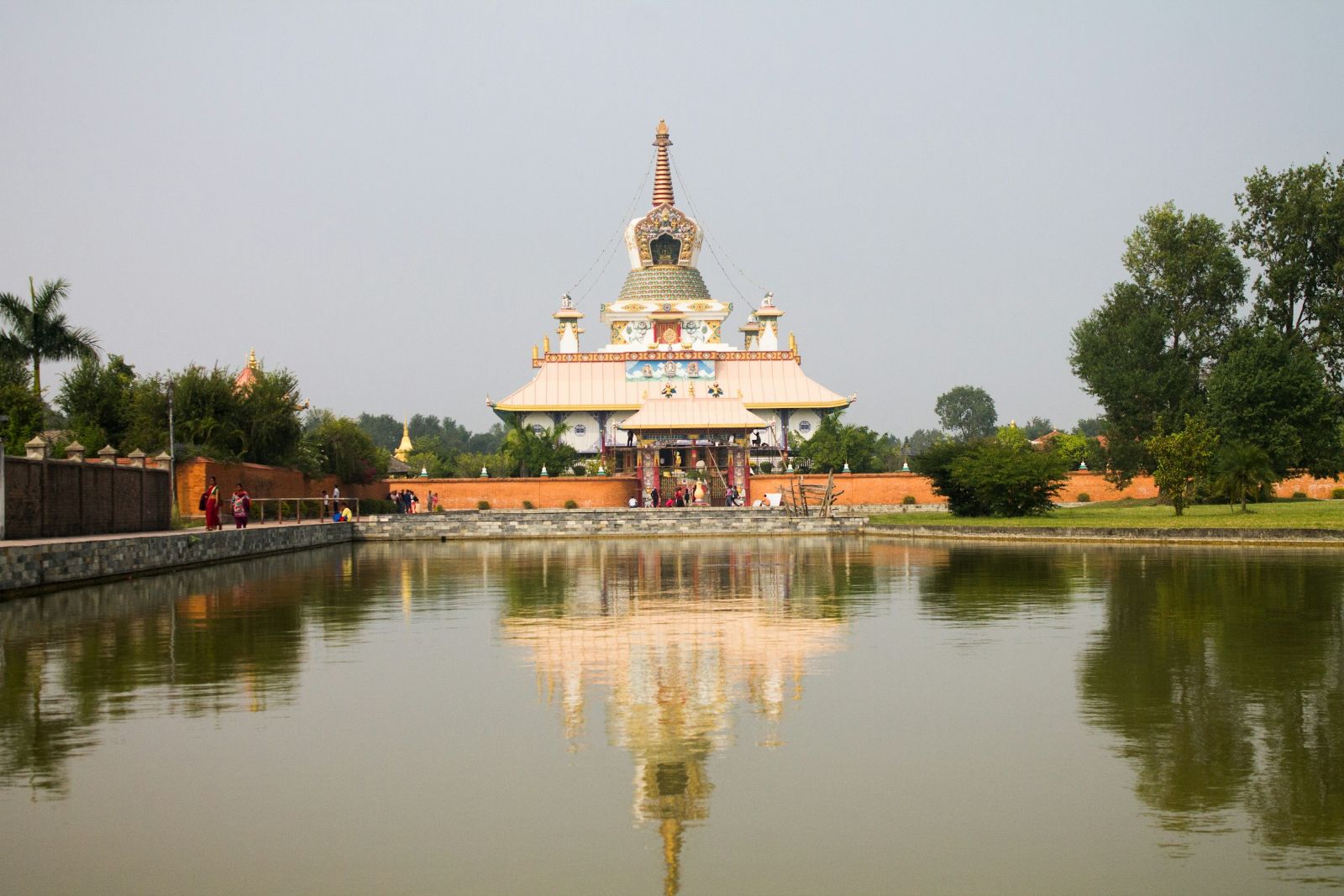
The West Monastic Zone is the Mahayana side, with 29 plots; the Trust counts 18 monasteries operating there, plus meditation centres, and NTB describes it as Mahayana and Vajrayana. For a short visit, start with the Great Lotus Stupa (Tara Foundation, Germany) and the Chinese Monastery, then add the Korean or Vietnamese temple if time allows.
The German Tara Foundation built the Great Lotus Stupa in 1999, a 2013 Nepali Times guide said; some websites give it a merged name taken from two separate entries, so we use the Trust's names. The same guide called the Chinese Monastery Zhong Hua; NTB calls it "a grand pagoda-style temple", and notes the "large standing Buddha" at Vietnam Phat Quoc Tu.
| Monastery or centre | Country or community, as the Trust lists it |
|---|---|
| Great Lotus Stupa | Tara Foundation, Germany |
| Chinese Monastery | China |
| Dae Sung Shakya Temple | South Korea |
| Vietnam Phat Quoc Tu | Vietnam |
| World Linh Son Buddhist Congregation | France |
| Geden International Monastery | Austria |
| Drigung Kagyud Meditation Center | Ladakh |
| Ka-Nying Shedrup Monastery (Seto Gumba) | Nepal |
| Zarong Tgupten Mendol Dogna Chholing | Nepal |
| United Tungaram Buddhist Foundation | Nepal |
| Manang Samaj Stupa | Nepal |
| Karma Samtenling Monastery | Nepal |
| Sokyo Japanese Monastery | Not stated by the Trust |
| Thrangu Vajra Vidhya Buddhist Association | Canada |
| Urgen Dorjee Chholing Buddhist Center | Singapore |
| Nepal Vajrayana Maha Vihara | Not stated by the Trust |
| Drubgyud Chhoeling Monastery (Nepal Mahayana Temple) | Not stated by the Trust |
| Dharmodhaya Sabha Nepal (Swayambhu Mahavihara) | Not stated by the Trust |
| French Buddhist Association | France |
| Panditarama Lumbini International Meditation Center | Myanmar |
Source: Lumbini Development Trust, Lumbini page, checked 30 October 2026; names spelt as the Trust spells them. "Seto" means white.
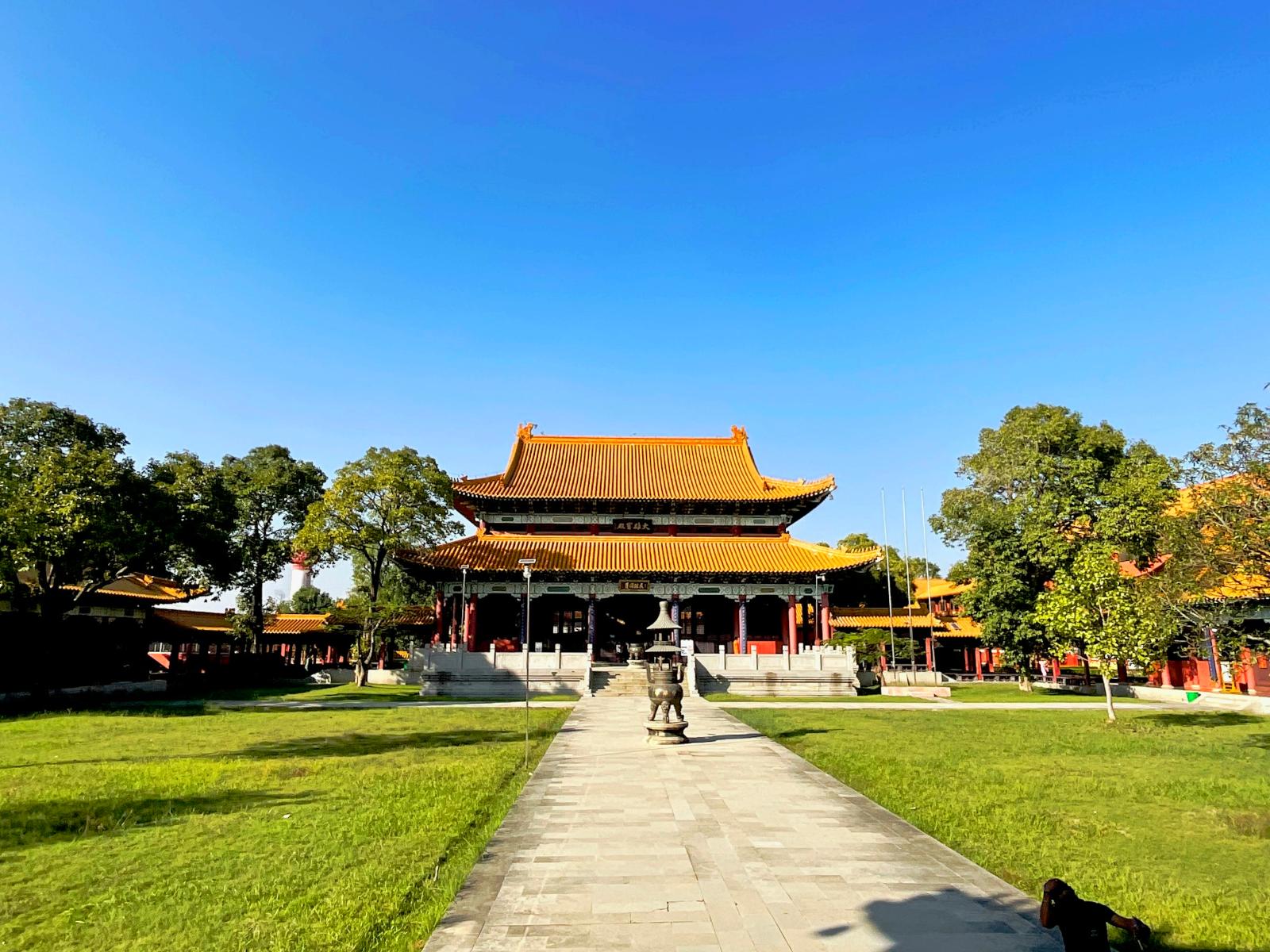
Which monasteries are in the East Monastic Zone?
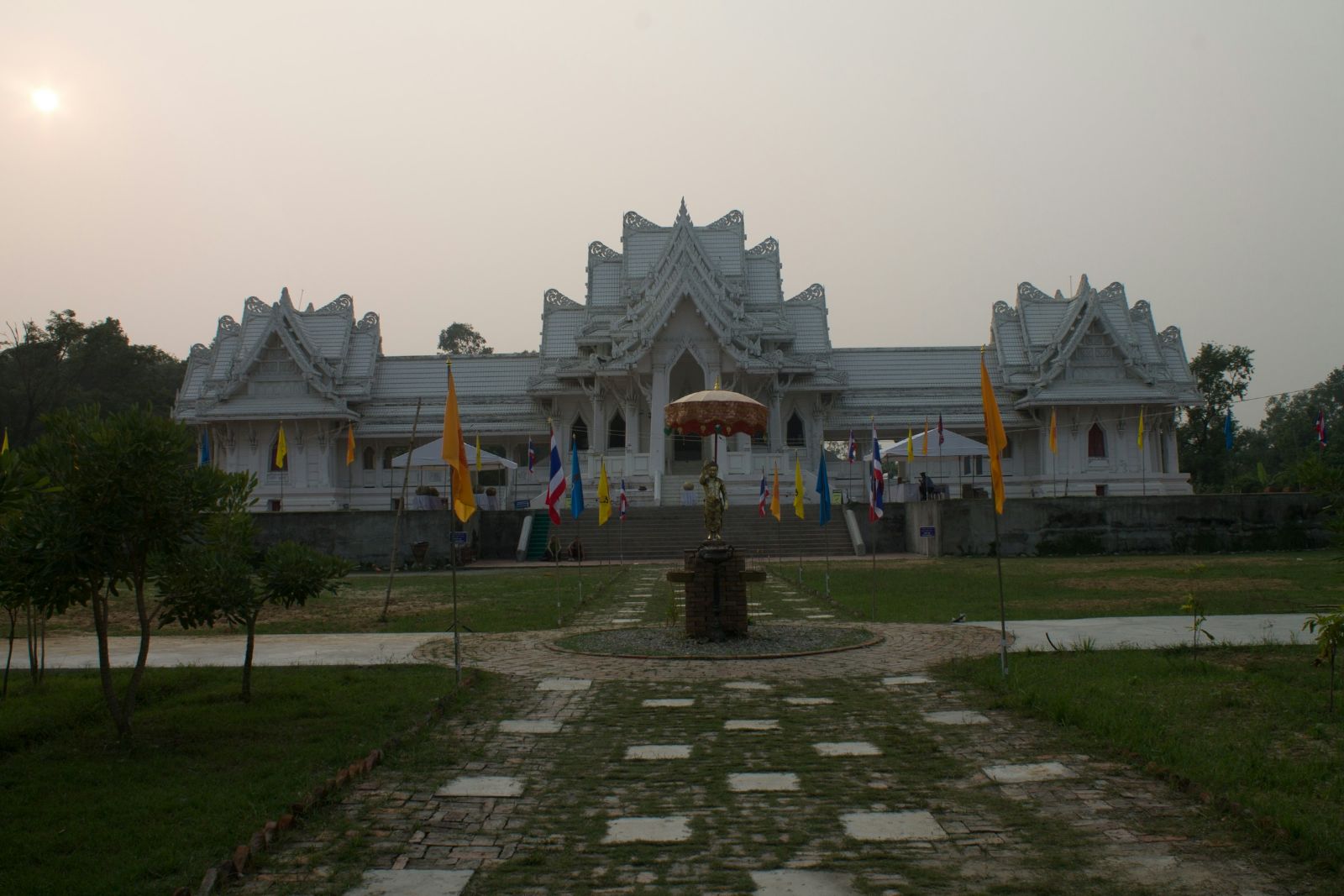
The East Monastic Zone is the Theravada side, with 13 plots. The Trust lists seven Theravada monasteries and one Vipassana meditation centre operating there, with one more monastery under construction. If you only have time for two, we suggest the Royal Thai Monastery and the Myanmar Golden Temple.
- Royal Thai Monastery (Thailand). NTB calls it "a gleaming white-marble temple".
- Myanmar Golden Temple (Myanmar). "Inspired by Burmese pagodas, adorned with golden spires", in NTB's words.
- The rest of the east side, as the Trust lists it: the Mahabodhi Society Temple of India, the Cambodian Temple, the Sri Lankan Monastery, the International Gautami Nuns Temple (Nepal), the Bodhi Institute Monastery and Dharma Center, and the Dhamma Janani Vipassana Center (Vipassana means insight meditation). The Nepal Theravada Buddha Vihar is under construction.
How to choose with only a few hours
Pick two from each side and walk the canal between them. These are working religious houses with no published opening hours, so if a door is shut or a ceremony is under way, move on to the next.
Is the World Peace Pagoda worth the trip north?
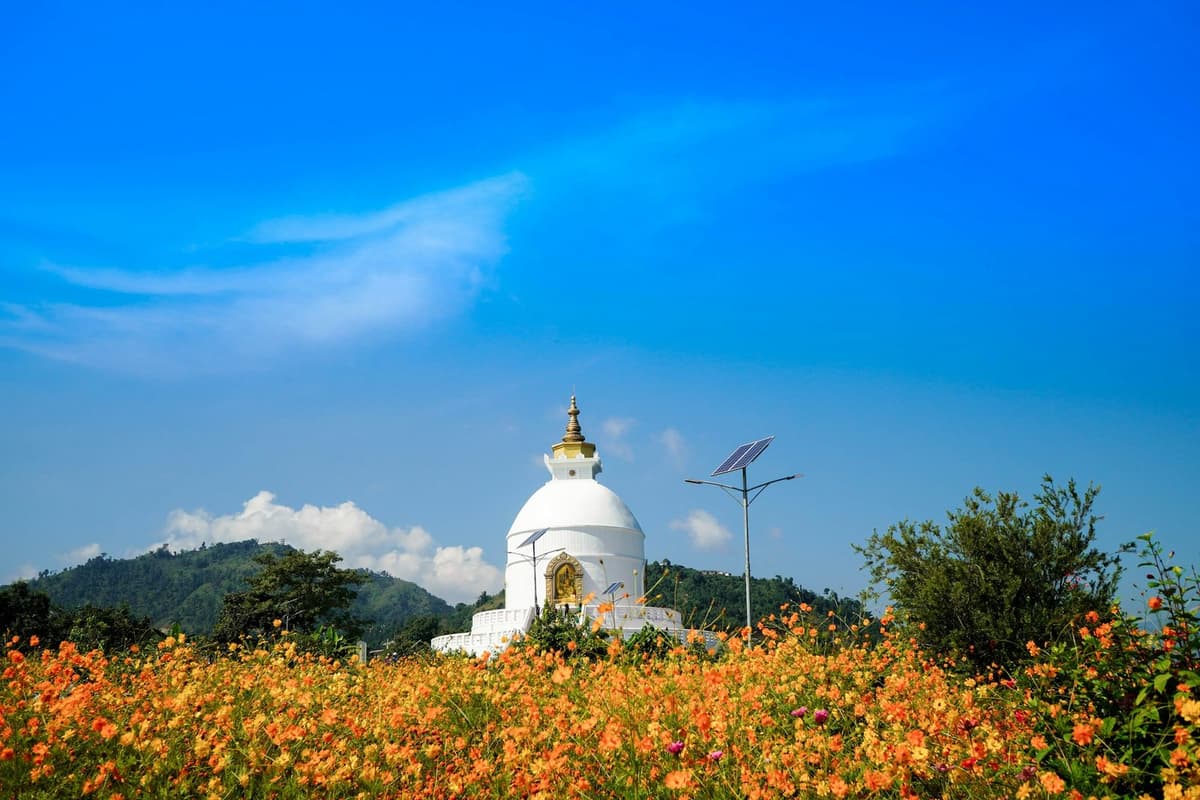
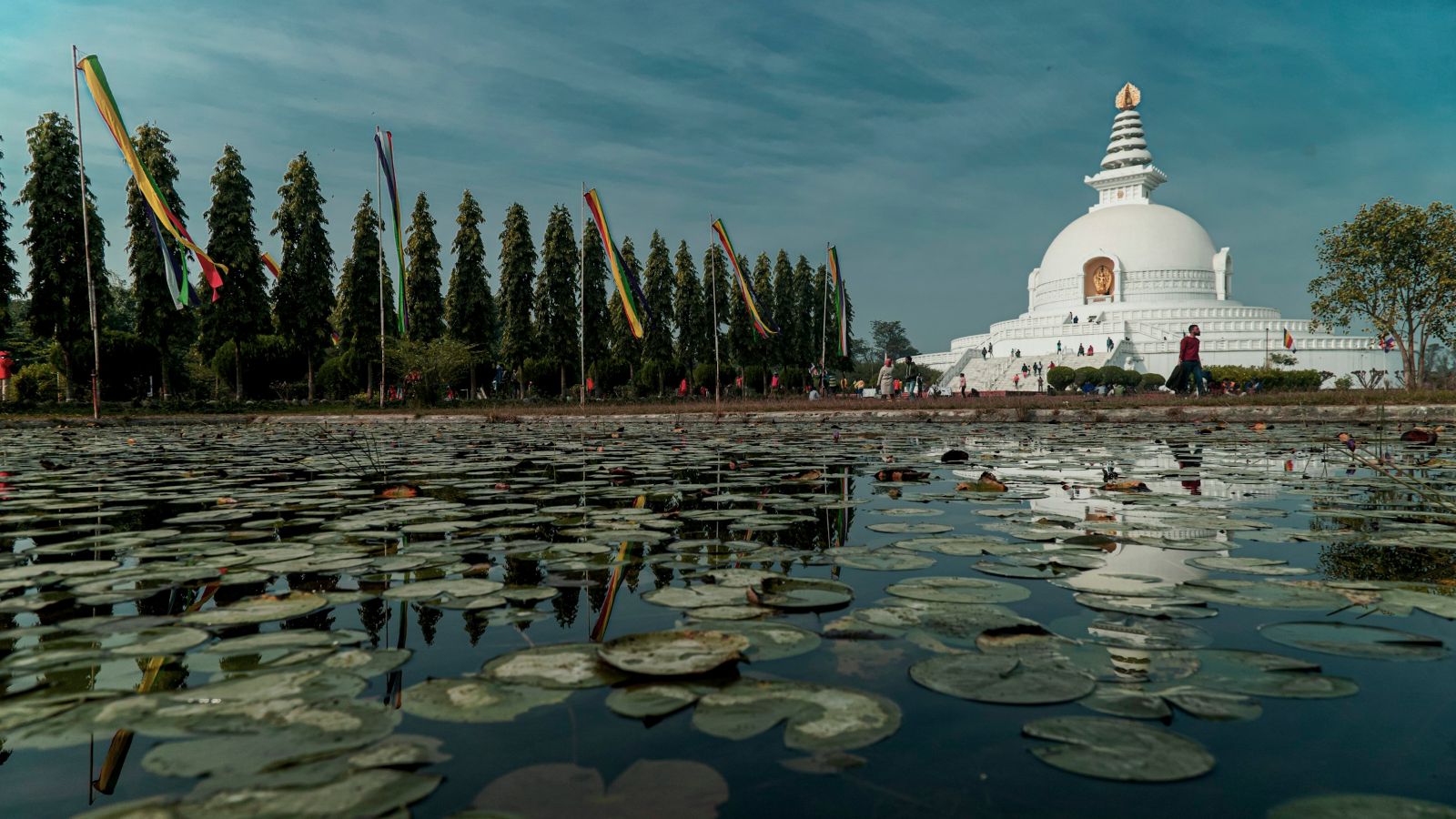
Yes, if you have a second half-day. The World Peace Pagoda stands at the northern end of the master-plan area, in the Cultural Centre and New Lumbini Village zone. The Trust's own suggested tours put it on a later day, together with the Lumbini Crane Sanctuary.
The Japanese Buddhist order Nipponzan Myohoji built it, following the vision of its founder Nichidatsu Fujii. The Nepali Times reported its inauguration in November 2001 and gave its height as 41.5 m. A gold-plated Buddha looks out from it, the Nepali Times noted in 2013.
We found no published entry fee, so ask at the Visitor Information Centre. A 2013 Nepali Times guide suggested the late afternoon, when the low sun falls on the gilded Buddha. Our World Peace Pagoda guide has the detail.
Is the Lumbini Museum open, and can you visit the research institute?
No, not as of 30 October 2026. The Lumbini Museum's own website said "Currently under renovation" when we checked, NTB's heritage-fee table marked it closed, and we found no reopening date anywhere. In the same zone, the Lumbini International Research Institute is a working library rather than a sight, so ask before you visit.
The Lumbini Museum
The museum occupies "a 1970s barrel-vaulted brick structure designed by the renowned Japanese architect Kenzo Tange", its website says. Under a 2018 agreement, the Buddha Foundation has the right to "design, construct, finance, own and operate the Lumbini Museum for the next 35 years", and retrofitting began on 1 January 2020. A conservation centre opened there on 11 May 2025, the Nepali Times reported, but the galleries have not reopened. Older Trust itineraries still list it, so online advice conflicts. Our Lumbini Museum guide follows the renovation.
The Lumbini International Research Institute
LIRI was built with financial support from Reiyukai, a Japanese organisation that also runs it, and holds a library of Buddhist texts, manuscripts and journals. We found no visiting hours or access rules, so ask before you go.
Which other things to do in Lumbini are worth your time?
Beyond the monuments, the Trust suggests birdwatching at the Lumbini Crane Sanctuary, cycling through villages and paddy fields, village visits and meditation courses. These suit a second day in Lumbini, once the Sacred Garden and the monastic zones are done.
Lumbini Crane Sanctuary
The sanctuary is a 256-hectare protected area for the sarus crane, managed by the Lumbini Crane Foundation with the International Crane Foundation. The Trust says it holds over 210 bird species, 300 breeding pairs of sarus cranes and five artificial wetlands, with guided birdwatching, nature trails and an annual Sarus Festival.
Meditation
The Panditarama centre on the west side and the Dhamma Janani Vipassana Center on the east side run courses, the Trust says. For longer stays it sells a 12-day Meditation Pass, NPR 1,500 for most foreign visitors.
Villages and countryside
The Trust also recommends visiting villages around the site: Ekala, Khudabagar (which has a Tharu Museum), Tenuhawa, Madhuvani and Mahilwar. Ask us, or ask at the Visitor Information Centre, how best to reach them.
Which Kapilvastu sites can you add from Lumbini?
The main add-on is Tilaurakot, 29 km west of Lumbini, which many scholars identify as the ancient Shakya capital where Prince Siddhartha grew up. Around the town of Taulihawa you can add Kudan, Gotihawa and Niglihawa, and Ramagrama, about 50 km east, is a relic stupa. Give these a separate day.
Kapilvastu is today's district and Kapilavastu the ancient city; the Trust says ancient Kapilavastu holds more than 130 archaeological sites.
| Site | Where, according to the Trust | Why go |
|---|---|---|
| Tilaurakot | 29 km west of Lumbini, 3 km north-west of Taulihawa | Ruins many scholars identify as the ancient Shakya capital; on UNESCO's Tentative List since 1996 |
| Kudan | About 3 km south of Taulihawa | By tradition, where the Buddha first met his father, King Suddhodana, after his enlightenment |
| Gotihawa | About 5 km south-west of Taulihawa | An Ashoka pillar 3.25 m high, still in place; by tradition the birthplace of Krakuchhanda Buddha |
| Niglihawa | About 7 km north-east of Taulihawa | An Ashoka pillar with a Brahmi inscription, now broken in two; by tradition the birthplace of Kanakamuni Buddha |
| Ramagrama | About 50 km east of Lumbini, in Nawalparasi | One of the eight original relic stupas of the Buddha; on UNESCO's Tentative List since 1996 |
| Devadaha | 57 km east of Lumbini | Ancient capital of the Koliya kingdom and maternal home of Queen Maya Devi |
Source: Lumbini Development Trust, Kapilvastu, Ramagrama and Devadaha pages; UNESCO Tentative List; checked 30 October 2026.
The Tentative List is not World Heritage status. Tilaurakot's identification as Kapilavastu has long been debated, and at Ramagrama, the Trust says, the stupa is the only one of the eight to keep its original form. The Kapilvastu Museum at Tilaurakot shows coins, pottery and terracotta figures, the Trust says; NTB lists it as closed on Tuesdays, so check.
E-rickshaws can be hired in Taulihawa, and buses link Taulihawa with Lumbini and Bhairahawa, the Trust says; no official drive times are published. For how these fit with Nepal's other Buddhist places, see our Buddhist pilgrimage sites in Nepal guide.
How do you get around Lumbini's sites?
On foot, by electric rickshaw, or by the electric van service the Trust announced on 15 April 2026. The sites spread along a long north to south axis, so walk the Sacred Garden and part of the canal, then ride to the far monasteries and the northern zone. No fares are published.
- Walking. The Monastic Zone's walkway alone is 1.6 km; adding the northern zone makes a long walk in the heat.
- Electric rickshaws. They operate across the site, and a Lumbini Rickshaw Association joined the Trust's World Tourism Day programme in September 2026. Agree the fare before you set off.
- Electric van service. The Trust announced it "at an affordable price", covering Lumbini, Kapilavastu, Devadaha and Ramagrama, but published no fares or timetable; ask at the Visitor Information Centre.
- Bikes. Bikes were available to rent, a 2013 Nepali Times guide said; ask whether that still holds.
Visitor Information Centre staff "offer free information and guide visitors", the Trust says, so start there for current options.
What should you wear and how should you behave?
Dress modestly, take your shoes off before the Maya Devi Temple premises and leave food and drink at the entrance, as the Trust asks. Keep your voice low, ask before photographing monks, nuns or pilgrims, and do not climb on the excavated ruins. Drones need three separate permissions.
- Shoes. Off before the temple premises, and at any monastery door where shoes are lined up.
- Clothing. Cover shoulders and knees; loose cotton suits the heat.
- Cameras. The Trust charges a daily camera fee: USD 3 for a still camera and USD 25 for a video camera for SAARC and other foreign visitors, NPR 100 and NPR 1,000 for Nepali and Indian visitors. It publishes no rule on photography inside the temple, so follow the signs and staff.
- Drones. Only with permission from the District Administration Office, the Civil Aviation Authority of Nepal and the Trust.
The full rules are on the Trust's Entry Formalities page.
How long does Lumbini sightseeing take, and can you do it as a day trip?
A day trip is possible but rushed, in our judgement. From Kathmandu the flight to Bhairahawa takes about 30 to 35 minutes, and the airport is about 18 km from Lumbini, which leaves time for the Sacred Garden and a few monasteries, not the whole site. One night lets you see both monastic zones without hurrying.
Our rough plan:
- Half a day. The Sacred Garden only: temple, Marker Stone, pond and pillar.
- One full day. The Sacred Garden in the morning, the Peace Flame and both monastic zones in the late afternoon.
- Two days. Add the World Peace Pagoda and the crane sanctuary, then Tilaurakot or Ramagrama.
- Three days. Follow one of the Trust's suggested tours, which add the Kapilvastu sites and Ramagrama.
The ticket is per person per day, and The Rising Nepal reported in 2024 that foreign and Indian visitors typically stay only one night. By road from Kathmandu, around 10 to 11 hours by bus according to the Trust, a day trip does not work. From Pokhara, Buddha Air flies to Bhairahawa in about 20 minutes; check the schedule. In December and January fog on the plains can delay flights, so keep a spare half day before any onward flight.
How far is Lumbini from the Indian border and nearby cities?
The Sunauli and Belahiya crossing is about 20 km from Lumbini, and Belahiya, on the Nepali side, has the immigration office that non-Indian foreigners must use. Kalidaha-Kakarhawa is closer, about 10 km away, but had no immigration office when The Rising Nepal reported on both crossings in 2023. Bhairahawa airport, the other gateway, is about 18 km away.
| From | Road distance to Lumbini |
|---|---|
| Gorakhpur | 122 km |
| Chitwan | 170 km |
| Kushinagar | 181 km |
| Pokhara | 227 km |
| Sravasti | 240 km |
| Kathmandu | 280 km |
| Varanasi | 312 km |
| Bodhgaya | 525 km |
Source: Lumbini Development Trust distance table, checked 30 October 2026.
Your entry to Nepal is your own arrangement; we do not arrange visas or international travel. NTB says visas on arrival are issued at Gautam Buddha International Airport and at land entry points, and that Indian nationals need no visa; check the NTB tourist visa page close to your date. As of late October 2026 we found no scheduled international flights at Bhairahawa, so check with the airlines.
Frequently asked questions
Which monasteries should I see in Lumbini's monastic zone, and how do I get around?
See two on each side of the canal: the Royal Thai Monastery and the Myanmar Golden Temple on the Theravada east side, and the Great Lotus Stupa and the Chinese Monastery on the Mahayana west side (our suggestion, not an official route). Walk the 1.6 km walkway between them or take an electric rickshaw; the Trust also announced an electric van service in April 2026. Fares are not published.
Can I combine Lumbini with Kapilvastu, Namobuddha and other Buddhist sites?
Yes, but in different ways. Tilaurakot, 29 km west, and the pillar sites around Taulihawa make a full extra day from Lumbini, as does Ramagrama, about 50 km east. Namobuddha, Boudhanath, Swayambhunath and Kopan are in or near Kathmandu, so fit them into your Kathmandu days instead. Namobuddha is near Panauti in Kavre, where legend says an earlier Buddha gave his body to a starving tigress.
What should I wear and how should I behave at the Sacred Garden?
Wear modest clothing that covers shoulders and knees, take your shoes off before the Maya Devi Temple premises and leave food and drink at the entrance, as the Lumbini Development Trust asks. Keep quiet near people at prayer, ask before photographing monks, nuns or pilgrims, and stay on the paths around the ruins. Cameras carry a daily fee, and drones need three separate permissions.
How do I reach Lumbini from the Sunauli or Bhairahawa border?
Cross at Sunauli and Belahiya, about 20 km from Lumbini; Belahiya, on the Nepali side, has the immigration office that non-Indian foreigners must use. From there you continue by road; the Trust says local buses from the Bhairahawa bus stand take 1 to 1.5 hours to Lumbini. Your entry to Nepal is your own arrangement, and NTB's tourist visa page has the official rules. Ask us about a private transfer.
Can I visit Lumbini as a day trip?
Yes, by air, but it is rushed. The flight from Kathmandu to Bhairahawa takes about 30 to 35 minutes and the airport is about 18 km from Lumbini, which leaves time for the Sacred Garden and a few monasteries. By road it is not realistic, at around 10 to 11 hours by bus each way. In December and January, fog can delay flights, so one night in Lumbini is the safer plan.
Planning your Lumbini visit with us
We have no fixed Lumbini trip page yet, so tell us your dates and what you want to see, and we will suggest a plan, including whether to add Tilaurakot or Ramagrama. Ask us what we can arrange for transfers, hotels and a licensed guide. For fees, weather and travel, read our Lumbini travel guide, and see how we run heritage trips in our cultural heritage tours. Ask us on WhatsApp or through the enquiry form.