


Overview
This three Durbar Squares tour is an unhurried, guided day through the Kathmandu Valley's three medieval royal cities, Kathmandu, Patan and Bhaktapur, all UNESCO World Heritage monument zones. Rather than racing every valley site, you spend real time at each square, reading the palaces, tiered temples and the Newar wood, stone and metal craft that made these courts famous. The day begins with a short walk from Thamel to the old market square of Ason, then follows Hanuman Dhoka, Patan and Bhaktapur with a licensed guide and private transport throughout. It is an easy, low-altitude day with light walking on cobbles and a few steps. Entrance fees and lunch are paid on the day.
The itinerary
- Guided walk, Thamel to Ason, through narrow lanes to the historic six-way market square.
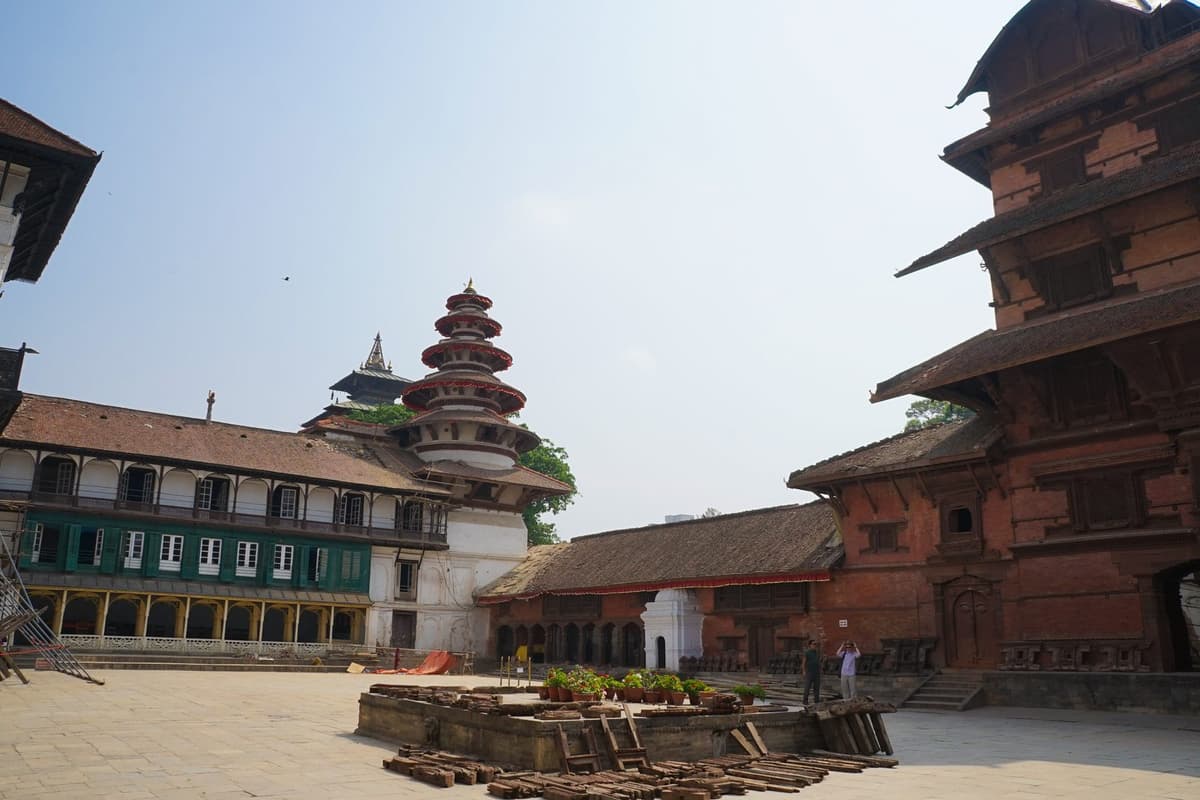
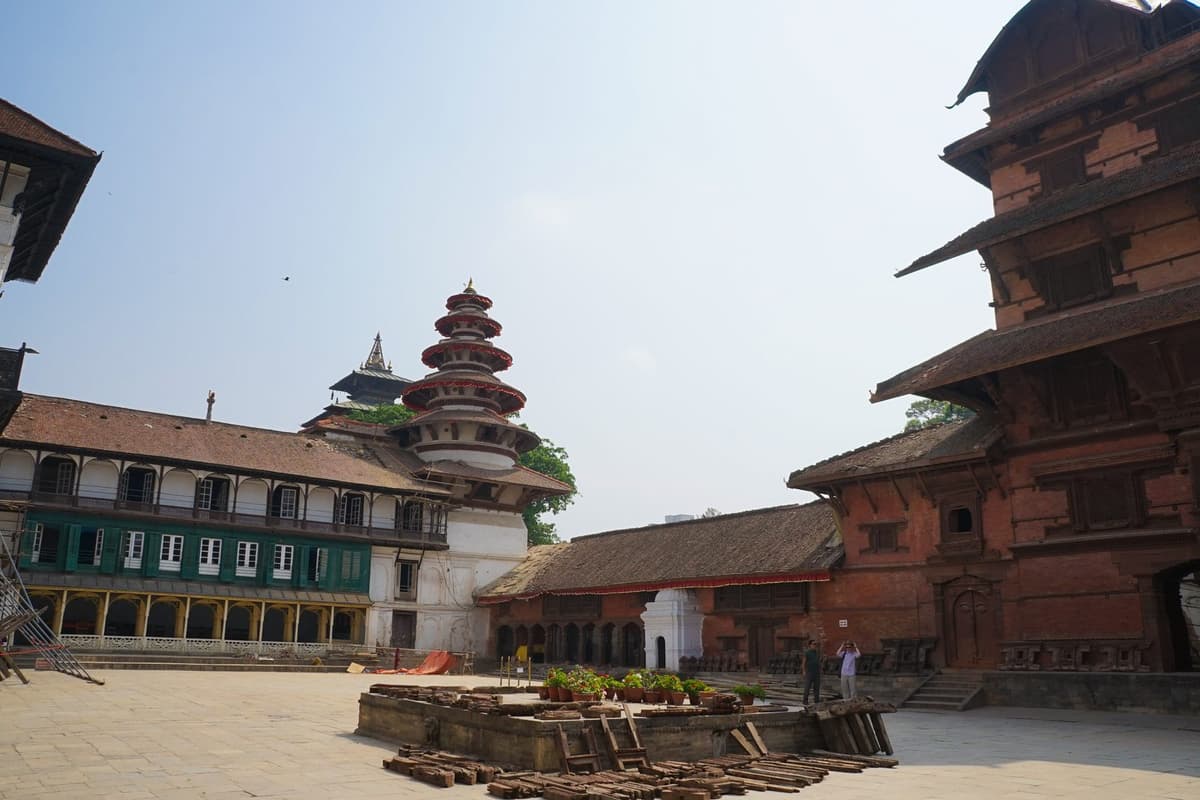
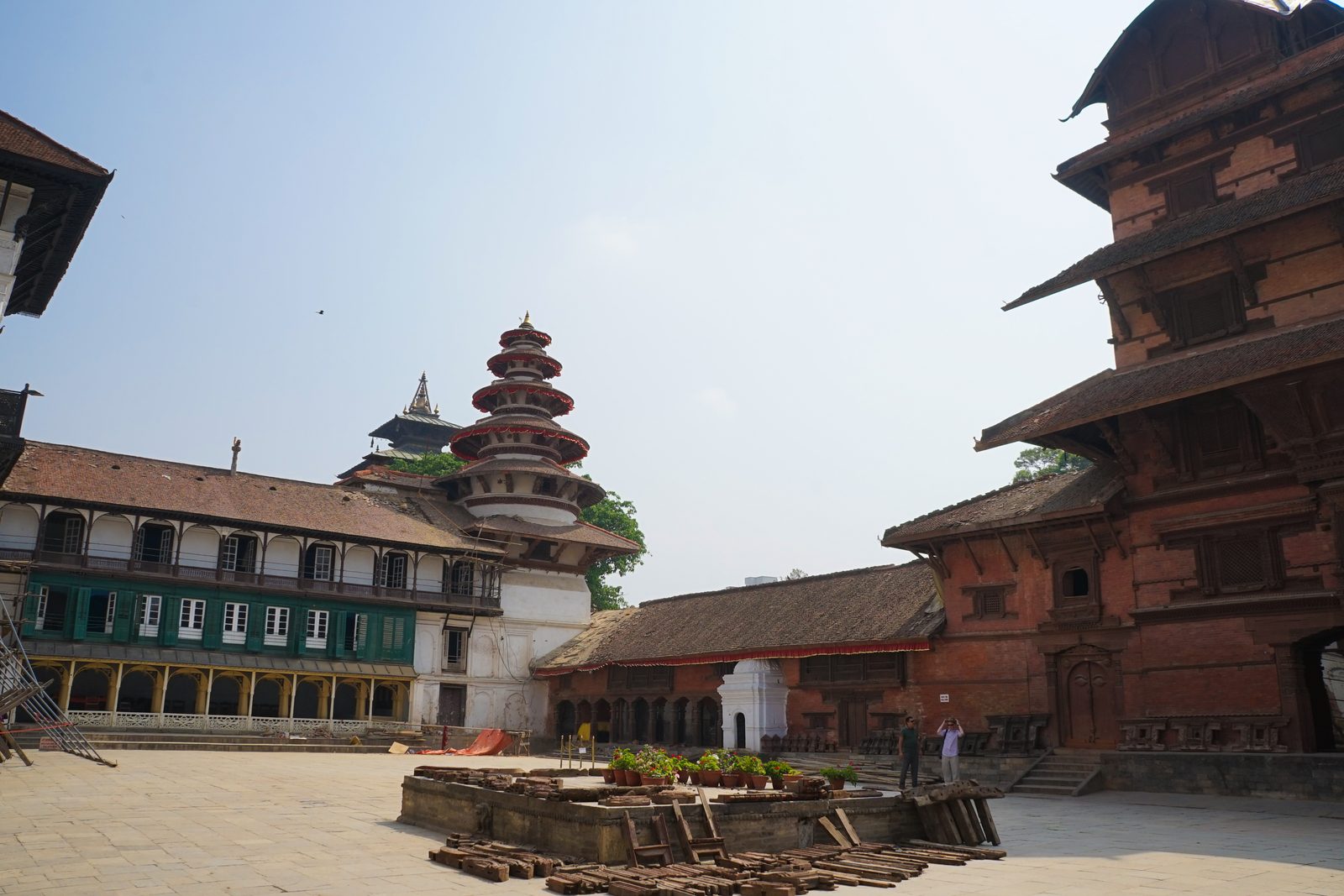
- Kathmandu Durbar Square (Hanuman Dhoka): the old royal palace, tiered temples and the Kumari Ghar, home of the Living Goddess who may appear at an upper window in the morning.
- Drive to Patan (Lalitpur), a short hop across the Bagmati.
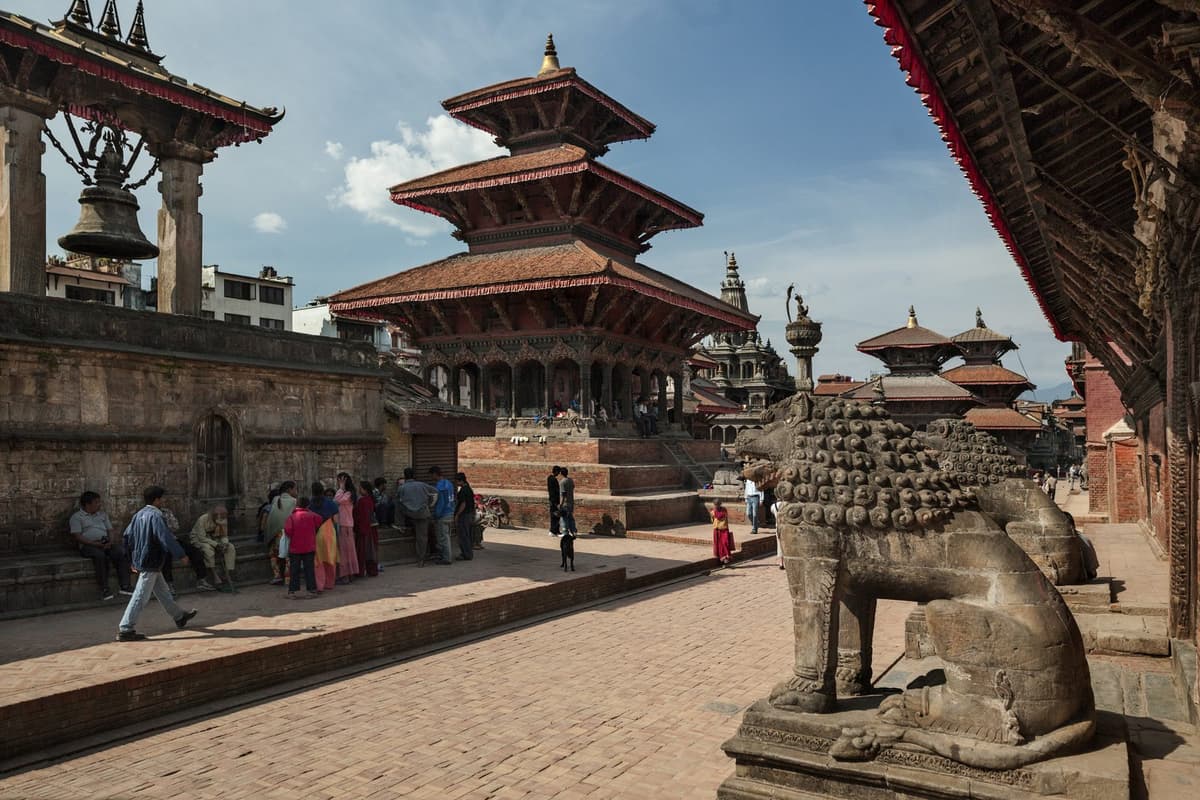
- Patan Durbar Square: the all-stone Krishna Mandir and the superb Patan Museum in a restored palace wing.
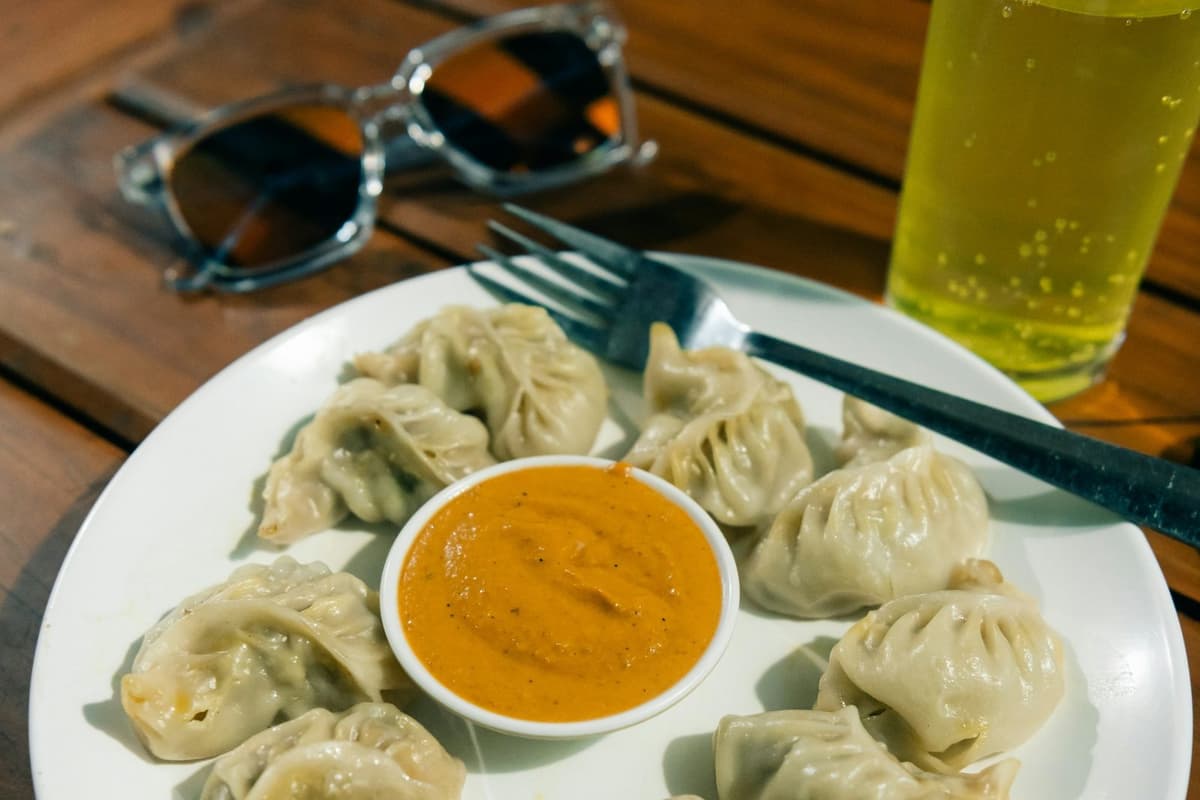
- Lunch near Patan, not included; your guide can point you to good local spots.
- Drive to Bhaktapur, the best-preserved of the three cities.
- Bhaktapur Durbar Square: the 55-Window Palace, the gilded Golden Gate and the potters' square nearby.
- Drive back to your hotel at the end of the day.
Good to know
Kathmandu's three Durbar Squares, up close
The Kathmandu Valley was once three rival kingdoms, and each left behind a royal square of palaces, temples and public art at the heart of its city. Kathmandu, Patan and Bhaktapur sit within a short drive of one another, yet each Durbar Square has its own character, its own masterpieces and its own atmosphere. This tour slows down to give all three the time they deserve, so the day is about looking closely rather than ticking off sites. What follows explains what makes each square distinct, the Newar craftsmanship that ties them together, and the practical things worth knowing before you go.
Three royal cities, three distinct squares
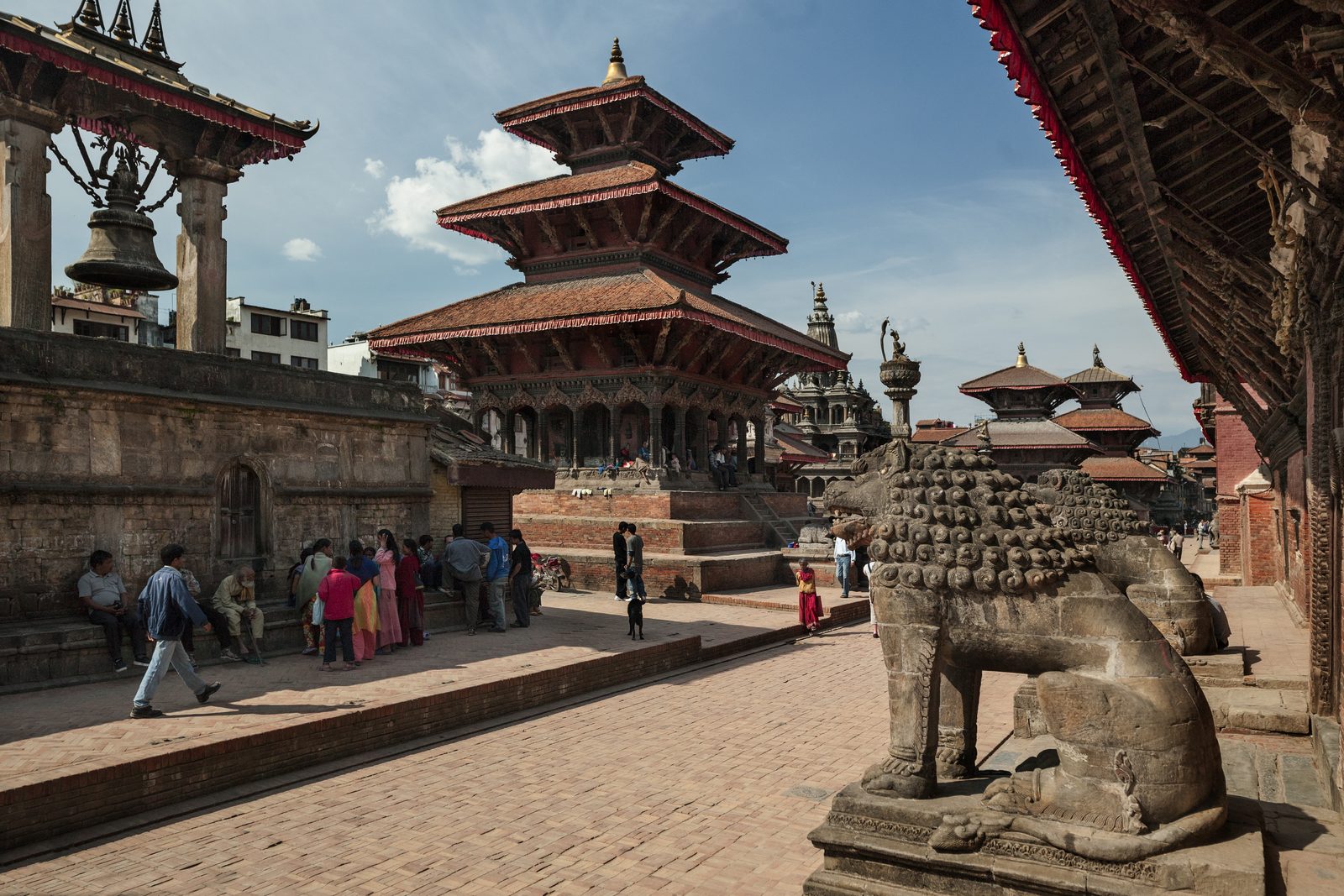
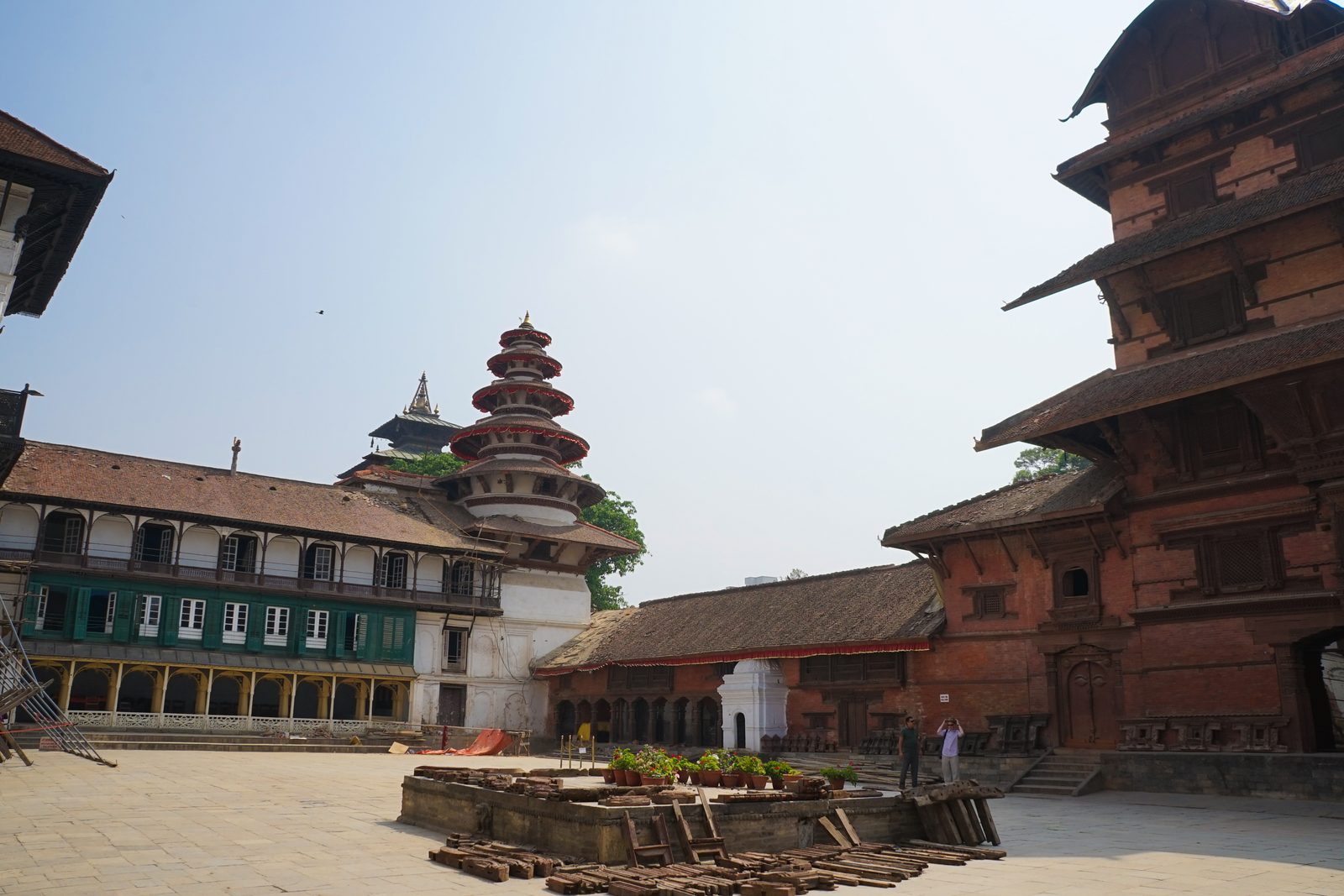
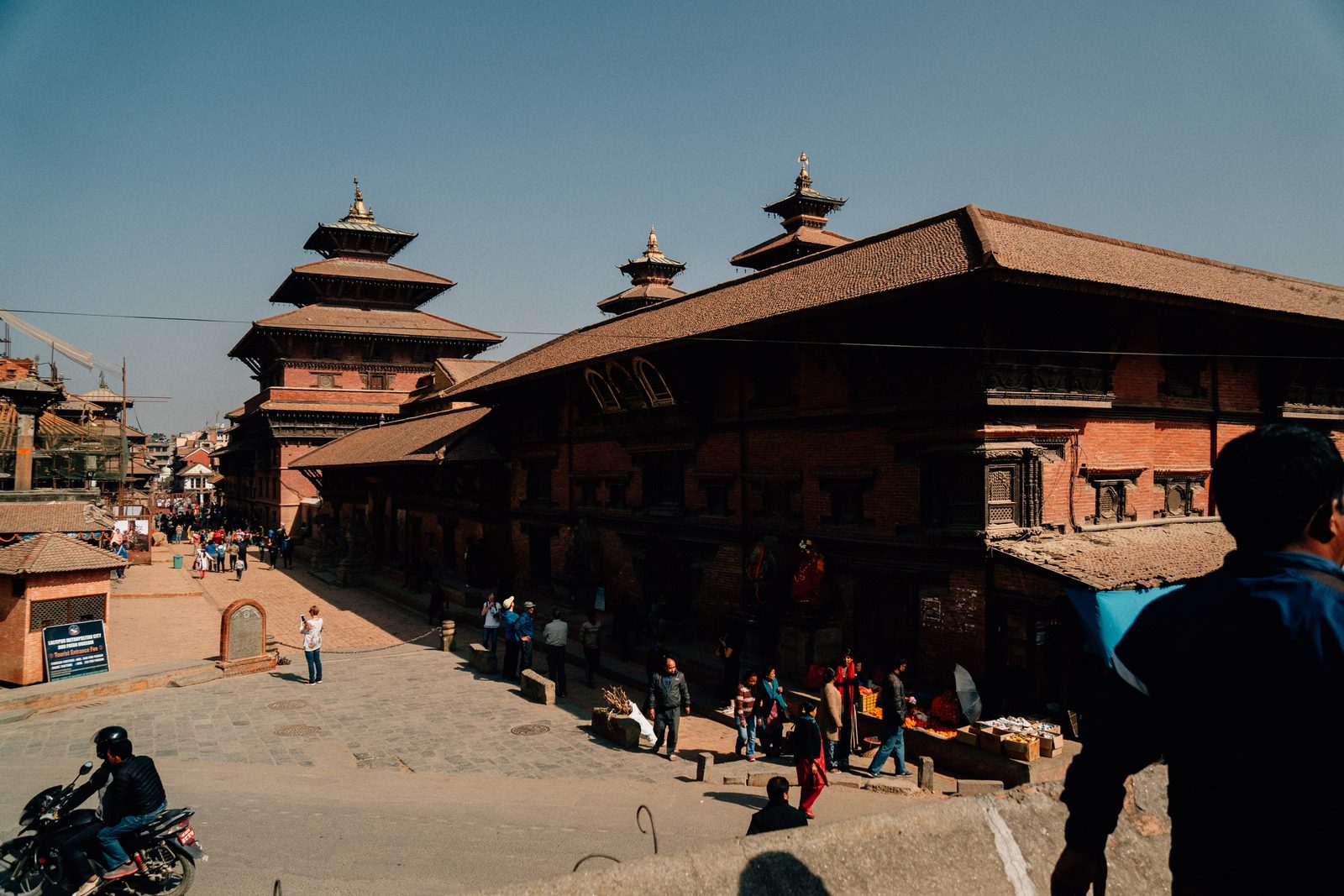
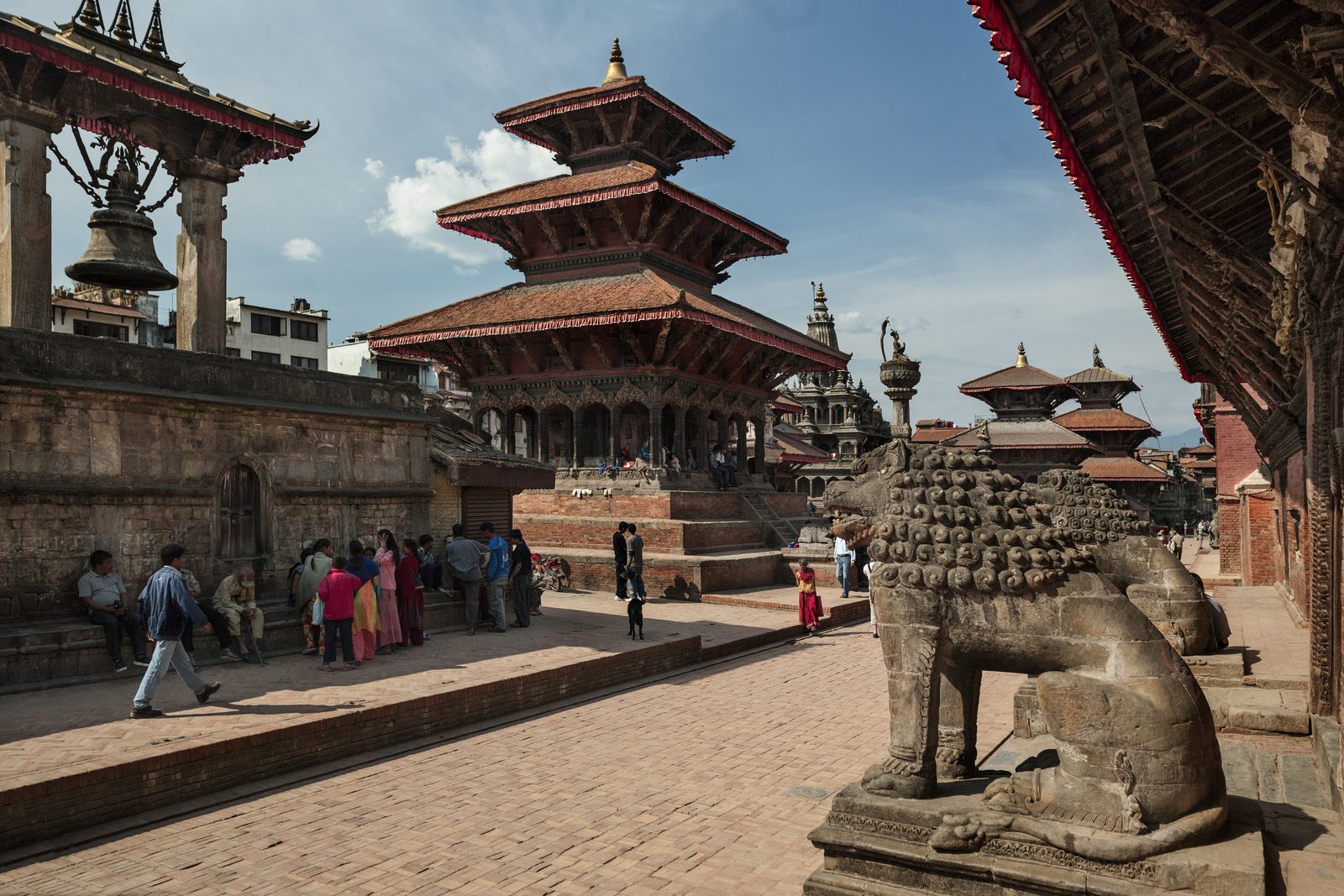
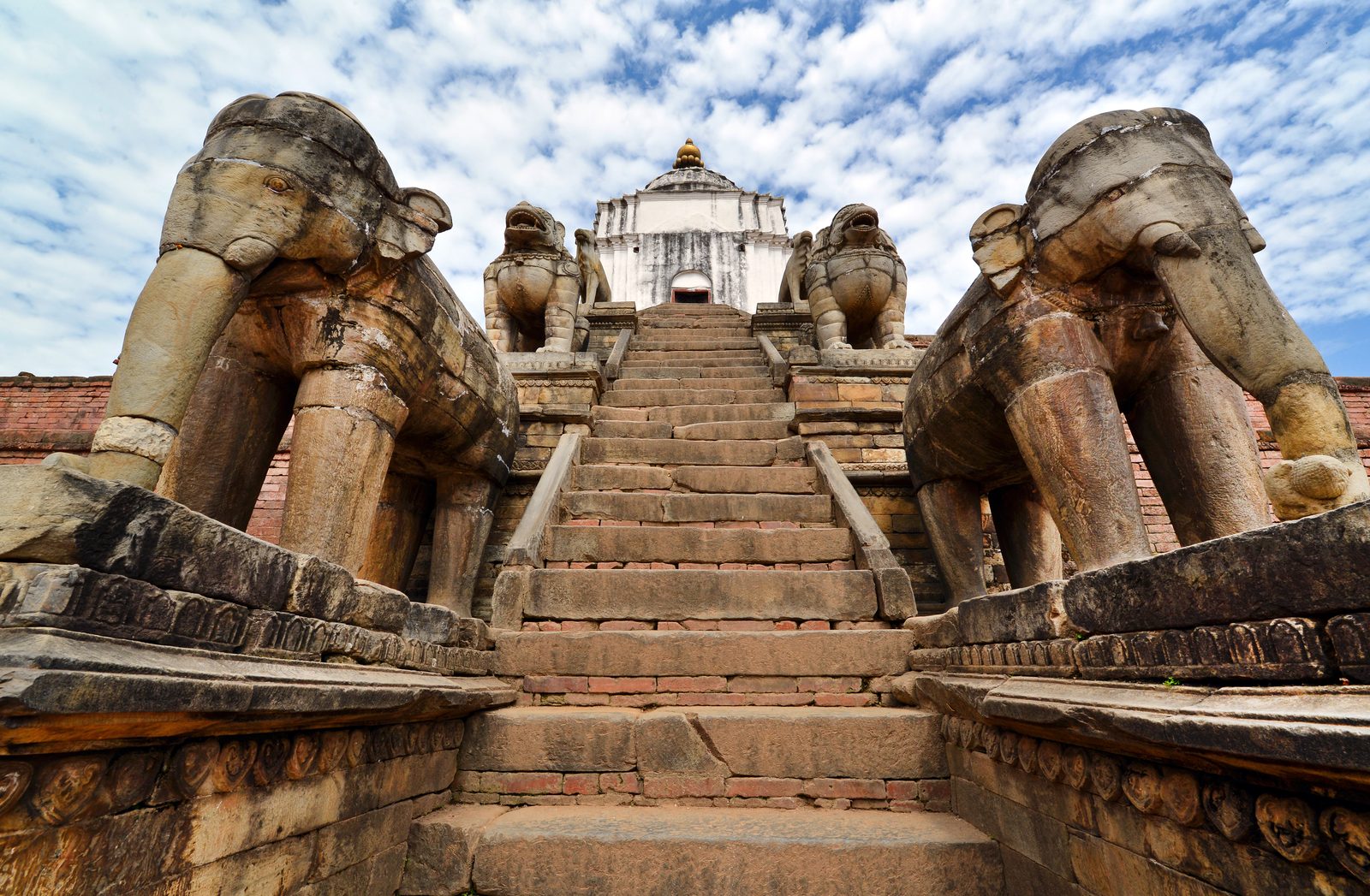
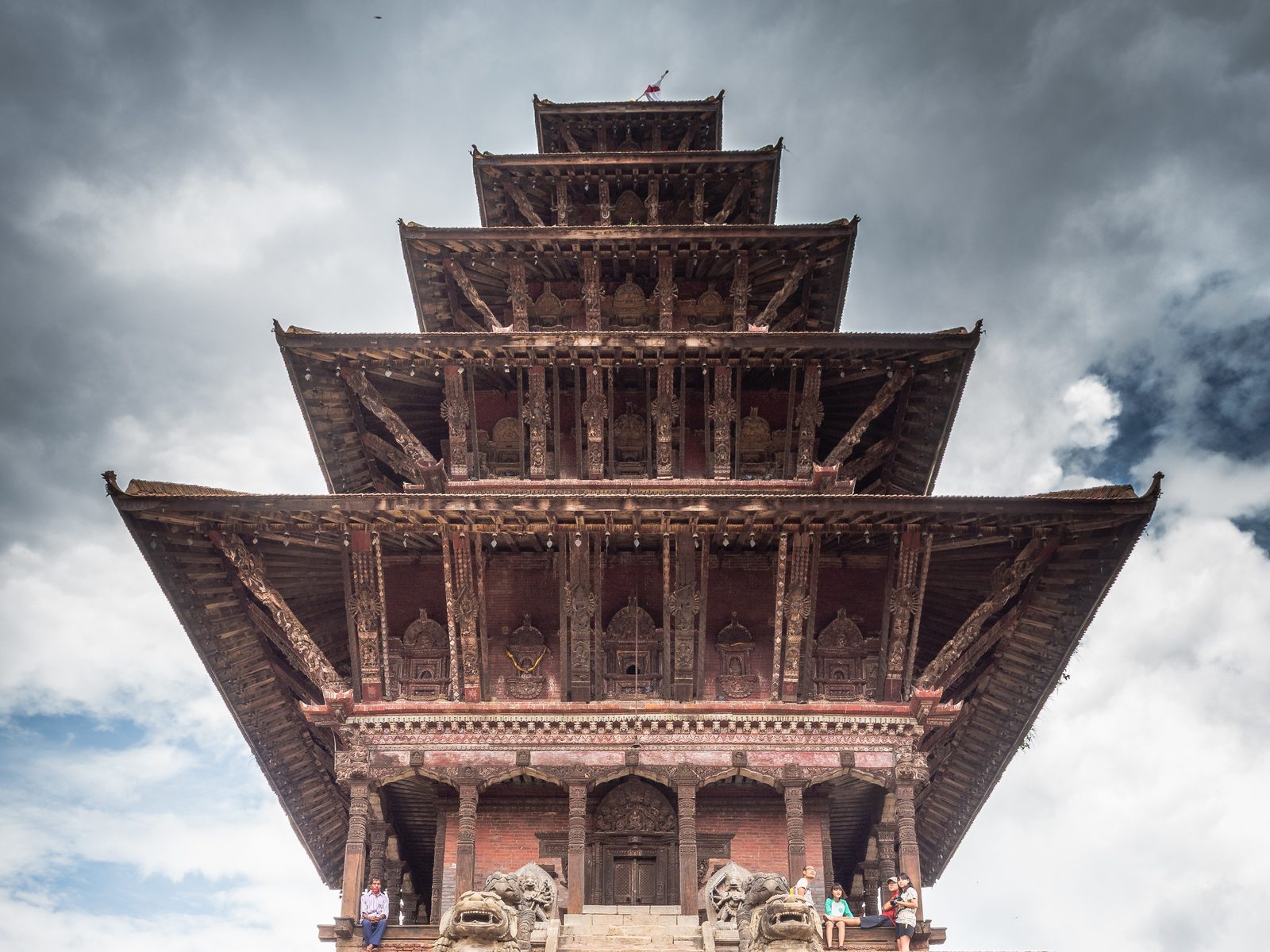
Kathmandu Durbar Square, also called Hanuman Dhoka after its painted palace gate, was the seat of the Malla and later Shah kings. It packs together the old royal palace, a crowd of tiered temples and the Kumari Ghar, the courtyard home of the Kumari, or Living Goddess, who may appear briefly at an upper window. Patan Durbar Square, in the city of Lalitpur, is the artists' square: its centrepiece is the Krishna Mandir, an elegant temple carved entirely from stone, alongside the superb Patan Museum, set inside a restored palace wing and widely rated one of the finest museums in South Asia. Bhaktapur Durbar Square is the most complete and the most lived-in of the three, home to the 55-Window Palace, the gilded Golden Gate and, a few steps away, the potters' square where clay is still worked and dried in the open. What links all three is Newar craftsmanship: the carved timber windows, struts and doorways, the stone temples and the cast bronze and beaten metalwork that generations of valley artisans perfected.
What the three Durbar Squares tour covers
The three Durbar Squares tour begins on foot, with a short guided walk from Thamel through the old streets to Ason, the busy market square that has anchored Kathmandu's trade for centuries. From there you explore Hanuman Dhoka, then drive to Patan and, after lunch, on to Bhaktapur, before a final drive back to your hotel. Because the day covers only the three royal squares, you gain what a whirlwind valley tour cannot offer: unhurried time in each courtyard, museum and temple. If you would rather see everything the valley's heritage listing includes, the great stupas and riverside temples as well as the squares, our 7 UNESCO World Heritage Sites: Kathmandu Valley Day Tour reaches all seven monument zones in a single, fuller day.
Practical tips: fees, dress and etiquette
Entrance fees for the three squares are not included and are paid on the day at each gate. Rates vary by nationality, with SAARC and Indian visitors paying less than other foreign visitors, and Bhaktapur charges the most of the three. Dress modestly and cover your shoulders and knees, and be ready to remove your shoes before entering shrines. If the Kumari appears at her window, put cameras and phones away at once, as photographing the Living Goddess is strictly forbidden, though you may photograph the courtyard itself. Finally, Kathmandu Durbar Square still carries the marks of the 2015 earthquake. Much has been rebuilt, but work continues on some monuments, so expect a little scaffolding here and there and treat it as a working, living heritage site rather than a finished museum piece.
Best time to visit
October to April is the most comfortable window, with clear, dry days and pleasant temperatures. Autumn, from October into November, brings the sharpest light and the liveliest festival season, while spring is warm and bright. The monsoon months from June to September bring afternoon rain and haze, but the squares stay open and are far quieter. Whatever the season, an earlier start means softer light and fewer crowds in the courtyards.