

Overview
This Chitwan and Pokhara tour by road is a four-day private loop from Kathmandu that links Nepal's best-known national park with its lake city, without a domestic flight. You drive down to Sauraha, on the edge of Chitwan National Park, on the first day. Next morning you go on a jeep safari to look for one-horned rhino, then drive up to Pokhara. The third day is a full day of Pokhara sightseeing, from a boat on Phewa Lake to the World Peace Pagoda, and on the last morning you watch sunrise from Sarangkot before driving back to Kathmandu. It suits travellers who prefer the road to small planes and want a fuller day in Pokhara.
The itinerary
- Morning departure by private vehicle, about 162 km and roughly 6 hours on the road
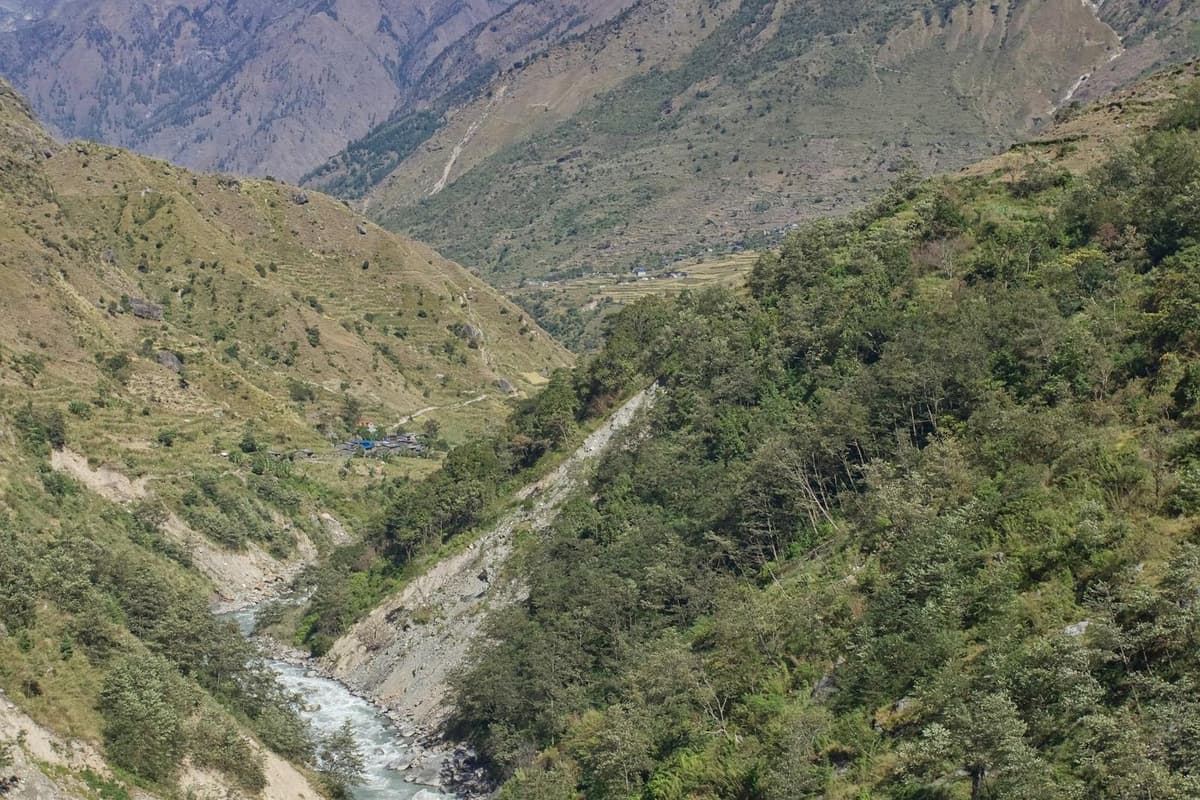
- Down through the hills to the flat, warm Terai plains
- Check in at Sauraha, on the northern edge of Chitwan National Park
- Evening stroll to the Rapti riverbank as the light goes
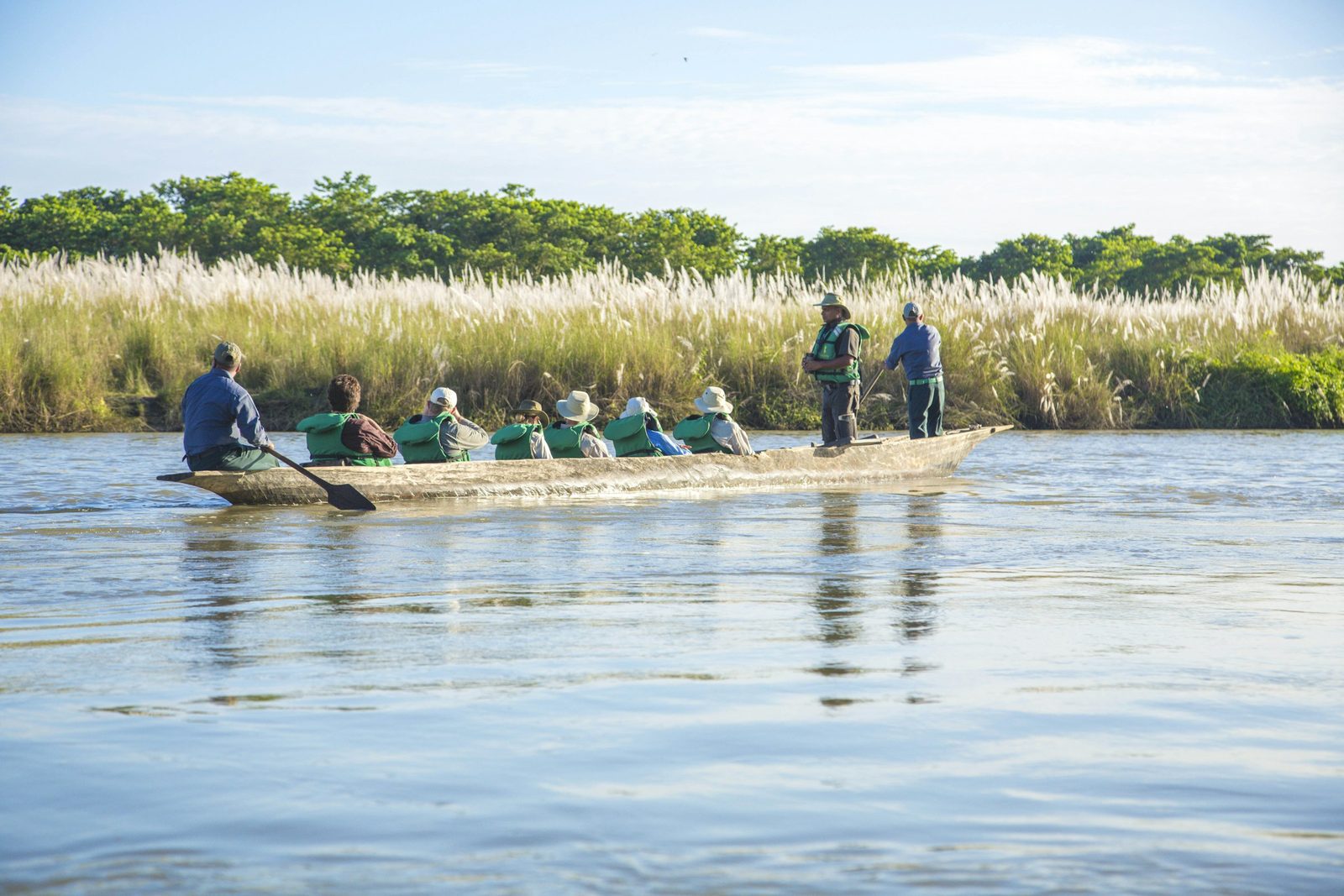
- Early jeep safari in the national park with a park-certified guide
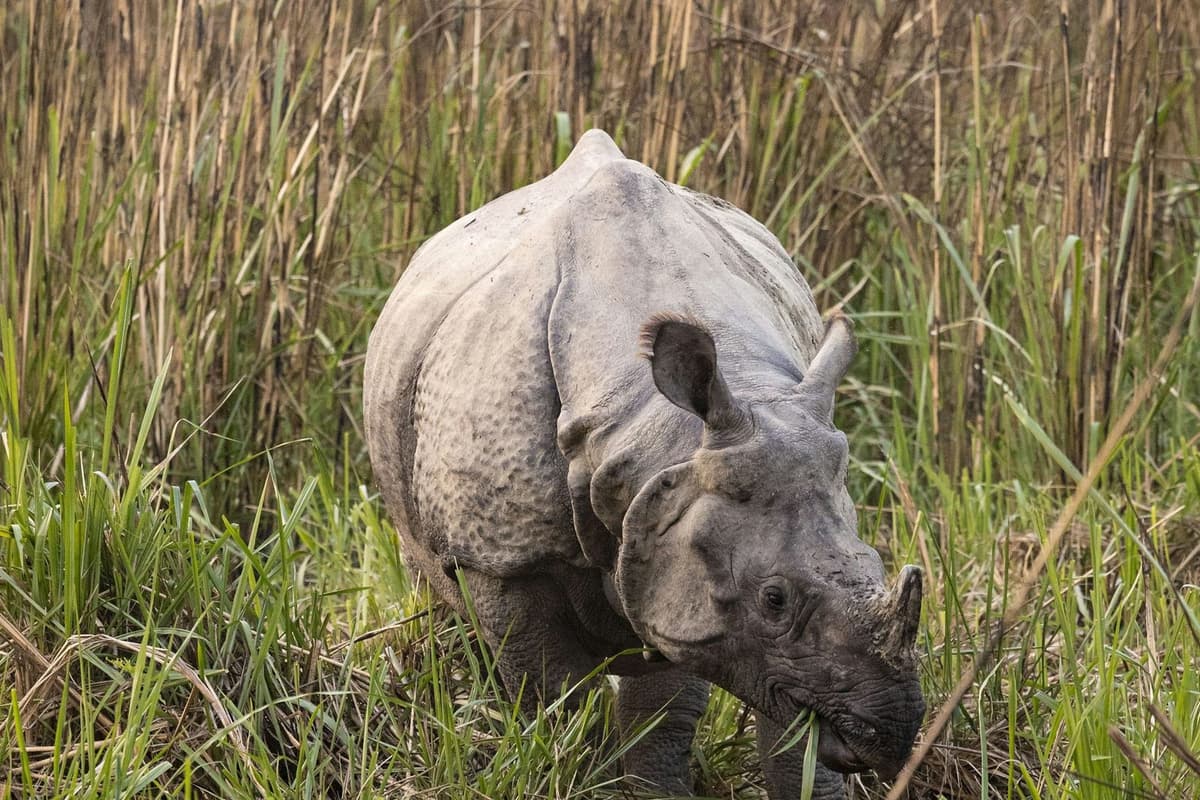
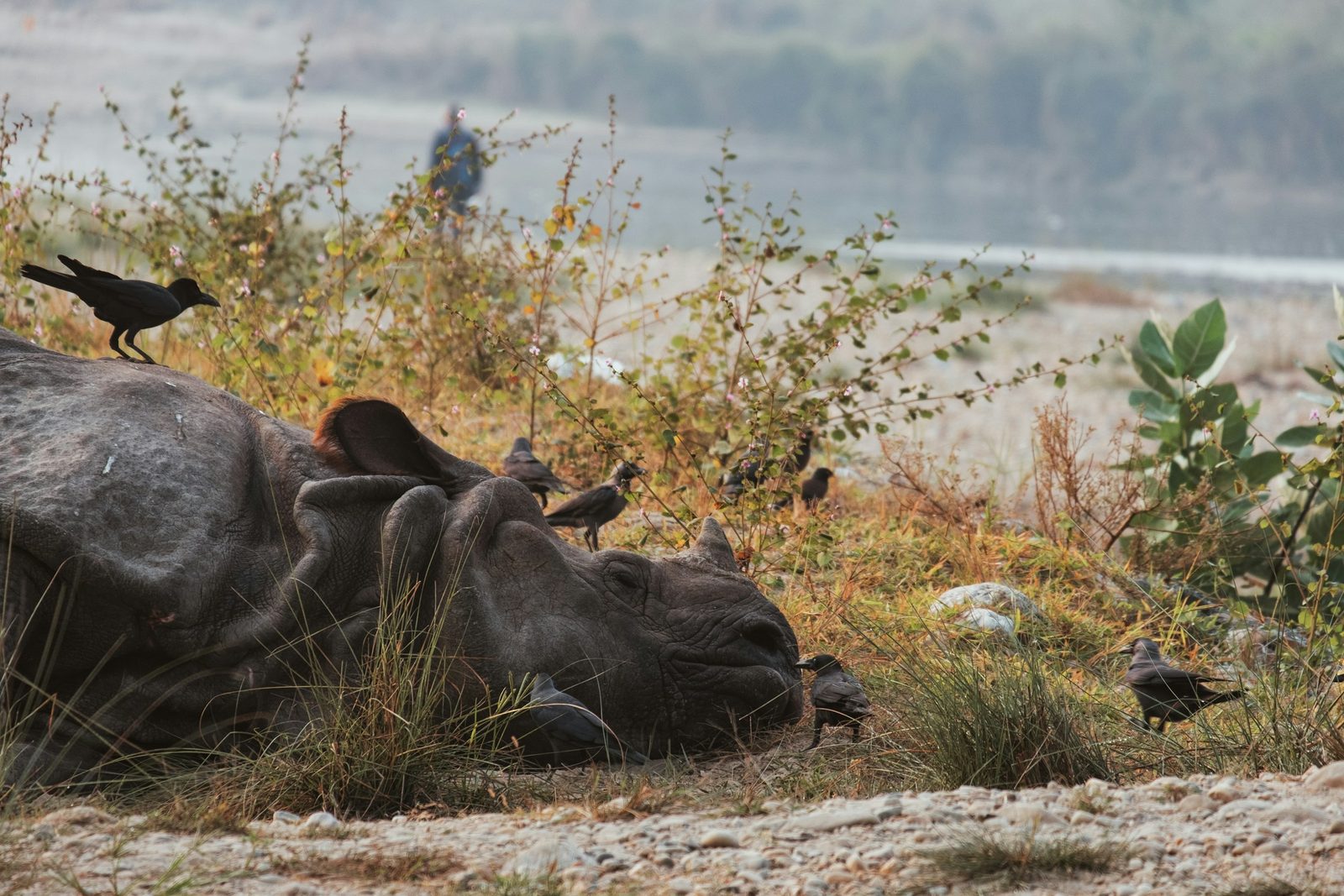
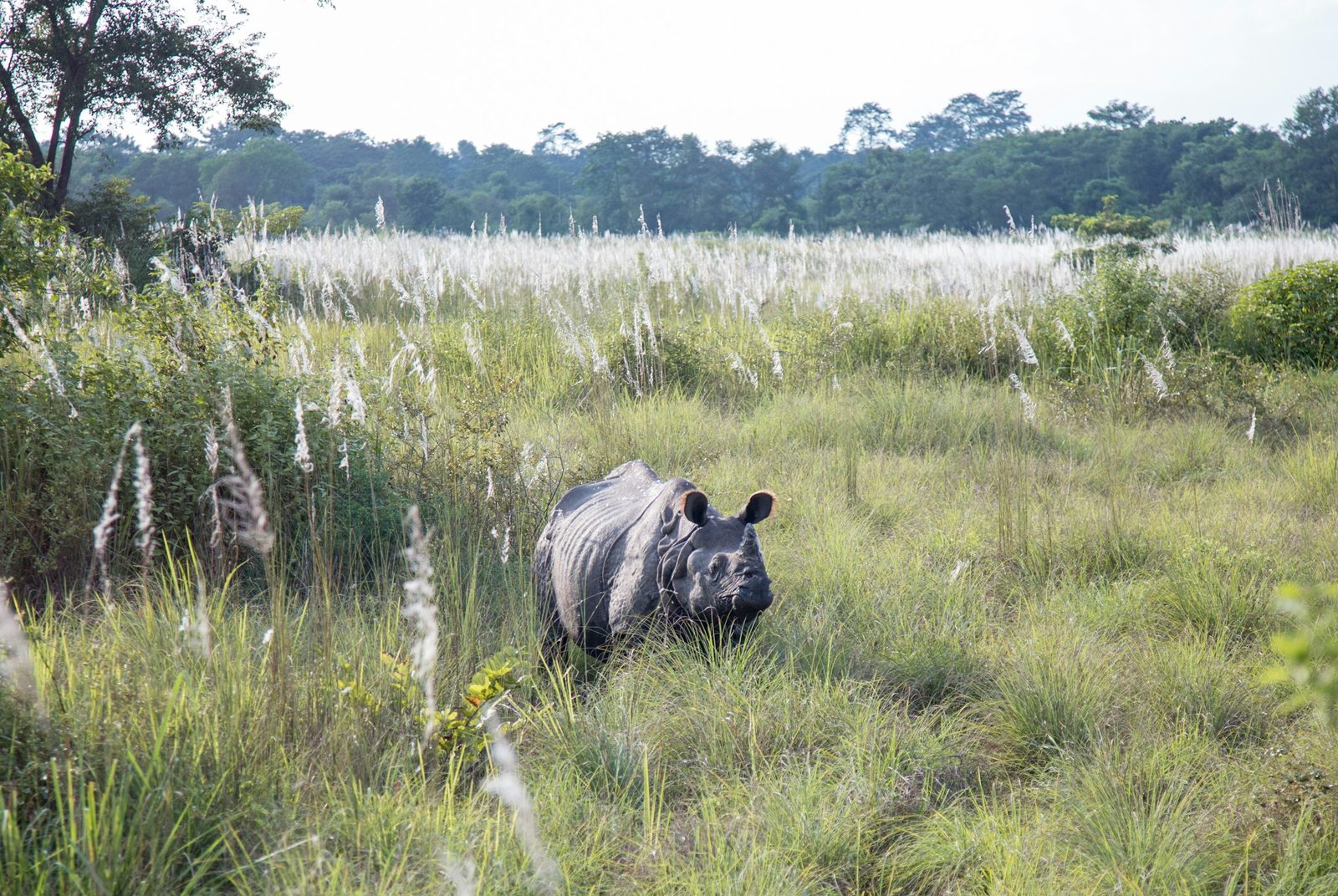
- Look for one-horned rhino, deer, crocodiles and birds; tigers are rarely seen
- Drive to Pokhara, around 160 km and usually three to five hours
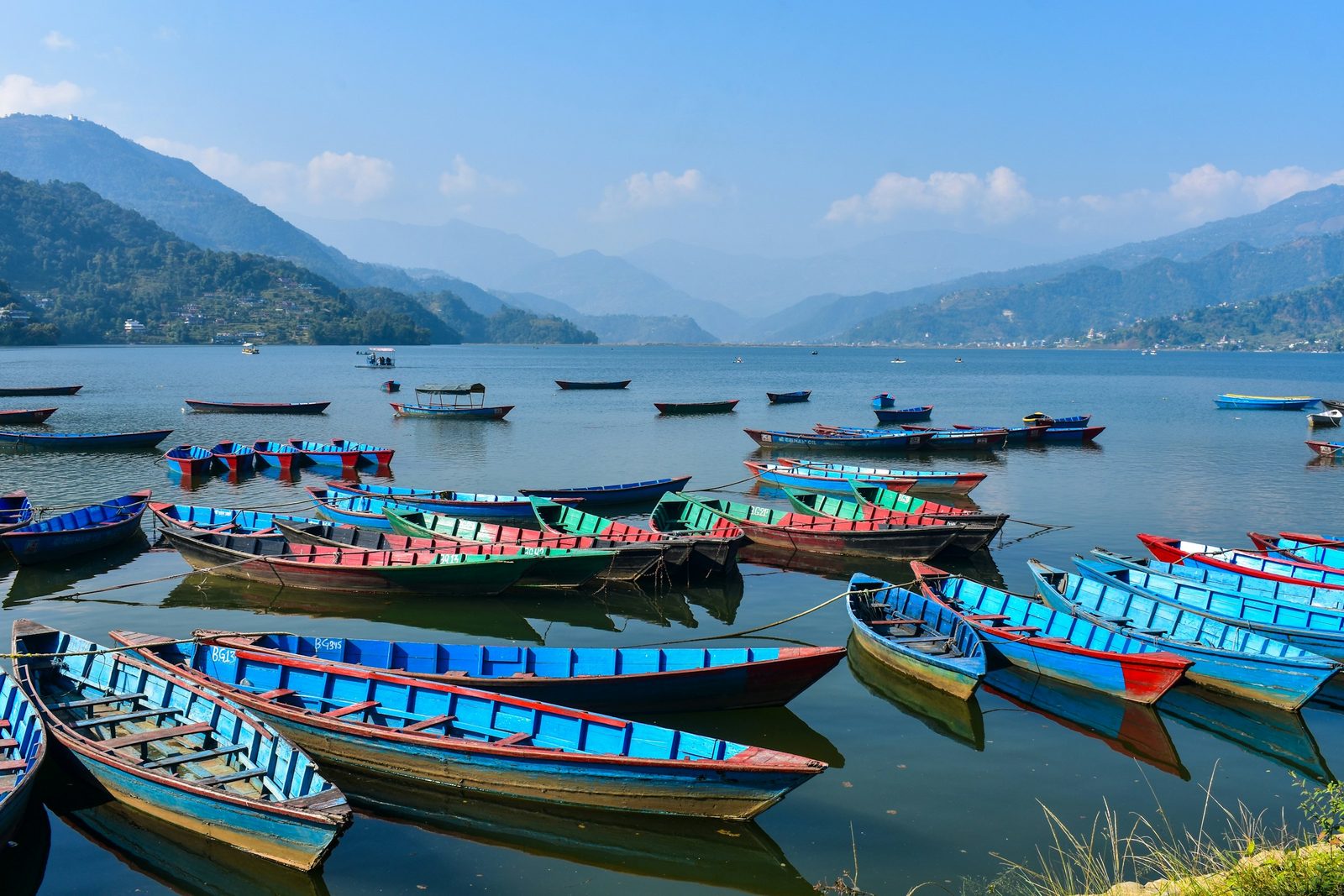
- Evening in Lakeside, the tourist quarter on the shore of Phewa Lake
- Boat across Phewa Lake to the island temple of Tal Barahi
- Davis Falls, where the lake's outflow disappears underground, and Gupteshwor Cave
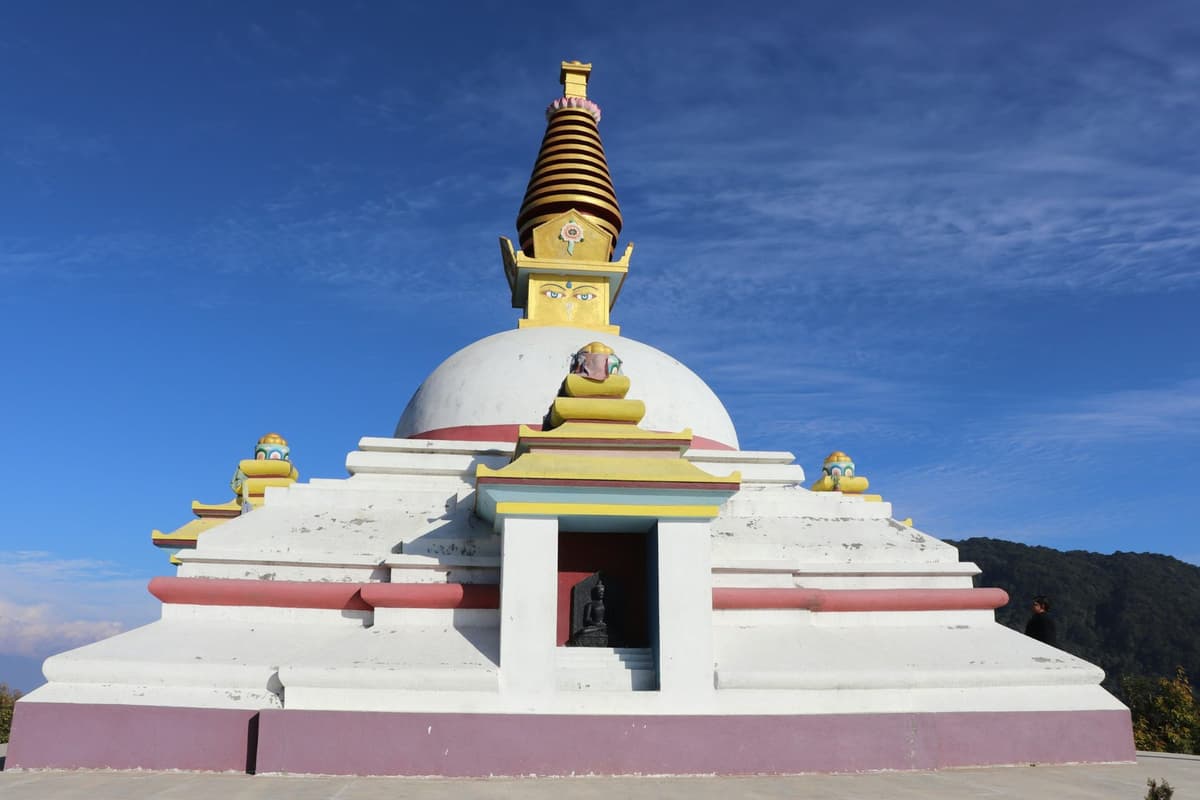
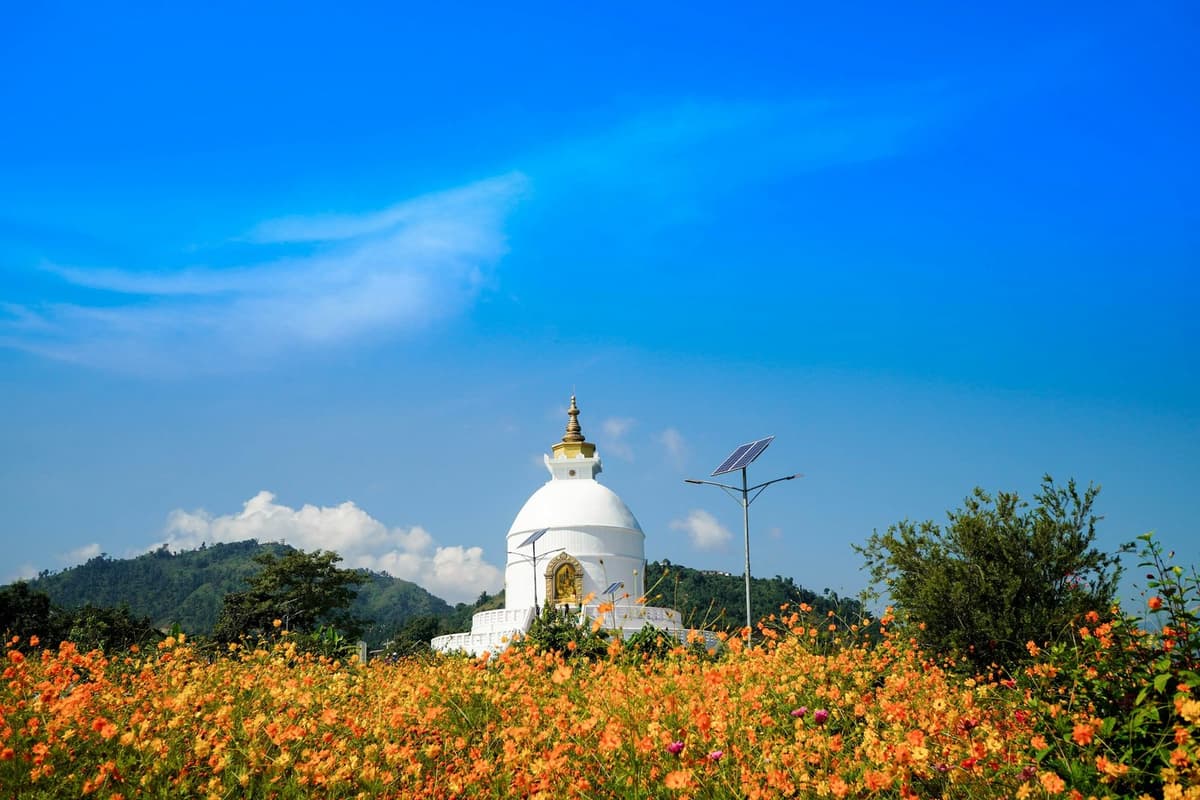
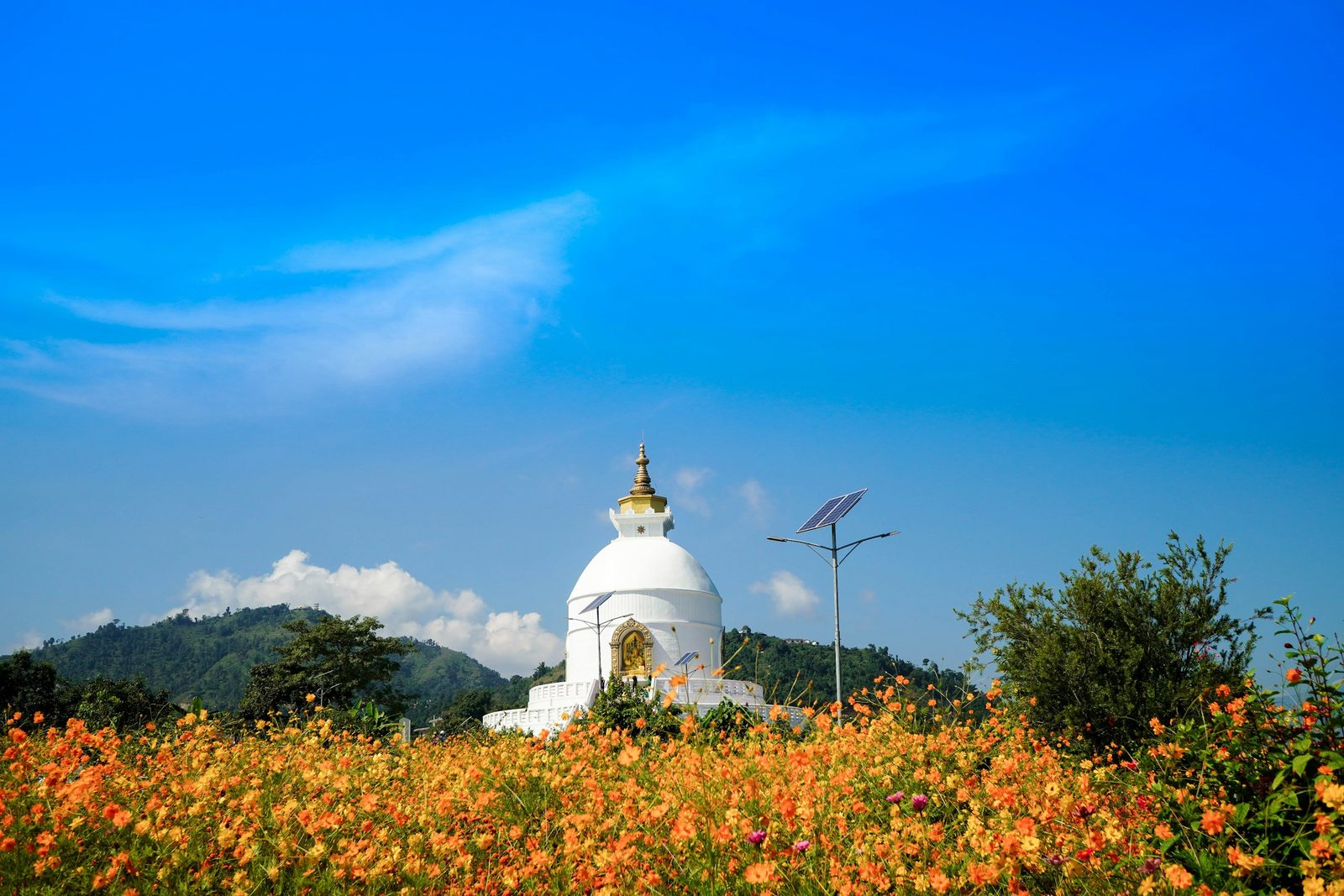
- The World Peace Pagoda above the southern shore of the lake
- Unhurried time to walk, eat and rest in Lakeside
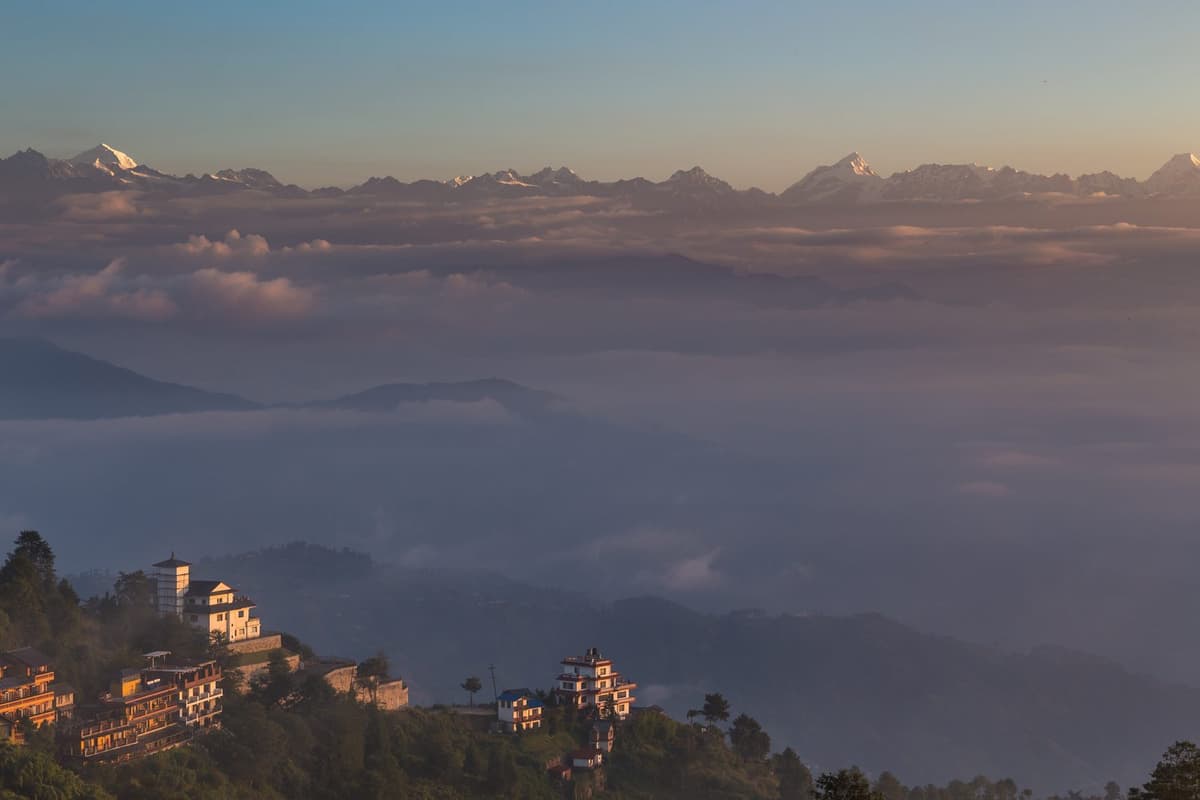
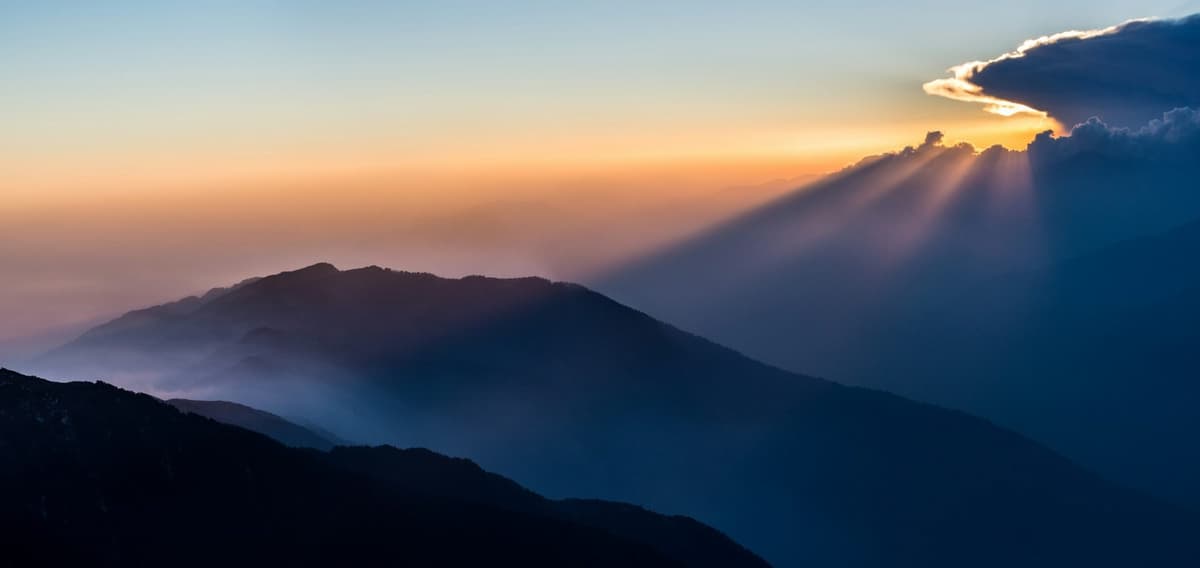
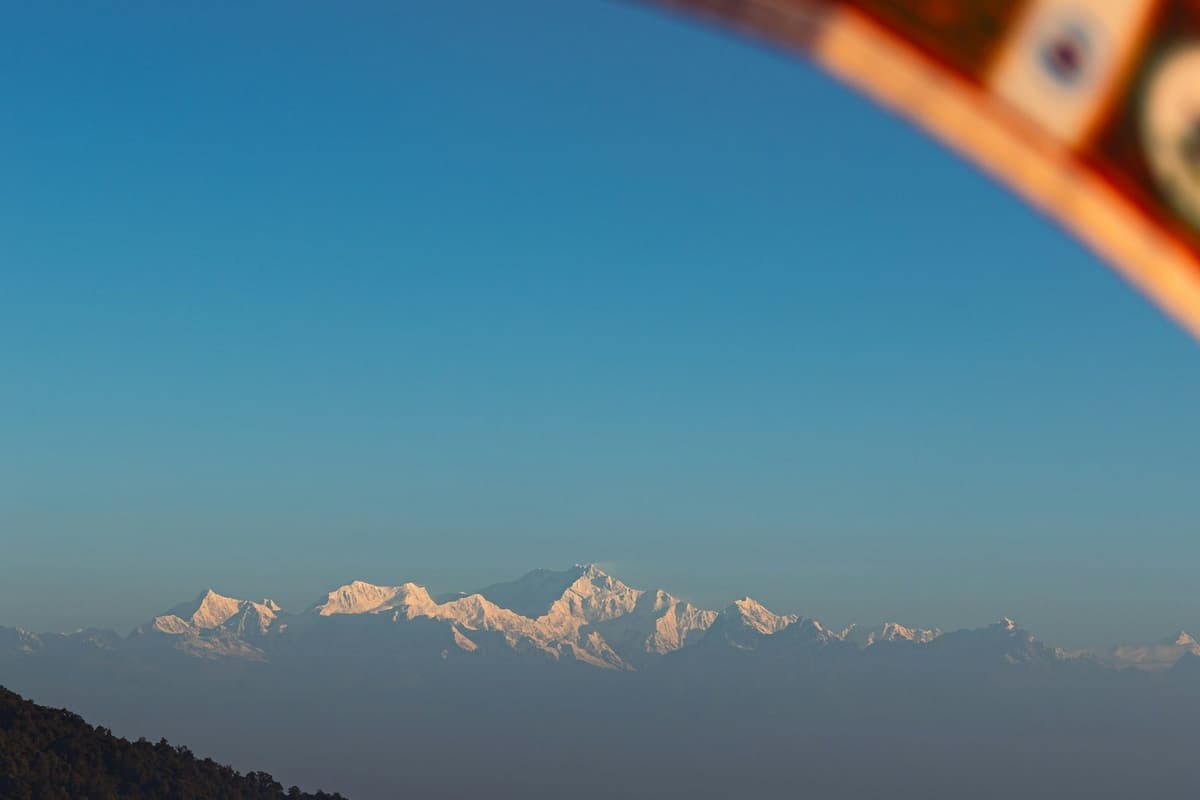
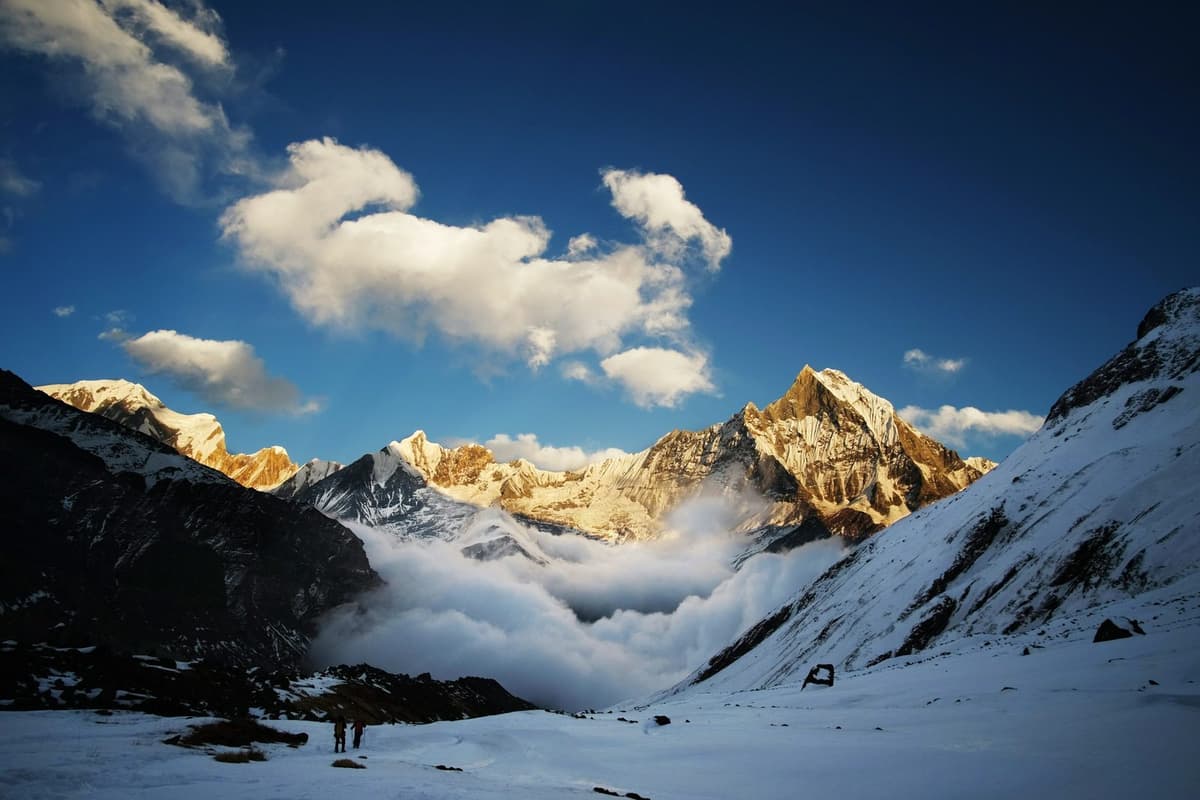
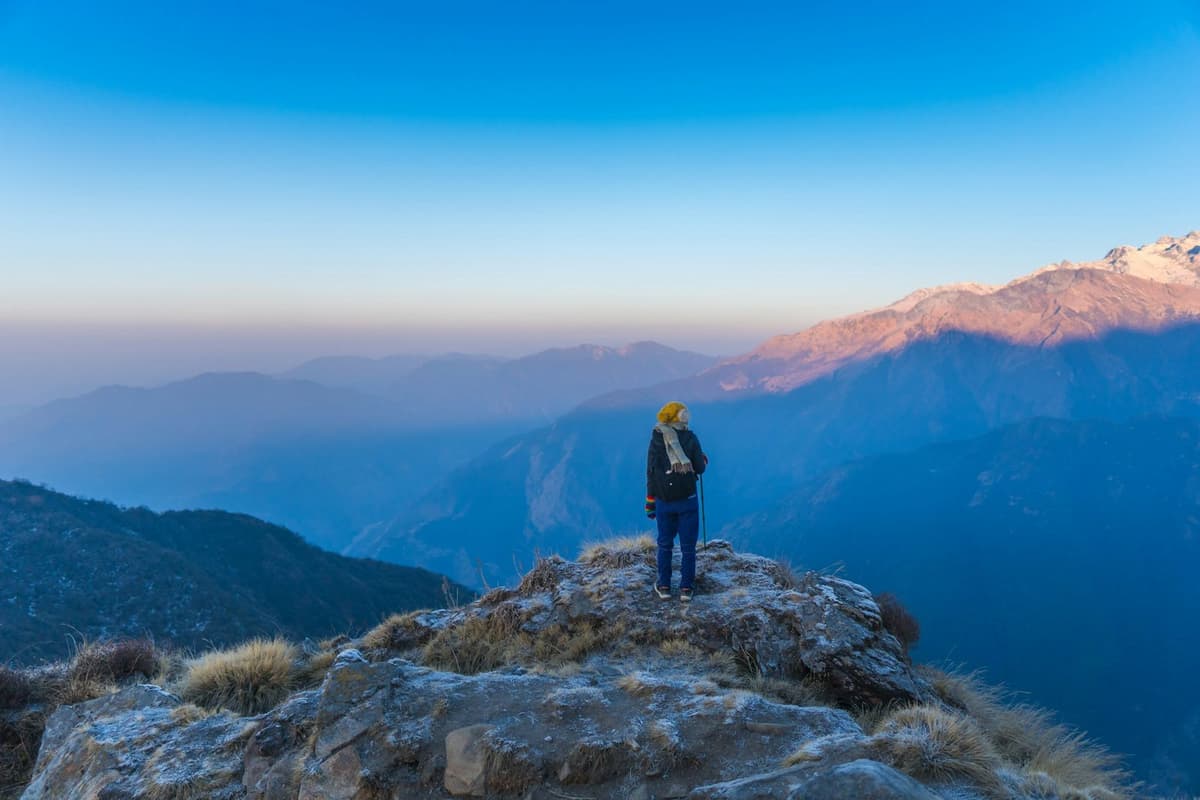
- Pre-dawn drive of 30 to 45 minutes up to Sarangkot at 1,600 m (5,249 ft)
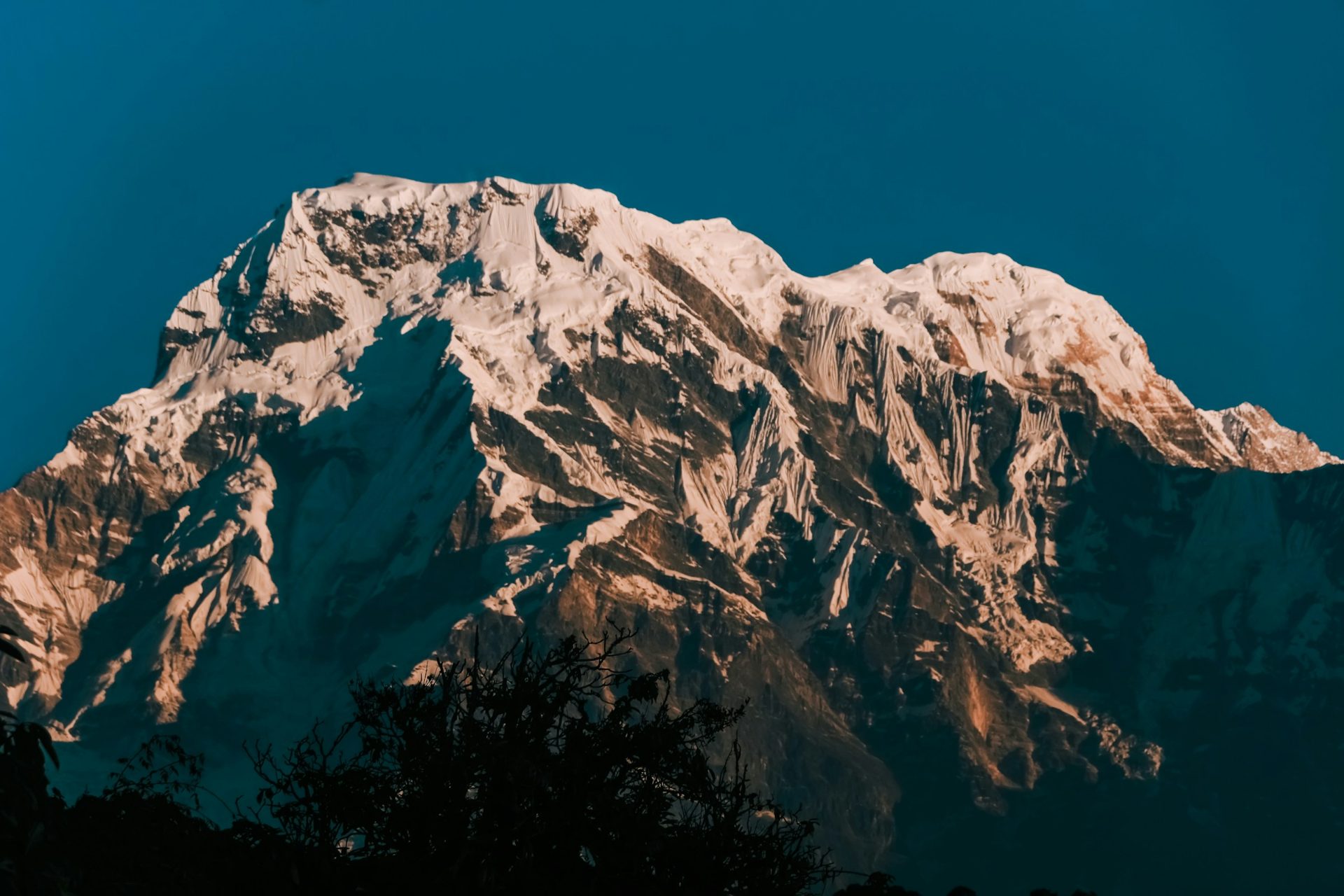
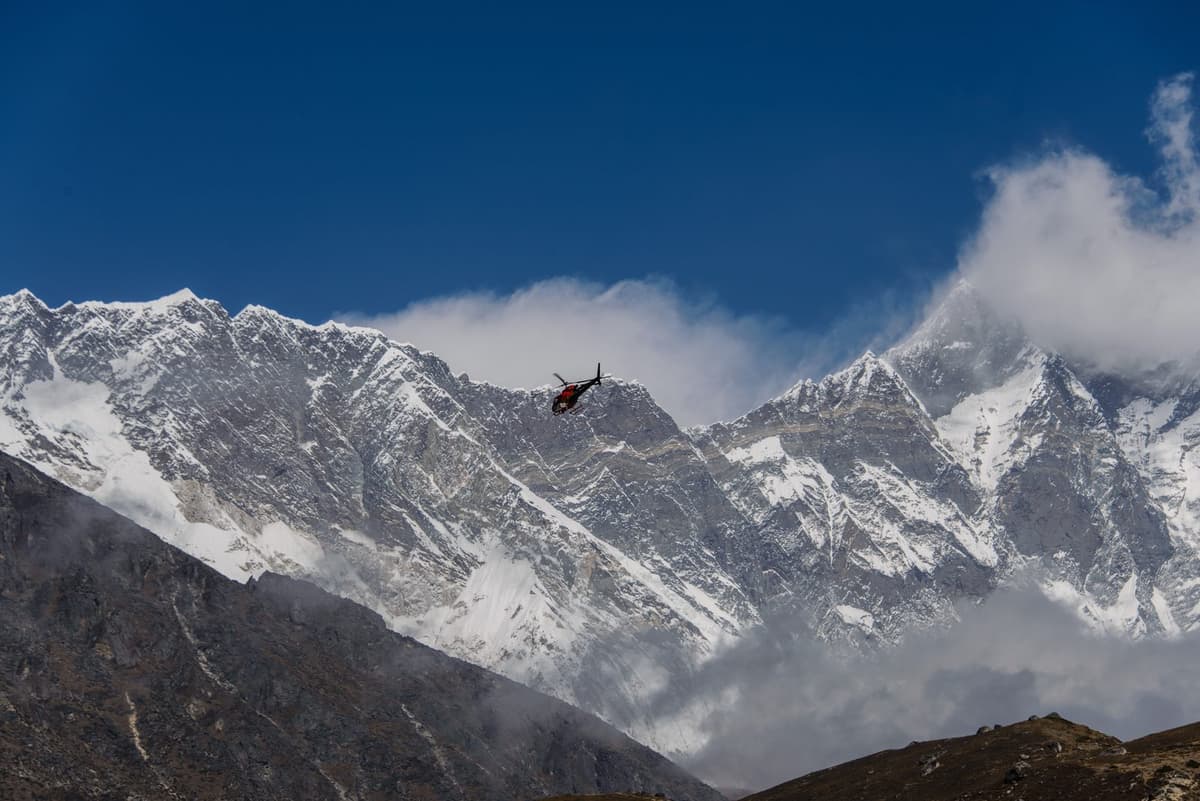
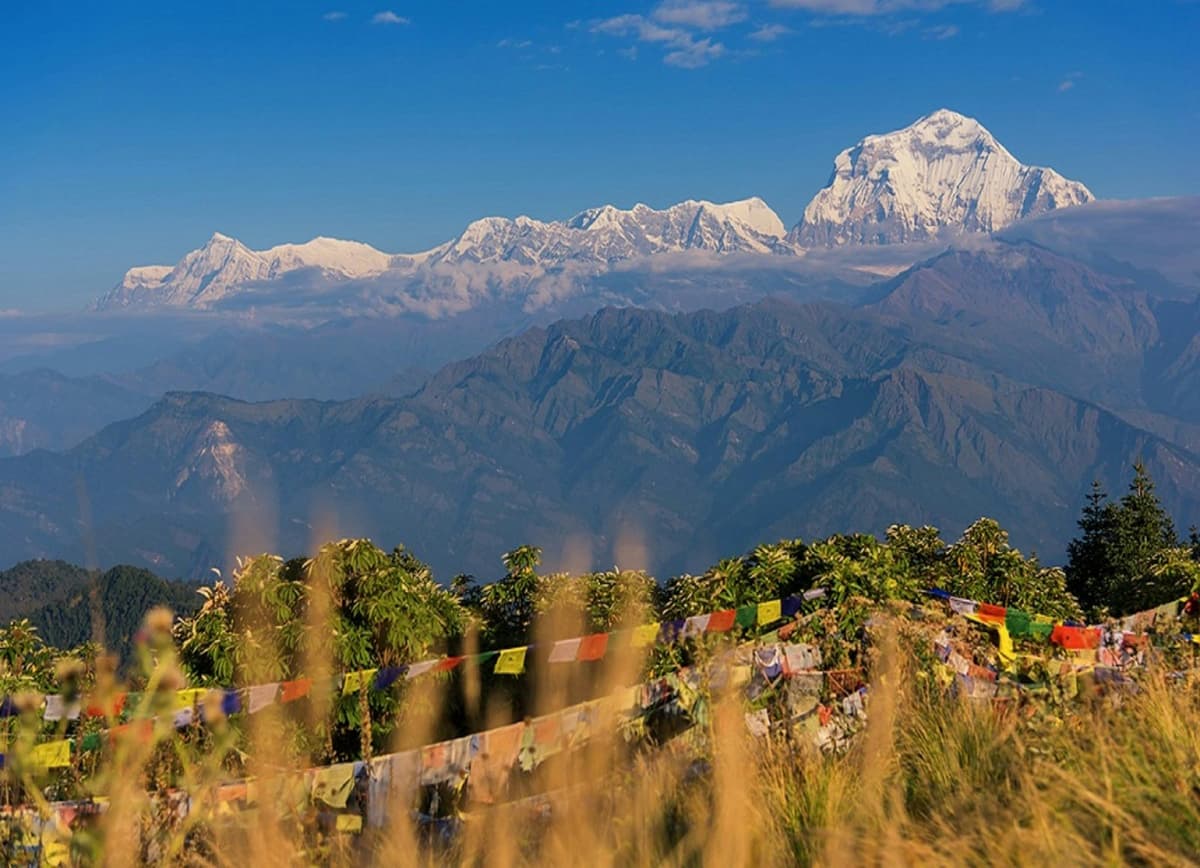
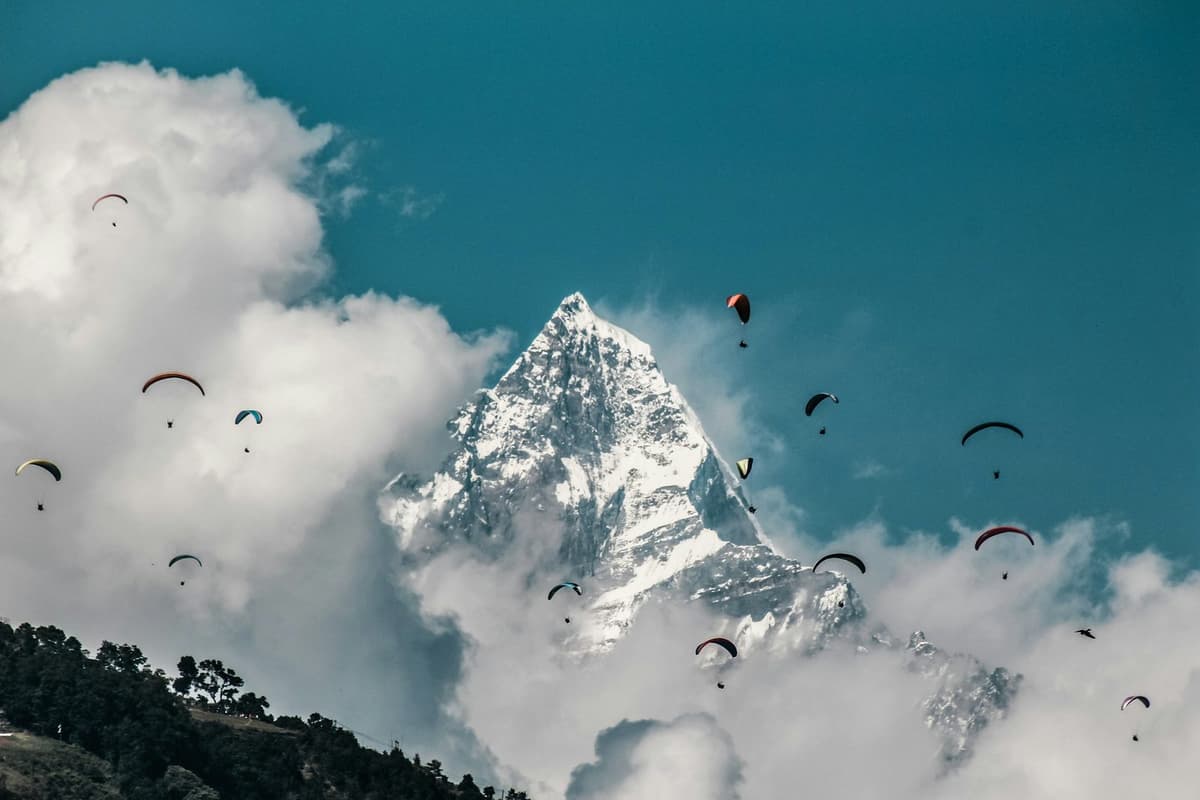
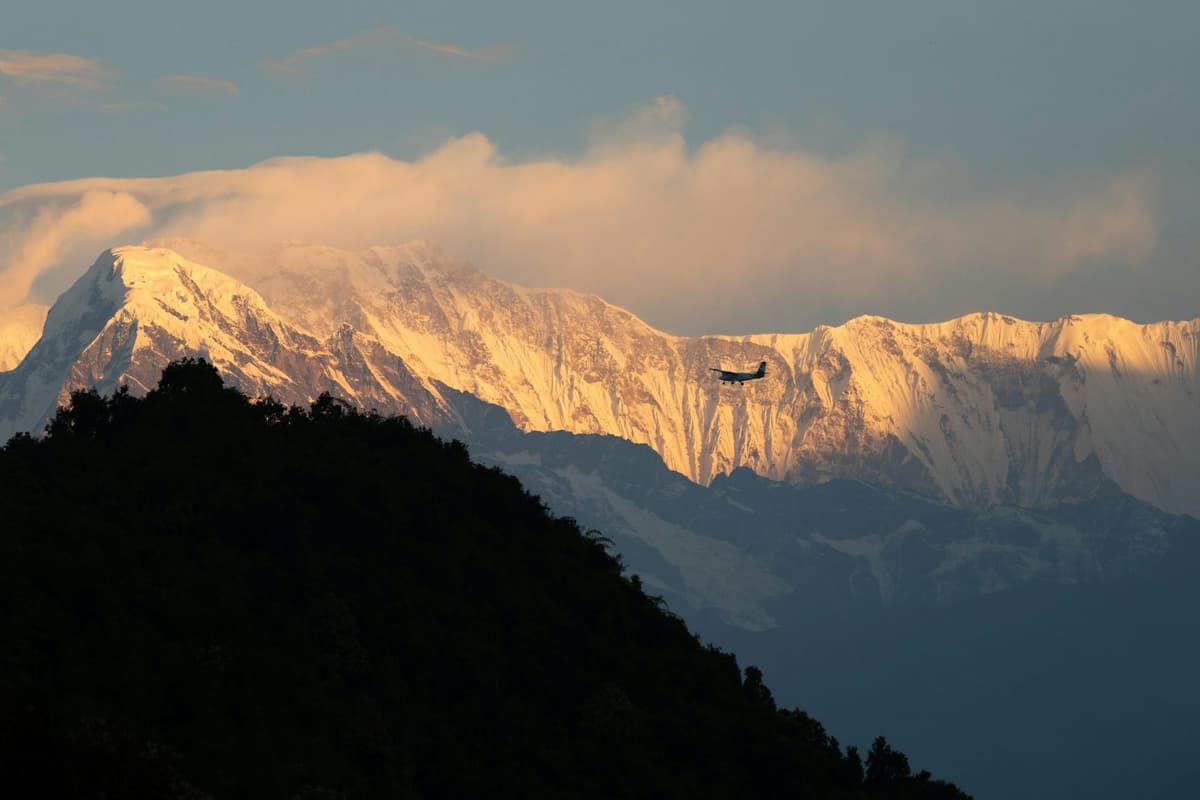
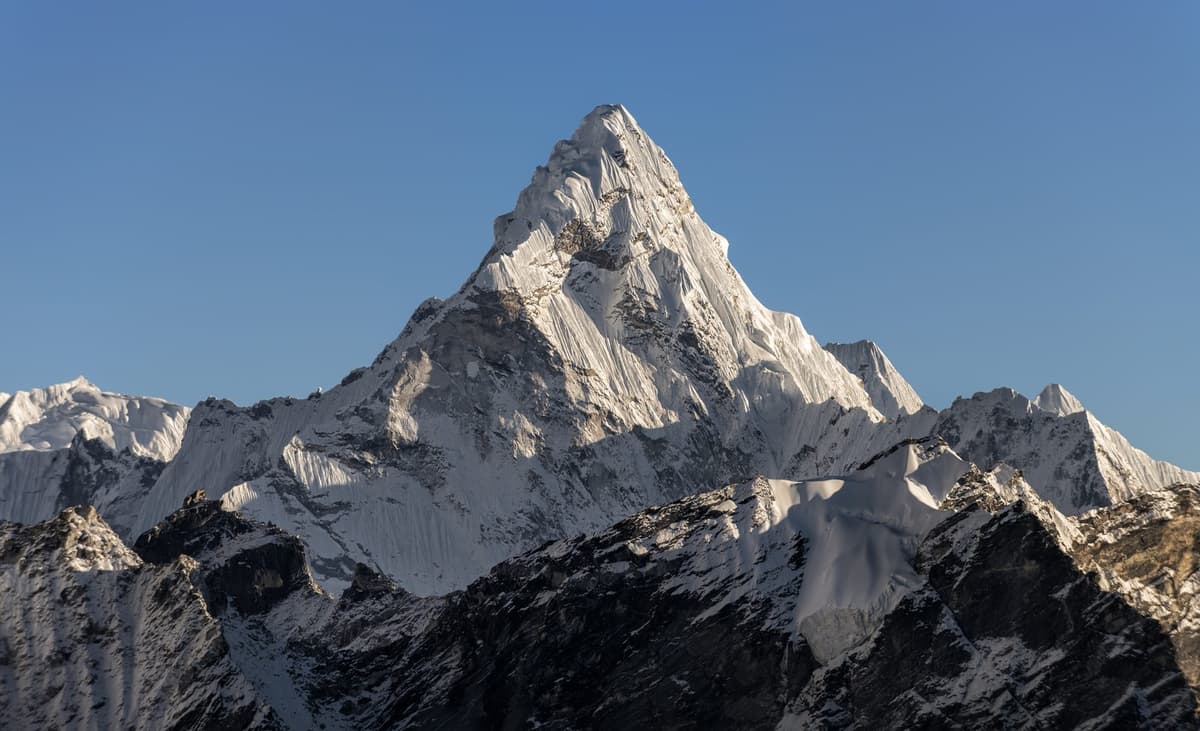
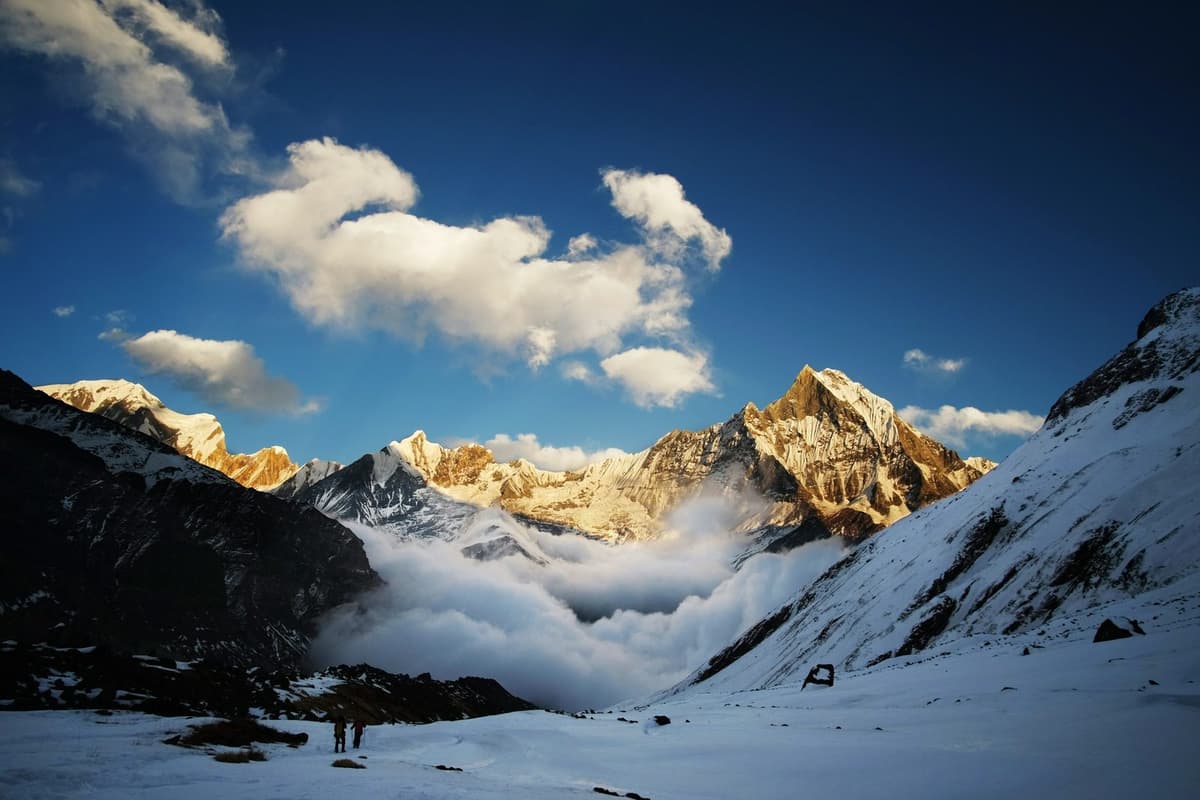
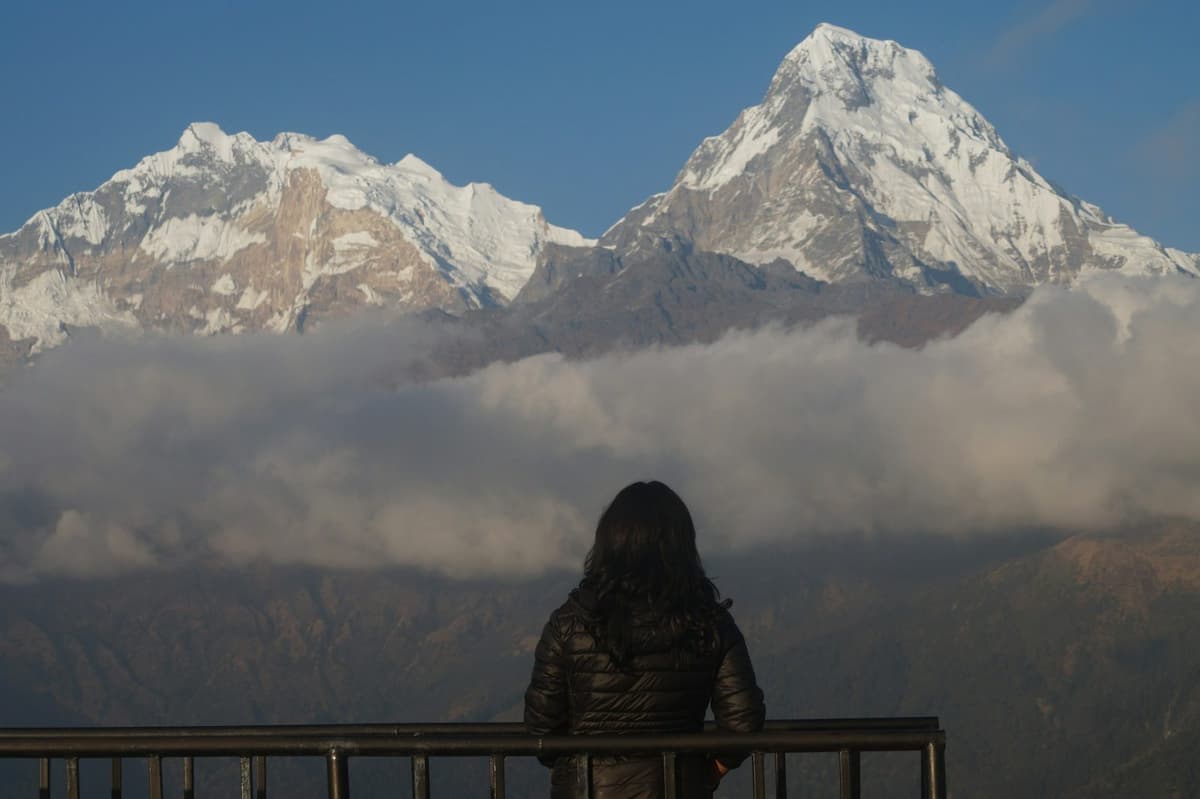
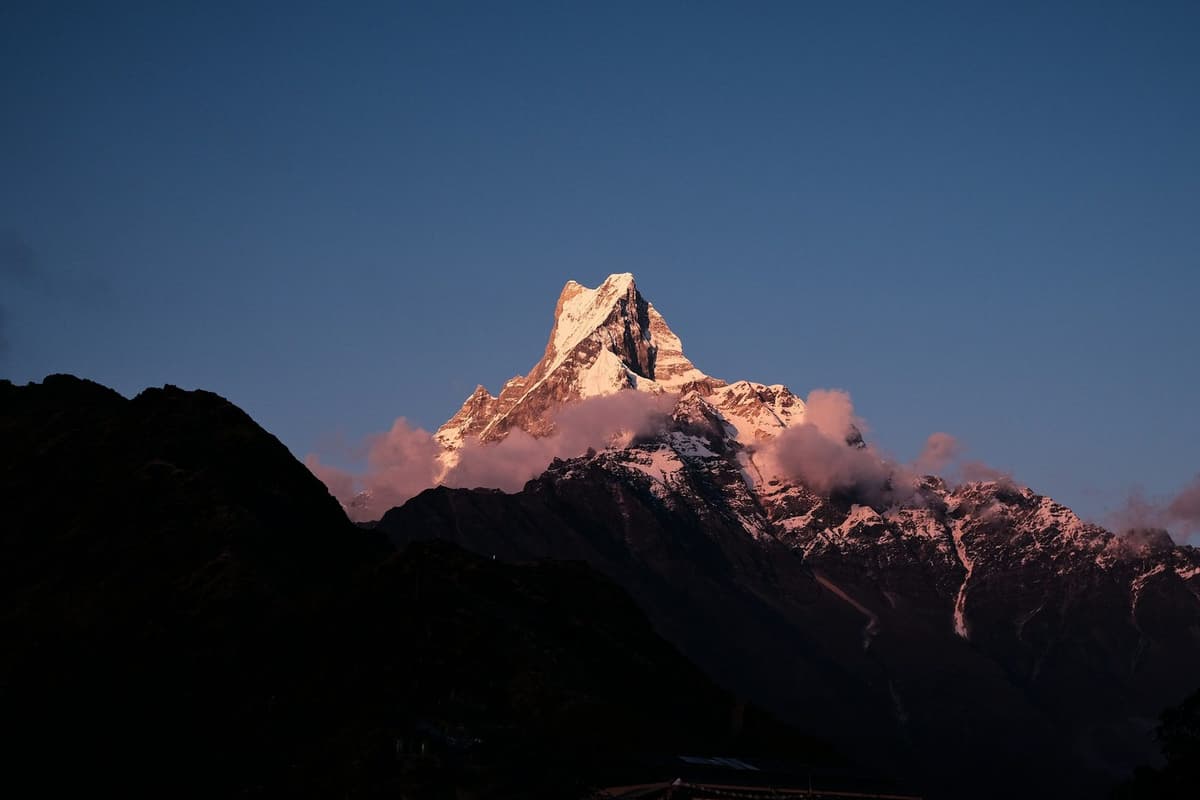
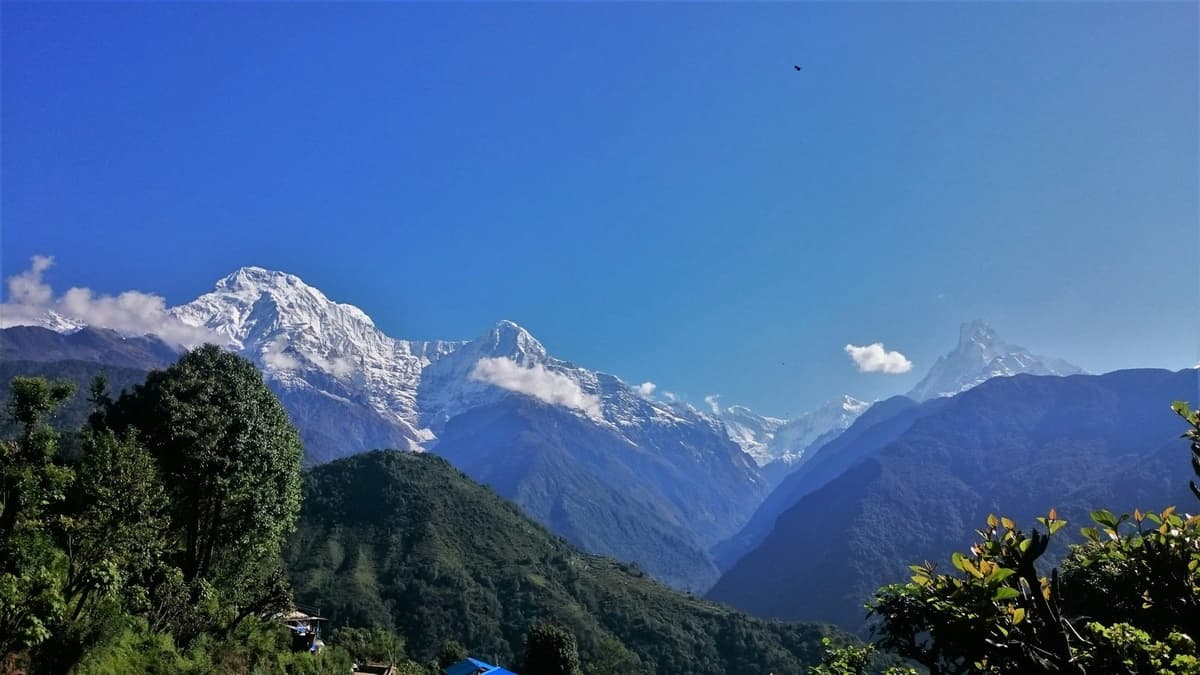
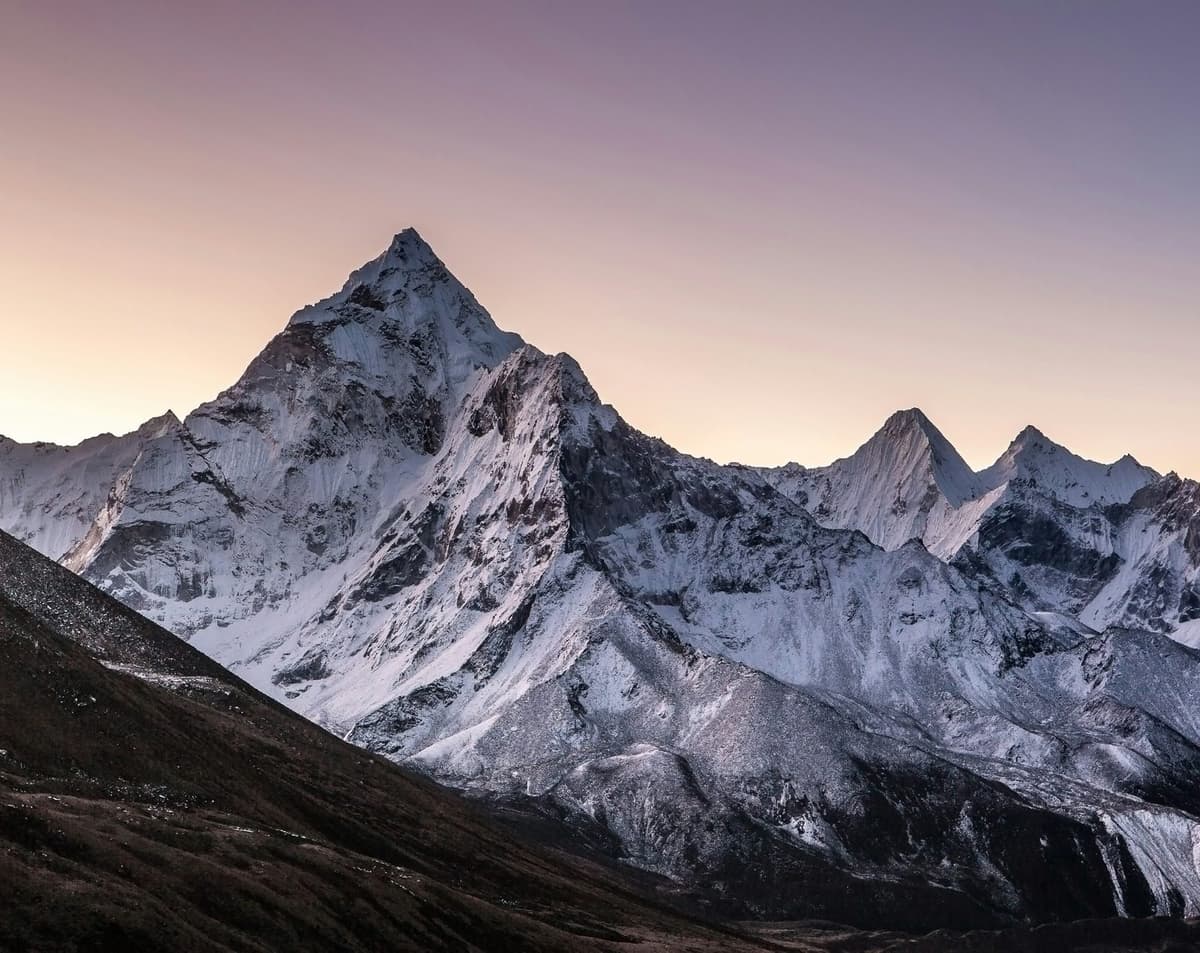
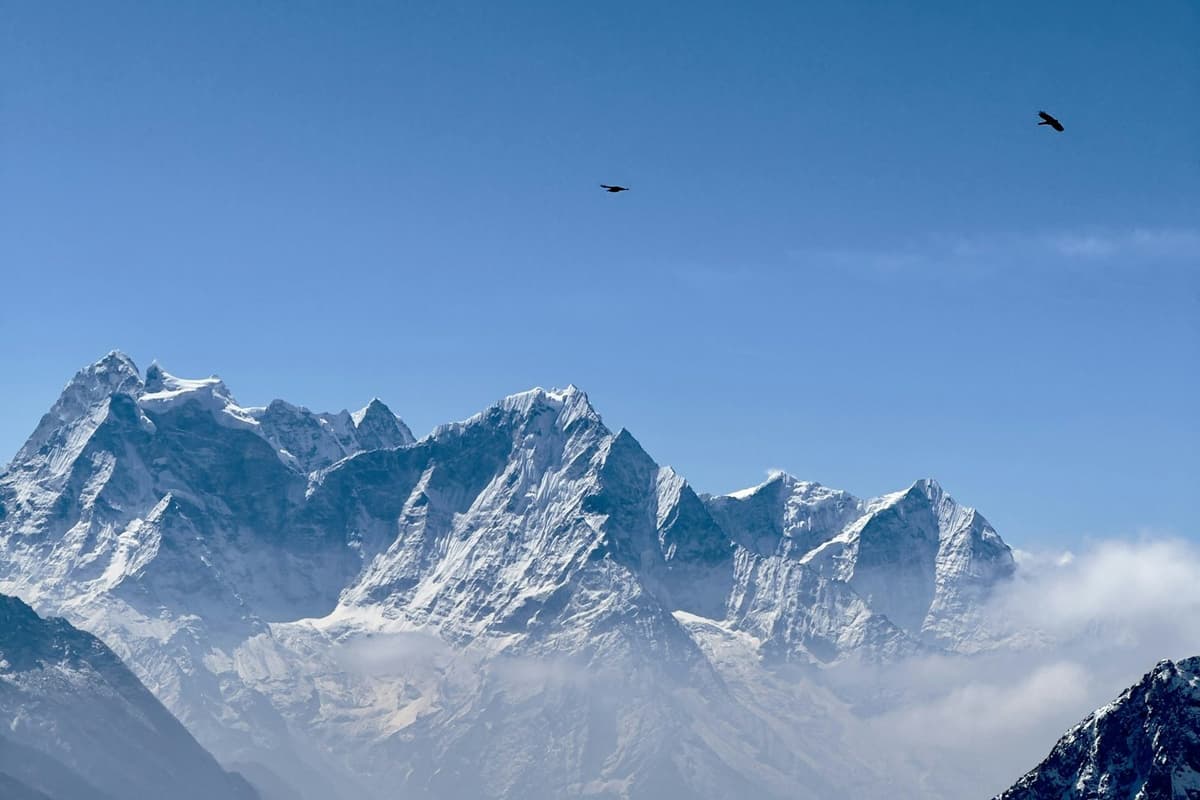
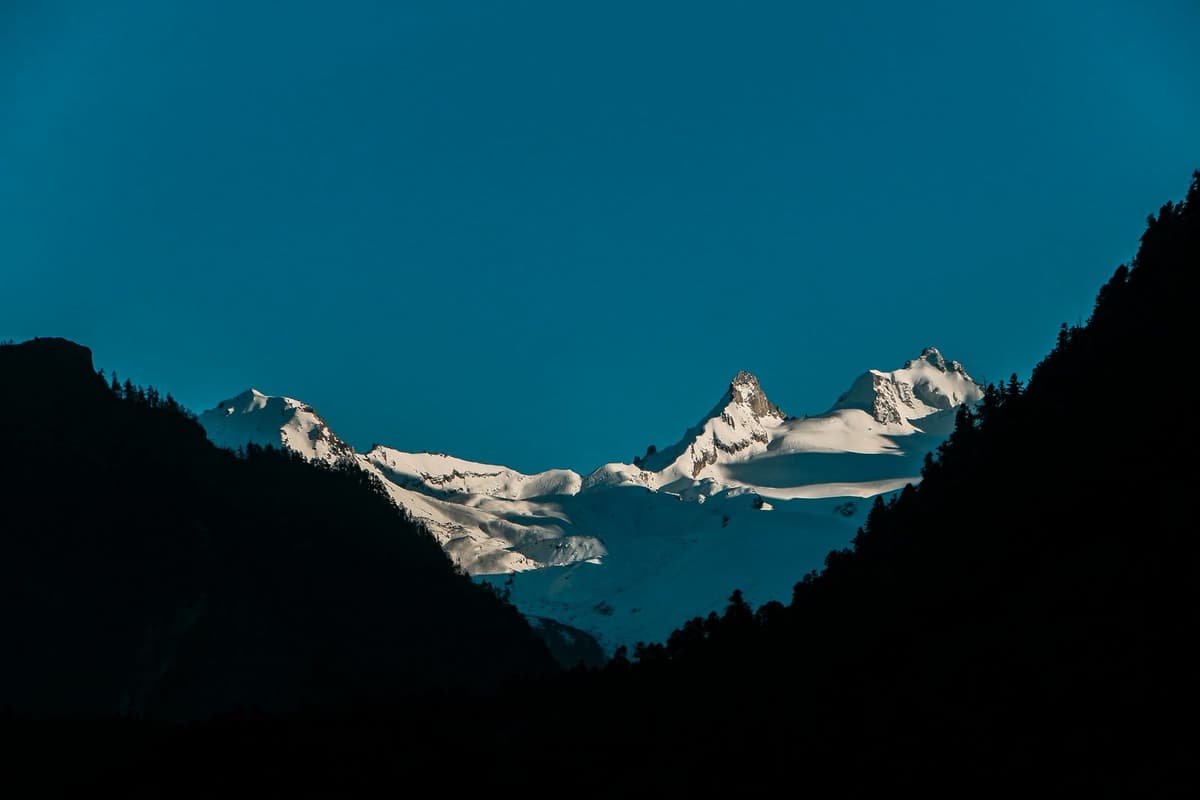
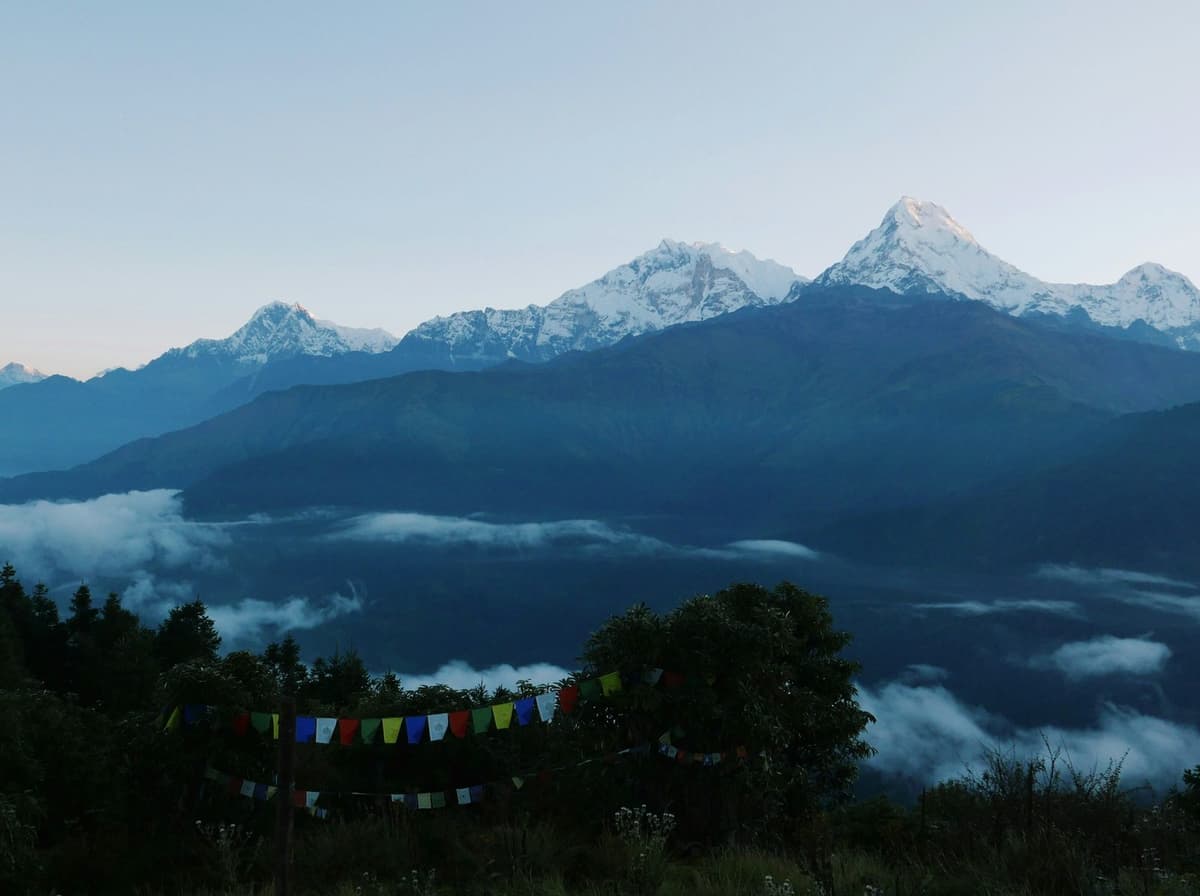
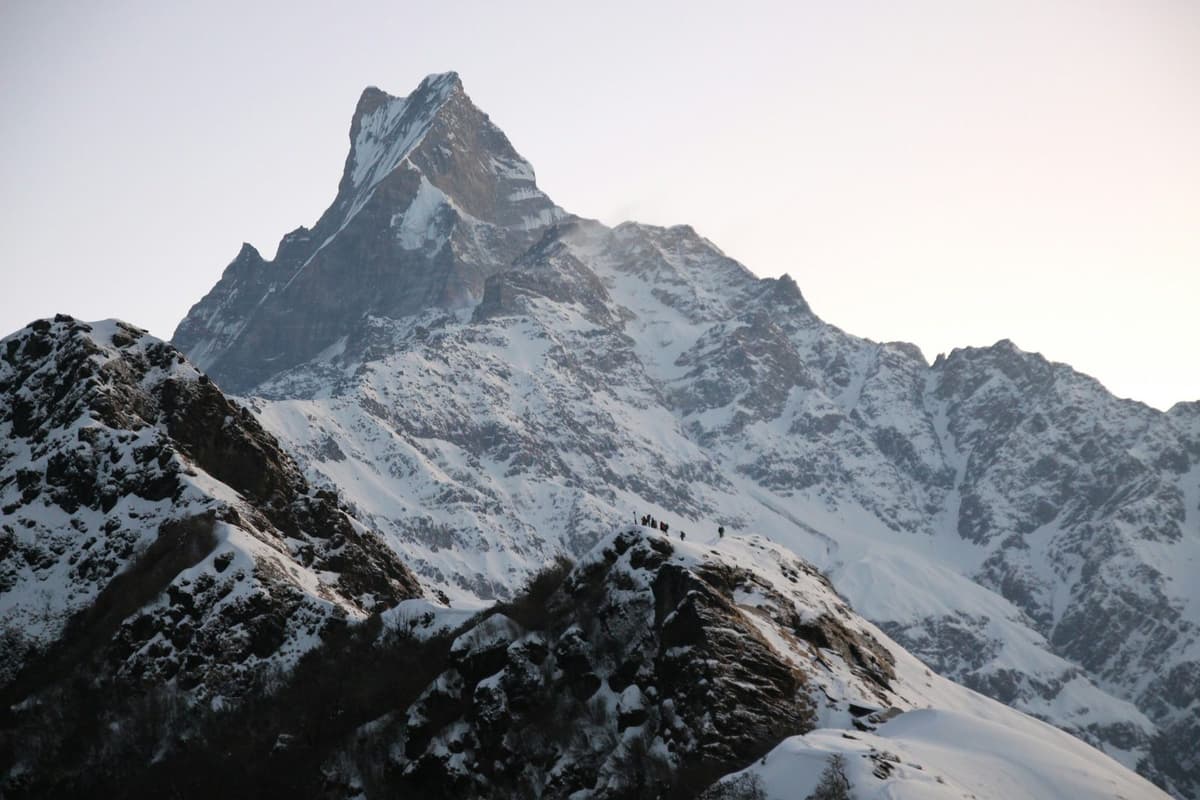
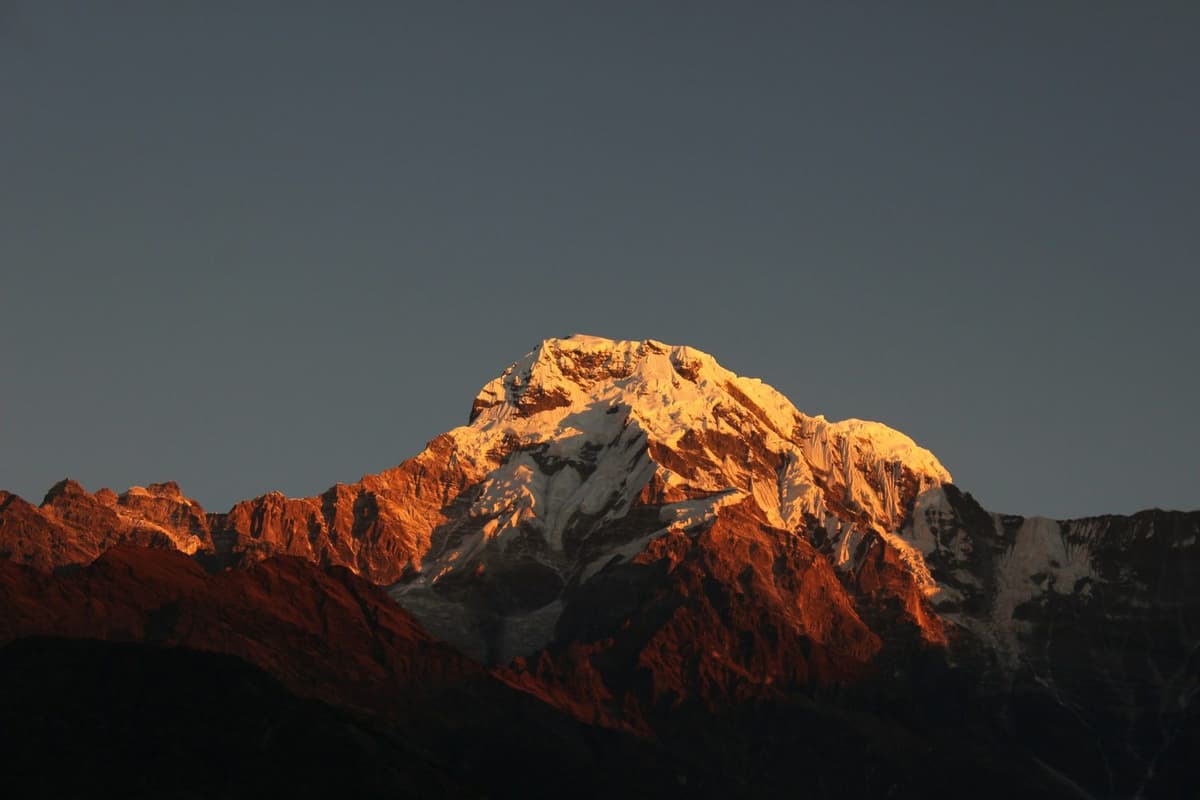
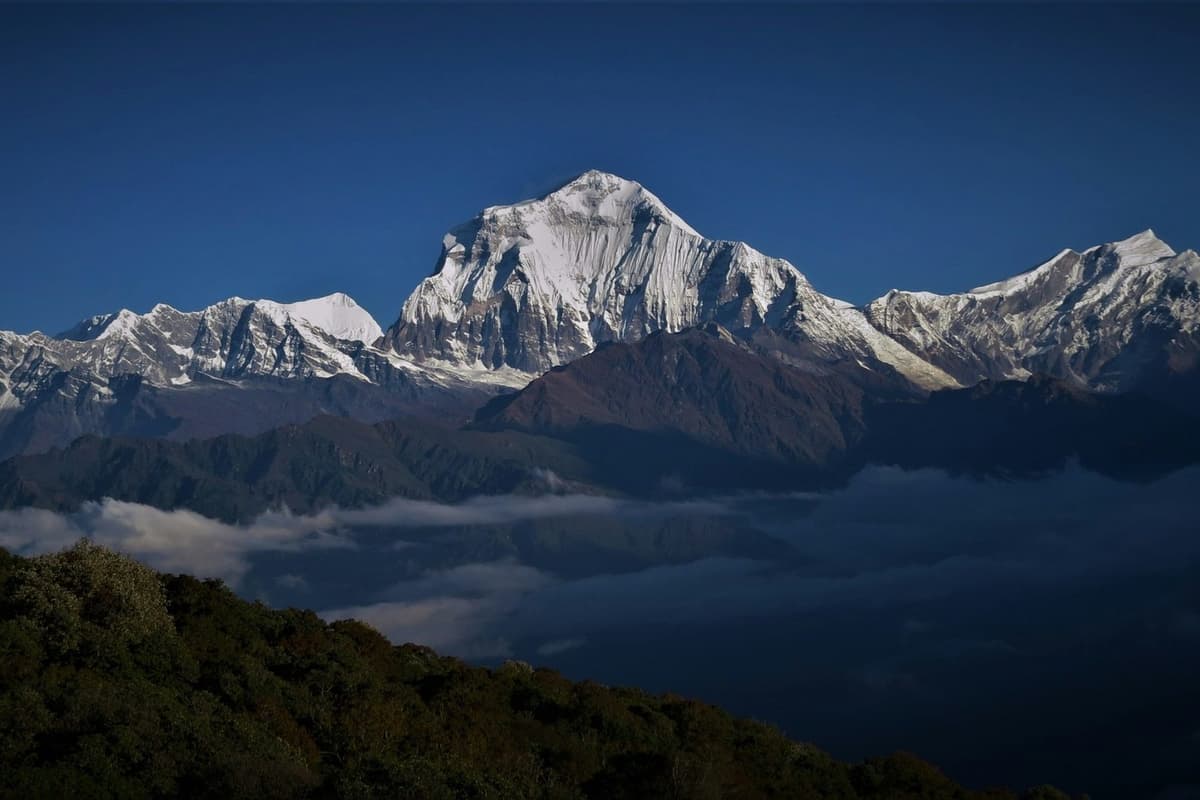
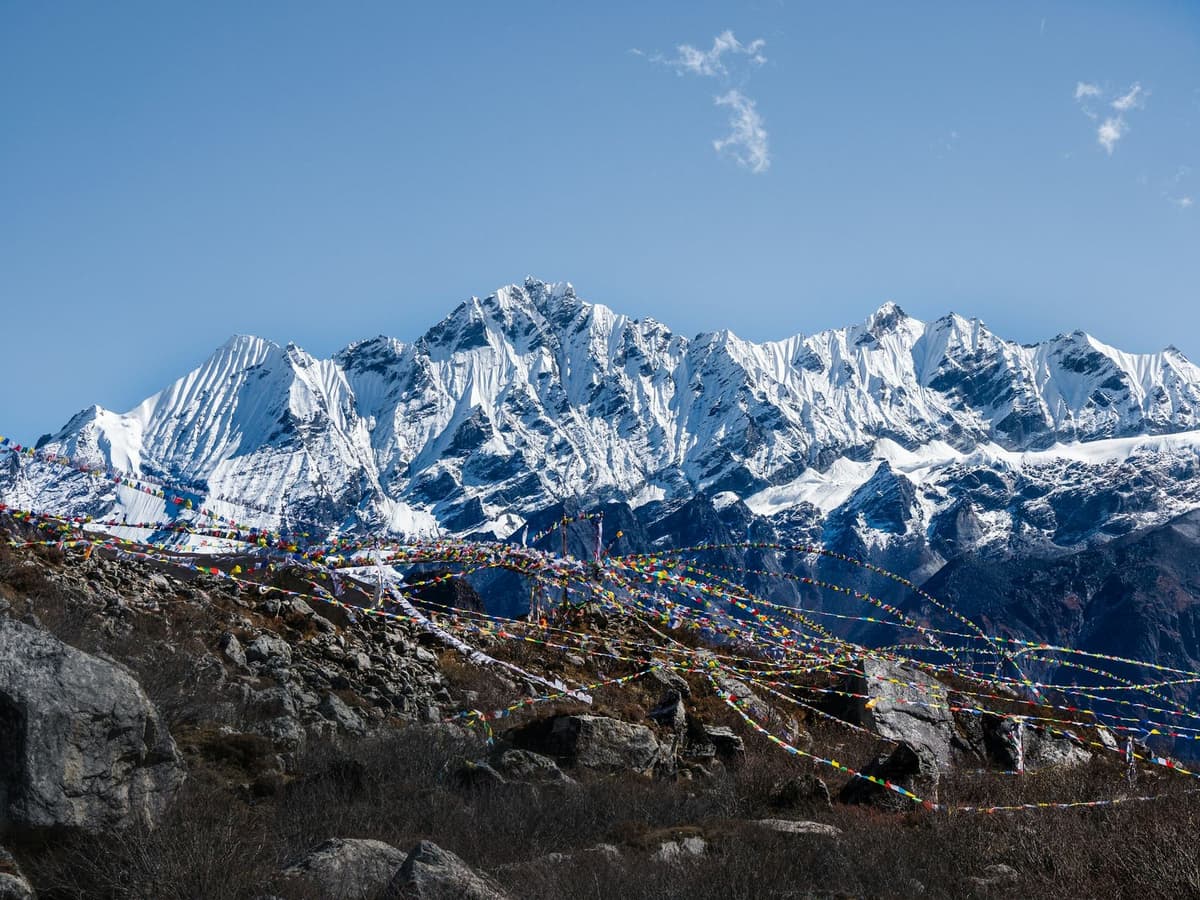
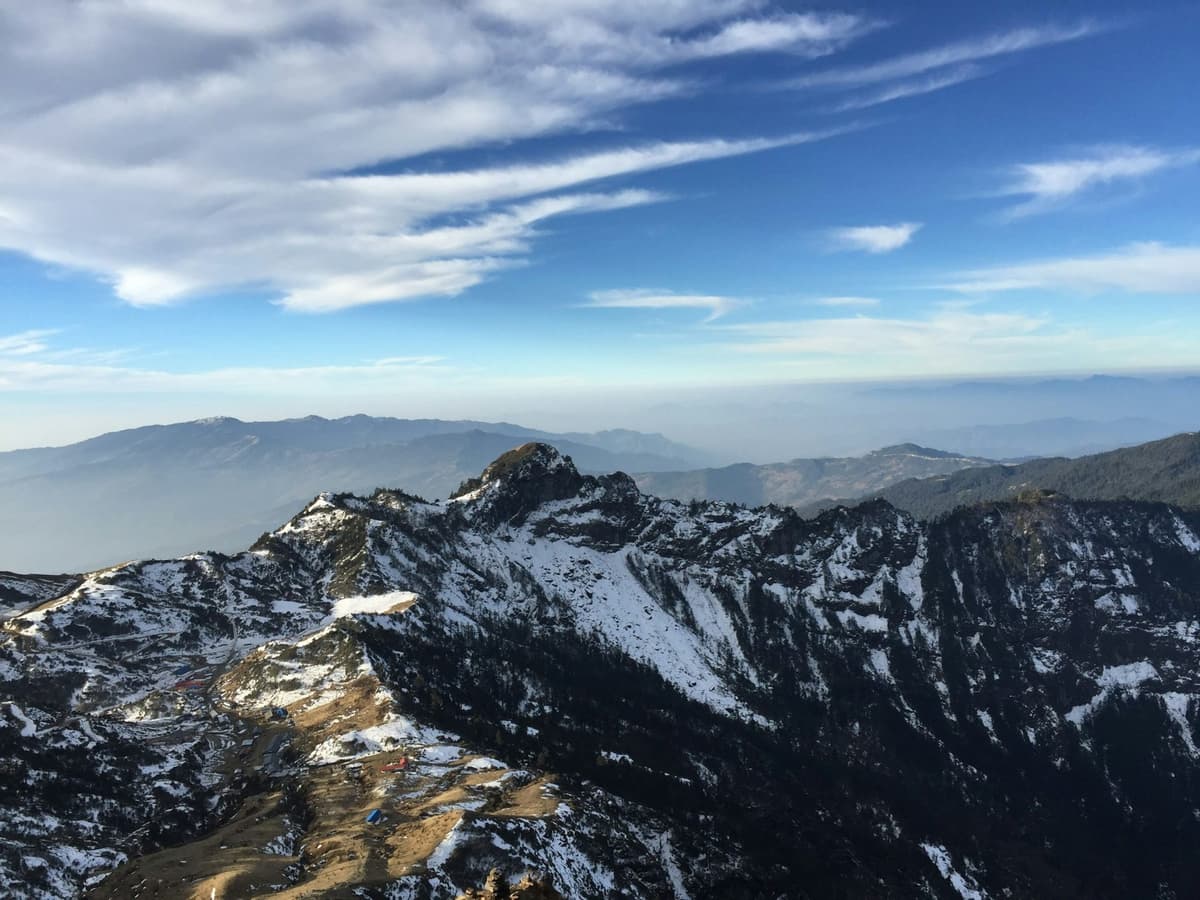
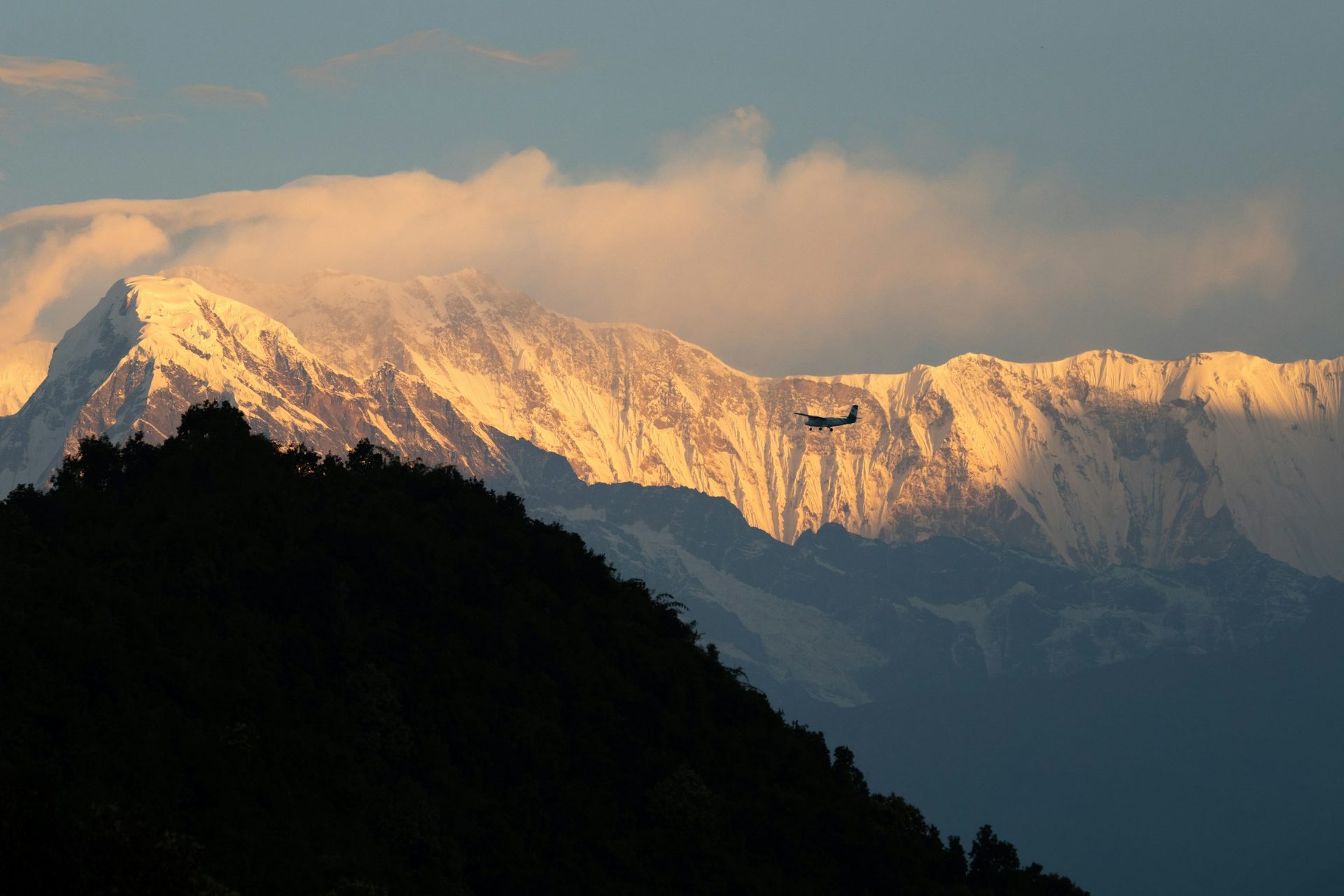
- On a clear morning, sunrise on Dhaulagiri, Annapurna, Machhapuchhre and Manaslu
- Back to the hotel for breakfast and check-out
- Drive back to Kathmandu, about 200 km and usually 5.5 to 7 hours
Things to carry
- Clothes in muted colours for the safari
- A warm jacket for the Sarangkot sunrise
- Insect repellent and sunscreen
- Comfortable shoes for Pokhara sightseeing
- Motion-sickness tablets if winding roads bother you
Good to know
Complete guide
Chitwan and Pokhara are the two places most visitors add to Kathmandu, and they could hardly be more different: a lowland national park full of rhino and a lake town under the Annapurna range. This Chitwan and Pokhara tour by road links them in four days in a private vehicle, with no domestic flights. It is a steady, practical way to see both, and below we explain what the driving is really like.
What the Chitwan and Pokhara tour by road covers
You leave Kathmandu on the first morning and drive about 162 km to Sauraha, on the edge of Chitwan National Park, which usually takes around six hours. The second morning starts with a jeep safari inside the park with a certified guide, looking for one-horned rhino, deer, crocodiles and birds. After the safari you drive to Pokhara, around 160 km and usually three to five hours, arriving in time for an evening in Lakeside. Chitwan National Park, set up in 1973 as Nepal's first national park, had 694 one-horned rhino in the 2021 count, so your odds of seeing one are good; tigers live there too but are rarely seen, and the jeep must stay on the park tracks. We arrange the one-day park entry permit and the licensed guide the park requires.
The third day is all Pokhara: a boat across Phewa Lake to the island temple of Tal Barahi, Davis Falls, where the stream from the lake vanishes underground, Gupteshwor Cave and the World Peace Pagoda, built in 1996 above the southern shore. On the last morning you drive up to Sarangkot, at 1,600 m (5,249 ft), for sunrise over Dhaulagiri, the Annapurnas, Machhapuchhre and Manaslu, then return for breakfast and drive about 200 km back to Kathmandu.
How this differs from the flight and six-day versions
We run three versions of this route. The three-day Pokhara and Chitwan tour by flight goes the other way round and flies from Kathmandu to Pokhara, so it is a day shorter but more rushed and depends on the weather for the flight. This four-day road version avoids flying, puts Chitwan first while you are fresh for the safari, and gives Pokhara a full day rather than an afternoon.
The six-day Golden Triangle tour of Kathmandu, Chitwan and Pokhara covers the same two places with Kathmandu sightseeing added and a slower pace. If you have six days, it is the more comfortable choice; if you have four, this is the one we would suggest.
The drives, honestly
This is a road trip, and three of the four days include a long drive. The highways are mostly paved but winding, and parts are being widened, which can mean waits. The most-used route out of Kathmandu passes roadworks near Kalanki and Naubise, and in the monsoon the gorge sections between Naubise and Mugling can be blocked by debris after heavy rain. We drive in daylight, stop for tea and lunch at the usual highway places, and adjust the timings if the road is slow.
When to go
October to March is the best window for this trip. Chitwan is comfortable from October to early March, with warm days and cool mornings, and Pokhara's clearest mountain views come from November to February. April and May are very hot in Chitwan and hazy in Pokhara. From June to September the monsoon brings heavy rain, cloud over the peaks and slower roads, and we would usually suggest other dates.
Other ways to combine the two
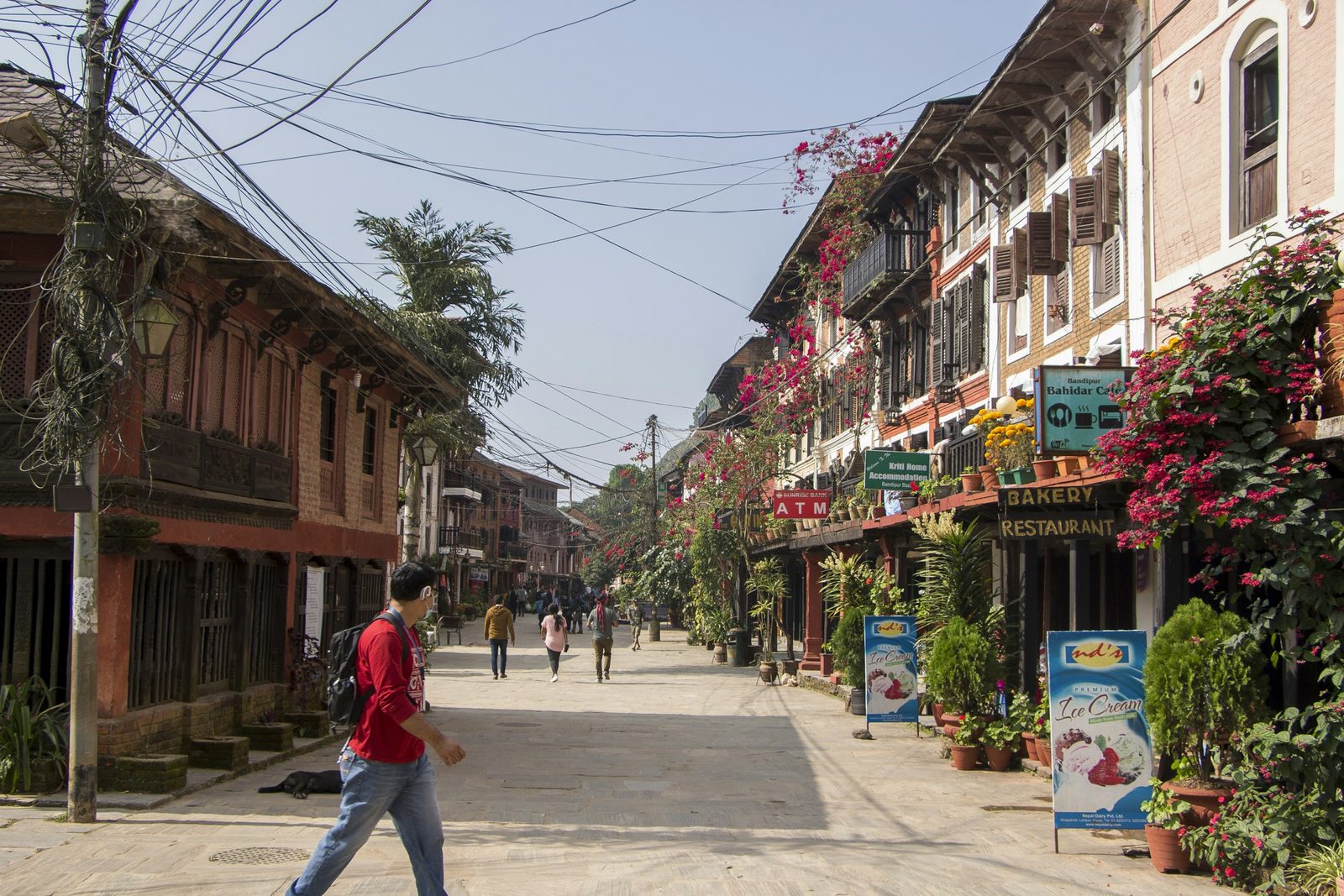
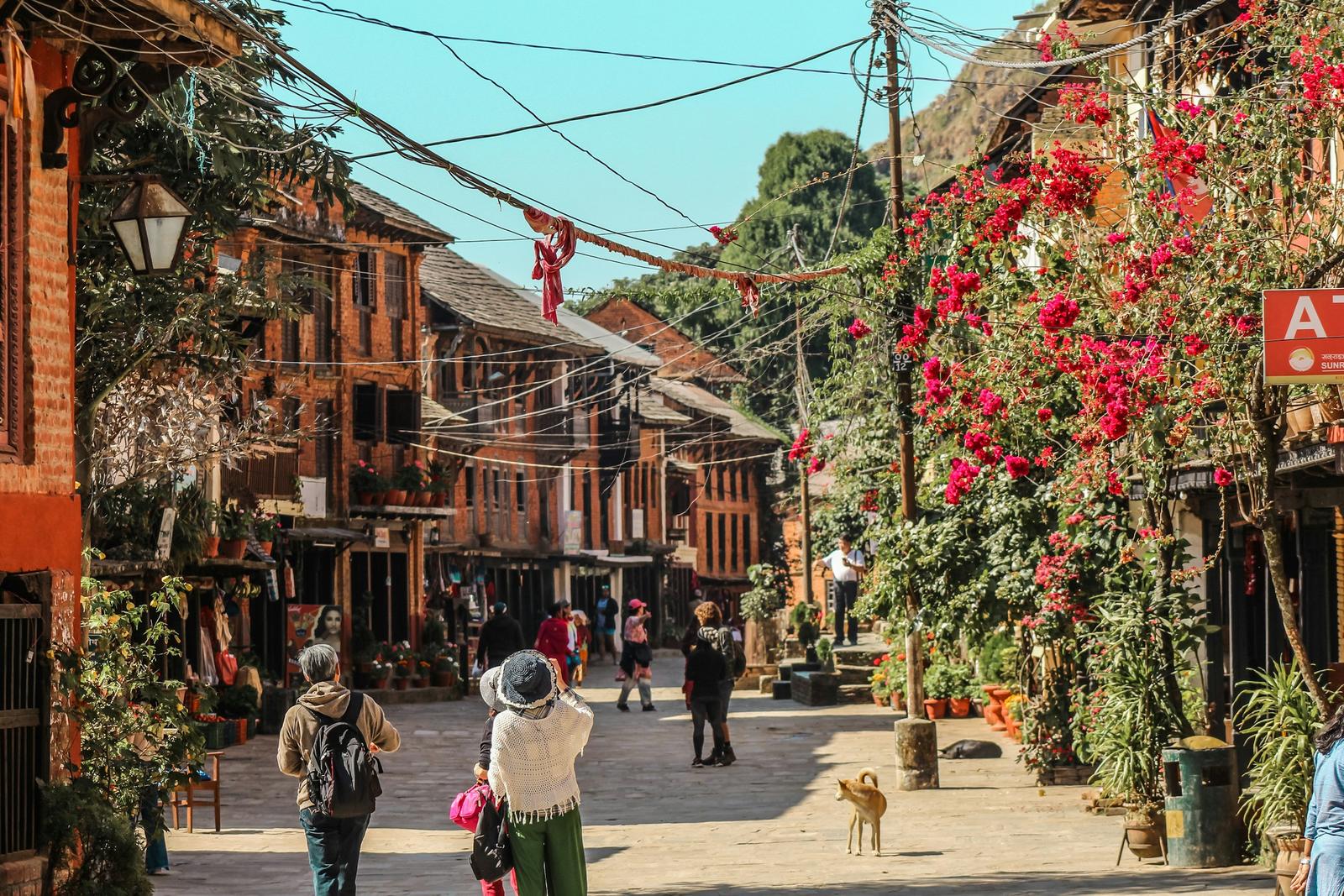
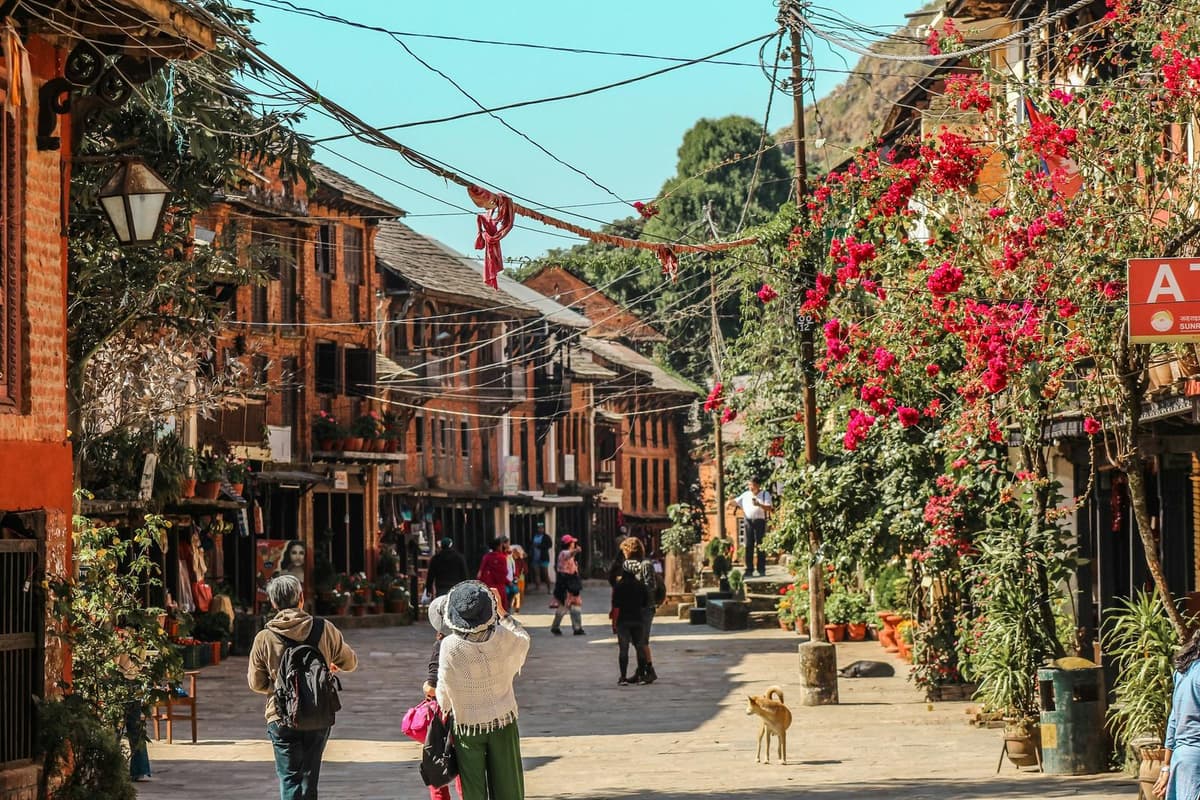
If you would rather swap the jungle for a hill town, the Bandipur, Pokhara and Kathmandu tour takes a similar road west with a night in Bandipur's old Newar bazaar instead of Chitwan. Tell us your dates, who is travelling and whether you prefer wildlife or mountains, and we will point you to the version that fits.