
Overview
This Kathmandu walking tour takes you through the old city on foot, from the lanes of Thamel to the market square of Ason and on to Kathmandu Durbar Square, where you can look for the Kumari, the city's living goddess, at her courtyard window. The walk finishes with a short drive up to Swayambhunath, the hilltop stupa known as the Monkey Temple, for a wide view over the valley. A private local guide sets the pace and explains what you are seeing along the way.
The itinerary
- Meet your private guide in Thamel and set off on foot into the old city
- Wind through the trading lanes to Ason, one of Kathmandu's oldest and busiest market squares
- Carry on to Kathmandu Durbar Square, the old royal palace complex and a UNESCO World Heritage Site
- Look for the Kumari, the living goddess, at the window of her courtyard house (best around mid-morning)
- Explore the square's temples, courtyards and the palace museum with your guide
- Drive up to Swayambhunath, the hilltop stupa known as the Monkey Temple
- Take in the wide view across the Kathmandu Valley from the top
- Transfer back to your hotel
Things to carry
- Comfortable walking shoes
- Water bottle
- Sun protection: hat and sunscreen
- Modest clothing for temples
- A little cash for the market
Good to know
Kathmandu walking tour: the old city on foot
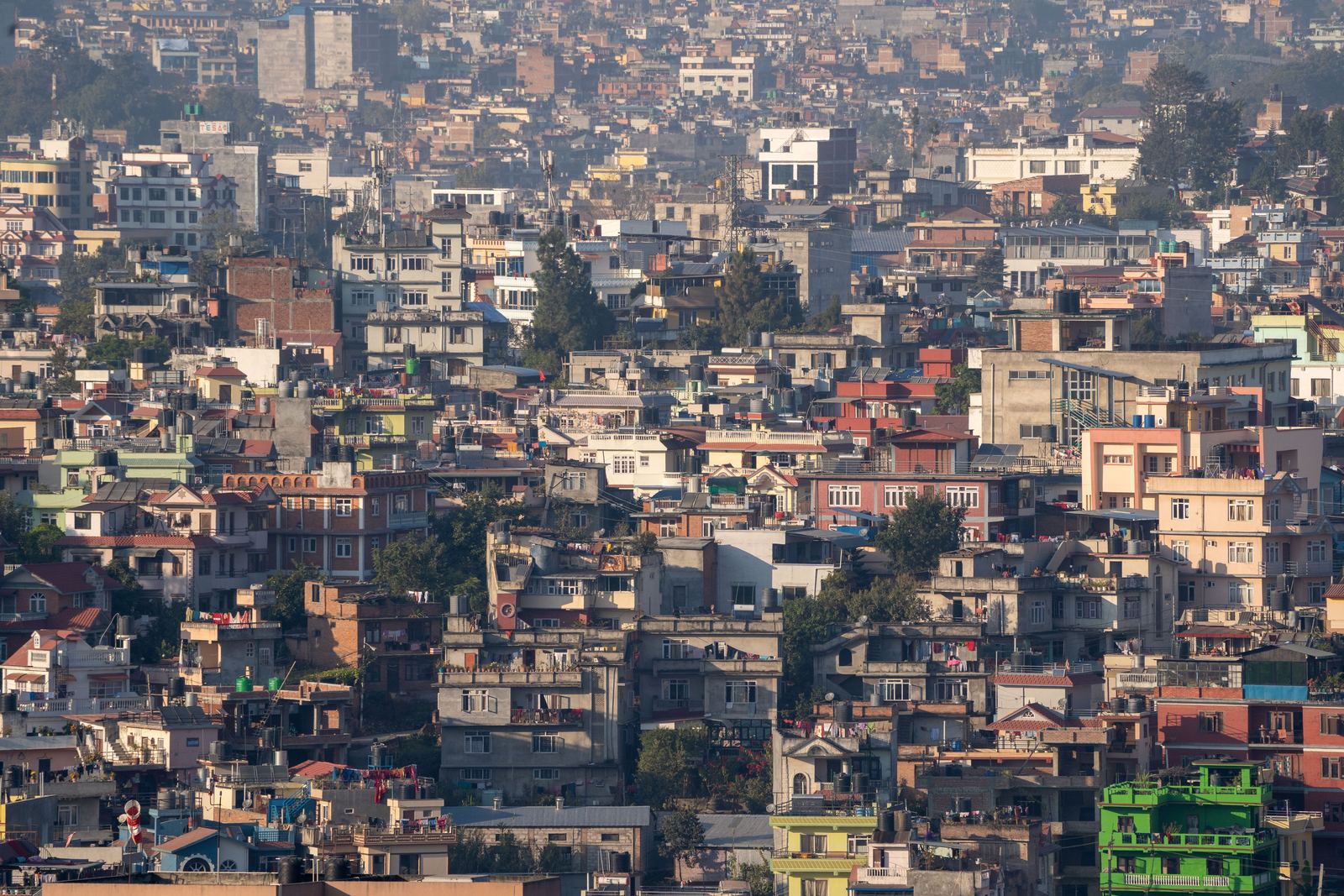
Old Kathmandu is best understood at walking pace. The oldest part of the city is a knot of narrow lanes, hidden courtyards and working shrines, and a great deal of it is missed from the window of a car. This tour keeps you on foot for most of the day, moving from the traveller's district of Thamel into the trading heart of the old town, before finishing at the hilltop stupa of Swayambhunath for a wide view back over everything you have walked through.
What this Kathmandu walking tour covers
The route links four of the old city's landmarks in a single morning. You start in Thamel, wind through the market lanes to Ason, one of the busiest and oldest bazaars in the valley, then reach Kathmandu Durbar Square, the former royal palace complex and a UNESCO World Heritage Site. From there a short drive takes you up to Swayambhunath, the stupa on the western hill. Your guide sets the pace, explains what you are looking at, and can adjust the walk to how much time and energy you have on the day.
Ason market and the lanes of the old town
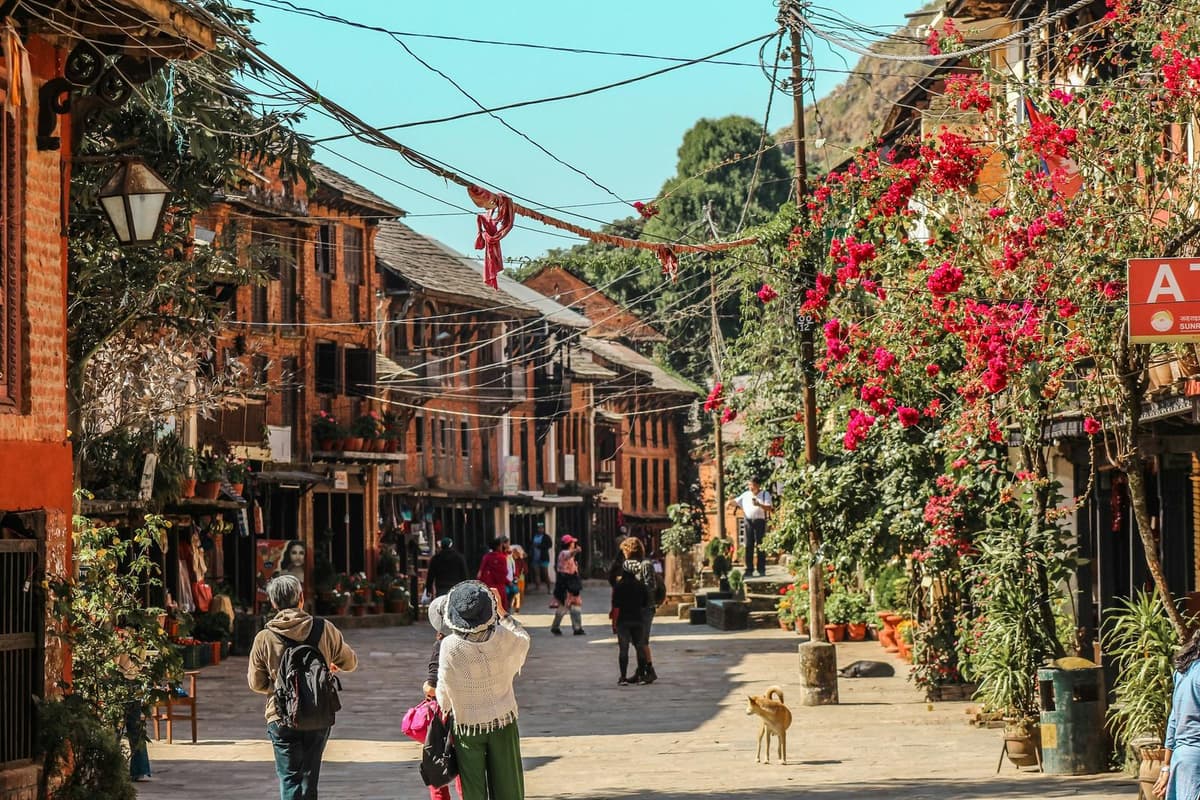
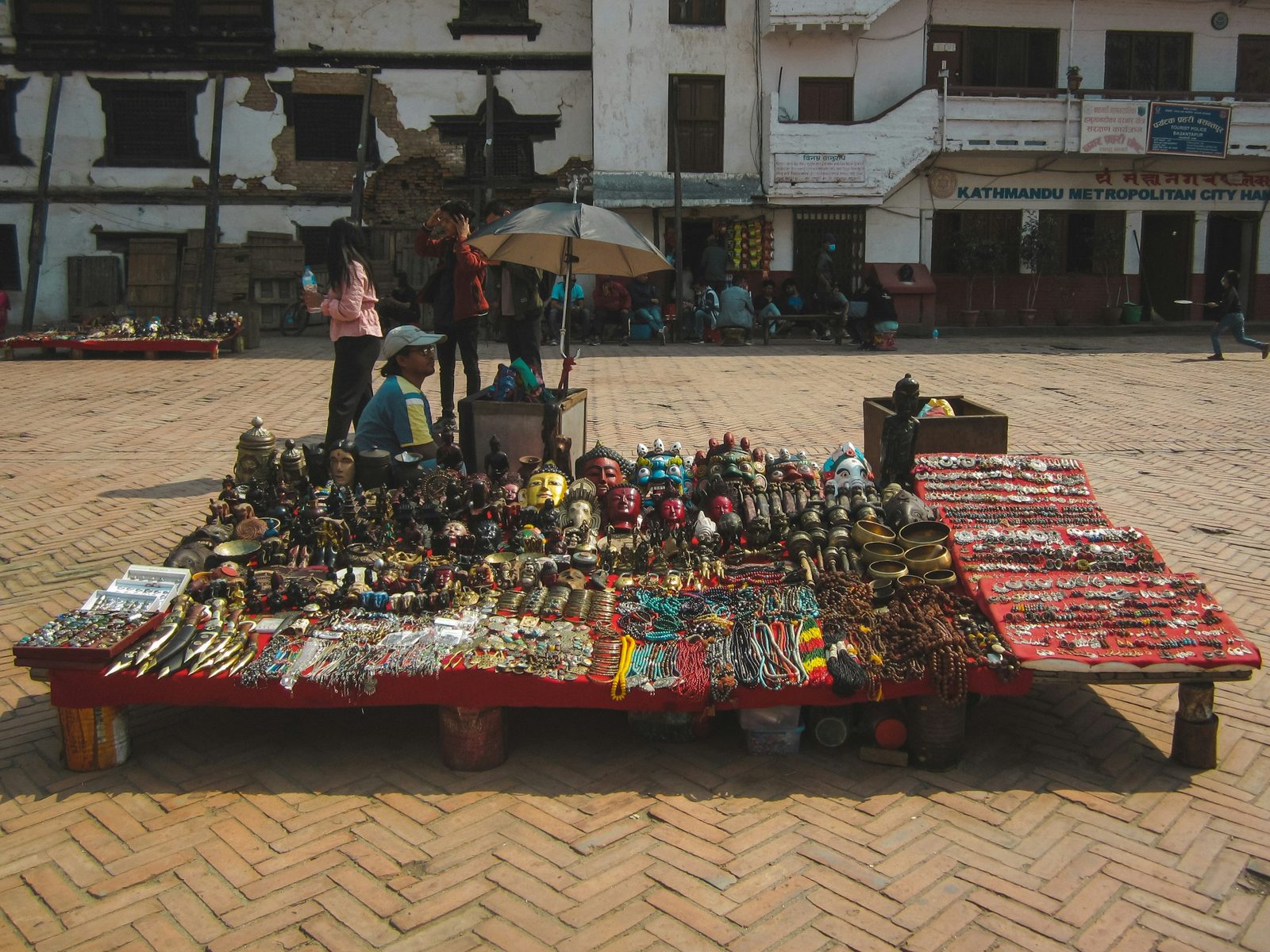
Ason is not a sight arranged for visitors. It is a real market where the city buys its spices, textiles, vegetables and festival goods, and six lanes pour into one small square around the temple of Annapurna, the goddess of grain. Walking through it is the part of the day that most people remember, because it is ordinary Kathmandu life at full volume. Between Thamel and Ason you pass shrines set into house walls, metalworkers at their benches, and courtyards that open off the street with almost no sign from the outside.
The living goddess and Kathmandu Durbar Square
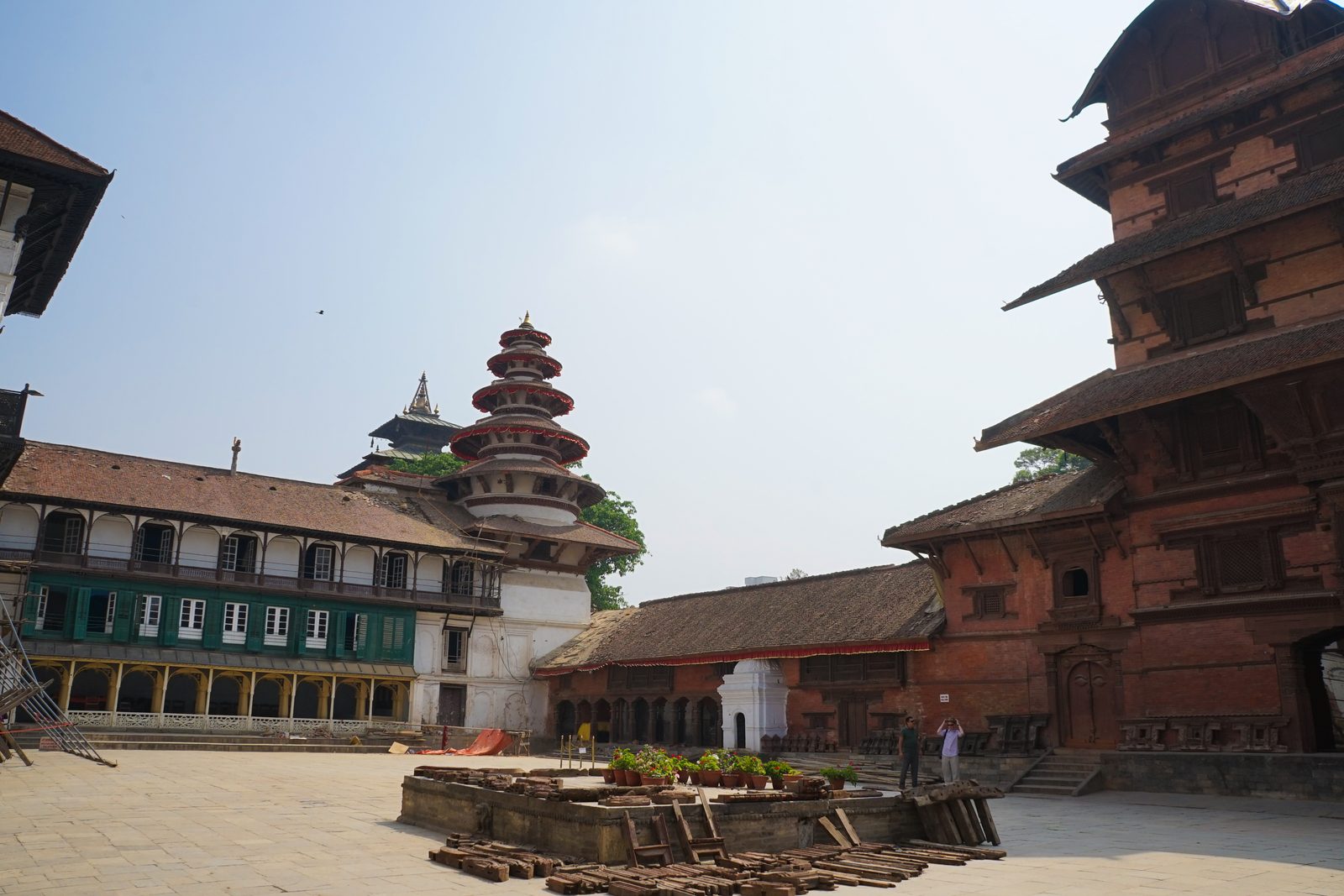
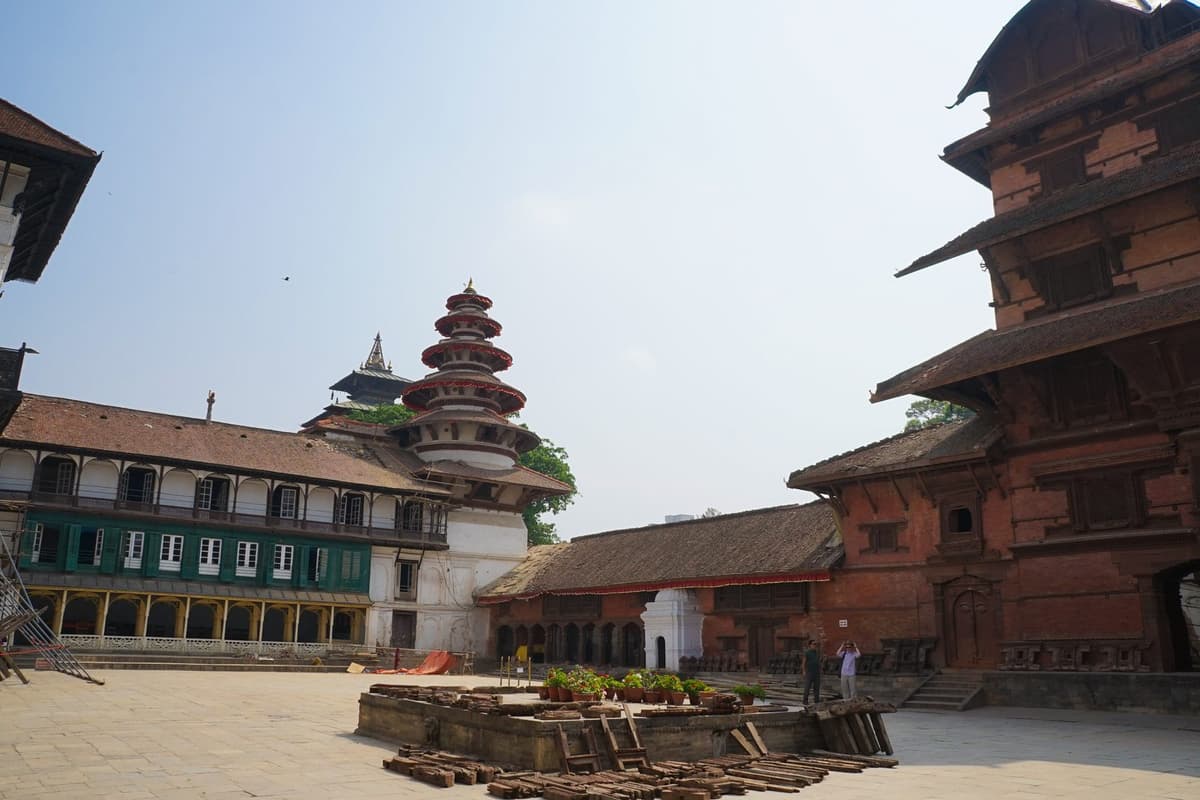
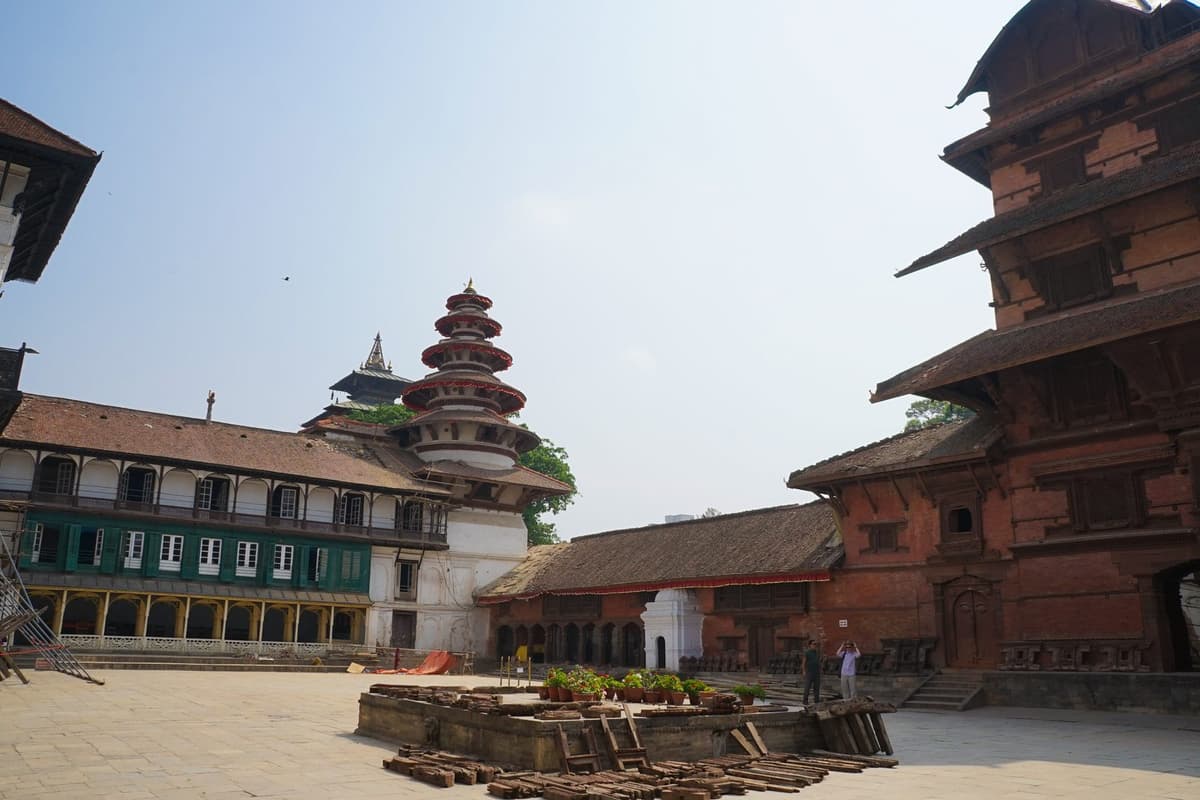
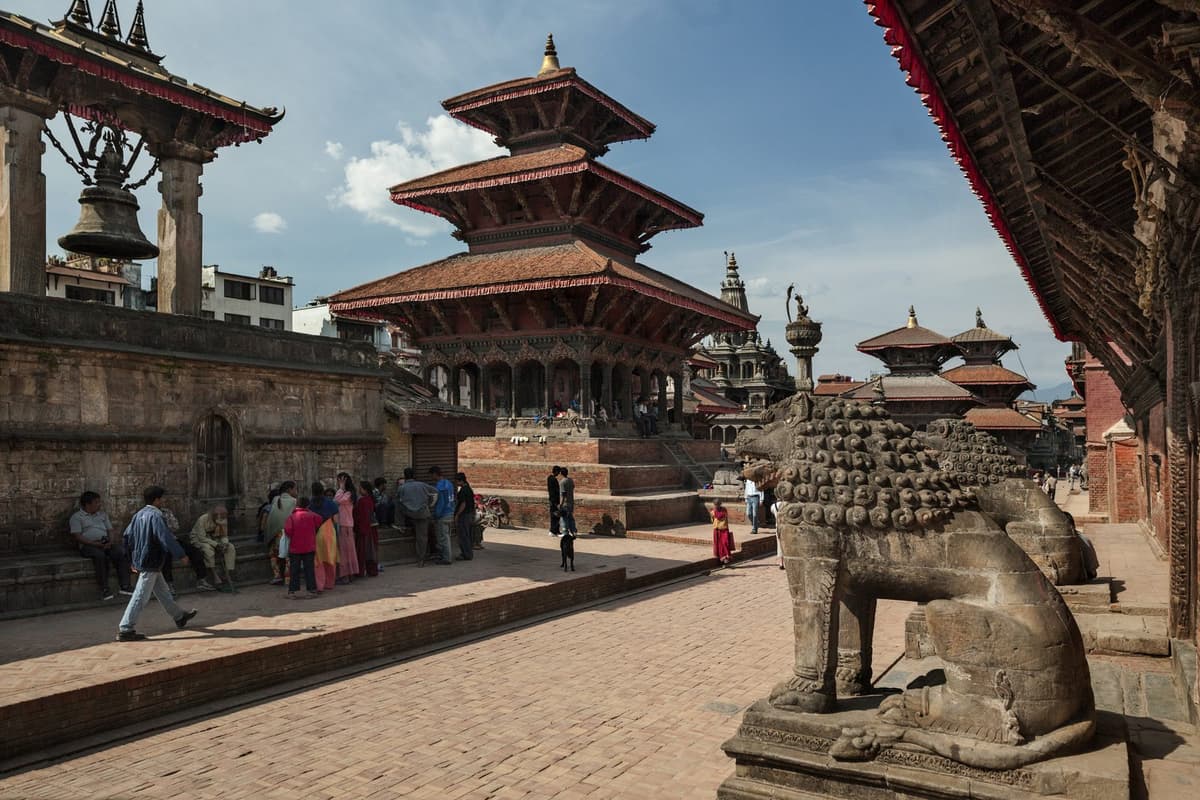
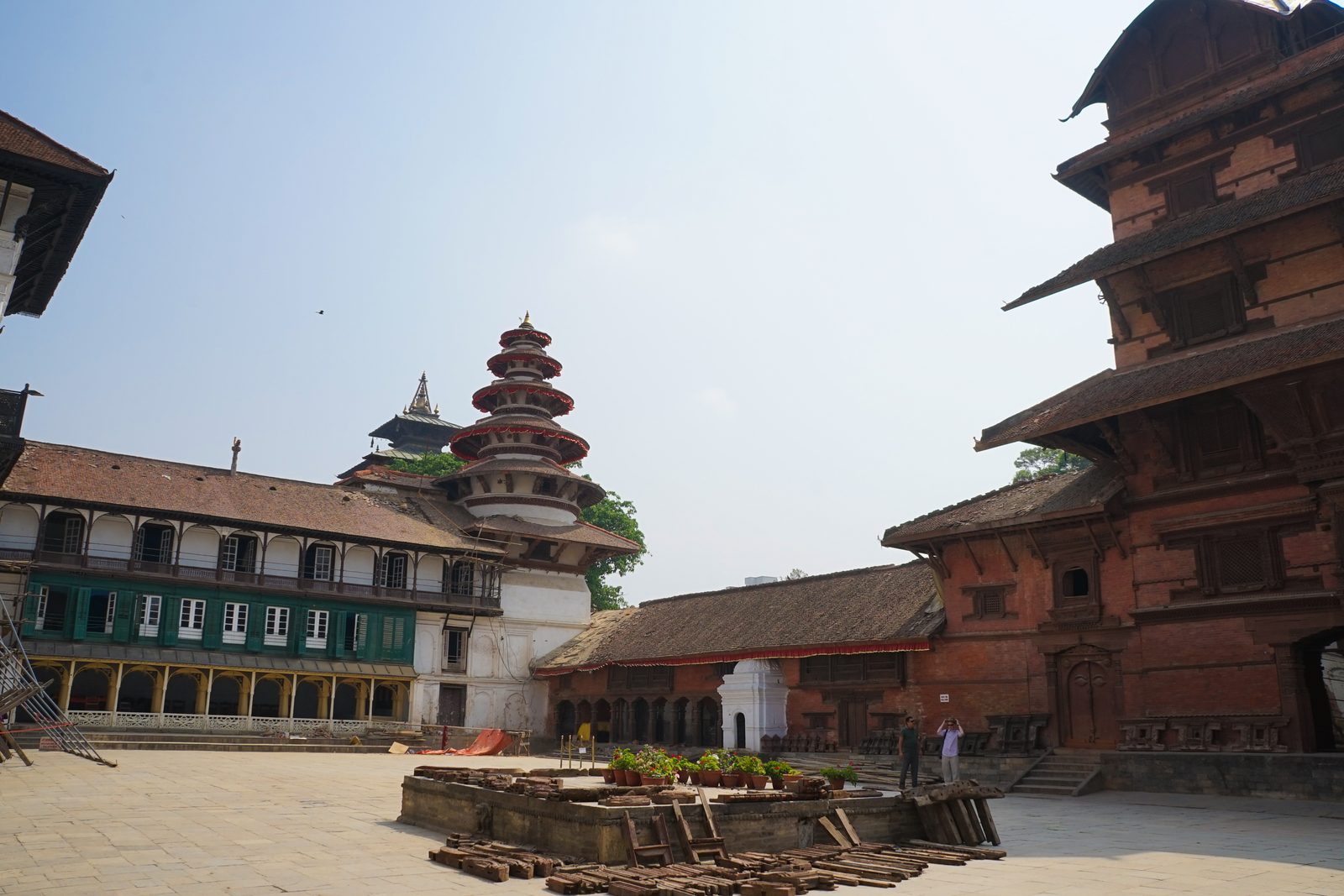
Kathmandu Durbar Square was the seat of the kings of Kathmandu, and the buildings around it were rebuilt and added to over several centuries. The square holds temples, the old Hanuman Dhoka palace and a museum. Its most talked-about resident is the Kumari, a young girl worshipped as a living goddess, who lives in the Kumari Ghar, a carved courtyard house on the square. She appears at a window of the courtyard for short periods through the day, and the best chance to see her is usually in the middle of the morning. Photography of the Kumari herself is not allowed, though you may photograph the courtyard. If you would like to see all three of the valley's royal squares in one day, our three Durbar Squares tour continues on to Patan and Bhaktapur as well.
Swayambhunath and the view over the valley
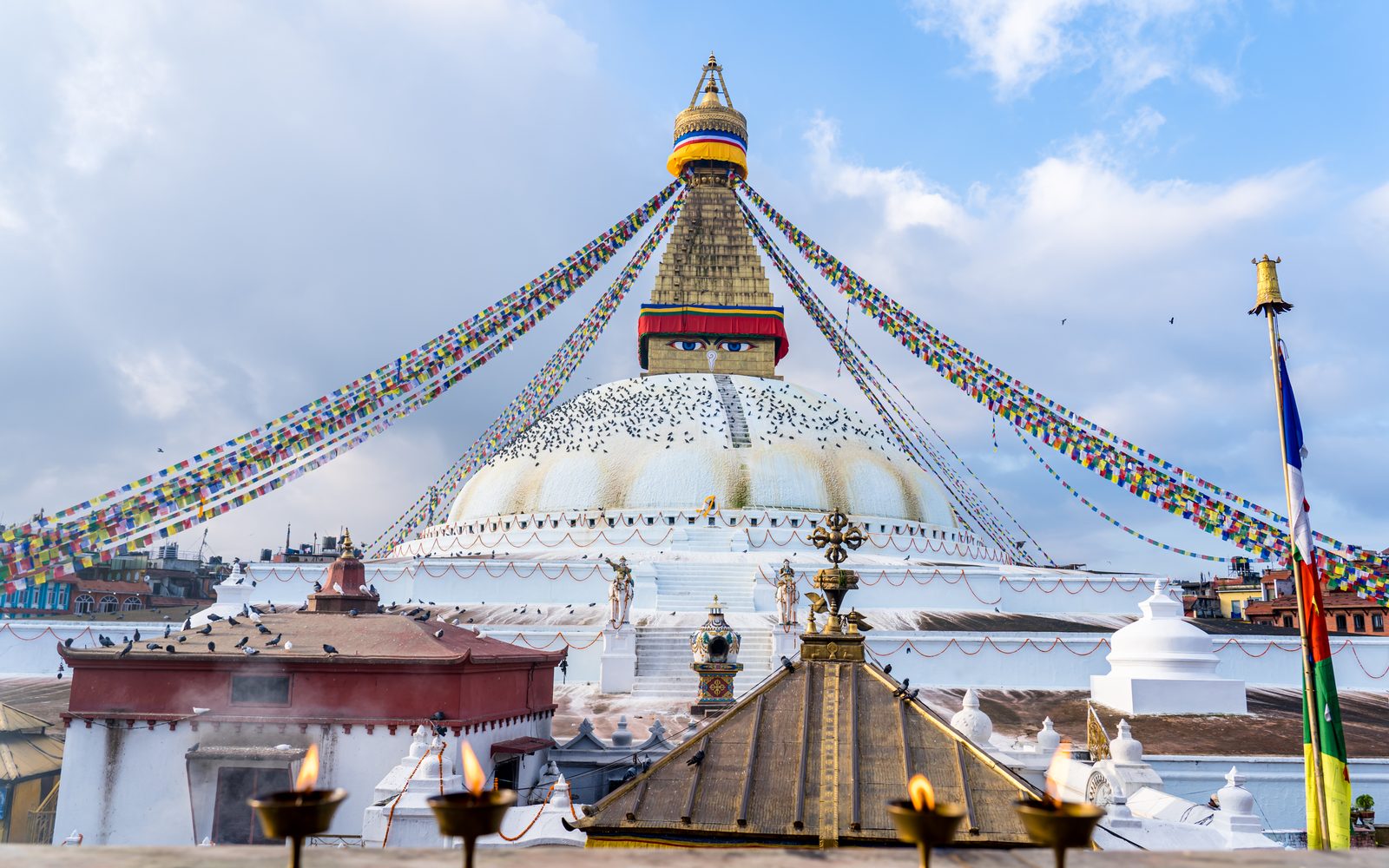
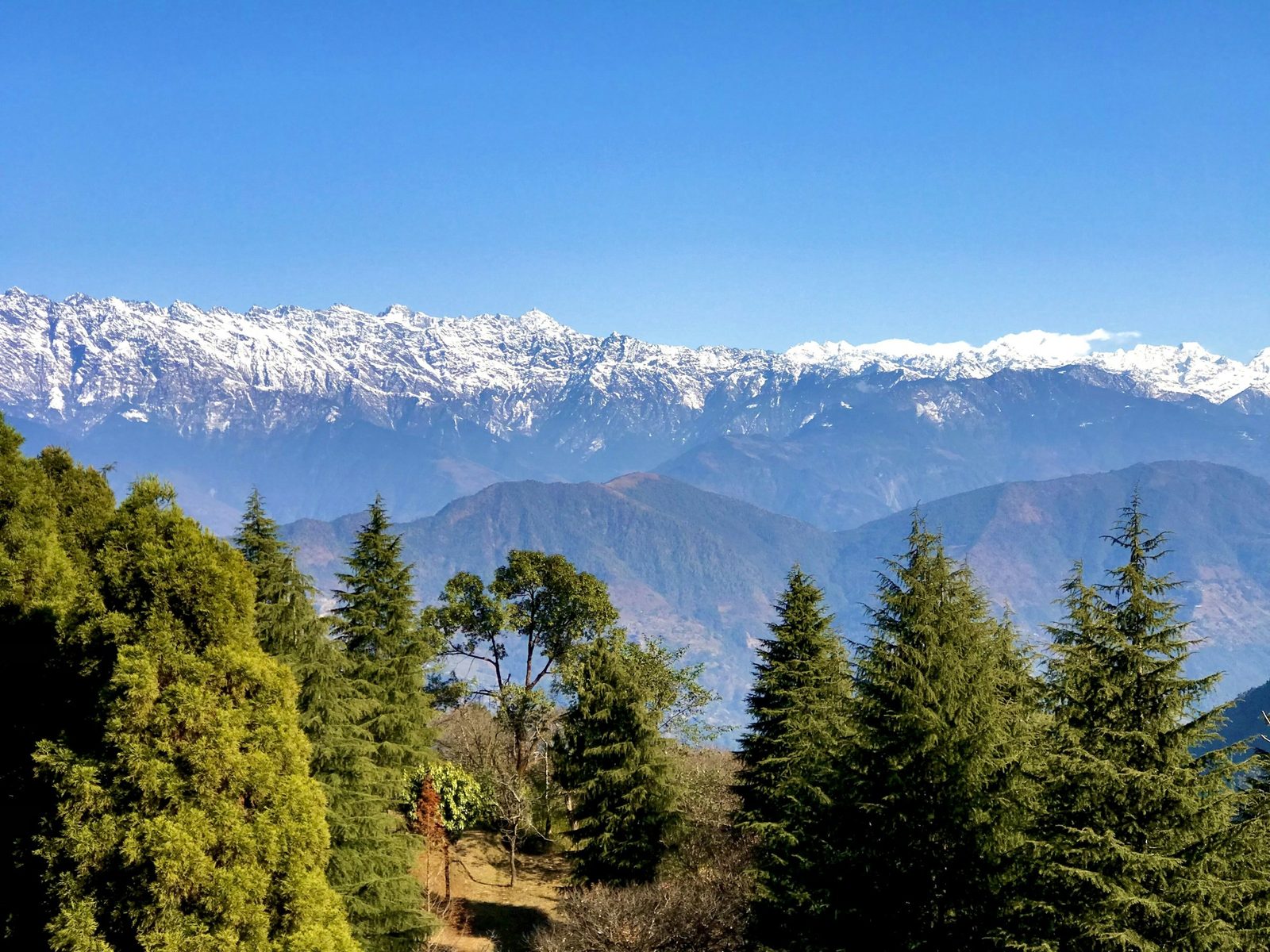
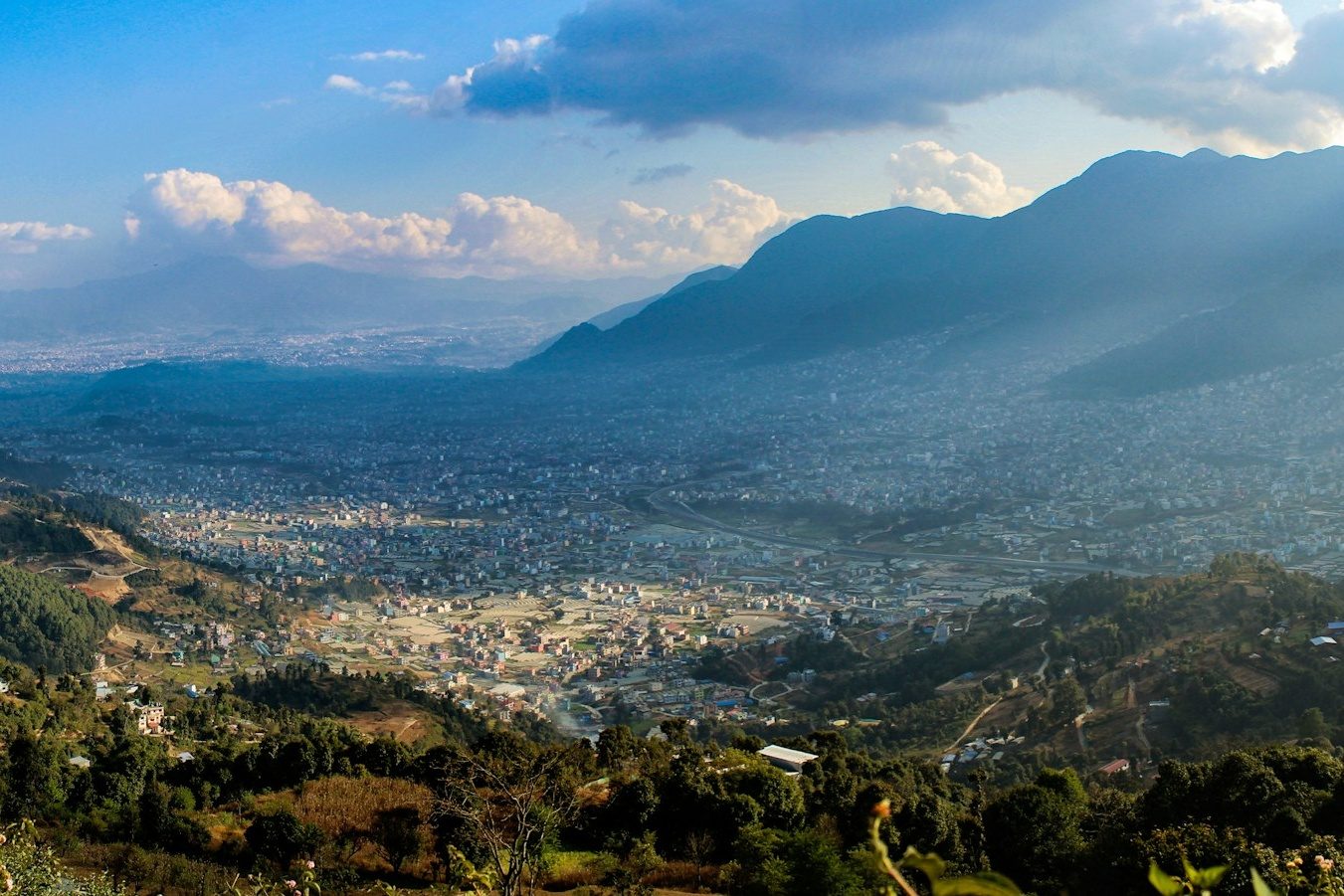
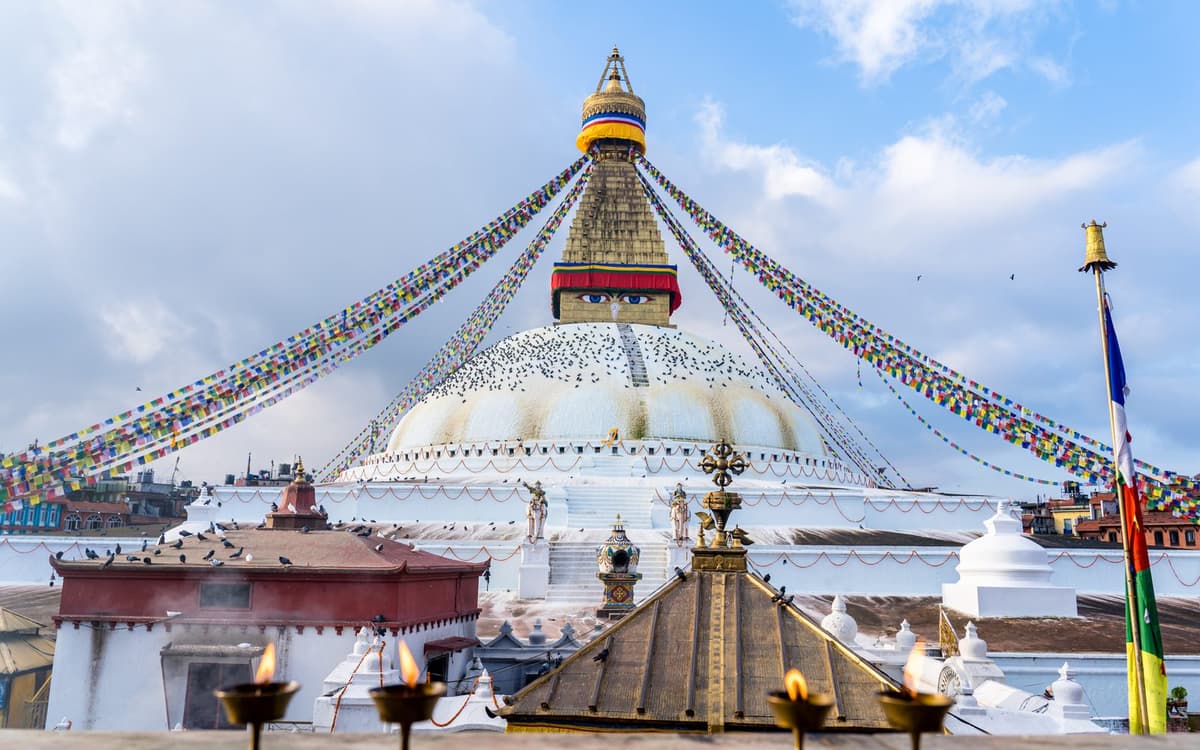
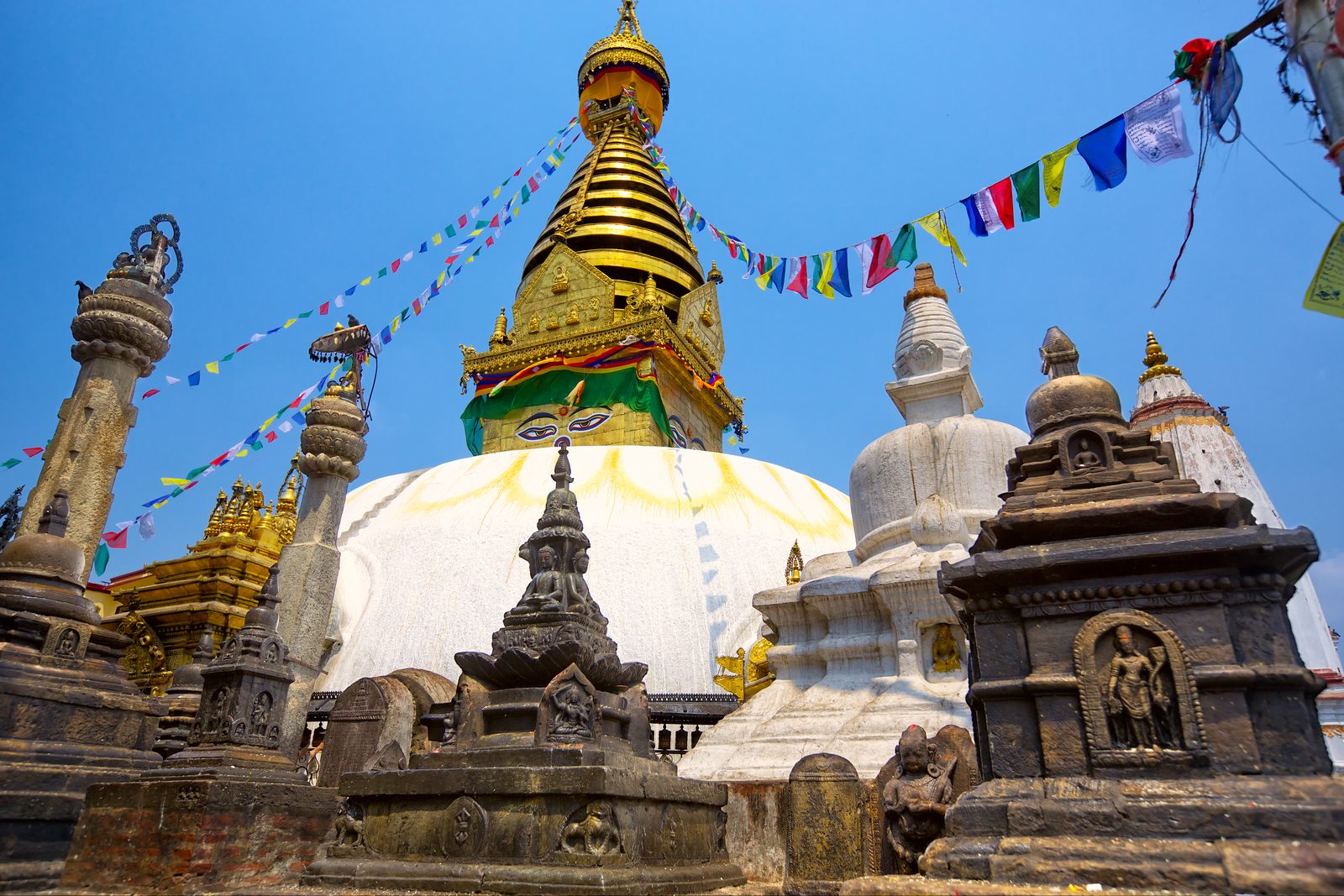
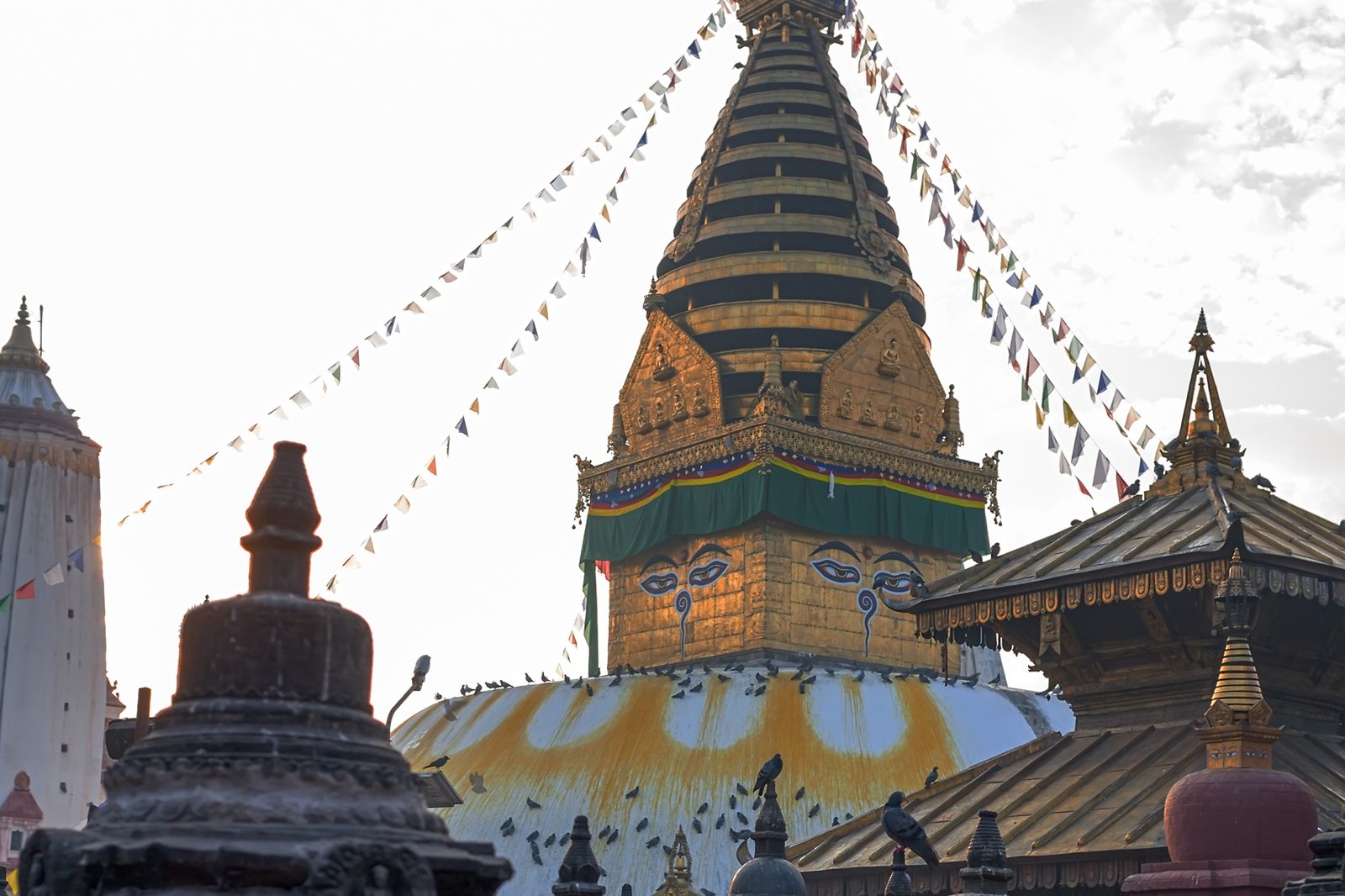
Swayambhunath is one of the oldest religious sites in the country, a white dome topped by a gilded spire and the painted eyes that look out in four directions. It sits on a hill west of the city, and the classic approach is a stairway of around three hundred and sixty five steps, lined with prayer flags and, yes, a large population of monkeys, which is how it earned its nickname of the Monkey Temple. There is also a road that reaches a car park near the top, so the climb is optional. From the terrace the whole Kathmandu Valley spreads out below, which makes it a fitting place to end a walk that started down in the lanes.
Best time to visit and what to know
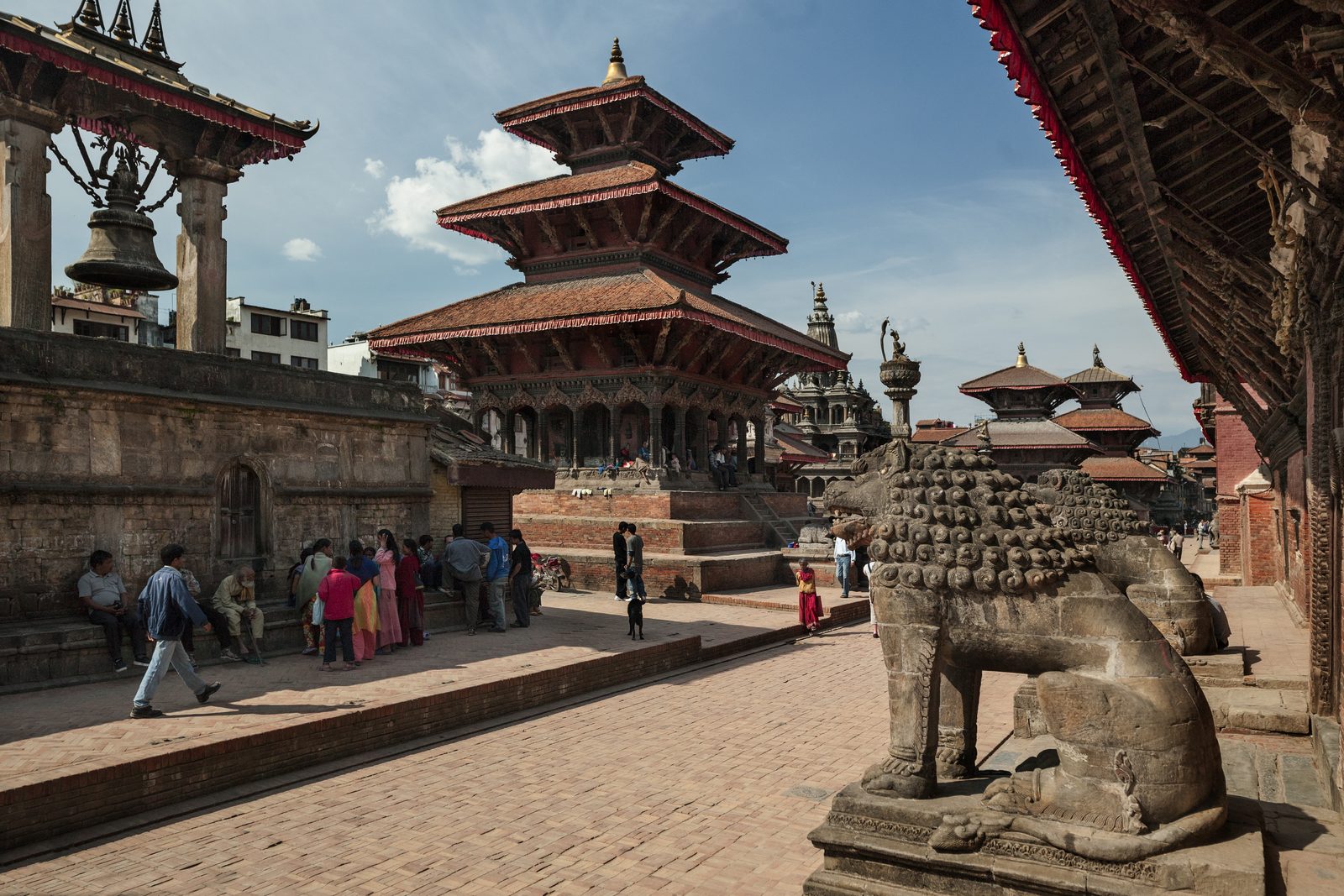
For clear skies and comfortable walking, the months from October to April are the most reliable, with autumn and spring the pick of the year. The monsoon, roughly June to September, brings warm, wet afternoons and hazier views, though mornings can still be fine. Wear comfortable shoes, since the old-city paving is uneven, and dress modestly for the temples, with shoulders and knees covered. The two heritage sites charge a separate entry fee for foreign visitors, paid on the day. If you have more time in the valley, this walk pairs naturally with our seven UNESCO World Heritage Sites day tour, which adds Patan, Bhaktapur, Bouddhanath, Pashupatinath and Changu Narayan by vehicle.