








Explore by activity
Not listed yet

We run Motorbiking & Overland trips — we just haven’t put the itinerary on the site yet. Tell us your dates and we’ll send a costed day-by-day plan.

Explore by experience
Explore by region
by gomayu
Search Tours or Places

Pashupatinath Temple, Kathmandu: What to See and How to Visit

26 min read Posted 27 Oct 2026Updated 27 Oct 2026
Pashupatinath Temple, Kathmandu: What to See and How to Visit

By Uncover Nepal Team · Checked by our Kathmandu travel team · Last checked 27 October 2026

Late afternoon on the east bank of the Bagmati, smoke from a pyre on the far side drifts low over the water. Across the river, the gilded roof of the main temple holds the last of the light. A family sits quietly on the steps of the ghat, and behind you the first bells of the evening start to ring.

Pashupatinath Temple is the Shiva temple on the Bagmati River in eastern Kathmandu that the Nepal Tourism Board calls "the most revered Hindu temple in Nepal". Only Hindus enter the main temple, open 4am to 9pm daily. Everyone else walks the ghats and terraces and watches the aarti around dusk. Foreign visitors pay NPR 1,000; Indians enter free.

It is a key stop in our guide to places to visit in Kathmandu, and the one that needs the most preparation, because what you can see depends on your faith, the day and the hour. This guide covers what is inside the Pashupati Area, who may go where, the cremation ghats, the aarti, timings, the entry fee, puja for Hindu pilgrims, festival dates for the coming months and how to plan your visit step by step.

In this guide

  • Key facts
  • What is Pashupatinath Temple?
  • History and legends
  • Who can enter Pashupatinath Temple?
  • What to see at Pashupatinath
  • The cremation ghats: what you will see and how to behave
  • The evening aarti at Pashupatinath
  • Pashupatinath temple timings and daily schedule
  • Entry fee, ticket counters and gates
  • Puja and darshan for Hindu pilgrims
  • Visiting Pashupatinath from India
  • Festivals at Pashupatinath: dates for 2026 and 2027
  • Dress, leather and shoes
  • Photography, cremations and sadhus
  • How to get to Pashupatinath
  • How to plan your visit, step by step
  • What is changing in the Pashupati Area?
  • Combine Pashupatinath with other Kathmandu sights
  • Frequently asked questions

Key facts

What it is
Temple of Lord Shiva, worshipped as a Shiva linga, on the banks of the Bagmati (PADT; NTB, 27 Oct 2026)
World Heritage
One of seven Monument Zones of the Kathmandu Valley World Heritage property, inscribed 1979 (UNESCO, 27 Oct 2026)
Who may enter the main temple
Hindus only; non-Hindus watch from the ghats and the terraces across the river (PADT; NTB, 27 Oct 2026)
Opening hours
4am to 9pm daily, according to PADT (PADT, 27 Oct 2026)
Evening aarti
Begins around dusk; PADT's own site shows two different times, so check on the day (PADT; NTB, 27 Oct 2026)
Entry fee
NPR 1,000 per day per entry for foreign, SAARC and Chinese nationals; free for Indian and Nepali nationals (NTB fee table, 27 Oct 2026)
Tourist ticket counters
Guheshwori, Vatsaleshwori, Tilganga and Gate No. 3 (PADT, 27 Oct 2026)
Run by
Pashupati Area Development Trust (PADT) (PADT, 27 Oct 2026)
Where
Gaushala, about 5 km east of the city centre, according to NTB (NTB; PADT, 27 Oct 2026)
Next big festival days
Haribodhini Ekadashi, 20 November 2026; Maha Shivaratri, 6 March 2027 (Nepali calendar; Ministry of Home Affairs, 27 Oct 2026)

What is Pashupatinath Temple?

Pashupatinath Temple is the temple of Lord Shiva as Pashupati, worshipped here in the form of a Shiva linga. PADT, the trust that runs it, describes the deity with five faces: Tatpurusa, Aghora, Sadhyojat, Vamdev and Ishana. The name joins two words, pashu (animal) and pati (lord). In the trust's explanation, a person without wisdom is like a pashu, bound by ignorance, and Shiva is the lord who frees them: the giver of liberation.

The temple sits at the heart of the Pashupati Area, which PADT says spreads over 264 hectares (NTB gives 246) and calls "like an open museum". Around the main temple are smaller temples, Buddhist viharas and stupas, ashrams, cremation ghats and a forest with deer and monkeys.

In 1979 UNESCO inscribed the Kathmandu Valley on the World Heritage List as seven Monument Zones. Pashupati is one of them, alongside the Durbar Squares of Kathmandu, Patan and Bhaktapur, the stupas of Swayambhu and Bauddhanath, and the temple of Changu Narayan. UNESCO's description is short: "Pashupati has an extensive Hindu temple precinct". The whole Kathmandu Valley property, not Pashupati alone, was on the List of World Heritage in Danger from 2003 to 2007.

The Area is run by the Pashupati Area Development Trust, an autonomous trust under the Ministry of Culture, Tourism and Civil Aviation, set up in 2043 BS (1986/87) under the Pashupati Area Development Trust Act of 2044 BS. PADT runs the ticket counters, the cremation services and the worship schedule.

For Hindus, this is a pilgrimage. The trust puts it in one line:

"Every Hindu individual dreams of making the pilgrimage to Pashupatinath at least once in his lifetime."

Pashupati Area Development Trust, About Pashupatinath

History and legends

What the legends say

According to legend, the deity was discovered by a divine cow that poured milk on a sacred spot in the forest. PADT's own timeline traces the earliest references to the temple to the Skanda Purana.
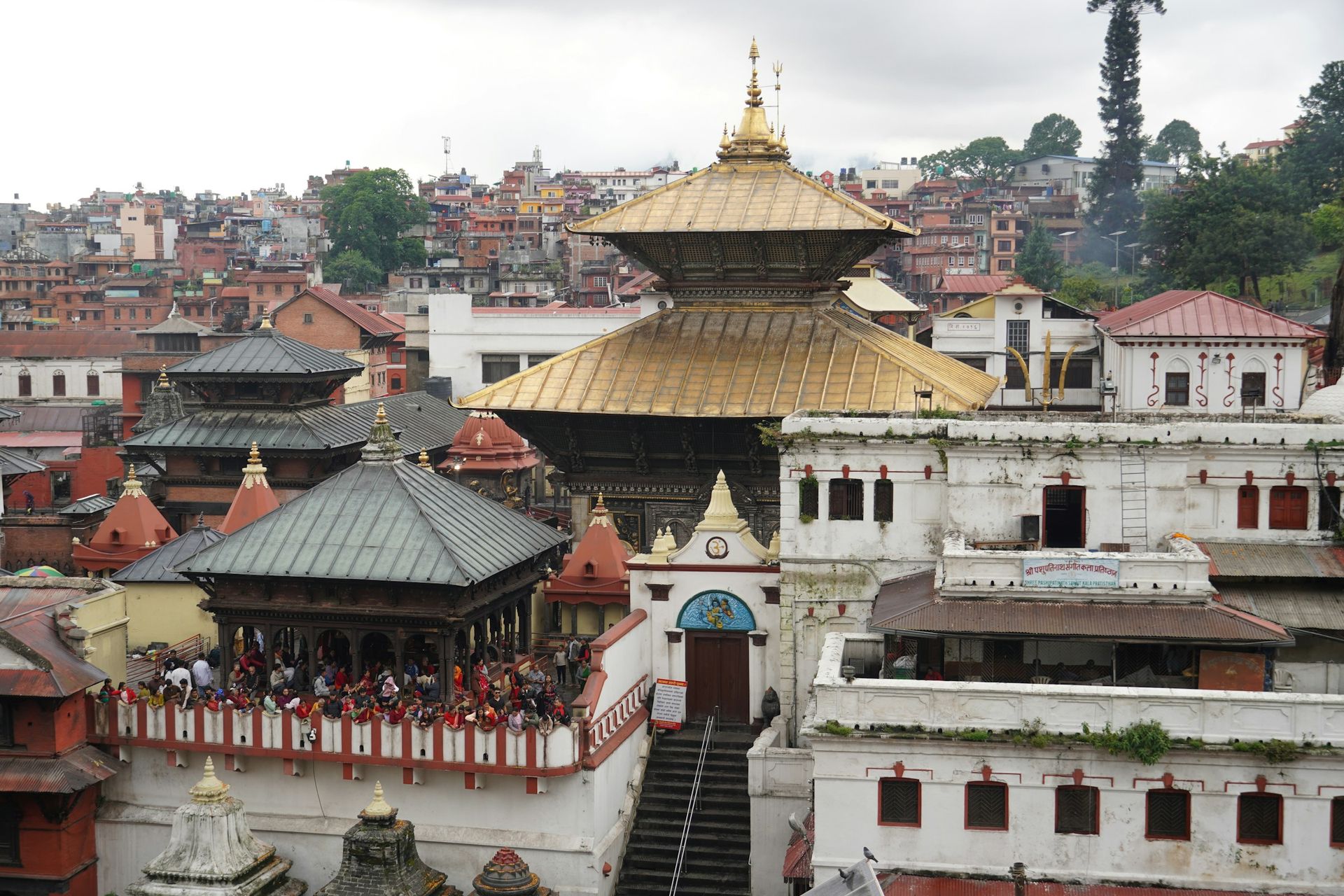
Pashupatinath Temple with its gilded pagoda roof by the Bagmati River
The gilded roof of the main temple.

The best-known story for pilgrims from India comes from the Shiva Purana. As PADT puts it, "Lord Pashupatinath is regarded as the head of Kedareshwor, the deity of the famous Kedareshwor Temple in India". In the version usually told, Shiva hid in the form of a bull; his head appeared at Pashupatinath and his hump at Kedarnath.

A third story, from the Swasthani Brata Katha, says Shiva once took the form of a deer. NTB notes that deer are still kept in the forest across the river "to revere the animal form that Lord Shiva took". The same text, as NTB retells it, places Guhyeshwari, near the main temple, where part of the body of Sati, Shiva's first wife, fell to earth.

What the record says

The chronicles credit a Licchavi king, usually named as Supushpa Dev, with building the first temple, and PADT's timeline places him in the fifth century CE. One chronicle names a different Licchavi king, Prachanda Deva. PADT's monument page adds that the temple "must have been rebuilt a number of times".

Between the 13th and 18th centuries, the Malla kings "greatly expanded the complex, adding subsidiary shrines, ghats, and dharmashalas", the rest houses for pilgrims. The present temple dates from the late 17th century; PADT says it was built in 1697 by King Bhupalendra Malla of Kantipur, while other sources give 1692 or 1696. Later rulers kept adding, from Jung Bahadur Rana's row of shrines on the east bank to the Panchadewal courtyard of the 19th-century Shah kings.

The 2015 earthquake

The 2015 earthquake hit the Area hard. According to PADT, "The main temple's ancient construction withstood significant damage, but many subsidiary shrines required full rebuilding". The Kathmandu Post reported in January 2016 that the Bishwaroop (Vishwarupa) and Lalganesh temples had been "reduced to rubble". PADT then led a restoration programme.

Who can enter Pashupatinath Temple?

Only Hindus may enter the main temple. PADT's home page puts it plainly: "Non-Hindu visitors are not permitted inside the main sanctum. Observation from surrounding ghats is permitted." NTB's wording covers the whole inner complex: "The main temple complex is open only to the Hindus; non-Hindus must satisfy themselves by observing from the terraces just across the Bagmati River to the east."

The trust takes the rule seriously. In October 2026 it restated that only Hindus may enter the main temple and said it would tighten security in the temple premises. Please do not try to talk your way in, or ask a guide to take you.

If you are not Hindu, you still see a great deal. The table below sets out where each visitor can go, using the trust's and NTB's own wording.

Place or activity Hindus Non-Hindus
Main temple courtyard and sanctum Yes No
Ghats along the Bagmati Yes Yes; PADT: "Ghats: Open to all"
Terraces and the row of 15 shrines on the east bank Yes Yes
Watching the Bagmati Aarti from the east bank Yes Yes
View of the Nandi through the main west gate Yes Yes, from outside the gate
Guhyeshwari temple Yes No, according to NTB
Photography inside the main sanctum No No

What to see at Pashupatinath

PADT lists many monuments in the Area; these are the ones you are most likely to pass.
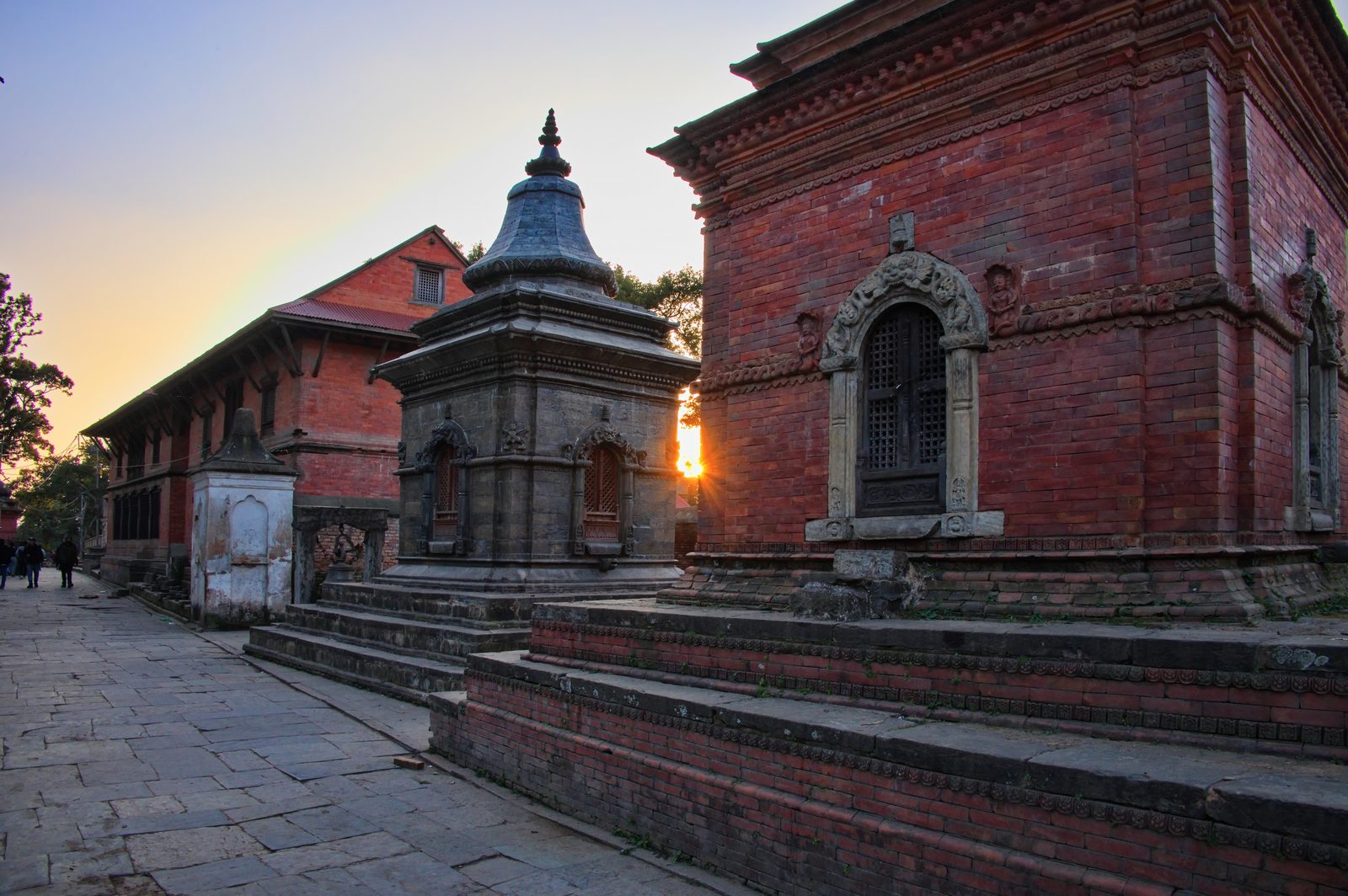
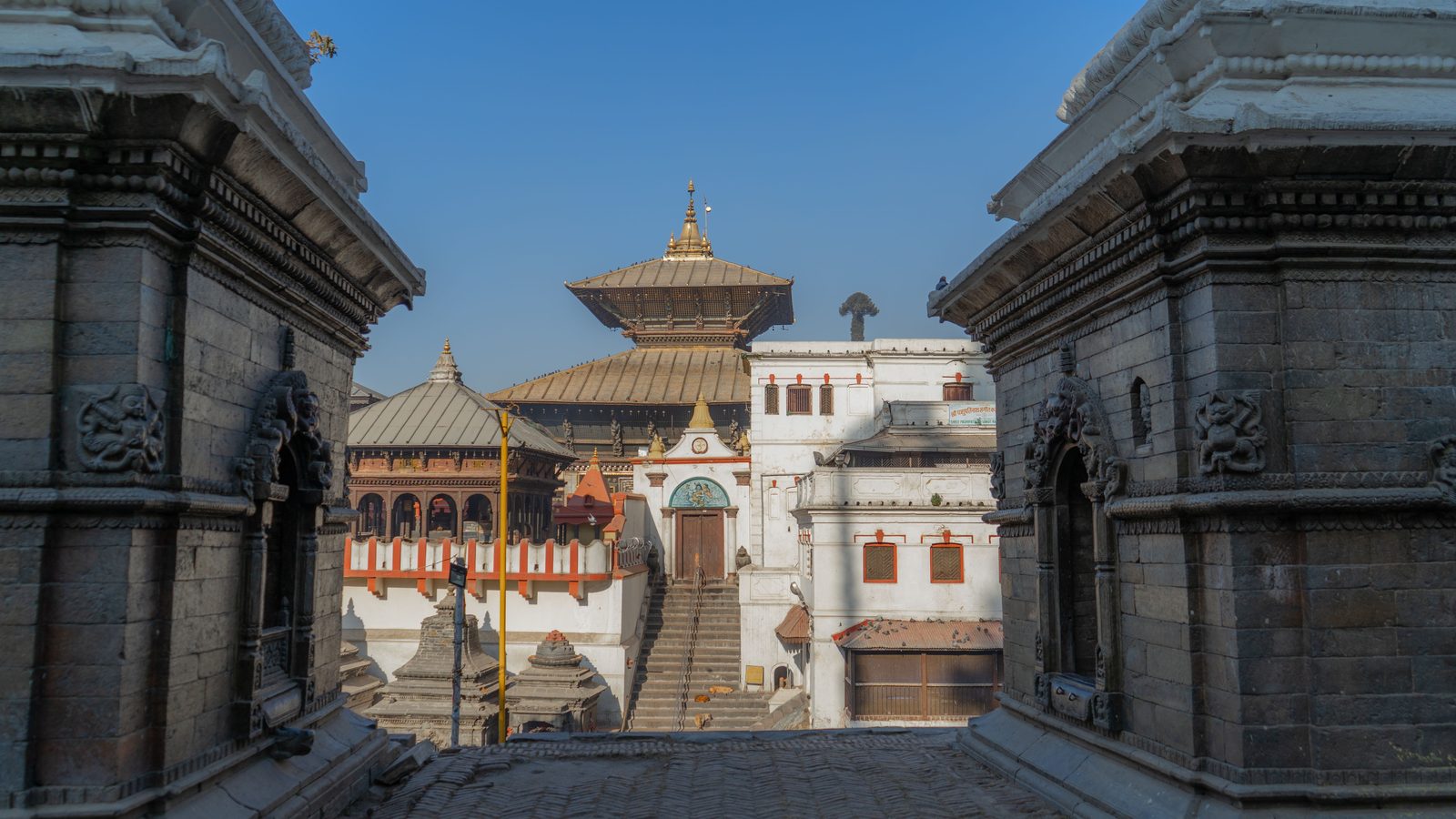
Stone shrines and brick temples beside the Bagmati River at Pashupatinath
Shrines along the Bagmati at Pashupatinath.

The main temple and its four doors

The main temple is a pagoda with a two-tiered gilded roof. PADT describes its "golden gilded roofs, silver and golden gilded doors, brilliant wooden and metal carvings in the tympanum and the struts". The temple has four doors, one on each side, and PADT says "All four gates of the main temple open before daybreak".

The west door is the main door. Each door looks onto a different face of the linga: PADT's Nepali-language festival notices send devotees through the east door for darshan of the east face and through the south door for the south face. The Himalayan Times reported in August 2022 that the east door was reopened for Teej for the first time since 2065 BS.

The Nandi at the west gate

Inside the west gate is a large gilded brass statue of Nandi, the bull who carries Shiva. Lonely Planet puts the non-Hindu view well: "From the main gate on the west side of the compound, you can view the mighty golden behind of an enormous brass statue of Nandi, Shiva's bull." That glimpse is as close as non-Hindus get to the inner courtyard.

Pandhra Shivalaya and the east bank

On the east bank, facing the temple, stands Pandhra Shivalaya, "a row of fifteen miniature temples containing Shiva Lingas" put up by Jung Bahadur Rana, the first Rana prime minister. These terraces are where NTB sends non-Hindus to look across at the temple, and where you watch the evening aarti.

Mrigasthali forest and the Gorakhnath temple

Climb the steps behind the east bank into the forest PADT calls Shlesmatak Van, also known as Mrigasthali. NTB says "monkeys abound, and deer is reared in captivity" to honour Shiva's deer form. Keep food out of sight. In the forest, the shikhara-style Gorakhnath temple, which PADT says "dates to the eighteenth century", holds the paduka (footprint) of Guru Gorakhnath, whom PADT calls the founder of Hatha Yoga.

Vishwarupa temple

The dome-style Vishwarupa temple in the forest holds, PADT says, an image of Shiva and Parvati in yab-yum, a form Buddhists regard as Heruka. The Kathmandu Post reported that it collapsed in the 2015 earthquake. PADT lists it among the Area's monuments today; we have not confirmed whether visitors can enter, so ask on the day.

Kirateshwar

On a hillock across the Bagmati, Kirateshwar is an open shrine with a tall linga that PADT believes goes back to the Kirata period; according to legend, Arjun meditated here and received the Pashupatastra from Shiva. NTB lists full-moon concerts here; we have no current schedule.

Guhyeshwari

On the Bagmati near the main temple, Guhyeshwari is, in PADT's words, "the second most important religious and cultural temple after Pashupatinath Temple", a Shakti Peeth where Sati Devi, Shiva's first wife, is worshipped. NTB says "non-Hindus are denied entry" here too.

Ram temple, Vatsaleshwari and the smaller shrines

At Ramghat, a white-domed temple holds a stone image of Vishnu that PADT says the Licchavi ruler Vishnu Gupta commissioned in the seventh century. The Vatsaleshwari temple is a two-roofed pagoda with no idol: a stone slab is worshipped as Vatsala, a consort of Shiva. PADT's list goes on with Panchadewal, Bhuwaneshwari, Jayabageshwari, Charumati Vihar and more. Many look alike from outside, and a licensed guide's stories are what make them worth the walk.

The cremation ghats: what you will see and how to behave

Cremations take place at Pashupatinath every day, in the open, on the riverbank below the main temple. For Hindu families, a cremation here carries deep meaning. If you have never seen a body burned, it can be hard to watch. You can keep your distance and still have a full visit.

The two main ghats

Arya Ghat is, in PADT's words, "one of the most prominent cremation ghat" of the Area. Last rites here are believed to help the soul attain moksha (liberation). PADT says the ghat was traditionally "reserved for royalty, VIPs, and high-status Hindus", sits "directly under the deity's gaze" and was built during the reign of Pratap Malla.

Bhasmeshwar Ghat, south of Arya Ghat, is described by PADT as "a key cremation site for the general public, handling traditional wood-fired cremations". The ashes go into the Bagmati. The name joins bhasma (ash) and Ishwor (lord).

PADT also runs an electric crematorium near Arya Ghat, handling 10 to 15 cremations a day, according to the trust.

How to behave near the ghats

These are funerals, held in public. We ask every guest to follow a few simple rules:

  • Watch from the east bank, not from the cremation platforms.
  • Keep your voice low and your phone in your pocket.
  • Do not walk between mourners and a pyre, or onto the platforms.
  • Please do not photograph cremations or mourners. This is our request, not a PADT rule.
  • Follow your guide's lead on where photography is and is not appropriate.

The evening aarti at Pashupatinath

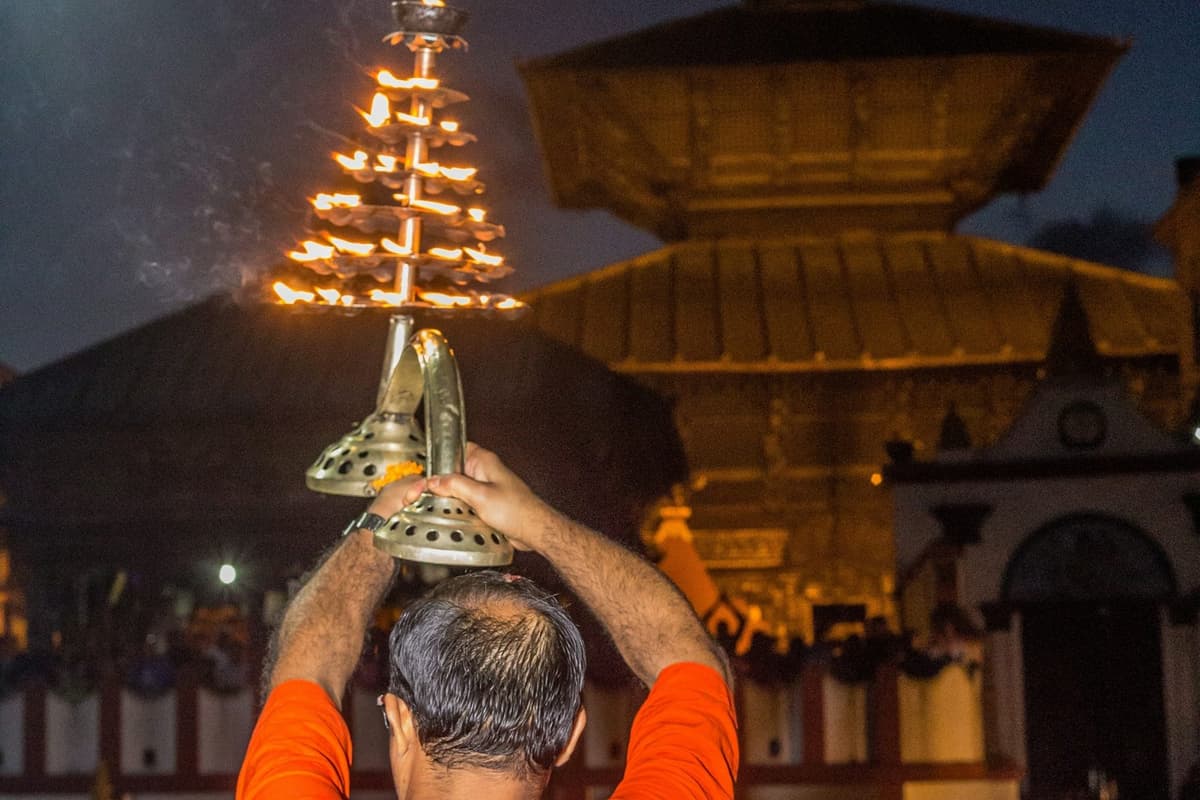
There are two kinds of aarti here. Inside the main temple, priests perform the temple's own daily pujas and aartis, which only Hindus see. On the opposite bank of the river, the Pashupati Bagmati Aarti is held every evening, and visitors of every faith can watch it from the east-bank terraces.
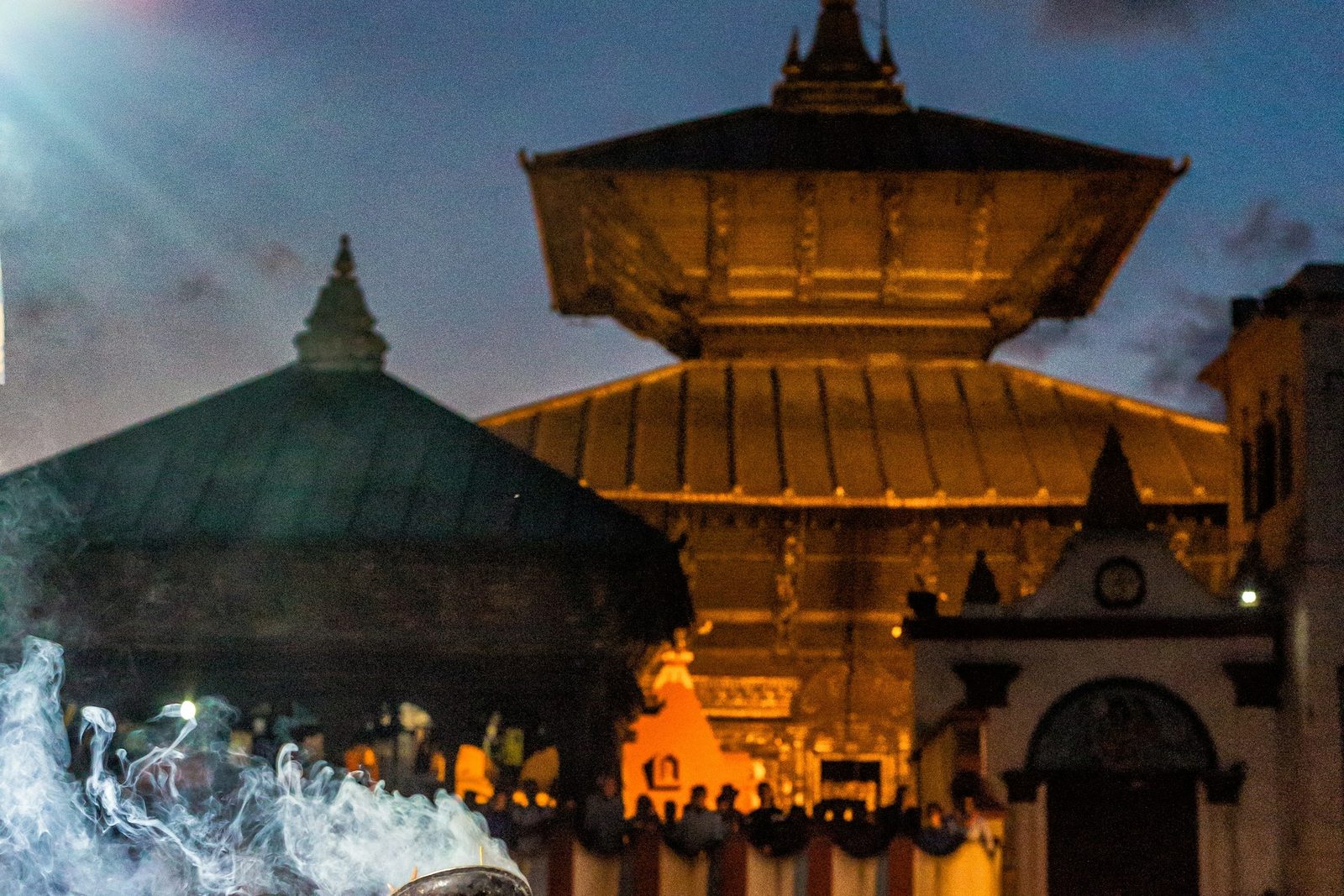
Pashupatinath Temple lit at night with incense smoke
Pashupatinath after dark, when the evening aarti draws crowds.

NTB describes the Bagmati Aarti as led by three priests with oil lamps, with bhajans (devotional songs) and the Tandav dance, and says it "was established as a regular tradition since the year 2006". The river divides the scene: in NTB's words, "the main Pashupatinath Temple being on one side and the location of this Aarati on the other".

What time does the aarti start?

The aarti begins around dusk. PADT's own site shows two different times on the same day, and NTB gives a third, so check on the day. Arrive in daylight and find a place on the east-bank steps.

When it is busiest

NTB says crowds come "during holidays, on Mondays and during festivals", adding that "Monday is considered the right day to worship Lord Shiva". The aarti is a major draw during Maha Shivaratri and Haritalika Teej. For space to sit, avoid Mondays and festival evenings.

This is worship, not a performance: keep the flash off and do not climb onto the shrines for a better view.

Pashupatinath temple timings and daily schedule

Pashupatinath is open from 4am to 9pm daily, according to PADT. That covers the ghats, which are open to all, and the main temple, which is open to Hindus. The table shows PADT's posted "Today's Darshan Schedule" for Tuesday 27 October 2026; it can change, so treat it as a guide and check on the day.

Time (PADT posted schedule, 27 Oct 2026) What happens in the temple
4am to 7am Morning puja (pratahkalin puja)
7am to 12 noon Mahabhishek
Around dusk Evening aarti; PADT's site shows two different times
7pm to 8pm Night aarti (shayan aarti)
9pm The temple closes

Shrawan Mondays: a special timetable

Shrawan, the Nepali month that falls in July and August, brings the biggest regular crowds on its Mondays. On Shrawan Mondays in 2026, PADT opened all four doors of the temple at 3am and kept them open for darshan until 8pm, after the evening aarti. There were four queues, one for each door, and a special darshan line for senior citizens, people with disabilities and children. Those were the 2026 arrangements; the 2027 notices are not out yet.

Entry fee, ticket counters and gates

Foreign visitors pay NPR 1,000 to enter the Pashupati Area, according to NTB's heritage fee table.

Visitor Entry fee Source
Foreign nationals NPR 1,000 per day per entry NTB
SAARC nationals (except India) NPR 1,000 NTB
Chinese nationals NPR 1,000 NTB
Indian nationals Free NTB
Nepali nationals Free NTB

NTB notes that the fees are listed "as per the information provided by the concerned departments". Its table does not give a child rate for Pashupatinath, so ask at the counter if you are travelling with children. Because the fee is per day per entry, keep your ticket with you, and ask at the counter before you leave the Area and come back.

PADT lists four tourist ticket counters: Guheshwori, Vatsaleshwori, Tilganga and Gate No. 3. The Area has several gates, and on festival days PADT routes people by the direction they arrive from: Mitra Park, Gaushala, the Tilganga side or Pingalasthan. On our day tour, entry fees are not included in the tour price.

Puja and darshan for Hindu pilgrims

If you are Hindu, you can enter the temple for darshan (sight of the deity) and arrange a puja through PADT. PADT publishes official puja rates in both Nepali and Indian rupees. These are the first rates on its list for Shree Pashupatinath, as published on 27 October 2026.

Puja at Shree Pashupatinath NPR INR
Panchamrit Puja 2,100 1,313
Panchamrit Puja with Balbhog 3,100 1,938
Panchamrit Puja with Rudrabhishek and Balbhog 7,500 4,688

The full list, including the larger pujas and the Basukinath rates, is on PADT's puja page. Rates can differ on festival days: PADT's notice for Shrawan Mondays in 2026 priced the Panchamrit puja differently, so confirm at the office.

PADT's website lists e-puja and advance booking, but on 27 October 2026 the booking links led nowhere, so book at the temple office or ask us to help. The PADT office is at Devuddhyan, Gaushala, open Monday to Friday, 9am to 5pm, on +977-01-4571828 or +977-01-4461547.

On busy days PADT has also run a paid fast-track darshan. On Shrawan Mondays in 2026 this special facilitation darshan and prasad (our translation of PADT's Nepali notice) cost NPR 1,000 and ran from opening until the evening aarti, through the Tilganga tourist gate to the east door. We do not know whether it runs on ordinary days, so ask at the counter.

Hindus leave their shoes before entering, and PADT runs shoe rooms at the entrances.

Visiting Pashupatinath from India

Pilgrims from India come to Pashupatinath in large numbers, above all at Shivaratri. Many know it through the Shiva Purana legend, told above, that links it with Kedarnath. This guide is about the temple in Kathmandu, not the Pashupatinath temple in Mandsaur, Madhya Pradesh.

A few points make the visit easier:

  • Entry is free for Indian nationals, according to NTB's fee table. We have not found any official note on what the counter asks to see, so carry the ID you used to enter Nepal.
  • Puja rates are listed in INR as well as NPR on PADT's rate list, so you know the official figure before you go.
  • Mondays are for Shiva and Shrawan Mondays are the busiest.
  • Elderly relatives: on Shrawan Mondays in 2026, PADT ran a special darshan line for senior citizens, people with disabilities and children. Ask whether a similar line is open on the day you visit.

Entering Nepal is your own arrangement, and it is not something we sell. For information only: NTB says Indian nationals "do not need visa to enter Nepal" and lists the documents accepted for entry, including a valid passport or an Election Commission of India card, with other documents accepted for older travellers and children. NTB also says the Aadhaar card is not accepted as a travel document. Check the current list on NTB's tourist visa page before you travel.

If Pashupatinath is one stop on a longer journey, our Nepal pilgrimage guide covers the other Hindu and Buddhist sites, from Muktinath to Lumbini.

Festivals at Pashupatinath: dates for 2026 and 2027

Festivals bring the biggest crowds. NTB says the temple is also "just as crowded with devotees every fortnight on the 11th day of the lunar month on Ekadashi".

Festival Date What happens at Pashupatinath Source
Tihar Public holidays 8 to 12 November 2026 On PADT's festival calendar Ministry of Home Affairs
Haribodhini Ekadashi 20 November 2026 One of the two holiest Ekadashis, according to NTB Nepali calendar; NTB
Utpattika Ekadashi 4 December 2026 Fortnightly Ekadashi crowds Nepali calendar
Bala Chaturdashi 7 December 2026 Night vigil; families scatter seeds along the ghats before dawn for departed ancestors Nepali calendar; PADT
Vivah Panchami 14 December 2026 Rituals at the Ramchandra temple in the complex Nepali calendar; PADT
Maha Shivaratri 6 March 2027 The night of Shiva; pilgrims and sadhus from Nepal and India Ministry of Home Affairs
Shrawan Mondays Shrawan (July to August); 2027 dates not yet published Biggest regular crowds; special queues PADT
Teej Nepali month of Bhadra (August or September); 2027 date not yet published Women in red come for darshan PADT; NTB

Maha Shivaratri

NTB calls Shivaratri "the most important festival observed here", the night Lord Shiva self-originated. PADT says it "draws hundreds of thousands of pilgrims and sadhus from across India and Nepal to worship Lord Shiva through the night". In 2027 it falls on 6 March, a public holiday.

For a sense of scale, the Kathmandu Post reported that on Maha Shivaratri 2026 (15 February) PADT opened all four gates from 2am, expected around 4,000 sadhus, and arranged temporary accommodation, food and security for them. The 2027 gate times have not been announced. If you come, expect long queues and a temple that stays awake through the night.

Teej

Teej, says NTB, is "a festival solely observed by Hindu women", when the complex turns into "a sea of red". In 2026 Haritalika Teej fell on 14 September; the 2027 date is not yet on the official calendar, so check nearer the time.

Other days on the temple calendar

PADT's calendar also includes Maghe Sankranti (holy baths in the Bagmati), Holi, Ram Navami, Janai Purnima and Dashain, which has passed for 2026.

Dress, leather and shoes

Neither PADT nor NTB publishes a dress code for visitors, so this is our advice rather than a rule. Dress modestly for the temples, with shoulders and knees covered, and wear shoes you can slip off easily. Bring a layer for the evening.

Leather is a different matter. NTB is direct: "As a mark of reverence and tradition, leather items that include shoes, belts and cameras are forbidden within the temple complex and must be left outside." If you are Hindu and plan to enter, leave a leather belt, wallet or camera bag at your hotel, and use the shoe rooms PADT runs at the entrances.

Photography, cremations and sadhus

PADT, which runs the temple, says: "Photography is not allowed inside the main sanctum. External areas and ghats may be photographed respectfully." NTB's page goes further and says "Photography is strictly prohibited." We follow PADT, which issues the rules, and add one request of our own: please do not photograph cremations or mourners.

A few habits keep you on the right side of everyone:

  1. Put the camera away inside any temple door.
  2. Photograph the architecture, the river and the terraces, not people's grief.
  3. Ask before you photograph anyone, and accept a no.
  4. Turn the flash off during the aarti.

Sadhus

NTB describes the sadhus of Pashupatinath as "barely attired holy men with long locks of hair and smeared in ashes". Some sadhus pose for cameras and ask for money; an Onlinekhabar report from Shivaratri 2018 described this. Ask first, agree before you shoot, or do not photograph. Never photograph a sadhu at prayer.

How to get to Pashupatinath

Pashupatinath is in Gaushala, on the east side of Kathmandu, about 5 km east of the city centre according to NTB. It lies on the airport side of the city: PADT's festival notices route visitors arriving from the Sinamangal airport side through the Tilganga gate.

Way to get there What to expect Source
Taxi from Thamel About 15 minutes, according to PADT; longer in traffic PADT
Public bus PADT lists bus routes 11, 22 and 30 to Gaushala PADT
Microbus or tempo NTB says microbuses and three-wheeled tempos drop you at Gaushala, a short walk from the temple NTB
With us Private car with a licensed guide, often paired with Boudhanath Our tours

Pashupatinath pairs naturally with Boudhanath, the stupa on the same side of the city. Our Boudhanath and Pashupatinath aarti tour is timed for the afternoon so that it finishes with the evening aarti at Pashupatinath as the light fades, and takes about four hours in all.

How to plan your visit, step by step

  1. Pick your day. Mondays, Ekadashi days and festivals are the busiest. Check the festival table above.
  2. Pick your hour. Late afternoon into dusk gives you the ghats in daylight and the aarti at the end. If you are Hindu and want the morning puja, it runs from 4am to 7am on PADT's posted schedule.
  3. Dress for it. Shoulders and knees covered, slip-off shoes, a warm layer, no leather if you plan to enter.
  4. Get to Gaushala. Taxi, bus or microbus, then walk in.
  5. Buy your ticket. Foreign, SAARC (except India) and Chinese visitors pay NPR 1,000 at one of the four counters; Indian and Nepali nationals enter free. Keep the ticket.
  6. Look through the west gate. See the Nandi from outside if you are not Hindu; enter for darshan if you are.
  7. Cross to the east bank. Walk the terraces past Pandhra Shivalaya and look back at the temple and the ghats.
  8. Walk up into the forest. Mrigasthali, the deer and the Gorakhnath temple.
  9. Come back down before dusk. Find a place on the east-bank steps for the Bagmati Aarti.
  10. Leave before 9pm, when the temple closes.

What is changing in the Pashupati Area?

Here is what is on record about plans to redevelop the Area.

  • 2053 BS: the government approved a conceptual master plan; since fiscal year 2070/71 BS the Area has been a national pride project, according to The Rising Nepal.
  • 2020: the government put the plan on hold in August after residents protested that it would demolish some homes, Onlinekhabar reported; in December a technical team was formed to finalise it, the Himalayan Times reported.
  • Late 2022: the PADT Governing Council approved the master plan, aiming to develop the Area "as an international pilgrim site", The Rising Nepal reported in February 2023.
  • Since then: we found no dated report that the plan has been fully approved or built.
  • 2026: an opinion piece in SpotlightNepal (2 August 2026) warned that proposed transport projects, including a Chabahil-Gaushala underground tunnel, "may also affect parts of Pashupati area". These are proposals, not approved works.

None of this changes a visit today. We will update this section when PADT or the government publishes a decision.

Combine Pashupatinath with other Kathmandu sights

Pashupatinath fits easily into a day on the east side of the city. Boudhanath is the obvious partner, and the pair works best with Boudhanath first and the aarti last. For a fuller day, our Patan, Boudhanath and Pashupatinath day tour adds the old royal city of Patan, with a licensed guide who explains the shrines and the cremation customs as you go.

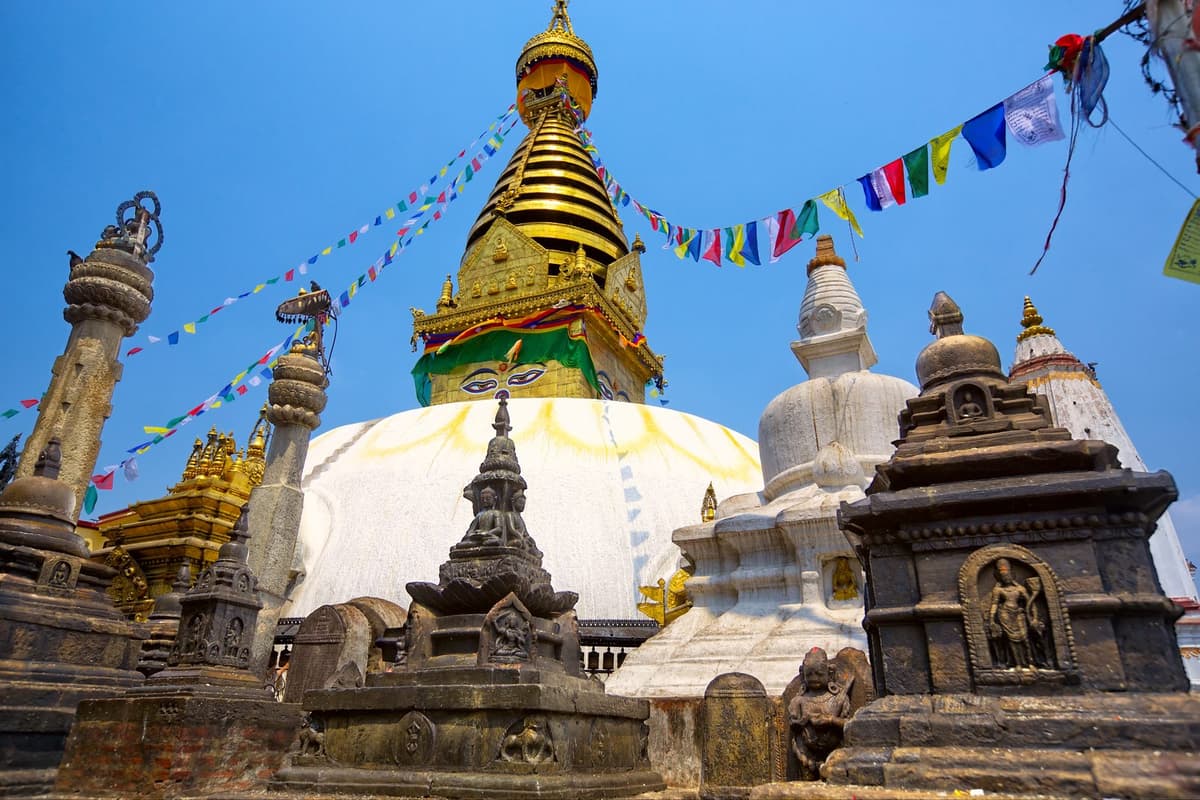
If you have more days, Swayambhunath, the Monkey Temple, and Kathmandu Durbar Square are two more of the seven UNESCO Monument Zones of the valley. Our guide to places to visit in Kathmandu puts them in a sensible order, our Kathmandu day trips guide covers the valley rim and beyond, and our Nepal tourist places guide helps if you are still deciding where else to go in the country.

Frequently asked questions

What are the Pashupatinath temple timings?

Pashupatinath is open from 4am to 9pm every day, according to PADT, the trust that runs it. The ghats are open to all; the main temple is open to Hindus. Inside, PADT's posted schedule on 27 October 2026 showed the morning puja from 4am to 7am and the Mahabhishek from 7am to noon, with the evening aarti around dusk. Timings change for festivals, so check on the day.

Can non-Hindus enter Pashupatinath temple?

No. PADT says "Non-Hindu visitors are not permitted inside the main sanctum. Observation from surrounding ghats is permitted." In October 2026 the trust restated the rule and said it would tighten security. Non-Hindus can still walk the ghats, the east-bank terraces and the Mrigasthali forest, look through the west gate at the Nandi, and watch the evening aarti from across the river.

What time is the evening aarti at Pashupatinath?

The evening aarti begins around dusk, so it starts earlier in winter than in summer. PADT's own website shows two different times on the same day, and NTB gives another, so check on the day. Arrive in daylight to find a place on the east-bank steps, especially on Mondays, holidays and festival days, which NTB says draw the biggest crowds.

How much is the Pashupatinath entry fee, and is it free for Indians?

Foreign, SAARC and Chinese visitors pay NPR 1,000 per day per entry, according to NTB's heritage fee table. Indian and Nepali nationals enter free. Buy your ticket at one of PADT's four tourist counters: Guheshwori, Vatsaleshwori, Tilganga or Gate No. 3. Indian visitors should carry the ID they used to enter Nepal.

What should I wear to Pashupatinath, and can I take leather inside?

Wear clothes that cover your shoulders and knees, and shoes you can slip off easily; this is our advice, as neither PADT nor NTB publishes a dress code. Leather is a firm rule: NTB says leather items "that include shoes, belts and cameras are forbidden within the temple complex and must be left outside". Hindus leave their shoes in PADT's shoe rooms before entering.

Can I take photos at Pashupatinath, including the cremations?

You can photograph the ghats and outer areas respectfully, but not inside the main sanctum, according to PADT. NTB's page is stricter and says photography is strictly prohibited. We ask our guests not to photograph cremations or mourners at all. With sadhus, ask first and agree before you take a picture, or do not take one.

Visit Pashupatinath with us

Pashupatinath is easy to reach and hard to understand on your own. A licensed guide from our Kathmandu team tells you which shrine is which, where you may go and when to put the camera away. Send us your dates and we will suggest how to fit it in.

Your Nepal visa and your international flights are your own arrangements; NTB's tourist visa page has the official information. Once you land in Kathmandu, we take over.
Tags
PashupatinathKathmanduHindu templesBagmati AartiMaha ShivaratriUNESCO World Heritage
Share
U
Uncover Nepal Team
Writer at Uncover Nepal
More in Temples & cultureSee all Temples & culture

Pashupatinath Temple, Kathmandu: What to See and How to Visit

26 min read Posted 27 Oct 2026Updated 27 Oct 2026
Pashupatinath Temple, Kathmandu: What to See and How to Visit

By Uncover Nepal Team · Checked by our Kathmandu travel team · Last checked 27 October 2026

Late afternoon on the east bank of the Bagmati, smoke from a pyre on the far side drifts low over the water. Across the river, the gilded roof of the main temple holds the last of the light. A family sits quietly on the steps of the ghat, and behind you the first bells of the evening start to ring.

Pashupatinath Temple is the Shiva temple on the Bagmati River in eastern Kathmandu that the Nepal Tourism Board calls "the most revered Hindu temple in Nepal". Only Hindus enter the main temple, open 4am to 9pm daily. Everyone else walks the ghats and terraces and watches the aarti around dusk. Foreign visitors pay NPR 1,000; Indians enter free.

It is a key stop in our guide to places to visit in Kathmandu, and the one that needs the most preparation, because what you can see depends on your faith, the day and the hour. This guide covers what is inside the Pashupati Area, who may go where, the cremation ghats, the aarti, timings, the entry fee, puja for Hindu pilgrims, festival dates for the coming months and how to plan your visit step by step.

In this guide

  • Key facts
  • What is Pashupatinath Temple?
  • History and legends
  • Who can enter Pashupatinath Temple?
  • What to see at Pashupatinath
  • The cremation ghats: what you will see and how to behave
  • The evening aarti at Pashupatinath
  • Pashupatinath temple timings and daily schedule
  • Entry fee, ticket counters and gates
  • Puja and darshan for Hindu pilgrims
  • Visiting Pashupatinath from India
  • Festivals at Pashupatinath: dates for 2026 and 2027
  • Dress, leather and shoes
  • Photography, cremations and sadhus
  • How to get to Pashupatinath
  • How to plan your visit, step by step
  • What is changing in the Pashupati Area?
  • Combine Pashupatinath with other Kathmandu sights
  • Frequently asked questions

Key facts

What it is
Temple of Lord Shiva, worshipped as a Shiva linga, on the banks of the Bagmati (PADT; NTB, 27 Oct 2026)
World Heritage
One of seven Monument Zones of the Kathmandu Valley World Heritage property, inscribed 1979 (UNESCO, 27 Oct 2026)
Who may enter the main temple
Hindus only; non-Hindus watch from the ghats and the terraces across the river (PADT; NTB, 27 Oct 2026)
Opening hours
4am to 9pm daily, according to PADT (PADT, 27 Oct 2026)
Evening aarti
Begins around dusk; PADT's own site shows two different times, so check on the day (PADT; NTB, 27 Oct 2026)
Entry fee
NPR 1,000 per day per entry for foreign, SAARC and Chinese nationals; free for Indian and Nepali nationals (NTB fee table, 27 Oct 2026)
Tourist ticket counters
Guheshwori, Vatsaleshwori, Tilganga and Gate No. 3 (PADT, 27 Oct 2026)
Run by
Pashupati Area Development Trust (PADT) (PADT, 27 Oct 2026)
Where
Gaushala, about 5 km east of the city centre, according to NTB (NTB; PADT, 27 Oct 2026)
Next big festival days
Haribodhini Ekadashi, 20 November 2026; Maha Shivaratri, 6 March 2027 (Nepali calendar; Ministry of Home Affairs, 27 Oct 2026)

What is Pashupatinath Temple?

Pashupatinath Temple is the temple of Lord Shiva as Pashupati, worshipped here in the form of a Shiva linga. PADT, the trust that runs it, describes the deity with five faces: Tatpurusa, Aghora, Sadhyojat, Vamdev and Ishana. The name joins two words, pashu (animal) and pati (lord). In the trust's explanation, a person without wisdom is like a pashu, bound by ignorance, and Shiva is the lord who frees them: the giver of liberation.

The temple sits at the heart of the Pashupati Area, which PADT says spreads over 264 hectares (NTB gives 246) and calls "like an open museum". Around the main temple are smaller temples, Buddhist viharas and stupas, ashrams, cremation ghats and a forest with deer and monkeys.

In 1979 UNESCO inscribed the Kathmandu Valley on the World Heritage List as seven Monument Zones. Pashupati is one of them, alongside the Durbar Squares of Kathmandu, Patan and Bhaktapur, the stupas of Swayambhu and Bauddhanath, and the temple of Changu Narayan. UNESCO's description is short: "Pashupati has an extensive Hindu temple precinct". The whole Kathmandu Valley property, not Pashupati alone, was on the List of World Heritage in Danger from 2003 to 2007.

The Area is run by the Pashupati Area Development Trust, an autonomous trust under the Ministry of Culture, Tourism and Civil Aviation, set up in 2043 BS (1986/87) under the Pashupati Area Development Trust Act of 2044 BS. PADT runs the ticket counters, the cremation services and the worship schedule.

For Hindus, this is a pilgrimage. The trust puts it in one line:

"Every Hindu individual dreams of making the pilgrimage to Pashupatinath at least once in his lifetime."

Pashupati Area Development Trust, About Pashupatinath

History and legends

What the legends say

According to legend, the deity was discovered by a divine cow that poured milk on a sacred spot in the forest. PADT's own timeline traces the earliest references to the temple to the Skanda Purana.

Pashupatinath Temple with its gilded pagoda roof by the Bagmati River
The gilded roof of the main temple.

The best-known story for pilgrims from India comes from the Shiva Purana. As PADT puts it, "Lord Pashupatinath is regarded as the head of Kedareshwor, the deity of the famous Kedareshwor Temple in India". In the version usually told, Shiva hid in the form of a bull; his head appeared at Pashupatinath and his hump at Kedarnath.

A third story, from the Swasthani Brata Katha, says Shiva once took the form of a deer. NTB notes that deer are still kept in the forest across the river "to revere the animal form that Lord Shiva took". The same text, as NTB retells it, places Guhyeshwari, near the main temple, where part of the body of Sati, Shiva's first wife, fell to earth.

What the record says

The chronicles credit a Licchavi king, usually named as Supushpa Dev, with building the first temple, and PADT's timeline places him in the fifth century CE. One chronicle names a different Licchavi king, Prachanda Deva. PADT's monument page adds that the temple "must have been rebuilt a number of times".

Between the 13th and 18th centuries, the Malla kings "greatly expanded the complex, adding subsidiary shrines, ghats, and dharmashalas", the rest houses for pilgrims. The present temple dates from the late 17th century; PADT says it was built in 1697 by King Bhupalendra Malla of Kantipur, while other sources give 1692 or 1696. Later rulers kept adding, from Jung Bahadur Rana's row of shrines on the east bank to the Panchadewal courtyard of the 19th-century Shah kings.

The 2015 earthquake

The 2015 earthquake hit the Area hard. According to PADT, "The main temple's ancient construction withstood significant damage, but many subsidiary shrines required full rebuilding". The Kathmandu Post reported in January 2016 that the Bishwaroop (Vishwarupa) and Lalganesh temples had been "reduced to rubble". PADT then led a restoration programme.

Who can enter Pashupatinath Temple?

Only Hindus may enter the main temple. PADT's home page puts it plainly: "Non-Hindu visitors are not permitted inside the main sanctum. Observation from surrounding ghats is permitted." NTB's wording covers the whole inner complex: "The main temple complex is open only to the Hindus; non-Hindus must satisfy themselves by observing from the terraces just across the Bagmati River to the east."

The trust takes the rule seriously. In October 2026 it restated that only Hindus may enter the main temple and said it would tighten security in the temple premises. Please do not try to talk your way in, or ask a guide to take you.

If you are not Hindu, you still see a great deal. The table below sets out where each visitor can go, using the trust's and NTB's own wording.

Place or activity Hindus Non-Hindus
Main temple courtyard and sanctum Yes No
Ghats along the Bagmati Yes Yes; PADT: "Ghats: Open to all"
Terraces and the row of 15 shrines on the east bank Yes Yes
Watching the Bagmati Aarti from the east bank Yes Yes
View of the Nandi through the main west gate Yes Yes, from outside the gate
Guhyeshwari temple Yes No, according to NTB
Photography inside the main sanctum No No

What to see at Pashupatinath

PADT lists many monuments in the Area; these are the ones you are most likely to pass.

Stone shrines and brick temples beside the Bagmati River at Pashupatinath
Shrines along the Bagmati at Pashupatinath.

The main temple and its four doors

The main temple is a pagoda with a two-tiered gilded roof. PADT describes its "golden gilded roofs, silver and golden gilded doors, brilliant wooden and metal carvings in the tympanum and the struts". The temple has four doors, one on each side, and PADT says "All four gates of the main temple open before daybreak".

The west door is the main door. Each door looks onto a different face of the linga: PADT's Nepali-language festival notices send devotees through the east door for darshan of the east face and through the south door for the south face. The Himalayan Times reported in August 2022 that the east door was reopened for Teej for the first time since 2065 BS.

The Nandi at the west gate

Inside the west gate is a large gilded brass statue of Nandi, the bull who carries Shiva. Lonely Planet puts the non-Hindu view well: "From the main gate on the west side of the compound, you can view the mighty golden behind of an enormous brass statue of Nandi, Shiva's bull." That glimpse is as close as non-Hindus get to the inner courtyard.

Pandhra Shivalaya and the east bank

On the east bank, facing the temple, stands Pandhra Shivalaya, "a row of fifteen miniature temples containing Shiva Lingas" put up by Jung Bahadur Rana, the first Rana prime minister. These terraces are where NTB sends non-Hindus to look across at the temple, and where you watch the evening aarti.

Mrigasthali forest and the Gorakhnath temple

Climb the steps behind the east bank into the forest PADT calls Shlesmatak Van, also known as Mrigasthali. NTB says "monkeys abound, and deer is reared in captivity" to honour Shiva's deer form. Keep food out of sight. In the forest, the shikhara-style Gorakhnath temple, which PADT says "dates to the eighteenth century", holds the paduka (footprint) of Guru Gorakhnath, whom PADT calls the founder of Hatha Yoga.

Vishwarupa temple

The dome-style Vishwarupa temple in the forest holds, PADT says, an image of Shiva and Parvati in yab-yum, a form Buddhists regard as Heruka. The Kathmandu Post reported that it collapsed in the 2015 earthquake. PADT lists it among the Area's monuments today; we have not confirmed whether visitors can enter, so ask on the day.

Kirateshwar

On a hillock across the Bagmati, Kirateshwar is an open shrine with a tall linga that PADT believes goes back to the Kirata period; according to legend, Arjun meditated here and received the Pashupatastra from Shiva. NTB lists full-moon concerts here; we have no current schedule.

Guhyeshwari

On the Bagmati near the main temple, Guhyeshwari is, in PADT's words, "the second most important religious and cultural temple after Pashupatinath Temple", a Shakti Peeth where Sati Devi, Shiva's first wife, is worshipped. NTB says "non-Hindus are denied entry" here too.

Ram temple, Vatsaleshwari and the smaller shrines

At Ramghat, a white-domed temple holds a stone image of Vishnu that PADT says the Licchavi ruler Vishnu Gupta commissioned in the seventh century. The Vatsaleshwari temple is a two-roofed pagoda with no idol: a stone slab is worshipped as Vatsala, a consort of Shiva. PADT's list goes on with Panchadewal, Bhuwaneshwari, Jayabageshwari, Charumati Vihar and more. Many look alike from outside, and a licensed guide's stories are what make them worth the walk.

The cremation ghats: what you will see and how to behave

Cremations take place at Pashupatinath every day, in the open, on the riverbank below the main temple. For Hindu families, a cremation here carries deep meaning. If you have never seen a body burned, it can be hard to watch. You can keep your distance and still have a full visit.

The two main ghats

Arya Ghat is, in PADT's words, "one of the most prominent cremation ghat" of the Area. Last rites here are believed to help the soul attain moksha (liberation). PADT says the ghat was traditionally "reserved for royalty, VIPs, and high-status Hindus", sits "directly under the deity's gaze" and was built during the reign of Pratap Malla.

Bhasmeshwar Ghat, south of Arya Ghat, is described by PADT as "a key cremation site for the general public, handling traditional wood-fired cremations". The ashes go into the Bagmati. The name joins bhasma (ash) and Ishwor (lord).

PADT also runs an electric crematorium near Arya Ghat, handling 10 to 15 cremations a day, according to the trust.

How to behave near the ghats

These are funerals, held in public. We ask every guest to follow a few simple rules:

  • Watch from the east bank, not from the cremation platforms.
  • Keep your voice low and your phone in your pocket.
  • Do not walk between mourners and a pyre, or onto the platforms.
  • Please do not photograph cremations or mourners. This is our request, not a PADT rule.
  • Follow your guide's lead on where photography is and is not appropriate.

The evening aarti at Pashupatinath

There are two kinds of aarti here. Inside the main temple, priests perform the temple's own daily pujas and aartis, which only Hindus see. On the opposite bank of the river, the Pashupati Bagmati Aarti is held every evening, and visitors of every faith can watch it from the east-bank terraces.

Pashupatinath Temple lit at night with incense smoke
Pashupatinath after dark, when the evening aarti draws crowds.

NTB describes the Bagmati Aarti as led by three priests with oil lamps, with bhajans (devotional songs) and the Tandav dance, and says it "was established as a regular tradition since the year 2006". The river divides the scene: in NTB's words, "the main Pashupatinath Temple being on one side and the location of this Aarati on the other".

What time does the aarti start?

The aarti begins around dusk. PADT's own site shows two different times on the same day, and NTB gives a third, so check on the day. Arrive in daylight and find a place on the east-bank steps.

When it is busiest

NTB says crowds come "during holidays, on Mondays and during festivals", adding that "Monday is considered the right day to worship Lord Shiva". The aarti is a major draw during Maha Shivaratri and Haritalika Teej. For space to sit, avoid Mondays and festival evenings.

This is worship, not a performance: keep the flash off and do not climb onto the shrines for a better view.

Pashupatinath temple timings and daily schedule

Pashupatinath is open from 4am to 9pm daily, according to PADT. That covers the ghats, which are open to all, and the main temple, which is open to Hindus. The table shows PADT's posted "Today's Darshan Schedule" for Tuesday 27 October 2026; it can change, so treat it as a guide and check on the day.

Time (PADT posted schedule, 27 Oct 2026) What happens in the temple
4am to 7am Morning puja (pratahkalin puja)
7am to 12 noon Mahabhishek
Around dusk Evening aarti; PADT's site shows two different times
7pm to 8pm Night aarti (shayan aarti)
9pm The temple closes

Shrawan Mondays: a special timetable

Shrawan, the Nepali month that falls in July and August, brings the biggest regular crowds on its Mondays. On Shrawan Mondays in 2026, PADT opened all four doors of the temple at 3am and kept them open for darshan until 8pm, after the evening aarti. There were four queues, one for each door, and a special darshan line for senior citizens, people with disabilities and children. Those were the 2026 arrangements; the 2027 notices are not out yet.

Entry fee, ticket counters and gates

Foreign visitors pay NPR 1,000 to enter the Pashupati Area, according to NTB's heritage fee table.

Visitor Entry fee Source
Foreign nationals NPR 1,000 per day per entry NTB
SAARC nationals (except India) NPR 1,000 NTB
Chinese nationals NPR 1,000 NTB
Indian nationals Free NTB
Nepali nationals Free NTB

NTB notes that the fees are listed "as per the information provided by the concerned departments". Its table does not give a child rate for Pashupatinath, so ask at the counter if you are travelling with children. Because the fee is per day per entry, keep your ticket with you, and ask at the counter before you leave the Area and come back.

PADT lists four tourist ticket counters: Guheshwori, Vatsaleshwori, Tilganga and Gate No. 3. The Area has several gates, and on festival days PADT routes people by the direction they arrive from: Mitra Park, Gaushala, the Tilganga side or Pingalasthan. On our day tour, entry fees are not included in the tour price.

Puja and darshan for Hindu pilgrims

If you are Hindu, you can enter the temple for darshan (sight of the deity) and arrange a puja through PADT. PADT publishes official puja rates in both Nepali and Indian rupees. These are the first rates on its list for Shree Pashupatinath, as published on 27 October 2026.

Puja at Shree Pashupatinath NPR INR
Panchamrit Puja 2,100 1,313
Panchamrit Puja with Balbhog 3,100 1,938
Panchamrit Puja with Rudrabhishek and Balbhog 7,500 4,688

The full list, including the larger pujas and the Basukinath rates, is on PADT's puja page. Rates can differ on festival days: PADT's notice for Shrawan Mondays in 2026 priced the Panchamrit puja differently, so confirm at the office.

PADT's website lists e-puja and advance booking, but on 27 October 2026 the booking links led nowhere, so book at the temple office or ask us to help. The PADT office is at Devuddhyan, Gaushala, open Monday to Friday, 9am to 5pm, on +977-01-4571828 or +977-01-4461547.

On busy days PADT has also run a paid fast-track darshan. On Shrawan Mondays in 2026 this special facilitation darshan and prasad (our translation of PADT's Nepali notice) cost NPR 1,000 and ran from opening until the evening aarti, through the Tilganga tourist gate to the east door. We do not know whether it runs on ordinary days, so ask at the counter.

Hindus leave their shoes before entering, and PADT runs shoe rooms at the entrances.

Visiting Pashupatinath from India

Pilgrims from India come to Pashupatinath in large numbers, above all at Shivaratri. Many know it through the Shiva Purana legend, told above, that links it with Kedarnath. This guide is about the temple in Kathmandu, not the Pashupatinath temple in Mandsaur, Madhya Pradesh.

A few points make the visit easier:

  • Entry is free for Indian nationals, according to NTB's fee table. We have not found any official note on what the counter asks to see, so carry the ID you used to enter Nepal.
  • Puja rates are listed in INR as well as NPR on PADT's rate list, so you know the official figure before you go.
  • Mondays are for Shiva and Shrawan Mondays are the busiest.
  • Elderly relatives: on Shrawan Mondays in 2026, PADT ran a special darshan line for senior citizens, people with disabilities and children. Ask whether a similar line is open on the day you visit.

Entering Nepal is your own arrangement, and it is not something we sell. For information only: NTB says Indian nationals "do not need visa to enter Nepal" and lists the documents accepted for entry, including a valid passport or an Election Commission of India card, with other documents accepted for older travellers and children. NTB also says the Aadhaar card is not accepted as a travel document. Check the current list on NTB's tourist visa page before you travel.

If Pashupatinath is one stop on a longer journey, our Nepal pilgrimage guide covers the other Hindu and Buddhist sites, from Muktinath to Lumbini.

Festivals at Pashupatinath: dates for 2026 and 2027

Festivals bring the biggest crowds. NTB says the temple is also "just as crowded with devotees every fortnight on the 11th day of the lunar month on Ekadashi".

Festival Date What happens at Pashupatinath Source
Tihar Public holidays 8 to 12 November 2026 On PADT's festival calendar Ministry of Home Affairs
Haribodhini Ekadashi 20 November 2026 One of the two holiest Ekadashis, according to NTB Nepali calendar; NTB
Utpattika Ekadashi 4 December 2026 Fortnightly Ekadashi crowds Nepali calendar
Bala Chaturdashi 7 December 2026 Night vigil; families scatter seeds along the ghats before dawn for departed ancestors Nepali calendar; PADT
Vivah Panchami 14 December 2026 Rituals at the Ramchandra temple in the complex Nepali calendar; PADT
Maha Shivaratri 6 March 2027 The night of Shiva; pilgrims and sadhus from Nepal and India Ministry of Home Affairs
Shrawan Mondays Shrawan (July to August); 2027 dates not yet published Biggest regular crowds; special queues PADT
Teej Nepali month of Bhadra (August or September); 2027 date not yet published Women in red come for darshan PADT; NTB

Maha Shivaratri

NTB calls Shivaratri "the most important festival observed here", the night Lord Shiva self-originated. PADT says it "draws hundreds of thousands of pilgrims and sadhus from across India and Nepal to worship Lord Shiva through the night". In 2027 it falls on 6 March, a public holiday.

For a sense of scale, the Kathmandu Post reported that on Maha Shivaratri 2026 (15 February) PADT opened all four gates from 2am, expected around 4,000 sadhus, and arranged temporary accommodation, food and security for them. The 2027 gate times have not been announced. If you come, expect long queues and a temple that stays awake through the night.

Teej

Teej, says NTB, is "a festival solely observed by Hindu women", when the complex turns into "a sea of red". In 2026 Haritalika Teej fell on 14 September; the 2027 date is not yet on the official calendar, so check nearer the time.

Other days on the temple calendar

PADT's calendar also includes Maghe Sankranti (holy baths in the Bagmati), Holi, Ram Navami, Janai Purnima and Dashain, which has passed for 2026.

Dress, leather and shoes

Neither PADT nor NTB publishes a dress code for visitors, so this is our advice rather than a rule. Dress modestly for the temples, with shoulders and knees covered, and wear shoes you can slip off easily. Bring a layer for the evening.

Leather is a different matter. NTB is direct: "As a mark of reverence and tradition, leather items that include shoes, belts and cameras are forbidden within the temple complex and must be left outside." If you are Hindu and plan to enter, leave a leather belt, wallet or camera bag at your hotel, and use the shoe rooms PADT runs at the entrances.

Photography, cremations and sadhus

PADT, which runs the temple, says: "Photography is not allowed inside the main sanctum. External areas and ghats may be photographed respectfully." NTB's page goes further and says "Photography is strictly prohibited." We follow PADT, which issues the rules, and add one request of our own: please do not photograph cremations or mourners.

A few habits keep you on the right side of everyone:

  1. Put the camera away inside any temple door.
  2. Photograph the architecture, the river and the terraces, not people's grief.
  3. Ask before you photograph anyone, and accept a no.
  4. Turn the flash off during the aarti.

Sadhus

NTB describes the sadhus of Pashupatinath as "barely attired holy men with long locks of hair and smeared in ashes". Some sadhus pose for cameras and ask for money; an Onlinekhabar report from Shivaratri 2018 described this. Ask first, agree before you shoot, or do not photograph. Never photograph a sadhu at prayer.

How to get to Pashupatinath

Pashupatinath is in Gaushala, on the east side of Kathmandu, about 5 km east of the city centre according to NTB. It lies on the airport side of the city: PADT's festival notices route visitors arriving from the Sinamangal airport side through the Tilganga gate.

Way to get there What to expect Source
Taxi from Thamel About 15 minutes, according to PADT; longer in traffic PADT
Public bus PADT lists bus routes 11, 22 and 30 to Gaushala PADT
Microbus or tempo NTB says microbuses and three-wheeled tempos drop you at Gaushala, a short walk from the temple NTB
With us Private car with a licensed guide, often paired with Boudhanath Our tours

Pashupatinath pairs naturally with Boudhanath, the stupa on the same side of the city. Our Boudhanath and Pashupatinath aarti tour is timed for the afternoon so that it finishes with the evening aarti at Pashupatinath as the light fades, and takes about four hours in all.

How to plan your visit, step by step

  1. Pick your day. Mondays, Ekadashi days and festivals are the busiest. Check the festival table above.
  2. Pick your hour. Late afternoon into dusk gives you the ghats in daylight and the aarti at the end. If you are Hindu and want the morning puja, it runs from 4am to 7am on PADT's posted schedule.
  3. Dress for it. Shoulders and knees covered, slip-off shoes, a warm layer, no leather if you plan to enter.
  4. Get to Gaushala. Taxi, bus or microbus, then walk in.
  5. Buy your ticket. Foreign, SAARC (except India) and Chinese visitors pay NPR 1,000 at one of the four counters; Indian and Nepali nationals enter free. Keep the ticket.
  6. Look through the west gate. See the Nandi from outside if you are not Hindu; enter for darshan if you are.
  7. Cross to the east bank. Walk the terraces past Pandhra Shivalaya and look back at the temple and the ghats.
  8. Walk up into the forest. Mrigasthali, the deer and the Gorakhnath temple.
  9. Come back down before dusk. Find a place on the east-bank steps for the Bagmati Aarti.
  10. Leave before 9pm, when the temple closes.

What is changing in the Pashupati Area?

Here is what is on record about plans to redevelop the Area.

  • 2053 BS: the government approved a conceptual master plan; since fiscal year 2070/71 BS the Area has been a national pride project, according to The Rising Nepal.
  • 2020: the government put the plan on hold in August after residents protested that it would demolish some homes, Onlinekhabar reported; in December a technical team was formed to finalise it, the Himalayan Times reported.
  • Late 2022: the PADT Governing Council approved the master plan, aiming to develop the Area "as an international pilgrim site", The Rising Nepal reported in February 2023.
  • Since then: we found no dated report that the plan has been fully approved or built.
  • 2026: an opinion piece in SpotlightNepal (2 August 2026) warned that proposed transport projects, including a Chabahil-Gaushala underground tunnel, "may also affect parts of Pashupati area". These are proposals, not approved works.

None of this changes a visit today. We will update this section when PADT or the government publishes a decision.

Combine Pashupatinath with other Kathmandu sights

Pashupatinath fits easily into a day on the east side of the city. Boudhanath is the obvious partner, and the pair works best with Boudhanath first and the aarti last. For a fuller day, our Patan, Boudhanath and Pashupatinath day tour adds the old royal city of Patan, with a licensed guide who explains the shrines and the cremation customs as you go.

If you have more days, Swayambhunath, the Monkey Temple, and Kathmandu Durbar Square are two more of the seven UNESCO Monument Zones of the valley. Our guide to places to visit in Kathmandu puts them in a sensible order, our Kathmandu day trips guide covers the valley rim and beyond, and our Nepal tourist places guide helps if you are still deciding where else to go in the country.

Frequently asked questions

What are the Pashupatinath temple timings?

Pashupatinath is open from 4am to 9pm every day, according to PADT, the trust that runs it. The ghats are open to all; the main temple is open to Hindus. Inside, PADT's posted schedule on 27 October 2026 showed the morning puja from 4am to 7am and the Mahabhishek from 7am to noon, with the evening aarti around dusk. Timings change for festivals, so check on the day.

Can non-Hindus enter Pashupatinath temple?

No. PADT says "Non-Hindu visitors are not permitted inside the main sanctum. Observation from surrounding ghats is permitted." In October 2026 the trust restated the rule and said it would tighten security. Non-Hindus can still walk the ghats, the east-bank terraces and the Mrigasthali forest, look through the west gate at the Nandi, and watch the evening aarti from across the river.

What time is the evening aarti at Pashupatinath?

The evening aarti begins around dusk, so it starts earlier in winter than in summer. PADT's own website shows two different times on the same day, and NTB gives another, so check on the day. Arrive in daylight to find a place on the east-bank steps, especially on Mondays, holidays and festival days, which NTB says draw the biggest crowds.

How much is the Pashupatinath entry fee, and is it free for Indians?

Foreign, SAARC and Chinese visitors pay NPR 1,000 per day per entry, according to NTB's heritage fee table. Indian and Nepali nationals enter free. Buy your ticket at one of PADT's four tourist counters: Guheshwori, Vatsaleshwori, Tilganga or Gate No. 3. Indian visitors should carry the ID they used to enter Nepal.

What should I wear to Pashupatinath, and can I take leather inside?

Wear clothes that cover your shoulders and knees, and shoes you can slip off easily; this is our advice, as neither PADT nor NTB publishes a dress code. Leather is a firm rule: NTB says leather items "that include shoes, belts and cameras are forbidden within the temple complex and must be left outside". Hindus leave their shoes in PADT's shoe rooms before entering.

Can I take photos at Pashupatinath, including the cremations?

You can photograph the ghats and outer areas respectfully, but not inside the main sanctum, according to PADT. NTB's page is stricter and says photography is strictly prohibited. We ask our guests not to photograph cremations or mourners at all. With sadhus, ask first and agree before you take a picture, or do not take one.

Visit Pashupatinath with us

Pashupatinath is easy to reach and hard to understand on your own. A licensed guide from our Kathmandu team tells you which shrine is which, where you may go and when to put the camera away. Send us your dates and we will suggest how to fit it in.

Your Nepal visa and your international flights are your own arrangements; NTB's tourist visa page has the official information. Once you land in Kathmandu, we take over.
Tags
PashupatinathKathmanduHindu templesBagmati AartiMaha ShivaratriUNESCO World Heritage
Share
U
Uncover Nepal Team
Writer at Uncover Nepal
More in Temples & cultureSee all Temples & culture