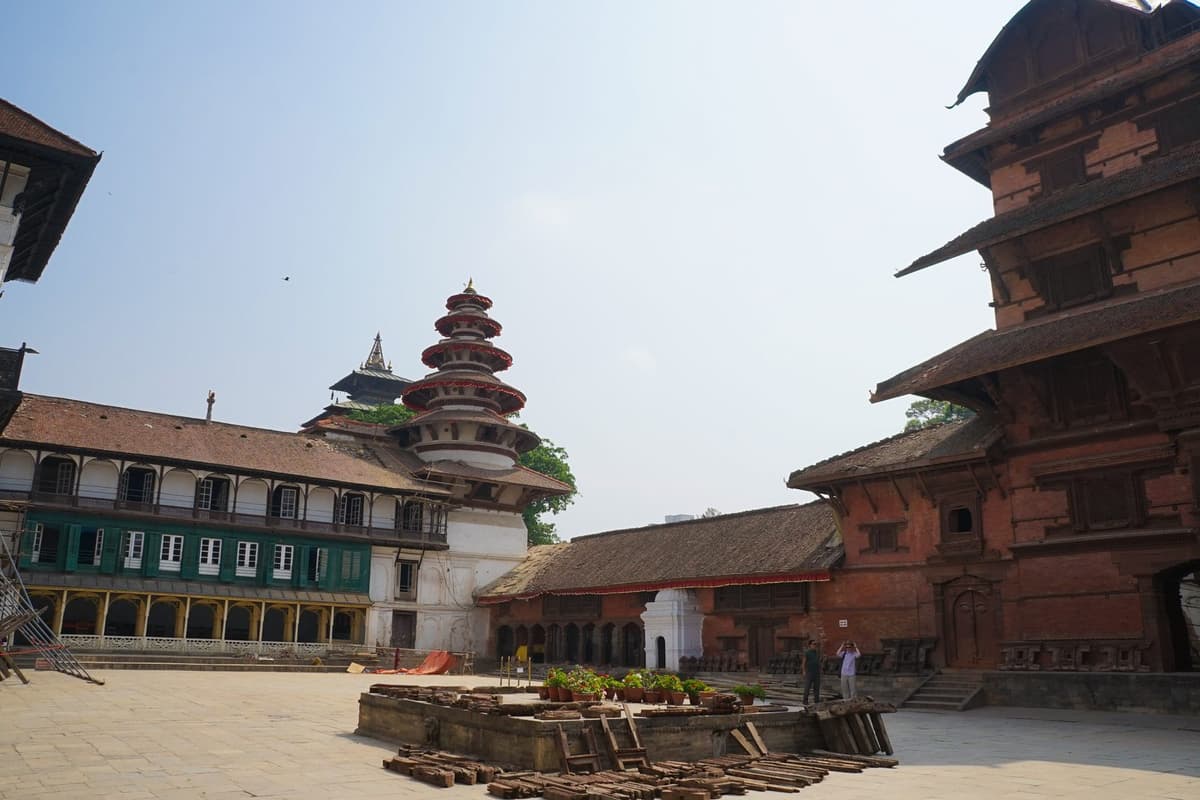
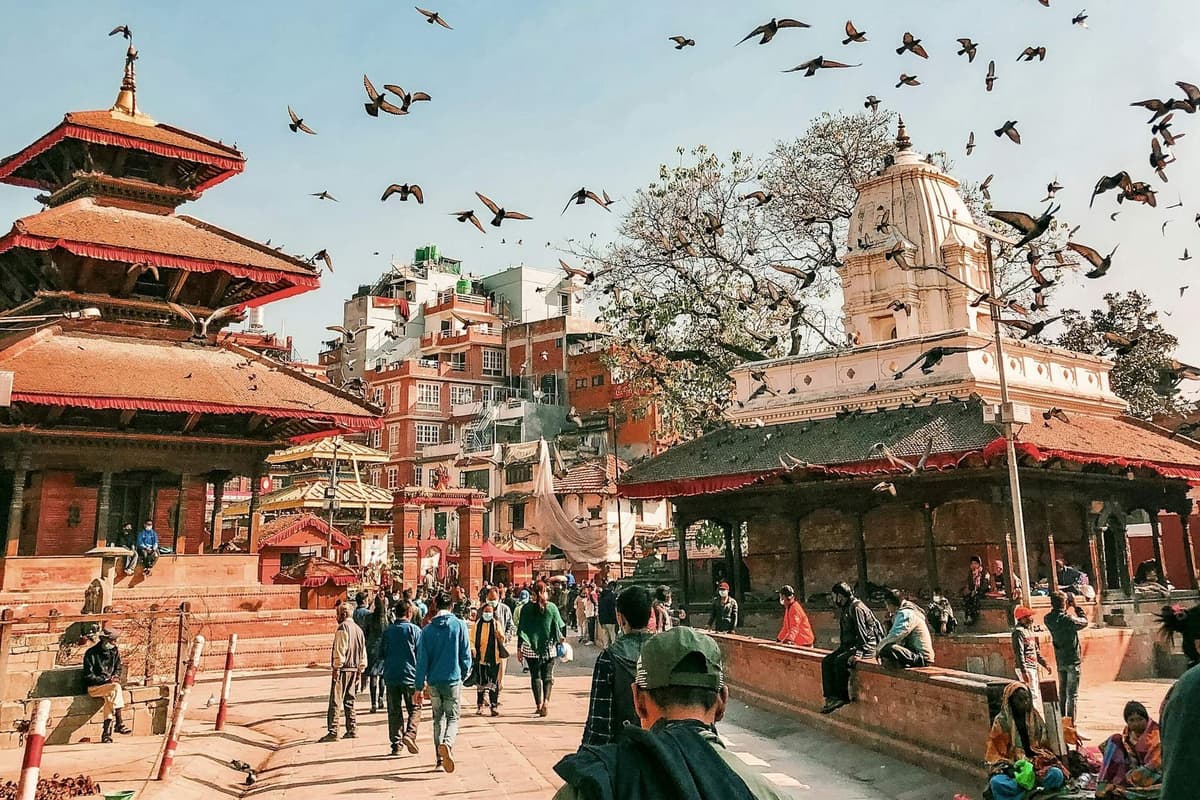
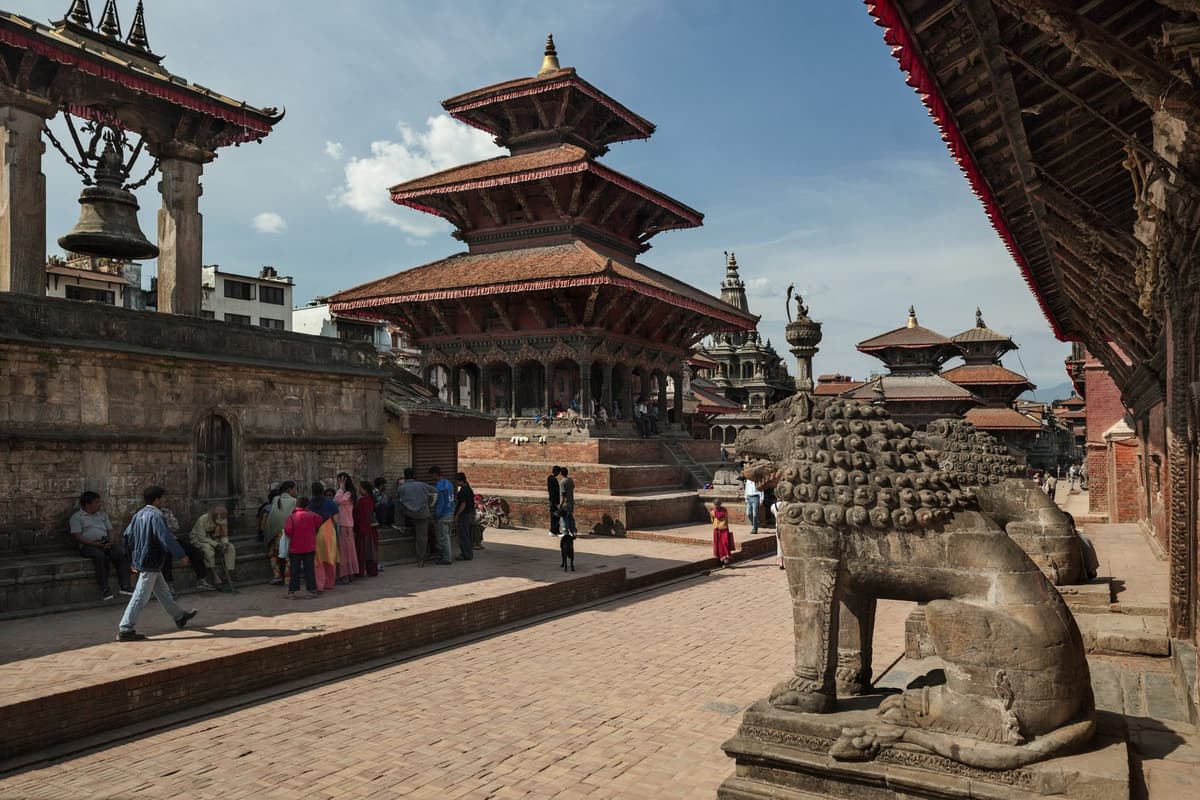
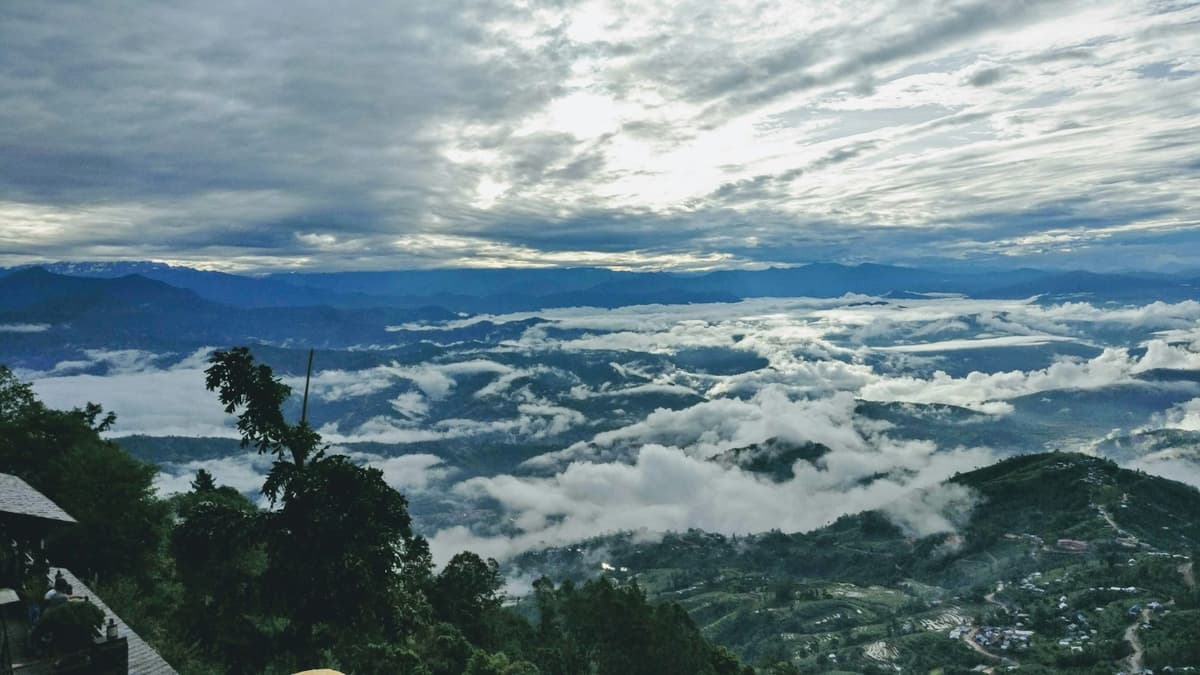
By Uncover Nepal Team · Checked by our Kathmandu travel team · Last checked 27 October 2026
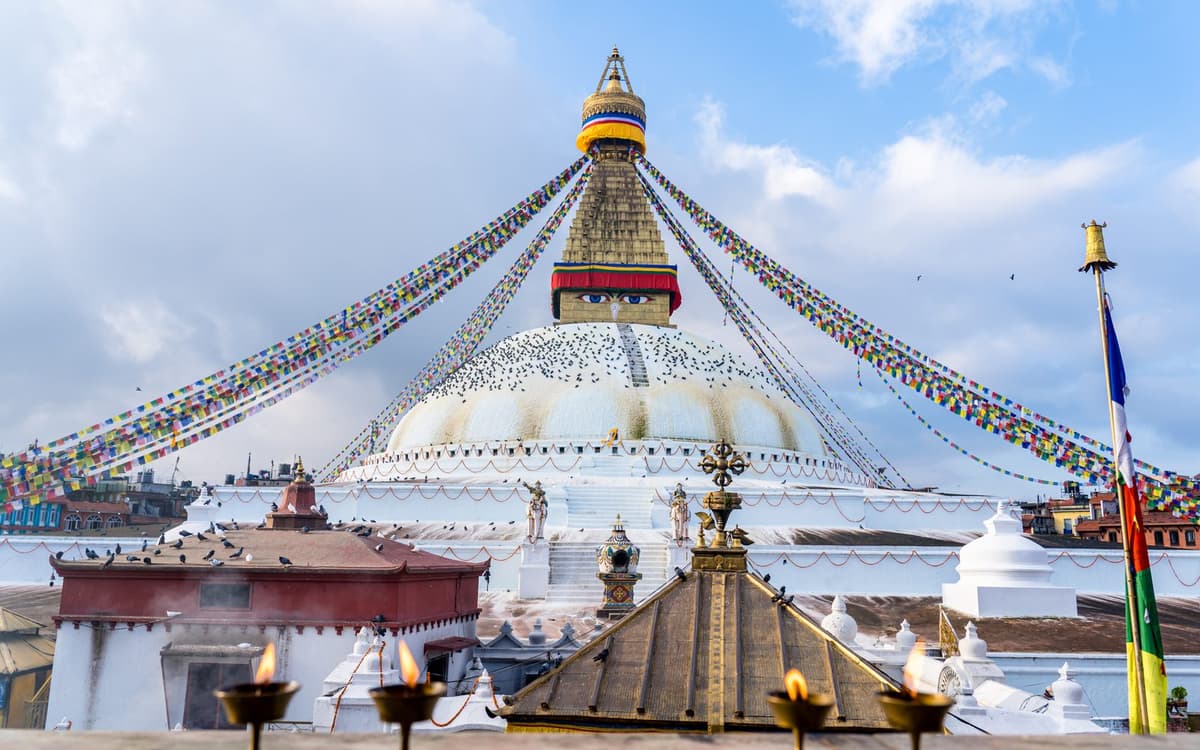
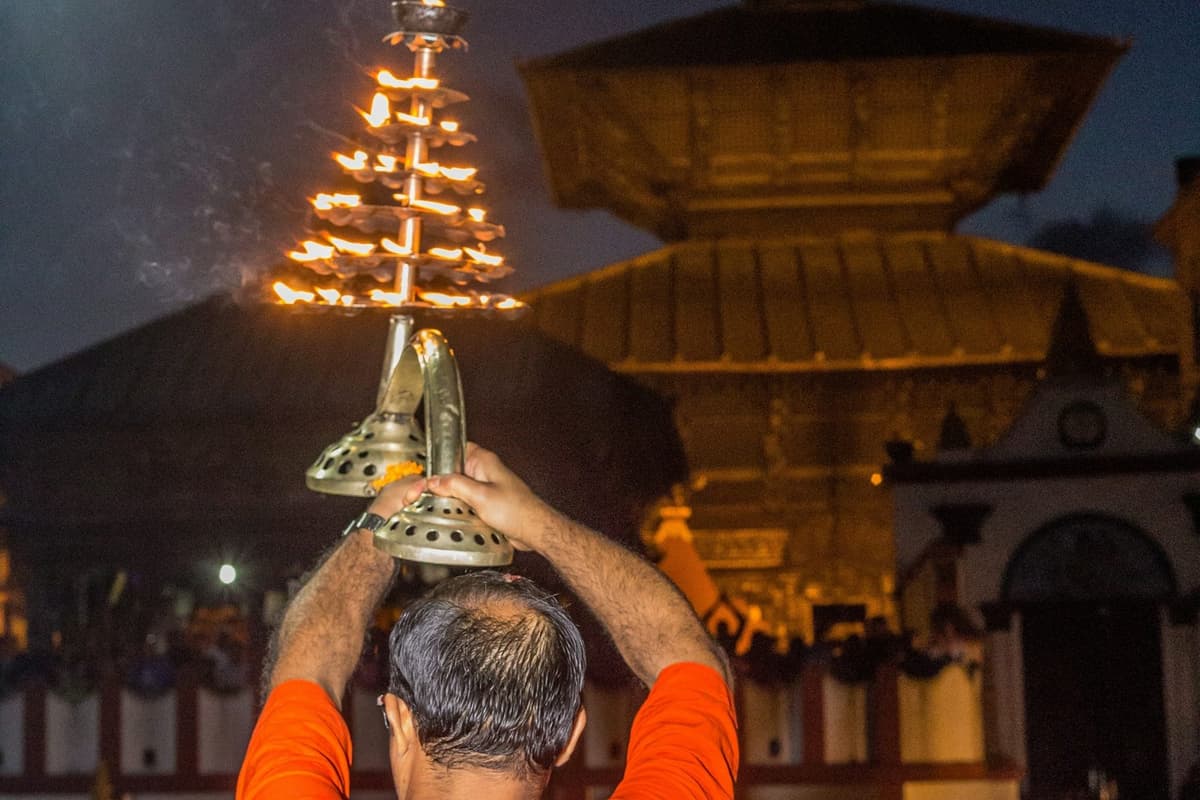
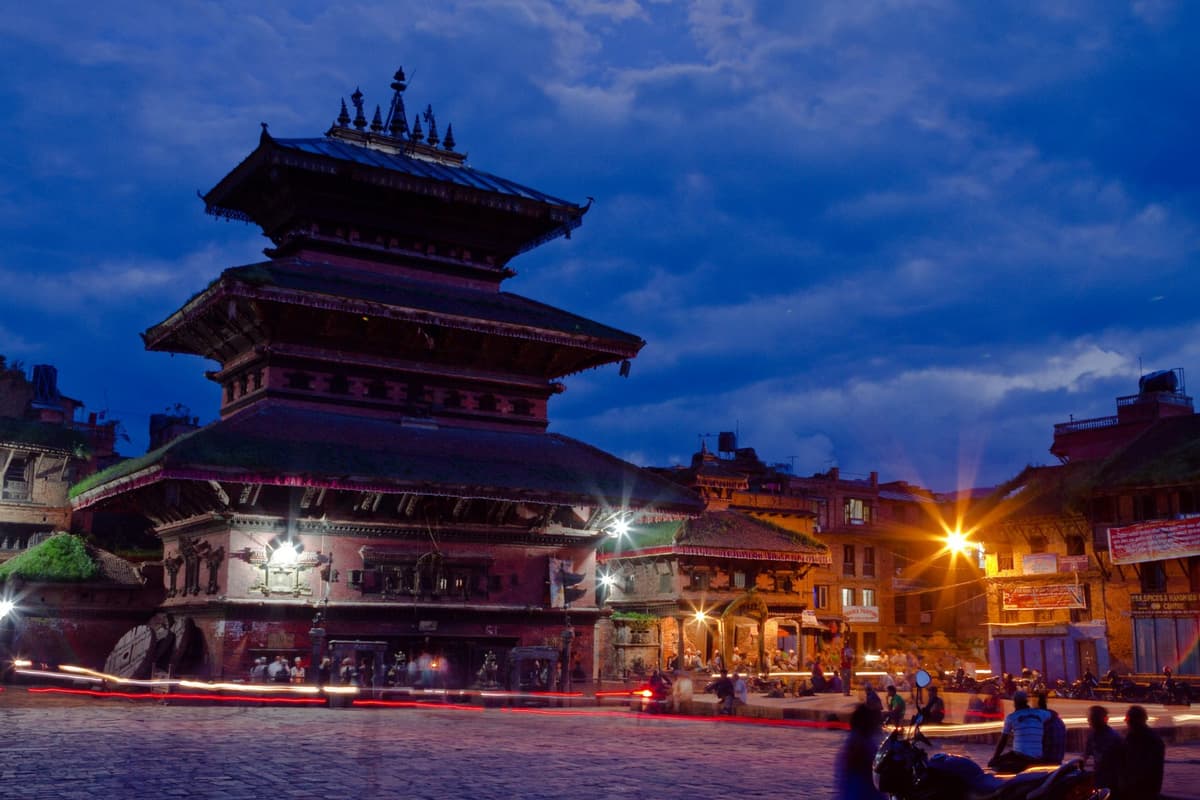
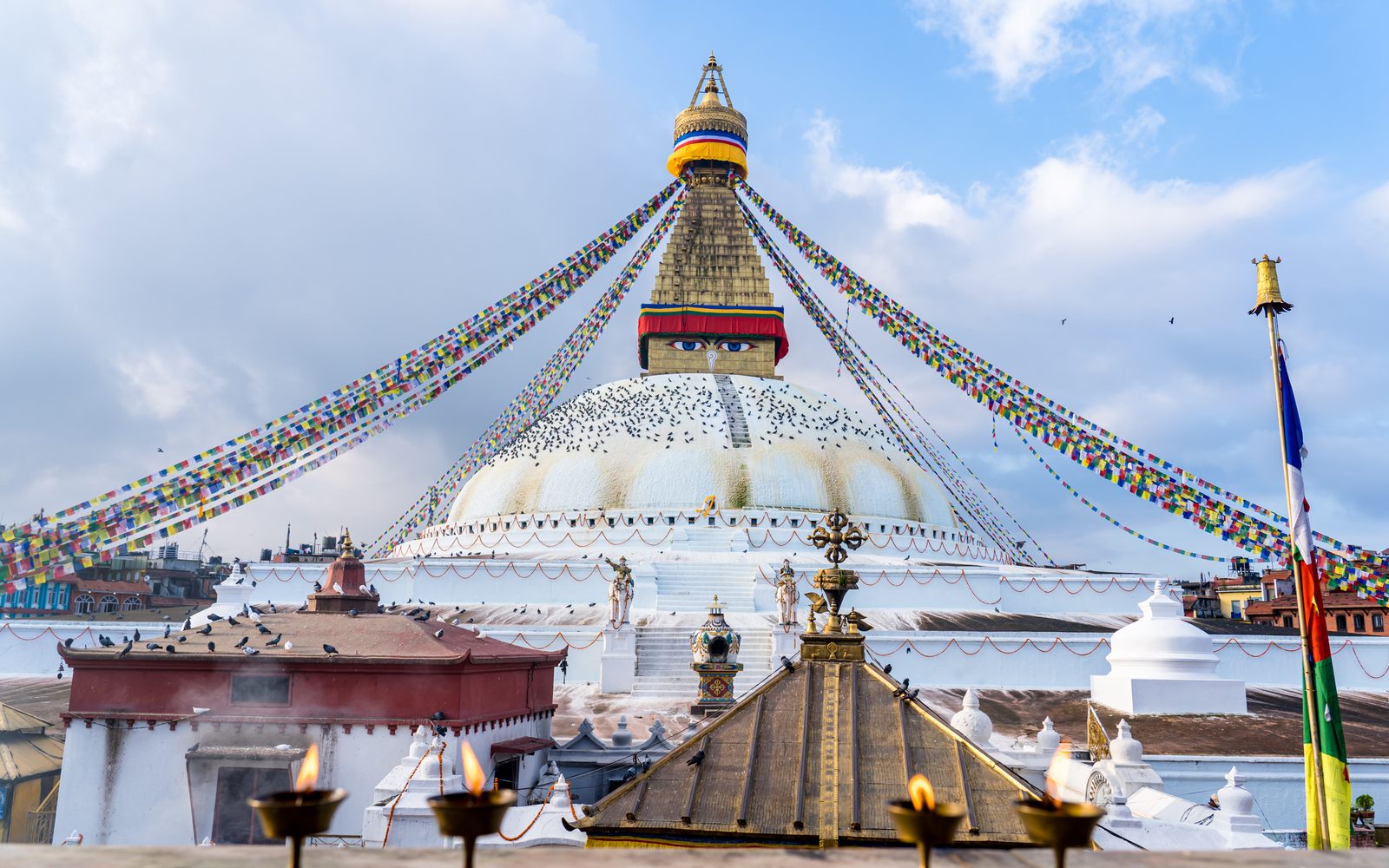
At first light in Boudhanath, older Tibetan women walk clockwise round the great white stupa, turning the prayer wheels set into its base, while butter lamps burn in the monastery doorways. Across the city, around dusk, bells ring out at Pashupatinath and the evening aarti begins on the stone steps of the Bagmati. Both scenes happen every day, and both are a short drive from where we work.
A Nepal pilgrimage usually means a handful of places: Pashupatinath and Boudhanath in Kathmandu, Lumbini where the Buddha was born, Muktinath high in Mustang, Janakpur for Sita, and Manakamana in Gorkha. This guide covers what each site means, how to reach it, the official fees and how to behave at the gate.
It sits with our other Insights guides, written by the team that plans trips from Kathmandu. We take figures from official sources wherever we can, name each source, and say so where two sources disagree.
In this guide
- Key facts
- Nepal pilgrimage sites compared
- Which are the main Hindu pilgrimage sites?
- Which Buddhist sites should pilgrims visit?
- Which sites are sacred to both Hindus and Buddhists?
- When are the big festivals in 2026-27?
- How should you behave at temples and stupas?
- What do Indian pilgrims need to know?
- Is altitude a problem at Muktinath?
- How do you get between the sites?
- Frequently asked questions
- Planning your pilgrimage with a local team
Key facts
- Pashupatinath status
- One of the seven Monument Zones of the Kathmandu Valley World Heritage Site, inscribed 1979 (UNESCO World Heritage Centre, 14 Oct 2026)
- Pashupatinath opening hours
- 4am to 9pm daily (Pashupati Area Development Trust, 27 Oct 2026)
- Pashupatinath entry, foreign visitors
- NPR 1,000 per day per entry; free for Indian nationals (Nepal Tourism Board, 27 Oct 2026)
- Non-Hindus at Pashupatinath
- Not permitted inside the main sanctum; may watch from the ghats and the eastern bank (PADT; Nepal Tourism Board, 27 Oct 2026)
- Lumbini status
- World Heritage Site, inscribed 1997 (UNESCO World Heritage Centre, 14 Oct 2026)
- Lumbini fee
- Daily conservation fee, lower for Nepali, Indian and SAARC visitors; rates rose in May 2026, check before you go (Lumbini Development Trust, 14 Oct 2026)
- Muktinath altitude
- About 3,800 m, according to NTB (Nepal Tourism Board, 14 Oct 2026)
- Muktinath permit
- Annapurna Conservation Area Permit (ACAP); no restricted-area permit for Lower Mustang (NTNC; Nepal Tourism Board, 27 Oct 2026)
- Altitude risk line
- Sleeping at 2,450 m (8,000 ft) or higher puts unacclimatised travellers at risk, and sometimes lower (CDC Yellow Book 2024, 14 Oct 2026)
- Indian nationals
- No visa needed; carry an accepted ID; Aadhaar is not accepted (Nepal Tourism Board, 27 Oct 2026)
Nepal pilgrimage sites compared
Here are the main sites side by side. "Official fee" means one published by the body that runs the site; where none is published, we say so rather than guess.
| Site | Faith | Where | Access | Official fee (foreign visitors) | Best time |
|---|---|---|---|---|---|
| Pashupatinath | Hindu (Shiva) | Kathmandu, 5 km east of the centre | Taxi to Gaushala, then a short walk | NPR 1,000; free for Indians | Shivaratri; any evening for the aarti |
| Boudhanath | Buddhist | Kathmandu, 8 km east of downtown | Taxi or bus | NPR 400; SAARC NPR 100 | Early morning or late afternoon kora |
| Swayambhunath | Buddhist and Hindu | 3 km west of Kathmandu | Taxi, then the hill | NPR 200; SAARC NPR 50 | Buddha's birthday draws the biggest crowds |
| Lumbini | Buddhist | Rupandehi, about 18 km from Bhairahawa airport (Lumbini Development Trust) | Flight to Bhairahawa, then by road | Daily conservation fee; check the Trust's site | Buddha Jayanti, usually April or May |
| Muktinath | Hindu and Buddhist | Lower Mustang, about 3,800 m | Flight Pokhara to Jomsom, or road via Beni | No temple fee published; ACAP required | Outside the coldest months; check the road |
| Janaki Mandir | Hindu (Sita and Ram) | Janakpur, about 390 km from Kathmandu | 40-minute flight or long drive | None published | Vivah Panchami, 14 December 2026 |
| Manakamana | Hindu (goddess) | Gorkha, above Kurintar | Cable car from Kurintar | No temple fee published; cable-car fare set by the operator | Any day but Tuesday or Saturday, the busiest days |
| Changu Narayan | Hindu (Vishnu) | Bhaktapur district, 12 km east of Kathmandu | Taxi or bus | NTB lists NPR 300, a higher fee is reported at the gate | Any time of year |
In practice: the Kathmandu Valley sites fit easily into your Kathmandu days. Lumbini, Muktinath and Janakpur each need their own travel days.
Which are the main Hindu pilgrimage sites?
The main Hindu sites are Pashupatinath in Kathmandu, Muktinath in Mustang, the Janaki Mandir in Janakpur and Manakamana in Gorkha. Around them sit smaller shrines that matter just as much to local families: Guhyeshwari, Dakshinkali, Budhanilkantha and Changu Narayan in the valley, and Bindhyabasini in Pokhara.
Pashupatinath
The Nepal Tourism Board calls Pashupatinath "the most revered Hindu temple in Nepal". It stands on the banks of the Bagmati, a holy river for Hindus, and UNESCO lists it as one of the seven Monument Zones of the Kathmandu Valley World Heritage Site, inscribed in 1979. UNESCO describes it simply: "Pashupati has an extensive Hindu temple precinct".
The main temple is open from 4am to 9pm, according to the Pashupati Area Development Trust. Foreign visitors pay NPR 1,000 per day per entry, and the same applies to SAARC and Chinese visitors. Indian nationals and Nepalis enter free.
Only Hindus may go inside the main sanctum. Everyone else watches from the ghats (the stone steps down to the river) and from the terraces on the eastern bank. That view is the best way to take in the whole complex anyway.
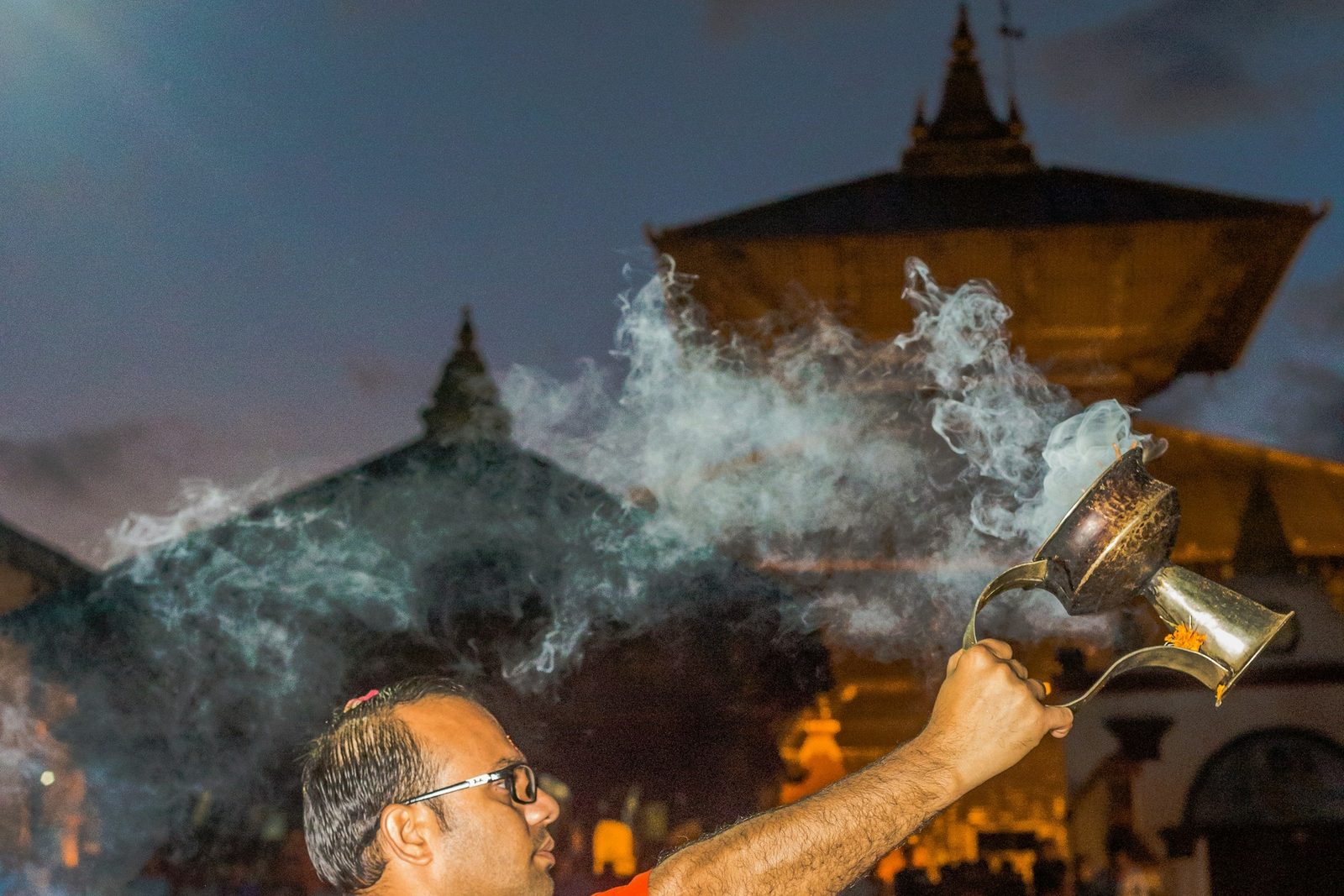
The evening aarti is the reason many people come. Aarti is worship with lamps, bells and song. It begins around dusk on the Bagmati ghats, and visitors of all backgrounds may watch it from the eastern bank. The Trust's own site shows two different start times, so check the time with the Trust on the day.
You will also pass cremations on the riverbank. Families are saying goodbye to someone they love. Please do not photograph cremations or mourners.
Shivaratri, the night of Shiva, is the most important festival here. Women gather for Teej, and every Ekadashi (the eleventh day of the lunar fortnight) brings worshippers, especially Harishayani in the month of Ashadh and Haribodhini in Kartik.
Guhyeshwari
Close to Pashupatinath on the Bagmati is Guhyeshwari, a Shakti Peeth, meaning a seat of the goddess. NTB notes that non-Hindus are denied entry here too.
Janakpur and the Janaki Mandir
Janakpur, in the plains of the south-east, is the birthplace of Janaki, better known as Sita, and in the Ramayana tradition it was the capital of King Janak's kingdom of Mithila. NTB says the town has had "special significance for Indian travelers since centuries", and it draws Thai travellers too.
The Janaki Mandir is the main attraction. NTB describes it as a three-storey temple of 60 rooms, "the largest temple in Nepal", built in a blend of Mughal and local styles. The Ram Janaki Temple is on Nepal's UNESCO Tentative List, submitted in 2008, but is not a World Heritage Site.
The biggest day is Vivah Panchami, which marks the wedding of Ram and Sita. NTB says it falls in December, and in 2026 it falls on 14 December, per the Nepali calendar.
Janakpur is about 390 km from Kathmandu, roughly a 10-hour drive, or a 40-minute flight. No official entry fee is published for the temple.
In practice: the flight leaves you far more time at the temple than the drive.
Manakamana
Manakamana means "having one's wishes fulfilled". The goddess is enshrined as a shila (a sacred stone) inside a two-tiered pagoda. The temple sits on a hill of about 1,300 m, according to the cable-car operator.
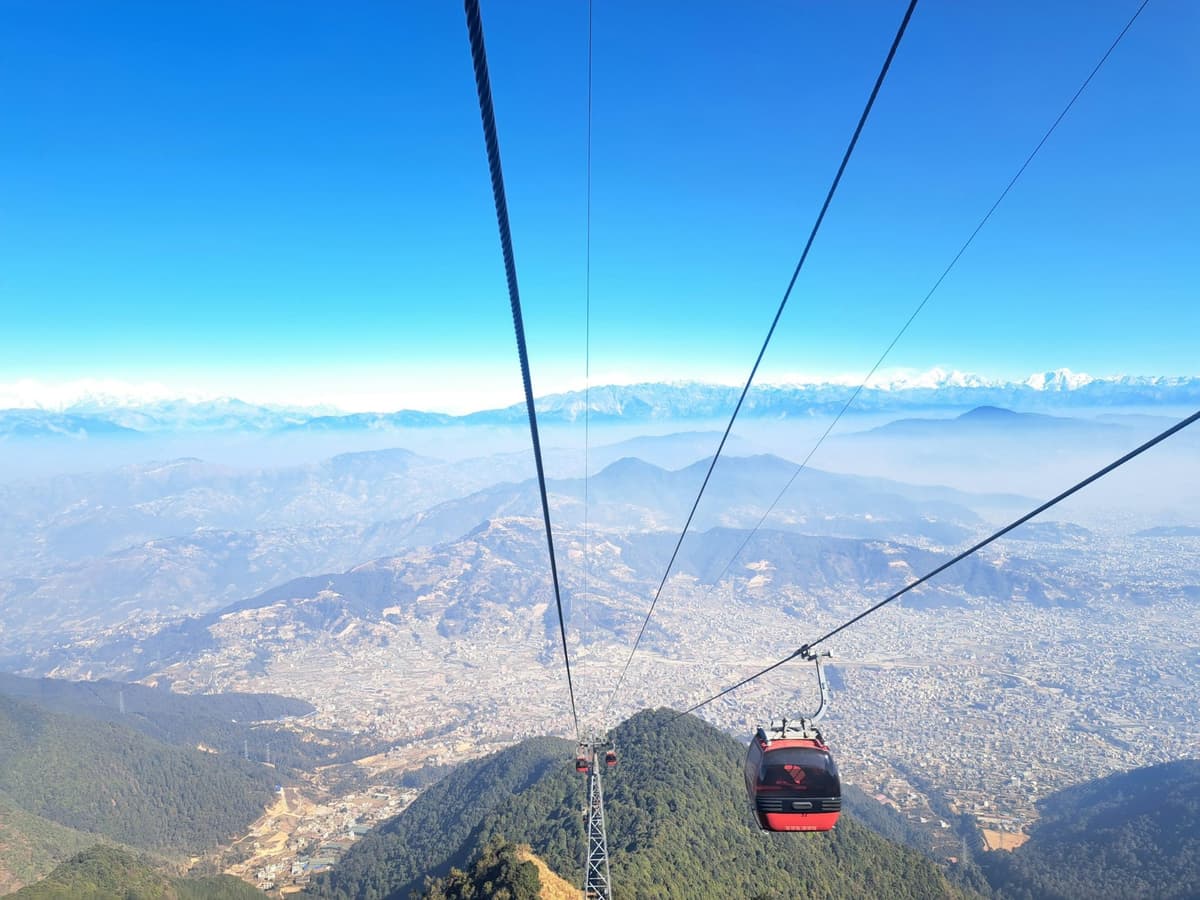
Most pilgrims ride the cable car up from Kurintar on the main highway. NTB calls it a 10-minute ride, and the operator gives the line as 3 km long, with six passengers per cabin, rising from 258 m at the base to 1,302 m at the top. It was Nepal's first commercial cable car, opened on 24 November 1998.
The operator publishes its own fares. A return adult ticket is listed at US$ 20 for most foreign visitors, US$ 10 for SAARC and Chinese visitors, INR 670 for Indians and Rs 770 for Nepalis. Tickets are non-refundable and valid for seven days from purchase, and the operator says rates can change without notice. The cable car runs from 8am to 5pm with a break from 12 noon to 1.30pm.
Saturdays and Tuesdays see the biggest crowds. You can also walk up from the highway, a steep walk of several hours.
In practice: go on any day but Tuesday or Saturday, and avoid reaching the base station just before the lunch break.
Kathmandu Valley shrines
Dakshinkali is a major Kali shrine at Pharping, on the southern rim of the valley, 22 km from Kathmandu. It is busiest on Tuesdays and Saturdays, when ritual animal sacrifices are offered, and during Dashain. For the families who come, it is an act of faith; if you would rather not see it, choose another day.
Budhanilkantha lies 9 km north of the city at the foot of the Shivapuri hills. A five-metre granite Vishnu, carved from a single rock in the Licchavi period, reclines on a bed of snakes in a pond. Fairs are held on Harishayani and Haribodhini Ekadashi.
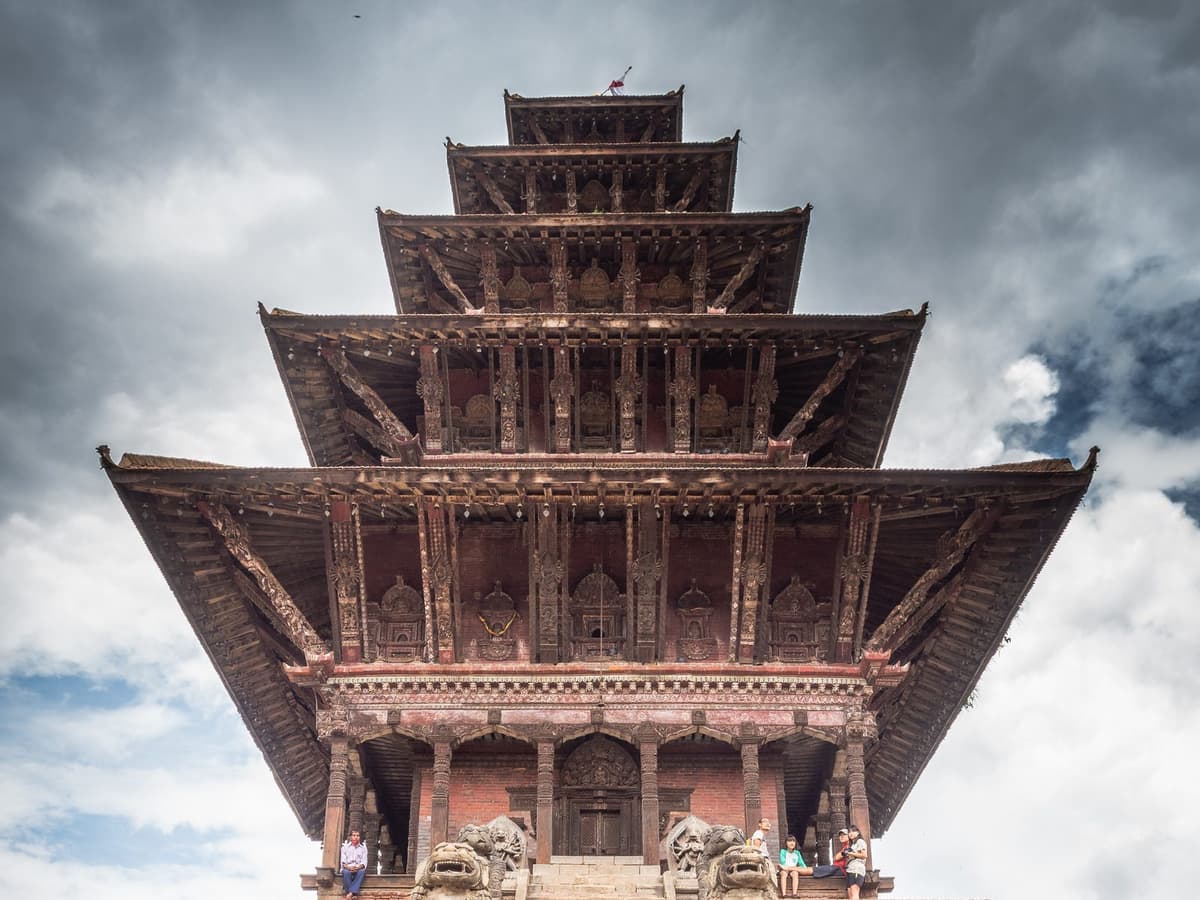
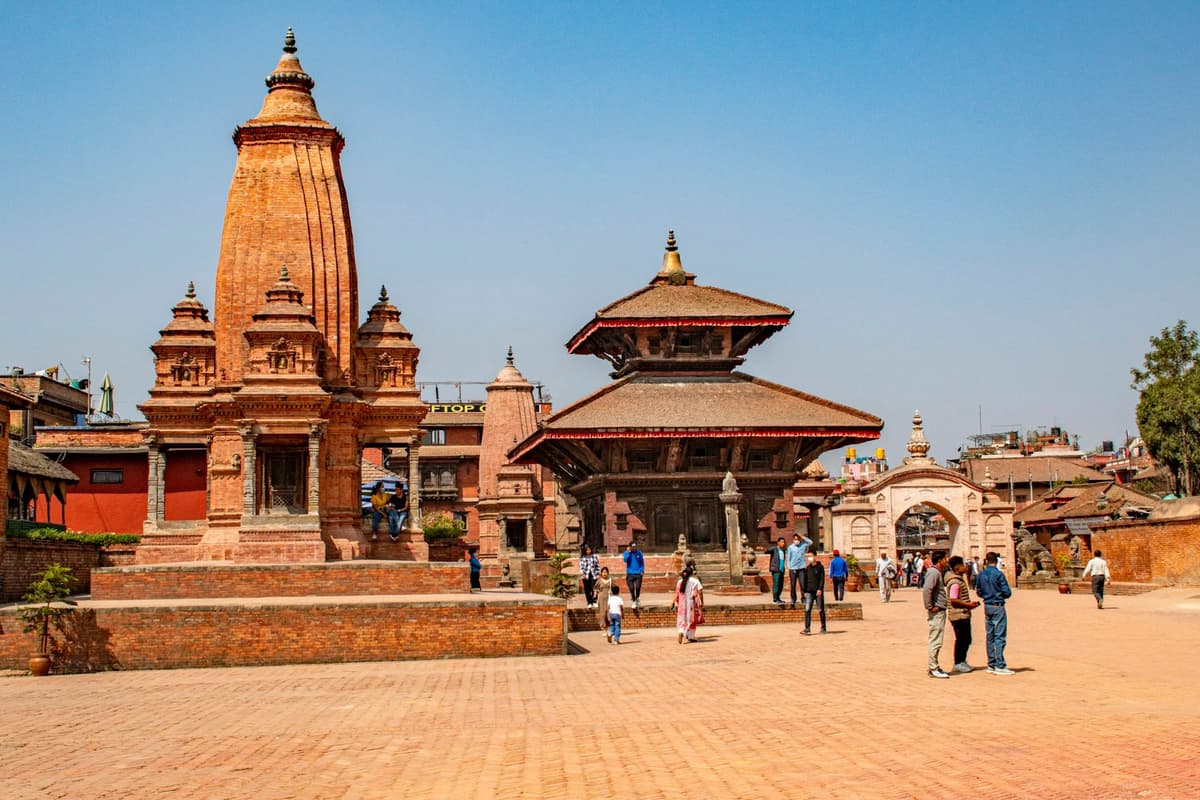
Changu Narayan is a Vishnu temple 12 km east of Kathmandu in Bhaktapur district. UNESCO lists it as one of the valley's Monument Zones, with one of the earliest inscriptions in the valley, from the fifth century AD. It was rebuilt in 1702 after a fire. NTB lists NPR 300 for foreign visitors, but a higher fee has been reported at the gate, so check there.
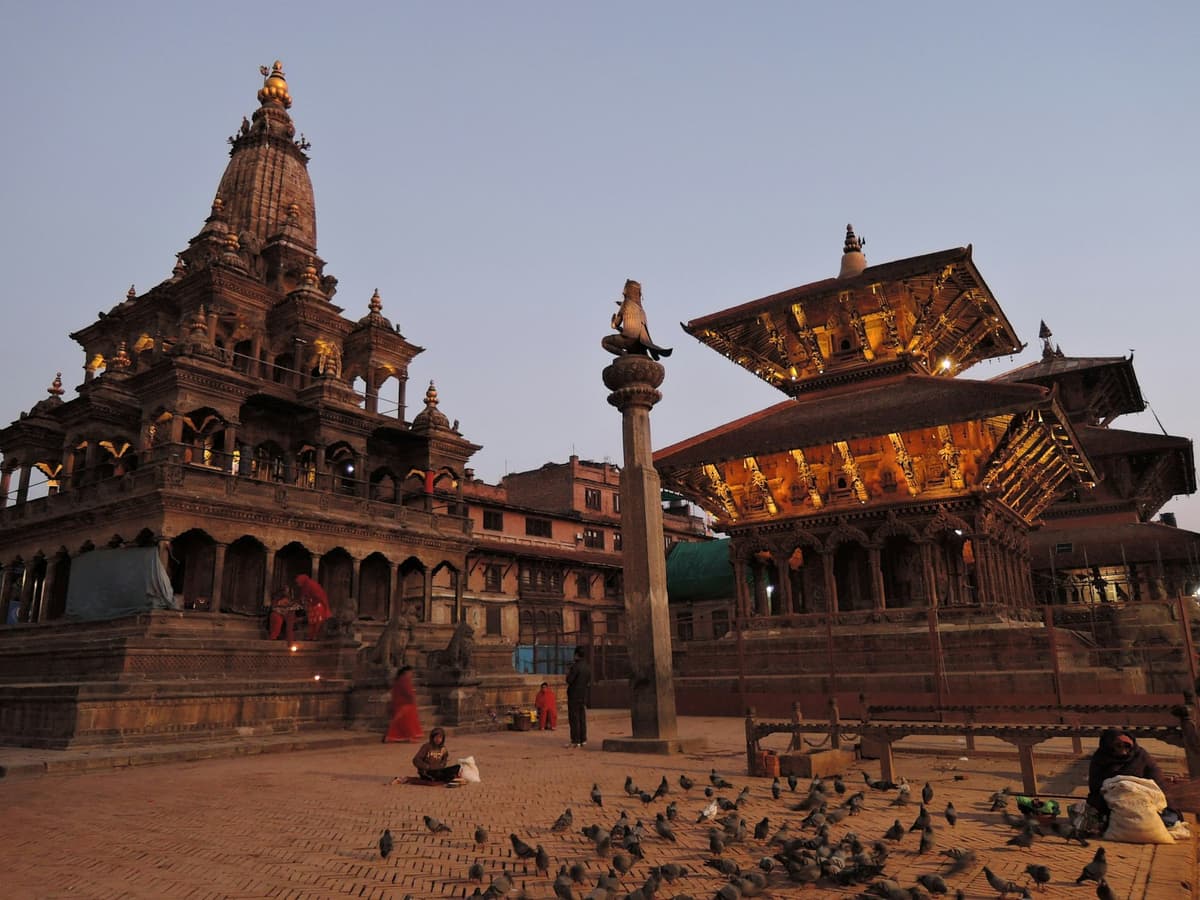
For the valley's other temples and squares, see our guide to places to visit in Kathmandu.
Gorkha and Pokhara
Gorkha takes its name from the saint Gorakhnath and the goddess Gorakh Kali. Gorkha Durbar, the 16th-century hilltop palace of Ram Shah, is about an hour's walk up from the bazaar. Gorkha is about four hours from Kathmandu via Kurintar, so it pairs naturally with Manakamana.
In Pokhara, Bindhyabasini is the town's most famous temple, enshrining the goddess Durga in the old town. Legend links it to Bindhyachal in Uttar Pradesh.
Further afield: Gosaikunda
Gosaikunda is a sacred lake at 4,380 m in Rasuwa and a major Hindu pilgrimage, the source of the Trishuli river. Legend says Shiva, as Nilkantha, made it to cool his throat, and devotees bathe there on Janai Purnima. It sits inside Langtang National Park and is reached on foot at high altitude, so check the current trail status before you plan it.
Which Buddhist sites should pilgrims visit?
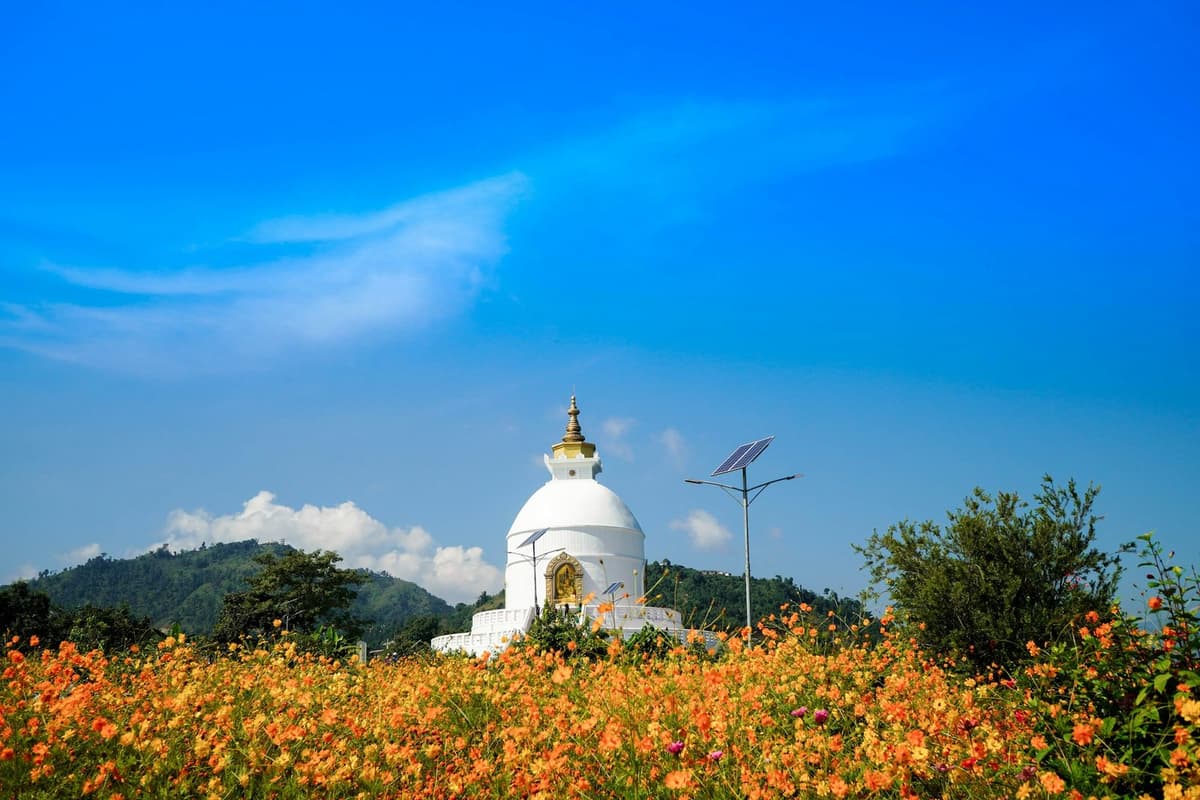
The essential Buddhist sites are Lumbini, where the Buddha was born, and Boudhanath and Swayambhunath in Kathmandu. Many pilgrims add Namobuddha near Panauti and Kopan Monastery above Boudhanath. Lumbini needs its own trip south; the rest fit into Kathmandu days.
Lumbini
"Siddhartha Gautama, the Lord Buddha, was born in 623 B.C. in the famous gardens of Lumbini"
UNESCO World Heritage Centre, Lumbini, the Birthplace of the Lord Buddha
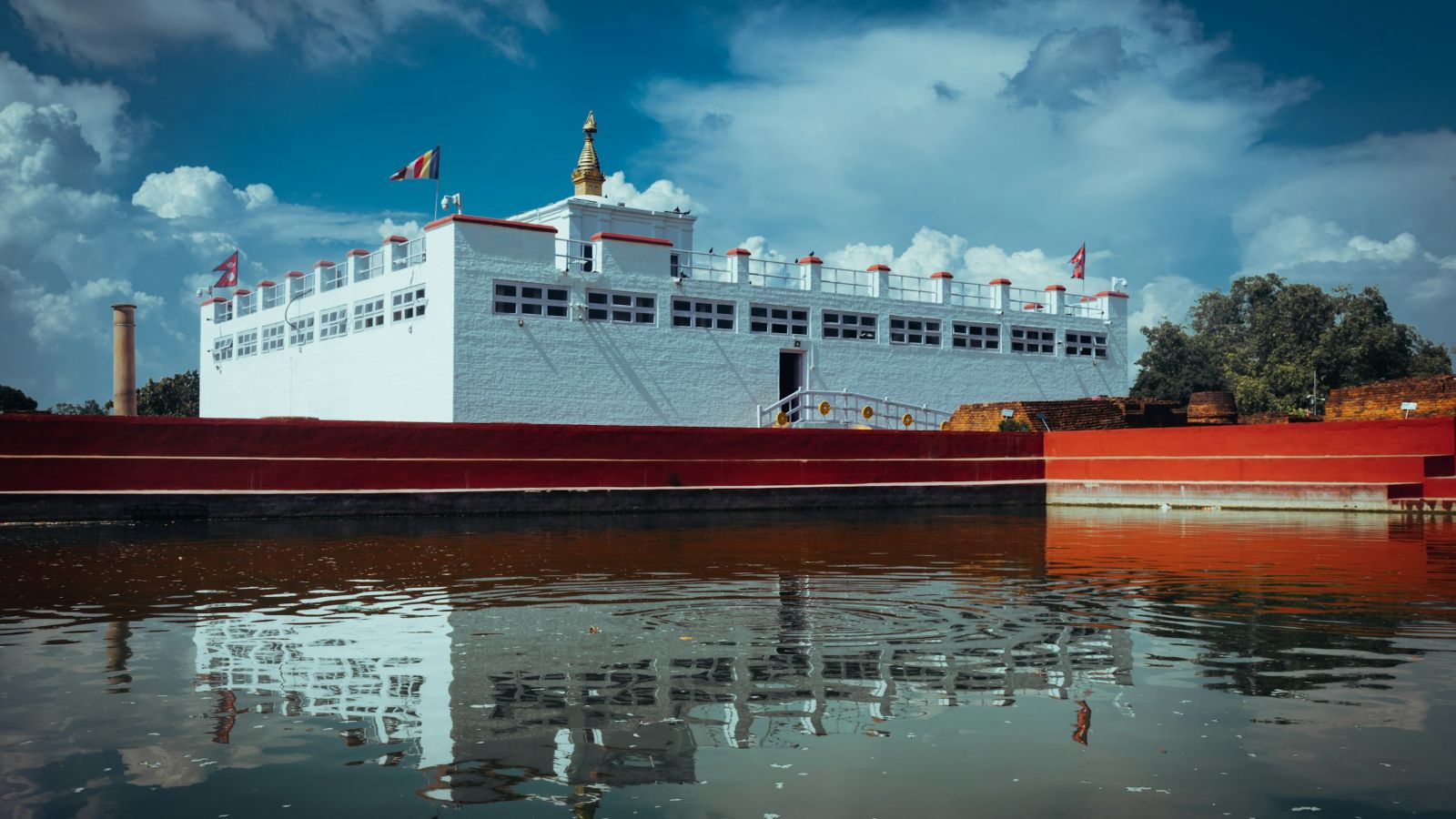
Lumbini, in Rupandehi district in the southern plains, was inscribed as a World Heritage Site in 1997. The heart of it is the Maya Devi Temple, named after the Buddha's mother. Excavations revealed a marker stone at the spot of the birth.
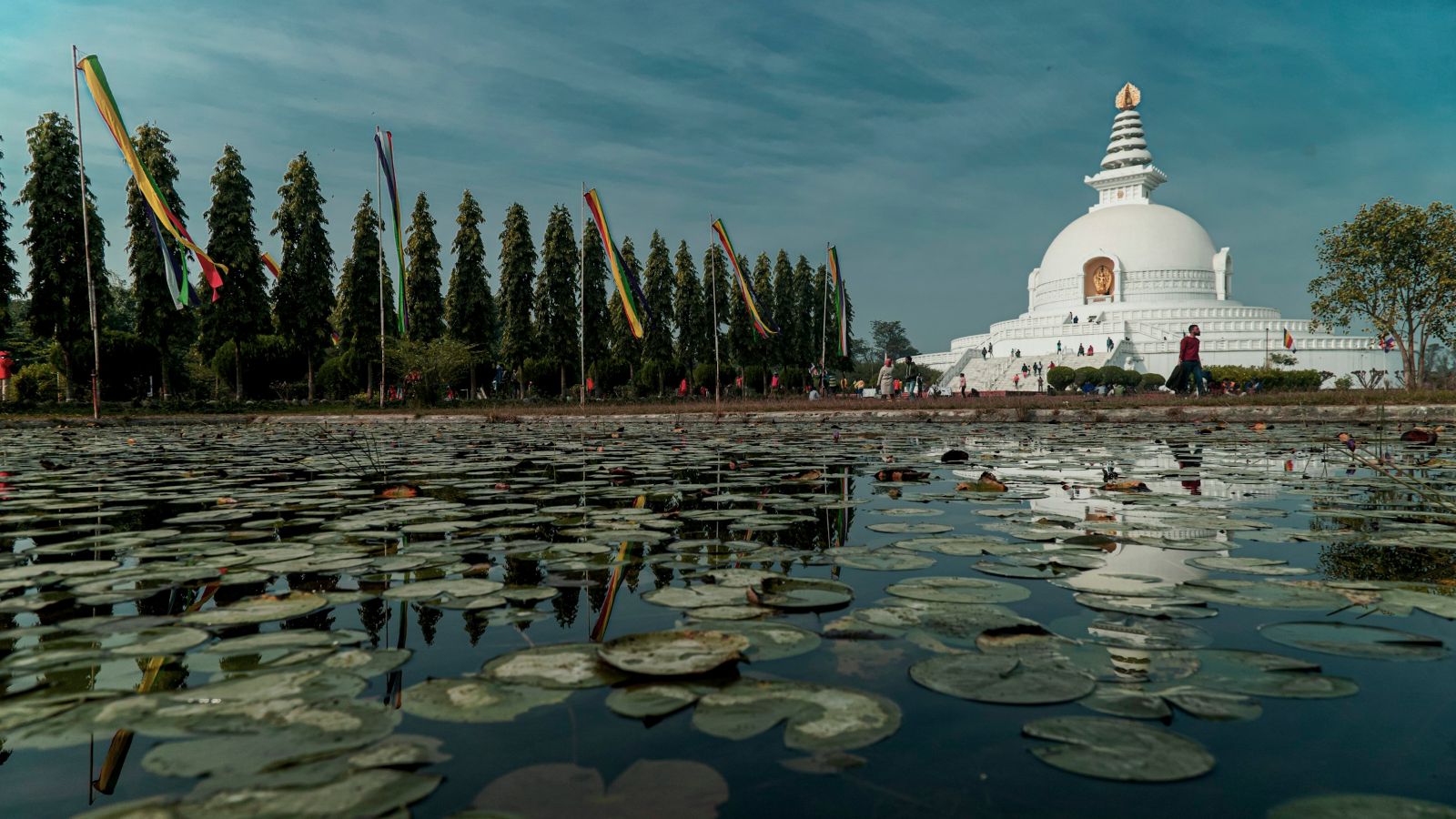
Next to it stands the Ashoka pillar, which UNESCO says was erected by the Mauryan Emperor Asoka in 249 BC. It is sandstone, with a Pali inscription in Brahmi script. Around the sacred garden is the monastic zone, with temples and monasteries built by countries including China, India, Japan, Mongolia, Myanmar, South Korea, Sri Lanka and Thailand.
The Lumbini Development Trust charges a daily conservation fee, lower for Nepali, Indian and SAARC visitors. Rates rose in May 2026, so check the Trust's site or buy online. Tickets are mandatory, and you can pay in cash, by QR code or online at the Trust's ticket site, tickets.lumbinidevtrust.gov.np. A separate daily camera fee applies, and monks, nuns and persons with disabilities are exempt from the conservation fee.
Take your shoes off before entering the temple premises, dress modestly, and leave food and drinks outside. Drones need permission from the district administration office, the civil aviation authority and the Trust.
Lumbini lies about 18 km from Bhairahawa airport, according to the Lumbini Development Trust. The flight from Kathmandu to Bhairahawa takes about 30 minutes, and the drive on to Lumbini about another 30. Bhairahawa's airport is also known as Gautam Buddha International Airport.
In practice: the sacred garden is flat but the monastic zone is spread out. Plan a full day, and hire a bicycle or rickshaw between monasteries.
Boudhanath
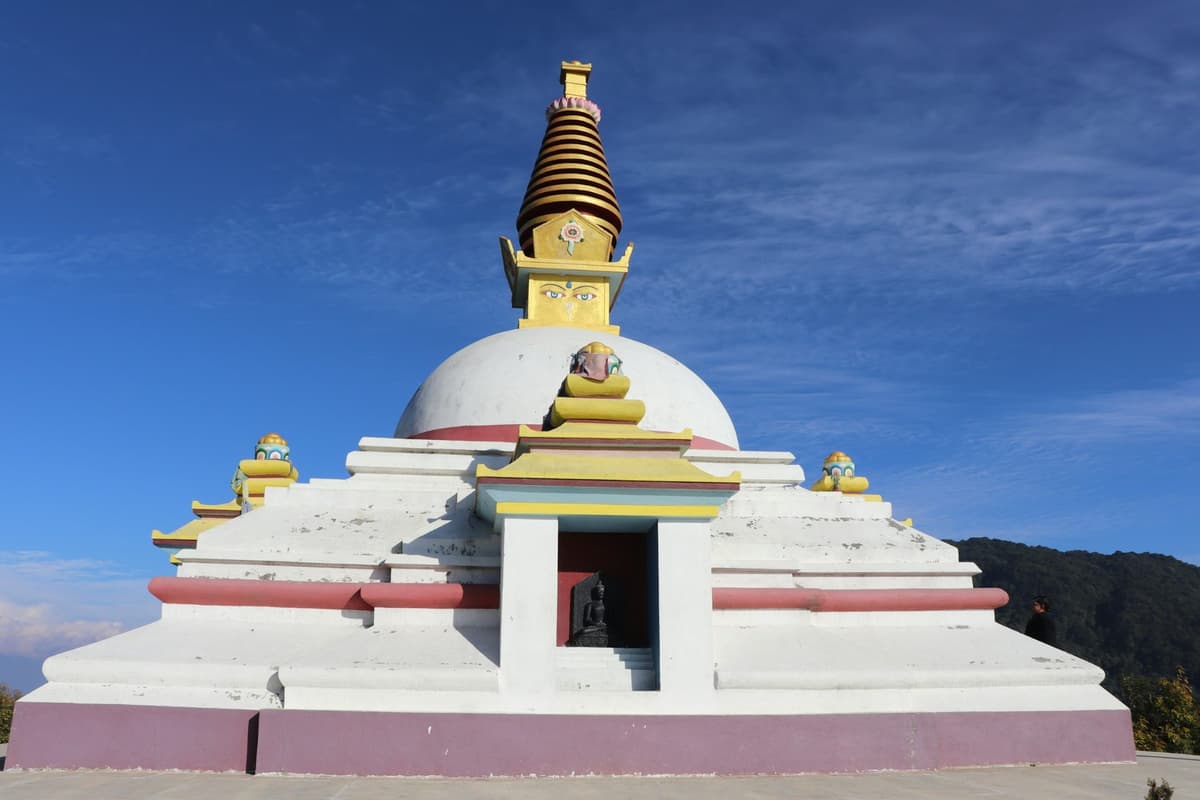
NTB calls Boudhanath "the largest stupa in the Kathmandu Valley" and "the center of Himalayan Buddhism". UNESCO says the Bauddhanath zone "includes the largest stupa in Nepal". A stupa is a domed monument built over relics, and you walk round it clockwise. That walk is called a kora.
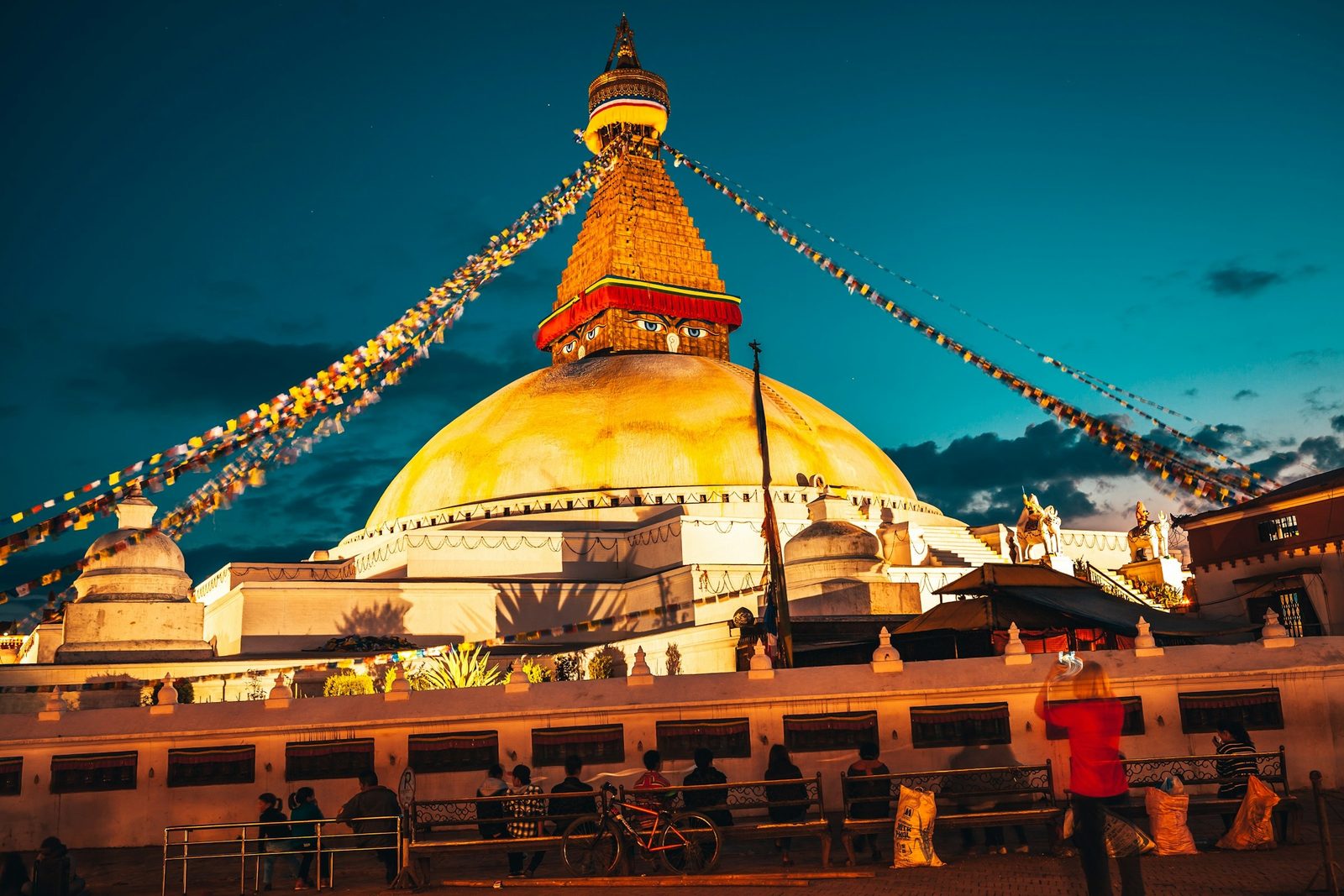
It lies 8 km east of downtown Kathmandu. Foreign visitors pay NPR 400, SAARC visitors NPR 100, and children under 10 and Nepalis enter free.
Local families walk the kora early in the morning and again in the late afternoon. Join them, keep the stupa on your right, and do not rush.
Kopan Monastery
On a hillock north of Boudhanath is Kopan Monastery, of the Gelugpa order, established in 1970. It is known for its courses on Tibetan Buddhism, attended by many Western students. No official hours or fee are published, so ask before you go.
Namobuddha
Namobuddha, near Panauti in Kavre, is where legend says one of the earlier Buddhas gave his own flesh to a starving tigress and her cubs. A small stupa marks the place of the sacrifice. NTB describes it as a three-hour trek from Dhulikhel or Panauti, both about an hour's drive from Kathmandu.
In practice: Namobuddha makes a quiet day out from Kathmandu, and the walk from Dhulikhel suits anyone who is comfortable on country paths for a few hours. For more ideas, see our guide to Kathmandu day trips.
Which sites are sacred to both Hindus and Buddhists?
Muktinath and Swayambhunath are the clearest examples: at both, Hindus and Buddhists worship side by side, often at the same shrine. Halesi in eastern Nepal is shared by Hindus, Buddhists and Kirati worshippers. In Nepal this is normal. Many families visit a temple and a stupa on the same morning.
Muktinath
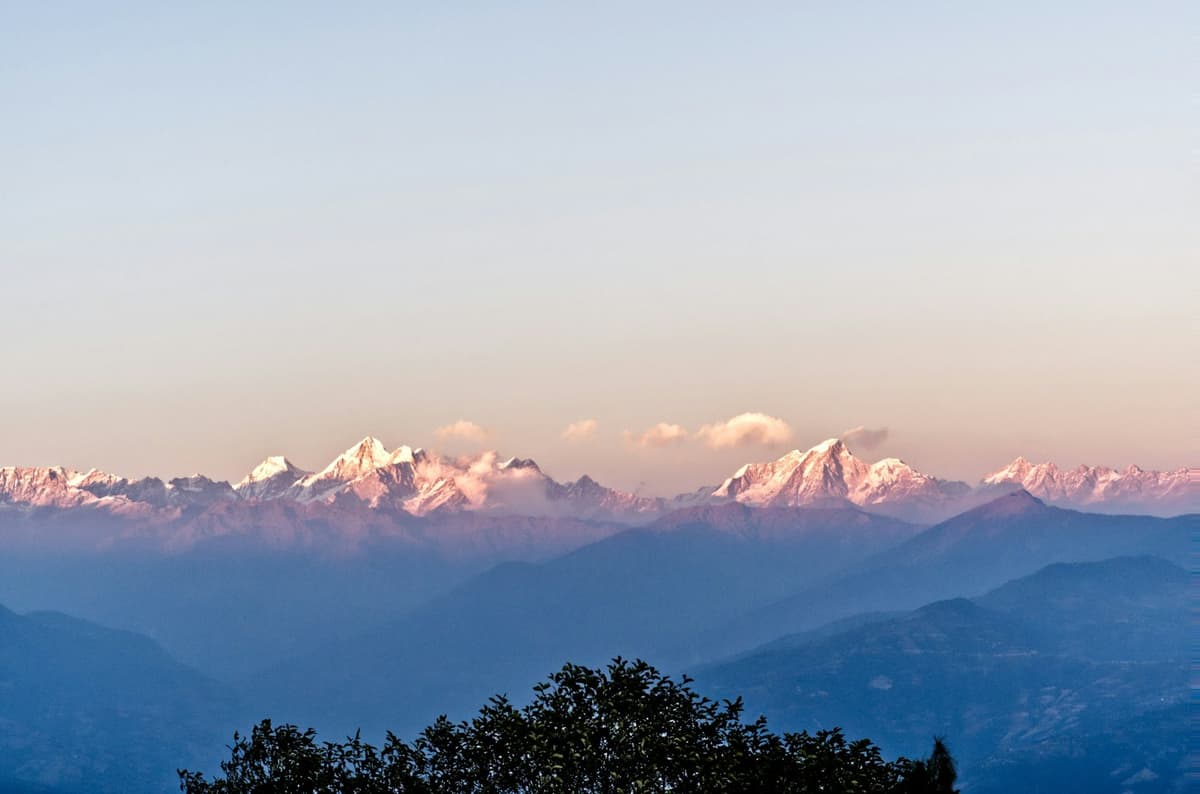
Muktinath stands at about 3,800 m, according to NTB, in Lower Mustang. NTB says the site "is sacred to both Hindus and Buddhists". Hindus worship Vishnu here, and Buddhists worship him as Avalokiteshwar, and both Buddhist nuns and Brahmin priests worship at the temple. For Hindus it is a dham (a holy abode), and the place, Mukti Kshetra, is mentioned in the Ramayana, the Barah Purana and the Skanda Purana.
Pilgrims take a ritual bath under the 108 sacred water spouts. Bring a towel and dry clothes. Nearby, the Jwala Mai temple, sacred to both faiths, holds an eternal blue flame. The pagoda-style main temple is believed to date from the beginning of the 19th century, and its Vishnu idol is considered to date from the 16th century.
Many Hindu pilgrims also look for shaligram, the black fossil stones from the Kali Gandaki river that Hindus hold sacred. The cave architecture of the Muktinath Valley is on Nepal's UNESCO Tentative List, submitted in 1996, but it is not a World Heritage Site.
You need an Annapurna Conservation Area Permit (ACAP): NPR 3,000 for foreigners and NPR 1,000 for SAARC nationals, tax included, and double if issued at a checkpost. No restricted-area permit is needed for Lower Mustang. When you travel with us, we arrange the ACAP permit before you set off.
Our Mustang tour by flight and road and our Mustang and Pokhara tour by road both visit Muktinath.
Swayambhunath
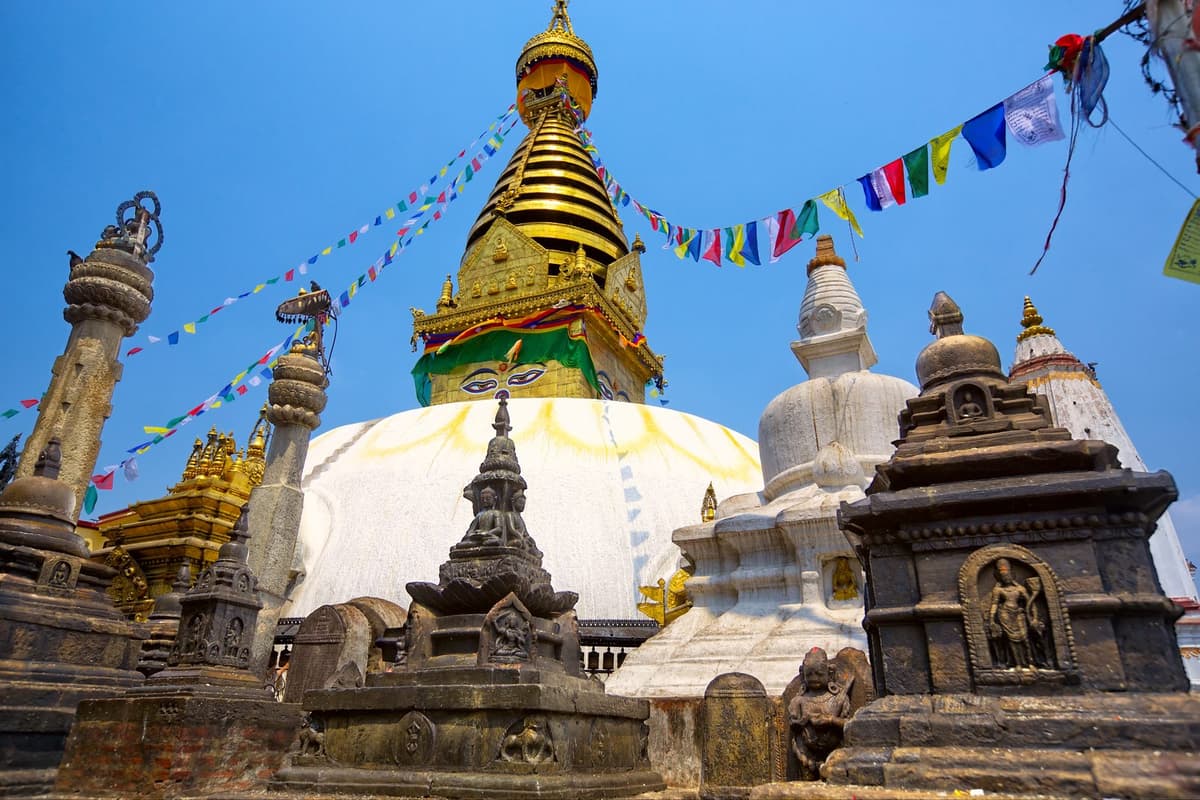
Swayambhunath sits on a hill 3 km west of Kathmandu. UNESCO calls it "the oldest Buddhist monument (a stupa) in the Valley", and NTB says it is believed to date back to 460 AD, built by King Manadeva. Hindu and Buddhist deities stand together around the stupa, and the largest crowds come on the Buddha's birthday.
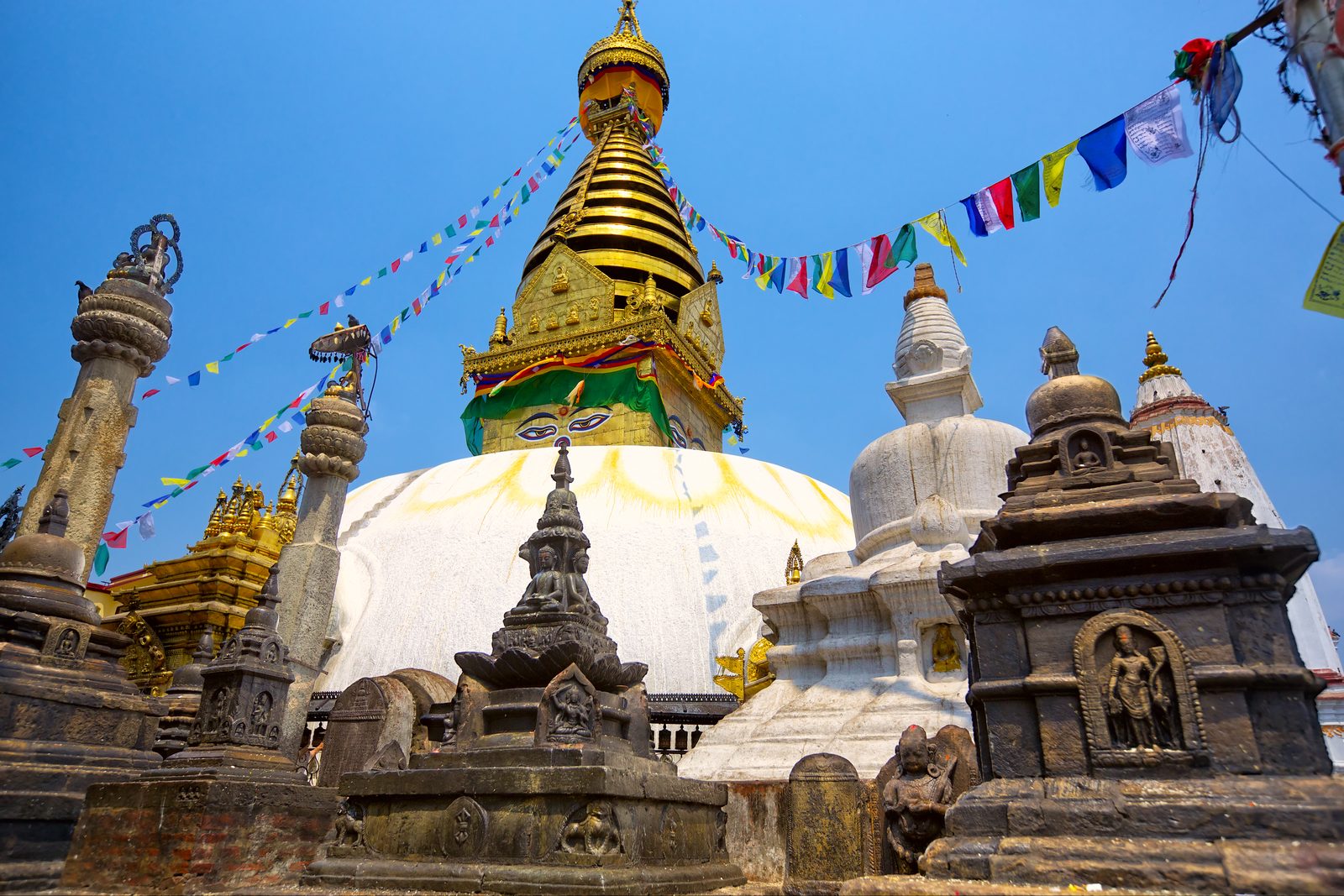
Foreign visitors pay NPR 200, SAARC visitors NPR 50, and children under 10 and Nepalis enter free. The monkeys are bold, so keep food in your bag.
Halesi
Halesidham, in Khotang district in the east, is a cave shrine holy to Hindus, Buddhists and the Kirati, whose own faith is rooted in eastern Nepal. Hindus worship the Shiva Linga in the cave, and Buddhists link the site to Guru Padmasambhava. It is roughly 10 hours by jeep from Kathmandu, or about a 30-minute flight to Lamidanda and then a jeep.
When are the big festivals in 2026-27?
The big dates in the coming months are Tihar in November, Vivah Panchami in Janakpur on 14 December 2026, Maha Shivaratri at Pashupatinath on 6 March 2027 and Buddha Jayanti, expected on 20 May 2027. Lunar dates move every year, so always confirm on the official calendar.
| Festival | 2026-27 date | Where pilgrims gather | Source |
|---|---|---|---|
| Tihar public holiday | 8 to 12 November 2026 | Homes across Nepal | Ministry of Home Affairs holiday list |
| Bala Chaturdashi | 7 December 2026, per the Nepali calendar | Listed among Halesi's festivals | Nepali calendar |
| Vivah Panchami | 14 December 2026, per the Nepali calendar | Janaki Mandir, Janakpur | NTB; Nepali calendar |
| Maha Shivaratri | 6 March 2027 | Pashupatinath; Halesi | Ministry of Home Affairs holiday list |
| Buddha Jayanti | Expected 20 May 2027; confirm on the official calendar | Swayambhunath; Buddhist sites nationwide | Office Holidays; NTB |
| Janai Purnima | Check the official calendar (28 August in 2026) | Gosaikunda | Ministry of Home Affairs holiday list |
| Haritalika Teej | Check the official calendar (14 September in 2026) | Pashupatinath, women only | Ministry of Home Affairs holiday list |
| Ghatasthapana (first day of Dashain) | Check the official calendar (11 October in 2026) | Homes and goddess temples | Ministry of Home Affairs holiday list |
| Dashain public holiday | Check the official calendar (17 to 23 October in 2026) | Goddess shrines, including Dakshinkali | Ministry of Home Affairs holiday list |
| Vijaya Dashami (tika day) | Check the official calendar (21 October in 2026) | Family homes | Nepali calendar |
| Harishayani and Haribodhini Ekadashi | Check the official calendar | Pashupatinath; Budhanilkantha | Nepali calendar |
A few words on the terms. Dashain is Nepal's biggest Hindu festival, honouring the goddess Durga. Tika is the blessing of red rice and yoghurt that elders place on the forehead on Vijaya Dashami. Tihar is the festival of lights that follows.
In practice: festival days are the most moving time to visit, and the most crowded. Around Dashain and Tihar many Nepalis travel home, so roads and hotels are busy. Tell us your dates early if you want to be there for one of them.
How should you behave at temples and stupas?
Take your shoes off where others do, walk clockwise round stupas and shrines, ask before photographing people, and leave leather items behind at Pashupatinath. At Pashupatinath and Guhyeshwari, non-Hindus stay outside the main temple. Follow what local worshippers do and you will rarely go wrong.
Shoes. Shoes come off before temple platforms and before the temple premises at Lumbini. Look for the pile of shoes at the door and add yours. Socks are fine, and in winter the stone floors are cold.
Leather. At Pashupatinath, NTB says leather items "that include shoes, belts and cameras are forbidden within the temple complex". Leave a leather belt, wallet or camera case at the hotel that day.
Clockwise. Walk round stupas, temples and prayer walls with the monument on your right. This is the custom at Boudhanath, Swayambhunath and Muktinath alike. Spin prayer wheels clockwise too.
Photography. Photography is strictly prohibited inside Pashupatinath temple. Never photograph cremations or mourners on the ghats. Elsewhere, ask before you photograph a priest, a monk or someone at prayer. A gesture at the camera is enough, and a no is a no.
Non-Hindus at Pashupatinath. Stay outside the main sanctum and watch from the ghats and the eastern terraces. The same applies at Guhyeshwari.
Dress. Modest clothing is preferred at Lumbini, and it is wise at every site. Cover shoulders and knees. A light scarf is handy.
Offerings and touching. Do not touch offerings, sacred stones or people's heads. Use your right hand to give or receive anything. If a priest offers you prasad (blessed food), accept it with your right hand.
Sacrifice days. At Dakshinkali on Tuesdays and Saturdays, be quiet and respectful, and do not photograph the rite.
In practice: carry a small bag with socks, a scarf and a plastic bag for your shoes. It makes every temple stop easier.
What do Indian pilgrims need to know?
Indian nationals do not need a visa to enter Nepal, but you must carry one of the IDs that NTB accepts, such as a valid passport or an Election Commission of India card. Aadhaar is not accepted as a travel document. Entry is your own arrangement; we take over once you reach Nepal.
Accepted ID. According to NTB's tourist-visa page, Indian nationals need any one of these:
- a valid national passport
- an Election Commission of India card (voter ID)
- for people above 65: a PAN card, driving licence or ration card with photo and age
- for children below 18: an ID from the school principal
Not accepted. NTB says the Aadhaar (UID) card is not an acceptable travel document, and nor is the Embassy of India Certificate of Registration. Bring a passport or voter ID for every adult.
Check the current list on the official NTB tourist-visa page before you travel. We do not arrange visas or entry documents. Travellers of other nationalities can get a visa on arrival, including at Gautam Buddha International Airport in Bhairahawa; the details are on that NTB page, as information only.
Indian currency. The newer INR 200 and INR 500 notes (issued after 2016) may be brought in, taken out or exchanged up to INR 25,000 per person by Nepali or Indian citizens, according to Nepal Rastra Bank as reported in July 2026. Carry some Nepali rupees as well for temple donations and small purchases.
Fees for Indians. Pashupatinath is free for Indian nationals, Lumbini charges Indians a lower conservation fee, and the SAARC rate applies to the ACAP permit for Muktinath. The Manakamana cable car lists a rupee fare for Indians.
In practice: many Indian families combine one Kathmandu Valley circuit with one far site. Tell us your ages, any vegetarian or Jain food needs, and your ID documents, and we will plan around them.
Is altitude a problem at Muktinath?
Yes, it can be. Muktinath stands at about 3,800 m, according to NTB, well above the 2,450 m (8,000 ft) sleeping elevation at which the CDC says unacclimatised travellers are at risk of altitude illness. A fast jeep trip up from Jomsom is a big height gain in one day, so go slowly.
The CDC's advice is to avoid going straight to a sleeping elevation of 2,750 m or more in a single day. Above about 3,000 m, it suggests raising your sleeping elevation by no more than about 500 m per night, with an extra night for every 1,000 m gained. Jomsom is the usual base; its weather station stands at 2,741 m, and Muktinath sits about 1,000 m higher.
What that means on the ground:
- Walk slowly at the temple, especially on the steps and at the water spouts. Rest often.
- Know the signs: headache, nausea, dizziness, unusual tiredness or trouble sleeping. If they get worse, go down. Going down is the most reliable treatment.
- Ask a doctor, especially if you are older or have a heart or lung condition, about preventive medicine such as acetazolamide. Only a doctor who knows your health can say whether it suits you.
You will hear about garlic soup in every Mustang lodge. It is a warm, comforting tradition and we enjoy it too, but it is not a cure for altitude sickness. Do not rely on it.
The cold matters as well. At the Jomsom weather station, the January mean minimum is minus 1.9 °C, and Muktinath is higher and colder. Pack a warm layer and a hat even in summer.
Read our full guide to altitude sickness on Nepal treks for symptoms and what a licensed guide does if someone is unwell.
In practice: if you can, sleep a night lower down before visiting, and plan the temple visit for the morning so you are back down the same day if needed.
How do you get between the sites?
Most pilgrims base themselves in Kathmandu, visit the valley sites by car, and fly to the far sites: Bhairahawa for Lumbini, Janakpur for the Janaki Mandir, and Pokhara then Jomsom for Muktinath. Roads reach all of them, but distances are long and mountain roads close after heavy rain.
Kathmandu Valley. Taxis, microbuses and tempos (small three-wheelers) run to Gaushala for Pashupatinath. For Budhanilkantha, Changu Narayan and Dakshinkali, a private car with a driver is the easiest way to link them in a day.
Lumbini. The flight to Bhairahawa takes about 30 minutes, then it is a drive of about 18 km to Lumbini.
Janakpur. A 40-minute flight, or a drive of about 390 km that takes around 10 hours; buses leave from Gongabu in Kathmandu.
Muktinath. Regular flights connect Pokhara with Jomsom, and a road runs from Beni to Jomsom, with buses going all the way to Muktinath. Mountain flights depend on the weather, so keep a spare day in your plan. Landslides close the Beni to Jomsom road from time to time, especially after the monsoon, so check the road before you travel.
Manakamana and Gorkha. Kurintar, the cable-car base, is about 2½ hours by road from Kathmandu or 2 hours from Pokhara, according to the operator.
We book domestic flights, private transport and hotels inside Nepal. International flights to Nepal are your own arrangement.
For other places worth adding to the same trip, see our list of Nepal tourist places.
In practice: each far site you add costs travel days. Trying to fit in too many usually means more time in transit than at temples.
Read next: Pashupatinath Temple guide, Swayambhunath guide, Muktinath Temple guide, Janakpur guide, Lumbini guide, Buddhist pilgrimage sites in Nepal and Maya Devi Temple guide.
Frequently asked questions
Can non-Hindus enter Pashupatinath temple?
No. Non-Hindu visitors are not permitted inside the main sanctum of Pashupatinath, according to the Pashupati Area Development Trust. You can walk the surrounding ghats and watch from the terraces on the eastern bank of the Bagmati, which give the best view of the complex. Visitors of all backgrounds may also watch the evening aarti from the eastern bank.
Is Aadhaar card valid for travel to Nepal?
No. NTB says the Aadhaar (UID) card is not an acceptable travel document for Indian nationals entering Nepal. Carry a valid passport or an Election Commission of India card instead. People above 65 may use a PAN card, driving licence or ration card with photo and age, and children below 18 may use an ID from their school principal. Check NTB's tourist-visa page before you leave.
What time is the evening aarti at Pashupatinath?
The evening aarti on the Bagmati ghats begins around dusk. The Pashupati Area Development Trust's site shows two different times for it, so check the time with the Trust or at the temple on the day. Arrive a little early to find a place on the eastern bank, where visitors of all backgrounds may watch.
How high is Muktinath, and will I get altitude sickness?
Muktinath stands at about 3,800 m, according to NTB. That is well above the 2,450 m sleeping elevation at which the CDC says unacclimatised travellers are at risk. Not everyone gets ill, but anyone can. Climb slowly, drink water, rest at the temple, and go down if symptoms get worse. Ask your doctor about preventive medicine before you travel.
Do I need a permit to visit Muktinath?
Yes. You need an Annapurna Conservation Area Permit (ACAP), issued by the National Trust for Nature Conservation. Muktinath is in Lower Mustang, so no restricted-area permit is needed. Children below 10 do not need a permit, and the fee doubles if you buy it at a checkpost, so get it in advance. When you travel with us, we arrange the ACAP permit for you.
Where was the Buddha born?
The Buddha was born in Lumbini, in Rupandehi district in Nepal's southern plains, according to UNESCO, which inscribed it as a World Heritage Site in 1997. The Maya Devi Temple marks the birth spot, and the Ashoka pillar beside it was erected by Emperor Asoka. Lumbini lies about 18 km from Bhairahawa airport (Lumbini Development Trust), which has flights from Kathmandu.
Planning your pilgrimage with a local team
A good pilgrimage here is about being at the right place at the right hour: Boudhanath at first light, Pashupatinath around dusk, Muktinath on a clear morning. We are based in Kathmandu and plan these days all year. We arrange hotels, licensed guides, private transport, domestic flights and the permits a route needs inside Nepal, such as the ACAP permit for Muktinath.
If Kathmandu's heritage is your focus, our cultural heritage tours are a good place to start.
Send us your dates, the sites on your list and who is travelling, on WhatsApp or through the enquiry form. We will tell you honestly what fits your days, and what does not. For more on Nepal's temples, culture and travel, browse the rest of our Insights.