


Explore by activity
Not listed yet

We run Motorbiking & Overland trips — we just haven’t put the itinerary on the site yet. Tell us your dates and we’ll send a costed day-by-day plan.

Explore by experience
Explore by region
by gomayu
Search Tours or Places

Altitude Sickness on Nepal Treks: Signs and Prevention

16 min read Posted 10 Oct 2026Updated 29 Oct 2026
Altitude Sickness on Nepal Treks: Signs and Prevention

On a trek, altitude sickness often shows itself not on the trail but in the evening, in a teahouse dining room, as a dull headache and a plate of dal bhat (the rice and lentil meal most trekkers live on) that you cannot finish. Someone at the next table is coughing, and nobody is sure whether it is a cold or the height.

Altitude sickness can affect anyone who sleeps at about 2,450 m or higher without time to adjust. On a Nepal trek it usually starts as a headache with nausea, dizziness or tiredness, a few hours after you arrive somewhere higher. Mild cases settle with rest at the same height. Worse signs mean going down.

For the wider trip picture, see our Nepal travel guide. This article goes deeper: the three illnesses, real sleeping heights on popular treks, and when to rest or go down. The full prevention routine is in how to avoid altitude sickness.

Key facts

Symptoms are possible from a sleeping height of about 2,450 m (8,000 ft)
CDC Yellow Book 2026
Symptoms usually start 2 to 12 hours after arriving higher
CDC Yellow Book 2026
Altitude illness is three conditions: AMS, HACE and HAPE
Wilderness Medical Society (WMS) 2024
Training and fitness do not change your risk
CDC Yellow Book 2026
Going down 300 to 1,000 m usually brings relief
WMS 2024; NHS
HRA aid posts run at Pheriche and Manang in spring and autumn
Nepal Tourism Board (NTB); HRA

In this guide

  • What are AMS, HACE and HAPE?
  • What does altitude sickness feel like on a trek?
  • The Lake Louise score, explained plainly
  • Why being fit does not protect you
  • Where you sleep on Nepal's popular treks
  • Rest, or go down? A decision table
  • What treats altitude illness: descent, oxygen, the pressure bag, medicines
  • Rescue in the mountains: aid posts, helicopters and insurance
  • Prevention in short
  • Frequently asked questions

What are AMS, HACE and HAPE?

Altitude illness is not one illness but three. Acute mountain sickness (AMS) is the common, mild form. High altitude cerebral oedema (HACE) is a swelling of the brain that doctors regard as end-stage AMS. High altitude pulmonary oedema (HAPE) is fluid in the lungs, and it can arrive on its own, without AMS first.

Acute mountain sickness (AMS)

AMS almost always starts with a headache. Add at least one more of these and it fits: no appetite or a sick stomach, dizziness, or tiredness. It is uncomfortable, but on its own it is not dangerous if you stop going higher.

High altitude cerebral oedema (HACE)

The person becomes confused or very drowsy, and their walking turns unsteady, like someone who is drunk. They may not notice it themselves, which is why the people around them matter. HACE is rare, especially below about 4,300 m (14,000 ft), but it needs action at once.

High altitude pulmonary oedema (HAPE)

Early signs are chest congestion, a cough, getting much more breathless than others on the same walk, and a clear drop in how well you are moving. As it gets worse, you become breathless even when resting. HAPE can kill faster than HACE, so catching it early is what counts.

So "no headache" does not mean "fine" if you are short of breath at rest.

AMS HACE HAPE
What it is The common, mild form Brain swelling, seen as end-stage AMS Fluid in the lungs
How it shows Headache plus nausea, poor appetite, dizziness or tiredness Confusion, drowsiness, unsteady walking like being drunk Cough, chest congestion, unusual breathlessness, then breathless at rest
Comes after AMS? Not applicable Usually grows out of AMS Can come on its own
How serious Mild if you stop going up Serious, rare below about 4,300 m Serious, can be fatal faster than HACE
First move Rest at the same height Start going down at once Go down at once, with as little effort as possible

What does altitude sickness feel like on a trek?

Altitude sickness on a trek feels like a hangover you did not earn: a headache with poor appetite, nausea, light-headedness or heavy tiredness. It does not usually bring a runny nose, fever, chills or aching muscles, which point more to a cold or other infection. You can have both at once.

The NHS lists the usual symptoms as headache, loss of appetite, feeling or being sick, tiredness, dizziness and difficulty sleeping. Poor sleep is common up high, but it no longer counts towards scoring AMS.

NTB's warning signs that AMS is getting worse are a severe headache, vomiting, walking like a drunk, an altered mental state, severe tiredness and shortness of breath at rest. The NHS adds: seeing or hearing things that are not there, coughing frothy or bloody spit, blue or grey lips or nails, or being very sleepy and hard to wake. Any of these means getting help at once and going lower straight away if you can.

The Lake Louise score, explained plainly

The Lake Louise score is a short checklist researchers use to decide whether someone has AMS. The idea is useful; it is not a self-test.

The 2018 version rates four symptoms from 0 to 3: headache, stomach symptoms (nausea or vomiting), tiredness or weakness, and dizziness or light-headedness. A total of 3 or more, with at least 1 point for headache, after a recent gain in height, fits AMS. The authors suggest rough bands (3 to 5 mild, 6 to 9 moderate, 10 to 12 severe) while saying the research to grade severity is lacking.

The key line comes from the authors themselves: the score is a research tool, and they say it is not meant for clinicians, guides or travellers to diagnose or manage AMS.

What to take from it: a headache plus another symptom, after going higher, is how AMS usually looks. What to do next is not decided by adding up numbers on your phone, but by watching if you are getting better or worse. If in doubt, treat it as altitude sickness and do not go higher.

Why being fit does not protect you

Being fit helps you enjoy a trek, but it does not stop altitude sickness. The CDC says training and fitness do not change your risk. What matters most is how fast you gain height, and that is the part you can control.
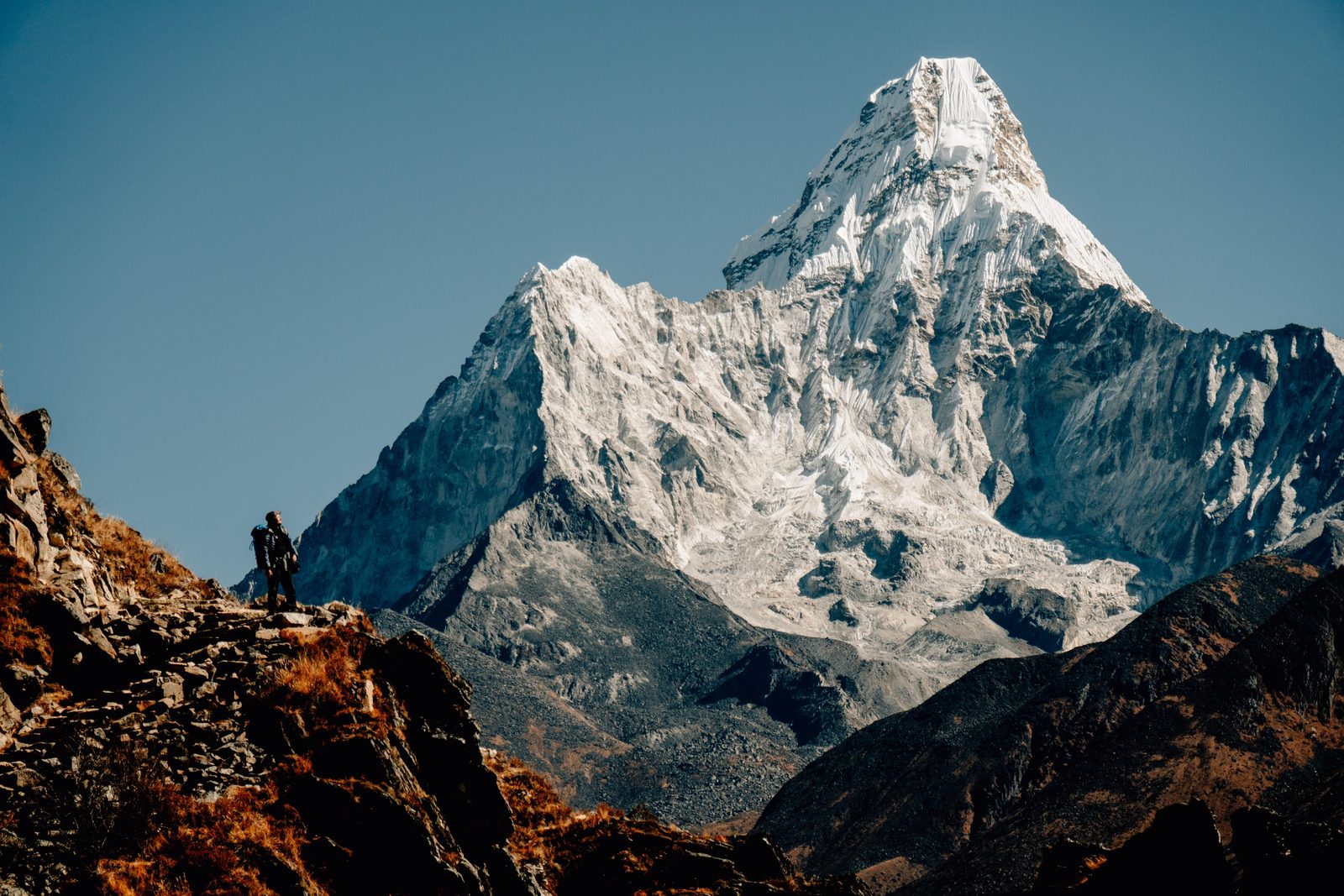
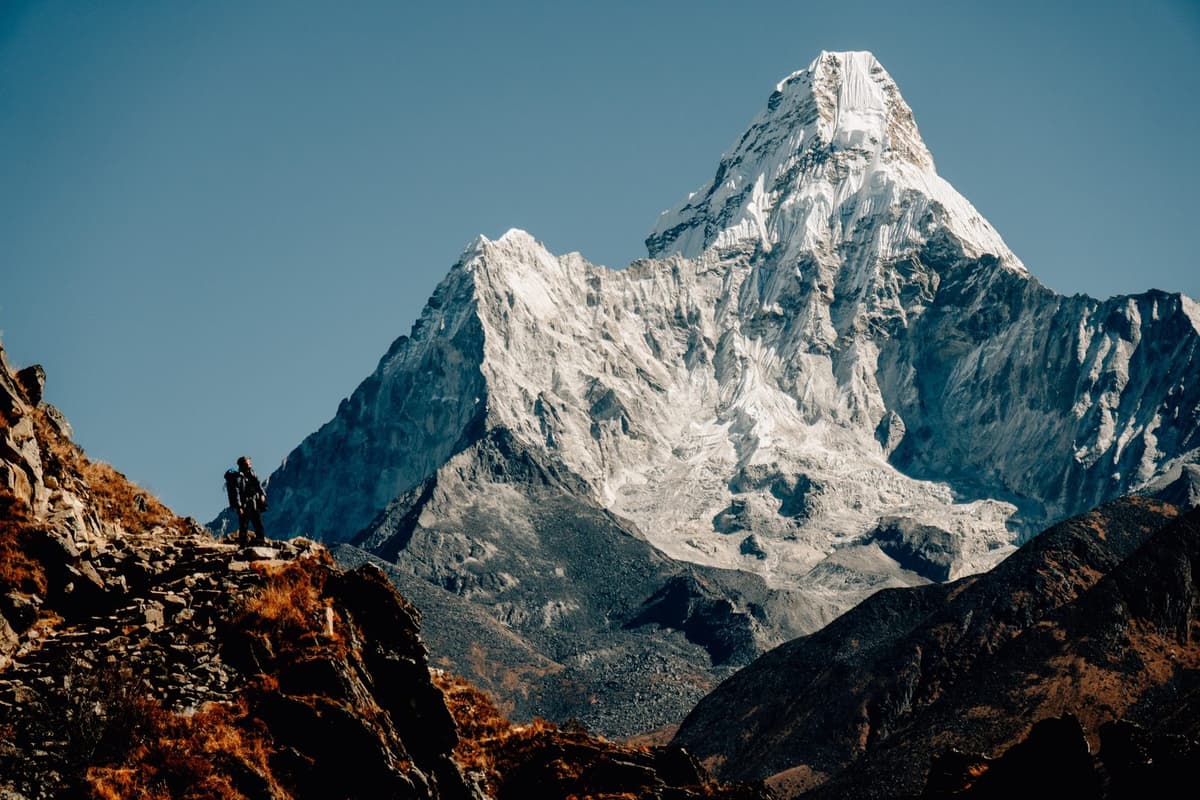
A hiker on the trail below Ama Dablam in the Everest region
Fitness helps you enjoy the trail, but it does not stop altitude sickness.

Strong walkers are tempted to push on or skip a rest day, and that is where fitness can work against you. Other points from the medical sources:

  • Your own history is the best guide. How you coped at altitude before is the most reliable sign of how you will cope again.
  • Age is not a shield. Children are as likely to get it as adults, and people over 50 have slightly less risk.
  • Gym work at home does not acclimatise you. Short or occasional exposures, including exercise training, are unlikely to help.
  • Arriving fast by road or air raises the risk. Flying or driving straight to a high place is one of the main things to avoid.

That last point is real on Nepal's trails. A 2017 study at the HRA aid post in Manang found more altitude illness among people who arrived fast by vehicle after the road opened, especially Nepali travellers.

"Everyone, regardless of age, experience, or fitness level, should exercise caution when trekking at high altitudes."

US Department of State, Nepal country information

What counts for altitude sickness is mainly where you sleep, not the highest point you touch in the day. The table keeps sleeping places apart from passes and viewpoints you visit and leave. The last column is our team's guidance, based on where sleeping height jumps, not a published statistic.
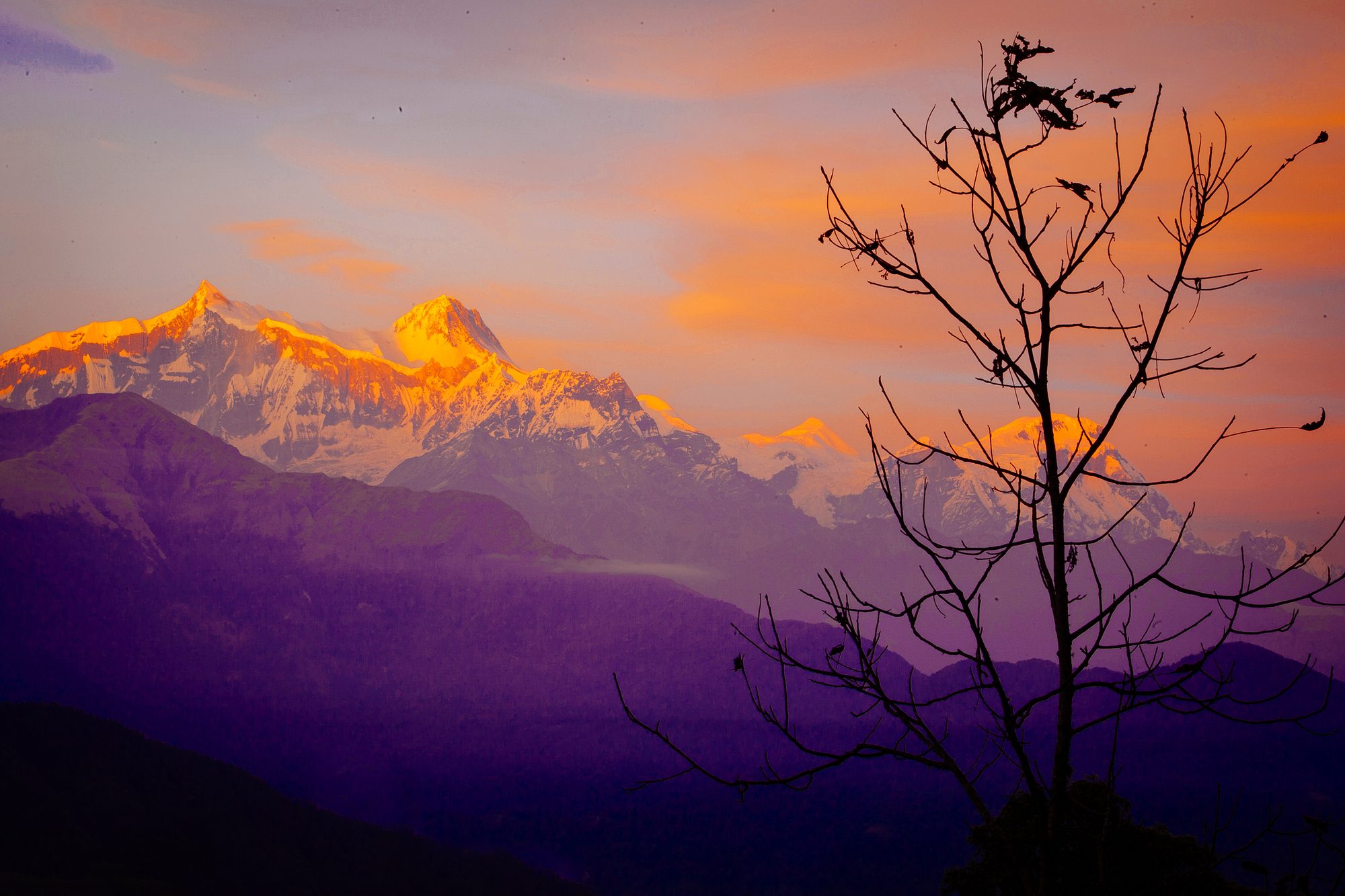
Golden sunrise light on the Annapurna range, seen from the ridge above Ghorepani
Sunrise above Ghorepani, where you already sleep above the 2,450 m line.
Trek Where you sleep (about) Day high point Nights to watch closely (our guidance)
Ghorepani Poon Hill Ghorepani about 2,860 m Poon Hill 3,210 m Ghorepani: you sleep above the 2,450 m line, so mild symptoms are possible
Everest View (Namche) Lukla about 2,850 m; Namche Bazaar about 3,440 m Day walks above Namche First night in Namche, after the fly-in start
Everest Base Camp Namche about 3,440 m; Pheriche about 4,250 m or Dingboche about 4,400 m; Lobuche about 4,940 m; Gorak Shep about 5,160 m Everest Base Camp 5,364 m; Kala Patthar about 5,550 m Namche, the first night at Dingboche or Pheriche, and Lobuche and Gorak Shep
Annapurna Base Camp Deurali about 3,200 m; Machhapuchhre Base Camp about 3,700 m (sleep or rest stop); ABC 4,130 m Annapurna Base Camp itself MBC and the night at ABC
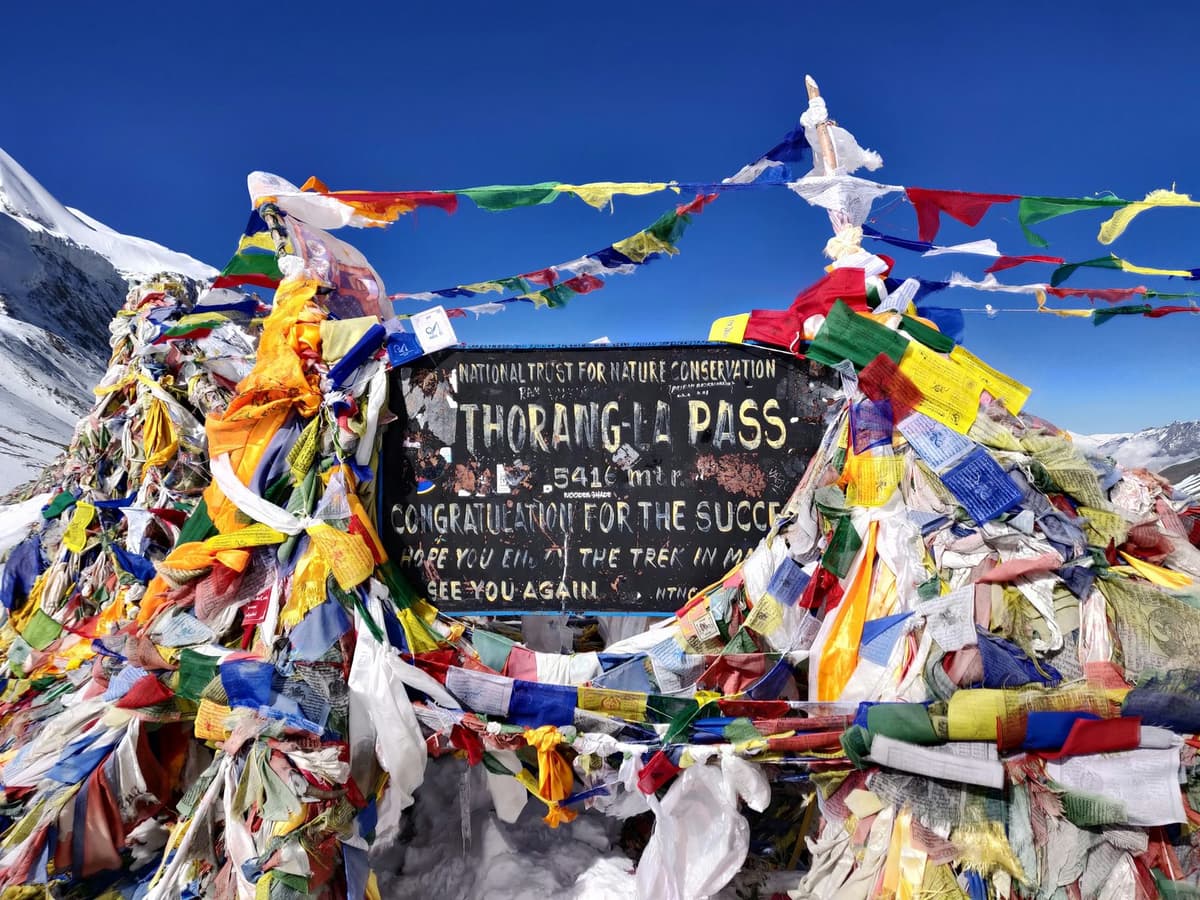
Annapurna Circuit Manang about 3,540 m; Thorong Phedi about 4,500 m; Thorong High Camp about 4,850 m Thorong La pass 5,416 m Manang if you arrived by jeep; Thorong Phedi and High Camp before the pass
Manaslu Circuit Samagaun about 3,500 m; Dharamsala (Larkya Phedi) about 4,460 m; Bimthang, several hundred metres lower after the pass Larkya La about 5,100 m Samagaun, and Dharamsala before the pass

Village heights vary by source; figures are rounded. Sources: NTB, HRA, published medical studies, cross-checked trekking itineraries. Checked 9 October 2026.

A few notes on reading the table:

  • Poon Hill is not "no altitude". Ghorepani sits above the CDC line. Severe illness is rare at this height, but a headache on the first night there is worth taking seriously.
  • Everest Base Camp is a day visit. Trekkers do not usually sleep there; the last lodges are at Gorak Shep.
  • Passes are crossed, not slept on. On the Circuit and Manaslu, the risky nights are the ones before the pass, at Thorong Phedi, High Camp or Dharamsala.
  • Langtang: check the current trail status before you book.

For trek-by-trek detail on routes and days, see our guide to the best treks in Nepal and the Everest Base Camp trek cost guide.

Rest, or go down? A decision table

If symptoms are mild, rest at the same height and do not go higher. If they get worse, or are not better after a day of rest, go down. If there is confusion, unsteady walking or breathlessness at rest, go down at once and get help.

The sources differ slightly on how long to wait with mild AMS. The NHS says go down if you are not better after 1 day; the WMS says go down if symptoms get worse or are not better after 1 to 3 days of treatment. We use the more careful of the two.

What you notice What to do Source
Mild headache, poor appetite, tired, after going higher Stay at the same height, rest, and do not go up to sleep WMS 2024; CDC
Symptoms fully gone after rest You may carry on up, slowly WMS 2024; NTB
Symptoms worse, or not better after a day of rest Go down. A drop of 300 to 1,000 m usually brings relief, though people differ NHS; WMS 2024
Confusion, very drowsy, unsteady walking Possible HACE. Start going down at once; do not wait for morning CDC; WMS 2024 (timing is our advice)
Breathless at rest, cough, chest congestion Possible HAPE. Go down by at least 1,000 m if possible, or until symptoms go, with as little effort as you can WMS 2024
Frothy or bloody spit, blue or grey lips or nails, hard to wake Get help at once and go lower straight away if you can NHS

"Go to a lower altitude straight away (around 300 to 1,000 metres lower) if you can."

NHS, Altitude sickness, urgent advice

A study at the Pheriche aid post found that of 56 HAPE patients, 91% had become ill higher up than Pheriche. Trouble tends to start above, so walking down helps.

What treats altitude illness: descent, oxygen, the pressure bag, medicines

Going down is the most reliable treatment. Oxygen, a portable pressure bag and medicines are used alongside descent, or while waiting for it. Each is a medical decision, made with a doctor where you can reach one.

Oxygen

Oxygen works fast on the headache: the CDC puts it at about 30 minutes. For HAPE, the WMS advises enough oxygen to keep blood oxygen above 90%. The small oxygen cans sold in shops should not be relied on.

The portable hyperbaric bag

The sick person lies inside a sealed bag, such as the Gamow bag, which is pumped up so the air inside acts like air at a lower altitude. It is used for severe AMS or HACE when going down is not possible, it needs someone tending it the whole time, and it must never delay a descent.

Medicines (names only, always a doctor's decision)

Doctors use these medicines for altitude illness:

  • Acetazolamide for AMS
  • Dexamethasone for AMS and HACE
  • Nifedipine for HAPE when going down is impossible or delayed
  • Tadalafil and sildenafil, named in the guideline for HAPE in specific cases

For a mild altitude headache, the NHS mentions ibuprofen or paracetamol. These ease the headache; they do not treat the illness behind it.

We never give doses; ask your doctor before you travel. Prevention medicines and Diamox questions are covered in how to avoid altitude sickness.

Rescue in the mountains: aid posts, helicopters and insurance

HRA aid posts

The Himalayan Rescue Association (HRA) is a voluntary non-profit, founded in 1973 to reduce casualties in the Nepal Himalaya. It runs aid posts at Pheriche on the Everest Base Camp trail and at Manang on the Annapurna Circuit, staffed by volunteer doctors in spring and autumn. Both hold a daily talk on altitude sickness at 3 pm in season. In spring 2025 most of their patients were Nepali.
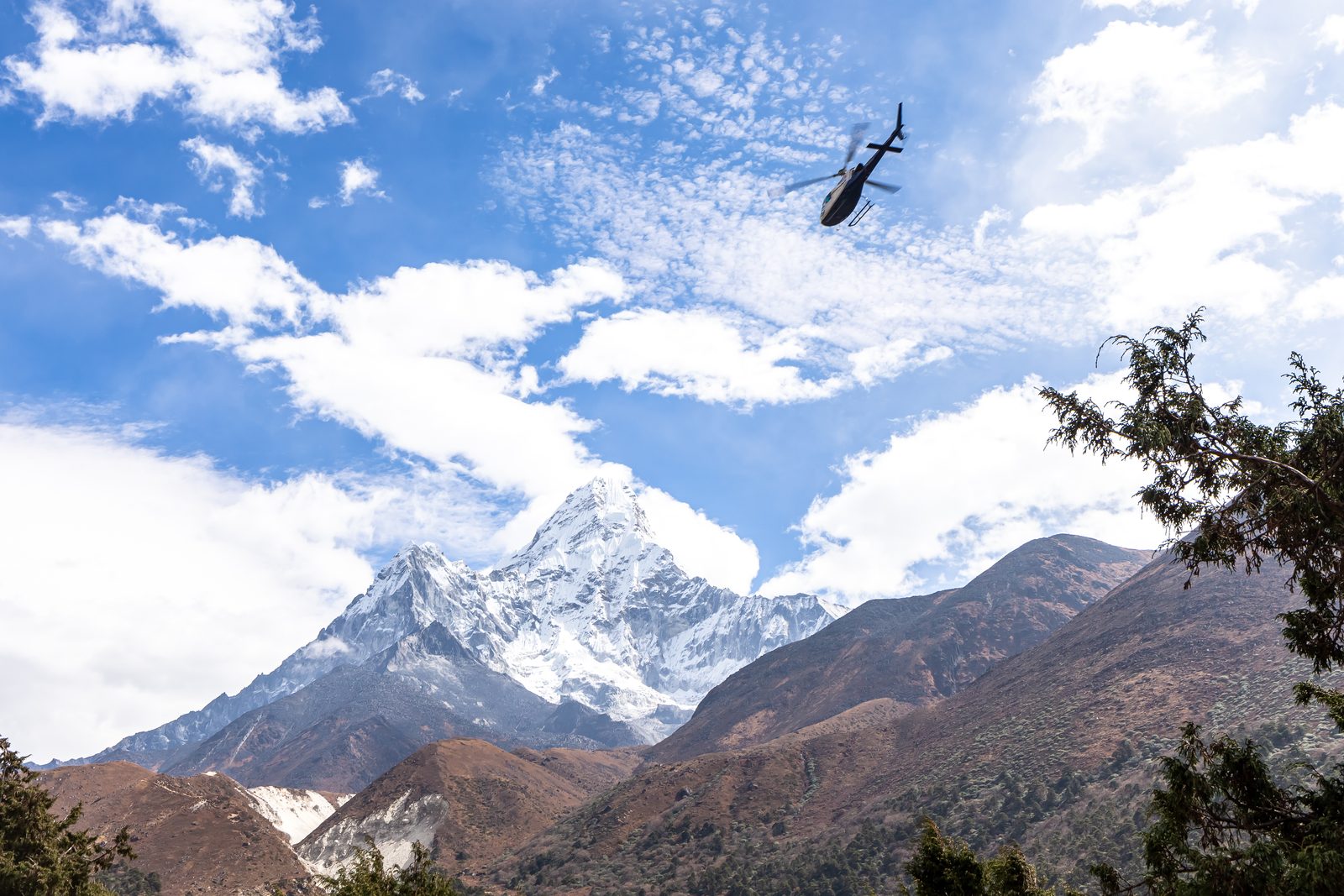
A helicopter over Ama Dablam and the Khumbu valley in the Everest region
Helicopter rescue depends on the weather and on your insurance.

For autumn 2026:

  • Manang and Pheriche were reported open with round-the-clock emergency care until the end of November (The Tourism Times, 7 Oct 2026).
  • Everest ER, the HRA clinic at Everest Base Camp, has run every spring climbing season since 2003. Do not count on it in autumn.
  • Thorong Phedi: HRA's satellite clinic there is not currently operating. On the Annapurna Circuit, the nearest HRA post is Manang.

Helicopter rescue

Serious illness in the mountains may mean a helicopter evacuation to Kathmandu. The US State Department says this can cost tens of thousands of dollars, and that payment is expected first if you have no insurance. Helicopter companies usually want to see evacuation insurance, insurer pre-approval or a credit card before they fly.

Nepal has had a problem with fake rescues billed to insurers, and the authorities acted against it in 2026. A rescue should be a medical decision. If you can, ask for a medical check before agreeing to a helicopter evacuation, and keep copies of all medical, insurance and evacuation papers.

Insurance: check the altitude, not just the word "trekking"

Your insurance must cover helicopter rescue and medical evacuation for high-altitude trekking. Our advice: read the policy for a maximum altitude, and make sure it is above the highest point of your trek, for example 5,416 m if you are crossing Thorong La.

Prevention in short

The short version is below; the full routine is in how to avoid altitude sickness.

  • Go up slowly. Above 3,000 m, do not raise your sleeping height by more than about 500 m a night, and take a rest day every 3 to 4 days.
  • Walk slowly. Guides say "bistarai, bistarai", Nepali for "slowly, slowly".
  • Drink enough, and avoid alcohol in the first days up high.
  • Know the symptoms, never go higher with them, and go down if you get worse.
  • Ask your doctor before the trip about preventive medicine such as acetazolamide. We never give doses; always consult a doctor.
  • Garlic soup and hot soups are a comforting teahouse tradition that helps you drink more. They are not a proven cure.
  • Severe symptoms (confusion, breathless at rest, unsteady walking) mean going down at once and getting help; our guide arranges a rescue if needed.

Read next: Thorong La Pass guide, Lukla airport explained and travel insurance for Nepal treks.

Frequently asked questions

What are the first signs of altitude sickness?

The first sign is usually a headache, often with loss of appetite, nausea, dizziness or tiredness. It tends to start between 2 and 12 hours after you reach a new height, so it often shows in the evening at the lodge. Many people describe it as like a hangover. Stop going higher until it has gone.

How long does altitude sickness last?

Mild altitude sickness usually gets better in 1 to 3 days if you rest at the same height. If it gets worse, or is not better after a day of rest, go down. Going down usually brings relief. Once symptoms have fully gone, you can carry on up slowly.

Can you die from altitude sickness?

Yes, but the dangerous forms are HACE and HAPE, not ordinary mild AMS. HAPE can be fatal faster than HACE, and HACE is rare below about 4,300 m. Both respond to going down early. Confusion, unsteady walking or breathlessness at rest mean going down at once.

What is the difference between AMS, HACE and HAPE?

AMS is the common, mild form: a headache with nausea, tiredness or dizziness. HACE is swelling of the brain, shown by confusion, drowsiness and unsteady walking. HAPE is fluid in the lungs, shown by a cough and breathlessness, even at rest. HAPE can come without any AMS first.

Can you get altitude sickness on the Poon Hill trek?

Yes, mildly. You sleep in Ghorepani at about 2,860 m, which is above the 2,450 m height where symptoms become possible. Severe illness is rare at this height. A headache at Ghorepani is a reason to rest before the Poon Hill climb.

Does travel insurance cover helicopter rescue in Nepal?

Only if your policy includes it. Make sure it covers helicopter rescue and medical evacuation for high-altitude trekking, and check that its maximum altitude is above your trek's highest point (our advice). Helicopter companies usually want insurance, insurer pre-approval or a credit card before they fly. Without insurance, payment is expected first.

Plan your trek with altitude in mind

The right trek for you depends on your time and how you coped at altitude before. Browse our treks to compare routes. If you want a first taste of altitude, the Ghorepani Poon Hill trek stays lower, and on the Everest View trek with Namche Bazaar you sleep at about 3,440 m in Namche, with two nights there.

Tell us your dates and any altitude history on WhatsApp or through the enquiry form, and our Kathmandu team will suggest a pace that suits you.

Planning the rest of your trip? Start with our Nepal travel guide.

Last checked: 9 October 2026. Checked by our Kathmandu travel team.
Tags
altitude sicknessacute mountain sicknesstrekking safetyEverest regionAnnapurna regiontravel insurance
Share
U
Uncover Nepal Team
Writer at Uncover Nepal
More in Travel infoSee all Travel info

Altitude Sickness on Nepal Treks: Signs and Prevention

16 min read Posted 10 Oct 2026Updated 29 Oct 2026
Altitude Sickness on Nepal Treks: Signs and Prevention

On a trek, altitude sickness often shows itself not on the trail but in the evening, in a teahouse dining room, as a dull headache and a plate of dal bhat (the rice and lentil meal most trekkers live on) that you cannot finish. Someone at the next table is coughing, and nobody is sure whether it is a cold or the height.

Altitude sickness can affect anyone who sleeps at about 2,450 m or higher without time to adjust. On a Nepal trek it usually starts as a headache with nausea, dizziness or tiredness, a few hours after you arrive somewhere higher. Mild cases settle with rest at the same height. Worse signs mean going down.

For the wider trip picture, see our Nepal travel guide. This article goes deeper: the three illnesses, real sleeping heights on popular treks, and when to rest or go down. The full prevention routine is in how to avoid altitude sickness.

Key facts

Symptoms are possible from a sleeping height of about 2,450 m (8,000 ft)
CDC Yellow Book 2026
Symptoms usually start 2 to 12 hours after arriving higher
CDC Yellow Book 2026
Altitude illness is three conditions: AMS, HACE and HAPE
Wilderness Medical Society (WMS) 2024
Training and fitness do not change your risk
CDC Yellow Book 2026
Going down 300 to 1,000 m usually brings relief
WMS 2024; NHS
HRA aid posts run at Pheriche and Manang in spring and autumn
Nepal Tourism Board (NTB); HRA

In this guide

  • What are AMS, HACE and HAPE?
  • What does altitude sickness feel like on a trek?
  • The Lake Louise score, explained plainly
  • Why being fit does not protect you
  • Where you sleep on Nepal's popular treks
  • Rest, or go down? A decision table
  • What treats altitude illness: descent, oxygen, the pressure bag, medicines
  • Rescue in the mountains: aid posts, helicopters and insurance
  • Prevention in short
  • Frequently asked questions

What are AMS, HACE and HAPE?

Altitude illness is not one illness but three. Acute mountain sickness (AMS) is the common, mild form. High altitude cerebral oedema (HACE) is a swelling of the brain that doctors regard as end-stage AMS. High altitude pulmonary oedema (HAPE) is fluid in the lungs, and it can arrive on its own, without AMS first.

Acute mountain sickness (AMS)

AMS almost always starts with a headache. Add at least one more of these and it fits: no appetite or a sick stomach, dizziness, or tiredness. It is uncomfortable, but on its own it is not dangerous if you stop going higher.

High altitude cerebral oedema (HACE)

The person becomes confused or very drowsy, and their walking turns unsteady, like someone who is drunk. They may not notice it themselves, which is why the people around them matter. HACE is rare, especially below about 4,300 m (14,000 ft), but it needs action at once.

High altitude pulmonary oedema (HAPE)

Early signs are chest congestion, a cough, getting much more breathless than others on the same walk, and a clear drop in how well you are moving. As it gets worse, you become breathless even when resting. HAPE can kill faster than HACE, so catching it early is what counts.

So "no headache" does not mean "fine" if you are short of breath at rest.

AMS HACE HAPE
What it is The common, mild form Brain swelling, seen as end-stage AMS Fluid in the lungs
How it shows Headache plus nausea, poor appetite, dizziness or tiredness Confusion, drowsiness, unsteady walking like being drunk Cough, chest congestion, unusual breathlessness, then breathless at rest
Comes after AMS? Not applicable Usually grows out of AMS Can come on its own
How serious Mild if you stop going up Serious, rare below about 4,300 m Serious, can be fatal faster than HACE
First move Rest at the same height Start going down at once Go down at once, with as little effort as possible

What does altitude sickness feel like on a trek?

Altitude sickness on a trek feels like a hangover you did not earn: a headache with poor appetite, nausea, light-headedness or heavy tiredness. It does not usually bring a runny nose, fever, chills or aching muscles, which point more to a cold or other infection. You can have both at once.

The NHS lists the usual symptoms as headache, loss of appetite, feeling or being sick, tiredness, dizziness and difficulty sleeping. Poor sleep is common up high, but it no longer counts towards scoring AMS.

NTB's warning signs that AMS is getting worse are a severe headache, vomiting, walking like a drunk, an altered mental state, severe tiredness and shortness of breath at rest. The NHS adds: seeing or hearing things that are not there, coughing frothy or bloody spit, blue or grey lips or nails, or being very sleepy and hard to wake. Any of these means getting help at once and going lower straight away if you can.

The Lake Louise score, explained plainly

The Lake Louise score is a short checklist researchers use to decide whether someone has AMS. The idea is useful; it is not a self-test.

The 2018 version rates four symptoms from 0 to 3: headache, stomach symptoms (nausea or vomiting), tiredness or weakness, and dizziness or light-headedness. A total of 3 or more, with at least 1 point for headache, after a recent gain in height, fits AMS. The authors suggest rough bands (3 to 5 mild, 6 to 9 moderate, 10 to 12 severe) while saying the research to grade severity is lacking.

The key line comes from the authors themselves: the score is a research tool, and they say it is not meant for clinicians, guides or travellers to diagnose or manage AMS.

What to take from it: a headache plus another symptom, after going higher, is how AMS usually looks. What to do next is not decided by adding up numbers on your phone, but by watching if you are getting better or worse. If in doubt, treat it as altitude sickness and do not go higher.

Why being fit does not protect you

Being fit helps you enjoy a trek, but it does not stop altitude sickness. The CDC says training and fitness do not change your risk. What matters most is how fast you gain height, and that is the part you can control.

A hiker on the trail below Ama Dablam in the Everest region
Fitness helps you enjoy the trail, but it does not stop altitude sickness.

Strong walkers are tempted to push on or skip a rest day, and that is where fitness can work against you. Other points from the medical sources:

  • Your own history is the best guide. How you coped at altitude before is the most reliable sign of how you will cope again.
  • Age is not a shield. Children are as likely to get it as adults, and people over 50 have slightly less risk.
  • Gym work at home does not acclimatise you. Short or occasional exposures, including exercise training, are unlikely to help.
  • Arriving fast by road or air raises the risk. Flying or driving straight to a high place is one of the main things to avoid.

That last point is real on Nepal's trails. A 2017 study at the HRA aid post in Manang found more altitude illness among people who arrived fast by vehicle after the road opened, especially Nepali travellers.

"Everyone, regardless of age, experience, or fitness level, should exercise caution when trekking at high altitudes."

US Department of State, Nepal country information

What counts for altitude sickness is mainly where you sleep, not the highest point you touch in the day. The table keeps sleeping places apart from passes and viewpoints you visit and leave. The last column is our team's guidance, based on where sleeping height jumps, not a published statistic.

Golden sunrise light on the Annapurna range, seen from the ridge above Ghorepani
Sunrise above Ghorepani, where you already sleep above the 2,450 m line.
Trek Where you sleep (about) Day high point Nights to watch closely (our guidance)
Ghorepani Poon Hill Ghorepani about 2,860 m Poon Hill 3,210 m Ghorepani: you sleep above the 2,450 m line, so mild symptoms are possible
Everest View (Namche) Lukla about 2,850 m; Namche Bazaar about 3,440 m Day walks above Namche First night in Namche, after the fly-in start
Everest Base Camp Namche about 3,440 m; Pheriche about 4,250 m or Dingboche about 4,400 m; Lobuche about 4,940 m; Gorak Shep about 5,160 m Everest Base Camp 5,364 m; Kala Patthar about 5,550 m Namche, the first night at Dingboche or Pheriche, and Lobuche and Gorak Shep
Annapurna Base Camp Deurali about 3,200 m; Machhapuchhre Base Camp about 3,700 m (sleep or rest stop); ABC 4,130 m Annapurna Base Camp itself MBC and the night at ABC
Annapurna Circuit Manang about 3,540 m; Thorong Phedi about 4,500 m; Thorong High Camp about 4,850 m Thorong La pass 5,416 m Manang if you arrived by jeep; Thorong Phedi and High Camp before the pass
Manaslu Circuit Samagaun about 3,500 m; Dharamsala (Larkya Phedi) about 4,460 m; Bimthang, several hundred metres lower after the pass Larkya La about 5,100 m Samagaun, and Dharamsala before the pass

Village heights vary by source; figures are rounded. Sources: NTB, HRA, published medical studies, cross-checked trekking itineraries. Checked 9 October 2026.

A few notes on reading the table:

  • Poon Hill is not "no altitude". Ghorepani sits above the CDC line. Severe illness is rare at this height, but a headache on the first night there is worth taking seriously.
  • Everest Base Camp is a day visit. Trekkers do not usually sleep there; the last lodges are at Gorak Shep.
  • Passes are crossed, not slept on. On the Circuit and Manaslu, the risky nights are the ones before the pass, at Thorong Phedi, High Camp or Dharamsala.
  • Langtang: check the current trail status before you book.

For trek-by-trek detail on routes and days, see our guide to the best treks in Nepal and the Everest Base Camp trek cost guide.

Rest, or go down? A decision table

If symptoms are mild, rest at the same height and do not go higher. If they get worse, or are not better after a day of rest, go down. If there is confusion, unsteady walking or breathlessness at rest, go down at once and get help.

The sources differ slightly on how long to wait with mild AMS. The NHS says go down if you are not better after 1 day; the WMS says go down if symptoms get worse or are not better after 1 to 3 days of treatment. We use the more careful of the two.

What you notice What to do Source
Mild headache, poor appetite, tired, after going higher Stay at the same height, rest, and do not go up to sleep WMS 2024; CDC
Symptoms fully gone after rest You may carry on up, slowly WMS 2024; NTB
Symptoms worse, or not better after a day of rest Go down. A drop of 300 to 1,000 m usually brings relief, though people differ NHS; WMS 2024
Confusion, very drowsy, unsteady walking Possible HACE. Start going down at once; do not wait for morning CDC; WMS 2024 (timing is our advice)
Breathless at rest, cough, chest congestion Possible HAPE. Go down by at least 1,000 m if possible, or until symptoms go, with as little effort as you can WMS 2024
Frothy or bloody spit, blue or grey lips or nails, hard to wake Get help at once and go lower straight away if you can NHS

"Go to a lower altitude straight away (around 300 to 1,000 metres lower) if you can."

NHS, Altitude sickness, urgent advice

A study at the Pheriche aid post found that of 56 HAPE patients, 91% had become ill higher up than Pheriche. Trouble tends to start above, so walking down helps.

What treats altitude illness: descent, oxygen, the pressure bag, medicines

Going down is the most reliable treatment. Oxygen, a portable pressure bag and medicines are used alongside descent, or while waiting for it. Each is a medical decision, made with a doctor where you can reach one.

Oxygen

Oxygen works fast on the headache: the CDC puts it at about 30 minutes. For HAPE, the WMS advises enough oxygen to keep blood oxygen above 90%. The small oxygen cans sold in shops should not be relied on.

The portable hyperbaric bag

The sick person lies inside a sealed bag, such as the Gamow bag, which is pumped up so the air inside acts like air at a lower altitude. It is used for severe AMS or HACE when going down is not possible, it needs someone tending it the whole time, and it must never delay a descent.

Medicines (names only, always a doctor's decision)

Doctors use these medicines for altitude illness:

  • Acetazolamide for AMS
  • Dexamethasone for AMS and HACE
  • Nifedipine for HAPE when going down is impossible or delayed
  • Tadalafil and sildenafil, named in the guideline for HAPE in specific cases

For a mild altitude headache, the NHS mentions ibuprofen or paracetamol. These ease the headache; they do not treat the illness behind it.

We never give doses; ask your doctor before you travel. Prevention medicines and Diamox questions are covered in how to avoid altitude sickness.

Rescue in the mountains: aid posts, helicopters and insurance

HRA aid posts

The Himalayan Rescue Association (HRA) is a voluntary non-profit, founded in 1973 to reduce casualties in the Nepal Himalaya. It runs aid posts at Pheriche on the Everest Base Camp trail and at Manang on the Annapurna Circuit, staffed by volunteer doctors in spring and autumn. Both hold a daily talk on altitude sickness at 3 pm in season. In spring 2025 most of their patients were Nepali.

A helicopter over Ama Dablam and the Khumbu valley in the Everest region
Helicopter rescue depends on the weather and on your insurance.

For autumn 2026:

  • Manang and Pheriche were reported open with round-the-clock emergency care until the end of November (The Tourism Times, 7 Oct 2026).
  • Everest ER, the HRA clinic at Everest Base Camp, has run every spring climbing season since 2003. Do not count on it in autumn.
  • Thorong Phedi: HRA's satellite clinic there is not currently operating. On the Annapurna Circuit, the nearest HRA post is Manang.

Helicopter rescue

Serious illness in the mountains may mean a helicopter evacuation to Kathmandu. The US State Department says this can cost tens of thousands of dollars, and that payment is expected first if you have no insurance. Helicopter companies usually want to see evacuation insurance, insurer pre-approval or a credit card before they fly.

Nepal has had a problem with fake rescues billed to insurers, and the authorities acted against it in 2026. A rescue should be a medical decision. If you can, ask for a medical check before agreeing to a helicopter evacuation, and keep copies of all medical, insurance and evacuation papers.

Insurance: check the altitude, not just the word "trekking"

Your insurance must cover helicopter rescue and medical evacuation for high-altitude trekking. Our advice: read the policy for a maximum altitude, and make sure it is above the highest point of your trek, for example 5,416 m if you are crossing Thorong La.

Prevention in short

The short version is below; the full routine is in how to avoid altitude sickness.

  • Go up slowly. Above 3,000 m, do not raise your sleeping height by more than about 500 m a night, and take a rest day every 3 to 4 days.
  • Walk slowly. Guides say "bistarai, bistarai", Nepali for "slowly, slowly".
  • Drink enough, and avoid alcohol in the first days up high.
  • Know the symptoms, never go higher with them, and go down if you get worse.
  • Ask your doctor before the trip about preventive medicine such as acetazolamide. We never give doses; always consult a doctor.
  • Garlic soup and hot soups are a comforting teahouse tradition that helps you drink more. They are not a proven cure.
  • Severe symptoms (confusion, breathless at rest, unsteady walking) mean going down at once and getting help; our guide arranges a rescue if needed.

Read next: Thorong La Pass guide, Lukla airport explained and travel insurance for Nepal treks.

Frequently asked questions

What are the first signs of altitude sickness?

The first sign is usually a headache, often with loss of appetite, nausea, dizziness or tiredness. It tends to start between 2 and 12 hours after you reach a new height, so it often shows in the evening at the lodge. Many people describe it as like a hangover. Stop going higher until it has gone.

How long does altitude sickness last?

Mild altitude sickness usually gets better in 1 to 3 days if you rest at the same height. If it gets worse, or is not better after a day of rest, go down. Going down usually brings relief. Once symptoms have fully gone, you can carry on up slowly.

Can you die from altitude sickness?

Yes, but the dangerous forms are HACE and HAPE, not ordinary mild AMS. HAPE can be fatal faster than HACE, and HACE is rare below about 4,300 m. Both respond to going down early. Confusion, unsteady walking or breathlessness at rest mean going down at once.

What is the difference between AMS, HACE and HAPE?

AMS is the common, mild form: a headache with nausea, tiredness or dizziness. HACE is swelling of the brain, shown by confusion, drowsiness and unsteady walking. HAPE is fluid in the lungs, shown by a cough and breathlessness, even at rest. HAPE can come without any AMS first.

Can you get altitude sickness on the Poon Hill trek?

Yes, mildly. You sleep in Ghorepani at about 2,860 m, which is above the 2,450 m height where symptoms become possible. Severe illness is rare at this height. A headache at Ghorepani is a reason to rest before the Poon Hill climb.

Does travel insurance cover helicopter rescue in Nepal?

Only if your policy includes it. Make sure it covers helicopter rescue and medical evacuation for high-altitude trekking, and check that its maximum altitude is above your trek's highest point (our advice). Helicopter companies usually want insurance, insurer pre-approval or a credit card before they fly. Without insurance, payment is expected first.

Plan your trek with altitude in mind

The right trek for you depends on your time and how you coped at altitude before. Browse our treks to compare routes. If you want a first taste of altitude, the Ghorepani Poon Hill trek stays lower, and on the Everest View trek with Namche Bazaar you sleep at about 3,440 m in Namche, with two nights there.

Tell us your dates and any altitude history on WhatsApp or through the enquiry form, and our Kathmandu team will suggest a pace that suits you.

Planning the rest of your trip? Start with our Nepal travel guide.

Last checked: 9 October 2026. Checked by our Kathmandu travel team.
Tags
altitude sicknessacute mountain sicknesstrekking safetyEverest regionAnnapurna regiontravel insurance
Share
U
Uncover Nepal Team
Writer at Uncover Nepal
More in Travel infoSee all Travel info