



Explore by activity
Not listed yet

We run Motorbiking & Overland trips — we just haven’t put the itinerary on the site yet. Tell us your dates and we’ll send a costed day-by-day plan.

Explore by experience
Explore by region
by gomayu
Search Tours or Places

Best Treks in Nepal: How to Choose the Right One

25 min read Posted 08 Oct 2026Updated 01 Nov 2026
Best Treks in Nepal: How to Choose the Right One

By Uncover Nepal Team. Last checked: 8 October 2026.

On Sunday 4 October 2026 the monsoon pulled out of western Nepal, with full withdrawal expected within days. At Manthali airport in Ramechhap, extra flights to Lukla have been running since the end of September, nine of them on one Saturday. The autumn trekking season has started, and our Kathmandu desk is answering the usual question: which trek?

The short answer. The best treks in Nepal for most first-time visitors are Ghorepani Poon Hill (short and low, high point 3,210 m), Annapurna Base Camp (typically 7 to 12 days, to 4,130 m) and Everest Base Camp (typically 12 to 16 days, to 5,364 m). The right one depends on your days, your fitness and how you handle altitude.

This guide is part of our Insights library for planning a Nepal trip. It compares nine treks we know well, explains the permits and guide rules as they stand today, and gives you a simple way to match a route to your time, legs and comfort with thin air.

Key facts

Best trekking seasons
Spring and autumn; clearest skies after the monsoon in October and November (Nepal Tourism Board, climate page (ntb.gov.np/plan-your-trip/about-nepal/climate), 8 Oct 2026)
Highest point in this guide
Thorong La, 5,416 m, on the Annapurna Circuit (NTB trade site, Annapurna region (trade.ntb.gov.np/tourist-destination/annapurna-region/), 8 Oct 2026)
Lowest high point in this guide
Poon Hill, 3,210 m (NTB, top trekking destinations page (ntb.gov.np), 8 Oct 2026)
Where altitude-illness risk starts
Sleeping at about 2,450 m (8,000 ft) or higher without acclimatising (US CDC Yellow Book, high-altitude travel (cdc.gov), 8 Oct 2026)
Guide rule on listed routes
NTB's revised trekking rule, in force from 1 April 2023 (NTB lists 31 March 2023); the Khumbu municipality disputes it for the Everest region (Nepal Tourism Board, 8 Oct 2026)
Restricted areas (Manaslu, Upper Mustang)
Solo trekkers can get a permit since 22 March 2026; licensed guide and registered agency still required (Kathmandu Post report of the Department of Immigration decision, 22 Mar 2026, 8 Oct 2026)
Everest access
Treks start with a flight to Lukla; in the busiest months Lukla flights leave from Manthali, Ramechhap (NTB Everest page; ekantipur, 4 Oct 2026, 8 Oct 2026)

How to choose the best trek in Nepal for you

Start with three questions: how many days you have in Nepal, how high you are comfortable sleeping, and which month you can travel. Those three settle most of the choice. Fitness, budget style and how much company you want on the trail narrow it to one or two routes, and a short conversation with a local team settles the rest.
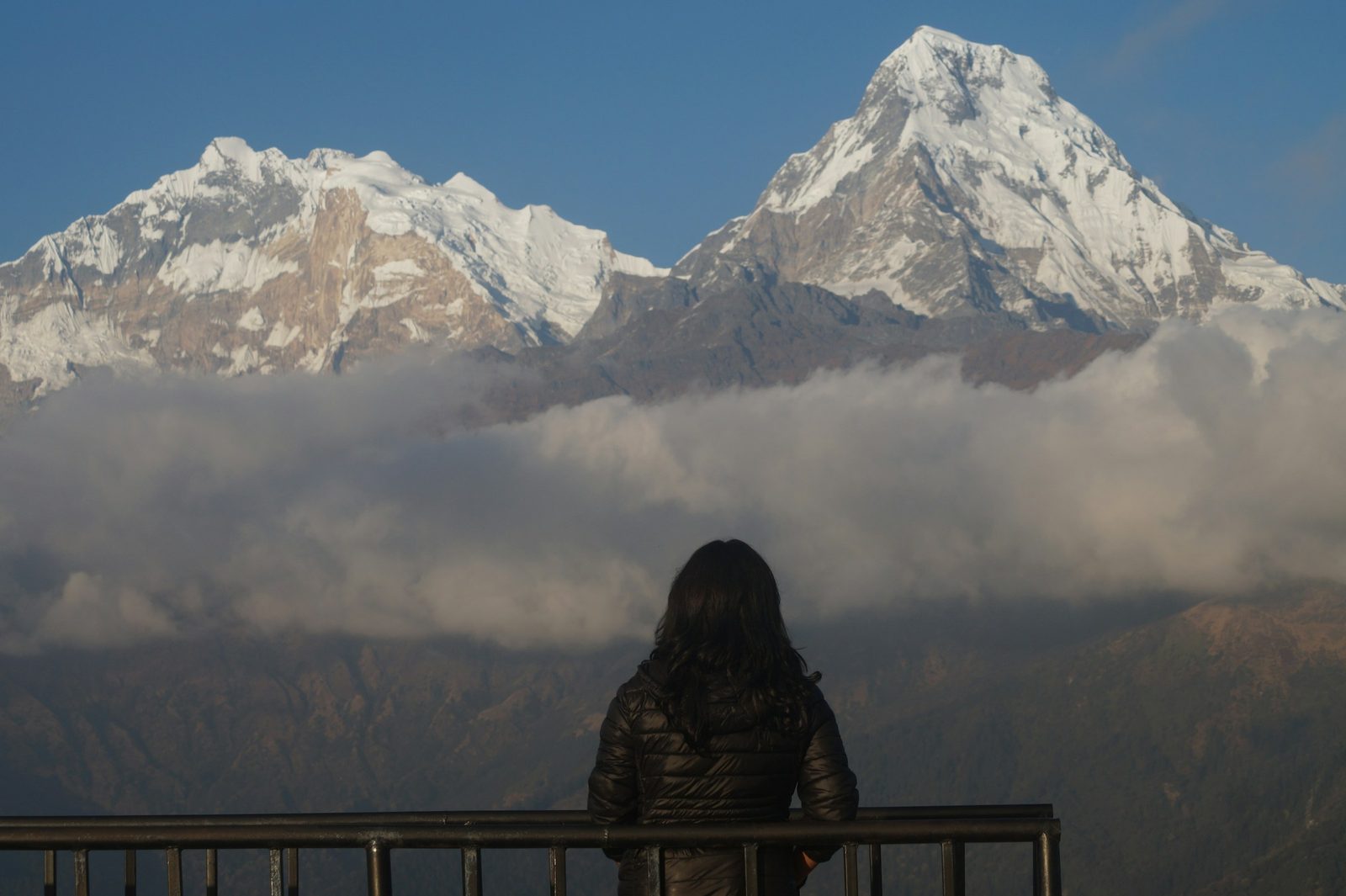
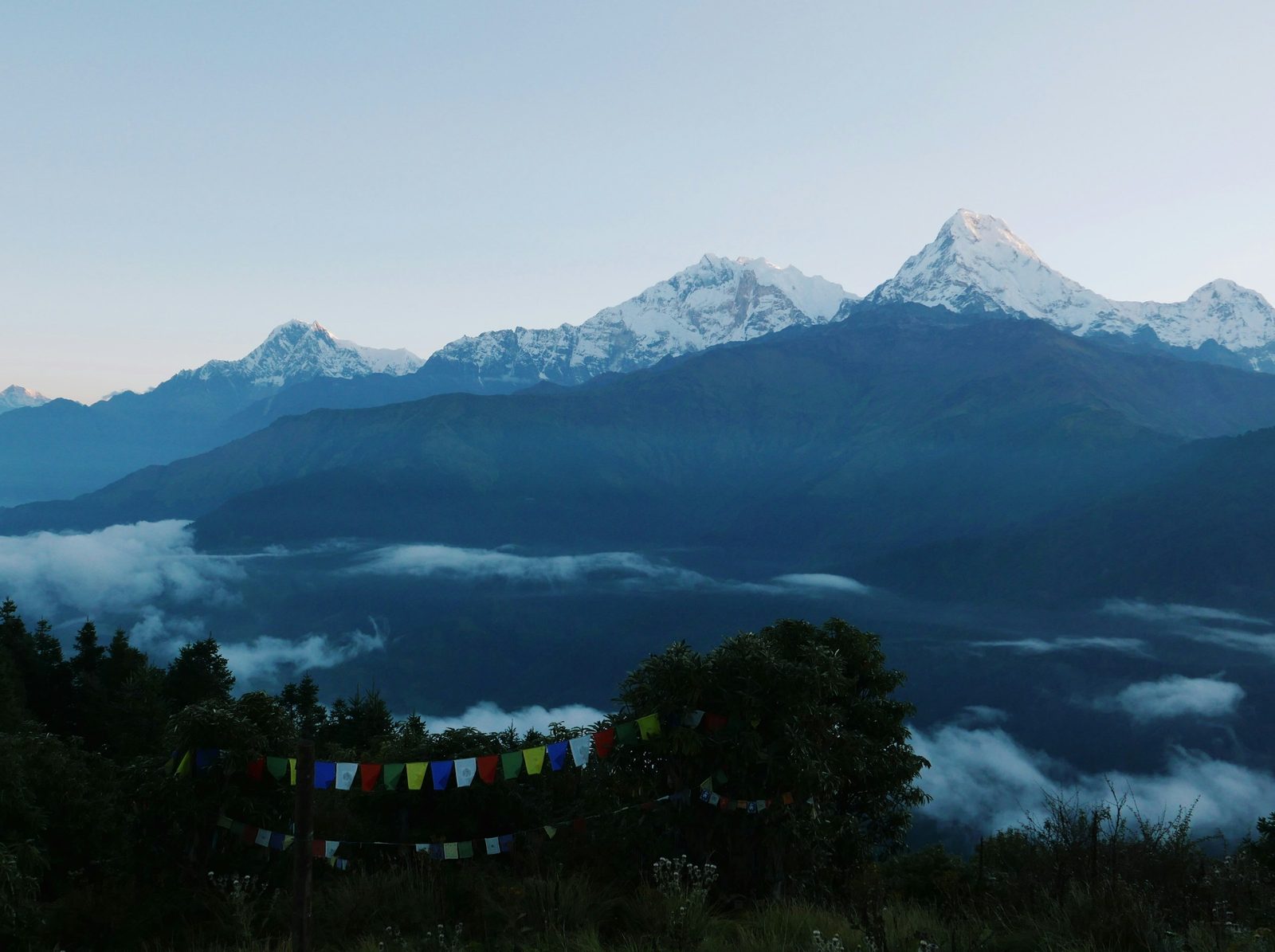
A trekker watching sunrise from the Poon Hill viewpoint in the Annapurna region
Poon Hill at dawn: the short, low trek many first-timers choose.

Most people pick the photo first and then try to squeeze the trek into their days. When the days are tight, the trek that suits you is often a shorter, lower one you finish with energy left. We would rather send you on the right trek than the most famous one.

Time: count the days you actually have

Typical itineraries, Kathmandu to Kathmandu or Pokhara to Pokhara, run like this. Ghorepani Poon Hill takes 2 to 6 days from Pokhara. Mardi Himal takes 5 to 9 days. The short Everest View trek to Namche takes 7 to 10 days from Kathmandu. Annapurna Base Camp takes 7 to 12 days. Everest Base Camp and Gokyo each take 12 to 16 days. Upper Mustang takes 12 to 18 days, the Manaslu Circuit 13 to 18 days, and the Annapurna Circuit 12 to 20 days depending on how much of it you drive.

These are typical operator ranges, not rules; length depends on start point, flights or roads, and rest days. Add travel days on top. Kathmandu to Pokhara is most of a day by road, often six to nine hours with traffic and roadworks, or about 30 minutes by air. Everest treks need spare days in case Lukla flights are delayed by weather.

Fitness: be honest about your legs

No trek in this guide needs climbing experience, but you do need to walk for several hours a day, day after day, on uneven trail. The Poon Hill trail is much of it stone steps, and steps are normal on Nepal trails.

If you have never done a multi-day walk, start shorter. Poon Hill or Mardi Himal will show you what teahouse trekking feels like without committing you to two weeks at altitude. A teahouse, by the way, is a family-run lodge on the trail with simple rooms and a shared dining room where you eat dal bhat (rice, lentil soup and vegetables) and warm up by the stove.

Altitude: the factor fitness cannot fix

Altitude is the biggest difference between these treks, and being fit does not protect you from altitude sickness. The US CDC says any unacclimatised traveller going to a sleeping altitude of about 2,450 m or higher is at risk. Every trek here goes above that, but some go far above it and stay there for days.

The high points compare like this. Poon Hill is 3,210 m. Lo Manthang, the walled capital of Upper Mustang, is 3,840 m. Annapurna Base Camp is 4,130 m. Mardi Himal Base Camp is 4,500 m. Larkya La on the Manaslu Circuit is just over 5,100 m (published figures are 5,106 m and 5,160 m). Gokyo Ri is about 5,357 m. Everest Base Camp is 5,364 m, and Kala Patthar, the viewpoint above it, is higher still (published figures range from about 5,545 m to 5,645 m). Thorong La on the Annapurna Circuit is 5,416 m.

A useful rule of thumb from the NTB: average temperatures drop about 6°C for every 1,000 m you climb. Higher means colder nights as well as thinner air. Our full guide on how to avoid altitude sickness goes into the detail.

Season: match the month to the route

For most treks, autumn and spring are the seasons to go. The Nepal Tourism Board puts it simply: spring is when the rhododendrons bloom, and "the clearest skies are found after the monsoon in October and November".

The monsoon normally runs from 13 June to 2 October, and the NTB notes that "Eighty percent of all the rain in Nepal is received during the monsoon (June-September)". That rain means cloud, leeches, slippery trails and road blocks on most routes. The big exception is Upper Mustang, which lies in a rain shadow and can be visited during the monsoon. Jomsom, on the way in, records 292.4 mm of rain a year against 3,868.3 mm in Pokhara (DHM station normals, 1991 to 2020).

Winter brings clear, cold days and snow on the high passes. Lower routes are the usual choice then, and our guide to winter treks in Nepal explains which routes work in December to February and which do not.

Budget style: what changes the bill

We do not print our own trip prices in Insights articles, because a quote depends on your dates, group size, hotels and whether you want a porter. What we can show you is which choices move the cost up or down.

  • Flights or road. Everest treks start with a flight to Lukla; walking in from Jiri instead adds roughly 10 days to reach Namche. Annapurna-side treks start from Pokhara by road, so there is no mountain flight in the price unless you fly between Kathmandu and Pokhara.
  • Permits. Most treks need one or two permits costing NPR 1,000 to 3,000 each, depending on nationality (see the permits table below). Restricted areas cost much more: the Upper Mustang permit is USD 50 per person per day, and the Manaslu permit is charged per week.
  • Days. Every extra day adds a night's lodging, meals and the guide's wages, so a longer trek costs more even at the same daily standard.

For real numbers on the most-asked route, read our Everest Base Camp trek cost breakdown.

Crowds: how much company you want

Nobody publishes reliable trekker counts per route that we can quote, so treat any "quietest trek" claim, including ours, as opinion. A few things are clear, though. Spring and autumn are the best seasons, so that is when every route is busiest. In the restricted areas, Manaslu and Upper Mustang, every trekker must come through a registered agency with a licensed guide, so you will not meet independent backpackers there. Mardi Himal is a younger route, opened as a trek in 2012.

Best treks in Nepal compared

The table puts the nine treks side by side. The difficulty word is our own team's rating, not an official grade: Nepal has no official trek grading system, and every agency uses its own.

Our rating, explained. Easy to moderate: a short trek with the lowest high point in this guide and no high pass. Moderate: real altitude, with a high point no higher than Mardi Himal Base Camp (4,500 m) and no high pass. Hard: several nights sleeping high and a high point over 5,100 m, whether base camp, a high viewpoint or a high pass.

Trek Highest point Typical days Main permits Best season Our rating
Ghorepani Poon Hill 3,210 m 2-6 from Pokhara ACAP Spring, autumn Easy to moderate
Everest View (Namche) Namche, about 3,440 m; the viewpoint walk goes higher 7-10 Sagarmatha NP permit, Khumbu Trek-Card Spring, autumn Moderate
Mardi Himal 4,500 m 5-9 ACAP Spring, autumn Moderate
Annapurna Base Camp 4,130 m 7-12 ACAP Spring, autumn Moderate
Upper Mustang Lo Manthang 3,840 m 12-18 Restricted-area permit, ACAP Spring, autumn; monsoon possible Moderate
Everest Base Camp 5,364 m; Kala Patthar higher 12-16 Sagarmatha NP permit, Khumbu Trek-Card Spring, autumn Hard
Gokyo Lakes and Gokyo Ri About 5,357 m 12-16 Sagarmatha NP permit, Khumbu Trek-Card Spring, autumn Hard
Annapurna Circuit Thorong La 5,416 m 12-20 ACAP Mar-May, Sep-Nov Hard
Manaslu Circuit Larkya La, just over 5,100 m 13-18 Restricted-area permit, MCAP, ACAP, local fee Spring, autumn Hard

If you are weighing up the three Annapurna options in particular, our Annapurna Base Camp vs Circuit vs Poon Hill comparison goes deeper.

The treks, one by one

Ghorepani Poon Hill: the short, low introduction

Poon Hill is the trek we suggest most often to people with little time or no trekking experience. The high point is 3,210 m, typical itineraries run 2 to 6 days from Pokhara, and you reach it by a pre-dawn climb from the village of Ghorepani to watch sunrise over the Annapurna and Dhaulagiri ranges. Much of the trail is stone steps, so expect your thighs to know about it.
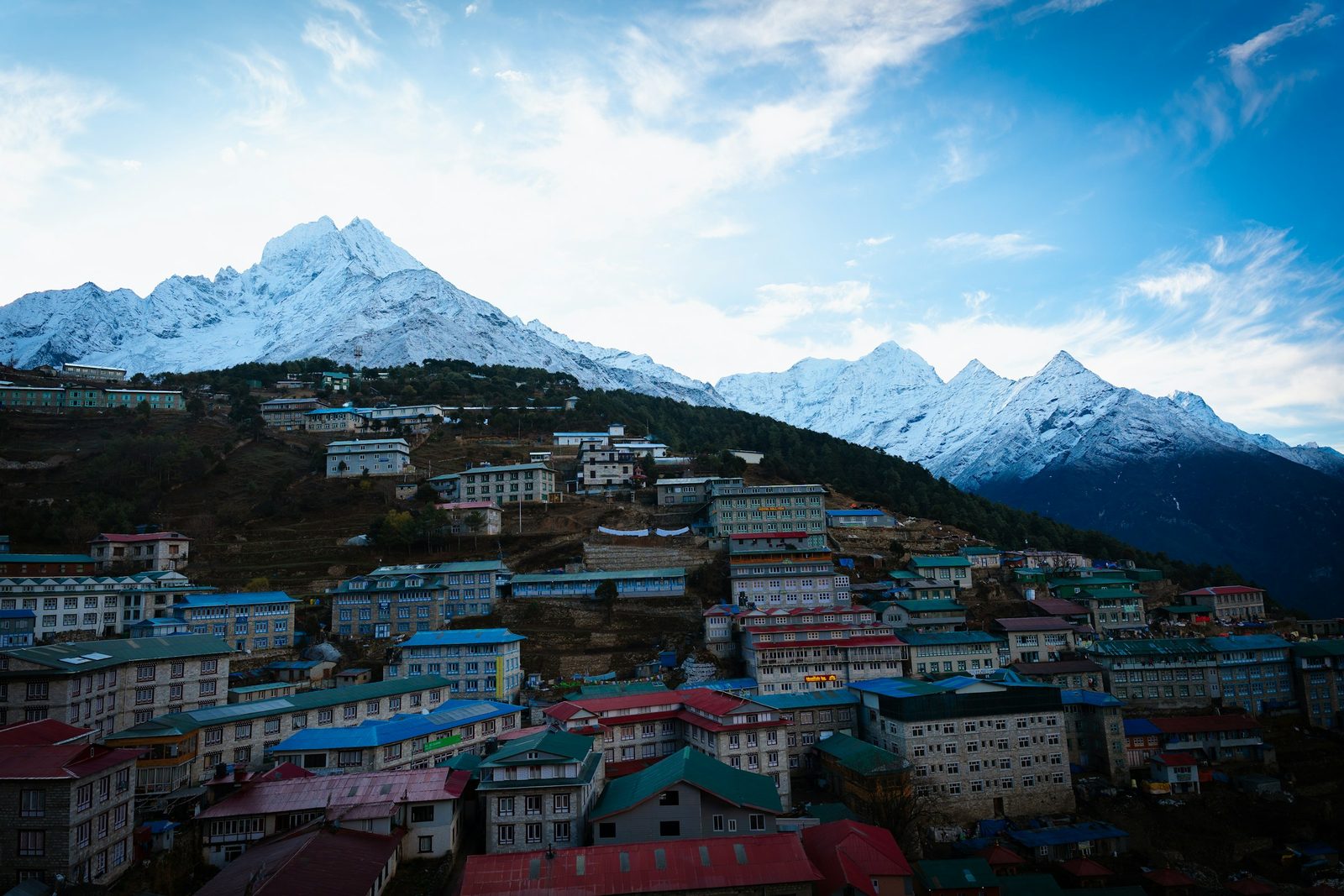
Namche Bazaar built into the hillside on the Everest Base Camp trail
Namche Bazaar, the main acclimatisation stop on the Everest route.

Our own Ghorepani Poon Hill trek is a 2-day version, using a jeep from Pokhara to the Banthanti trailhead to cut the lower walking. Most operators sell 4 to 6 days, walking more of the route. The short version suits a family on a Pokhara holiday; the longer one suits someone who wants a few nights in teahouses.

Who it suits: first-timers, families with older children, travellers from India on a short Pokhara break, anyone with a week or less. Who should skip it: someone who wants real altitude or a remote feel. It is a popular, well-trodden trail.

Everest View trek (Namche): Everest without the full base camp walk

This short trek gives you the Khumbu, the Sherpa valley below Everest, in a short trip. Typical itineraries run 7 to 10 days from Kathmandu; ours is 7 days. You fly to Lukla, walk up to Namche Bazaar at about 3,440 m, and take an acclimatisation day there with a walk higher up to the Hotel Everest View, where on a clear morning you see Everest at 8,848.86 m across the valley.

The honest limitation is the flight. In the busiest months the government moves Lukla flights to Manthali airport in Ramechhap, a pre-dawn drive from Kathmandu, and every flight depends on the weather. Build in a spare day or two. Our Everest View trek with Namche Bazaar is planned with that in mind.

Who it suits: people who want to see Everest and the Sherpa villages but do not have two weeks, or who are unsure how they handle altitude. Who should skip it: anyone set on standing at base camp.

Mardi Himal: a ridge walk close to the mountains

Mardi Himal is a younger trek, opened in 2012, that climbs a forested ridge north of Pokhara to Mardi Himal Base Camp at 4,500 m. Typical itineraries run 5 to 9 days. It starts from Pokhara by road and sits inside the Annapurna Conservation Area, so you need the ACAP permit.

The appeal is the close view of Machhapuchhre and the Annapurnas from the open ridge. The catch is that the high point is well above Annapurna Base Camp in fewer days, so it needs care with altitude. As on any high trail, your guide watches the weather and decides on the day whether going higher is sensible.

Who it suits: people with a week who have done some hill walking and want more height than Poon Hill. Who should skip it: a first-ever trek for someone nervous about altitude; start with Poon Hill.

Annapurna Base Camp: into the sanctuary

Annapurna Base Camp, often called ABC, sits at 4,130 m in a high basin ringed by peaks, with Annapurna I at 8,091 m above it. Typical itineraries run 7 to 12 days, with some operators selling up to 14 or 15. It starts from Pokhara by road, passes through Gurung villages and terraced farmland lower down, then climbs through forest into the sanctuary.

It gives you real altitude and real mountains, with teahouses all the way and no high pass. The honest part is the stone staircases between villages and the altitude gain near the top, which is where people feel it.

Who it suits: fit first-timers with 7 to 12 days, and anyone who has done Poon Hill and wants the next step up. Who should skip it: someone who wants a remote trail; ABC is busy in season.

Upper Mustang: the dry, walled kingdom

Upper Mustang is a different Nepal: desert valleys, red cliffs and the walled capital of Lo Manthang at 3,840 m. Typical itineraries run 12 to 18 days. It is a restricted area, so the permit is issued by the Department of Immigration in Kathmandu through a registered agency, and since late 2025 it has been charged at USD 50 per person per day, on top of the ACAP permit.

Because it lies in a rain shadow, Upper Mustang is one of the few treks you can do during the monsoon. The Tiji (Teeji) festival in Lo Manthang is usually held in May. The highest ground on the route is above Lo Manthang, but we have not found an official figure for it, so we do not quote one.

Who it suits: travellers interested in Tibetan Buddhist culture and landscape, and anyone whose only free weeks fall in the monsoon. Who should skip it: people chasing close-up snow peaks; the views here are about desert and sky.

Everest Base Camp: the classic

Everest Base Camp (EBC) is the trek most people mean when they say Nepal. The walk reaches base camp at 5,364 m, and many itineraries add a dawn climb to Kala Patthar, the viewpoint above base camp, which is higher still (published figures range from about 5,545 m to 5,645 m). Typical itineraries run 12 to 16 days, starting with the flight to Lukla.

In the busiest months the government moves Lukla flights to Manthali airport in Ramechhap, a pre-dawn drive from Kathmandu, and flights in both directions depend on the weather. We plan spare days for that, and you should too. Permits are the Sagarmatha National Park permit and the Khumbu Pasang Lhamu Rural Municipality Trek-Card, issued at Lukla; we arrange both.

The CDC singles this route out: "Itineraries along some trekking routes in Nepal, particularly Everest base camp, push the limits". A good EBC itinerary has acclimatisation days built in, and does not cut them to save time. For the money side, read our Everest Base Camp trek cost guide.

Who it suits: fit walkers with two weeks who are prepared to go slowly. Who should skip it: anyone with fixed onward flights and no spare days, or a first trek with no altitude experience; consider the Everest View trek first.

Gokyo Lakes and Gokyo Ri: the Everest region's quieter valley

The Gokyo trek branches off the Everest Base Camp trail above Namche into a parallel valley of turquoise glacial lakes. The high point is Gokyo Ri at about 5,357 m, a viewpoint that looks across to Everest. Typical itineraries run 12 to 16 days. Permits and access are the same as for EBC: the Sagarmatha National Park permit, the Khumbu Trek-Card, and the Lukla flight.

It is just as high as EBC, so it is just as serious about altitude.

Who it suits: fit walkers who want Everest views with a little more space. Who should skip it: anyone who must stand at base camp itself.

Annapurna Circuit: the long loop over Thorong La

The Annapurna Circuit loops round the Annapurna massif and crosses Thorong La at 5,416 m, the highest point in this guide, before dropping to the pilgrimage village of Muktinath at 3,749 m. Typical itineraries run 12 to 20 days. Roads now reach far into the Circuit, which is why lengths vary so much: some itineraries drive the lower sections, others walk more of them.

The NTB gives March to May and September to November as the best months for the Manang area, on the approach to Thorong La. Snow can close the pass, and on the crossing day your guide, who knows the route, decides when and how to cross, based on snow and the forecast.

Who it suits: walkers with two weeks or more who want variety, from rice terraces to high desert. Who should skip it: anyone short on days, or nervous about a long, cold pass day at altitude.

Manaslu Circuit: the remote loop round the eighth-highest mountain

The Manaslu Circuit circles Manaslu, at 8,163 m the eighth-highest mountain in the world, and crosses Larkya La, just over 5,100 m (published figures are 5,106 m and 5,160 m). Typical itineraries run 13 to 18 days, with 14 days or more the common standard. As on the Annapurna Circuit, roads now reach far into the approach.

It is a restricted area, and the NTB says a special trekking permit is required. The permit costs USD 100 per person per week from September to November, plus USD 15 per day beyond a week; from December to August it is USD 75 per week plus USD 10 per day beyond a week. You also need the Manaslu Conservation Area permit, and because the route also enters the Annapurna Conservation Area, we arrange that permit too, along with a local municipality fee.

Who it suits: experienced trekkers who want a remote, high loop and have the days. Who should skip it: first-time trekkers, and anyone who wants plenty of lodge choice.

Trekking permits in Nepal: which ones you need

Every trek in this guide needs at least one permit, and we arrange them all before you start walking. The main ones are a national park or conservation area permit, a local registration depending on the route, and, for Manaslu and Upper Mustang, a restricted-area permit. Fees below are official rates, checked on 8 October 2026.
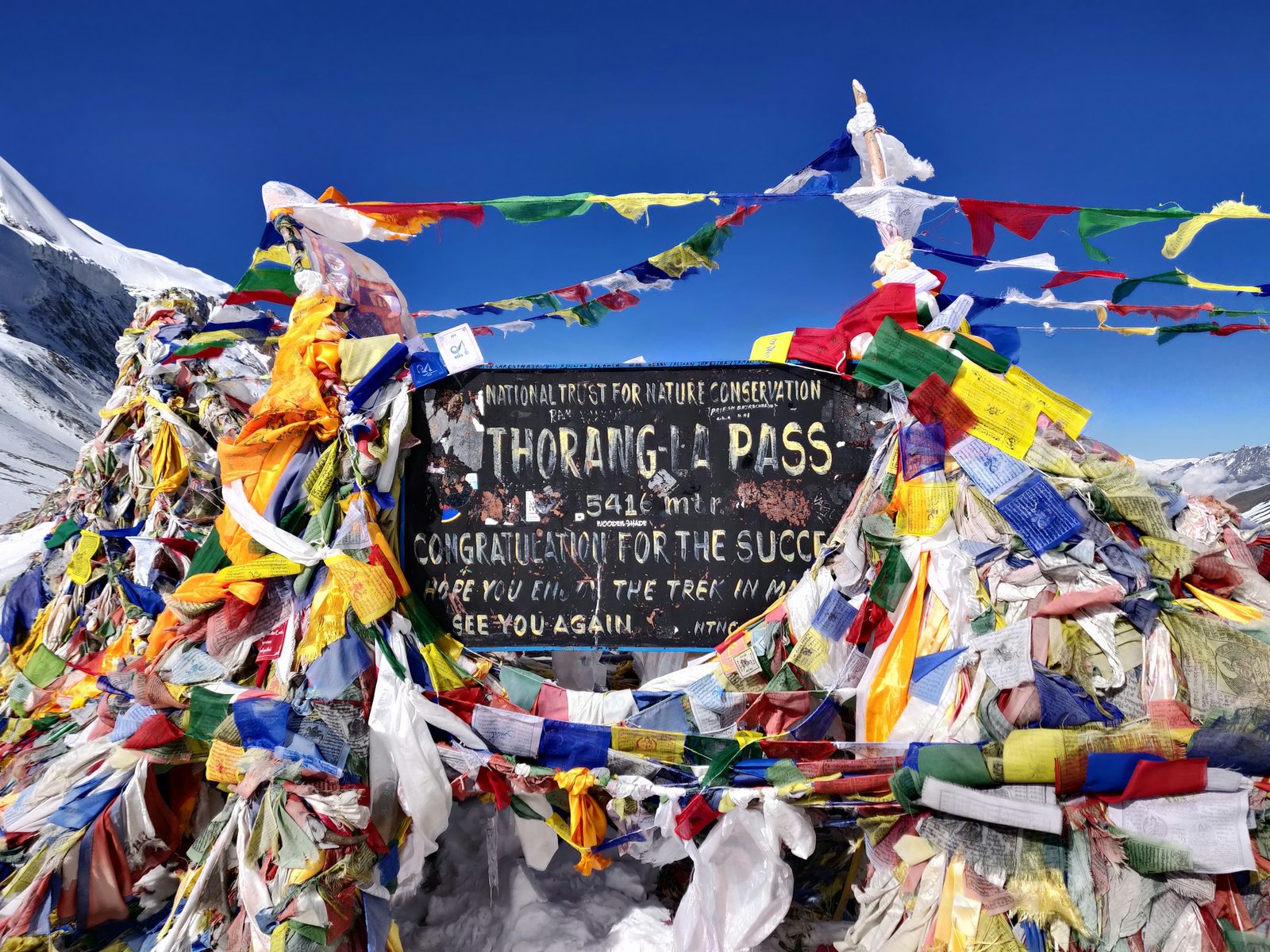
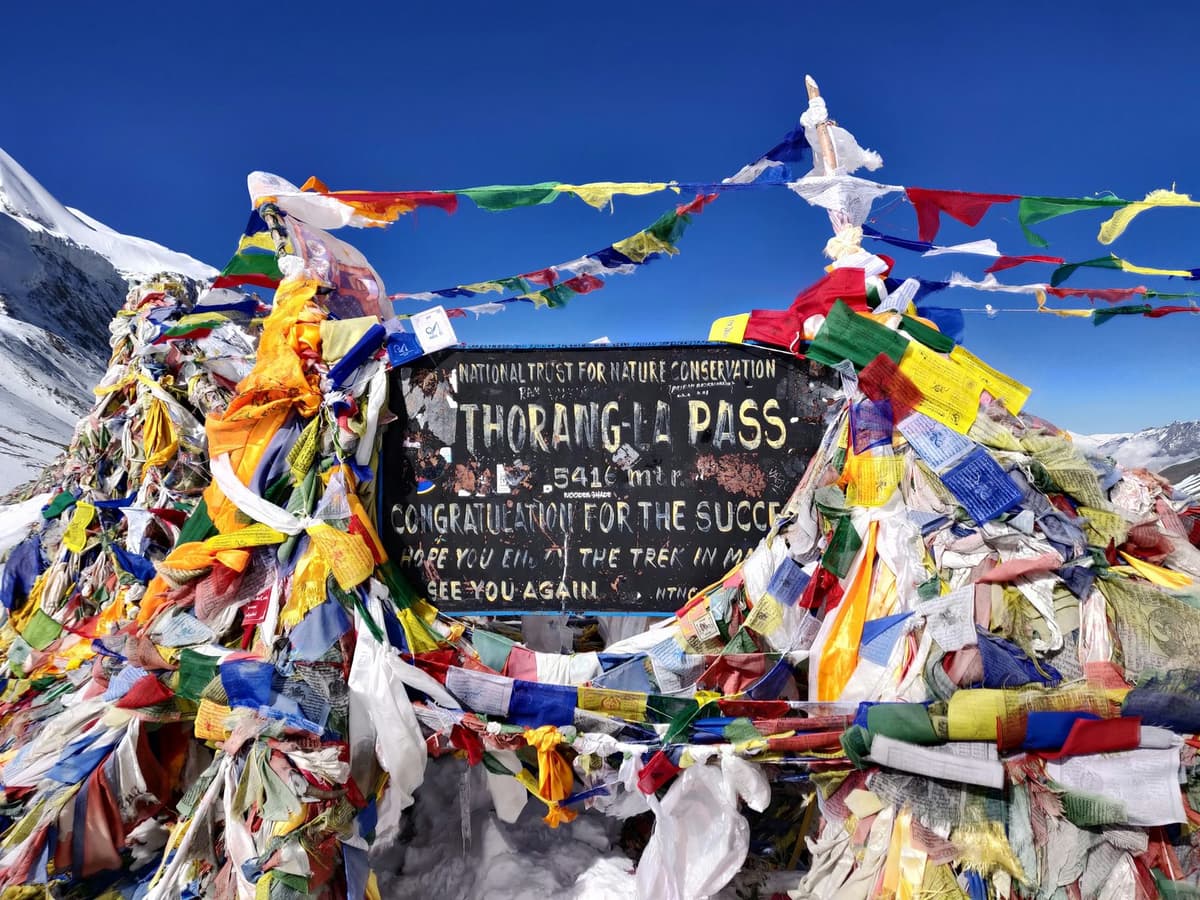
The Thorong La pass sign at the high point of the Annapurna Circuit trek
Thorong La, the highest point of any trek in this guide.
Permit Foreigners SAARC nationals (incl. India) Used on Source
Sagarmatha National Park entry NPR 3,000 (about USD 19) NPR 1,500 (about USD 10) EBC, Gokyo, Everest View NTB park entry fees, 8 Oct 2026
Khumbu Pasang Lhamu Rural Municipality Trek-Card NPR 3,000 (about USD 19) NPR 2,000 (SAARC and China, about USD 13) EBC, Gokyo, Everest View Khumbu Pasang Lhamu RM Trek-Card page, 8 Oct 2026
ACAP (Annapurna Conservation Area) NPR 3,000 (about USD 19) NPR 1,000 (about USD 6.50) Poon Hill, ABC, Circuit, Mardi Himal, Upper Mustang, Manaslu NTNC e-permit; NTB, 8 Oct 2026
MCAP (Manaslu Conservation Area) NPR 3,000 (about USD 19) NPR 1,000 (about USD 6.50) Manaslu Circuit NTB park entry fees; NTNC, 8 Oct 2026
Upper Mustang restricted-area permit USD 50 per person per day No separate rate given by NTB Upper Mustang NTB's reproduction of the Department of Immigration schedule, 8 Oct 2026
Manaslu restricted-area permit Sep-Nov: USD 100 per week + USD 15 per extra day; Dec-Aug: USD 75 per week + USD 10 per extra day No separate rate given by NTB Manaslu Circuit NTB's reproduction of the Department of Immigration schedule, 8 Oct 2026

USD figures use the Nepal Rastra Bank rate of 8 October 2026 and will move with the exchange rate. Children under 10 do not need the national park, ACAP or MCAP permits. If you turn up at an ACAP checkpost without a permit, the fee is doubled, which is one more reason to sort it before you go. Restricted-area permits are issued only through registered agencies and come on top of the conservation-area permits.

Your Nepal visa and your international flights are your own arrangements, not something we book. The official visa information is on the Nepal Tourism Board's tourist visa page (https://ntb.gov.np/plan-your-trip/before-you-come/tourist-visa). Once you land in Kathmandu, we take over.

Do you need a guide to trek in Nepal?

On our trips, yes: a licensed guide walks with you on every trek we run. The legal picture depends on the region. The NTB's 2023 rule requires a licensed guide on listed routes in protected areas, restricted areas require one by permit condition, and in the Everest region the local municipality has publicly disagreed with the national rule.

Annapurna region: can you trek without a guide? Not on our trips. A licensed guide walks with you on every trek we run. Since 31 March 2023, the NTB has required trekkers in specific protected areas of Nepal to be accompanied by a licensed guide. The NTB lists the Annapurna Circuit, Poon Hill to ABC and Mardi Himal treks among those routes.

Everest region. Here the two authorities disagree, and we will not pretend otherwise. The NTB lists the Everest Base Camp, Gokyo and Everest View treks under its 2023 provision, and in April 2023 NTB chief executive Dhananjay Regmi said: "It is highly irresponsible of the rural municipality in the Khumbu region not to follow it". The Khumbu Pasang Lhamu Rural Municipality said in a press statement the same month: "It is not mandatory to hire a guide for trekking in the Everest region". The municipality issues its own Trek-Card at Lukla, and its official page says nothing about guides. We have found no later settlement of the dispute. Our position is simple: a licensed guide walks with you on every trek we run, including in the Khumbu.

Restricted areas (Manaslu, Upper Mustang). Since March 2026 you can get a restricted-area permit as a solo trekker, but a licensed guide and a registered agency are still required. The Kathmandu Post reported the Department of Immigration's decision on Sunday 22 March 2026; before that, permits were issued only to groups of two or more.

Altitude and safety: how to trek well up high

Go up slowly, walk slowly, drink well, know the symptoms, and never go higher with symptoms. That short list prevents most altitude problems. It is also why we never cut acclimatisation days to make an itinerary look shorter.
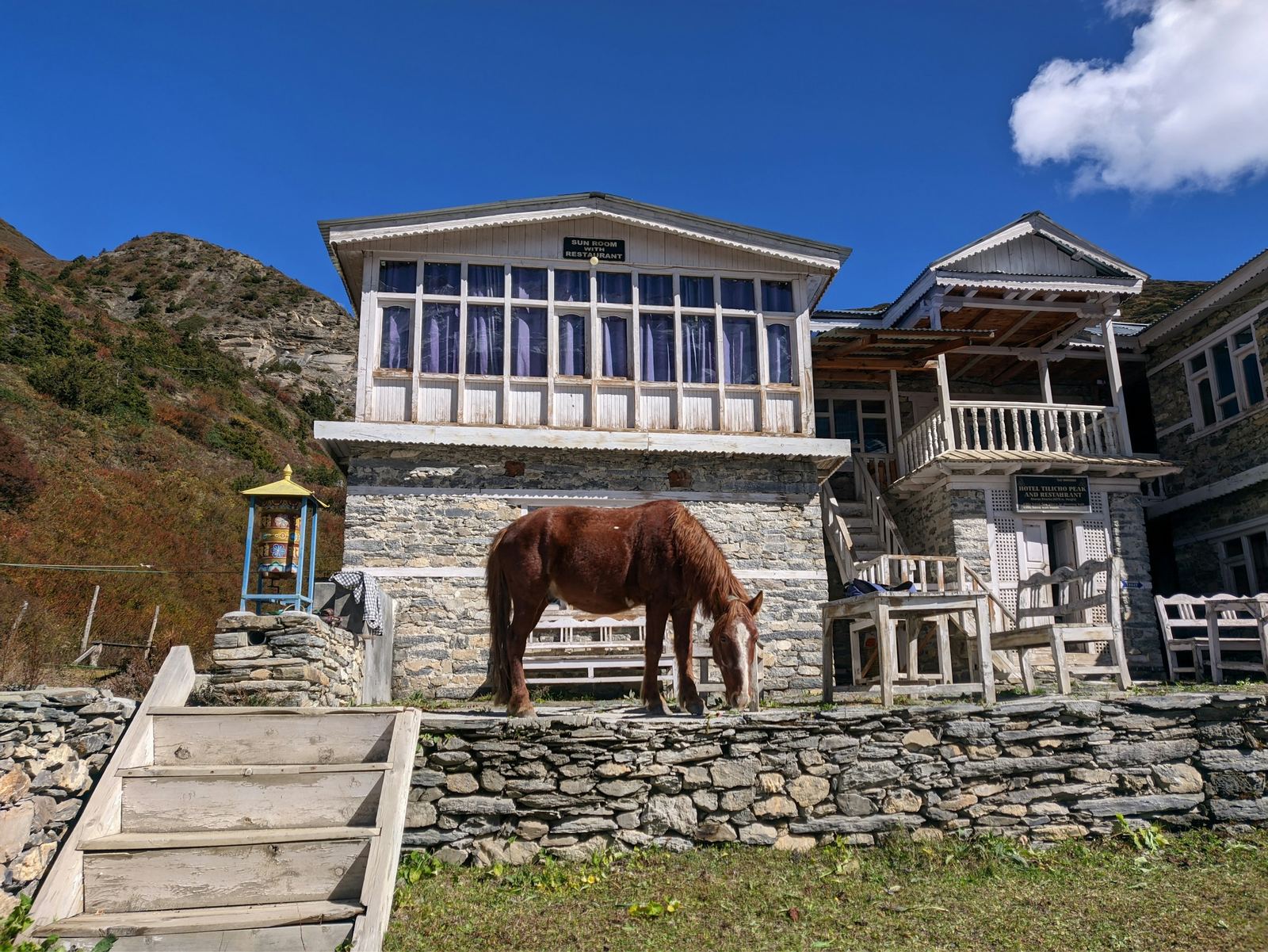
A stone-built teahouse lodge on a trekking trail in Nepal
A trail teahouse: hot soup and tea help you keep drinking up high.

"Any unacclimatized traveler proceeding to a sleeping altitude of ≥2,450 m (≥8,000 ft) ... is at risk for altitude illness."

US Centers for Disease Control and Prevention, CDC Yellow Book

  • Go up slowly. The Wilderness Medical Society, whose guidance the CDC Yellow Book cites, recommends that above 3,000 m (9,800 ft) you raise your sleeping height by no more than 500 m (1,650 ft) a night, allow an extra night to acclimatise for every 1,000 m (3,300 ft) of sleeping altitude gained, and take a rest day, with no ascent to a higher sleeping elevation, every 3 to 4 days.
  • Walk slowly. Our guides say "bistarai, bistarai", which means "slowly, slowly" in Nepali. If you can talk while you walk, your pace is right.
  • Drink enough water, and avoid alcohol in the first days at altitude.
  • Know the symptoms. Headache, nausea, loss of appetite, dizziness, unusual tiredness and poor sleep are the early signs. Tell your guide at once; hiding it is the most dangerous thing you can do.
  • Never go higher with symptoms. If they get worse, go down.
  • Ask your doctor about preventive medicine before you travel. The CDC says to "consider using acetazolamide to speed acclimatization if abrupt ascent is unavoidable". We never suggest a dose; that is your doctor's call.
  • Garlic soup and hot soups are a comforting local tradition and help you drink more. They are not a proven cure.
  • Severe symptoms (confusion, stumbling, breathlessness at rest, a wet cough) mean descend at once and get medical help. Our guide arranges the rescue.

Two more safety points. First, take out travel insurance that covers trekking at the altitude of your route and helicopter evacuation; we recommend it strongly but do not sell it. Second, on Everest treks, accept that Lukla flights depend on the weather, and keep a buffer day or two before your international flight home.

Read next: the best time to trek Everest Base Camp, the Manaslu Circuit trek cost, altitude sickness on Nepal treks, Thorong La Pass guide, Larke Pass guide, Manaslu Base Camp side trip and the best time to trek in Nepal.

Frequently asked questions

What is the easiest trek in Nepal?

Ghorepani Poon Hill is the easiest of the well-known treks. Its high point is 3,210 m, typical itineraries run 2 to 6 days from Pokhara, and there are teahouses all the way. It is not effortless, because much of the trail is stone steps, but it suits first-timers and families who want a real taste of trekking without high altitude.

Can beginners trek in Nepal?

Yes. None of the treks in this guide needs climbing experience, and beginners do well on shorter, lower routes such as Poon Hill or the Everest View trek. What beginners need is steady walking fitness and patience with altitude: above about 2,450 m sleeping height, anyone can get altitude sickness. A licensed guide walks with you on every trek we run, which takes the route-finding and logistics off your hands.

What is the best month to trek in Nepal?

October and November give the clearest skies, according to the Nepal Tourism Board, with spring the other main season, when rhododendrons bloom. The monsoon normally runs from mid-June to early October and brings cloud and slippery trails to most routes. Upper Mustang is the main exception, being in a rain shadow. December to February suits lower treks.

Can I trek solo in Nepal?

It depends on the region. Since 22 March 2026 you can get a restricted-area permit for Manaslu or Upper Mustang as a solo trekker, but a licensed guide and a registered agency are still required. The NTB's 2023 trekking rule also requires a licensed guide on listed protected-area routes. In the Everest region the local municipality disputes that rule. On our trips, a licensed guide walks with you on every trek.

Can I see Mount Everest without going to Everest Base Camp?

Yes. The short Everest View trek to Namche, typically 7 to 10 days, includes an acclimatisation walk above Namche from where you can see Everest on a clear day. Gokyo Ri, at about 5,357 m, is another strong viewpoint. On the base camp trek itself, many itineraries add a dawn climb to Kala Patthar, the viewpoint above base camp, for the view.

Is the Langtang trek open now?

A flood in late August 2026 damaged Syabrubesi, the usual Langtang trailhead. We have not found an official trail-status notice from the national park or the Nepal Tourism Board, so we cannot confirm whether the route is fully open. Check the current trail status before you book; we will tell you what we know, and suggest an alternative if it is not ready.

Your next step

Still choosing between two routes? Send us your dates, how many nights you have in Nepal and the highest you have slept before, and we will tell you honestly which trek fits, including when the answer is a shorter one.

Message us on WhatsApp or use the enquiry form, and our Kathmandu team will reply with a plan and a quote. For more planning help, browse the rest of our Insights guides.

Last checked: 8 October 2026. Fees and rules change; we re-check them before every trekking season.
Tags
Trekking in NepalEverest Base CampAnnapurna Base CampPoon HillAnnapurna CircuitMardi HimalManaslu CircuitUpper Mustang
Share
U
Uncover Nepal Team
Writer at Uncover Nepal
More in TreksSee all Treks

Best Treks in Nepal: How to Choose the Right One

25 min read Posted 08 Oct 2026Updated 01 Nov 2026
Best Treks in Nepal: How to Choose the Right One

By Uncover Nepal Team. Last checked: 8 October 2026.

On Sunday 4 October 2026 the monsoon pulled out of western Nepal, with full withdrawal expected within days. At Manthali airport in Ramechhap, extra flights to Lukla have been running since the end of September, nine of them on one Saturday. The autumn trekking season has started, and our Kathmandu desk is answering the usual question: which trek?

The short answer. The best treks in Nepal for most first-time visitors are Ghorepani Poon Hill (short and low, high point 3,210 m), Annapurna Base Camp (typically 7 to 12 days, to 4,130 m) and Everest Base Camp (typically 12 to 16 days, to 5,364 m). The right one depends on your days, your fitness and how you handle altitude.

This guide is part of our Insights library for planning a Nepal trip. It compares nine treks we know well, explains the permits and guide rules as they stand today, and gives you a simple way to match a route to your time, legs and comfort with thin air.

Key facts

Best trekking seasons
Spring and autumn; clearest skies after the monsoon in October and November (Nepal Tourism Board, climate page (ntb.gov.np/plan-your-trip/about-nepal/climate), 8 Oct 2026)
Highest point in this guide
Thorong La, 5,416 m, on the Annapurna Circuit (NTB trade site, Annapurna region (trade.ntb.gov.np/tourist-destination/annapurna-region/), 8 Oct 2026)
Lowest high point in this guide
Poon Hill, 3,210 m (NTB, top trekking destinations page (ntb.gov.np), 8 Oct 2026)
Where altitude-illness risk starts
Sleeping at about 2,450 m (8,000 ft) or higher without acclimatising (US CDC Yellow Book, high-altitude travel (cdc.gov), 8 Oct 2026)
Guide rule on listed routes
NTB's revised trekking rule, in force from 1 April 2023 (NTB lists 31 March 2023); the Khumbu municipality disputes it for the Everest region (Nepal Tourism Board, 8 Oct 2026)
Restricted areas (Manaslu, Upper Mustang)
Solo trekkers can get a permit since 22 March 2026; licensed guide and registered agency still required (Kathmandu Post report of the Department of Immigration decision, 22 Mar 2026, 8 Oct 2026)
Everest access
Treks start with a flight to Lukla; in the busiest months Lukla flights leave from Manthali, Ramechhap (NTB Everest page; ekantipur, 4 Oct 2026, 8 Oct 2026)

How to choose the best trek in Nepal for you

Start with three questions: how many days you have in Nepal, how high you are comfortable sleeping, and which month you can travel. Those three settle most of the choice. Fitness, budget style and how much company you want on the trail narrow it to one or two routes, and a short conversation with a local team settles the rest.

A trekker watching sunrise from the Poon Hill viewpoint in the Annapurna region
Poon Hill at dawn: the short, low trek many first-timers choose.

Most people pick the photo first and then try to squeeze the trek into their days. When the days are tight, the trek that suits you is often a shorter, lower one you finish with energy left. We would rather send you on the right trek than the most famous one.

Time: count the days you actually have

Typical itineraries, Kathmandu to Kathmandu or Pokhara to Pokhara, run like this. Ghorepani Poon Hill takes 2 to 6 days from Pokhara. Mardi Himal takes 5 to 9 days. The short Everest View trek to Namche takes 7 to 10 days from Kathmandu. Annapurna Base Camp takes 7 to 12 days. Everest Base Camp and Gokyo each take 12 to 16 days. Upper Mustang takes 12 to 18 days, the Manaslu Circuit 13 to 18 days, and the Annapurna Circuit 12 to 20 days depending on how much of it you drive.

These are typical operator ranges, not rules; length depends on start point, flights or roads, and rest days. Add travel days on top. Kathmandu to Pokhara is most of a day by road, often six to nine hours with traffic and roadworks, or about 30 minutes by air. Everest treks need spare days in case Lukla flights are delayed by weather.

Fitness: be honest about your legs

No trek in this guide needs climbing experience, but you do need to walk for several hours a day, day after day, on uneven trail. The Poon Hill trail is much of it stone steps, and steps are normal on Nepal trails.

If you have never done a multi-day walk, start shorter. Poon Hill or Mardi Himal will show you what teahouse trekking feels like without committing you to two weeks at altitude. A teahouse, by the way, is a family-run lodge on the trail with simple rooms and a shared dining room where you eat dal bhat (rice, lentil soup and vegetables) and warm up by the stove.

Altitude: the factor fitness cannot fix

Altitude is the biggest difference between these treks, and being fit does not protect you from altitude sickness. The US CDC says any unacclimatised traveller going to a sleeping altitude of about 2,450 m or higher is at risk. Every trek here goes above that, but some go far above it and stay there for days.

The high points compare like this. Poon Hill is 3,210 m. Lo Manthang, the walled capital of Upper Mustang, is 3,840 m. Annapurna Base Camp is 4,130 m. Mardi Himal Base Camp is 4,500 m. Larkya La on the Manaslu Circuit is just over 5,100 m (published figures are 5,106 m and 5,160 m). Gokyo Ri is about 5,357 m. Everest Base Camp is 5,364 m, and Kala Patthar, the viewpoint above it, is higher still (published figures range from about 5,545 m to 5,645 m). Thorong La on the Annapurna Circuit is 5,416 m.

A useful rule of thumb from the NTB: average temperatures drop about 6°C for every 1,000 m you climb. Higher means colder nights as well as thinner air. Our full guide on how to avoid altitude sickness goes into the detail.

Season: match the month to the route

For most treks, autumn and spring are the seasons to go. The Nepal Tourism Board puts it simply: spring is when the rhododendrons bloom, and "the clearest skies are found after the monsoon in October and November".

The monsoon normally runs from 13 June to 2 October, and the NTB notes that "Eighty percent of all the rain in Nepal is received during the monsoon (June-September)". That rain means cloud, leeches, slippery trails and road blocks on most routes. The big exception is Upper Mustang, which lies in a rain shadow and can be visited during the monsoon. Jomsom, on the way in, records 292.4 mm of rain a year against 3,868.3 mm in Pokhara (DHM station normals, 1991 to 2020).

Winter brings clear, cold days and snow on the high passes. Lower routes are the usual choice then, and our guide to winter treks in Nepal explains which routes work in December to February and which do not.

Budget style: what changes the bill

We do not print our own trip prices in Insights articles, because a quote depends on your dates, group size, hotels and whether you want a porter. What we can show you is which choices move the cost up or down.

  • Flights or road. Everest treks start with a flight to Lukla; walking in from Jiri instead adds roughly 10 days to reach Namche. Annapurna-side treks start from Pokhara by road, so there is no mountain flight in the price unless you fly between Kathmandu and Pokhara.
  • Permits. Most treks need one or two permits costing NPR 1,000 to 3,000 each, depending on nationality (see the permits table below). Restricted areas cost much more: the Upper Mustang permit is USD 50 per person per day, and the Manaslu permit is charged per week.
  • Days. Every extra day adds a night's lodging, meals and the guide's wages, so a longer trek costs more even at the same daily standard.

For real numbers on the most-asked route, read our Everest Base Camp trek cost breakdown.

Crowds: how much company you want

Nobody publishes reliable trekker counts per route that we can quote, so treat any "quietest trek" claim, including ours, as opinion. A few things are clear, though. Spring and autumn are the best seasons, so that is when every route is busiest. In the restricted areas, Manaslu and Upper Mustang, every trekker must come through a registered agency with a licensed guide, so you will not meet independent backpackers there. Mardi Himal is a younger route, opened as a trek in 2012.

Best treks in Nepal compared

The table puts the nine treks side by side. The difficulty word is our own team's rating, not an official grade: Nepal has no official trek grading system, and every agency uses its own.

Our rating, explained. Easy to moderate: a short trek with the lowest high point in this guide and no high pass. Moderate: real altitude, with a high point no higher than Mardi Himal Base Camp (4,500 m) and no high pass. Hard: several nights sleeping high and a high point over 5,100 m, whether base camp, a high viewpoint or a high pass.

Trek Highest point Typical days Main permits Best season Our rating
Ghorepani Poon Hill 3,210 m 2-6 from Pokhara ACAP Spring, autumn Easy to moderate
Everest View (Namche) Namche, about 3,440 m; the viewpoint walk goes higher 7-10 Sagarmatha NP permit, Khumbu Trek-Card Spring, autumn Moderate
Mardi Himal 4,500 m 5-9 ACAP Spring, autumn Moderate
Annapurna Base Camp 4,130 m 7-12 ACAP Spring, autumn Moderate
Upper Mustang Lo Manthang 3,840 m 12-18 Restricted-area permit, ACAP Spring, autumn; monsoon possible Moderate
Everest Base Camp 5,364 m; Kala Patthar higher 12-16 Sagarmatha NP permit, Khumbu Trek-Card Spring, autumn Hard
Gokyo Lakes and Gokyo Ri About 5,357 m 12-16 Sagarmatha NP permit, Khumbu Trek-Card Spring, autumn Hard
Annapurna Circuit Thorong La 5,416 m 12-20 ACAP Mar-May, Sep-Nov Hard
Manaslu Circuit Larkya La, just over 5,100 m 13-18 Restricted-area permit, MCAP, ACAP, local fee Spring, autumn Hard

If you are weighing up the three Annapurna options in particular, our Annapurna Base Camp vs Circuit vs Poon Hill comparison goes deeper.

The treks, one by one

Ghorepani Poon Hill: the short, low introduction

Poon Hill is the trek we suggest most often to people with little time or no trekking experience. The high point is 3,210 m, typical itineraries run 2 to 6 days from Pokhara, and you reach it by a pre-dawn climb from the village of Ghorepani to watch sunrise over the Annapurna and Dhaulagiri ranges. Much of the trail is stone steps, so expect your thighs to know about it.

Namche Bazaar built into the hillside on the Everest Base Camp trail
Namche Bazaar, the main acclimatisation stop on the Everest route.

Our own Ghorepani Poon Hill trek is a 2-day version, using a jeep from Pokhara to the Banthanti trailhead to cut the lower walking. Most operators sell 4 to 6 days, walking more of the route. The short version suits a family on a Pokhara holiday; the longer one suits someone who wants a few nights in teahouses.

Who it suits: first-timers, families with older children, travellers from India on a short Pokhara break, anyone with a week or less. Who should skip it: someone who wants real altitude or a remote feel. It is a popular, well-trodden trail.

Everest View trek (Namche): Everest without the full base camp walk

This short trek gives you the Khumbu, the Sherpa valley below Everest, in a short trip. Typical itineraries run 7 to 10 days from Kathmandu; ours is 7 days. You fly to Lukla, walk up to Namche Bazaar at about 3,440 m, and take an acclimatisation day there with a walk higher up to the Hotel Everest View, where on a clear morning you see Everest at 8,848.86 m across the valley.

The honest limitation is the flight. In the busiest months the government moves Lukla flights to Manthali airport in Ramechhap, a pre-dawn drive from Kathmandu, and every flight depends on the weather. Build in a spare day or two. Our Everest View trek with Namche Bazaar is planned with that in mind.

Who it suits: people who want to see Everest and the Sherpa villages but do not have two weeks, or who are unsure how they handle altitude. Who should skip it: anyone set on standing at base camp.

Mardi Himal: a ridge walk close to the mountains

Mardi Himal is a younger trek, opened in 2012, that climbs a forested ridge north of Pokhara to Mardi Himal Base Camp at 4,500 m. Typical itineraries run 5 to 9 days. It starts from Pokhara by road and sits inside the Annapurna Conservation Area, so you need the ACAP permit.

The appeal is the close view of Machhapuchhre and the Annapurnas from the open ridge. The catch is that the high point is well above Annapurna Base Camp in fewer days, so it needs care with altitude. As on any high trail, your guide watches the weather and decides on the day whether going higher is sensible.

Who it suits: people with a week who have done some hill walking and want more height than Poon Hill. Who should skip it: a first-ever trek for someone nervous about altitude; start with Poon Hill.

Annapurna Base Camp: into the sanctuary

Annapurna Base Camp, often called ABC, sits at 4,130 m in a high basin ringed by peaks, with Annapurna I at 8,091 m above it. Typical itineraries run 7 to 12 days, with some operators selling up to 14 or 15. It starts from Pokhara by road, passes through Gurung villages and terraced farmland lower down, then climbs through forest into the sanctuary.

It gives you real altitude and real mountains, with teahouses all the way and no high pass. The honest part is the stone staircases between villages and the altitude gain near the top, which is where people feel it.

Who it suits: fit first-timers with 7 to 12 days, and anyone who has done Poon Hill and wants the next step up. Who should skip it: someone who wants a remote trail; ABC is busy in season.

Upper Mustang: the dry, walled kingdom

Upper Mustang is a different Nepal: desert valleys, red cliffs and the walled capital of Lo Manthang at 3,840 m. Typical itineraries run 12 to 18 days. It is a restricted area, so the permit is issued by the Department of Immigration in Kathmandu through a registered agency, and since late 2025 it has been charged at USD 50 per person per day, on top of the ACAP permit.

Because it lies in a rain shadow, Upper Mustang is one of the few treks you can do during the monsoon. The Tiji (Teeji) festival in Lo Manthang is usually held in May. The highest ground on the route is above Lo Manthang, but we have not found an official figure for it, so we do not quote one.

Who it suits: travellers interested in Tibetan Buddhist culture and landscape, and anyone whose only free weeks fall in the monsoon. Who should skip it: people chasing close-up snow peaks; the views here are about desert and sky.

Everest Base Camp: the classic

Everest Base Camp (EBC) is the trek most people mean when they say Nepal. The walk reaches base camp at 5,364 m, and many itineraries add a dawn climb to Kala Patthar, the viewpoint above base camp, which is higher still (published figures range from about 5,545 m to 5,645 m). Typical itineraries run 12 to 16 days, starting with the flight to Lukla.

In the busiest months the government moves Lukla flights to Manthali airport in Ramechhap, a pre-dawn drive from Kathmandu, and flights in both directions depend on the weather. We plan spare days for that, and you should too. Permits are the Sagarmatha National Park permit and the Khumbu Pasang Lhamu Rural Municipality Trek-Card, issued at Lukla; we arrange both.

The CDC singles this route out: "Itineraries along some trekking routes in Nepal, particularly Everest base camp, push the limits". A good EBC itinerary has acclimatisation days built in, and does not cut them to save time. For the money side, read our Everest Base Camp trek cost guide.

Who it suits: fit walkers with two weeks who are prepared to go slowly. Who should skip it: anyone with fixed onward flights and no spare days, or a first trek with no altitude experience; consider the Everest View trek first.

Gokyo Lakes and Gokyo Ri: the Everest region's quieter valley

The Gokyo trek branches off the Everest Base Camp trail above Namche into a parallel valley of turquoise glacial lakes. The high point is Gokyo Ri at about 5,357 m, a viewpoint that looks across to Everest. Typical itineraries run 12 to 16 days. Permits and access are the same as for EBC: the Sagarmatha National Park permit, the Khumbu Trek-Card, and the Lukla flight.

It is just as high as EBC, so it is just as serious about altitude.

Who it suits: fit walkers who want Everest views with a little more space. Who should skip it: anyone who must stand at base camp itself.

Annapurna Circuit: the long loop over Thorong La

The Annapurna Circuit loops round the Annapurna massif and crosses Thorong La at 5,416 m, the highest point in this guide, before dropping to the pilgrimage village of Muktinath at 3,749 m. Typical itineraries run 12 to 20 days. Roads now reach far into the Circuit, which is why lengths vary so much: some itineraries drive the lower sections, others walk more of them.

The NTB gives March to May and September to November as the best months for the Manang area, on the approach to Thorong La. Snow can close the pass, and on the crossing day your guide, who knows the route, decides when and how to cross, based on snow and the forecast.

Who it suits: walkers with two weeks or more who want variety, from rice terraces to high desert. Who should skip it: anyone short on days, or nervous about a long, cold pass day at altitude.

Manaslu Circuit: the remote loop round the eighth-highest mountain

The Manaslu Circuit circles Manaslu, at 8,163 m the eighth-highest mountain in the world, and crosses Larkya La, just over 5,100 m (published figures are 5,106 m and 5,160 m). Typical itineraries run 13 to 18 days, with 14 days or more the common standard. As on the Annapurna Circuit, roads now reach far into the approach.

It is a restricted area, and the NTB says a special trekking permit is required. The permit costs USD 100 per person per week from September to November, plus USD 15 per day beyond a week; from December to August it is USD 75 per week plus USD 10 per day beyond a week. You also need the Manaslu Conservation Area permit, and because the route also enters the Annapurna Conservation Area, we arrange that permit too, along with a local municipality fee.

Who it suits: experienced trekkers who want a remote, high loop and have the days. Who should skip it: first-time trekkers, and anyone who wants plenty of lodge choice.

Trekking permits in Nepal: which ones you need

Every trek in this guide needs at least one permit, and we arrange them all before you start walking. The main ones are a national park or conservation area permit, a local registration depending on the route, and, for Manaslu and Upper Mustang, a restricted-area permit. Fees below are official rates, checked on 8 October 2026.

The Thorong La pass sign at the high point of the Annapurna Circuit trek
Thorong La, the highest point of any trek in this guide.
Permit Foreigners SAARC nationals (incl. India) Used on Source
Sagarmatha National Park entry NPR 3,000 (about USD 19) NPR 1,500 (about USD 10) EBC, Gokyo, Everest View NTB park entry fees, 8 Oct 2026
Khumbu Pasang Lhamu Rural Municipality Trek-Card NPR 3,000 (about USD 19) NPR 2,000 (SAARC and China, about USD 13) EBC, Gokyo, Everest View Khumbu Pasang Lhamu RM Trek-Card page, 8 Oct 2026
ACAP (Annapurna Conservation Area) NPR 3,000 (about USD 19) NPR 1,000 (about USD 6.50) Poon Hill, ABC, Circuit, Mardi Himal, Upper Mustang, Manaslu NTNC e-permit; NTB, 8 Oct 2026
MCAP (Manaslu Conservation Area) NPR 3,000 (about USD 19) NPR 1,000 (about USD 6.50) Manaslu Circuit NTB park entry fees; NTNC, 8 Oct 2026
Upper Mustang restricted-area permit USD 50 per person per day No separate rate given by NTB Upper Mustang NTB's reproduction of the Department of Immigration schedule, 8 Oct 2026
Manaslu restricted-area permit Sep-Nov: USD 100 per week + USD 15 per extra day; Dec-Aug: USD 75 per week + USD 10 per extra day No separate rate given by NTB Manaslu Circuit NTB's reproduction of the Department of Immigration schedule, 8 Oct 2026

USD figures use the Nepal Rastra Bank rate of 8 October 2026 and will move with the exchange rate. Children under 10 do not need the national park, ACAP or MCAP permits. If you turn up at an ACAP checkpost without a permit, the fee is doubled, which is one more reason to sort it before you go. Restricted-area permits are issued only through registered agencies and come on top of the conservation-area permits.

Your Nepal visa and your international flights are your own arrangements, not something we book. The official visa information is on the Nepal Tourism Board's tourist visa page (https://ntb.gov.np/plan-your-trip/before-you-come/tourist-visa). Once you land in Kathmandu, we take over.

Do you need a guide to trek in Nepal?

On our trips, yes: a licensed guide walks with you on every trek we run. The legal picture depends on the region. The NTB's 2023 rule requires a licensed guide on listed routes in protected areas, restricted areas require one by permit condition, and in the Everest region the local municipality has publicly disagreed with the national rule.

Annapurna region: can you trek without a guide? Not on our trips. A licensed guide walks with you on every trek we run. Since 31 March 2023, the NTB has required trekkers in specific protected areas of Nepal to be accompanied by a licensed guide. The NTB lists the Annapurna Circuit, Poon Hill to ABC and Mardi Himal treks among those routes.

Everest region. Here the two authorities disagree, and we will not pretend otherwise. The NTB lists the Everest Base Camp, Gokyo and Everest View treks under its 2023 provision, and in April 2023 NTB chief executive Dhananjay Regmi said: "It is highly irresponsible of the rural municipality in the Khumbu region not to follow it". The Khumbu Pasang Lhamu Rural Municipality said in a press statement the same month: "It is not mandatory to hire a guide for trekking in the Everest region". The municipality issues its own Trek-Card at Lukla, and its official page says nothing about guides. We have found no later settlement of the dispute. Our position is simple: a licensed guide walks with you on every trek we run, including in the Khumbu.

Restricted areas (Manaslu, Upper Mustang). Since March 2026 you can get a restricted-area permit as a solo trekker, but a licensed guide and a registered agency are still required. The Kathmandu Post reported the Department of Immigration's decision on Sunday 22 March 2026; before that, permits were issued only to groups of two or more.

Altitude and safety: how to trek well up high

Go up slowly, walk slowly, drink well, know the symptoms, and never go higher with symptoms. That short list prevents most altitude problems. It is also why we never cut acclimatisation days to make an itinerary look shorter.

A stone-built teahouse lodge on a trekking trail in Nepal
A trail teahouse: hot soup and tea help you keep drinking up high.

"Any unacclimatized traveler proceeding to a sleeping altitude of ≥2,450 m (≥8,000 ft) ... is at risk for altitude illness."

US Centers for Disease Control and Prevention, CDC Yellow Book

  • Go up slowly. The Wilderness Medical Society, whose guidance the CDC Yellow Book cites, recommends that above 3,000 m (9,800 ft) you raise your sleeping height by no more than 500 m (1,650 ft) a night, allow an extra night to acclimatise for every 1,000 m (3,300 ft) of sleeping altitude gained, and take a rest day, with no ascent to a higher sleeping elevation, every 3 to 4 days.
  • Walk slowly. Our guides say "bistarai, bistarai", which means "slowly, slowly" in Nepali. If you can talk while you walk, your pace is right.
  • Drink enough water, and avoid alcohol in the first days at altitude.
  • Know the symptoms. Headache, nausea, loss of appetite, dizziness, unusual tiredness and poor sleep are the early signs. Tell your guide at once; hiding it is the most dangerous thing you can do.
  • Never go higher with symptoms. If they get worse, go down.
  • Ask your doctor about preventive medicine before you travel. The CDC says to "consider using acetazolamide to speed acclimatization if abrupt ascent is unavoidable". We never suggest a dose; that is your doctor's call.
  • Garlic soup and hot soups are a comforting local tradition and help you drink more. They are not a proven cure.
  • Severe symptoms (confusion, stumbling, breathlessness at rest, a wet cough) mean descend at once and get medical help. Our guide arranges the rescue.

Two more safety points. First, take out travel insurance that covers trekking at the altitude of your route and helicopter evacuation; we recommend it strongly but do not sell it. Second, on Everest treks, accept that Lukla flights depend on the weather, and keep a buffer day or two before your international flight home.

Read next: the best time to trek Everest Base Camp, the Manaslu Circuit trek cost, altitude sickness on Nepal treks, Thorong La Pass guide, Larke Pass guide, Manaslu Base Camp side trip and the best time to trek in Nepal.

Frequently asked questions

What is the easiest trek in Nepal?

Ghorepani Poon Hill is the easiest of the well-known treks. Its high point is 3,210 m, typical itineraries run 2 to 6 days from Pokhara, and there are teahouses all the way. It is not effortless, because much of the trail is stone steps, but it suits first-timers and families who want a real taste of trekking without high altitude.

Can beginners trek in Nepal?

Yes. None of the treks in this guide needs climbing experience, and beginners do well on shorter, lower routes such as Poon Hill or the Everest View trek. What beginners need is steady walking fitness and patience with altitude: above about 2,450 m sleeping height, anyone can get altitude sickness. A licensed guide walks with you on every trek we run, which takes the route-finding and logistics off your hands.

What is the best month to trek in Nepal?

October and November give the clearest skies, according to the Nepal Tourism Board, with spring the other main season, when rhododendrons bloom. The monsoon normally runs from mid-June to early October and brings cloud and slippery trails to most routes. Upper Mustang is the main exception, being in a rain shadow. December to February suits lower treks.

Can I trek solo in Nepal?

It depends on the region. Since 22 March 2026 you can get a restricted-area permit for Manaslu or Upper Mustang as a solo trekker, but a licensed guide and a registered agency are still required. The NTB's 2023 trekking rule also requires a licensed guide on listed protected-area routes. In the Everest region the local municipality disputes that rule. On our trips, a licensed guide walks with you on every trek.

Can I see Mount Everest without going to Everest Base Camp?

Yes. The short Everest View trek to Namche, typically 7 to 10 days, includes an acclimatisation walk above Namche from where you can see Everest on a clear day. Gokyo Ri, at about 5,357 m, is another strong viewpoint. On the base camp trek itself, many itineraries add a dawn climb to Kala Patthar, the viewpoint above base camp, for the view.

Is the Langtang trek open now?

A flood in late August 2026 damaged Syabrubesi, the usual Langtang trailhead. We have not found an official trail-status notice from the national park or the Nepal Tourism Board, so we cannot confirm whether the route is fully open. Check the current trail status before you book; we will tell you what we know, and suggest an alternative if it is not ready.

Your next step

Still choosing between two routes? Send us your dates, how many nights you have in Nepal and the highest you have slept before, and we will tell you honestly which trek fits, including when the answer is a shorter one.

Message us on WhatsApp or use the enquiry form, and our Kathmandu team will reply with a plan and a quote. For more planning help, browse the rest of our Insights guides.

Last checked: 8 October 2026. Fees and rules change; we re-check them before every trekking season.
Tags
Trekking in NepalEverest Base CampAnnapurna Base CampPoon HillAnnapurna CircuitMardi HimalManaslu CircuitUpper Mustang
Share
U
Uncover Nepal Team
Writer at Uncover Nepal
More in TreksSee all Treks