
Explore by activity
Not listed yet

We run Motorbiking & Overland trips — we just haven’t put the itinerary on the site yet. Tell us your dates and we’ll send a costed day-by-day plan.

Explore by experience
Explore by region
by gomayu
Search Tours or Places

Manaslu Circuit Trek Cost: Permits, Guide and Budget

17 min read Posted 08 Oct 2026Updated 28 Oct 2026
Manaslu Circuit Trek Cost: Permits, Guide and Budget

By Uncover Nepal Team · Checked by our Kathmandu travel team · Last checked 8 October 2026

At Dharmasala, the cluster of lodges also called Larkya Phedi at about 4,460 m, crossing day starts in the dark. Headtorches move between the dining room and the trail, flasks are filled, and the guide looks at the sky before anyone looks at the map. The day over the Larkya La is often eight to nine hours, and it usually starts before dawn.

The short answer. The Manaslu Circuit trek cost for a 14-day trip from Kathmandu, with a licensed guide hired through a registered agency, adds up to about USD 1,019 at the budget end and USD 2,256 at mid-range per person. That covers permits, road transport, teahouses, food, guide, porter, tips and a 30-day visa, not international flights or insurance.

For the route itself and the trips we run there, see our Manaslu Circuit trek guide. Every figure carries its source and the date we checked it. Where we found no reliable number, we say so.

Key facts

Manaslu Restricted Area Permit (RAP), September to November
USD 100 for the first week, then USD 15 a day (NTB copy of the Department of Immigration schedule; TAAN, 8 Oct 2026)
Manaslu RAP, December to August
USD 75 for the first week, then USD 10 a day (Same, 8 Oct 2026)
Manaslu Conservation Area permit (MCAP)
NPR 3,000 foreign, about USD 19; NPR 1,000 SAARC (NTB; NTNC e-permit, 8 Oct 2026)
Annapurna Conservation Area permit (ACAP), exit side
NPR 3,000 foreign, about USD 19; NPR 1,000 SAARC (NTB; NTNC e-permit, 8 Oct 2026)
Who can get the RAP
Through a registered agency only; solo trekkers now eligible (TAAN; The Himalayan Times 23 Mar 2026, 8 Oct 2026)
Typical trip length
12 to 16 days from Kathmandu; 14 is common (Operator itineraries, our trip pages, 8 Oct 2026)
High point, Larkya La
5,106 m (16,752 ft); some sources give 5,160 m (Reference and operator sources, 8 Oct 2026)
Best seasons
March to May, September to November (Nepal Tourism Board, 8 Oct 2026)
Exchange rate used
USD 1 = NPR 155.15, sell (Nepal Rastra Bank, 8 Oct 2026)

What makes up the Manaslu Circuit trek cost

The Manaslu Circuit trek cost is built from five things: three permits, the road journeys at each end, teahouse rooms and food, the guide and porter who walk with you, and tips. There are no domestic flights on the standard route: you drive in and drive out.

The table assumes a 14-day trip from Kathmandu: a drive to Machha Khola on day one, 12 trekking days, and a drive out from Dharapani on the last day. That is 13 teahouse nights, 14 days of food, a guide for 14 days and a porter for 12. It uses the autumn permit rate. "Budget" takes the low end of each sourced range and no porter; "Mid-range" takes the high end and adds a porter. These are sums of sourced ranges, not quotes, and not our price.

Item How we worked it out Budget (USD) Mid-range (USD)
Manaslu RAP, September to November 7 days: USD 100 / 9 days: USD 100 + 2 × 15 100 130
MCAP permit (foreign) NPR 3,000 at 155.15 19 19
ACAP permit (foreign) NPR 3,000 at 155.15 19 19
Kathmandu to Machha Khola local bus USD 10 / shared jeep seat USD 40 10 40
Dharapani to Besisahar shared jeep USD 20 / USD 30 20 30
Besisahar to Kathmandu bus USD 10 / USD 15 10 15
Teahouse room 13 nights × USD 5 / × USD 15 65 195
Food and drink 14 days × USD 20 / × USD 40 280 560
Extras 13 × charging USD 2 / 13 × (shower 6 + charging 5 + Wi-Fi 5) 26 208
Licensed guide, through an agency 14 days × USD 25 / × USD 35 350 490
Porter none / 12 days × USD 25 0 300
Tip for the guide 14 × USD 5 / 14 × USD 10 70 140
Tip for the porter none / 12 × USD 5 0 60
Nepal visa, 30 days (your own arrangement) USD 50 50 50
Sum of the sourced items 1,019 2,256

Not counted in the table: international flights and Kathmandu hotels; the local fee that may be collected on the trail; the Tsum Valley permit; private jeeps; insurance, gear and extra days.

Sharing one porter between two trekkers, as we do on our trips, halves the porter lines and brings the mid-range total down by USD 180 to USD 2,076. Whether a guide's day rate covers the guide's own food and room varies, so ask before you agree.

Takeaway: the permit and the people are the fixed costs. Food is the line you control.

How much are the Manaslu permits?

A foreign trekker on the standard circuit needs three permits: the Manaslu Restricted Area Permit, the Manaslu Conservation Area permit, and the Annapurna Conservation Area permit for the descent. In autumn they add up to about USD 138 to USD 168, depending on how many days the restricted-area permit counts.
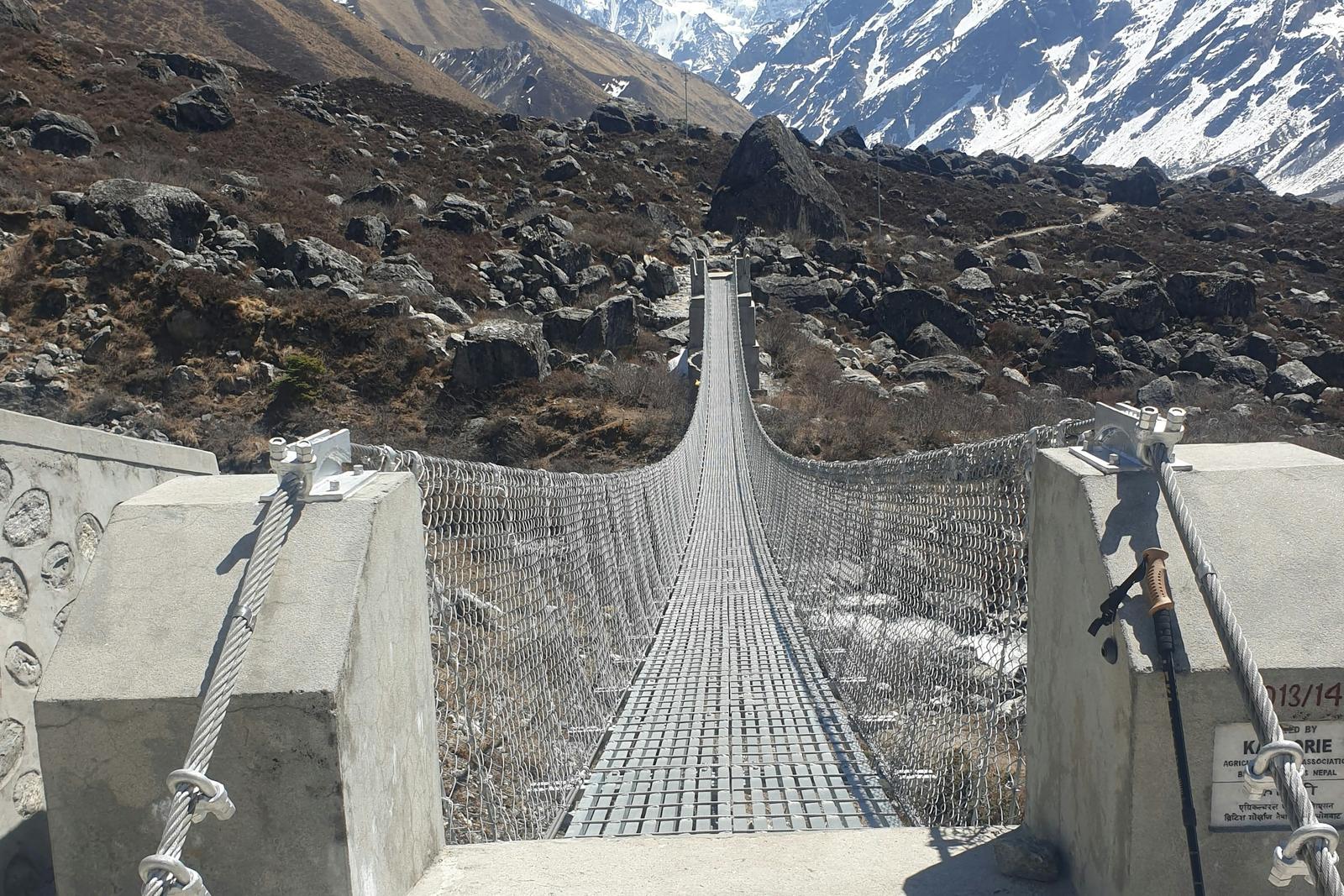
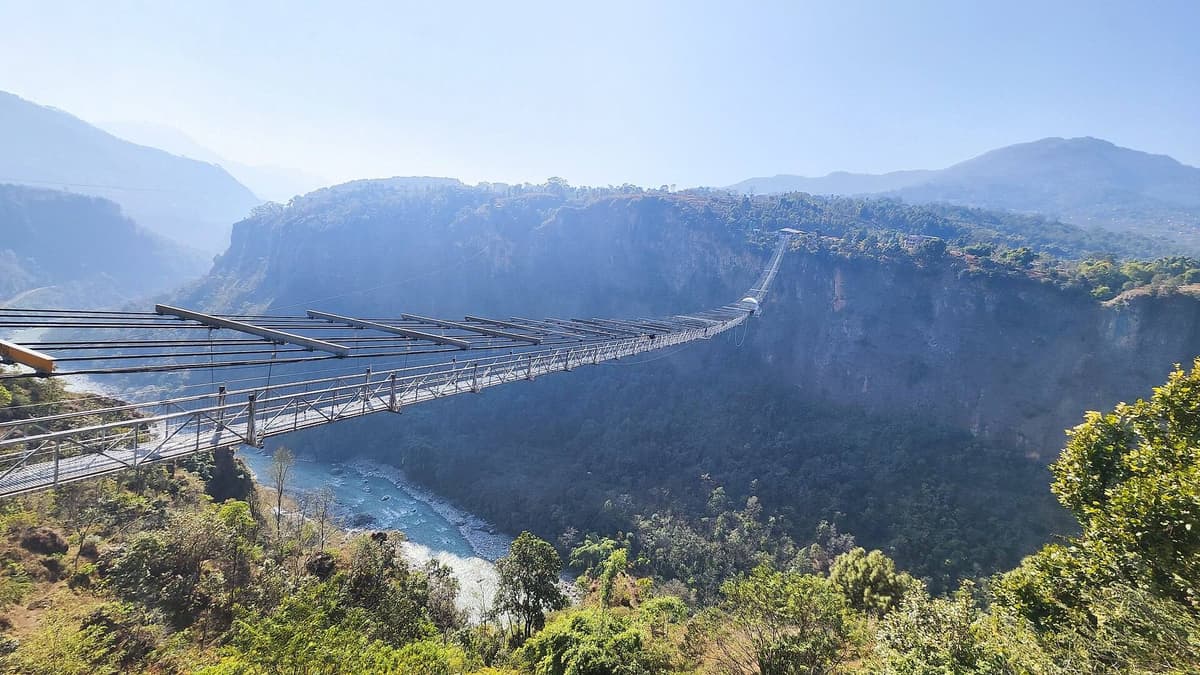
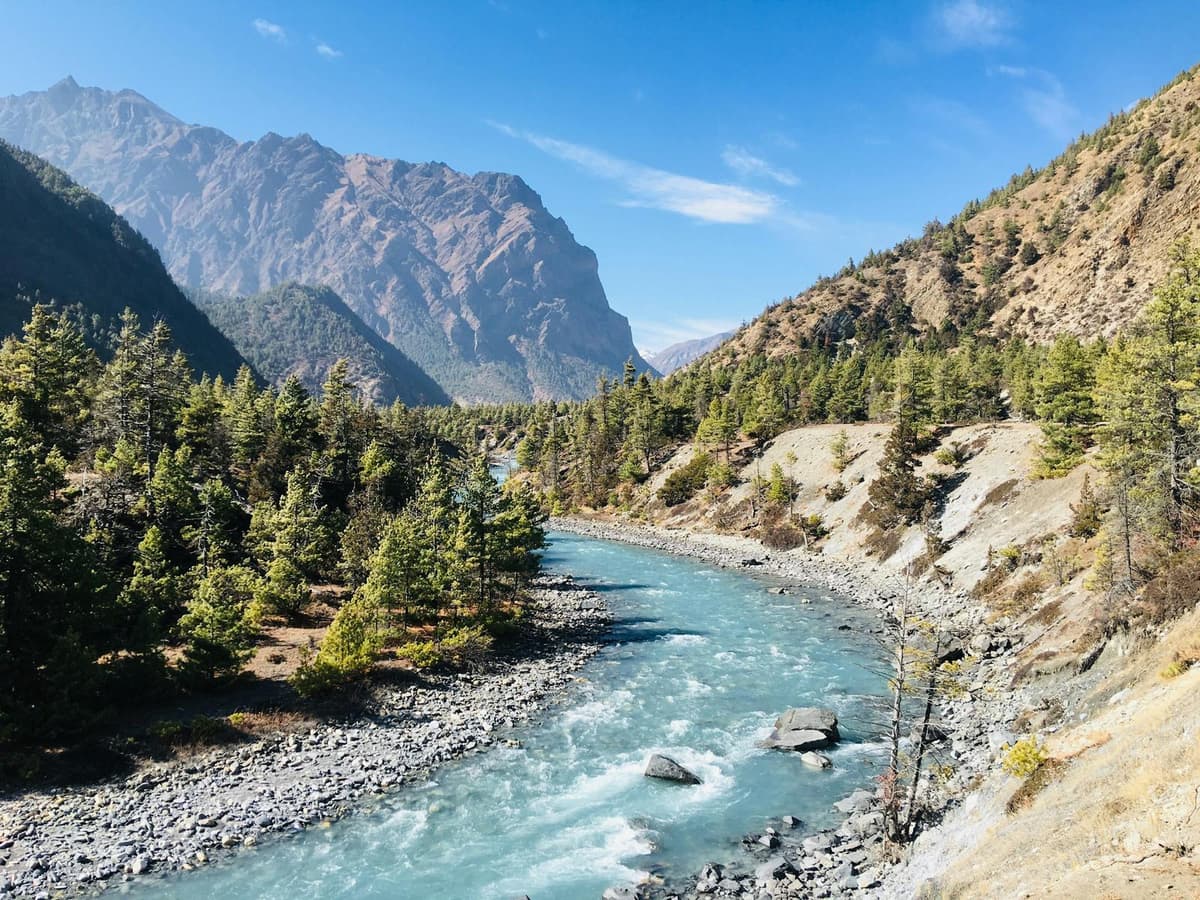
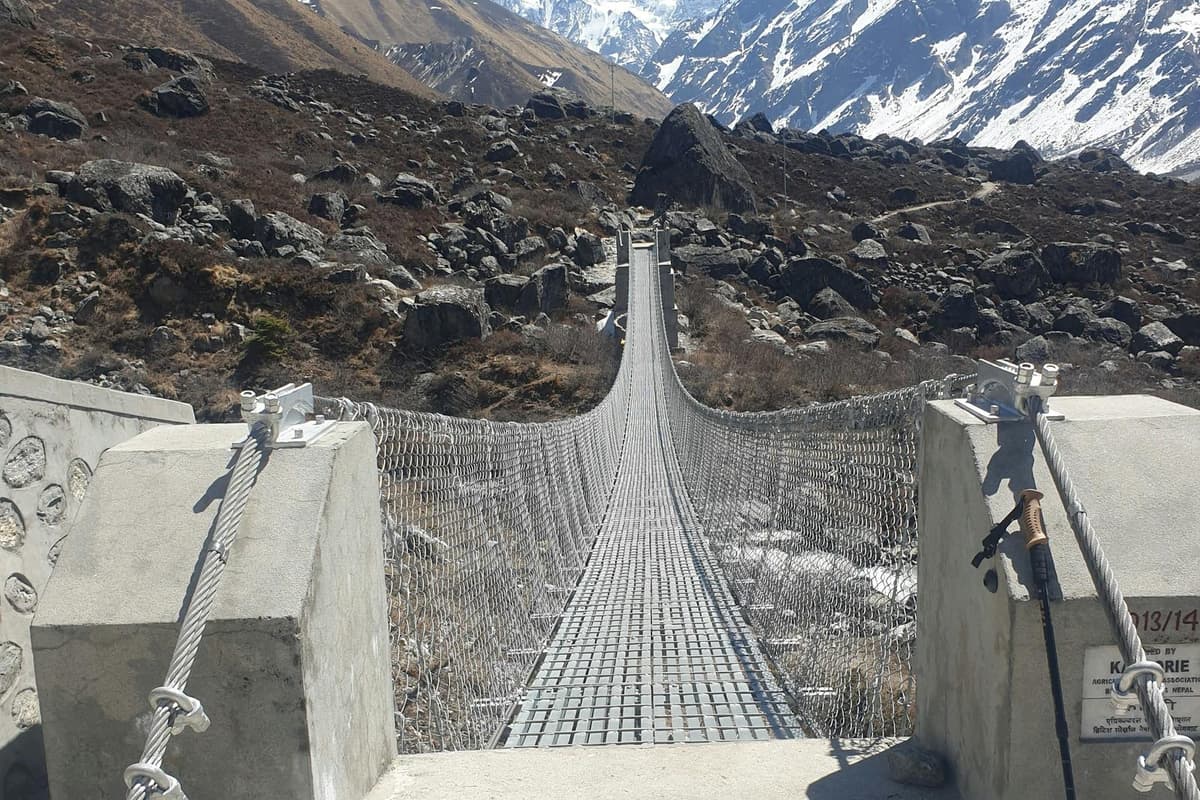
Suspension bridge over a river gorge on a Himalayan trekking trail
The lower days of a long circuit follow river gorges and cross suspension bridges.
Permit September to November December to August
Manaslu RAP, first week USD 100 USD 75
Manaslu RAP, each day beyond one week USD 15 USD 10
MCAP, foreign / SAARC NPR 3,000 / NPR 1,000 same
ACAP, foreign / SAARC NPR 3,000 / NPR 1,000 same
Tsum Valley RAP, only if you add Tsum USD 40 a week, then USD 7 a day USD 30 a week, then USD 7 a day

What changes what you pay:

  • RAP days. The permit covers the "Gorkha Manaslu Area", Chumnubri Rural Municipality wards 1, 2, 3 and 4. A typical 14-day trip counts about 7 to 9 days there: USD 100 to USD 130 in autumn, USD 75 to USD 95 from December to August.
  • Season. Spring, March to May, falls in the cheaper December-to-August window, so a spring trekker saves about USD 25 to USD 35 on the RAP alone.
  • Currency and nationality. The RAP is paid in US dollars, at one rate for all foreign nationals, Indian trekkers included. SAARC nationals pay less for MCAP and ACAP; children below 10 need no conservation permit.
  • Where you buy MCAP and ACAP. NTNC: "Double fees will be charged for permits issued at Check-Posts." Online permits add a 2.9% payment gateway charge, and each is valid for a single entry.
  • The local fee. A local municipality fee may also be collected on the trail. Its status has been disputed since it was announced, so we print no figure; we arrange it if it applies.

Your visa is your own arrangement. We arrange in-country permits, not visas or international flights. For information, NTB lists USD 30 for 15 days, USD 50 for 30 days and USD 125 for 90 days; Indian nationals need no visa. A 12 to 16 day trek plus arrival and departure days needs the 30-day visa. Check the NTB tourist visa page before you travel.

Takeaway: ask how many RAP days your itinerary counts.

Do you need a guide on the Manaslu Circuit?

Yes. Manaslu is a restricted area. Under the rules as the Nepal Tourism Board and The Himalayan Times state them, the permit comes only through a registered trekking agency, and a licensed guide walks with you. Since a Department of Immigration decision of 22 Mar 2026, a solo trekker can get the permit, so no group is needed.

The Himalayan Times reported the 2026 change on 23 Mar 2026:

  • Solo foreign trekkers can now get restricted-area permits; before, they were issued to groups only.
  • Applicants "apply through a registered trekking agency" and must "be accompanied by a licensed trekking guide".
  • The paper reports "a maximum of seven trekkers per guide in a group", and that "the concerned agency will bear full responsibility for emergency rescue operations".

So the guide is a fixed line if you travel alone, and a shared one in a group. A licensed guide walks with you on every trek we run.

Takeaway: budget for the guide from day one; on Manaslu it is not an optional extra.

What do a guide and porter cost on Manaslu?

Hired through an agency, a licensed guide is reported at about USD 25 to USD 35 a day, with one source up to USD 40. A porter is reported at about USD 20 to USD 25 a day, with sources ranging from USD 15 to USD 28.

The Trekking Agencies' Association of Nepal (TAAN) announced these revised daily wages for trekking workers, after talks with trade unions, effective 17 Jul 2023:

Wage category (as named in the 2023 revision) Daily wage
Mountain guide NPR 3,100
Assistant trekking guide NPR 2,800
Porter-guide NPR 2,500
Porter NPR 2,400

These are the wages agencies pay their staff, not a trekker's price. We found no later revision, but one may exist.

On our trips, a porter carries up to 25 kg and is shared by two trekkers. Tipping is customary, not a rule, and is given at the end: suggestions run about USD 5 to USD 10 a day for a guide and USD 3 to USD 5 for a porter, and one guide suggests more.

Takeaway: the guide and food are the two biggest lines in the table, and the guide is the one that keeps the rest of the trip safe.

How much do teahouses and food cost on the Manaslu Circuit?

Operators report rooms at about USD 5 to USD 8 a night in the lower villages and about USD 10 to USD 15 higher up, more at the high camp in peak season. Food and drink run at about USD 20 to USD 40 a day. Rooms are cheap; food is where the money goes.
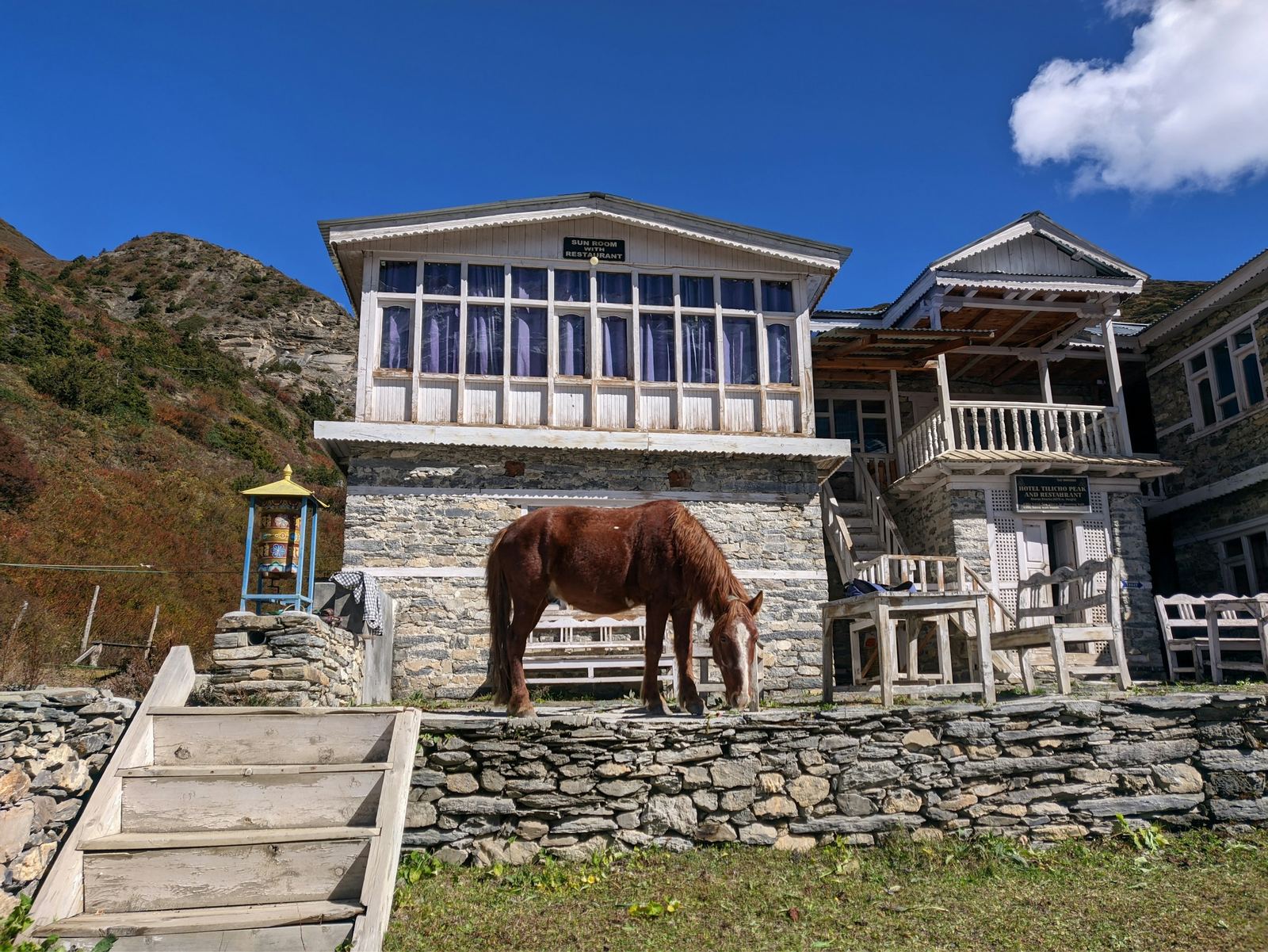
Simple trekking teahouse lodge on a mountain trail in Nepal
Rooms are cheap; food is where the money goes.

A teahouse is a simple trekking lodge with plain rooms and a stove-warmed dining room. Prices climb because almost everything is carried up.

Stretch Room, per night Dal bhat
Lower villages, Machha Khola to Jagat and Deng About USD 5 to USD 8 About NPR 500 at Soti Khola
Samagaun (about 3,530 m) and Samdo (about 3,875 m) About USD 10 to USD 15 Rising with altitude
Dharmasala high camp (about 4,460 m) About USD 10 to USD 15, more in peak season About NPR 1,200

Dal bhat is the everyday Nepali meal of rice, lentil soup and vegetables. Exact prices vary by lodge. The small extras, as operators report them: a hot shower about USD 3 to USD 6, charging about USD 2 to USD 5 a time, and Wi-Fi about USD 2 to USD 5 a day where it exists.

Takeaway: eat dal bhat, carry a power bank, and expect each day to cost a little more than the last.

How much is transport to and from the Manaslu Circuit?

Shared transport is one of the smaller lines in the cost table, but it is slow: the drive in alone takes most of a day. You drive to Machha Khola at the start and out from Dharapani through Besisahar at the end.

Leg Shared or public Private vehicle Time
Kathmandu to Machha Khola Bus about USD 10 to USD 20; shared jeep seat about USD 15 to USD 40, where one runs About USD 150 to USD 250 Most of a day, often eight to ten hours by bus
Dharapani to Besisahar Shared jeep about USD 20 to USD 30 About USD 100 to USD 200 About 3 to 4 hours
Besisahar to Kathmandu Bus about USD 10 to USD 15 About USD 130 to USD 220 About 6 to 8 hours

Private prices are per vehicle, so they suit a group better than a solo trekker.

Takeaway: the road is cheap but long. Plan two full travel days.

How does Manaslu compare with Everest and Annapurna costs?

Worked out the same way, the Manaslu Circuit at about USD 1,019 to USD 2,256 sits between the Annapurna Base Camp and Everest Base Camp treks. Length and the restricted-area permit put it above ABC; the absence of a Lukla flight keeps it below EBC.

Trek Budget (USD) Mid-range (USD) Main cost driver
Annapurna Base Camp, 8 trail days 496 1,508 Short trek
Manaslu Circuit, 14 days from Kathmandu 1,019 2,256 Length, RAP and guide
Everest Base Camp, 12 trail days 1,375 2,669 Lukla flights

The Everest and Annapurna sums used the rate of their checking day, USD 1 = NPR 154.41, so the comparison is close but not exact. To choose between routes, read our guide to the best treks in Nepal.

Takeaway: worked out the same way, Manaslu costs less than Everest, if you have the days.

Do you need travel insurance for the Manaslu Circuit?

You should have it. Choose a policy that covers trekking to the Larkya La at 5,106 m and helicopter evacuation. We recommend insurance; we do not sell it. Operators report an uninsured rescue from this route at roughly USD 4,000 to USD 8,000, and there is no official tariff.

Medical help on the trail is very limited. In January 2026 Nepal Police arrested six executives of three rescue companies over fake rescue insurance claims of nearly USD 20 million. Carry your policy number and your insurer's emergency phone number on the trek.

Takeaway: read the altitude limit and the helicopter clause before you buy.

How much cash should you carry on the Manaslu Circuit?

Carry Nepali rupees for every trail day, plus tips. In our table, rooms, food and extras come to about USD 371 at the budget end and USD 963 at mid-range, before tips. No ATMs are reported on the trail, so draw your cash in Kathmandu.

Keep small notes, and put the tip money in a separate envelope from day one.

Altitude: the cost nobody budgets for

The cheapest way to avoid an expensive rescue is to go up slowly. You sleep at Samagaun (about 3,530 m), Samdo (about 3,875 m) and Dharmasala (about 4,460 m) before the Larkya La. The step from Samdo to Dharmasala is about 585 m, slightly more than the guidance below, so walk it slowly.
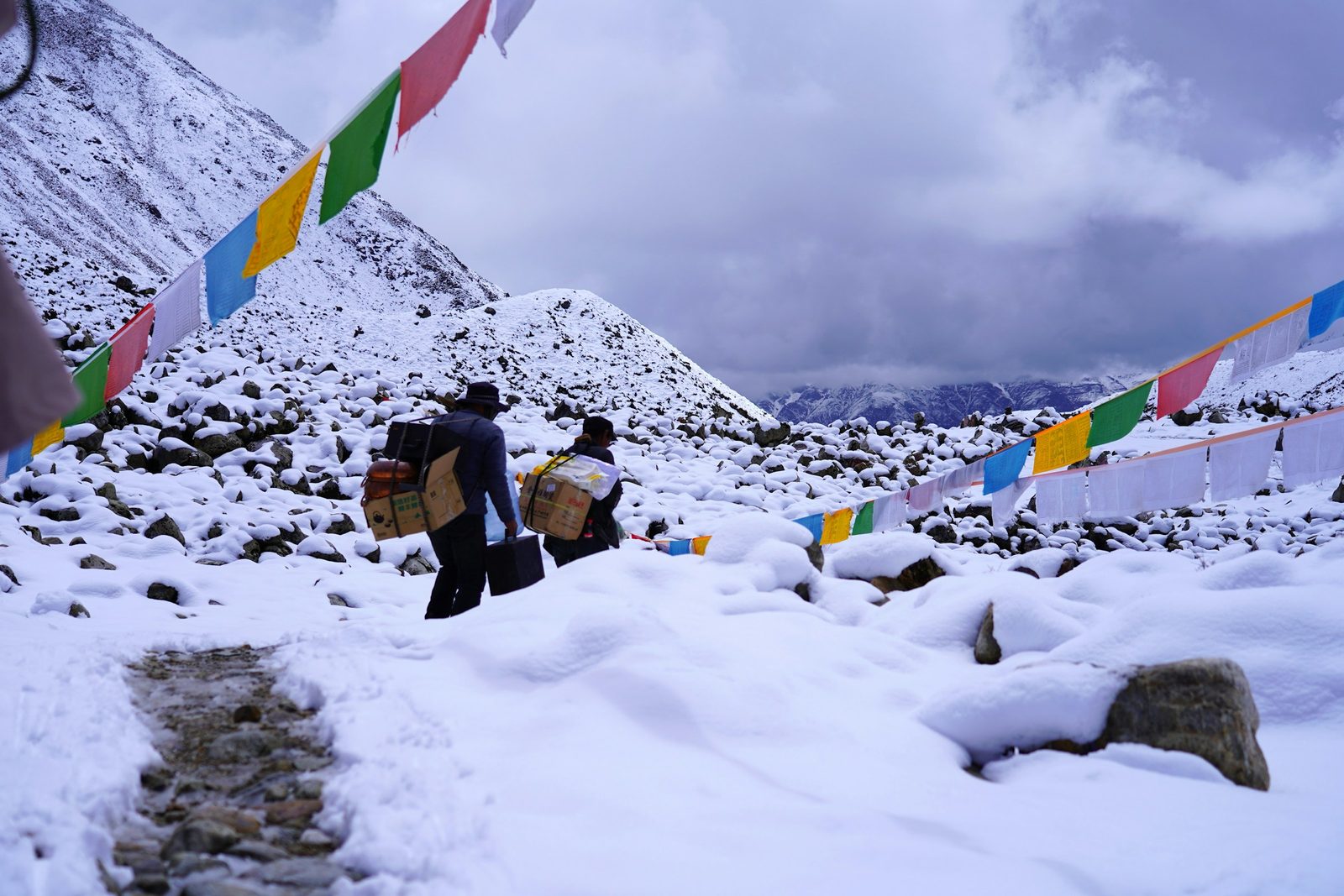
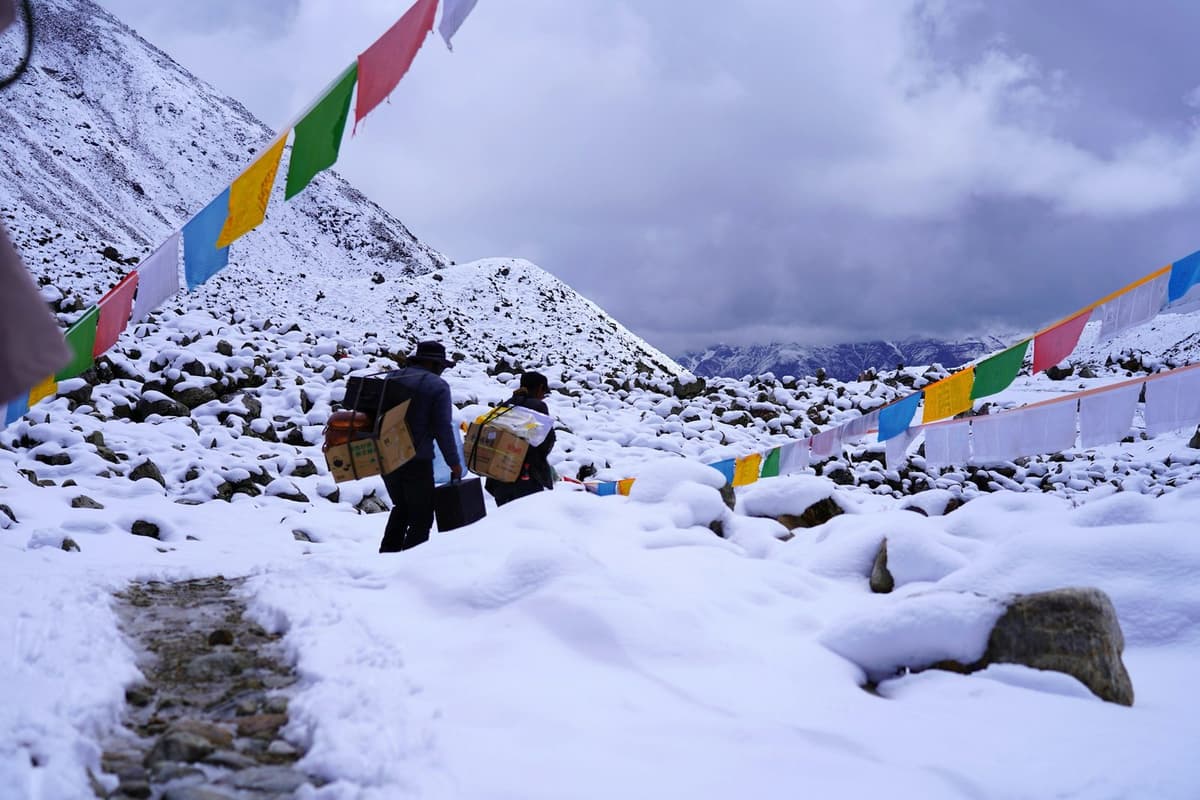
Prayer flags over a snowy high camp below a mountain pass
High camps are cold and basic: walk the last climb slowly.

"ascending at a rate of no greater than 500 m (1,650 ft) per night in sleeping altitude once above 3,000 m (9,800 ft)"

CDC Yellow Book 2026, High-Altitude Travel and Altitude Illness, giving the Wilderness Medical Society recommendation

What works, according to the CDC and the Wilderness Medical Society:

  1. Go up slowly. Above 3,000 m, do not raise your sleeping height by more than about 500 m a night, and take a rest day every 3 to 4 days.
  2. Walk slowly. You will hear "bistarai, bistarai", Nepali for "slowly, slowly". If you cannot talk while you walk, you are going too fast.
  3. Drink enough water, and avoid alcohol for the first days at altitude.
  4. Know the symptoms: headache, nausea, tiredness and poor sleep. The CDC notes risk from sleeping heights of about 2,450 m.
  5. Never go higher with symptoms. Rest where you are. If they get worse, go down.
  6. Ask your doctor before the trip about preventive medicine, for example acetazolamide. Take only what your doctor prescribes.

A local habit. Garlic soup and other hot soups are on almost every teahouse menu. They are warming and help you drink more fluid: a comforting local tradition, not a proven cure.

Emergency. Severe symptoms, such as confusion, breathlessness at rest or unsteady walking, mean you descend at once and get medical help. Your guide arranges the rescue if one is needed.

The Larkya La. Most maps give 5,106 m; some give 5,160 m, and the pass has never been precisely surveyed. Your guide, who knows the route, decides when and how to cross, based on snow and the forecast. More in our Larke Pass guide.

For the full prevention guide, read how to avoid altitude sickness in Nepal.

Takeaway: a rest day costs one more night in a teahouse. A rescue costs thousands of dollars.

What pushes the cost up, and how to save

What pushes the Manaslu Circuit trek cost up:

  • More days in the restricted zone: USD 15 a day beyond the first week in autumn, USD 10 from December to August.
  • Adding the Tsum Valley, with its own permit and extra days.
  • Private jeeps instead of shared transport.
  • Buying MCAP or ACAP at a check-post, where NTNC charges double.
  • A rescue without insurance.

How to save, honestly:

  • Trek in spring, on the lower RAP rate.
  • Travel with a friend and share the guide, porter and jeep.
  • Eat dal bhat, treat your own water, carry a power bank and skip paid Wi-Fi.

Do not save on acclimatisation days, the guide or insurance. Those three keep the other costs from exploding.

Package or independent: what changes

On Manaslu, "independent" does not mean alone: the permit still comes through a registered agency, and a licensed guide still walks with you. When you compare packages, check whether the jeeps are shared, how many RAP days are counted, whether the porter is shared, and what happens if snow delays the crossing.

Read next: altitude sickness on Nepal treks, Manaslu Base Camp side trip, Larke Pass guide and Manaslu Circuit trek permit guide.

Frequently asked questions

How much does the Manaslu Circuit trek cost?

Adding up sourced items for a 14-day trip from Kathmandu, an independent trek with a licensed guide hired through an agency comes to about USD 1,019 at the budget end and USD 2,256 at mid-range per person. That excludes international flights, insurance and Kathmandu hotels. Sharing a porter between two lowers the mid-range figure to about USD 2,076.

How much is the Manaslu restricted area permit?

From September to November it is USD 100 for the first week and USD 15 a day after that; from December to August, USD 75 and USD 10 a day. It is paid in US dollars, and Indian trekkers pay the same rate. A typical 14-day trip counts about 7 to 9 days in the zone.

Do you need a guide, and can you trek Manaslu solo?

You need a licensed guide, but not a group. The Himalayan Times reported on 23 Mar 2026 that, after a Department of Immigration decision of 22 Mar 2026, solo foreign trekkers can be issued restricted-area permits, through a registered agency and "accompanied by a licensed trekking guide". A licensed guide walks with you on every trek we run.

Is the Manaslu Circuit cheaper than Everest Base Camp?

Yes, worked out the same way. Our sums give the Manaslu Circuit about USD 1,019 to USD 2,256 for 14 days from Kathmandu, against USD 1,375 to USD 2,669 for Everest Base Camp. Manaslu has no Lukla flight, but the restricted-area permit and the guide through an agency narrow the gap.

Do you need travel insurance for the Manaslu Circuit?

You should have it, with cover for trekking to the Larkya La at 5,106 m and for helicopter evacuation. Operators report an uninsured rescue from this route at roughly USD 4,000 to USD 8,000, with no official tariff. Medical help on the trail is very limited. We recommend insurance but do not sell it.

How much cash should I carry on the Manaslu Circuit?

Carry rupees for every trail day, plus tips. Rooms, food and extras come to about USD 371 at the budget end and USD 963 at mid-range over 14 days, before tips. No ATMs are reported on the trail, so draw it all in Kathmandu and keep small notes.

Your next step

Our Manaslu Circuit trek page shows every trip we run in the region. For the high point of the route, read our Larke Pass guide. Comparing budgets? See the Everest Base Camp trek cost and the ABC trek cost.

Send us your dates and group size on WhatsApp or through the enquiry form. We will tell you honestly which version fits your days and budget, and send an exact quote in US dollars.
Tags
Manaslu CircuitManaslu regiontrek costrestricted area permitLarkya Lateahouse trekkingtrekking permitslicensed guide
Share
U
Uncover Nepal Team
Writer at Uncover Nepal
More in TreksSee all Treks

Manaslu Circuit Trek Cost: Permits, Guide and Budget

17 min read Posted 08 Oct 2026Updated 28 Oct 2026
Manaslu Circuit Trek Cost: Permits, Guide and Budget

By Uncover Nepal Team · Checked by our Kathmandu travel team · Last checked 8 October 2026

At Dharmasala, the cluster of lodges also called Larkya Phedi at about 4,460 m, crossing day starts in the dark. Headtorches move between the dining room and the trail, flasks are filled, and the guide looks at the sky before anyone looks at the map. The day over the Larkya La is often eight to nine hours, and it usually starts before dawn.

The short answer. The Manaslu Circuit trek cost for a 14-day trip from Kathmandu, with a licensed guide hired through a registered agency, adds up to about USD 1,019 at the budget end and USD 2,256 at mid-range per person. That covers permits, road transport, teahouses, food, guide, porter, tips and a 30-day visa, not international flights or insurance.

For the route itself and the trips we run there, see our Manaslu Circuit trek guide. Every figure carries its source and the date we checked it. Where we found no reliable number, we say so.

Key facts

Manaslu Restricted Area Permit (RAP), September to November
USD 100 for the first week, then USD 15 a day (NTB copy of the Department of Immigration schedule; TAAN, 8 Oct 2026)
Manaslu RAP, December to August
USD 75 for the first week, then USD 10 a day (Same, 8 Oct 2026)
Manaslu Conservation Area permit (MCAP)
NPR 3,000 foreign, about USD 19; NPR 1,000 SAARC (NTB; NTNC e-permit, 8 Oct 2026)
Annapurna Conservation Area permit (ACAP), exit side
NPR 3,000 foreign, about USD 19; NPR 1,000 SAARC (NTB; NTNC e-permit, 8 Oct 2026)
Who can get the RAP
Through a registered agency only; solo trekkers now eligible (TAAN; The Himalayan Times 23 Mar 2026, 8 Oct 2026)
Typical trip length
12 to 16 days from Kathmandu; 14 is common (Operator itineraries, our trip pages, 8 Oct 2026)
High point, Larkya La
5,106 m (16,752 ft); some sources give 5,160 m (Reference and operator sources, 8 Oct 2026)
Best seasons
March to May, September to November (Nepal Tourism Board, 8 Oct 2026)
Exchange rate used
USD 1 = NPR 155.15, sell (Nepal Rastra Bank, 8 Oct 2026)

What makes up the Manaslu Circuit trek cost

The Manaslu Circuit trek cost is built from five things: three permits, the road journeys at each end, teahouse rooms and food, the guide and porter who walk with you, and tips. There are no domestic flights on the standard route: you drive in and drive out.

The table assumes a 14-day trip from Kathmandu: a drive to Machha Khola on day one, 12 trekking days, and a drive out from Dharapani on the last day. That is 13 teahouse nights, 14 days of food, a guide for 14 days and a porter for 12. It uses the autumn permit rate. "Budget" takes the low end of each sourced range and no porter; "Mid-range" takes the high end and adds a porter. These are sums of sourced ranges, not quotes, and not our price.

Item How we worked it out Budget (USD) Mid-range (USD)
Manaslu RAP, September to November 7 days: USD 100 / 9 days: USD 100 + 2 × 15 100 130
MCAP permit (foreign) NPR 3,000 at 155.15 19 19
ACAP permit (foreign) NPR 3,000 at 155.15 19 19
Kathmandu to Machha Khola local bus USD 10 / shared jeep seat USD 40 10 40
Dharapani to Besisahar shared jeep USD 20 / USD 30 20 30
Besisahar to Kathmandu bus USD 10 / USD 15 10 15
Teahouse room 13 nights × USD 5 / × USD 15 65 195
Food and drink 14 days × USD 20 / × USD 40 280 560
Extras 13 × charging USD 2 / 13 × (shower 6 + charging 5 + Wi-Fi 5) 26 208
Licensed guide, through an agency 14 days × USD 25 / × USD 35 350 490
Porter none / 12 days × USD 25 0 300
Tip for the guide 14 × USD 5 / 14 × USD 10 70 140
Tip for the porter none / 12 × USD 5 0 60
Nepal visa, 30 days (your own arrangement) USD 50 50 50
Sum of the sourced items 1,019 2,256

Not counted in the table: international flights and Kathmandu hotels; the local fee that may be collected on the trail; the Tsum Valley permit; private jeeps; insurance, gear and extra days.

Sharing one porter between two trekkers, as we do on our trips, halves the porter lines and brings the mid-range total down by USD 180 to USD 2,076. Whether a guide's day rate covers the guide's own food and room varies, so ask before you agree.

Takeaway: the permit and the people are the fixed costs. Food is the line you control.

How much are the Manaslu permits?

A foreign trekker on the standard circuit needs three permits: the Manaslu Restricted Area Permit, the Manaslu Conservation Area permit, and the Annapurna Conservation Area permit for the descent. In autumn they add up to about USD 138 to USD 168, depending on how many days the restricted-area permit counts.

Suspension bridge over a river gorge on a Himalayan trekking trail
The lower days of a long circuit follow river gorges and cross suspension bridges.
Permit September to November December to August
Manaslu RAP, first week USD 100 USD 75
Manaslu RAP, each day beyond one week USD 15 USD 10
MCAP, foreign / SAARC NPR 3,000 / NPR 1,000 same
ACAP, foreign / SAARC NPR 3,000 / NPR 1,000 same
Tsum Valley RAP, only if you add Tsum USD 40 a week, then USD 7 a day USD 30 a week, then USD 7 a day

What changes what you pay:

  • RAP days. The permit covers the "Gorkha Manaslu Area", Chumnubri Rural Municipality wards 1, 2, 3 and 4. A typical 14-day trip counts about 7 to 9 days there: USD 100 to USD 130 in autumn, USD 75 to USD 95 from December to August.
  • Season. Spring, March to May, falls in the cheaper December-to-August window, so a spring trekker saves about USD 25 to USD 35 on the RAP alone.
  • Currency and nationality. The RAP is paid in US dollars, at one rate for all foreign nationals, Indian trekkers included. SAARC nationals pay less for MCAP and ACAP; children below 10 need no conservation permit.
  • Where you buy MCAP and ACAP. NTNC: "Double fees will be charged for permits issued at Check-Posts." Online permits add a 2.9% payment gateway charge, and each is valid for a single entry.
  • The local fee. A local municipality fee may also be collected on the trail. Its status has been disputed since it was announced, so we print no figure; we arrange it if it applies.

Your visa is your own arrangement. We arrange in-country permits, not visas or international flights. For information, NTB lists USD 30 for 15 days, USD 50 for 30 days and USD 125 for 90 days; Indian nationals need no visa. A 12 to 16 day trek plus arrival and departure days needs the 30-day visa. Check the NTB tourist visa page before you travel.

Takeaway: ask how many RAP days your itinerary counts.

Do you need a guide on the Manaslu Circuit?

Yes. Manaslu is a restricted area. Under the rules as the Nepal Tourism Board and The Himalayan Times state them, the permit comes only through a registered trekking agency, and a licensed guide walks with you. Since a Department of Immigration decision of 22 Mar 2026, a solo trekker can get the permit, so no group is needed.

The Himalayan Times reported the 2026 change on 23 Mar 2026:

  • Solo foreign trekkers can now get restricted-area permits; before, they were issued to groups only.
  • Applicants "apply through a registered trekking agency" and must "be accompanied by a licensed trekking guide".
  • The paper reports "a maximum of seven trekkers per guide in a group", and that "the concerned agency will bear full responsibility for emergency rescue operations".

So the guide is a fixed line if you travel alone, and a shared one in a group. A licensed guide walks with you on every trek we run.

Takeaway: budget for the guide from day one; on Manaslu it is not an optional extra.

What do a guide and porter cost on Manaslu?

Hired through an agency, a licensed guide is reported at about USD 25 to USD 35 a day, with one source up to USD 40. A porter is reported at about USD 20 to USD 25 a day, with sources ranging from USD 15 to USD 28.

The Trekking Agencies' Association of Nepal (TAAN) announced these revised daily wages for trekking workers, after talks with trade unions, effective 17 Jul 2023:

Wage category (as named in the 2023 revision) Daily wage
Mountain guide NPR 3,100
Assistant trekking guide NPR 2,800
Porter-guide NPR 2,500
Porter NPR 2,400

These are the wages agencies pay their staff, not a trekker's price. We found no later revision, but one may exist.

On our trips, a porter carries up to 25 kg and is shared by two trekkers. Tipping is customary, not a rule, and is given at the end: suggestions run about USD 5 to USD 10 a day for a guide and USD 3 to USD 5 for a porter, and one guide suggests more.

Takeaway: the guide and food are the two biggest lines in the table, and the guide is the one that keeps the rest of the trip safe.

How much do teahouses and food cost on the Manaslu Circuit?

Operators report rooms at about USD 5 to USD 8 a night in the lower villages and about USD 10 to USD 15 higher up, more at the high camp in peak season. Food and drink run at about USD 20 to USD 40 a day. Rooms are cheap; food is where the money goes.

Simple trekking teahouse lodge on a mountain trail in Nepal
Rooms are cheap; food is where the money goes.

A teahouse is a simple trekking lodge with plain rooms and a stove-warmed dining room. Prices climb because almost everything is carried up.

Stretch Room, per night Dal bhat
Lower villages, Machha Khola to Jagat and Deng About USD 5 to USD 8 About NPR 500 at Soti Khola
Samagaun (about 3,530 m) and Samdo (about 3,875 m) About USD 10 to USD 15 Rising with altitude
Dharmasala high camp (about 4,460 m) About USD 10 to USD 15, more in peak season About NPR 1,200

Dal bhat is the everyday Nepali meal of rice, lentil soup and vegetables. Exact prices vary by lodge. The small extras, as operators report them: a hot shower about USD 3 to USD 6, charging about USD 2 to USD 5 a time, and Wi-Fi about USD 2 to USD 5 a day where it exists.

Takeaway: eat dal bhat, carry a power bank, and expect each day to cost a little more than the last.

How much is transport to and from the Manaslu Circuit?

Shared transport is one of the smaller lines in the cost table, but it is slow: the drive in alone takes most of a day. You drive to Machha Khola at the start and out from Dharapani through Besisahar at the end.

Leg Shared or public Private vehicle Time
Kathmandu to Machha Khola Bus about USD 10 to USD 20; shared jeep seat about USD 15 to USD 40, where one runs About USD 150 to USD 250 Most of a day, often eight to ten hours by bus
Dharapani to Besisahar Shared jeep about USD 20 to USD 30 About USD 100 to USD 200 About 3 to 4 hours
Besisahar to Kathmandu Bus about USD 10 to USD 15 About USD 130 to USD 220 About 6 to 8 hours

Private prices are per vehicle, so they suit a group better than a solo trekker.

Takeaway: the road is cheap but long. Plan two full travel days.

How does Manaslu compare with Everest and Annapurna costs?

Worked out the same way, the Manaslu Circuit at about USD 1,019 to USD 2,256 sits between the Annapurna Base Camp and Everest Base Camp treks. Length and the restricted-area permit put it above ABC; the absence of a Lukla flight keeps it below EBC.

Trek Budget (USD) Mid-range (USD) Main cost driver
Annapurna Base Camp, 8 trail days 496 1,508 Short trek
Manaslu Circuit, 14 days from Kathmandu 1,019 2,256 Length, RAP and guide
Everest Base Camp, 12 trail days 1,375 2,669 Lukla flights

The Everest and Annapurna sums used the rate of their checking day, USD 1 = NPR 154.41, so the comparison is close but not exact. To choose between routes, read our guide to the best treks in Nepal.

Takeaway: worked out the same way, Manaslu costs less than Everest, if you have the days.

Do you need travel insurance for the Manaslu Circuit?

You should have it. Choose a policy that covers trekking to the Larkya La at 5,106 m and helicopter evacuation. We recommend insurance; we do not sell it. Operators report an uninsured rescue from this route at roughly USD 4,000 to USD 8,000, and there is no official tariff.

Medical help on the trail is very limited. In January 2026 Nepal Police arrested six executives of three rescue companies over fake rescue insurance claims of nearly USD 20 million. Carry your policy number and your insurer's emergency phone number on the trek.

Takeaway: read the altitude limit and the helicopter clause before you buy.

How much cash should you carry on the Manaslu Circuit?

Carry Nepali rupees for every trail day, plus tips. In our table, rooms, food and extras come to about USD 371 at the budget end and USD 963 at mid-range, before tips. No ATMs are reported on the trail, so draw your cash in Kathmandu.

Keep small notes, and put the tip money in a separate envelope from day one.

Altitude: the cost nobody budgets for

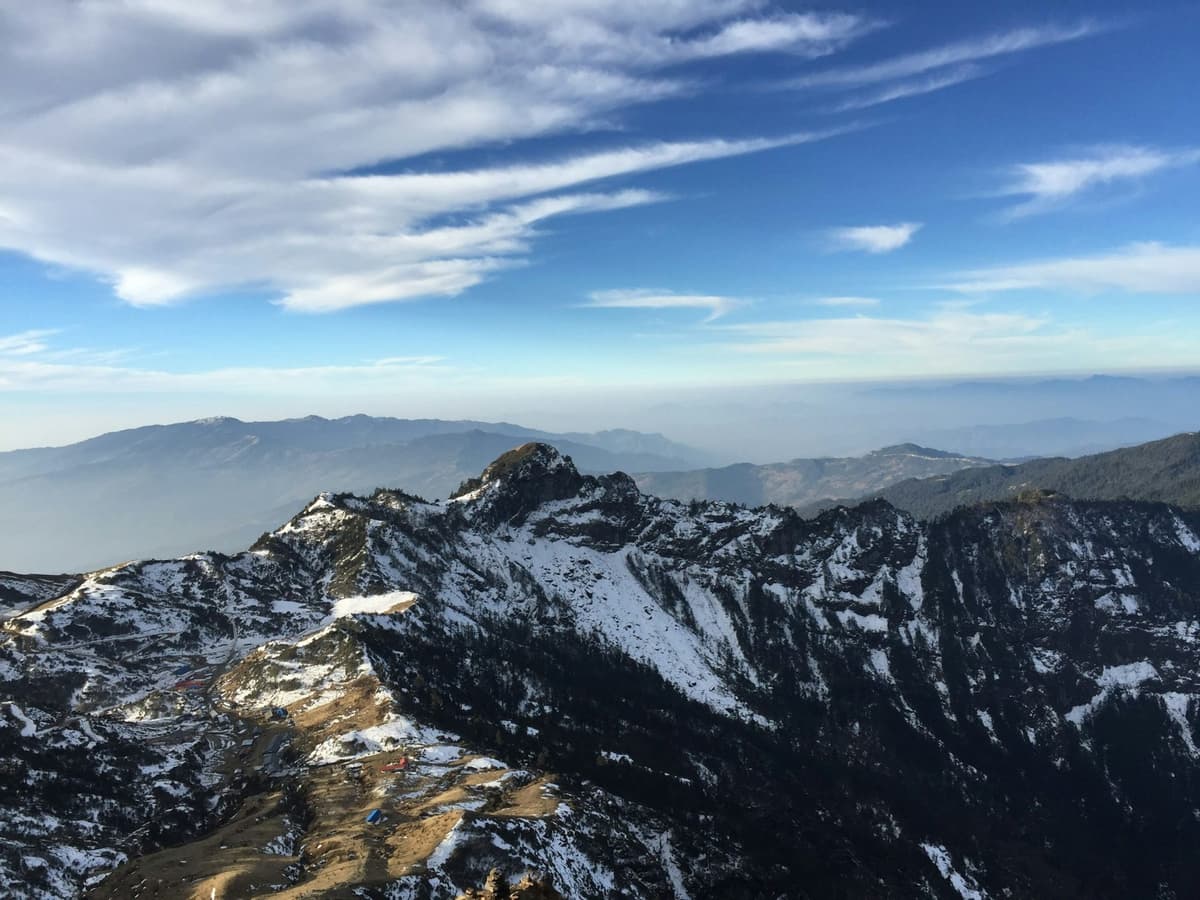
The cheapest way to avoid an expensive rescue is to go up slowly. You sleep at Samagaun (about 3,530 m), Samdo (about 3,875 m) and Dharmasala (about 4,460 m) before the Larkya La. The step from Samdo to Dharmasala is about 585 m, slightly more than the guidance below, so walk it slowly.

Prayer flags over a snowy high camp below a mountain pass
High camps are cold and basic: walk the last climb slowly.

"ascending at a rate of no greater than 500 m (1,650 ft) per night in sleeping altitude once above 3,000 m (9,800 ft)"

CDC Yellow Book 2026, High-Altitude Travel and Altitude Illness, giving the Wilderness Medical Society recommendation

What works, according to the CDC and the Wilderness Medical Society:

  1. Go up slowly. Above 3,000 m, do not raise your sleeping height by more than about 500 m a night, and take a rest day every 3 to 4 days.
  2. Walk slowly. You will hear "bistarai, bistarai", Nepali for "slowly, slowly". If you cannot talk while you walk, you are going too fast.
  3. Drink enough water, and avoid alcohol for the first days at altitude.
  4. Know the symptoms: headache, nausea, tiredness and poor sleep. The CDC notes risk from sleeping heights of about 2,450 m.
  5. Never go higher with symptoms. Rest where you are. If they get worse, go down.
  6. Ask your doctor before the trip about preventive medicine, for example acetazolamide. Take only what your doctor prescribes.

A local habit. Garlic soup and other hot soups are on almost every teahouse menu. They are warming and help you drink more fluid: a comforting local tradition, not a proven cure.

Emergency. Severe symptoms, such as confusion, breathlessness at rest or unsteady walking, mean you descend at once and get medical help. Your guide arranges the rescue if one is needed.

The Larkya La. Most maps give 5,106 m; some give 5,160 m, and the pass has never been precisely surveyed. Your guide, who knows the route, decides when and how to cross, based on snow and the forecast. More in our Larke Pass guide.

For the full prevention guide, read how to avoid altitude sickness in Nepal.

Takeaway: a rest day costs one more night in a teahouse. A rescue costs thousands of dollars.

What pushes the cost up, and how to save

What pushes the Manaslu Circuit trek cost up:

  • More days in the restricted zone: USD 15 a day beyond the first week in autumn, USD 10 from December to August.
  • Adding the Tsum Valley, with its own permit and extra days.
  • Private jeeps instead of shared transport.
  • Buying MCAP or ACAP at a check-post, where NTNC charges double.
  • A rescue without insurance.

How to save, honestly:

  • Trek in spring, on the lower RAP rate.
  • Travel with a friend and share the guide, porter and jeep.
  • Eat dal bhat, treat your own water, carry a power bank and skip paid Wi-Fi.

Do not save on acclimatisation days, the guide or insurance. Those three keep the other costs from exploding.

Package or independent: what changes

On Manaslu, "independent" does not mean alone: the permit still comes through a registered agency, and a licensed guide still walks with you. When you compare packages, check whether the jeeps are shared, how many RAP days are counted, whether the porter is shared, and what happens if snow delays the crossing.

Read next: altitude sickness on Nepal treks, Manaslu Base Camp side trip, Larke Pass guide and Manaslu Circuit trek permit guide.

Frequently asked questions

How much does the Manaslu Circuit trek cost?

Adding up sourced items for a 14-day trip from Kathmandu, an independent trek with a licensed guide hired through an agency comes to about USD 1,019 at the budget end and USD 2,256 at mid-range per person. That excludes international flights, insurance and Kathmandu hotels. Sharing a porter between two lowers the mid-range figure to about USD 2,076.

How much is the Manaslu restricted area permit?

From September to November it is USD 100 for the first week and USD 15 a day after that; from December to August, USD 75 and USD 10 a day. It is paid in US dollars, and Indian trekkers pay the same rate. A typical 14-day trip counts about 7 to 9 days in the zone.

Do you need a guide, and can you trek Manaslu solo?

You need a licensed guide, but not a group. The Himalayan Times reported on 23 Mar 2026 that, after a Department of Immigration decision of 22 Mar 2026, solo foreign trekkers can be issued restricted-area permits, through a registered agency and "accompanied by a licensed trekking guide". A licensed guide walks with you on every trek we run.

Is the Manaslu Circuit cheaper than Everest Base Camp?

Yes, worked out the same way. Our sums give the Manaslu Circuit about USD 1,019 to USD 2,256 for 14 days from Kathmandu, against USD 1,375 to USD 2,669 for Everest Base Camp. Manaslu has no Lukla flight, but the restricted-area permit and the guide through an agency narrow the gap.

Do you need travel insurance for the Manaslu Circuit?

You should have it, with cover for trekking to the Larkya La at 5,106 m and for helicopter evacuation. Operators report an uninsured rescue from this route at roughly USD 4,000 to USD 8,000, with no official tariff. Medical help on the trail is very limited. We recommend insurance but do not sell it.

How much cash should I carry on the Manaslu Circuit?

Carry rupees for every trail day, plus tips. Rooms, food and extras come to about USD 371 at the budget end and USD 963 at mid-range over 14 days, before tips. No ATMs are reported on the trail, so draw it all in Kathmandu and keep small notes.

Your next step

Our Manaslu Circuit trek page shows every trip we run in the region. For the high point of the route, read our Larke Pass guide. Comparing budgets? See the Everest Base Camp trek cost and the ABC trek cost.

Send us your dates and group size on WhatsApp or through the enquiry form. We will tell you honestly which version fits your days and budget, and send an exact quote in US dollars.
Tags
Manaslu CircuitManaslu regiontrek costrestricted area permitLarkya Lateahouse trekkingtrekking permitslicensed guide
Share
U
Uncover Nepal Team
Writer at Uncover Nepal
More in TreksSee all Treks