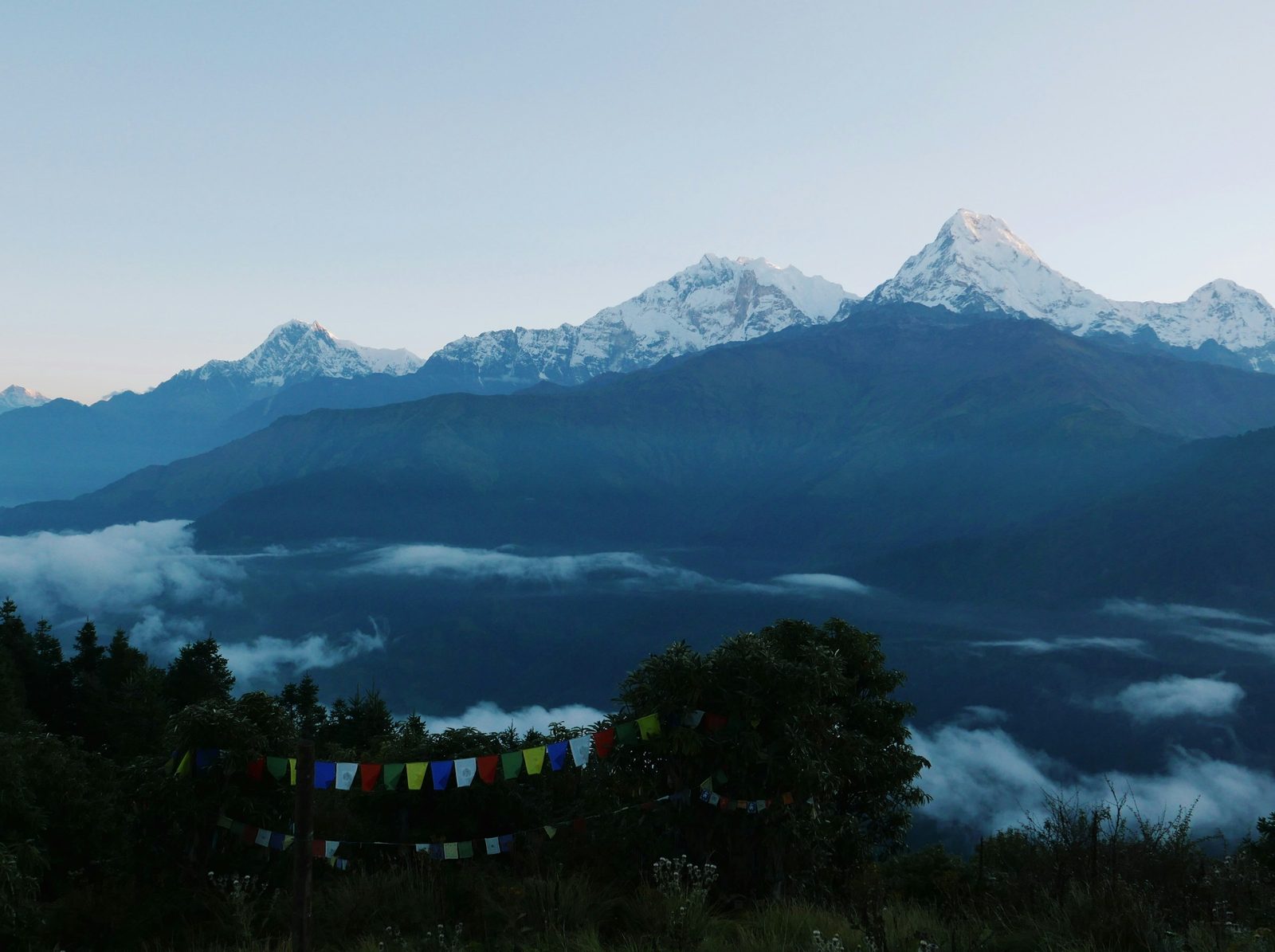
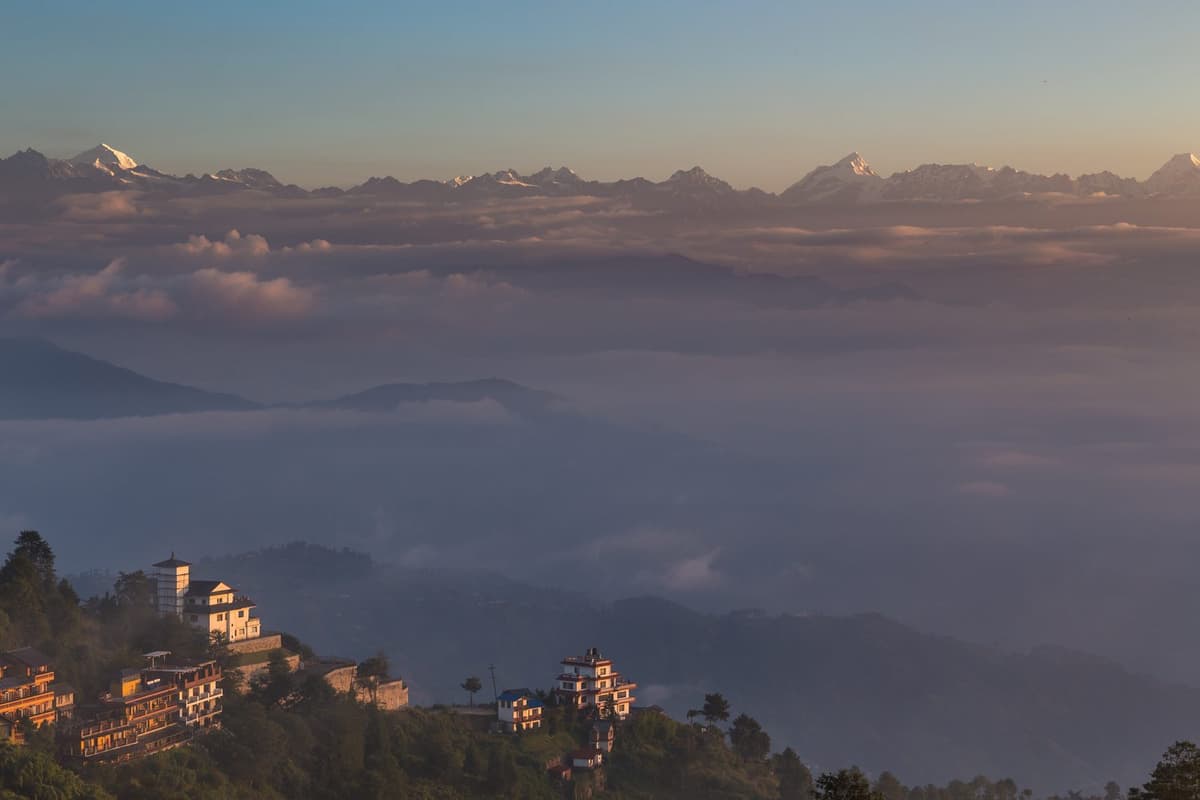


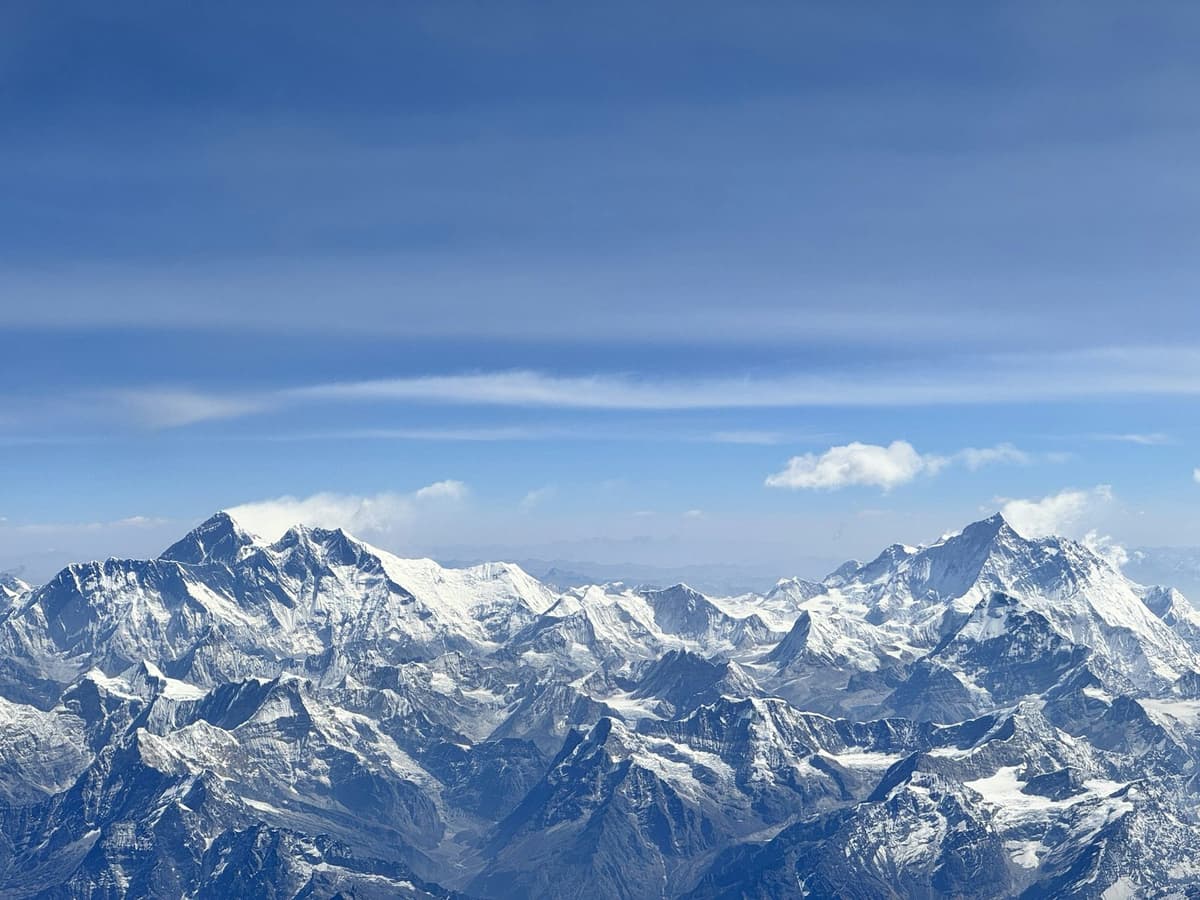
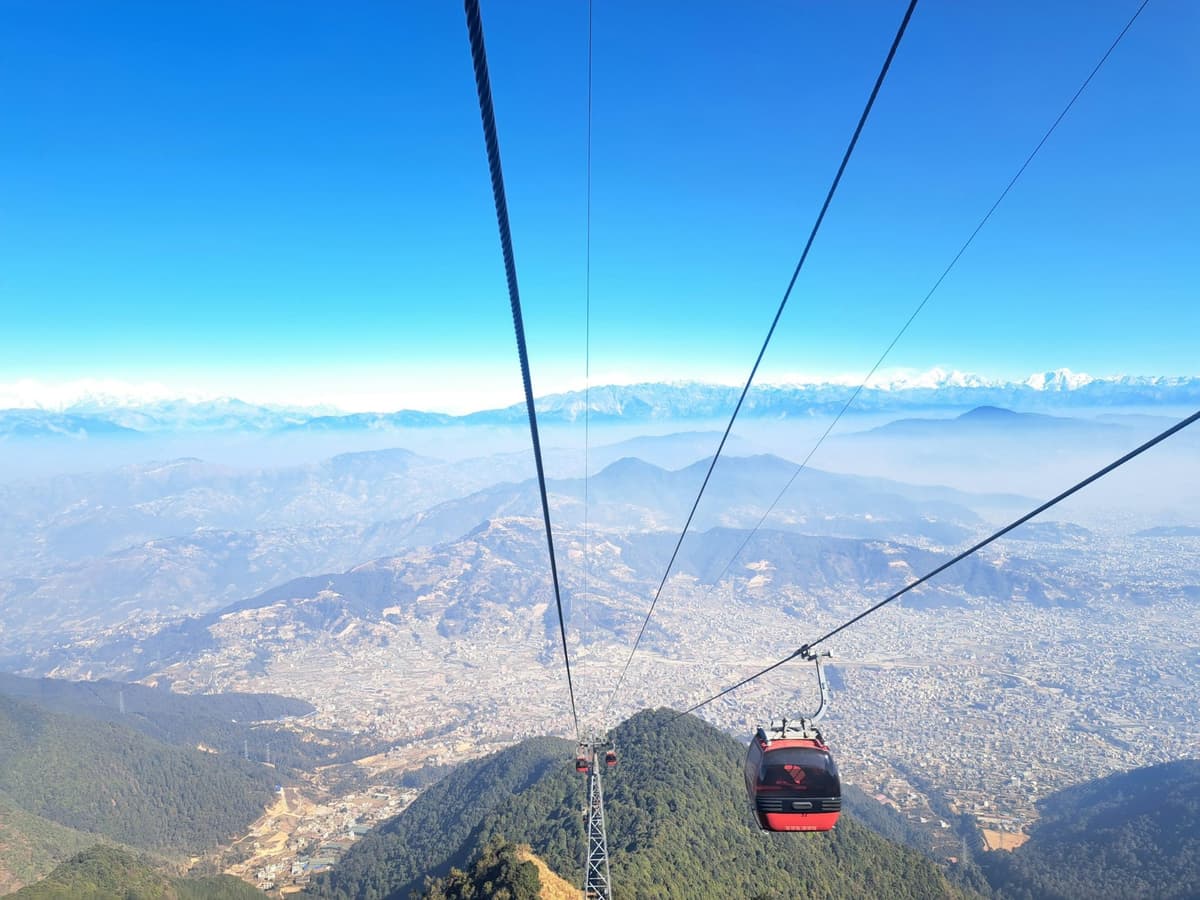
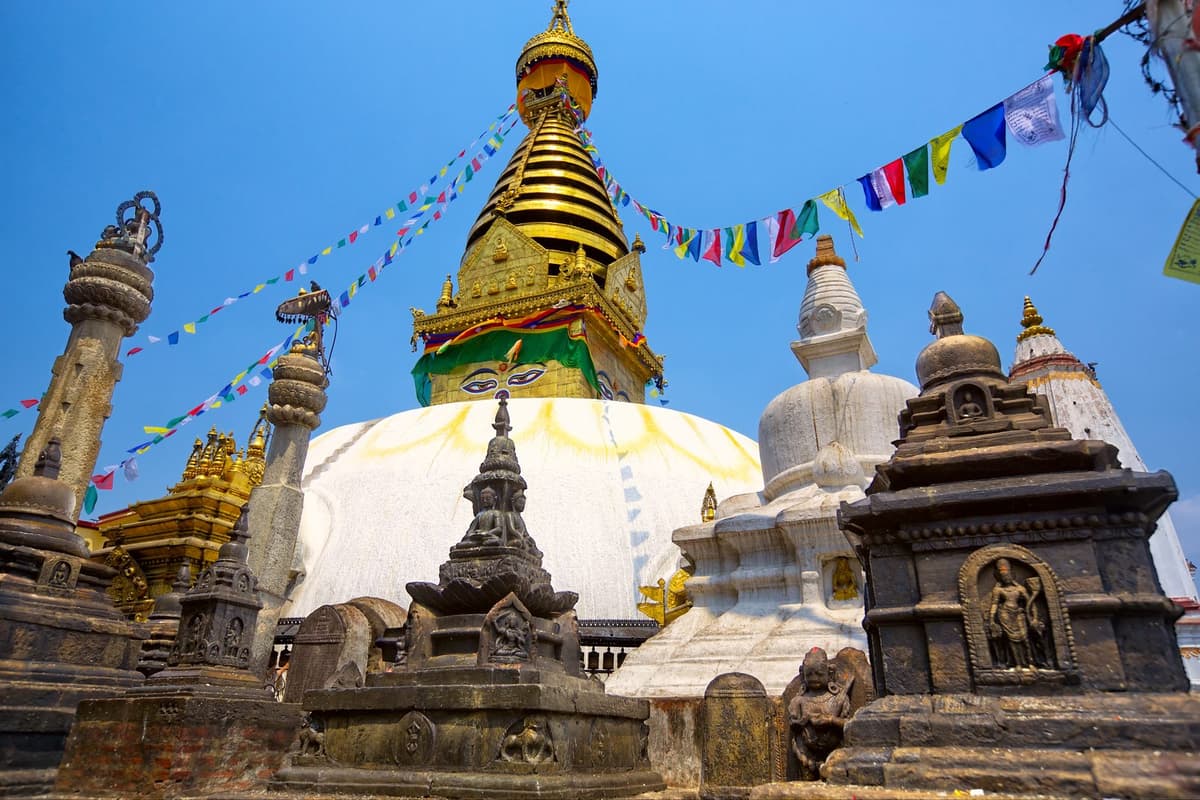
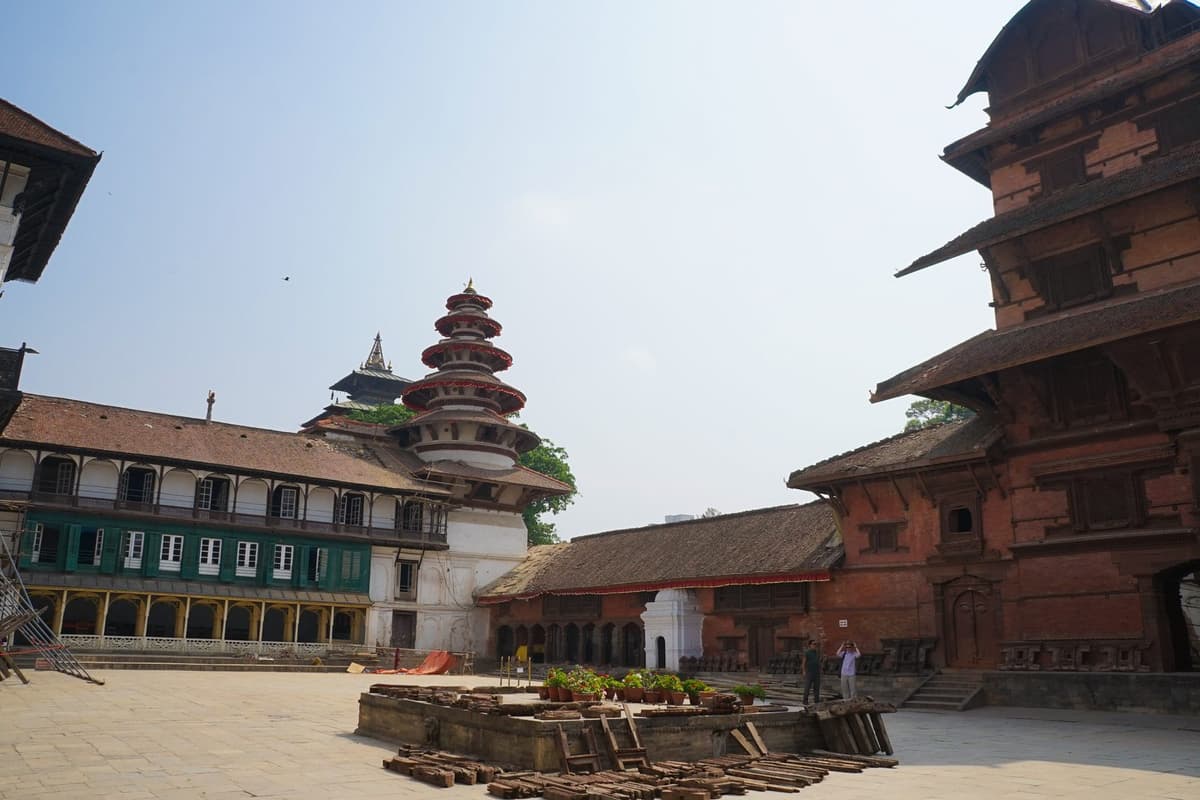
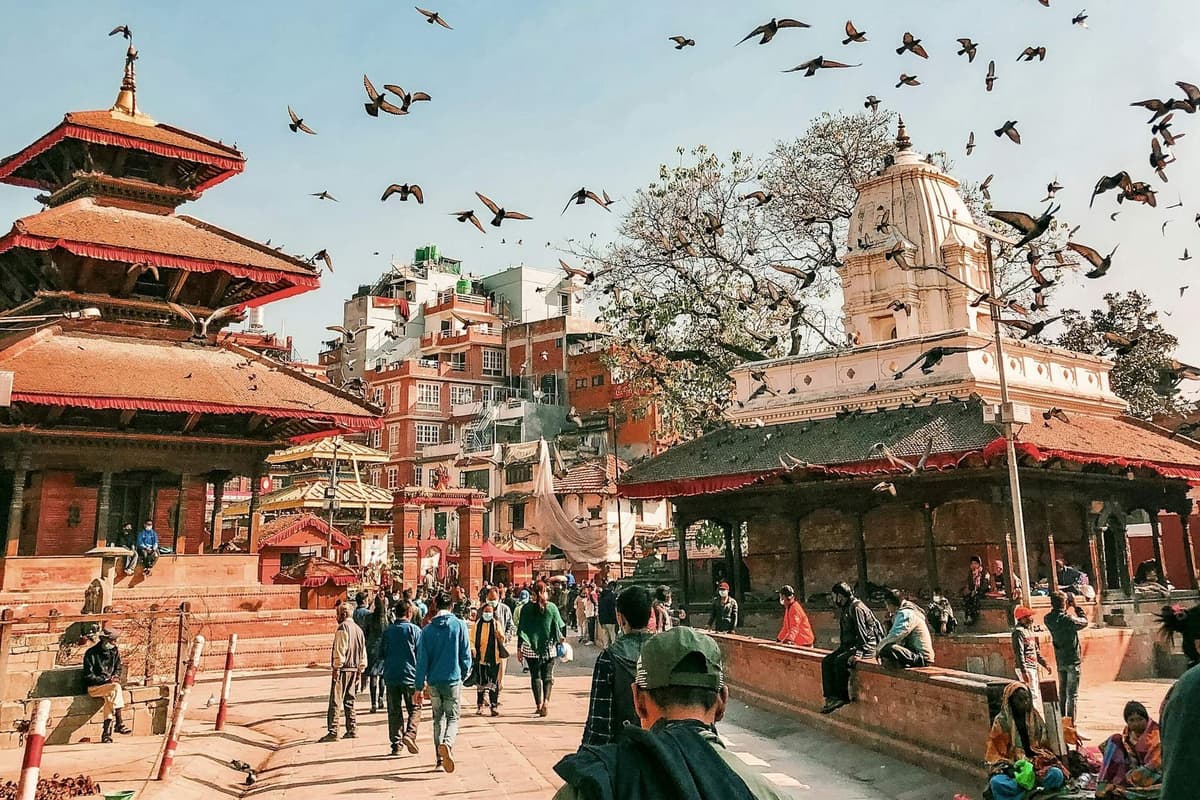
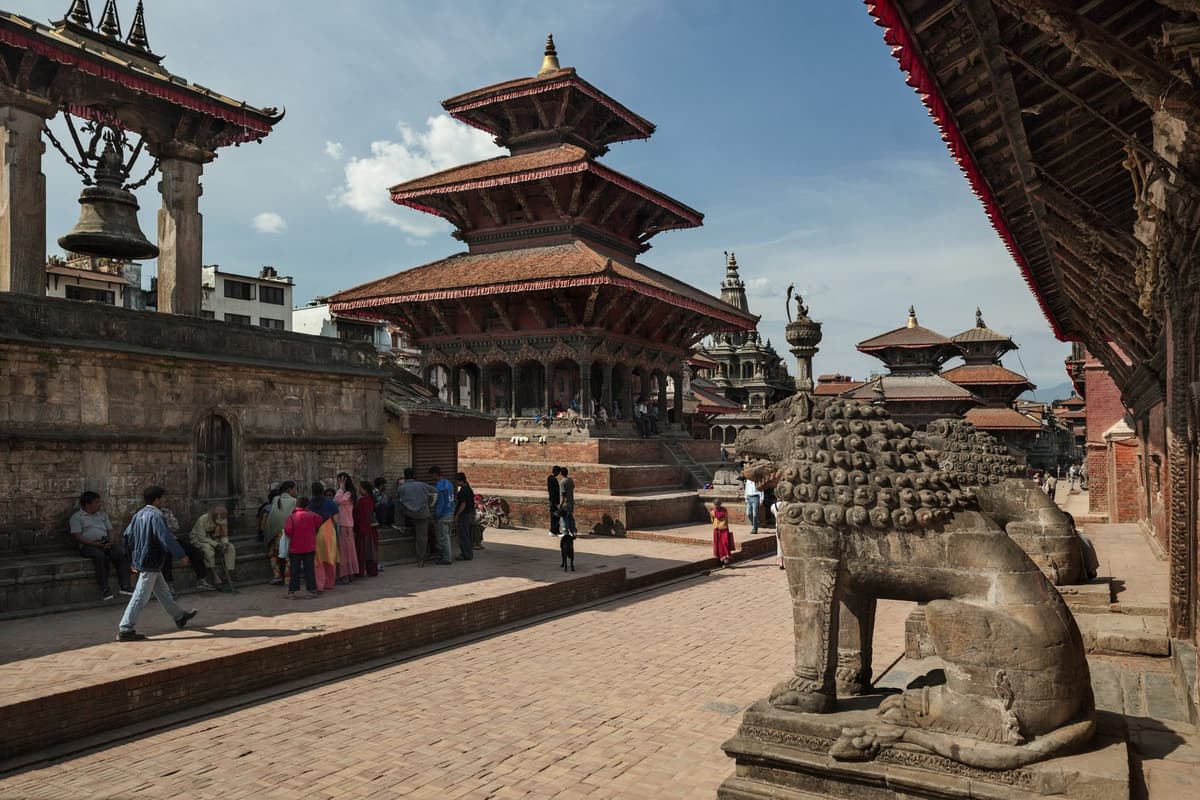
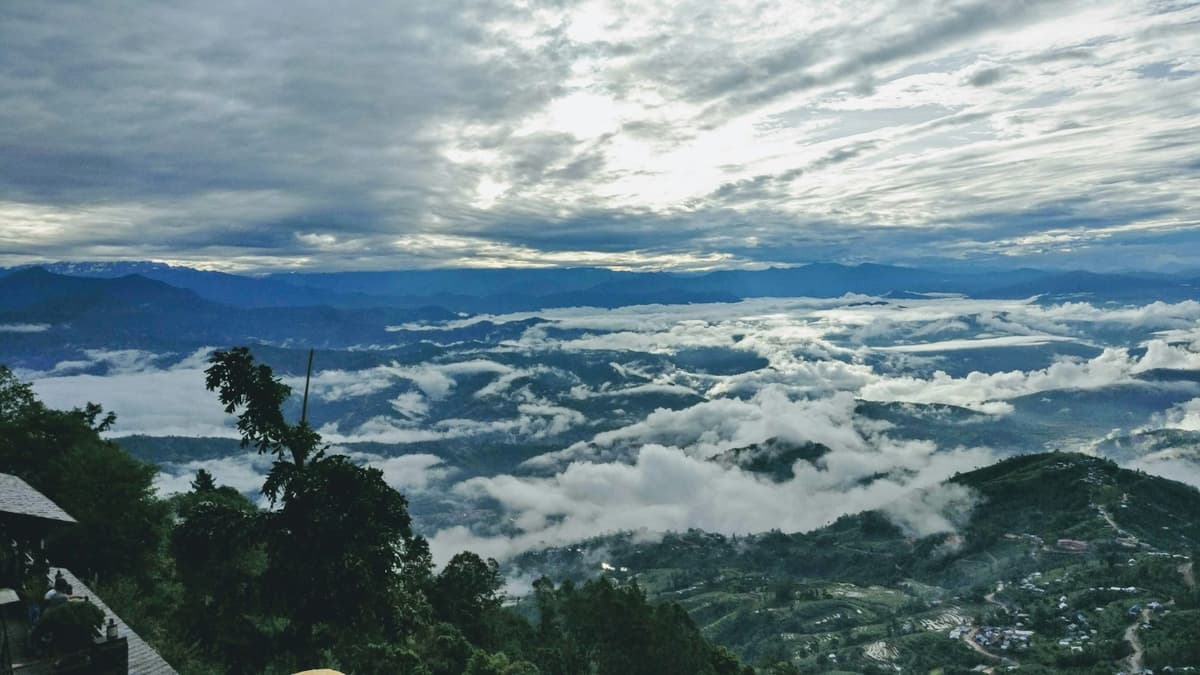
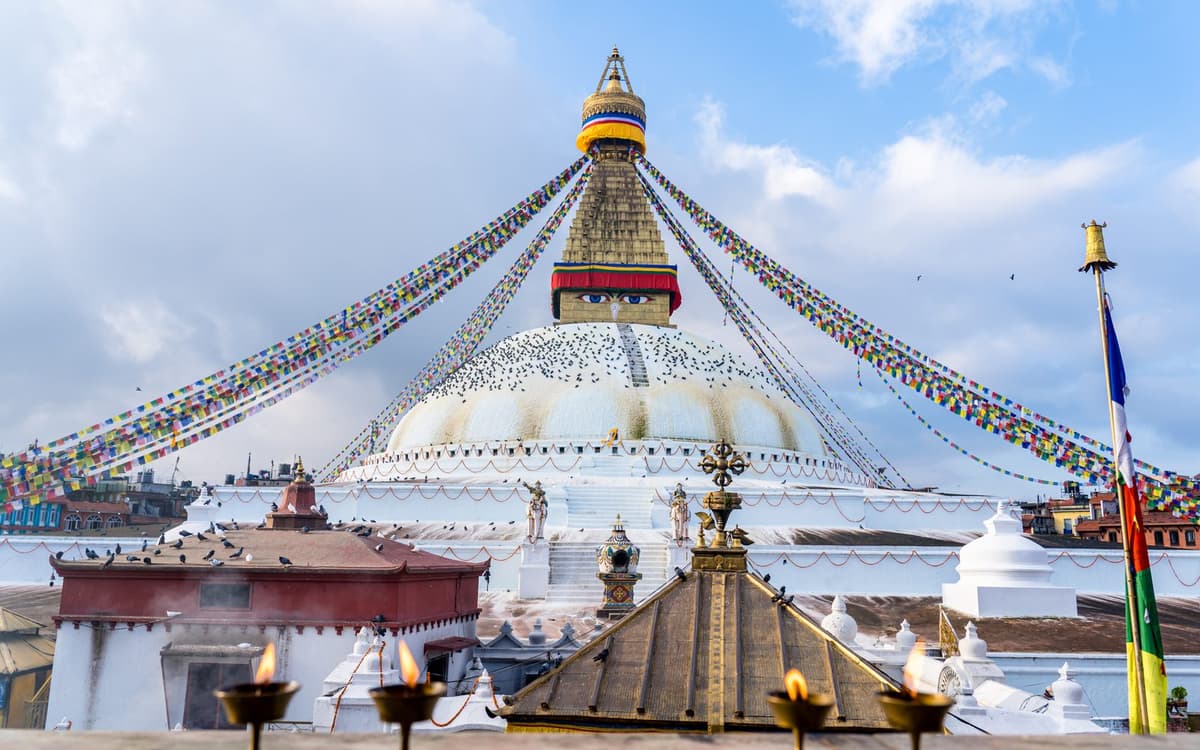
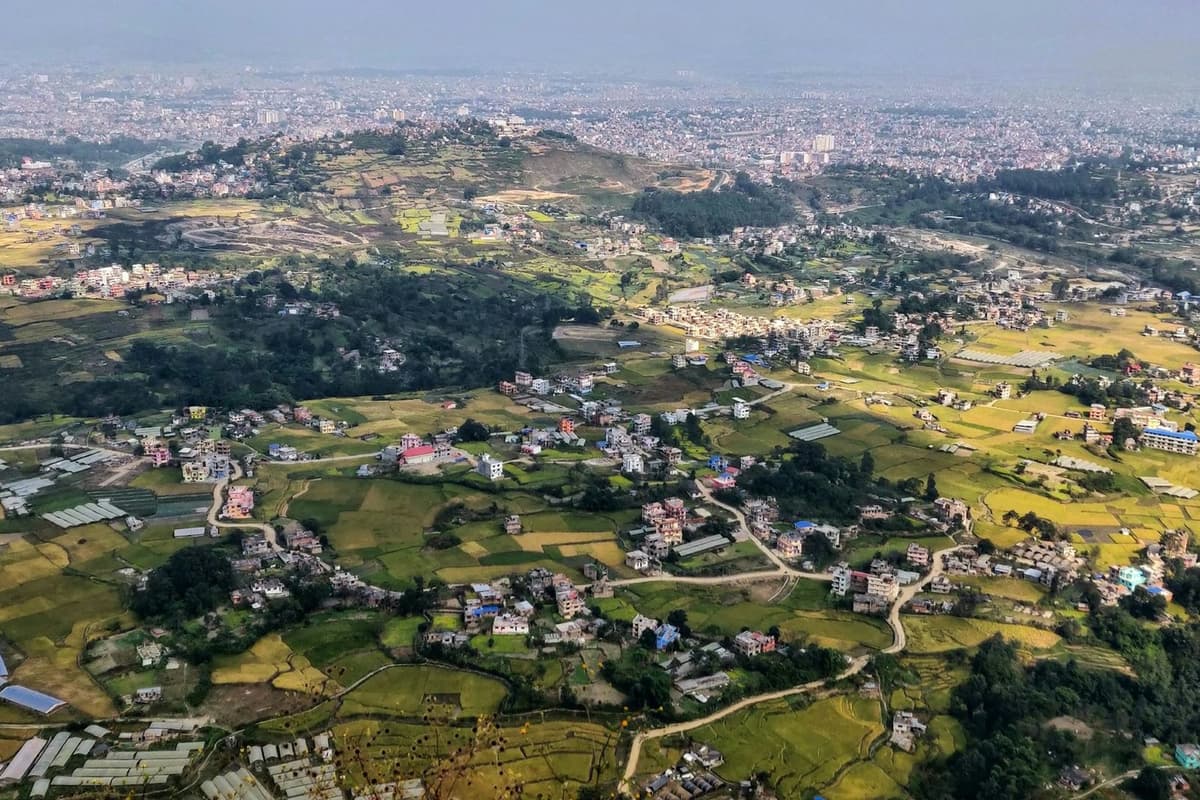
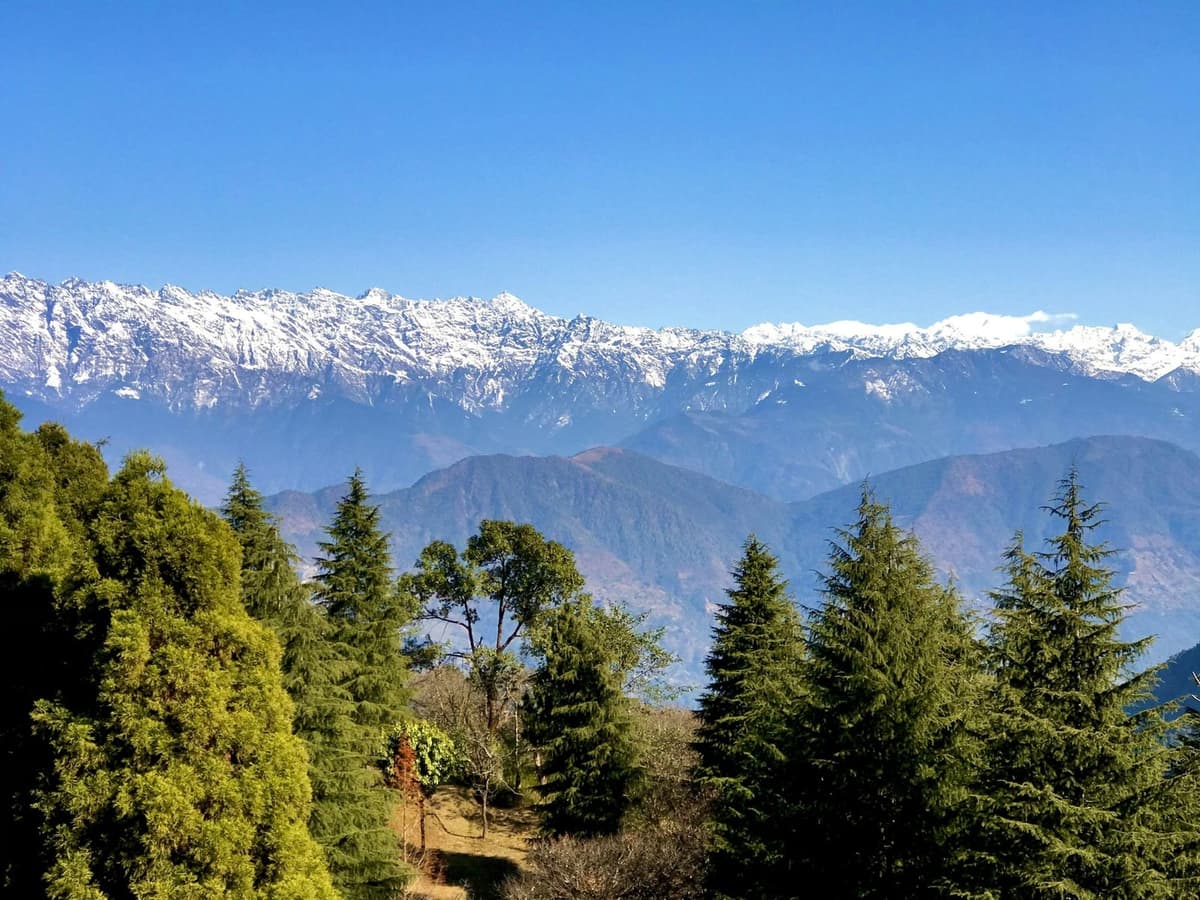
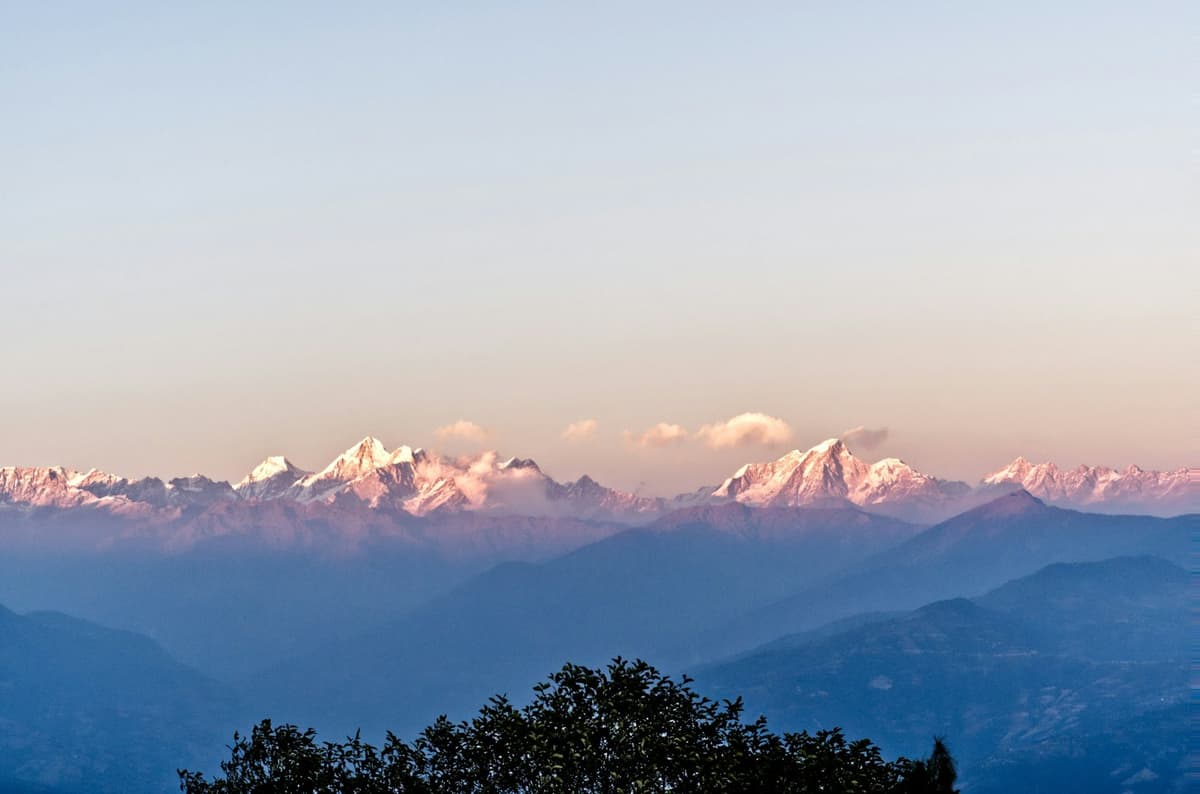

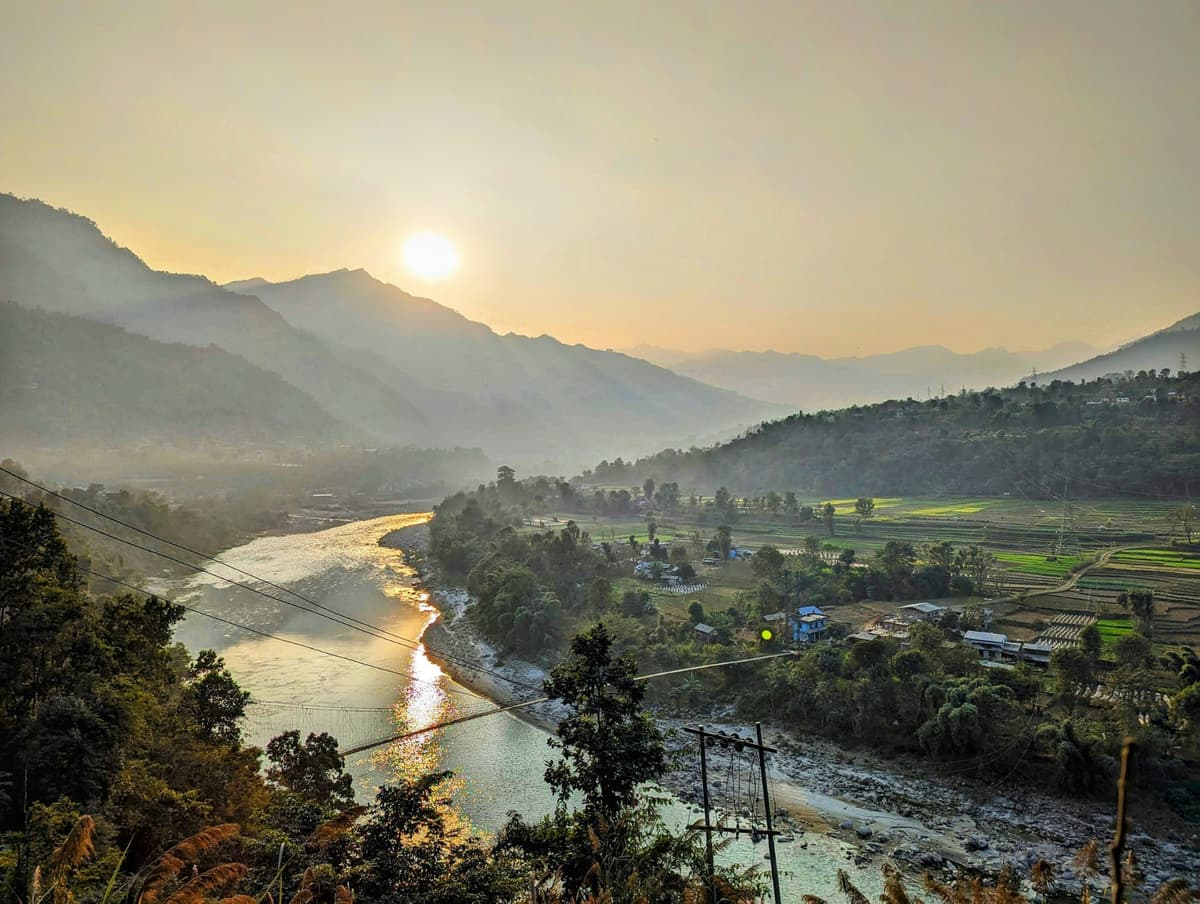
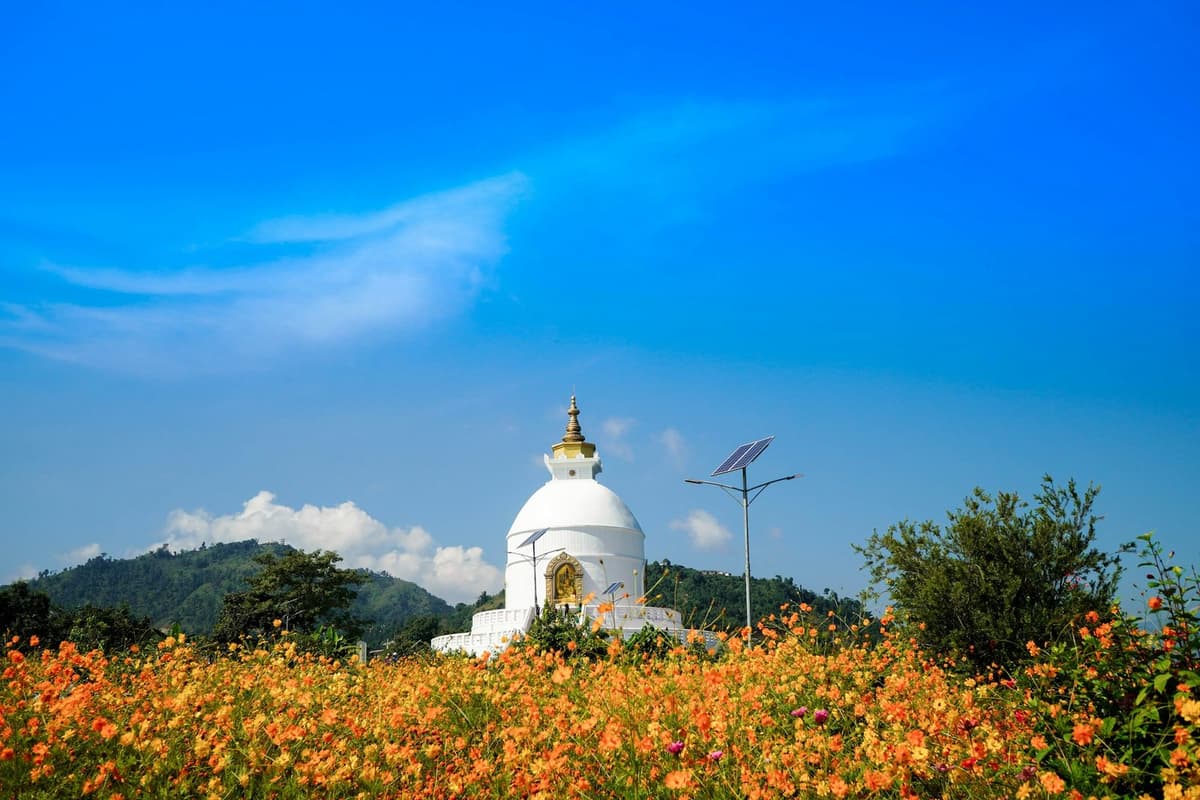
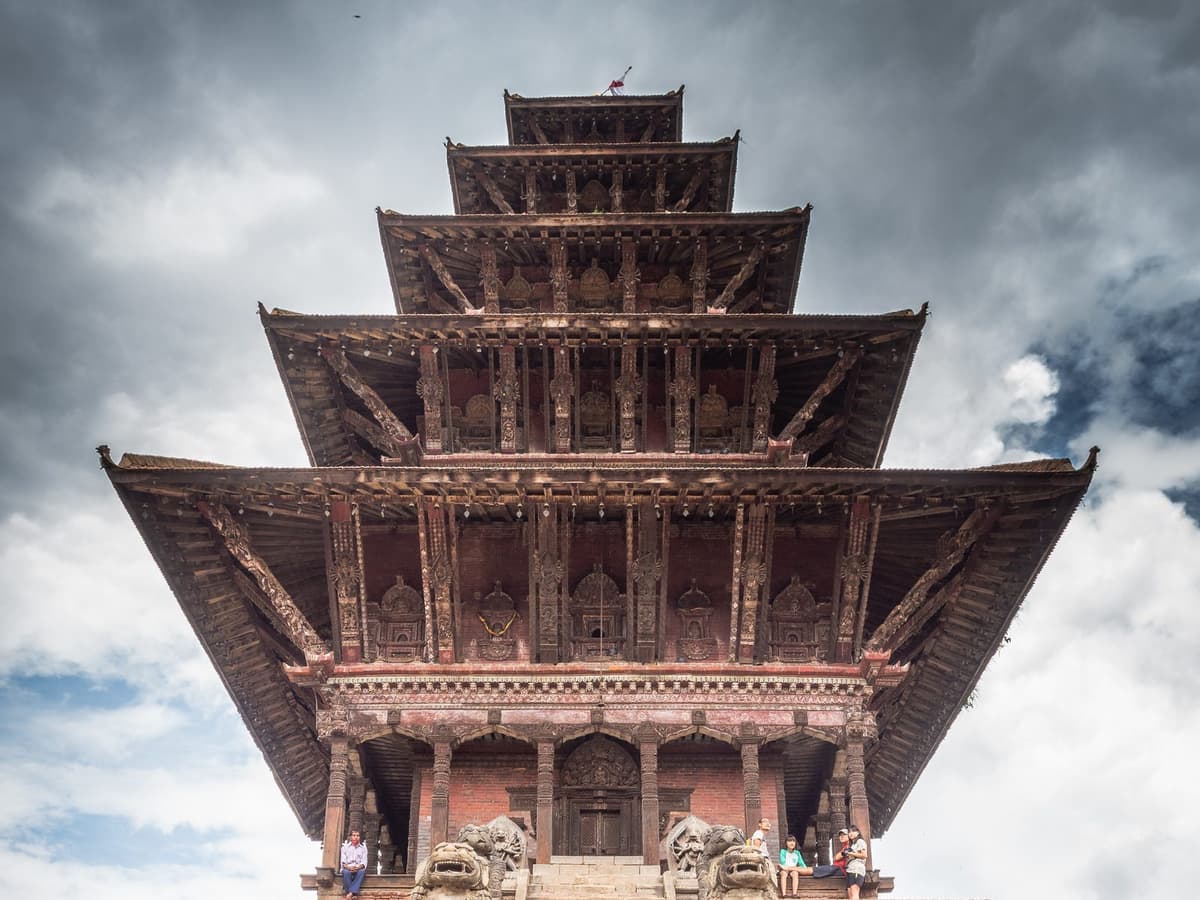
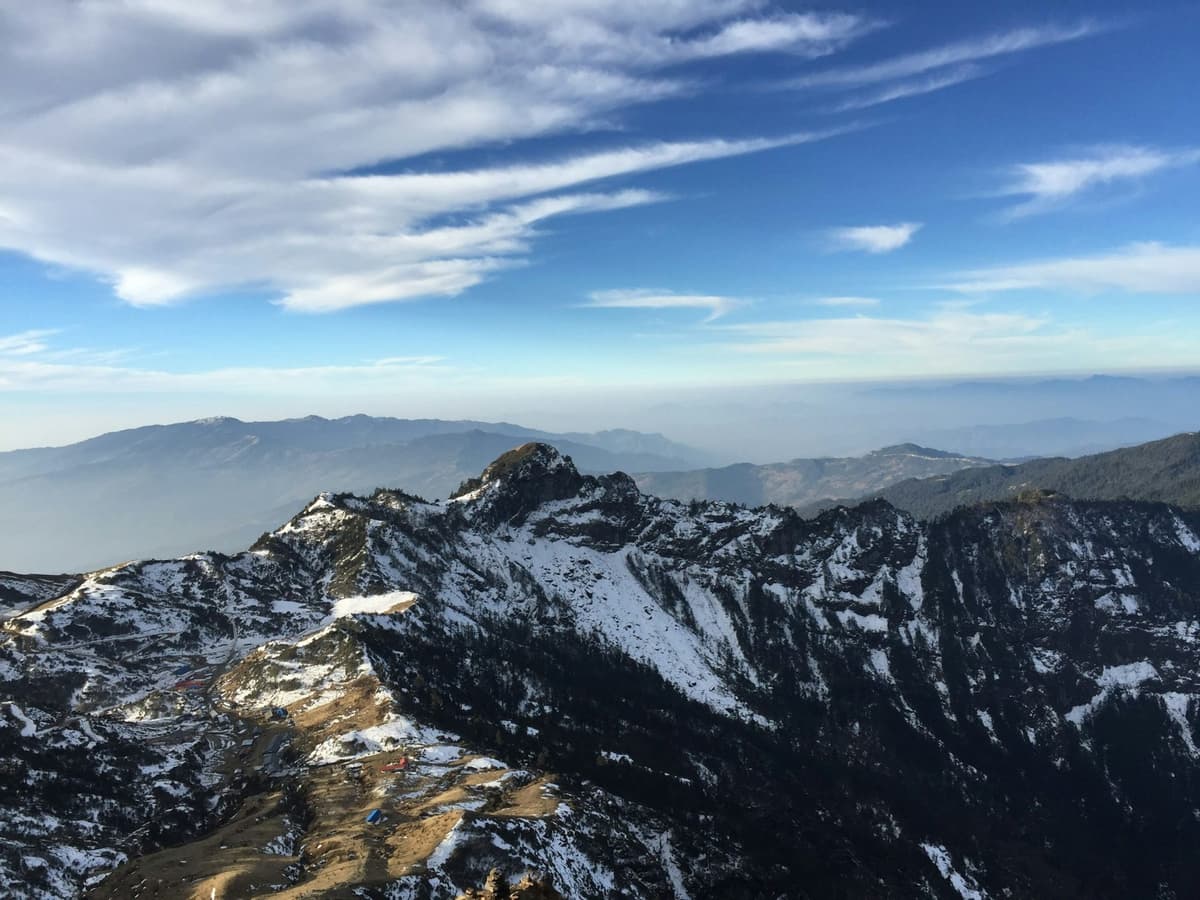
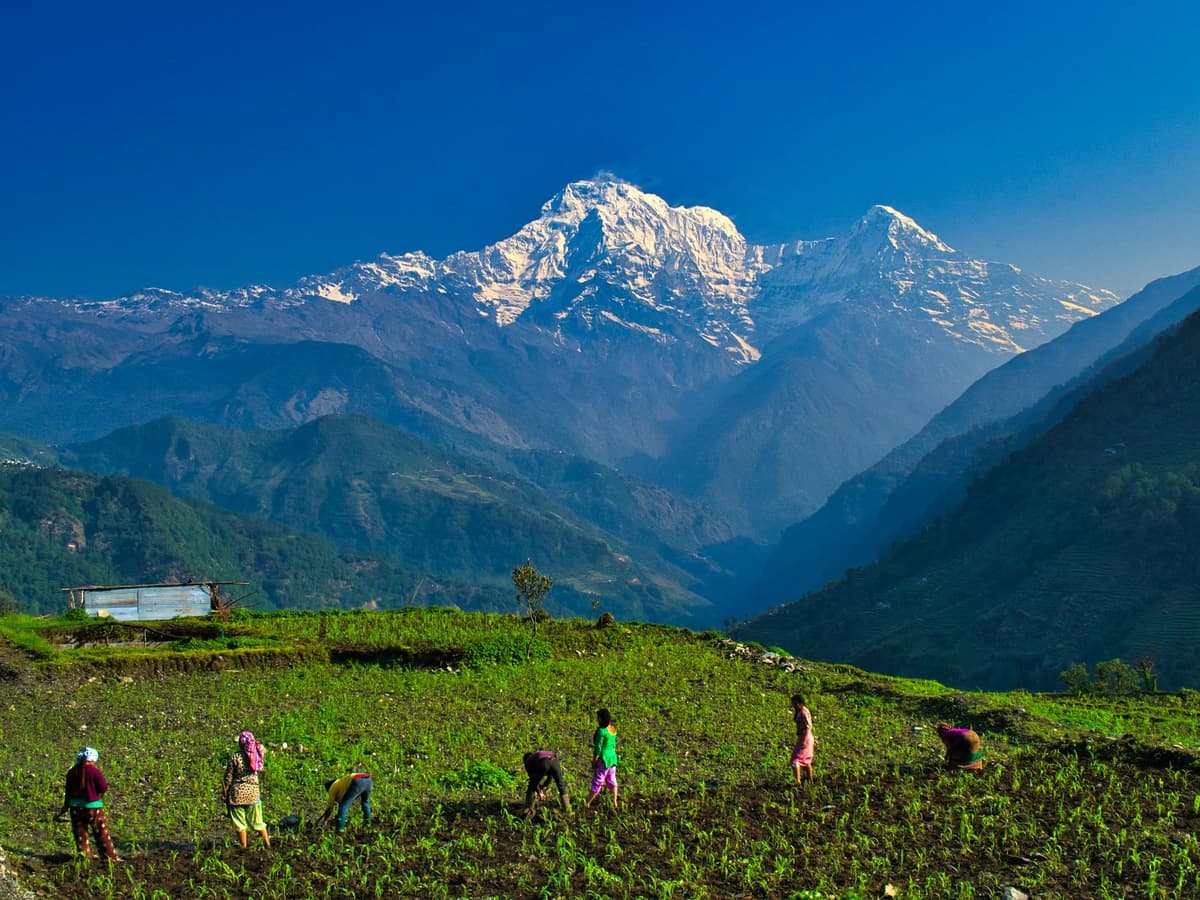
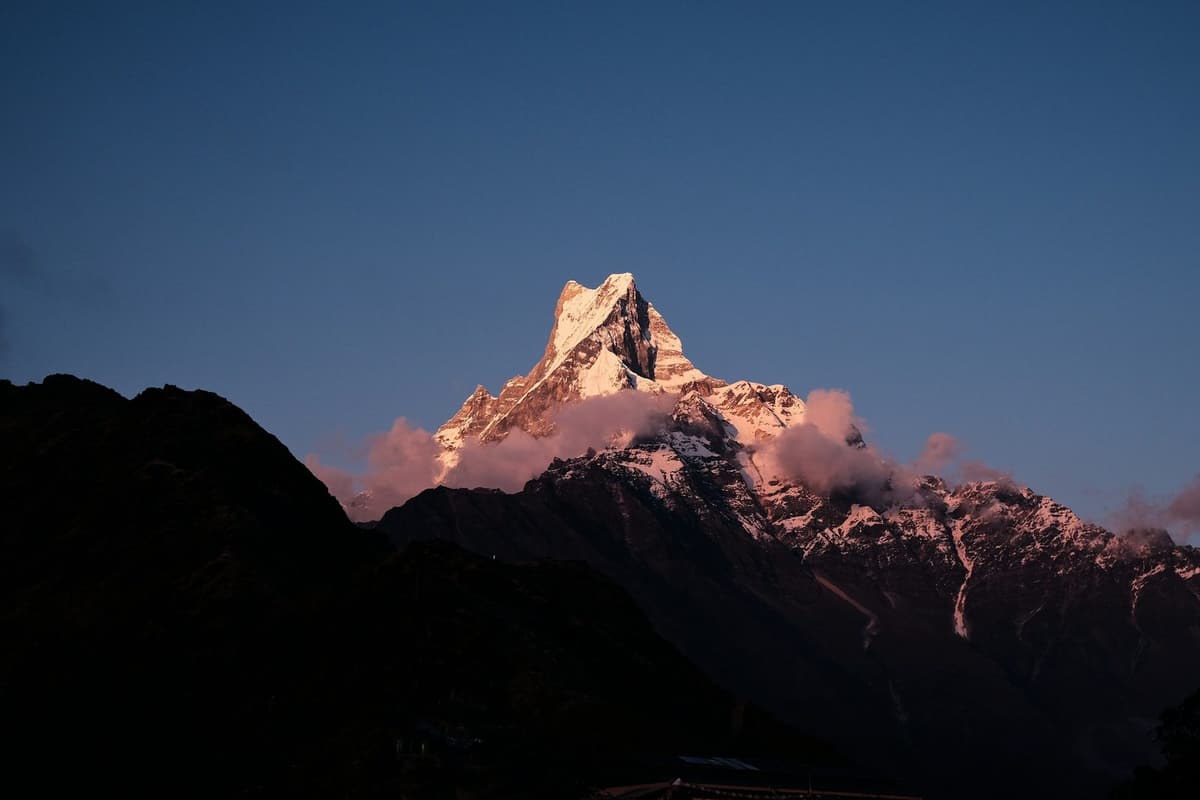
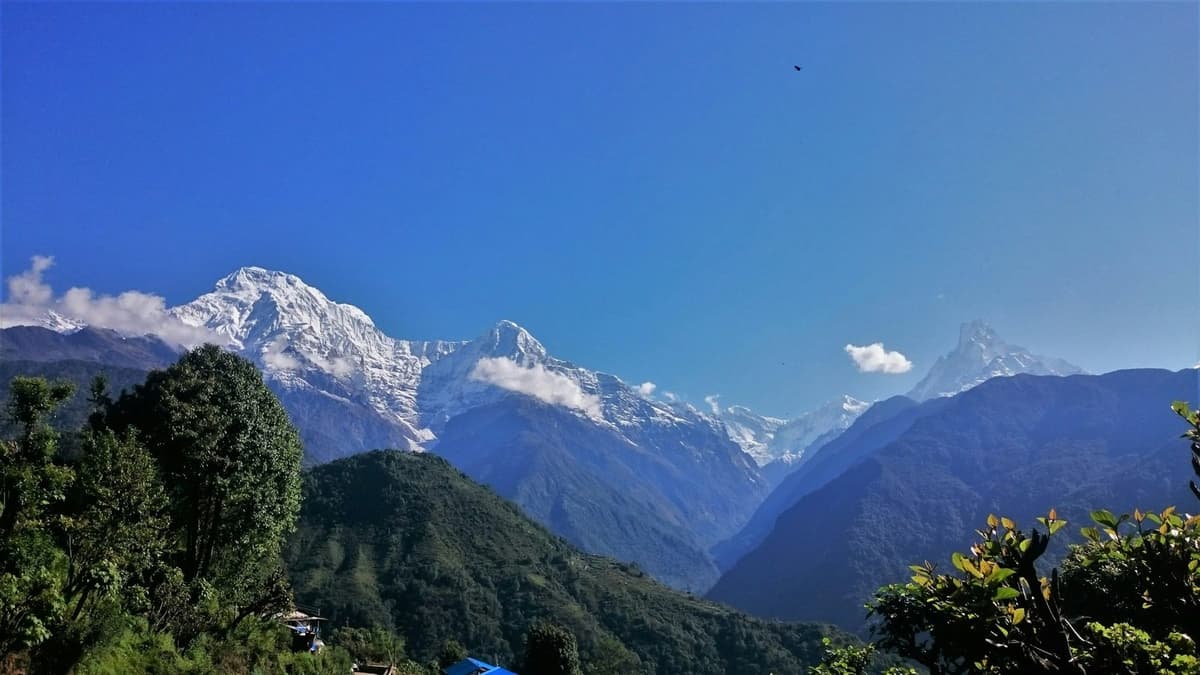
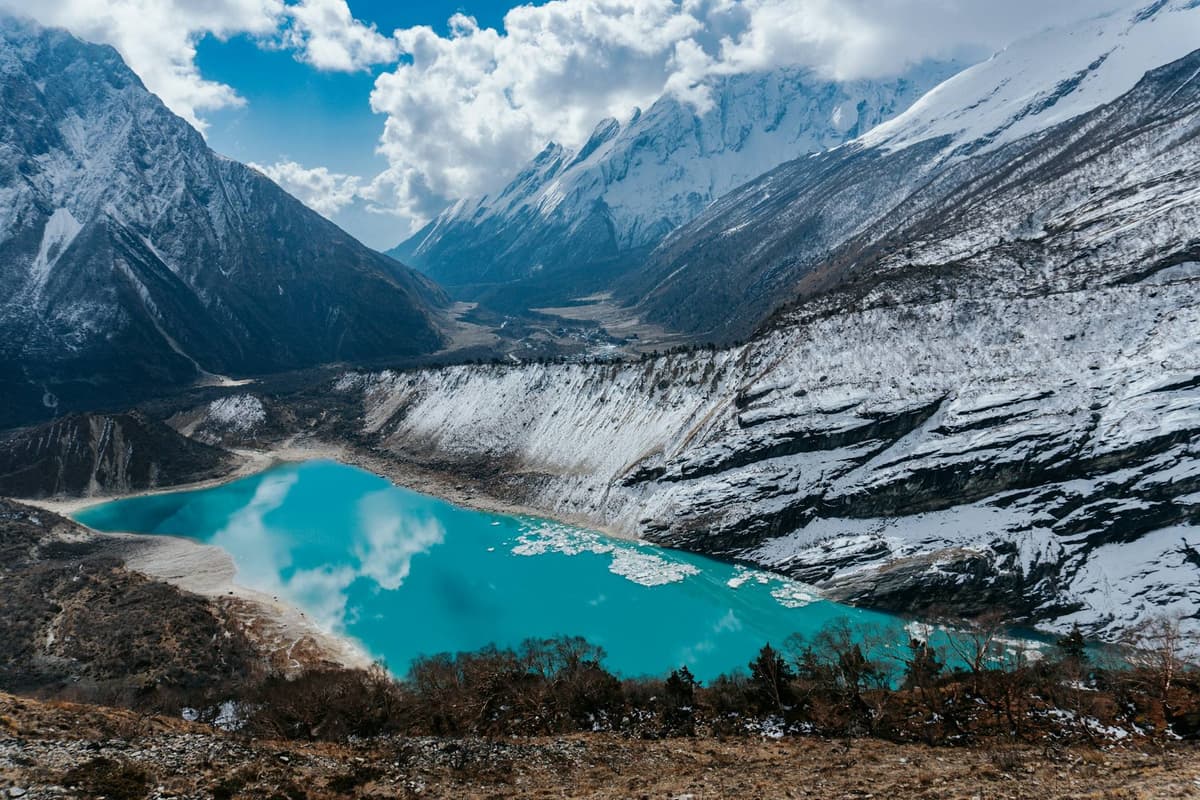
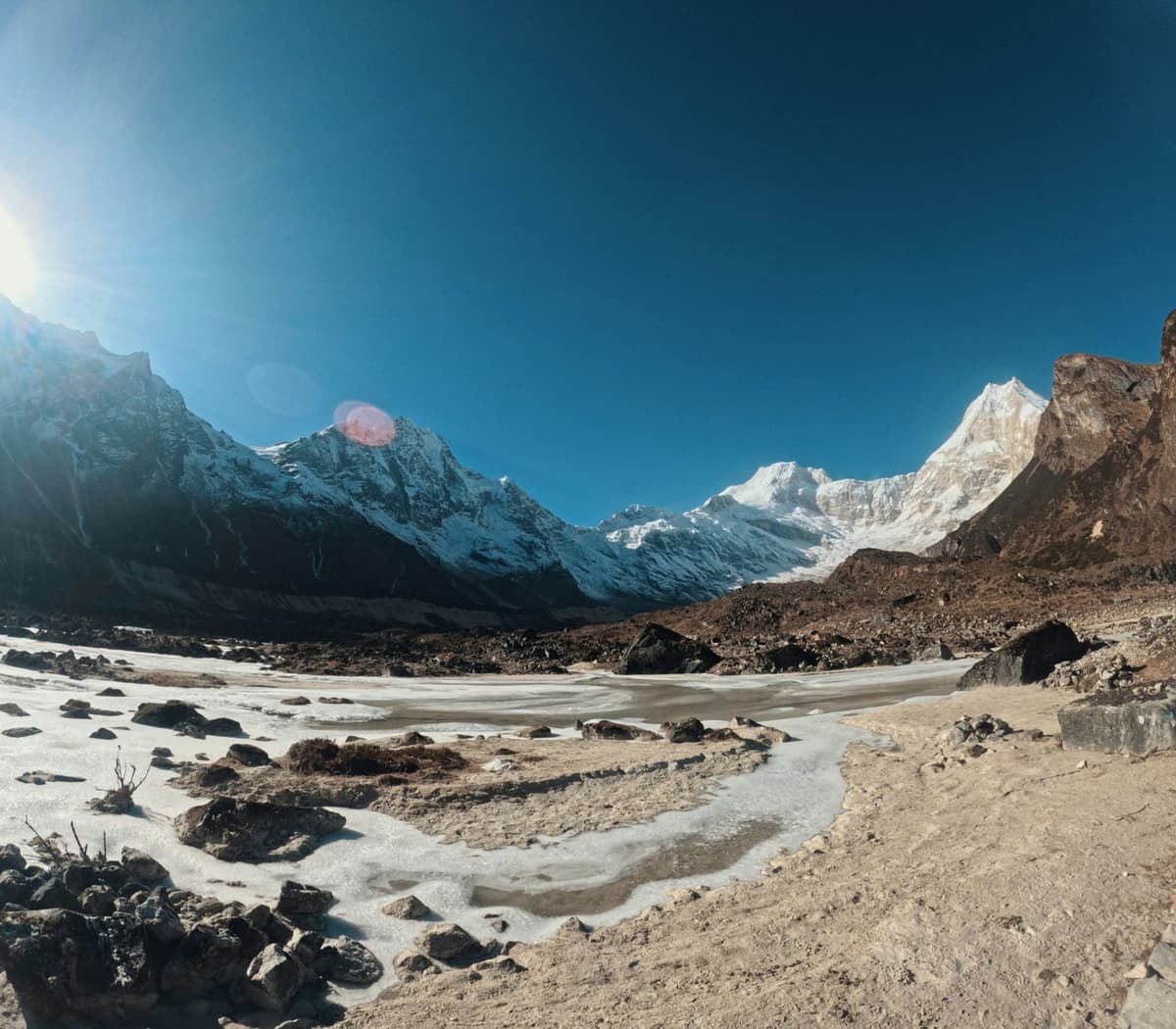
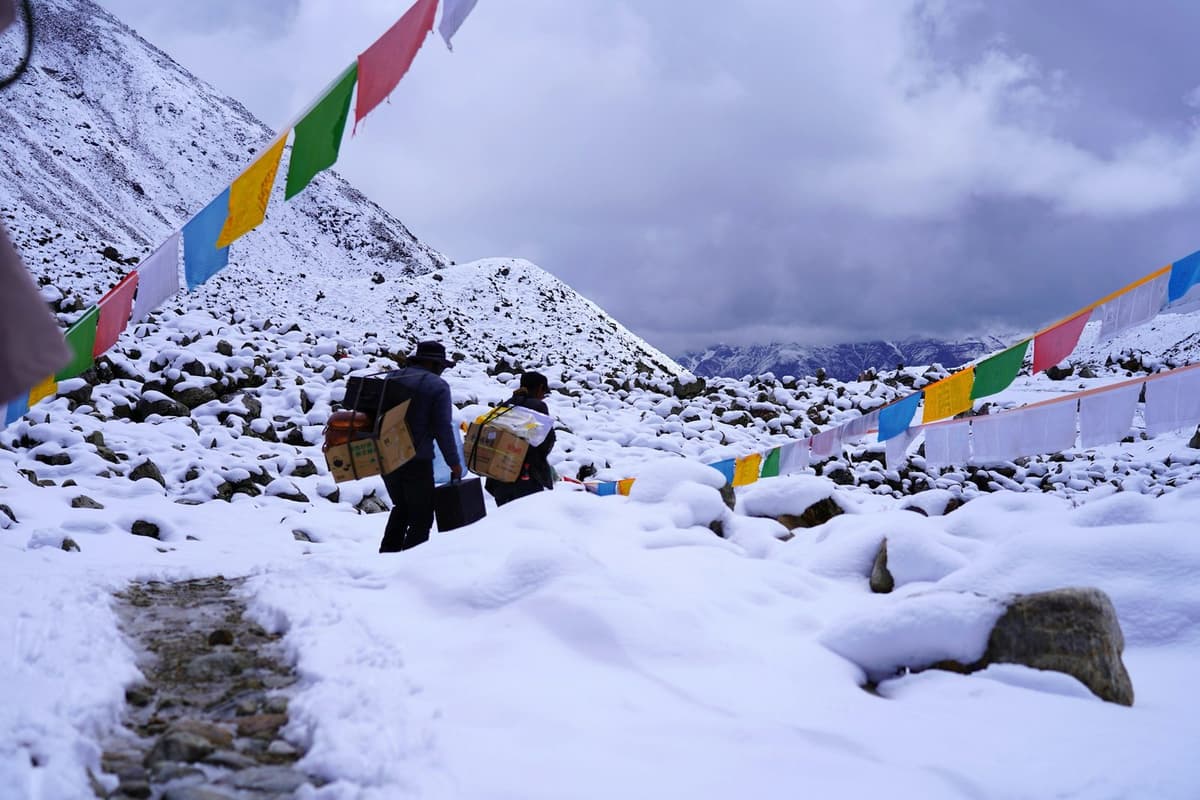
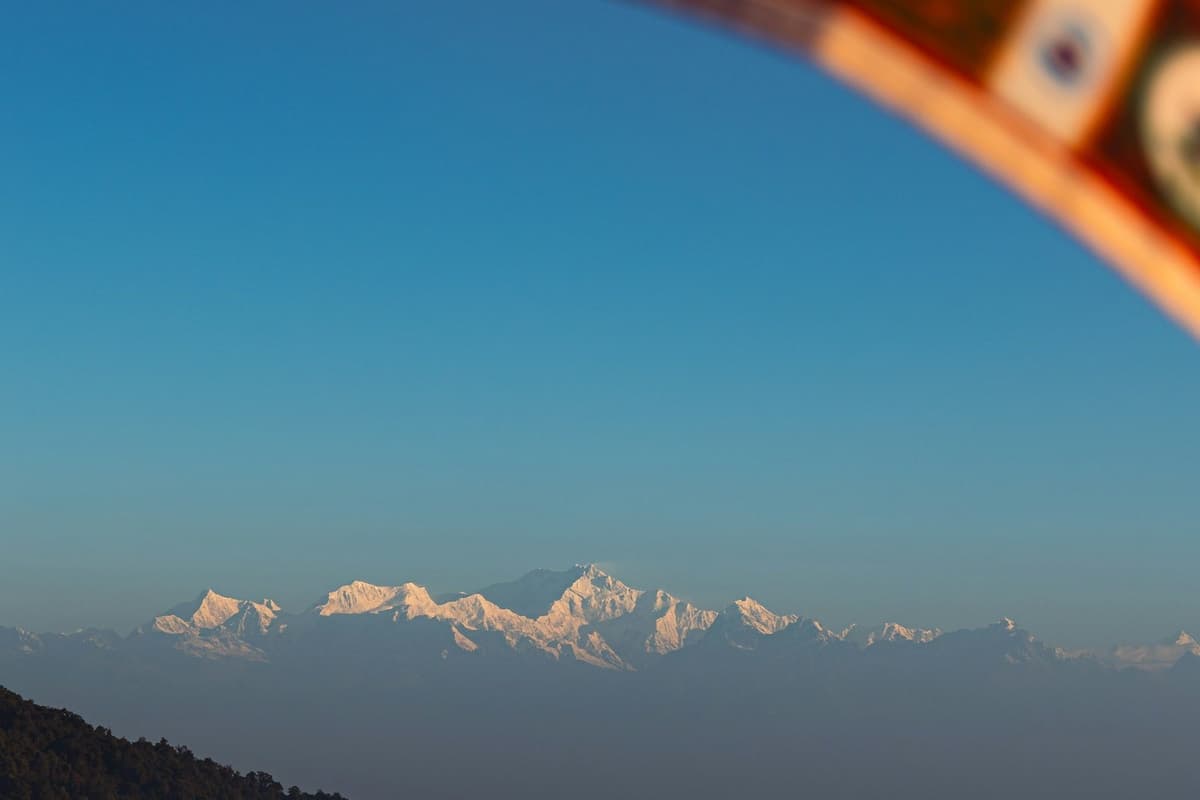
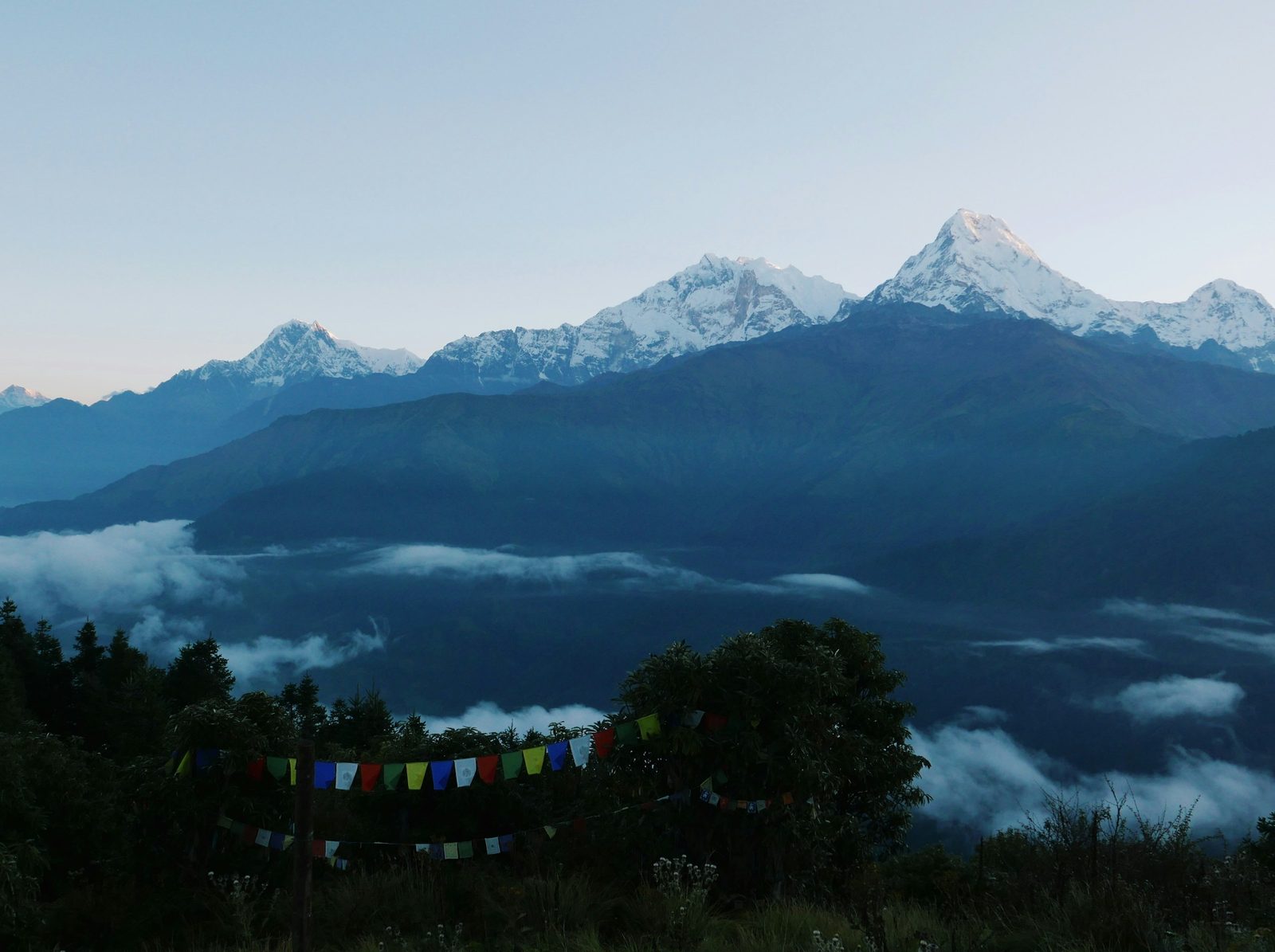
In December, Kathmandu wakes up cold. The mean daily minimum at the airport station is 4.2 °C, yet the afternoon climbs to a mean of 20.2 °C. The monsoon rain is long gone, the air is dry, and on a clear morning you can see the snow peaks from the city's rooftops.
Yes, Nepal treks in December work, but only some of them. Lower and mid-height routes such as Ghorepani Poon Hill and the Everest View trek are good winter choices. Everest Base Camp and Annapurna Base Camp are possible with care and spare days. High passes such as Thorong La, Larkya La and Cho La can close after snow.
This guide is part of our wider look at the best treks in Nepal, and it covers winter only: December, January and February, which is how the Nepal Tourism Board (NTB) defines the season.
Key facts
- Winter months (NTB)
- December, January, February (NTB climate page, 8 Oct 2026)
- Kathmandu in December (mean max / min)
- 20.2 °C / 4.2 °C (WMO / DHM normals 1991-2020, via Wikipedia climate box, 8 Oct 2026)
- Shortest day in Kathmandu (21 Dec 2026)
- Sunrise 06:50, sunset 17:13, about 10 hours 23 minutes of daylight (Sunrise data, US Naval Observatory, 8 Oct 2026)
- Everest Base Camp weather station (5,315 m), winter average
- −8.8 °C, day and night together (Khadka et al. 2026, ESSD, 8 Oct 2026)
- Winter precipitation at the Base Camp station
- 27 mm across December to February, the driest season there (Khadka et al. 2026, ESSD, 8 Oct 2026)
- Lukla flights
- May leave from Kathmandu or Ramechhap depending on the season; check your ticket (Press report: Rising Nepal, 30 Sep 2025, 8 Oct 2026)
- Altitude illness risk begins
- Sleeping above about 2,450 m (CDC) (CDC Yellow Book 2026, 8 Oct 2026)
Nepal treks in December: which routes work?
The routes that work best in winter stay below the high passes and have lodges that stay open. Poon Hill and the Everest View trek fit that well. The two base camp treks suit fit, prepared walkers who accept cold nights and keep spare days. Routes that cross a pass above 5,000 m are the ones snow most often stops.
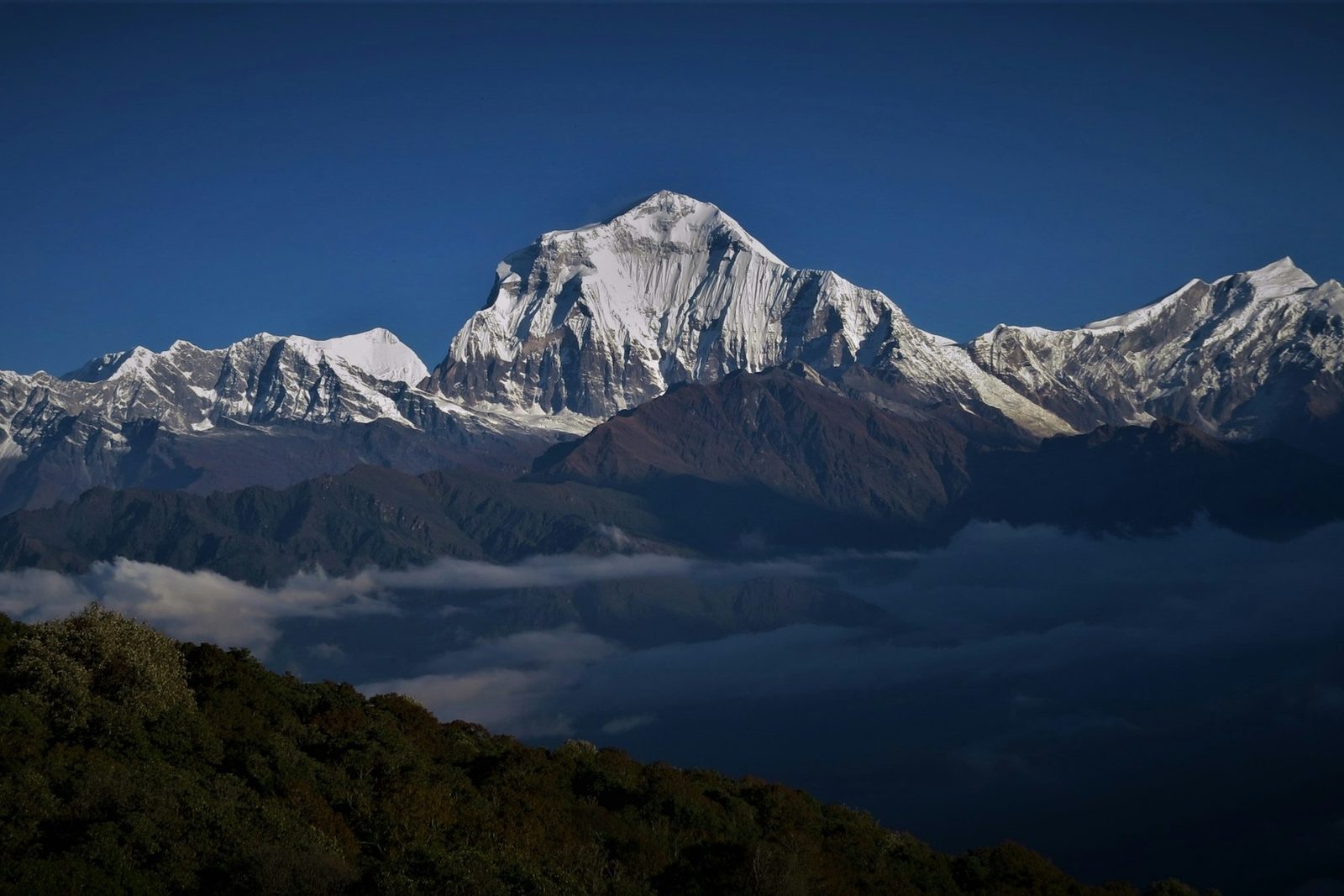
NTB itself names spring and autumn as the main seasons, saying "the best time to visit are during spring and autumn". Winter is not a closed season, but your choice of route matters more than at any other time. For how winter compares with the rest of the year, see our guide to the best time to visit Nepal.
Routes that work in winter
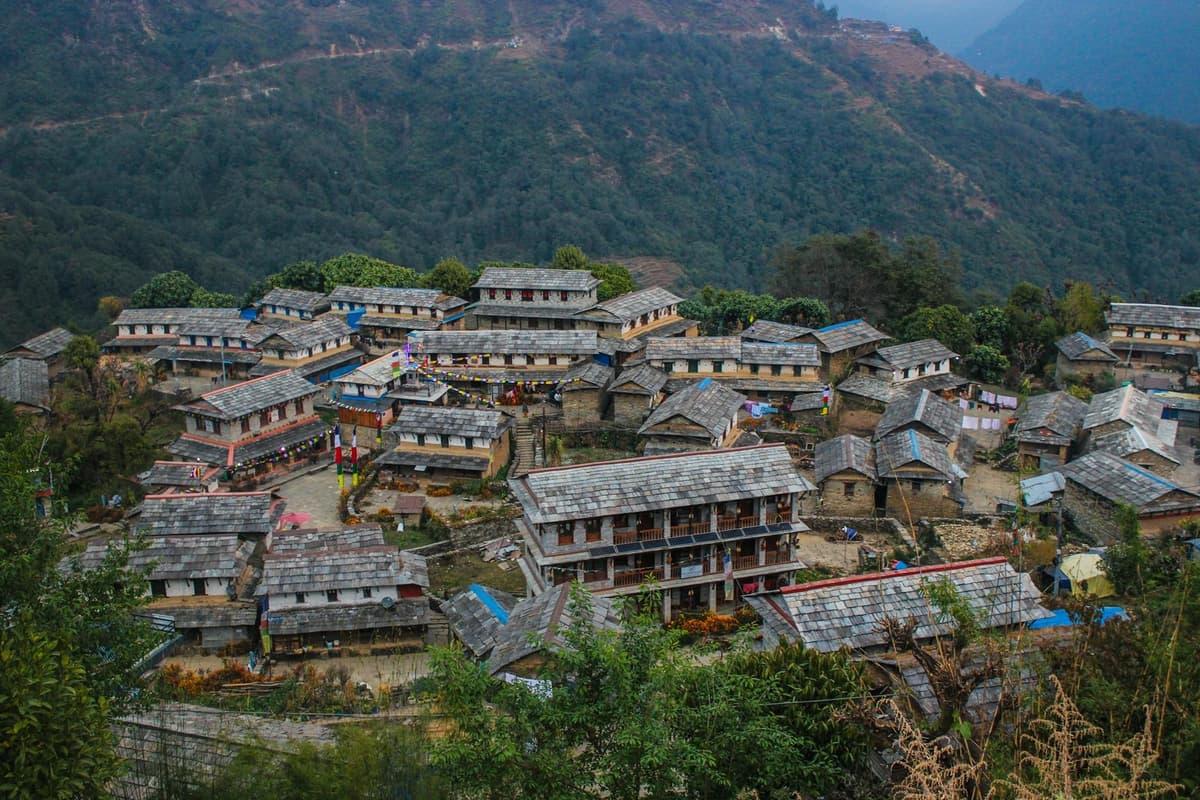
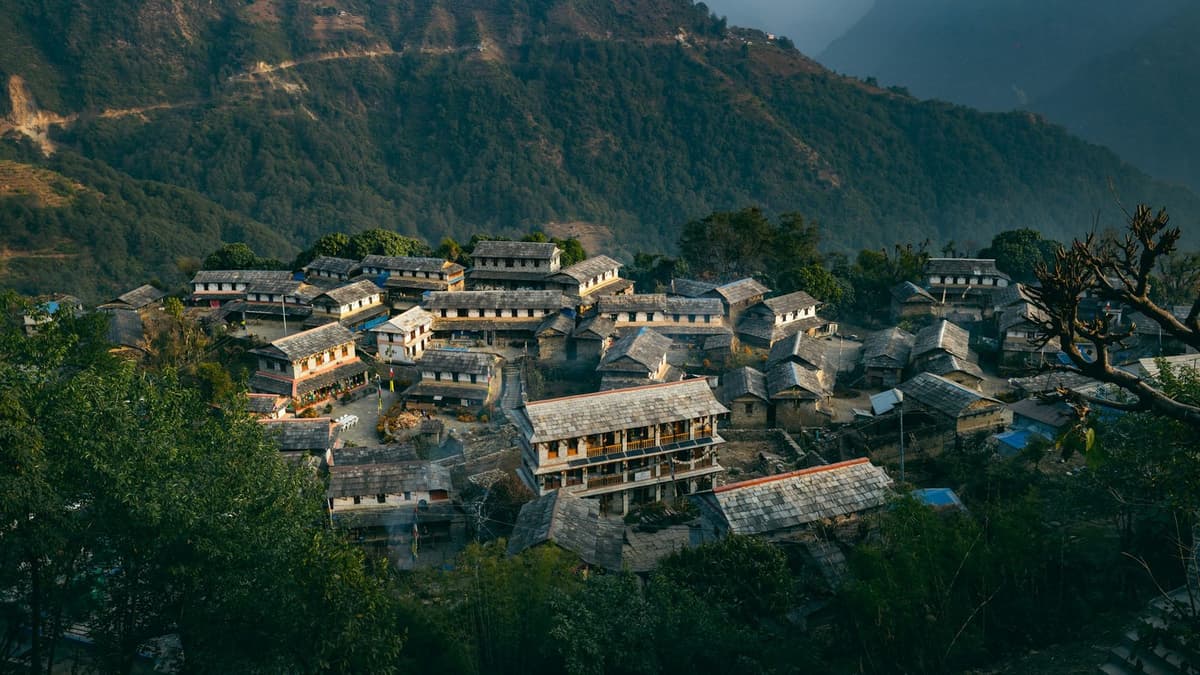
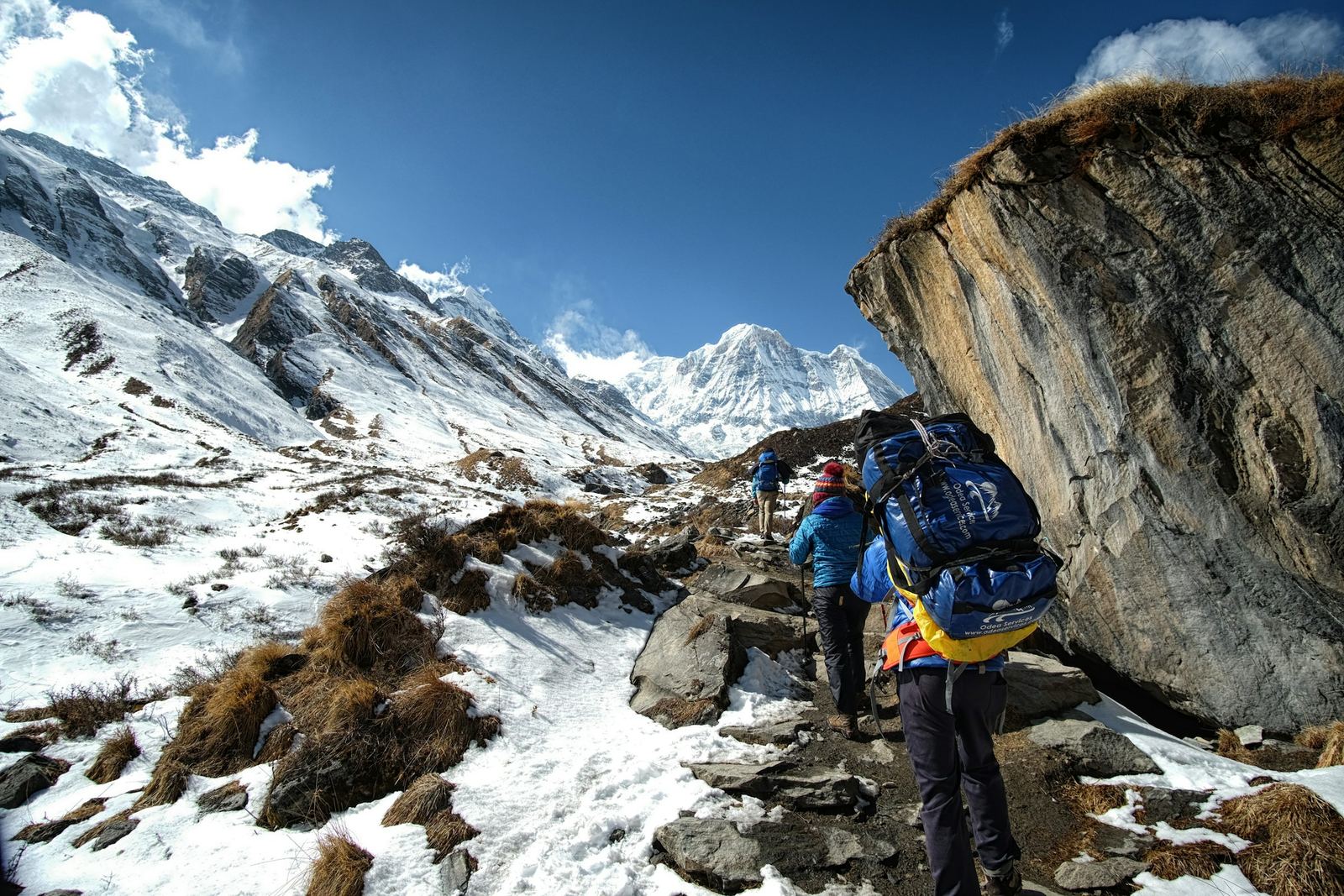
Ghorepani Poon Hill. The high point is Poon Hill at 3,210 m, a sunrise viewpoint above Ghorepani village. Snow does fall here in winter. Locals expect it in December and January, and in the 2024 to 2025 season light snow came in December, with the second snowfall of the season in the third week of February 2025. You start from Pokhara, where December days have a mean maximum of 21.0 °C and a mean minimum of 8.3 °C, so the first and last days are mild.
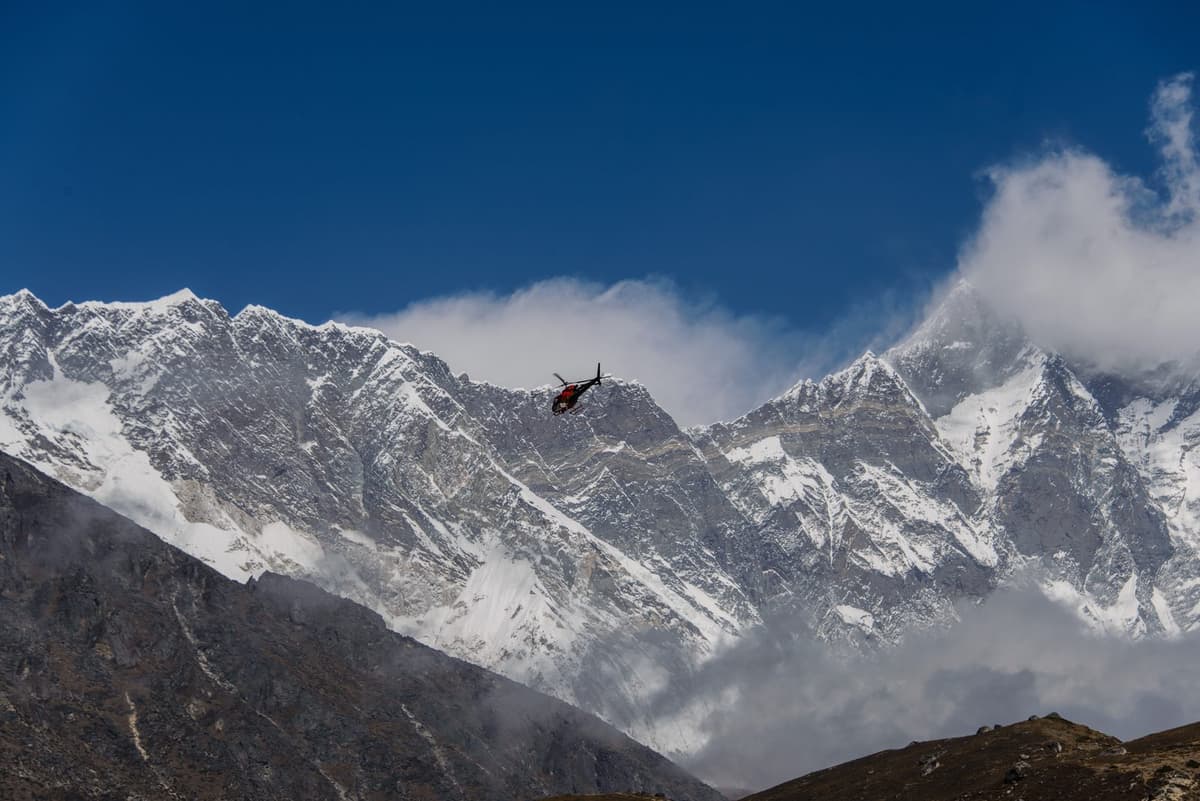
Everest View trek with Namche. This short Everest route climbs above Namche Bazaar, at 3,440 m, to Hotel Everest View at Syangboche, 3,880 m. NTB describes the Everest park in winter as "December-February (snow, daytime temperature 5 degrees Celsius)", so pack for cold.
Routes that work with care
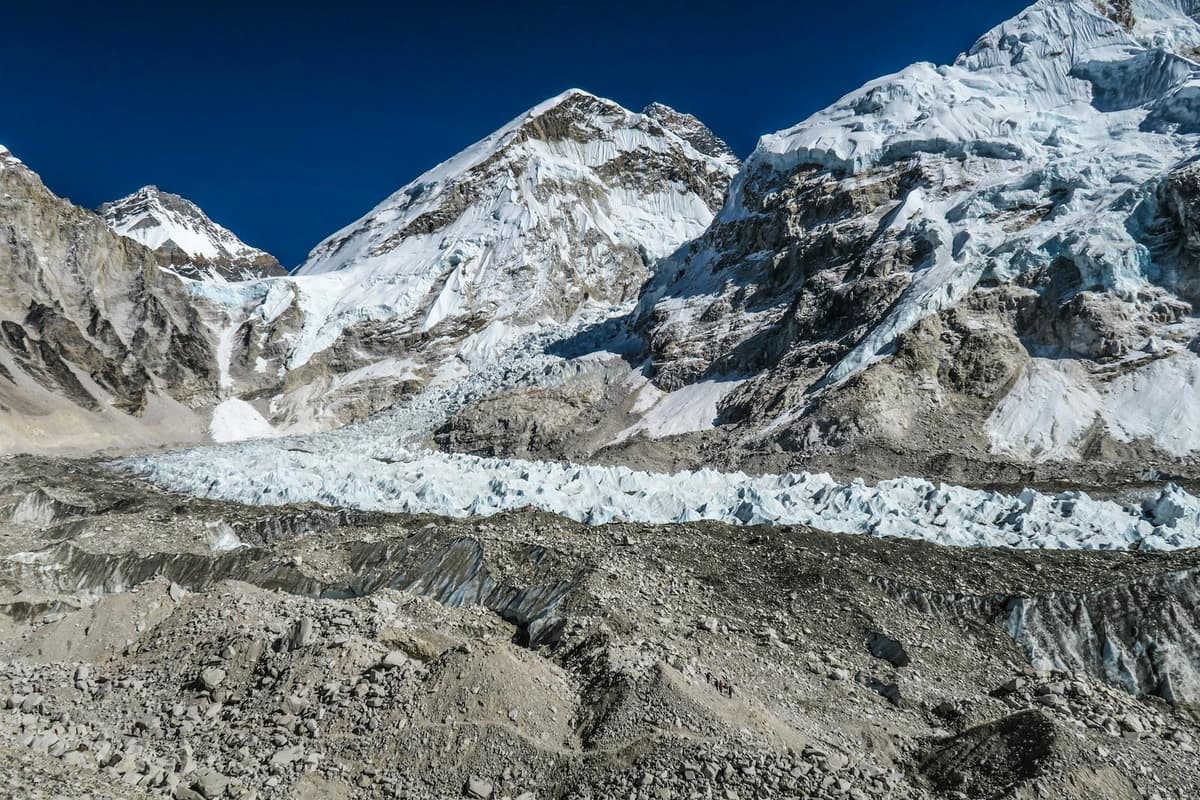
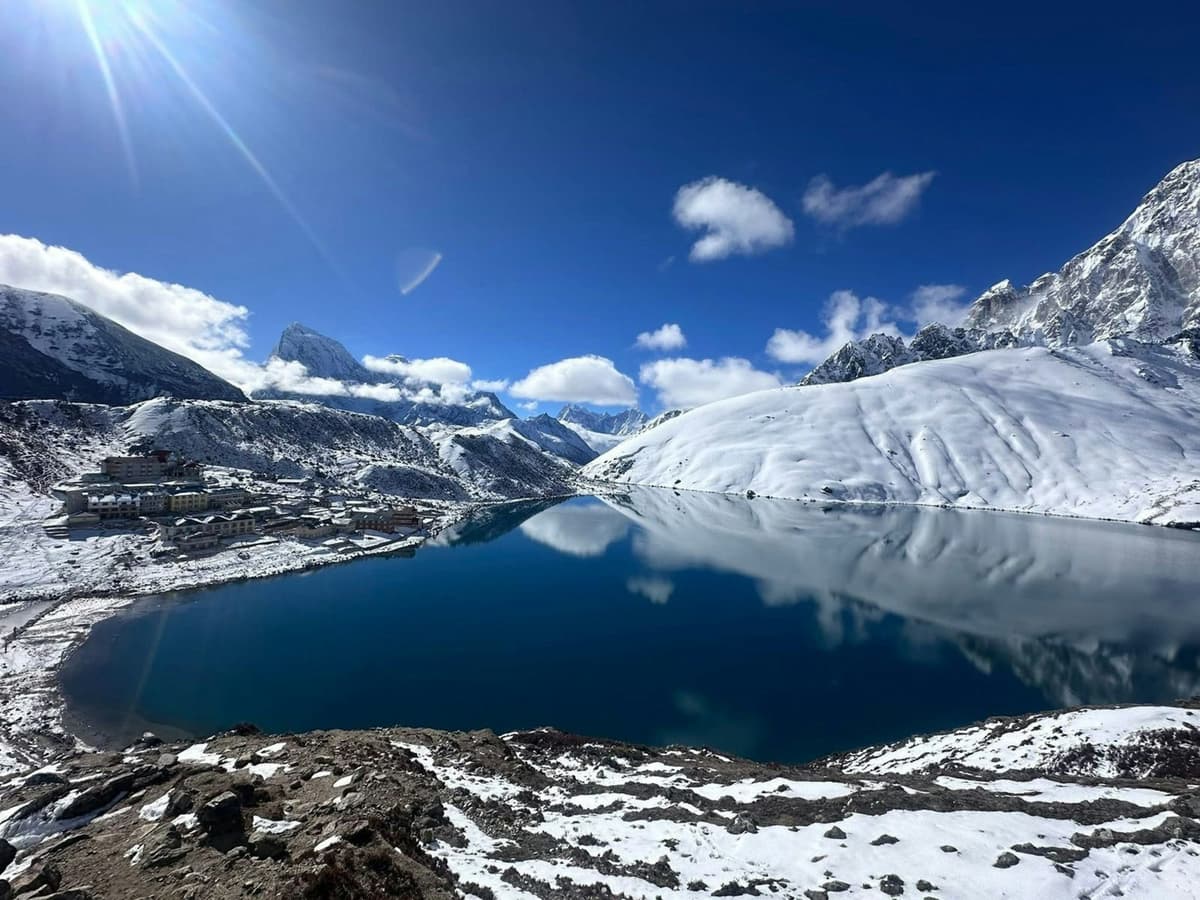
Everest Base Camp. Base Camp sits at 5,364 m, and the usual high point, Kala Patthar, is 5,644.5 m by GPS, often listed as 5,545 m. Winter here is dry: the Base Camp weather station recorded just 27 mm of precipitation across December to February. It is also the coldest stretch of the year, with a winter average of −8.8 °C at that station, day and night together, so nights are colder still. Many lodge owners in the highest villages, including Gorak Shep, Lobuche and Dingboche, spend winter in Kathmandu, leaving staff in charge. We arrange your Sagarmatha National Park permit and the Khumbu Pasang Lhamu Rural Municipality Trek-Card, which is issued at Lukla. For fees and a full budget, read our Everest Base Camp trek cost guide.
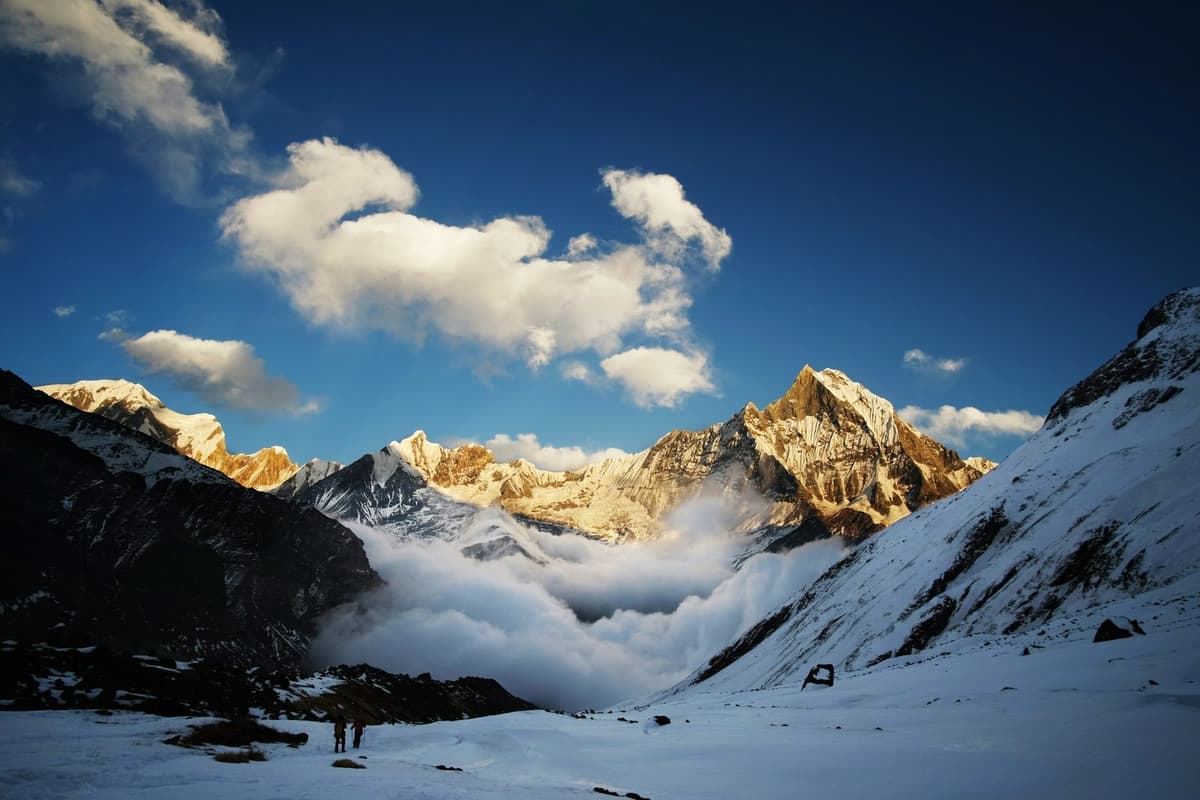
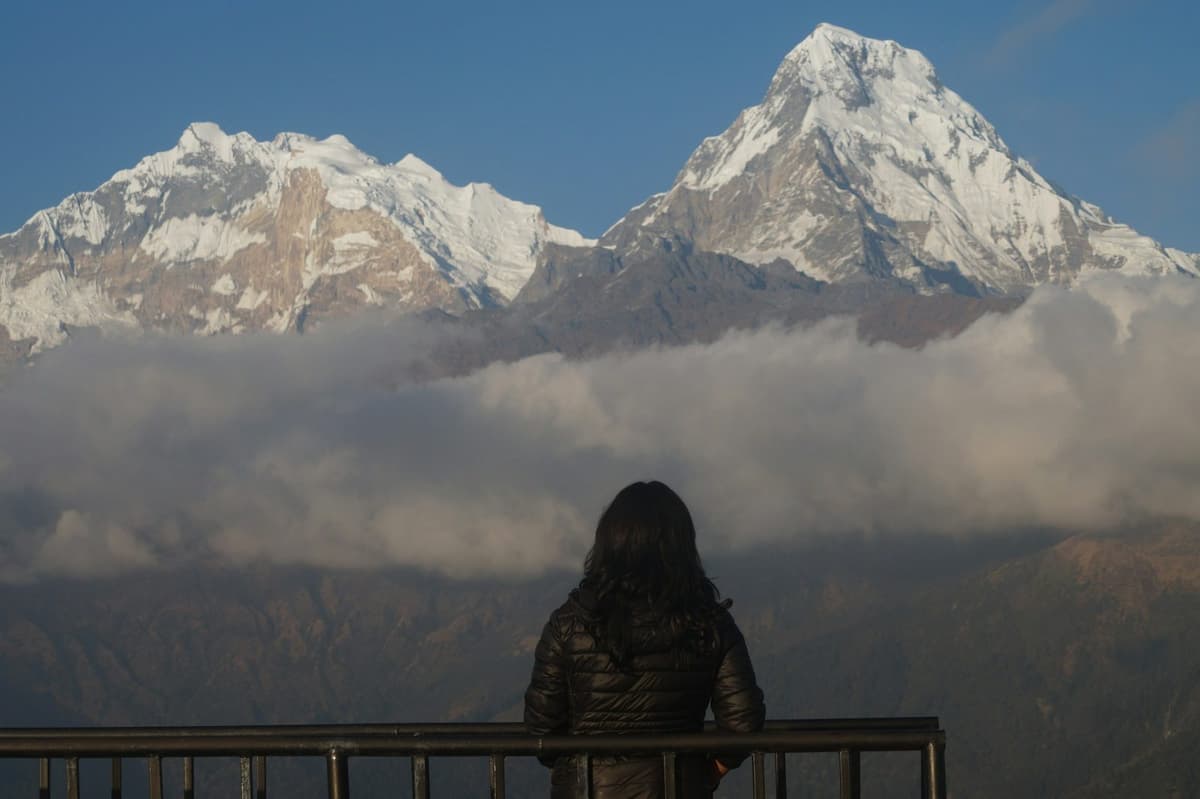
Annapurna Base Camp (ABC). ABC lies at 4,130 m and usually stays feasible in winter, but it has two avalanche-prone stretches: Hinku Cave to Deurali, and Machhapuchhre Base Camp (MBC) to ABC. On 17 January 2020 an avalanche struck at Hinku, between Himalaya and Deurali, at about 3,200 m, and buried seven people: four South Korean trekkers and three Nepali staff. The route was shut and trekkers were back by mid-February. ABC is a sound winter choice only if you are ready to wait a day, or turn back, after fresh snow. We arrange your ACAP permit through the NTNC e-permit system.
Routes to avoid in winter, or for experienced trekkers only
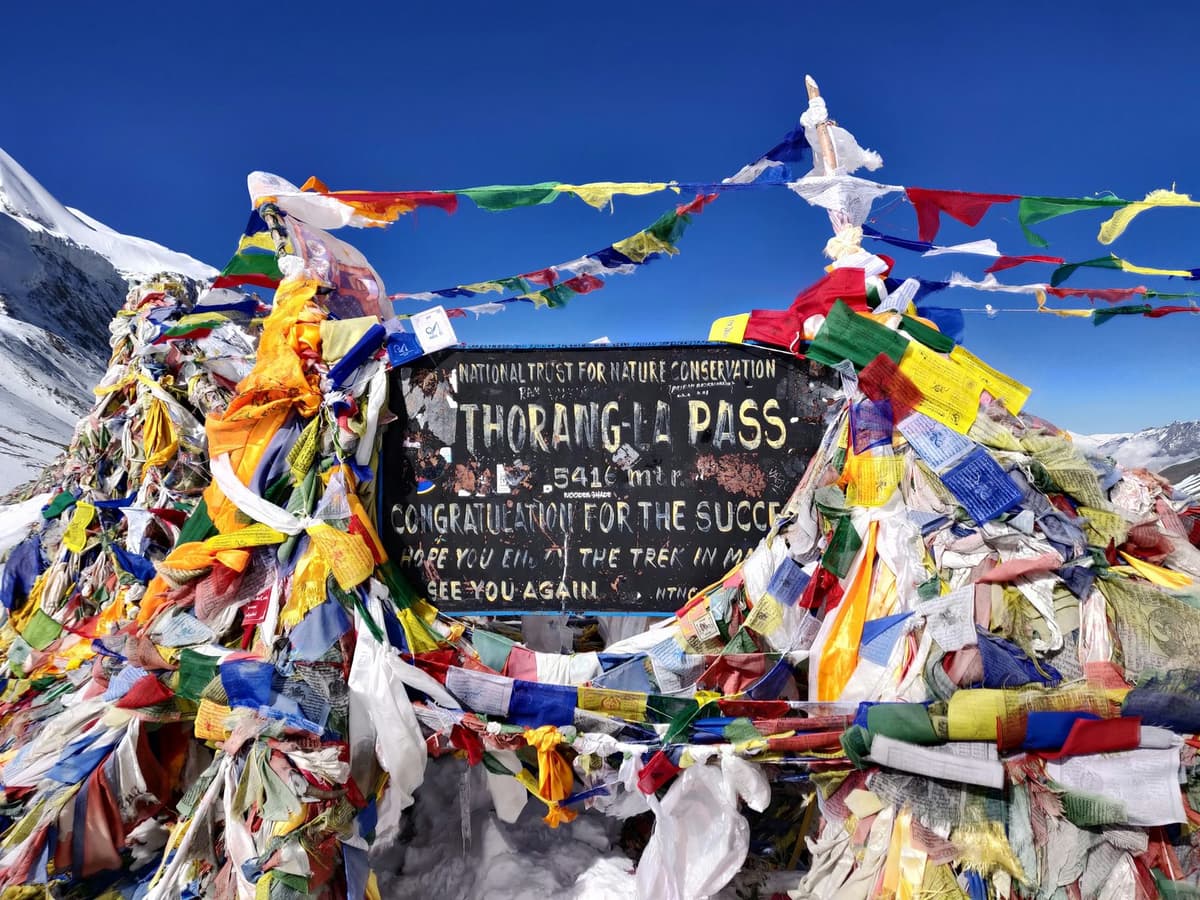
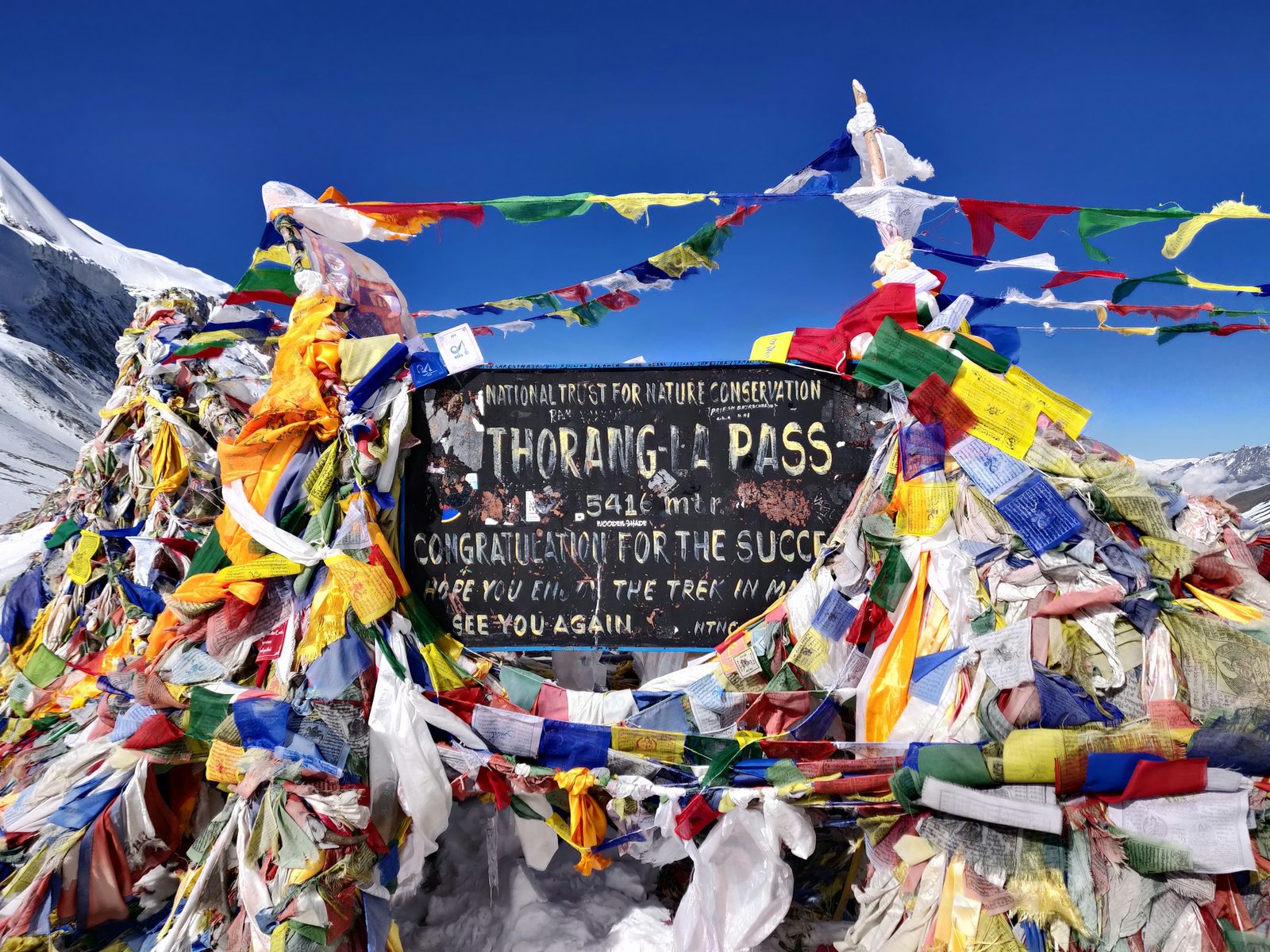
Annapurna Circuit over Thorong La. Thorong La is a pass at 5,416 m. In some years it can still be crossed in early winter: in December 2025 Rising Nepal reported trekkers entering Mustang over the pass, which it called "manageable for those willing to brave the cold". But heavy snow shuts it for days at a time. In November 2025 the Manang chief district officer said Tilicho, Thorong La and Larke Pass would stay closed for about a week, and ACAP advised: "It will be safer to avoid trekking in the Himalayas and postpone the trip until the weather clears." In December 2022 only one hotel was operating toward Thorong La. The trail is quiet for a reason: ACAP's Manang office counted 618 visitors in January 2025, while ACAP figures reported by the Kathmandu Post put Annapurna Circuit trekkers at 8,853 in October 2024. If you do cross, your guide, who knows the route, decides when and how to cross, based on snow and the forecast.
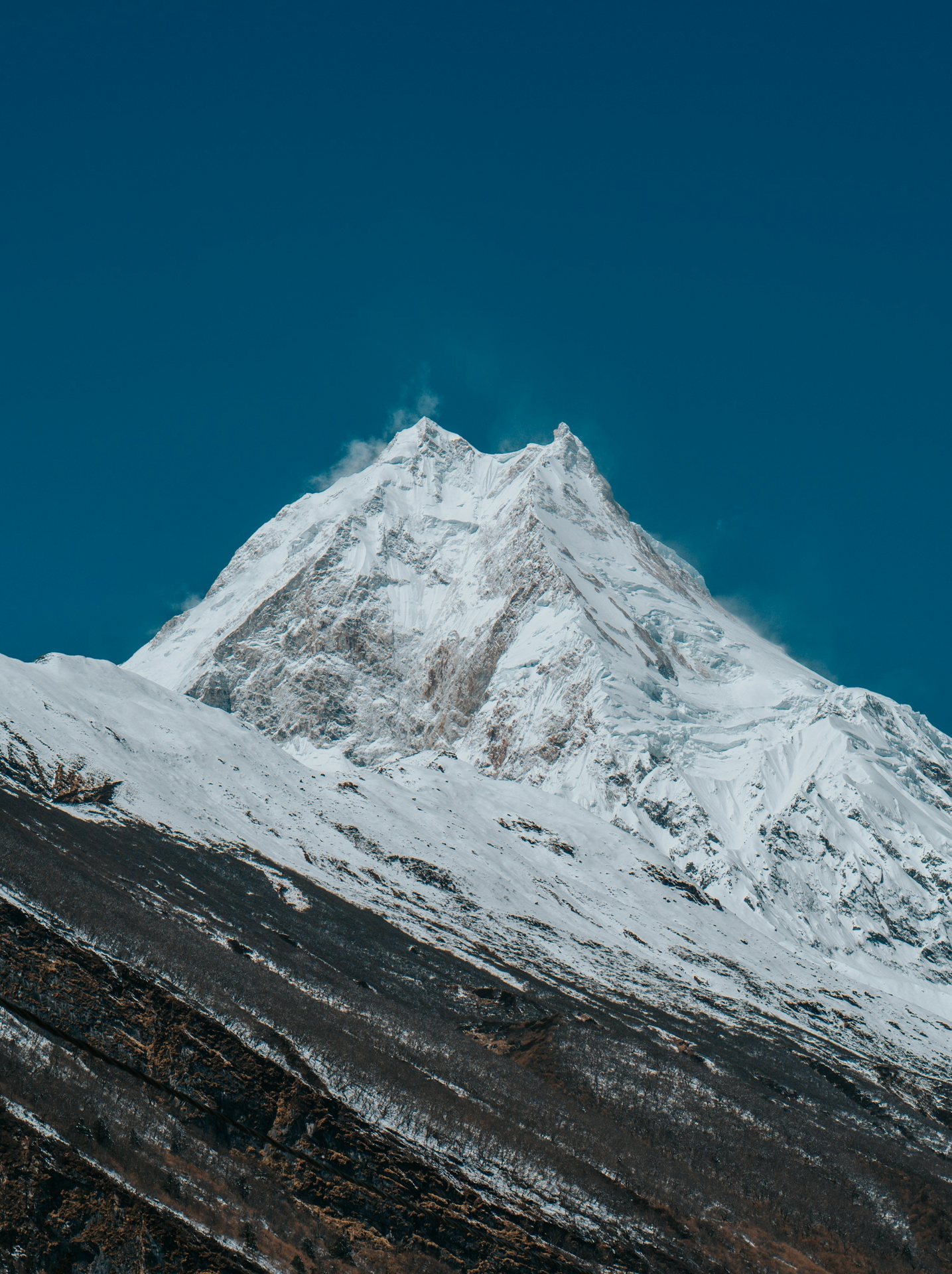
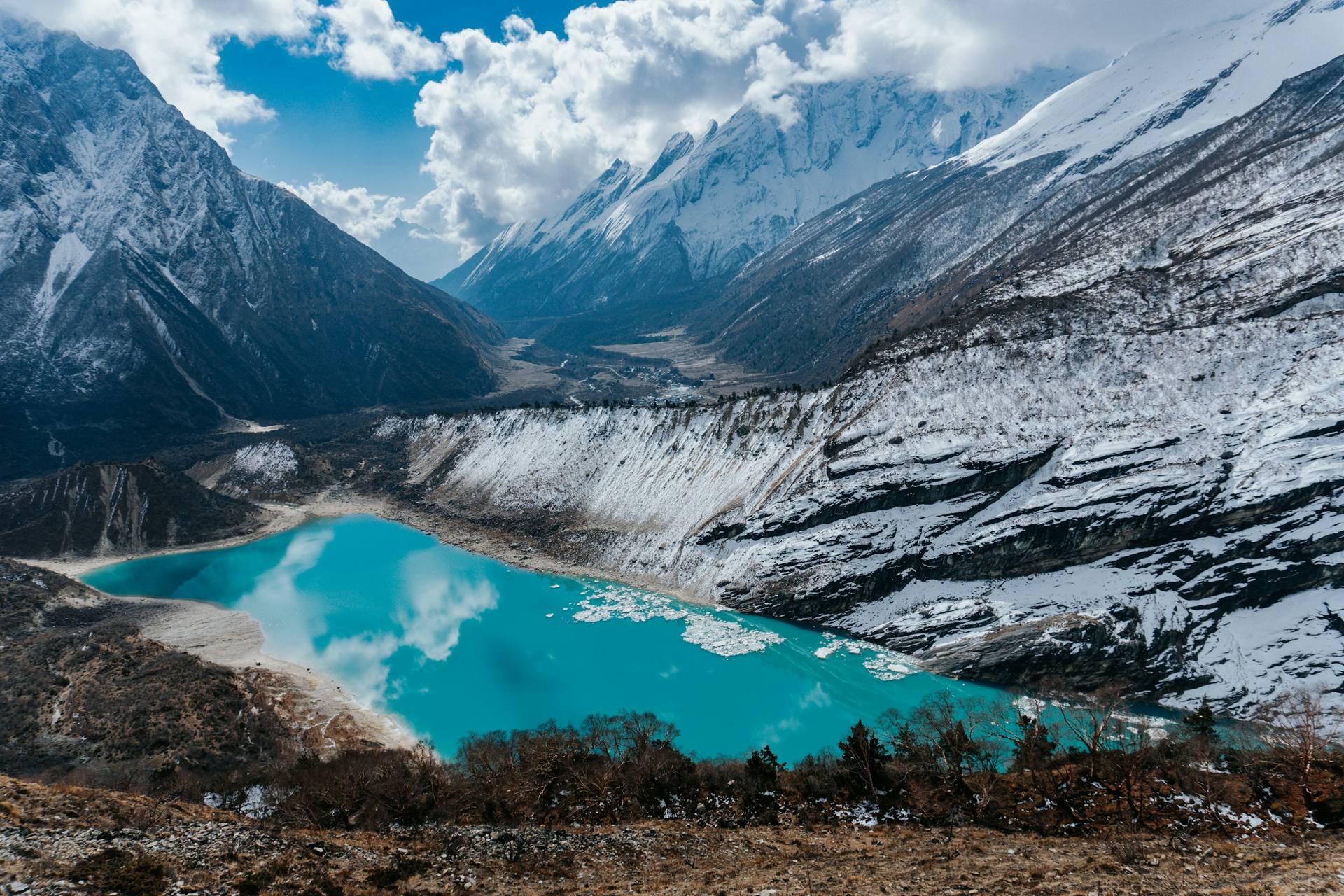
Manaslu Circuit over Larkya La. The Larkya (Larke) La is above 5,100 m. After the heaviest snowfall of the 2024 to 2025 winter in Nubri, a local guide told Rising Nepal: "It is not possible to go Manaslu Circuit Larke Pass Trek with the tourists." Snow blocked it again in late September 2026, leaving hundreds of trekkers waiting in Samagaun and Samdo.
Cho La. This pass between Gokyo and the Everest Base Camp trail is at 5,420 m. In winter it can be fully snowed under. Snow hides the track, trekkers have gone missing after it was covered, and glacier changes have opened crevasses. Only experienced parties with a guide should consider it, and your guide, who knows the route, decides when and how to cross, based on snow and the forecast.
Langtang. The August 2026 flood badly damaged Syabrubesi, the Langtang trailhead. Check the current trail status with us before you book.
Winter route summary
| Route | High point | Winter verdict | Main reason |
|---|---|---|---|
| Ghorepani Poon Hill | 3,210 m | Works | Lower route, light snow at most |
| Everest View trek | 3,880 m | Works | Short, stays below the highest villages |
| Everest Base Camp | 5,364 m base camp; Kala Patthar 5,644.5 m by GPS | Works with care | Dry but very cold; thin lodge staffing |
| Annapurna Base Camp | 4,130 m | Works with care | Avalanche-prone sections after snow |
| Annapurna Circuit | Thorong La 5,416 m | Avoid, or experienced only | Closes for days after snow |
| Manaslu Circuit | Larkya La, above 5,100 m | Avoid | Pass blocked by snow |
| Cho La crossing | 5,420 m | Experts only | Snow hides the trail |
| Langtang | Not given | Check status first | Trailhead flood damage |
How cold is it on Nepal's trails in winter?
Cold, and colder with height. In Kathmandu, December days reach a mean of 20.2 °C. At Lukla, the gateway to Everest, the January mean minimum is −2.9 °C. At the Phortse weather station, 3,810 m, the winter average is −2.1 °C, and at the Everest Base Camp station it is −8.8 °C. Higher trails are colder still.
| Station (height) | December max / min | January max / min | February max / min |
|---|---|---|---|
| Pokhara (827 m) | 21.0 / 8.3 °C | 19.9 / 7.1 °C | 22.7 / 9.7 °C |
| Kathmandu (1,337 m) | 20.2 / 4.2 °C | 19.2 / 2.8 °C | 22.1 / 5.3 °C |
| Jomsom (2,741 m) | 12.3 / −1.2 °C | 10.4 / −1.9 °C | 11.8 / −0.6 °C |
| Lukla (2,786 m) | 11.1 / −0.5 °C | 8.3 / −2.9 °C | 8.9 / −1.6 °C |
| Namche Bazaar (3,450 m; FAO, period not stated) | 7.6 / −7.1 °C | 6.9 / −8.5 °C | 6.4 / −6.5 °C |
| Phortse (3,810 m), winter average | −2.1 °C, Dec to Feb | ||
| Everest Base Camp (5,315 m), winter average | −8.8 °C, Dec to Feb |
Station figures, mean daily maximum and minimum. Trails above these stations are colder. Pokhara, Kathmandu, Jomsom and Lukla are 1991 to 2020 normals (WMO / DHM). Phortse and Base Camp are seasonal averages, day and night together, from December 2019 to November 2022 (Khadka et al. 2026).
"Even in December and January, when winter is at its severest, there are compensating bright sun and brilliant views."
Nepal Tourism Board
Flights and short days in winter
Lukla flights may leave from Kathmandu or Ramechhap depending on the season; check your ticket. In recent years the busy-season flights have run from Manthali airport in Ramechhap, and in late September 2025 Rising Nepal reported that Ramechhap to Lukla flights had restarted for the autumn. In every season they depend on the weather. In winter, fog is a common cause of delays. Fog closed Lukla airport for four days in late February 2017, leaving around 100 foreign tourists stuck there. On the morning of 29 January 2026 fog closed Kathmandu airport itself, with visibility of 500 m at 9:30 a.m. We never promise a flight date, and we build buffer days into every Everest plan.
Daylight is short too. On 21 December 2026 Kathmandu gets about 10 hours 23 minutes of daylight. By 28 February 2027 sunset has moved to 18:03.
What to pack and what to expect
- Real cold at night. A warm sleeping bag and a down jacket matter most. In December 2022 the ACAP Manang chief put it simply: "Although there is no snow, it is very cold. Water is frozen."
- Strong sun. CDC lists cold, low humidity and increased ultraviolet radiation among the hazards of high altitude. Bring sunglasses, sunscreen and a hat, even on freezing days.
- Grip for icy steps. The Poon Hill trail is much of it stone steps, and light snow can fall there in winter. Boots with a good grip help, and light traction spikes are worth packing.
- Festivals. Tamu Lhosar falls on 30 December 2026 and Sonam Lhosar on 7 February 2027. Our Nepal in December guide covers the holidays.
Altitude in the cold
Altitude illness can start once you sleep above about 2,450 m (CDC), and Namche, Base Camp and ABC are all above that. Above 3,000 m, raise your sleeping height by no more than about 500 m a night and take a rest day every 3 to 4 days. Walk slowly, "bistarai, bistarai" (Nepali for "slowly, slowly"), drink enough water and skip alcohol early on. Hot garlic soup is a comforting local habit that helps you drink more, not a proven cure. Know the symptoms: CDC names headache as the main one, often with loss of appetite, dizziness, tiredness or nausea. Never go higher with symptoms, and go down if they get worse. If symptoms are severe, descend at once and get medical help; our guide arranges rescue. Ask your doctor about preventive medicine such as acetazolamide. Read more in how to avoid altitude sickness.
Read next: Annapurna Base Camp in December, where to see snow in Nepal, Ghorepani village guide and the best time to trek in Nepal.
Frequently asked questions
Is December a good month to trek in Nepal?
Yes, for the right route. December is dry and clear, and NTB notes the "bright sun and brilliant views" of winter. It is also cold, with short days. Lower and mid-height treks such as Poon Hill and the Everest View trek suit December well. Routes over high passes, such as the Annapurna Circuit and Manaslu Circuit, can be closed by snow, so choose them only with spare days and flexible plans.
Can you do the Everest Base Camp trek in winter?
Yes. Winter is dry at Base Camp, where the weather station recorded 27 mm of precipitation across December to February, so skies are often clear. It is also the coldest season, with a winter average of −8.8 °C at that station. Many owners of the highest lodges spend winter in Kathmandu and leave staff in charge, so facilities are simpler. Fog can delay Lukla flights, so build in spare days.
Is Annapurna Base Camp open in winter?
Usually, yes. ABC generally stays feasible in winter, but snow can close parts of the trail for a time. The stretches from Hinku Cave to Deurali and from Machhapuchhre Base Camp to ABC are prone to avalanches after heavy snow, and the route was shut for several weeks after the January 2020 avalanche. Go with a guide and be ready to wait or turn back.
Is Thorong La open in December and January?
There is no fixed closing date. Thorong La closes for days at a time after heavy snow and reopens when the trail is cleared. Some trekkers still cross it in early December, but few lodges stay open on the high section and conditions change quickly. If you plan a winter crossing, your guide, who knows the route, decides when and how to cross, based on snow and the forecast.
Do I need a guide for a winter trek in Nepal?
On our trips, yes. A licensed guide walks with you on every trek we run. In winter a guide reads snow on the trail, knows which lodges are open and which stretches to watch, and arranges rescue if anyone falls ill.
Plan your winter trek
If you want the views with the least risk, start with the Ghorepani Poon Hill trek or the Everest View trek with Namche Bazaar. For everything else, browse all our treks and send us your dates on WhatsApp or through the enquiry form. We will tell you straight which routes suit those weeks.
For a year-round view of every route, go back to our guide to the best treks in Nepal.
Last checked: 8 October 2026.