
By Uncover Nepal Team · Checked by our Kathmandu travel team · Last checked 29 October 2026
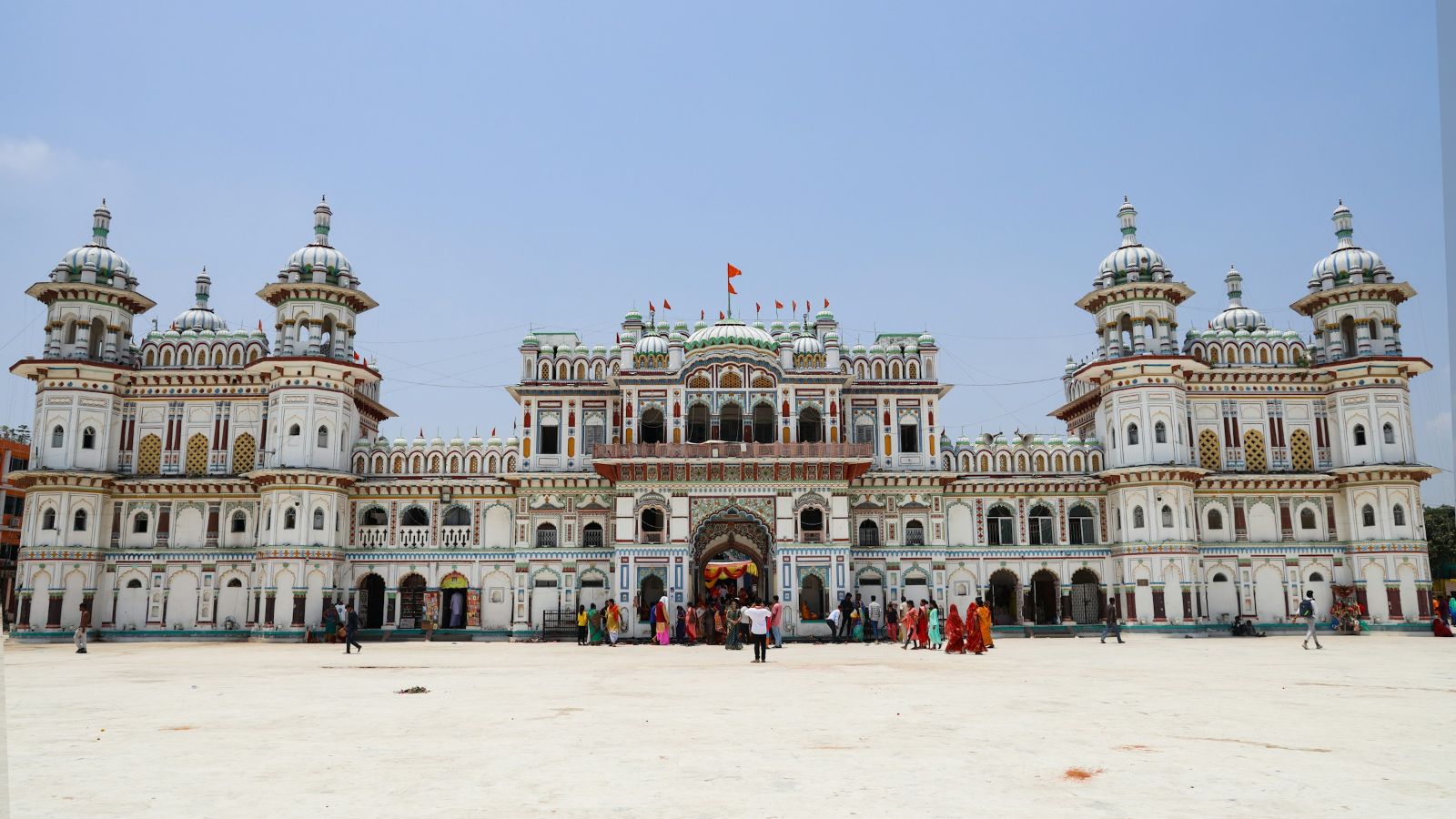
On the flat plain of the eastern Terai, the Janaki Mandir stands in stone and marble. Pilgrims walk down to the sacred ponds to take ritual baths, and women in the villages around paint the walls and floors of their homes with Mithila art for festivals and family ceremonies.
Janakpur, also called Janakpurdham, is a pilgrimage city in the Mithila region of the eastern Terai, which the Ramayana describes as the kingdom of King Janak and the home of Sita. Its main sight is the Janaki Mandir, completed in 1910, with the Vivah Mandap, Ram Mandir and sacred ponds nearby, and Dhanushadham about an hour away by bus.
Janakpur is one stop on the wider circuit in our Nepal pilgrimage guide, which sets it beside the country's other main pilgrimage sites.
Key facts
- Other name
- Janakpurdham (Nepal Tourism Board (NTB), "Janakpur and Vivah Panchami", checked 29 Oct 2026)
- Where it is
- Mithila region of the eastern Terai; headquarters of Dhanusha district; capital of Madhesh Province (NTB; Wikipedia "Janakpur", checked 29 Oct 2026)
- Main temple
- Janaki Mandir, completed in 1910 by Queen Vrisha Bhanu of Tikamgarh (NTB, "Janakpur and Vivah Panchami", checked 29 Oct 2026)
- UNESCO status
- On the Tentative List as "Ram Janaki Temple" since 30 January 2008; not a World Heritage Site (UNESCO World Heritage Centre, Tentative List ref. 5261, checked 29 Oct 2026)
- Legal protection
- Declared a protected monument zone by the Cabinet, reported 18 September 2026 (OnlineKhabar English, 18 Sep 2026, checked 29 Oct 2026)
- Opening hours
- Not published by any official source we found (NTB, Ratopati, OnlineKhabar searched, 29 Oct 2026)
- Entry fee, main temple
- Janakpur is not on NTB's heritage-site entry-fee list; no official ticket found (NTB Heritage Site Entry Fees, checked 29 Oct 2026)
- Main festival
- Vivah Panchami, listed for 14 December 2026 (Mangsir 28, 2083) (Hamro Patro Nepali calendar, checked 29 Oct 2026)
- Flight from Kathmandu
- About 30 minutes, according to Buddha Air; NTB gives 40 minutes (Buddha Air route page; NTB "Janakpur", checked 29 Oct 2026)
- Road from Kathmandu
- About 390 km and around 10 hours, according to NTB (NTB "Janakpur", checked 29 Oct 2026)
- Train
- Jaynagar-Janakpur-Bhangaha service suspended on 31 July 2026; reported running again on the Jaynagar-Janakpur section from 2 August 2026 (OnlineKhabar English, 31 Jul 2026; Prabhat Khabar, 2 Aug 2026, checked 29 Oct 2026)
- Weather
- Hottest month April; wettest July; driest November (DHM 1991 to 2020 normals, Janakpur station, via Wikipedia, checked 29 Oct 2026)
In this guide
- What is Janakpur, and why does it matter to Hindus?
- What is the Janaki Mandir like?
- Which places to visit in Janakpur besides the temple?
- Is Dhanushadham worth the trip out of town?
- Which festivals are worth planning around?
- What is Mithila art, and where can you see it?
- What food should you try in Janakpur?
- How do you get to Janakpur from Kathmandu?
- When is the best time to visit Janakpur?
- How many days do you need in Janakpur?
- How do you handle the heat, the fog and temple etiquette?
- Frequently asked questions
- How can we help you plan a Janakpur visit?
What is Janakpur, and why does it matter to Hindus?
Janakpur matters to Hindus because, in the Ramayana, it was the kingdom of King Janak and the home of his daughter Sita, who is also called Janaki. Today it is the headquarters of Dhanusha district and the capital of Madhesh Province, a working city where temples, sacred ponds and Mithila painting are part of daily life.
The city's formal name is Janakpurdham Sub-metropolitan City. You will see both "Janakpur" and "Janakpurdham" in news reports and official notices; they are the same place. "Dham" marks a holy place of pilgrimage. Mithila, the cultural region, gives its name to the art and food you will meet here.
Janakpur lies on the flat plain of the Terai, so there is no altitude to think about. There is heat, monsoon rain and, in some winters, thick fog.
The legend, as tradition tells it
What follows is legend and belief, not dated history.
- Sita's home. According to the Ramayana, Janakpur was the kingdom of King Janak, and Sita was his daughter. UNESCO's Tentative List entry puts it this way: "According to Vedic literature, the present Ram Janaki Temple in Janakpur is located at the birthplace of Goddess Sita".
- The broken bow. In the story, Ram (also written Rama) broke the divine bow of Shiva to win Sita's hand in marriage. Pilgrims believe the broken pieces fell at Dhanushadham, outside the city, and that a fossilised fragment is still there.
- The wedding. Local tradition holds that the wedding of Ram and Sita took place where the Vivah Mandap now stands, in the grounds of the Janaki Mandir. "Vivah" means wedding and a "mandap" is a wedding pavilion.
- The first Mithila paintings. NTB says the Mithila art tradition is said to have started with the capture of the wedding ceremony of Ram and Sita.
- The pond that never dries. Ganga Sagar is believed never to have dried up, and to hold water from the Seven Seas and all the sacred places.
What the dated record says
The present Janaki Mandir was completed in 1910, according to the Nepal Tourism Board. Its patron was Queen Vrisha Bhanu of Tikamgarh; the Kathmandu Post describes her as "the queen of Tikamgarh in India". We found no reliable year for when building started, so we do not give one.
In 2008 the Department of Archaeology submitted the temple to UNESCO's Tentative List, the list of sites a country intends to nominate, under the title "Ram Janaki Temple", as a cultural site under criteria (ii), (iii) and (vi). A tentative listing is not World Heritage status, and the temple is not a World Heritage Site.
That may change. OnlineKhabar English reported on 18 September 2026 that the Cabinet had declared the Janaki Temple a protected monument zone under the Ancient Monuments Preservation Act, 1956, with its eastern boundary set along the Parikrama Path, the circuit pilgrims walk round the city, and a notice published in the Nepal Gazette. The same report said "Nepal has set a goal of listing the Janaki Temple as a UNESCO World Heritage Site", with the plan in the current fiscal year's budget.
What is the Janaki Mandir like?
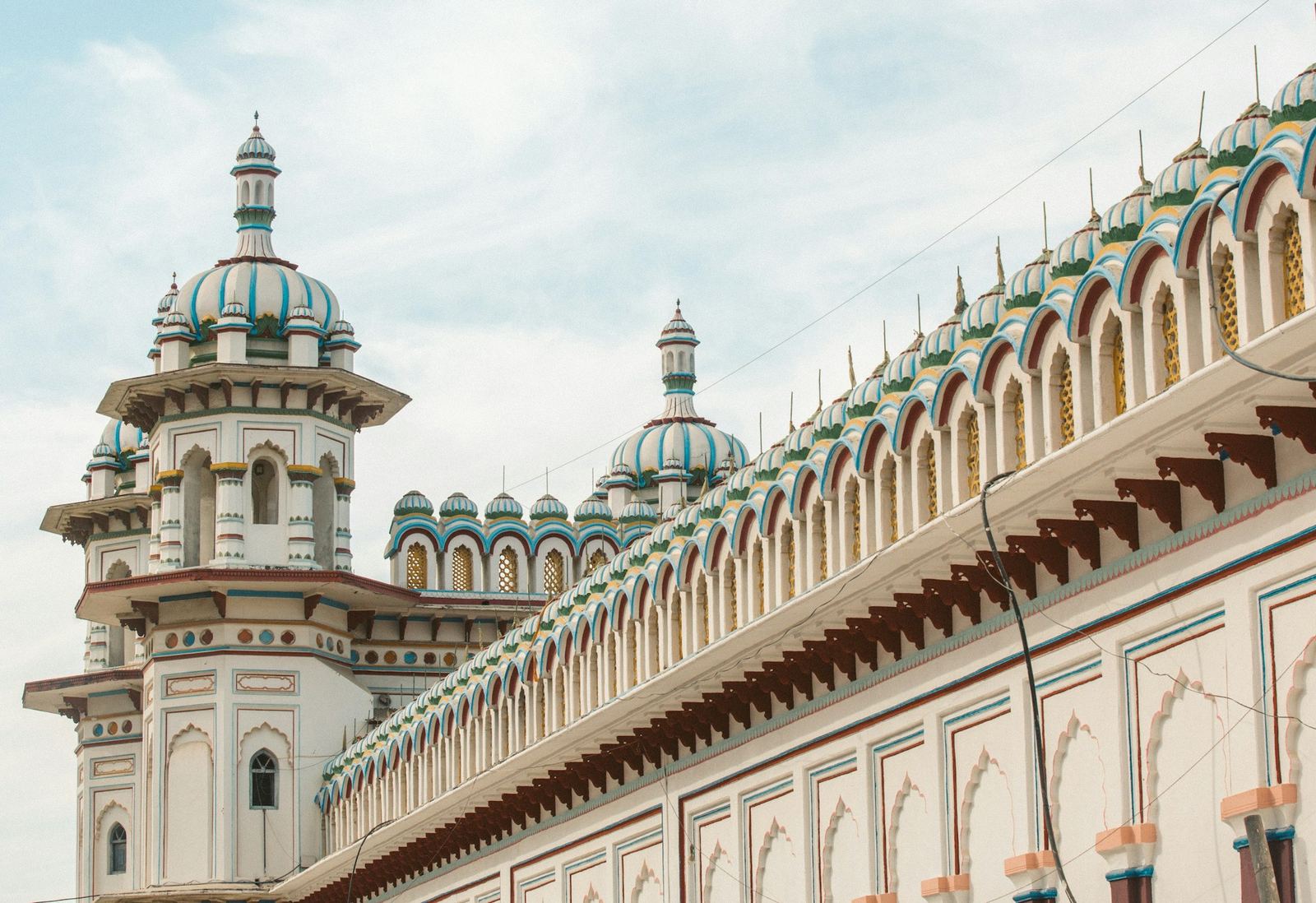
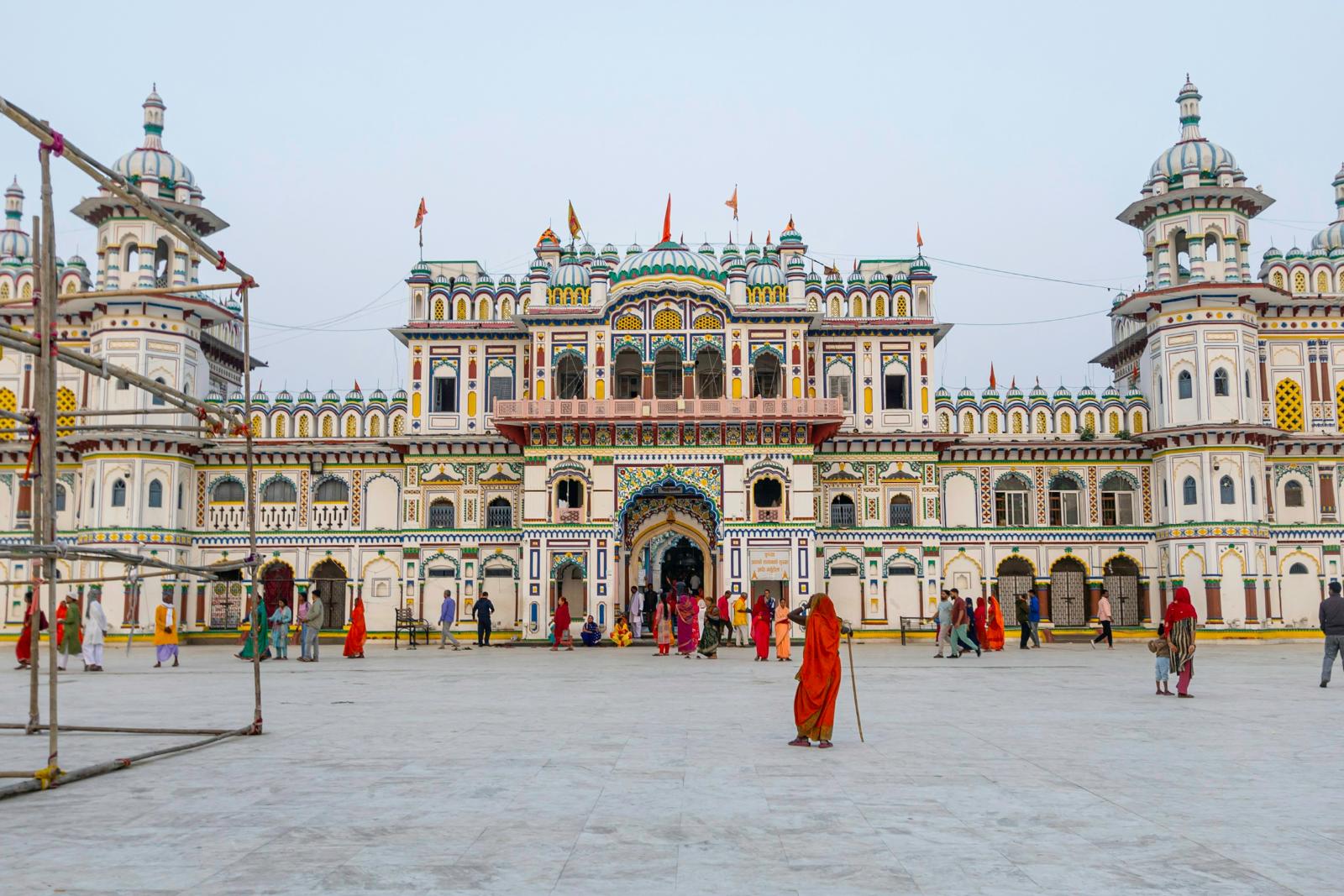
The Janaki Mandir is a large temple of stone and marble, completed in 1910, with a revered image of Sita in its sanctum. NTB describes it as a three-storey building with 60 rooms and calls it the largest temple in Nepal. It is at the heart of Vivah Panchami, when NTB says the temple is decorated with lights, flowers and traditional artwork.
"Mandir" simply means temple, and "Janaki" is Sita's other name, so the Janaki Mandir is Sita's temple.
"The Ram Janaki Temple is one of the most holy places for Hindus."
UNESCO World Heritage Centre, Tentative List entry "Ram Janaki Temple", submitted 30 January 2008
Why is it called the Nau Lakha Mandir?
The temple is popularly known as the Nau Lakha Mandir. NTB explains that the name comes from a traditional belief that building it cost nine lakh gold coins. A lakh is 100,000, so "nau lakha", nine lakh, points to 900,000 coins. Treat it as a story told about the temple, not a costed record; other sources tell the cost differently.
What style is it built in?
NTB describes its style as a mix of Koiri-Hindu, Mughal and Rajput. UNESCO's entry gives a second view, calling it "a blend of classical and neo-classical design with elements of fortification". NTB also offers a useful comparison: the Ram Mandir nearby is pagoda-style, and so it stands apart from the other temples in Janakpur, which generally resemble Mughal architecture.
Is there an entry fee, and when is it open?
We found no official ticket for the main temple. Janakpur is not on NTB's heritage-site entry-fee list at all. That is not the same as saying entry is free everywhere in the complex: the Vivah Mandap and the temple museum have charged tickets (see below).
We could not find published opening hours from any official or dated press source. Ask at the gate, or ask us before you go.
Which places to visit in Janakpur besides the temple?
Beyond the Janaki Mandir, the places to visit in Janakpur are the Vivah Mandap in the temple grounds, the pagoda-style Ram Mandir, the Laxman, Sankat Mochan and Hanuman temples, the sacred ponds led by Ganga Sagar and Dhanush Sagar, and the Mithila art centres where local artists paint.
The Vivah Mandap and the museum are in the temple grounds and the Ram Mandir is in the vicinity, so most things to do in Janakpur fit into short walks.
Vivah Mandap and the temple museum
In the south-west corner of the Janaki Mandir grounds is the Vivah Mandap, built at the site where the marriage of Ram and Sita is said to have taken place. During Vivah Panchami, wedding re-enactments and rituals are performed here.
The temple complex also has a Cultural Museum, inaugurated with Indian assistance; a December 2011 press release from the Consulate General of India in Birgunj said "The Museum has a rich collection of antiques, paintings, arts, handicrafts etc."
Be ready for both to be closed. Ratopati English reported on 15 July 2026 that the Vivah Mandap and the museum, both ticketed, had closed in protest at a Madhesh Province minister's directive for free entry. As of 29 October 2026 we found no report that either has reopened, and no current ticket price. Ask at the gate, or ask us to check for your dates.
Ram Mandir and the smaller temples
The Ram Mandir, in the vicinity of the Janaki Mandir, is the pagoda-style temple described above, and the one to see if you want a different kind of building. We found no sourced date or patron for it.
NTB also names the Laxman Temple, the Sankat Mochan Temple and the Hanuman Temple among the other holy sites of interest.
The sacred ponds
Janakpur has dozens of sacred ponds. NTB says there may be as many as 72 ancient ones. Many have "sagar" in their name, which literally means sea. A "kunda" is a sacred pool.
Three are held above the rest. NTB names Ganga Sagar, Parshuram Kunda and Dhanush Sagar (also written Dhanusha Sagar) as "extremely sacred". Ganga Sagar is the one with the strongest story: it is known as the pond that has never dried up, and is believed to hold water from the Seven Seas and all the sacred places.
The ponds are not scenery: Hindu pilgrims come in large numbers to take ritual baths in them. Early morning is the coolest time to walk the banks. Keep to the edges where people are bathing, and ask before you photograph anyone.
Is Dhanushadham worth the trip out of town?
Yes, if the Ramayana story is why you came. Dhanushadham is 18 km north-east of Janakpurdham, about an hour's drive by bus, and is believed to be where the broken remains of Shiva's bow fell after Ram broke it to win Sita's hand. A fossilised fragment is still believed to be there.
"Dhanush" means bow, so the name is the story: in legend the bow breaks, and the wedding follows at the Vivah Mandap.
It is at its most crowded during the Makar Mela. NTB says that every Sunday in the month of Magh (January to February), a Makar Mela, or fair, takes place, drawing tens of thousands of devotees from Nepal and India. Avoid those Sundays for quiet, or go on one, early, to see a working pilgrimage fair.
Which festivals are worth planning around?
Vivah Panchami, the wedding of Ram and Sita, is the festival NTB pairs with Janakpur. In 2026 Hamro Patro, the widely used Nepali calendar, lists it on Monday 14 December (Mangsir 28, 2083). The Parikrama walk at Holi, Ram Navami and the Makar Mela at Dhanushadham are the others.
| Festival | When | What you see |
|---|---|---|
| Vivah Panchami | Fifth day of the waxing moon in Margashirsha (Mangsir), November or December; 14 December 2026; late November or December in 2027 | Wedding re-enactments at the Vivah Mandap, the temple decorated, royal-style processions of Sita and Ram through the streets |
| Mithila Madhya Parikrama | Starts in the bright half of Falgun, in February or March, and ends in Janakpur at Holi | A 15-day circuit walk through Nepal and India, reported at between 120 and 135 km |
| Antargriha Parikrama and Holi | The city circuit at the end of the Parikrama; Holi the day after | A walk round Janakpur city, about 8 km according to published accounts, then Holi |
| Ram Navami | Rama's birthday, in March or April | Listed among the Janaki Mandir's festivals |
| Makar Mela at Dhanushadham | Every Sunday in Magh (January to February) | A fair drawing tens of thousands of devotees from Nepal and India |
Vivah Panchami: the wedding of Ram and Sita
NTB places Vivah Panchami on the fifth day of the waxing moon in Margashirsha, the month called Mangsir in the Nepali calendar. For 2026, Hamro Patro gives Monday 14 December, and Hindu calendars published in India agree. It is not on the Government of Nepal's 2083 national public-holiday list, so there is no official holiday-list date to point to; check the date again before you book.
Come for it if you want to see the city's story acted out rather than explained. NTB says thousands of pilgrims from Nepal, India and abroad take part. It also falls in fog season (see the practical section).
Mithila Madhya Parikrama and Holi
The Mithila Madhya Parikrama is the pilgrims' walk in the table above; "parikrama" means walking round a sacred place or route. In 2022 the Himalayan Times reported 15 fixed resting places, 13 in Dhanusha and Mahottari districts and two in India.
The walk ends with the Antargriha Parikrama (also written Antaragriha), the circuit of Janakpur city itself, and Holi follows the next day. We have not given exact dates for 2027 because we could not confirm them from a reliable source; plan on February or March.
You do not have to walk all of it to see it. Joining the city circuit near the end, then staying for Holi, gives you the atmosphere without the full walk.
Chhath
Chhath is on the national public-holiday list for 2083, on Kartik 29, which Hamro Patro shows as 15 November 2026. We have not covered its rituals in this guide; ask us if you want to plan a visit around it.
What is Mithila art, and where can you see it?
Mithila art is a painting tradition that NTB says "is usually practiced by women" on the walls and floors of homes during festivals and auspicious ceremonies. It shows natural elements, geometric patterns and village life in natural dyes such as soot, turmeric and indigo, applied with twigs and fingers. You can see artists at work in Mithila art centres in Janakpur.
If you want to take something home from Janakpur, this is it.
Where to see it
- Mithila art centres. NTB says visitors can explore Mithila art centres where local artists create traditional paintings. Ask us or your hotel which are open on the day you visit.
- Janakpur Women's Development Center (JWDC). A women-run NGO based in Kuwa village, outside Janakpur. The British Council's Cultural Protection Fund describes it as a centre that is preserving and reviving Maithil women's paintings and mud art in villages around Janakpur. We could not confirm its visiting days or hours, so call ahead or ask us before you go.
- Village homes, at festival time. Because the paintings are made for festivals and ceremonies, you are most likely to see fresh work around those days. Look, but do not walk into a courtyard without being invited.
Buying a painting
- Buy from the artist or from a centre where the artists work, so you know who made it.
- Ask what it shows. The story behind the picture is half the value.
- Ask whether natural dyes were used if that matters to you.
- Roll paintings on paper rather than folding them.
What food should you try in Janakpur?
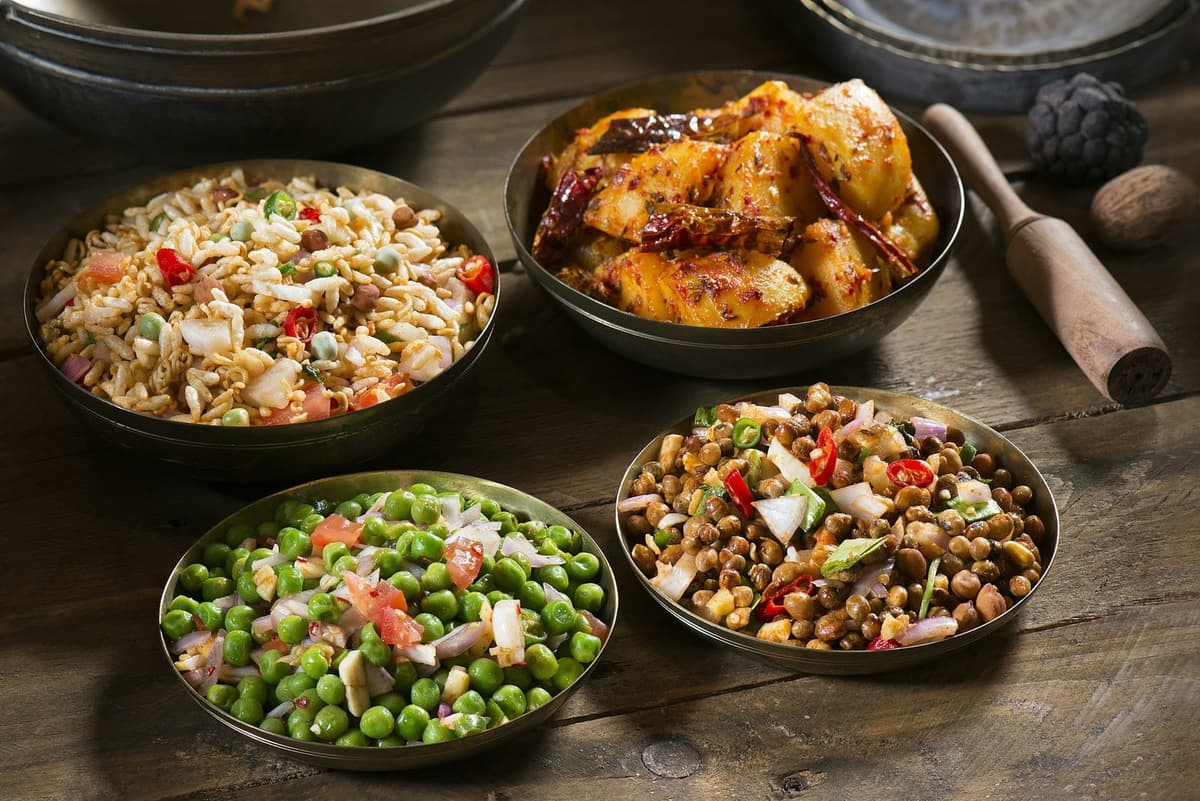
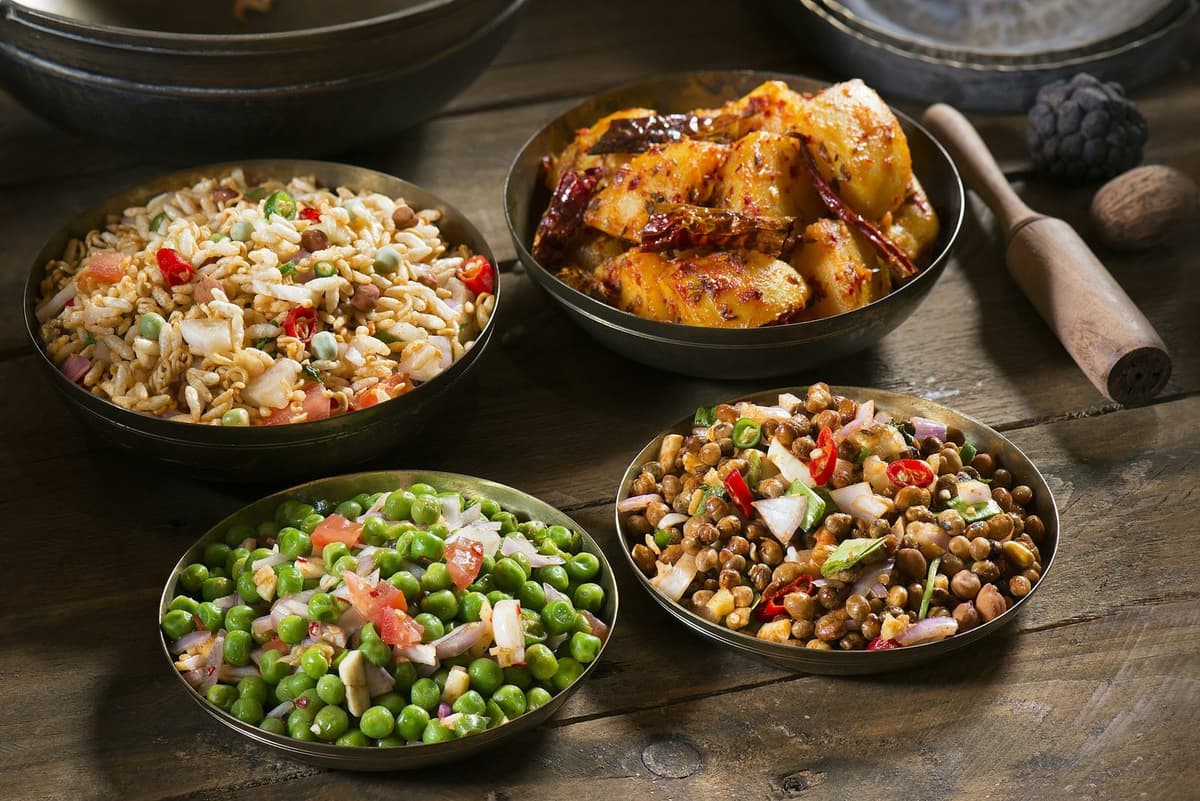
Try Mithila food. The Kathmandu Post lists bagiya, a dish that celebrates the new rice harvest; taruwa, vegetables dipped in a batter of soaked rice; dal pithi, lentil soup cooked with dough; tilauri, a rice-flour cracker; and thakuwa, the sweet without which Mithila cuisine is incomplete.
The same Kathmandu Post piece names more dishes to ask for: parotha, bharuwa, amott (dried mango), daal puri, satuwa, kumhrauri, bidhiya or arkanchan, adhauri and singhara. Thakuwa matters beyond taste; the Post says it holds huge cultural and religious significance.
A "thali" is a set plate with many small portions, and a Mithila thali is the easiest way to try several dishes at once. The Kathmandu Post described one in 2023 that offered fifteen items, among them biriya, dried greens it called the "Gundruk" of Madhesh, plus kadhi bari, alu chokha and taruwa.
Mangoes are the seasonal highlight. NTB says they are in abundance from May to mid-June, and that the Royal household of Thailand still receives mangoes from Janakpur's orchards every year. That season is also the hottest stretch of the year, so eat them in the shade.
We do not give food prices, because we could not find current, sourced ones. If you keep a strict vegetarian or Jain diet, ask at each place how a dish is cooked.
How do you get to Janakpur from Kathmandu?
The quickest way is to fly from Kathmandu to Janakpur Airport, about 30 minutes in the air according to Buddha Air, though NTB gives 40 minutes. By road it is a long day: NTB gives about 390 km and around 10 hours. The rail line from Jaynagar in India was suspended in July 2026 and reported running again in August; check before you rely on it.
| Option | Time or distance | What to know |
|---|---|---|
| Flight, Kathmandu to Janakpur Airport (JKR) | About 30 minutes, according to Buddha Air; NTB gives 40 minutes. Air distance about 123 km, according to Buddha Air | Buddha Air and Yeti Airlines fly the route; check current schedules. Winter fog has delayed and cancelled flights in past years |
| Bus or car, NTB figures | About 390 km and around 10 hours | Buses leave from Central Bus Station, Gongabu, Kathmandu |
| Road via the BP Highway through Sindhuli | No reliable total published | Often quicker than the NTB figure; times depend on traffic and roadworks |
| Train from Jaynagar, India | Service ran over 52 km of a planned 69 km by 2023 | Suspended on 31 July 2026; reported running again on the Jaynagar-Janakpur section from 2 August 2026. We found no published rule on who may ride |
By air
Flying is the quickest option. Janakpur Airport (JKR) is a domestic airport, and schedules change, so check current flights when you book. Ask us if you would like the domestic flight included in a plan.
The catch is winter fog. The Kathmandu Post reported on 4 January 2023 that, the day before, most flights to and from Janakpur, Simara and Rajbiraj were cancelled because of poor visibility caused by thick fog. On 21 December 2025, eKantipur reported that in a cold wave, domestic flights at Terai airports were being delayed by at least 4 to 7 hours. It is not a promise of delays, but keep plans loose in December and January.
By road
The shorter BP Highway through Sindhuli is often quicker: in October 2016 the Himalayan Times reported that the 158 km Bardibas-Sindhuli-Dhulikhel section "has significantly cut travel time to reach the eastern region". Actual times depend on traffic, roadworks and the weather, so we do not quote a single figure for it.
By train from Jaynagar
Nepal Railway Company runs the broad-gauge line from Jaynagar in India to Janakpur; passenger service began on 2 April 2022 over the 35 km Jayanagar-Janakpurdham-Kurtha stretch. In July 2023 the line was extended 17 km from Kurtha to Bhangaha, formerly known as Bijalpura, putting 52 km of the planned 69 km in service.
On 31 July 2026, during a curfew in Janakpurdham, Nepal Railway Company suspended service on the Jaynagar-Janakpur-Bhangaha sector until further notice. Prabhat Khabar, an Indian Hindi-language daily, reported on 2 August 2026 that trains on the Jaynagar-Janakpur section were running again from that day, after the curfew was lifted. We found no later report, and none on the Bhangaha section. We also found no published rule on whether travellers who are not Nepali or Indian may use the train or the crossing at Jaynagar, so we do not suggest it as a way in. Check that trains are running before you plan around them.
Coming from India: what documents you need (information only)
Your entry to Nepal is your own arrangement; we do not arrange visas or international travel. NTB states: "Travelers of Indian nationality do not need visa to enter Nepal". NTB lists accepted ID as a valid national passport or an election card issued by the Election Commission of India; for people above 65, a PAN card, driving licence or ration card with photo and proof of age; and for children below 18, an identity card issued by the school principal. NTB also says the Aadhaar card is not accepted as a travel document.
For other nationalities, NTB lists multiple-entry tourist visa on arrival fees of USD 30 for 15 days, USD 50 for 30 days and USD 125 for 90 days. Rules change, so check the NTB tourist visa page before you travel. Once you are in Nepal, ask us about the domestic flight, road transfer, hotel and a licensed guide.
When is the best time to visit Janakpur?
The best time to visit Janakpur for most people is November to February, the driest months, when the days are warm rather than hot. Vivah Panchami usually falls in this window, in November or December. December and January bring the risk of fog and cold waves, so leave slack in your plans.
NTB sums up the climate this way: "Janakpur lies in the Terai belt where the temperatures soar during summer months making it quite hot while winters are mild and temperate. Monsoons from June to September bring rainfall in this sub-tropical region."
| Month | Mean daily max °C | Mean daily min °C | Rain (mm) | What it means for a visit |
|---|---|---|---|---|
| January | 21.6 | 9.2 | 12.1 | Cool nights, fog risk; bring a warm layer |
| February | 26.2 | 11.7 | 8.3 | Dry and pleasant; Makar Mela Sundays in Magh |
| March | 31.4 | 15.8 | 13.2 | Warming fast; Parikrama and Holi season |
| April | 34.9 | 20.9 | 54.6 | Hottest month by average maximum |
| May | 34.8 | 24.2 | 123.7 | Very hot; mango season begins |
| June | 34.1 | 26.1 | 259.4 | Hot; monsoon arrives |
| July | 32.8 | 26.5 | 437.9 | Wettest month |
| August | 33.0 | 26.7 | 319.1 | Wet and hot |
| September | 32.7 | 25.7 | 179.6 | Monsoon easing |
| October | 31.9 | 22.2 | 54.3 | Drying out; still warm |
| November | 29.5 | 15.7 | 1.4 | Driest month; comfortable days |
| December | 24.6 | 11.0 | 2.8 | Dry, cooler; Vivah Panchami; fog risk |
| Year | 30.6 | 19.6 | 1,466.4 |
Source: Janakpur station, Department of Hydrology and Meteorology (DHM) normals for 1991 to 2020, as reproduced on Wikipedia, checked 29 October 2026. Averages hide real days: in a cold wave on 3 January 2023, Janakpur recorded a maximum of 16 °C and a minimum of 12.6 °C, the Kathmandu Post reported.
For 2026, the monsoon fully withdrew from Nepal on 14 October, according to DHM. April to June is the hottest stretch: come then only if you want the mango season, and plan your days round the heat. June to September is the monsoon, with July the wettest; rain and heat make sightseeing harder, though the temples stay in use.
For the wider picture across the country, from the hills to the mountains, see our guide to the best time to visit Nepal.
How many days do you need in Janakpur?
As a rough guide, allow one full day for the Janaki Mandir, the Vivah Mandap, the Ram Mandir and the main ponds, and about half a day more for Dhanushadham, which NTB puts about an hour away by bus. Add time for Mithila art centres, a festival, or a buffer against winter fog. This is planning advice, not an official figure.
A short visit could look like this:
- Arrival. Fly in or come by road, and spend the evening at the Janaki Mandir, when it is cooler.
- First full day. Walk the ponds early, starting with Ganga Sagar and Dhanush Sagar, then the Ram Mandir and smaller temples. Rest at midday. Return to the Janaki Mandir and, if open, the Vivah Mandap in the late afternoon.
- Half day out. Go to Dhanushadham in the morning, about an hour each way by bus according to NTB, and come back for lunch.
- Mithila art. Add a visit to a Mithila art centre or the Janakpur Women's Development Center in Kuwa, after calling ahead.
- Buffer. In December and January, keep a spare half day before any onward connection, because fog can delay flights.
If you are coming for Vivah Panchami, arrive the day before and allow extra time; the processions and crowds slow everything down.
Janakpur pairs well with other pilgrimage sites. You can combine it with Pashupatinath Temple in Kathmandu, and some go on to Muktinath Temple, which sits at about 3,800 m, according to NTB, so it needs its own altitude planning. Our list of Nepal tourist places will help you decide what else fits.
How do you handle the heat, the fog and temple etiquette?
Plan round the heat from April to June, when average highs are close to 35 °C: go out early and late, and rest at midday. In December and January, allow for fog and cold waves that have delayed flights in past winters. At temples, dress modestly, cover shoulders and knees, and follow what local worshippers do.
Heat: what to do, step by step
- Start early. Temples, ponds and Dhanushadham are all easier before the sun is high.
- Rest from late morning to mid-afternoon. Come out again for the evening.
- Drink often. Carry water and refill it; drink before you feel thirsty.
- Cover up lightly. Loose cotton over shoulders and knees, a hat and sunscreen keep the sun off, and the same clothes suit the temples.
- Stop if anyone feels unwell. If someone in your group feels faint or ill in the heat, get them into shade, cool them with water and get medical help. Do not push on to the next temple.
Winter fog and cold waves: what to do
The Kathmandu Post defines it plainly: "Cold wave is a weather condition with a rapid fall in temperature due to a lack of sunshine, thick fog and cold wind." Winters in Janakpur are mild on average, but cold waves and fog do happen.
- Do not plan a tight connection. Delays of hours have been reported in past winters, so keep spare time before anything you cannot miss in Kathmandu.
- Have a road plan. If flights are grounded, a car by road is the fallback, a long day on the NTB figures.
- Pack a warm layer. January nights average about 9 °C, and cold-wave days stay cool.
- Check before you leave for the airport. Ask the airline, or ask us, if your flight is operating before you set off.
Dress and etiquette at temples
- Dress modestly. Cover shoulders and knees. It is respectful and, in this climate, practical.
- Follow local worshippers. If shoes are lined up outside a doorway, take yours off there. If people queue, queue.
- Photographs. Ask before you photograph people, and put the camera away if you see a sign or someone asks you not to. Be most careful at the ponds, where people are bathing.
- Speak softly in the sanctum, and step aside for people who are praying.
Festival crowds
At Vivah Panchami, processions fill the streets. At the Makar Mela at Dhanushadham, NTB counts devotees in the tens of thousands. Keep valuables in a zipped inner pocket, agree a meeting point with your group in case you are separated, and carry water.
Local conditions
Check local news before you travel, and ask us about current conditions in Janakpur when you plan.
For money, phones, health and other practical matters that apply across the country, see our Nepal travel guide.
Frequently asked questions
What is there to see in Janakpur, and when is Vivah Panchami?
Janakpur's main sights are the Janaki Mandir, the Vivah Mandap, the pagoda-style Ram Mandir, the sacred ponds such as Ganga Sagar, Mithila art centres and, about an hour away by bus, Dhanushadham. Vivah Panchami falls in November or December; in 2026 Hamro Patro lists it on Monday 14 December (Mangsir 28, 2083). Check the date again before you book.
Which are the main Hindu pilgrimage sites in Nepal?
NTB's list of pilgrimage sites includes these Hindu sites, among others: Pashupatinath in Kathmandu, Muktinath in Mustang, the Janaki Mandir in Janakpur, Manakamana in Gorkha, Gosainkunda in Rasuwa, Pathivara in Taplejung, Barah Kshetra in Sunsari and Devghat in Chitwan. Our Nepal pilgrimage guide explains how they fit together.
How do I get to Janakpur from Kathmandu?
The quickest way is to fly. Buddha Air and Yeti Airlines fly from Kathmandu to Janakpur Airport, about 30 minutes in the air according to Buddha Air, while NTB gives 40 minutes. By road, NTB gives about 390 km and around 10 hours, with buses from Gongabu. In December and January, fog has delayed flights in past winters, so keep your plans flexible.
Is there an entry fee or fixed opening time at Janaki Mandir?
We found no official ticket for the main temple, and Janakpur is not on NTB's heritage-site entry-fee list. We also found no published opening hours from any official source. The Vivah Mandap and museum in the grounds have charged tickets, and were reported closed in July 2026; we found no report that they have reopened. Ask at the gate, or ask us to check for your dates.
When is the best time to visit Janakpur?
November to February suits most visitors: these are the driest months, with November averaging only 1.4 mm of rain and December highs of 24.6 °C. Vivah Panchami usually falls in this window. April to June is the hottest stretch, with average highs close to 35 °C, and June to September brings the monsoon.
How many days do I need in Janakpur?
As a rough guide, allow one full day for the city's temples and main ponds and about half a day more for Dhanushadham, which NTB puts about an hour away by bus. In December or January, add a buffer day, because fog can delay flights. This is planning advice, not an official figure.
How can we help you plan a Janakpur visit?
We have no fixed Janakpur trip page yet, so ask us to plan it. Tell us your dates and what you want to see, and ask about the domestic flight or road transfer, a hotel, a licensed guide, and Dhanushadham or a Mithila art centre. Before you travel, check what this guide cannot promise, such as whether the Vivah Mandap is open and the Vivah Panchami date; ask us about both for your dates. You can see our temple and city trips in our cultural heritage tours, and read how Janakpur fits with other sacred sites in our Nepal pilgrimage guide. Ask us on WhatsApp or through the enquiry form with your dates and who is travelling.