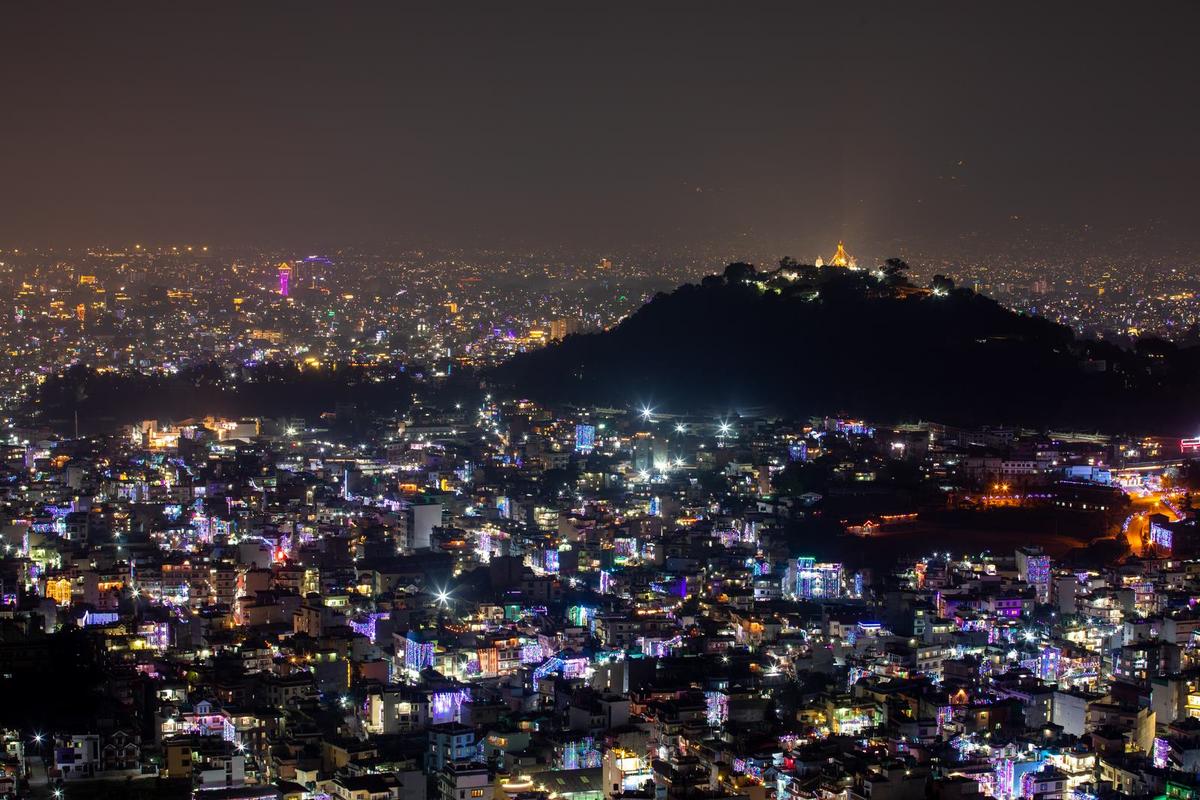
Just after sunset on the Bagmati, the bells start at Pashupatinath. Priests lift brass lamps on the riverbank steps, the chant carries over the water and families squeeze onto the ghats to watch. Across town, Thamel is ordering its first momos of the evening. Old ritual and ordinary life in the same city is most of what Nepal does well.
By Uncover Nepal Guide · Checked by our Kathmandu travel team · Updated 15 Nov 2026
The top things to do in Nepal sit in a few regions: temple squares in the Kathmandu Valley, the lake and paragliding in Pokhara, jeep safaris in Chitwan, monasteries in Lumbini, treks and mountain flights in the Himalaya, and rafting in the river gorges. Below is each region in turn, with fees and dates checked in November 2026.
Still choosing where to go? Start with our guide to Nepal's tourist places, then come back here for what to do once you are there.
In this guide
- Top things to do in Nepal at a glance
- Kathmandu Valley: squares, stupas and the evening aarti
- Pokhara: the lake, the viewpoints and the sky
- Chitwan: jeep safaris, canoes and Tharu villages
- Lumbini: the Buddha's birthplace
- Treks and mountain views
- Adventure sports: rafting, bungee and canyoning
- Mustang and Muktinath
- Festivals in the coming months
- Food to try
- Practical tips: getting around, entry and weather
- Frequently asked questions
- Plan your trip with us
Key facts
- World Heritage properties
- Four: Kathmandu Valley and Sagarmatha National Park (1979), Chitwan National Park (1984), Lumbini (1997) (UNESCO World Heritage List; checked 16 November 2026)
- Visitors in 2025
- 1,158,459 foreign visitors, 292,438 of them from India (Nepal Tourism Board figures, The Himalayan Times, 2 January 2026; checked 16 November 2026)
- Clearest skies
- October and November; spring and autumn are the best seasons (Nepal Tourism Board, Climate; checked 16 November 2026)
- Kathmandu to Pokhara
- Most of a day by road, often six to nine hours with traffic and roadworks; about 30 minutes by air (our Kathmandu team; checked 16 November 2026)
- Pokhara to Jomsom flights
- Regular flights suspended since October 2026; no restart announced (Kantipur, 19 October 2026; checked 16 November 2026)
Top things to do in Nepal at a glance
Months follow the Nepal Tourism Board unless another source is named. Where nobody publishes a reliable duration, we say so.
Top things to do in Nepal: where, when and how long (checked 16 November 2026)
| Activity | Where | Best months | How long | Read more |
|---|---|---|---|---|
| Evening aarti | Pashupatinath, Kathmandu | Every evening | An evening, after sunset | Kathmandu Valley |
| Heritage squares | Kathmandu, Patan, Bhaktapur | All year | At your own pace | Kathmandu Valley |
| Sarangkot sunrise | Pokhara | October, November | Up to 30 minutes' drive from Lakeside | Pokhara |
| Tandem paragliding | Pokhara | Spring, autumn | Ask the operator | Pokhara |
| Jeep safari, canoe ride | Chitwan National Park | October to March | One permit per park day | Chitwan |
| Mountain flight | From Kathmandu | October, November | About an hour | Treks |
| Short trek (Poon Hill) | Annapurna region | Spring, autumn | Several days | Treks |
| Rafting | Trishuli, Upper Seti | After the monsoon | Ask us what is running | Adventure |
| Canyoning | Jalbire, Chitwan district | September to June (Nepal Traveller) | About 3 to 4 hours' drive from Kathmandu | Adventure |
| Muktinath | Mustang | Spring, autumn | Pokhara to Jomsom about 7 to 10 hours by road (operators) | Mustang |
Kathmandu Valley: squares, stupas and the evening aarti
Most trips start in the Kathmandu Valley. It holds three old royal cities, Kathmandu, Patan and Bhaktapur, each with a durbar (palace) square, plus the stupas of Swayambhunath and Boudhanath and the temple complex of Pashupatinath. Our guide to places to visit in Kathmandu goes site by site.
Walk the three durbar squares
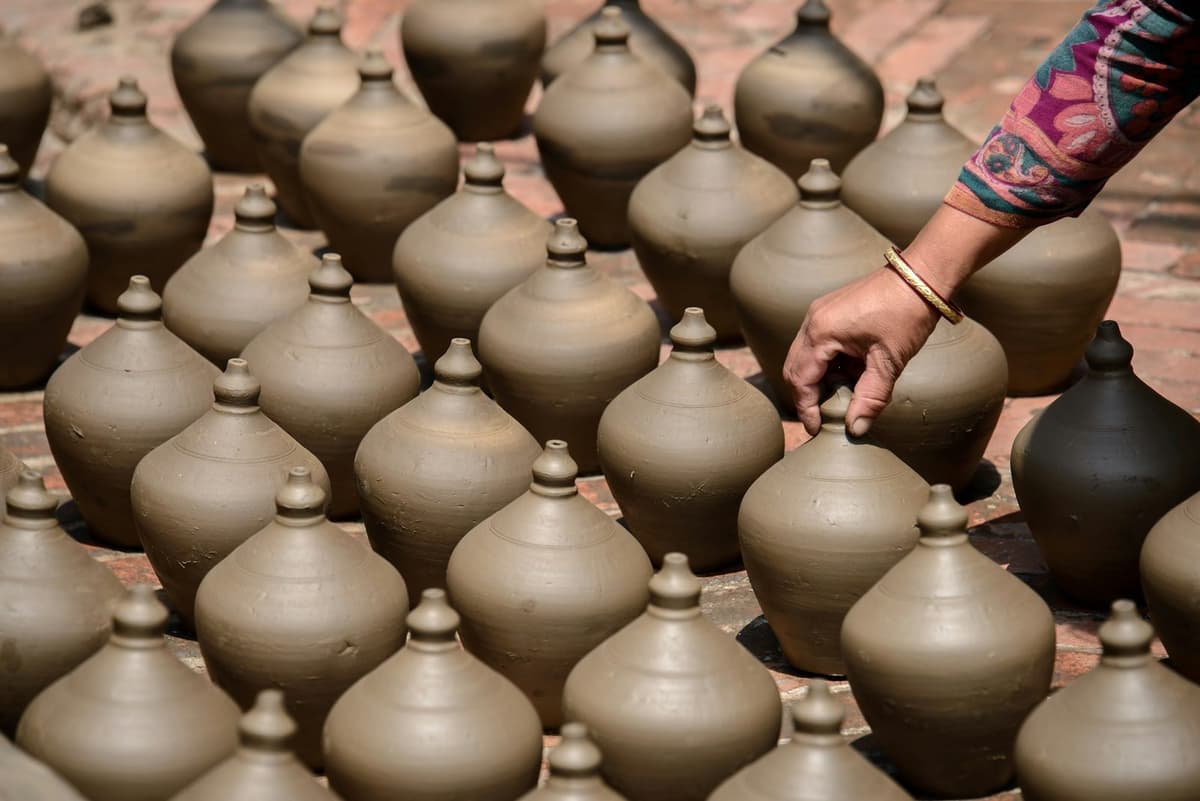
Kathmandu Durbar Square (Hanuman Dhoka) charges NPR 1,000, or NPR 500 for SAARC visitors; Nepalis enter free. Patan is the same. Bhaktapur is a whole old town, and the municipality has charged NPR 2,000 for foreign visitors and NPR 500 for SAARC and Chinese visitors since 17 July 2025. In Bhaktapur's Pottery Square you can watch potters at work. Pottery and cooking classes are run privately; ask us.
Circle Swayambhunath and Boudhanath
Swayambhunath, on its hill west of the city, charges NPR 200, or NPR 50 for SAARC visitors. Boudhanath was last reported to charge NPR 400, or NPR 100 for SAARC visitors (2022). At Boudha, join the kora, the clockwise walk round the stupa, and turn the prayer wheels as you pass.
Watch the aarti at Pashupatinath
Pashupatinath charges foreign visitors NPR 1,000; Indian and Nepali visitors enter free. Every evening after sunset, priests perform the aarti, a lamp ceremony, on the Bagmati banks. The Kathmandu Post reports that the western door opens from five o'clock and that timings "may vary slightly depending on the season and weather". Keep cameras down near the cremation ghats.
Ride the cable car or hike the rim
The Chandragiri cable car climbs 2.5 km from Thankot to a top station at 2,540 m (8,333 ft) (The Kathmandu Post). The operator gives the ride as about 10 minutes, and its two-way fares on 16 November 2026 were USD 23 for foreigners, INR 950 for SAARC visitors and NPR 850 for Nepalis. To walk instead, Shivapuri-Nagarjun National Park on the northern rim charges NPR 1,000, or NPR 600 for SAARC visitors (NTB). Our Kathmandu day trips guide lays out these and more.
Pokhara: the lake, the viewpoints and the sky
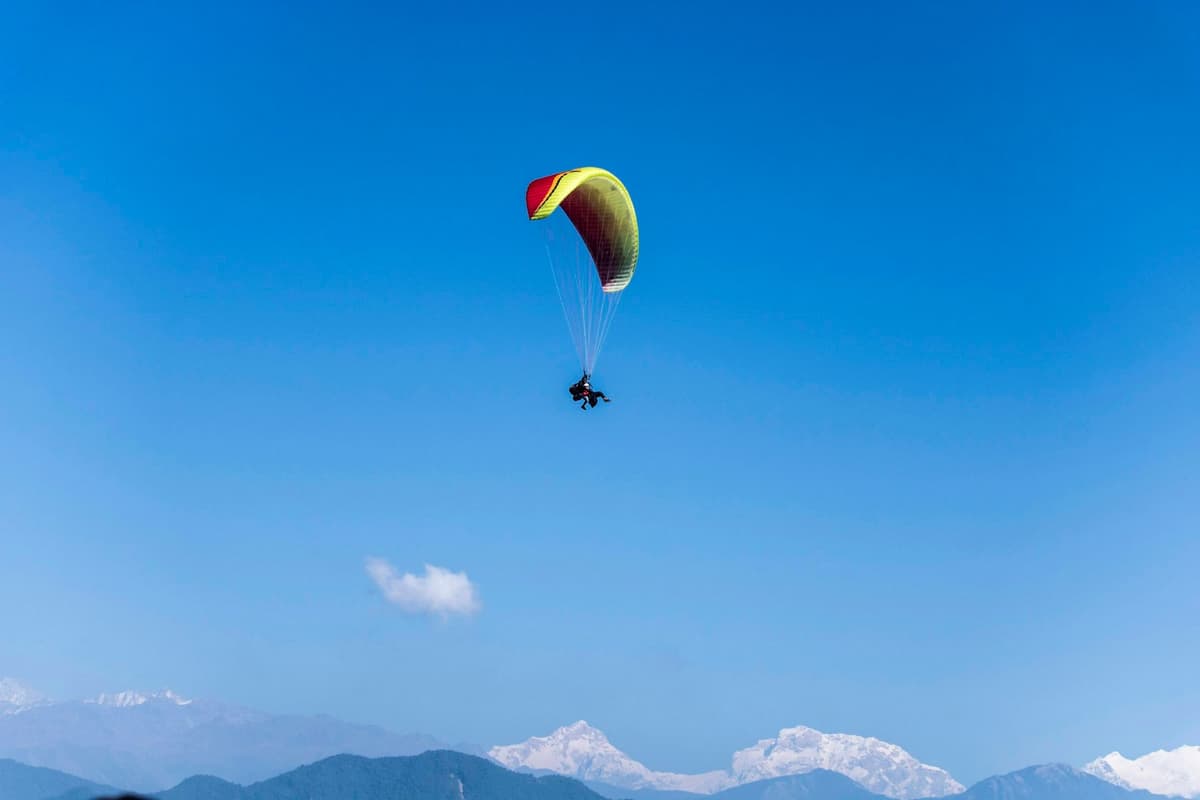
Pokhara, the lakeside city west of Kathmandu at about 820 m (2,690 ft), is where Nepal slows down: boats on Phewa Lake, an early drive up to Sarangkot, a paraglider's view of the Annapurnas. Our list of things to do in Pokhara covers the caves, Davis Falls, the Mountain Museum and more.
Paddle on Phewa Lake
A boat on Phewa is the classic Pokhara afternoon, and the rules have tightened after accidents. Life jackets are compulsory, and under a notice of 25 June 2026:
"All water tourism activities must stop after 6 pm every day."
The Kathmandu Post, "Ignored safety rules drive up deadly accidents in Phewa Lake", 2 August 2026, checked 16 November 2026
A November notice also bars boats in strong wind, rain or lightning, and children under 16 may not operate kayaks or surf boards without a parent (Republica, 4 November 2026).
Sunrise at Sarangkot
Sarangkot, at 1,595 m (5,233 ft), is 11.3 km by road from Lakeside, and NTB says the drive takes 30 minutes at most. At dawn the line runs from Dhaulagiri (8,167 m) in the west to Machhapuchhre, Annapurna II and Lamjung. Cloud can hide all of it, and nobody can promise you the view.
Paragliding, the zipline and the Peace Pagoda
Paragliders take off from Sarangkot and Toripani and land at Khapaudi (Himal Press, 22 May 2025). Prices and flight times vary, so compare companies. The zipline also starts at Sarangkot and runs about 1.8 km down into the valley, with a vertical drop of about 600 m (Lonely Planet; Nepali Times). For something slower, the World Peace Pagoda stands on a hilltop on the southern edge of the lake, dome-shaped, with four Buddha images facing the four directions (Pokhara Metropolitan City).
Chitwan: jeep safaris, canoes and Tharu villages
Chitwan National Park, in the lowland Terai, was declared in 1973 as Nepal's first national park and covers 952.63 km². UNESCO listed it as a natural World Heritage Site in 1984. NTB counts 56 mammal species, including the one-horned rhino and the Bengal tiger. Our guide to places to visit in Chitwan covers it in detail.
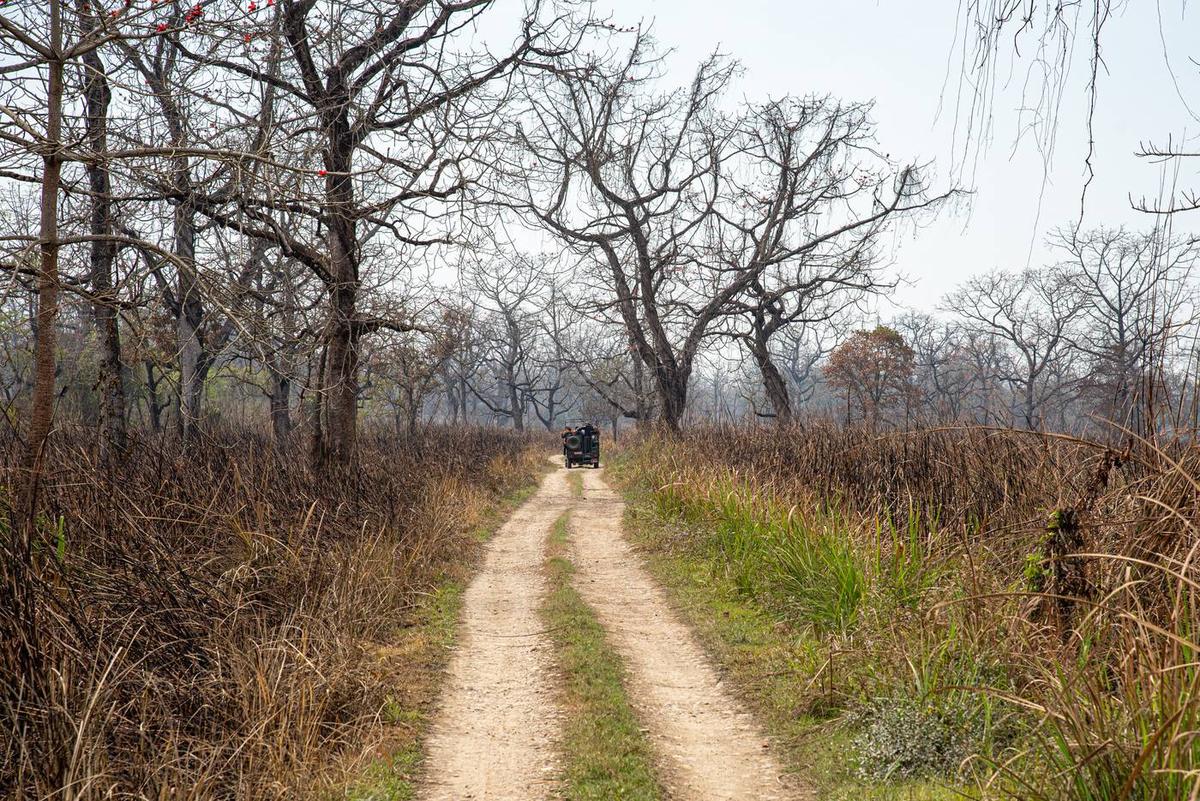
- Jeep safari. Safaris inside the park pause in the monsoon and restarted on 9 October 2026 (Kantipur). In the monsoon they continue in the buffer zone and community forests (The Rising Nepal).
- Canoe ride. Canoes drift on the Rapti and Narayani rivers (DNPWC). The slow pace is the point.
- Jungle walk. Walks go with park-certified guides, and nobody walks in the park between sunset and sunrise (DNPWC).
- Tharu culture. The Tharu people live across the Terai. Village visits and evening stick dance programmes are part of a stay (DNPWC; NTB).
Entry is NPR 2,000 for foreigners, NPR 1,000 for SAARC visitors and NPR 150 for Nepalis, under-10s free, per person per entry (NTB); in practice you buy one permit for each park day. The main season is October to March; April to June is hot and July to September rainy (NTB). Chitwan is 146 km by road from Kathmandu, and NTB puts Bharatpur airport 20 minutes away by air.
Lumbini: the Buddha's birthplace
Lumbini, in the western Terai, is the Buddha's birthplace and a World Heritage property since 1997. Start with our Lumbini guide for the layout.
The Maya Devi Temple carries a conservation fee per day: NPR 1,000 for other nationals, NPR 700 for SAARC and Myanmar visitors, NPR 80 for Indian visitors and NPR 20 for Nepalis (Lumbini Development Trust, updated 28 September 2026). These rates have applied since Baisakh 1, 2083 (14 April 2026), up from NPR 700 for third-country visitors (Kantipur). Pay in cash, by QR code or online.
The monastic zone is the other reason to come. NTB describes it as split by a central canal, with the East Zone for the Theravada tradition and the West Zone for Mahayana and Vajrayana, and around 32 monasteries and meditation centres built or under construction. Each has its own architecture. The master plan, drawn up by Kenzo Tange in 1978, is still unfinished (The Kathmandu Post, 2 May 2026).
Treks and mountain views
You can see the Himalaya from the air, on a short walk to a viewpoint, or on a full trek to a base camp or a high pass. Our guide to the best treks in Nepal compares the routes.
The mountain flight
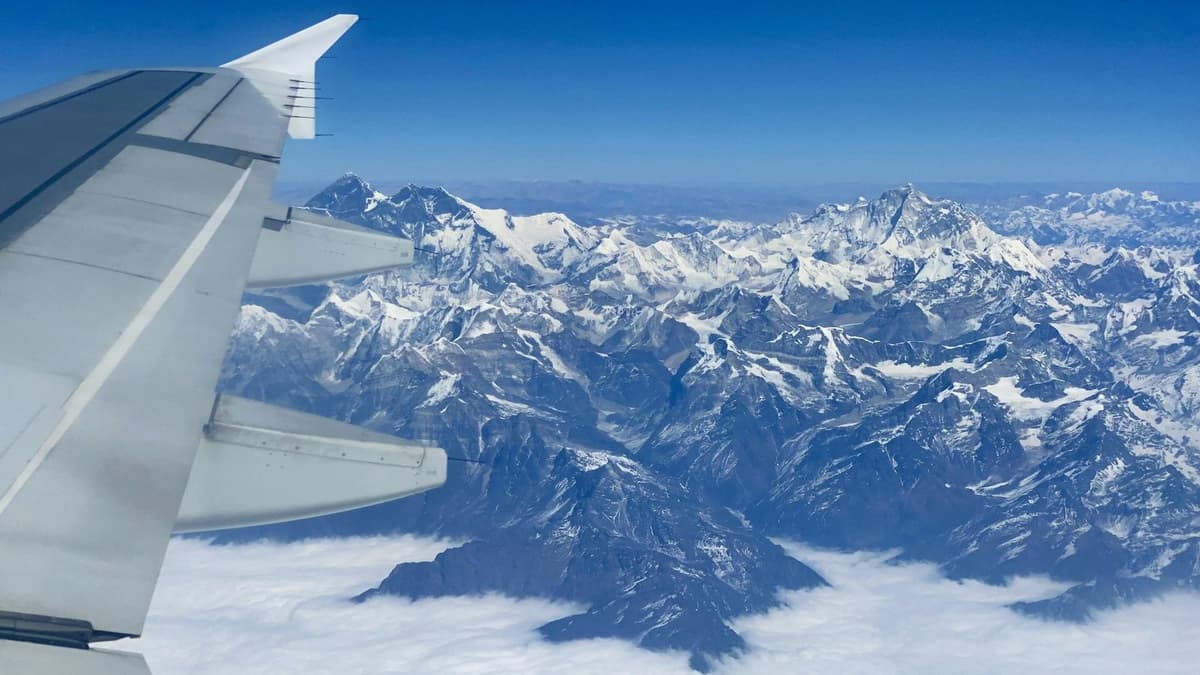
Early-morning flights leave Kathmandu and fly along the range towards Everest and back. Buddha Air says the flight "usually lasts between 50 minutes up to an hour"; Yeti Airlines also flies them. Fares were about USD 165 to 240 per foreign passenger in spring 2026 (market range, not ours), and fuel surcharges rose during the year, so check. Flights wait for the weather, so keep a spare morning.
Short and long treks
For a first trek, Poon Hill in the Annapurna foothills is the usual answer, with its high point at 3,210 m (10,531 ft). You walk on stone steps through villages and forest and sleep in teahouses, the family-run lodges of the trails. See our easy treks in Nepal.
The big names go much higher. Annapurna Base Camp is at 4,130 m (13,550 ft), Everest Base Camp at 5,364 m (17,598 ft), and the Annapurna Circuit crosses the Thorong La at 5,416 m (17,769 ft) (ACAP). Everest treks usually start with a flight to Lukla, at 2,846 m (9,337 ft) (CAAN). In the busiest months Lukla flights leave from Ramechhap (Manthali), not Kathmandu, and every Lukla flight depends on the weather.
Permits and the guide rule
Annapurna treks need the ACAP permit: NPR 3,000 for foreigners or NPR 1,000 for SAARC visitors including Indians (NTB), and double if bought at a check post (NTNC e-permit portal). We arrange the ACAP permit on our trips. The Everest region needs the Sagarmatha National Park permit, NPR 3,000 for foreigners or NPR 1,500 for SAARC visitors plus any applicable VAT (NTB), and the Khumbu municipality's Trek-Card, NPR 3,000 for foreigners or NPR 2,000 for SAARC and Chinese visitors.
The Nepal Tourism Board says that since 31 March 2023, trekkers on listed routes in specific protected areas, including the main Annapurna and Everest routes, must go with a licensed guide. The Everest municipality disagreed at the time:
"We have not restricted solo trekkers in the Everest area."
Mohan Prasad Chapagain, chief administrative officer, Khumbu Pasang Lhamu Rural Municipality, The Kathmandu Post, 30 March 2023, checked 16 November 2026
Its notice called a guide highly recommended, not mandatory. For us it is simple: a licensed guide walks with you on every trek we run.
Altitude, in brief
Altitude illness can affect anyone from about 2,450 m (8,000 ft), says the US CDC, and all the treks above go higher than that.
- Go up slowly: above 3,000 m, no more than about 500 m a night, with a rest day every 3 to 4 days. Walk slowly too: "bistarai, bistarai", slowly, slowly.
- Drink water and avoid alcohol early on. Garlic soup is a comforting local tradition that helps you drink more, not a proven cure.
- Know the symptoms: headache, nausea, tiredness, poor sleep. Never go higher with symptoms; go down if they get worse.
- Ask your doctor before the trip about preventive medicine such as acetazolamide.
- Confusion, breathlessness at rest or unsteady walking mean descend at once and get medical help. Our team arranges a rescue if needed.
More in our guide to how to avoid altitude sickness.
Adventure sports: rafting, bungee and canyoning
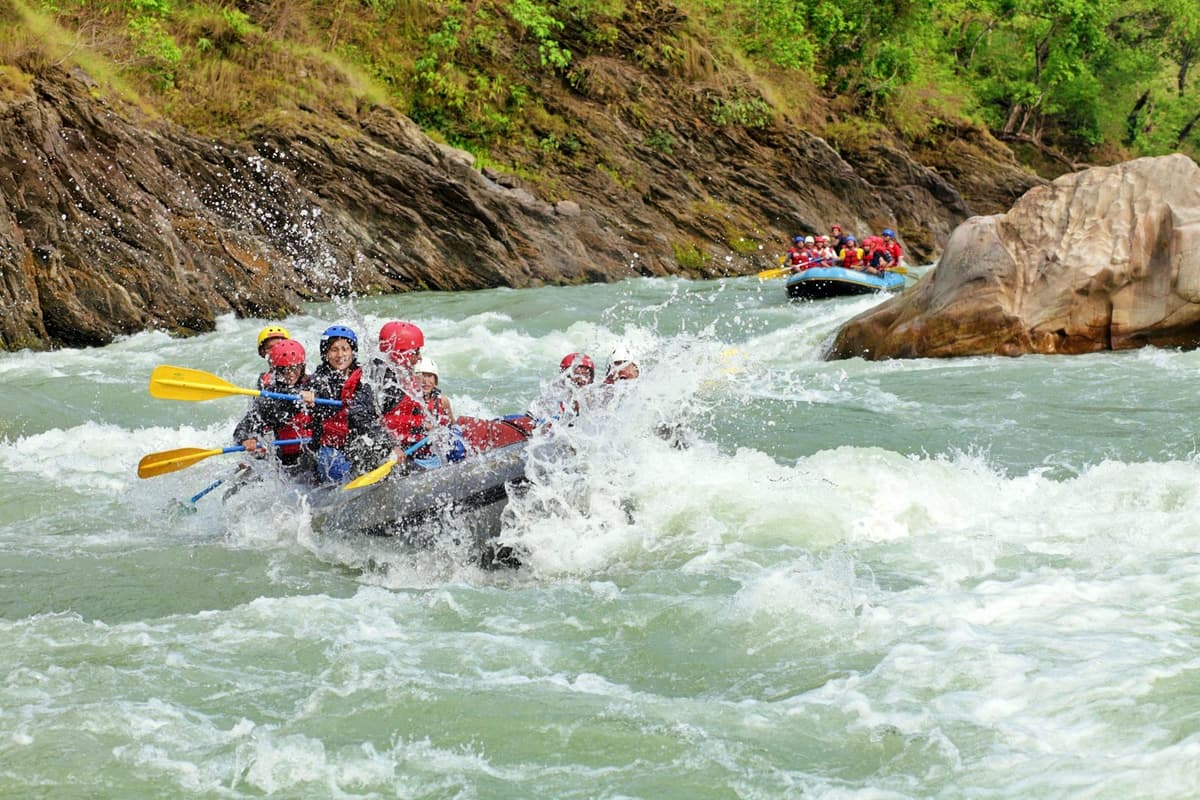
Nepal's rivers fall hard out of the mountains, and that drop powers its adventure sports. All three happen in river gorges, and conditions change after heavy rain.
Rafting
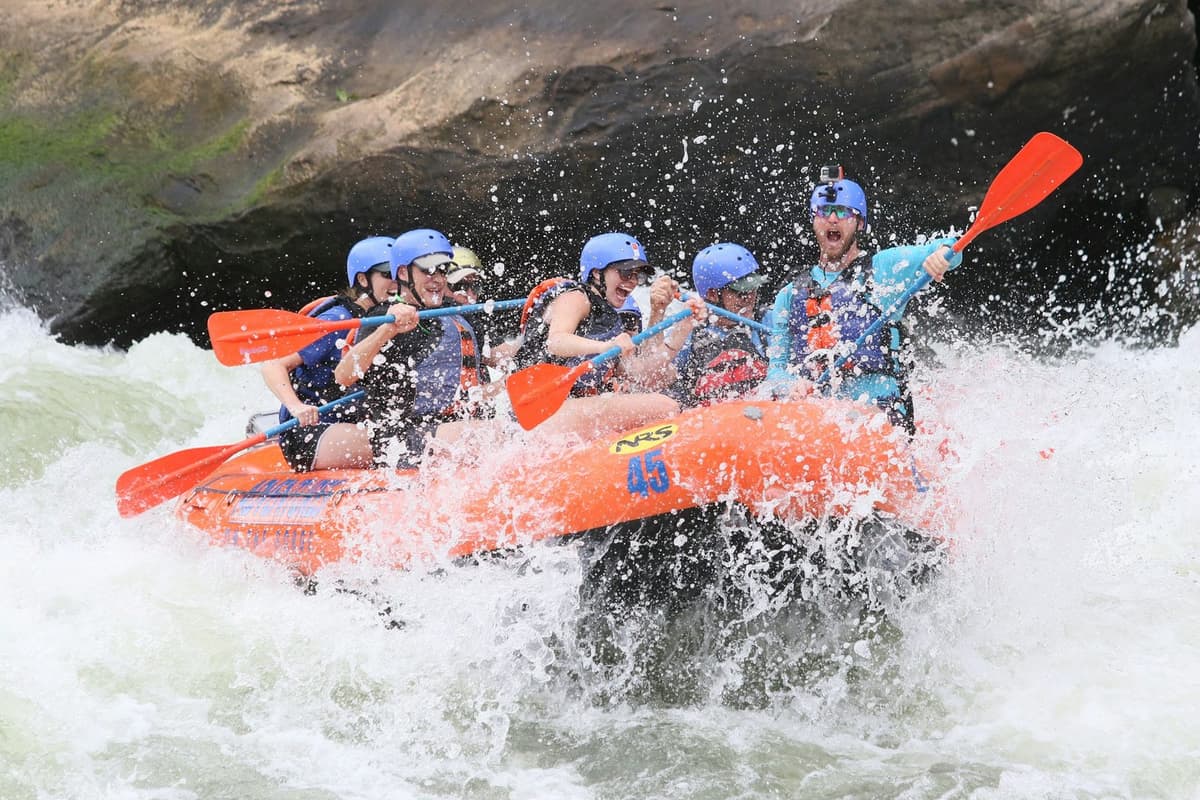
The Trishuli, beside the Kathmandu to Pokhara road, is the usual first river, and this year it comes with a caveat. On 26 August 2026 a flood came down from Rasuwa into the Trishuli, with damage reported down to Galchhi, Gajuri and towards Mugling (OnlineKhabar). Rafting association NARA has declared the Trishuli open again and some companies are running trips, while others have kept their trips on hold (November 2026). Ask us for the latest before you book. Near Pokhara, an operator's update of 2 November 2026 lists the Upper Seti as open again. Our Trishuli River guide has the background.
Bungee jumping
The older jump is at The Last Resort, about 100 km from Kathmandu on the road to the Tibet border, off a bridge 160 m above the Bhote Koshi (Nepali Times, 2004). The newer one, running since November 2020, is at Kushma in Parbat, on the road from Pokhara towards Beni.
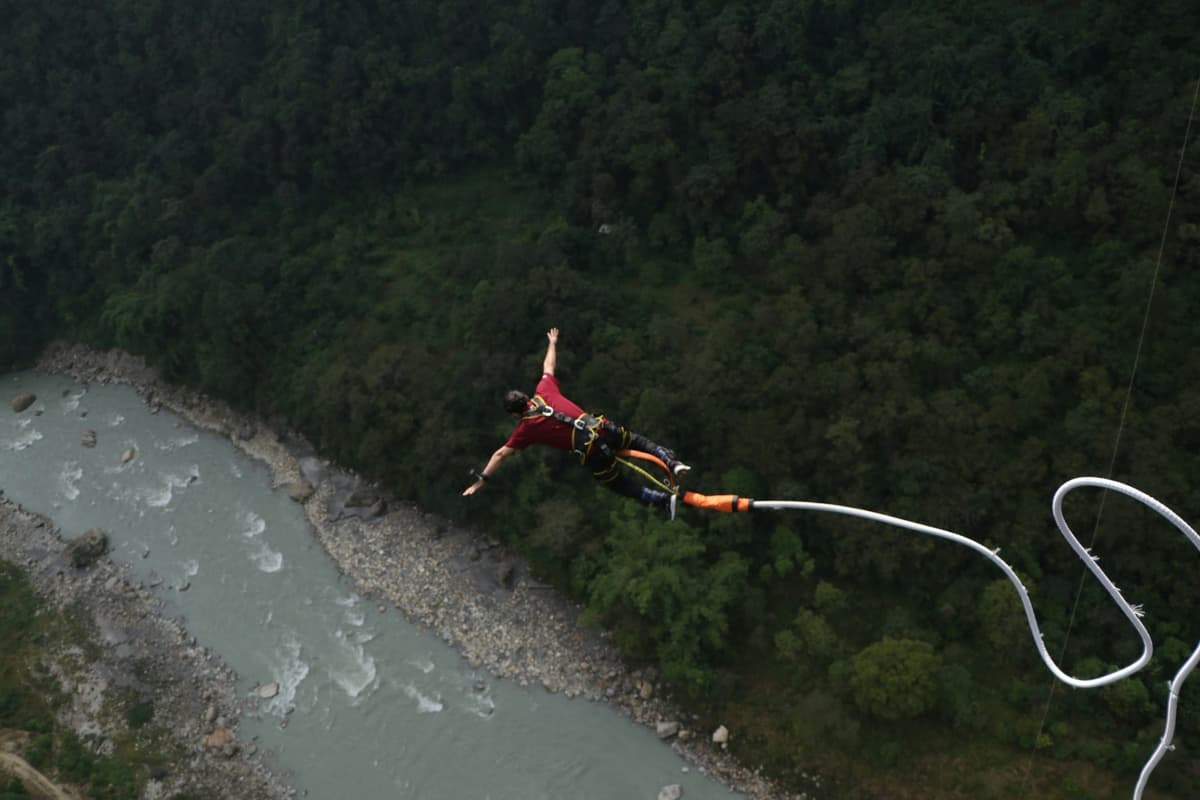
"The suspension bridge is 525 metres long and stands 228 metres above the Kaligandaki River."
The Kathmandu Post, "A 228-metre leap above Nepal's Kaligandaki gorge", 28 October 2026, checked 16 November 2026
The operator claims it is the world's second-highest bungee jump. We cannot verify that.
Canyoning
Canyoning means abseiling down waterfalls and sliding into rock pools in a wetsuit and helmet. The Himalayan Times counts more than nine spots in the Bhote Koshi valley alone (4 March 2025). In Chitwan district, Jalbire is a short detour from Mugling, about 3 to 4 hours' drive from Kathmandu; Nepal Traveller calls September to June ideal there.
Mustang and Muktinath
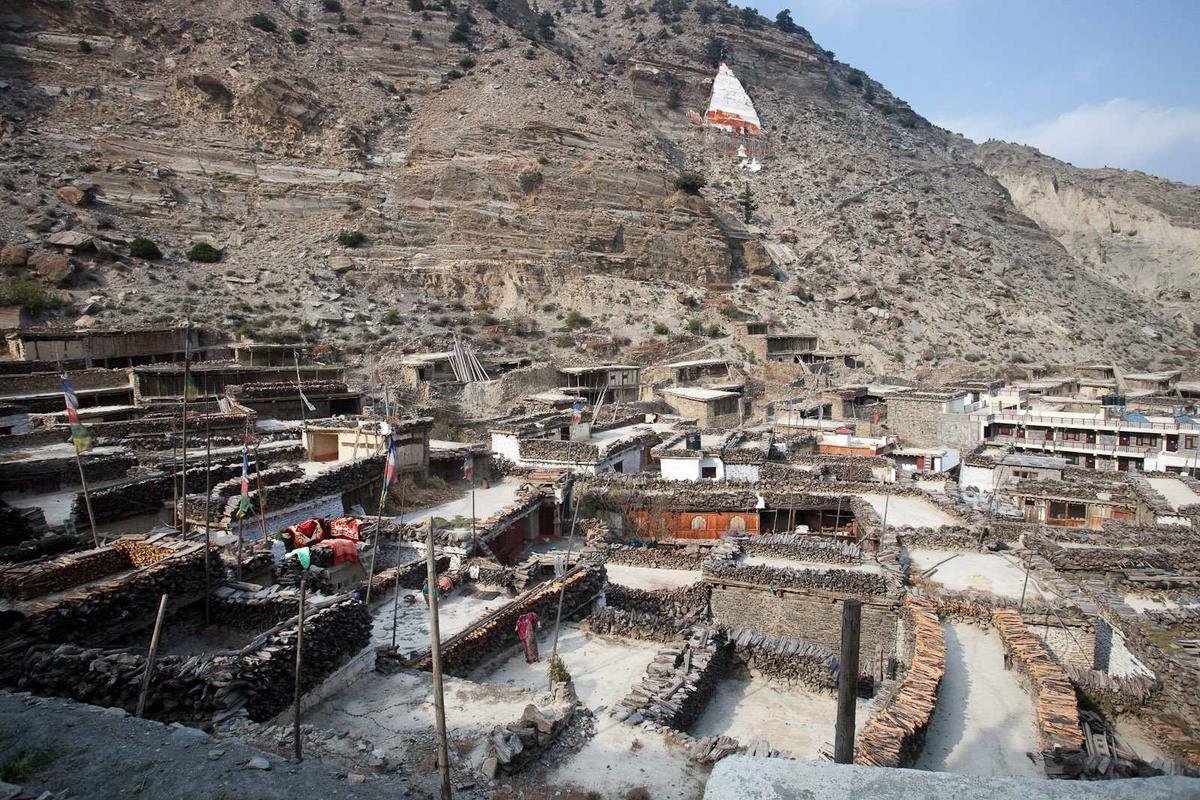
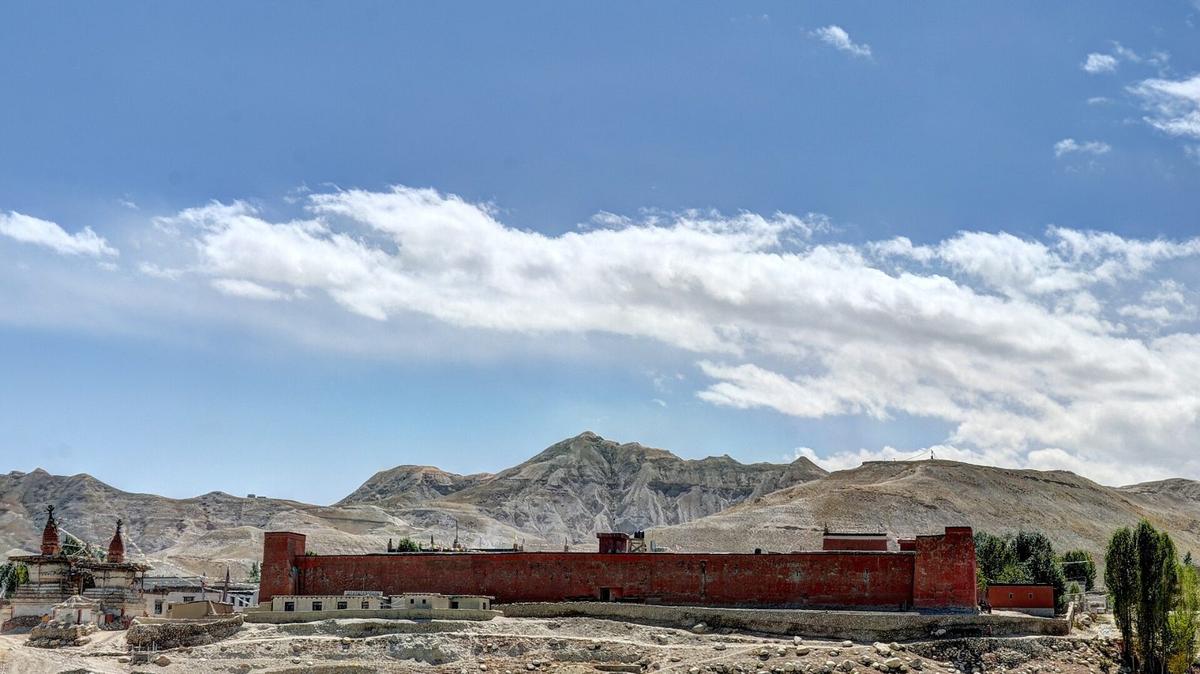
Mustang is the dry valley behind the Annapurnas. Lower Mustang runs up the Kali Gandaki through Jomsom and Kagbeni to Muktinath, sacred to Hindus and Buddhists. Upper Mustang, the old kingdom of Lo, lies north of Kagbeni behind a permit. Our Mustang guide explains both.
Muktinath is at about 3,800 m (12,467 ft), according to NTB, so the altitude points above apply. Jomsom town is at about 2,740 m and Kagbeni about 2,800 m. Muktinath and Kagbeni need only the ACAP permit; Muktinath sits outside the Upper Mustang restricted area. We arrange the ACAP permit on our trips.
Upper Mustang needs a restricted-area permit of USD 50 per person per day inside the zone, which begins north of Kagbeni at Chhusang (Department of Immigration; NTB). It is issued only through a registered agency; since 22 March 2026 solo travellers can be issued one, but a licensed guide is still mandatory (The Himalayan Times, 23 March 2026). Lo Manthang, the old capital, is at about 3,800 m. Be aware that by jeep your sleeping height can jump from Jomsom to Lo Manthang in one day, faster than the slow-ascent rule. Our Pokhara to Mustang guide covers the journey.
Festivals in the coming months
A festival changes a trip: streets fill and families cook special food. Tihar and Chhath have passed for this year. Dates below are from the Ministry of Home Affairs list of public holidays for 2083 BS (Bikram Sambat, the Nepali calendar), published 2 March 2026, except where marked "expected".
Festival dates, December 2026 to May 2027 (MoHA public holidays 2083; checked 16 November 2026)
| Festival | Date | What it is |
|---|---|---|
| Yomari Punhi | 24 December 2026 | Newar harvest festival |
| Tamu Lhosar | 30 December 2026 | Gurung new year |
| Sonam Lhosar | 7 February 2027 | Tamang new year |
| Maha Shivaratri | 6 March 2027 | The big day at Pashupatinath |
| Gyalpo Lhosar | 9 March 2027 | Sherpa and Tibetan new year |
| Holi (Fagu Purnima) | 21 March 2027 in the hills, including Kathmandu; 22 March in the Terai | Festival of colours |
| Ghode Jatra | 6 April 2027 | Kathmandu Valley holiday |
| Bisket Jatra | Mid-April 2027, around Nepali New Year (14 April) | Bhaktapur's new-year festival |
| Buddha Jayanti | Expected 20 May 2027 | The Buddha's birthday, Lumbini's big day |
The 2084 list is not out yet, so the last two dates are expected. If you are here for Holi, wear clothes you can throw away.
Food to try
Eating is one of the real things to do in Nepal. Look for these:
- Momo. Dumplings first popular among the Newar community of the Kathmandu Valley; many believe Newar traders brought the idea from Tibet (Smithsonian Magazine). You find them almost anywhere.
- Newari khaja (samay baji). The Newar snack set: chiura (beaten rice) with choila (spiced meat), bhatmas (black soybeans), aloo tama (potato and bamboo shoot) and pickles (OnlineKhabar).
- Yomari. A steamed, fish-shaped dumpling of new-harvest rice flour filled with chaku (molasses) or khuwa (milk solids) and sesame, made for Yomari Punhi (NTB), this year on 24 December.
- Sel roti. A ring-shaped, deep-fried bread of ground rice, made mostly at Laxmi Puja during Tihar (The Kathmandu Post).
- Thakali set. The Thakali people come from Thak Khola in Mustang, and their dal bhat set is now served in cities across the country (OnlineKhabar). Order it in Jomsom.
- Dal bhat. Lentil soup with rice, the everyday meal.
Practical tips: getting around, entry and weather
Kathmandu to Pokhara is most of a day by road, often six to nine hours with traffic and roadworks, or about 30 minutes by air; our Kathmandu to Pokhara guide covers both. Dry landslides at Ghoptebhir, on the Prithvi Highway about 3 km from Mugling towards Kathmandu, blocked the road to Pokhara and Chitwan several times from 8 November 2026, and on 12 November traffic was still one way (OnlineKhabar), so check before you set off. Just landing? Our Kathmandu airport arrival guide covers what to expect.
Indian nationals do not need a visa but must carry accepted ID, such as a passport or an Election Commission voter ID; Aadhaar is not accepted. Most other visitors get a tourist visa on arrival; current fees and rules are on the Nepal Tourism Board tourist visa page. Visas and international flights are your own arrangement; we do not arrange them.
On weather, NTB says 80 percent of Nepal's rain falls in the June to September monsoon. Winter mornings are cold but bright: Kathmandu in January averages a low of 2.8 °C and a high of 19.2 °C, Pokhara 7.1 °C and 19.9 °C (DHM normals, 1991 to 2020), and average temperatures drop 6 °C for every 1,000 m you climb (NTB). See the best time to visit Nepal month by month, and our Nepal travel guide for the basics.
Frequently asked questions
What are the best things to do in Nepal for first-time visitors?
Combine the Kathmandu Valley's heritage squares and the evening aarti at Pashupatinath with a mountain flight, sunrise at Sarangkot above Pokhara and a jeep safari in Chitwan. If you like walking, add a short trek such as Poon Hill. That covers two of the four World Heritage properties, a third from the air, and mountains, culture and wildlife.
How many days do you need to see Nepal's main sights?
There is no fixed number; it depends on how you move between regions. Kathmandu to Pokhara is most of a day by road or about 30 minutes by air, Chitwan is 146 km by road from Kathmandu, and a mountain flight takes about an hour. Add the time you want in each place, plus slack for roads, and ask us.
When is the best time to visit Nepal for sightseeing and activities?
Spring and autumn, with the clearest skies in October and November, according to the Nepal Tourism Board. Eighty percent of the rain falls in the June to September monsoon, and jeep safaris inside Chitwan National Park pause in the monsoon. Chitwan's main season is October to March, and winter is cold in the mornings but often clear.
What can you do in Kathmandu in one day?
Walk Kathmandu Durbar Square in the morning, climb to Swayambhunath for the view over the city, walk the kora round Boudhanath in the afternoon, and end at Pashupatinath for the aarti after sunset. On a clear day you could swap one stop for the Chandragiri cable car, about 10 minutes each way.
Is Nepal worth visiting if you do not want to trek?
Yes. Much of the country needs no trekking: a mountain flight past Everest, the Chandragiri cable car, the drive up to Sarangkot for sunrise, a safari and canoe ride in Chitwan, the Maya Devi Temple and monasteries in Lumbini, and the bungee jumps at The Last Resort or Kushma.
What is there to do in Nepal in winter?
Winter suits the cities, Chitwan and festivals. NTB notes that even in December and January there is "bright sun and brilliant views", and Kathmandu's January days reach about 19 °C. Festivals include Yomari Punhi on 24 December, Tamu Lhosar on 30 December and Maha Shivaratri on 6 March 2027. Regular Pokhara to Jomsom flights are suspended, so most visitors reach Mustang by road.
Plan your trip with us
It is easy to fit too much into a first trip. Pick the regions that suit you and leave room for the weather. For where each region sits, see our Nepal tourist places guide.
For a route that links the main cities, look at our classic multi-city tours or the Golden Triangle Nepal tour. If temples and heritage sites are what you came for, start with our cultural heritage tours. A licensed guide walks with you on every trek we run, and our team arranges a rescue if needed.
Tell us your dates and what you enjoy, and ask us on WhatsApp or through the enquiry form.