

By Uncover Nepal Team · Checked by our Kathmandu travel team · Last checked 14 October 2026
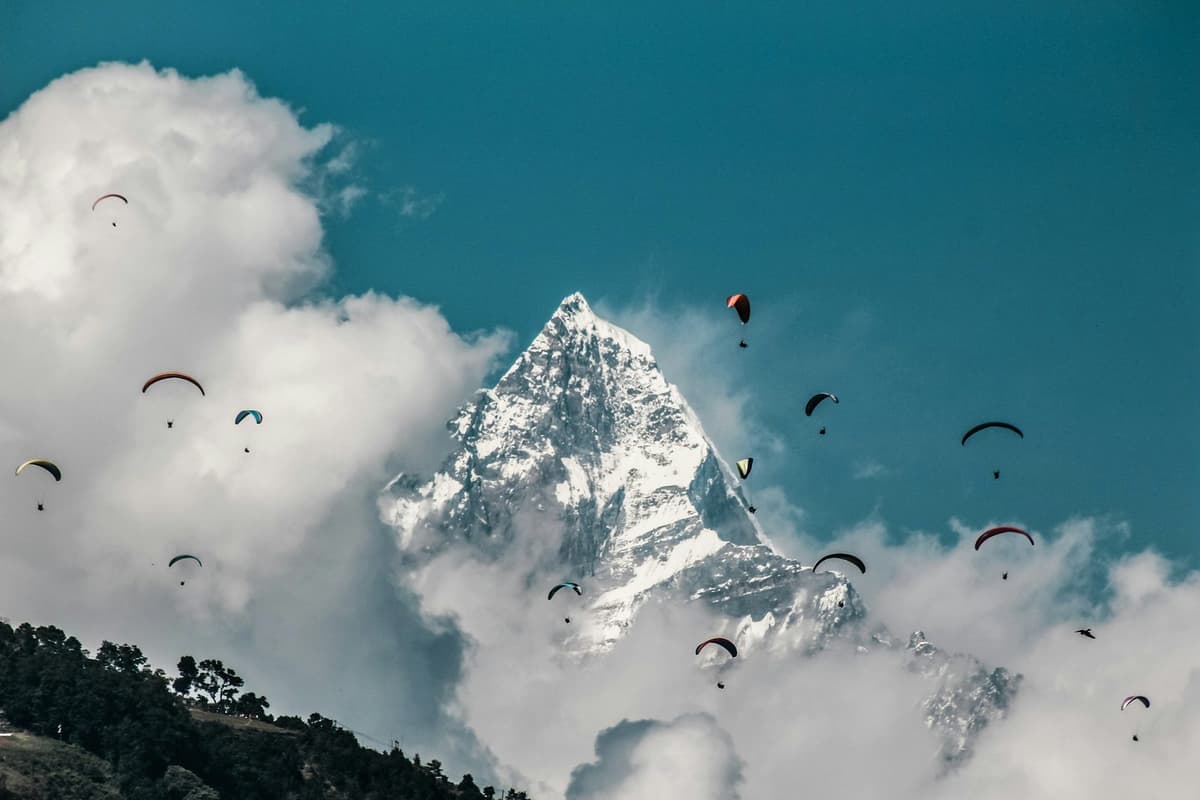
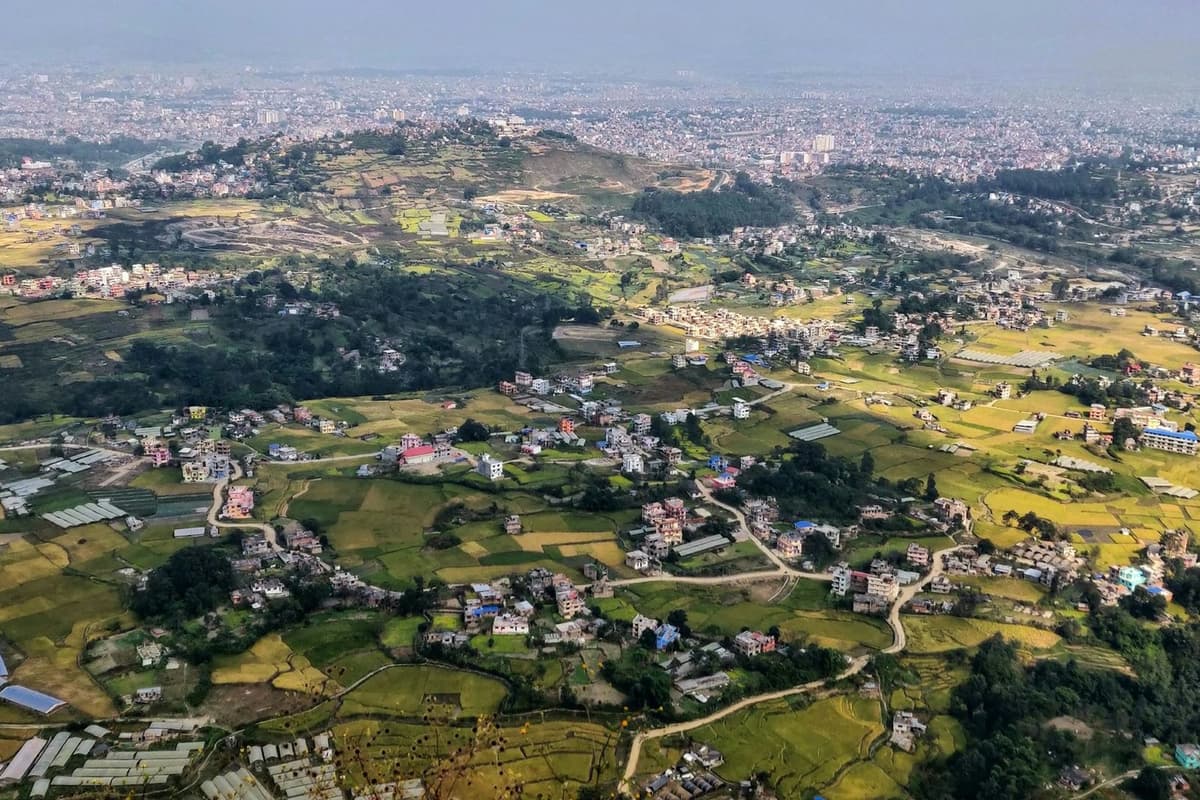
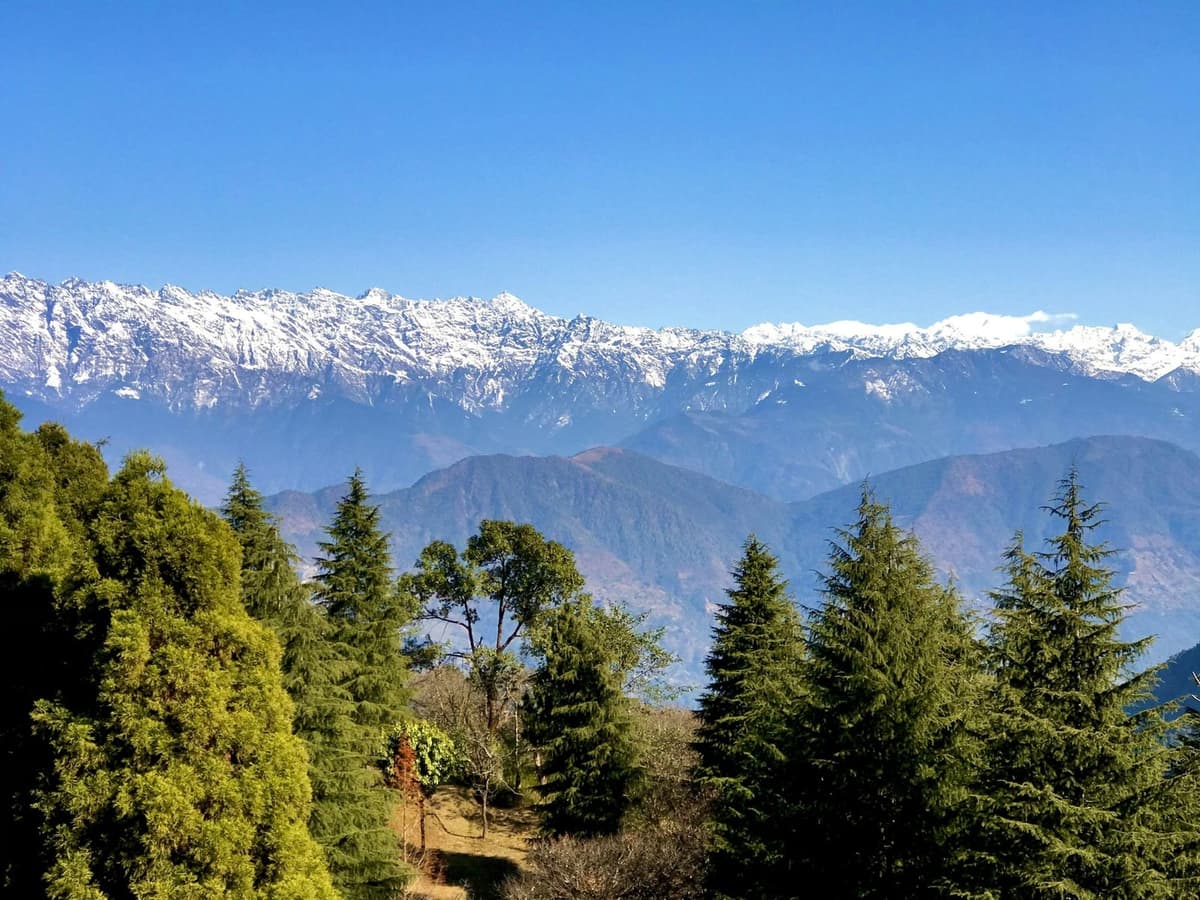
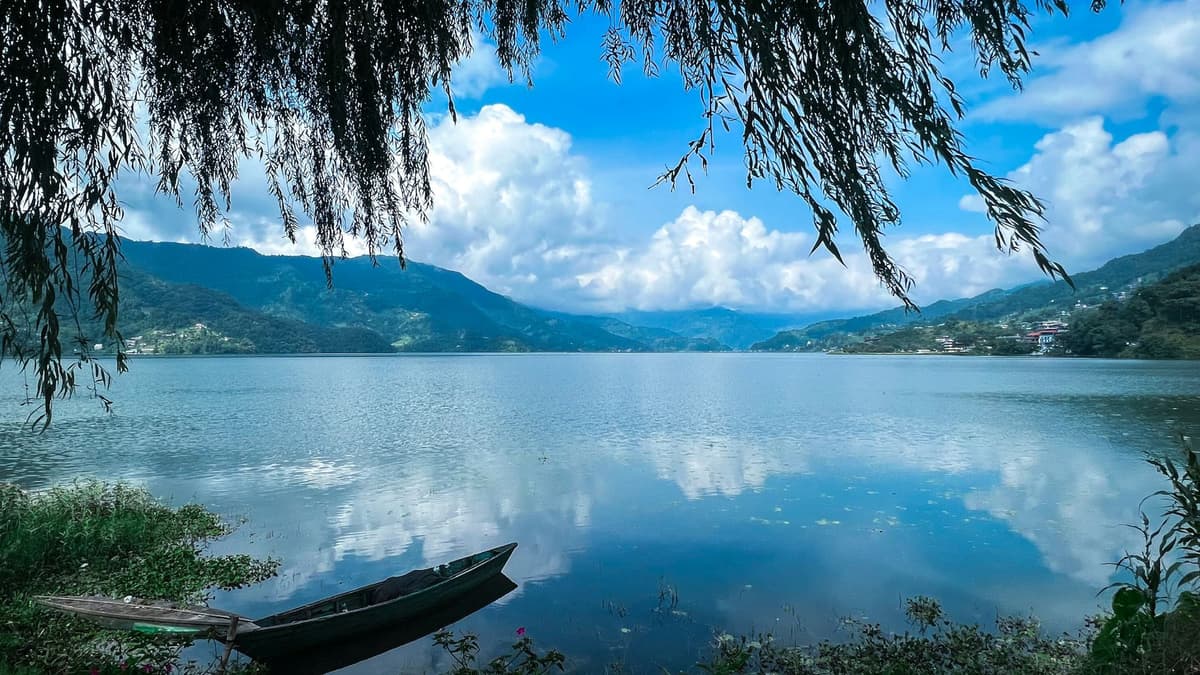
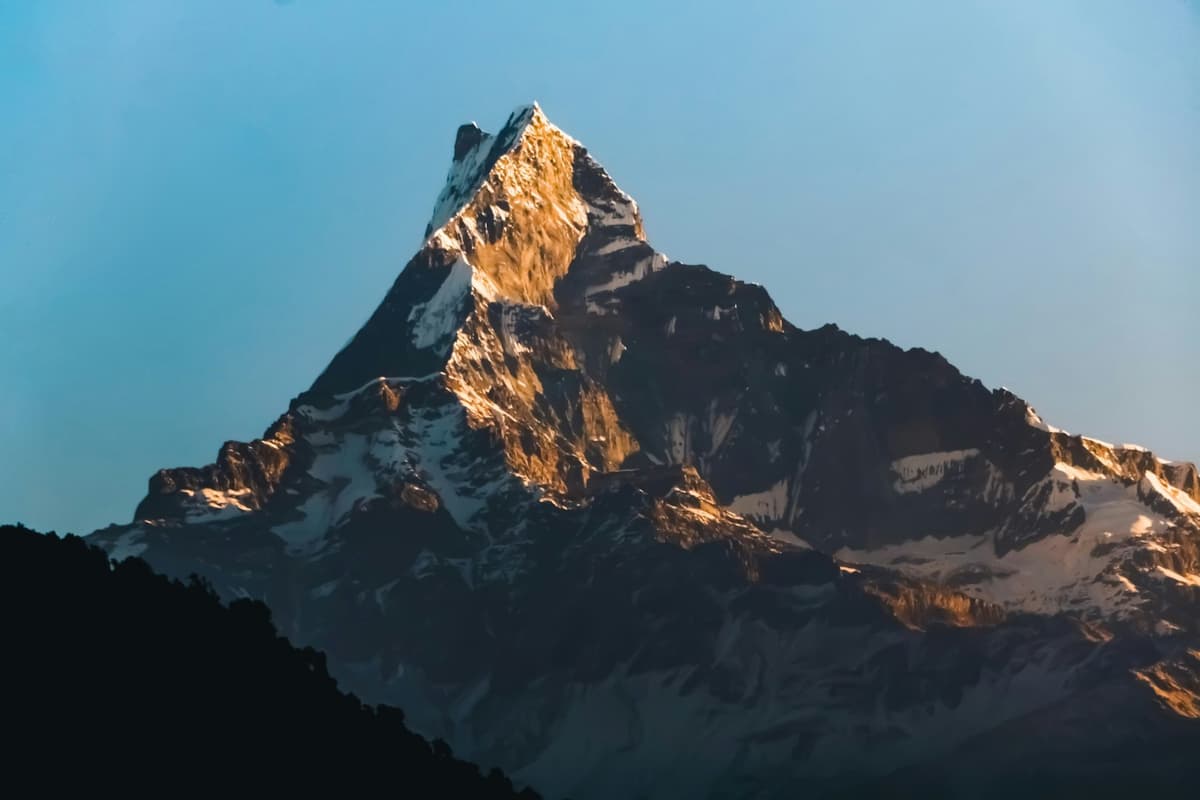
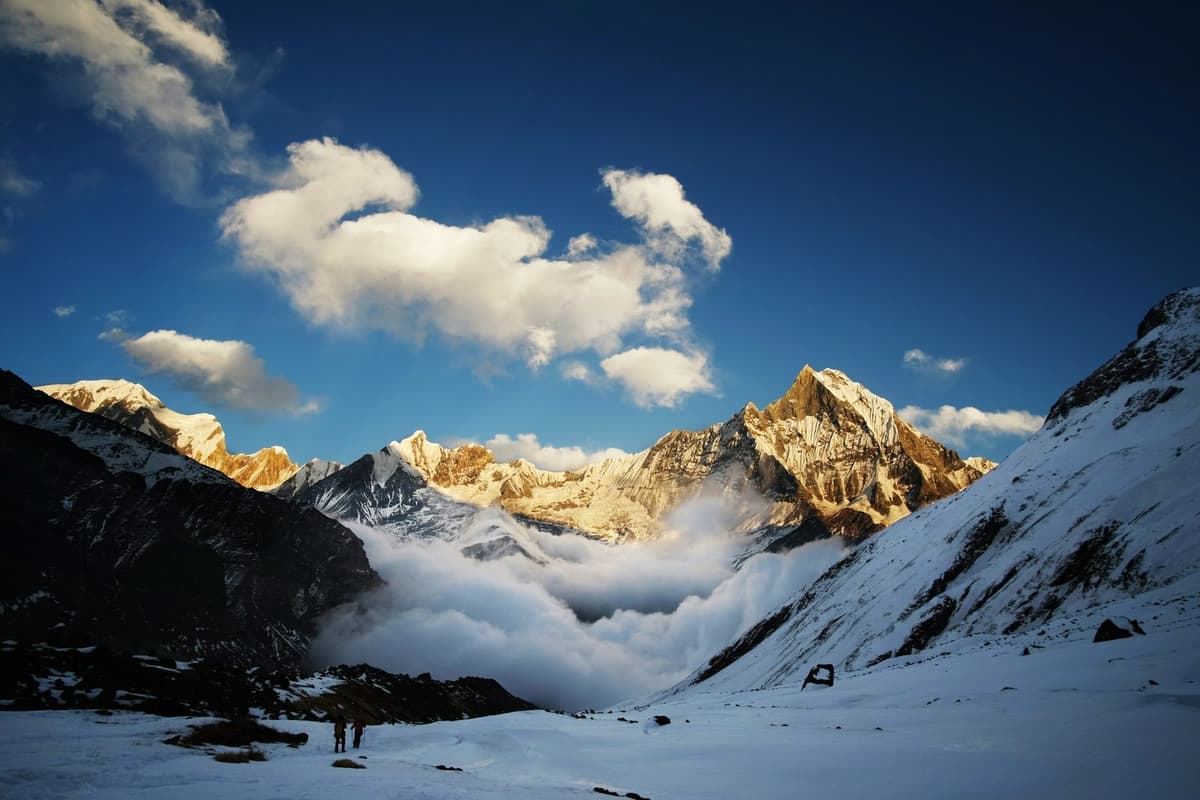
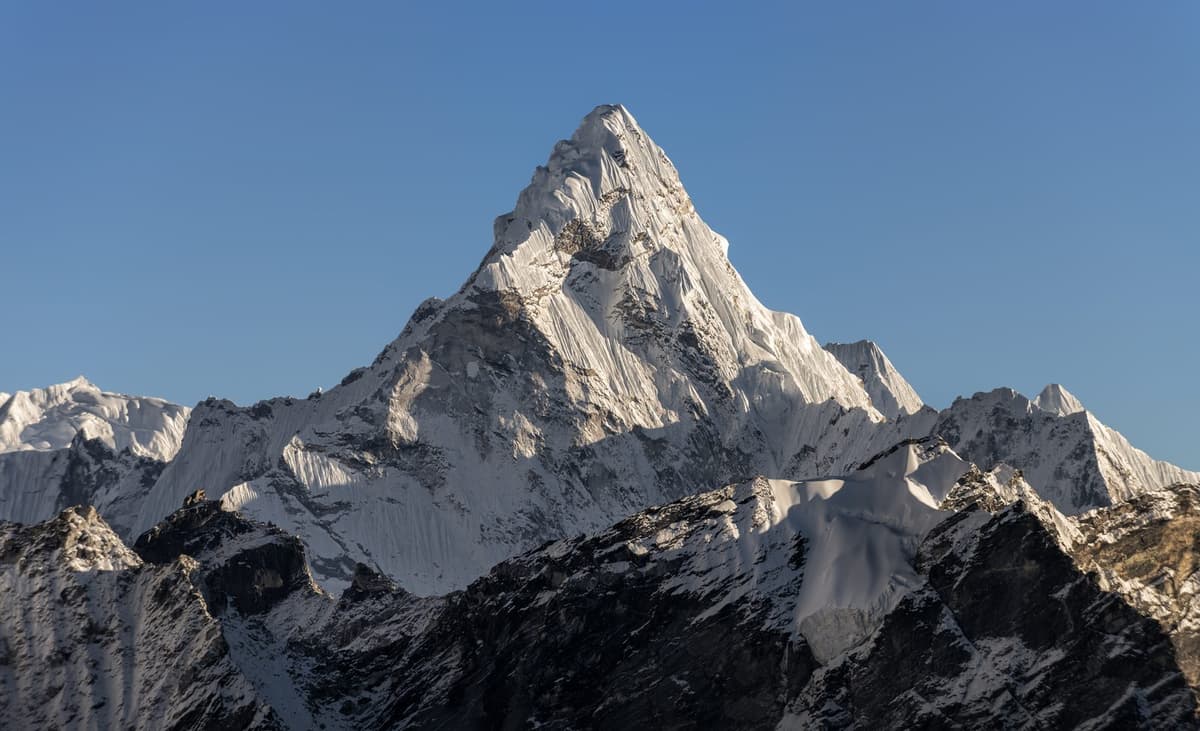
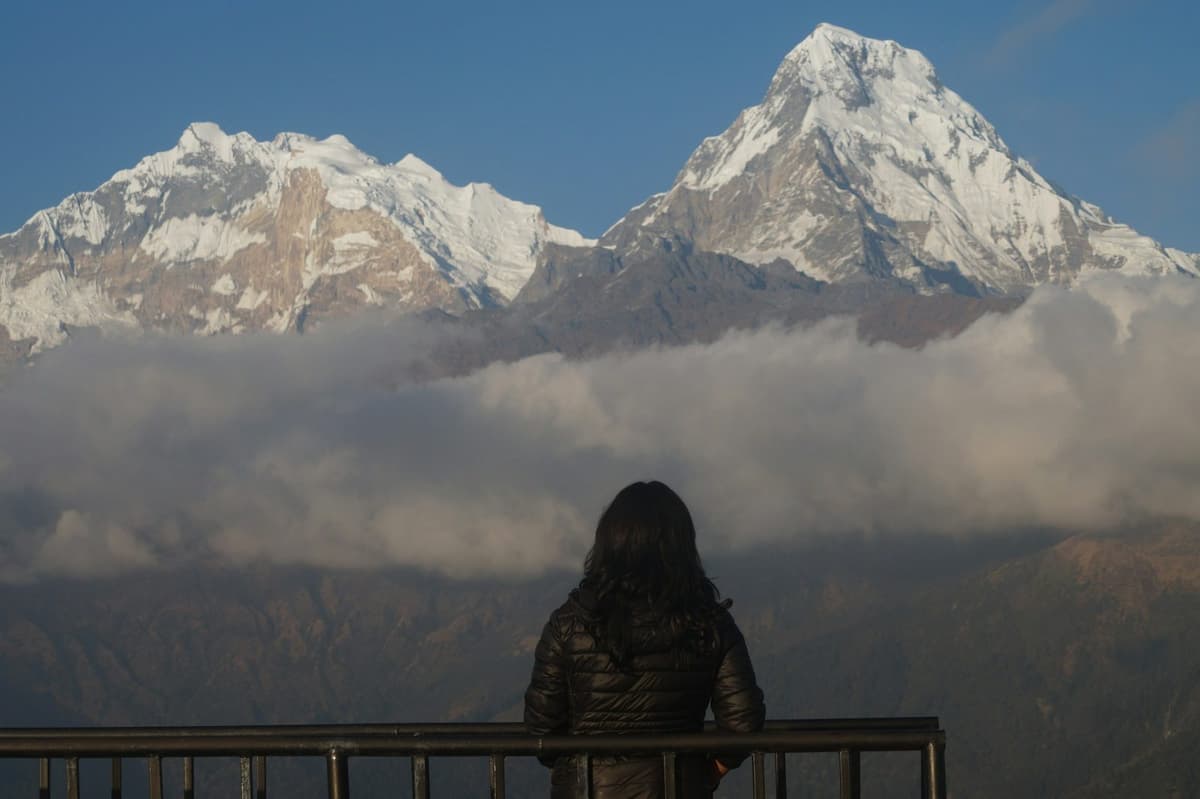
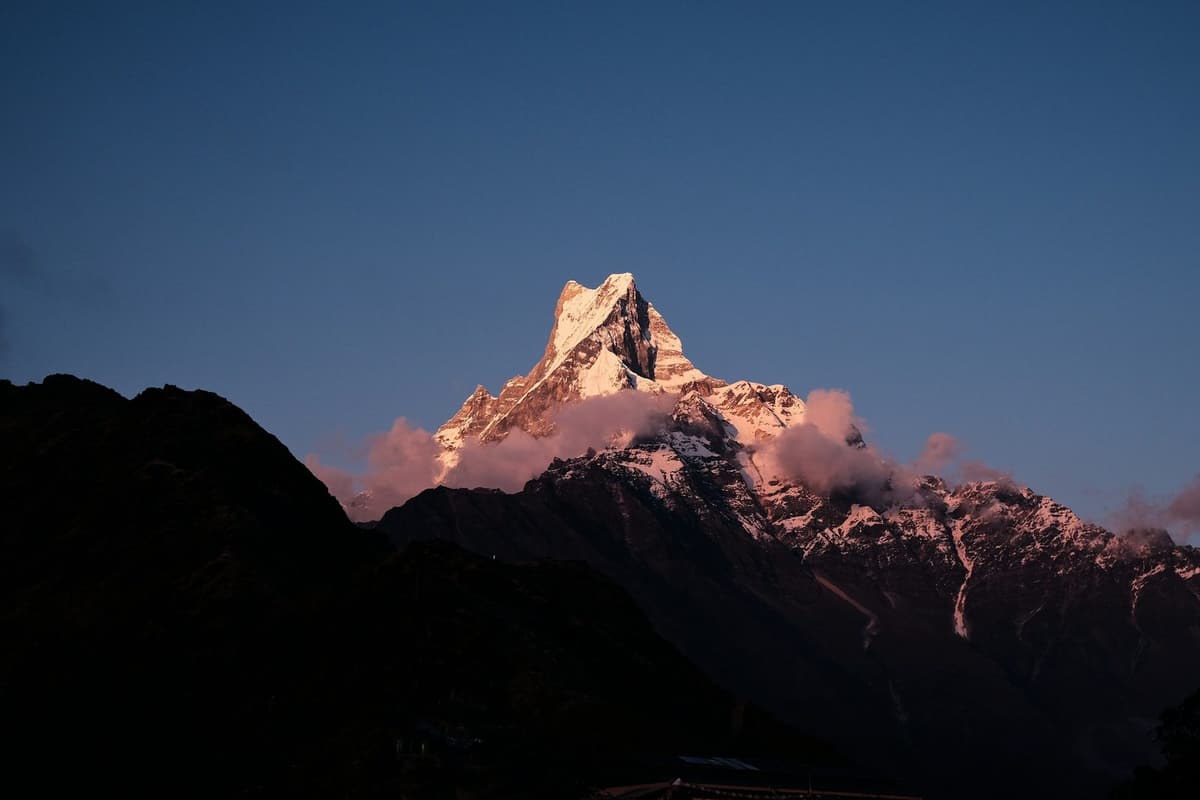
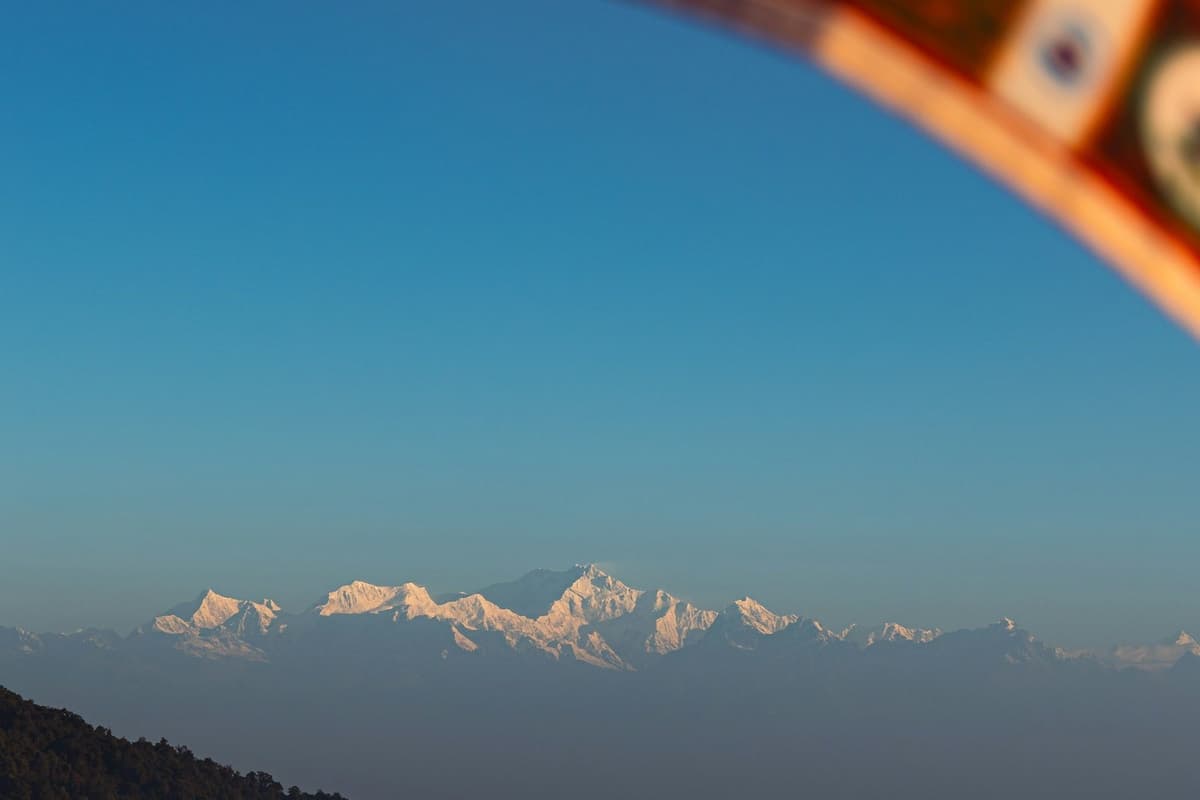
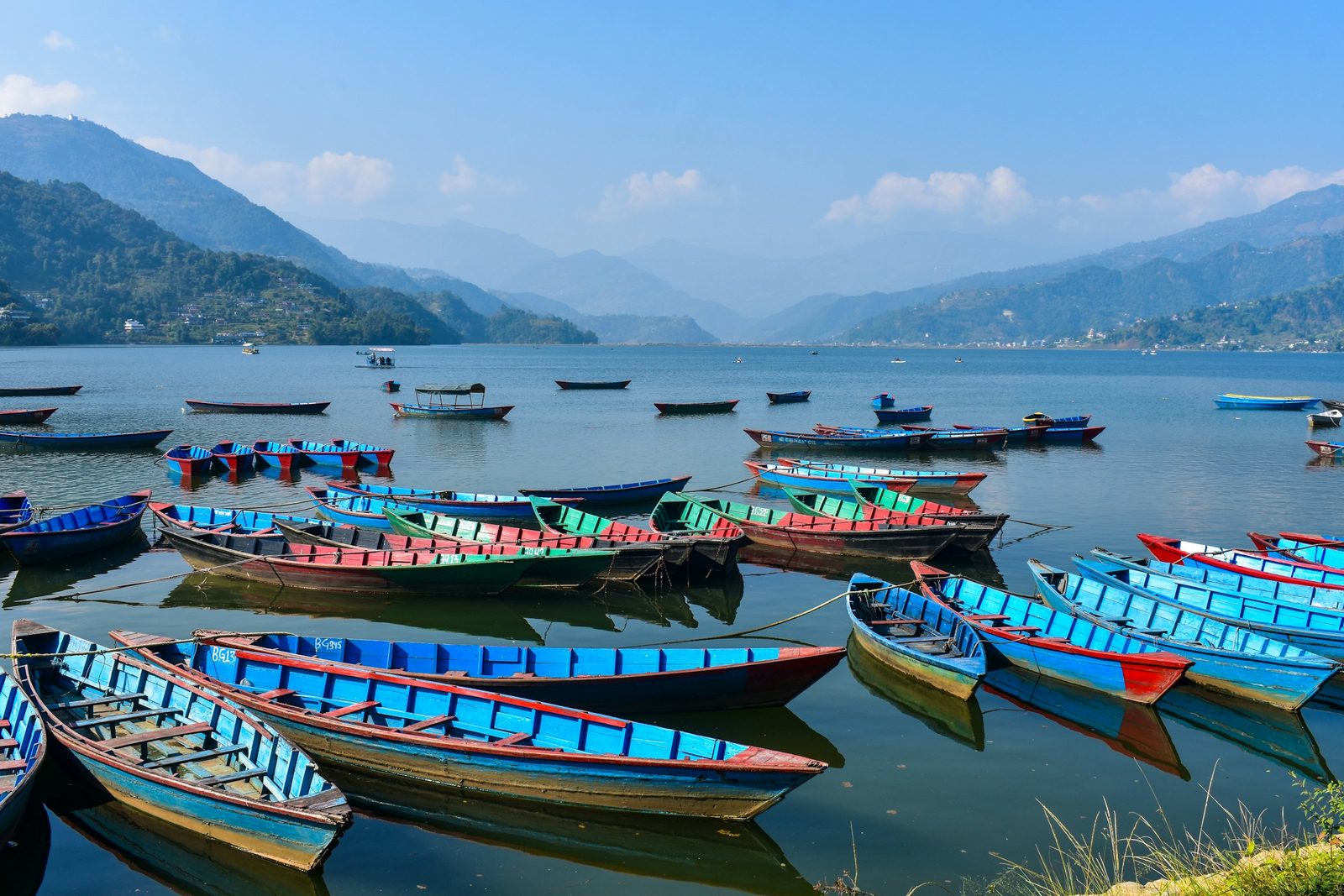
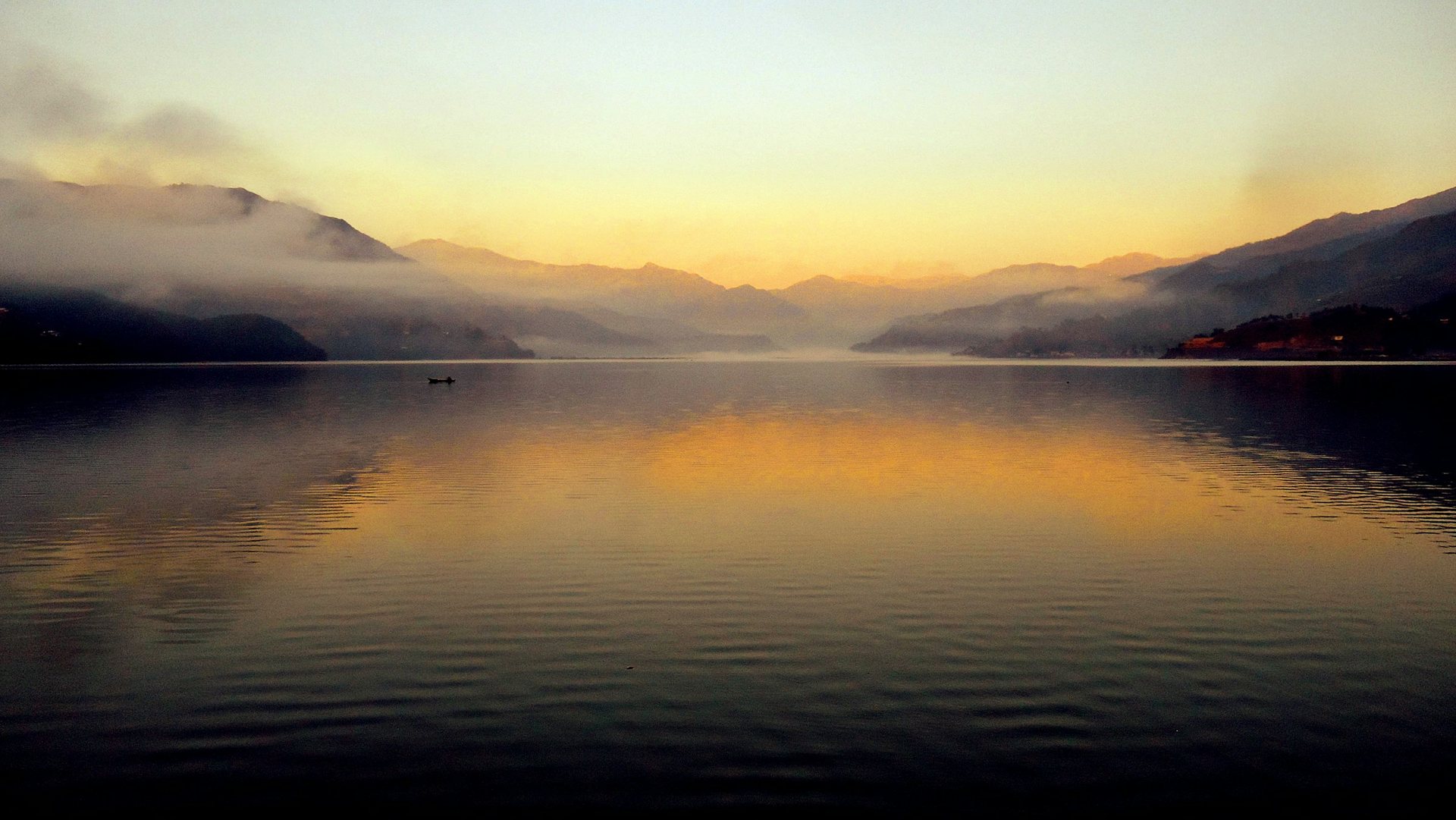
Early in the morning the wooden boats lie in a row on the shore of Phewa Lake and the water is flat. On a clear day Machhapuchhre, the Fishtail, stands white above the hills to the north. Later the cloud often climbs up and hides it: in Pokhara, look up early.
The top things to do in Pokhara are boating on Phewa Lake, Sarangkot sunrise, the World Peace Pagoda, Davis Falls and Gupteshwor Cave, the Mountain Museum, paragliding and day hikes. Most Pokhara tourist places sit a short drive from Lakeside, so two or three days of Pokhara sightseeing covers the classics.
This guide is part of our Insights on travelling in Nepal, written by our team in Kathmandu. Pokhara sits at about 820 m, about 200 km west of Kathmandu, and it is the starting point for most Annapurna treks. For each sight we give what it is, how to get there, how long to allow, the best time of day and any official ticket, with one practical tip. If you are still choosing between regions, our guide to Nepal tourist places puts Pokhara next to Kathmandu, Chitwan and the rest.
In this guide
- Key facts
- Things to do in Pokhara at a glance
- Lakes: Phewa, Tal Barahi, Begnas and Rupa
- Viewpoints: Sarangkot, the Peace Pagoda and the southern ridge
- Temples and culture
- Caves, waterfalls and the Seti gorge
- Museums in Pokhara
- Activities in Pokhara: air, water and adventure
- Day hikes and treks from Pokhara
- Lakeside: where to walk, eat and spend the evening
- Pokhara sightseeing: how many days do you need?
- How do you get from Kathmandu to Pokhara?
- When is the best time to visit Pokhara?
- Is Pokhara safe? Practical tips
- Frequently asked questions
- Plan your days in Pokhara
Key facts
- Altitude of Pokhara
- About 820 m (Uncover Nepal standard figure; DHM weather station at Pokhara Airport, 12 Oct 2026)
- Distance from Kathmandu
- About 200 km by road (Wikipedia (Prithvi Highway, Pokhara), 12 Oct 2026)
- Kathmandu to Pokhara by road
- Most of a day, often six to nine hours with traffic and roadworks (Uncover Nepal operations, 12 Oct 2026)
- Kathmandu to Pokhara by air
- About 30 minutes (Uncover Nepal operations, 12 Oct 2026)
- Pokhara International Airport
- Inaugurated 1 January 2023 (The Himalayan Times, 12 Oct 2026)
- Lakes
- Nine lakes listed together as a Ramsar wetland of international importance on 2 February 2016 (Ramsar Sites Information Service, 12 Oct 2026)
- Phewa Lake entry
- Free, open 24 hours (Pokhara Metropolitan City tourism site, 14 Oct 2026)
- Sarangkot
- 1,595 m (5,233 ft); small local ticket at the viewpoint, check the rate at the gate (Uncover Nepal standard figure; Pokhara Metropolitan City tourism site, 12 Oct 2026)
- World Peace Pagoda
- Free entry; 6 am to 6 pm (Pokhara Metropolitan City tourism site; Nepal Traveller, 14 Oct 2026)
- Machhapuchhre
- 6,993 m (22,943 ft); closed to climbing (Wikipedia, 12 Oct 2026)
- Wettest and driest month
- July, 941.0 mm of rain; December, 11.5 mm (DHM and WMO normals 1991 to 2020, Pokhara Airport, 12 Oct 2026)
- Clearest skies
- October and November (Nepal Tourism Board climate page, 12 Oct 2026)
- Permits
- None for the city sights or Sarangkot; Annapurna Conservation Area Permit (ACAP) for Australian Camp, Dhampus and Annapurna treks: NPR 3,000 foreign, NPR 1,000 SAARC (NTNC e-permit; Nepal Tourism Board, 14 Oct 2026)
Things to do in Pokhara at a glance
Pokhara is easy to get round: most sights are a taxi ride or a boat ride from Lakeside, the hotel and restaurant strip on the eastern shore of Phewa Lake. This table gives a quick plan; the sections below explain each sight.
| Sight | What it is | How to get there from Lakeside | Time to allow | Best time of day | Official ticket |
|---|---|---|---|---|---|
| Phewa Lake and Tal Barahi | Lake and island temple | Walk to the shore; boat to the island | A morning or an afternoon | Early morning or late afternoon | Lake free; boat hire agreed with the boatman |
| Sarangkot | Hill viewpoint, 1,595 m | Drive, at most about 30 minutes, or Annapurna Cable Car from Sedi | A morning | Sunrise | Small local ticket; check at the gate |
| World Peace Pagoda | Buddhist stupa and viewpoint | Boat across Phewa, then about an hour uphill; or about 30 minutes by road plus a 10-minute walk | A morning or an afternoon | Late afternoon, before the 6 pm close | Free |
| Davis Falls | Waterfall fed by Phewa's dam | About 2 km south-west of the old airport | A short stop | Any time, 6 am to 6 pm | Small ticket; check at the gate |
| Gupteshwor Mahadev Cave | Hindu cave shrine | Opposite Davis Falls | A short visit | Any time | Separate small ticket; check at the gate |
| Mahendra Cave and Bat Cave | Limestone caves | About 8 km north of Pokhara; Bat Cave a ten-minute walk from Mahendra Cave | A morning | Daytime | Small tickets; check at the gate |
| Seti gorge | River gorge | Seen from the Mahendra Pul, K.I. Singh Pul and Prithvi Chowk Pul bridges | A short stop | Daytime | None (public bridges) |
| Old Bazaar and Bindhyabasini | Old trading town and temple | A short taxi ride | A morning | Morning | None listed |
| International Mountain Museum | Mountaineering museum | 1.5 km south of the old airport at Rato Pairo | A morning | Daytime; check hours | Ticket; check at the counter |
| Begnas and Rupa lakes | Quieter lakes | About 15 km out of Pokhara | A morning or more | Morning | Begnas free |
| Tibetan settlements | Tibetan communities and handicrafts | Tashi Palkhiel at Hemja, north-west of the city; Tashiling at Chhorepatan, near Davis Falls | A short visit | Daytime | None listed |
Lakes: Phewa, Tal Barahi, Begnas and Rupa
Pokhara is a lake town first. Nine lakes in the valley, Phewa, Begnas, Rupa, Khaste, Dipang, Maidi, Gunde, Neurani and Kamalpokhari, were listed together as the "Lake Cluster of Pokhara Valley" Ramsar site on 2 February 2016. Most visitors only see Phewa, and that is fine for a short stay, but the quieter lakes repay a morning.
Phewa Lake and boating
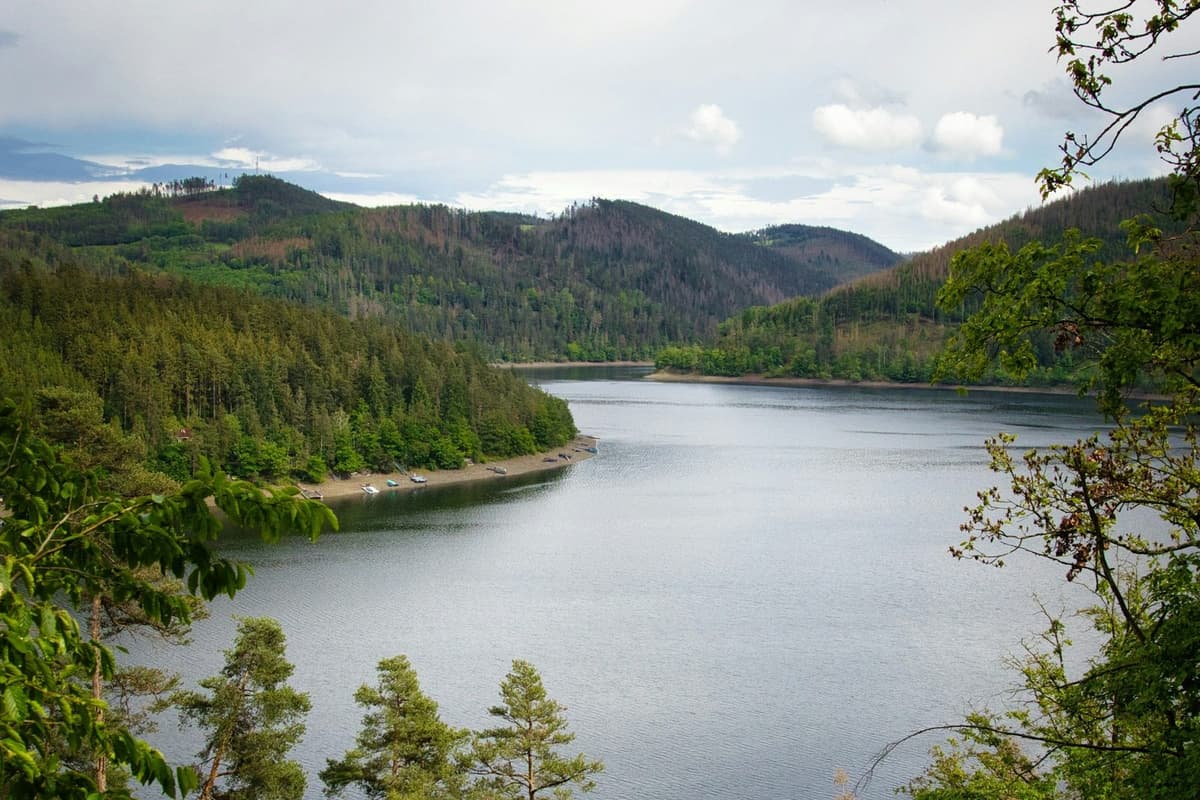
Phewa Lake is the heart of Pokhara, and Lakeside (also called Baidam) runs along its eastern shore with hotels, restaurants, bars and souvenir shops. Entry is free and the shore is open around the clock. The Nepal Tourism Board calls boating "a favorite pastime which one can enjoy any time of day", and boats can be hired along the shore.
- How to get there: walk to any boat stand on the Lakeside shore.
- Time to allow: a short row, or a whole morning if you combine it with Tal Barahi and the Peace Pagoda trail.
- Best time of day: early morning for still water and mountain reflections on clear days; late afternoon for softer light.
- Ticket: none for the lake. Boats are hired by the hour; agree the price and the time before you push off.
Practical tip: If you want the mountains in your photos, go out early. By midday in most seasons the peaks are often behind cloud.
Tal Barahi Temple
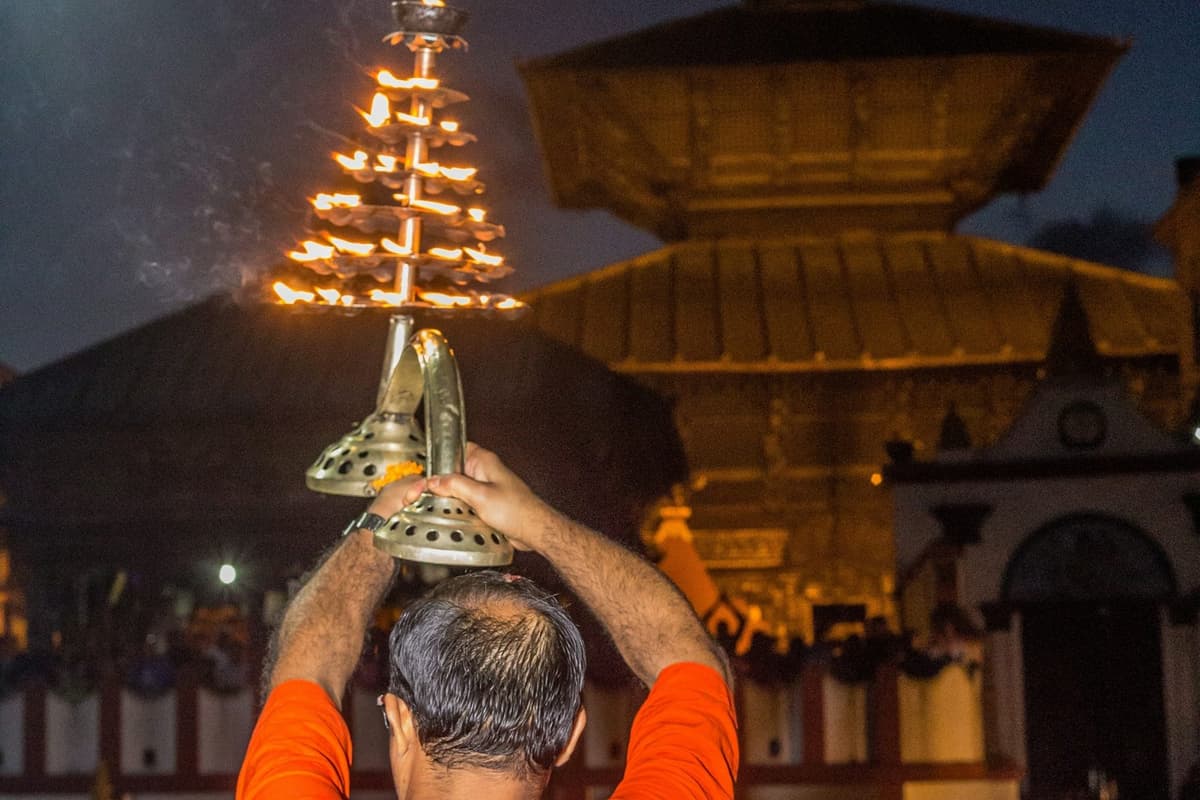
Tal Barahi is a small Hindu temple on "a little strip of island in Phewa Lake", dedicated to Ajima or Shakti, the mother goddess, in the form of Barahi. You reach it by boat. Most evenings around 6 pm, priests perform an aarti (an evening lamp ceremony) at Barahi Ghat on the shore, organised by a local committee formed in 2018.
- How to get there: short boat ride from the Barahi Ghat area of Lakeside.
- Time to allow: a short visit, plus the boat ride.
- Best time of day: morning for the temple; around dusk for the aarti on the shore.
- Ticket: no entry ticket; you pay only for the boat.
Practical tip: Shoes come off at the shrine, and leather items are best left in the boat. Keep your voice low if a puja (prayer ritual) is under way.
Begnas and Rupa lakes
Begnas and Rupa lie about 15 km out of Pokhara, and NTB calls them "excellent for boating and fishing". Begnas is usually described as the second largest lake in the Pokhara Valley after Phewa, and the city's tourism office describes it as "a quieter alternative to Phewa Lake. Ideal for boating and bird watching." Entry is free.
- How to get there: by taxi or local bus east along the main road.
- Time to allow: a morning, or a full day with a walk on the ridge between the two lakes.
- Best time of day: morning, for birds and calm water.
- Ticket: free.
Practical tip: Begnas is the answer if Lakeside feels busy. The pace is slower, and you share the water with fishing boats rather than pedalos.
Viewpoints: Sarangkot, the Peace Pagoda and the southern ridge
The view is the reason most people come. NTB puts it plainly:
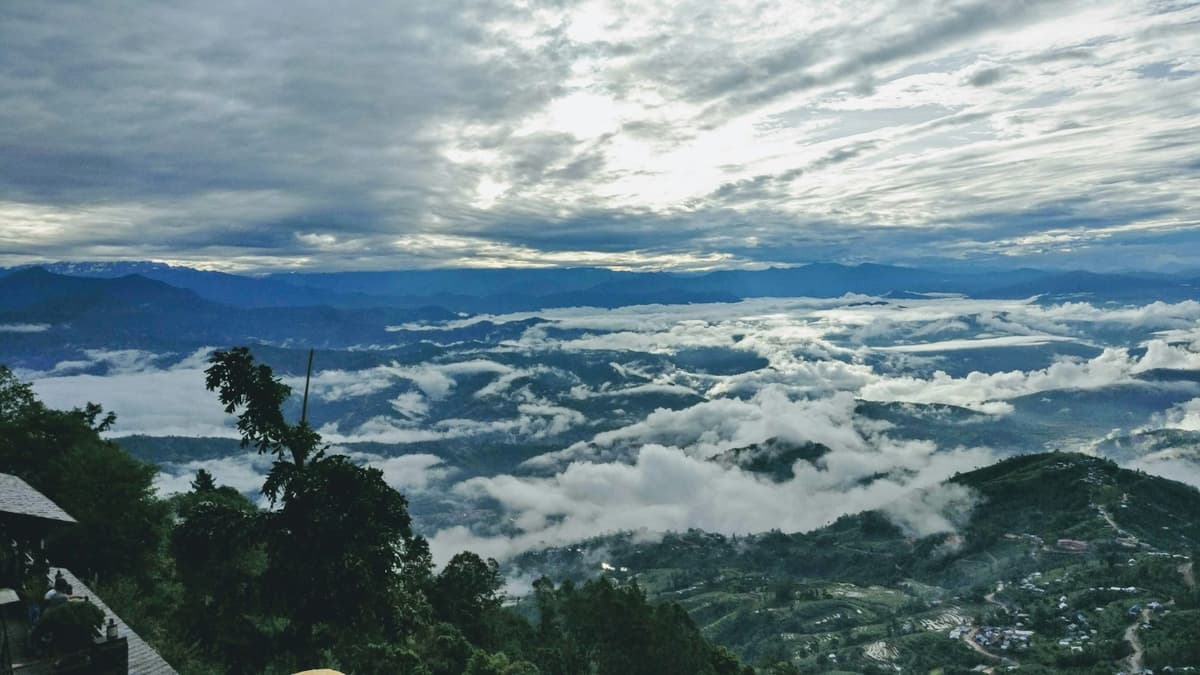
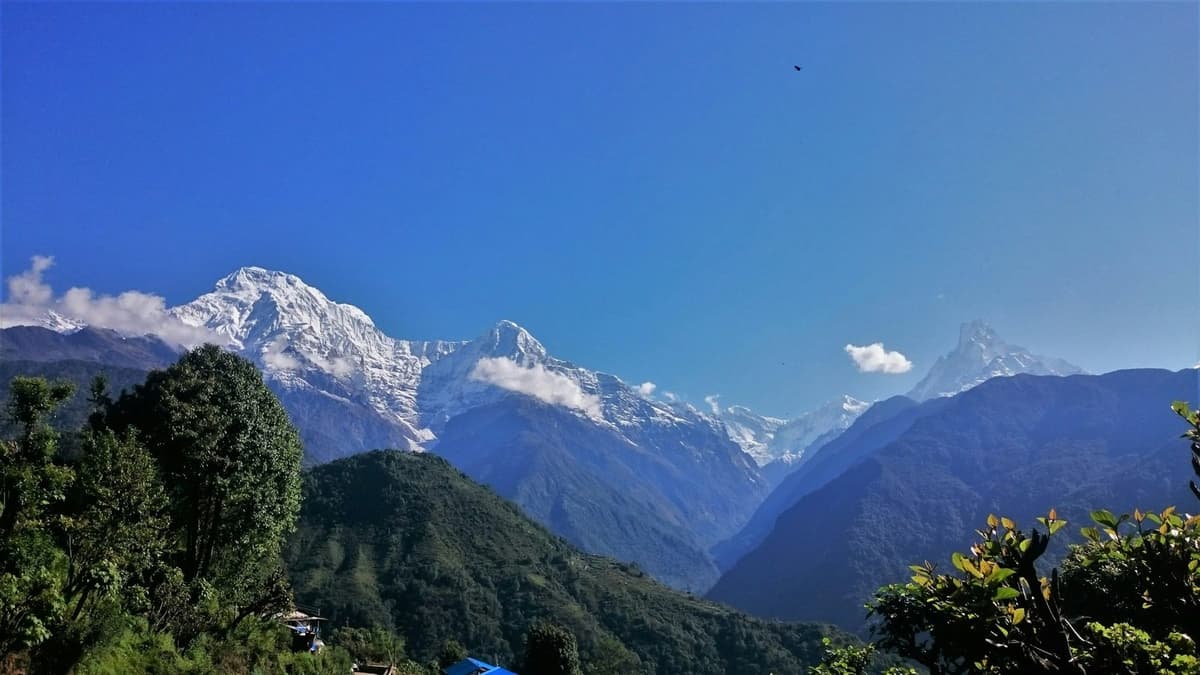
"mountains above 6,000 m can be seen unobstructed from an altitude of 800 m within the distance of 28 km"
Source: Nepal Tourism Board, Pokhara page
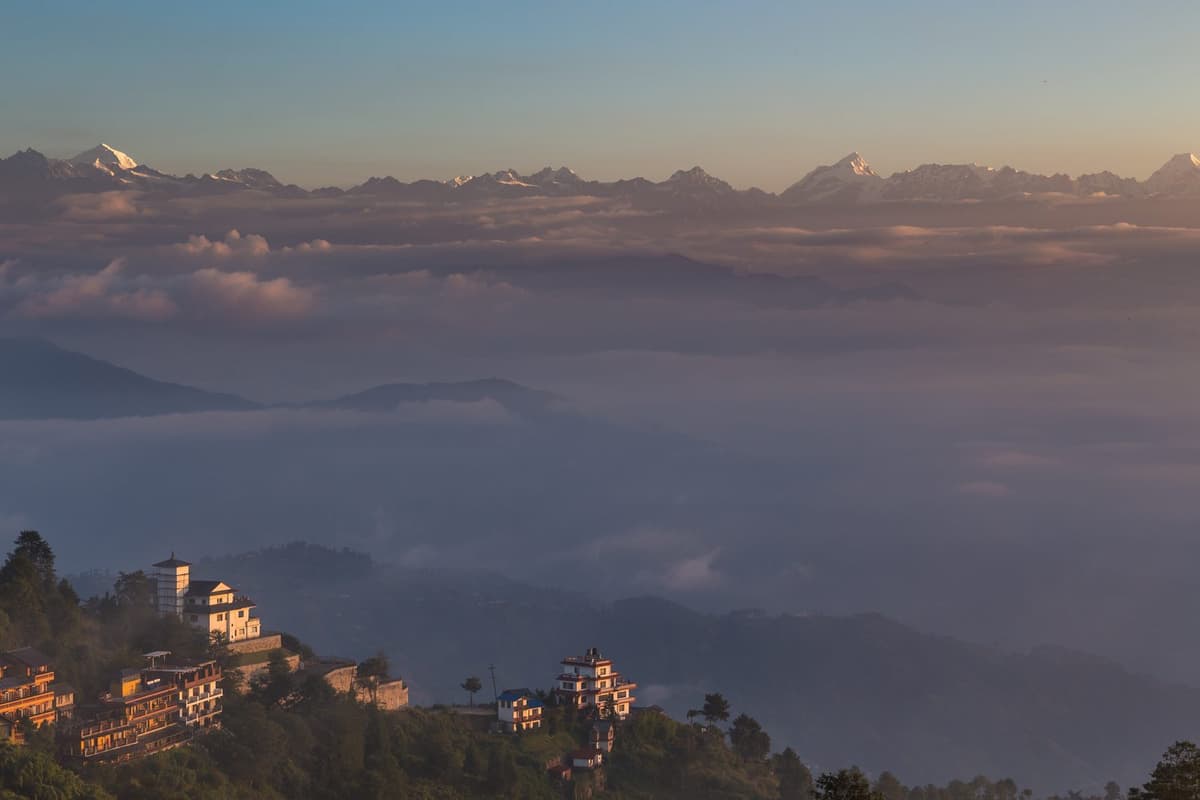
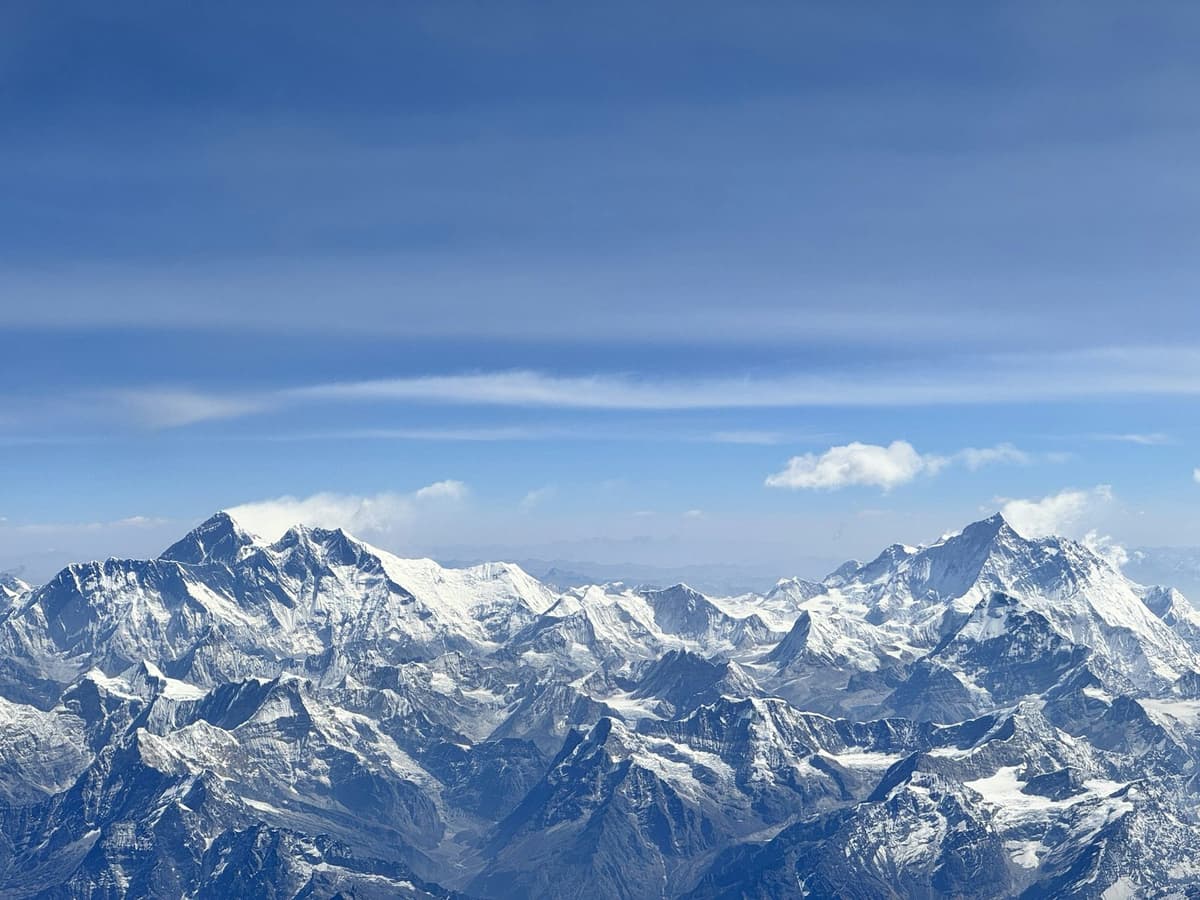
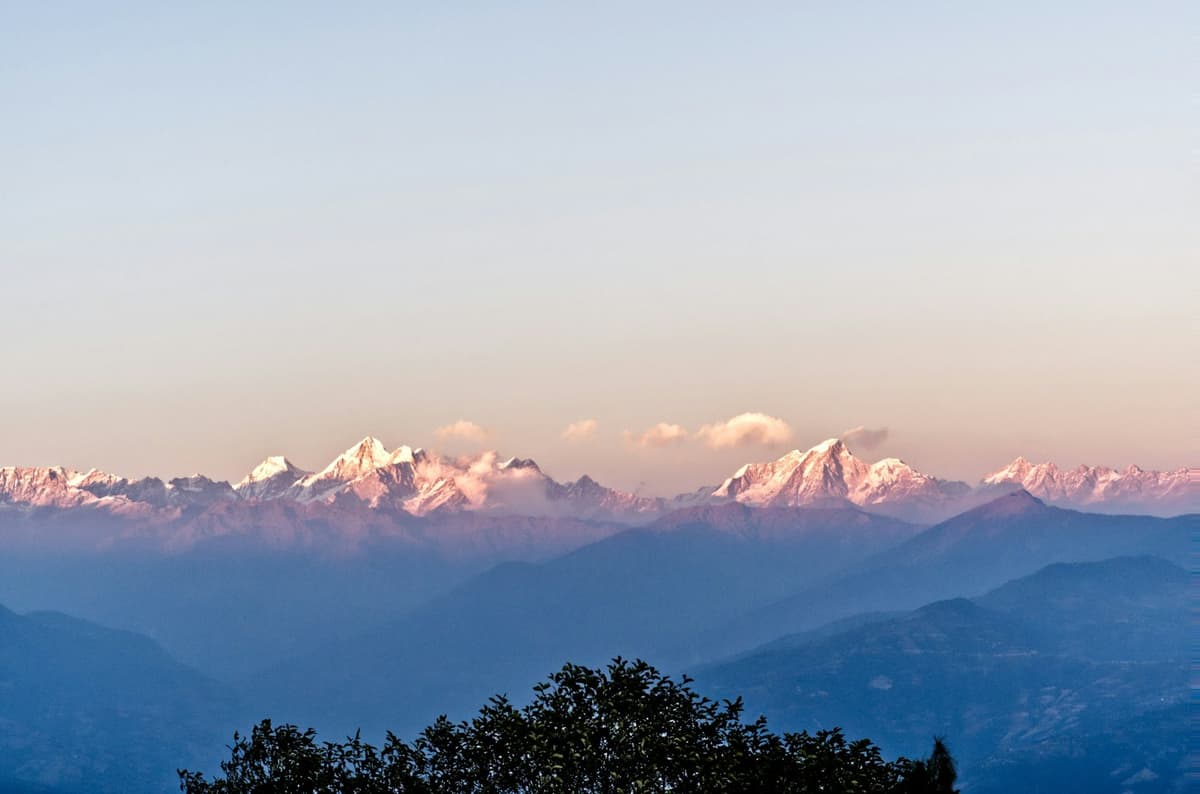
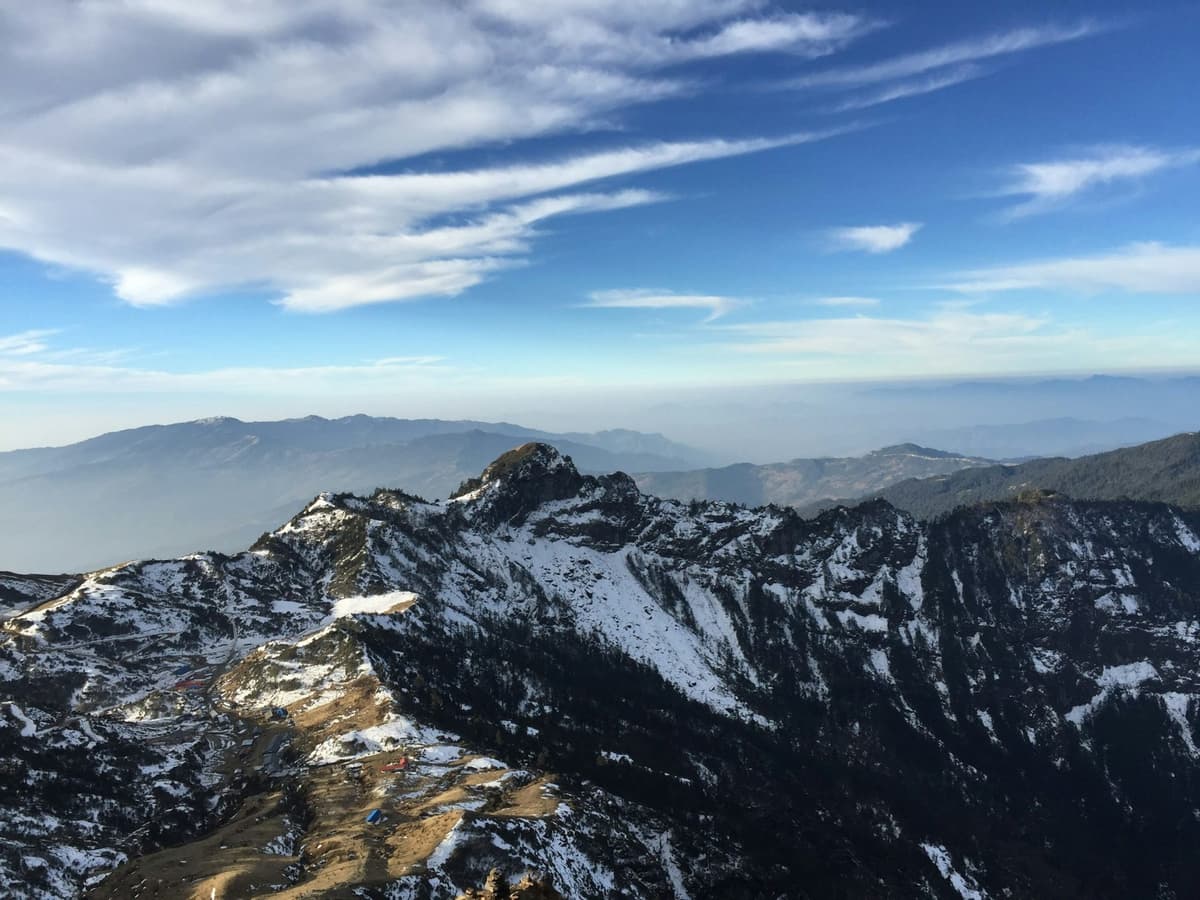
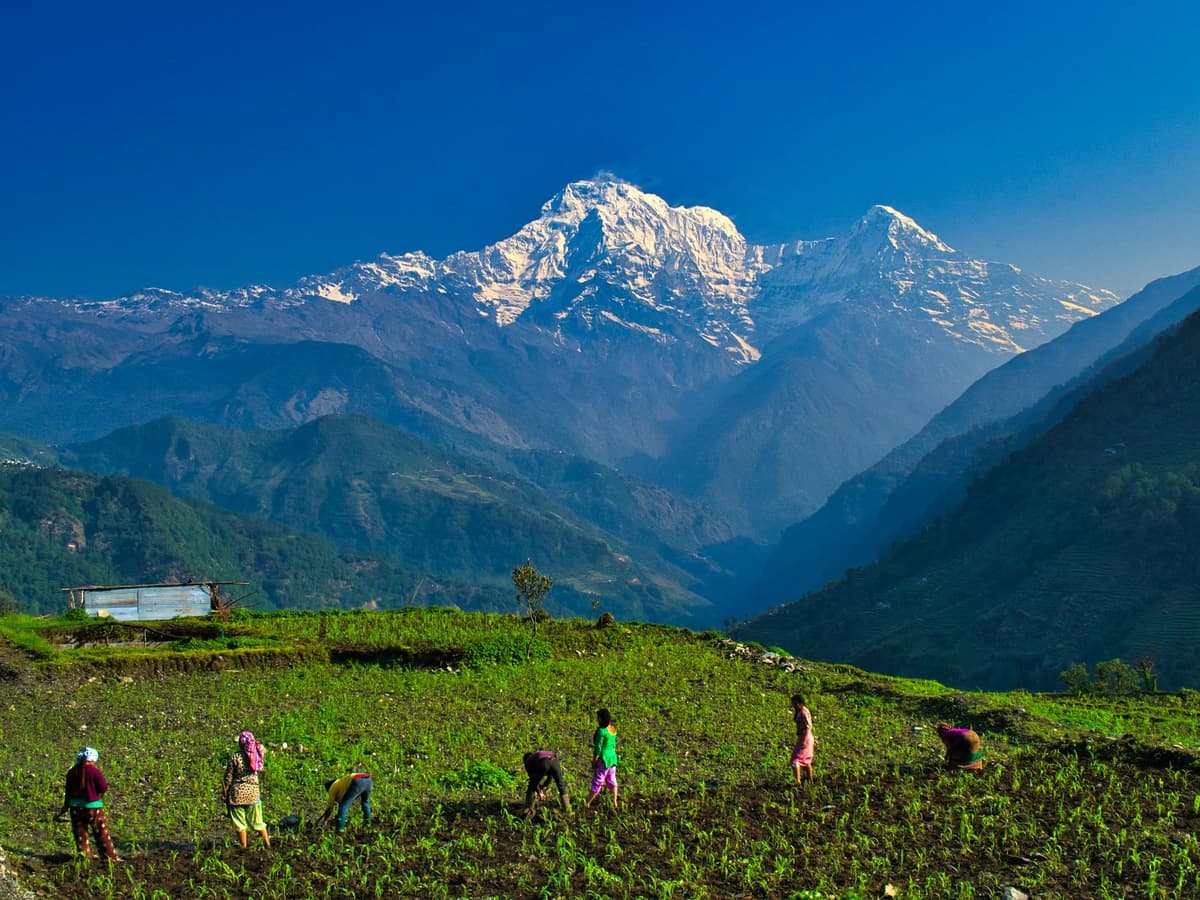
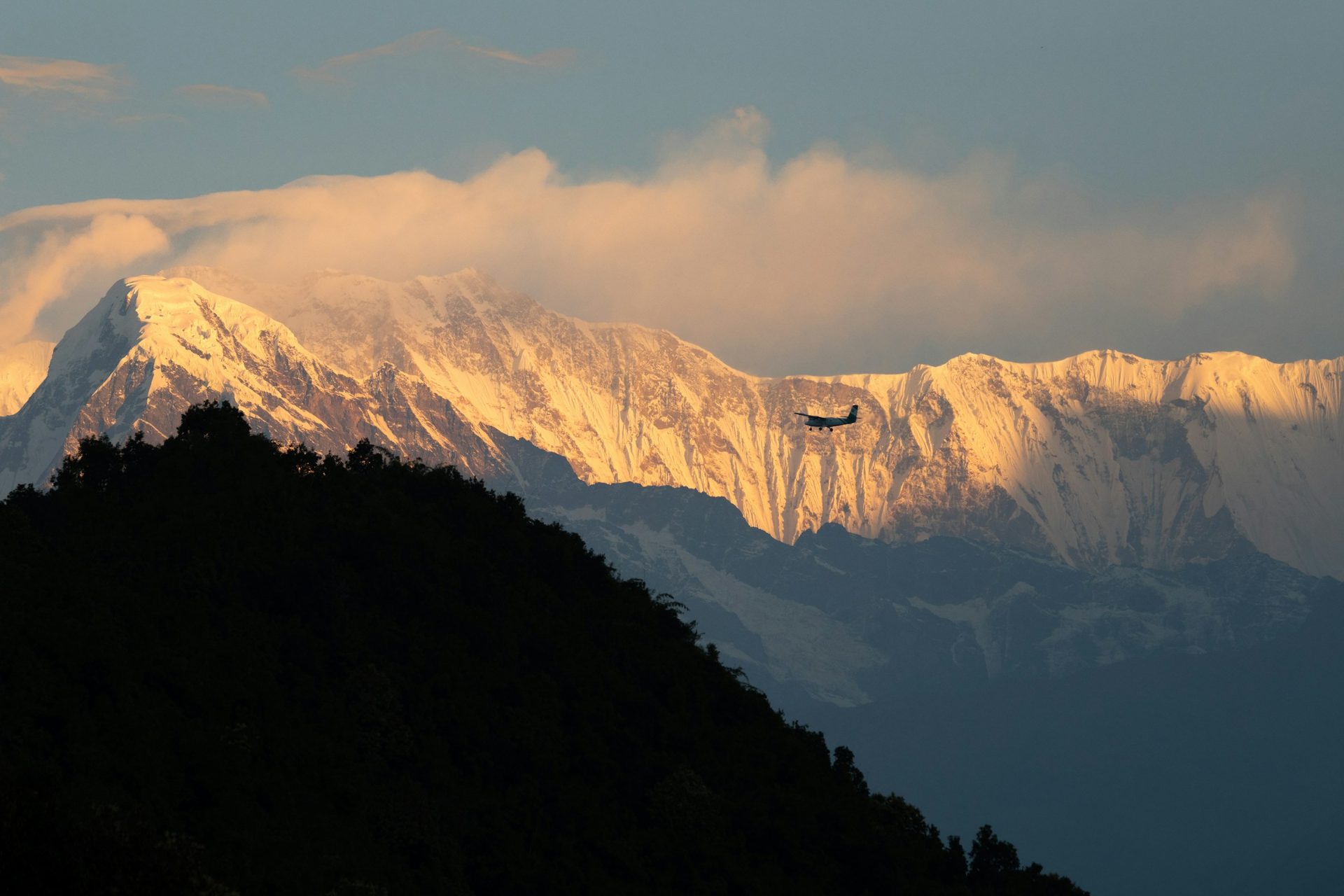
From Pokhara the skyline runs across the Annapurna massif, which NTB says "includes Annapurna 1 to IV and Annapurna South". Machhapuchhre, at 6,993 m (22,943 ft) and about 25 km north of Pokhara, "dominates the scenery". It is closed to climbing and regarded as sacred. "Further away are seen the giants, Dhaulagiri and Manaslu": Dhaulagiri stands at 8,167 m, Manaslu at 8,163 m and Annapurna I at 8,091 m.
Sarangkot
Sarangkot is the hill above the north-west shore of Phewa, at 1,595 m (5,233 ft). NTB says "tourists drive up the hill to see the sunrise from the top of the hill's view tower", and the panorama "stretches from Dhaulagiri (8167m) in the west".
- How to get there: NTB gives 11.3 km by road from Lakeside, a drive of at most about 30 minutes. Many people walk up from Lakeside instead, on a steep path through villages.
- Time to allow: a morning; leave in the dark if you want sunrise.
- Best time of day: sunrise. Late afternoon can also be clear in autumn and winter.
- Ticket: a small local ticket at the viewpoint; check the current rate at the gate. The city's tourism site lists the hill as open 24 hours. No trekking permit is needed.
Practical tip: Take a warm layer; at sunrise Sarangkot is colder than Lakeside.
Annapurna Cable Car
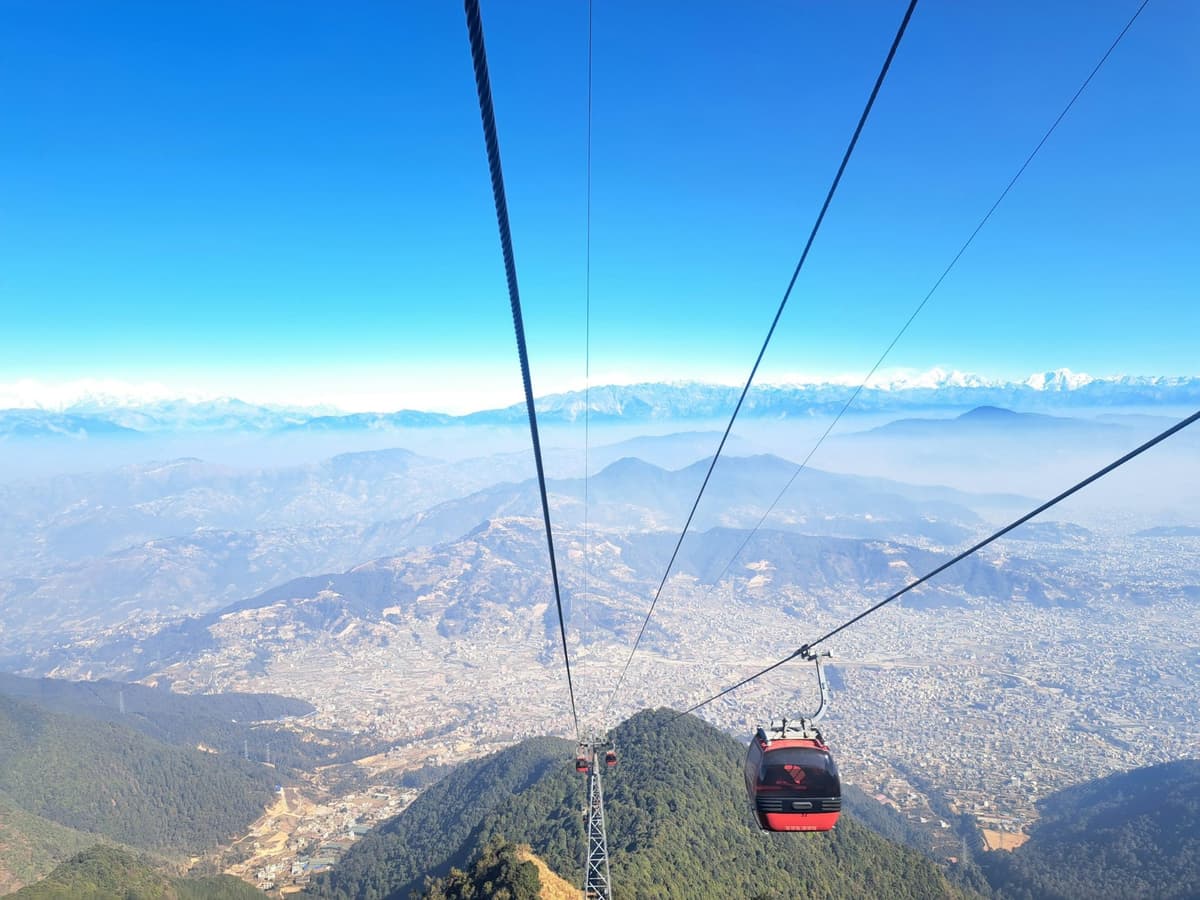
The Annapurna Cable Car runs from Sedi on the Phewa shore up to Sarangkot, 2.4 km in about 9 to 10 minutes. It opened in 2022. It suits anyone who wants the view without the climb.
- How to get there: short taxi ride to the base station at Sedi.
- Best time of day: daytime; the cable car does not help with sunrise, so drive up for that.
- Ticket: fares change; check at the station.
World Peace Pagoda (Shanti Stupa)
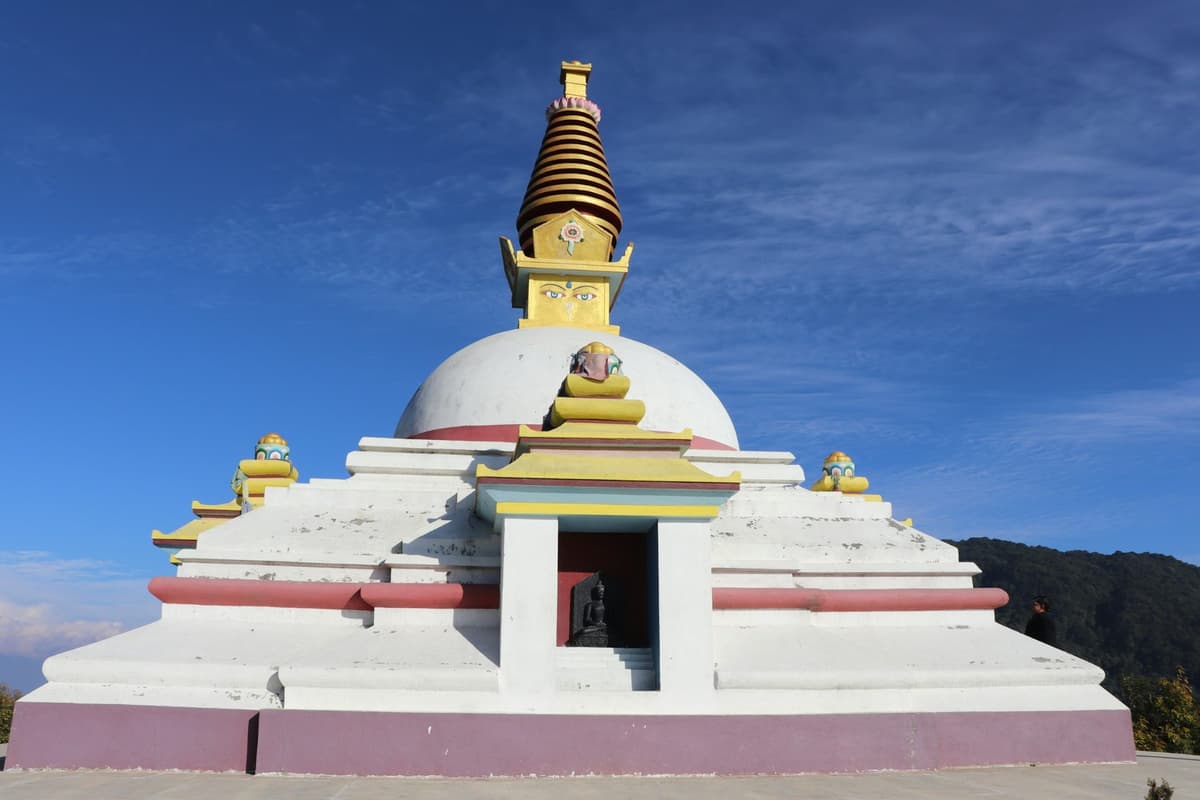
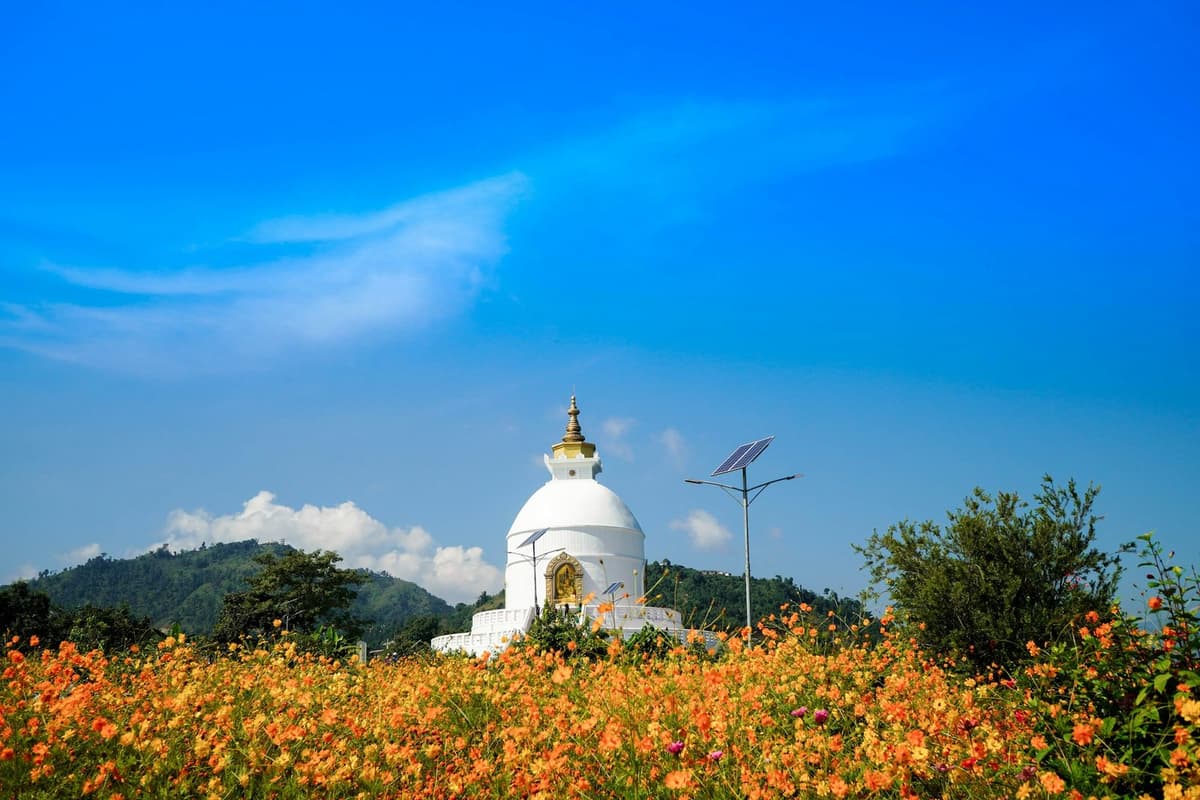
The World Peace Pagoda is a white Buddhist stupa "on top of a hill on the southern fringe of Phewa Lake", with "four images of the Buddha facing the four directions" and views of the Annapurna. It is one of 80 peace pagodas around the world built by Nipponzan Myohoji. It was inaugurated in 1999. It stands about 115 ft (about 35 m) tall.
- How to get there: by boat across Phewa, then about an hour uphill through villages and forest; or about 30 minutes by road from Lakeside plus a 10-minute walk.
- Time to allow: a morning or an afternoon.
- Best time of day: late afternoon, when the light falls on the lake and Lakeside, before the 6 pm close.
- Ticket: free; open 6 am to 6 pm.
Practical tip: It is a place of prayer. Walk clockwise round the stupa, take shoes off where signs ask, and keep drones and loud music away.
Pumdi, Bumdi and Pumdikot
Beyond the pagoda, NTB recommends Pumdi and Bumdi, "two villages above Phewa Lake's southern rim for exceptional views of the mountains". Pumdikot, about 13 km from the city, has a Shiva statue 51 ft tall on a hilltop above the lake.
Other viewpoints
NTB lists "Sarangkot, Thulakot, Kahun Hill, Naudanda and Ramkot" as "great for mountain views, sunrise and sunset views". Kahun Hill is a quieter choice if Sarangkot is busy. For overnight hill towns within reach of Pokhara, including Bandipur, see our guide to hill stations in Nepal.
Temples and culture
The Old Bazaar and Bindhyabasini Temple
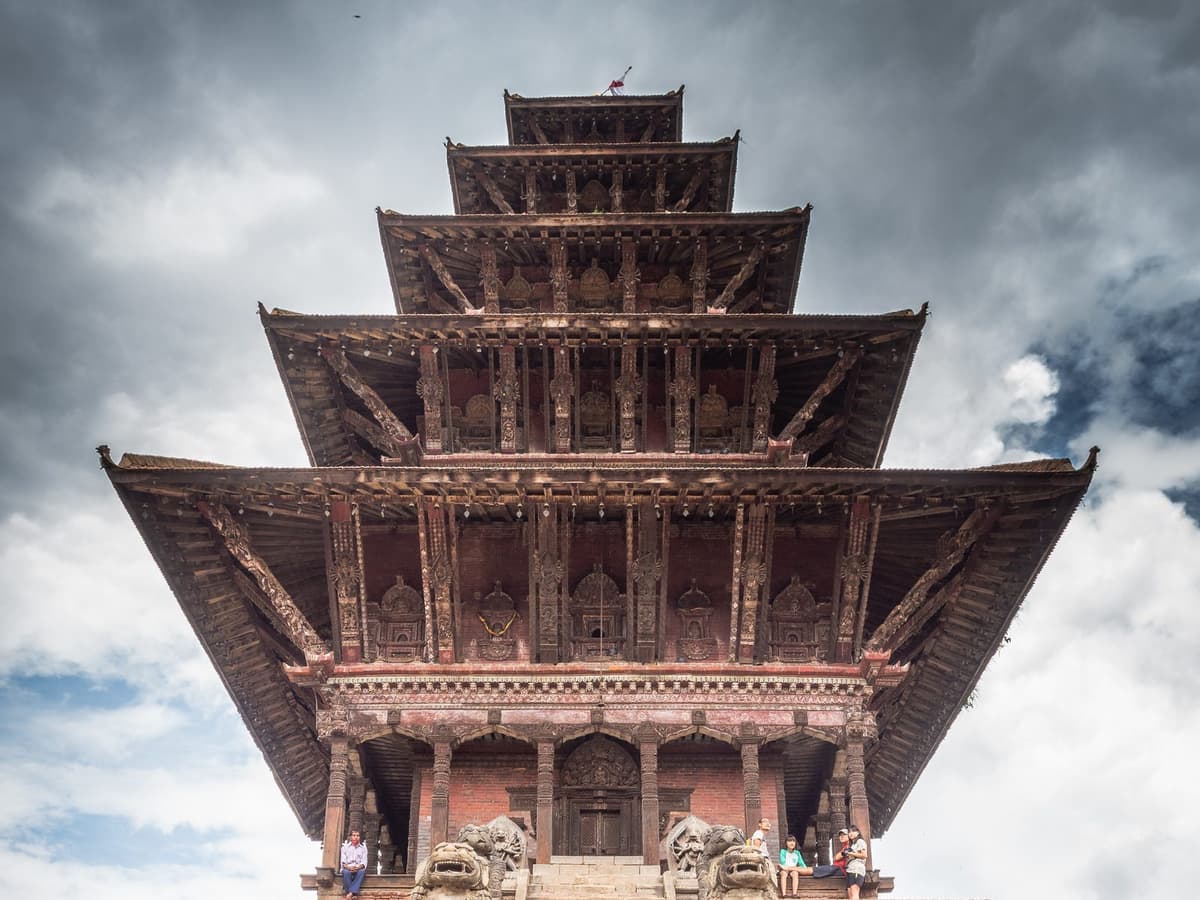
North of Lakeside lies the Old Bazaar. NTB says a "tour of the Old Bazaar is great to observe the local architecture and traditional Newari lifestyle", and that "the old bazaar is also home to Bindhyabasini Temple". Bindhyabasini is a busy Hindu shrine on a small rise, with shops selling flowers and offerings below.
- How to get there: a short taxi ride from Lakeside.
- Time to allow: a morning.
- Best time of day: morning, when local families come to worship.
- Ticket: none listed.
Practical tip: Walk the bazaar lanes slowly and look up at the older brick houses with carved windows.
Tibetan settlements
Two Tibetan settlements sit close to Pokhara. Tashi Palkhiel is at Hemja, on the north-western edge of the city, and Tashiling is at Chhorepatan, a few minutes' walk from Davis Falls and Gupteshwor Cave. Both are home to Tibetan families and sell handicrafts. Tashiling has a handicraft centre that sells hand-woven carpets and other handmade Tibetan goods.
- How to get there: taxi; Tashiling pairs well with Davis Falls, which is in the same area.
- Time to allow: a short visit each.
- Best time of day: daytime.
- Ticket: none listed.
Practical tip: Buy directly from the settlement's own shop or centre if you want your money to reach the weavers.
Caves, waterfalls and the Seti gorge
The cave sites cluster in two areas: Davis Falls and Gupteshwor in the south-west, and Mahendra and Bat caves in the north.
Davis Falls (Patale Chhango)
Davis Falls is where the outflow from Phewa Lake drops into a narrow channel and disappears underground. NTB says it is "locally known as the Patale Chhango (Fall of the Netherworld)" and was "named after Swiss lady who was swept away by the fall in 1961". The water comes from the Phewa Lake dam.
- How to get there: "about 2 km southwest of Pokhara Airport on the Siddhartha Highway" (NTB), meaning the old airport near the city centre.
- Time to allow: a short stop.
- Best time of day: any time between 6 am and 6 pm. The fall is loudest just after the monsoon, when the lake is high.
- Ticket: a small ticket; published figures differ, so check at the gate.
Practical tip: In the dry months the fall can be a trickle, so treat it as a stop on the way to Gupteshwor.
Gupteshwor Mahadev Cave
Across the road is Gupteshwor Mahadev Cave, a Hindu shrine to Shiva inside a long cave. NTB says the cave "on the other side of the fall is one such cave carved by Devi's Fall". Only part of the cave is open to visitors. Steps lead down into the cave past the shrine.
- How to get there: opposite Davis Falls in Chhorepatan.
- Time to allow: a short visit.
- Best time of day: any time.
- Ticket: separate from Davis Falls; a small ticket, check at the gate.
Practical tip: The lower section is wet and slippery. Wear shoes with grip, and ask before taking photos near the shrine.
Mahendra Cave and Bat Cave
Mahendra Cave lies "about 8 km north of Pokhara" at Batulechaur. The caves here are "locally known as the House of Bats", and Bat Cave (Chamere Gupha) is a ten-minute walk from Mahendra Cave. Bat Cave is dark inside and rough underfoot.
- How to get there: taxi north from Lakeside; combine with the Seti gorge on the way.
- Time to allow: a morning for both.
- Best time of day: daytime.
- Ticket: each cave has its own small ticket; check at the gate.
Practical tip: Bring a torch or use your phone light for Bat Cave, and wear shoes you do not mind getting muddy.
The Seti gorge
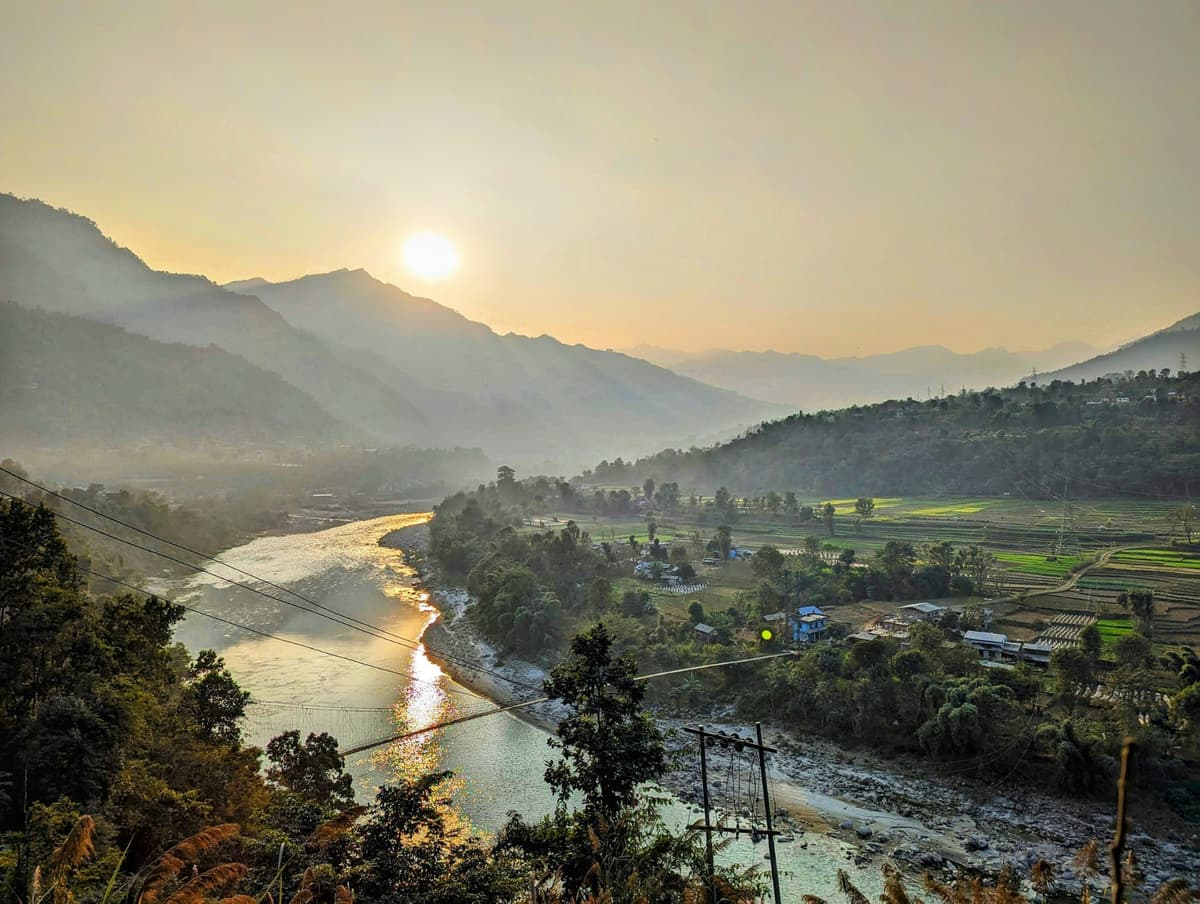
The Seti River runs through Pokhara in a deep, narrow cut. NTB says that at various points the Seti is barely 2 m wide but its depth reaches 20 m. You see it best from the bridges at Mahendra Pul, K.I. Singh Pul and Prithvi Chowk Pul.
Practical tip: Stand on the bridge, not on the edges of the gorge. The banks are steep and unfenced in places, and after heavy rain the river rises fast.
Museums in Pokhara
Museums are the plan for a rainy afternoon or a cloudy day.
International Mountain Museum
The International Mountain Museum is "situated 1.5 km south of Pokhara Airport at Rato Pairo" and "managed by the Nepal Mountaineering Association". It had a soft opening in 2002 and officially opened on 5 February 2004. It has three halls: the Hall of Great Himalayas, the Hall of Fame and the Hall of World Mountains. Expect old expedition gear, mountain cultures and the story of Himalayan climbing.
- How to get there: taxi from Lakeside; pairs with Davis Falls and Gupteshwor in the same part of town.
- Time to allow: a morning.
- Best time of day: daytime; published hours differ slightly, so check before you go.
- Ticket: there is a ticket with separate rates for foreign, SAARC and Nepali visitors; we found no current official rate, so check at the counter.
Practical tip: Do the museum before a trek, not after. The displays on the Annapurna peaks make the views you will walk under far more meaningful.
Other museums
NTB lists three more:
- Gurkha Memorial Museum at Pardi, with uniforms and medals, including the Victoria Cross, telling the story of Nepal's Gurkha soldiers.
- Pokhara Museum, between the bus stop and Mahendra Pul, on the people and cultures of western Nepal.
- Annapurna Regional Museum (natural history) at Prithvi Narayan Campus, run by ACAP, known for its butterfly collection.
Practical tip: We found no official hours or fees for these, so call ahead if you are going out of your way.
Activities in Pokhara: air, water and adventure
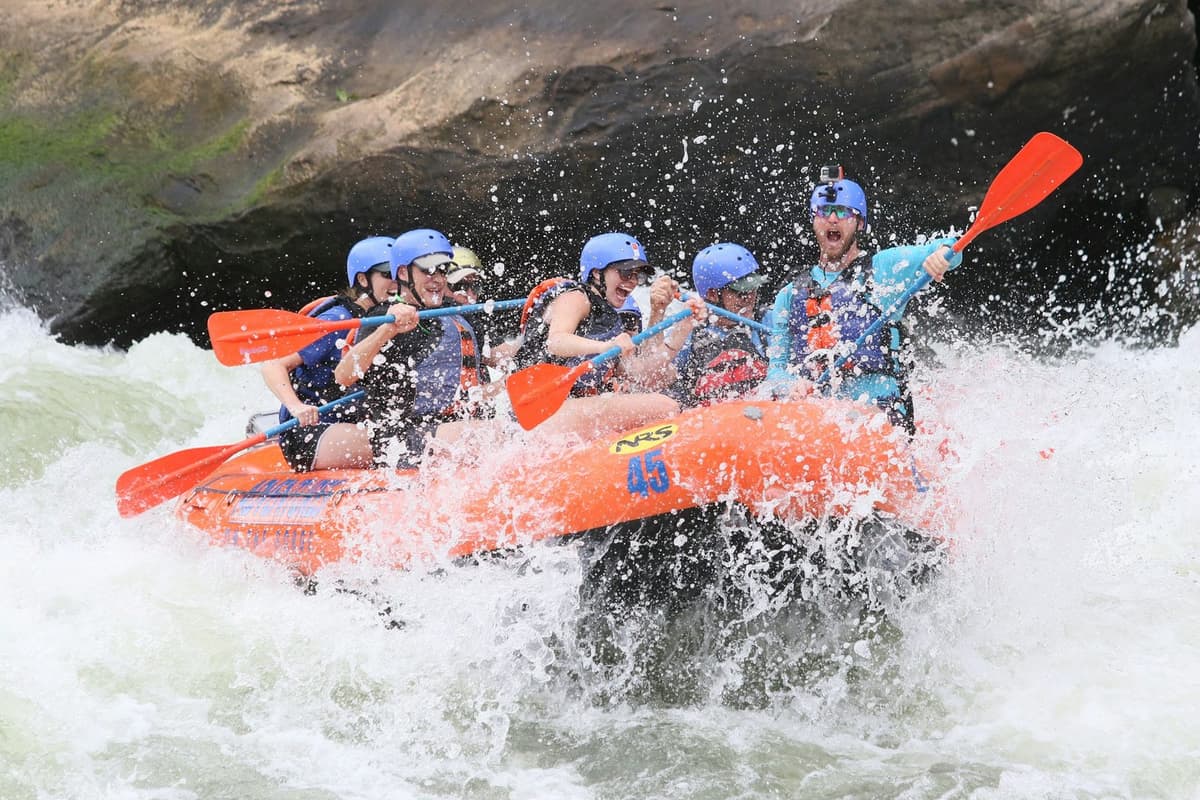
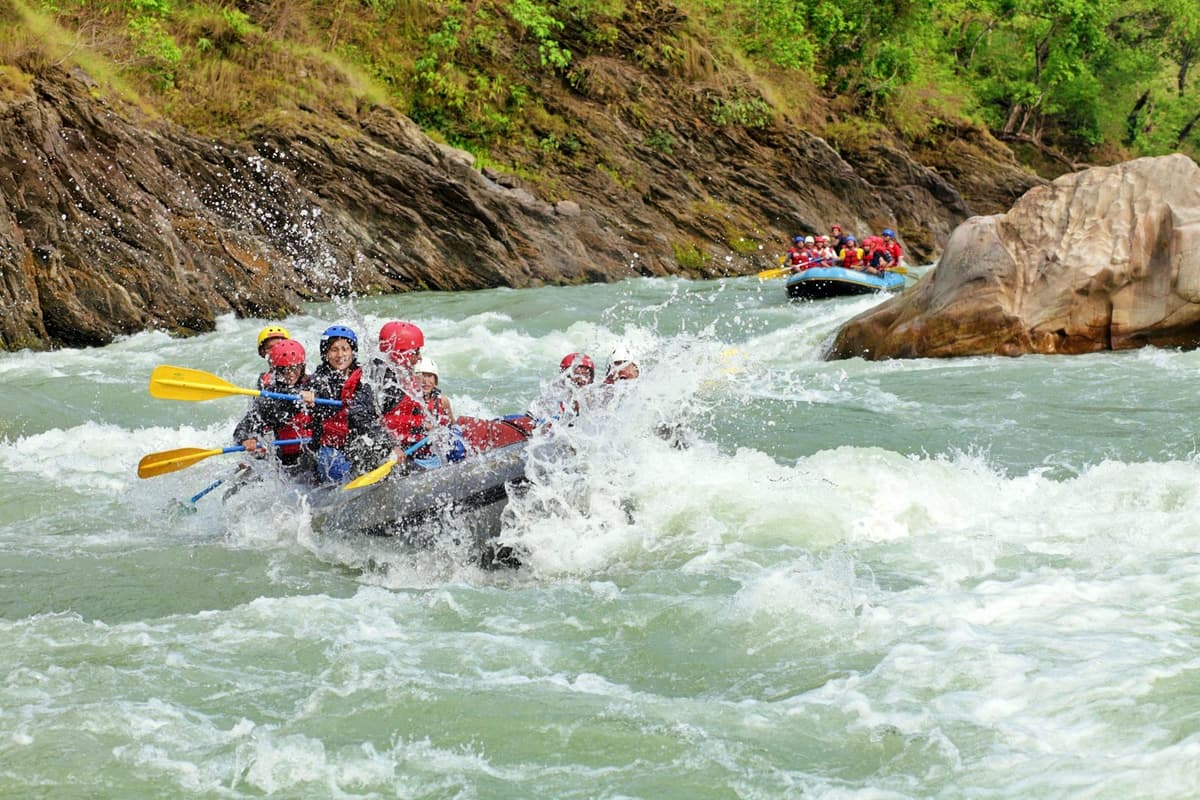
NTB lists boating and kayaking, mountain biking, hiking, an accessible trail, birdwatching, golf and museum tours among the city's activities. For many visitors, though, Pokhara means flying. We do not give activity prices in our Insights articles; prices vary by operator and season, so ask the operator directly.
Paragliding
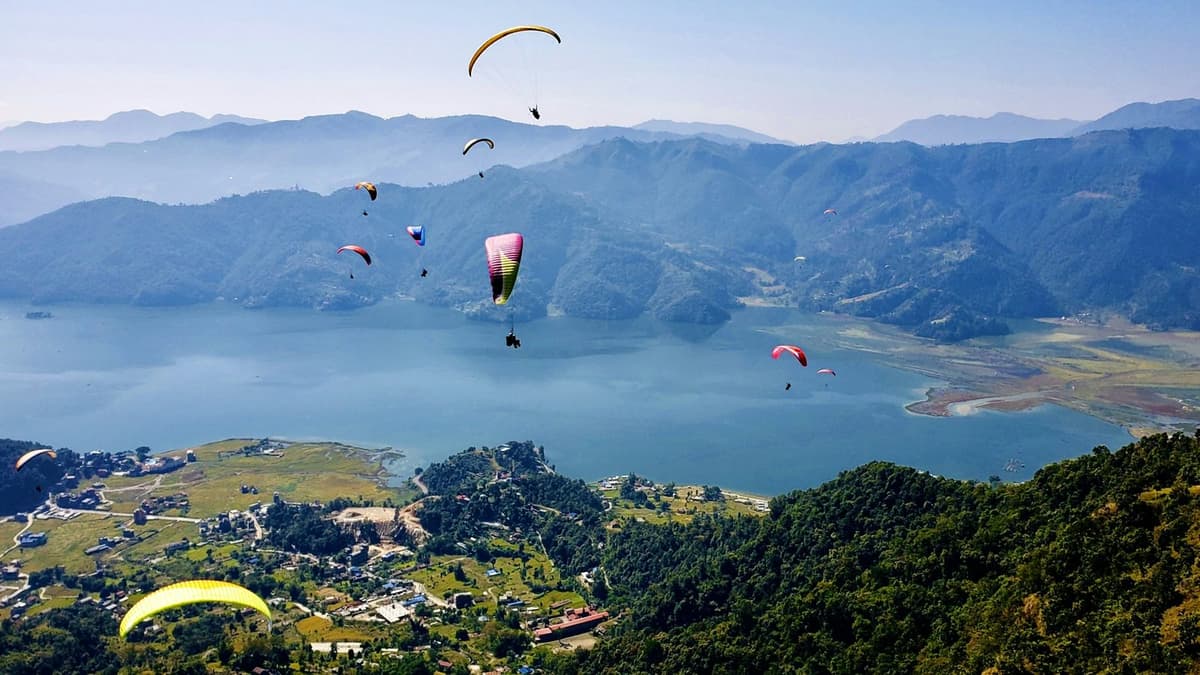
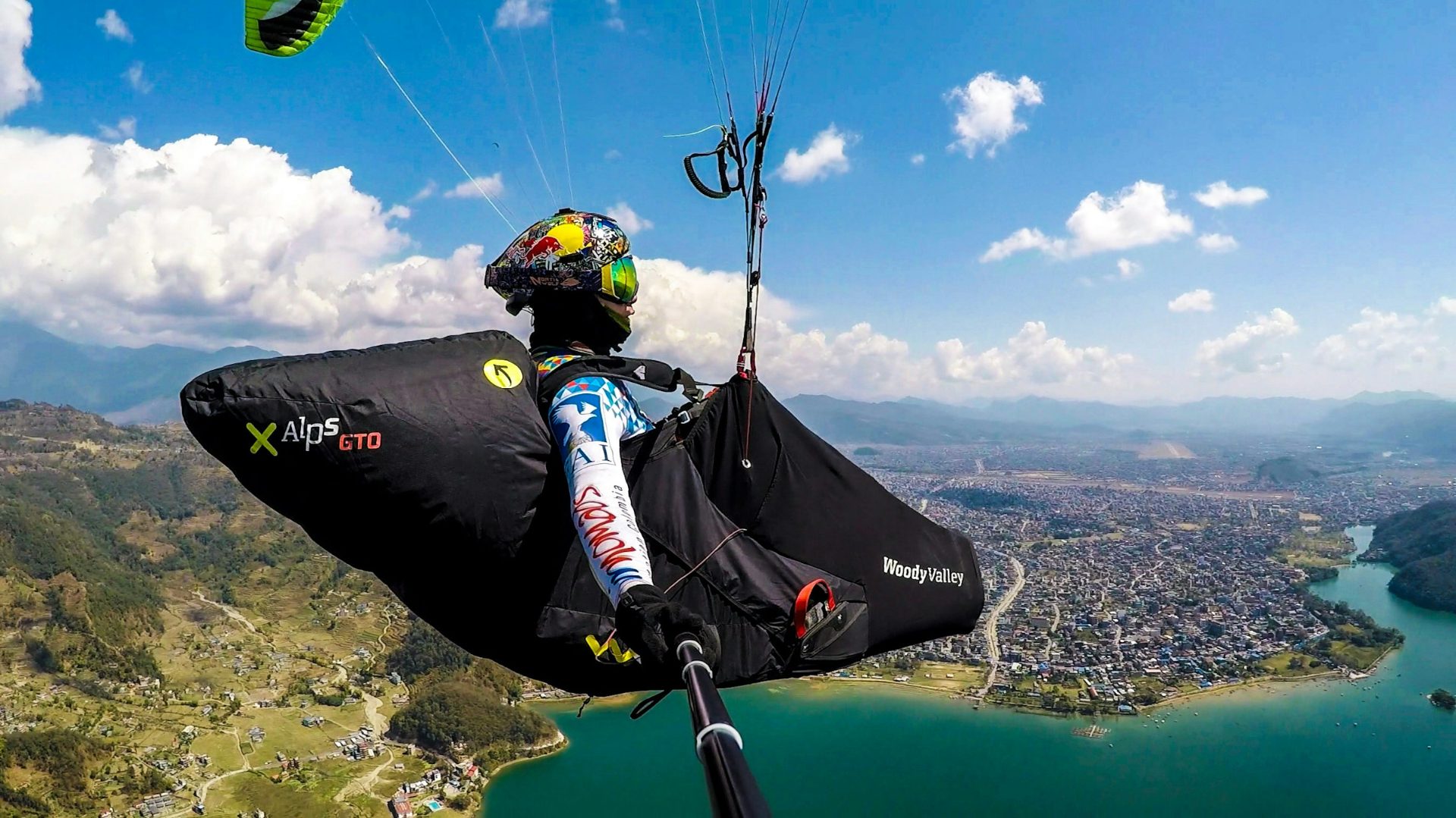
NTB says "Sarangkot has just been considered one of the top paragliding destinations in the world". Tandem flights take off from the Sarangkot ridge and land by Phewa Lake. The Civil Aviation Authority of Nepal (CAAN) and the Nepal Air Sports Association set the take-off and landing sites. When the current arrangement was agreed in May 2025, the association said flights would run from 11 am to 4:30 pm; check the current flying window with your operator. So paragliding is a late-morning or afternoon activity, not a sunrise one.
- Time to allow: a morning or an afternoon, including the drive up and waiting for the wind.
- Season: flights run in the dry months and stop for bad weather; the monsoon cuts most flying days.
- Before you book: check the operator's licence, ask how long the pilot has flown tandem, and confirm what happens if the weather cancels your slot.
Practical tip: Book for your first full day in Pokhara, not your last. If wind or cloud cancels the flight, you still have a day in hand.
Ultralight flights, zipline and bungee
- Ultralight flights: small open aircraft flights over the lake and towards the mountains, operated from Pokhara. The industry has struggled with higher fees, so check they are running when you visit.
- Zipline: a zipline runs from the Sarangkot side down towards the valley.
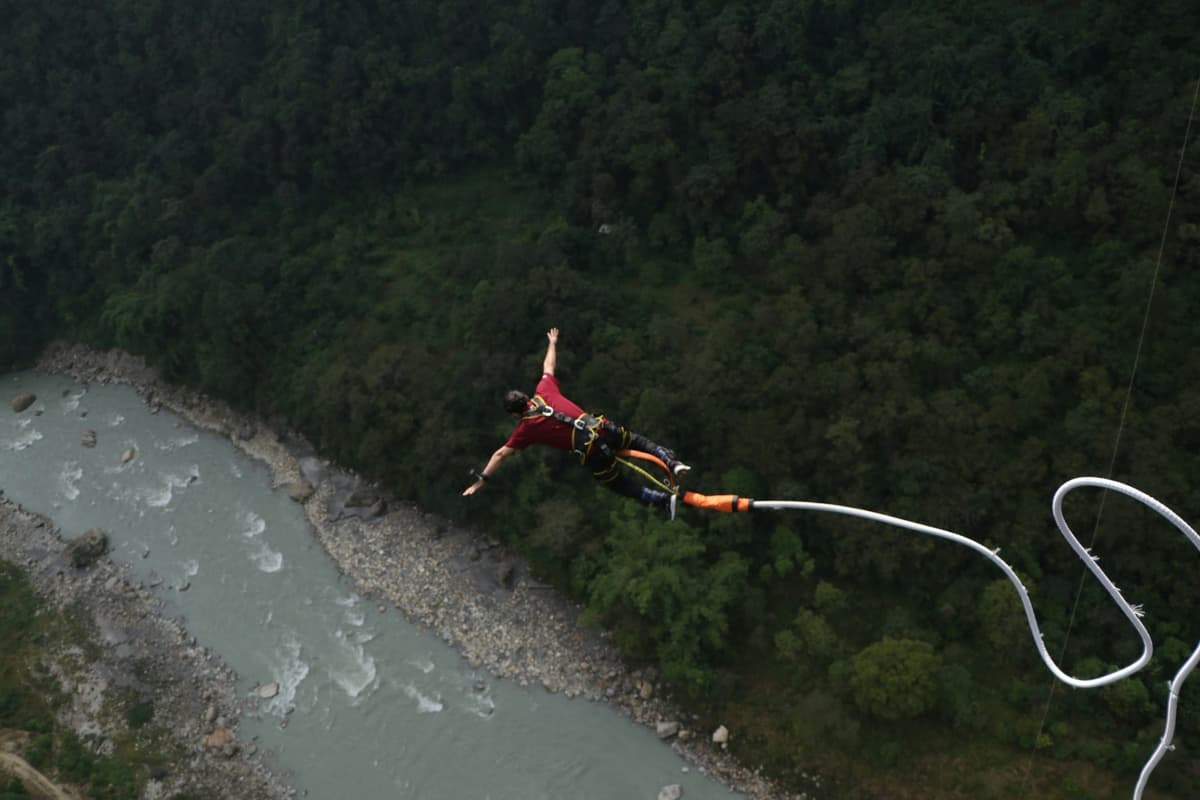
- Bungee: NTB says "the only tower bungee jumping facility in Nepal is situated in Pokhara", at Hemja, "only 20 mins drive" from the city.
Kayaking, cycling and birdwatching
Kayaks can be rented on the Lakeside shore, and early morning is the calmest time on the water. Mountain bikes are for hire in Lakeside too; leave early, before traffic builds. Birdwatchers should head to Begnas.
Day hikes and treks from Pokhara
Pokhara is where the walking starts. NTB lists "Sarangkot, Kaskikot, Naudanda, Kahun Danda, Kalikistan", plus Australian Camp and Thulakhot, as popular hiking destinations around Pokhara, some with village homestays.
Australian Camp and Dhampus
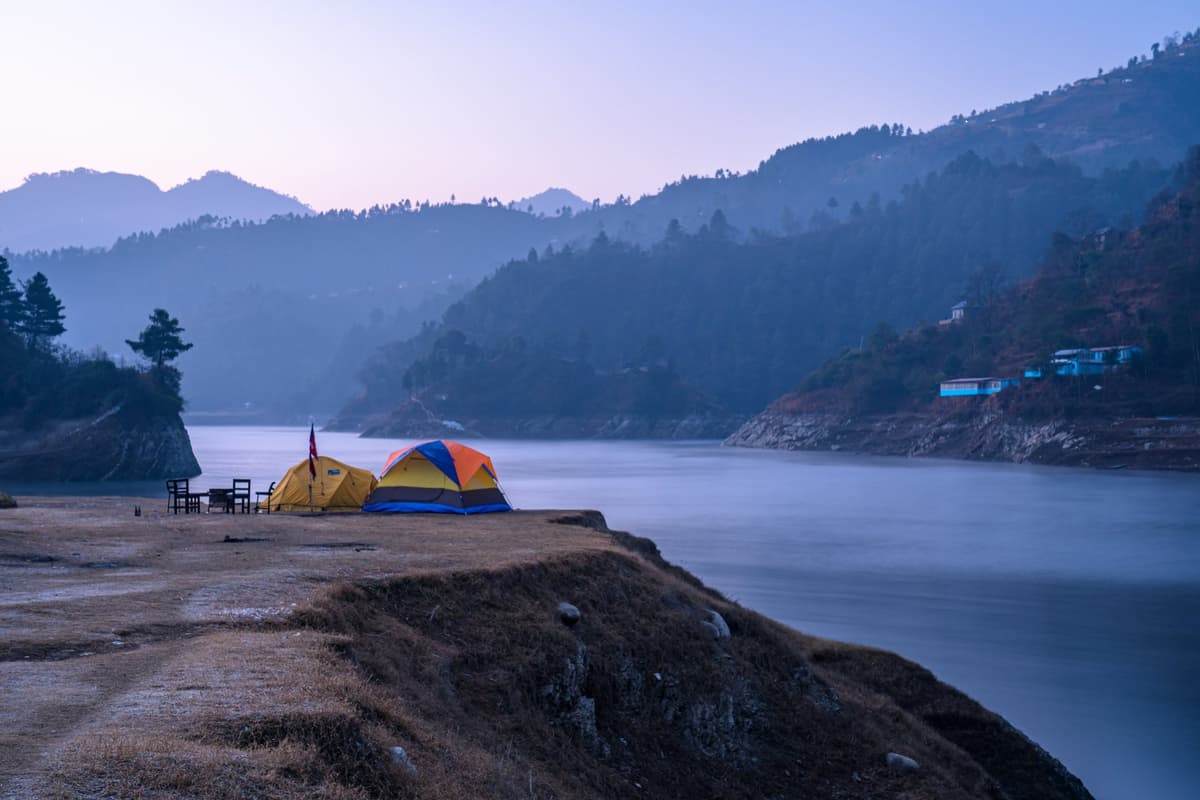
Australian Camp is a grassy ridge-top camp at about 2,050 to 2,060 m inside the Annapurna Conservation Area. Travel guides put the trailhead at Kande under an hour by road from Pokhara, then a short walk up. Dhampus, a village at about 1,650 m, is also inside the conservation area. Both make a gentle overnight with sunrise views, and both sit below the 2,450 m height where the CDC says mild altitude symptoms become possible.
Because both are inside the conservation area, they need the Annapurna Conservation Area Permit (ACAP): NPR 3,000 for foreign visitors and NPR 1,000 for SAARC nationals, children under 10 free. It costs double if bought at a checkpost, so arrange it in advance.
Practical tip: With one night to spare, Australian Camp gives a big mountain view for little walking.
Multi-day treks from Pokhara
Most Annapurna treks begin with a drive from Pokhara:
| Trek | High point | Typical length | Notes |
|---|---|---|---|
| Ghorepani Poon Hill | 3,210 m | 2 to 6 days from Pokhara | Much of the trail is stone steps; sleeps at Ghorepani, about 2,860 m |
| Mardi Himal | Base camp 4,500 m | 5 to 9 days | Opened in 2012; inside the conservation area |
| Annapurna Base Camp | 4,130 m | 7 to 12 days | Starts from Pokhara by road |
All three go above 2,450 m, so altitude matters on them in a way it never does in Pokhara itself; see the safety section below. Our guide to the best treks in Nepal compares these and other routes, and the Annapurna Base Camp trek cost guide breaks down permits, food and transport.
A licensed guide walks with you on every trek we run.
Practical tip: After the September 2026 floods, check the state of the Nayapul to Ghandruk road before you set off on any trek that starts there.
Lakeside: where to walk, eat and spend the evening
Lakeside is where most visitors stay, and it is pleasant to walk. The shore path runs past boat stands, cafés and the Barahi Ghat, and the main street behind it is lined with hotels, restaurants, bars and souvenir shops.
- Morning walk: go north along the shore towards the quieter end of the lake, where the boats tie up and local families come to wash and fish.
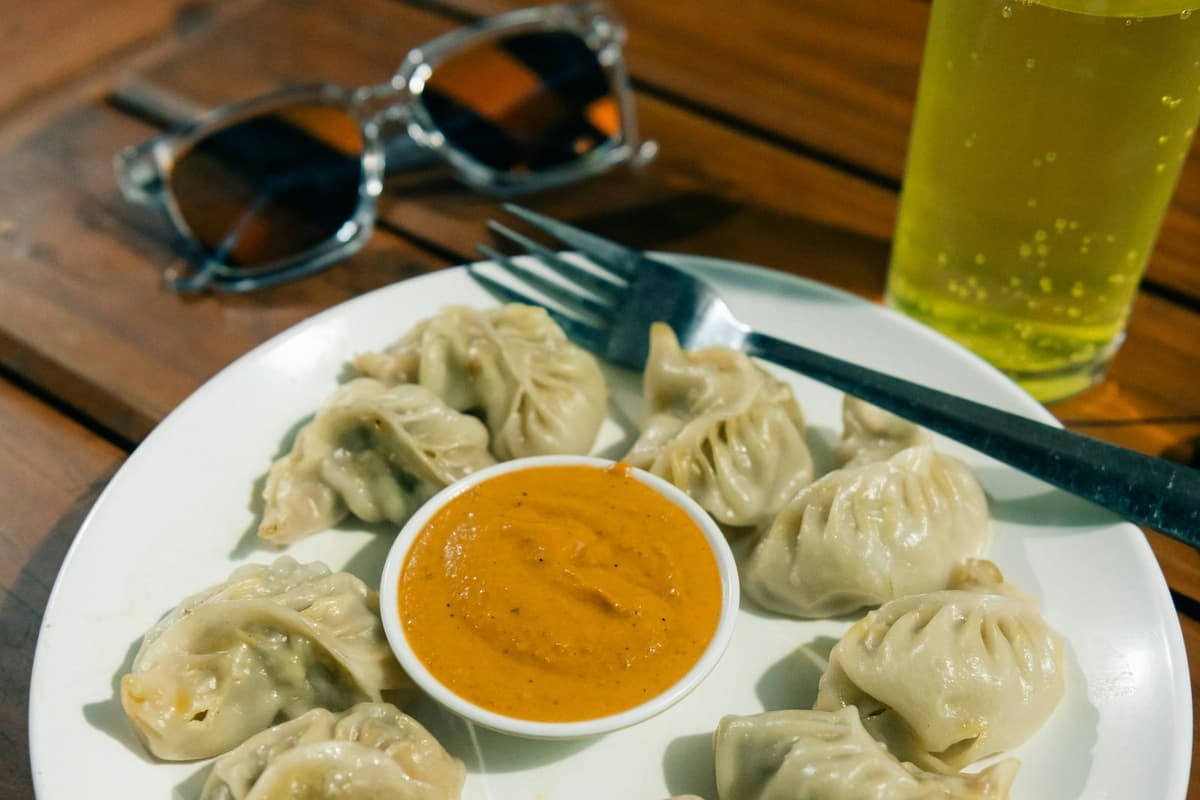
- Food: Lakeside has everything from Nepali dal bhat (rice, lentil soup and vegetables) and momo (dumplings) to international menus and bakery cafés. Vegetarian food is easy to find. For a simple, filling lunch, look for a small local place serving dal bhat set meals.
- Evening: watch the aarti at Barahi Ghat around 6 pm, then walk the shore as the lights come on. Some bars have live music.
- Shopping: handicrafts, singing bowls, pashmina and trekking gear; check quality before you trust gear on a trek.
Practical tip: Damside, at the southern end of Lakeside, is quieter and has good views of the Peace Pagoda ridge; it suits travellers who want to sleep early before a sunrise start.
Pokhara sightseeing: how many days do you need?
Two full days in Pokhara cover the classic sights at an easy pace: Sarangkot sunrise, Phewa Lake, Tal Barahi, the Peace Pagoda, Davis Falls, Gupteshwor Cave and the Mountain Museum. Add a third day for Begnas, a flight or a short hike, and allow extra days for any Annapurna trek.
One day in Pokhara
- Sunrise at Sarangkot, back to Lakeside for breakfast.
- Davis Falls, Gupteshwor Cave and the Mountain Museum in the south of town.
- Boat across Phewa to Tal Barahi, then on to the trail up to the Peace Pagoda for late afternoon.
- Evening aarti at Barahi Ghat and dinner in Lakeside.
It is a full day, but it works because the south-side sights are close together.
Two days in Pokhara
- Day 1: Sarangkot sunrise; Phewa Lake and Tal Barahi; World Peace Pagoda in the afternoon.
- Day 2: Davis Falls and Gupteshwor; the Mountain Museum; Tashiling settlement; the Old Bazaar, Bindhyabasini and the Seti gorge on the way back; evening in Lakeside.
Three days in Pokhara
- Days 1 and 2: as above.
- Day 3: choose one: Begnas and Rupa lakes for a quiet day; paragliding or another flight; Mahendra and Bat caves; or a drive to Kande and the walk up to Australian Camp for one night in the hills.
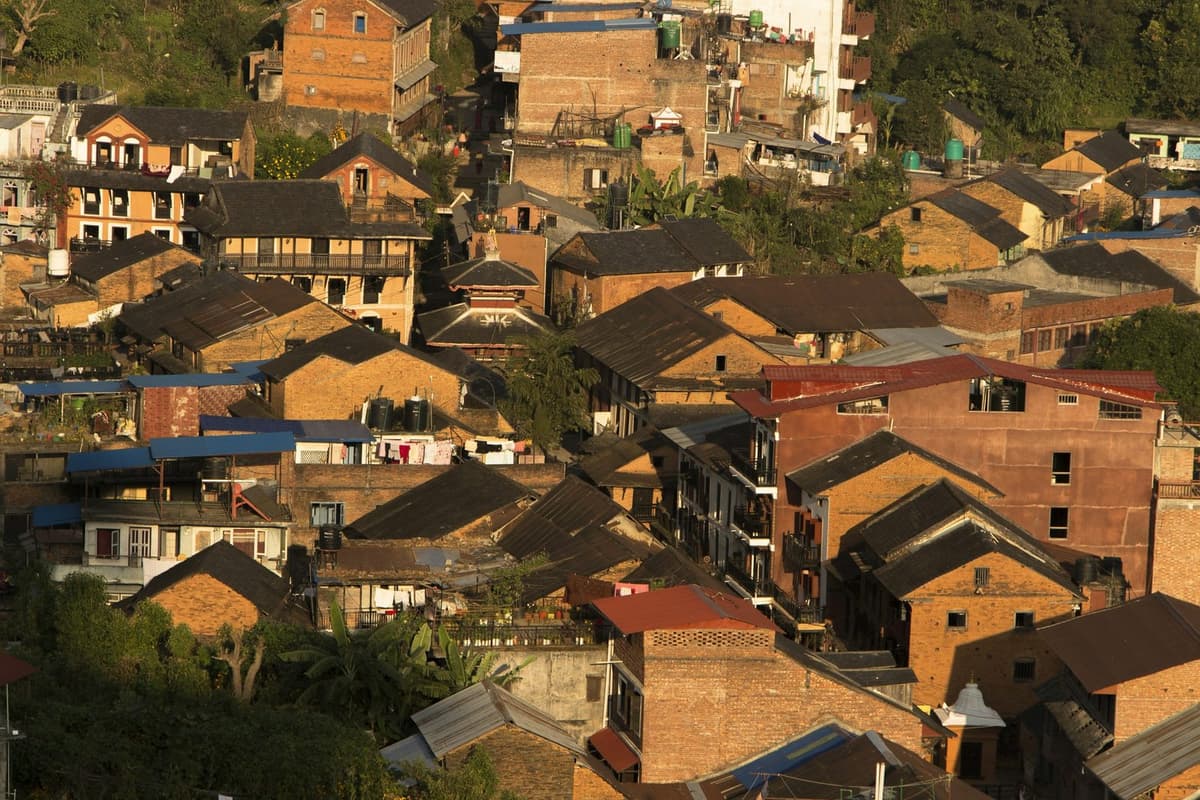
Practical tip: Many travellers break the drive with a night in Bandipur, an old hill town on the way from Kathmandu.
How do you get from Kathmandu to Pokhara?
You can fly or drive. By air, Kathmandu to Pokhara takes about 30 minutes. By road it takes most of a day, often six to nine hours with traffic and roadworks, over about 200 km along the Prithvi Highway. Tourist buses, private cars and local buses all run the route.
- By air: Buddha Air, Yeti Airlines and Shree Airlines fly between Kathmandu and Pokhara. Flights depend on the weather at both ends.
- By tourist bus: buses arrive at and leave from Mustang Chowk, Pokhara's tourist bus park. NTB says "tourist bus services provide easy transportation to prime areas like Pokhara and Chitwan".
- By private car: the most flexible option, with stops on the way.
- Into Pokhara from abroad: Pokhara International Airport was inaugurated on 1 January 2023, and flydubai has flown daily between Dubai and Pokhara since 23 September 2026. International flights and your Nepal visa are your own arrangements; the official visa information is on the Nepal Tourism Board tourist visa page.
The old domestic airport near the city centre is still used for Jomsom flights, helicopters and mountain and rescue flights, so do not be surprised to see both.
Practical tip: During Dashain the Department of Roads expects traffic to "more than triple", so book seats early and allow extra time if you travel in mid to late October.
When is the best time to visit Pokhara?
October and November are the best months for Pokhara: the monsoon has passed and NTB says "the clearest skies are found after the monsoon in October and November". December to February is dry and clear but cool at night. March to May is warm and often hazy, and June to September brings very heavy rain.
Pokhara is one of the wettest cities in Nepal: its weather station averages 3,868.3 mm of rain a year, against 1,502 mm in Kathmandu. NTB notes that "eighty percent of all the rain in Nepal is received during the monsoon (June-September)". The monsoon normally arrives around 13 June and withdraws around 2 October, though in recent years it has left later.
The table gives 1991 to 2020 averages from the Department of Hydrology and Meteorology station at Pokhara Airport, 827 m. Sarangkot and the other viewpoints are cooler.
| Month | Average high / low | Rain | What it means for sightseeing |
|---|---|---|---|
| January | 19.9 / 7.1 °C, 21.6 mm | Dry | Clear and cool; warm layers for sunrise |
| February | 22.7 / 9.7 °C, 35.1 mm | Dry | Good views, mild days |
| March | 27.1 / 13.1 °C, 63.7 mm | Some showers | Warm; haze builds |
| April | 30.0 / 16.1 °C, 141.7 mm | Showers | Hot, hazy; afternoon storms |
| May | 30.4 / 18.7 °C, 354.7 mm | Wet | Pre-monsoon storms; humid |
| June | 30.8 / 21.2 °C, 648.2 mm | Very wet | Monsoon arrives |
| July | 30.4 / 22.4 °C, 941.0 mm | Wettest | Heavy rain; views rare; caves and museums |
| August | 30.5 / 22.3 °C, 839.4 mm | Very wet | As July |
| September | 29.9 / 21.1 °C, 635.0 mm | Wet | Improves late in the month |
| October | 27.9 / 17.2 °C, 159.2 mm | Drying | Clear skies return; busy |
| November | 24.4 / 12.3 °C, 17.2 mm | Dry | Best: dry and clear |
| December | 21.0 / 8.3 °C, 11.5 mm | Driest | Clear, cool mornings |
| Year | 27.1 / 15.8 °C, 3,868.3 mm |
Is Pokhara safe? Practical tips
Pokhara is a relaxed and generally safe city for visitors. The main risks are natural: heavy monsoon rain, deep water in the lake and the gorge, and activities in the air. These steps cover most of them, with numbers to save.
Monsoon and rivers
- In June to September, expect heavy rain most days. Carry a rain jacket and shoes that grip on wet stone.
- Keep well back from the Seti gorge and riverbanks after rain. In September 2026 the swollen Seti flooded riverbanks at Ramghat.
- Landslides can close the road to Kathmandu or the roads to trailheads. Check the road on the morning you travel.
- If you plan a trek, rainfall is far higher in the hills: Lumle, about 40 km from Pokhara on the road towards Nayapul, gets over 5,600 mm a year, the highest in the country.
Lake safety
- Wear the life jacket in the boat, and make sure every child has one that fits.
- Do not swim far from the shore, and never swim alone.
- Agree the boat price and the return time before you leave the shore.
Paragliding and other air activities
- Choose an operator who can show you a licence, and ask about the pilot's tandem experience.
- Expect cancellations for wind or cloud. That is a good sign, not poor service.
- Check that your travel insurance covers paragliding, zipline or bungee before you fly.
Altitude
Pokhara, Sarangkot, Australian Camp and Dhampus all sit below the 2,450 m height where mild altitude symptoms become possible. Altitude matters only on treks such as Poon Hill, Mardi Himal and Annapurna Base Camp. On those, walk slowly, drink enough water, avoid alcohol for the first days, never go higher with symptoms such as headache or nausea, and ask your doctor before the trip about preventive medicine. Teahouse garlic soup is a comforting local habit that helps you drink more, not a proven cure.
Useful numbers
The Tourist Police in Pokhara are on +977 61 524457; the national emergency numbers are 100 (police) and 102 (ambulance). Save them in your phone before you go out.
Money and permits
- Carry cash in Nepali rupees for the small tickets at Sarangkot, the caves and Davis Falls.
- You need no permit for the city sights or Sarangkot. You do need the ACAP for Australian Camp, Dhampus and Annapurna treks.
Read next: Ghandruk village guide, Thorong La Pass guide, Phewa Lake guide, Sarangkot guide and Kathmandu to Pokhara travel guide.
Frequently asked questions
What is Pokhara famous for?
Pokhara is famous for Phewa Lake and its close view of the Annapurna range, led by Machhapuchhre, the Fishtail. It is also known for Sarangkot sunrise, paragliding over the lake, the World Peace Pagoda, and as the starting point for Annapurna treks such as Poon Hill and Annapurna Base Camp.
How many days do you need in Pokhara?
Two full days cover the main sights at an easy pace: Sarangkot sunrise, Phewa Lake and Tal Barahi, the Peace Pagoda, Davis Falls, Gupteshwor Cave and the Mountain Museum. A third day adds Begnas Lake, paragliding or a short hike to Australian Camp. For a trek, add the trek days and a spare day for weather.
What can you do in Pokhara in one day?
Start with sunrise at Sarangkot, then visit Davis Falls, Gupteshwor Cave and the International Mountain Museum, which sit close together in the south of the city. In the afternoon, take a boat across Phewa Lake to Tal Barahi and walk up to the World Peace Pagoda. Finish with the evening aarti at Barahi Ghat and dinner in Lakeside.
What is there to do in Pokhara at night?
Pokhara's evenings centre on Lakeside. Most evenings around 6 pm priests perform an aarti, an evening lamp ceremony, at Barahi Ghat on the shore. After that, walk the lakeside path, eat in one of the many restaurants, or find a bar with live music. The Peace Pagoda closes at 6 pm and boating is a daytime activity, so plan both for daylight.
Is paragliding in Pokhara safe?
Tandem paragliding in Pokhara is regulated: the Civil Aviation Authority of Nepal and the Nepal Air Sports Association set the take-off and landing sites, with flights from the Sarangkot ridge landing by Phewa Lake. Safety depends on the operator and the weather: choose a licensed operator, check your insurance covers it, and accept cancellations for wind or cloud.
Do you need a permit to visit Sarangkot or Australian Camp?
You need no permit for Sarangkot or the sights in Pokhara city; there is only a small local ticket at Sarangkot. Australian Camp and Dhampus are inside the Annapurna Conservation Area, so you need the ACAP permit: NPR 3,000 for foreign visitors and NPR 1,000 for SAARC nationals, children under 10 free.
Plan your days in Pokhara
Pokhara rewards a slow pace: an early view, a boat on the lake and a long dinner by the water.
If you would like a ready-made plan, our Pokhara tour by flight and road covers the main sights, the Bandipur and Pokhara Lakeside tour adds a night in Bandipur on the way, and the Australian Camp and Pokhara tour adds a night in the hills. Each page lists what is included. For more places across the country, browse our Insights.
Message us on WhatsApp or send an enquiry with your dates and group size, and we will tell you honestly how many days you need in Pokhara and what fits around it.
Last checked: 14 October 2026