Lo Manthang had a Raja until 2008, when Nepal abolished its monarchy and the last king of Lo lost his title. He lived most of his life inside this walled city, where local people trained by foreign conservators have been bringing back the murals of its 15th-century monasteries since the late 1990s.
By Uncover Nepal Guide · Checked by our Kathmandu travel team · Updated 13 Nov 2026
Lo Manthang, Mustang, is the walled former capital of the kingdom of Lo, built in the 15th century on a plateau at about 3,800 m (about 12,470 ft). It is on UNESCO's Tentative List, not yet inscribed. To visit, you need a restricted-area permit, a registered agency and a licensed guide.
This Lo Manthang Mustang guide covers the walled city itself. For the whole district, including Lower Mustang, start with our Mustang guide.
In this guide
- Key facts
- Where is Lo Manthang, Mustang, and what is it?
- What are Lo Manthang's wall and city plan like?
- Which monasteries can you visit in Lo Manthang?
- Who restored the monastery murals?
- What happened to the Royal Palace and the king of Lo?
- What is daily life like in Lo Manthang?
- What happens at the Tiji festival?
- What can you see near Lo Manthang?
- How do you get to Lo Manthang?
- Do you need a permit and a guide?
- How do you handle the altitude?
- When is the best time to visit Lo Manthang?
- Frequently asked questions
- Plan your Lo Manthang visit with us
Key facts
- Altitude
- About 3,800 m (about 12,470 ft) (UNESCO Tentative List, 14 November 2026)
- Built
- 15th century, capital of the kingdom of Lo (UNESCO Tentative List, 14 November 2026)
- UNESCO status
- Tentative List since 30 January 2008; not inscribed (UNESCO Tentative List, 14 November 2026)
- City wall
- Earthen, 6 m high, square corner towers (UNESCO Tentative List, 14 November 2026)
- Main monasteries
- Jampa and Thubchen, 15th century; Choede, 18th century (UNESCO Tentative List, 14 November 2026)
- End of the kingdom
- Royal title lost in 2008 (The Kathmandu Post, 19 Dec 2016, 14 November 2026)
- Permits
- Restricted-area permit, listed at USD 50 per person per day, plus ACAP (Nepal Tourism Board, 14 November 2026)
- Agency and guide
- Registered agency and licensed guide; solo permits since 22 March 2026 (The Kathmandu Post, 22 Mar 2026, 14 November 2026)
- Tiji
- Days 26 to 29 of the third Tibetan month, usually May (Nepal Tourism Board (Tibetan dates); Republica (May), 14 November 2026)
- Flights
- Pokhara to Jomsom scheduled flights suspended since October 2026 (ekantipur, 19 Oct 2026, 14 November 2026)
Where is Lo Manthang, Mustang, and what is it?
Lo Manthang is the old capital of the kingdom of Lo, inside the restricted area of Upper Mustang and 21 km from the Korala border point with China, according to The Kathmandu Post. UNESCO dates the city to the 15th century and places it on the ancient trade route along the Kali Gandaki.
The royal line of Lo is traditionally dated to 1380, when Ame Pal became the first king. Its kings looked to Tibet for teachers: the Sakya master Ngorchen Kunga Zangpo (1382 to 1456) visited Lo three times at the king's invitation. The people of Upper Mustang are the Loba (also Lopa or Lowa), who follow Tibetan Buddhism.
Foreign tourism began only in 1992, and numbers stay small: the ACAP office in Lo Manthang counted 3,872 foreign visitors to all of Upper Mustang in 2025. Nepal's Department of Archaeology put the city on UNESCO's Tentative List on 30 January 2008; the UNESCO entry makes clear it is a candidate, not a World Heritage Site.
What are Lo Manthang's wall and city plan like?
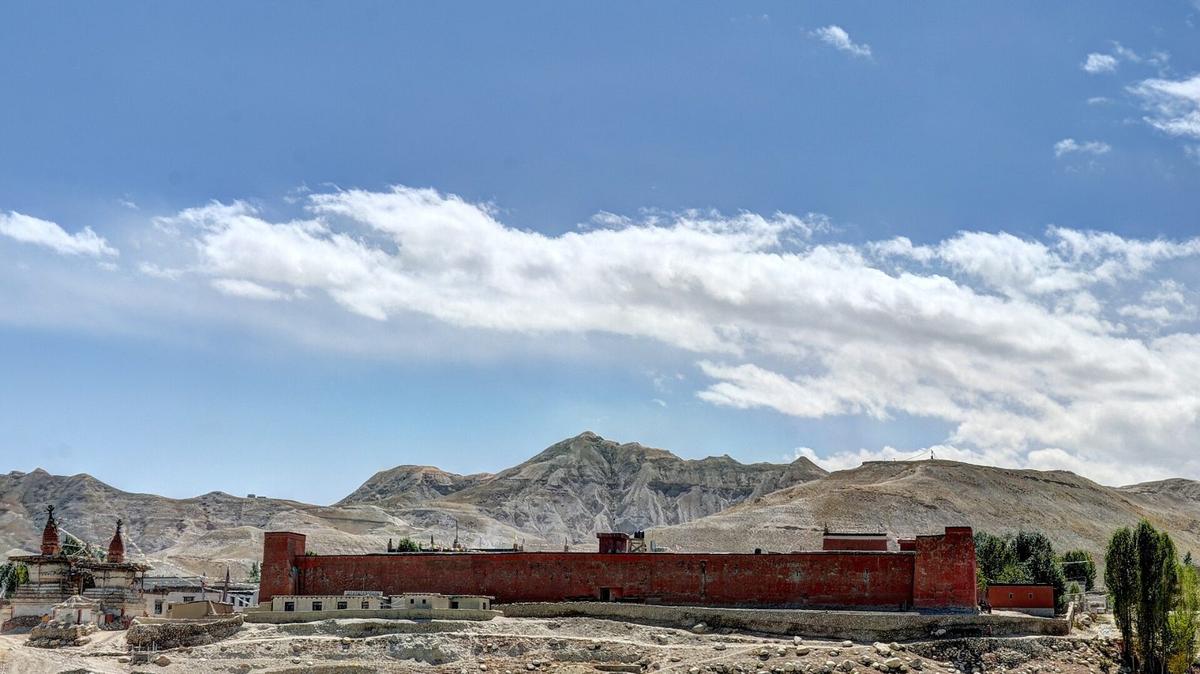
The old city sits inside an earthen wall about 6 m high, with square towers, called dzong, at its corners, according to UNESCO. Within the wall is a compact settlement of earthen buildings, with the palace and the main monasteries inside it. UNESCO's entry says the overall structure is intact.
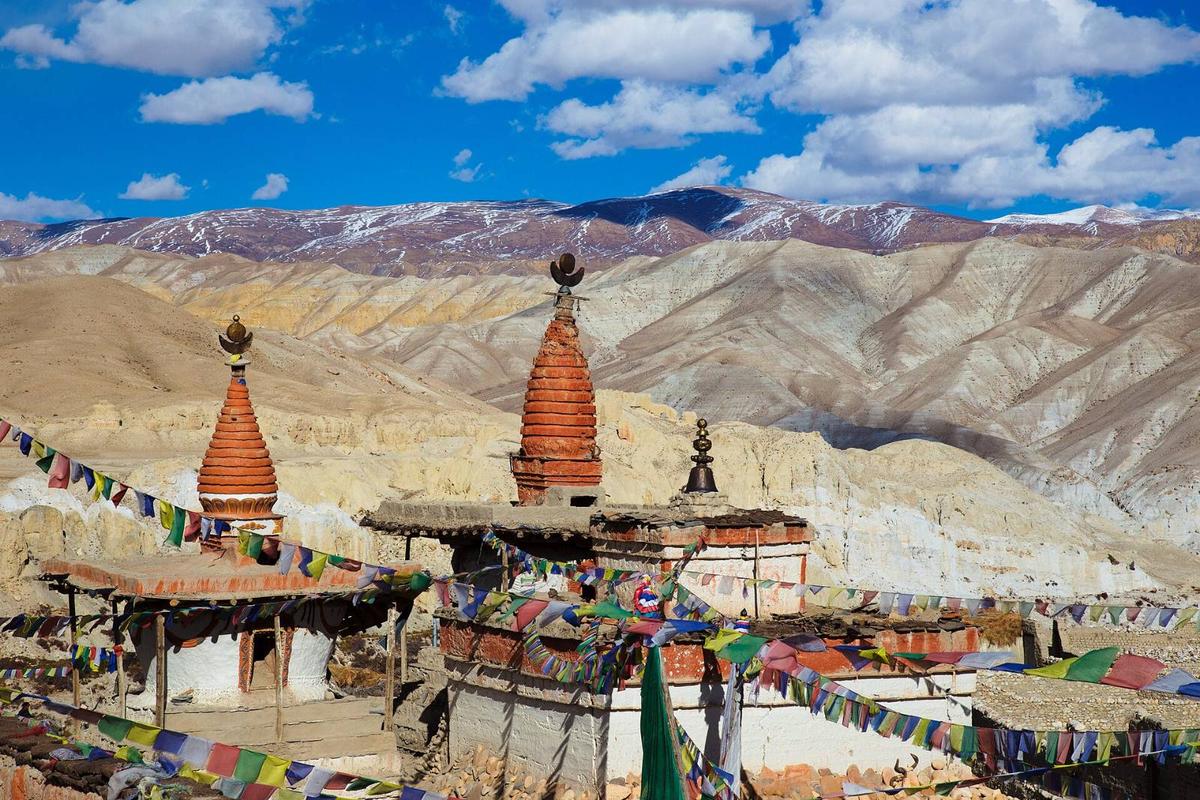
"The overall structure of the earthen walled settlement is intact."
UNESCO World Heritage Centre, Tentative List entry for the Medieval Earthern Walled City of Lo Manthang, checked 14 November 2026
Travel writing quotes other heights and counts that disagree with UNESCO, so we give only its 6 m figure. The plan makes most sense on foot: on our 7-day road trip, the day you spend based in Lo Manthang ends back in the city with a walk along its walls and lanes.
Which monasteries can you visit in Lo Manthang?
The three main monasteries are Jampa Lhakhang (also Champa or Jamba) and Thubchen Lhakhang, both 15th century, and Choede Lhakhang, 18th century, according to UNESCO. Jampa's walls hold some 1,500 mandalas. Published founding years disagree, so we give centuries only.
| Building | Century (UNESCO) | What to look for |
|---|---|---|
| Jampa Lhakhang | 15th | Some 1,500 mandalas; restored from 2001 and again after 2015 |
| Thubchen Lhakhang | 15th | Murals restored from the late 1990s; rebuilt timber roof |
| Choede Lhakhang | 18th | The third main lhakhang UNESCO names in the city |
The World Monuments Fund calls Jampa (which it spells Jamba) "the only Tibetan temple painted entirely with them", meaning its mandalas. At Thubchen, the leaking roof was replaced with a traditional assembly of round timbers, sealed with local clay and river stones.
Who restored the monastery murals?
Local people, trained by foreign specialists. After the 1998 World Monuments Watch, several Upper Mustang gompas were restored under the supervision of the American Himalayan Foundation, working with the Lo Manthang community, and restoration of Jampa began in 2001.
Work on Thubchen started in the late 1990s, led by the British conservation expert John Sanday with Italian wall-painting specialists, and training local people was central to it. The Italian conservator Luigi Fieni, who first saw the murals in 2001, was leading the foundation's mural restoration in Lo Manthang by 2009, Nepali Times reported. The foundation says he has trained more than a hundred local people, "turning farmers into artists".
The 2015 earthquakes set the work back: wall paintings detached in Thubchen, and the top-storey walls of Jampa separated from the floor. The foundation directed Jampa's post-quake restoration in 2016, with Fieni as project director. We have found no recent report on how far the work has gone.
What happened to the Royal Palace and the king of Lo?
The palace still stands inside the walls, but the kingdom has gone. The Raja of Lo lost his royal title in 2008, when Nepal abolished its monarchy, and the last Raja, Jigme Dorje Palbar Bista, died on 16 December 2016, aged 86. The palace was seriously damaged on its northern side in the 2015 earthquake.
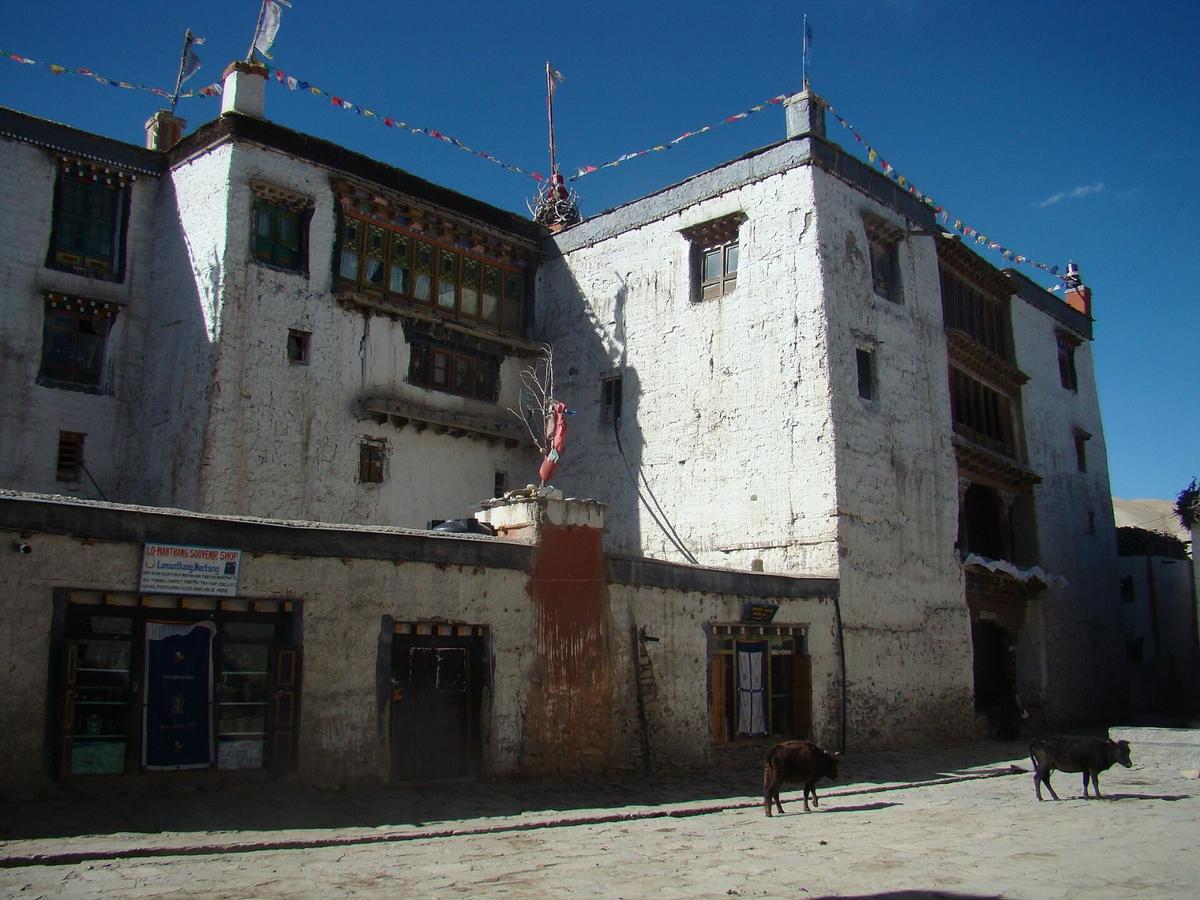
The last Raja reigned for more than half a century. In 2020 The Kathmandu Post reported the palace closed to visitors since the 2015 damage, and in 2025 ekantipur reported it still awaiting conservation, so ask locally whether you can go in. Published building dates and storey counts disagree, so we give none. During Tiji, a large thangka (painted scroll) of Padmasambhava is displayed in its courtyard.
What is daily life like in Lo Manthang?
Lo Manthang is a lived-in town shaped by the seasons. Ratopati describes it as a living museum of Tibetan culture and Lowa life. In winter many Upper Mustang villagers move to lower, warmer areas for at least four months, and a 2018 report found almost everyone except the elderly left.
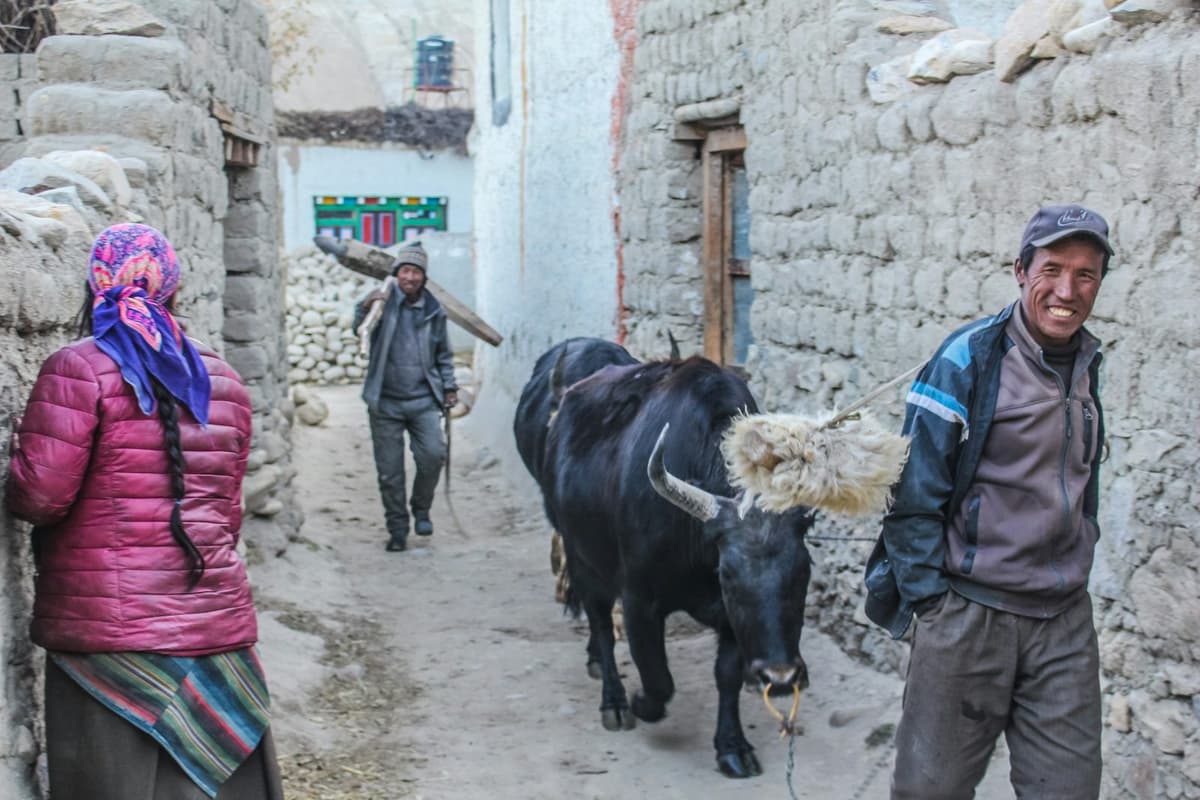
So a midwinter visit shows you a much emptier city than October or April, the peak months. We found no current, reliable source on electricity or phone coverage, so plan as if both may be patchy and bring a power bank.
What happens at the Tiji festival?
Tiji (also called Tenchi) is Lo Manthang's festival of sacred dances, held over several days. It is based on the meditation practice of Vajrakila (Dorje Phurba): the dances show negative forces being overcome, and on the last day ritual cakes are cast away, according to the Nepal Tourism Board.
Tiji follows the Tibetan calendar (NTB: days 26 to 29 of the third month), so it usually falls in May and sometimes runs into early June. Some operators list 1 to 3 June for 2027; we confirm the dates once the Lo Manthang monasteries announce them.
According to NTB's Tiji page, the festival began in the early 15th century, was revived in the 17th century and restored again in 1963. Monks prepare with about three months of retreat. Tell us early if you want to see it.
What can you see near Lo Manthang?
The main side trips are the caves of the Chhoser valley and the Korala border point with China. Near Chhoser, the Sija Jhong cave is a five-storey complex cut into the cliff, its rooms linked by ladders and tunnels. Korala is at about 4,660 m (about 15,290 ft).
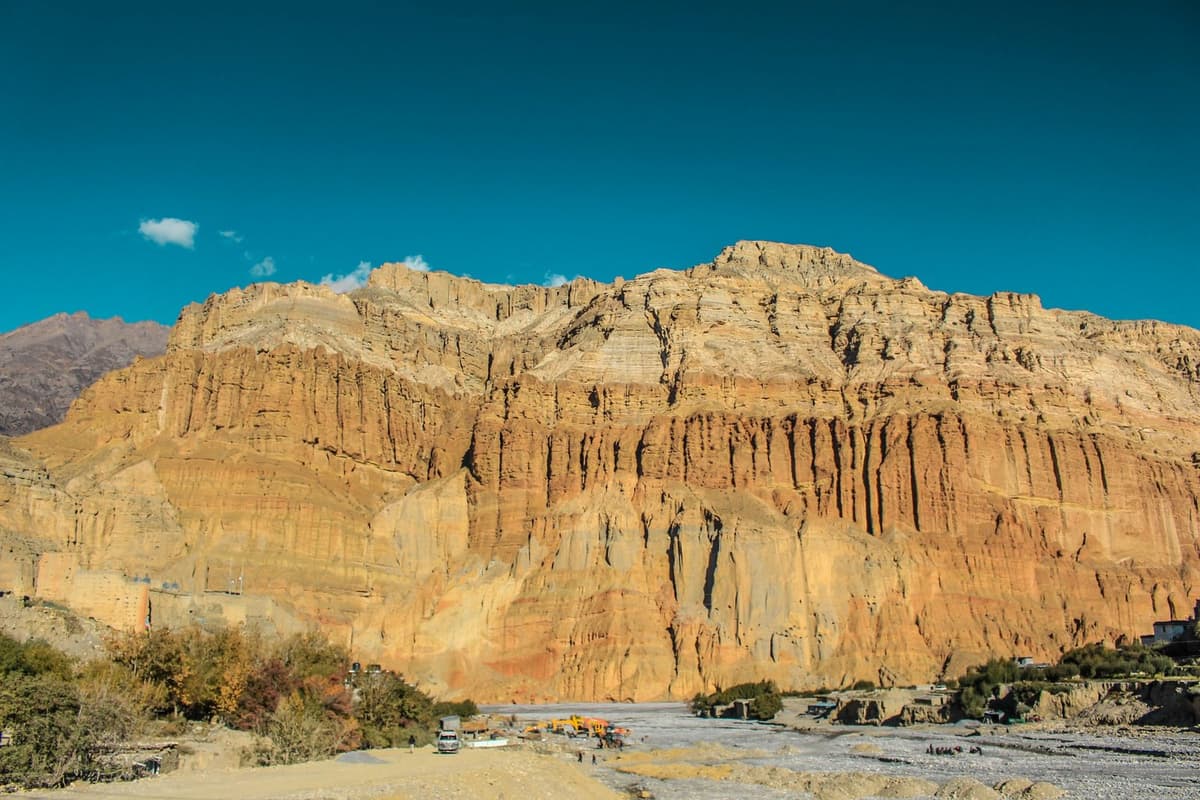
In 2007 a team from the US, Italy and Nepal found Buddhist paintings, manuscripts and pottery in caves near Lo Manthang, dated to about the 13th century.
Snow often decides whether you reach Korala: it blocked the Kagbeni to Korala road from 28 January 2026. It is a trade crossing, and we found no source saying foreign tourists may cross, so treat it as a viewpoint. Our 7-day road trip gives one day to Korala and the Chhoser caves.
How do you get to Lo Manthang?
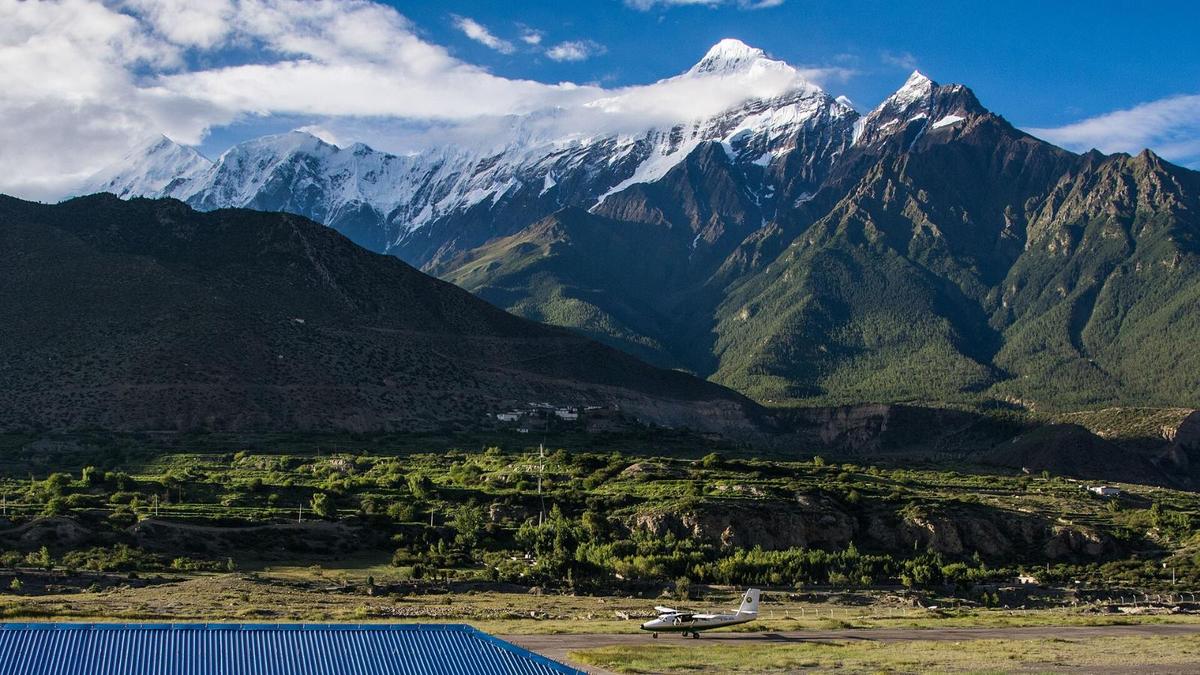
By road, for now. Scheduled Pokhara to Jomsom flights have been suspended since October 2026, so you go Kathmandu to Pokhara, drive to Jomsom for the night, then spend most of another day driving north. From Pokhara that is two long days.
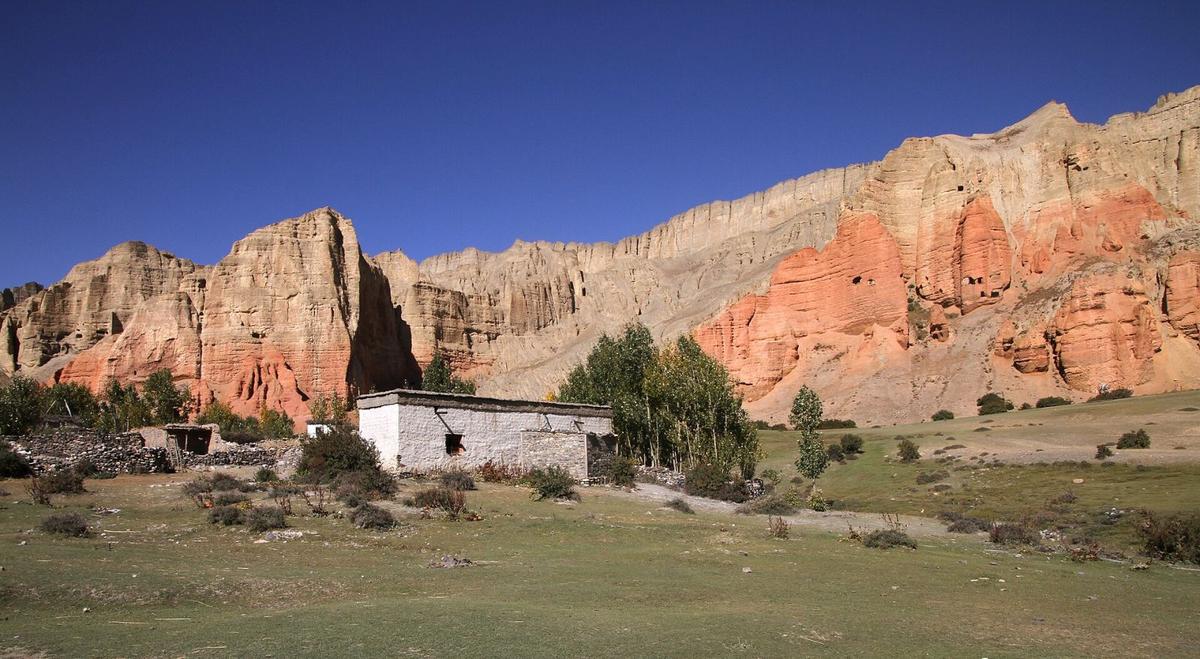
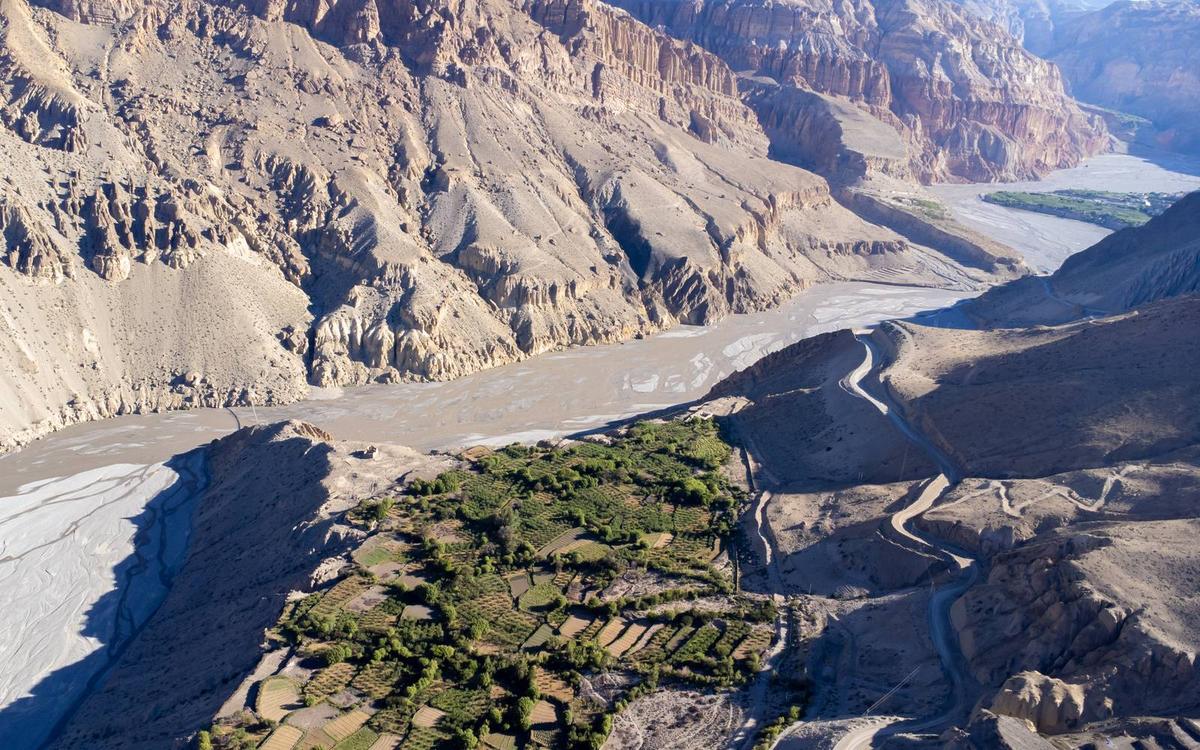
Kathmandu to Pokhara is most of a day by road, often six to nine hours, or about 30 minutes by air; our Jomsom guide covers the drive on. From Kagbeni, published drive times to Lo Manthang run from about four to six hours. Near Ghami, in the area called Dhakmar, Ratopati wrote: "The mountains here are red like blood and unique." Tsarang, about 10 to 12 km before Lo Manthang, has a 14th-century palace of the Mustang kings, according to Ratopati.
Do you need a permit and a guide?
Yes. Lo Manthang is inside the Upper Mustang restricted area, so you need a restricted-area permit as well as the ACAP permit. The Department of Immigration issues the restricted-area permit only through a registered agency, and every visitor must be accompanied by a licensed guide.
NTB lists the restricted-area permit at USD 50 per person per day; ACAP is NPR 3,000 for foreign nationals and NPR 1,000 for SAARC nationals. We arrange both for our trips. Since 22 March 2026 a single traveller can get the permit, but the licensed guide rule still applies, as reported by The Kathmandu Post. Our Upper Mustang guide covers the permit in full; our solo trekking guide explains the solo change. Muktinath, a stop on our trip north, needs only ACAP; see our Muktinath Temple guide.
How do you handle the altitude?
Plan for it from the start. Lo Manthang is at about 3,800 m, well above the roughly 2,450 m (8,000 ft) where altitude illness can start. Our 7-day road trip sleeps in Jomsom, then in Lo Manthang the next night: a rise of about 1,000 m in one day, faster than the 500 m guideline.
We want to be straight about that. The Korala day then takes you to about 4,660 m before you sleep in Lo Manthang again. If that worries you, tell us: we can talk through a slower plan, or a Lower Mustang trip that sleeps no higher than Jomsom.
- Go up slowly. Above 3,000 m, do not raise your sleeping height by more than about 500 m a night, and take a rest day every 3 to 4 days.
- Walk slowly, "bistarai, bistarai", as we say in Nepali.
- Drink enough water, and avoid alcohol for the first days at height.
- Know the symptoms: headache, nausea, tiredness and poor sleep. Mild symptoms can start from about 2,450 m.
- Never go higher with symptoms, and go down if they get worse.
- Ask your doctor before the trip about preventive medicine, for example acetazolamide.
- Garlic soup and hot soups are a comforting local tradition that helps you drink more, not a proven cure.
Severe symptoms, such as confusion, breathlessness at rest or unsteady walking, mean you descend at once and get medical help. Our team arranges a rescue if needed. Read more in our guide to altitude sickness on Nepal treks.
When is the best time to visit Lo Manthang?
Spring and autumn: the ACAP office in Lo Manthang names October and April as the peak months. Mustang lies in the Himalayan rain shadow, and the Nepal Tourism Board calls it one of the few regions suitable for trekking even in the monsoon. NTB says Mustang gets cold in winter and is always windy, and advises against winter treks.
We found no station normals for Lo Manthang, so the table uses Jomsom (DHM, 2,741 m), about 1,000 m lower and warmer.
| Season | In Lo Manthang | Jomsom high / low / rain |
|---|---|---|
| Spring | April peak; Tiji usually May | April 18.6 °C / 4.4 °C / 21.4 mm |
| Monsoon | Dry in the rain shadow; floods shut the Beni road until 9 October 2026 | July 22.8 °C / 14.1 °C / 46.8 mm |
| Autumn | October peak; cold nights | November 14.8 °C / 1.5 °C / 4.6 mm |
| Winter | Many residents go south | January 10.4 °C / -1.9 °C / 14.4 mm |
Frequently asked questions
Is Upper Mustang good for stargazing and photography?
For daytime photography, yes: Mustang lies in the Himalayan rain shadow, and Jomsom averages just 4.6 mm of rain in November. For stargazing, we have found no published data to rate the area by, so we make no claim. Inside Lo Manthang's monasteries, ask the caretaker or your guide before taking any picture.
When is the Tiji festival in Lo Manthang?
Tiji follows the Tibetan calendar (NTB: days 26 to 29 of the third month), so it usually falls in May and sometimes runs into early June. Some operators list 1 to 3 June for 2027; we confirm the dates once the Lo Manthang monasteries announce them. During the festival a large thangka of Padmasambhava hangs in the palace courtyard.
What is there to see in Lo Manthang?
Inside the walls: the 15th-century Jampa and Thubchen monasteries, the 18th-century Choede monastery and the Lo king's historic palace. Jampa's walls hold some 1,500 mandalas. The 6 m earthen wall itself is worth a slow walk. Nearby are the five-storey Jhong cave at Chhoser and the Korala border point. Ask locally whether the palace is open.
Should I trek Upper Mustang or do it as a jeep tour?
Drive if your days are short; walk if you have much longer and want a slower climb that suits the altitude better. Our own Upper Mustang trip is a 7-day road tour, which raises your sleeping height by about 1,000 m in one day. Either way you need the restricted-area permit, a registered agency and a licensed guide.
Do I need a guide for Upper Mustang?
Yes. Upper Mustang is a restricted area, and every visitor, solo or not, must be accompanied by a licensed guide, under the Department of Immigration rules as reported by The Kathmandu Post and The Himalayan Times. The permit is issued only through a registered agency, and since 22 March 2026 a single traveller can be issued one. A licensed guide walks with you on every trek we run.
Plan your Lo Manthang visit with us
We arrange the in-country parts, from both permits to your licensed guide, transport and hotels. For the rest of the district, go back to our Mustang guide.
Our Upper Mustang tour by road reaches Lo Manthang, with two nights in the city. If the altitude or the time does not suit you, our Mustang tour by flight and road and Mustang and Pokhara tour by road stay in Lower Mustang and need only the ACAP permit.
Send us your dates and group size, and we will tell you honestly which plan fits. Ask us on WhatsApp or through the enquiry form.