

By Uncover Nepal Team · Checked by our Kathmandu travel team · Last checked 4 Oct 2026
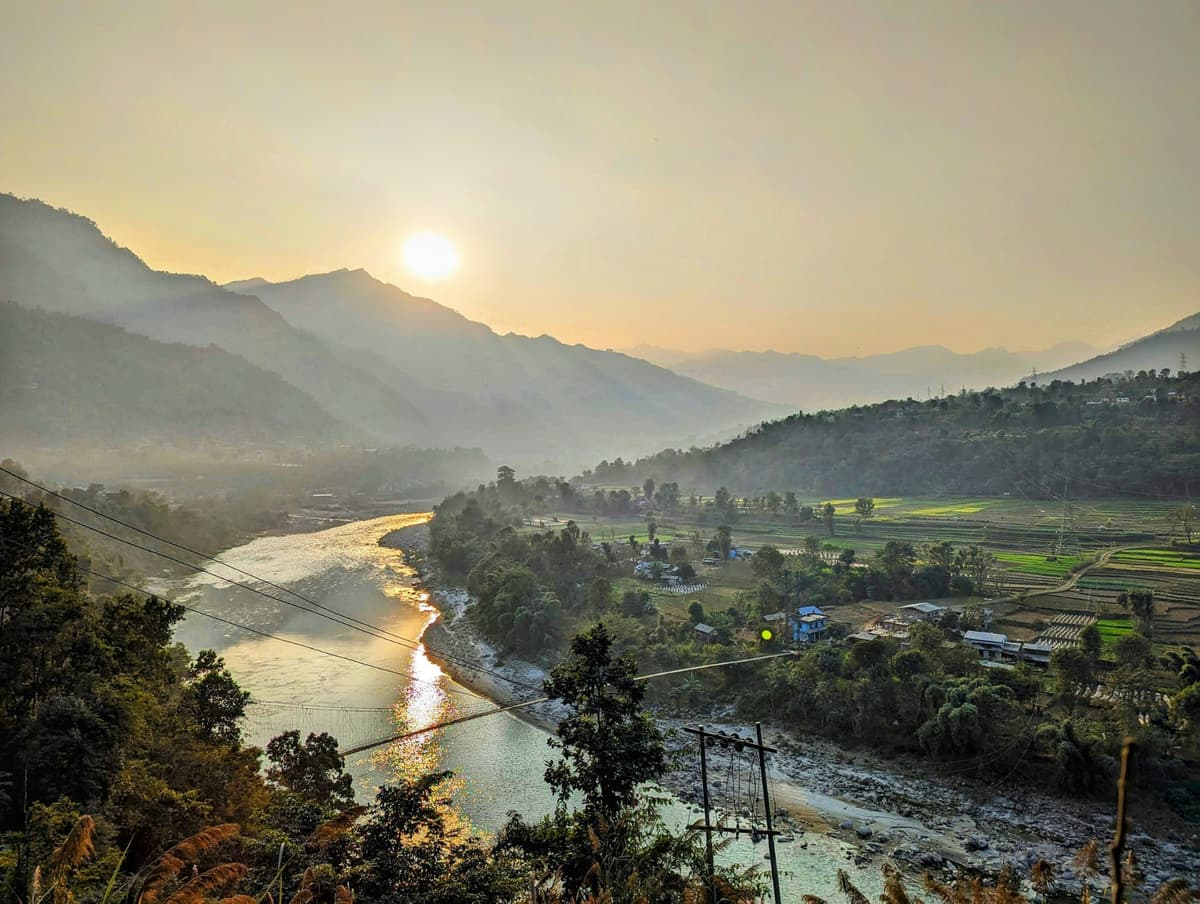
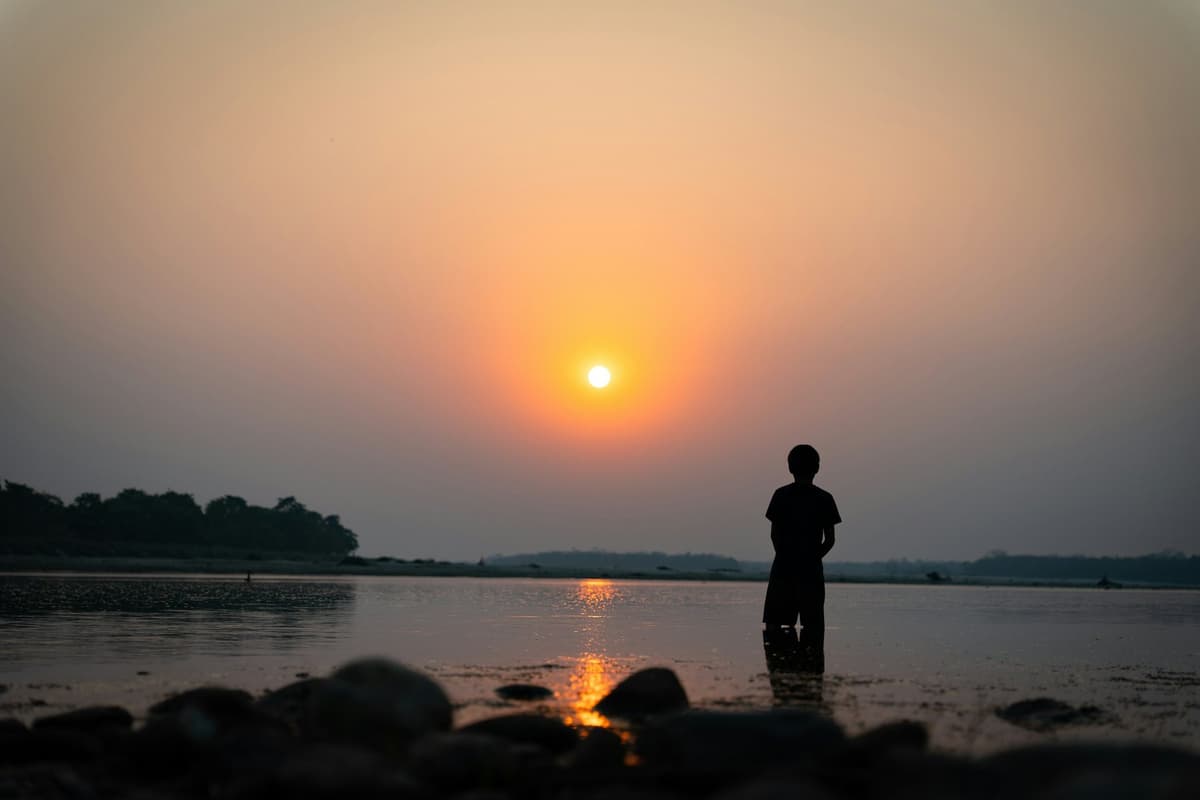
Late afternoon in Sauraha, people wander down to the Rapti River and take a seat at the cafés on the bank to watch the sun go down. Across the water is the forest of Chitwan National Park. Once the sun sets, nobody may walk in there until morning.
The main places to visit in Chitwan, Nepal are the national park itself, Sauraha and the Rapti riverbank, the park headquarters at Kasara with its museum and Gharial Breeding Centre, the Elephant Breeding Centre at Khorsor, the Twenty Thousand Lakes wetland, the Tharu villages and the river confluence at Devghat.
Below, each place in turn: what it is, where it sits and who it suits. For the park as a whole, read our Chitwan National Park guide.
Key facts
- Established
- 1973, Nepal's first national park (NTNC (2024); UNESCO WHC list no. 284, 4 Oct 2026)
- UNESCO World Heritage Site
- Listed in 1984 as a natural site (NTNC (2024); DNPWC brochure (2019), 4 Oct 2026)
- Park area
- 952.63 km² (DNPWC; NTNC (2024), 4 Oct 2026)
- Buffer zone
- 729.37 km², declared in 1996 (DNPWC; NTNC (2024), 4 Oct 2026)
- One-horned rhinos
- 694 in Chitwan and 752 in Nepal at the most recent national count, in 2021 (Kathmandu Post (23 Sep 2026); WWF, 4 Oct 2026)
- Tigers
- 145 in Chitwan (including the buffer zone) and 429 in Nepal, 2026 national tiger survey (Kathmandu Post; IUCN (July 2026), 4 Oct 2026)
- Birds
- More than 500 species recorded (NTB; DNPWC; NTNC, 4 Oct 2026)
- Park entry, foreign nationals
- NPR 2,000 per person per entry, about USD 13 at the NRB rate of 4 Oct 2026 (NTB; Nepal Rastra Bank, 4 Oct 2026)
- Park entry, SAARC nationals (including India)
- NPR 1,000 per person (NTB, 4 Oct 2026)
- Park entry, Nepali citizens
- NPR 150 per person (NTB, 4 Oct 2026)
- Children
- Under 10 enter free (NTB, 4 Oct 2026)
- Best time (official)
- October to March (NTB, 4 Oct 2026)
- From Kathmandu
- About 145 km by road to Bharatpur, or 20 minutes by air (NTB, 4 Oct 2026)
Places to visit in Chitwan, Nepal at a glance
The Nepal Tourism Board's own list for Chitwan is a good spine: the national park, Sauraha, Bharatpur, Devghat, Meghauli, the Chepang Hill Trail and the Beeshazar lakes. The table adds the smaller stops inside those places, such as the breeding centres, the museum at Kasara and the Tharu villages.
| Place | What it is | Where | Best for | Our team's suggested time |
|---|---|---|---|---|
| Chitwan National Park | Nepal's first national park, a UNESCO natural site | South of the Rapti River; jeep entry points include Sauraha and Meghauli | Rhinos, birds, forest and grassland | A full day, or an early-morning safari |
| Sauraha and the Rapti riverbank | Village beside the Rapti, with a visitor centre | Northern edge of the park | Sunsets, a base for everything else | Your first evening |
| Park headquarters and museum, Kasara | The park's headquarters, with a museum | 21 km drive from Bharatpur | Understanding the park before a safari | Part of a safari day |
| Gharial Breeding Centre | Hatches gharial eggs collected from the rivers, since 1978 | About 1 km walk from the Kasara headquarters | Seeing gharials up close | Part of a safari day |
| Elephant Breeding Centre | Government centre with domesticated elephants and calves | Khorsor (Khorsar), Sauraha | Families, elephant lovers | A morning or an afternoon |
| Twenty Thousand Lakes (Bis Hajar Tal) | Ramsar-listed oxbow-lake wetland | Buffer-zone forest south of Bharatpur | Birdwatching, quiet walks | A morning |
| Tharu Cultural Museum and Research Centre | Museum of Tharu artefacts, photographs and paintings | Bachhauli, a Tharu village near Sauraha | Culture, a rest day from safaris | A short visit |
| Tharu stick dance (Lathi Nach) | Popular Tharu performance for visitors | Around Sauraha | An easy evening | An evening |
| Devghat | Holy river confluence with shrines, temples and ashrams | North of Bharatpur | Pilgrims, culture | A half day |
| Budhi Rapti and Baghmara community forest | River where mugger crocodiles are seen | Baghmara Buffer Zone Community Forest | Canoe trips, crocodiles, birds | A morning |
| Chepang Hill Trail | Hill trail listed by NTB | Chitwan district | A separate hill walk | Ask us first |
These times are our planning suggestions, not official figures. Jeep safaris inside the park depend on the season, which we explain below.
Chitwan National Park: the heart of any visit
Everything else on this list sits around the park. It was set up in 1973 as Nepal's first national park and became a UNESCO World Heritage Site in 1984. It covers 952.63 km², with a further 729.37 km² of buffer zone around it.
The Narayani River forms its western edge and the Rapti River its northern edge. To the south are the Reu River and the Indian border, where the forest continues into India's Valmiki Tiger Reserve. Parsa National Park lies to the east. The buffer zone spreads across four districts: Chitwan, Parsa, Makawanpur and Nawalpur.
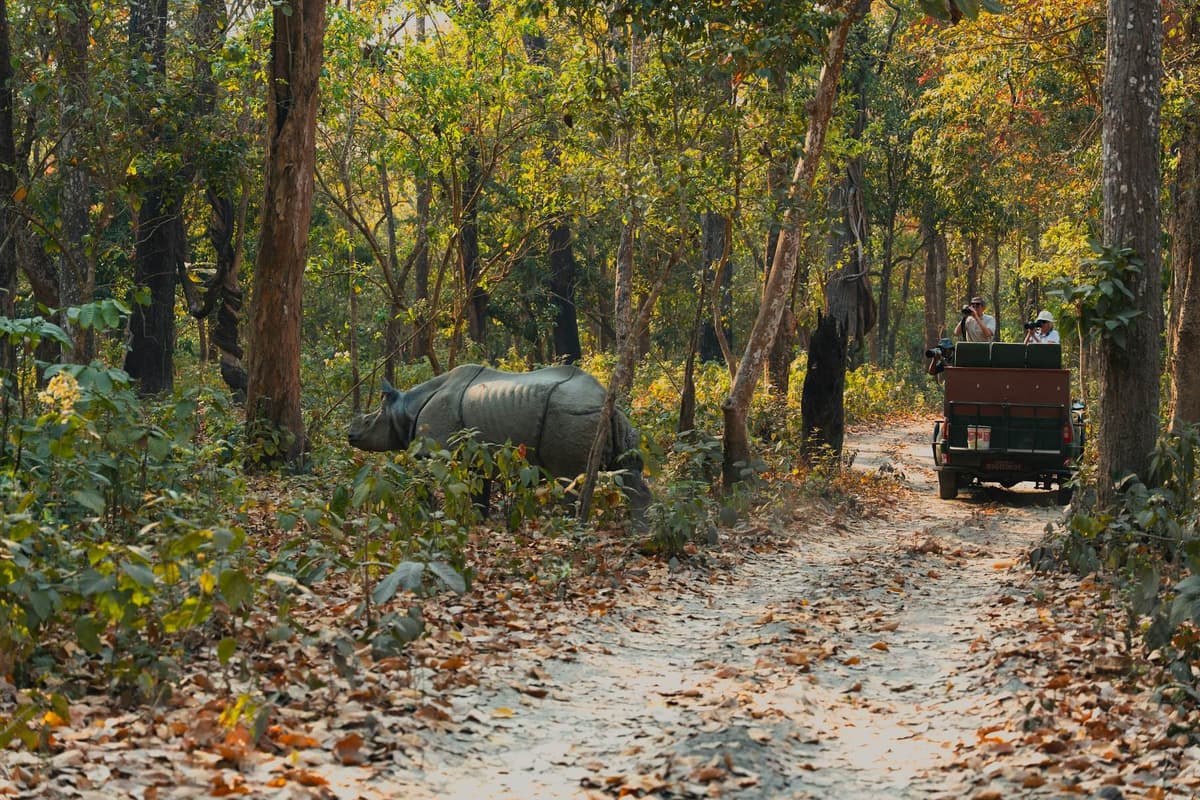
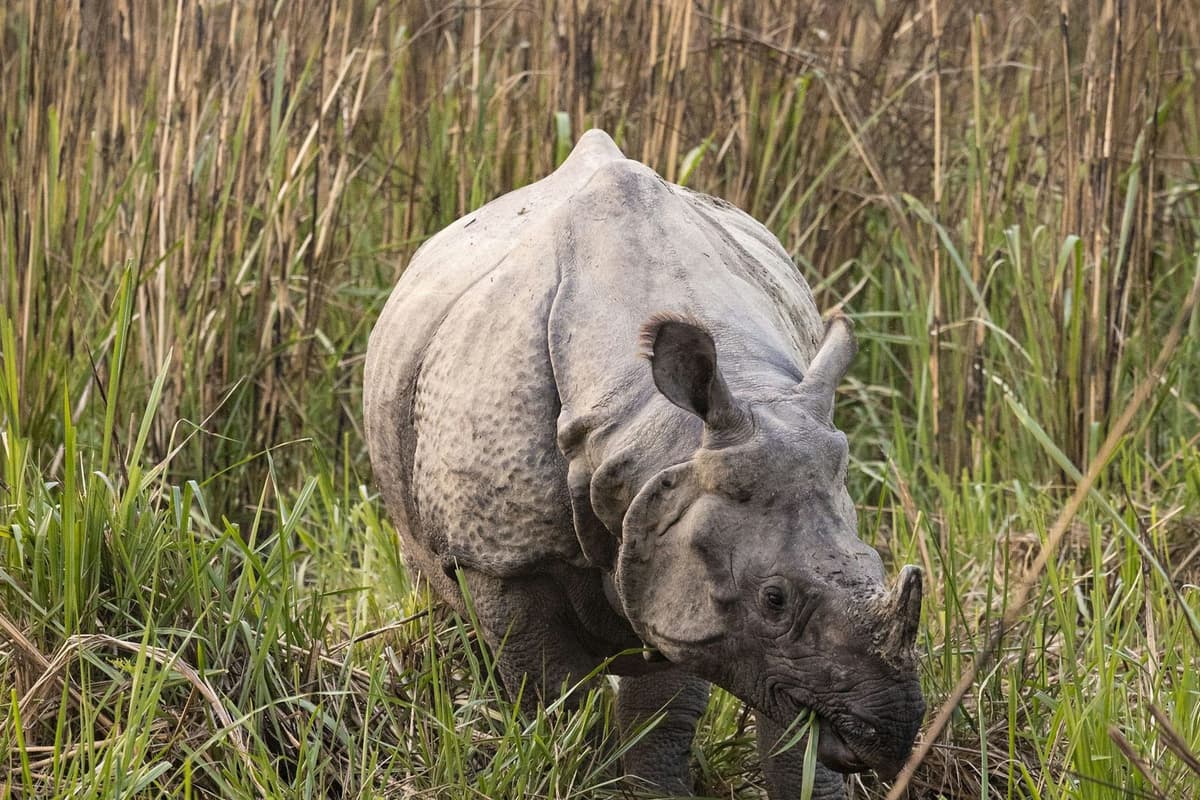
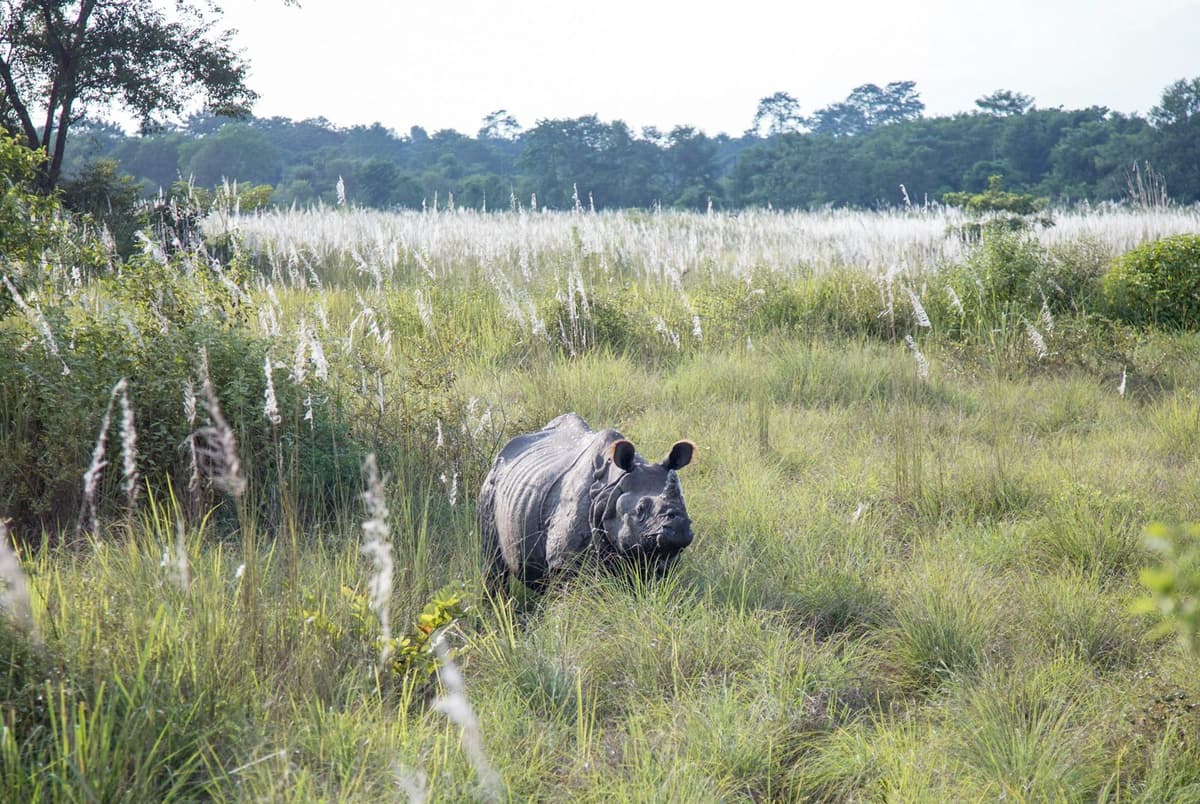
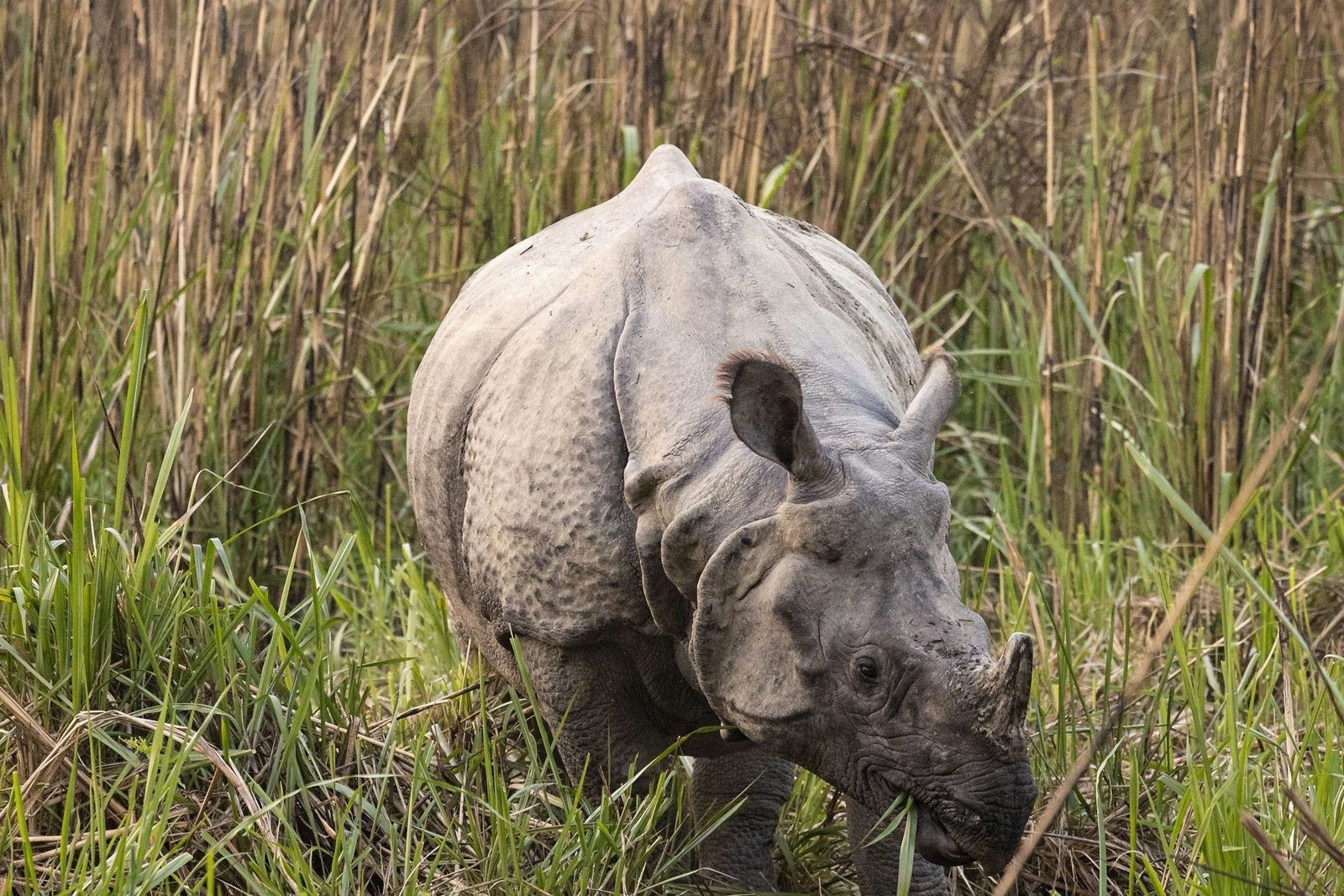
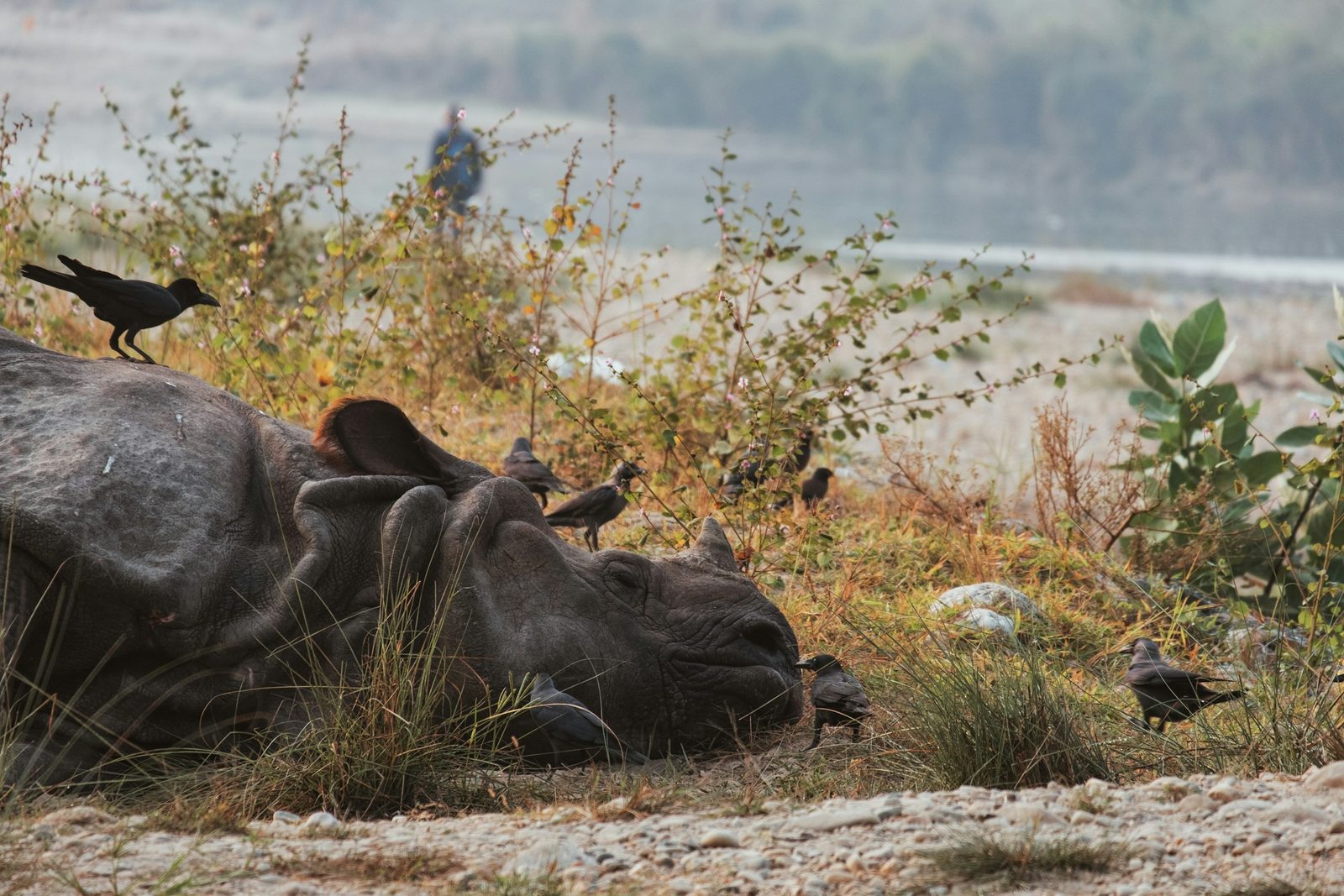
The one-horned rhino is the park's best-known animal. At the most recent national count, in 2021, Nepal had 752 rhinos, and 694 of them were in Chitwan. No newer count has been published. The census was postponed for budget reasons, and the park authorities are redesigning how it is done.
"It holds the world's second largest population of greater one-horned rhinoceros."
National Trust for Nature Conservation (NTNC), Mammals of Chitwan National Park (2024), on the park
Tigers are here too. The 2026 national tiger survey counted 145 in Chitwan, including the buffer zone, out of 429 across Nepal. In the 2022 survey the Chitwan figure was 128. Tigers are shy, though, and nobody can promise you a sighting. Rhinos and birds are the realistic hopes on a safari.
For which animals live here and how to look for them, see our article on Chitwan rhinos and wildlife.
Takeaway: a visit to Chitwan without going into the park misses the point. Plan at least one safari, on foot or by jeep, and treat everything else on this list as what fills the rest of your time.
Sauraha and the Rapti riverbank
Sauraha is the riverside village where many visitors stay. It lies beside the Rapti River on the park's northern edge. You can walk to the water, to the visitor centre and to the Elephant Breeding Centre at Khorsor without going far.
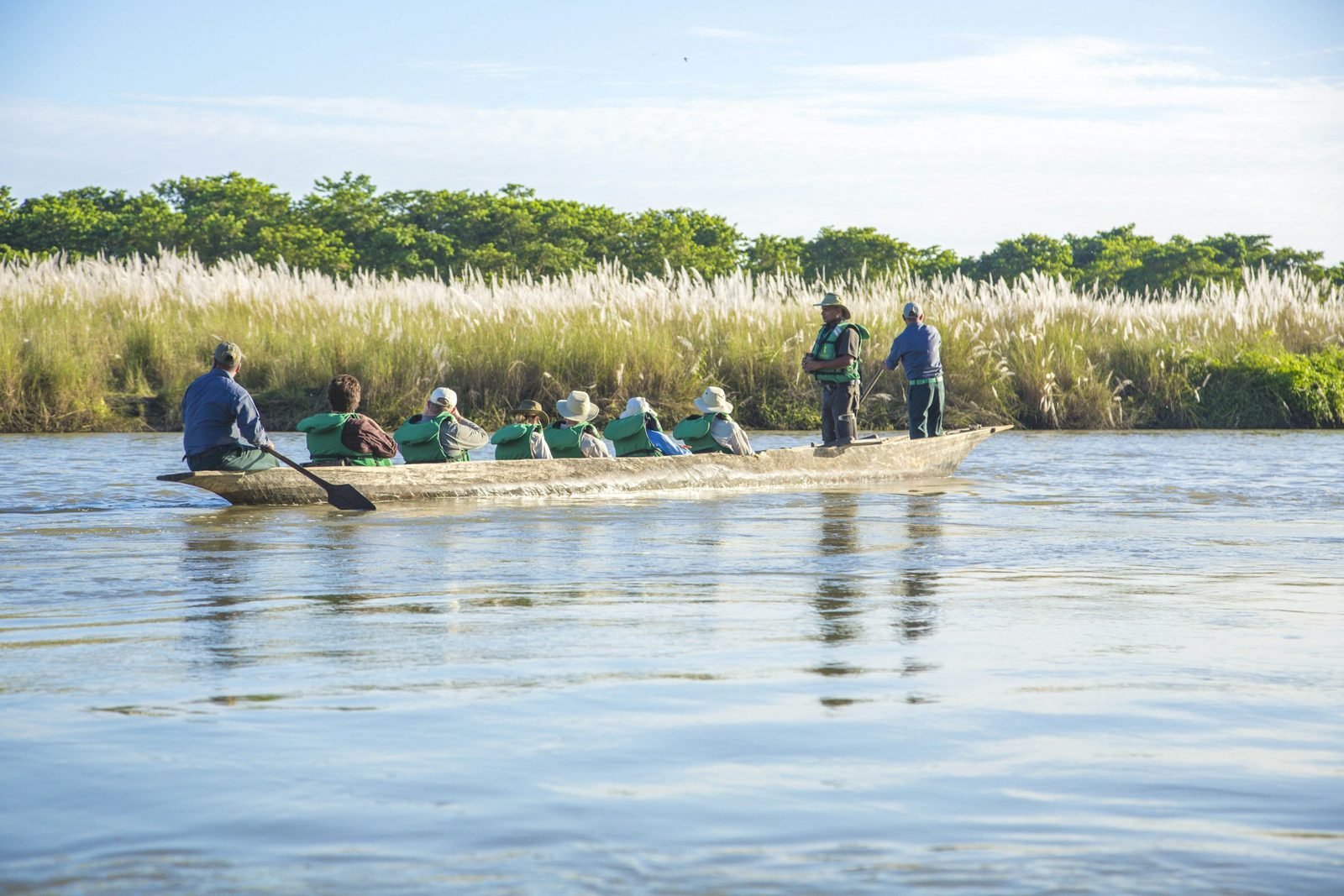
The riverbank is where the day ends. People watch the sunset from the cafés along the Rapti. There is no official "sunset point", so do not go looking for one: any spot on the bank with a clear view west will do. Both of our Chitwan road trips include a walk on the Rapti riverbank on the first evening.
The visitor centre in Sauraha has information on wildlife and conservation. Call in before your first safari, because you will know what you are looking at when your guide stops the jeep.
Sauraha is also a jeep-safari entry point into the park.
One firm rule: do not swim in the Rapti. Mugger crocodiles and gharials live in the rivers of the park and buffer zone.
Takeaway: arrive in time for the riverbank on your first evening, and fit in the visitor centre before your first safari.
Kasara: park headquarters, museum and the Gharial Breeding Centre
Kasara is the park's headquarters, a 21 km drive from Bharatpur. It has a museum with displays on the park, and NTB describes them as informative. The usual way to see Kasara is as part of a full jeep safari day, which is how our own safari trip does it.
The Gharial Breeding Centre is about a 1 km walk from the headquarters. It was set up in 1978. Staff collect gharial eggs from the rivers, hatch them, and release the young into the rivers once they have grown. As of March 2024, 1,887 gharials had been released, and in August 2026 the centre housed about 500.
The gharial is the narrow-snouted fish-eating crocodile. Chitwan has a second crocodile, the broader-snouted mugger, which you are more likely to see on the Budhi Rapti. At the centre you see gharials of different ages side by side.
Entry to the Gharial Breeding Centre and the Elephant Breeding Centre has been free for all visitors since 19 July 2026, "for the time being".
On our Chitwan jungle safari tour from Kathmandu, the full-day jeep safari with a park-certified guide takes in Kasara and the Gharial Breeding Centre, when the core-park jeep safaris are running.
Takeaway: Kasara sits inside the park, a drive from Sauraha, so treat it as part of a safari day rather than a separate trip.
Elephant Breeding Centre at Khorsor
The government's Elephant Breeding Centre is at Khorsor (also spelt Khorsar), in Sauraha. Visitors see domesticated elephants and calves that were born at the centre. In August 2026 it held 9 adult elephants and 7 calves. Entry has been free since 19 July 2026.
It is one of the easiest places on this list to reach from Sauraha, and an easy visit with children. Keep your distance from the animals, stay where the staff ask you to stand, and do not feed the elephants unless a keeper tells you that you may.
Takeaway: a good choice for the morning or afternoon that is not taken up by a safari.
Twenty Thousand Lakes (Bis Hajar Tal) and the Barandabhar forest
Bis Hajar Tal, often called Twenty Thousand Lakes, is a wetland of oxbow lakes in the park's buffer zone. It is listed under the Ramsar Convention on wetlands as "Beeshazar and Associated Lakes", site no. 1313, designated on 13 August 2003 and covering 3,200 ha.
The lakes sit in the Barandabhar forest, in the buffer zone south of Bharatpur. Barandabhar matters beyond the lakes, because it is the forest link between the park and the hills to the north. In NTNC's words:
"A corridor forest called Barandabhar connects park with the northern hill forest."
National Trust for Nature Conservation (NTNC), Mammals of Chitwan National Park (2024)
This is a place for birdwatchers and for anyone who wants a quieter morning than a safari. Migratory birds join the resident species between September and November and again between February and April. Go with a park-certified guide who knows the paths, and in the wet months tuck your trousers into your socks against leeches.
Takeaway: if birds are part of why you came, give this wetland a morning, ideally in one of the two migration seasons.
Tharu villages, the museum and the stick dance
Tharu culture is the other half of Chitwan. NTB places Bachhauli near Sauraha, and it is home to the Tharu Cultural Museum and Research Centre.
The museum opened in 2006. It shows old artefacts, photographs, paintings and murals. Its opening hours and ticket price are not published in any source we could check, so ask at your lodge on the day.
The Tharu stick dance, Lathi Nach (also called Jharra Nach), is a popular performance for visitors in Chitwan. Dancers strike sticks together in rhythm as they move. Our jungle safari tour includes a Tharu cultural show on the first evening.
Two festivals are worth knowing about if your dates line up:
- Maghi, observed in mid-January, marks the Tharu New Year.
- Bikram Baba, a shrine under a sal tree in the forest inside the park near Kasara, holds a 15-day worship each year in the Nepali month of Chaitra (March to April). It is led by the Tharu community, and other communities join in. The dates move each year.
Ask before you photograph people, and ask your guide before you go into a home or shrine.
Takeaway: a village walk and the museum make a good half-rest day between safaris, and the stick dance fills an evening.
Devghat, Bharatpur, Meghauli and the Chepang Hill Trail
Four more names on NTB's list sit away from Sauraha.
- Devghat is the holy confluence where the Trishuli and Kali Gandaki rivers meet and become the Narayani. It has shrines, temples and ashrams. On Makar (Maghe) Sankranti, 1 Magh in mid-January, pilgrims gather here to bathe. It lies north of Bharatpur.
- Bharatpur is the city with Chitwan's airport. Flights from Kathmandu take 20 minutes, and the city is about 145 km from Kathmandu by road. Bis Hajar Tal is in the forest to its south.
- Meghauli is one of the park's jeep-safari entry points.
- The Chepang Hill Trail is on NTB's list of Chitwan's places. It is a hill walk rather than a wildlife stop, so it needs its own days. Ask us before you try to fit it into a short visit.
Takeaway: Devghat pairs well with the drive in or out through Bharatpur. The hill trail is a separate trip.
Things to do in Chitwan
The main things to do in Chitwan are jeep and walking safaris, canoe rides, birdwatching, visits to the elephant and gharial breeding centres, Tharu village walks and the Tharu stick dance. Here is how each works and who it suits.
Jeep safari: check the season first
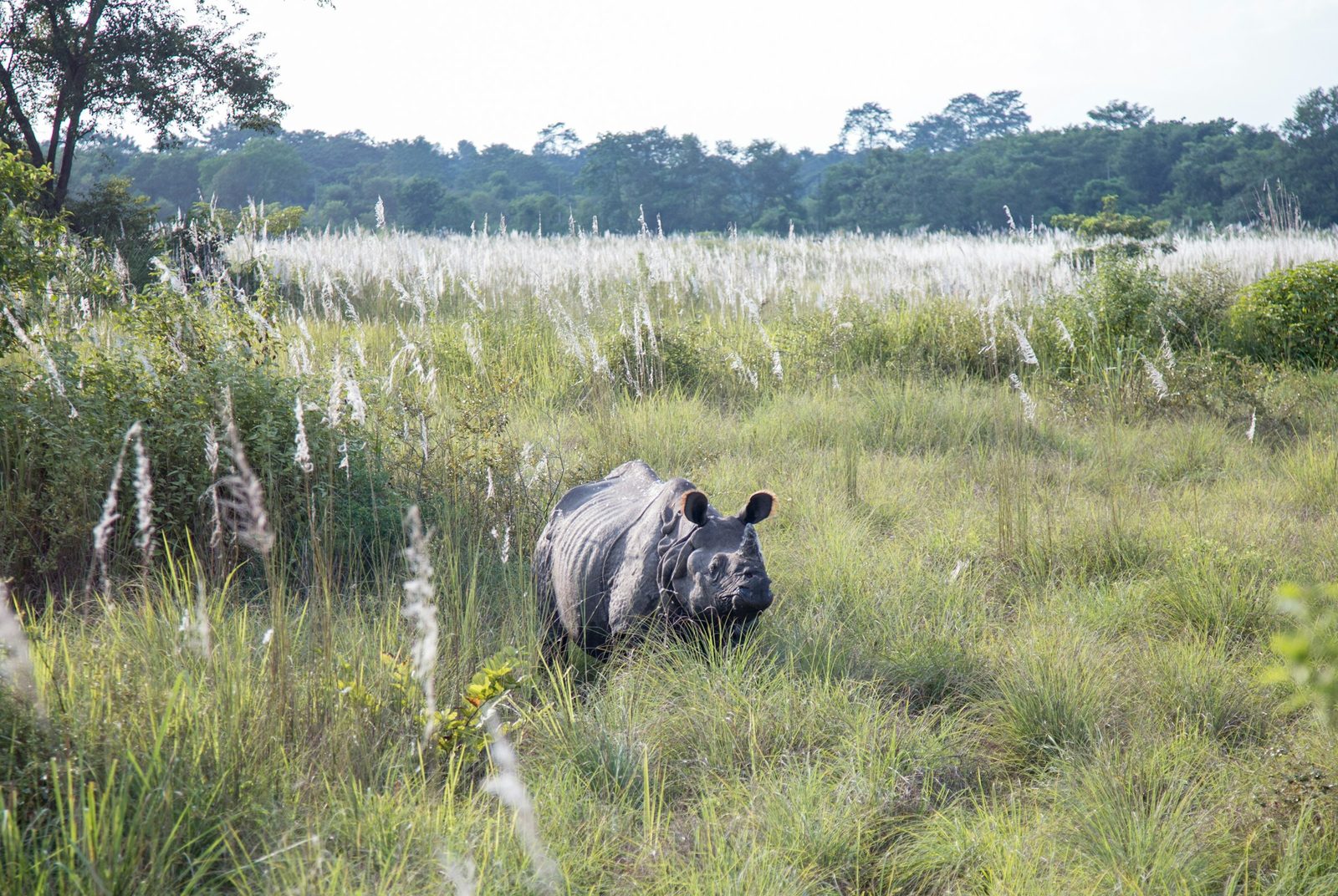
Jeep safaris inside the core park pause each monsoon. In 2026 they stopped from early July, because of flood-damaged roads, fallen trees and the breeding season. They normally restart in late September or in October. In mid-September 2026 the park's information officer said crews were clearing about 30 km of park roads, with the aim of restarting jeep safaris on 3 October. We had not seen a report confirming the restart when we last checked.
The park itself does not close in the monsoon, and safaris in the surrounding community forests carried on during the 2026 pause.
A jeep covers more ground than you can on foot, which suits families and anyone short of time. Our Chitwan and Pokhara tour by road includes an early-morning shared jeep safari with a park-certified guide.
Walking safari with a park-certified guide
A walking safari takes you into the forest and grassland on foot. The park's rule is clear: a guide is a must for a jungle walk. You walk with a park-certified guide, and nobody may walk in the park between sunset and sunrise.
On foot you hear the forest before you see it. It also asks more of you: patience, silence and following instructions at once. It suits people who are comfortable walking for a few hours in heat. It does not suit anyone who would struggle to stay quiet, or very young children.
Canoe rides on the Rapti and Budhi Rapti
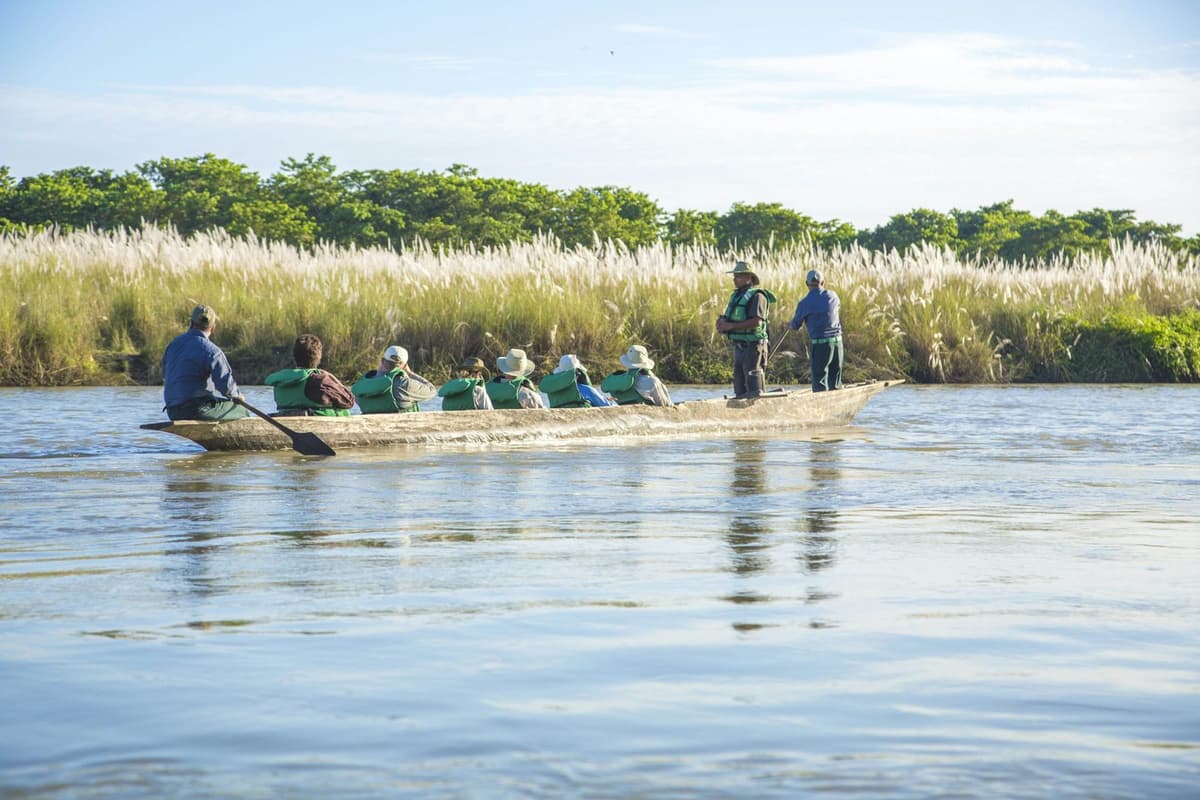
A canoe ride is a slow way to see the river edge: birds, and with luck a mugger crocodile on the bank. Mugger crocodiles are seen on the Budhi Rapti, which runs through Baghmara Buffer Zone Community Forest. Sit still, keep your hands inside the boat, and do as the boatman says.
Birdwatching
More than 500 bird species have been recorded in Chitwan. Between September and November, and between February and April, migratory birds join the resident ones. The park, the riverbanks and Bis Hajar Tal are the places to start. Bring binoculars.
Takeaway: pick one safari type for your main day, then add one or two of the easier activities around it.
Elephant rides in Chitwan: what the rules say now
Here are the facts as reported.
- Inside the national park: elephant rides have not been allowed for nearly 15 years, and government-owned elephants are not used for tourist rides.
- Outside the park: private elephant safaris continue as private businesses in buffer-zone community forests around Sauraha. In August 2026 there were about 45 privately owned elephants, down from about 90 before COVID-19.
- The Supreme Court: in a verdict of 17 December 2025, the Supreme Court directed the government to move gradually towards alternatives such as elephant-friendly walks, bush walks and observation-only tourism, with chain-free management. The full text was published in July 2026. As of 13 August 2026, no deadline and no shutdown order had been issued.
Takeaway: if you want to see elephants, the government Elephant Breeding Centre at Khorsor is open to visitors. Rules on private rides may change, so check the latest position before you travel.
Chitwan National Park tickets and fees
Foreign nationals pay NPR 2,000 per person to enter Chitwan National Park, SAARC nationals (including Indians) pay NPR 1,000, and Nepali citizens pay NPR 150. Children under 10 enter free. NTB lists the fee per entry; plan on one entry permit for each day you go into the park.
At the Nepal Rastra Bank rate of 4 October 2026, NPR 2,000 is about USD 13. Entry to the Gharial and Elephant Breeding Centres has been free since 19 July 2026.
If you travel with us, we arrange your park entry permit for you.
When is the best time to visit Chitwan?
The Nepal Tourism Board gives October to March as the best time to visit Chitwan. These months are drier and cooler. From April the heat builds, and most rain falls between June and September. Birdwatchers do well in September to November and February to April.
| Month | Mean daily high (°C) | Mean daily low (°C) | What it means for a visit |
|---|---|---|---|
| January | 22.1 | 8.1 | Cool mornings; Maghi and Makar Sankranti |
| February | 26.1 | 9.7 | Migratory birds return |
| March | 31.5 | 13.3 | Warming up; Bikram Baba worship in Chaitra |
| April | 35.4 | 18.0 | Hot days, migratory birds still present |
| May | 36.1 | 22.0 | Hottest month by mean high |
| June | 34.9 | 24.6 | First of the main monsoon months |
| July | 33.5 | 25.3 | Core-park jeep safaris paused |
| August | 33.6 | 25.4 | Core-park jeep safaris paused |
| September | 33.2 | 24.3 | Migratory birds arrive; jeep safaris normally restart late in the month or in October |
| October | 32.0 | 19.8 | Start of NTB's best season |
| November | 28.4 | 13.4 | Cooler days; migratory birds present |
| December | 24.0 | 9.1 | Cool mornings and evenings |
Source for temperatures: Bharatpur (Rampur) station, 189 m, Department of Hydrology and Meteorology normals for 1991 to 2020.
One honest note for early October. The monsoon does not stop on a fixed date. In 2026 it had withdrawn from western Nepal by 3 October, but central Nepal, where Chitwan is, had not been reported clear yet. Pack a rain layer.
For how Chitwan fits into a wider trip, see our guide to the best time to visit Nepal.
Takeaway: October to March for comfort, September to November or February to April for birds, and avoid the core-park jeep safari months of July and August if a jeep is your priority.
How to get to Chitwan from Kathmandu
Bharatpur, Chitwan's main city, is about 145 km from Kathmandu by road, or 20 minutes by air. Sauraha, where many visitors stay, is a further drive from Bharatpur. Road time depends heavily on traffic and roadworks, so we give it per trip rather than as one figure.
For the full options, read our Kathmandu to Chitwan guide.
Staying safe in Chitwan: practical advice
Chitwan is a real wildlife park in a hot lowland climate. These habits keep you safe.
On a walking safari
- Walk in single file behind your park-certified guide, and never go ahead of them.
- Do what your guide says straight away, even if you do not understand why yet.
- Keep quiet. No phone calls, no music, and speak in a whisper.
- Wear muted colours such as green, brown or khaki. Avoid white and bright colours.
- Never walk towards an animal for a photo. Your guide decides how close is close enough.
- Do not walk in the park between sunset and sunrise. It is a park rule.
Around the rivers
- Do not swim in the Rapti, the Budhi Rapti or the Narayani. Mugger crocodiles and gharials live in these rivers.
- In a canoe, sit still and keep your hands inside the boat.
Heat, sun and water
- From April to September, mean daily highs at Bharatpur are above 33 °C. Carry water, wear a hat and sunscreen, and rest in the shade at midday.
Mosquitoes and leeches
- Use insect repellent and wear long sleeves and long trousers from dusk. Sleep under a net or in a screened room.
- Ask a travel clinic or your doctor, before you leave home, what vaccines and mosquito precautions they advise for lowland Nepal.
- In the monsoon and just after it, leeches are common on forest paths. Tuck your trousers into your socks and check your legs after a walk. If one bites, let it drop off or use a pinch of salt, then clean the spot.
Read next: Kathmandu to Chitwan by road or air, Chitwan rhinos and wildlife and Sauraha village explained.
Frequently asked questions
What are the best places to visit in Chitwan?
The best places to visit in Chitwan are Chitwan National Park, Sauraha and the Rapti riverbank, Kasara with its museum and Gharial Breeding Centre, the Elephant Breeding Centre at Khorsor, Twenty Thousand Lakes (Bis Hajar Tal), the Tharu villages around Sauraha and the confluence at Devghat. Plan your stay around at least one park safari.
How many days do you need in Chitwan?
We suggest two nights, which is how our Chitwan jungle safari tour from Kathmandu runs over its three days: the riverbank on day one, a full safari day, then the Elephant Breeding Centre before the drive back. With one night, as on our road trip to Pokhara, there is time for one early-morning safari.
How much is the Chitwan National Park entry fee?
The park entry fee is NPR 2,000 per person for foreign nationals, NPR 1,000 for SAARC nationals including Indians, and NPR 150 for Nepali citizens. Children under 10 enter free. NTB lists the fee per entry, so plan on one permit for each day you go into the park.
When is the best time to visit Chitwan?
The Nepal Tourism Board gives October to March as the best time to visit Chitwan. These months are drier and cooler than the April to September stretch, when mean highs at Bharatpur pass 33 °C. Core-park jeep safaris pause in the monsoon and normally restart in late September or in October.
Can you see tigers in Chitwan?
Yes, tigers live in Chitwan, but sightings are never certain. The 2026 national tiger survey counted 145 tigers in Chitwan, including the buffer zone, out of 429 across Nepal. Tigers are shy and range widely, so treat one as a rare bonus. Rhinos, crocodiles and birds are far more likely on a safari.
Is a jeep safari or a walking safari better in Chitwan?
A jeep safari covers more ground and suits families and anyone short on time, but core-park jeeps pause in the monsoon. A walking safari is quieter and closer to the forest, and must be led by a park-certified guide. Many visitors do both: a jeep for range, a walk for atmosphere.
Plan your Chitwan days
Start with one safari, add the riverbank and a breeding centre, and leave room for the Tharu villages or Twenty Thousand Lakes.
For the park itself, its history, wildlife and rules, read our Chitwan National Park guide. To compare our Chitwan trips side by side, see our jungle safari and wildlife tours.
Tell us your dates and how many nights you have, and our Kathmandu team will suggest which of these places fit, honestly, including when a shorter stay makes more sense.