


By Uncover Nepal Team · Checked by our Kathmandu travel team · Last checked 4 Oct 2026
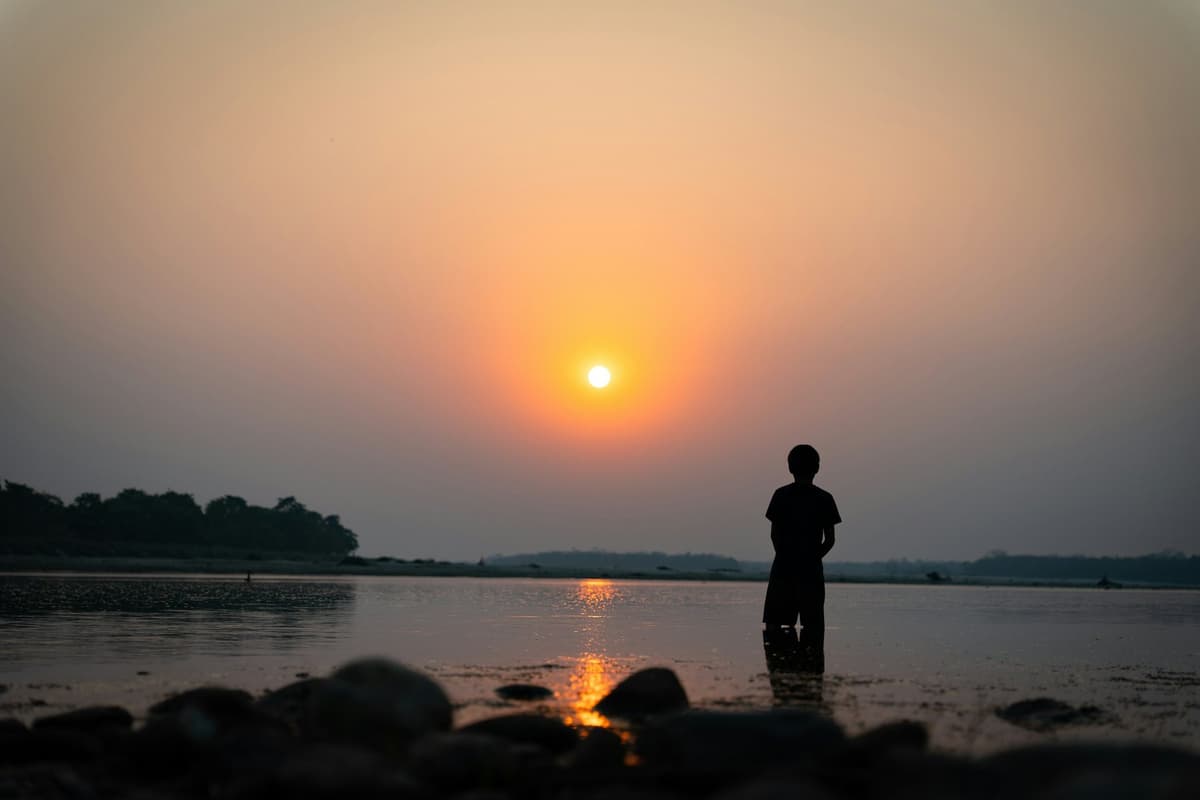
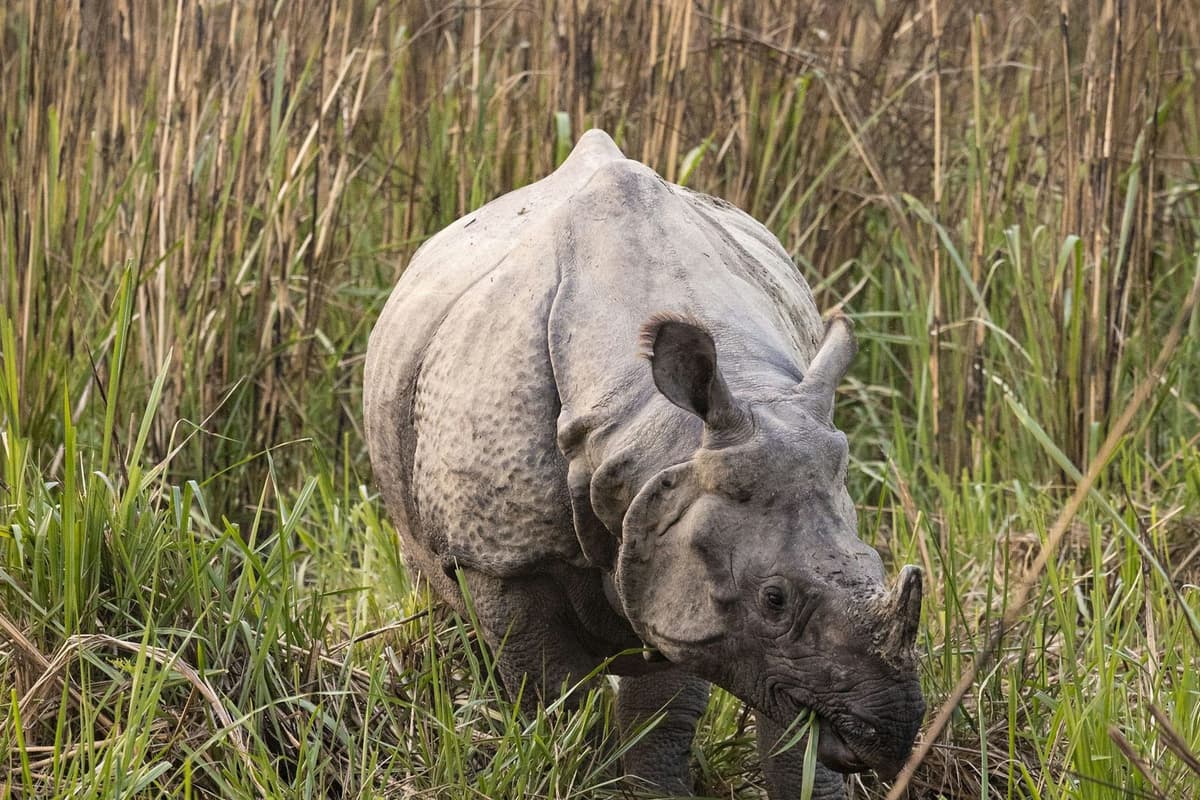
Just after dawn in Sauraha, mist sits on the Rapti river and the far bank is only a dark line of trees. A bird calls from the tall grass, then another answers. If you are lucky, a rhino is already out on the riverbank, grazing with its head down, paying no attention to the people watching from the other side.
The short answer. Chitwan National Park is Nepal's first national park, set up in 1973, and a UNESCO World Heritage Site since 1984. It lies in the warm lowland Terai, about 146 km by road from Kathmandu. It holds most of Nepal's one-horned rhinos, a growing tiger population and more than 525 bird species.
This is our main guide to the park, and part of our Nepal Insights, written by the team that runs trips there. It covers what you can realistically see, how to get there, fees, safaris, the court ruling on elephant safaris, the weather month by month and the rules that keep you safe. Every figure carries its source and the date we checked it. Where we could not find a reliable number, we say so.
Key facts
- Established
- 1973, Nepal's first national park (DNPWC; UNESCO World Heritage Centre, 4 Oct 2026)
- UNESCO World Heritage Site
- Inscribed 1984, natural site, criteria (vii), (ix), (x) (DNPWC; UNESCO World Heritage Centre, 4 Oct 2026)
- Park area
- 952.63 km² (DNPWC, 4 Oct 2026)
- Buffer zone area
- 729.37 km² (DNPWC, 4 Oct 2026)
- Hills inside the park
- The Churia hills rise from 150 m (492 ft) to more than 800 m (2,625 ft) (DNPWC, 4 Oct 2026)
- Park headquarters
- Kasara, 21 km from Bharatpur (DNPWC; Nepal Tourism Board, 4 Oct 2026)
- One-horned rhinos
- 694 in Chitwan incl. buffer zone, of 752 in Nepal (2021 count) (NTNC, 4 Oct 2026)
- Tigers
- 145 in Chitwan and surrounding areas, of 429 in Nepal (2026 survey) (Kathmandu Post; IUCN, 4 Oct 2026)
- Bird species
- More than 525 (DNPWC; Nepal Tourism Board, 4 Oct 2026)
- Mammal species
- More than 50 (DNPWC, 4 Oct 2026)
- Entry fee, foreign nationals
- NPR 2,000 per person per day, about USD 13 (Nepal Tourism Board; Nepal Rastra Bank rate, 4 Oct 2026)
- Kathmandu to Bharatpur
- About 146 km by road; 20 to 25 minutes by air (Nepal Tourism Board; Buddha Air, 4 Oct 2026)
In this guide
- What Chitwan National Park is, and why it matters
- How to get there
- Wildlife, and your real chances of seeing it
- Things to do: jeep and walking safaris, birding, breeding centres
- The jeep-safari season
- Elephant safaris and the Supreme Court verdict
- Entry fees
- Weather month by month and the best time to go
- Safety and park rules
- Packing, our team's tips and FAQs
What is Chitwan National Park?
Chitwan National Park is a protected area of sal forest, tall grassland and river floodplain in Nepal's southern lowlands. It became Nepal's first national park in 1973 and was listed by UNESCO as a natural World Heritage Site in 1984, under criteria for natural beauty, ecological processes and threatened species.
The park covers 952.63 km², and a buffer zone of 729.37 km² wraps around it. The buffer zone matters to visitors: it holds the community forests, villages and lodges, and some activities happen there rather than inside the park itself.
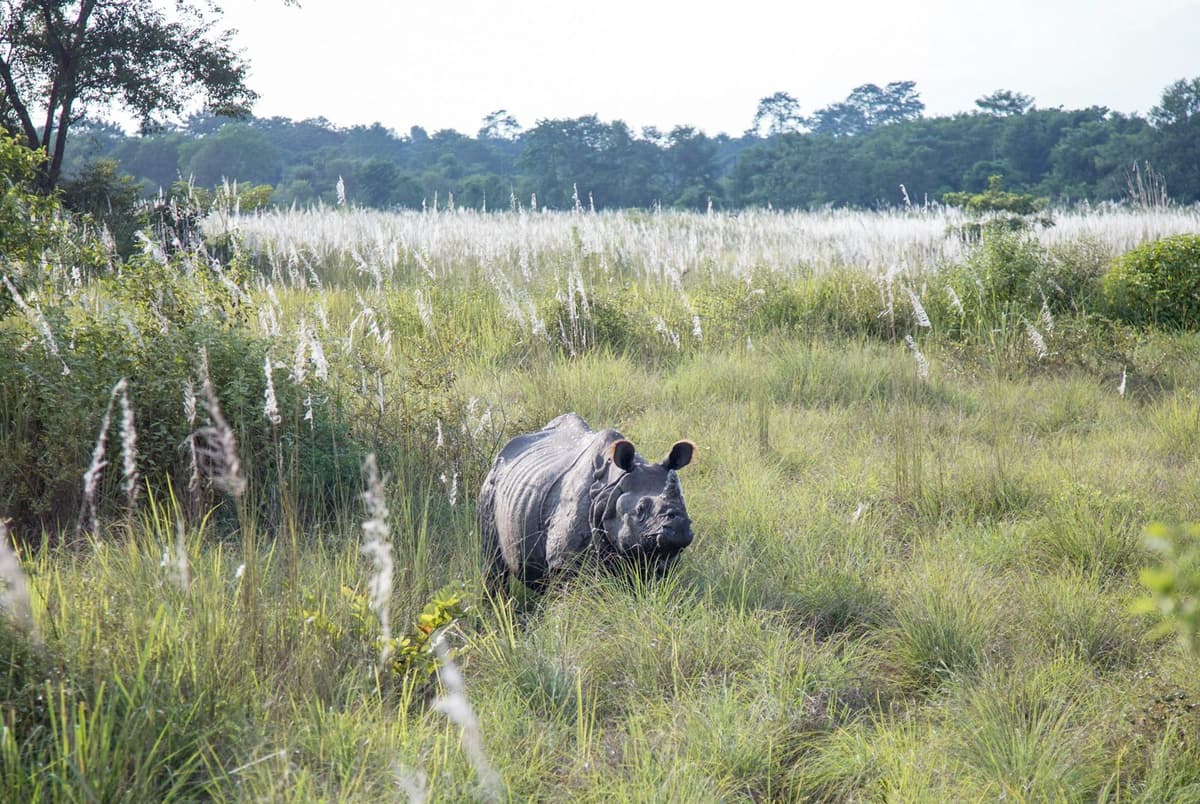
Much of the park is low, flat floodplain. The Churia hills inside the park rise slowly towards the east, from 150 m (492 ft) to more than 800 m (2,625 ft). Three rivers shape it: the Rapti, the Reu and the Narayani. UNESCO describes the Narayani as Nepal's third-largest river. Sal forest covers about 70% of the park and grassland about 20%. The grassland is where rhinos feed.
The park headquarters is at Kasara, about 21 km from the city of Bharatpur. According to the Nepal Tourism Board, the Chitwan valley takes its name from Chitrasen, a Tharu king who once ruled here. The Tharu are the people who have lived in this part of the Terai for generations, and their villages around Sauraha are part of any visit.
UNESCO puts the park's importance in one line:
"One of the last populations of single-horned Asiatic rhinoceros lives in the park, which is also one of the last refuges of the Bengal tiger."
UNESCO World Heritage Centre, Chitwan National Park site description
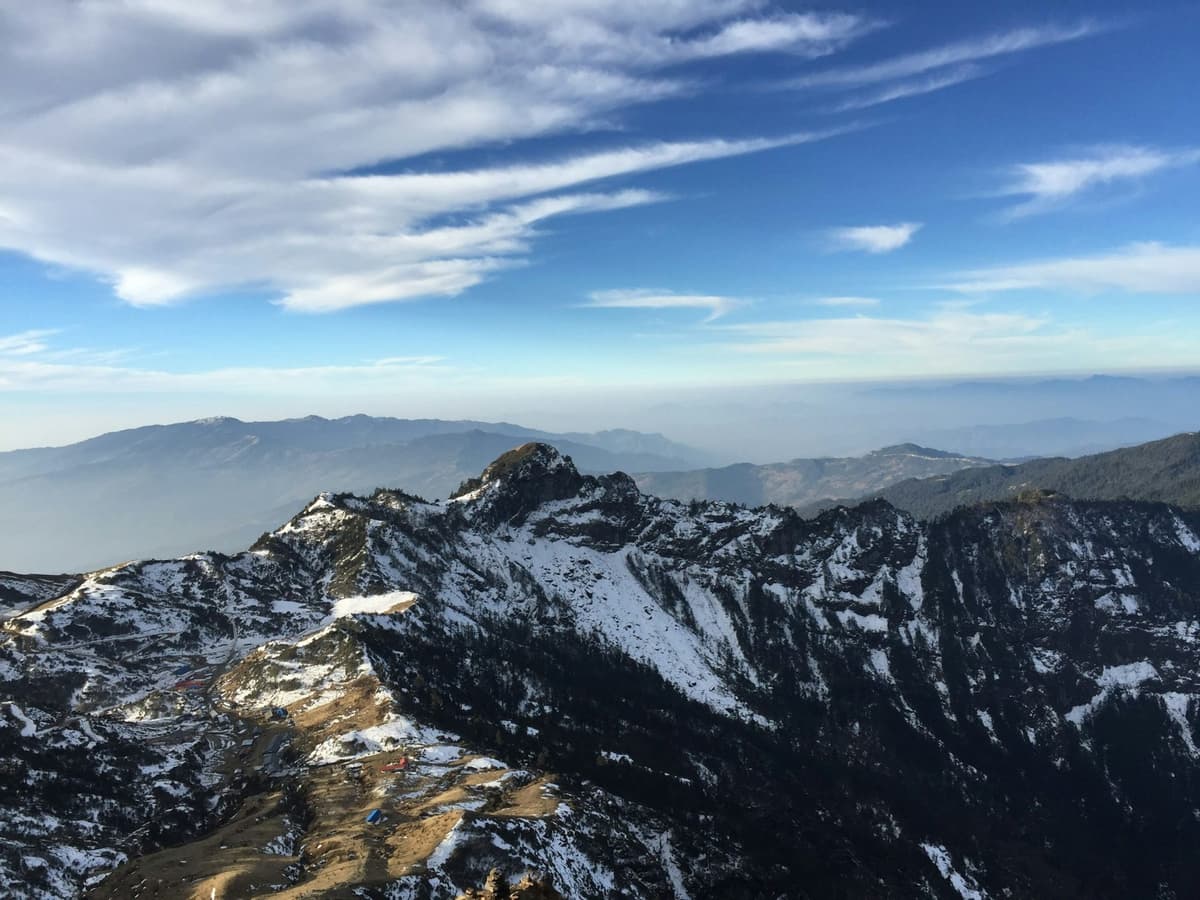
Takeaway: Chitwan is a lowland jungle park, not a mountain one. Expect heat, forest and grassland, not snow peaks.
Where is Chitwan National Park and how do you get there?
Chitwan National Park is in south-central Nepal. The nearest city and airport are at Bharatpur, about 146 km by road from Kathmandu. By air, the Kathmandu to Bharatpur flight takes 20 to 25 minutes, and the drive from Bharatpur airport to the park side is about half an hour.
Most visitors stay in Sauraha, the village on the northern edge of the park across the Rapti river. By road from Kathmandu to Sauraha it is about 150 to 170 km via Mugling, usually five to seven hours, depending on traffic, roadworks and landslides. The road runs down the Trishuli valley, so the scenery is good even when the traffic is slow.
Chitwan also sits well between Kathmandu and Pokhara. From Chitwan to Pokhara is about 160 km, usually three to five hours by road. That is why so many travellers go Kathmandu, then Chitwan, then Pokhara, rather than doubling back.
| Route | Distance | Time | Source |
|---|---|---|---|
| Kathmandu to Bharatpur, road | About 146 km | Varies with traffic | Nepal Tourism Board |
| Kathmandu to Bharatpur, air | Not listed | 20 to 25 minutes | Nepal Tourism Board; Buddha Air |
| Bharatpur airport to the park | Not listed | About half an hour | Buddha Air |
| Kathmandu to Sauraha, road | About 150 to 170 km | Usually five to seven hours | Nepal Tourism Board; The Kathmandu Post; operator sources |
| Bharatpur to Kasara (park HQ) | 21 km | Not listed | Nepal Tourism Board |
| Chitwan to Pokhara, road | About 160 km | Usually three to five hours | Our trip data |
| Pokhara to Kathmandu, road | Not listed | Six to nine hours | Our trip data |
Where you enter the park. Jeep safaris start from several entry points: Sauraha, Kasara, Meghauli, Madi and Nawalparasi. Sauraha has the most lodges and is the easiest base for a first visit. Meghauli and the western side are quieter.
Takeaway: fly if your time is short; drive if you want to see the hills on the way, and plan Chitwan between Kathmandu and Pokhara to save a day of backtracking.
Wildlife in Chitwan National Park
Chitwan National Park is home to more than 50 mammal species, more than 525 bird species and 55 species of amphibians and reptiles. The headline animals are the one-horned rhino and the Bengal tiger, but the crocodiles, deer and birds are what fill most of a day.
| Animal | Latest figure | Where and how you see it | Source |
|---|---|---|---|
| One-horned rhinoceros | 694 in Chitwan incl. buffer zone, 752 in Nepal (2021) | Grassland and riverbanks, morning and late afternoon | NTNC |
| Bengal tiger | 145 in Chitwan and surrounding areas, 429 in Nepal (2026) | Rarely seen; tracks and alarm calls are more common | Kathmandu Post; IUCN |
| Gharial crocodile | About 300 in Nepal (official estimate); 265 counted in the Rapti and Narayani (early 2024) | Sandbanks on the Rapti and Narayani | Kathmandu Post |
| Mugger (marsh) crocodile | Present | River edges and oxbow lakes | Nepal Tourism Board |
| Birds | More than 525 species | Everywhere; wetlands such as Beeshazari Lake (Bis Hajar Tal) are best | DNPWC; Nepal Tourism Board |
| Bengal florican | Present in the grasslands | Open grassland, with luck | Nepal Tourism Board |
| Amphibians and reptiles | 55 species | Forest floor, wetlands | DNPWC |
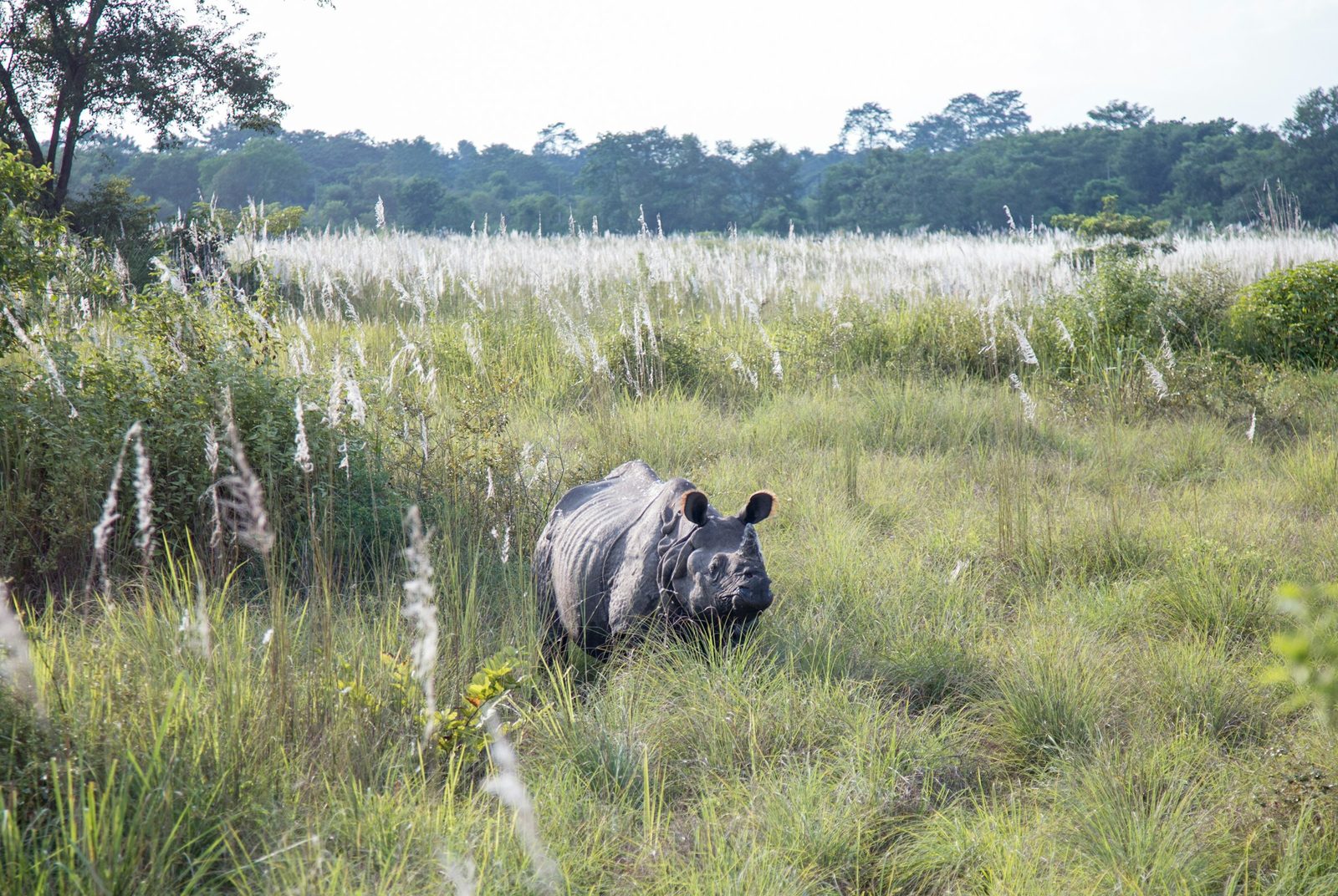
One-horned rhinos
The 2021 national count found 752 one-horned rhinos in Nepal, 694 of them in Chitwan including its buffer zone. Nepal's total had been 645 in 2015. The next count has been postponed because of budget limits; no date has been announced, and the parks department is still deciding on the method.
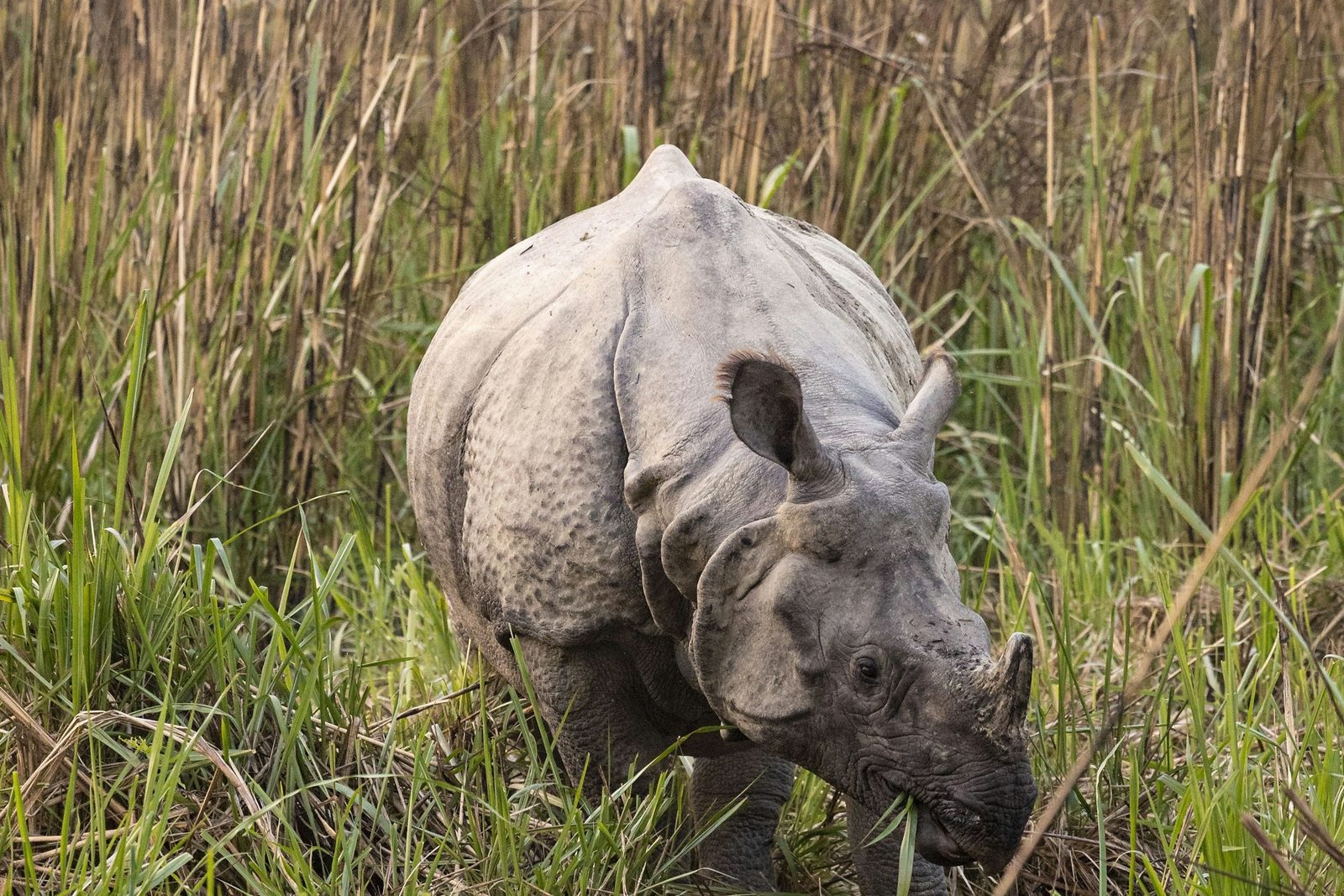
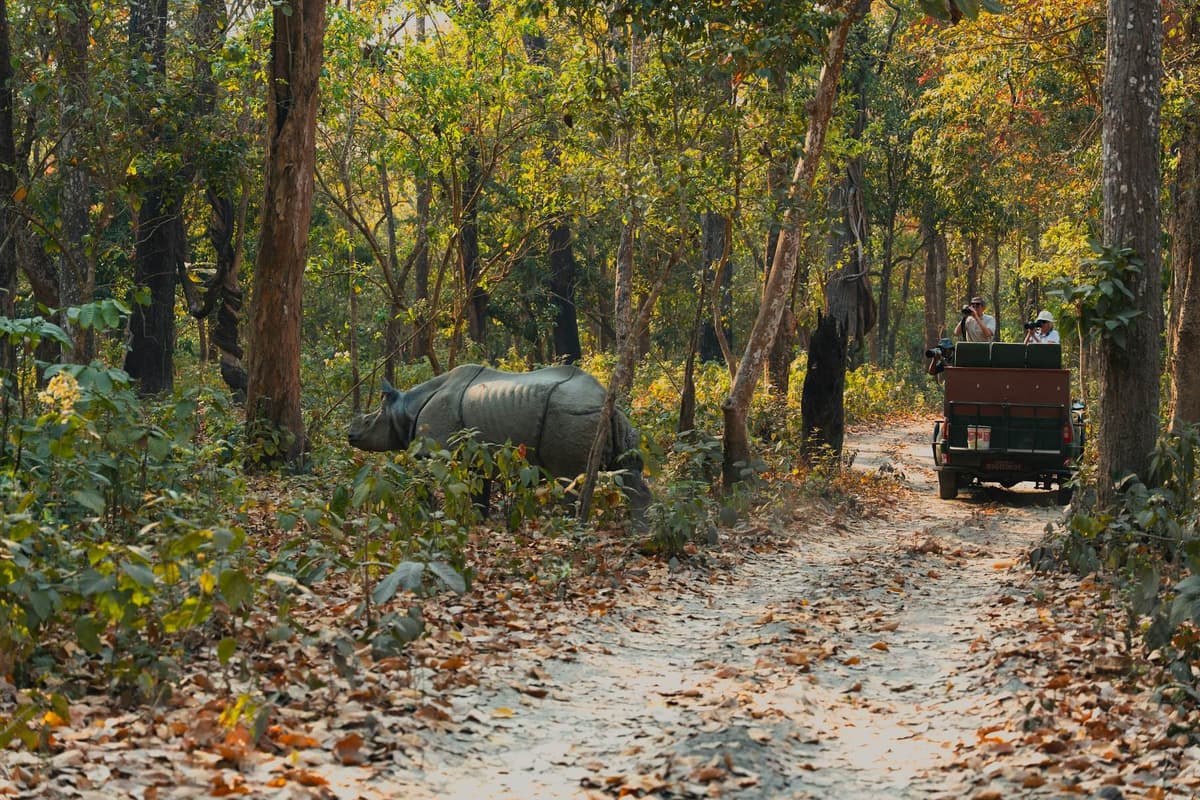
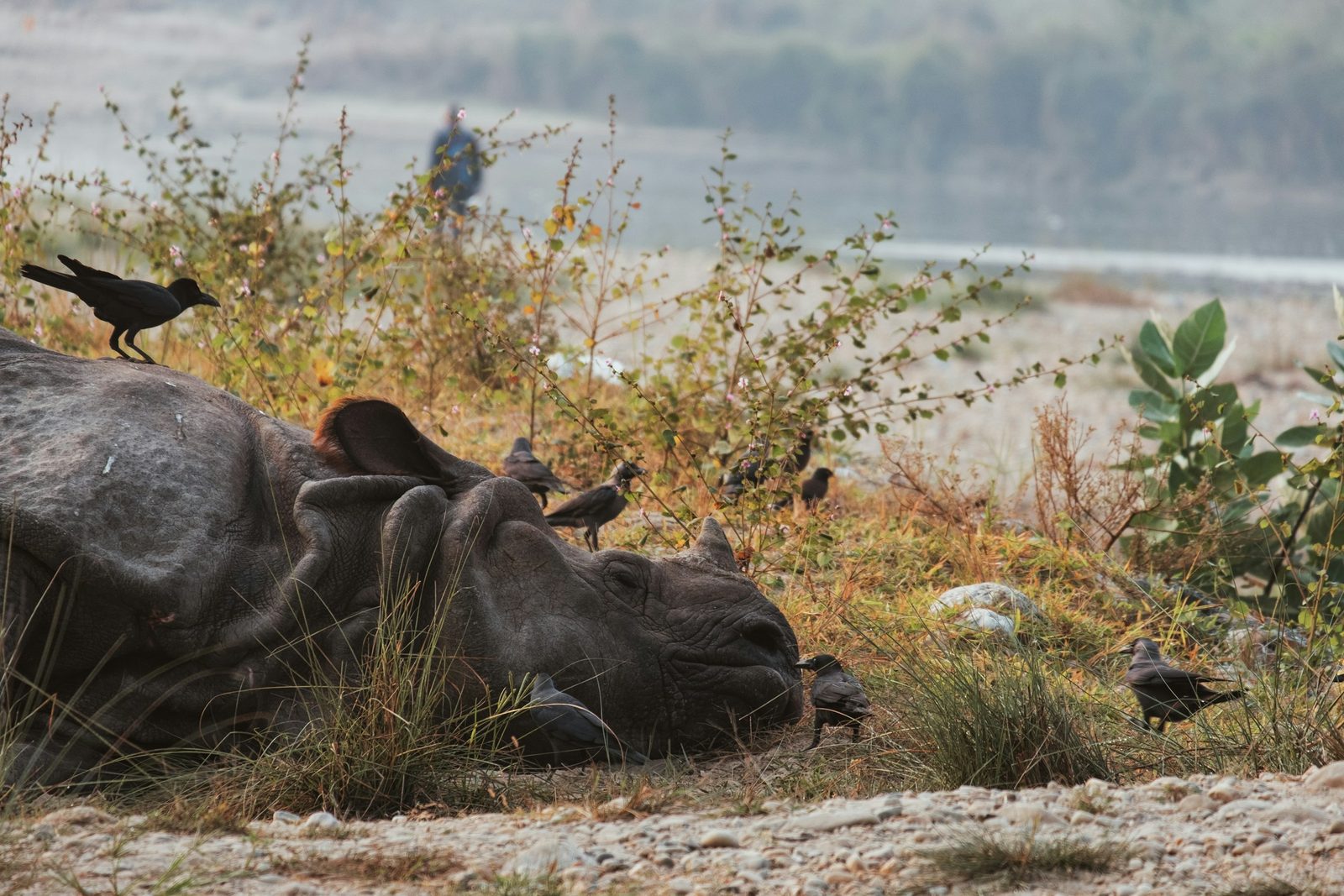
In practice, rhinos are the animal you are most likely to see. They graze in the grassland and wallow in pools and river shallows, and they sometimes wander close to the Sauraha riverbank. They look slow. They are not, and a rhino with a calf is to be given plenty of room.
Bengal tigers
Nepal's 2026 tiger survey counted 429 tigers nationwide, up from 355 in the previous count. Of these, 145 were in Chitwan National Park and the surrounding areas, up from 128. The survey used camera traps set between 31 December and 23 April.
Be realistic. Tigers are shy, the forest is thick and the grass is tall. Most visitors see pugmarks, scratch marks or hear deer and monkeys giving alarm calls, rather than the tiger itself. No honest operator can promise a sighting.
Crocodiles
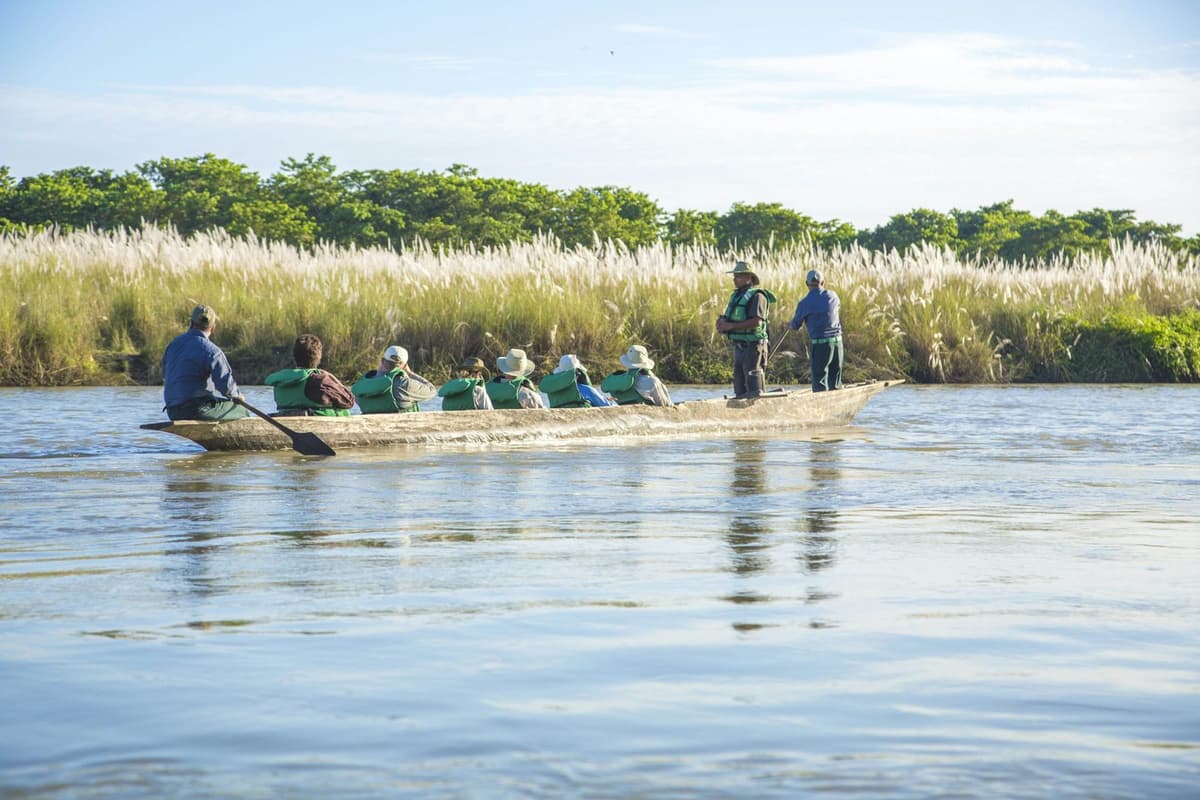
Chitwan has two kinds: the gharial, with its thin fish-eating snout, and the broader-headed marsh mugger. In March 2024 park officials estimated about 300 gharials in the wild across Nepal, and a count in early 2024 found 265 in the Rapti and Narayani rivers. You often see both basking on sandbanks from a riverbank or a canoe.
Birds
With more than 525 recorded species, Chitwan is one of Nepal's richest places for birds. The Nepal Tourism Board notes summer nesting migrants such as the paradise flycatcher and Indian pitta, and winter waterfowl including bar-headed geese. The Bengal florican, a grassland bird, is also found here.
Takeaway: come for rhinos, birds and crocodiles, which you are very likely to see. Treat a tiger as a bonus.
Things to do in Chitwan National Park
Most visits combine a jeep safari inside the park, a walk with a park-certified guide, a morning of birdwatching and a visit to the breeding centres, with an evening in a Tharu village. For a full list of sights in and around the park, see our guide to places to visit in Chitwan.
Jeep safari
A jeep safari covers the most ground and takes you deep into the core park, where the grassland and forest are quieter. Safaris start from entry points including Sauraha, Kasara, Meghauli, Madi and Nawalparasi. They do not run all year; see the jeep-safari season section below.
Walking safari
On a walking safari you go on foot, with a park-certified guide, through forest and grassland edges. You see less ground than from a jeep, but you hear and smell far more: the alarm bark of a deer, fresh rhino dung on the path, the rustle of something in the grass. On our trips you always walk with a park-certified guide. Walks happen in daylight only, because park rules do not allow walking in the park between sunset and sunrise.
Birdwatching
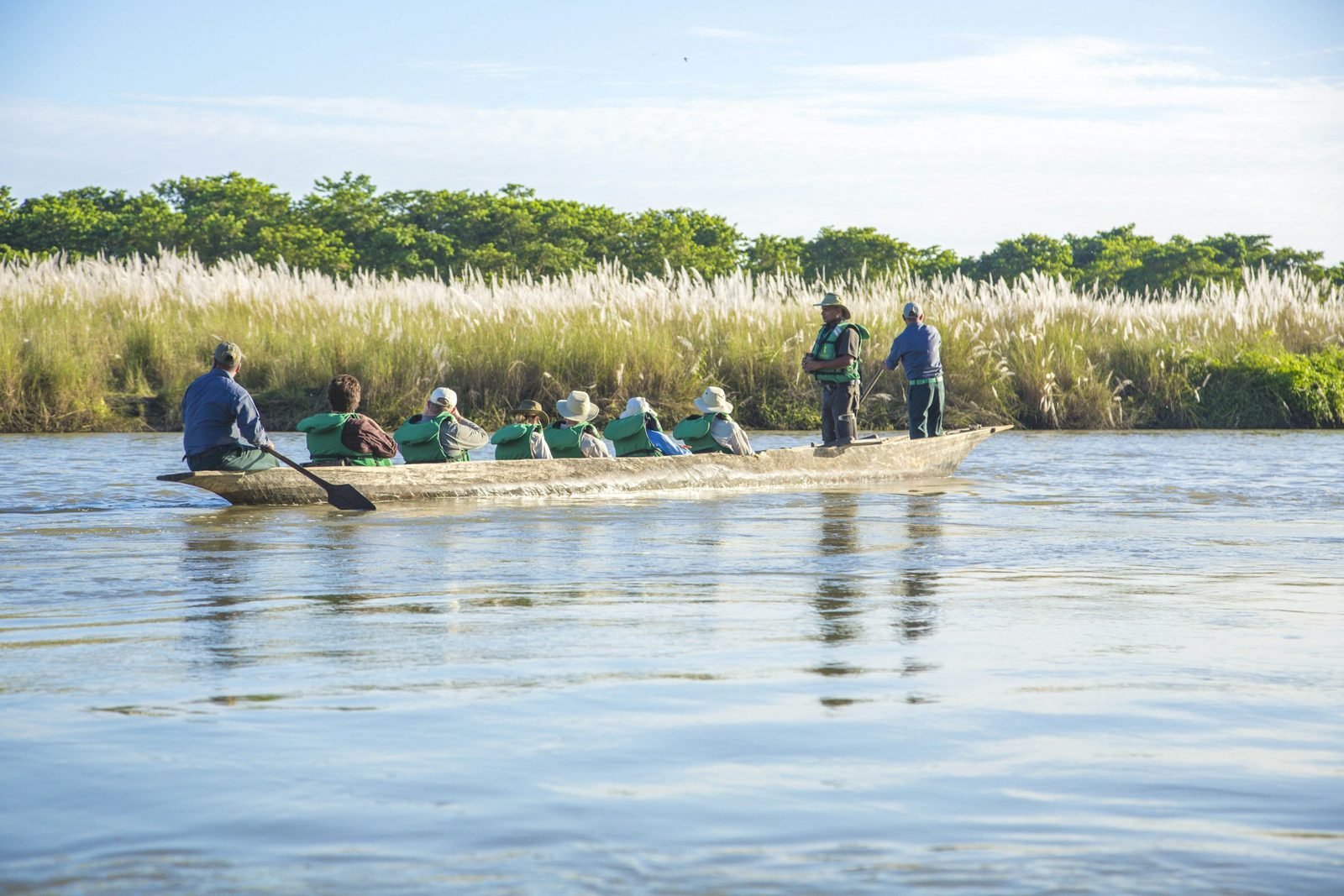
Early mornings are best. Wetlands such as Beeshazari Lake draw waterbirds, and the grasslands hold species you will not see in the hills. Winter brings migrant waterfowl and summer brings nesting migrants. Bring binoculars.
Elephant and gharial breeding centres
Both breeding centres have been free to enter since 19 July 2026, "for the time being", as officials put it. Before that, foreigners paid NPR 100, Nepali visitors NPR 50 and students NPR 30.
- Elephant Breeding Centre, Khorsor, Sauraha. Set up in 1987. In August 2026 it held 9 adult elephants and 7 calves, and 69 calves had been born there by then. Around 400 people visit on a typical day, so go early for a quieter visit.
- Gharial Breeding Centre, Kasara. Set up in 1978. By March 2024 it had released 1,887 gharials, 1,152 into the Rapti and 419 into the Narayani, and in August 2026 about 500 were at the centre. It is one of the main reasons gharials survive in Nepal's rivers.
Tharu villages and Sauraha
The Tharu villages around Sauraha show a lowland way of life very different from Kathmandu or the hills: mud-walled houses, rice fields, and evening cultural dances put on for visitors. A slow walk or bicycle ride through the villages at the end of the day is one of the gentlest parts of a Chitwan visit.
Takeaway: mix one long outing inside the park with one on foot. They show you the jungle in two very different ways.
When does the Chitwan jeep safari run?
The core-park jeep safari pauses every monsoon. It normally restarts in late September or in October; check the status before you book. In 2026 it was suspended from 1 July, and the park aimed to restart on 3 October 2026. Community-forest safaris in the buffer zone continue through the monsoon.
The park gives clear reasons for the pause. According to the park's information officer, quoted by Khabarhub, it is the breeding season, the unpaved park roads break up, streams overflow and fallen trees block the tracks.
The pattern is broadly the same each year. Closures usually run from about late June or July to late September or October. In 2025, jeep safaris paused from 30 June and resumed on 29 September. For 2026, about 30 km of park road was being cleared in mid-September for a target restart of 3 October. As of 4 October 2026 we had not seen a dated report confirming that the restart had happened, so check before you book if you are travelling in early autumn.
Takeaway: if a core-park jeep safari is the main reason for your trip, plan for October to May and confirm the status first.
Elephant safaris and the Supreme Court verdict
Elephant rides have not been allowed inside the national park for nearly 15 years. Rides that still take place run in buffer-zone community forests around Sauraha, such as Baghmara Buffer Zone Community Forest.
On 17 December 2025, Nepal's Supreme Court, in a ruling by Justices Hari Prasad Phuyal and Tek Prasad Dhungana, issued a 62-point order on captive elephants. The full text was published on the court's website in July 2026. As reported by the Kathmandu Post, the order directs a move towards alternatives such as elephant walks and observation, chain-free management, and the registration of privately owned elephants.
The Kathmandu Post reported in August 2026 that elephant safaris were still operating in Sauraha's buffer-zone forests. An elephant owner told the paper that private elephants in Sauraha had fallen from 90 to around 45 since the Covid pandemic. Sauraha is still working out what the ruling means in practice, for the elephants and for the families who depend on them.
Takeaway: the rules are changing. If elephants matter to how you plan your visit, read the latest news before you travel.
Chitwan National Park entry fees
Foreign nationals pay NPR 2,000 per person per day to Chitwan National Park, about USD 13 at the Nepal Rastra Bank rate on 4 October 2026. SAARC nationals pay NPR 1,000 and Nepali citizens NPR 150. Children under 10 enter free.
| Visitor | Park entry, per person per day | Breeding centres | Source |
|---|---|---|---|
| Foreign nationals | NPR 2,000, about USD 13 | Free since 19 July 2026 (was NPR 100) | NTB; Khabarhub; NRB |
| SAARC nationals (incl. India) | NPR 1,000 | Free since 19 July 2026 | NTB; Khabarhub |
| Nepali citizens | NPR 150 | Free since 19 July 2026 (was NPR 50) | NTB; Khabarhub |
| Children under 10 | Free | Free | NTB |
In practice, you need one entry permit for each day you go inside the park. If you do a jeep safari on one day and a walk on the next, that is two entries. The USD figure moves with the exchange rate, so treat it as a guide.
Takeaway: the park fee is modest, but count it per park day, not per trip.
Best time to visit Chitwan National Park
The best time to visit Chitwan National Park for most travellers is October to March, when days are warm, nights are cool and rain is light. The core-park jeep safari normally restarts in late September or in October. April to June is very hot, and the monsoon runs from late June to September.
The Nepal Tourism Board sums up the climate as "sub-tropical with hot and humid summers and mild winters". The table below shows long-term averages from the nearest weather station. Remember these are averages: individual days can be hotter or colder, and between March and June the park can reach as high as 43 °C.
Bharatpur (Rampur Bazaar) station, 189 m (620 ft), Department of Hydrology and Meteorology (DHM) normals 1991–2020; rainfall figures partly from Agricultural Extension in South Asia (AESA) 1976–2005.
| Month | Mean daily high °C | Mean daily low °C | Rain, mm | What it is like |
|---|---|---|---|---|
| January | 22.1 | 8.1 | 18.1 | Cool, often foggy mornings; mild sunny afternoons |
| February | 26.1 | 9.7 | 14.6 | Dry and pleasant |
| March | 31.5 | 13.3 | 21.9 | Warming up and dry |
| April | 35.4 | 18.0 | 55.6 | Hot days; go out early and late |
| May | 36.1 | 22.0 | 165.3 | Hottest month on average; pre-monsoon storms |
| June | 34.9 | 24.6 | 342.4 | Hot and humid; monsoon arrives |
| July | 33.5 | 25.3 | 573.3 | Wettest month; core-park jeep safaris paused |
| August | 33.6 | 25.4 | 438.3 | Very wet and humid; rivers high |
| September | 33.2 | 24.3 | 276.7 | Rain easing; jeep safaris may restart late in the month |
| October | 32.0 | 19.8 | 77.2 | Clearing skies, green park; check jeep-safari status early in the month |
| November | 28.4 | 13.4 | 8.8 | Dry, warm days, cooler nights |
| December | 24.0 | 9.1 | 17.5 | Cool mornings, often misty; quiet and comfortable |
| Year | 30.9 | 17.8 | 2,009.6 |
October to March. This is the comfortable window. In January the average low is 8.1 °C, so mornings on an open jeep feel cold, and fog can sit over the grassland until mid-morning. Bring a warm layer. If you are planning a winter trip, our guide to Nepal in December covers the whole country that month.
April to June. It is hot. The average high in May is 36.1 °C, and the extremes go higher. Go out at first light, rest in the middle of the day and go out again late.
Monsoon (late June to September). The monsoon in the park typically lasts from late June until September, and July averages 573.3 mm of rain. The core-park jeep safari is paused, but community-forest safaris continue. The forest is at its greenest and there are fewer visitors, but leeches, mud and humidity come with it.
For how Chitwan fits with the trekking seasons and the rest of the country, see our guide to the best time to visit Nepal.
Takeaway: for comfort, go between October and March. For the widest safari options, avoid July and August.
Is Chitwan National Park safe?
Yes, Chitwan National Park is safe for visitors who follow the park rules and their guide. The main risks are wild animals at close range, heat, insects and rivers. Stay with your park-certified guide, keep your distance from rhinos and elephants, and never walk in the park between sunset and sunrise, which park rules do not allow.
Practical safety, step by step:
- Respect the sunset rule. Under the Chitwan National Park Rules, nobody may enter or walk in the park between sunset and sunrise without the warden's written permission, except to stay at an approved lodge or camp. Plan to be out of the park before dusk.
- Walk only with a park-certified guide. On our trips you always do. Listen to the briefing before you set off and follow instructions at once, even if they seem odd.
- Give rhinos and elephants room. Never approach for a photo. Use a zoom lens. If your guide tells you to move, move quietly and quickly.
- Stay quiet and in a line on walks. Noise spoils sightings and makes animals nervous.
- Keep out of the rivers. Gharial and mugger crocodiles live in them. Do not swim or wade.
- Beat the heat. From March to June it can reach 43 °C. Drink water often, wear a hat, and avoid outings at midday.
- Guard against mosquitoes. Wear long sleeves and trousers at dusk, use repellent, and sleep under a net or in a screened room. Ask your doctor before travel about any vaccines or tablets you may need for lowland Nepal.
- Check for leeches in the wet season. Tuck trousers into socks on monsoon walks and check your legs afterwards. A leech bite bleeds for a while but is usually harmless.
- Carry what you need on a jeep. Water, sun cream, a light layer for the morning chill in winter, and your camera in a dust-proof bag.
Takeaway: the park is safe when you treat it as wild. The guide's word is final.
Where to stay near Chitwan National Park
Sauraha, on the northern edge of the park, is where most visitors stay. It has the widest choice of lodges, from simple guesthouses to comfortable resorts, plus restaurants, the breeding centre and the riverbank for sunset. It also gets busy in peak season.
The western side, around Meghauli, and other gateways such as Madi and Nawalparasi are quieter, with fewer lodges and a more remote feel. They suit travellers who have been to Sauraha before or who want fewer crowds.
Takeaway: choose Sauraha for a first visit and easy logistics; choose a quieter gateway if peace matters more than choice.
Chitwan, Pokhara and the hills
Chitwan fits neatly into a first trip to Nepal. Kathmandu, Chitwan and Pokhara form a loop: about 150 to 170 km from Kathmandu to Sauraha, about 160 km on to Pokhara, and six to nine hours by road from Pokhara back to Kathmandu. After the heat of the lowlands, the hills feel fresh. If you want a quiet stop with mountain views on the way, our guide to hill stations in Nepal lists the best-known ones.
Takeaway: put Chitwan in the middle of a Kathmandu and Pokhara trip, not at the end.
What to pack for Chitwan
- Clothes in green, brown or khaki; avoid white and bright colours on walks.
- Long, light trousers and long sleeves, for sun, insects and grass.
- A warm fleece or jacket from November to February, for cold mornings on an open jeep.
- Comfortable closed walking shoes; sandals for the lodge.
- Wide-brimmed hat, sunglasses and sun cream.
- Insect repellent, and a small first-aid kit.
- Binoculars, and a camera with a zoom lens.
- A refillable water bottle.
- A rain jacket and leech socks if you travel between June and September.
- Your passport.
Read next: our Sauraha village guide.
Frequently asked questions
Can you see tigers in Chitwan National Park?
You can, but it is rare. The 2026 survey counted 145 tigers in Chitwan National Park and the surrounding areas, but tigers are shy and the grass and forest are dense. Most visitors find pugmarks or hear alarm calls from deer and monkeys rather than seeing a tiger. Nobody can honestly promise a sighting.
What is Chitwan National Park famous for?
Chitwan National Park is famous for the one-horned rhino. The 2021 count found 694 in Chitwan including its buffer zone, most of Nepal's 752. It is also known for Bengal tigers, gharial crocodiles and more than 525 bird species. It was Nepal's first national park, set up in 1973, and a UNESCO World Heritage Site since 1984.
When does the jeep safari open in Chitwan?
The core-park jeep safari normally restarts in late September or in October; check the status before you book. It pauses every monsoon because park roads break up, streams overflow and it is the breeding season. In 2025 it reopened on 29 September. Community-forest safaris in the buffer zone continue through the monsoon.
Are elephant rides allowed in Chitwan National Park?
Elephant rides have not been allowed inside the national park for nearly 15 years. Rides that still run take place in buffer-zone community forests around Sauraha. A Supreme Court verdict of 17 December 2025 ordered a move towards alternatives such as elephant walks and observation, plus chain-free management and the registration of private elephants.
How far is Chitwan National Park from Kathmandu?
Bharatpur, the city next to the park, is about 146 km from Kathmandu by road. Sauraha, where most visitors stay, is about 150 to 170 km and usually five to seven hours by road. By air, the Kathmandu to Bharatpur flight takes 20 to 25 minutes, and the park is about half an hour's drive from Bharatpur airport.
Is it safe to walk in Chitwan National Park?
Yes, if you walk with a park-certified guide and follow the rules. On our trips you always walk with one. Park rules do not allow anyone to walk in the park between sunset and sunrise, so walks happen in daylight. Keep quiet, give rhinos and elephants room and stay out of the rivers, which hold crocodiles.
Your next step
If you would like us to arrange Chitwan for you, these are the trips we run there:
- Chitwan jungle safari tour from Kathmandu: Chitwan on its own, starting and ending in Kathmandu.
- Chitwan and Pokhara tour by road: the jungle and the lakeside in one trip.
- Jungle safari and wildlife tours: all our wildlife trips in one place.
We arrange the in-country parts: transport, lodges, park permits and a park-certified guide. Your visa and international flights are your own arrangement. Message us on WhatsApp or send an enquiry, and our Kathmandu team will reply with honest advice for your dates.
For more on planning your trip, browse the rest of our Nepal Insights.