


Explore by activity
Not listed yet

We run Motorbiking & Overland trips — we just haven’t put the itinerary on the site yet. Tell us your dates and we’ll send a costed day-by-day plan.

Explore by experience
Explore by region
by gomayu
Search Tours or Places

Sauraha: Chitwan's Gateway Village Explained

22 min read Posted 15 Oct 2026Updated 31 Oct 2026
Sauraha: Chitwan's Gateway Village Explained

By Uncover Nepal Team · Checked by our Kathmandu travel team · Last checked 15 October 2026

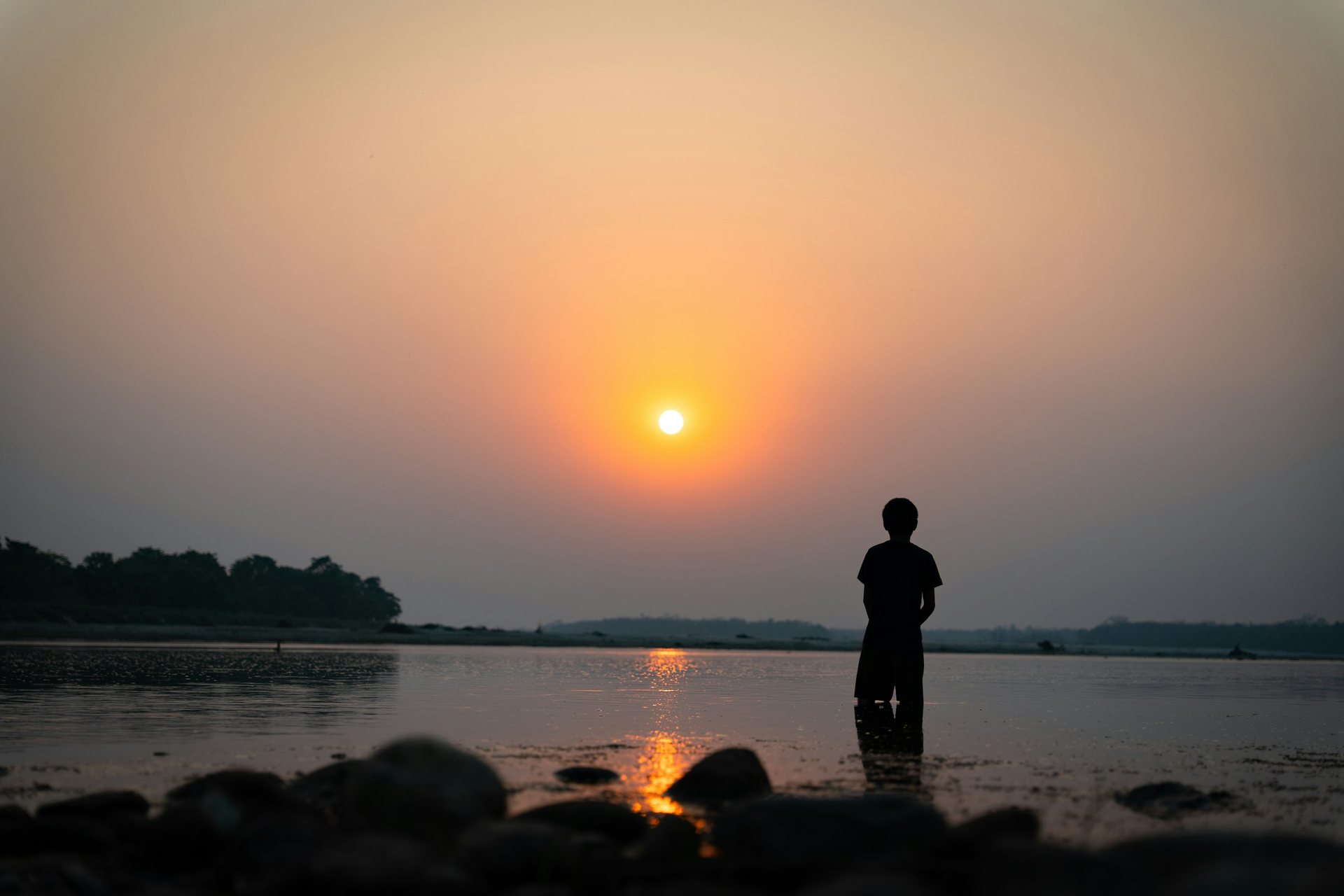
Late in the afternoon the Rapti runs wide and brown below Sauraha, and the forest on the far bank turns from green to grey. A dugout canoe slides past, the boatman poling from the back. On a sandbar a crocodile lies still in the last of the sun, and along the near bank people gather to watch the sky go orange over the water.

Sauraha is a riverside village in Ratnanagar Municipality, Chitwan District, facing Chitwan National Park across the Rapti River. It is a tourist town with hotels, a park visitor centre and one of the park's entrances, so jeep drives, canoe trips and guided jungle walks begin at the edge of the village.

For the park as a whole, start with our Chitwan National Park guide. This one covers the village: getting there, fees, what is running this October and living alongside rhinos.

Key facts

Where
Ratnanagar Municipality, Chitwan District, Bagmati Province (Wikipedia; OnlineKhabar, 12 Jul 2020, 13 Oct 2026)
River
On the Rapti, which forms the park's northern side (Film Development Board; UNESCO, 13 Oct 2026)
From Kathmandu by road
About 150 to 170 km, about five to seven hours (Film Development Board, 13 Oct 2026)
Nearest airport
Bharatpur, about 15 to 18 km away; flight from Kathmandu 20 to 25 minutes (Buddha Air; Film Development Board, 13 Oct 2026)
Park entry, foreign visitors
NPR 2,000 per person per day, about USD 13 (Park office citizen charter; NRB rate 13 Oct 2026, 13 Oct 2026)
Park entry, SAARC and Nepali
NPR 1,000 and NPR 150 per person per day; under 10 free (Park office; NTB, 13 Oct 2026)
Jeep safari
Core-park jeep safaris resumed on 9 Oct 2026 (OnlineKhabar, Khabarhub and The Rising Nepal, 12 Oct 2026, 15 Oct 2026)
The park
Nepal's first national park (1973); UNESCO World Heritage since 1984 (UNESCO; park office, 13 Oct 2026)
Rhinos
694 in Chitwan at the 2021 count, the latest (Kathmandu Post (DNPWC census), 13 Oct 2026)
Comfortable months
October to March, daily averages of about 15 to 26 °C at Bharatpur (DHM normals 1991 to 2020, 13 Oct 2026)

Where is Sauraha, exactly?

Sauraha sits on the Rapti River in Ratnanagar Municipality, Chitwan District, Bagmati Province. The Rapti forms the northern side of Chitwan National Park, so the forest you see across the water from the village is the park itself. Bharatpur, with the nearest airport, is about 15 to 18 km away.

Ratnanagar is a municipality of 16 wards, and the hotels and restaurants most visitors mean when they say "Sauraha" sit in wards 7 and 8. The park lies mainly along three rivers, the Narayani, the Rapti and the Reu; UNESCO describes it as lying between the Narayani and Rapti rivers to the north. A smaller river, the Budhi Rapti, also reaches the village, which matters in the monsoon (more on that below).

The park's own brochure lists one of its entrances as "Sauraha via Tandi (Ratna Nagar)" and notes a park visitor centre at Sauraha with information on wildlife and conservation. That visitor centre is not the park headquarters. Headquarters are at Kasara, 21 km from Bharatpur, and the Gharial Breeding Centre is at Kasara too, not in Sauraha.

Sauraha is not the only way into Chitwan, and it helps to know that before you book a hotel. Jeep safaris also run from Kasara, Meghauli, Amaltari and Madi. Of the entry points named in the latest report, Sauraha has the largest fleet: 32 jeeps, against 22 at Kasara, 11 at Meghauli, eight at Amaltari and one at Madi.

Two places near the village come up in almost every plan. Bis Hajari Tal, the Twenty Thousand Lakes wetland, is about 10 km north-west of Sauraha. Bachhauli, the nearest Tharu village to Sauraha, is home to the Tharu Cultural Museum.

How do you get to Sauraha from Kathmandu?

By road, Kathmandu to Sauraha is about 150 to 170 km and takes about five to seven hours by tourist bus, car or jeep. The quicker option is a flight from Kathmandu to Bharatpur, 20 to 25 minutes in the air, then about 15 to 18 km by road to the village, roughly 20 to 30 minutes.

There are two road routes. The main one runs down the Prithvi Highway to Mugling and then south, about 165 km in all. The other goes via Hetauda and is about 152 km. Traffic and road works decide which is quicker on a given day.

Tourist buses for Sauraha leave Kathmandu in the early morning, around 7 am, from the tourist bus park on Swayambhu Marg, north of Thamel. Plan to be there a little earlier to find your bus and load your bag. In Sauraha the tourist bus stand is about 1 km east of the main tourist road, roughly a 15-minute walk into the village. Ask your hotel before you travel whether it meets arriving buses.

Flights land at Bharatpur. Buddha Air listed six daily flights on the route when we checked, though schedules change with the season. We do not sell flights; check the airline's own site for times. From Bharatpur it is a short drive to Sauraha.

Option Distance Time Good to know
Road via Mugling (Prithvi Highway) About 165 km Five to seven hours in total, depending on traffic and stops The main Kathmandu to Mugling road; affected by the Galaundi repairs in October 2026
Road via Hetauda About 152 km Within the same five to seven hour range An alternative when the Mugling road is slow
Flight to Bharatpur, then road 146 km is the road distance Kathmandu to Bharatpur, for comparison; airport to Sauraha about 15 to 18 km 20 to 25 minutes in the air, then about 20 to 30 minutes by road Weather and schedules decide the day; airline information only
Tourist bus from Pokhara Not given (no reliable source) Varies; see below Runs daily

Check before you travel (as of 15 Oct 2026). On 9 October 2026 a 20 m section of the Prithvi Highway sank at Galaundi, near Gajuri in Dhading, and all traffic stopped. Traffic resumed after repairs, and a further repair closure from 11 pm to 5 am was announced for the night of 12 October (Kathmandu Post, 10 Oct 2026; OnlineKhabar and Himalayan Tribune, 12 Oct 2026). Daytime tourist buses are less likely to be hit by night closures, but delays at the repaired section add time. Check the latest road news the evening before you leave.

From Pokhara, tourist buses to Sauraha run daily. Published journey times disagree, so we do not quote one here. Our Kathmandu to Chitwan guide compares the road and air options in more detail.

What does Chitwan National Park charge, and what are the rules?

Foreign visitors pay NPR 2,000 per person per day to enter Chitwan National Park, about USD 13 at the Nepal Rastra Bank rate of 13 October 2026. SAARC nationals pay NPR 1,000 and Nepali citizens NPR 150. Children under 10 enter free. A park-certified guide is required for jungle walks inside the park.

The park office's citizen charter says "per person per day". The Nepal Tourism Board's page says "per person per entry". We follow the park office, which is the issuing authority, so budget for one permit for each day you go into the park.

A vehicle permit is charged on top of each person's entry permit for jungle drives: NPR 3,000 for a car and NPR 5,000 for a jeep, per vehicle. The charter does not say whether that is per day or per entry. These are the park's own fees, printed here for information.

Guides who lead visitors inside the park carry a park-issued identity card. To get one, a guide needs a training certificate and a recommendation from the buffer-zone committee, and the card is renewed every year. That is what we mean by a park-certified guide, and it is the person you want beside you on foot.

The park's visitor rules also say that no one may walk in the park between sunset and sunrise, and that entering without a permit is illegal.

How park entry works from Sauraha, step by step:

  1. Decide which days you will go into the park. Each day in the park needs its own entry permit.
  2. Keep your passport with you; the fee depends on nationality.
  3. For a jeep drive, the vehicle permit is paid per vehicle on top of the entry permits.
  4. Meet your park-certified guide at the Sauraha side and enter during daylight only.
  5. Keep your permit until you are back in the village.

Is the jeep safari running in Chitwan right now?

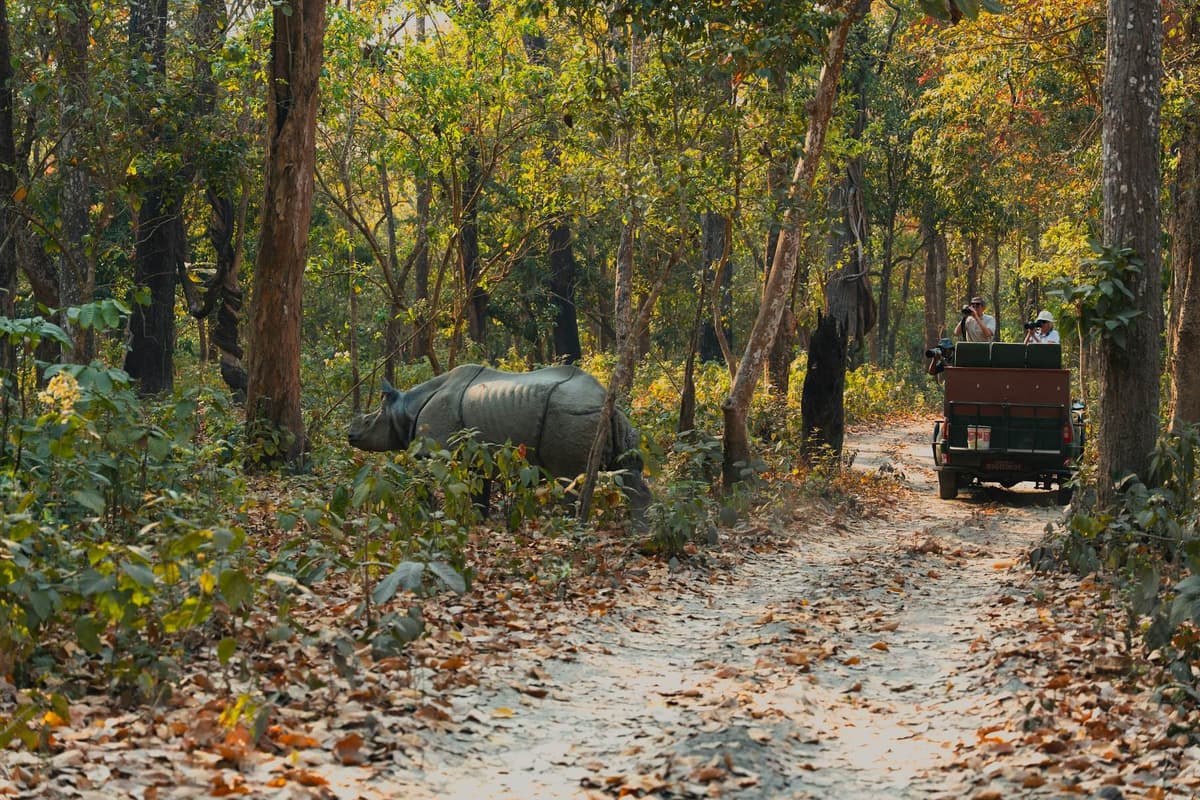
Yes. Core-park jeep safaris in Chitwan National Park resumed on 9 October 2026, OnlineKhabar and Khabarhub reported on 12 October, citing the park's information officer. Safaris had been suspended from 1 July for the monsoon, and late-September floods damaged park roads, which pushed the restart back.
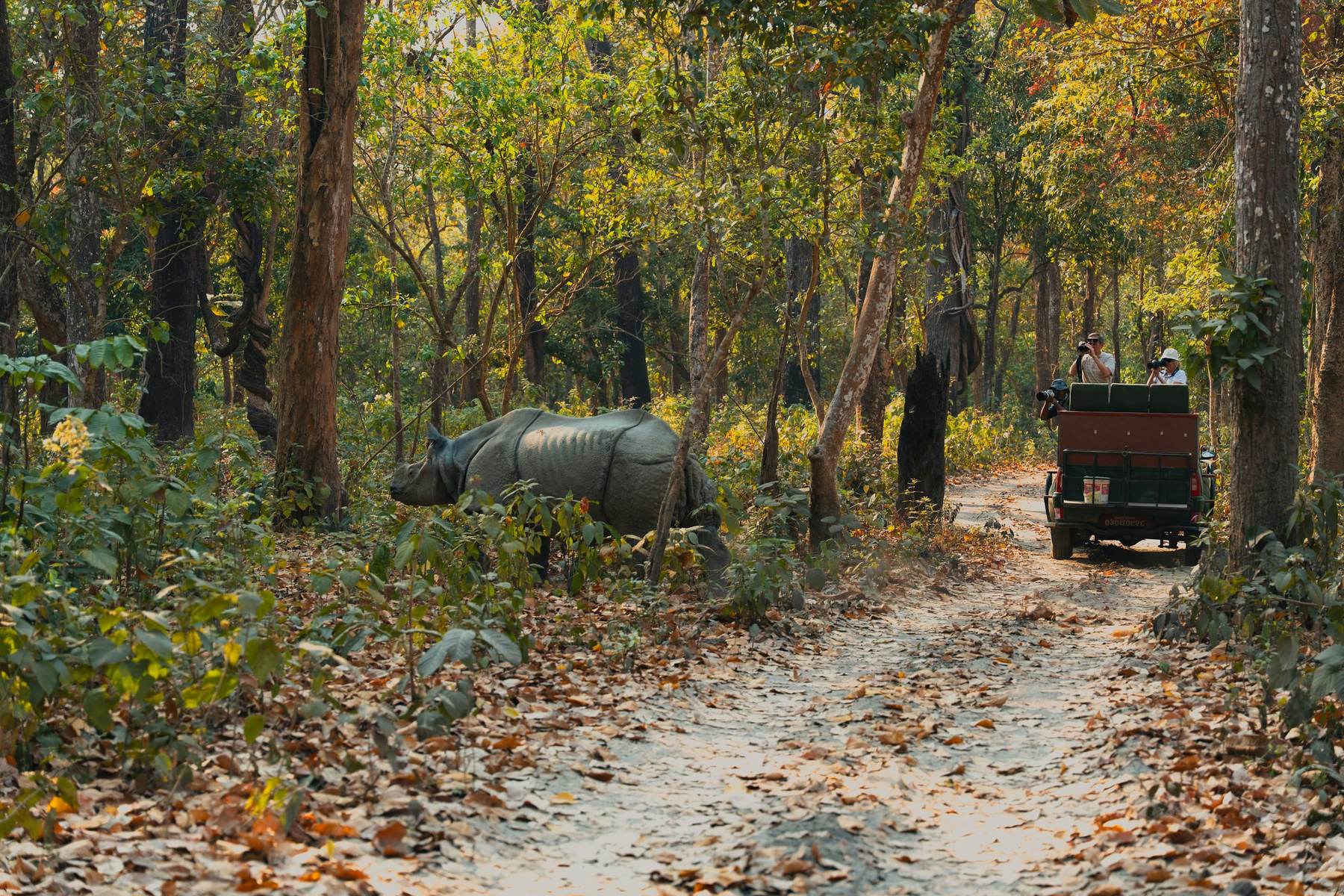
One-horned rhino beside a safari jeep in Chitwan National Park
Core-park jeep safaris resumed on 9 October 2026 after the monsoon break.

The floods were serious. On 26 September 2026 the park put the Narayani, Rapti and Reu rivers on high flood alert, and on 27 September the Narayani and Riu crossed their danger levels. Park roads had to be repaired before vehicles could go back in.

Even when the core park is closed, jeep safaris in the buffer zone and community forests keep running. They are outside the national park proper, and worth knowing about in the monsoon.

From the Sauraha entry, 32 jeeps operate. The park's jungle-drive vehicle permit applies per vehicle. Conditions change quickly after heavy rain, so check the status close to your date.

What can you do from Sauraha?

From Sauraha you can take a jeep drive or a guided walk in the park, a dugout canoe trip on the Rapti, birdwatching, and visits to Tharu villages and cultural evenings. The Nepal Tourism Board lists the park's visitor activities as "Jungle safari, jungle walk, canoe ride, jeep drive, experience of Tharu culture". Most start within the village.

Activity Where it starts What it is like Good to know
Jeep drive in the core park Sauraha entry A drive through park forest and grassland with a park-certified guide Resumed 9 Oct 2026; vehicle permit per vehicle
Canoe trip Rapti riverbank at Sauraha A traditional dugout poled by a boatman; gharial and mugger crocodiles and birds are commonly seen Sightings are never certain
Jungle walk Into the park with a park-certified guide The closest you get to the park on foot Park-certified guide required; daylight only
Birdwatching Riverbank, forest edge, wetlands More than 525 species recorded in the park Bis Hajari Tal is a recognised wetland
Tharu culture Bachhauli and the village Village visits, the Tharu Cultural Museum, the stick dance Museum hours and fee not confirmed
Elephant Breeding Centre Khorsor, Sauraha A park facility running since 1987 Entry free since 19 Jul 2026
Bis Hajari Tal About 10 km north-west An oxbow-lake wetland in the buffer zone, a Ramsar site since 2003 A longer half-day outing
Rapti sunset Riverbank in the village Watching the light go from the bank Free, every clear evening

Jeep drive

The jeep drive covers the most ground, which suits people with limited time. Your park-certified guide watches the grass and tracks, and the driver stops when there is something to see. Nothing is certain: the park is wild, and some days are quiet.

Canoe on the Rapti

Canoe trips run on the Rapti in traditional dugout canoes, poled by a boatman from the back. You sit low and close to the water. The government's Film Development Board notes that crocodiles "can be spotted basking on the river bank's sand", and both gharial and mugger crocodiles live in the river.
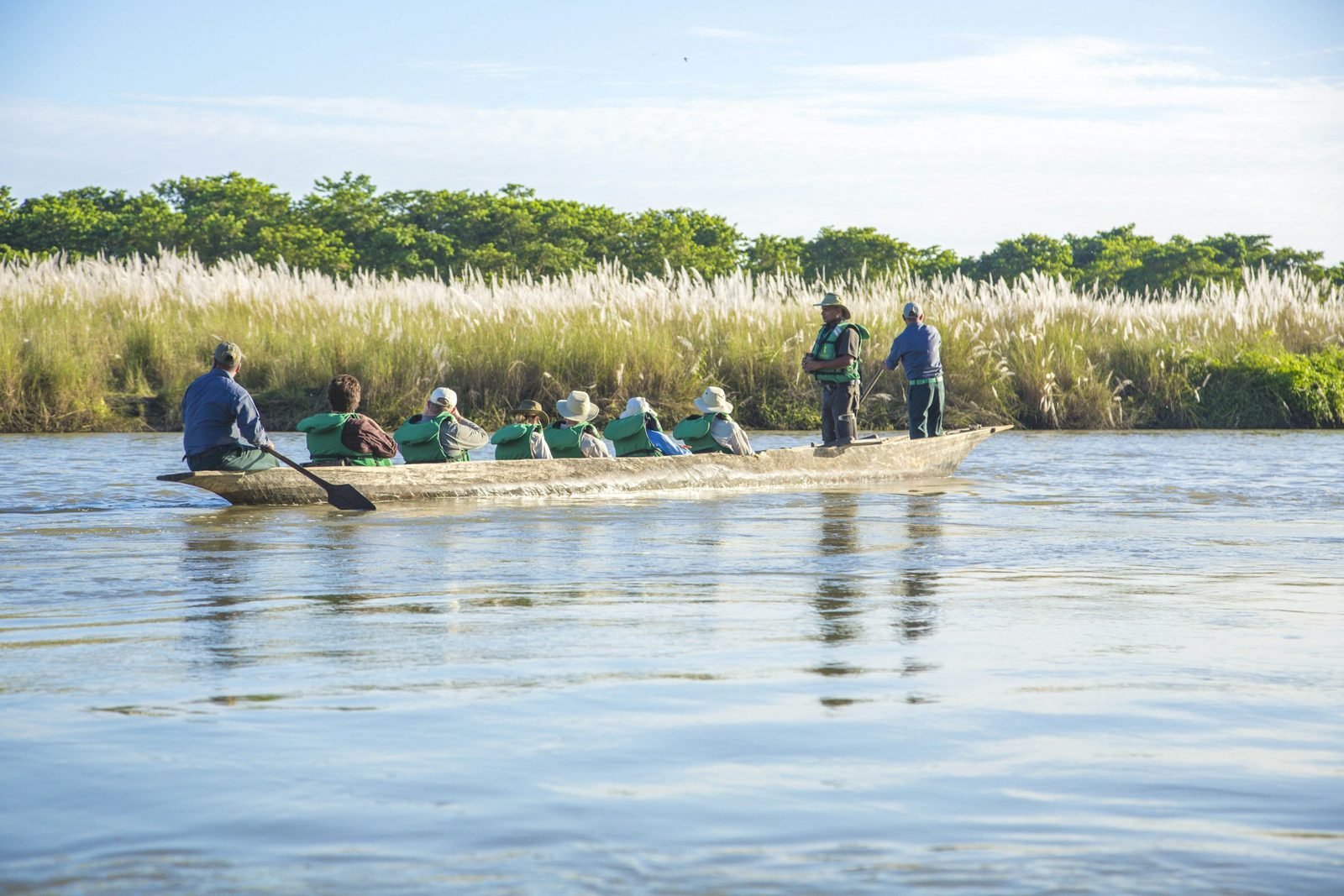
A dugout canoe on the Rapti River in Chitwan
A dugout canoe on the Rapti, poled from the back by a boatman.

Guided jungle walk

A jungle walk with a park-certified guide is quieter and more demanding than a jeep. You hear the forest before you see anything. A park-certified guide is required on foot, and the walk ends before sunset.
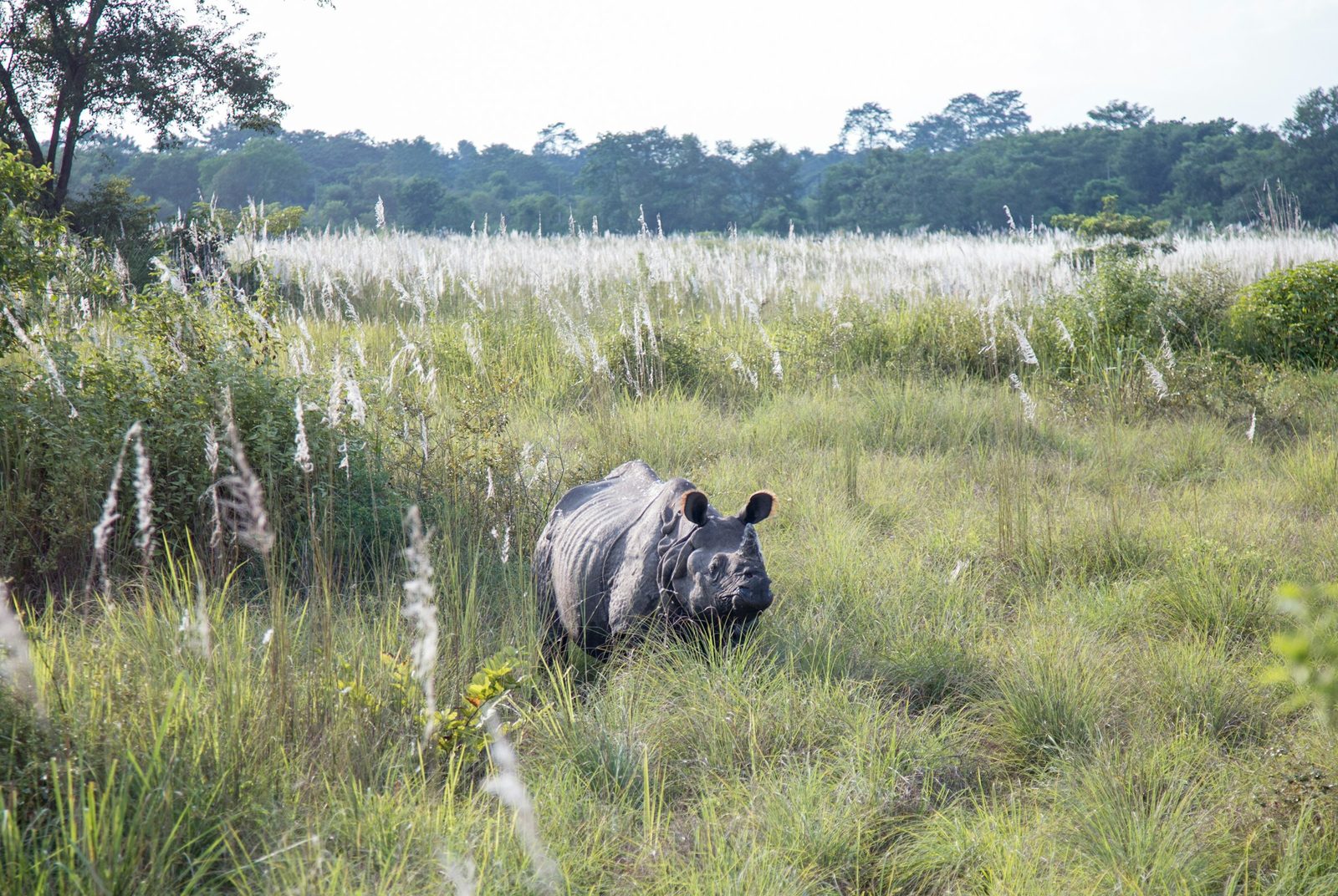
A forest trail in Chitwan National Park
Jungle walks go only with a park-certified guide, in daylight.

Tharu culture

Tharu culture is part of daily life around Sauraha, and the Nepal Tourism Board names "experience of Tharu culture", visits to Tharu villages and the Tharu stick dance by the campfire among the things to do here. The Tharu Cultural Museum and Research Centre at Bachhauli, the nearest Tharu village to Sauraha, opened in 2006. It shows artefacts, local dress, murals and historic photographs, including scenes from Rana-era and British hunts and the Tarai malaria-eradication campaign. Go as a guest: ask before photographing people or homes.

Elephant Breeding Centre, Khorsor

The park's Elephant Breeding Centre at Khorsor, on the Sauraha side, was set up in 1987. Sixty-nine calves have been born there, and it now holds nine adult elephants and seven calves, according to the centre chief, Manpuran Chaudhary, speaking to Khabarhub in August 2026. Entry has been free since 19 July 2026, for this centre and for the Gharial Breeding Centre at Kasara. About 400 people visit the elephant centre on a typical day.

Bis Hajari Tal (Twenty Thousand Lakes)

Bis Hajari Tal is a wetland of oxbow lakes in the park's buffer zone, listed under the Ramsar Convention as "Beeshazar and Associated Lakes" on 13 August 2003 and covering 3,200 ha. It is about 10 km north-west of Sauraha, so treat it as a separate outing rather than something to squeeze in before dinner.

For a wider list of sights around the district, see our guide to places to visit in Chitwan. If you would rather we put the days together, our jungle safari and wildlife trips set out what each one includes.

What wildlife can you see near Sauraha?

The park around Sauraha is home to the greater one-horned rhinoceros, 694 of them in Chitwan at the 2021 count, and to tigers, 145 in Chitwan National Park and surrounding areas at the 2026 census. More than 50 mammal and more than 525 bird species are recorded in the park.

UNESCO's summary of the World Heritage listing puts it this way:

"...Chitwan has a particularly rich flora and fauna and is home to one of the last populations of single-horned Asiatic rhinoceros and is also one of the last refuges of the Bengal Tiger."

UNESCO World Heritage Centre, Chitwan National Park

Chitwan was established in 1973 as Nepal's first national park and was inscribed as a World Heritage Site in 1984. It started at 544 sq km and today covers 952.63 sq km.

The rhino figure needs a note. The 2021 national count found 752 rhinos in Nepal, 694 of them in Chitwan, up from 645 and 605 in 2015. No date has been set for the next count; the Department of National Parks and Wildlife Conservation is designing a new method and is weighing genetic sampling, camera traps or both (Kathmandu Post, 23 Sep 2026). So 694 is the latest official number, not a current one.

Tigers have been counted more recently. The national census released on 29 July 2026 found 429 tigers in Nepal, up from 355 in 2022, with 145 in Chitwan National Park and surrounding areas. Tigers are shy and a sighting is never guaranteed, so come for the park, not one animal.

Birdwatchers have the easiest time of it. The figure of more than 525 species holds on every official source; the park office's own count is 643. Our Chitwan rhino and wildlife guide goes deeper on what lives where and how sightings work.

Is Sauraha safe with rhinos about?

Sauraha is a busy tourist town, but rhinos do leave the park, and they walk through the village and its farmland. In May 2026 a video showed two male rhinos fighting on a road in Sauraha. Keep your distance, stay with your park-certified guide inside the park, and do not walk in the park between sunset and sunrise.

Park data from May 2023 recorded rhinos leaving the park through 127 points. In the buffer zone, 10 people were killed in wildlife attacks in the fiscal year reported in May 2026, eight of them by rhinos. Those deaths were in the buffer zone, where people live and farm beside the park, and they show the animals are not tame.

Guides are not immune either. On 13 April 2024 a guide leading tourists in the park was killed by a rhino; the tourists were unharmed (Radio Nepal).

The official guidance published online is general. The park's visitor brochure asks visitors to stay alert to wildlife inside the core area, requires a guide for jungle walks (in practice, a park-certified guide) and bars walking in the park between sunset and sunrise. During the September 2026 flood alert, the park asked tourists to check weather forecasts before travelling and to keep away from rivers and streams in bad weather.

Beyond the park's rules, plain common sense applies:

  • Do not approach a rhino, in the park or in the village, and never move closer for a photo.
  • Inside the park, stay with your park-certified guide and follow their instructions.
  • In the village after dark, ask at your hotel before walking along the riverbank or field edges.
  • In the monsoon, check the forecast and keep away from rivers in bad weather, as the park asks.

Heat is the other real risk. April and May average highs of about 35 to 36 °C at Bharatpur. Walk and drive early, rest in the middle of the day, and drink more water than feels necessary.

When is the best time to visit Sauraha?

October to March is the most comfortable time for Sauraha, with daily average temperatures of about 15 to 26 °C at Bharatpur, the nearest long-record weather station. April and May are hot, with average highs of about 35 to 36 °C. June to September is the monsoon; in 2026 core-park jeep safaris were suspended from 1 July until 9 October.

The table below uses the Department of Hydrology and Meteorology normals for Bharatpur (Rampur Bazaar), 189 m (620 ft), for 1991 to 2020, with rainfall from a longer record. Sauraha is lowland at about the same altitude, so treat these as a close guide rather than Sauraha's own readings.

Month Average high °C Average low °C Daily mean °C Rain mm
January 22.1 8.1 15.1 18.1
February 26.1 9.7 17.9 14.6
March 31.5 13.3 22.4 21.9
April 35.4 18.0 26.7 55.6
May 36.1 22.0 29.1 165.3
June 34.9 24.6 29.8 342.4
July 33.5 25.3 29.4 573.3
August 33.6 25.4 29.5 438.3
September 33.2 24.3 28.8 276.7
October 32.0 19.8 25.9 77.2
November 28.4 13.4 20.9 8.8
December 24.0 9.1 16.6 17.5
Year 30.9 17.8 24.3 2,009.6

Season by season

October and November are dry and warm, with the monsoon normally withdrawing in early October. In 2026 it withdrew from western Nepal on 3 and 4 October, and the late-September floods meant some park tracks were only repaired in time for the 9 October jeep restart.

December to February are the coolest months. January days reach about 22 °C, but early mornings drop to about 8 °C, so bring a warm layer for dawn activities.

June to September is the monsoon. Its normal onset is around 13 June; in 2026 it began on 19 June. About 80% of Nepal's rain falls in these months, and July at Bharatpur averages more than 570 mm. In 2026 core-park jeep safaris were suspended from 1 July, though buffer-zone and community-forest drives continue through the monsoon.

Floods: what history says

Sauraha has flooded before, and anyone planning a monsoon stay should know it. In August 2017 the Budhi Rapti entered the town, inundating the ground floors of about 110 hotels and leaving about 600 people stranded. In July 2020 the Khageri stream flooded dozens of hotels and restaurants in wards 7 and 8 of Ratnanagar. In late September 2026 the park put its main rivers on high flood alert. If you travel between June and September, keep your plans flexible and follow local advice.

Festival dates this autumn

Dashain falls in October this year. In 2026 the government holiday runs from 17 to 23 October, with Vijaya Dashami, the day of tika, on 21 October. The Tihar holiday follows from 8 to 12 November. Most of the park's visitors are Nepali, so expect more domestic travellers on the roads and in the village around these dates, and book transport early.

What is Sauraha like as a village?

Sauraha is a compact tourist town on the Rapti, with hotels, restaurants and shops along a main tourist road and the riverbank. Days here follow the park's rhythm, and in the evening the riverbank is where people gather to watch the sunset.

The government's Film Development Board puts it simply: "the evenings can be enjoyed viewing the sunset on the shores of the Rapti river".

Visitor numbers to the park are high and rising. About 273,000 people visited Chitwan National Park and its buffer-zone community forests in the year to mid-July 2026, up from about 231,000 the year before, most of them Nepali. Those are park figures across all gates, not Sauraha alone.

Local businesses are part of the experience. The park's brochure mentions a women's user-group souvenir shop in Sauraha selling local handicrafts, and the Tharu villages around the town are where the stick dance and village visits come from.

Each December, Sauraha has hosted the Elephant and Tourism Festival. The 19th edition ran from 26 to 28 December 2025 at the Baghmara Buffer Zone Community Forest ground. Dates for a 2026 edition had not been announced when we checked.

What has changed for elephants in Sauraha?

On 17 December 2025 a joint bench of the Supreme Court issued a 62-point order on captive elephants. It directs the government to look for alternatives to riding safaris, register all privately owned elephants, end chaining and develop sanctuaries where visitors watch elephants from a distance. The full text was published in July 2026.

The order came on a writ filed on 14 September 2021 by animal-rights advocates including Pro Public, and was issued by Justices Hari Prasad Phuyal and Tek Prasad Dhungana. Point 48 says riding should be reconsidered from an animal-welfare point of view.

The Kathmandu Post has reported that the change touches livelihoods in Sauraha. How the order is put into practice is still being worked out, and this section will be updated as official steps are announced.

The park's own Elephant Breeding Centre at Khorsor is a separate, government facility, free to enter since 19 July 2026.

What should you pack for Sauraha?

Pack light clothes for warm days, a warm layer for winter mornings, plain muted clothes and closed shoes for jungle walks, sun protection, and a rain jacket from June to September. Bring your passport for the park permit and binoculars if you like birds.

  • Light, breathable clothes. Even October averages highs of about 32 °C.
  • A fleece or warm layer from December to February, when mornings drop to about 8 to 10 °C.
  • Plain, muted clothes and closed walking shoes for jungle walks.
  • Sun hat, sunglasses and sunscreen for jeep and canoe trips.
  • A refillable water bottle; you will drink a lot in the heat.
  • A light rain jacket or umbrella from June to September.
  • Binoculars, for birds and for watching wildlife at a safe distance.
  • Your passport, since the park fee depends on nationality.
  • Some Nepali rupee cash for small purchases.

Read next: Chitwan to Lumbini by road.

Frequently asked questions

Where is Sauraha in Nepal?

Sauraha is a village in Ratnanagar Municipality, Chitwan District, Bagmati Province, in Nepal's southern lowlands. It sits on the Rapti River directly across from Chitwan National Park, and one of the park's entrances is here. The nearest airport is Bharatpur, about 15 to 18 km away by road.

How do I get from Kathmandu to Sauraha?

Most people go by road: about 150 to 170 km and about five to seven hours by tourist bus, car or jeep. Tourist buses leave Kathmandu early in the morning, around 7 am, from Swayambhu Marg near Thamel. The faster option is a 20 to 25 minute flight to Bharatpur, then a short drive of about 15 to 18 km.

Is the jeep safari running in Chitwan National Park now?

Yes. Core-park jeep safaris resumed on 9 October 2026 after the monsoon suspension and repairs to flood-damaged park roads, according to OnlineKhabar and Khabarhub on 12 October, citing the park's information officer. Buffer-zone and community-forest jeep safaris run even when the core park is closed. Conditions change after heavy rain, so check close to your date.

How much is the Chitwan National Park entry fee?

Foreign visitors pay NPR 2,000 per person per day, about USD 13 at the 13 October 2026 NRB rate. SAARC nationals pay NPR 1,000 and Nepali citizens NPR 150, and children under 10 enter free. The park office charges per day, so each day in the park needs its own permit.

When is the best time to visit Sauraha?

October to March is the most comfortable period, with daily average temperatures of about 15 to 26 °C at nearby Bharatpur. April and May are hot, with average highs of about 35 to 36 °C. June to September is the monsoon, when rain is heavy; in 2026 core-park jeep safaris were suspended from 1 July to 9 October.

Is Sauraha safe with rhinos walking around?

Sauraha is a working tourist town, but rhinos do walk its roads and farmland, so caution matters. Keep a wide distance, never approach for photos, stay with your park-certified guide inside the park, and never walk in the park between sunset and sunrise. The deaths reported in recent years were mostly in the buffer zone, where people live and farm beside the park.

Planning your days in Sauraha

Sauraha works best as a base for a few activities spread over more than one morning, with the evenings on the Rapti bank. For how the park fits together as a whole, including the other gateways, go back to our Chitwan National Park guide.

If you would like a hand, send us your dates and group size on WhatsApp or through the enquiry form. We will tell you honestly what fits your days and send an exact quote.

Last checked: 15 October 2026
Tags
SaurahaChitwan National ParkRapti RiverJungle safariOne-horned rhinoTharu culture
Share
U
Uncover Nepal Team
Writer at Uncover Nepal
More in PlacesSee all Places

Sauraha: Chitwan's Gateway Village Explained

22 min read Posted 15 Oct 2026Updated 31 Oct 2026
Sauraha: Chitwan's Gateway Village Explained

By Uncover Nepal Team · Checked by our Kathmandu travel team · Last checked 15 October 2026

Late in the afternoon the Rapti runs wide and brown below Sauraha, and the forest on the far bank turns from green to grey. A dugout canoe slides past, the boatman poling from the back. On a sandbar a crocodile lies still in the last of the sun, and along the near bank people gather to watch the sky go orange over the water.

Sauraha is a riverside village in Ratnanagar Municipality, Chitwan District, facing Chitwan National Park across the Rapti River. It is a tourist town with hotels, a park visitor centre and one of the park's entrances, so jeep drives, canoe trips and guided jungle walks begin at the edge of the village.

For the park as a whole, start with our Chitwan National Park guide. This one covers the village: getting there, fees, what is running this October and living alongside rhinos.

Key facts

Where
Ratnanagar Municipality, Chitwan District, Bagmati Province (Wikipedia; OnlineKhabar, 12 Jul 2020, 13 Oct 2026)
River
On the Rapti, which forms the park's northern side (Film Development Board; UNESCO, 13 Oct 2026)
From Kathmandu by road
About 150 to 170 km, about five to seven hours (Film Development Board, 13 Oct 2026)
Nearest airport
Bharatpur, about 15 to 18 km away; flight from Kathmandu 20 to 25 minutes (Buddha Air; Film Development Board, 13 Oct 2026)
Park entry, foreign visitors
NPR 2,000 per person per day, about USD 13 (Park office citizen charter; NRB rate 13 Oct 2026, 13 Oct 2026)
Park entry, SAARC and Nepali
NPR 1,000 and NPR 150 per person per day; under 10 free (Park office; NTB, 13 Oct 2026)
Jeep safari
Core-park jeep safaris resumed on 9 Oct 2026 (OnlineKhabar, Khabarhub and The Rising Nepal, 12 Oct 2026, 15 Oct 2026)
The park
Nepal's first national park (1973); UNESCO World Heritage since 1984 (UNESCO; park office, 13 Oct 2026)
Rhinos
694 in Chitwan at the 2021 count, the latest (Kathmandu Post (DNPWC census), 13 Oct 2026)
Comfortable months
October to March, daily averages of about 15 to 26 °C at Bharatpur (DHM normals 1991 to 2020, 13 Oct 2026)

Where is Sauraha, exactly?

Sauraha sits on the Rapti River in Ratnanagar Municipality, Chitwan District, Bagmati Province. The Rapti forms the northern side of Chitwan National Park, so the forest you see across the water from the village is the park itself. Bharatpur, with the nearest airport, is about 15 to 18 km away.

Ratnanagar is a municipality of 16 wards, and the hotels and restaurants most visitors mean when they say "Sauraha" sit in wards 7 and 8. The park lies mainly along three rivers, the Narayani, the Rapti and the Reu; UNESCO describes it as lying between the Narayani and Rapti rivers to the north. A smaller river, the Budhi Rapti, also reaches the village, which matters in the monsoon (more on that below).

The park's own brochure lists one of its entrances as "Sauraha via Tandi (Ratna Nagar)" and notes a park visitor centre at Sauraha with information on wildlife and conservation. That visitor centre is not the park headquarters. Headquarters are at Kasara, 21 km from Bharatpur, and the Gharial Breeding Centre is at Kasara too, not in Sauraha.

Sauraha is not the only way into Chitwan, and it helps to know that before you book a hotel. Jeep safaris also run from Kasara, Meghauli, Amaltari and Madi. Of the entry points named in the latest report, Sauraha has the largest fleet: 32 jeeps, against 22 at Kasara, 11 at Meghauli, eight at Amaltari and one at Madi.

Two places near the village come up in almost every plan. Bis Hajari Tal, the Twenty Thousand Lakes wetland, is about 10 km north-west of Sauraha. Bachhauli, the nearest Tharu village to Sauraha, is home to the Tharu Cultural Museum.

How do you get to Sauraha from Kathmandu?

By road, Kathmandu to Sauraha is about 150 to 170 km and takes about five to seven hours by tourist bus, car or jeep. The quicker option is a flight from Kathmandu to Bharatpur, 20 to 25 minutes in the air, then about 15 to 18 km by road to the village, roughly 20 to 30 minutes.

There are two road routes. The main one runs down the Prithvi Highway to Mugling and then south, about 165 km in all. The other goes via Hetauda and is about 152 km. Traffic and road works decide which is quicker on a given day.

Tourist buses for Sauraha leave Kathmandu in the early morning, around 7 am, from the tourist bus park on Swayambhu Marg, north of Thamel. Plan to be there a little earlier to find your bus and load your bag. In Sauraha the tourist bus stand is about 1 km east of the main tourist road, roughly a 15-minute walk into the village. Ask your hotel before you travel whether it meets arriving buses.

Flights land at Bharatpur. Buddha Air listed six daily flights on the route when we checked, though schedules change with the season. We do not sell flights; check the airline's own site for times. From Bharatpur it is a short drive to Sauraha.

Option Distance Time Good to know
Road via Mugling (Prithvi Highway) About 165 km Five to seven hours in total, depending on traffic and stops The main Kathmandu to Mugling road; affected by the Galaundi repairs in October 2026
Road via Hetauda About 152 km Within the same five to seven hour range An alternative when the Mugling road is slow
Flight to Bharatpur, then road 146 km is the road distance Kathmandu to Bharatpur, for comparison; airport to Sauraha about 15 to 18 km 20 to 25 minutes in the air, then about 20 to 30 minutes by road Weather and schedules decide the day; airline information only
Tourist bus from Pokhara Not given (no reliable source) Varies; see below Runs daily

Check before you travel (as of 15 Oct 2026). On 9 October 2026 a 20 m section of the Prithvi Highway sank at Galaundi, near Gajuri in Dhading, and all traffic stopped. Traffic resumed after repairs, and a further repair closure from 11 pm to 5 am was announced for the night of 12 October (Kathmandu Post, 10 Oct 2026; OnlineKhabar and Himalayan Tribune, 12 Oct 2026). Daytime tourist buses are less likely to be hit by night closures, but delays at the repaired section add time. Check the latest road news the evening before you leave.

From Pokhara, tourist buses to Sauraha run daily. Published journey times disagree, so we do not quote one here. Our Kathmandu to Chitwan guide compares the road and air options in more detail.

What does Chitwan National Park charge, and what are the rules?

Foreign visitors pay NPR 2,000 per person per day to enter Chitwan National Park, about USD 13 at the Nepal Rastra Bank rate of 13 October 2026. SAARC nationals pay NPR 1,000 and Nepali citizens NPR 150. Children under 10 enter free. A park-certified guide is required for jungle walks inside the park.

The park office's citizen charter says "per person per day". The Nepal Tourism Board's page says "per person per entry". We follow the park office, which is the issuing authority, so budget for one permit for each day you go into the park.

A vehicle permit is charged on top of each person's entry permit for jungle drives: NPR 3,000 for a car and NPR 5,000 for a jeep, per vehicle. The charter does not say whether that is per day or per entry. These are the park's own fees, printed here for information.

Guides who lead visitors inside the park carry a park-issued identity card. To get one, a guide needs a training certificate and a recommendation from the buffer-zone committee, and the card is renewed every year. That is what we mean by a park-certified guide, and it is the person you want beside you on foot.

The park's visitor rules also say that no one may walk in the park between sunset and sunrise, and that entering without a permit is illegal.

How park entry works from Sauraha, step by step:

  1. Decide which days you will go into the park. Each day in the park needs its own entry permit.
  2. Keep your passport with you; the fee depends on nationality.
  3. For a jeep drive, the vehicle permit is paid per vehicle on top of the entry permits.
  4. Meet your park-certified guide at the Sauraha side and enter during daylight only.
  5. Keep your permit until you are back in the village.

Is the jeep safari running in Chitwan right now?

Yes. Core-park jeep safaris in Chitwan National Park resumed on 9 October 2026, OnlineKhabar and Khabarhub reported on 12 October, citing the park's information officer. Safaris had been suspended from 1 July for the monsoon, and late-September floods damaged park roads, which pushed the restart back.

One-horned rhino beside a safari jeep in Chitwan National Park
Core-park jeep safaris resumed on 9 October 2026 after the monsoon break.

The floods were serious. On 26 September 2026 the park put the Narayani, Rapti and Reu rivers on high flood alert, and on 27 September the Narayani and Riu crossed their danger levels. Park roads had to be repaired before vehicles could go back in.

Even when the core park is closed, jeep safaris in the buffer zone and community forests keep running. They are outside the national park proper, and worth knowing about in the monsoon.

From the Sauraha entry, 32 jeeps operate. The park's jungle-drive vehicle permit applies per vehicle. Conditions change quickly after heavy rain, so check the status close to your date.

What can you do from Sauraha?

From Sauraha you can take a jeep drive or a guided walk in the park, a dugout canoe trip on the Rapti, birdwatching, and visits to Tharu villages and cultural evenings. The Nepal Tourism Board lists the park's visitor activities as "Jungle safari, jungle walk, canoe ride, jeep drive, experience of Tharu culture". Most start within the village.

Activity Where it starts What it is like Good to know
Jeep drive in the core park Sauraha entry A drive through park forest and grassland with a park-certified guide Resumed 9 Oct 2026; vehicle permit per vehicle
Canoe trip Rapti riverbank at Sauraha A traditional dugout poled by a boatman; gharial and mugger crocodiles and birds are commonly seen Sightings are never certain
Jungle walk Into the park with a park-certified guide The closest you get to the park on foot Park-certified guide required; daylight only
Birdwatching Riverbank, forest edge, wetlands More than 525 species recorded in the park Bis Hajari Tal is a recognised wetland
Tharu culture Bachhauli and the village Village visits, the Tharu Cultural Museum, the stick dance Museum hours and fee not confirmed
Elephant Breeding Centre Khorsor, Sauraha A park facility running since 1987 Entry free since 19 Jul 2026
Bis Hajari Tal About 10 km north-west An oxbow-lake wetland in the buffer zone, a Ramsar site since 2003 A longer half-day outing
Rapti sunset Riverbank in the village Watching the light go from the bank Free, every clear evening

Jeep drive

The jeep drive covers the most ground, which suits people with limited time. Your park-certified guide watches the grass and tracks, and the driver stops when there is something to see. Nothing is certain: the park is wild, and some days are quiet.

Canoe on the Rapti

Canoe trips run on the Rapti in traditional dugout canoes, poled by a boatman from the back. You sit low and close to the water. The government's Film Development Board notes that crocodiles "can be spotted basking on the river bank's sand", and both gharial and mugger crocodiles live in the river.

A dugout canoe on the Rapti River in Chitwan
A dugout canoe on the Rapti, poled from the back by a boatman.

Guided jungle walk

A jungle walk with a park-certified guide is quieter and more demanding than a jeep. You hear the forest before you see anything. A park-certified guide is required on foot, and the walk ends before sunset.

A forest trail in Chitwan National Park
Jungle walks go only with a park-certified guide, in daylight.

Tharu culture

Tharu culture is part of daily life around Sauraha, and the Nepal Tourism Board names "experience of Tharu culture", visits to Tharu villages and the Tharu stick dance by the campfire among the things to do here. The Tharu Cultural Museum and Research Centre at Bachhauli, the nearest Tharu village to Sauraha, opened in 2006. It shows artefacts, local dress, murals and historic photographs, including scenes from Rana-era and British hunts and the Tarai malaria-eradication campaign. Go as a guest: ask before photographing people or homes.

Elephant Breeding Centre, Khorsor

The park's Elephant Breeding Centre at Khorsor, on the Sauraha side, was set up in 1987. Sixty-nine calves have been born there, and it now holds nine adult elephants and seven calves, according to the centre chief, Manpuran Chaudhary, speaking to Khabarhub in August 2026. Entry has been free since 19 July 2026, for this centre and for the Gharial Breeding Centre at Kasara. About 400 people visit the elephant centre on a typical day.

Bis Hajari Tal (Twenty Thousand Lakes)

Bis Hajari Tal is a wetland of oxbow lakes in the park's buffer zone, listed under the Ramsar Convention as "Beeshazar and Associated Lakes" on 13 August 2003 and covering 3,200 ha. It is about 10 km north-west of Sauraha, so treat it as a separate outing rather than something to squeeze in before dinner.

For a wider list of sights around the district, see our guide to places to visit in Chitwan. If you would rather we put the days together, our jungle safari and wildlife trips set out what each one includes.

What wildlife can you see near Sauraha?

The park around Sauraha is home to the greater one-horned rhinoceros, 694 of them in Chitwan at the 2021 count, and to tigers, 145 in Chitwan National Park and surrounding areas at the 2026 census. More than 50 mammal and more than 525 bird species are recorded in the park.

UNESCO's summary of the World Heritage listing puts it this way:

"...Chitwan has a particularly rich flora and fauna and is home to one of the last populations of single-horned Asiatic rhinoceros and is also one of the last refuges of the Bengal Tiger."

UNESCO World Heritage Centre, Chitwan National Park

Chitwan was established in 1973 as Nepal's first national park and was inscribed as a World Heritage Site in 1984. It started at 544 sq km and today covers 952.63 sq km.

The rhino figure needs a note. The 2021 national count found 752 rhinos in Nepal, 694 of them in Chitwan, up from 645 and 605 in 2015. No date has been set for the next count; the Department of National Parks and Wildlife Conservation is designing a new method and is weighing genetic sampling, camera traps or both (Kathmandu Post, 23 Sep 2026). So 694 is the latest official number, not a current one.

Tigers have been counted more recently. The national census released on 29 July 2026 found 429 tigers in Nepal, up from 355 in 2022, with 145 in Chitwan National Park and surrounding areas. Tigers are shy and a sighting is never guaranteed, so come for the park, not one animal.

Birdwatchers have the easiest time of it. The figure of more than 525 species holds on every official source; the park office's own count is 643. Our Chitwan rhino and wildlife guide goes deeper on what lives where and how sightings work.

Is Sauraha safe with rhinos about?

Sauraha is a busy tourist town, but rhinos do leave the park, and they walk through the village and its farmland. In May 2026 a video showed two male rhinos fighting on a road in Sauraha. Keep your distance, stay with your park-certified guide inside the park, and do not walk in the park between sunset and sunrise.

Park data from May 2023 recorded rhinos leaving the park through 127 points. In the buffer zone, 10 people were killed in wildlife attacks in the fiscal year reported in May 2026, eight of them by rhinos. Those deaths were in the buffer zone, where people live and farm beside the park, and they show the animals are not tame.

Guides are not immune either. On 13 April 2024 a guide leading tourists in the park was killed by a rhino; the tourists were unharmed (Radio Nepal).

The official guidance published online is general. The park's visitor brochure asks visitors to stay alert to wildlife inside the core area, requires a guide for jungle walks (in practice, a park-certified guide) and bars walking in the park between sunset and sunrise. During the September 2026 flood alert, the park asked tourists to check weather forecasts before travelling and to keep away from rivers and streams in bad weather.

Beyond the park's rules, plain common sense applies:

  • Do not approach a rhino, in the park or in the village, and never move closer for a photo.
  • Inside the park, stay with your park-certified guide and follow their instructions.
  • In the village after dark, ask at your hotel before walking along the riverbank or field edges.
  • In the monsoon, check the forecast and keep away from rivers in bad weather, as the park asks.

Heat is the other real risk. April and May average highs of about 35 to 36 °C at Bharatpur. Walk and drive early, rest in the middle of the day, and drink more water than feels necessary.

When is the best time to visit Sauraha?

October to March is the most comfortable time for Sauraha, with daily average temperatures of about 15 to 26 °C at Bharatpur, the nearest long-record weather station. April and May are hot, with average highs of about 35 to 36 °C. June to September is the monsoon; in 2026 core-park jeep safaris were suspended from 1 July until 9 October.

The table below uses the Department of Hydrology and Meteorology normals for Bharatpur (Rampur Bazaar), 189 m (620 ft), for 1991 to 2020, with rainfall from a longer record. Sauraha is lowland at about the same altitude, so treat these as a close guide rather than Sauraha's own readings.

Month Average high °C Average low °C Daily mean °C Rain mm
January 22.1 8.1 15.1 18.1
February 26.1 9.7 17.9 14.6
March 31.5 13.3 22.4 21.9
April 35.4 18.0 26.7 55.6
May 36.1 22.0 29.1 165.3
June 34.9 24.6 29.8 342.4
July 33.5 25.3 29.4 573.3
August 33.6 25.4 29.5 438.3
September 33.2 24.3 28.8 276.7
October 32.0 19.8 25.9 77.2
November 28.4 13.4 20.9 8.8
December 24.0 9.1 16.6 17.5
Year 30.9 17.8 24.3 2,009.6

Season by season

October and November are dry and warm, with the monsoon normally withdrawing in early October. In 2026 it withdrew from western Nepal on 3 and 4 October, and the late-September floods meant some park tracks were only repaired in time for the 9 October jeep restart.

December to February are the coolest months. January days reach about 22 °C, but early mornings drop to about 8 °C, so bring a warm layer for dawn activities.

June to September is the monsoon. Its normal onset is around 13 June; in 2026 it began on 19 June. About 80% of Nepal's rain falls in these months, and July at Bharatpur averages more than 570 mm. In 2026 core-park jeep safaris were suspended from 1 July, though buffer-zone and community-forest drives continue through the monsoon.

Floods: what history says

Sauraha has flooded before, and anyone planning a monsoon stay should know it. In August 2017 the Budhi Rapti entered the town, inundating the ground floors of about 110 hotels and leaving about 600 people stranded. In July 2020 the Khageri stream flooded dozens of hotels and restaurants in wards 7 and 8 of Ratnanagar. In late September 2026 the park put its main rivers on high flood alert. If you travel between June and September, keep your plans flexible and follow local advice.

Festival dates this autumn

Dashain falls in October this year. In 2026 the government holiday runs from 17 to 23 October, with Vijaya Dashami, the day of tika, on 21 October. The Tihar holiday follows from 8 to 12 November. Most of the park's visitors are Nepali, so expect more domestic travellers on the roads and in the village around these dates, and book transport early.

What is Sauraha like as a village?

Sauraha is a compact tourist town on the Rapti, with hotels, restaurants and shops along a main tourist road and the riverbank. Days here follow the park's rhythm, and in the evening the riverbank is where people gather to watch the sunset.

The government's Film Development Board puts it simply: "the evenings can be enjoyed viewing the sunset on the shores of the Rapti river".

Visitor numbers to the park are high and rising. About 273,000 people visited Chitwan National Park and its buffer-zone community forests in the year to mid-July 2026, up from about 231,000 the year before, most of them Nepali. Those are park figures across all gates, not Sauraha alone.

Local businesses are part of the experience. The park's brochure mentions a women's user-group souvenir shop in Sauraha selling local handicrafts, and the Tharu villages around the town are where the stick dance and village visits come from.

Each December, Sauraha has hosted the Elephant and Tourism Festival. The 19th edition ran from 26 to 28 December 2025 at the Baghmara Buffer Zone Community Forest ground. Dates for a 2026 edition had not been announced when we checked.

What has changed for elephants in Sauraha?

On 17 December 2025 a joint bench of the Supreme Court issued a 62-point order on captive elephants. It directs the government to look for alternatives to riding safaris, register all privately owned elephants, end chaining and develop sanctuaries where visitors watch elephants from a distance. The full text was published in July 2026.

The order came on a writ filed on 14 September 2021 by animal-rights advocates including Pro Public, and was issued by Justices Hari Prasad Phuyal and Tek Prasad Dhungana. Point 48 says riding should be reconsidered from an animal-welfare point of view.

The Kathmandu Post has reported that the change touches livelihoods in Sauraha. How the order is put into practice is still being worked out, and this section will be updated as official steps are announced.

The park's own Elephant Breeding Centre at Khorsor is a separate, government facility, free to enter since 19 July 2026.

What should you pack for Sauraha?

Pack light clothes for warm days, a warm layer for winter mornings, plain muted clothes and closed shoes for jungle walks, sun protection, and a rain jacket from June to September. Bring your passport for the park permit and binoculars if you like birds.

  • Light, breathable clothes. Even October averages highs of about 32 °C.
  • A fleece or warm layer from December to February, when mornings drop to about 8 to 10 °C.
  • Plain, muted clothes and closed walking shoes for jungle walks.
  • Sun hat, sunglasses and sunscreen for jeep and canoe trips.
  • A refillable water bottle; you will drink a lot in the heat.
  • A light rain jacket or umbrella from June to September.
  • Binoculars, for birds and for watching wildlife at a safe distance.
  • Your passport, since the park fee depends on nationality.
  • Some Nepali rupee cash for small purchases.

Read next: Chitwan to Lumbini by road.

Frequently asked questions

Where is Sauraha in Nepal?

Sauraha is a village in Ratnanagar Municipality, Chitwan District, Bagmati Province, in Nepal's southern lowlands. It sits on the Rapti River directly across from Chitwan National Park, and one of the park's entrances is here. The nearest airport is Bharatpur, about 15 to 18 km away by road.

How do I get from Kathmandu to Sauraha?

Most people go by road: about 150 to 170 km and about five to seven hours by tourist bus, car or jeep. Tourist buses leave Kathmandu early in the morning, around 7 am, from Swayambhu Marg near Thamel. The faster option is a 20 to 25 minute flight to Bharatpur, then a short drive of about 15 to 18 km.

Is the jeep safari running in Chitwan National Park now?

Yes. Core-park jeep safaris resumed on 9 October 2026 after the monsoon suspension and repairs to flood-damaged park roads, according to OnlineKhabar and Khabarhub on 12 October, citing the park's information officer. Buffer-zone and community-forest jeep safaris run even when the core park is closed. Conditions change after heavy rain, so check close to your date.

How much is the Chitwan National Park entry fee?

Foreign visitors pay NPR 2,000 per person per day, about USD 13 at the 13 October 2026 NRB rate. SAARC nationals pay NPR 1,000 and Nepali citizens NPR 150, and children under 10 enter free. The park office charges per day, so each day in the park needs its own permit.

When is the best time to visit Sauraha?

October to March is the most comfortable period, with daily average temperatures of about 15 to 26 °C at nearby Bharatpur. April and May are hot, with average highs of about 35 to 36 °C. June to September is the monsoon, when rain is heavy; in 2026 core-park jeep safaris were suspended from 1 July to 9 October.

Is Sauraha safe with rhinos walking around?

Sauraha is a working tourist town, but rhinos do walk its roads and farmland, so caution matters. Keep a wide distance, never approach for photos, stay with your park-certified guide inside the park, and never walk in the park between sunset and sunrise. The deaths reported in recent years were mostly in the buffer zone, where people live and farm beside the park.

Planning your days in Sauraha

Sauraha works best as a base for a few activities spread over more than one morning, with the evenings on the Rapti bank. For how the park fits together as a whole, including the other gateways, go back to our Chitwan National Park guide.

If you would like a hand, send us your dates and group size on WhatsApp or through the enquiry form. We will tell you honestly what fits your days and send an exact quote.

Last checked: 15 October 2026
Tags
SaurahaChitwan National ParkRapti RiverJungle safariOne-horned rhinoTharu culture
Share
U
Uncover Nepal Team
Writer at Uncover Nepal
More in PlacesSee all Places