
by gomayu
Search Tours or Places

Easy Treks in Nepal for Beginners

14 min read Posted 09 Nov 2026Updated 05 Nov 2026
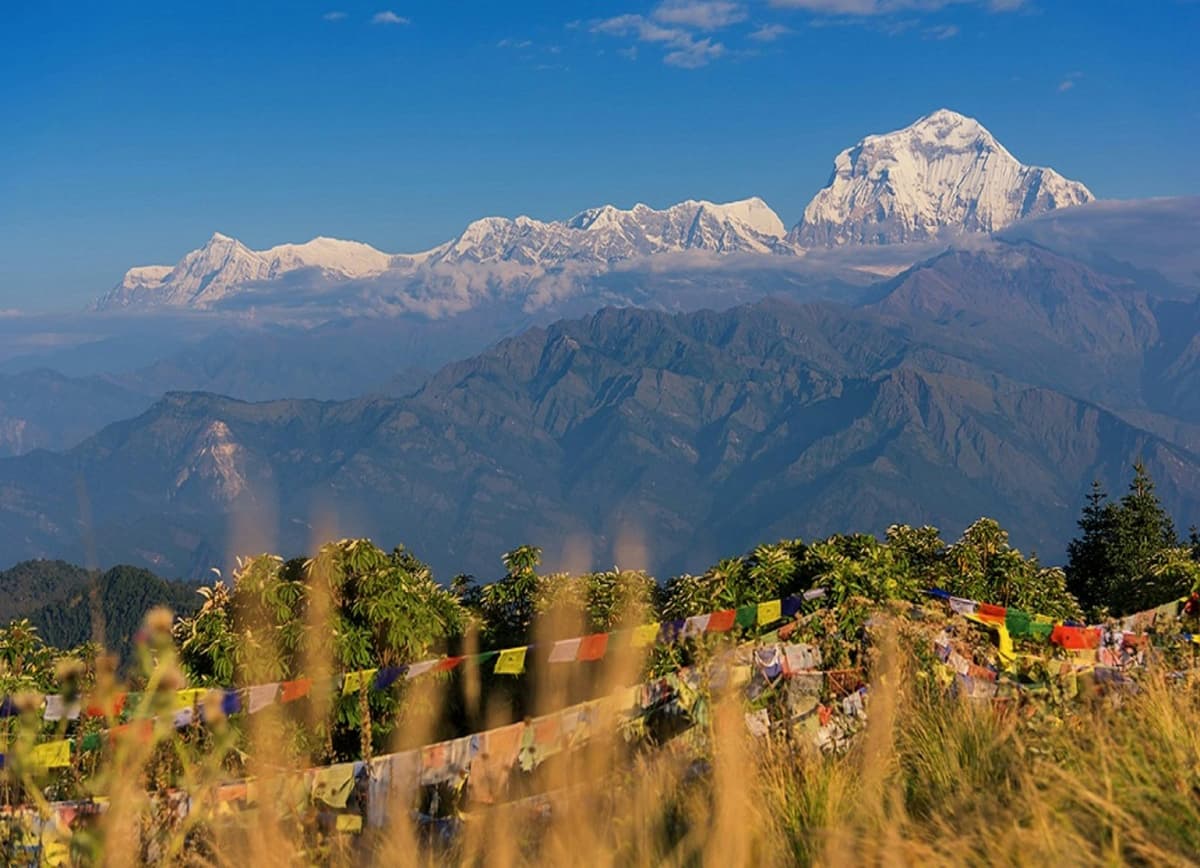
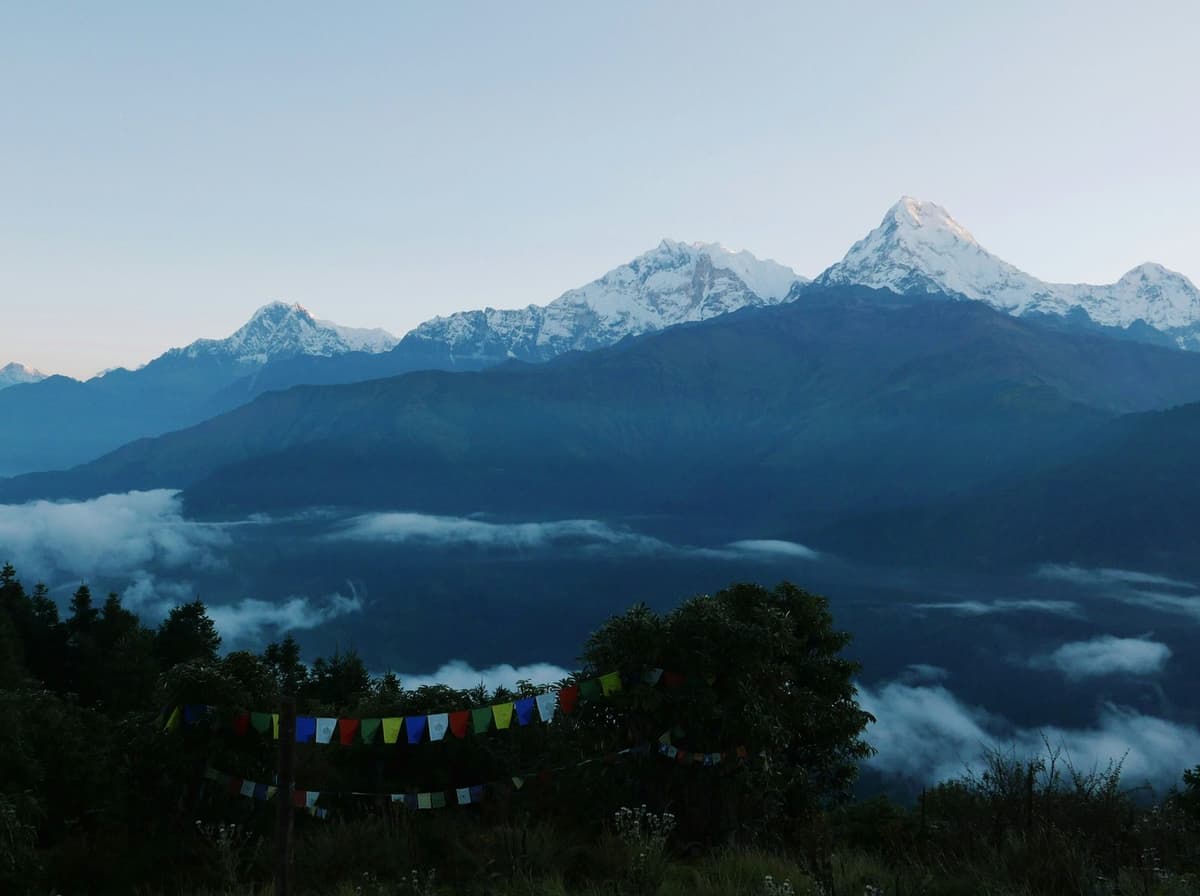
Dhaulagiri in morning light, seen from Poon Hill with prayer flags in the foreground

Before dawn at Ghorepani, a line of head torches climbs the stone steps towards Poon Hill. Prayer flags hang over the viewpoint, the air is cold, and as the light arrives the Annapurnas and Dhaulagiri turn gold.

By Uncover Nepal Team · Checked by our Kathmandu travel team · Last checked 2 November 2026

The easy treks in Nepal that suit most beginners are Ghorepani Poon Hill, Ghandruk, Australian Camp and Dhampus near Pokhara, and the Chisapani and Nagarkot rim hikes near Kathmandu. They are short, and on all of them you sleep below 3,000 m. Mardi Himal and Everest View suit fit beginners. For longer routes, see our guide to the best treks in Nepal.

Key facts

Official difficulty scale
None: "easy" is each company's own grade (Our check: no government grading scale found (2 Nov 2026))
Where altitude illness becomes a risk
Sleeping at about 2,450 m (8,000 ft) or higher (US CDC Yellow Book (2 Nov 2026))
ACAP permit, Annapurna routes
NPR 3,000 foreigners (about USD 19.70 at the NRB rate of 1 Nov 2026), NPR 1,000 SAARC; under 10 free (NTNC e-permit portal, NTB fee page, Nepal Rastra Bank (2 Nov 2026))
Best seasons
Spring and autumn; clearest skies in October and November (NTB climate page (2 Nov 2026))

In this guide

  • What does "easy" mean on a trek in Nepal?
  • Which easy treks in Nepal suit beginners?
  • How do you avoid altitude sickness on an easy trek?
  • How fit do you need to be?
  • When is the best time for an easy trek?
  • What should you pack, and can you rent gear in Thamel?
  • Frequently asked questions
  • Plan your trek

What does "easy" mean on a trek in Nepal?

On a Nepal trek, "easy" means a short route on a well-used trail where you walk a few hours a day and sleep low. Nepal has no official difficulty scale, so every company grades its own trips. Read the walking hours, the steps and the sleeping height, not the label.

  • Hours a day. On our Poon Hill treks you walk 3 to 4 hours to Ghorepani after the jeep, then 45 to 60 minutes up Poon Hill at dawn. Mardi Himal and Everest View mean about four to six hours on most days.
  • Stone steps. Much of the Poon Hill trail is stone steps, and Poon Hill is about 350 m above Ghorepani.
  • Ups and downs. Trails are rarely flat: on our Poon Hill and Ghandruk loop, Tadapani to Ghandruk is 3 to 5 hours downhill. Poles help your knees.
  • Altitude. The US CDC puts the risk line at a sleeping altitude of about 2,450 m. Temperatures also drop about 6 °C for every 1,000 m you climb, says the Nepal Tourism Board (NTB).
  • Teahouses. You sleep in teahouses, simple family-run trail lodges.

Easy means no technical climbing. It does not mean flat.

Which easy treks in Nepal suit beginners?

For a first trek, choose a route where you sleep below about 2,450 m or only a little above it, walk a few hours a day, and reach the trailhead by road. Ghorepani Poon Hill, Ghandruk, Australian Camp, Dhampus and the Kathmandu rim fit. Mardi Himal and Everest View go higher and suit fit beginners.

Trek Typical days Max height Permits Start point Best for
Ghorepani Poon Hill 2 to 6 from Pokhara Poon Hill 3,210 m; sleep about 2,850 m ACAP, Poon Hill ticket Pokhara by jeep A first trek
Ghandruk 3 on our Poon Hill loop No agreed figure; below 2,450 m ACAP Pokhara by road Village life, little walking
Australian Camp and Dhampus Overnight from Pokhara 2,045 to 2,060 m; Dhampus about 1,650 m ACAP Kande or Phedi Least time, lowest altitude
Mardi Himal 4 to 6 from Pokhara Upper Viewpoint about 4,200 m; Base Camp 4,500 m (NTB) ACAP Kande Fit beginners
Everest View 7 to 10 from Kathmandu Hotel Everest View, published at 3,880 to 3,962 m Sagarmatha park permit, Khumbu Trek-Card Lukla flight Everest in a week
Chisapani and Nagarkot 2 to 3 Borlang Bhanjyang about 2,430 m Shivapuri park fee Sundarijal No flight needed

Ghorepani Poon Hill

If you have never trekked before, this is where we would start. Poon Hill is 3,210 m (about 10,530 ft), a viewpoint rather than a peak, and you sleep below it at Ghorepani, about 2,850 m; published figures run from about 2,750 to 2,874 m.
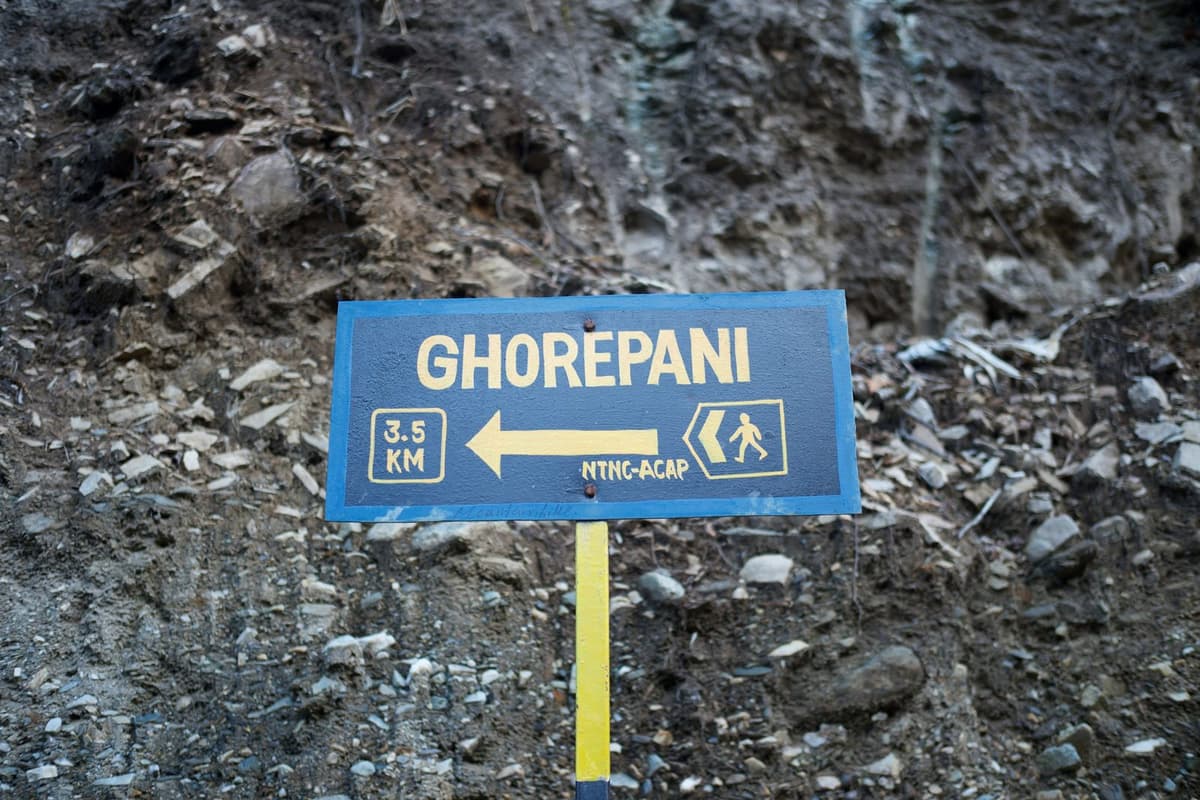
Trail sign pointing the way to Ghorepani
The trail to Ghorepani, where you sleep before the dawn climb.

"The Ghorepani Poon Hill Trek is one of the most popular short treks in Nepal, perfect for beginners and families."

Nepal Tourism Board, top trekking destinations page (undated, checked 2 November 2026)

Ours is 2 days, and we also run a 3-day loop through Ghandruk and a 6-day version from Kathmandu. On our treks a jeep takes you from Pokhara to Banthanti, or Ulleri when the upper road is poor, in 3 to 4 hours. Vehicles can now reach Ghorepani itself.

You need the ACAP (Annapurna Conservation Area Project) permit, and Poon Hill has a local ticket, reported at NPR 150 for foreign visitors; check the rate at the gate. The honest bit: Ghorepani is above the 2,450 m line, so mild altitude symptoms are possible. Read our Ghorepani guide, or see the plan for our Ghorepani Poon Hill trek.

Ghandruk

Ghandruk is a Gurung village in Kaski district, inside the Annapurna Conservation Area, so the ACAP permit applies. Published heights differ, so we do not quote one; it sits below the roughly 2,450 m altitude-illness line.
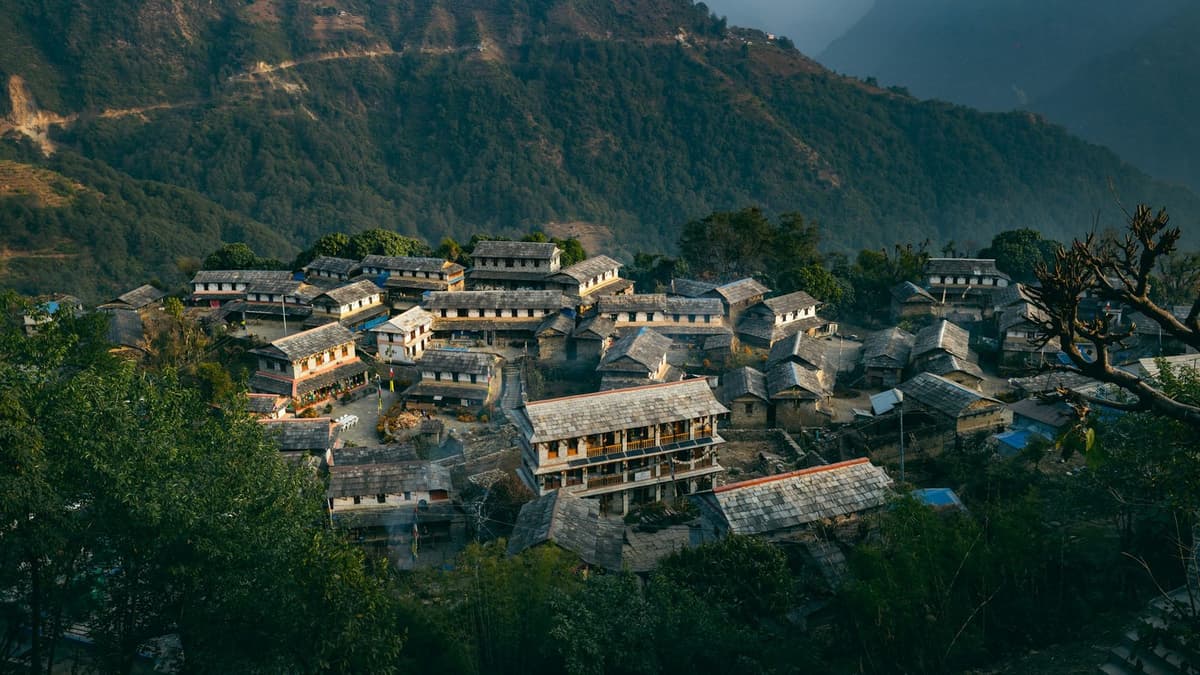
Slate-roofed stone houses of Ghandruk village on a forested hillside
Ghandruk, a Gurung village inside the Annapurna Conservation Area.

You can drive in. The NTB puts Ghandruk about 55 km from Pokhara, usually about two hours by bus or jeep when the road is clear. Floods damaged that road in July and August 2026; it reopened in late September, and on 12 October the rural municipality said it still needed permanent repair. On foot, Ghandruk links to Tadapani and Ghorepani, and to Landruk across the Modi Khola. More in our Ghandruk village guide.

Australian Camp and Dhampus

These are the lowest walks here, and both work as an overnight from Pokhara. Australian Camp is a grassy ridge at 2,045 to 2,060 m, depending on the source. You start at Kande, about 45 minutes to an hour from Pokhara by private vehicle, and walk up in about 1.5 to 2 hours on our trip.
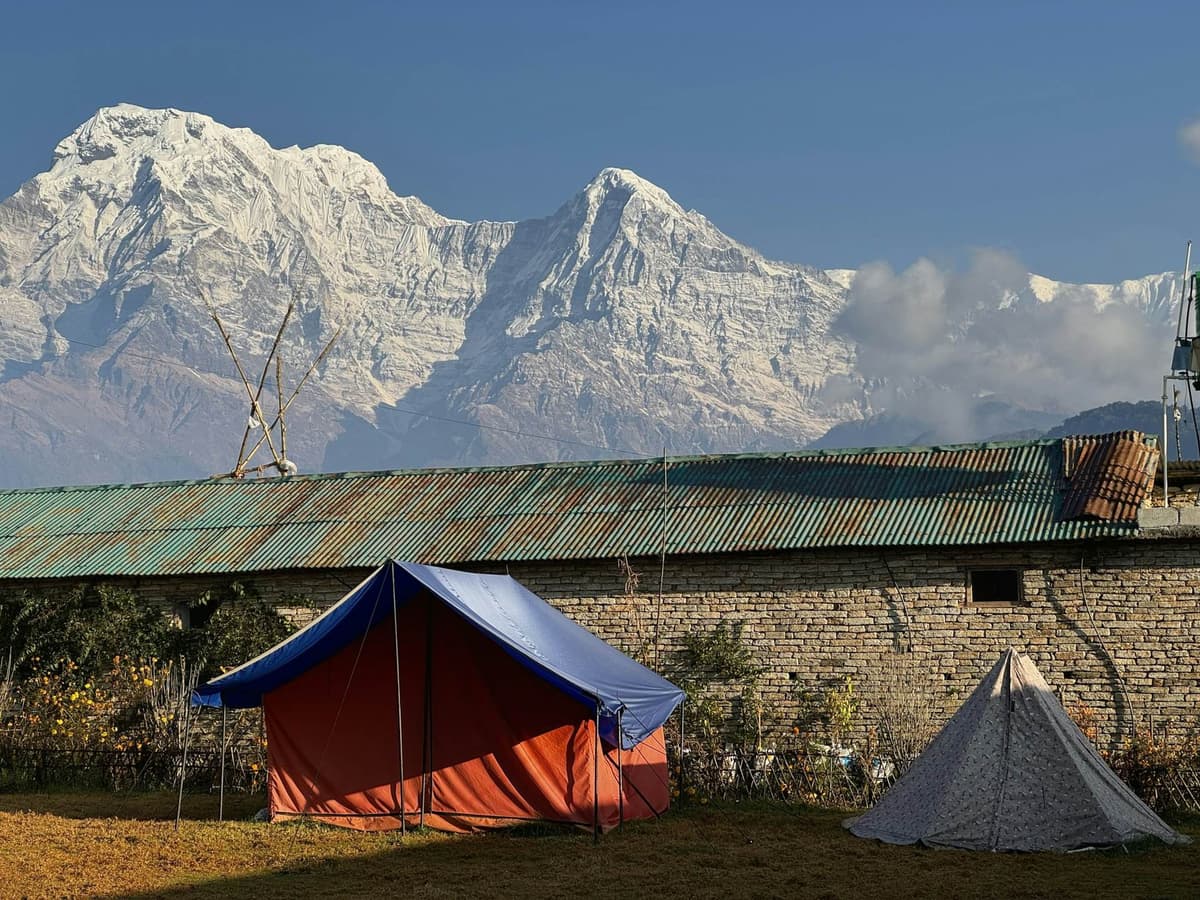
Tents on the grassy ridge at Australian Camp below Annapurna South
Australian Camp, a short walk up from Kande.

Dhampus is a Gurung village at about 1,650 m, about an hour by road from Pokhara or a 2 to 3 hour uphill walk from Phedi. The NTB suggests a night there for the sunrise and sunset.

Both are inside the Annapurna Conservation Area, so the ACAP permit applies; it is included on our Australian Camp trips and we arrange it on our Dhampus trips. Both sit below the 2,450 m line, so altitude is not a concern for most people.

Mardi Himal, for fit beginners

Mardi Himal is the step up. The trail starts at Kande, passes Australian Camp, then climbs a ridge past Forest Camp to Low Camp, about 3,000 m. The NTB gives Mardi Himal Base Camp as 4,500 m. Many itineraries, ours included, turn at the Upper Viewpoint, which trekking companies put at about 4,200 m; Base Camp is an optional extension.
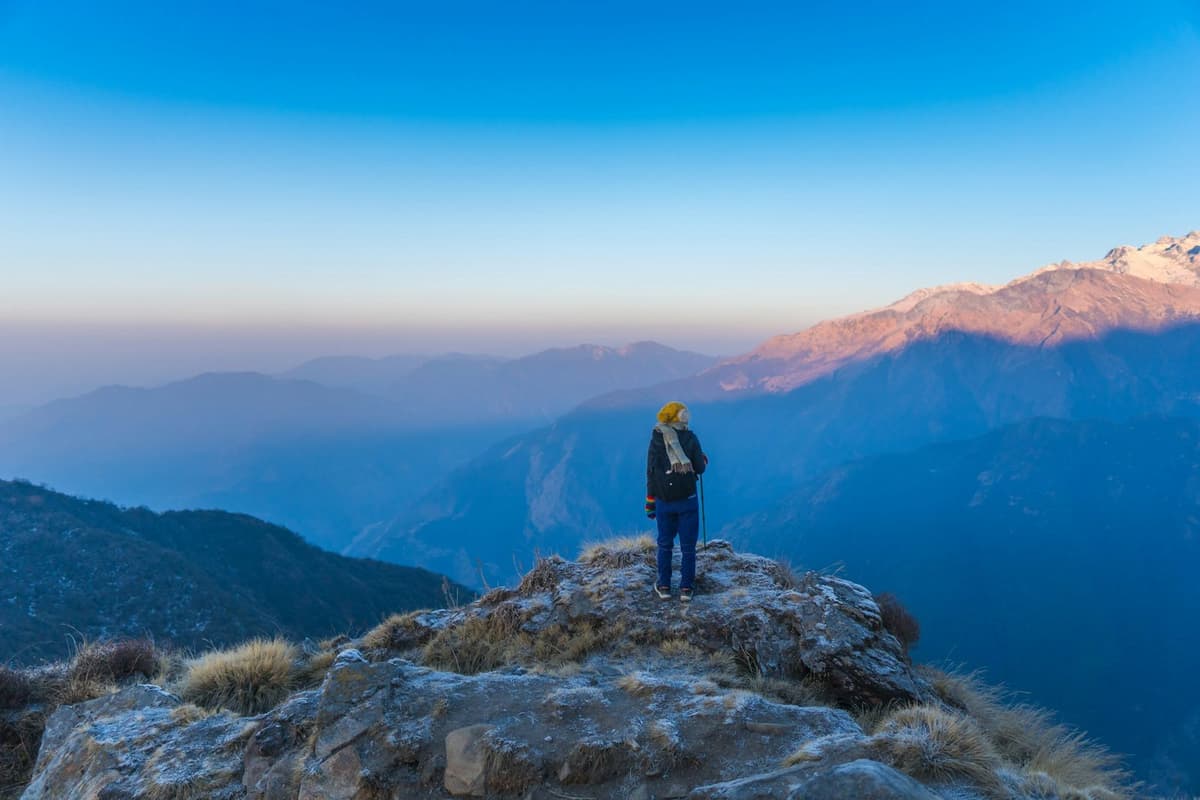
Trekker on a rocky ridge at dawn with snow peaks in pink light
The Mardi Himal ridge, the step up from the easy treks.

Four to six days from Pokhara is common; starting from Kathmandu adds travel days. Ours takes 4 days, coming down to Siding for a jeep back to Pokhara.

The honest part: you sleep highest at High Camp, which trekking companies put at about 3,550 to 3,600 m. On our 4-day trek, day two climbs from Forest Camp, about 2,550 m, past Low Camp to High Camp at about 3,580 m: roughly 1,000 m in a day, a big jump for a first trek. Itineraries with a night at Low Camp split it. Walk slowly and turn back if you have symptoms. The ACAP permit applies; our Mardi Himal trek cost guide has the rest.

Everest View, the short Everest option

Everest View is the shortest way to walk in Everest country, but it is not low. Typical itineraries run 7 to 10 days from Kathmandu; ours is 7 days. You fly to Lukla, whose airstrip is at 2,846 m. The flight from Kathmandu takes about 25 to 30 minutes, but in the busiest months many Lukla flights leave from Manthali airport in Ramechhap, usually about 4 to 5 hours' drive from Kathmandu (ask us for the current drive time). Every flight depends on the weather, so keep spare days.

On our 7-day trek you sleep two nights at Namche Bazaar, about 3,440 m, with the walk up to Hotel Everest View (published heights run from 3,880 to 3,962 m) in between, then a night at Tengboche, about 3,860 m. You need the Sagarmatha National Park permit (NPR 3,000 for foreigners, NPR 1,500 for SAARC nationals) and the Khumbu Pasang Lhamu Rural Municipality Trek-Card (NPR 3,000, or NPR 2,000 for SAARC countries and China), issued in Lukla; we arrange both. See the Everest View trek listing.

Kathmandu valley rim: Chisapani and Nagarkot

The rim hikes need no flight. Sundarijal is about an hour's drive from the city, and the trail to Chisapani runs through Shivapuri Nagarjun National Park, where the fee is NPR 1,000 for foreigners and NPR 600 for SAARC nationals. The park's own fee schedule says foreign and SAARC visitors must be accompanied by a park-certified guide inside the park. The trail crosses Borlang Bhanjyang, about 2,430 m, and you sleep lower at Chisapani, about 2,150 m.
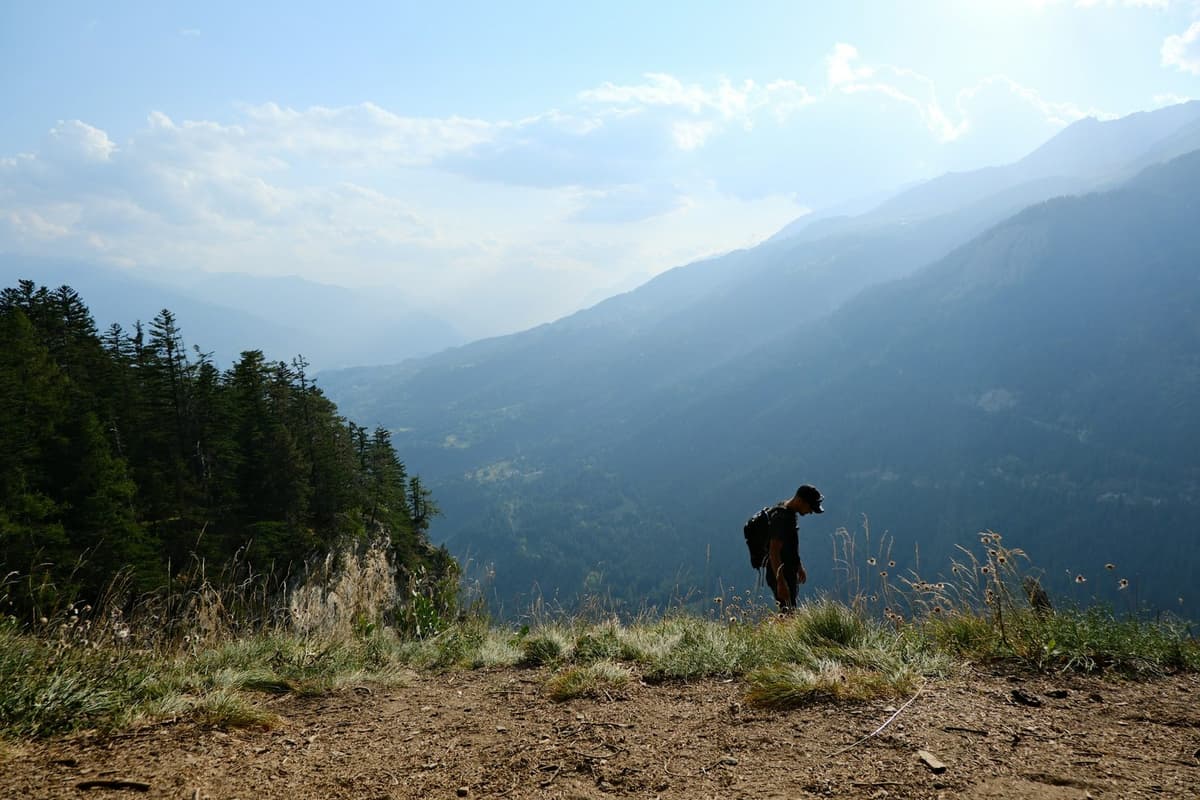
Hiker on a ridge trail above a forested valley
Rim hikes are long days on forest and ridge trails.

The catch is the hours: Sundarijal to Chisapani is about five to seven hours, and Chisapani to Nagarkot about seven. Nagarkot, roughly 2,100 to 2,200 m, needs no permit itself, and rim hikes work year-round. Our Kathmandu hiking guide has shorter day walks.

Langtang

Check the current trail status before you book. Ask us what we know.

How do you avoid altitude sickness on an easy trek?

Go up slowly, drink enough water and never go higher with symptoms. The US CDC puts the risk at a sleeping altitude of about 2,450 m (8,000 ft) or higher, so Poon Hill, Mardi Himal and Everest View cross that line, while Ghandruk, Dhampus, Australian Camp and Chisapani stay below it.

Fitness does not protect you either: the US CDC says neither training nor physical fitness changes your risk of altitude illness. If you sleep above that line:

  1. Go up slowly. Above about 3,000 m (9,800 ft), raise your sleeping height by no more than about 500 m (1,650 ft) a night.
  2. Rest. Above 3,000 m, take a rest day every 3 to 4 days.
  3. Walk slowly. "Bistarai, bistarai": slowly, slowly.
  4. Drink enough water, and skip alcohol for the first days at height. Garlic soup is a comforting local habit that helps you drink more, not a proven cure.
  5. Know the symptoms: headache, nausea, tiredness, poor sleep.
  6. Never go higher with symptoms. If they get worse, go down.
  7. Ask your doctor before you travel about preventive medicine.

We recommend insurance that covers trekking to your highest point and helicopter evacuation; we do not sell it. More on how to avoid altitude sickness.

How fit do you need to be?

You need to be comfortable walking several hours a day, several days in a row, up and down stone steps. You do not need climbing skills. A good baseline is the WHO's advice for adults: at least 150 to 300 minutes of moderate aerobic activity a week, plus muscle-strengthening on 2 or more days.

Nepal Traveller suggests starting at least 8 to 12 weeks before your trek. What we suggest:

  • Walk briskly most days.
  • Climb and descend stairs with a light daypack.
  • Add squats, lunges and step-ups.
  • Work up to a full day of 5 to 7 hours on your feet, then back-to-back hilly days.
  • Break in your boots, and arrive rested.
  • If you have a heart, lung or joint condition, talk to your doctor before you book.

When is the best time for an easy trek?

Spring and autumn are the best trekking seasons, the NTB says, with the clearest skies in October and November and rhododendrons in spring. The monsoon normally runs from about 13 June to 2 October, by the Department of Hydrology and Meteorology's records; in 2026 it fully withdrew on 14 October.

Winter can still work low down. The NTB notes "compensating bright sun and brilliant views", even in December and January, but snow can fall at Ghorepani between December and February. See our guides to the best time to trek in Nepal and winter treks in Nepal.

What should you pack, and can you rent gear in Thamel?

Pack for cold mornings and stone steps. You can rent the bulky warm gear in Thamel, Kathmandu's travellers' district: Nepal Traveller lists sleeping bags, down jackets, tents and hiking boots as items people often rent. Bring boots from home so they fit and are broken in.

A teahouse packing list:

  • Warm layers and a windproof jacket
  • A down jacket for evenings and dawn
  • Hat and gloves
  • A head torch for the Poon Hill dawn climb
  • Trekking poles for the stone steps
  • A sleeping-bag liner
  • A refillable bottle with water purification
  • Sun protection and a power bank
  • Cash in Nepali rupees, in small notes, for lodges, tea and charging

If you rent, use a reputable shop and check the gear is clean and in good condition. Our guide to things to do in Thamel covers the area.

Frequently asked questions

What are the easiest or best treks in Nepal for beginners?

No trek is officially the easiest, because Nepal has no difficulty scale. Choose a short route where you sleep low: Australian Camp, Dhampus and Ghandruk near Pokhara stay below the altitude-illness line, as do the Chisapani and Nagarkot rim hikes. Ghorepani Poon Hill, which the NTB calls "perfect for beginners and families", sleeps a little higher.

What are the best short treks (3 to 7 days)?

In three to seven days you can walk the Poon Hill and Ghandruk loop (3 days on our itinerary), Mardi Himal (four to six days from Pokhara is common) or Everest View (7 days on ours). Chisapani to Nagarkot takes 2 or 3 days with no flight. Choose by how high you want to sleep, not only by days.

What should I pack for a teahouse trek, and can I rent gear in Thamel?

Pack warm layers, a down jacket, hat and gloves, a head torch, poles, a sleeping-bag liner, a bottle with purification, sun protection and small-note cash. Sleeping bags and down jackets can be rented in Thamel; bring your own boots so they fit and are broken in.

Can I trek in Nepal without a guide?

It depends on where you go. A Nepal Tourism Board rule in force from 1 April 2023 says foreign independent trekkers must hire a guide or porter on listed national park and conservation area routes (The Kathmandu Post, 4 March 2023). The Khumbu Pasang Lhamu Rural Municipality says a guide is not compulsory in the Everest region and issues its Trek-Card to solo trekkers (The Kathmandu Post, 3 April 2023). Restricted areas such as Manaslu and Upper Mustang need a registered agency and a licensed guide, even for a solo trekker (The Himalayan Times, 23 March 2026). More in our solo trekking guide. On our trips, a licensed guide walks with you on every trek we run.

Can you get altitude sickness on Poon Hill?

Yes, mild symptoms are possible. You sleep at Ghorepani, about 2,850 m, above the roughly 2,450 m sleeping altitude where the US CDC says altitude illness becomes a risk. Poon Hill itself is only a dawn visit. Walk slowly, drink enough water, and tell your guide early if you get a headache.

Plan your trek

Start with your days and how high you want to sleep. A licensed guide walks with you on every trek we run, and we arrange the permits your route needs. Your visa and international flights are your own arrangements; see the Nepal Tourism Board visa page.

Browse all our treks, see trekking cost in Nepal for budgets, or the best treks in Nepal for longer routes. Not sure which fits? Ask us on WhatsApp or through the enquiry form, and we will tell you honestly.
Tags
easy treksbeginner treksshort treksPoon HillAnnapurna regionaltitude sickness
Share
U
Uncover Nepal Team
Writer at Uncover Nepal
More in TreksSee all Treks

Easy Treks in Nepal for Beginners

14 min read Posted 09 Nov 2026Updated 05 Nov 2026
Dhaulagiri in morning light, seen from Poon Hill with prayer flags in the foreground

Before dawn at Ghorepani, a line of head torches climbs the stone steps towards Poon Hill. Prayer flags hang over the viewpoint, the air is cold, and as the light arrives the Annapurnas and Dhaulagiri turn gold.

By Uncover Nepal Team · Checked by our Kathmandu travel team · Last checked 2 November 2026

The easy treks in Nepal that suit most beginners are Ghorepani Poon Hill, Ghandruk, Australian Camp and Dhampus near Pokhara, and the Chisapani and Nagarkot rim hikes near Kathmandu. They are short, and on all of them you sleep below 3,000 m. Mardi Himal and Everest View suit fit beginners. For longer routes, see our guide to the best treks in Nepal.

Key facts

Official difficulty scale
None: "easy" is each company's own grade (Our check: no government grading scale found (2 Nov 2026))
Where altitude illness becomes a risk
Sleeping at about 2,450 m (8,000 ft) or higher (US CDC Yellow Book (2 Nov 2026))
ACAP permit, Annapurna routes
NPR 3,000 foreigners (about USD 19.70 at the NRB rate of 1 Nov 2026), NPR 1,000 SAARC; under 10 free (NTNC e-permit portal, NTB fee page, Nepal Rastra Bank (2 Nov 2026))
Best seasons
Spring and autumn; clearest skies in October and November (NTB climate page (2 Nov 2026))

In this guide

  • What does "easy" mean on a trek in Nepal?
  • Which easy treks in Nepal suit beginners?
  • How do you avoid altitude sickness on an easy trek?
  • How fit do you need to be?
  • When is the best time for an easy trek?
  • What should you pack, and can you rent gear in Thamel?
  • Frequently asked questions
  • Plan your trek

What does "easy" mean on a trek in Nepal?

On a Nepal trek, "easy" means a short route on a well-used trail where you walk a few hours a day and sleep low. Nepal has no official difficulty scale, so every company grades its own trips. Read the walking hours, the steps and the sleeping height, not the label.

  • Hours a day. On our Poon Hill treks you walk 3 to 4 hours to Ghorepani after the jeep, then 45 to 60 minutes up Poon Hill at dawn. Mardi Himal and Everest View mean about four to six hours on most days.
  • Stone steps. Much of the Poon Hill trail is stone steps, and Poon Hill is about 350 m above Ghorepani.
  • Ups and downs. Trails are rarely flat: on our Poon Hill and Ghandruk loop, Tadapani to Ghandruk is 3 to 5 hours downhill. Poles help your knees.
  • Altitude. The US CDC puts the risk line at a sleeping altitude of about 2,450 m. Temperatures also drop about 6 °C for every 1,000 m you climb, says the Nepal Tourism Board (NTB).
  • Teahouses. You sleep in teahouses, simple family-run trail lodges.

Easy means no technical climbing. It does not mean flat.

Which easy treks in Nepal suit beginners?

For a first trek, choose a route where you sleep below about 2,450 m or only a little above it, walk a few hours a day, and reach the trailhead by road. Ghorepani Poon Hill, Ghandruk, Australian Camp, Dhampus and the Kathmandu rim fit. Mardi Himal and Everest View go higher and suit fit beginners.

Trek Typical days Max height Permits Start point Best for
Ghorepani Poon Hill 2 to 6 from Pokhara Poon Hill 3,210 m; sleep about 2,850 m ACAP, Poon Hill ticket Pokhara by jeep A first trek
Ghandruk 3 on our Poon Hill loop No agreed figure; below 2,450 m ACAP Pokhara by road Village life, little walking
Australian Camp and Dhampus Overnight from Pokhara 2,045 to 2,060 m; Dhampus about 1,650 m ACAP Kande or Phedi Least time, lowest altitude
Mardi Himal 4 to 6 from Pokhara Upper Viewpoint about 4,200 m; Base Camp 4,500 m (NTB) ACAP Kande Fit beginners
Everest View 7 to 10 from Kathmandu Hotel Everest View, published at 3,880 to 3,962 m Sagarmatha park permit, Khumbu Trek-Card Lukla flight Everest in a week
Chisapani and Nagarkot 2 to 3 Borlang Bhanjyang about 2,430 m Shivapuri park fee Sundarijal No flight needed

Ghorepani Poon Hill

If you have never trekked before, this is where we would start. Poon Hill is 3,210 m (about 10,530 ft), a viewpoint rather than a peak, and you sleep below it at Ghorepani, about 2,850 m; published figures run from about 2,750 to 2,874 m.

Trail sign pointing the way to Ghorepani
The trail to Ghorepani, where you sleep before the dawn climb.

"The Ghorepani Poon Hill Trek is one of the most popular short treks in Nepal, perfect for beginners and families."

Nepal Tourism Board, top trekking destinations page (undated, checked 2 November 2026)

Ours is 2 days, and we also run a 3-day loop through Ghandruk and a 6-day version from Kathmandu. On our treks a jeep takes you from Pokhara to Banthanti, or Ulleri when the upper road is poor, in 3 to 4 hours. Vehicles can now reach Ghorepani itself.

You need the ACAP (Annapurna Conservation Area Project) permit, and Poon Hill has a local ticket, reported at NPR 150 for foreign visitors; check the rate at the gate. The honest bit: Ghorepani is above the 2,450 m line, so mild altitude symptoms are possible. Read our Ghorepani guide, or see the plan for our Ghorepani Poon Hill trek.

Ghandruk

Ghandruk is a Gurung village in Kaski district, inside the Annapurna Conservation Area, so the ACAP permit applies. Published heights differ, so we do not quote one; it sits below the roughly 2,450 m altitude-illness line.

Slate-roofed stone houses of Ghandruk village on a forested hillside
Ghandruk, a Gurung village inside the Annapurna Conservation Area.

You can drive in. The NTB puts Ghandruk about 55 km from Pokhara, usually about two hours by bus or jeep when the road is clear. Floods damaged that road in July and August 2026; it reopened in late September, and on 12 October the rural municipality said it still needed permanent repair. On foot, Ghandruk links to Tadapani and Ghorepani, and to Landruk across the Modi Khola. More in our Ghandruk village guide.

Australian Camp and Dhampus

These are the lowest walks here, and both work as an overnight from Pokhara. Australian Camp is a grassy ridge at 2,045 to 2,060 m, depending on the source. You start at Kande, about 45 minutes to an hour from Pokhara by private vehicle, and walk up in about 1.5 to 2 hours on our trip.

Tents on the grassy ridge at Australian Camp below Annapurna South
Australian Camp, a short walk up from Kande.

Dhampus is a Gurung village at about 1,650 m, about an hour by road from Pokhara or a 2 to 3 hour uphill walk from Phedi. The NTB suggests a night there for the sunrise and sunset.

Both are inside the Annapurna Conservation Area, so the ACAP permit applies; it is included on our Australian Camp trips and we arrange it on our Dhampus trips. Both sit below the 2,450 m line, so altitude is not a concern for most people.

Mardi Himal, for fit beginners

Mardi Himal is the step up. The trail starts at Kande, passes Australian Camp, then climbs a ridge past Forest Camp to Low Camp, about 3,000 m. The NTB gives Mardi Himal Base Camp as 4,500 m. Many itineraries, ours included, turn at the Upper Viewpoint, which trekking companies put at about 4,200 m; Base Camp is an optional extension.

Trekker on a rocky ridge at dawn with snow peaks in pink light
The Mardi Himal ridge, the step up from the easy treks.

Four to six days from Pokhara is common; starting from Kathmandu adds travel days. Ours takes 4 days, coming down to Siding for a jeep back to Pokhara.

The honest part: you sleep highest at High Camp, which trekking companies put at about 3,550 to 3,600 m. On our 4-day trek, day two climbs from Forest Camp, about 2,550 m, past Low Camp to High Camp at about 3,580 m: roughly 1,000 m in a day, a big jump for a first trek. Itineraries with a night at Low Camp split it. Walk slowly and turn back if you have symptoms. The ACAP permit applies; our Mardi Himal trek cost guide has the rest.

Everest View, the short Everest option

Everest View is the shortest way to walk in Everest country, but it is not low. Typical itineraries run 7 to 10 days from Kathmandu; ours is 7 days. You fly to Lukla, whose airstrip is at 2,846 m. The flight from Kathmandu takes about 25 to 30 minutes, but in the busiest months many Lukla flights leave from Manthali airport in Ramechhap, usually about 4 to 5 hours' drive from Kathmandu (ask us for the current drive time). Every flight depends on the weather, so keep spare days.

On our 7-day trek you sleep two nights at Namche Bazaar, about 3,440 m, with the walk up to Hotel Everest View (published heights run from 3,880 to 3,962 m) in between, then a night at Tengboche, about 3,860 m. You need the Sagarmatha National Park permit (NPR 3,000 for foreigners, NPR 1,500 for SAARC nationals) and the Khumbu Pasang Lhamu Rural Municipality Trek-Card (NPR 3,000, or NPR 2,000 for SAARC countries and China), issued in Lukla; we arrange both. See the Everest View trek listing.

Kathmandu valley rim: Chisapani and Nagarkot

The rim hikes need no flight. Sundarijal is about an hour's drive from the city, and the trail to Chisapani runs through Shivapuri Nagarjun National Park, where the fee is NPR 1,000 for foreigners and NPR 600 for SAARC nationals. The park's own fee schedule says foreign and SAARC visitors must be accompanied by a park-certified guide inside the park. The trail crosses Borlang Bhanjyang, about 2,430 m, and you sleep lower at Chisapani, about 2,150 m.

Hiker on a ridge trail above a forested valley
Rim hikes are long days on forest and ridge trails.

The catch is the hours: Sundarijal to Chisapani is about five to seven hours, and Chisapani to Nagarkot about seven. Nagarkot, roughly 2,100 to 2,200 m, needs no permit itself, and rim hikes work year-round. Our Kathmandu hiking guide has shorter day walks.

Langtang

Check the current trail status before you book. Ask us what we know.

How do you avoid altitude sickness on an easy trek?

Go up slowly, drink enough water and never go higher with symptoms. The US CDC puts the risk at a sleeping altitude of about 2,450 m (8,000 ft) or higher, so Poon Hill, Mardi Himal and Everest View cross that line, while Ghandruk, Dhampus, Australian Camp and Chisapani stay below it.

Fitness does not protect you either: the US CDC says neither training nor physical fitness changes your risk of altitude illness. If you sleep above that line:

  1. Go up slowly. Above about 3,000 m (9,800 ft), raise your sleeping height by no more than about 500 m (1,650 ft) a night.
  2. Rest. Above 3,000 m, take a rest day every 3 to 4 days.
  3. Walk slowly. "Bistarai, bistarai": slowly, slowly.
  4. Drink enough water, and skip alcohol for the first days at height. Garlic soup is a comforting local habit that helps you drink more, not a proven cure.
  5. Know the symptoms: headache, nausea, tiredness, poor sleep.
  6. Never go higher with symptoms. If they get worse, go down.
  7. Ask your doctor before you travel about preventive medicine.

We recommend insurance that covers trekking to your highest point and helicopter evacuation; we do not sell it. More on how to avoid altitude sickness.

How fit do you need to be?

You need to be comfortable walking several hours a day, several days in a row, up and down stone steps. You do not need climbing skills. A good baseline is the WHO's advice for adults: at least 150 to 300 minutes of moderate aerobic activity a week, plus muscle-strengthening on 2 or more days.

Nepal Traveller suggests starting at least 8 to 12 weeks before your trek. What we suggest:

  • Walk briskly most days.
  • Climb and descend stairs with a light daypack.
  • Add squats, lunges and step-ups.
  • Work up to a full day of 5 to 7 hours on your feet, then back-to-back hilly days.
  • Break in your boots, and arrive rested.
  • If you have a heart, lung or joint condition, talk to your doctor before you book.

When is the best time for an easy trek?

Spring and autumn are the best trekking seasons, the NTB says, with the clearest skies in October and November and rhododendrons in spring. The monsoon normally runs from about 13 June to 2 October, by the Department of Hydrology and Meteorology's records; in 2026 it fully withdrew on 14 October.

Winter can still work low down. The NTB notes "compensating bright sun and brilliant views", even in December and January, but snow can fall at Ghorepani between December and February. See our guides to the best time to trek in Nepal and winter treks in Nepal.

What should you pack, and can you rent gear in Thamel?

Pack for cold mornings and stone steps. You can rent the bulky warm gear in Thamel, Kathmandu's travellers' district: Nepal Traveller lists sleeping bags, down jackets, tents and hiking boots as items people often rent. Bring boots from home so they fit and are broken in.

A teahouse packing list:

  • Warm layers and a windproof jacket
  • A down jacket for evenings and dawn
  • Hat and gloves
  • A head torch for the Poon Hill dawn climb
  • Trekking poles for the stone steps
  • A sleeping-bag liner
  • A refillable bottle with water purification
  • Sun protection and a power bank
  • Cash in Nepali rupees, in small notes, for lodges, tea and charging

If you rent, use a reputable shop and check the gear is clean and in good condition. Our guide to things to do in Thamel covers the area.

Frequently asked questions

What are the easiest or best treks in Nepal for beginners?

No trek is officially the easiest, because Nepal has no difficulty scale. Choose a short route where you sleep low: Australian Camp, Dhampus and Ghandruk near Pokhara stay below the altitude-illness line, as do the Chisapani and Nagarkot rim hikes. Ghorepani Poon Hill, which the NTB calls "perfect for beginners and families", sleeps a little higher.

What are the best short treks (3 to 7 days)?

In three to seven days you can walk the Poon Hill and Ghandruk loop (3 days on our itinerary), Mardi Himal (four to six days from Pokhara is common) or Everest View (7 days on ours). Chisapani to Nagarkot takes 2 or 3 days with no flight. Choose by how high you want to sleep, not only by days.

What should I pack for a teahouse trek, and can I rent gear in Thamel?

Pack warm layers, a down jacket, hat and gloves, a head torch, poles, a sleeping-bag liner, a bottle with purification, sun protection and small-note cash. Sleeping bags and down jackets can be rented in Thamel; bring your own boots so they fit and are broken in.

Can I trek in Nepal without a guide?

It depends on where you go. A Nepal Tourism Board rule in force from 1 April 2023 says foreign independent trekkers must hire a guide or porter on listed national park and conservation area routes (The Kathmandu Post, 4 March 2023). The Khumbu Pasang Lhamu Rural Municipality says a guide is not compulsory in the Everest region and issues its Trek-Card to solo trekkers (The Kathmandu Post, 3 April 2023). Restricted areas such as Manaslu and Upper Mustang need a registered agency and a licensed guide, even for a solo trekker (The Himalayan Times, 23 March 2026). More in our solo trekking guide. On our trips, a licensed guide walks with you on every trek we run.

Can you get altitude sickness on Poon Hill?

Yes, mild symptoms are possible. You sleep at Ghorepani, about 2,850 m, above the roughly 2,450 m sleeping altitude where the US CDC says altitude illness becomes a risk. Poon Hill itself is only a dawn visit. Walk slowly, drink enough water, and tell your guide early if you get a headache.

Plan your trek

Start with your days and how high you want to sleep. A licensed guide walks with you on every trek we run, and we arrange the permits your route needs. Your visa and international flights are your own arrangements; see the Nepal Tourism Board visa page.

Browse all our treks, see trekking cost in Nepal for budgets, or the best treks in Nepal for longer routes. Not sure which fits? Ask us on WhatsApp or through the enquiry form, and we will tell you honestly.
Tags
easy treksbeginner treksshort treksPoon HillAnnapurna regionaltitude sickness
Share
U
Uncover Nepal Team
Writer at Uncover Nepal
More in TreksSee all Treks