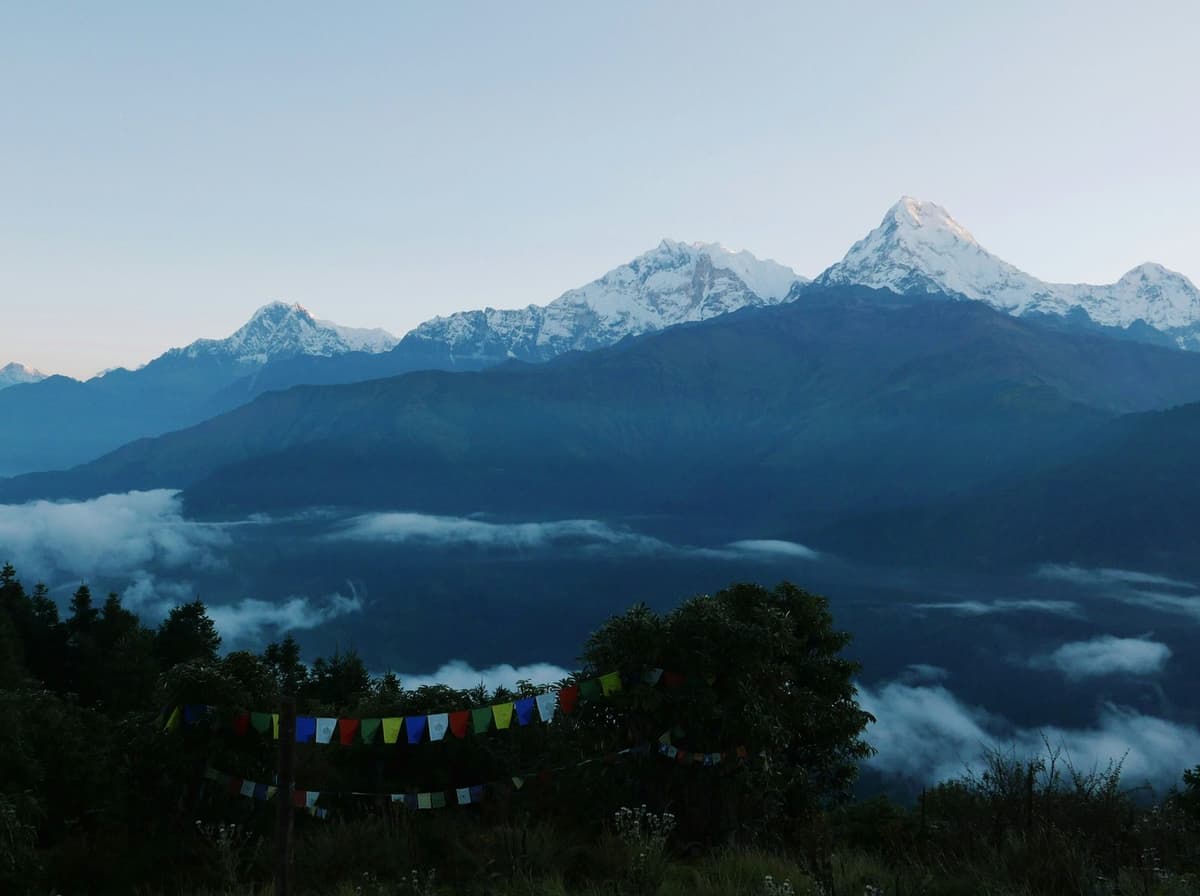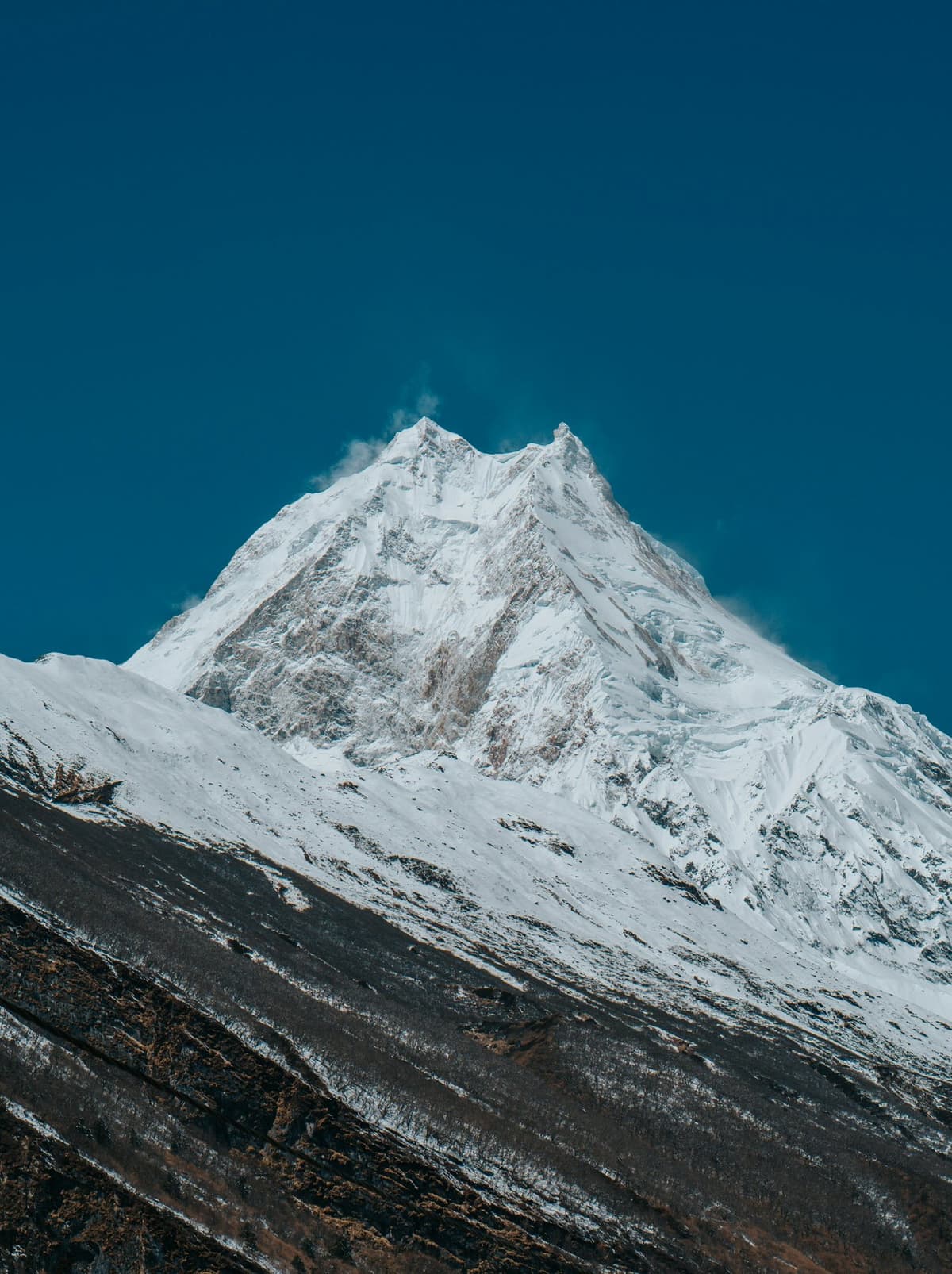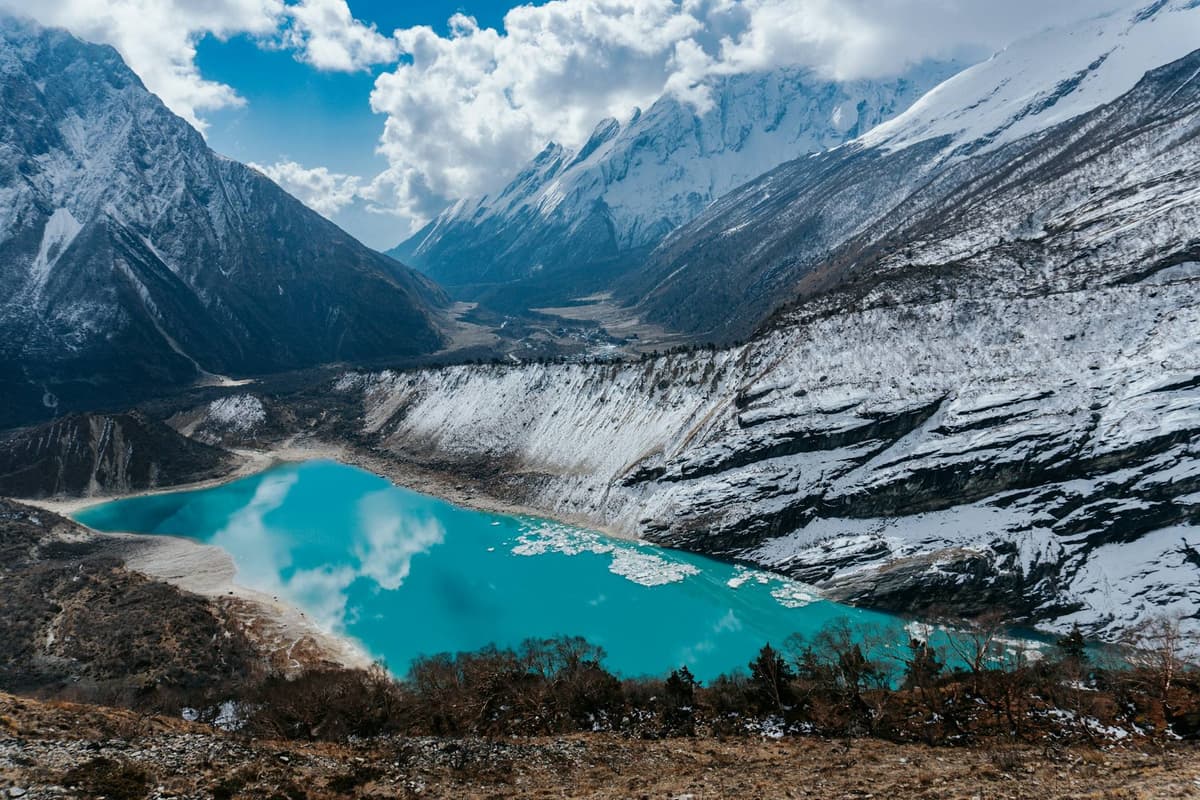
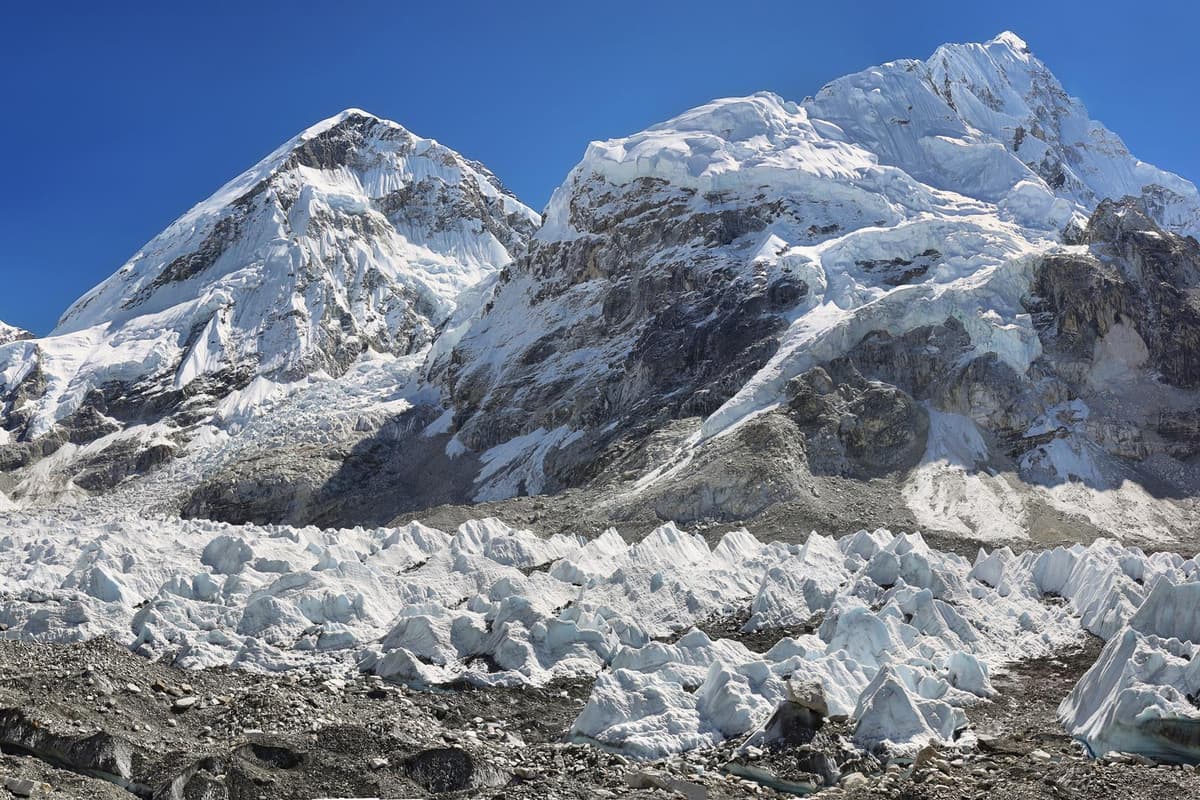
The first morning out of Lukla, the trail drops towards the Dudh Koshi river under strings of prayer flags, and yak bells sound somewhere ahead. Stone steps, suspension bridges, juniper smoke at the lodge doors. Base camp is still many days away, and that is deliberate.
By Uncover Nepal Team · Checked by our Kathmandu travel team · Last checked 2 November 2026
How long is the hike to Everest Base Camp? Most itineraries take 11 to 14 days for the round trip from Lukla, and the walk covers about 130 km. Most of that time goes on climbing slowly, with rest days, so your body adjusts to the height. Our routes are on the Everest Base Camp trek page.
Key facts
- Usual length
- 11 to 14 days, Lukla to Lukla (Earth Trekkers, Aug 2026; Stingy Nomads, Mar 2026 (2 Nov 2026))
- Our classic trek
- 12 days, Kathmandu to Kathmandu; 11 walking days (Our trip page itinerary (2 Nov 2026))
- Distance
- About 130 km (80 miles) round trip; varies with route (Earth Trekkers; Nepal Hiking Team, Aug 2026 (2 Nov 2026))
- Everest Base Camp
- 5,364 m (17,598 ft) (Wikipedia "Everest base camps" (2 Nov 2026))
- Kala Patthar
- About 5,550 m (some sources give 5,545 m) (Wikipedia "Gorakshep" and "Everest base camps" (2 Nov 2026))
- Permits
- Sagarmatha National Park permit; Khumbu Trek-Card, issued at Lukla (Our Nepal trekking permits guide, citing NTB and the Khumbu municipality (31 Oct 2026))
In this guide
- How long is the hike to Everest Base Camp, stage by stage?
- How many kilometres is the Everest Base Camp trek?
- Why does the walk up take eight days, not six?
- How far is it from Namche Bazaar to Everest Base Camp?
- How long does the walk back down take?
- How many spare days should you keep for Lukla flights?
- Can you make the trek shorter or longer?
- How long does it take to hike Everest itself?
How long is the hike to Everest Base Camp, stage by stage?
On our route, going up takes eight days from Lukla to Gorak Shep, two of them rest days, and you reach base camp on the morning of day 9. Coming down takes about two and a half days. Most walking days last five to eight hours.
| Day (our trek) | Stage | Sleep at | Distance | Walking time |
|---|---|---|---|---|
| 1 | Lukla (2,846 m) to Phakding | Phakding, about 2,610 m | 8 to 9 km | About 3 hours |
| 2 | Phakding to Namche Bazaar | Namche, 3,440 m | 10 to 13 km | About 7 hours |
| 3 | Rest day | Namche | Short walk higher | A few hours |
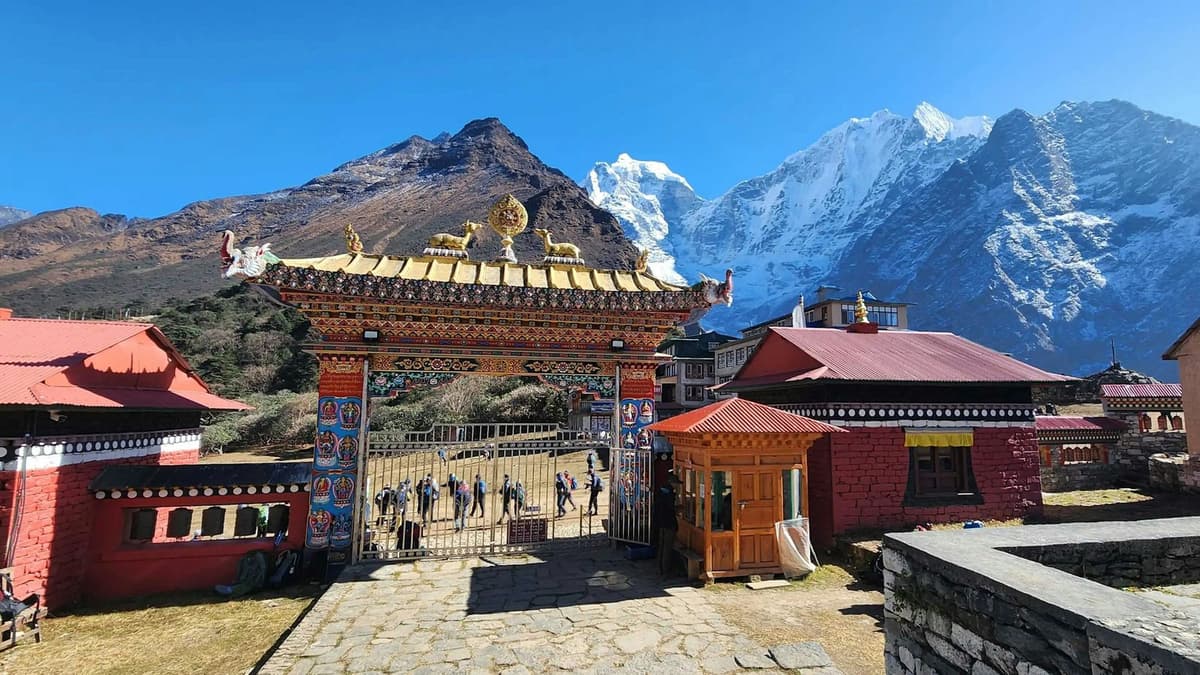
| 4 | Namche to Tengboche | Tengboche, about 3,860 to 3,870 m | 10 to 11 km | About 5 hours |
| 5 | Tengboche to Dingboche | Dingboche, about 4,410 m | 11 to 12 km | About 5 hours |
| 6 | Rest day | Dingboche | Short walk higher | A few hours |
| 7 | Dingboche to Lobuche | Lobuche, about 4,910 to 4,940 m | 8 to 12 km | 5 to 5.5 hours |
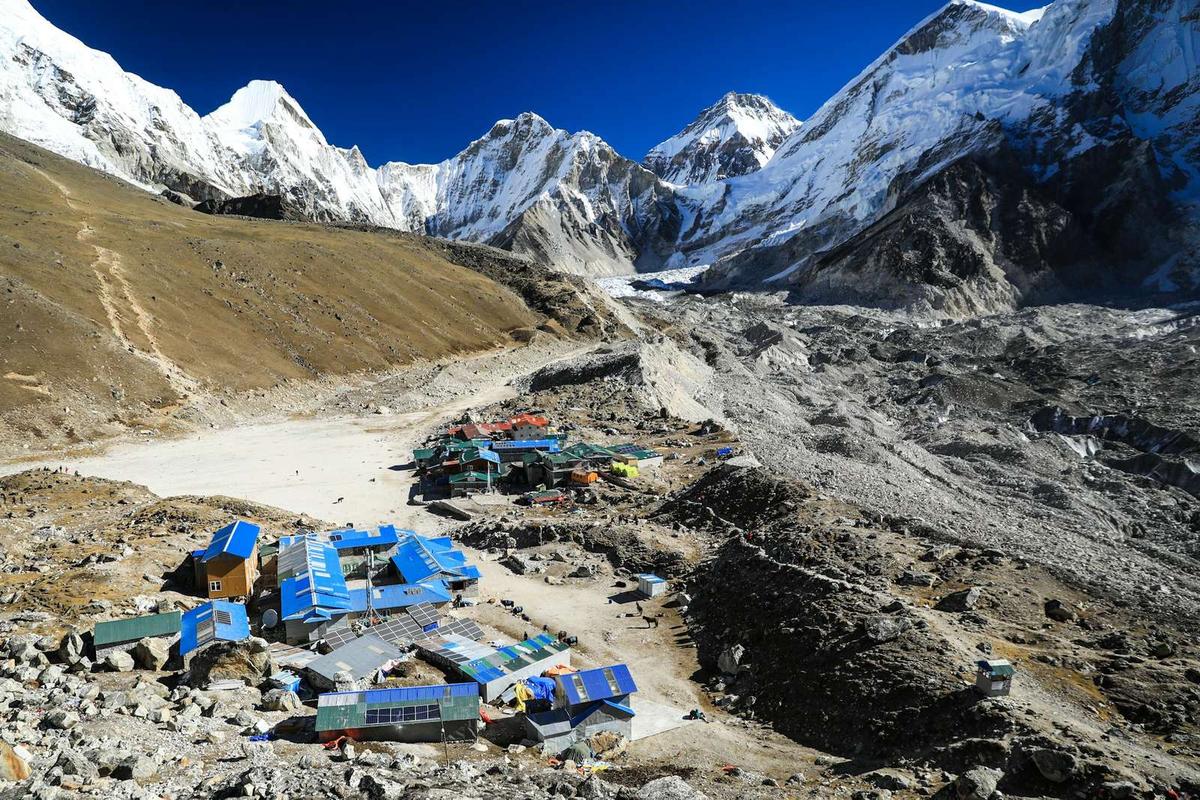
| 8 | Lobuche to Gorak Shep, then Kala Patthar | Gorak Shep, about 5,164 m | About 4.5 km, plus 3 to 4 km | 2 to 3 hours, plus 2.5 to 3.5 |
| 9 | Base camp, then down the valley | Pheriche, about 4,250 m (some sources give up to 4,371 m), or Pangboche | 8 to 9 km, then about 12 km | 4 to 5 hours, then 6 to 7 |
| 10 | Pheriche to Namche | Namche | 14 to 15 km | About 7 hours |
| 11 | Namche to Lukla | Lukla | 18 to 19 km | About 7 hours |
| 12 | Flight to Kathmandu, or Ramechhap in busy months |
Day numbers are from our trip page. Distances and times are from Nepal Hiking Team (26 Aug 2026), Intrepid and Exodus (1 Nov 2026); Namche to Tengboche and days 10 and 11 rely on Nepal Hiking Team alone.
Going up: Lukla to Gorak Shep
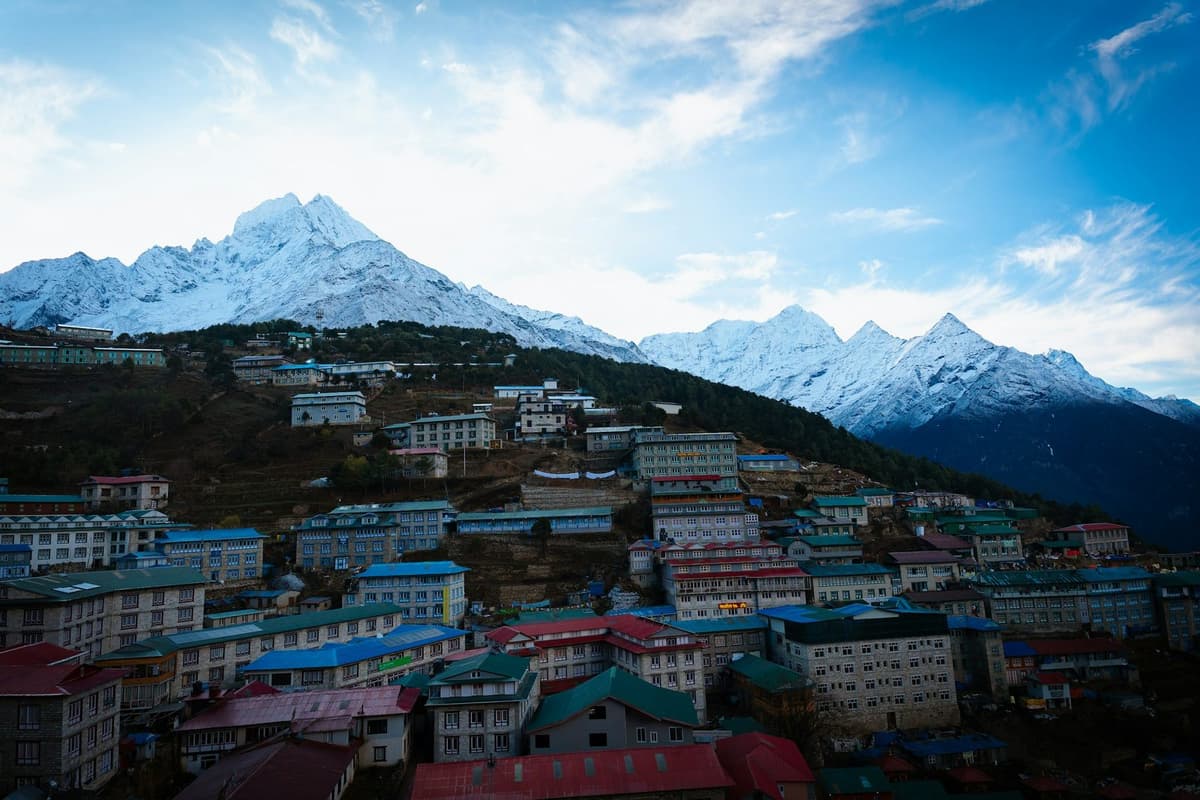
Day 1 is short and mostly downhill; you sleep lower than Lukla. Day 2 is the hard one: a long climb to Namche Bazaar, the Sherpa market town where you spend two nights. Above Namche the stages look shorter but feel harder in the thin air.
Base camp and Kala Patthar
Base camp is a day visit: you sleep at Gorak Shep and walk to base camp and back in about four to five hours. On our 12-day trek you climb Kala Patthar on day 8 and see base camp on day 9. Our 14-day treks reverse the order.
How many kilometres is the Everest Base Camp trek?
The round trip from Lukla to Everest Base Camp and back is usually given as about 130 km (80 miles), or about 65 km (40 miles) each way. No official figure exists, and the exact distance depends on your route and side trips.
By our count, adding up the daily distances that operators publish gives roughly 115 to 135 km, depending on side trips. Most days cover about 8 to 15 km; the last day down to Lukla is about 18 to 19 km by one operator's figures.
Height, not distance, makes this trek hard: Lobuche to Gorak Shep is only about 4.5 km, yet takes two to three hours. Plan by hours, not kilometres.
Why does the walk up take eight days, not six?
Your body needs time to adjust. Above 3,000 m, medical guidance is to raise your sleeping height by no more than about 500 m a night, with a rest day every three to four days. Without rest days the walk up takes about six days; with them, it takes eight on our route.
"With travel above 3000 m, individuals should not increase the sleeping elevation by more than 500 m per day"
Wilderness Medical Society, 2024 Altitude Summary
Our rest days at Namche and Dingboche are the main reason the whole trek takes 12 days. How much higher you sleep each night:
- Phakding to Namche: about +830 m, starting below 3,000 m, with a rest day after
- Namche to Tengboche: about +420 m
- Tengboche to Dingboche: about +550 m
- Dingboche to Lobuche: about +530 m
- Lobuche to Gorak Shep: about +224 m
Above 3,000 m, two nights go a little over 500 m, which is why the rest days matter. A rest day is not a day in bed: you walk higher for a few hours and come back down to sleep.
Altitude sickness can start from a sleeping height of about 2,450 m (8,000 ft), so it applies from your first night at Phakding, about 2,610 m. What to do:
- Walk slowly, "bistarai, bistarai" (slowly, slowly), even when you feel strong.
- Drink enough water and skip alcohol in the first high days. Garlic soup is a comforting local habit that helps you drink more, not a proven cure.
- Know the signs: headache, nausea, unusual tiredness, poor sleep.
- Never go higher with symptoms. If they get worse, go down.
- Ask your doctor before you travel about preventive medicine.
More in our guide on how to avoid altitude sickness.
How far is it from Namche Bazaar to Everest Base Camp?
About 40 to 45 km, by our count of one operator's stage distances, and six days on our trek, including the rest day at Dingboche. You leave Namche on day 4 and reach base camp on day 9. The height adds up here, from 3,440 m to 5,364 m.
How long does the walk back down take?
About two and a half days on our trek: base camp on the morning of day 9, then down to Pheriche or Pangboche, Namche on day 10 and Lukla on day 11. You lose height fast and sleep better, but the days are long and hard on the knees.
Day 9 is the longest of the trek: base camp and back, then about 12 km down. Days 10 and 11 run to around seven hours each. Trekking poles help on the steep sections. The Himalayan Rescue Association runs an aid post at Pheriche in the main seasons.
How many spare days should you keep for Lukla flights?
At least one, and more in a stormy week. Every Lukla flight depends on the weather, and in the busiest months many leave from Ramechhap rather than Kathmandu. Exodus builds in a spare day, Earth Trekkers advise at least two and Intrepid suggests extra days in Kathmandu at the end.
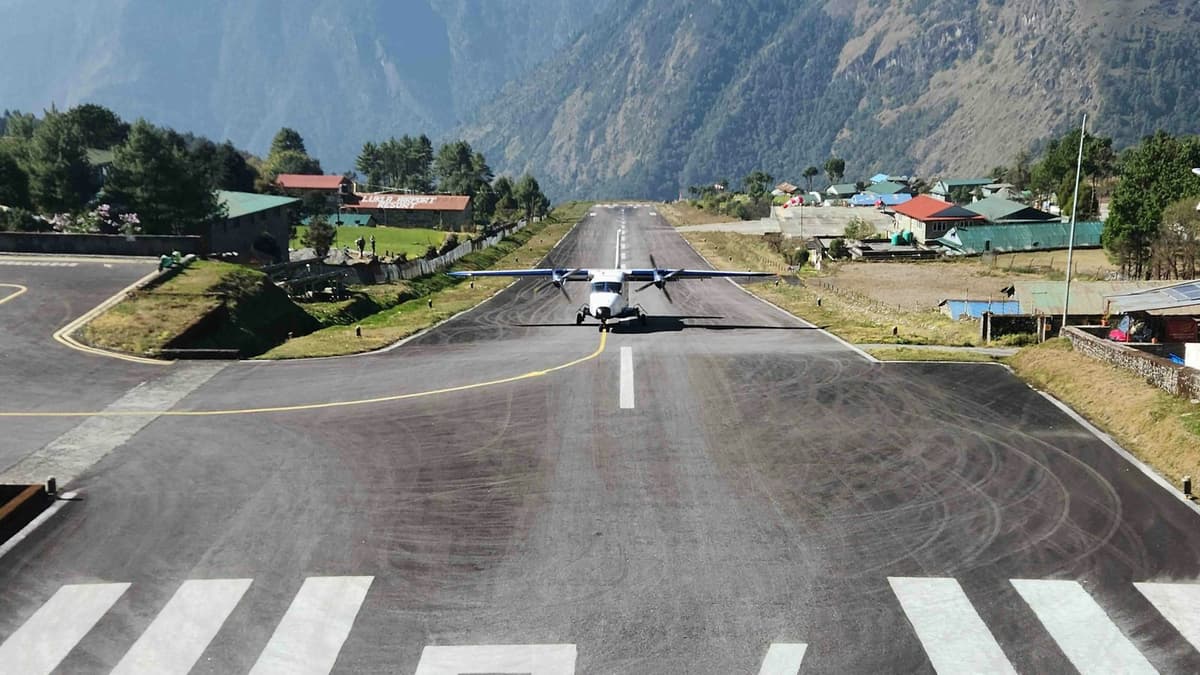
The flight takes about 25 to 30 minutes from Kathmandu and about 15 to 20 minutes from Ramechhap (Manthali). The drive to Ramechhap usually takes about 4 to 5 hours, before dawn. Our Lukla airport guide has more.
Delays are not rare. In October 2024 flights to Lukla stopped for two days, stranding over 1,300 foreign tourists in Manthali; some went by road via Salleri (The Himalayan Times, 15 Oct 2024). In late October 2025 flights were shut for three days, and about 1,500 tourists booked with one airline were stranded in Lukla (The Himalayan Times, 31 Oct 2025).
Can you make the trek shorter or longer?
Yes. A helicopter back from Gorak Shep or the base camp area cuts out the two to three days of walking down, and some operators sell 9 to 12-day versions built that way. Longer versions add the Gokyo Lakes, the Cho La pass, a second base camp or a walk in from the road.
A helicopter saves the descent, not the climb: the days going up stay the same. We mention it as information only. For what the trek itself costs, see our Everest Base Camp trek cost guide.
| Longer option | Typical length |
|---|---|
| Everest Base Camp and Ama Dablam Base Camp (ours) | 14 days |
| Everest Base Camp via Gokyo Lakes and the Cho La (ours) | 14 days |
| Adding only the Gokyo Lakes side trip | About three or four extra days |
| Everest Three Passes (ours) | 18 to 19 days |
| Walk in from Jiri | About six days to Phakding after an eight-hour jeep ride; about 22 days in all |
| Walk in from Salleri or Phaplu | Three to four days to the main trail |
The Gokyo and walk-in figures are from Stingy Nomads (12 Mar 2026). On the Cho La, your guide, who knows the route, decides when and how to cross, based on snow and the forecast. Our Cho La pass guide covers it.
"Whenever possible, adding extra days to the trek can make for a more enjoyable and safer trip."
US CDC Yellow Book, "High-Altitude Travel and Altitude Illness", last reviewed 23 April 2025
How long does it take to hike Everest itself?
Much longer, and it is a different undertaking. Base camp sits at 5,364 m; the summit of Everest is 8,848.86 m. A climbing expedition from the Nepal side usually takes about six to eight weeks including travel, with three to four weeks of acclimatisation rotations, according to long-time Everest commentator Alan Arnette (2017).
Frequently asked questions
How long is the Everest Base Camp trek, and how many days do I need?
Most itineraries take 11 to 14 days for the round trip from Lukla, and our classic trek takes 12 days, Kathmandu to Kathmandu. Add at least one spare day for Lukla flights. The walk up cannot safely be rushed: rest days for acclimatisation are why it takes this long.
How high is Everest Base Camp, and how high is Kala Patthar?
Everest Base Camp is at 5,364 m (17,598 ft). Kala Patthar, the viewpoint above Gorak Shep and the highest point of the trek, is about 5,550 m (some sources give 5,545 m). You sleep at Gorak Shep, about 5,164 m, the highest night. Neither is near the summit of Everest, which is 8,848.86 m.
How difficult is the Everest Base Camp trek, and can a beginner do it?
It is challenging but not technical: you need no ropes or climbing skill, but the altitude and long days back to back make it hard. A fit beginner can do it, though it is not an easy first walk. The US CDC names Everest base camp itineraries as ones that test many people's ability to acclimatise. Our difficulty guide explains how to prepare.
What is the best month to trek to Everest Base Camp, and is winter or monsoon possible?
October and November are best, when the Nepal Tourism Board says the clearest skies come; March to May is the second good window. December to February is possible if you can handle hard frost. June to September is the monsoon: wet, cloudy, with flights often cancelled. In 2026 the monsoon left the whole country on 14 October, later than the average of 2 October. See our best time guide.
Is there Wi-Fi and phone signal on the Everest Base Camp trek?
Yes on much of the route, but patchy higher up. Many lodges sell Wi-Fi through Everest Link, a local solar-powered network that reaches base camp; it can go down after cloudy days or in bad weather. Nepal Telecom and Ncell offer 3G and 4G on parts of the route, weaker near Gorak Shep and base camp (reported May 2025). Charging and Wi-Fi cost a small fee and get scarcer near base camp.
Plan your Everest Base Camp trek
With 12 days plus a spare one, our classic Everest Base Camp trek follows the table above. With 14, our Everest Base Camp and Ama Dablam Base Camp trek adds a second base camp, and our route via the Gokyo Lakes and the Cho La adds the lakes and a high pass. Compare all three on our Everest Base Camp trek page.
We arrange the Sagarmatha National Park permit and the Khumbu Pasang Lhamu Rural Municipality Trek-Card, issued at Lukla. A licensed guide walks with you on every trek we run. For the rules on trekking without a guide, see our explainer on the solo trekking rule.
Your Nepal visa (Nepal Tourism Board page) and international flights are your own arrangements. Tell us your dates and spare days, and we will tell you honestly which route fits. Ask us on WhatsApp or through the enquiry form.