

Explore by activity
Not listed yet

We run Motorbiking & Overland trips — we just haven’t put the itinerary on the site yet. Tell us your dates and we’ll send a costed day-by-day plan.

Explore by experience
Explore by region
by gomayu
Search Tours or Places

Things to Do in Thamel, Kathmandu

22 min read Posted 04 Nov 2026Updated 02 Nov 2026
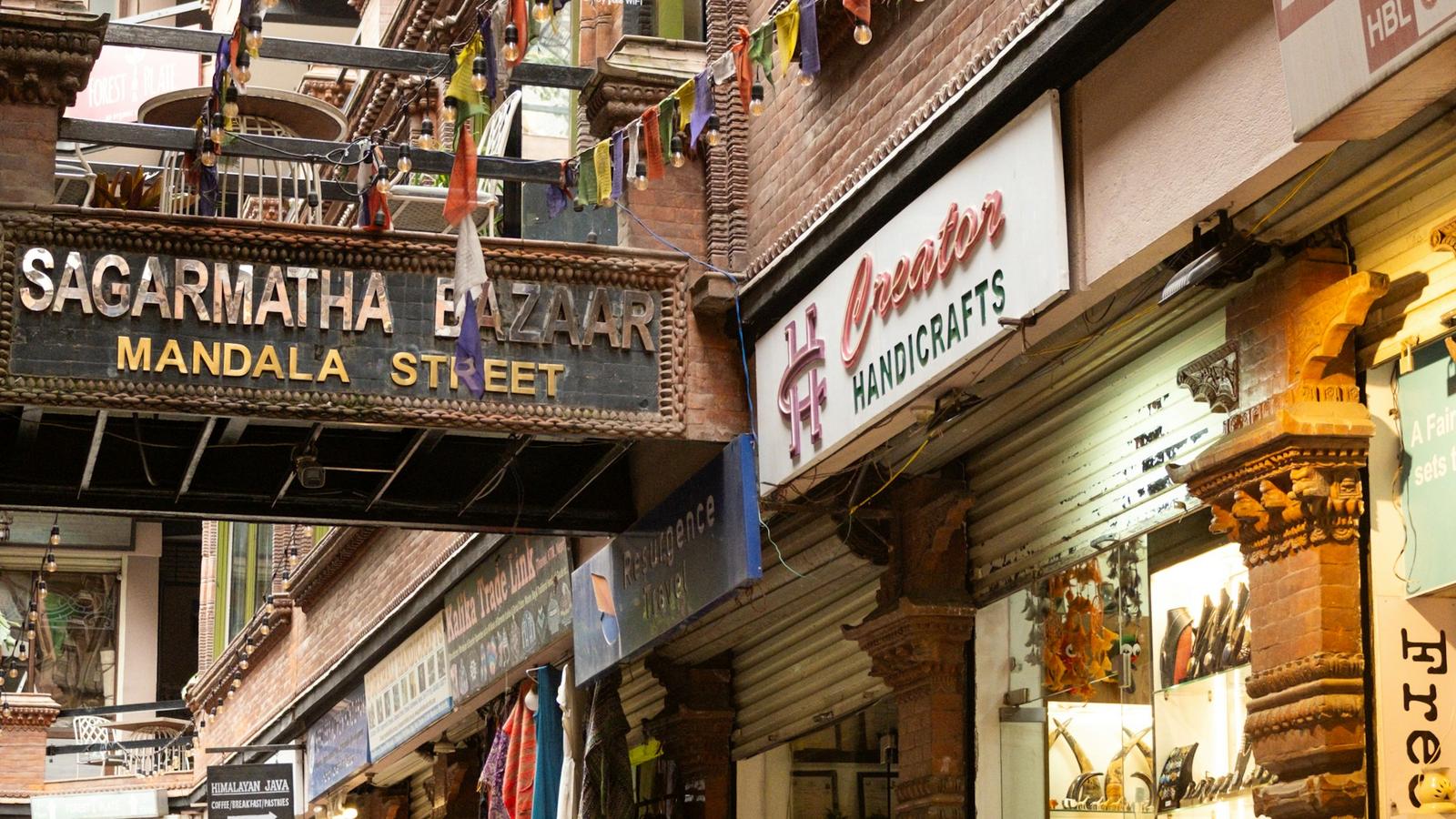
Shopfronts under the Sagarmatha Bazaar sign on Mandala Street in Thamel, Kathmandu

By Uncover Nepal Team · Checked by our Kathmandu travel team · Last checked 1 November 2026

Turn off Tridevi Marg into Thamel and the street narrows at once. Down jackets hang above shop doors, prayer flags cross overhead, a motorbike noses past trekkers comparing maps, and behind a steamed-up window a cook is folding momo.

Thamel is the neighbourhood in central Kathmandu that serves as the city's main base for visitors and the centre of its nightlife. The best things to do in Thamel are the walk south through Asan and Indra Chowk to Durbar Square, finding the old monastery and stupa nearby, shopping with care, eating well and enjoying live music, with sensible care at night.

For the wider city, see our guide to the best places to visit in Kathmandu. This guide is the neighbourhood itself.

In this guide

  • What is Thamel, and why do so many visitors stay there?
  • A short history of Thamel
  • How Thamel fits together: streets and what is where
  • What are the best things to do in Thamel?
  • The classic walk: Thamel to Kathmandu Durbar Square
  • Longer walks and day trips from Thamel
  • Shopping in Thamel: what to buy and how to judge quality
  • Food in Thamel: what to eat and how to start
  • Nightlife in Thamel and the changing closing hours
  • Is Thamel safe at night?
  • Arriving in Thamel: airport, money and SIM cards
  • Frequently asked questions
  • Planning your days in Thamel and beyond

Key facts

Where it is
Central Kathmandu, mainly in Ward 26 of Kathmandu Metropolitan City (Diplomat Nepal; Kathmandu Post, checked 1 Nov 2026)
Kathmandu Durbar Square
About 1.4 km south of Thamel (Wikipedia "Thamel" (Google Maps), checked 1 Nov 2026)
Airport
Tribhuvan International Airport, about 6 km east, at about 1,340 m (Wikipedia; CAAN, checked 1 Nov 2026)
Tourist Police
Hotline 1144, toll-free; Thamel unit mobile 9851289453 (Ministry of Culture, Tourism and Civil Aviation; Nepal Police, checked 1 Nov 2026)
Durbar Square entry
NPR 1,000 foreign visitors, NPR 500 SAARC (Nepal Tourism Board heritage-site fees, checked 1 Nov 2026)
Tourism information centre
Opened in Thamel on 11 July 2025 (Diplomat Nepal, checked 1 Nov 2026)
Late-night closing hours
Changed several times since 2024; no current hour published here (Kathmandu Post; Rising Nepal; Republica; Ratopati, checked 1 Nov 2026)
Car-free Thamel
Proposed in a draft transport master plan reported in August 2026; not a rule (MeroAuto, 10 Aug 2026; Kathmandu Post, 6 Aug 2026, checked 1 Nov 2026)
Foreign cash on arrival
Up to USD 5,000 without a customs declaration (Nepal Rastra Bank notice via ShareSansar, checked 1 Nov 2026)

What is Thamel, and why do so many visitors stay there?

Thamel is a compact grid of lanes in central Kathmandu, mainly in Ward 26 of Kathmandu Metropolitan City, packed with guesthouses, restaurants, gear shops and travel offices. It is the city's main area for visitors, about 1.4 km from Kathmandu Durbar Square and about 6 km from the airport.

You can walk to the old city, find a meal, buy or hire trekking gear, change money and sort a SIM card, all within a few lanes. The trade-off is that Thamel is busy, commercial and noisy in places, and it can feel like a bubble if you never leave it. The real old city starts just to the south.

A tourism information centre opened in Thamel in July 2025, set up by the Bagmati Province tourism ministry with Ward 26 and the Thamel Tourism Development Council; it offers information on trekking routes, transport, hotels, and local art and culture. We could not confirm its address or hours, so ask your hotel to point you there.

Takeaway: stay in Thamel for convenience, but plan to walk out of it every day.

A short history of Thamel

Its name is usually traced to Tham Bahi, the old Buddhist monastery at its heart. A bahi or bahal is a Newar Buddhist monastery built around a courtyard; the Newars are the original people of the Kathmandu Valley. Tham Bahi is the same place as Bhagwan Bahal, also known by its Sanskrit name, Vikramashila Mahavihara.

According to a 2016 paper by the scholar Git Shrestha, the Indian Buddhist teacher Atisha stayed here in 1041 to 1042, on his way to Tibet. The same paper says the monastery was founded before the 12th century and that the present structure dates from the 17th century, in the reign of King Pratap Malla.

As the writer Samrat Upadhyay noted in the Kathmandu Post in 2018, until the early 1970s Thamel "was said to be haunted by ghosts" and seemed far from the city's core. The foreign visitors of the 1960s and 1970s gathered instead at Jhochhen Tol, better known as Freak Street.

Change began with one guesthouse. Kathmandu Guest House opened in 1968 with 13 rooms, run by Karna Shakya in his family's Rana-era house. The Rana era was the period when hereditary Rana prime ministers ruled Nepal. Upadhyay's article records that friends and family asked Karna Shakya why tourists would come to such a lonely place. They came. Upadhyay recalls the mix of visitors changing from the hippies of Freak Street to trekkers, who based themselves in Thamel. Tourism has centred on the district since the hippie days.

Takeaway: when the lanes feel purely commercial, remember the monastery that gave Thamel its name is still standing a few steps away.

How Thamel fits together: streets and what is where

Thamel has no single main street, so learn it by its named roads.

The roads you will hear named

A 2017 traffic scheme listed the district's roads and exits, and the names are useful for directions. Marga (often written marg) means road.

  • Tridevi Marga, in front of Kaiser Mahal, beside the Garden of Dreams at the entrance to Thamel.
  • Chaksibari Marga and Paryatan Marga, two of the core lanes.
  • Saat Ghumti, Sorhakhutte, Bhagwati Bahal, Amrit Marga and Thahity, all named in the same scheme.
  • Chhetrapati (also spelt Kshetrapati), listed in the same scheme as one of Thamel's exit roads.

You will also see tol (a neighbourhood or street quarter) and chowk (a square or junction) on signs and maps.

Traffic, motorbikes and the car-free plan

Thamel's core lanes were declared vehicle-free from 22 October 2017, with emergency vehicles exempt and separate night-time access planned for supply vehicles. We make no claim about how that works today; watch for motorbikes and taxis in the lanes and keep to the side.

A draft Kathmandu Valley Urban Transport System Master Plan, prepared by the Ministry of Physical Infrastructure and Transport with JICA and reported in August 2026, proposes Thamel, Basantapur Durbar Square and Patan Durbar Square as car-free zones. For Thamel, it proposes no vehicles from 9 am to 9 pm, with an allowance for deliveries. It is a proposal, not a rule: the plan still had to be finalised and sent to the Cabinet.

Takeaway: learn a few names (Tridevi Marga, Chhetrapati and the road south towards Asan) and you can find your way back to your hotel from almost anywhere.

What are the best things to do in Thamel?

The best things to do in Thamel are on foot: walk the old trade route south to Asan, Indra Chowk and Kathmandu Durbar Square, find Bhagwan Bahal and the Kathesimbhu stupa, shop slowly for crafts and gear, take a cooking class, eat your way through momo and dal bhat, and spend an evening with live music.

Thing to do What it is like Good for
Walk to Kathmandu Durbar Square About 1.4 km through the old market squares Your first morning
Bhagwan Bahal An old Newar Buddhist monastery inside Thamel A quiet pause away from the shops
Kathesimbhu stupa A centuries-old small copy of Swayambhunath near Asan Anyone who cannot manage Swayambhu's hill
Garden of Dreams A restored Rana-era garden at the entrance to Thamel A calm break in the afternoon
Shopping Trekking gear, handicrafts, woollens and souvenirs Pre-trek kit and gifts
Cooking class or yoga Hands-on cooking or a class Rest days, wet days
Live music Bars and clubs with bands Evenings out

Bhagwan Bahal, the monastery that named Thamel

Bhagwan Bahal, the Tham Bahi of the district's name, is easy to walk past. Go in quietly: it is a working religious place. Walk clockwise around shrines, take off your shoes where others do, and ask before photographing people at prayer.

Kathesimbhu stupa

Kathesimbhu, also written Kathe Swayambhu, is a small, centuries-old stupa near Asan built as a miniature replica of Swayambhunath. A stupa is a dome-shaped Buddhist monument that people walk around clockwise while praying. It is said that a visit here brings the same merit as climbing to Swayambhunath, for those who cannot manage the hill.

A festival is held here on the full moon of the Nepali month of Asoj, which falls in September or October, mainly by the Shakya families of Asan.

The Garden of Dreams

The Garden of Dreams sits at the entrance to Thamel, across the street from the former Royal Palace at Narayanhiti, with its wall running along Tridevi Marg. It was created in the early 1920s, neglected for decades and restored in the 2000s. Inside are pavilions, ponds, pergolas and fountains.

The official site gives the hours as 9 am to 9 pm every day and the entry fee as NPR 400 for non-Nepali visitors and NPR 150 for Nepalis, with tickets sold at the entrance; that fee text was last edited in 2023, so check at the gate. Outside food is not allowed. Our Garden of Dreams guide covers its history, pavilions and café in full.

Cooking classes and yoga

A cooking class is a good use of a rest day or a wet afternoon: you learn Nepali home cooking, such as momo (dumplings) and dal bhat (lentil soup with rice), and the menus make sense for the rest of your trip. Yoga classes are just as easy to find. Before you book either, ask what is included, how big the group is and, for cooking, whether they can handle vegetarian, vegan or Jain needs.

Takeaway: pair one cultural stop, one practical job and one slow hour each day, and you will see far more than the shopfronts.

The classic walk: Thamel to Kathmandu Durbar Square

If you do one thing from Thamel, do this walk. Kathmandu Durbar Square is about 1.4 km south, along the old India to Tibet trade route, now a busy market street.
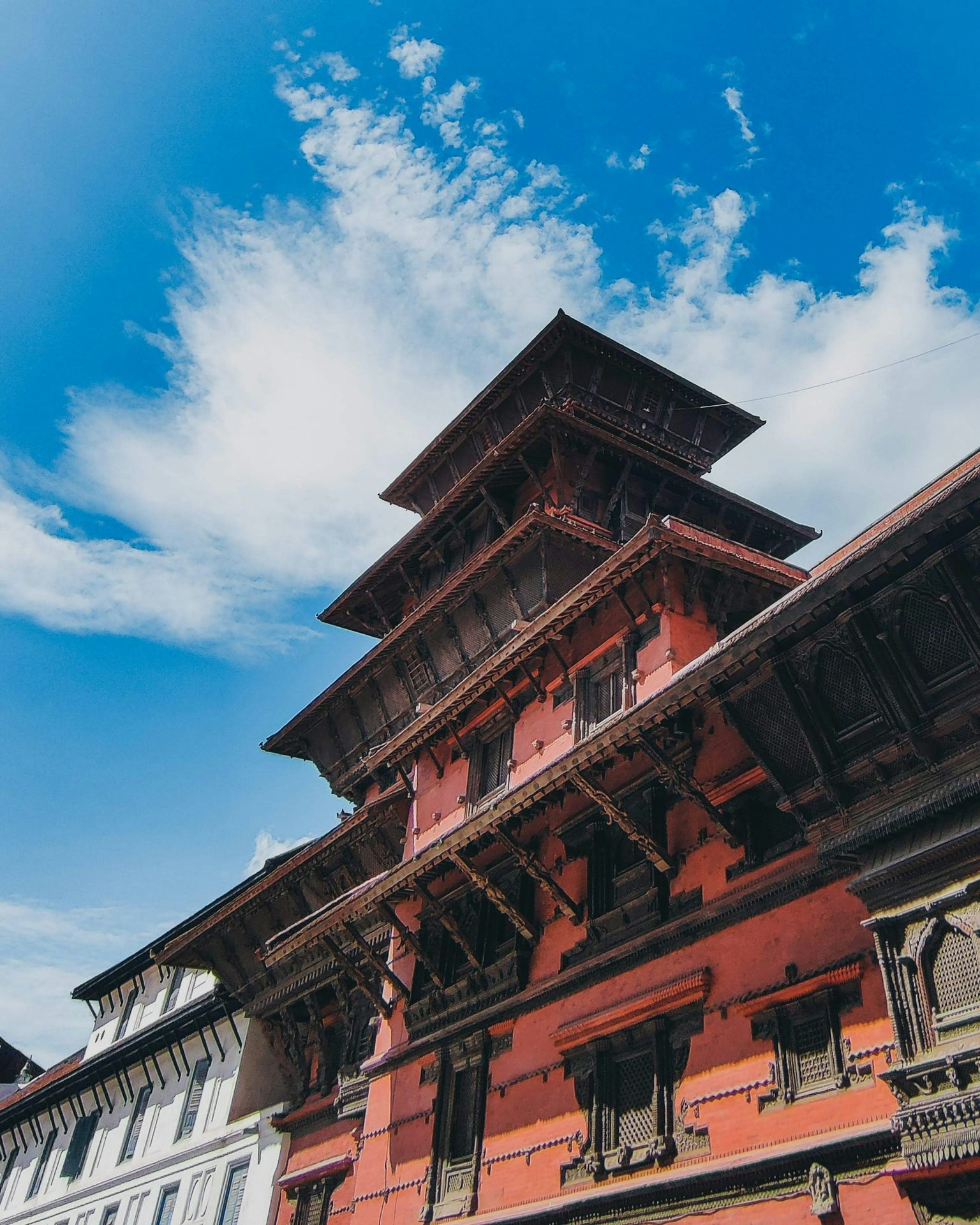
Basantapur tower at Kathmandu Durbar Square
Basantapur tower at Kathmandu Durbar Square, where the walk south from Thamel ends.

Step by step

  1. Leave Thamel heading south. The tourist shops give way to older neighbourhoods. Keep your bag in front of you in the crowds.
  2. Look for Kathesimbhu near Asan. The small stupa is a good first stop.
  3. Stand in Asan. Six streets meet at this old market square, which sat on one of the India to Tibet trade routes. Its temple is to Annapurna, goddess of grain and abundance and the patron deity of the neighbourhood. Around you, shops sell everything from food, spices and textiles to electronics and bullion. It is a working market, so be patient in the crowds.
  4. Carry on to Indra Chowk. The Akash Bhairab temple is the symbol of this square, and Raki Bazaar on its east side is an alley of glass-bead shops. During the Indra Jatra festival, the chariots of Kumari, Ganesh and Bhairav pass through here.
  5. Take the street from the south-west corner of Indra Chowk, through Makhan, to Durbar Square.
  6. Buy your ticket at Durbar Square. Entry is NPR 1,000 for foreign visitors and NPR 500 for SAARC visitors.

Our Kathmandu Durbar Square guide covers the palace, the temples and how to plan your visit. For the history as you go, our Kathmandu old city walking tour, linked at the end of this guide, starts in Thamel and covers Asan and Durbar Square with a licensed guide.

Takeaway: walk south through Asan and Indra Chowk rather than taking a taxi, and keep your Durbar Square ticket handy.
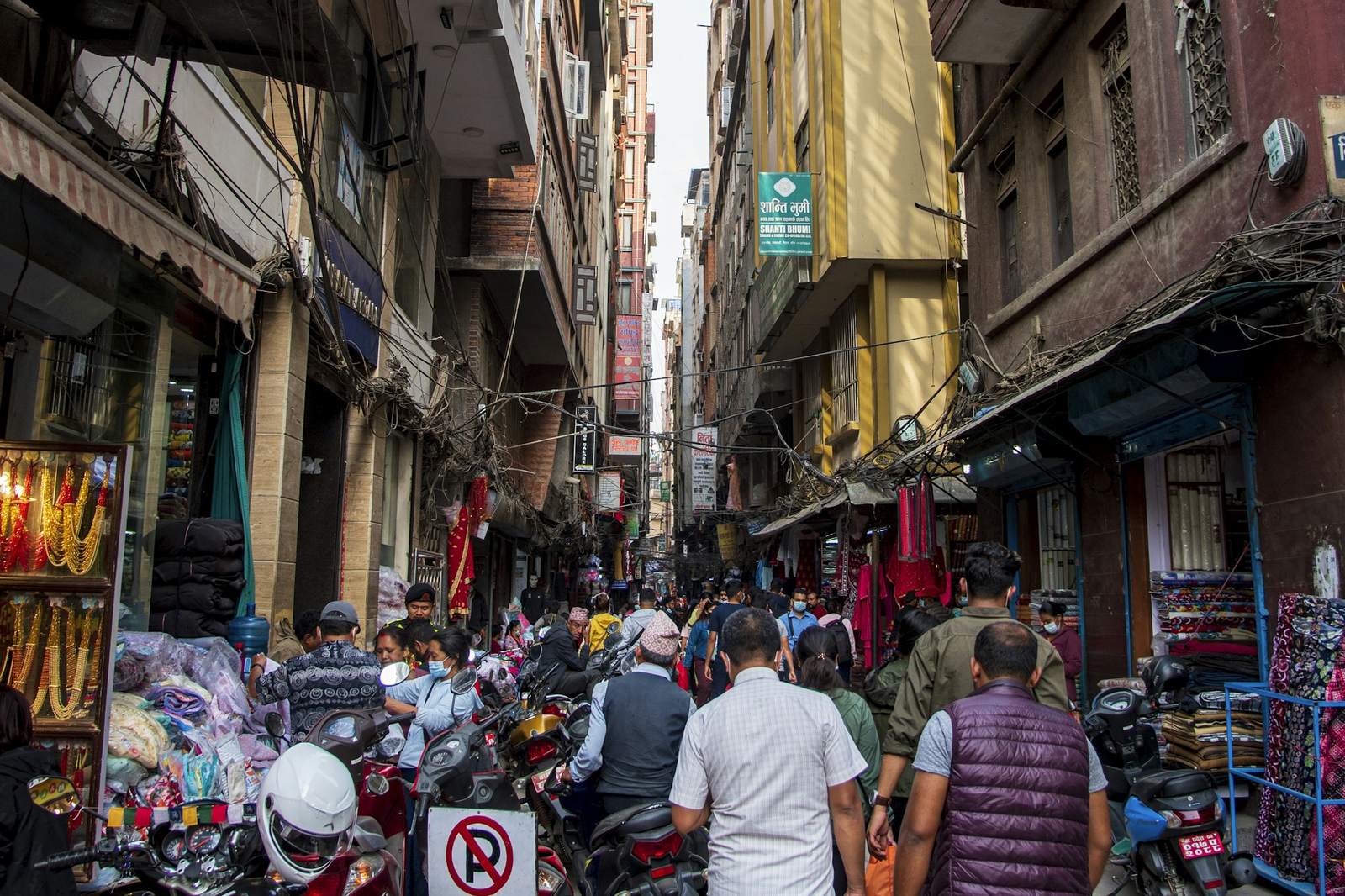
A narrow shopping alley crowded with people and motorbikes near Indra Chowk, Kathmandu
A crowded shopping alley near Indra Chowk, on the walk south from Thamel.

Longer walks and day trips from Thamel

  • Swayambhunath. The hilltop stupa west of the city. Entry is NPR 200 for foreign visitors and NPR 50 for SAARC visitors. Our Swayambhunath Monkey Temple guide covers the stupa and how to get there.
  • Boudhanath and Pashupatinath. Boudha, the great stupa, charges NPR 400 for foreign visitors and NPR 100 for SAARC visitors. Pashupatinath, the Hindu temple complex on the Bagmati river, charges NPR 1,000, with Indian and Nepali nationals free.
  • White Gumba. For a quieter monastery away from the crowds, see our White Gumba guide.
  • Bhaktapur. The old royal city east of Kathmandu, with its own entry fee. Our Bhaktapur guide covers the old city and how to plan a visit.
  • Nagarkot and the valley rim. Nagarkot sits at about 2,100 to 2,200 m, about 32 km from Kathmandu, usually 1.5 to 2 hours by road. You can walk there from Changu Narayan in about four to five hours; see the FAQ below, our Nagarkot guide and Kathmandu hiking guide.

For more options by time and interest, see our Kathmandu day trips guide.

Takeaway: use Thamel as your launch point, and mix sights inside the city with at least one day out in the valley.

Shopping in Thamel: what to buy and how to judge quality

Shopping in Thamel is mostly trekking and climbing gear, handicrafts, souvenirs, woollens and clothes, with foreign-exchange booths between the shops. Prices vary widely and quality varies more, so look in several shops before buying anything expensive, and ask plainly what it is made of.
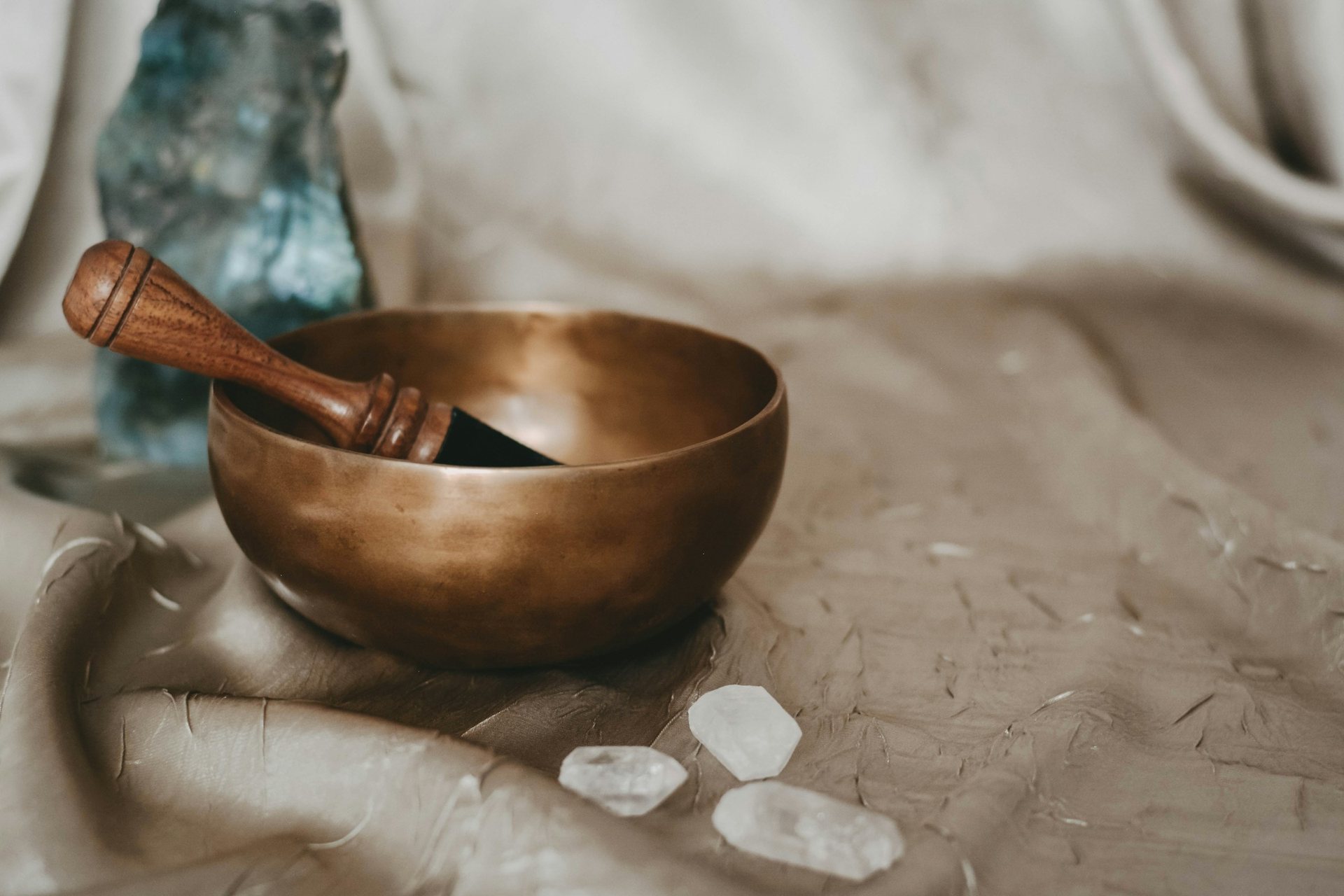
A Tibetan singing bowl and wooden striker, the kind sold in Kathmandu craft shops
A Tibetan singing bowl and its striker.

Trekking gear: buy, rent or bring?

Many Thamel shops both rent and sell trekking gear, which helps if you are trekking once or travelling light. Quality ranges from good to poor, and labels do not always tell you which. Before you pay, check:

  1. Zips. Run every zip end to end. A failed zip on a down jacket or sleeping bag is hard to fix on the trail.
  2. Seams. Pull gently at seams, especially shoulder straps.
  3. Fit. Try boots with your trekking socks and walk around the shop. Never take unworn boots on a long trek.
  4. For rentals, ask what happens if something is damaged or lost before you leave.

A note on cheap trekking deals: the UK government warns travellers to be wary of very cheap trekking offers, which may be scams. If a price in a shop window looks far below everyone else's, ask exactly what it includes. A licensed guide walks with you on every trek we run.

Crafts, pashmina and singing bowls

Item What to check Honest note
Pashmina shawls Look for the Chyangra Pashmina mark It is the collective trademark for Nepali pashmina, meant to show quality standards were met and no child labour was used
Singing bowls Ask how it was made and what metal it is We know of no reliable test you can do in a shop; listen to several and buy the sound you like
Thangka paintings Ask who painted it and how long it took A thangka is a Buddhist painting on cloth; prices range widely, so compare shops
"Antique" pieces Ask for paperwork and keep receipts See the antiquities note below

Under Nepal's ancient monuments law, objects the government has designated may not be exported, and owners of archaeological objects more than 100 years old must register them. If something is sold as genuinely old, ask for paperwork and keep your receipt. No paperwork: assume it is new and pay accordingly.

Bargaining without stress

Bargaining is normal in craft shops, less so where prices are marked. Decide your top price first, stay polite, and if you cannot agree, thank the shopkeeper and leave. Do not bargain for something you do not mean to buy.

Takeaway: compare at least a few shops, look for the Chyangra Pashmina mark on shawls, check every zip on gear, and keep receipts for anything sold as old.

Food in Thamel: what to eat and how to start

Thamel has a huge choice of food, from Nepali, Newar and Tibetan kitchens to bakeries, coffee shops and food from across the world. Dishes to start with:
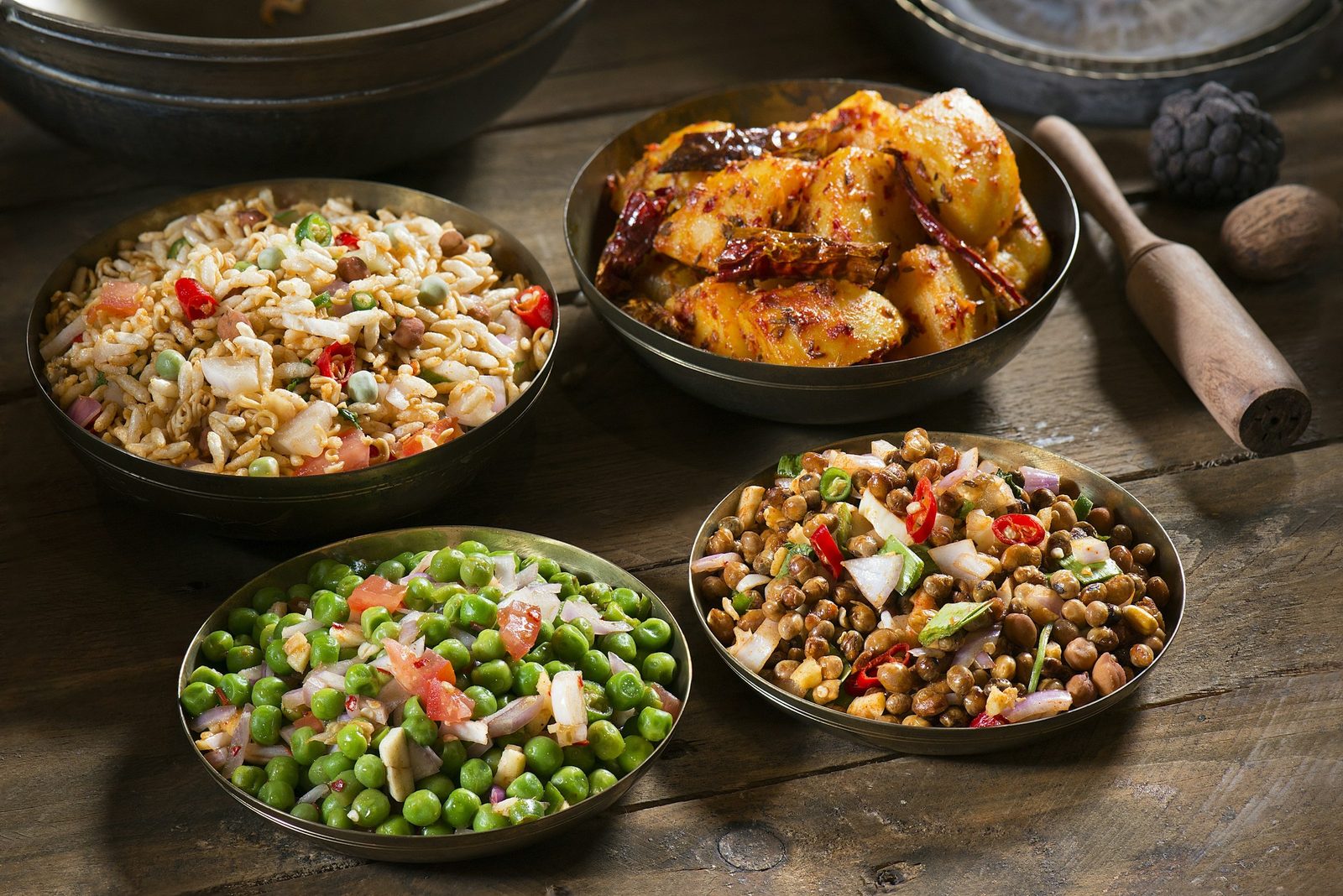
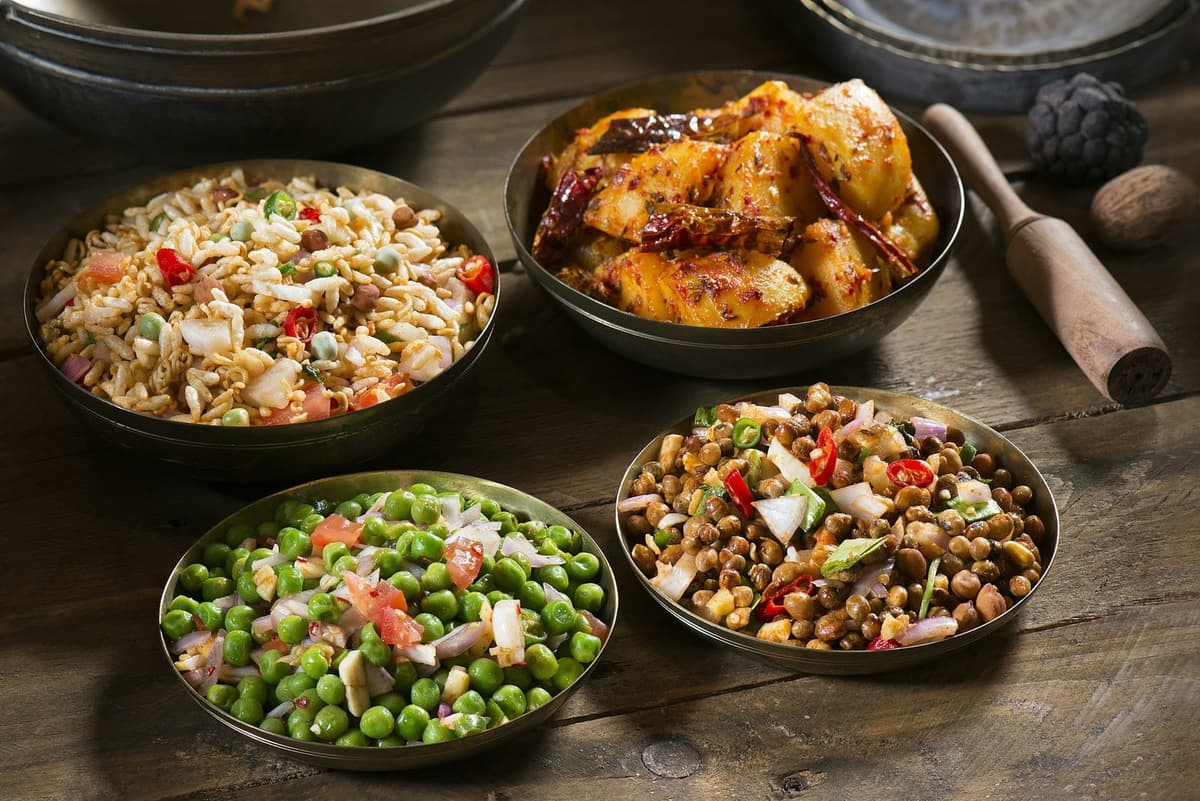
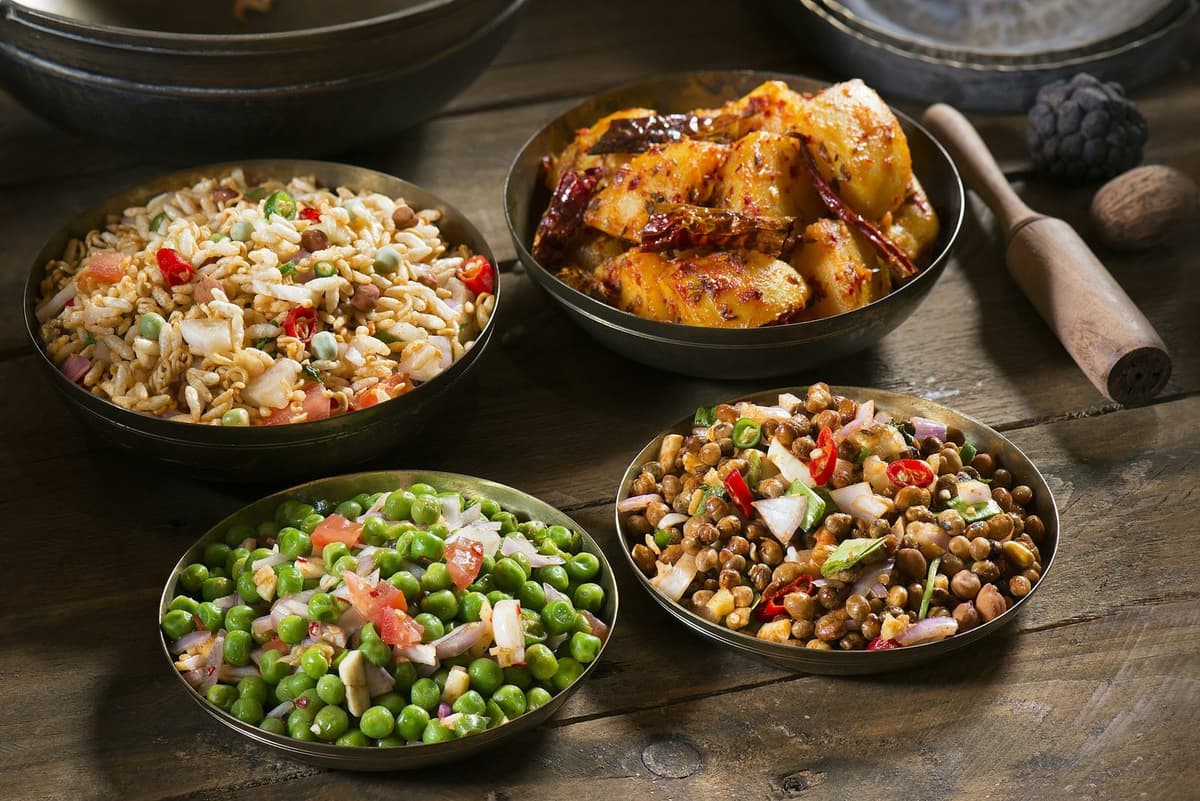
Four bowls of Nepali snacks, including spiced green peas and a spiced bean mix
Nepali snacks, including spiced peas and beans.
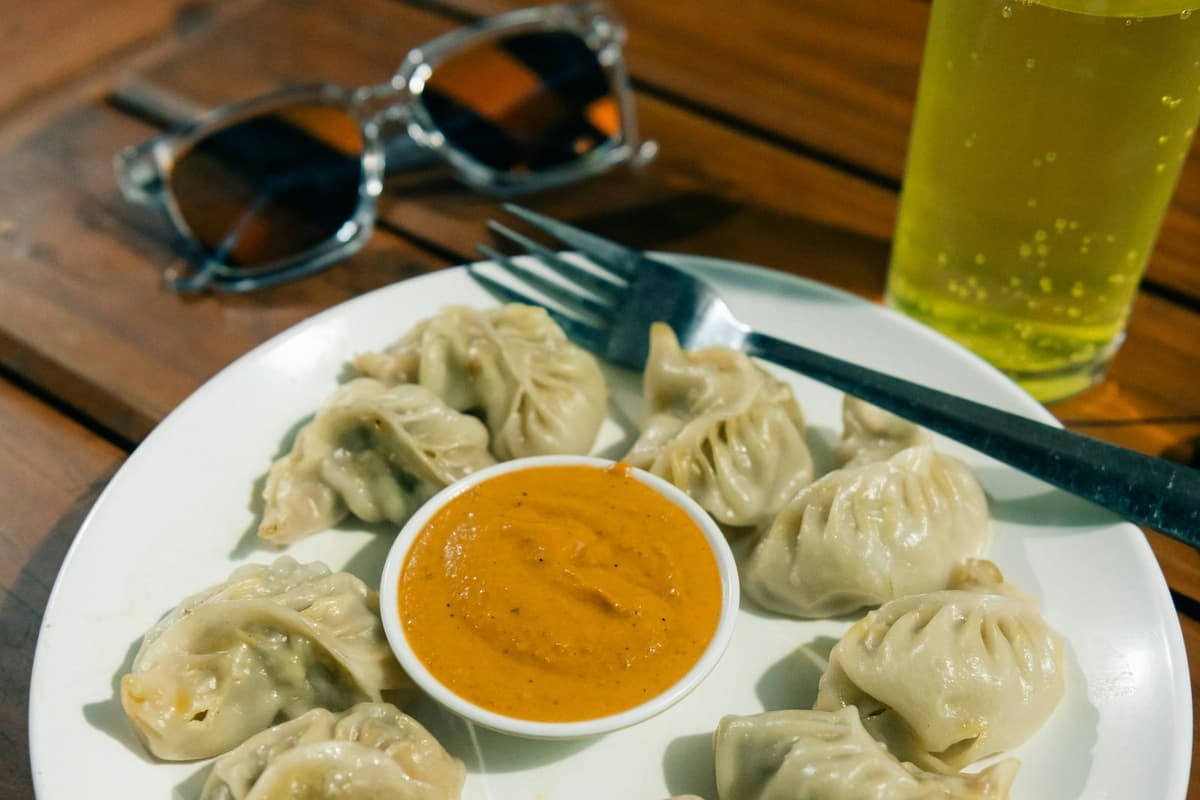
  • Momo. Dumplings, steamed or fried, filled with vegetables, buffalo or chicken, served with a spicy chutney.
  • Dal bhat. Lentil soup with rice, vegetable curry, pickle and greens: the everyday meal, and the one you will eat most on a trek.
  • Newar food. The Kathmandu Valley's own cooking: beaten rice, spiced meats, lentil pancakes and pickles. Look for small Newar eateries in the old city south of Thamel.
  • Thukpa. A Tibetan noodle soup, good on a cool evening.

Vegetarians eat well in Thamel; ask about Jain needs specifically, as not every kitchen knows what to leave out.

If your stomach is new to Nepal, start gently: hot, freshly cooked food and filtered or bottled water, in busy places rather than empty ones.

Takeaway: eat momo and dal bhat in Thamel, then walk south into the old city for Newar food.

Nightlife in Thamel and the changing closing hours

Thamel is widely regarded as the centre of Kathmandu's nightlife, with live music, bars and clubs concentrated in its lanes. Evenings range from quiet drinks to live bands and dance floors.
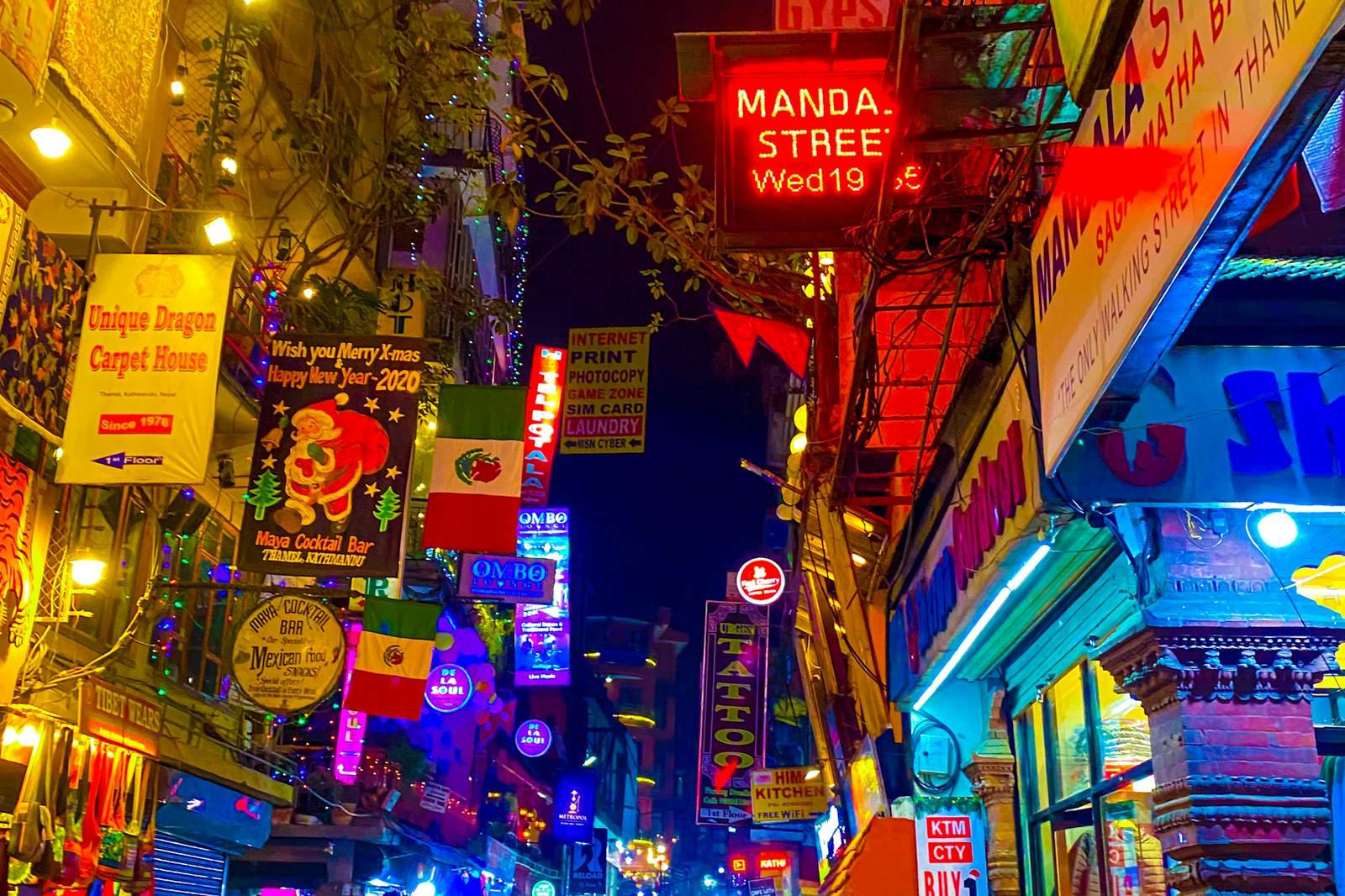
Neon shop and bar signs lighting Mandala Street in Thamel, Kathmandu, at night
Mandala Street in Thamel after dark.

Closing hours have changed several times

We are not printing a closing time, because the rules keep changing. Late-night hours in Thamel are set by the Kathmandu District Administration Office, and recent changes include:

  • In April 2024 Thamel and Durbar Marg were opened to round-the-clock trading, with conditions on sound-proofing and street noise and a monitoring team able to close venues that broke the rules.
  • In September 2025, after the Gen Z protests, the Thamel Tourism Development Council asked small businesses and liquor shops in Thamel to close earlier, citing rising theft, robbery and brawls at night.
  • In February 2026 the district administration told night-time businesses across the district to close earlier "until further notice", citing security for the House of Representatives election in March 2026.
  • In August 2026 the district administration and the newly elected Thamel Tourism Development Council team agreed to run Thamel as a round-the-clock tourist area, with security forces deployed as needed.

We have not found a published notice setting out the closing hours that apply now. Closing hours have changed several times since 2024; ask your hotel or us for the current rule during your stay.

Takeaway: enjoy the music, but check the current closing rule with your hotel on the day, and plan your walk home before you go out.

Is Thamel safe at night?

Thamel is generally a relaxed place in the evening, but not risk-free. The UK government says pickpockets and bag-snatchers work areas popular with foreigners, including Thamel, and that assaults and robberies are more likely in the evening in poorly lit areas. Stay on lit lanes, watch your drink and save 1144, the Tourist Police number.

Practical steps for an evening out

  1. Carry less. Take one card and the cash you need. Leave your passport in the hotel safe and keep a photo of it on your phone.
  2. Keep your phone and wallet in front pockets or a zipped bag worn in front, especially in crowds.
  3. Stay on busy, lit lanes on the way home, and avoid shortcuts through dark alleys.
  4. Never leave your drink unattended, and do not accept drinks from strangers.
  5. Walk back with someone, or ask the bar to help you get a taxi.
  6. Save these numbers before you go out: the Tourist Police hotline 1144 and the Thamel Tourist Police unit, 9851289453.

"Dial 1144 (Toll Free, Hot line) for Tourist Police."

Ministry of Culture, Tourism and Civil Aviation, Tourist Police page, checked 1 November 2026

Women and solo travellers

The steps above, done every time, are the core of it. Our guide on whether Nepal is safe for solo female travellers goes into more detail.

If something goes wrong

  1. Get somewhere safe and lit, such as a hotel lobby or a busy restaurant.
  2. Call the Tourist Police on 1144, or the Thamel unit on 9851289453. The Tourist Police say they aim to be available 24 hours a day in the Kathmandu Valley. You can also email policetourist@nepalpolice.gov.np.
  3. Ask for a police report if anything was stolen; your insurer will want one.
  4. Block your cards straight away.
  5. Tell your hotel and, if you are travelling with us, tell us.

Protests and strikes

The UK government notes that protests and strikes are fairly common in Nepal and that the authorities may impose curfews. If a crowd gathers, walk the other way.

Takeaway: Thamel at night is manageable with ordinary care: carry less, stay on lit lanes, guard your drink and save 1144 in your phone.

Arriving in Thamel: airport, money and SIM cards

Tribhuvan International Airport is about 6 km east of Thamel and the city centre, at about 1,340 m. Our Kathmandu airport arrival guide covers the arrivals hall; here is the short version.

From the airport to Thamel

  • Taxis. Meter and prepaid taxis are available at both terminals at all hours. Agree the fare before you get in, or use the prepaid counter.
  • Buses. Sajha Yatayat buses connect the international terminal with the city centre.
  • A pickup. Landing late or for the first time? Ask your hotel whether it offers an airport pickup.

Your Nepal visa and your flight to Kathmandu are your own arrangements; check the Department of Immigration's official visa information before you fly.

Money

  • Change money only at licensed places. Nepal Rastra Bank, the central bank, publishes the list of banks, money changers and others licensed for foreign exchange. If you are unsure about a booth, change money at a bank instead.
  • Cash you can bring in. You may bring up to USD 5,000 (or the equivalent) in foreign-currency cash without a customs declaration; above that, declare it at customs.
  • For Indian visitors. Nepali and Indian citizens may bring in, take out or exchange Indian ₹200 and ₹500 notes of the post-November 2016 series up to ₹25,000 per person.
  • ATMs. ATMs are common in Thamel; limits and fees vary by bank, so check with your own bank before you travel.
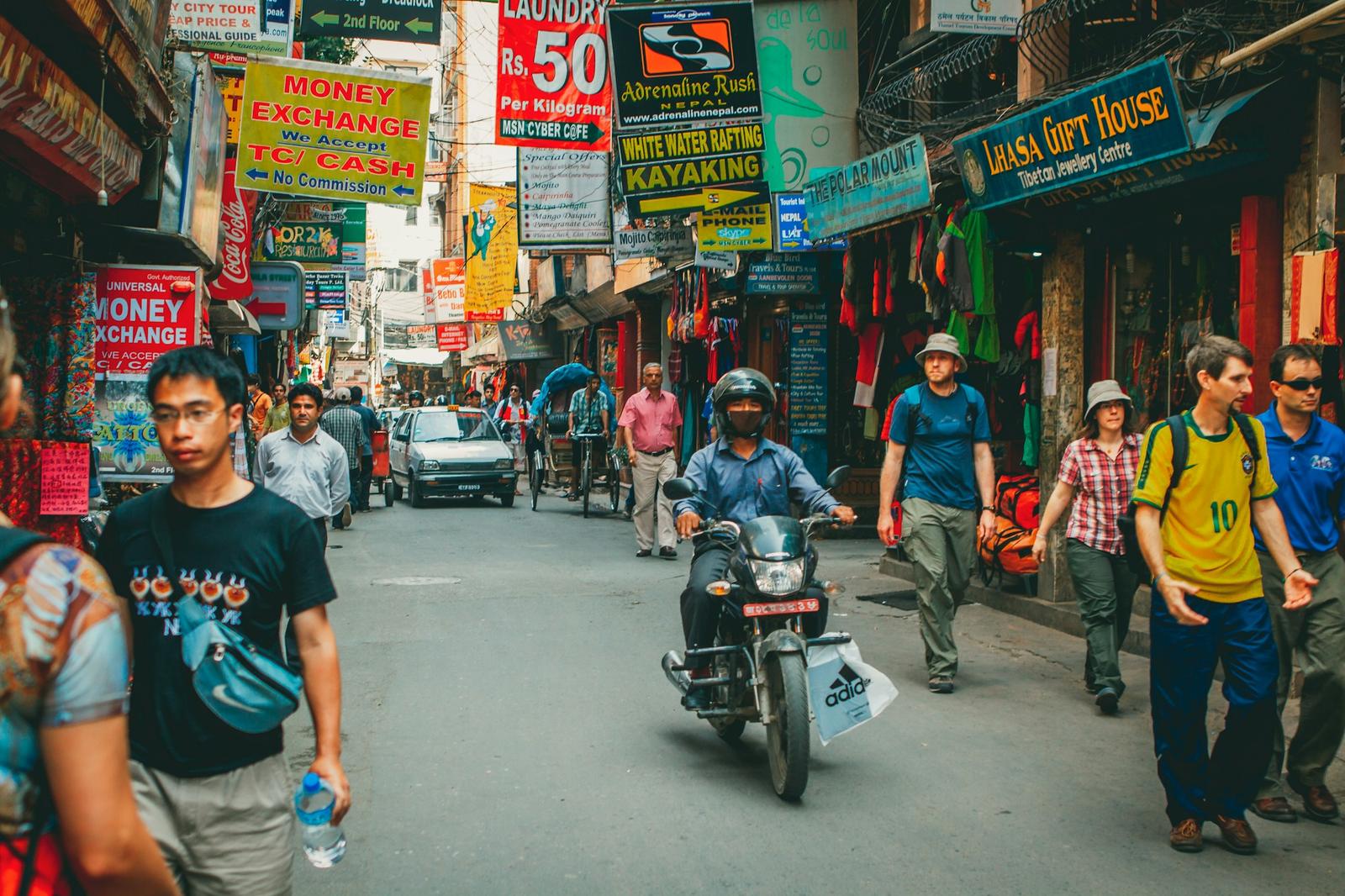
Travellers and motorbikes on a Thamel street lined with money exchange and shop signs, Kathmandu
Money exchange signs line many Thamel streets.

SIM cards and data

Nepal has two main mobile operators, Nepal Telecom (NTC) and Ncell. You can buy a SIM card at the operators' counters in the airport arrivals hall or at their stores in Thamel; bring your original passport, as the photo and visa pages are copied, and a passport photo. Both operators also offer eSIMs.

Choosing where to sleep

Lanes near the bars can be loud at night, so light sleepers should ask for a room away from the street.

Takeaway: use a prepaid taxi or a hotel pickup, change money at a licensed counter and bring your passport for the SIM.

Frequently asked questions

What is there to do in Thamel, and is it safe at night?

In Thamel you can walk south to Asan, Indra Chowk and Kathmandu Durbar Square, visit Bhagwan Bahal and the Kathesimbhu stupa, shop for gear and crafts, take a cooking class and hear live music. At night it is generally relaxed, but pickpocketing happens: stay on lit lanes, watch your drink and save the Tourist Police hotline, 1144.

What are the best things to do in Kathmandu?

The best things to do in Kathmandu are seeing Kathmandu Durbar Square (NPR 1,000 foreign, NPR 500 SAARC), Swayambhunath (NPR 200, SAARC 50), Boudhanath stupa and Pashupatinath temple, then a day trip to Bhaktapur or the valley rim. Our guide to places to visit in Kathmandu explains how to fit them together.

How do I combine Changu Narayan with a Nagarkot hike?

Start at the Changu Narayan temple and walk to Nagarkot via Telkot and the Jalapa Devi temple area, which takes about four to five hours and is mostly uphill. To shorten it, start at Telkot and walk about one and a half hours. Changu Narayan charges an entry fee, so check at the gate. Our Nagarkot guide and Kathmandu hiking guide have the details.

Can I buy or rent trekking gear in Thamel?

Yes. Many Thamel shops both rent and sell trekking gear, which helps if you are trekking once or travelling light. Quality varies a great deal, so check every zip, pull gently at the seams, try boots on with trekking socks and ask what happens if a rental item is damaged. Be wary of very cheap trekking deals advertised in shop windows.

Planning your days in Thamel and beyond

Thamel works best as a base you walk out of: a morning on the old trade route to Durbar Square, an afternoon in its quieter corners, then the valley around it. Our guide to the best places to visit in Kathmandu is the place to plan that wider list.

If you would like company and context, these trips start from the city:

Message us on WhatsApp or use the enquiry form and we will reply with options.
Tags
ThamelKathmanduShopping in KathmanduKathmandu nightlifeKathmandu safetyKathmandu walks
Share
U
Uncover Nepal Team
Writer at Uncover Nepal
More in PlacesSee all Places

Things to Do in Thamel, Kathmandu

22 min read Posted 04 Nov 2026Updated 02 Nov 2026
Shopfronts under the Sagarmatha Bazaar sign on Mandala Street in Thamel, Kathmandu

By Uncover Nepal Team · Checked by our Kathmandu travel team · Last checked 1 November 2026

Turn off Tridevi Marg into Thamel and the street narrows at once. Down jackets hang above shop doors, prayer flags cross overhead, a motorbike noses past trekkers comparing maps, and behind a steamed-up window a cook is folding momo.

Thamel is the neighbourhood in central Kathmandu that serves as the city's main base for visitors and the centre of its nightlife. The best things to do in Thamel are the walk south through Asan and Indra Chowk to Durbar Square, finding the old monastery and stupa nearby, shopping with care, eating well and enjoying live music, with sensible care at night.

For the wider city, see our guide to the best places to visit in Kathmandu. This guide is the neighbourhood itself.

In this guide

  • What is Thamel, and why do so many visitors stay there?
  • A short history of Thamel
  • How Thamel fits together: streets and what is where
  • What are the best things to do in Thamel?
  • The classic walk: Thamel to Kathmandu Durbar Square
  • Longer walks and day trips from Thamel
  • Shopping in Thamel: what to buy and how to judge quality
  • Food in Thamel: what to eat and how to start
  • Nightlife in Thamel and the changing closing hours
  • Is Thamel safe at night?
  • Arriving in Thamel: airport, money and SIM cards
  • Frequently asked questions
  • Planning your days in Thamel and beyond

Key facts

Where it is
Central Kathmandu, mainly in Ward 26 of Kathmandu Metropolitan City (Diplomat Nepal; Kathmandu Post, checked 1 Nov 2026)
Kathmandu Durbar Square
About 1.4 km south of Thamel (Wikipedia "Thamel" (Google Maps), checked 1 Nov 2026)
Airport
Tribhuvan International Airport, about 6 km east, at about 1,340 m (Wikipedia; CAAN, checked 1 Nov 2026)
Tourist Police
Hotline 1144, toll-free; Thamel unit mobile 9851289453 (Ministry of Culture, Tourism and Civil Aviation; Nepal Police, checked 1 Nov 2026)
Durbar Square entry
NPR 1,000 foreign visitors, NPR 500 SAARC (Nepal Tourism Board heritage-site fees, checked 1 Nov 2026)
Tourism information centre
Opened in Thamel on 11 July 2025 (Diplomat Nepal, checked 1 Nov 2026)
Late-night closing hours
Changed several times since 2024; no current hour published here (Kathmandu Post; Rising Nepal; Republica; Ratopati, checked 1 Nov 2026)
Car-free Thamel
Proposed in a draft transport master plan reported in August 2026; not a rule (MeroAuto, 10 Aug 2026; Kathmandu Post, 6 Aug 2026, checked 1 Nov 2026)
Foreign cash on arrival
Up to USD 5,000 without a customs declaration (Nepal Rastra Bank notice via ShareSansar, checked 1 Nov 2026)

What is Thamel, and why do so many visitors stay there?

Thamel is a compact grid of lanes in central Kathmandu, mainly in Ward 26 of Kathmandu Metropolitan City, packed with guesthouses, restaurants, gear shops and travel offices. It is the city's main area for visitors, about 1.4 km from Kathmandu Durbar Square and about 6 km from the airport.

You can walk to the old city, find a meal, buy or hire trekking gear, change money and sort a SIM card, all within a few lanes. The trade-off is that Thamel is busy, commercial and noisy in places, and it can feel like a bubble if you never leave it. The real old city starts just to the south.

A tourism information centre opened in Thamel in July 2025, set up by the Bagmati Province tourism ministry with Ward 26 and the Thamel Tourism Development Council; it offers information on trekking routes, transport, hotels, and local art and culture. We could not confirm its address or hours, so ask your hotel to point you there.

Takeaway: stay in Thamel for convenience, but plan to walk out of it every day.

A short history of Thamel

Its name is usually traced to Tham Bahi, the old Buddhist monastery at its heart. A bahi or bahal is a Newar Buddhist monastery built around a courtyard; the Newars are the original people of the Kathmandu Valley. Tham Bahi is the same place as Bhagwan Bahal, also known by its Sanskrit name, Vikramashila Mahavihara.

According to a 2016 paper by the scholar Git Shrestha, the Indian Buddhist teacher Atisha stayed here in 1041 to 1042, on his way to Tibet. The same paper says the monastery was founded before the 12th century and that the present structure dates from the 17th century, in the reign of King Pratap Malla.

As the writer Samrat Upadhyay noted in the Kathmandu Post in 2018, until the early 1970s Thamel "was said to be haunted by ghosts" and seemed far from the city's core. The foreign visitors of the 1960s and 1970s gathered instead at Jhochhen Tol, better known as Freak Street.

Change began with one guesthouse. Kathmandu Guest House opened in 1968 with 13 rooms, run by Karna Shakya in his family's Rana-era house. The Rana era was the period when hereditary Rana prime ministers ruled Nepal. Upadhyay's article records that friends and family asked Karna Shakya why tourists would come to such a lonely place. They came. Upadhyay recalls the mix of visitors changing from the hippies of Freak Street to trekkers, who based themselves in Thamel. Tourism has centred on the district since the hippie days.

Takeaway: when the lanes feel purely commercial, remember the monastery that gave Thamel its name is still standing a few steps away.

How Thamel fits together: streets and what is where

Thamel has no single main street, so learn it by its named roads.

The roads you will hear named

A 2017 traffic scheme listed the district's roads and exits, and the names are useful for directions. Marga (often written marg) means road.

  • Tridevi Marga, in front of Kaiser Mahal, beside the Garden of Dreams at the entrance to Thamel.
  • Chaksibari Marga and Paryatan Marga, two of the core lanes.
  • Saat Ghumti, Sorhakhutte, Bhagwati Bahal, Amrit Marga and Thahity, all named in the same scheme.
  • Chhetrapati (also spelt Kshetrapati), listed in the same scheme as one of Thamel's exit roads.

You will also see tol (a neighbourhood or street quarter) and chowk (a square or junction) on signs and maps.

Traffic, motorbikes and the car-free plan

Thamel's core lanes were declared vehicle-free from 22 October 2017, with emergency vehicles exempt and separate night-time access planned for supply vehicles. We make no claim about how that works today; watch for motorbikes and taxis in the lanes and keep to the side.

A draft Kathmandu Valley Urban Transport System Master Plan, prepared by the Ministry of Physical Infrastructure and Transport with JICA and reported in August 2026, proposes Thamel, Basantapur Durbar Square and Patan Durbar Square as car-free zones. For Thamel, it proposes no vehicles from 9 am to 9 pm, with an allowance for deliveries. It is a proposal, not a rule: the plan still had to be finalised and sent to the Cabinet.

Takeaway: learn a few names (Tridevi Marga, Chhetrapati and the road south towards Asan) and you can find your way back to your hotel from almost anywhere.

What are the best things to do in Thamel?

The best things to do in Thamel are on foot: walk the old trade route south to Asan, Indra Chowk and Kathmandu Durbar Square, find Bhagwan Bahal and the Kathesimbhu stupa, shop slowly for crafts and gear, take a cooking class, eat your way through momo and dal bhat, and spend an evening with live music.

Thing to do What it is like Good for
Walk to Kathmandu Durbar Square About 1.4 km through the old market squares Your first morning
Bhagwan Bahal An old Newar Buddhist monastery inside Thamel A quiet pause away from the shops
Kathesimbhu stupa A centuries-old small copy of Swayambhunath near Asan Anyone who cannot manage Swayambhu's hill
Garden of Dreams A restored Rana-era garden at the entrance to Thamel A calm break in the afternoon
Shopping Trekking gear, handicrafts, woollens and souvenirs Pre-trek kit and gifts
Cooking class or yoga Hands-on cooking or a class Rest days, wet days
Live music Bars and clubs with bands Evenings out

Bhagwan Bahal, the monastery that named Thamel

Bhagwan Bahal, the Tham Bahi of the district's name, is easy to walk past. Go in quietly: it is a working religious place. Walk clockwise around shrines, take off your shoes where others do, and ask before photographing people at prayer.

Kathesimbhu stupa

Kathesimbhu, also written Kathe Swayambhu, is a small, centuries-old stupa near Asan built as a miniature replica of Swayambhunath. A stupa is a dome-shaped Buddhist monument that people walk around clockwise while praying. It is said that a visit here brings the same merit as climbing to Swayambhunath, for those who cannot manage the hill.

A festival is held here on the full moon of the Nepali month of Asoj, which falls in September or October, mainly by the Shakya families of Asan.

The Garden of Dreams

The Garden of Dreams sits at the entrance to Thamel, across the street from the former Royal Palace at Narayanhiti, with its wall running along Tridevi Marg. It was created in the early 1920s, neglected for decades and restored in the 2000s. Inside are pavilions, ponds, pergolas and fountains.

The official site gives the hours as 9 am to 9 pm every day and the entry fee as NPR 400 for non-Nepali visitors and NPR 150 for Nepalis, with tickets sold at the entrance; that fee text was last edited in 2023, so check at the gate. Outside food is not allowed. Our Garden of Dreams guide covers its history, pavilions and café in full.

Cooking classes and yoga

A cooking class is a good use of a rest day or a wet afternoon: you learn Nepali home cooking, such as momo (dumplings) and dal bhat (lentil soup with rice), and the menus make sense for the rest of your trip. Yoga classes are just as easy to find. Before you book either, ask what is included, how big the group is and, for cooking, whether they can handle vegetarian, vegan or Jain needs.

Takeaway: pair one cultural stop, one practical job and one slow hour each day, and you will see far more than the shopfronts.

The classic walk: Thamel to Kathmandu Durbar Square

If you do one thing from Thamel, do this walk. Kathmandu Durbar Square is about 1.4 km south, along the old India to Tibet trade route, now a busy market street.

Basantapur tower at Kathmandu Durbar Square
Basantapur tower at Kathmandu Durbar Square, where the walk south from Thamel ends.

Step by step

  1. Leave Thamel heading south. The tourist shops give way to older neighbourhoods. Keep your bag in front of you in the crowds.
  2. Look for Kathesimbhu near Asan. The small stupa is a good first stop.
  3. Stand in Asan. Six streets meet at this old market square, which sat on one of the India to Tibet trade routes. Its temple is to Annapurna, goddess of grain and abundance and the patron deity of the neighbourhood. Around you, shops sell everything from food, spices and textiles to electronics and bullion. It is a working market, so be patient in the crowds.
  4. Carry on to Indra Chowk. The Akash Bhairab temple is the symbol of this square, and Raki Bazaar on its east side is an alley of glass-bead shops. During the Indra Jatra festival, the chariots of Kumari, Ganesh and Bhairav pass through here.
  5. Take the street from the south-west corner of Indra Chowk, through Makhan, to Durbar Square.
  6. Buy your ticket at Durbar Square. Entry is NPR 1,000 for foreign visitors and NPR 500 for SAARC visitors.

Our Kathmandu Durbar Square guide covers the palace, the temples and how to plan your visit. For the history as you go, our Kathmandu old city walking tour, linked at the end of this guide, starts in Thamel and covers Asan and Durbar Square with a licensed guide.

Takeaway: walk south through Asan and Indra Chowk rather than taking a taxi, and keep your Durbar Square ticket handy.

A narrow shopping alley crowded with people and motorbikes near Indra Chowk, Kathmandu
A crowded shopping alley near Indra Chowk, on the walk south from Thamel.

Longer walks and day trips from Thamel

  • Swayambhunath. The hilltop stupa west of the city. Entry is NPR 200 for foreign visitors and NPR 50 for SAARC visitors. Our Swayambhunath Monkey Temple guide covers the stupa and how to get there.
  • Boudhanath and Pashupatinath. Boudha, the great stupa, charges NPR 400 for foreign visitors and NPR 100 for SAARC visitors. Pashupatinath, the Hindu temple complex on the Bagmati river, charges NPR 1,000, with Indian and Nepali nationals free.
  • White Gumba. For a quieter monastery away from the crowds, see our White Gumba guide.
  • Bhaktapur. The old royal city east of Kathmandu, with its own entry fee. Our Bhaktapur guide covers the old city and how to plan a visit.
  • Nagarkot and the valley rim. Nagarkot sits at about 2,100 to 2,200 m, about 32 km from Kathmandu, usually 1.5 to 2 hours by road. You can walk there from Changu Narayan in about four to five hours; see the FAQ below, our Nagarkot guide and Kathmandu hiking guide.

For more options by time and interest, see our Kathmandu day trips guide.

Takeaway: use Thamel as your launch point, and mix sights inside the city with at least one day out in the valley.

Shopping in Thamel: what to buy and how to judge quality

Shopping in Thamel is mostly trekking and climbing gear, handicrafts, souvenirs, woollens and clothes, with foreign-exchange booths between the shops. Prices vary widely and quality varies more, so look in several shops before buying anything expensive, and ask plainly what it is made of.

A Tibetan singing bowl and wooden striker, the kind sold in Kathmandu craft shops
A Tibetan singing bowl and its striker.

Trekking gear: buy, rent or bring?

Many Thamel shops both rent and sell trekking gear, which helps if you are trekking once or travelling light. Quality ranges from good to poor, and labels do not always tell you which. Before you pay, check:

  1. Zips. Run every zip end to end. A failed zip on a down jacket or sleeping bag is hard to fix on the trail.
  2. Seams. Pull gently at seams, especially shoulder straps.
  3. Fit. Try boots with your trekking socks and walk around the shop. Never take unworn boots on a long trek.
  4. For rentals, ask what happens if something is damaged or lost before you leave.

A note on cheap trekking deals: the UK government warns travellers to be wary of very cheap trekking offers, which may be scams. If a price in a shop window looks far below everyone else's, ask exactly what it includes. A licensed guide walks with you on every trek we run.

Crafts, pashmina and singing bowls

Item What to check Honest note
Pashmina shawls Look for the Chyangra Pashmina mark It is the collective trademark for Nepali pashmina, meant to show quality standards were met and no child labour was used
Singing bowls Ask how it was made and what metal it is We know of no reliable test you can do in a shop; listen to several and buy the sound you like
Thangka paintings Ask who painted it and how long it took A thangka is a Buddhist painting on cloth; prices range widely, so compare shops
"Antique" pieces Ask for paperwork and keep receipts See the antiquities note below

Under Nepal's ancient monuments law, objects the government has designated may not be exported, and owners of archaeological objects more than 100 years old must register them. If something is sold as genuinely old, ask for paperwork and keep your receipt. No paperwork: assume it is new and pay accordingly.

Bargaining without stress

Bargaining is normal in craft shops, less so where prices are marked. Decide your top price first, stay polite, and if you cannot agree, thank the shopkeeper and leave. Do not bargain for something you do not mean to buy.

Takeaway: compare at least a few shops, look for the Chyangra Pashmina mark on shawls, check every zip on gear, and keep receipts for anything sold as old.

Food in Thamel: what to eat and how to start

Thamel has a huge choice of food, from Nepali, Newar and Tibetan kitchens to bakeries, coffee shops and food from across the world. Dishes to start with:

Four bowls of Nepali snacks, including spiced green peas and a spiced bean mix
Nepali snacks, including spiced peas and beans.
  • Momo. Dumplings, steamed or fried, filled with vegetables, buffalo or chicken, served with a spicy chutney.
  • Dal bhat. Lentil soup with rice, vegetable curry, pickle and greens: the everyday meal, and the one you will eat most on a trek.
  • Newar food. The Kathmandu Valley's own cooking: beaten rice, spiced meats, lentil pancakes and pickles. Look for small Newar eateries in the old city south of Thamel.
  • Thukpa. A Tibetan noodle soup, good on a cool evening.

Vegetarians eat well in Thamel; ask about Jain needs specifically, as not every kitchen knows what to leave out.

If your stomach is new to Nepal, start gently: hot, freshly cooked food and filtered or bottled water, in busy places rather than empty ones.

Takeaway: eat momo and dal bhat in Thamel, then walk south into the old city for Newar food.

Nightlife in Thamel and the changing closing hours

Thamel is widely regarded as the centre of Kathmandu's nightlife, with live music, bars and clubs concentrated in its lanes. Evenings range from quiet drinks to live bands and dance floors.

Neon shop and bar signs lighting Mandala Street in Thamel, Kathmandu, at night
Mandala Street in Thamel after dark.

Closing hours have changed several times

We are not printing a closing time, because the rules keep changing. Late-night hours in Thamel are set by the Kathmandu District Administration Office, and recent changes include:

  • In April 2024 Thamel and Durbar Marg were opened to round-the-clock trading, with conditions on sound-proofing and street noise and a monitoring team able to close venues that broke the rules.
  • In September 2025, after the Gen Z protests, the Thamel Tourism Development Council asked small businesses and liquor shops in Thamel to close earlier, citing rising theft, robbery and brawls at night.
  • In February 2026 the district administration told night-time businesses across the district to close earlier "until further notice", citing security for the House of Representatives election in March 2026.
  • In August 2026 the district administration and the newly elected Thamel Tourism Development Council team agreed to run Thamel as a round-the-clock tourist area, with security forces deployed as needed.

We have not found a published notice setting out the closing hours that apply now. Closing hours have changed several times since 2024; ask your hotel or us for the current rule during your stay.

Takeaway: enjoy the music, but check the current closing rule with your hotel on the day, and plan your walk home before you go out.

Is Thamel safe at night?

Thamel is generally a relaxed place in the evening, but not risk-free. The UK government says pickpockets and bag-snatchers work areas popular with foreigners, including Thamel, and that assaults and robberies are more likely in the evening in poorly lit areas. Stay on lit lanes, watch your drink and save 1144, the Tourist Police number.

Practical steps for an evening out

  1. Carry less. Take one card and the cash you need. Leave your passport in the hotel safe and keep a photo of it on your phone.
  2. Keep your phone and wallet in front pockets or a zipped bag worn in front, especially in crowds.
  3. Stay on busy, lit lanes on the way home, and avoid shortcuts through dark alleys.
  4. Never leave your drink unattended, and do not accept drinks from strangers.
  5. Walk back with someone, or ask the bar to help you get a taxi.
  6. Save these numbers before you go out: the Tourist Police hotline 1144 and the Thamel Tourist Police unit, 9851289453.

"Dial 1144 (Toll Free, Hot line) for Tourist Police."

Ministry of Culture, Tourism and Civil Aviation, Tourist Police page, checked 1 November 2026

Women and solo travellers

The steps above, done every time, are the core of it. Our guide on whether Nepal is safe for solo female travellers goes into more detail.

If something goes wrong

  1. Get somewhere safe and lit, such as a hotel lobby or a busy restaurant.
  2. Call the Tourist Police on 1144, or the Thamel unit on 9851289453. The Tourist Police say they aim to be available 24 hours a day in the Kathmandu Valley. You can also email policetourist@nepalpolice.gov.np.
  3. Ask for a police report if anything was stolen; your insurer will want one.
  4. Block your cards straight away.
  5. Tell your hotel and, if you are travelling with us, tell us.

Protests and strikes

The UK government notes that protests and strikes are fairly common in Nepal and that the authorities may impose curfews. If a crowd gathers, walk the other way.

Takeaway: Thamel at night is manageable with ordinary care: carry less, stay on lit lanes, guard your drink and save 1144 in your phone.

Arriving in Thamel: airport, money and SIM cards

Tribhuvan International Airport is about 6 km east of Thamel and the city centre, at about 1,340 m. Our Kathmandu airport arrival guide covers the arrivals hall; here is the short version.

From the airport to Thamel

  • Taxis. Meter and prepaid taxis are available at both terminals at all hours. Agree the fare before you get in, or use the prepaid counter.
  • Buses. Sajha Yatayat buses connect the international terminal with the city centre.
  • A pickup. Landing late or for the first time? Ask your hotel whether it offers an airport pickup.

Your Nepal visa and your flight to Kathmandu are your own arrangements; check the Department of Immigration's official visa information before you fly.

Money

  • Change money only at licensed places. Nepal Rastra Bank, the central bank, publishes the list of banks, money changers and others licensed for foreign exchange. If you are unsure about a booth, change money at a bank instead.
  • Cash you can bring in. You may bring up to USD 5,000 (or the equivalent) in foreign-currency cash without a customs declaration; above that, declare it at customs.
  • For Indian visitors. Nepali and Indian citizens may bring in, take out or exchange Indian ₹200 and ₹500 notes of the post-November 2016 series up to ₹25,000 per person.
  • ATMs. ATMs are common in Thamel; limits and fees vary by bank, so check with your own bank before you travel.
Travellers and motorbikes on a Thamel street lined with money exchange and shop signs, Kathmandu
Money exchange signs line many Thamel streets.

SIM cards and data

Nepal has two main mobile operators, Nepal Telecom (NTC) and Ncell. You can buy a SIM card at the operators' counters in the airport arrivals hall or at their stores in Thamel; bring your original passport, as the photo and visa pages are copied, and a passport photo. Both operators also offer eSIMs.

Choosing where to sleep

Lanes near the bars can be loud at night, so light sleepers should ask for a room away from the street.

Takeaway: use a prepaid taxi or a hotel pickup, change money at a licensed counter and bring your passport for the SIM.

Frequently asked questions

What is there to do in Thamel, and is it safe at night?

In Thamel you can walk south to Asan, Indra Chowk and Kathmandu Durbar Square, visit Bhagwan Bahal and the Kathesimbhu stupa, shop for gear and crafts, take a cooking class and hear live music. At night it is generally relaxed, but pickpocketing happens: stay on lit lanes, watch your drink and save the Tourist Police hotline, 1144.

What are the best things to do in Kathmandu?

The best things to do in Kathmandu are seeing Kathmandu Durbar Square (NPR 1,000 foreign, NPR 500 SAARC), Swayambhunath (NPR 200, SAARC 50), Boudhanath stupa and Pashupatinath temple, then a day trip to Bhaktapur or the valley rim. Our guide to places to visit in Kathmandu explains how to fit them together.

How do I combine Changu Narayan with a Nagarkot hike?

Start at the Changu Narayan temple and walk to Nagarkot via Telkot and the Jalapa Devi temple area, which takes about four to five hours and is mostly uphill. To shorten it, start at Telkot and walk about one and a half hours. Changu Narayan charges an entry fee, so check at the gate. Our Nagarkot guide and Kathmandu hiking guide have the details.

Can I buy or rent trekking gear in Thamel?

Yes. Many Thamel shops both rent and sell trekking gear, which helps if you are trekking once or travelling light. Quality varies a great deal, so check every zip, pull gently at the seams, try boots on with trekking socks and ask what happens if a rental item is damaged. Be wary of very cheap trekking deals advertised in shop windows.

Planning your days in Thamel and beyond

Thamel works best as a base you walk out of: a morning on the old trade route to Durbar Square, an afternoon in its quieter corners, then the valley around it. Our guide to the best places to visit in Kathmandu is the place to plan that wider list.

If you would like company and context, these trips start from the city:

Message us on WhatsApp or use the enquiry form and we will reply with options.
Tags
ThamelKathmanduShopping in KathmanduKathmandu nightlifeKathmandu safetyKathmandu walks
Share
U
Uncover Nepal Team
Writer at Uncover Nepal
More in PlacesSee all Places