On a January morning in Kathmandu you can start at a temple in a down jacket and finish the afternoon in a T-shirt in a Thamel courtyard. The average January day at the airport station reaches 19.2 °C and the average night falls to 2.8 °C. And at the shrine door, the shoes come off first.
What to wear in Nepal comes down to modest, loose clothes that cover your shoulders and knees for temples and towns, shoes you can slip off in seconds, and real layers for the mountains. Dress for the season and the altitude, not the country. Our Nepal travel guide covers the rest of your planning.
Updated 18 Nov 2026
In this guide
- Key facts
- What is the dress code at temples in Nepal?
- What to wear at Pashupatinath, Boudhanath and Lumbini
- What do people wear in Kathmandu and Pokhara?
- What to wear in Nepal month by month
- What to wear trekking in Nepal
- How strong is the sun in the mountains?
- What shoes do you need in Nepal?
- Should you buy or rent gear in Thamel?
- Frequently asked questions
- Plan your Nepal trip
Key facts
- Temples and holy places
- No shorts or sleeveless tops; shoes off before certain holy places (UK FCDO, Nepal travel advice, checked 19 Nov 2026)
- Shoes
- You will often be asked to take your shoes off before entering a temple or a house (Nepal Tourism Board, Culture of Nepal, checked 19 Nov 2026)
- Pashupatinath dress code
- Modest and traditional dress; no shorts, sleeveless tops or western casual wear on temple grounds (Pashupati Area Development Trust, website FAQ, checked 19 Nov 2026)
- Leather at Pashupatinath
- Leather items "that include shoes, belts and cameras" must be left outside the temple complex (Nepal Tourism Board, Pashupatinath page, checked 19 Nov 2026)
- Main sanctum
- Pashupatinath's main sanctum is restricted to Hindus (Pashupati Area Development Trust, website FAQ, checked 19 Nov 2026)
- Stupas
- Walking around temples and stupas is traditionally done clockwise (NTB trade website, Cultural Etiquette, checked 19 Nov 2026)
- Kathmandu in January
- Average 19.2 °C by day and 2.8 °C at night, airport station at 1,337 m (WMO Climate Normals 1991-2020, checked 19 Nov 2026)
- Monsoon
- Normally 13 June to 2 October in eastern Nepal (Department of Hydrology and Meteorology, checked 19 Nov 2026)
- Sun at altitude
- UV rises by approximately 10 per cent with every 1,000 m (World Health Organization, UV questions and answers, checked 19 Nov 2026)
- Sunscreen
- Broad-spectrum, SPF 30 or higher (US CDC Yellow Book, checked 19 Nov 2026)
- Altitude illness
- A risk when sleeping at about 2,450 m (8,000 ft) or higher (US CDC Yellow Book, checked 19 Nov 2026)
What is the dress code at temples in Nepal?
The official advice is consistent: no shorts or sleeveless tops in temples and other holy places, shoes off before entering certain holy places, and expect some parts of Hindu temples to be closed to non-Hindus. Long trousers or a long skirt with a sleeved top work at almost any shrine.
Nepalis themselves take their shoes off before entering a home or a place of worship, so this is a local habit, not a tourist rule. The Nepal Tourism Board (NTB) adds that leather articles are prohibited inside some temple areas and that walking around temples and stupas is traditionally done clockwise. A tourism ministry code of conduct released in June 2026 asks travellers to dress decently and avoid revealing clothes, as reported by The Diplomat Nepal and Kantipur.
A temple-day outfit that works almost anywhere:
- Long trousers, a long skirt, or a kurta (long tunic) over loose trousers.
- A top with sleeves, plus a light scarf to cover your shoulders.
- Shoes you can slip off without sitting down.
- No leather belt or bag if Pashupatinath is on the list.
- No clothes with obscene words or graphics.
Our guide to temples in Kathmandu covers the valley's main shrines.
What to wear at Pashupatinath, Boudhanath and Lumbini
Pashupatinath has a written dress code from its own trust, Boudhanath has no published one we could find, and Lumbini asks for shoes off and modest clothing at the Mayadevi Temple. Dress for Pashupatinath and you are covered at the others.
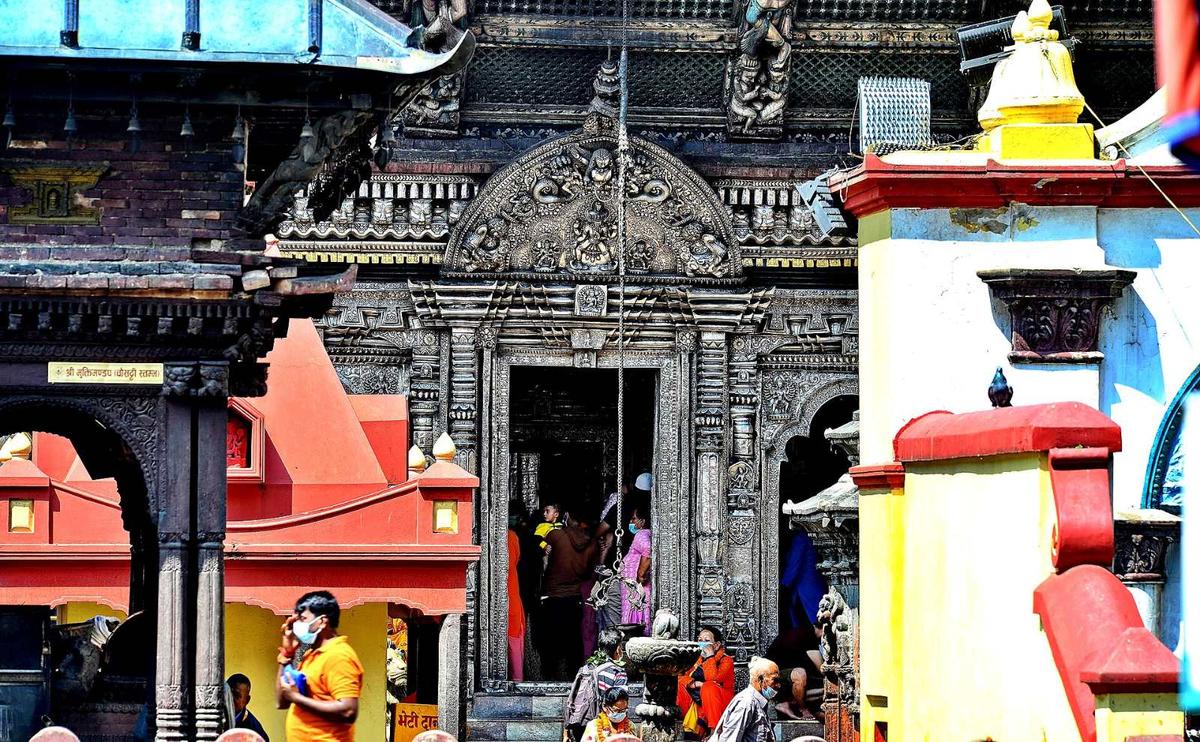
Pashupatinath. The Pashupati Area Development Trust, which runs the complex, says:
"Modest and traditional dress is required. Shorts, sleeveless tops, and western casual wear are not permitted on temple grounds. Shoes must be removed before entering any shrine."
Pashupati Area Development Trust, official website FAQ "What is the dress code for visiting the temple?", checked 19 November 2026
Non-Hindus are welcome in the complex, including the ghats and gardens, but the main sanctum is for Hindus only; anyone can watch the evening aarti from the eastern bank of the Bagmati. NTB adds that leather items, including shoes and belts, must be left outside the temple complex. Photography is prohibited inside the main sanctum and during ceremonies. See our Pashupatinath temple guide.
Boudhanath. With no official dress code online, the general temple guidance applies. Walk the kora clockwise, keeping the stupa on your right, and take your shoes off before a monastery shrine room. More in our Boudhanath Stupa guide.
Lumbini. The Lumbini Development Trust asks visitors to remove their shoes before entering the Mayadevi Temple premises and prefers modest clothing. Terai summers exceed 40 °C, NTB says, so wear light, loose long sleeves. See our Maya Devi Temple guide.
What do people wear in Kathmandu and Pokhara?
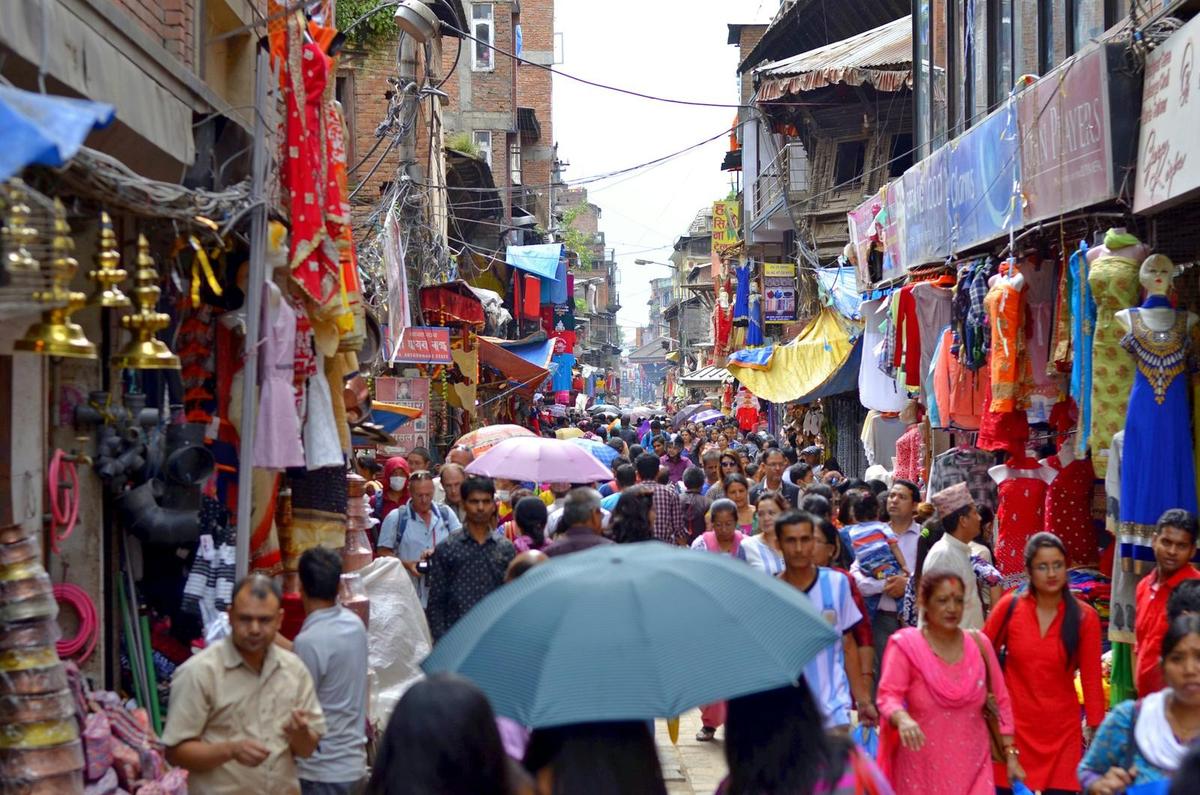
City clothing is casual and modest. In Kathmandu you will see saris, kurtas, lehengas and Punjabi kurtas alongside everyday Western clothes, so visitors from India in a sari or kurta fit right in. Rough Guides advises men to keep a shirt on in public and wear long trousers where possible.
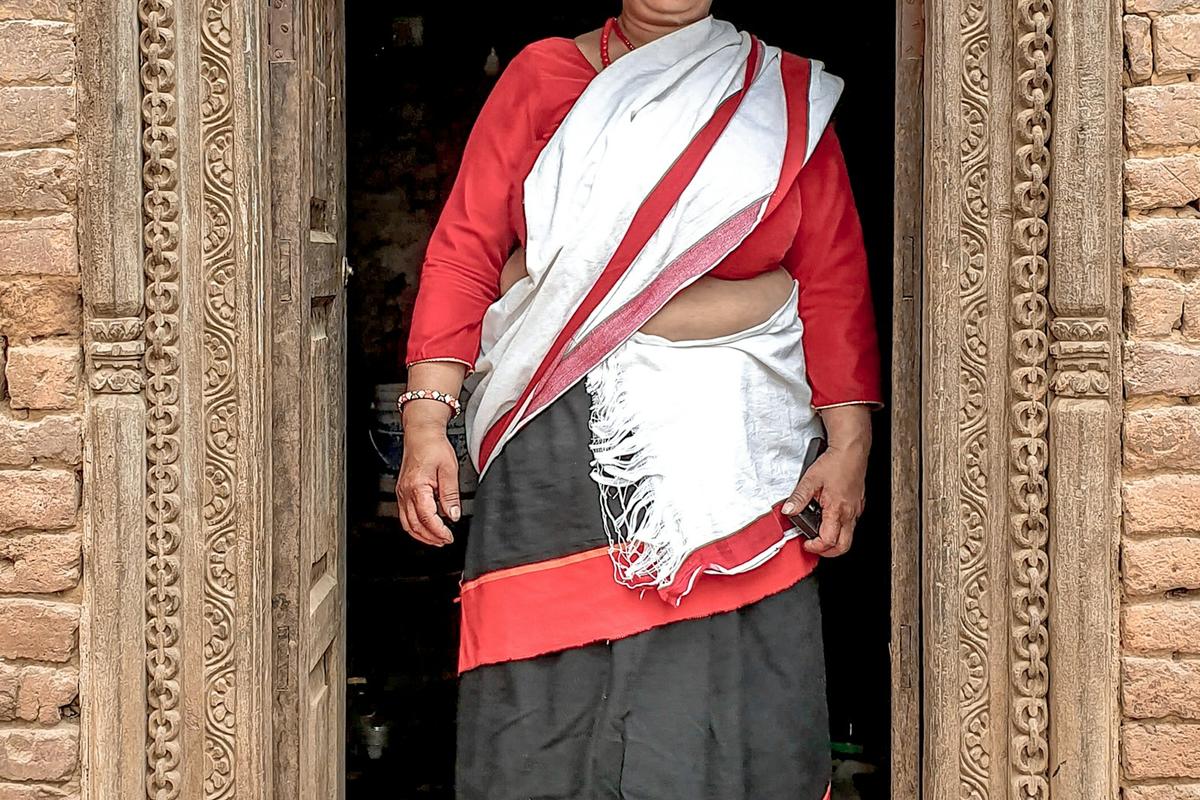
Nepal's national dress is the daura suruwal and topi (cap) for men and the gunyo choli for women. Newar women's traditional haku patasi is a black cotton sari with a red border.
For women, Canada's travel advice says to dress conservatively in public, and NTB notes that skimpy outfits are frowned upon, especially in rural areas. Nepal is safe for women travelling alone, and many solo women travel here; our guide on Nepal for solo female travellers covers the practical side.
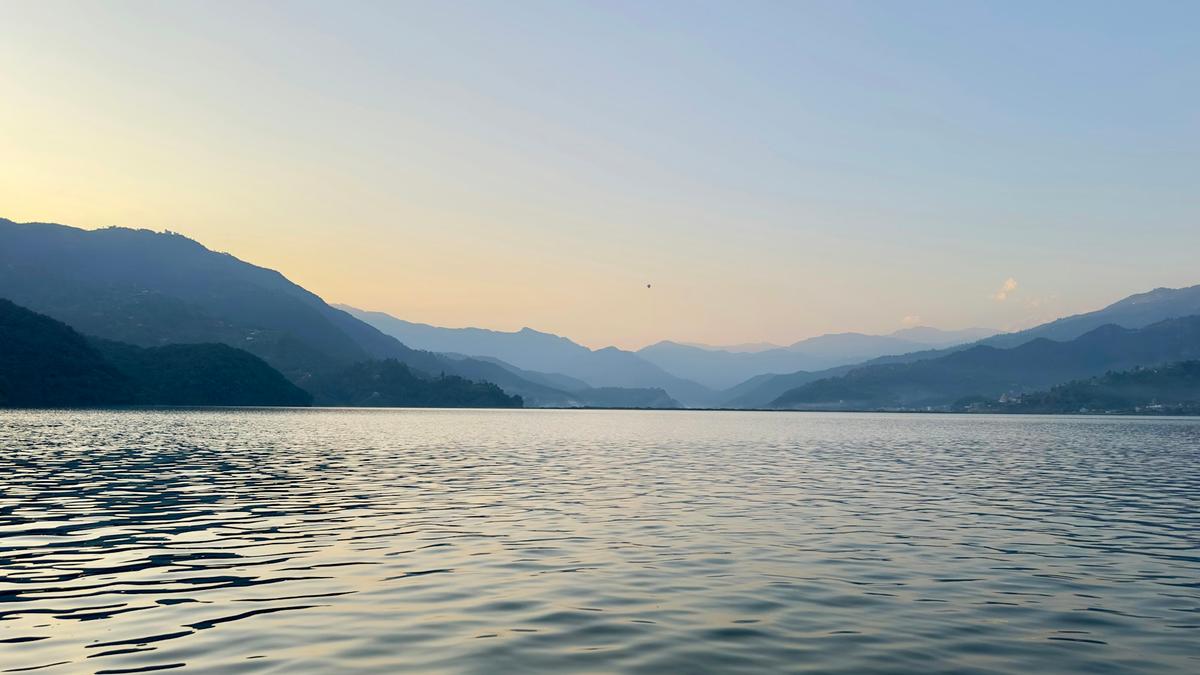
Pokhara is lower and wetter: its station, at 827 m, averages 3,866.5 mm of rain a year, 940.8 mm of it in July (1991-2020 normals), so pack a proper rain jacket.
What to wear in Nepal month by month
In Kathmandu, pack a warm jacket for evenings from November to February, light clothes and a rain layer from May to September, and a mix in spring and autumn. Figures are 1991-2020 normals from the airport station at 1,337 m.
| Month | Day / night (°C) | Rain (mm, days with 1 mm or more) | What to wear in Kathmandu |
|---|---|---|---|
| January | 19.2 / 2.8 | 15.2, 1.9 | Warm jacket, hat for early starts |
| February | 22.1 / 5.3 | 23.6, 2.6 | Jacket mornings and evenings |
| March | 26.0 / 8.8 | 38.0, 3.9 | Light layers, evening fleece |
| April | 28.6 / 12.3 | 63.1, 6.6 | Light clothes, rain shell |
| May | 29.2 / 16.1 | 128.9, 11.9 | Breathable clothes, rain jacket |
| June | 29.5 / 19.3 | 242.0, 16.9 | Quick-dry clothes, umbrella |
| July | 28.7 / 20.3 | 383.8, 23.1 | Rain gear, sandals with grip |
| August | 29.0 / 20.2 | 342.7, 22.7 | Rain gear, quick-dry clothes |
| September | 28.6 / 18.8 | 207.8, 14.6 | Light clothes, rain gear |
| October | 27.2 / 13.9 | 43.3, 3.8 | Light clothes, evening fleece |
| November | 23.6 / 8.4 | 6.4, 0.5 | Layers, warm jacket after dark |
| December | 20.2 / 4.2 | 7.8, 0.7 | Warm jacket, hat and gloves |
The lowest temperature recorded at the airport station since 1968 is -3.5 °C, in January, yet winter brings bright sun, so pack sunglasses too. See our guide to Nepal in December.
DHM gives the normal monsoon in eastern Nepal as 13 June to 2 October, but it varies: in 2026 it arrived on 19 June, six days behind its historical average, and had fully withdrawn by mid-October 2026. In the monsoon:
- Pack a light rain jacket and an umbrella.
- Choose quick-dry trousers over jeans.
- Keep a dry change of clothes in your day bag on road days: UK advice warns that flooding and landslides can make roads impassable.
Compare seasons in our best time to visit Nepal guide.
What to wear trekking in Nepal
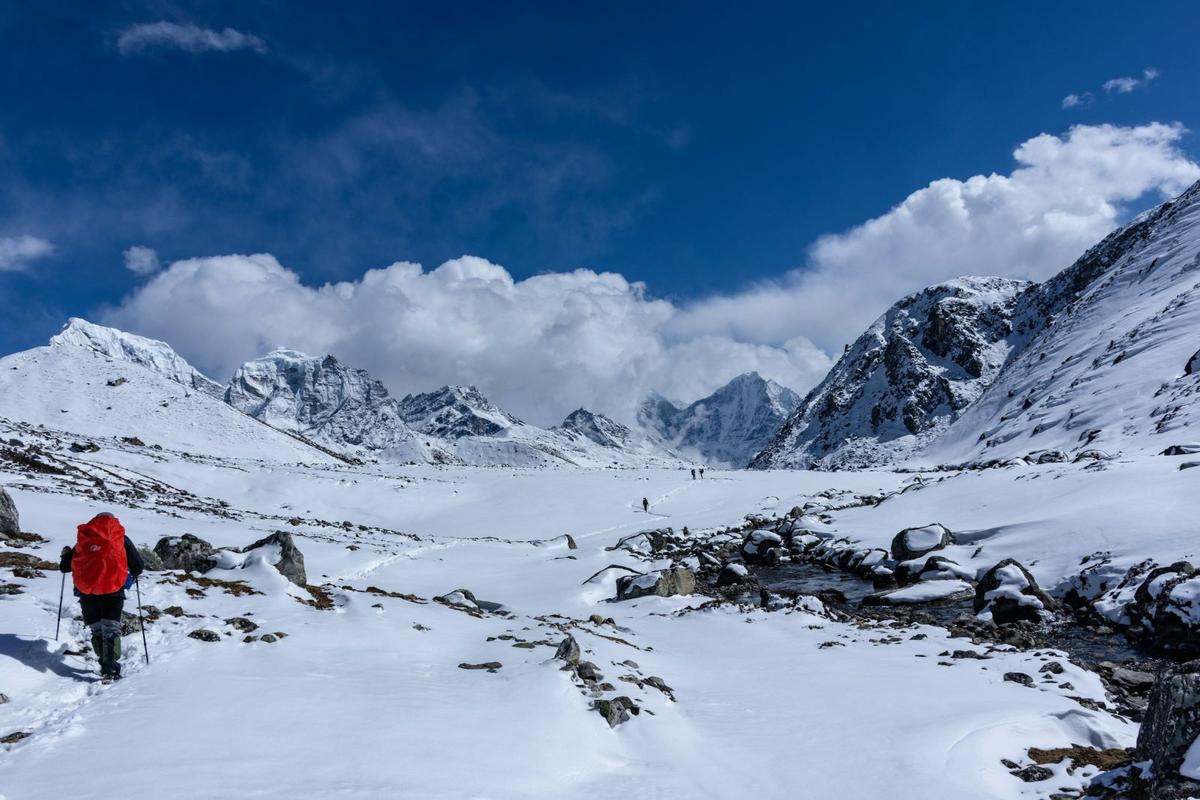
Trek in layers: a base layer that is not cotton, an insulating middle layer and a windproof, waterproof outer shell, the standard system the British Mountaineering Council describes. Add a down or synthetic jacket for evenings, a warm hat and gloves, and boots you have already walked in.
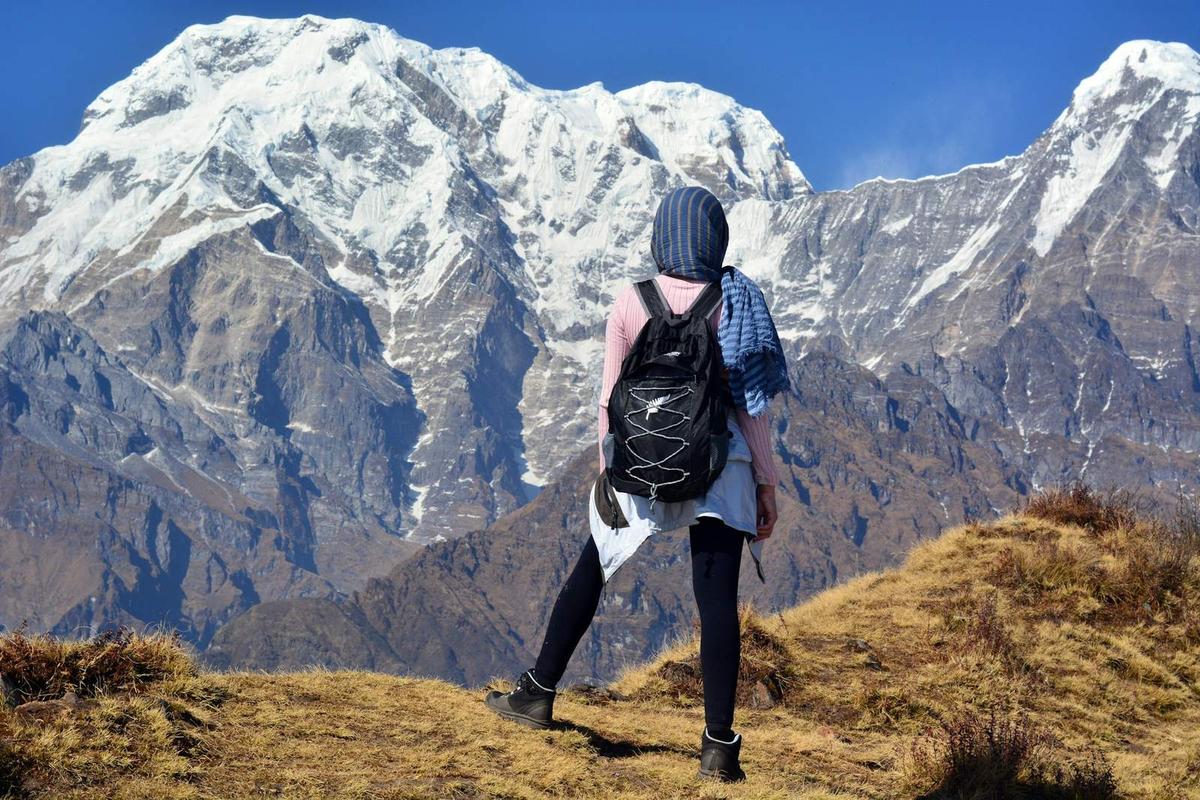
Cotton leaves you damp and then cold, and down loses its insulation once wet while synthetic still works, so in rain a synthetic layer is the safer backup.
Valley weather is not trek weather. Mean daily highs and lows (°C) on trekking routes:
| Station (altitude) | January | April | July | October | November |
|---|---|---|---|---|---|
| Jomsom, 2,741 m | 10.4 / -1.9 | 18.6 / 4.4 | 22.8 / 14.1 | 18.0 / 5.5 | 14.8 / 1.5 |
| Lukla, 2,786 m | 8.3 / -2.9 | 16.6 / 5.7 | 18.4 / 13.2 | 16.8 / 7.4 | 13.8 / 2.4 |
| Namche, 3,450 m | 6.9 / -8.5 | 12.8 / 0.8 | 15.8 / 7.8 | 12.5 / 1.2 | 9.1 / -3.8 |
Jomsom and Lukla are 1991-2020 normals; Namche's period is unstated. The Pyramid station at 5,035 m in the Khumbu has a mean annual temperature of -2.5 °C.
Rain differs by route: Jomsom, in the rain shadow, gets 292.4 mm a year, while Lukla gets 641.8 mm in August alone. Rough Guides, in its advice for men, says shorts are fine on well-used trekking trails. Even so, pack long trousers or a long skirt for walking through villages and visiting monasteries.
What to pack for the trail:
- Base layers that are not cotton.
- A fleece as the middle layer.
- A down or synthetic jacket.
- A waterproof jacket and over-trousers.
- Broken-in boots and good trekking socks.
Our Nepal trekking packing list has the full kit; for cold-season routes see winter treks in Nepal.
Altitude illness is a risk for anyone sleeping at about 2,450 m (8,000 ft) or higher without acclimatising, and the US CDC notes that high places also bring cold and low humidity. What to do:
- Go up gradually at your licensed guide's pace.
- Tell your guide early about a headache or nausea, and do not go higher with symptoms.
- Enjoy hot garlic soup in the teahouse as a comforting local habit, not a proven cure.
- Ask your doctor about preventive medicine before you travel.
A licensed guide walks with you on every trek we run.
How strong is the sun in the mountains?
Stronger than it feels. The World Health Organization says UV levels increase by approximately 10 per cent with every 1,000 m of altitude, and fresh snow almost doubles a person's UV exposure. You can burn on a cold, bright day while wearing a down jacket.
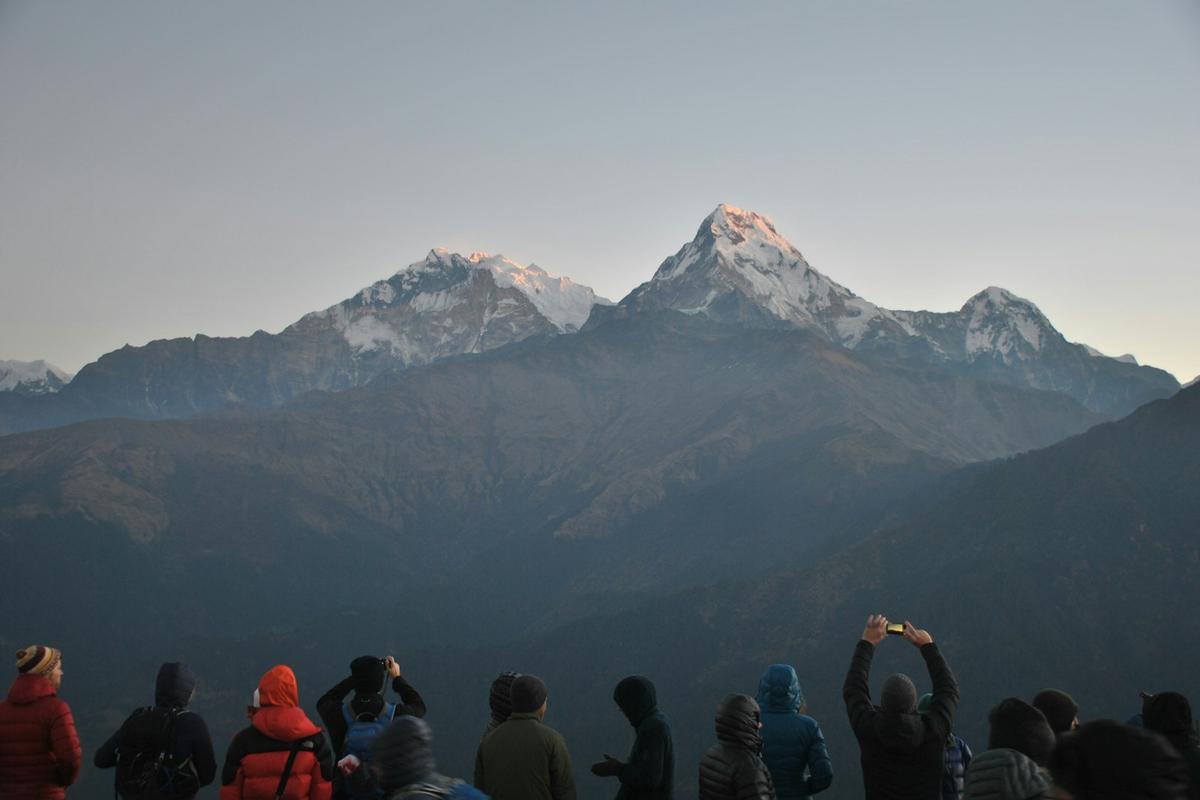
UK advice says SPF20 or higher for trekkers; we follow the US CDC's higher bar:
- Use a broad-spectrum sunscreen of SPF 30 or higher and reapply through the day.
- Wear lightweight long sleeves; CDC suggests a UPF above 30.
- Choose a hat with a brim of at least 3 inches (about 75 mm) that shades face, neck and ears; a baseball cap does not cover ears or neck.
- Wear UV 400 sunglasses, especially on snow.
What shoes do you need in Nepal?
Bring a pair of slip-on shoes for cities and temples and a pair of broken-in trekking boots for trails. Shoes come off before shrines and homes and at the Mayadevi Temple, so laces become a chore on temple days, and new boots on a trek invite blisters.
On a Pashupatinath day, make the slip-ons non-leather. In the monsoon, sandals with grip beat trainers. Bring your own boots rather than renting, plus light sandals for teahouse evenings.
Should you buy or rent gear in Thamel?
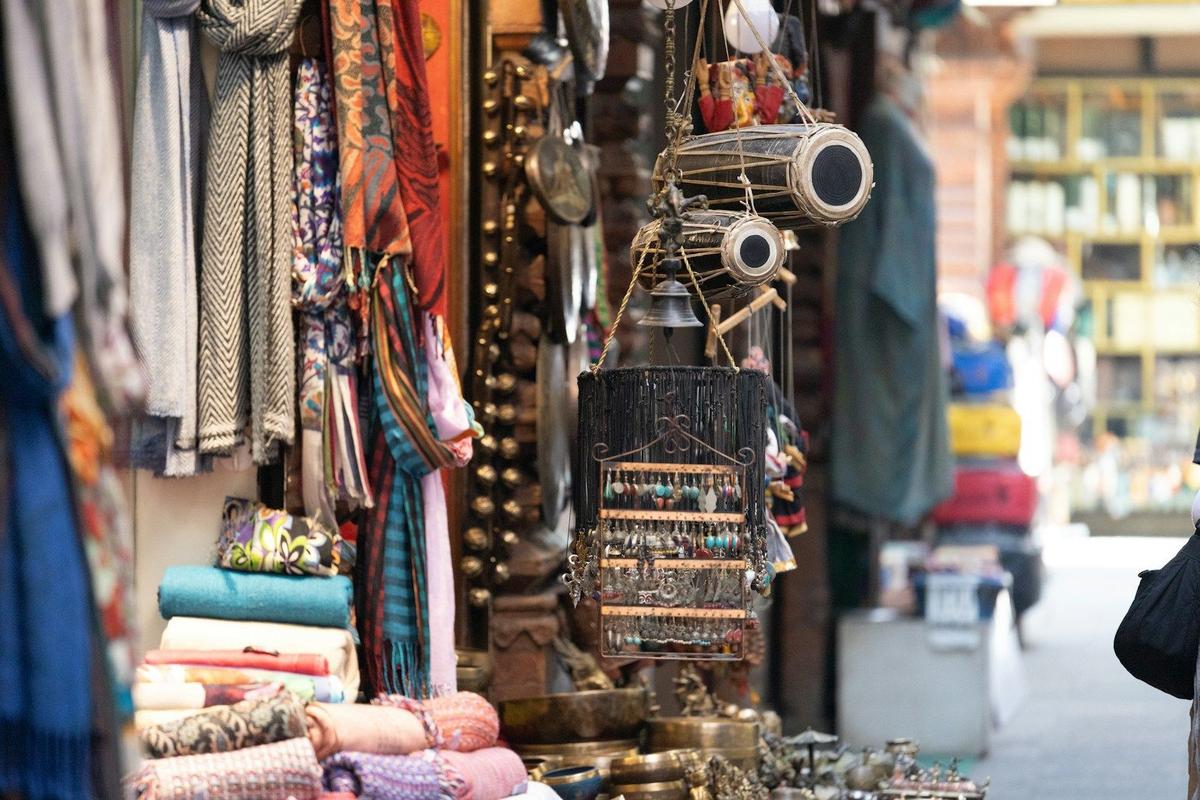
Rent the bulky things, bring the personal ones. Many Thamel shops rent and sell trekking gear; down jackets, sleeping bags and backpacks are commonly rented, but boots, socks and base layers should come from home. Buy with care: counterfeit outdoor clothing is common in Thamel, New Road and Asan.
If you want the genuine product, buy from an authorised retailer. As Prasun Sangroula wrote in OnlineKhabar English:
"Buying from authorised retailers and being sceptical of pricing well below market rate remain the most reliable self-protection tools."
Prasun Sangroula, OnlineKhabar English, "The counterfeit paradox amidst trademark infringement and enforcement challenges", 4 April 2026
How to rent without trouble:
- Rent the afternoon you land, not the morning you leave.
- Check every zip and seam in the shop.
- Try boots on with your trekking socks.
- Ask what happens if an item is damaged.
More in our guide to things to do in Thamel.
Frequently asked questions
Can women wear shorts in Nepal?
In towns and at temples, it is better not to. UK and Canadian advice says no shorts or sleeveless tops at temples and religious sites, and NTB notes that skimpy outfits are frowned upon, especially in rural areas. On the trail, Rough Guides says shorts are fine on well-used trekking routes, though that line is written for men; long trousers or leggings are the easier choice through villages.
Can I wear jeans or leggings in Nepal?
Yes, for city days. The official advice we checked does not mention jeans or leggings; the principle is modesty, so wear leggings under a long top or a kurta. Leave jeans off the trek: cotton leaves you damp and then cold.
What to wear in Nepal in November?
Layers. Kathmandu days average 23.6 °C and nights 8.4 °C, with very little rain: a T-shirt by day, a warm jacket after dark. Treks are far colder: Namche averages 9.1 °C by day and -3.8 °C at night, so bring a down jacket, hat and gloves.
What to wear in Nepal in December?
Warm layers. Kathmandu averages 20.2 °C by day and 4.2 °C at night in December, and the airport station's December record low is -1.9 °C. Bring a warm jacket, a fleece, a hat and gloves. In the mountains Lukla averages -0.5 °C at night, and the sun is still bright, so pack sunglasses too.
What is the Pashupatinath Temple dress code?
Modest and traditional dress. The temple trust says shorts, sleeveless tops and western casual wear are not permitted on temple grounds, and shoes come off before any shrine. Leather items must be left outside the complex, and non-Hindus may not enter the main sanctum.
Plan your Nepal trip
Our Nepal travel guide covers the rest of your planning. For temples, the Kathmandu Valley UNESCO sites day tour puts this dress advice to use. To test your layers, the Ghorepani Poon Hill trek has a cold dawn at 3,210 m on a trail, much of it stone steps. Every route is on our Nepal treks page. Not sure what to pack for your dates? Message us on WhatsApp or use the enquiry form on any trip page, and we will tell you what to bring and what you can rent here.