
by gomayu
Search Tours or Places

Best Trekking Agencies in Nepal: How to Choose One

14 min read Posted 11 Nov 2026Updated 08 Nov 2026
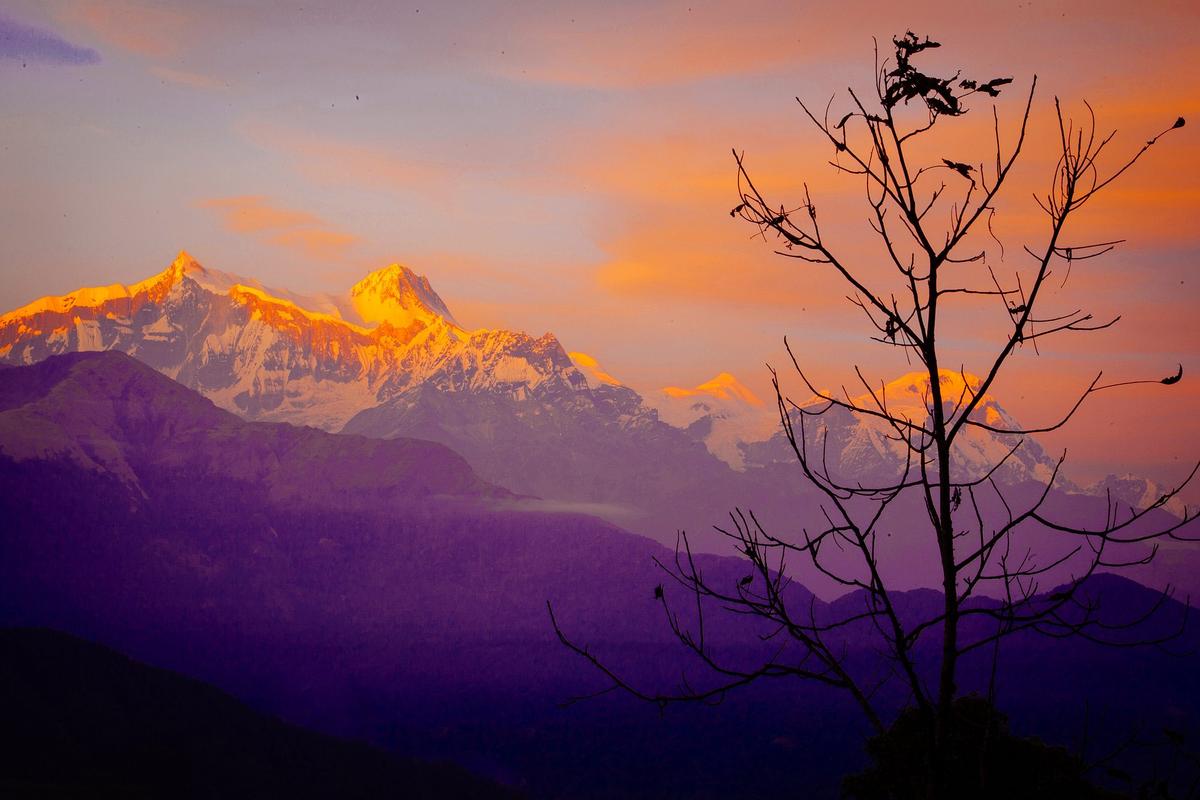
Sunrise over the Annapurna range seen from Poon Hill in Nepal

Walk down any lane in Thamel and the trek boards start at head height: Everest, Annapurna, Langtang, Manaslu, painted, printed or chalked, one office after the next. Most of them say licensed, experienced and safe. From the street you cannot tell which of those words are true.

By Uncover Nepal Team · Checked by our Kathmandu travel team · Last checked 9 November 2026

The best trekking agencies in Nepal are the ones that can prove what they claim: a government licence, a listing you can check, insured staff, every inclusion in writing and a straight answer about rescues. We do not rank companies here. This is the checklist we would hand a friend, and it sits inside our Nepal travel guide.

Key facts

Agency and guide licences
Required by the Tourism Act, 2035 (1978), sections 3(1) and 39(1) (Tourism Act, FAOLEX (9 Nov 2026))
Who issues licences
Provincial governments since 27 August 2019, as reported (The Himalayan Times, 28 Aug 2019 (9 Nov 2026))
TAAN directory
Public A to Z list, more than 2,300 members on 9 November 2026; no licence number shown (taan.org.np (9 Nov 2026))
Guide rule
NTB rule in force from 1 April 2023 (NTB lists 31 March 2023); Khumbu municipality says a guide is not compulsory (The Kathmandu Post, 3 Apr 2023 (9 Nov 2026))
TAAN standard daily wages, from 17 July 2023
Guide NPR 3,100; assistant guide 2,800; porter guide 2,500; porter 2,400 (The Himalayan Times, 21 Jun 2023 (9 Nov 2026))
Tourist Police
1144, toll-free (Department of Tourism (9 Nov 2026))

In this guide

  • How do you find the best trekking agencies in Nepal?
  • Is the agency licensed, and how do you check?
  • What should the agency put in writing before you pay?
  • Is your guide licensed, and do you need one?
  • How does the agency look after its guides and porters?
  • What happens if you need a helicopter rescue?
  • What are the red flags when choosing a trekking company?
  • Which trek suits a first trek and your number of days?
  • Where can you complain about a trekking agency?
  • Frequently asked questions
  • Plan your trek

How do you find the best trekking agencies in Nepal?

You find a good one by asking every agency on your shortlist the same questions and judging the answers, not the website. A good agency answers in writing, gives numbers you can check and is plain about what it does not include. The table below is the list we would use ourselves.

We are a travel company ourselves, so we will not rank anyone. These questions work for any company, including us.

What to ask Why it matters A good answer
Your licence and company registration numbers? The Tourism Act requires a licence Both numbers, and a copy if you ask
Are you in the TAAN directory? It is public, so you can check Yes, and the details match the listing
Who is my guide, and is the guide licensed? Guides need their own licence A name before you pay, and the licence shown
Are guides and porters insured? The agency is responsible for porters' insurance, the Kathmandu Post reports Yes, with the policy shown
How much does a porter carry, and with what kit? No government load limit exists A limit near KEEP's 25 kg, and warm kit
What is included, in writing? Unwritten items become extras on the trail Each permit, meal, night and transfer named
Who decides on a helicopter evacuation? Nepal has a fake rescue problem Your insurer approves; you get an itemised bill

Is the agency licensed, and how do you check?

Every trekking agency needs a government licence under Nepal's Tourism Act. Since 2019, The Himalayan Times reported, provincial governments rather than the Department of Tourism in Kathmandu have issued and renewed those licences. We could not find a public government list online, so ask the agency for its licence and company registration numbers, and a copy of the licence.

"A person, who is interested to operate the Travel and Trekking Agency shall have to obtain a license pursuant to this Act."

Tourism Act, 2035 (1978), section 3(1), English text on FAOLEX

The Act allows the government to close an unlicensed agency and fine it. Licences are renewed periodically, so ask when the agency's was last renewed. The Himalayan Times reported the handover of agency and guide licences to the provinces on 27 August 2019.

What a TAAN listing tells you, and what it does not

TAAN, the Trekking Agencies' Association of Nepal, keeps a public A to Z member directory, with more than 2,300 members listed on 9 November 2026. Each listing shows the name, registration and VAT numbers, address and contacts. It does not show a tourism licence number. Membership is a good sign, but TAAN is an association, not the licensing authority. Use it as a cross-check: the details should match what the agency sends you.

Booking in Kathmandu or from home

The checks are the same either way. Booking ahead gives you time to compare written answers. If you book after you land, leave time for permits, and do not let anyone rush you into paying that evening.
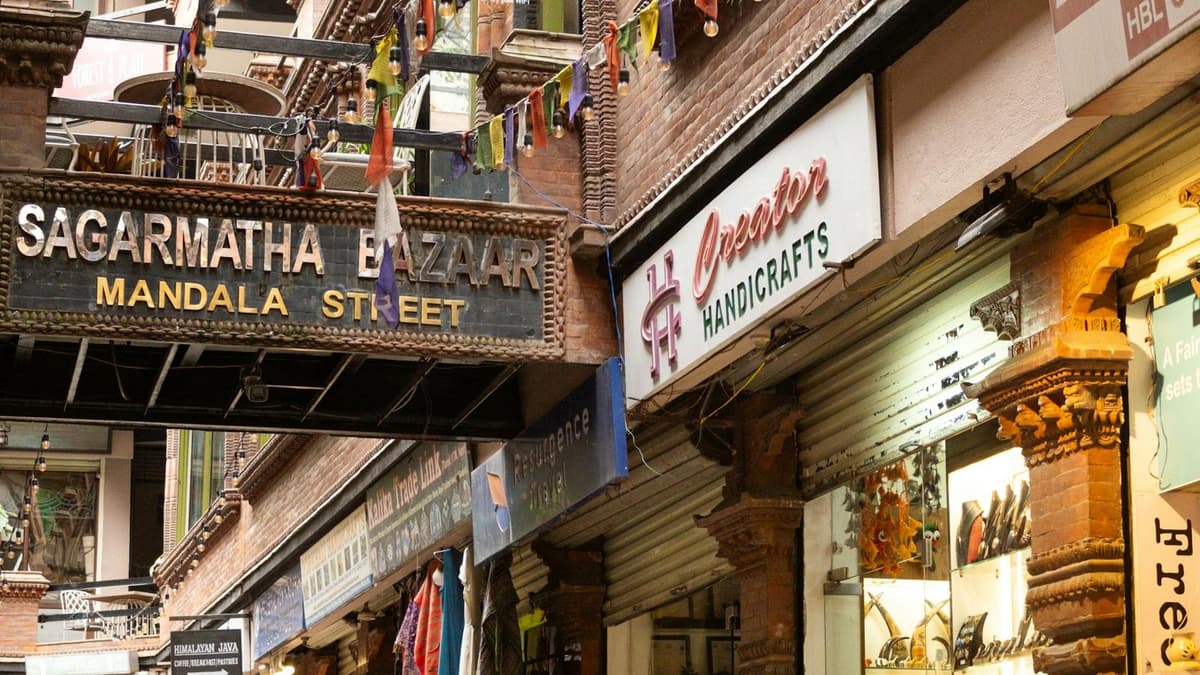
Mandala Street near Sagarmatha Bazaar in Thamel, Kathmandu
Mandala Street in Thamel, Kathmandu.

What should the agency put in writing before you pay?

Before you pay anything, get a written list of what the price covers and what it does not: each permit by name, the guide and any porter, which meals, where you sleep, transport to and from the trailhead, any domestic flight, and the cancellation terms. If it is not written down, assume it is not included.
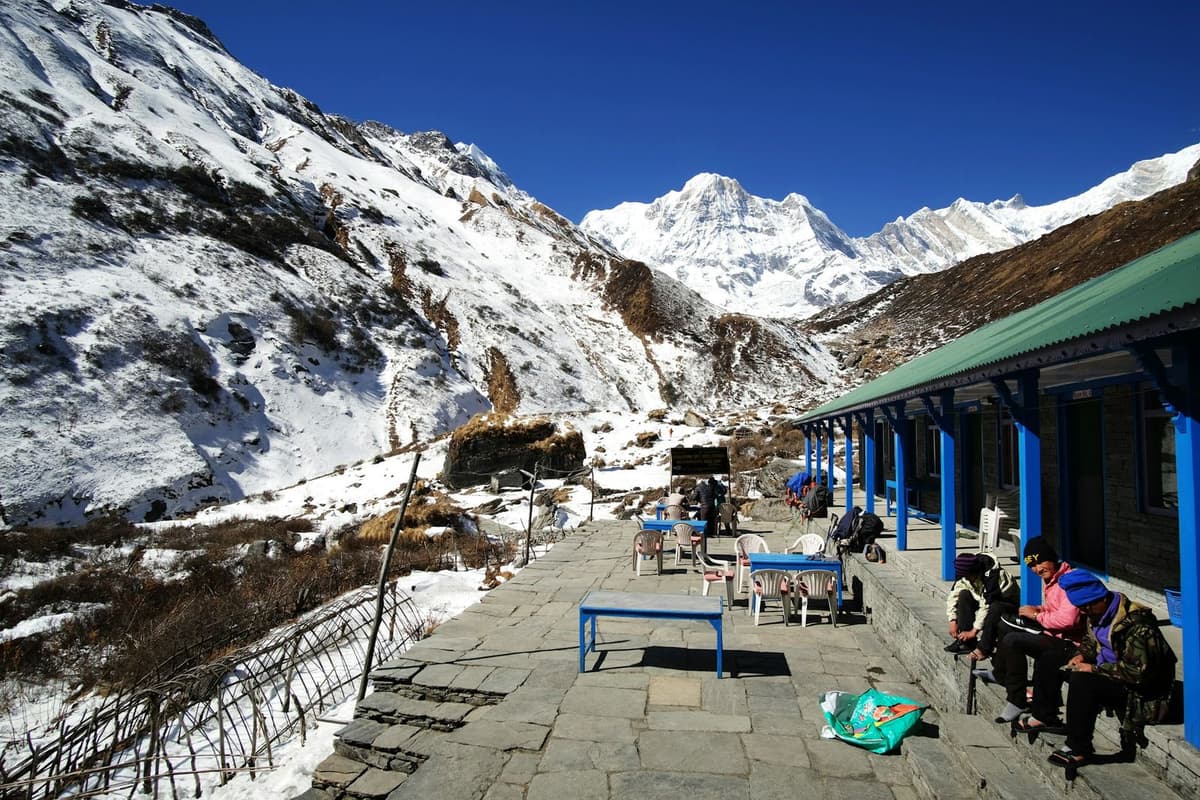
Teahouse terrace at Annapurna Base Camp in the Annapurna region of Nepal
A teahouse terrace at Annapurna Base Camp. Ask which nights, rooms and meals your quote covers.
  1. Permits, by name. On Everest treks, the Sagarmatha National Park permit and the Khumbu Pasang Lhamu Rural Municipality Trek-Card; in the Annapurna region, the ACAP entry permit.
  2. Staff. A licensed guide, and whether a porter is included, shared or optional.
  3. Meals and nights. Which meals, whether hot drinks are extra, and every teahouse and hotel night.
  4. Transport and delays. Lukla flights are weather-dependent, and in peak seasons many leave from Ramechhap (Manthali), usually about 4 to 5 hours by road from Kathmandu. Ask who pays for extra nights if flights do not go.
  5. Insurance. Travel insurance is your own arrangement; ask what cover the agency expects, and look for your altitude and helicopter evacuation.
  6. Cancellation and refunds. In writing, before any deposit.

Is your guide licensed, and do you need one?

Guides in Nepal need their own licence under the Tourism Act, separate from the agency's. Ask for your guide's name and to see the licence before you set off. Whether you need a guide at all depends on where you trek, because two official positions exist and they do not agree about Everest.

NATHM, the tourism academy in Kathmandu, advertised a five-week trekking guide course in its 2026 admissions notice. Agree in writing that any change of guide will be to another licensed guide.

The guide rule, both positions

The Nepal Tourism Board rule has been in force from 1 April 2023 (NTB lists 31 March 2023): foreign trekkers in national parks and conservation areas should trek with a licensed guide arranged by a registered agency. The Khumbu Pasang Lhamu Rural Municipality, which covers the Everest region, said in a press statement, as The Kathmandu Post reported: "It is not mandatory to hire a guide for trekking in the Everest region." It issues its own Trek-Card. Our guide to the solo trekking rule sets out both positions. On our side the question does not come up: a licensed guide walks with you on every trek we run.

How does the agency look after its guides and porters?

A good agency insures its staff, pays the standard wages, keeps porter loads sensible and makes sure porters have warm kit for the high days. You cannot see any of that from a website, so ask, and ask to see the insurance policy rather than taking a yes on trust.

Insurance. In December 2025 the Kathmandu Post reported that many porters "may not know that the travel agency is responsible for providing their insurance". KEEP, the Kathmandu Environmental Education Project, advises checking whether a company has insurance. Provincial rules also deal with staff insurance.

Wages. TAAN set standard daily wages from 17 July 2023, after talks with trade unions, as The Himalayan Times reported: guide NPR 3,100, assistant guide NPR 2,800, porter guide NPR 2,500 and porter NPR 2,400.

Loads and kit. "KEEP recommends that porters not carry more than 25 kilos," the Kathmandu Post reported, counting trekkers' luggage and the porter's own gear, with lighter loads above 5,000 m. No government rule limits loads and no checkpoint weighs bags, so ask the agency its limit, and whether porters will be properly equipped. KEEP's clothing centre lends porters boots, warm jackets, gloves, hats and socks for a deposit. Our guide to trekking guides and porters explains each role.

What happens if you need a helicopter rescue?

A real rescue is a medical decision, approved by your insurer and billed per flight with an itemised invoice. Nepal has had a long-running fake rescue problem, so before you book, ask the agency who decides on an evacuation, who calls your insurer and how bills are issued.
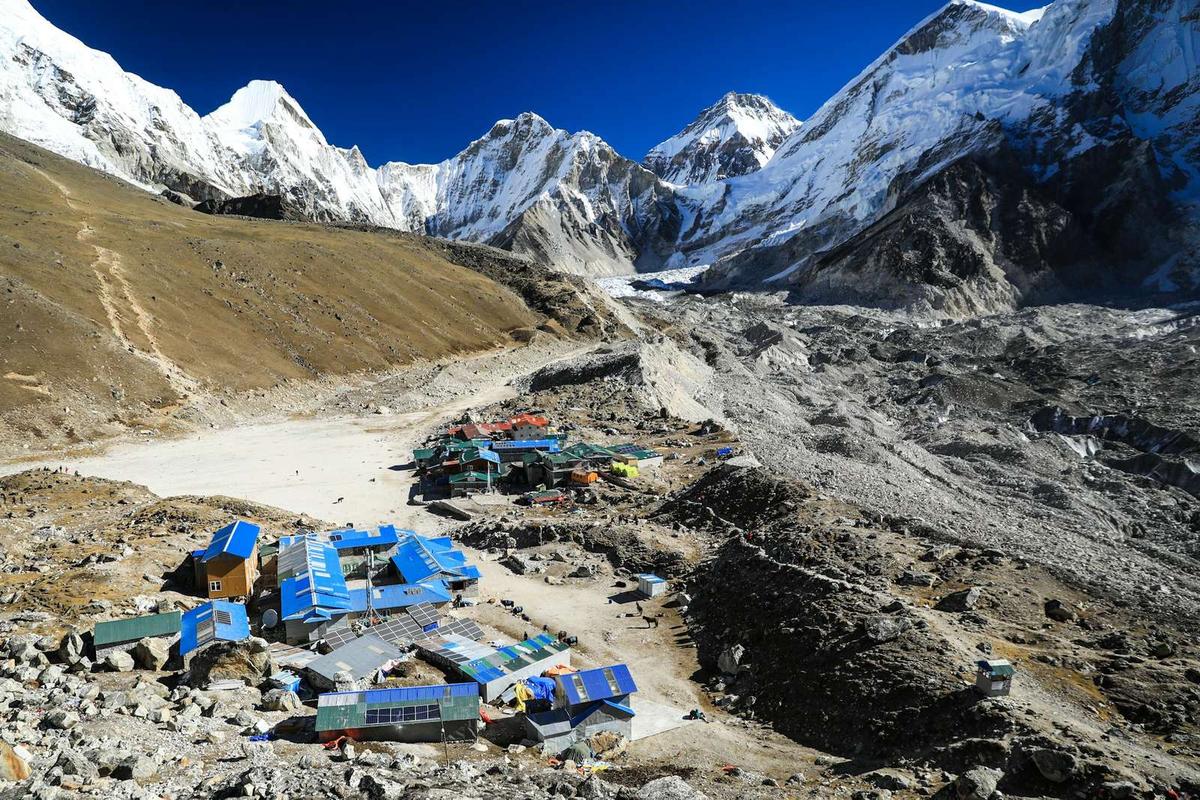
Gorak Shep on the Everest Base Camp trekking route
Gorak Shep, on the route to Everest Base Camp.

What the fake rescue cases involved

A government fact-finding report submitted on 30 July 2018 said operators had made multiple claims for one helicopter flight and pressured trekkers into airlifts for minor illnesses, the Kathmandu Post reported.

In January 2026 the Central Investigation Bureau (CIB) of Nepal Police arrested six directors and senior managers of rescue and travel companies over alleged fraudulent insurance claims of more than USD 19.65 million, The Himalayan Times reported. In March 2026 a case was filed against 32 people at Kathmandu District Court. Police allege collusion among three helicopter companies, three hospitals, more than a dozen trekking companies, insurance agents and guides, the Kathmandu Post reported. The case is before the court, and everything in it is alleged until the court decides.

"Documents show that even patients transported on the same flight were issued separate bills to falsely present multiple rescues."

A Central Investigation Bureau officer, quoted in The Kathmandu Post, 23 March 2026

How to protect yourself

  • Carry insurance that covers your altitude and helicopter evacuation. Helicopter evacuation usually costs GBP 1,000 to 2,000 or more per flying hour, according to the UK Foreign Office (FCDO).
  • For mild altitude symptoms, rest, and descend if they get worse.
  • Call your insurer yourself, or be on the call, before any helicopter is ordered, and ask for an itemised bill.

Our travel insurance guide for Nepal treks explains what cover to look for.

What are the red flags when choosing a trekking company?

The clearest red flags are a price far below everyone else's, vague inclusions, no licence or registration number, an unnamed guide, no answer about staff insurance, and pressure of any kind, whether to pay today or to take a helicopter for a minor symptom. One flag means ask more. Two or three mean walk away.

Red flag What it can mean What to do
A price far below other quotes Staff pay, insurance, meals or a permit is missing Ask for an itemised list
No licence or registration number The agency may be unlicensed Do not pay until you have both
"We are in TAAN, so we are licensed" An association mixed up with a licence Ask for the licence too
A discount that ends tonight Pressure to stop you comparing Sleep on it
Helicopter pushed for a mild symptom The pattern in the fake rescue cases Rest or descend, and call your insurer

Which trek suits a first trek and your number of days?

Pick by altitude first and days second. Poon Hill tops out at 3,210 m (10,531 ft), Annapurna Base Camp at 4,130 m (13,550 ft) and Everest Base Camp at 5,364 m (17,598 ft). The higher you go, the more nights you need to climb slowly. With few days, choose a lower trek rather than rushing a high one.
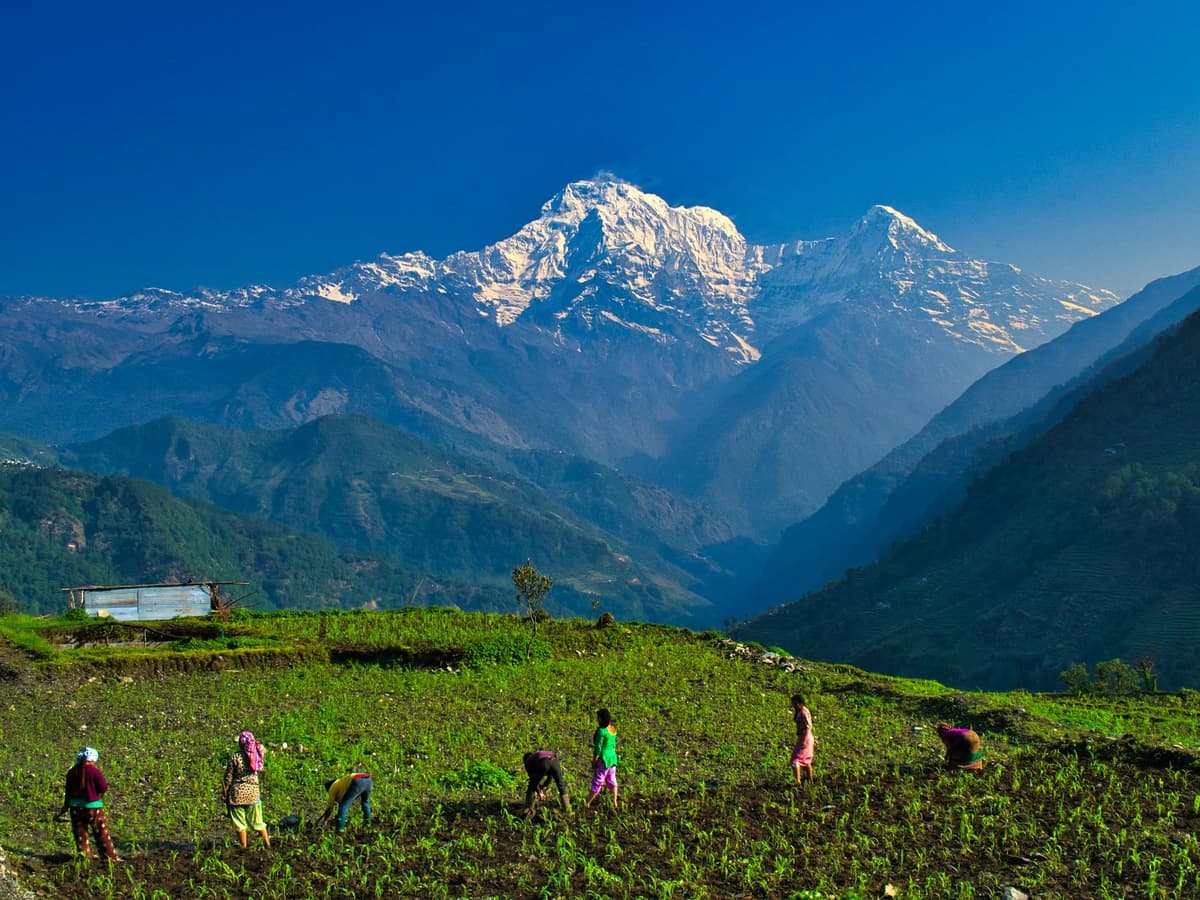
Farmers at work in the Annapurna foothills of Nepal
Farmers at work in the Annapurna foothills.

Altitude sickness risk starts at about 2,450 m (8,038 ft), according to the US CDC. Above 3,000 m (9,843 ft), raise your sleeping height by about 500 m a night at most and take a rest day every three to four days. Go slowly, drink water, skip alcohol early on, never go higher with symptoms and descend if they get worse. Ask your doctor about medicine. Garlic soup and hot soups are a comforting local tradition, not a proven cure.

Travel days count too. Kathmandu to Pokhara is most of a day by road, often six to nine hours, or about 30 minutes by air, and Everest treks start with a weather-dependent Lukla flight, so keep spare days. For a short first trek, look at the Ghorepani Poon Hill trek.

Where can you complain about a trekking agency?

Call the Tourist Police on 1144, the toll-free hotline. Their central office is inside the Nepal Tourism Board premises at Bhrikutimandap in Kathmandu, with units in Thamel, at the airport, in Pokhara and in Lukla. Their role includes registering complaints from tourists and carrying out a first investigation.

The Department of Tourism's Tourist Police page also gives the email policetourist@nepalpolice.gov.np. Keep your quote, receipts and messages to back up a complaint.

Frequently asked questions

How do I choose a licensed trekking company in Nepal, and what should I check?

Ask for the agency's licence and company registration numbers and a copy of the licence, then check its details against the TAAN member directory. Ask whether your guide is licensed, how staff are insured and what is included, in writing. Choose the clearest answers, not the cheapest price.

Is TAAN membership the same as a government licence?

No. TAAN is the trekking agencies' association, not the licensing authority. Its public directory lists registration and VAT numbers, addresses and contacts, but no tourism licence number. Membership is a good sign; ask for the licence as well. Since 2019 provincial governments have issued and renewed agency licences.

Do I need a trekking agency and guide to trek in Nepal?

Under the NTB rule in force from 1 April 2023 (NTB lists 31 March 2023), foreign trekkers in national parks and conservation areas should trek with a licensed guide arranged by a registered agency. The Khumbu Pasang Lhamu Rural Municipality says a guide is not compulsory in the Everest region. A licensed guide walks with you on every trek we run.

Which trek should I choose for my first time and my number of days?

Choose by altitude, then fit the days. Poon Hill reaches 3,210 m, Annapurna Base Camp 4,130 m and Everest Base Camp 5,364 m. Above 3,000 m, sleeping height should rise by about 500 m a night at most, with a rest day every three to four days, so higher treks need more days.

Is the water safe on treks, and how do I purify it?

Treat tap and stream water first. Fit for Travel (Public Health Scotland) says a rolling boil for one minute kills most germs, and around three minutes is needed above 2,000 m. Tablets and filters do not remove every germ, so combine a chemical treatment with boiling or filtering. Sealed bottled water from a known maker is safest. See our Nepal trekking gear list.

How do I avoid a helicopter rescue scam in Nepal?

Carry insurance that covers helicopter evacuation and call the insurer yourself before any flight is ordered. For mild altitude symptoms, rest or descend first if it is safe. Refuse if anyone suggests you exaggerate symptoms, and ask for an itemised bill.

Plan your trek

We are one of the agencies you might be comparing, so hold us to this list too. Ask us for our licence and registration numbers, about staff insurance and what is in writing, and check our answers the same way. If they are not clear, choose someone else.

Browse our treks, or start with the Ghorepani Poon Hill trek if this is your first time at altitude. Send us your dates on WhatsApp or through the enquiry form, and we will tell you honestly which trek fits your days. For everything else, see our Nepal travel guide.

Your Nepal visa and international flights are your own arrangements; official visa information is on the Nepal Tourism Board tourist-visa page.
Tags
Trekking agencyTrek planningLicensed guidePorter welfareHelicopter rescueFirst trek
Share
U
Uncover Nepal Team
Writer at Uncover Nepal
More in Plan your tripSee all Plan your trip

Best Trekking Agencies in Nepal: How to Choose One

14 min read Posted 11 Nov 2026Updated 08 Nov 2026
Sunrise over the Annapurna range seen from Poon Hill in Nepal

Walk down any lane in Thamel and the trek boards start at head height: Everest, Annapurna, Langtang, Manaslu, painted, printed or chalked, one office after the next. Most of them say licensed, experienced and safe. From the street you cannot tell which of those words are true.

By Uncover Nepal Team · Checked by our Kathmandu travel team · Last checked 9 November 2026

The best trekking agencies in Nepal are the ones that can prove what they claim: a government licence, a listing you can check, insured staff, every inclusion in writing and a straight answer about rescues. We do not rank companies here. This is the checklist we would hand a friend, and it sits inside our Nepal travel guide.

Key facts

Agency and guide licences
Required by the Tourism Act, 2035 (1978), sections 3(1) and 39(1) (Tourism Act, FAOLEX (9 Nov 2026))
Who issues licences
Provincial governments since 27 August 2019, as reported (The Himalayan Times, 28 Aug 2019 (9 Nov 2026))
TAAN directory
Public A to Z list, more than 2,300 members on 9 November 2026; no licence number shown (taan.org.np (9 Nov 2026))
Guide rule
NTB rule in force from 1 April 2023 (NTB lists 31 March 2023); Khumbu municipality says a guide is not compulsory (The Kathmandu Post, 3 Apr 2023 (9 Nov 2026))
TAAN standard daily wages, from 17 July 2023
Guide NPR 3,100; assistant guide 2,800; porter guide 2,500; porter 2,400 (The Himalayan Times, 21 Jun 2023 (9 Nov 2026))
Tourist Police
1144, toll-free (Department of Tourism (9 Nov 2026))

In this guide

  • How do you find the best trekking agencies in Nepal?
  • Is the agency licensed, and how do you check?
  • What should the agency put in writing before you pay?
  • Is your guide licensed, and do you need one?
  • How does the agency look after its guides and porters?
  • What happens if you need a helicopter rescue?
  • What are the red flags when choosing a trekking company?
  • Which trek suits a first trek and your number of days?
  • Where can you complain about a trekking agency?
  • Frequently asked questions
  • Plan your trek

How do you find the best trekking agencies in Nepal?

You find a good one by asking every agency on your shortlist the same questions and judging the answers, not the website. A good agency answers in writing, gives numbers you can check and is plain about what it does not include. The table below is the list we would use ourselves.

We are a travel company ourselves, so we will not rank anyone. These questions work for any company, including us.

What to ask Why it matters A good answer
Your licence and company registration numbers? The Tourism Act requires a licence Both numbers, and a copy if you ask
Are you in the TAAN directory? It is public, so you can check Yes, and the details match the listing
Who is my guide, and is the guide licensed? Guides need their own licence A name before you pay, and the licence shown
Are guides and porters insured? The agency is responsible for porters' insurance, the Kathmandu Post reports Yes, with the policy shown
How much does a porter carry, and with what kit? No government load limit exists A limit near KEEP's 25 kg, and warm kit
What is included, in writing? Unwritten items become extras on the trail Each permit, meal, night and transfer named
Who decides on a helicopter evacuation? Nepal has a fake rescue problem Your insurer approves; you get an itemised bill

Is the agency licensed, and how do you check?

Every trekking agency needs a government licence under Nepal's Tourism Act. Since 2019, The Himalayan Times reported, provincial governments rather than the Department of Tourism in Kathmandu have issued and renewed those licences. We could not find a public government list online, so ask the agency for its licence and company registration numbers, and a copy of the licence.

"A person, who is interested to operate the Travel and Trekking Agency shall have to obtain a license pursuant to this Act."

Tourism Act, 2035 (1978), section 3(1), English text on FAOLEX

The Act allows the government to close an unlicensed agency and fine it. Licences are renewed periodically, so ask when the agency's was last renewed. The Himalayan Times reported the handover of agency and guide licences to the provinces on 27 August 2019.

What a TAAN listing tells you, and what it does not

TAAN, the Trekking Agencies' Association of Nepal, keeps a public A to Z member directory, with more than 2,300 members listed on 9 November 2026. Each listing shows the name, registration and VAT numbers, address and contacts. It does not show a tourism licence number. Membership is a good sign, but TAAN is an association, not the licensing authority. Use it as a cross-check: the details should match what the agency sends you.

Booking in Kathmandu or from home

The checks are the same either way. Booking ahead gives you time to compare written answers. If you book after you land, leave time for permits, and do not let anyone rush you into paying that evening.

Mandala Street near Sagarmatha Bazaar in Thamel, Kathmandu
Mandala Street in Thamel, Kathmandu.

What should the agency put in writing before you pay?

Before you pay anything, get a written list of what the price covers and what it does not: each permit by name, the guide and any porter, which meals, where you sleep, transport to and from the trailhead, any domestic flight, and the cancellation terms. If it is not written down, assume it is not included.

Teahouse terrace at Annapurna Base Camp in the Annapurna region of Nepal
A teahouse terrace at Annapurna Base Camp. Ask which nights, rooms and meals your quote covers.
  1. Permits, by name. On Everest treks, the Sagarmatha National Park permit and the Khumbu Pasang Lhamu Rural Municipality Trek-Card; in the Annapurna region, the ACAP entry permit.
  2. Staff. A licensed guide, and whether a porter is included, shared or optional.
  3. Meals and nights. Which meals, whether hot drinks are extra, and every teahouse and hotel night.
  4. Transport and delays. Lukla flights are weather-dependent, and in peak seasons many leave from Ramechhap (Manthali), usually about 4 to 5 hours by road from Kathmandu. Ask who pays for extra nights if flights do not go.
  5. Insurance. Travel insurance is your own arrangement; ask what cover the agency expects, and look for your altitude and helicopter evacuation.
  6. Cancellation and refunds. In writing, before any deposit.

Is your guide licensed, and do you need one?

Guides in Nepal need their own licence under the Tourism Act, separate from the agency's. Ask for your guide's name and to see the licence before you set off. Whether you need a guide at all depends on where you trek, because two official positions exist and they do not agree about Everest.

NATHM, the tourism academy in Kathmandu, advertised a five-week trekking guide course in its 2026 admissions notice. Agree in writing that any change of guide will be to another licensed guide.

The guide rule, both positions

The Nepal Tourism Board rule has been in force from 1 April 2023 (NTB lists 31 March 2023): foreign trekkers in national parks and conservation areas should trek with a licensed guide arranged by a registered agency. The Khumbu Pasang Lhamu Rural Municipality, which covers the Everest region, said in a press statement, as The Kathmandu Post reported: "It is not mandatory to hire a guide for trekking in the Everest region." It issues its own Trek-Card. Our guide to the solo trekking rule sets out both positions. On our side the question does not come up: a licensed guide walks with you on every trek we run.

How does the agency look after its guides and porters?

A good agency insures its staff, pays the standard wages, keeps porter loads sensible and makes sure porters have warm kit for the high days. You cannot see any of that from a website, so ask, and ask to see the insurance policy rather than taking a yes on trust.

Insurance. In December 2025 the Kathmandu Post reported that many porters "may not know that the travel agency is responsible for providing their insurance". KEEP, the Kathmandu Environmental Education Project, advises checking whether a company has insurance. Provincial rules also deal with staff insurance.

Wages. TAAN set standard daily wages from 17 July 2023, after talks with trade unions, as The Himalayan Times reported: guide NPR 3,100, assistant guide NPR 2,800, porter guide NPR 2,500 and porter NPR 2,400.

Loads and kit. "KEEP recommends that porters not carry more than 25 kilos," the Kathmandu Post reported, counting trekkers' luggage and the porter's own gear, with lighter loads above 5,000 m. No government rule limits loads and no checkpoint weighs bags, so ask the agency its limit, and whether porters will be properly equipped. KEEP's clothing centre lends porters boots, warm jackets, gloves, hats and socks for a deposit. Our guide to trekking guides and porters explains each role.

What happens if you need a helicopter rescue?

A real rescue is a medical decision, approved by your insurer and billed per flight with an itemised invoice. Nepal has had a long-running fake rescue problem, so before you book, ask the agency who decides on an evacuation, who calls your insurer and how bills are issued.

Gorak Shep on the Everest Base Camp trekking route
Gorak Shep, on the route to Everest Base Camp.

What the fake rescue cases involved

A government fact-finding report submitted on 30 July 2018 said operators had made multiple claims for one helicopter flight and pressured trekkers into airlifts for minor illnesses, the Kathmandu Post reported.

In January 2026 the Central Investigation Bureau (CIB) of Nepal Police arrested six directors and senior managers of rescue and travel companies over alleged fraudulent insurance claims of more than USD 19.65 million, The Himalayan Times reported. In March 2026 a case was filed against 32 people at Kathmandu District Court. Police allege collusion among three helicopter companies, three hospitals, more than a dozen trekking companies, insurance agents and guides, the Kathmandu Post reported. The case is before the court, and everything in it is alleged until the court decides.

"Documents show that even patients transported on the same flight were issued separate bills to falsely present multiple rescues."

A Central Investigation Bureau officer, quoted in The Kathmandu Post, 23 March 2026

How to protect yourself

  • Carry insurance that covers your altitude and helicopter evacuation. Helicopter evacuation usually costs GBP 1,000 to 2,000 or more per flying hour, according to the UK Foreign Office (FCDO).
  • For mild altitude symptoms, rest, and descend if they get worse.
  • Call your insurer yourself, or be on the call, before any helicopter is ordered, and ask for an itemised bill.

Our travel insurance guide for Nepal treks explains what cover to look for.

What are the red flags when choosing a trekking company?

The clearest red flags are a price far below everyone else's, vague inclusions, no licence or registration number, an unnamed guide, no answer about staff insurance, and pressure of any kind, whether to pay today or to take a helicopter for a minor symptom. One flag means ask more. Two or three mean walk away.

Red flag What it can mean What to do
A price far below other quotes Staff pay, insurance, meals or a permit is missing Ask for an itemised list
No licence or registration number The agency may be unlicensed Do not pay until you have both
"We are in TAAN, so we are licensed" An association mixed up with a licence Ask for the licence too
A discount that ends tonight Pressure to stop you comparing Sleep on it
Helicopter pushed for a mild symptom The pattern in the fake rescue cases Rest or descend, and call your insurer

Which trek suits a first trek and your number of days?

Pick by altitude first and days second. Poon Hill tops out at 3,210 m (10,531 ft), Annapurna Base Camp at 4,130 m (13,550 ft) and Everest Base Camp at 5,364 m (17,598 ft). The higher you go, the more nights you need to climb slowly. With few days, choose a lower trek rather than rushing a high one.

Farmers at work in the Annapurna foothills of Nepal
Farmers at work in the Annapurna foothills.

Altitude sickness risk starts at about 2,450 m (8,038 ft), according to the US CDC. Above 3,000 m (9,843 ft), raise your sleeping height by about 500 m a night at most and take a rest day every three to four days. Go slowly, drink water, skip alcohol early on, never go higher with symptoms and descend if they get worse. Ask your doctor about medicine. Garlic soup and hot soups are a comforting local tradition, not a proven cure.

Travel days count too. Kathmandu to Pokhara is most of a day by road, often six to nine hours, or about 30 minutes by air, and Everest treks start with a weather-dependent Lukla flight, so keep spare days. For a short first trek, look at the Ghorepani Poon Hill trek.

Where can you complain about a trekking agency?

Call the Tourist Police on 1144, the toll-free hotline. Their central office is inside the Nepal Tourism Board premises at Bhrikutimandap in Kathmandu, with units in Thamel, at the airport, in Pokhara and in Lukla. Their role includes registering complaints from tourists and carrying out a first investigation.

The Department of Tourism's Tourist Police page also gives the email policetourist@nepalpolice.gov.np. Keep your quote, receipts and messages to back up a complaint.

Frequently asked questions

How do I choose a licensed trekking company in Nepal, and what should I check?

Ask for the agency's licence and company registration numbers and a copy of the licence, then check its details against the TAAN member directory. Ask whether your guide is licensed, how staff are insured and what is included, in writing. Choose the clearest answers, not the cheapest price.

Is TAAN membership the same as a government licence?

No. TAAN is the trekking agencies' association, not the licensing authority. Its public directory lists registration and VAT numbers, addresses and contacts, but no tourism licence number. Membership is a good sign; ask for the licence as well. Since 2019 provincial governments have issued and renewed agency licences.

Do I need a trekking agency and guide to trek in Nepal?

Under the NTB rule in force from 1 April 2023 (NTB lists 31 March 2023), foreign trekkers in national parks and conservation areas should trek with a licensed guide arranged by a registered agency. The Khumbu Pasang Lhamu Rural Municipality says a guide is not compulsory in the Everest region. A licensed guide walks with you on every trek we run.

Which trek should I choose for my first time and my number of days?

Choose by altitude, then fit the days. Poon Hill reaches 3,210 m, Annapurna Base Camp 4,130 m and Everest Base Camp 5,364 m. Above 3,000 m, sleeping height should rise by about 500 m a night at most, with a rest day every three to four days, so higher treks need more days.

Is the water safe on treks, and how do I purify it?

Treat tap and stream water first. Fit for Travel (Public Health Scotland) says a rolling boil for one minute kills most germs, and around three minutes is needed above 2,000 m. Tablets and filters do not remove every germ, so combine a chemical treatment with boiling or filtering. Sealed bottled water from a known maker is safest. See our Nepal trekking gear list.

How do I avoid a helicopter rescue scam in Nepal?

Carry insurance that covers helicopter evacuation and call the insurer yourself before any flight is ordered. For mild altitude symptoms, rest or descend first if it is safe. Refuse if anyone suggests you exaggerate symptoms, and ask for an itemised bill.

Plan your trek

We are one of the agencies you might be comparing, so hold us to this list too. Ask us for our licence and registration numbers, about staff insurance and what is in writing, and check our answers the same way. If they are not clear, choose someone else.

Browse our treks, or start with the Ghorepani Poon Hill trek if this is your first time at altitude. Send us your dates on WhatsApp or through the enquiry form, and we will tell you honestly which trek fits your days. For everything else, see our Nepal travel guide.

Your Nepal visa and international flights are your own arrangements; official visa information is on the Nepal Tourism Board tourist-visa page.

Tags
Trekking agencyTrek planningLicensed guidePorter welfareHelicopter rescueFirst trek
Share
U
Uncover Nepal Team
Writer at Uncover Nepal
More in Plan your tripSee all Plan your trip