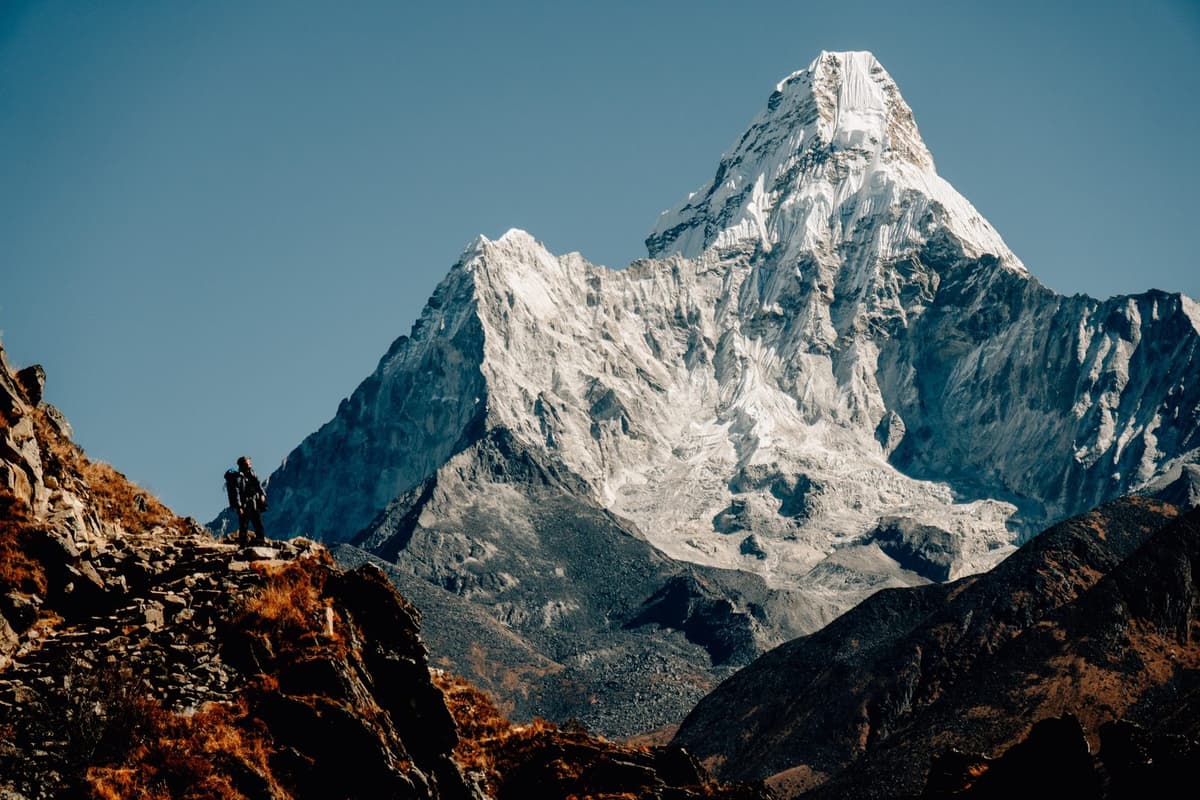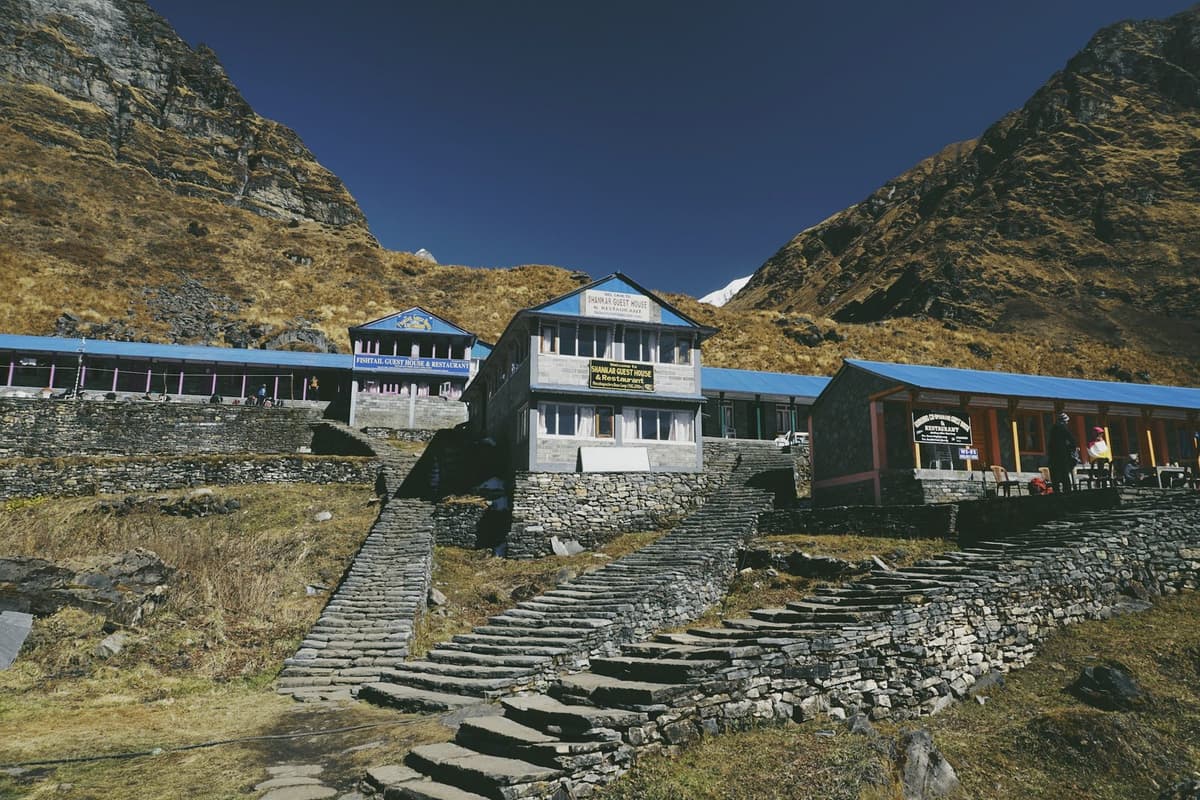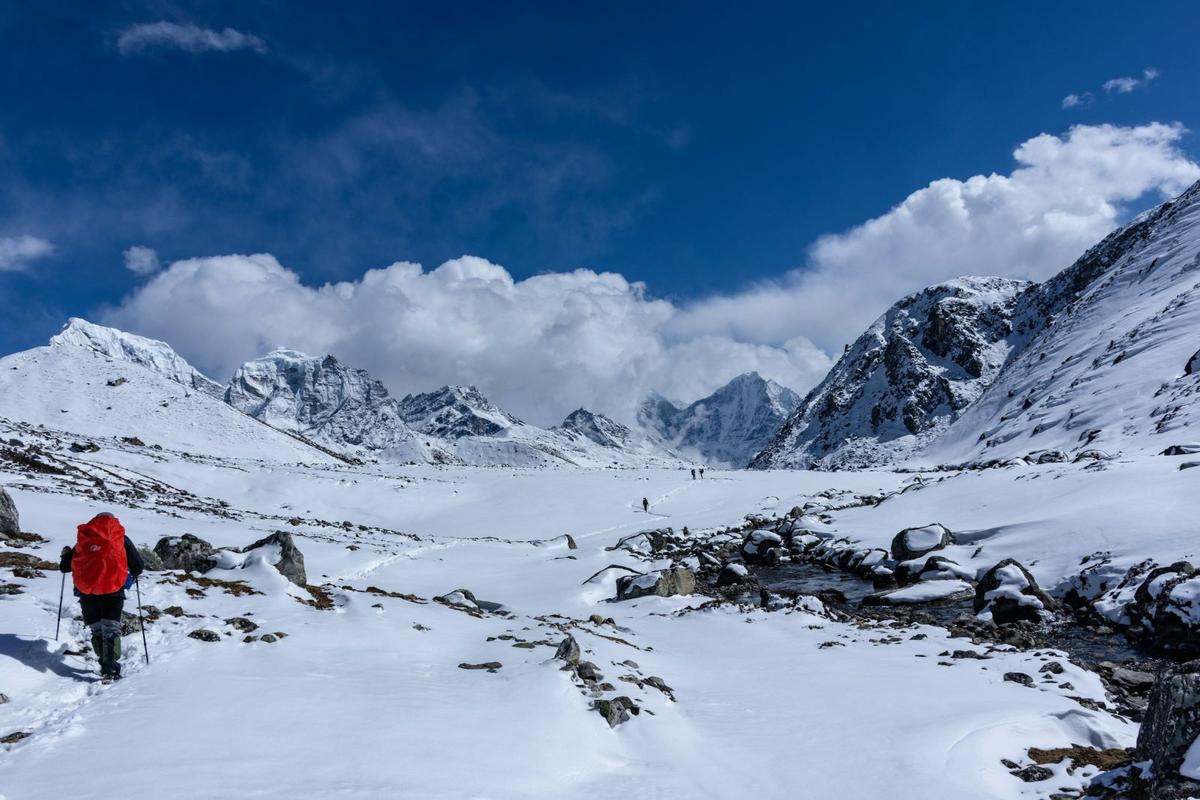
Evenings on a Nepal trek gather round one stove. In a teahouse the dining room has the fire and the bedrooms do not, so the walk down the corridor to bed is the coldest minute of the day. What you packed in Kathmandu decides whether that minute is fine or miserable.
By Uncover Nepal Team · Checked by our Kathmandu travel team · Last checked 9 November 2026
A good trekking gear list for Nepal is shorter than most people expect, because a teahouse gives you a bed, meals and a roof. You still need warm layers for cold nights, broken-in boots, a sleeping bag, a way to make water safe, sun protection and cash. This checklist is part of our Nepal travel guide.
Key facts
- Teahouse heating
- A stove in the dining room; bedrooms are not heated (Advnture, 23 Jun 2025 (checked 9 Nov 2026))
- Coldest normal night in our table
- Namche weather station (3,450 m), January mean minimum −8.5 °C (FAO station data via Wikipedia, period not stated (checked 9 Nov 2026))
- Porter loads
- KEEP recommends no more than 25 kg, including the porter's own gear (Kathmandu Post, 12 Dec 2025 (checked 9 Nov 2026))
- Lukla flight baggage (Tara Air)
- 10 kg plus 5 kg hand carry per adult (Tara Air policy page (checked 9 Nov 2026))
- Boiling water above 2,000 m
- Boil for around three minutes (Fit for Travel, Public Health Scotland (checked 9 Nov 2026))
- Sun at altitude
- UV rises 10% to 12% per 1,000 m; fresh snow can reflect up to 80% (WHO, WMO, UNEP and ICNIRP, 2002 (checked 9 Nov 2026))
In this guide
- What is on a Nepal trekking gear list?
- How cold are the nights, month by month?
- What does a teahouse give you, and what do you still carry?
- Can you rent trekking gear in Thamel?
- How heavy should your bags be?
- How do you handle water, sun and first aid on a trek?
- Frequently asked questions
- Plan your trek
What is on a Nepal trekking gear list?
A Nepal trekking gear list comes down to six groups: clothing you can layer, boots you have already walked in, a warm sleeping bag, water and health kit, documents and cash, and a way to charge your phone. You need no tent, stove or cooking gear on a teahouse trek, because the lodges feed you and give you a bed.
The tables below are our trekking equipment list, the things to carry for trekking from the first day to the last. The last column says whether renting or buying locally makes sense.
Clothing layers
"The standard hill walking layering system includes a base layer, an insulating middle layer and a weather-proof outer shell."
British Mountaineering Council, A guide to hill walking clothing and layers, checked 9 November 2026
The same guide says to avoid cotton, which stays damp and leaves you cold. Wear synthetic or wool next to your skin.
| Item | Need | Nice to have | Rent in Thamel |
|---|---|---|---|
| Base layer top and leggings, synthetic or wool | Yes | Bring your own | |
| Quick-dry trekking shirt, plus a spare | Yes | Bring your own | |
| Trekking trousers | Yes | Buy or bring | |
| Fleece or light insulated mid-layer | Yes | Buy or bring | |
| Down or synthetic insulated jacket | Yes | Yes, commonly rented | |
| Waterproof shell jacket | Yes | Buy or bring | |
| Warm hat, warm gloves and thin liner gloves | Yes | Buy or bring | |
| Broad-brimmed sun hat | Yes | Buy or bring |
Footwear
Never start a trek in new boots; walk them in at home first.
| Item | Need | Nice to have | Rent in Thamel |
|---|---|---|---|
| Trekking boots with ankle support, already broken in | Yes | Bring your own | |
| Trekking socks, plus spares | Yes | Bring your own | |
| Trekking poles | Yes | Buy or bring | |
| Traction spikes for icy trails | Yes | Ask us for your route and month |
Sleeping
Most lodges give you a blanket or duvet, but a sleeping bag is still the norm, because bedrooms are not heated.
| Item | Need | Nice to have | Rent in Thamel |
|---|---|---|---|
| Sleeping bag warm enough for your route and month (see the table below) | Yes | Yes, commonly rented | |
| Sleeping bag liner | Yes | Buy or bring | |
| Small quick-dry towel | Yes | Buy or bring |
Water and health
| Item | Need | Nice to have | Rent in Thamel |
|---|---|---|---|
| Refillable bottles or a bladder, with an insulated cover in winter | Yes | Buy or bring | |
| Water purification tablets, a filter, or both | Yes | Buy or bring | |
| Wrap-around sunglasses, or glasses with side panels | Yes | Buy or bring | |
| Broad-spectrum sunscreen, SPF 15 or higher, and lip balm | Yes | Buy or bring | |
| Personal first-aid kit (see below) | Yes | Bring your own | |
| Your regular medicines in their original labelled packs | Yes | Bring your own | |
| Hand sanitiser, toilet paper and a bag for your rubbish | Yes | Buy or bring |
Documents and money
| Item | Need | Nice to have | Rent in Thamel |
|---|---|---|---|
| Passport, plus copies of it and your insurance policy | Yes | No | |
| Travel insurance covering your trekking altitude and helicopter evacuation | Yes | No | |
| Trek permits (we arrange them; on Everest treks, the Sagarmatha National Park permit and the Khumbu Trek-Card) | Yes | No | |
| Nepali rupees in cash for the trail | Yes | No |
Our guide to travel insurance for Nepal treks explains what to check in a policy. Advnture reported in June 2025 that Namche Bazaar has cash machines, but they can run out of cash, so carry enough rupees for the whole trek.
Electronics
| Item | Need | Nice to have | Rent in Thamel |
|---|---|---|---|
| Phone and charging cable | Yes | No | |
| Power bank | Yes | Buy or bring | |
| Plug adaptor for Types C, D and M | Yes | Buy or bring | |
| Headtorch and spare batteries | Yes | Buy or bring | |
| Local SIM or eSIM | Yes | Buy at Kathmandu airport or in town |
Nepal's supply is 230 V at 50 Hz. On cold nights, keep your phone and power bank inside your sleeping bag.
How cold are the nights, month by month?
Colder than most first-timers pack for. At Namche's weather station, 3,450 m (11,320 ft), the average November night falls to −3.8 °C and January to −8.5 °C. At the Lukla and Jomsom stations, both below 2,800 m, nights sit close to freezing from November to March, and higher villages are colder again.
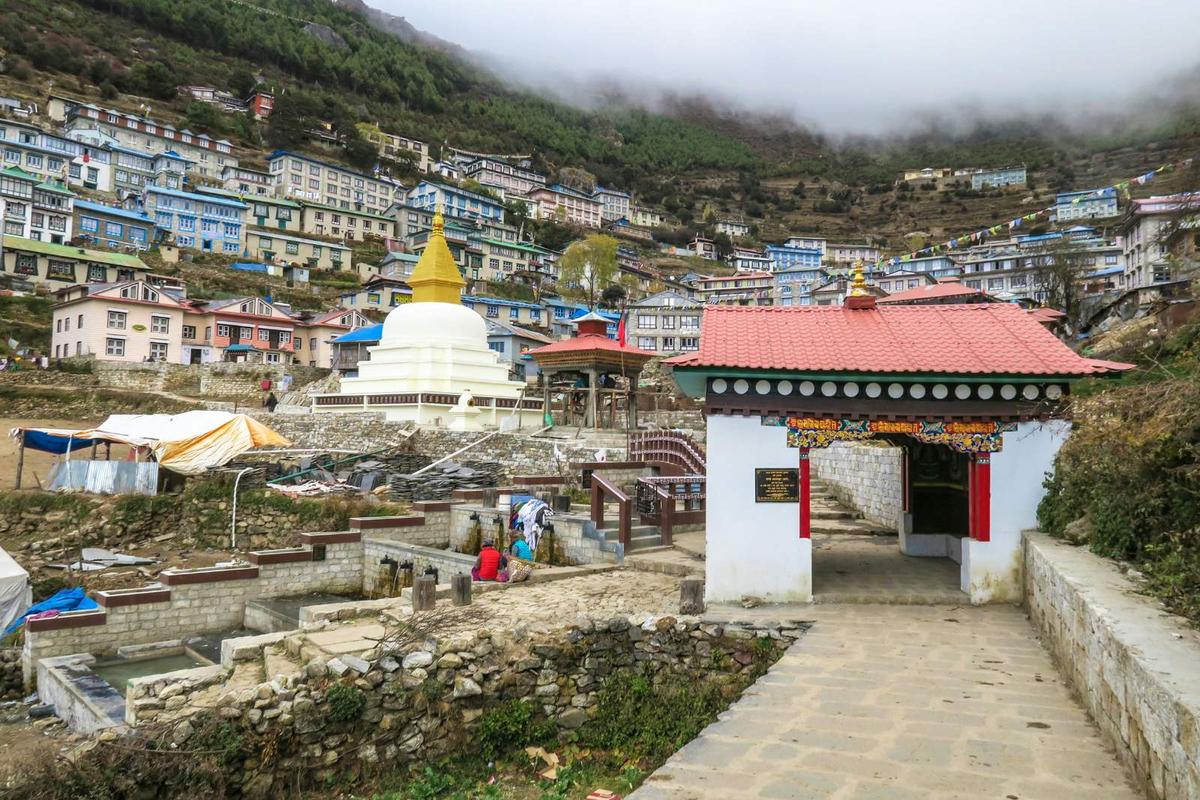
The table gives the mean daily minimum in °C, the number that decides your sleeping bag. Pokhara is the mild start-town contrast.
| Month | Pokhara Airport | Jomsom station, 2,741 m | Lukla station, 2,786 m | Namche station, 3,450 m | What it means for your bag |
|---|---|---|---|---|---|
| October | 17.2 | 5.5 | 7.4 | 1.2 | Warm jacket for evenings |
| November | 12.3 | 1.5 | 2.4 | −3.8 | Full warm kit from Namche up |
| December | 8.3 | −1.2 | −0.5 | −7.1 | Warmest sleeping bag and down jacket |
| January | n/a | −1.9 | −2.9 | −8.5 | As for December |
| March | n/a | 2.0 | 2.6 | −3.0 | Winter sleeping kit at Namche |
| April | n/a | 4.4 | 5.7 | 0.8 | Milder, still cold higher up |
| May | n/a | 7.8 | 8.0 | 3.7 | Mildest nights; keep a warm layer |
Sources: Department of Hydrology and Meteorology normals, 1991 to 2020, via Wikipedia, for Pokhara, Jomsom and Lukla; FAO station data, period not stated, for Namche; n/a means not in the sources we used. The Lukla station sits at 2,786 m (9,140 ft), below the airstrip at 2,846 m.
Single nights go lower: Jomsom's record lows reach −10.0 °C in December and −11.6 °C in January. We found no measured normals for villages above Namche, such as Dingboche, so we print no guess; the Pyramid research station in the Khumbu, at 5,035 m (16,520 ft), has an annual mean of −2.5 °C (Earth System Science Data, 2025). For which months suit which routes, see when to trek in Nepal.
What does a teahouse give you, and what do you still carry?
A teahouse is a lodge on the trail where you sleep and eat. You get a simple bedroom, usually a blanket or duvet, and a dining room warmed by a stove. Bedrooms are not heated, and hot showers and charging often cost extra. On the Everest trail most bedrooms have no socket, so carry your own warmth and power.
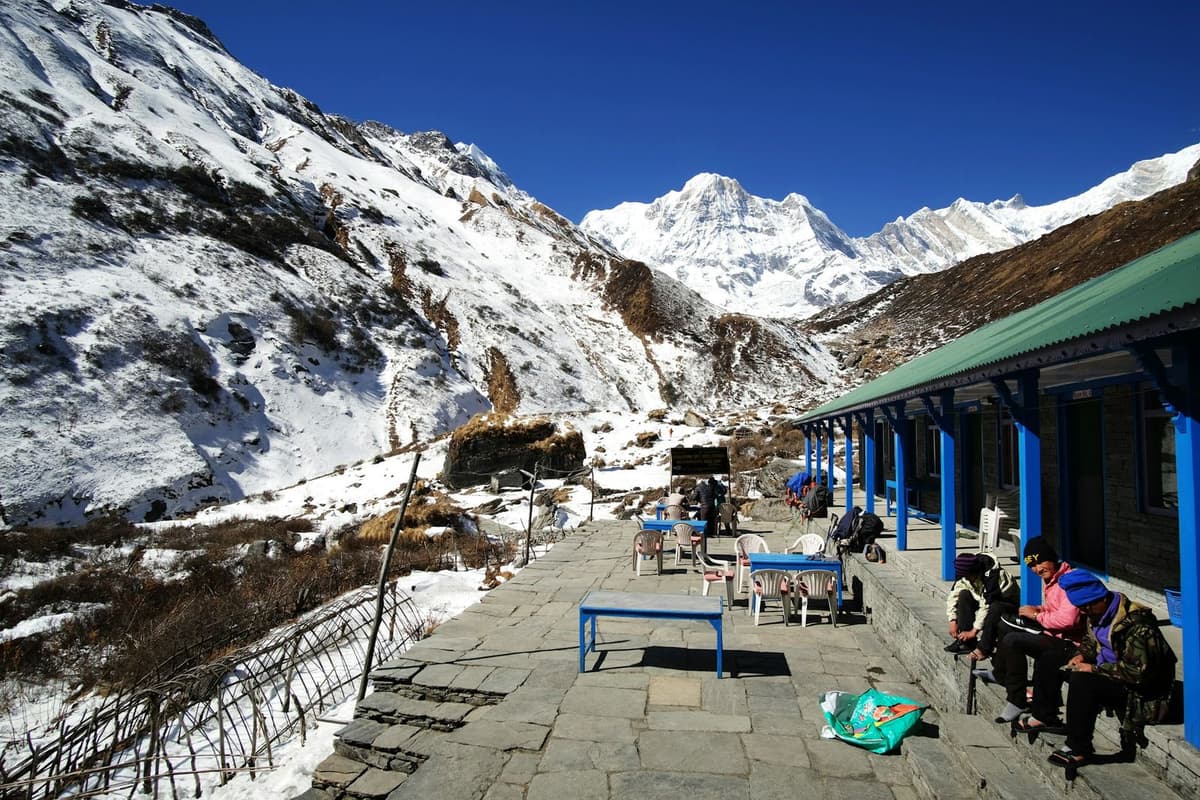
On the Everest Base Camp trail, Advnture reported in June 2025 a hot shower at around NPR 400 and charging at around NPR 300, and above Namche, internet cards at NPR 1,000 for 24 hours. Prices vary by village.
So pack a sleeping bag, a power bank, a headtorch, a small towel, toilet paper, and cash for showers, charging and Wi-Fi.
Can you rent trekking gear in Thamel?
Yes. Shops in Thamel, Kathmandu's trekking district, commonly rent down jackets, sleeping bags and backpacks, and renting bulky warm items you may use once makes sense. Bring your own boots, socks and base layers, because fit and hygiene matter most for what touches your skin.
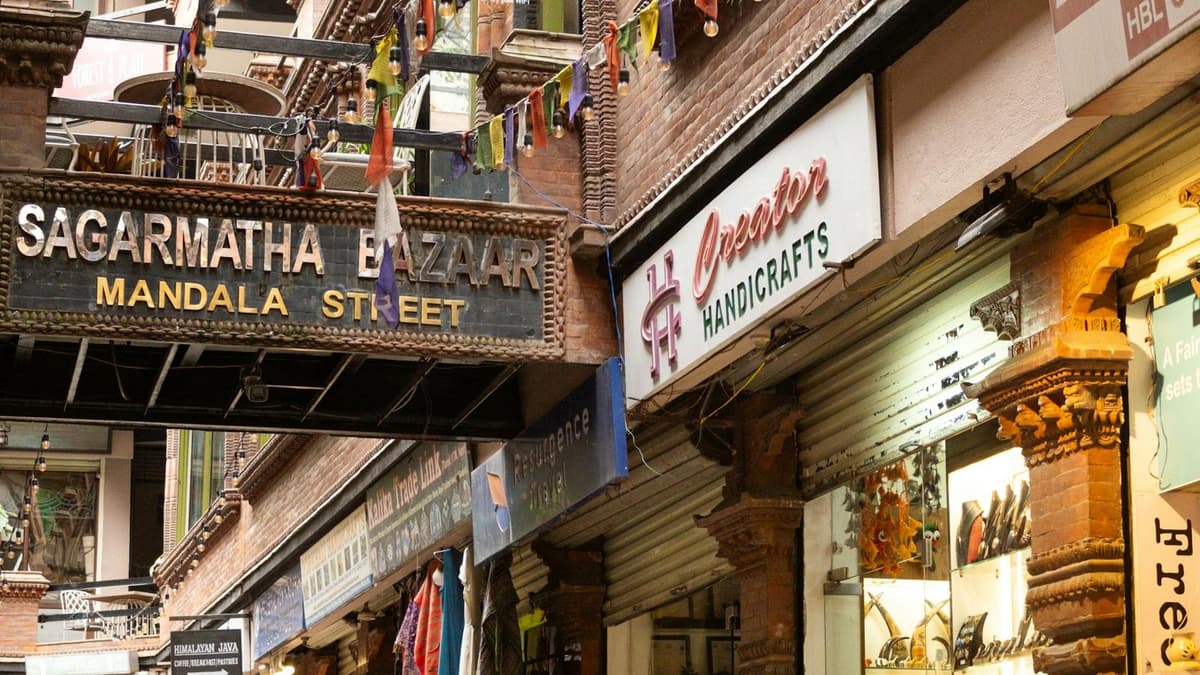
Nepal Traveller, a Kathmandu travel magazine, advised in September 2023 using reputable shops that inspect and clean their gear, warning that cheaper copies can mean "slightly weaker stitching, potential fit issues, and less durable zippers." Before you pay, check:
- Every zip runs smoothly from end to end.
- The down feels lofty, not flat or clumped.
- The gear is clean, dry and does not smell damp.
- The sleeping bag is long enough and the jacket fits over your fleece.
Prices vary, so compare a few shops. Namche Bazaar has gear shops too (Advnture, 2025), but do not plan your kit around them.
How heavy should your bags be?
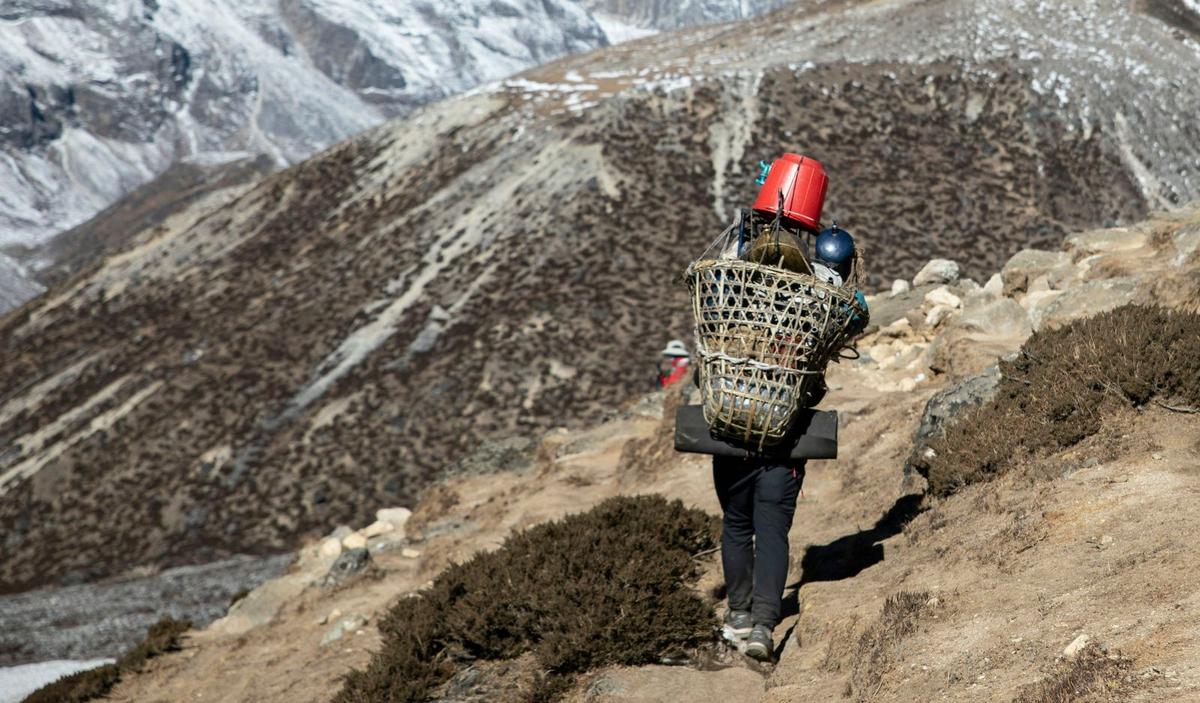
Carry a daypack with what you need between breakfast and the next lodge, and keep the bag a porter carries light. KEEP, the Kathmandu Environmental Education Project, recommends that porters carry no more than 25 kg including their own gear, and less above 5,000 m (16,400 ft). Lukla flights set tighter limits still.
What a porter should carry
The Kathmandu Post reported in December 2025 that there are no official government rules on porter loads and no checkpoints where bags are weighed, so keeping to 25 kg depends on you and your agency. Ask any agency whether porters are insured and properly equipped. Your daypack holds the rest: water, a warm layer, your waterproof, sun kit, snacks, first-aid basics, headtorch, cash and phone.
Baggage on the Lukla flight
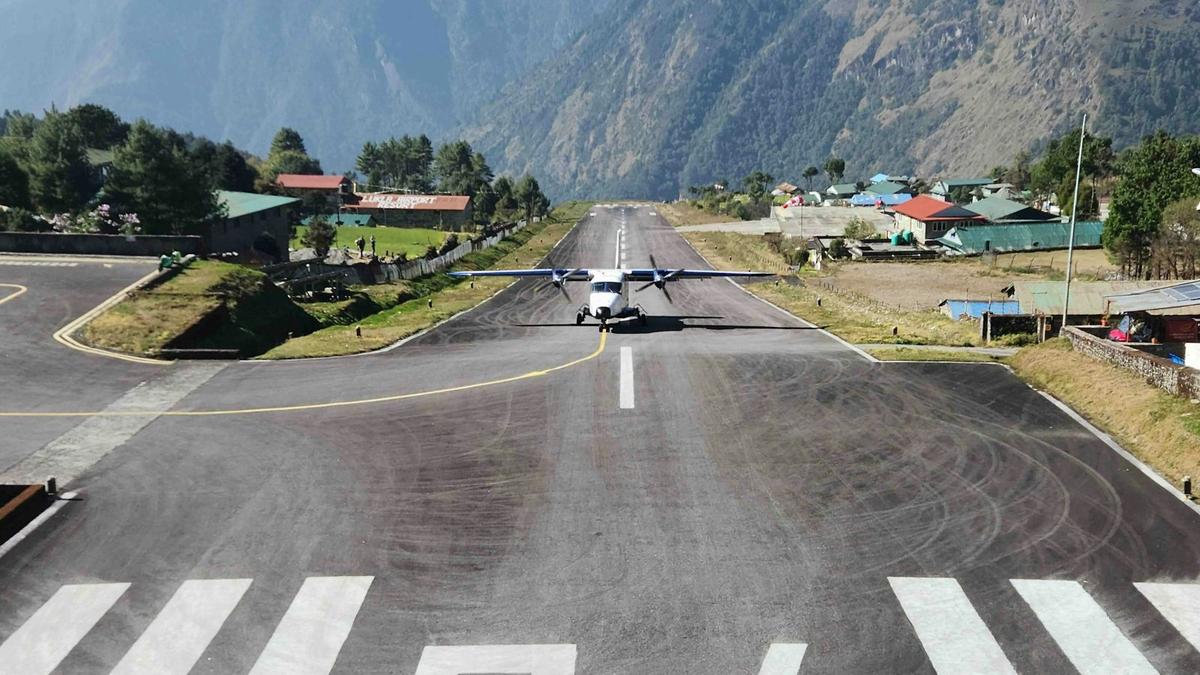
Tara Air publishes a free allowance of 10 kg of baggage plus 5 kg of hand carry per adult; other airlines on the route set their own, so check your ticket. Lukla flights are weather-dependent, and in the peak seasons many leave from Ramechhap (Manthali). Keep medicines and a warm layer in your hand carry in case of delay; our guide to Lukla airport covers the flights.
How do you handle water, sun and first aid on a trek?
Treat every refill, protect your eyes and skin even on cold days, and carry a small first-aid kit you have discussed with a doctor. Tablets and filters each miss some germs, so combine methods or boil. Snow and altitude make the sun far stronger than it feels.
Safe water
Public Health Scotland's Fit for Travel service says to boil water for around three minutes above 2,000 m (6,500 ft). Chlorine dioxide tablets "will not kill all germs" and filters miss some too, so combine a chemical treatment with boiling or filtering. In the Everest region, the Khumbu Pasang Lhamu Rural Municipality announced a ban on plastic drink bottles from January 2020 (Kathmandu Post, 2019), so bring refillable bottles.
Sun protection
"With every 1000 metres increase in altitude, UV radiation levels increase by 10% to 12%."
World Health Organization, WMO, UNEP and ICNIRP, Global Solar UV Index: A Practical Guide, 2002
The same guide says fresh snow can reflect as much as 80% of UV and can double your exposure at altitude, so wear wrap-around sunglasses and a broad-brimmed hat, and reapply sunscreen generously.
First aid and altitude
TravelHealthPro, run by the UK's National Travel Health Network and Centre, suggests sterile saline, antiseptic wipes or cream, wound-closure strips and fine-tipped tweezers, and advises keeping regular medicines in hand luggage, in labelled packs, with a doctor's letter naming the drugs. Ask your doctor how much medicine to bring for the trip plus delays, whether altitude medicine suits you (this guide gives no doses), and what to carry for stomach upsets and blisters.
On the trail, altitude risk starts at about 2,450 m (8,040 ft), according to the CDC. Go slowly. Above 3,000 m (9,840 ft), raise your sleeping height by about 500 m (1,640 ft) a night at most, and take a rest day every three to four days. Drink water, avoid alcohol early on, never go higher with symptoms, and descend if they get worse. Garlic soup and hot soups are a comforting local tradition, not a proven cure. Our guide on how to avoid altitude sickness has the detail.
Frequently asked questions
What should I pack for a teahouse trek, and can I rent gear in Thamel?
Pack layers you can add and remove, broken-in boots, a sleeping bag suited to the month, a way to treat water, sun protection, a small first-aid kit, a power bank and cash. Yes, you can rent in Thamel: down jackets, sleeping bags and backpacks are commonly rented there. Pick a shop that cleans and checks its gear, and bring your own boots and base layers.
What is a teahouse, what are rooms like, and do I need to book?
A teahouse is a trekking lodge where you sleep and eat along the trail. Rooms are simple and unheated, most lodges give you a blanket or duvet, and the warm place is the dining room with its stove. Whether to book depends on the route and season. Our general advice: in the busiest autumn and spring weeks, plan your night stops ahead rather than hoping for a bed.
Is there Wi-Fi, phone signal and charging on Nepal treks, and do I need a local SIM?
On the Everest trail, yes, usually for a fee; on other routes it varies, so do not plan to work online. On the Everest trail, Advnture reported in June 2025 charging at around NPR 300 and a 24-hour internet card above Namche at NPR 1,000. Phone signal varies by village. A local SIM helps: Ncell sells tourist SIMs at Kathmandu airport, and you need your passport.
Do I need a sleeping bag for a teahouse trek?
Yes, bring or rent one. Most lodges give you a blanket or duvet, but bedrooms are not heated, and the average January night at Namche's weather station falls to −8.5 °C. Choose a bag rated well below the coldest night on your route, and add a liner if you feel the cold.
Plan your trek
What changes from route to route is how warm your sleeping bag and jacket need to be. For a first trek, a lower route such as the Ghorepani Poon Hill trek, which tops out at Poon Hill at 3,210 m, is a good place to test your boots and layers. Compare routes on our treks in Nepal page, and see our Nepal travel guide for the wider planning steps.
A licensed guide walks with you on every trek we run. Send us your route and month on WhatsApp or through the enquiry form, and we will tell you honestly what to bring, what to rent and what to leave in Kathmandu.
Your Nepal visa and international flights are your own arrangements; official visa information is on the Nepal Tourism Board tourist-visa page.