





Explore by activity
Not listed yet

We run Motorbiking & Overland trips — we just haven’t put the itinerary on the site yet. Tell us your dates and we’ll send a costed day-by-day plan.

Explore by experience
Explore by region
by gomayu
Search Tours or Places

Nepal Trekking Guide and Porter: What to Expect

16 min read Posted 02 Nov 2026Updated 30 Oct 2026
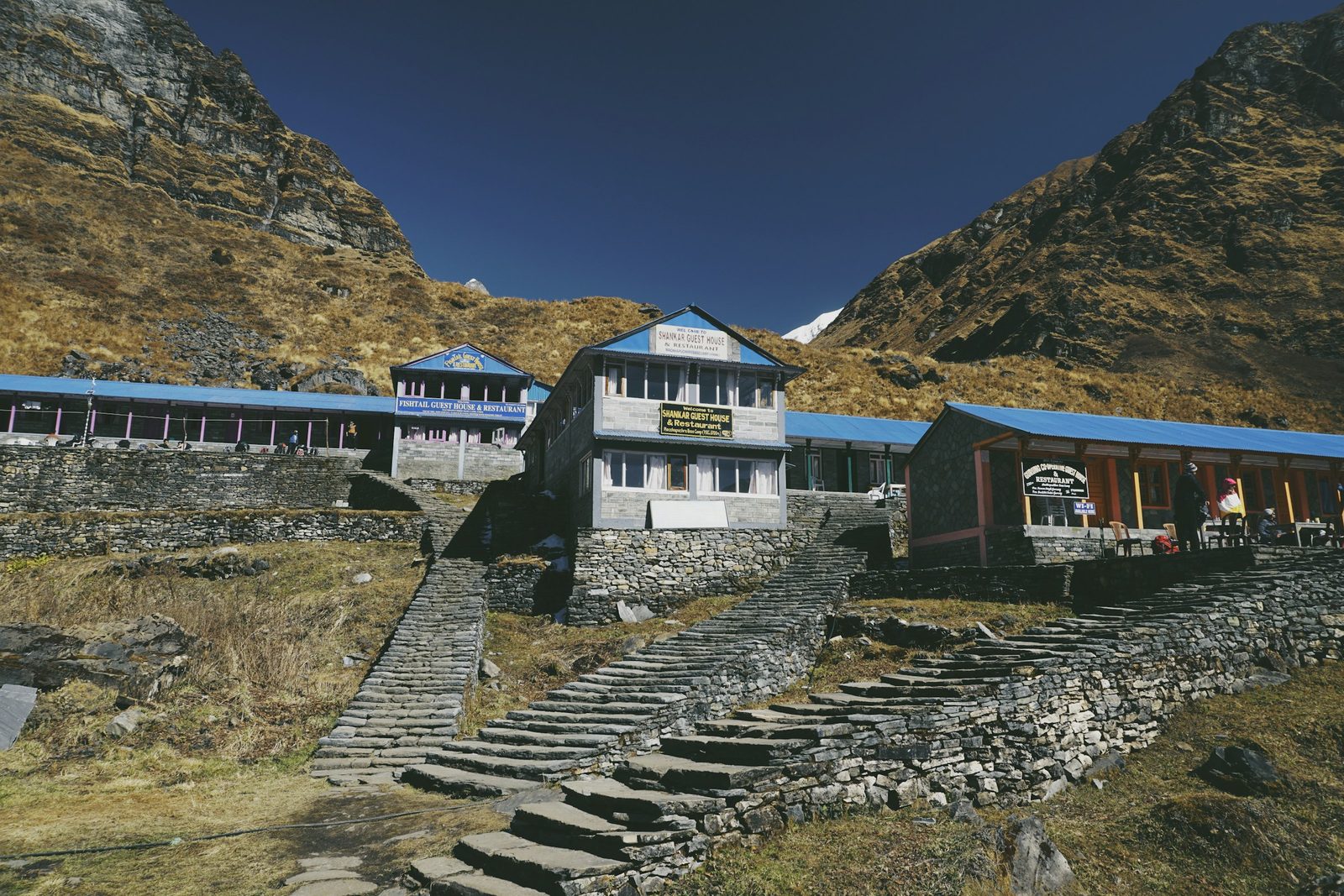
Stone steps leading up to a trail lodge on the Annapurna Base Camp trek, Nepal

On the main trails of the Annapurna and Everest regions you see two jobs being done all day. A porter moves steadily ahead with a heavy bag, sometimes carried on a namlo, the traditional head strap. A guide walks beside the trekkers, reading the weather and choosing the turn for the night's lodge.

By Uncover Nepal Team · Checked by our Kathmandu travel team · Last checked 31 October 2026

A Nepal trekking guide leads the route, deals with lodges and permit checks, watches your health at altitude and makes the safety calls. A porter carries your main bag, so you walk with a daypack. A porter-guide combines parts of both jobs. A licensed guide walks with you on every trek we run.

This article is part of our Nepal travel guide. It covers each role, licensing, the 2023 guide rule, wages, porter loads and how to check a company before you book.

In this guide

  • Key facts
  • What does a Nepal trekking guide do?
  • What does a porter do, and what is a porter-guide?
  • How does guide licensing work in Nepal?
  • What does the 2023 guide rule say, and where does it apply?
  • What are TAAN's standard wages for guides and porters?
  • How much can a porter carry?
  • How should porters be looked after?
  • How do I choose a guide or trekking agency in Nepal?
  • How do I work well with my guide and porter?
  • Frequently asked questions
  • How can we help you plan a trek with a licensed guide?

Key facts

NTB's revised trekking rule
Foreign trekkers on listed routes in protected areas must go with a licensed guide. In force from 1 April 2023; NTB lists it as effective from 31 March 2023 (Nepal Tourism Board rule page; The Himalayan Times, 10 Mar 2023; checked 31 Oct 2026)
Routes NTB lists
44 named routes in 14 regions, including 8 in the Everest region and 7 in the Annapurna region (Nepal Tourism Board rule page; The Kathmandu Post, 3 Apr 2023; checked 31 Oct 2026)
Everest region position
The Khumbu Pasang Lhamu Rural Municipality says a guide is not mandatory there and issues its own Trek-Card at Lukla (The Kathmandu Post, 3 Apr 2023; municipality Trek-Card page; checked 31 Oct 2026)
Restricted areas
Permit only through a registered agency, with a licensed guide; solo trekkers can be issued one since 22 Mar 2026; up to seven trekkers per guide, as reported (The Himalayan Times, 23 Mar 2026; checked 31 Oct 2026)
TAAN 2023 standard wages
NPR 2,400 to NPR 3,100 a day depending on the role, applicable from 17 July 2023 (The Himalayan Times, 21 Jun 2023; OnlineKhabar, 20 Jun 2023; checked 31 Oct 2026)
Porter loads
KEEP says there is no government limit and recommends no more than 25 kg; IPPG guidelines gave 30 kg as the Nepal maximum (The Kathmandu Post, 12 Dec 2025 (KEEP); IPPG guidelines as reproduced by The Adventure Medic, 2013; checked 31 Oct 2026)
Guide training
A 35-day Trekking Guide course and a 15-day Trekking Porter Guide course (Tourism Info Nepal, 5 May 2026; checked 31 Oct 2026)
Tipping
No official or industry figure found (NTB, TAAN, KEEP and NTNC pages; checked 31 Oct 2026)

What does a Nepal trekking guide do?

A Nepal trekking guide is responsible for getting you along the route and back safely: finding the way, setting the pace, sorting out lodges, showing permits at checkposts, translating and watching for altitude sickness. On high passes, your guide, who knows the route, decides when and how to cross, based on snow and the forecast.
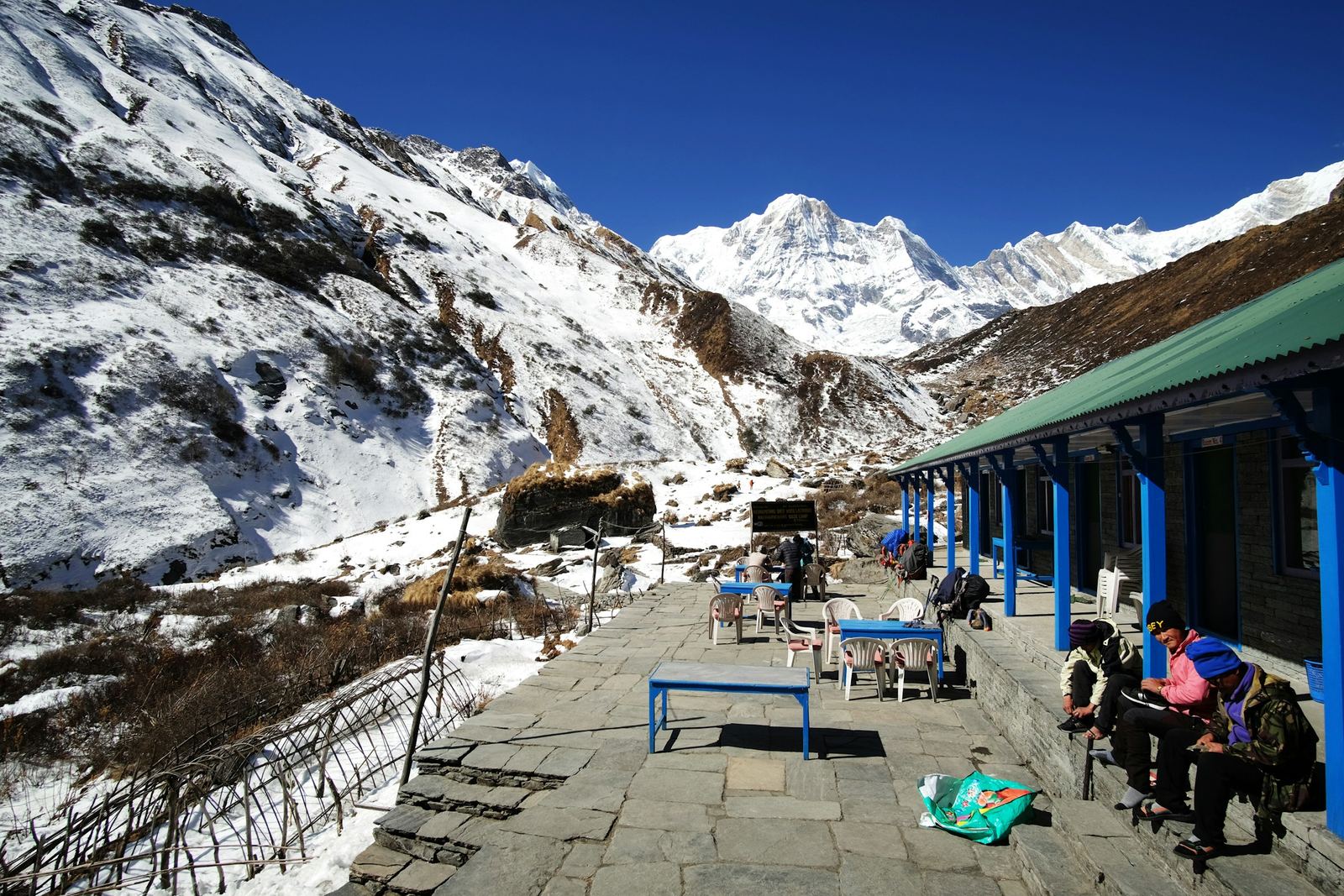
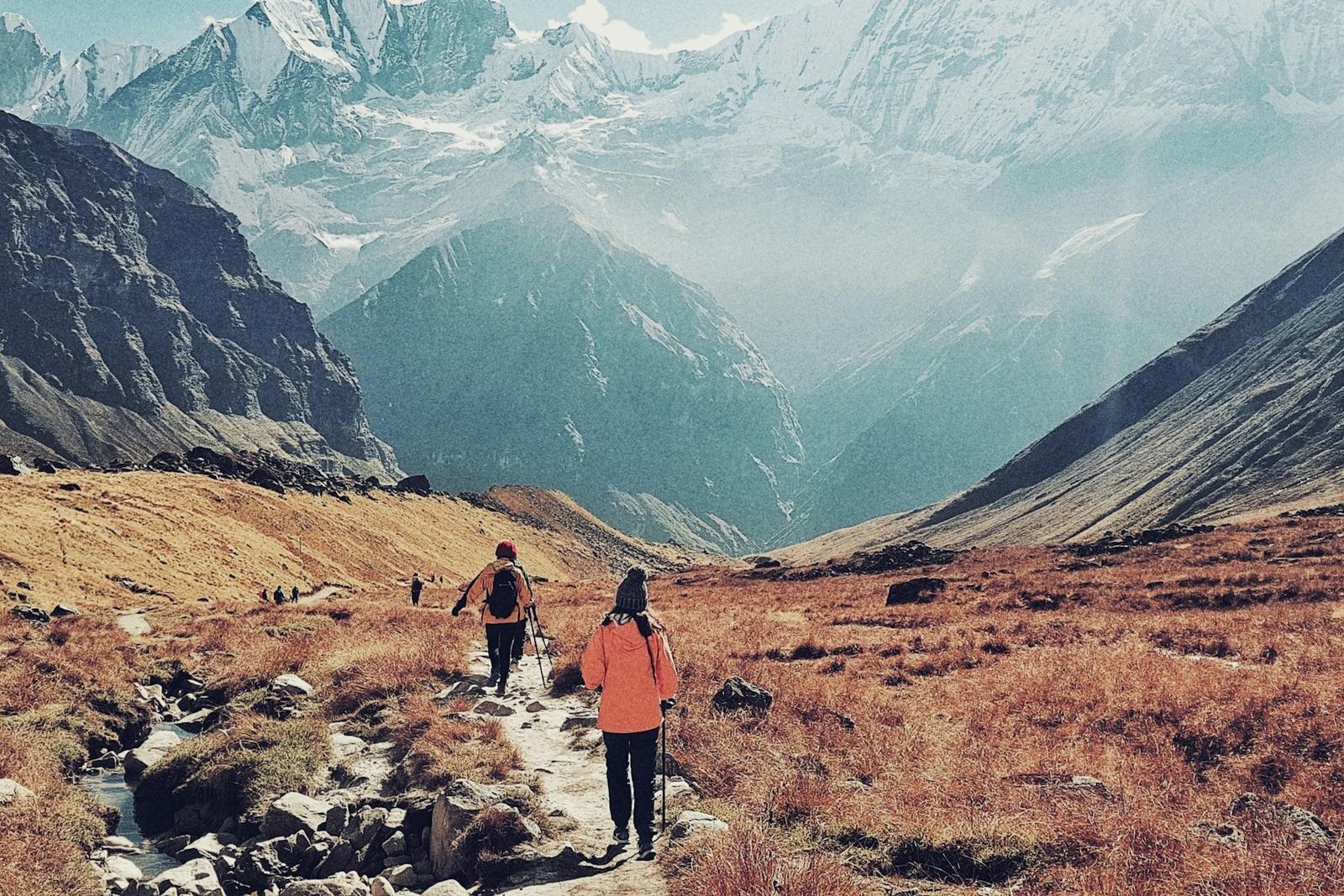
Trekkers on a teahouse terrace below Annapurna I on the Annapurna Base Camp trek, Nepal
Trekkers on a lodge terrace below Annapurna I, Annapurna Base Camp trek.

When the Nepal Tourism Board (NTB) announced its 2023 guide rule, it said the aim was to "mitigate adverse incidents like trekkers getting lost en-route, facing health issues or natural disasters" (The Himalayan Times, 10 March 2023).

"Taking guides means they will brief trekkers on the high altitude sickness and other issues that are related to natural disasters."

Nilhari Bastola, then president of the Trekking Agencies' Association of Nepal (TAAN), The Kathmandu Post, 4 March 2023

A good Nepal trek guide's day covers:

  • Route and pace: the trail, the rest stops and a speed the slowest walker can hold.
  • Lodges and food: beds in a teahouse (a family-run trail lodge), meals and hot water.
  • Health at altitude: asking how you slept, watching for headache, nausea or unusual tiredness, and never taking you higher with symptoms. Our article on altitude sickness on Nepal treks explains the warning signs.

A guide is not a doctor and cannot promise clear skies or an open trail. A good one gets you down to help quickly.

What does a porter do, and what is a porter-guide?

A porter carries the main load, usually your duffel bag, from lodge to lodge, so you walk with only a daypack. A porter-guide combines the two jobs, carrying a load and also showing the way. NTB's 2023 rule names a licensed guide, not a porter, so a porter alone does not meet it on the routes NTB lists.

TAAN's 2023 wage scale lists four trail roles: mountain guide, assistant trekking guide, porter-guide and porter. Training follows a similar split, with a 35-day Trekking Guide course and a 15-day Trekking Porter Guide course, after which graduates can apply for separate licences.

NTB speaks to trekkers who feel awkward about this:

"Hiring a porter does not mean that you are weak, it means you value the Nepali culture, you are providing an extended Nepali family with an income"

Nepal Tourism Board, Trekking page, checked 31 October 2026

If you would like a porter for your Nepal trek, ask us how it works on your route.

How does guide licensing work in Nepal?

Trekking guides in Nepal can obtain a licence after training. Graduates of the trekking-guide course run by TAAN with NATHM (the Nepal Academy of Tourism and Hotel Management) "will be eligible to obtain official Trekking Guide Licenses", according to Tourism Info Nepal in May 2026. A licensed guide should be able to show you their licence card.

The spring 2026 course began in Kathmandu on 4 May 2026 with 148 trekking-guide trainees, including 38 women. Investopaper, citing Department of Tourism figures, reported 26,292 trekking guides recorded in 2023/24.

If you searched for a local trekking guide in Nepal, the useful question is whether they hold a licence and work through a registered agency. The official pages we read do not say which office issues the card, so we do not name one here.

What does the 2023 guide rule say, and where does it apply?

It depends where you trek. NTB's revised trekking rule says foreign trekkers on listed routes in protected areas must go with a licensed guide. The Khumbu Pasang Lhamu Rural Municipality says a guide is not compulsory in the Everest region. Restricted areas always need one. A licensed guide walks with you on every trek we run.
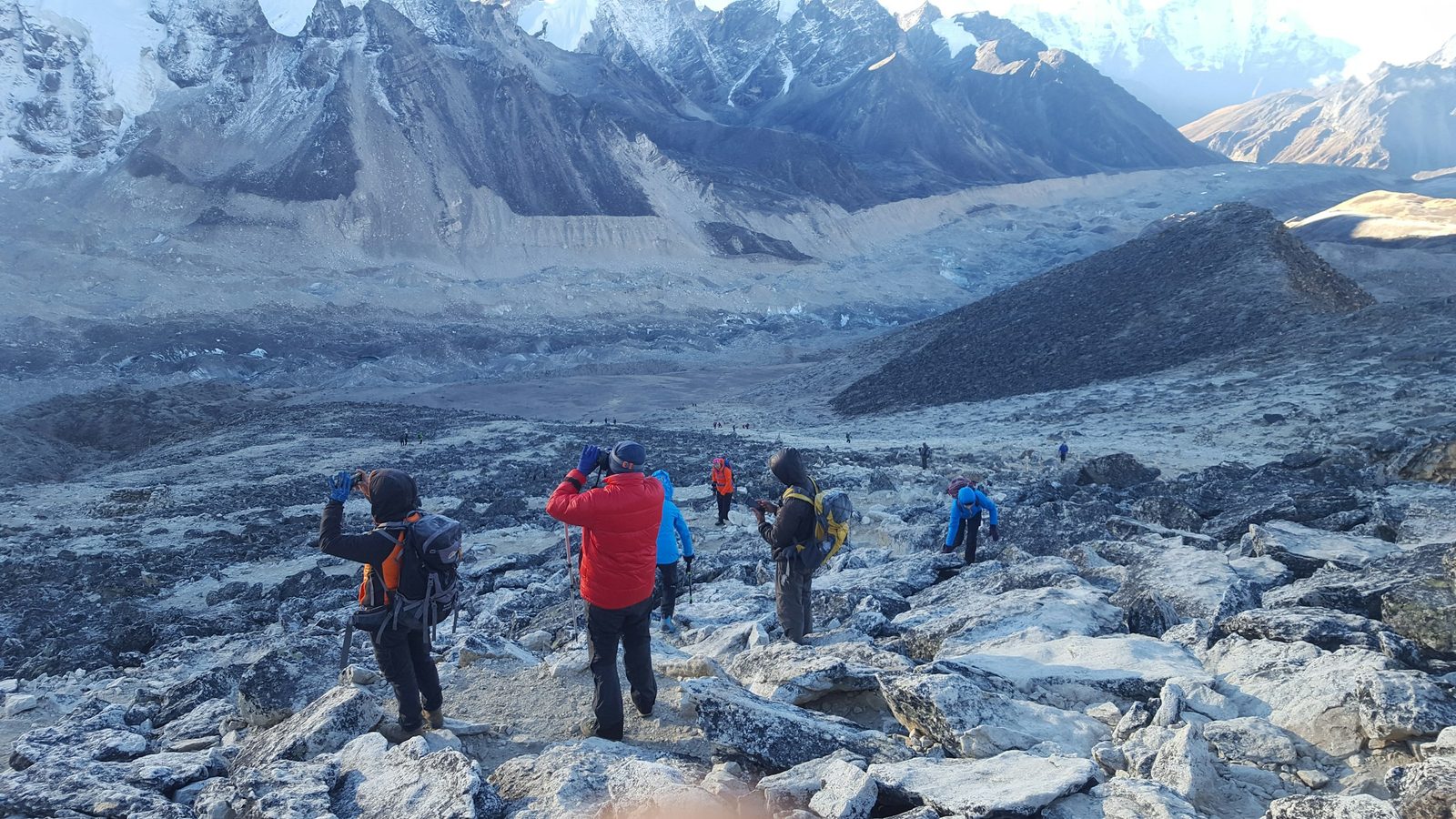
Trekkers crossing glacial moraine near Gokyo in the Everest region of Nepal
Trekkers on moraine near Gokyo, one of the Everest-region routes on NTB's list.

NTB's revised trekking rule

The rule was announced by the Nepal Tourism Board and has been in force from 1 April 2023; NTB's own page lists it as effective from 31 March 2023. NTB's statement at the time said guides must come through agencies registered with the Government of Nepal.

"specific Protected Areas of Nepal need trekker to be accompanied by licensed trekking guide"

Nepal Tourism Board, current rule page, checked 31 October 2026

NTB lists 44 named routes in 14 regions, including Everest Base Camp, Gokyo, the Annapurna Circuit, the Poon Hill and Annapurna Base Camp route, and Mardi Himal. NTB said the rule does not apply to Nepali trekkers. Some early press reports said "a guide or a porter" would do, but NTB's own wording names a licensed guide only.

The Everest region position

The Khumbu Pasang Lhamu Rural Municipality, the local government for the Everest (Khumbu) area, disagreed in 2023: "It is not mandatory to hire a guide for trekking in the Everest region" (The Kathmandu Post, 3 April 2023). It issues its own Trek-Card at Lukla. NTB's chief executive at the time called that stance "highly irresponsible". We found no official notice changing either position in 2024, 2025 or 2026. Enforcement has varied by area and over time, so ask us for the current position on your route.

Restricted areas

Restricted areas such as Manaslu, Tsum Valley, Upper Mustang and Nar Phu need a special permit from the Department of Immigration, applied for through a registered trekking agency. Since 22 March 2026 a solo trekker can be issued one, in restricted areas across 13 districts, but must still be accompanied by a licensed guide. The notice, as reported, also caps groups at seven trekkers per guide. We found no official ratio for other routes, so ask us how we staff your group.

"The concerned agency will bear full responsibility for emergency rescue operations, while other provisions will be governed by existing laws."

The Himalayan Times, reporting the Department of Immigration notice, 23 March 2026

What are TAAN's standard wages for guides and porters?

TAAN agreed standard daily wages with trade unions in 2023: NPR 3,100 for a mountain guide, NPR 2,800 for an assistant trekking guide, NPR 2,500 for a porter-guide and NPR 2,400 for a porter, applicable from 17 July 2023. They are what agencies pay their staff, not the price a trekker pays a company.

Role (TAAN title) TAAN 2023 standard daily wage What it tells you
Mountain guide (reported by OnlineKhabar as "trekking guide") NPR 3,100 The highest rate on the scale
Assistant trekking guide NPR 2,800 The second guide role on the scale
Porter-guide NPR 2,500 Carries a load and shows the way
Porter NPR 2,400 Carries the main loads

Sources: The Himalayan Times, 21 June 2023; OnlineKhabar, 20 June 2023; checked 31 October 2026.

TAAN said the rates had been standardised to ensure equal pay across all trekking regions, the first increase since November 2018. We found no later revision in press searches on 31 October 2026.

"This step aims to uplift the livelihoods of workers and promote the sustainability of the trekking tourism industry in Nepal."

TAAN's general secretary on the 2023 wage revision, The Himalayan Times, 21 June 2023

You can ask a company plainly whether it pays at least TAAN's standard wages.

How much can a porter carry?

KEEP (the Kathmandu Environmental Education Project) says Nepal has no government load limit for trekking porters. It recommends no more than 25 kg, including the trekkers' luggage and the porter's own gear, and less above 5,000 m. Guidelines from the International Porter Protection Group (IPPG) gave 30 kg as the Nepal maximum, adjusted for altitude and conditions.

KEEP's manager told The Kathmandu Post in December 2025: "There are no official government regulations ... and no checkpoints where porters' bags are weighed." The same report described porters carrying bags of 40 to 60 kg as a common sight on routes such as the Manaslu and Annapurna circuits. IPPG had stopped operating by January 2020, so its guidelines are a reference, not a live standard.

What this means for you:

  1. Ask for the bag limit per trekker, and how many trekkers share one porter, before you pack.
  2. Pack to that limit. Leave city clothes and extras at your Kathmandu hotel.
  3. Keep the essentials in your daypack: water, layers, rain jacket, medicines, documents and money.

How should porters be looked after?

Porters need the same basics you expect for yourself: clothing and footwear for cold and altitude, a proper bed out of the weather, insurance, and medical care and rescue if they fall ill. The International Porter Protection Group set these out in guidelines that trekking companies were asked to follow.
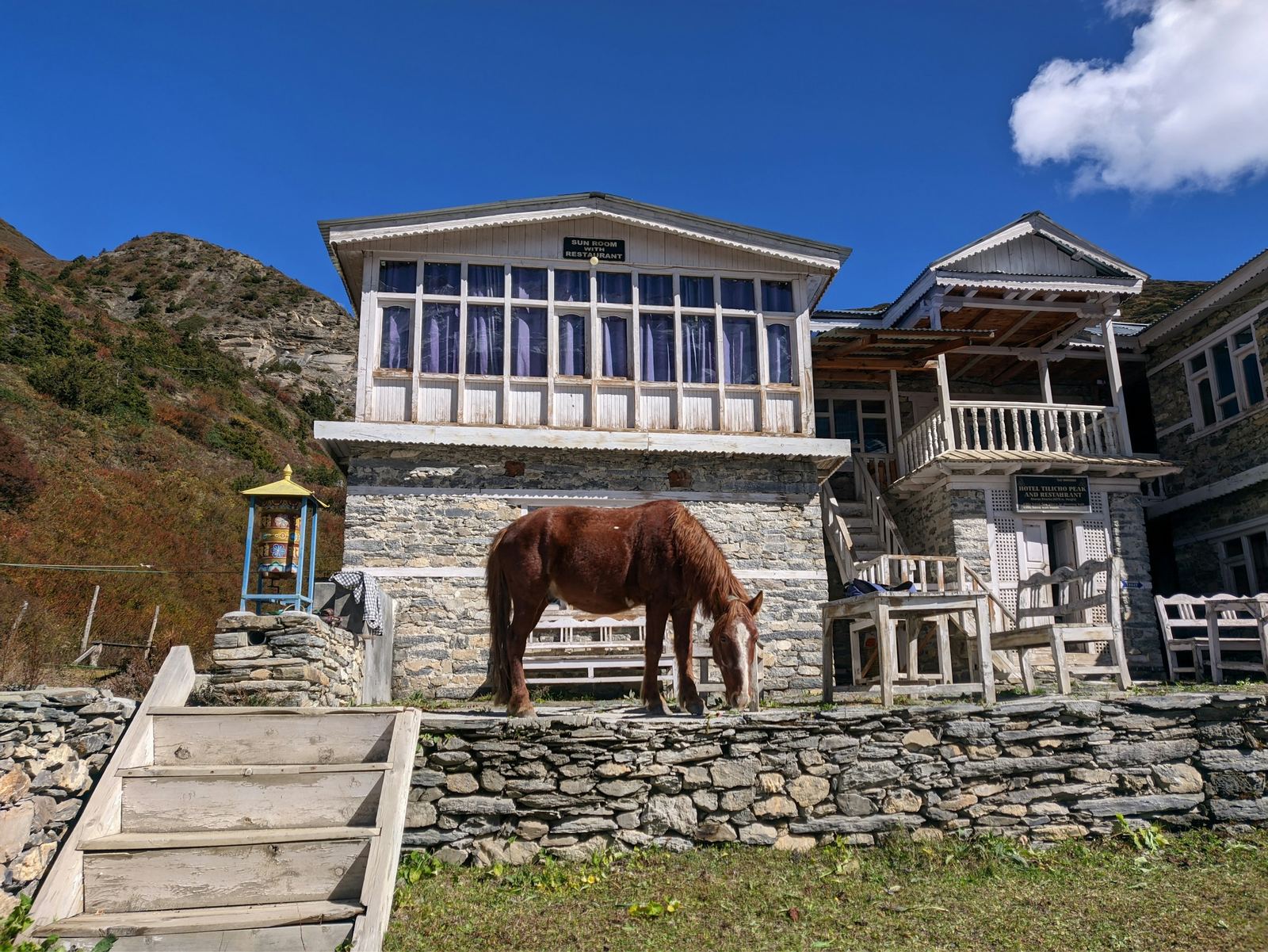
A stone-built teahouse lodge on the Tamang Heritage Trail, Nepal
A stone-built teahouse lodge on the Tamang Heritage Trail.

In IPPG's own words, its guidelines asked for:

  • clothing adequate "for protection in bad weather and at altitude", including footwear;
  • that "sick porters never be sent down alone";
  • that "sufficient funds be provided to the porter to cover the cost of their rescue and treatment";
  • that porters are not paid off because of illness without the leader or trekkers being told;
  • shelter "above the tree line": a lodge room or tent, with a mat and a blanket or sleeping bag (later wording, as reproduced by The Adventure Medic).

"That leaders and trekkers provide the same standard of medical care for porters as they would expect for themselves."

International Porter Protection Group guideline, IPPG Newsletter 3/2002

KEEP said in 2025 that many porters may not know that "the travel agency is responsible for providing their insurance". It lends boots and jackets to porters in Kathmandu for a refundable deposit. Its manager estimated that at least two to three trekking porters died in the mountains in 2025 from altitude sickness and improper gear.

Do guides and porters have to be insured?

Possibly, but it is not settled for staff hired for one trek. Nepal's Labour Act 2074 (2017), in an unofficial English translation, requires employers to buy accident insurance of at least NPR 700,000 for each worker and annual medical insurance of at least NPR 100,000, with that premium shared between employer and worker. We could not confirm whether, or how, these sections apply to guides and porters hired for a single trek. A Tourism Bill would make the agency responsible for "search, rescue and treatment management" after an accident, but it is a bill, not law.

Questions worth asking any company:

  • Is every porter on my trek insured, and for what?
  • Do porters get proper boots, a warm jacket and a bed or tent at night?
  • Who pays if a porter needs rescue or treatment, and who goes down with them?

How do I choose a guide or trekking agency in Nepal?

Book through a registered agency, then check the person, not only the website. Ask to see the guide's licence card, confirm the agency is registered, and ask how it equips, pays and insures its porters. A company that answers plainly, in writing, is a good sign.

  1. Check the agency is registered. NTB said guides should come through agencies registered with the Government of Nepal, and restricted-area permits are applied for only through one. TAAN's member directory is another check.
  2. Ask who your guide will be and to see their licence card.
  3. Ask about porters, using the questions above.
  4. Ask about rescue: who calls a helicopter and how your insurer is contacted. Our guide to travel insurance for Nepal trekking explains what your policy should cover. Be wary of anyone who pushes a helicopter for mild symptoms: a fake-rescue fraud worth about USD 20 million led to arrests in January 2026.
  5. Get the plan in writing: route, group size, who walks with you and what happens if the weather turns.

How do I work well with my guide and porter?

Talk to your guide honestly and early about pace and how you feel, agree each day's plan the evening before, and respect the porter's load. Tipping is customary and voluntary, and it usually happens at the end of the trek. A few habits help:

  • Say how you feel, early. A headache or poor sleep is information your guide needs, not a complaint.
  • Do not add to the porter's bag mid-trek without asking.
  • Step to the mountain side when porters or pack animals pass.
  • If you tip, hand each person their share yourself.

Frequently asked questions

How much should I tip my guide and porter?

We found no official or industry tipping figure for Nepal, and we do not set one. Tipping is customary and voluntary, and it usually happens at the end of the trek. Tip what feels fair for the care you received, and hand the porter's share to the porter yourself so it reaches them.

How much weight can a porter carry, and what is the bag limit?

KEEP says no Nepal government rule limits a porter's load. It recommends no more than 25 kg, including the porter's own gear, and less above 5,000 m. Guidelines from the International Porter Protection Group gave 30 kg as the Nepal maximum, adjusted for altitude. Your own bag limit depends on the company and on how many trekkers share one porter, so ask us for the limit on your trip.

Is trekking safe for a solo woman, and can I get a female guide?

Many women trek in Nepal: ACAP data show 12,362 of the 30,866 trekkers on the Annapurna Circuit in 2024 were women, though that is not a solo figure. We found no official safety data on solo women trekkers, and the UK government advises: "Do not trek alone." A licensed guide walks with you on every trek we run. If you would like a female guide, ask us. Our safety guide for solo female travellers in Nepal has more.

Do I need travel insurance for trekking, and what must it cover?

You should have it, even though no official Nepal page we found, in English, sets a blanket rule for every trekker. Choose cover that includes the highest point of your trek and helicopter evacuation. The UK, Australian and Canadian governments all advise cover that includes rescue and evacuation. In restricted areas the agency is responsible for emergency rescue under the Department of Immigration's 2026 notice, as reported, but your own policy still matters.

Is a licensed guide mandatory for trekking in Nepal, and are there exceptions?

It depends where you trek, and on our trips the question does not arise. A licensed guide walks with you on every trek we run. Beyond our trips, two positions stand side by side. NTB's revised trekking rule, in force from 1 April 2023, says foreign trekkers on listed routes in protected areas must go with a licensed guide. The Khumbu Pasang Lhamu Rural Municipality says a guide is not compulsory in the Everest region. NTB said Nepali trekkers are not covered, and restricted areas need a licensed guide even for a solo trekker.

How can we help you plan a trek with a licensed guide?

Tell us your trek, dates and group size, and we will tell you honestly what it involves. A licensed guide walks with you on every trek we run, and we arrange the trekking permits your route needs. If you would like a porter or a female guide, ask us.

Browse our treks in Nepal, or try a shorter walk such as the Ghorepani Poon Hill trek or the Everest View trek with Namche Bazaar. Our best treks in Nepal list compares routes, and the Nepal travel guide covers the rest of your trip. When you are ready, message us on WhatsApp or use the enquiry form.
Tags
Trekking guidePortersGuide rulePorter welfareTrek planningNepal trekking
Share
U
Uncover Nepal Team
Writer at Uncover Nepal
More in Plan your tripSee all Plan your trip

Nepal Trekking Guide and Porter: What to Expect

16 min read Posted 02 Nov 2026Updated 30 Oct 2026
Stone steps leading up to a trail lodge on the Annapurna Base Camp trek, Nepal

On the main trails of the Annapurna and Everest regions you see two jobs being done all day. A porter moves steadily ahead with a heavy bag, sometimes carried on a namlo, the traditional head strap. A guide walks beside the trekkers, reading the weather and choosing the turn for the night's lodge.

By Uncover Nepal Team · Checked by our Kathmandu travel team · Last checked 31 October 2026

A Nepal trekking guide leads the route, deals with lodges and permit checks, watches your health at altitude and makes the safety calls. A porter carries your main bag, so you walk with a daypack. A porter-guide combines parts of both jobs. A licensed guide walks with you on every trek we run.

This article is part of our Nepal travel guide. It covers each role, licensing, the 2023 guide rule, wages, porter loads and how to check a company before you book.

In this guide

  • Key facts
  • What does a Nepal trekking guide do?
  • What does a porter do, and what is a porter-guide?
  • How does guide licensing work in Nepal?
  • What does the 2023 guide rule say, and where does it apply?
  • What are TAAN's standard wages for guides and porters?
  • How much can a porter carry?
  • How should porters be looked after?
  • How do I choose a guide or trekking agency in Nepal?
  • How do I work well with my guide and porter?
  • Frequently asked questions
  • How can we help you plan a trek with a licensed guide?

Key facts

NTB's revised trekking rule
Foreign trekkers on listed routes in protected areas must go with a licensed guide. In force from 1 April 2023; NTB lists it as effective from 31 March 2023 (Nepal Tourism Board rule page; The Himalayan Times, 10 Mar 2023; checked 31 Oct 2026)
Routes NTB lists
44 named routes in 14 regions, including 8 in the Everest region and 7 in the Annapurna region (Nepal Tourism Board rule page; The Kathmandu Post, 3 Apr 2023; checked 31 Oct 2026)
Everest region position
The Khumbu Pasang Lhamu Rural Municipality says a guide is not mandatory there and issues its own Trek-Card at Lukla (The Kathmandu Post, 3 Apr 2023; municipality Trek-Card page; checked 31 Oct 2026)
Restricted areas
Permit only through a registered agency, with a licensed guide; solo trekkers can be issued one since 22 Mar 2026; up to seven trekkers per guide, as reported (The Himalayan Times, 23 Mar 2026; checked 31 Oct 2026)
TAAN 2023 standard wages
NPR 2,400 to NPR 3,100 a day depending on the role, applicable from 17 July 2023 (The Himalayan Times, 21 Jun 2023; OnlineKhabar, 20 Jun 2023; checked 31 Oct 2026)
Porter loads
KEEP says there is no government limit and recommends no more than 25 kg; IPPG guidelines gave 30 kg as the Nepal maximum (The Kathmandu Post, 12 Dec 2025 (KEEP); IPPG guidelines as reproduced by The Adventure Medic, 2013; checked 31 Oct 2026)
Guide training
A 35-day Trekking Guide course and a 15-day Trekking Porter Guide course (Tourism Info Nepal, 5 May 2026; checked 31 Oct 2026)
Tipping
No official or industry figure found (NTB, TAAN, KEEP and NTNC pages; checked 31 Oct 2026)

What does a Nepal trekking guide do?

A Nepal trekking guide is responsible for getting you along the route and back safely: finding the way, setting the pace, sorting out lodges, showing permits at checkposts, translating and watching for altitude sickness. On high passes, your guide, who knows the route, decides when and how to cross, based on snow and the forecast.

Trekkers on a teahouse terrace below Annapurna I on the Annapurna Base Camp trek, Nepal
Trekkers on a lodge terrace below Annapurna I, Annapurna Base Camp trek.

When the Nepal Tourism Board (NTB) announced its 2023 guide rule, it said the aim was to "mitigate adverse incidents like trekkers getting lost en-route, facing health issues or natural disasters" (The Himalayan Times, 10 March 2023).

"Taking guides means they will brief trekkers on the high altitude sickness and other issues that are related to natural disasters."

Nilhari Bastola, then president of the Trekking Agencies' Association of Nepal (TAAN), The Kathmandu Post, 4 March 2023

A good Nepal trek guide's day covers:

  • Route and pace: the trail, the rest stops and a speed the slowest walker can hold.
  • Lodges and food: beds in a teahouse (a family-run trail lodge), meals and hot water.
  • Health at altitude: asking how you slept, watching for headache, nausea or unusual tiredness, and never taking you higher with symptoms. Our article on altitude sickness on Nepal treks explains the warning signs.

A guide is not a doctor and cannot promise clear skies or an open trail. A good one gets you down to help quickly.

What does a porter do, and what is a porter-guide?

A porter carries the main load, usually your duffel bag, from lodge to lodge, so you walk with only a daypack. A porter-guide combines the two jobs, carrying a load and also showing the way. NTB's 2023 rule names a licensed guide, not a porter, so a porter alone does not meet it on the routes NTB lists.

TAAN's 2023 wage scale lists four trail roles: mountain guide, assistant trekking guide, porter-guide and porter. Training follows a similar split, with a 35-day Trekking Guide course and a 15-day Trekking Porter Guide course, after which graduates can apply for separate licences.

NTB speaks to trekkers who feel awkward about this:

"Hiring a porter does not mean that you are weak, it means you value the Nepali culture, you are providing an extended Nepali family with an income"

Nepal Tourism Board, Trekking page, checked 31 October 2026

If you would like a porter for your Nepal trek, ask us how it works on your route.

How does guide licensing work in Nepal?

Trekking guides in Nepal can obtain a licence after training. Graduates of the trekking-guide course run by TAAN with NATHM (the Nepal Academy of Tourism and Hotel Management) "will be eligible to obtain official Trekking Guide Licenses", according to Tourism Info Nepal in May 2026. A licensed guide should be able to show you their licence card.

The spring 2026 course began in Kathmandu on 4 May 2026 with 148 trekking-guide trainees, including 38 women. Investopaper, citing Department of Tourism figures, reported 26,292 trekking guides recorded in 2023/24.

If you searched for a local trekking guide in Nepal, the useful question is whether they hold a licence and work through a registered agency. The official pages we read do not say which office issues the card, so we do not name one here.

What does the 2023 guide rule say, and where does it apply?

It depends where you trek. NTB's revised trekking rule says foreign trekkers on listed routes in protected areas must go with a licensed guide. The Khumbu Pasang Lhamu Rural Municipality says a guide is not compulsory in the Everest region. Restricted areas always need one. A licensed guide walks with you on every trek we run.

Trekkers crossing glacial moraine near Gokyo in the Everest region of Nepal
Trekkers on moraine near Gokyo, one of the Everest-region routes on NTB's list.

NTB's revised trekking rule

The rule was announced by the Nepal Tourism Board and has been in force from 1 April 2023; NTB's own page lists it as effective from 31 March 2023. NTB's statement at the time said guides must come through agencies registered with the Government of Nepal.

"specific Protected Areas of Nepal need trekker to be accompanied by licensed trekking guide"

Nepal Tourism Board, current rule page, checked 31 October 2026

NTB lists 44 named routes in 14 regions, including Everest Base Camp, Gokyo, the Annapurna Circuit, the Poon Hill and Annapurna Base Camp route, and Mardi Himal. NTB said the rule does not apply to Nepali trekkers. Some early press reports said "a guide or a porter" would do, but NTB's own wording names a licensed guide only.

The Everest region position

The Khumbu Pasang Lhamu Rural Municipality, the local government for the Everest (Khumbu) area, disagreed in 2023: "It is not mandatory to hire a guide for trekking in the Everest region" (The Kathmandu Post, 3 April 2023). It issues its own Trek-Card at Lukla. NTB's chief executive at the time called that stance "highly irresponsible". We found no official notice changing either position in 2024, 2025 or 2026. Enforcement has varied by area and over time, so ask us for the current position on your route.

Restricted areas

Restricted areas such as Manaslu, Tsum Valley, Upper Mustang and Nar Phu need a special permit from the Department of Immigration, applied for through a registered trekking agency. Since 22 March 2026 a solo trekker can be issued one, in restricted areas across 13 districts, but must still be accompanied by a licensed guide. The notice, as reported, also caps groups at seven trekkers per guide. We found no official ratio for other routes, so ask us how we staff your group.

"The concerned agency will bear full responsibility for emergency rescue operations, while other provisions will be governed by existing laws."

The Himalayan Times, reporting the Department of Immigration notice, 23 March 2026

What are TAAN's standard wages for guides and porters?

TAAN agreed standard daily wages with trade unions in 2023: NPR 3,100 for a mountain guide, NPR 2,800 for an assistant trekking guide, NPR 2,500 for a porter-guide and NPR 2,400 for a porter, applicable from 17 July 2023. They are what agencies pay their staff, not the price a trekker pays a company.

Role (TAAN title) TAAN 2023 standard daily wage What it tells you
Mountain guide (reported by OnlineKhabar as "trekking guide") NPR 3,100 The highest rate on the scale
Assistant trekking guide NPR 2,800 The second guide role on the scale
Porter-guide NPR 2,500 Carries a load and shows the way
Porter NPR 2,400 Carries the main loads

Sources: The Himalayan Times, 21 June 2023; OnlineKhabar, 20 June 2023; checked 31 October 2026.

TAAN said the rates had been standardised to ensure equal pay across all trekking regions, the first increase since November 2018. We found no later revision in press searches on 31 October 2026.

"This step aims to uplift the livelihoods of workers and promote the sustainability of the trekking tourism industry in Nepal."

TAAN's general secretary on the 2023 wage revision, The Himalayan Times, 21 June 2023

You can ask a company plainly whether it pays at least TAAN's standard wages.

How much can a porter carry?

KEEP (the Kathmandu Environmental Education Project) says Nepal has no government load limit for trekking porters. It recommends no more than 25 kg, including the trekkers' luggage and the porter's own gear, and less above 5,000 m. Guidelines from the International Porter Protection Group (IPPG) gave 30 kg as the Nepal maximum, adjusted for altitude and conditions.

KEEP's manager told The Kathmandu Post in December 2025: "There are no official government regulations ... and no checkpoints where porters' bags are weighed." The same report described porters carrying bags of 40 to 60 kg as a common sight on routes such as the Manaslu and Annapurna circuits. IPPG had stopped operating by January 2020, so its guidelines are a reference, not a live standard.

What this means for you:

  1. Ask for the bag limit per trekker, and how many trekkers share one porter, before you pack.
  2. Pack to that limit. Leave city clothes and extras at your Kathmandu hotel.
  3. Keep the essentials in your daypack: water, layers, rain jacket, medicines, documents and money.

How should porters be looked after?

Porters need the same basics you expect for yourself: clothing and footwear for cold and altitude, a proper bed out of the weather, insurance, and medical care and rescue if they fall ill. The International Porter Protection Group set these out in guidelines that trekking companies were asked to follow.

A stone-built teahouse lodge on the Tamang Heritage Trail, Nepal
A stone-built teahouse lodge on the Tamang Heritage Trail.

In IPPG's own words, its guidelines asked for:

  • clothing adequate "for protection in bad weather and at altitude", including footwear;
  • that "sick porters never be sent down alone";
  • that "sufficient funds be provided to the porter to cover the cost of their rescue and treatment";
  • that porters are not paid off because of illness without the leader or trekkers being told;
  • shelter "above the tree line": a lodge room or tent, with a mat and a blanket or sleeping bag (later wording, as reproduced by The Adventure Medic).

"That leaders and trekkers provide the same standard of medical care for porters as they would expect for themselves."

International Porter Protection Group guideline, IPPG Newsletter 3/2002

KEEP said in 2025 that many porters may not know that "the travel agency is responsible for providing their insurance". It lends boots and jackets to porters in Kathmandu for a refundable deposit. Its manager estimated that at least two to three trekking porters died in the mountains in 2025 from altitude sickness and improper gear.

Do guides and porters have to be insured?

Possibly, but it is not settled for staff hired for one trek. Nepal's Labour Act 2074 (2017), in an unofficial English translation, requires employers to buy accident insurance of at least NPR 700,000 for each worker and annual medical insurance of at least NPR 100,000, with that premium shared between employer and worker. We could not confirm whether, or how, these sections apply to guides and porters hired for a single trek. A Tourism Bill would make the agency responsible for "search, rescue and treatment management" after an accident, but it is a bill, not law.

Questions worth asking any company:

  • Is every porter on my trek insured, and for what?
  • Do porters get proper boots, a warm jacket and a bed or tent at night?
  • Who pays if a porter needs rescue or treatment, and who goes down with them?

How do I choose a guide or trekking agency in Nepal?

Book through a registered agency, then check the person, not only the website. Ask to see the guide's licence card, confirm the agency is registered, and ask how it equips, pays and insures its porters. A company that answers plainly, in writing, is a good sign.

  1. Check the agency is registered. NTB said guides should come through agencies registered with the Government of Nepal, and restricted-area permits are applied for only through one. TAAN's member directory is another check.
  2. Ask who your guide will be and to see their licence card.
  3. Ask about porters, using the questions above.
  4. Ask about rescue: who calls a helicopter and how your insurer is contacted. Our guide to travel insurance for Nepal trekking explains what your policy should cover. Be wary of anyone who pushes a helicopter for mild symptoms: a fake-rescue fraud worth about USD 20 million led to arrests in January 2026.
  5. Get the plan in writing: route, group size, who walks with you and what happens if the weather turns.

How do I work well with my guide and porter?

Talk to your guide honestly and early about pace and how you feel, agree each day's plan the evening before, and respect the porter's load. Tipping is customary and voluntary, and it usually happens at the end of the trek. A few habits help:

  • Say how you feel, early. A headache or poor sleep is information your guide needs, not a complaint.
  • Do not add to the porter's bag mid-trek without asking.
  • Step to the mountain side when porters or pack animals pass.
  • If you tip, hand each person their share yourself.

Frequently asked questions

How much should I tip my guide and porter?

We found no official or industry tipping figure for Nepal, and we do not set one. Tipping is customary and voluntary, and it usually happens at the end of the trek. Tip what feels fair for the care you received, and hand the porter's share to the porter yourself so it reaches them.

How much weight can a porter carry, and what is the bag limit?

KEEP says no Nepal government rule limits a porter's load. It recommends no more than 25 kg, including the porter's own gear, and less above 5,000 m. Guidelines from the International Porter Protection Group gave 30 kg as the Nepal maximum, adjusted for altitude. Your own bag limit depends on the company and on how many trekkers share one porter, so ask us for the limit on your trip.

Is trekking safe for a solo woman, and can I get a female guide?

Many women trek in Nepal: ACAP data show 12,362 of the 30,866 trekkers on the Annapurna Circuit in 2024 were women, though that is not a solo figure. We found no official safety data on solo women trekkers, and the UK government advises: "Do not trek alone." A licensed guide walks with you on every trek we run. If you would like a female guide, ask us. Our safety guide for solo female travellers in Nepal has more.

Do I need travel insurance for trekking, and what must it cover?

You should have it, even though no official Nepal page we found, in English, sets a blanket rule for every trekker. Choose cover that includes the highest point of your trek and helicopter evacuation. The UK, Australian and Canadian governments all advise cover that includes rescue and evacuation. In restricted areas the agency is responsible for emergency rescue under the Department of Immigration's 2026 notice, as reported, but your own policy still matters.

Is a licensed guide mandatory for trekking in Nepal, and are there exceptions?

It depends where you trek, and on our trips the question does not arise. A licensed guide walks with you on every trek we run. Beyond our trips, two positions stand side by side. NTB's revised trekking rule, in force from 1 April 2023, says foreign trekkers on listed routes in protected areas must go with a licensed guide. The Khumbu Pasang Lhamu Rural Municipality says a guide is not compulsory in the Everest region. NTB said Nepali trekkers are not covered, and restricted areas need a licensed guide even for a solo trekker.

How can we help you plan a trek with a licensed guide?

Tell us your trek, dates and group size, and we will tell you honestly what it involves. A licensed guide walks with you on every trek we run, and we arrange the trekking permits your route needs. If you would like a porter or a female guide, ask us.

Browse our treks in Nepal, or try a shorter walk such as the Ghorepani Poon Hill trek or the Everest View trek with Namche Bazaar. Our best treks in Nepal list compares routes, and the Nepal travel guide covers the rest of your trip. When you are ready, message us on WhatsApp or use the enquiry form.
Tags
Trekking guidePortersGuide rulePorter welfareTrek planningNepal trekking
Share
U
Uncover Nepal Team
Writer at Uncover Nepal
More in Plan your tripSee all Plan your trip