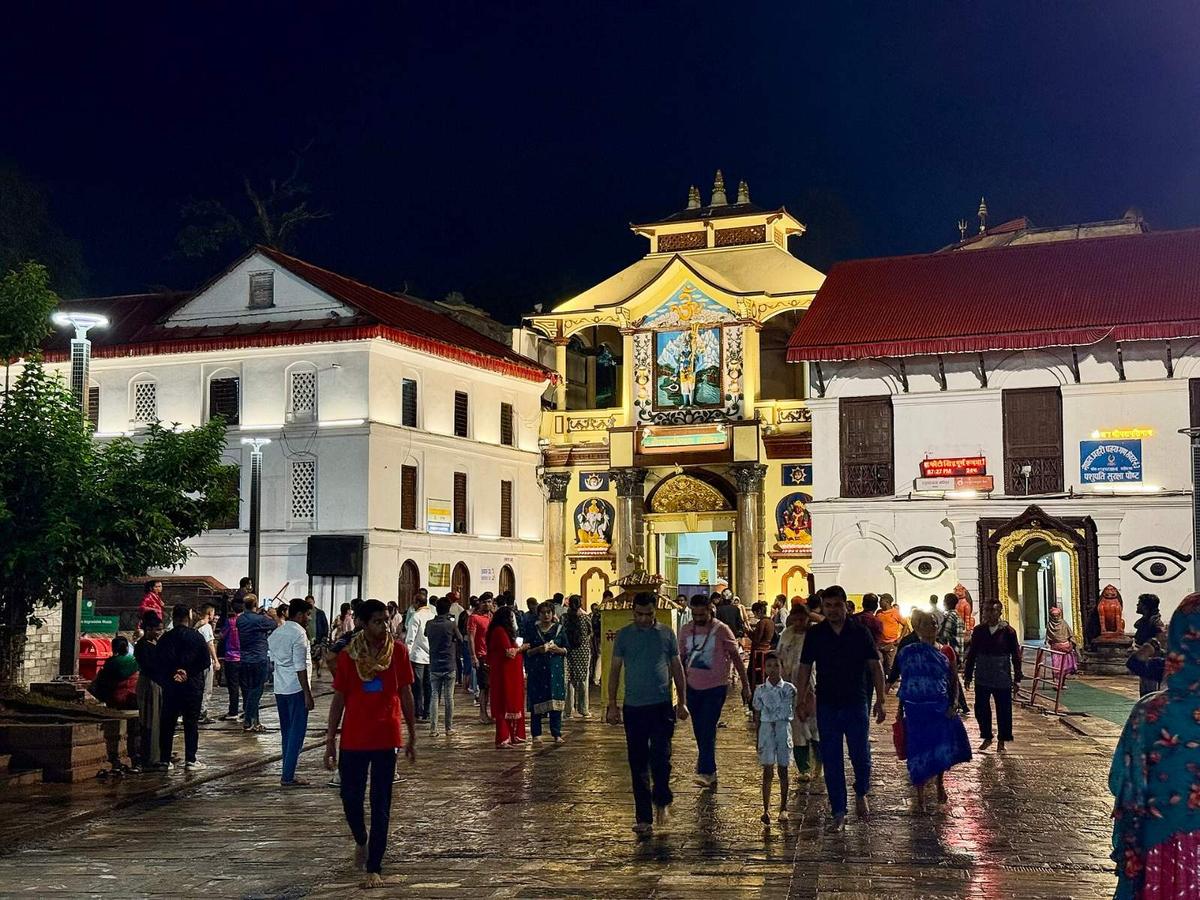
Taxis and microbuses drop you at Gaushala, near the gilded gates of Pashupatinath. Through the west gate you can see a golden Nandi, the bull that carries Shiva, and beyond it the main temple that only Hindus may enter. Across the Bagmati, on the terraces of the east bank, visitors of every faith sit and watch the ghats below.
Pashupatinath temple tickets cost NPR 1,000 for foreign visitors, listed per day per entry, and the same NPR 1,000 for SAARC and Chinese nationals, according to the Nepal Tourism Board. Indian and Nepali nationals enter free. The ticket covers the complex, ghats and gardens. The main sanctum is for Hindus only, and gate staff decide who that includes.
This page sticks to tickets and entry. For the rest of the city, start with our guide to places to visit in Kathmandu; for the temple's history, layout and festivals, read our full Pashupatinath visitor guide.
Updated 22 Nov 2026
In this guide
- How much are Pashupatinath temple tickets?
- Where do you buy a ticket, and what does it cover?
- Who may go inside the main temple?
- How do the gate staff decide who is Hindu?
- What can non-Hindus see at Pashupatinath?
- What are the opening hours and aarti times?
- What should you wear, and can you take photos?
- When is Pashupatinath most crowded?
- Do you need a guide at Pashupatinath?
- Frequently asked questions
- Plan your Pashupatinath visit with us
Key facts
- Foreign nationals
- NPR 1,000, listed "per day per entry" (Nepal Tourism Board, Heritage Site Entry Fees, checked 20 Nov 2026)
- SAARC and Chinese nationals
- NPR 1,000 (Nepal Tourism Board, checked 20 Nov 2026)
- Indian and Nepali nationals
- Free (Nepal Tourism Board, checked 20 Nov 2026)
- Children
- No child rate published; ask at the counter (Nepal Tourism Board and PADT pages, checked 20 Nov 2026)
- Opening hours
- 4 am to 9 pm, daily (PADT, checked 20 Nov 2026)
- Main sanctum
- Hindus only; non-Hindus welcome in the complex, ghats and gardens (PADT FAQ, checked 20 Nov 2026)
- Evening aarti
- Starts around dusk; listed start times run from 5 pm to 6:30 pm, so check the day's time (PADT and Nepal Tourism Board, checked 20 Nov 2026)
- Maha Shivaratri 2027
- 6 March 2027, public holiday (Ministry of Home Affairs holiday list, published 2 Mar 2026)
How much are Pashupatinath temple tickets?
The Nepal Tourism Board lists the Pashupatinath ticket at NPR 1,000 for foreign nationals, per day per entry. SAARC nationals pay NPR 1,000 too, except Indians, who are free. Chinese nationals pay NPR 1,000 and Nepalis pay nothing. At the Nepal Rastra Bank rate of 19 November 2026, NPR 1,000 is about USD 7.
| Visitor | Entry fee (per NTB) | Note |
|---|---|---|
| Foreign nationals | NPR 1,000 | Listed "per day per entry" |
| SAARC nationals, except India | NPR 1,000 | One travel guide says free; confirm at the counter |
| Indian nationals | Free | "Free for Indian Nationals" |
| Chinese nationals | NPR 1,000 | |
| Nepali nationals | Free | |
| Children | No child rate published | Ask at the counter |
Source: Nepal Tourism Board, Heritage Site Entry Fees, checked 20 November 2026.
Worth knowing:
- Re-entry is not explained. "Per day per entry" appears only in the foreign nationals' cell. If you plan to leave and come back the same day, ask first.
- The table is undated. NTB notes that it is "as per the information provided by the concerned departments", so the counter has the final word. We found no ticket price on the website of the Pashupati Area Development Trust (PADT), which manages the site.
- Fees have changed before. In June 2009 the foreigners' fee doubled from Rs 250 to Rs 500, The Himalayan Times reported. We found no published date for the later rise to NPR 1,000.
Indians sit inside the SAARC column but are exempted by name. In 2009 a PADT member secretary told The Himalayan Times: "We have never charged Indian visitors because both Nepal and India share cultural and religious identities."
Where do you buy a ticket, and what does it cover?
NTB says heritage-site fees are paid at the entry point, and PADT runs four entry counters, at Guheshwori, Vatsaleshwori, Tilganga and Gate No. 3, where it counts visitors. Pay at the counter by the gate you use. The ticket lets non-Hindu visitors into the complex, ghats, gardens and surrounding shrines, but not the main sanctum.
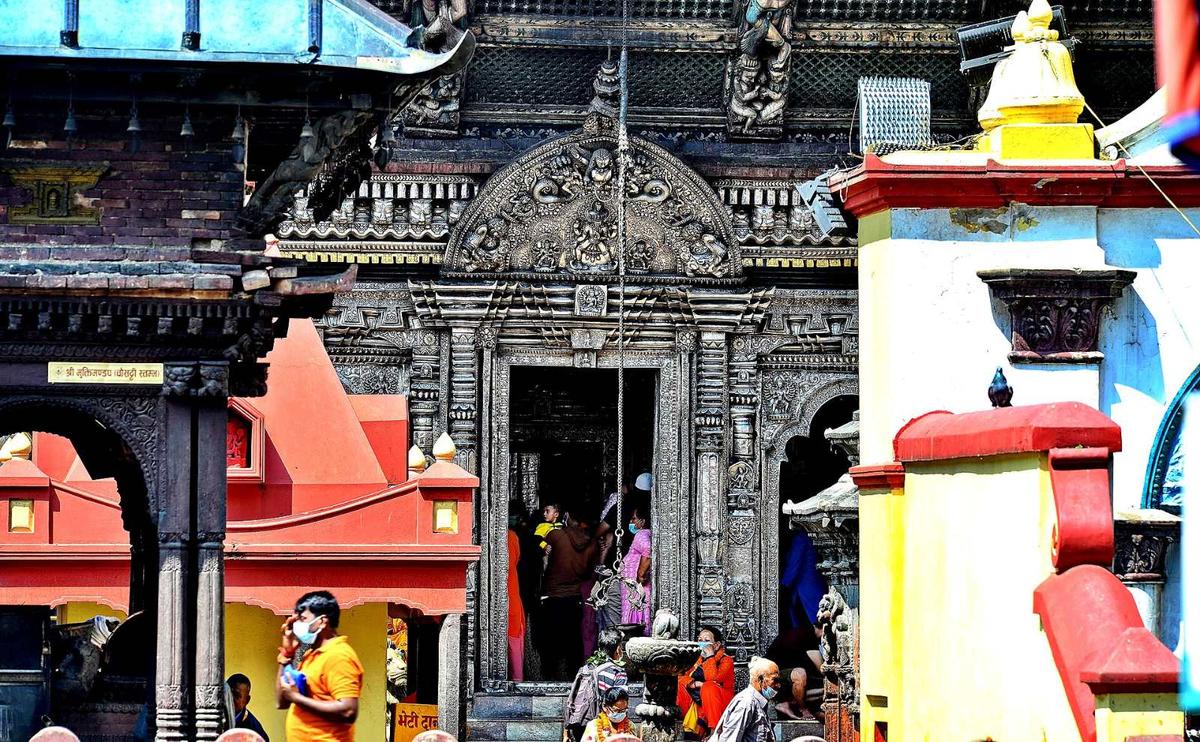
NTB puts the temple 5 km east of the city centre; taxis, microbuses and three-wheelers called tempos drop you at Gaushala. Keep your ticket on you once inside, in case staff ask to see it. No official page lists payment methods at the counters, so carry Nepali rupees in cash.
Your ticket opens part of a World Heritage Site. UNESCO inscribed the Kathmandu Valley in 1979, and Pashupati is one of its seven monument zones. In UNESCO's words, "Pashupati has an extensive Hindu temple precinct".
Who may go inside the main temple?
Only Hindus may enter the main sanctum. PADT says non-Hindu visitors are welcome in the wider complex, including the ghats, gardens and surrounding shrines, and that anyone may watch the evening aarti from the east bank. The Nepal Tourism Board says the same, pointing non-Hindus to the terraces across the river.
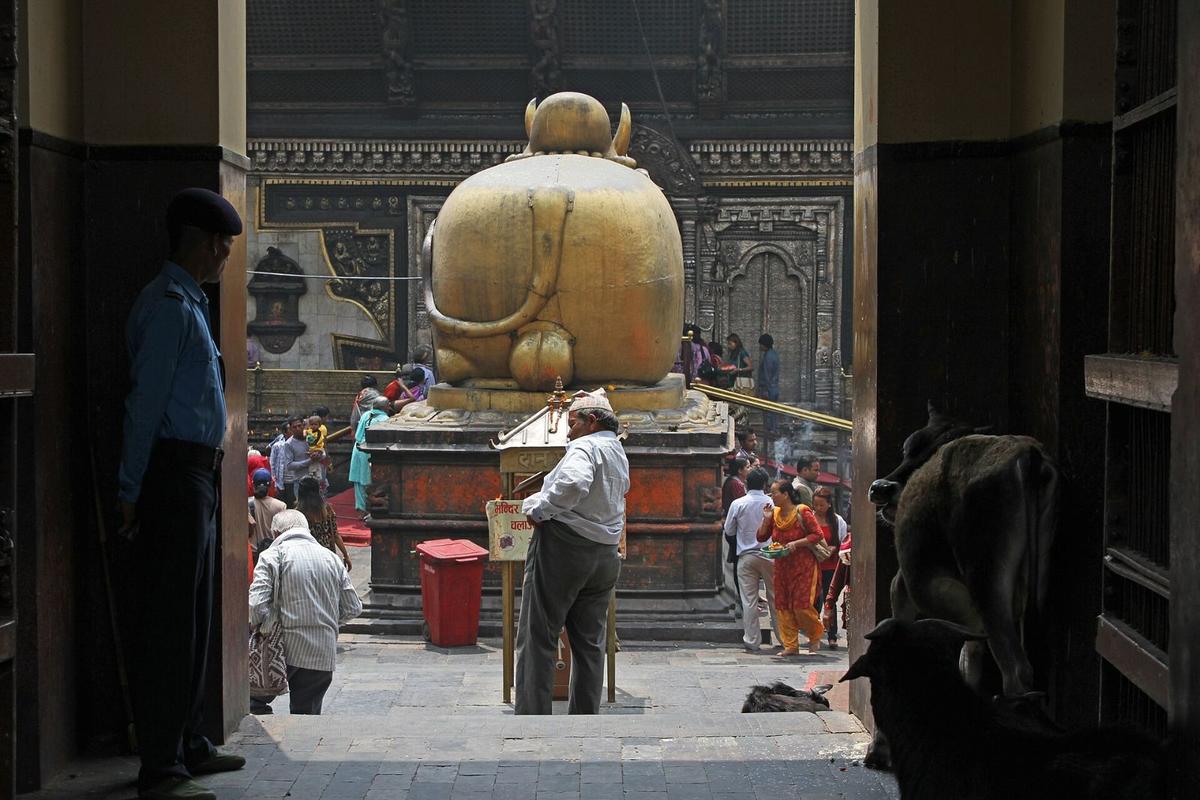
"Non-Hindu visitors are warmly welcome to the Pashupatinath complex, including the ghats, gardens, and surrounding shrines. However, the main sanctum is restricted to Hindus only. Visitors of all backgrounds may observe the evening Aarti from the eastern bank of the Bagmati."
Pashupati Area Development Trust, FAQ, pashupati.org.np, checked 20 November 2026
NTB's wording is broader: "The main temple complex is open only to the Hindus; non-Hindus must satisfy themselves by observing from the terraces just across the Bagmati River to the east."
PADT restated the rule in a Nepali press release dated 2083/06/20 BS and posted on its website on 7 October 2026: entry to Shree Pashupatinath temple is permitted only to followers of the Hindu religion (our translation). It followed a TikTok video of a couple entering through the temple's main gate. PADT wrote to Nepal Police and the Cyber Bureau seeking action, set up an inquiry committee to report within a week and said temple security would be further strengthened.
How do the gate staff decide who is Hindu?
There is no written test. In a May 2025 report, Nepal Views quoted a former member-secretary of the trust saying the guards use their own discretion, and the trust's spokesperson saying that anyone the guards doubt must show documents proving they are Hindu. In practice, the decision is made at the gate.
"There's no other official standard. The guards simply use their discretion."
Govinda Tandon, former member-secretary of the Pashupati Development Trust, quoted in Nepal Views, 10 May 2025
Nepal Views also reported a signpost reading "ONLY FOR HINDU", and the spokesperson confirmed that, in practice, appearance, mainly skin colour, has been the main criterion. Being Hindu does not always get you in. On 25 April 2025 an Indian-origin Hindu couple living in the US was refused; their passports did not state a religion, and the other proof they offered was not accepted (Nepal Views). In 2000, pilgrims from Bali were turned away although their travel documents said "Hindu" (Nepali Times). Tandon also told Nepal Views that Buddhists, Jains and Sikhs are allowed inside. PADT's pages say only "Hindus", so treat that as one former official's view, not a written rule.
If you are Hindu and hope to go inside:
- Wear modest, traditional clothes, as you would at a temple at home.
- Carry any document that shows you are Hindu. PADT has not published a list of accepted documents.
- Leave leather shoes, belts and cameras outside, as NTB advises.
- If you are refused, accept it calmly. You can still see the temple and the aarti from the east bank.
What can non-Hindus see at Pashupatinath?
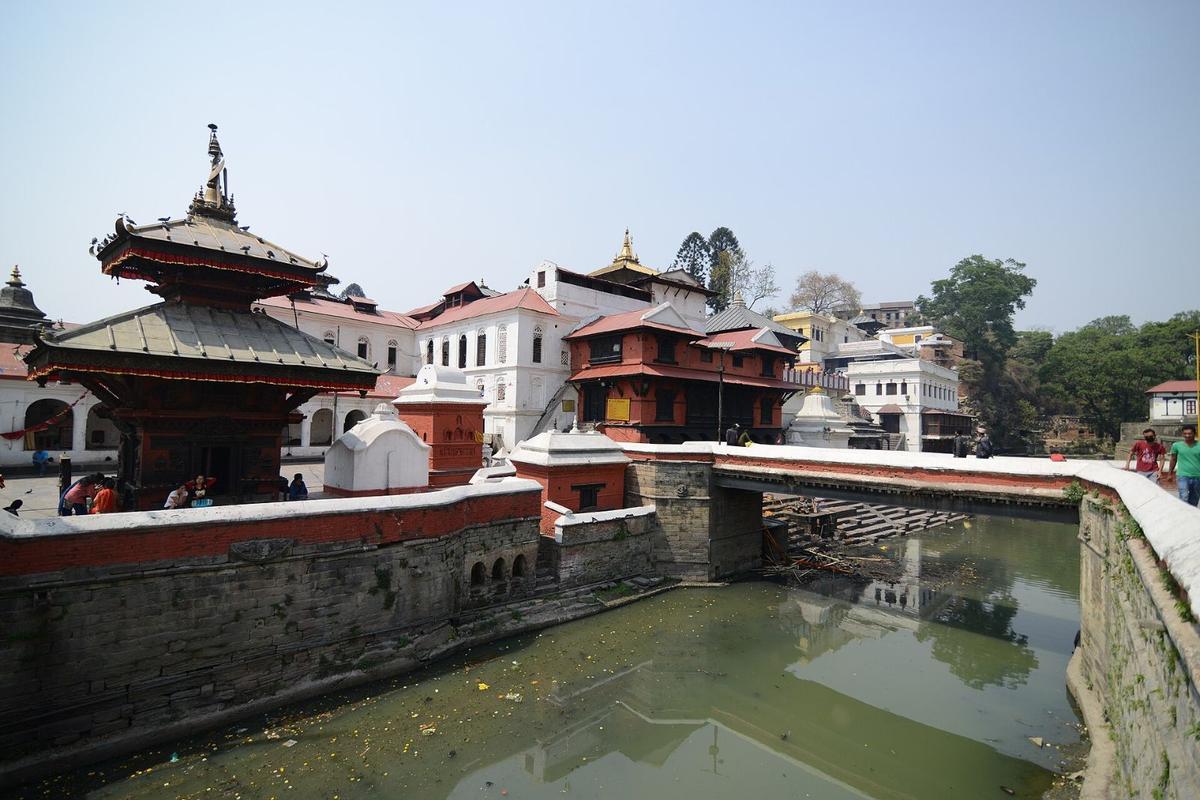
Quite a lot. Non-Hindus can walk the wider complex, the ghats, gardens and surrounding shrines, sit on the east-bank terraces facing the main temple, and watch the evening aarti from there. What they cannot do is step inside the main sanctum or Guhyeshwari Temple.
| Place | Non-Hindu visitors | Source |
|---|---|---|
| Main sanctum | Not permitted | PADT |
| Complex, ghats, gardens, surrounding shrines | Welcome | PADT FAQ |
| East-bank terraces and the evening aarti | Open to all | Nepal Tourism Board; PADT |
| Guhyeshwari Temple | Denied entry; see it from outside | Nepal Tourism Board |
| Panchadewal, Gorakhnath, Vishworupa | No entry rule published; ask first | PADT monuments list |
All rows checked 20 November 2026.
PADT's monuments list does not say whether non-Hindus may enter each shrine, so ask staff before stepping into one.
The cremation ghats are in full view from the east bank. At Arya Ghat, PADT runs Kiryaputri, its cremation and last-rites service, 24 hours a day. These are real funerals with grieving families: watch from a distance, keep your voice low and do not photograph the people.
What are the opening hours and aarti times?
PADT says the temple opens at 4 am and closes at 9 pm daily. The Bagmati aarti, the evening ceremony of lamps on the riverbank, starts around dusk. Official pages give different start times: PADT's temple page says around 6 pm in winter and 7 pm in other seasons, while its home page has shown 5 pm and 6:30 pm, so check on the day. Anyone may watch from the east bank.
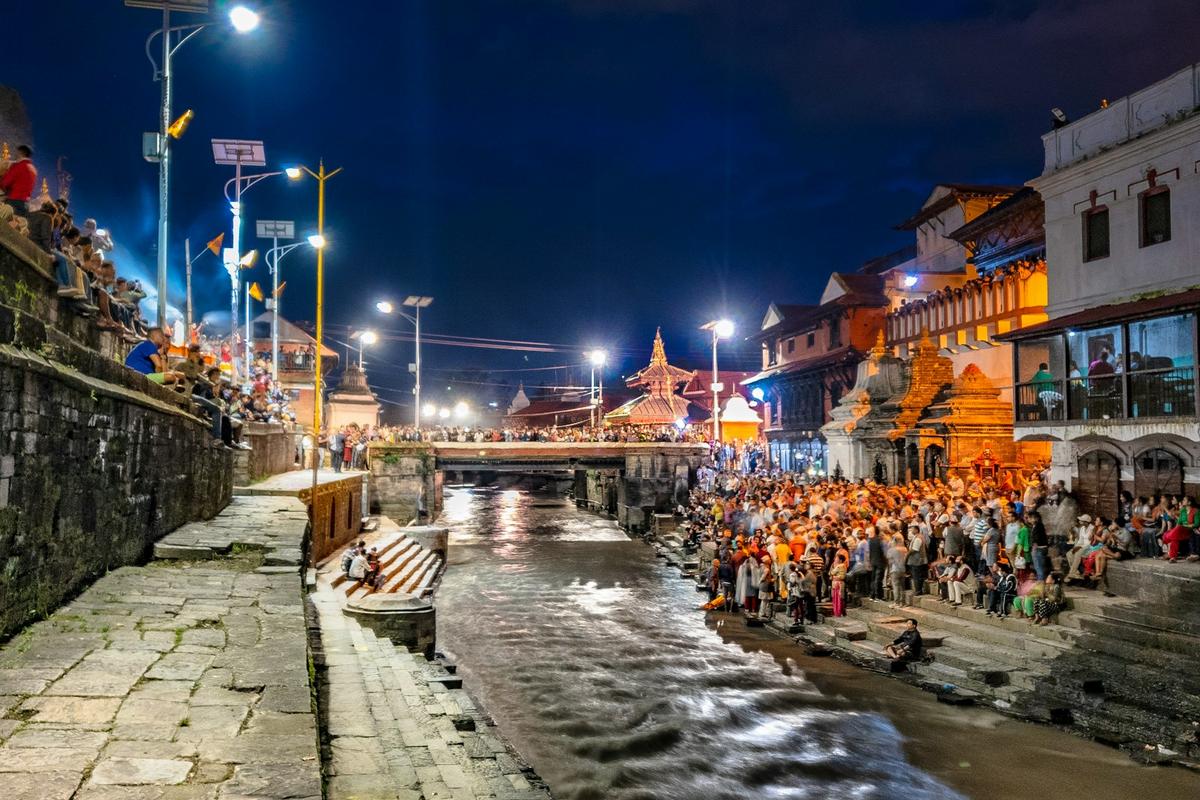
The official sources differ. On 19 November 2026, PADT's home page showed the evening aarti at 5 pm to 7 pm in one box and 6:30 pm to 7:30 pm in another, while NTB says "The Aarati starts at 6 pm every evening." Check on the day.
NTB says the aarti has been "a regular tradition since the year 2006". PADT suspended it in March 2020 under the government ban on large gatherings, The Himalayan Times reported. For Hindus going in for darshan (viewing the deity), PADT's home page shows a dated darshan schedule, but it is not always updated daily, and PADT's temple page says the gates close at 2 pm and reopen for the evening aarti, so check at the gate.
What should you wear, and can you take photos?
Dress modestly. PADT requires modest, traditional dress and says shorts, sleeveless tops and western casual wear are not permitted on temple grounds, with shoes off before entering any shrine. Photography is banned inside the main sanctum and during religious ceremonies, but you may photograph the exterior, ghats and public areas respectfully.
In practice, wear long trousers or a long skirt and a top that covers your shoulders. PADT does not define "western casual wear", so lean towards plain, traditional clothes; our guide on what to wear in Nepal has more. PADT says nothing about leather, but NTB says "leather items that include shoes, belts and cameras are forbidden within the temple complex and must be left outside", so follow that to be safe.
On photography, NTB's page is stricter than PADT's: "Photography is strictly prohibited." PADT bans photography during religious ceremonies, and we treat cremations the same way. Drones need prior written permission from PADT.
When is Pashupatinath most crowded?
On Maha Shivaratri, Shiva's great night, which falls on 6 March 2027 on the Ministry of Home Affairs holiday list. Teej, the women's festival, also draws large crowds, and NTB says the temple is just as busy every Ekadashi, the 11th day of the lunar fortnight. On those days, allow extra time for queues.
On Maha Shivaratri, 15 February 2026, PADT opened all four gates from 2 am, and more than one million devotees had visited the temple area on the festival the year before, The Kathmandu Post reported. For a calm first visit, pick an ordinary day.
Do you need a guide at Pashupatinath?
No PADT or NTB page says you need a guide to enter the Pashupati area or buy a ticket, so going on your own is fine. A licensed guide helps with context, the entry rule and festival crowds. If you hire one on the spot, ask to see their licence first.
In October 2024, Republica reported that the Tourist Guide Association of Nepal and the Tourist Police have inspected unpermitted guides at Pashupatinath and other heritage sites.
Frequently asked questions
How much is the Pashupatinath temple ticket for Indians?
Nothing. The Nepal Tourism Board lists Pashupatinath as free for Indian nationals, while other SAARC nationals pay NPR 1,000. Carry your passport or the ID you used to enter Nepal. Entry to the main sanctum is a separate matter: it depends on being Hindu, not on nationality.
Can non-Hindus enter Pashupatinath temple?
Yes, into the complex, but not the main sanctum. PADT welcomes non-Hindu visitors to the ghats, gardens and surrounding shrines, and everyone may watch the evening aarti from the east bank. The Nepal Tourism Board says non-Hindus are also denied entry to nearby Guhyeshwari Temple.
Can foreigners enter Pashupatinath temple?
Yes, into the Pashupati area with a ticket, but only Hindus may go into the main sanctum. Nepal Views reported in May 2025 that guards use their discretion and may ask for documents proving you are Hindu. Foreign Hindus have been turned away before, so dress traditionally and accept the decision at the gate.
What is Pashupatinath opening and closing time?
PADT lists the temple as open daily from 4 am to 9 pm. PADT posts a dated puja schedule each day for Hindus going inside, and on big festivals the gates can open earlier: on Maha Shivaratri 2026, PADT opened all four gates at 2 am. Check the day's schedule on pashupati.org.np before you go.
What is the dress code at Pashupatinath?
PADT requires modest, traditional dress and says shorts, sleeveless tops and western casual wear are not permitted on temple grounds. Shoes come off before you enter any shrine. The Nepal Tourism Board adds that leather shoes, belts and cameras are forbidden inside the temple complex.
Plan your Pashupatinath visit with us
Our guide to places to visit in Kathmandu puts Pashupatinath alongside the valley's other sites, and temples in Kathmandu and Boudhanath Stupa are natural next reads. Pilgrims can also use our Nepal pilgrimage guide.
To see Pashupatinath with our team, look at the Boudhanath and Pashupatinath aarti tour, the Patan, Boudhanath and Pashupatinath day tour or the Kathmandu UNESCO World Heritage Sites day tour.
Send us a WhatsApp message or use the enquiry form with your dates, and we will tell you what fits.