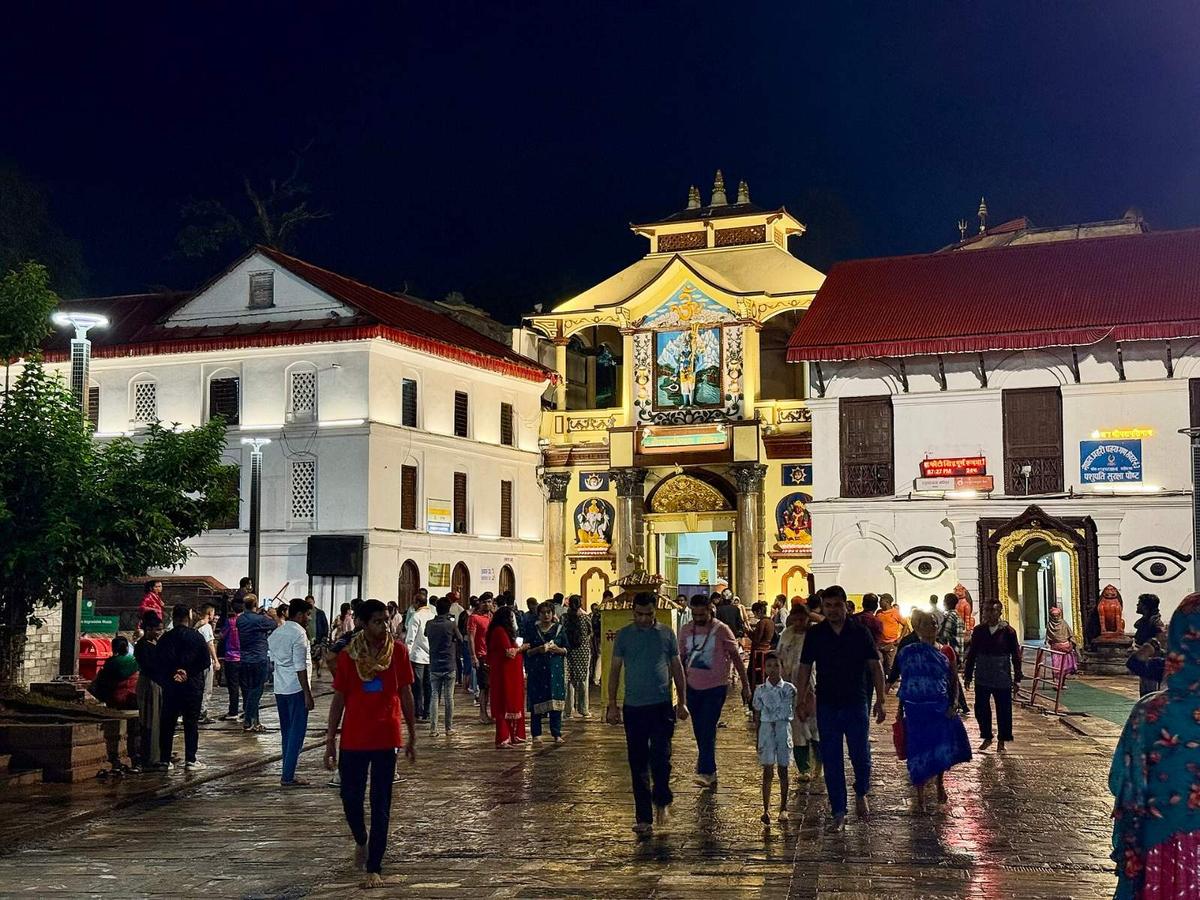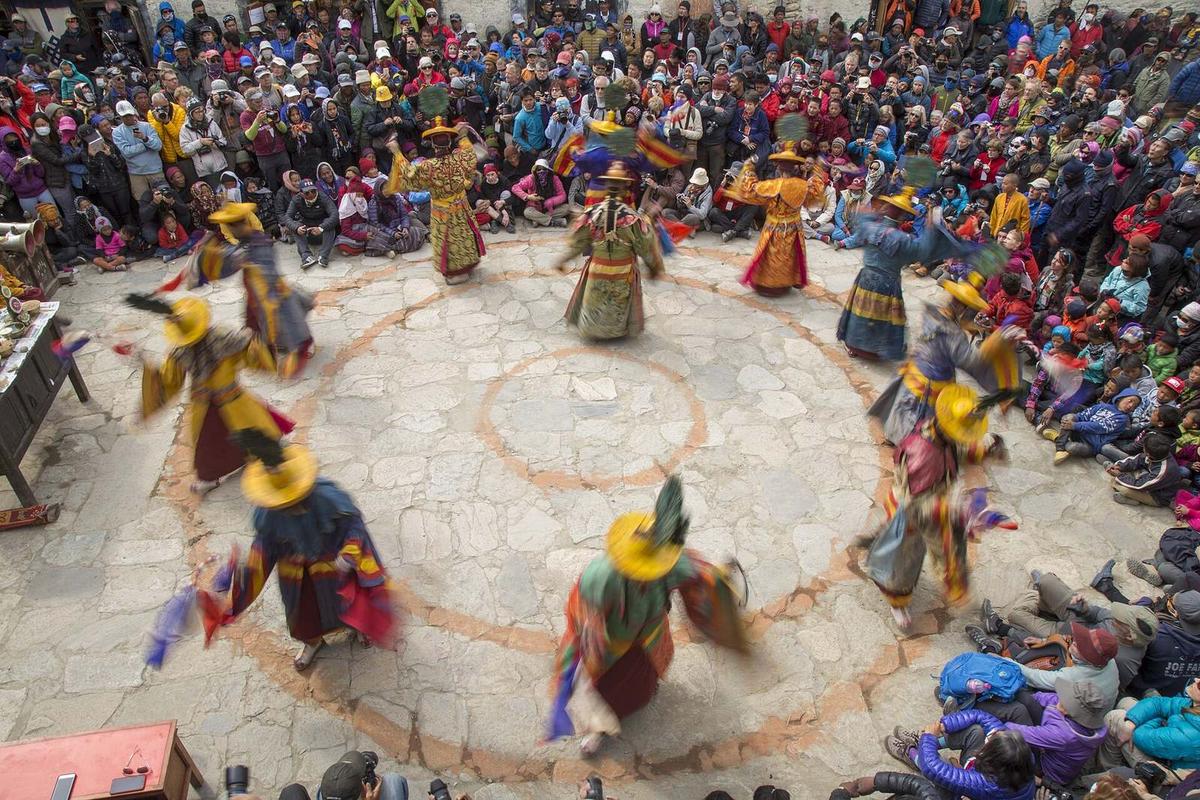
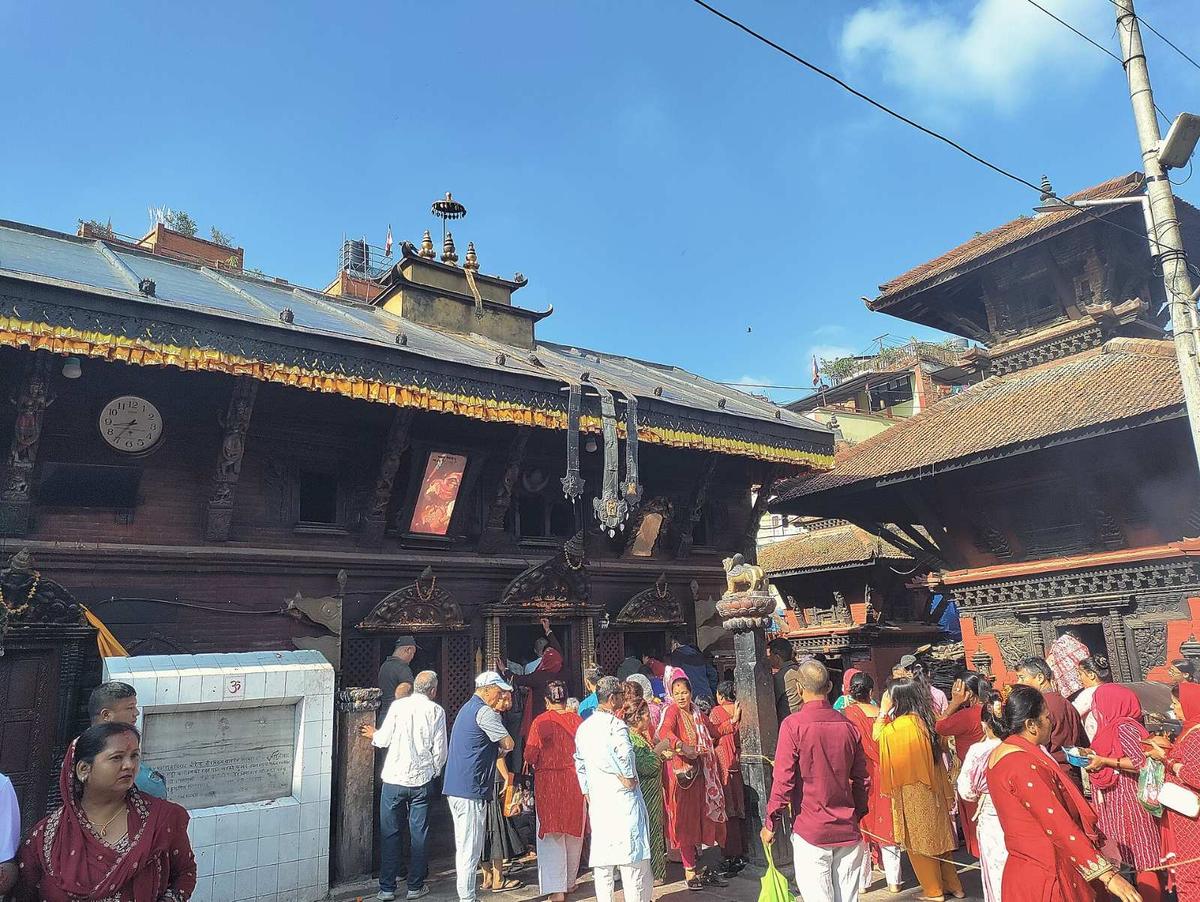
On Krishna Janmashtami in August 2025, the queue of worshippers waiting to enter Krishna Mandir stretched up to Kumbheshwar Temple, about 1.4 kilometres, a local community leader told the news agency ANI. On the festival night, devotees chant prayers, sing devotional songs and light oil lamps. On an ordinary morning the square is far quieter.
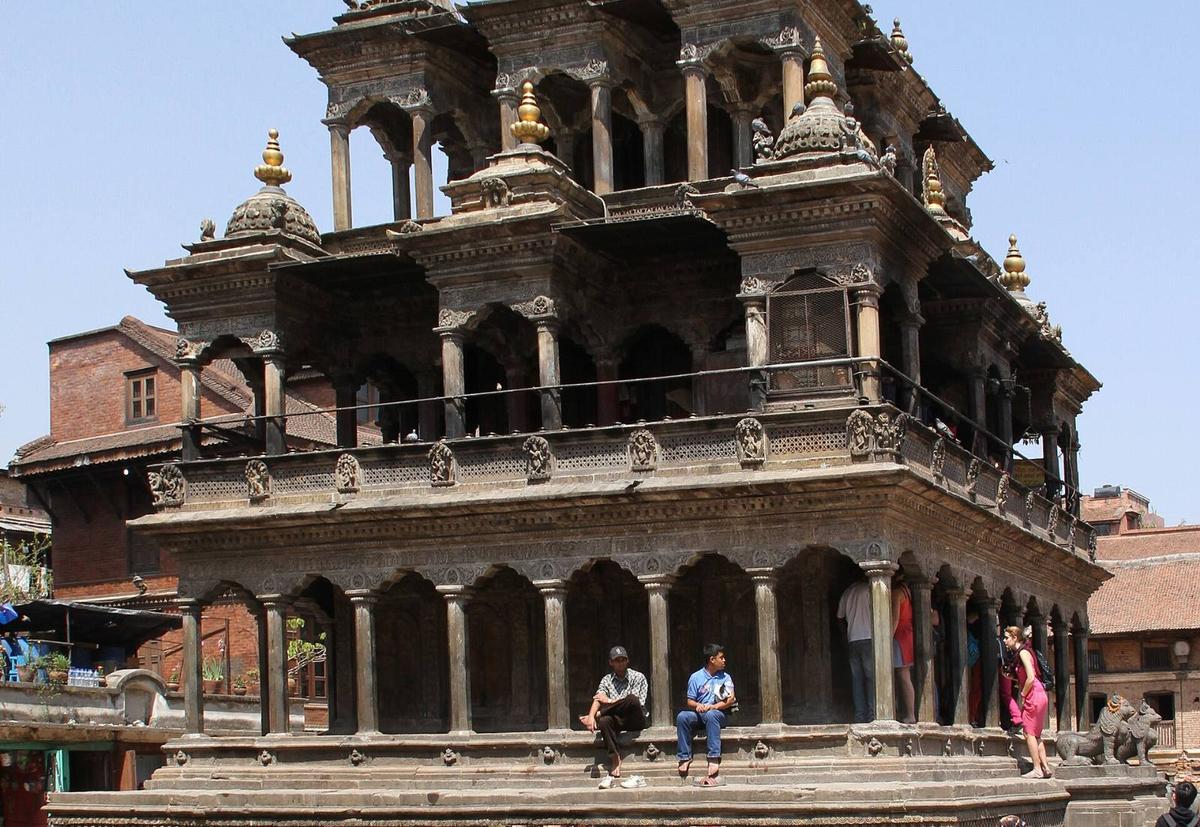
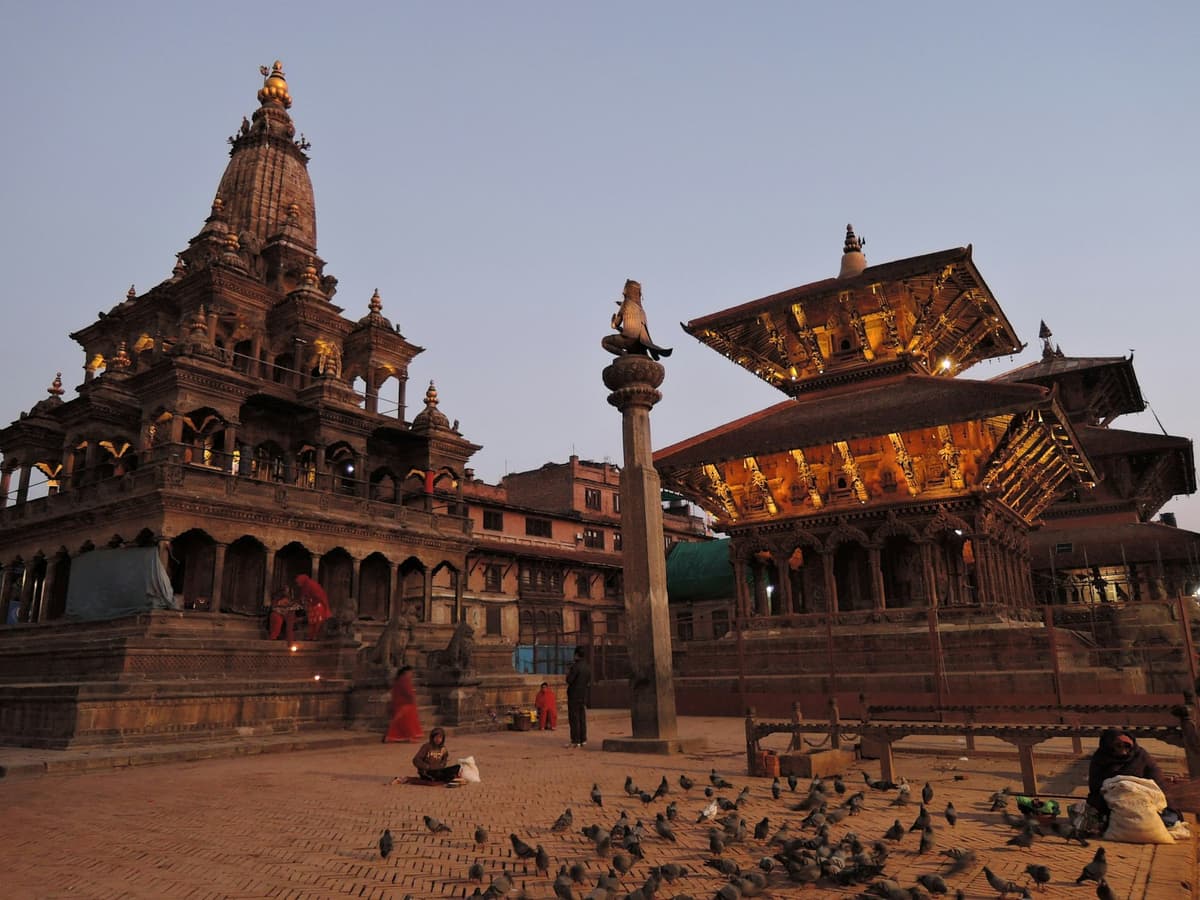
Krishna Mandir, Patan's stone shikhara temple on the west side of Patan Durbar Square, was built by King Siddhi Narasimha Malla in 1637, according to the Nepal Tourism Board. It has three storeys, 21 gilded spires and carved friezes from the Mahabharata and Ramayana. Non-Hindus may not go inside, but everyone can study the carvings from the square.
This page covers the temple only. To fit Patan into a wider day, see our guide to places to visit in Kathmandu, and for the rest of the square, read our Patan Durbar Square visitor guide.
Updated 19 Nov 2026
In this guide
- Who built Krishna Mandir Patan, and when?
- What makes the stone shikhara different?
- What is on each floor of the temple?
- What is the Garuda pillar in front of the temple?
- Can non-Hindus go inside Krishna Mandir?
- What happened to the temple in the 2015 earthquake?
- When is Krishna Janmashtami at Patan?
- How much is the Patan Durbar Square ticket?
- How do you get there, and what is nearby?
- Frequently asked questions
- Plan your Patan visit with us
Key facts
- Builder
- King Siddhi Narasimha Malla of Patan (Documenta Nepalica; Lonely Planet, checked 20 Nov 2026)
- Year built
- 1637 (Nepal Tourism Board, checked 20 Nov 2026)
- Style
- Shikhara, built entirely of stone, 21 gilded spires (Nepal Tourism Board, checked 20 Nov 2026)
- Floors
- Three: Krishna, then a Shiva linga, then Lokeshwor (Nepali Times, 24 Sep 2022; Nepal Traveller, 26 Aug 2024)
- Location
- West side of Patan Durbar Square; Patan is 5 km south-east of Kathmandu (Nepal Traveller, 24 Jan 2023; NTB, checked 20 Nov 2026)
- Who may enter
- Hindus only; non-Hindus view it from the square (Lonely Planet, checked 20 Nov 2026)
- Ticket, foreigners
- NPR 1,000, Patan Museum included (NTB entry fees, checked 20 Nov 2026)
- Ticket, SAARC and Chinese nationals
- NPR 500 each (NTB entry fees, checked 20 Nov 2026)
- Main festival
- Krishna Janmashtami; 4 September in 2026 (The Himalayan Times, 4 Sep 2026)
- 2015 earthquake
- Did not collapse; restored, reopened at Janmashtami 2018 (Lonely Planet; OnlineKhabar, 2 Sep 2018)
Who built Krishna Mandir Patan, and when?
King Siddhi Narasimha Malla of Patan built Krishna Mandir, and the Nepal Tourism Board dates it to 1637. Lonely Planet gives the same year. Records of the temple's trust (guthi), catalogued by the Heidelberg Academy of Sciences and Humanities, carry the year Nepal Sambat 757, the calendar era traditionally used by the Newar people.
You will see the king's name spelt several ways, such as Siddhi Narsingh Malla. It is the same man. Not every account agrees on the year: a 2019 Nepali Times feature says construction was completed in 1661. The Nepal Tourism Board, Lonely Planet and OnlineKhabar all give 1637, and that is the date we use.
The founding story is a legend, told in two versions. In one, from the Nepali Times, the king saw Krishna in a dream and built the temple where he then found a statue of the god. In the other, retold by Nepal Traveller, he dreamed of Krishna and Radha standing in front of the royal palace and ordered a temple on that spot.
What makes the stone shikhara different?
Krishna Mandir is a shikhara temple: a tall, tapering stone tower, not the stacked brick-and-timber roofs of the pagodas around it. The Nepal Tourism Board says it is built entirely of stone and is said to be the first shikhara-style temple in Nepal. Lonely Planet adds that it used carved stone in place of the usual brick and timber.
"The Krishna Temple, built entirely of stone, is said to be the first specimen of Shikhara-style architecture in Nepal."
Nepal Tourism Board, "Patan", checked 20 November 2026
Lonely Planet calls it the earliest stone temple of its type in Nepal. Look for:
- The 21 gilded spires. The Nepal Tourism Board counts 21.
- The tiers. Lonely Planet describes three tiers fronted by columns, and Nepal Traveller describes pavilions (chhatri) around the upper levels.
Patan Durbar Square is one of the seven Monument Zones that make up the Kathmandu Valley World Heritage property. UNESCO's summary praises the valley's "craftsmanship in brick, stone, timber and bronze that are some of the most highly developed in the world". This temple is where you see the stone part of that sentence.
What is on each floor of the temple?
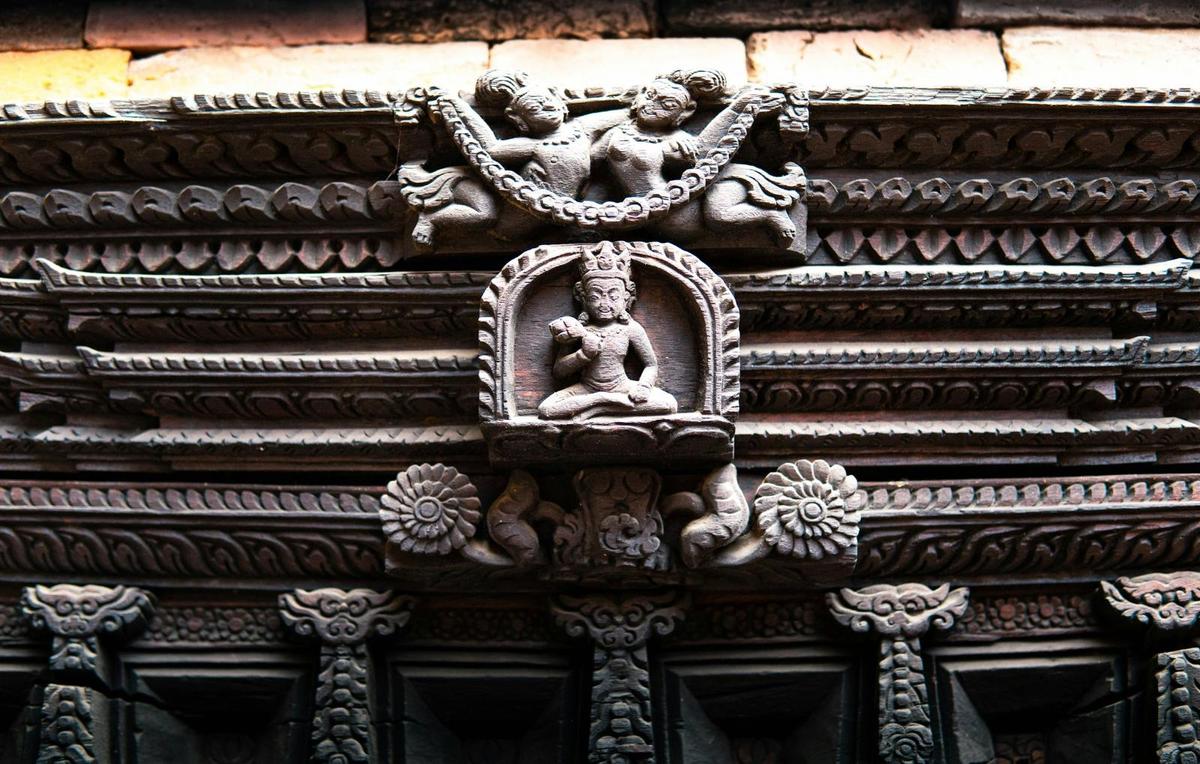
Each storey of Krishna Mandir holds a different deity. Krishna, the main god, is on the first floor. A Shiva linga is on the second. The third floor holds Lokeshwor, a form of the Buddhist Avalokiteshvara, according to Nepal Traveller. The carved friezes run along the beams of the lower two floors.
| Floor | Shrine | Carving on the beam | Source |
|---|---|---|---|
| First | Krishna, the main shrine | Scenes from the Mahabharata | Lonely Planet, checked 20 Nov 2026 |
| Second | Shiva as a linga | Scenes from the Ramayana, hard to see from the ground | Nepali Times, 24 Sep 2022; Lonely Planet |
| Third | Lokeshwor (Avalokiteshvara) | Not described in our sources | Nepal Traveller, 26 Aug 2024; ANI, 16 Aug 2025 |
OnlineKhabar, in 2018, says the upper two floors house Shiva and Buddha, which fits, since Lokeshwor is a Buddhist figure.
The friezes are the reason to linger. OnlineKhabar calls the carvings along the beams above the first-floor and second-floor pillars the temple's most notable feature, because they narrate the Mahabharata and the Ramayana, two Hindu epics.
What is the Garuda pillar in front of the temple?
The stone column facing Krishna Mandir carries Garuda, the man-bird who carries the god Vishnu. Krishna is revered as the eighth avatar (earthly form) of Vishnu, as the Nepali Times and The Himalayan Times both note, so Garuda faces his temple. Lonely Planet describes the figure kneeling with folded arms on top of the column.
"Garuda pillars are usually positioned in front of Vishnu temples as Garuda is the mount of god Vishnu."
Institute of Conservation, University of Applied Arts Vienna, "Garuda Pillar" report, checked 20 November 2026
That Vienna team surveyed and conserved the pillar in 2018 and checked it again in May 2024. Their report says:
- The pillar is dated 1637.
- The stone shaft is about 6 m tall, without its plinth and sculpture.
- The Garuda figure is fire-gilded copper.
- It stands between Krishna Mandir and the Patan Museum.
The report adds that such pillars also stand before royal palaces, as at Patan Durbar Square.
Can non-Hindus go inside Krishna Mandir?
No. Non-Hindus are not allowed inside Krishna Mandir, as Lonely Planet and Nepal Traveller both state. The temple is still a working place of worship, run by local Brahmins according to Nepal Traveller. Everyone, Hindu or not, may walk around the outside and study the carvings.
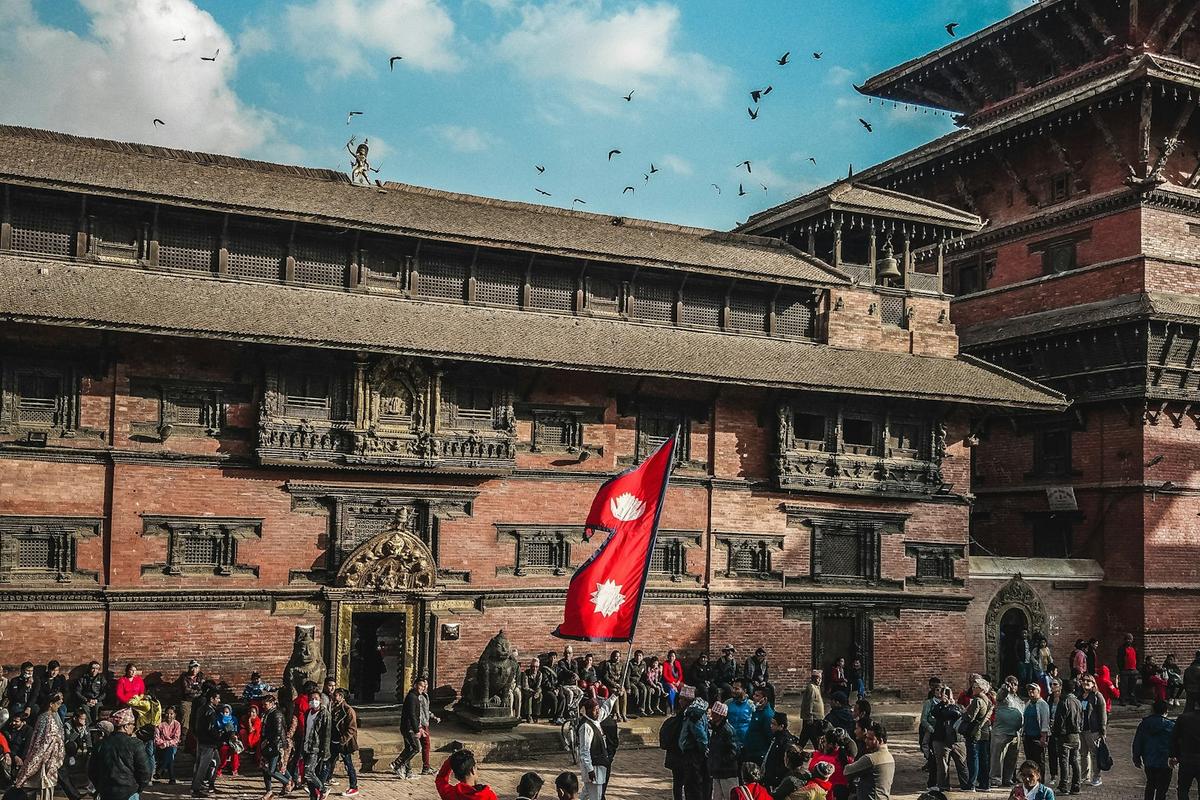
"Non-Hindus cannot enter to view the statue of Krishna, the goatherd, but you'll often hear temple musicians playing upstairs."
Lonely Planet, Krishna Mandir (Patan), checked 20 November 2026
Nepal Traveller notes that the Mahabharata story on the first-floor beam can be followed from the courtyard. Hindu visitors, including pilgrims from India, can join the worship inside. Our advice: cover shoulders and knees, and follow the lead of the worshippers around you.
What happened to the temple in the 2015 earthquake?
Krishna Mandir did not collapse in the 2015 earthquake, but its corner stones and upper floor needed careful repair. The Kathmandu Valley Preservation Trust (KVPT), a conservation group that works with Nepal's Department of Archaeology on the square, restored it, and it reopened to pilgrims at Janmashtami 2018.
Sources describe the damage differently. Lonely Planet says the temple stayed intact, and the Nepali Times in 2022 says it withstood the shaking. OnlineKhabar, reporting at the 2018 reopening, describes structural damage, especially to the top two floors.
"The floor above the Krishna shrine was the worst hit by the earthquake."
Dr Rohit Ranjitkar, Kathmandu Valley Preservation Trust, quoted by OnlineKhabar, 2 September 2018
According to OnlineKhabar, KVPT's engineers and craftsmen from Patan and Bhaktapur replaced corner stones one at a time, leaving each two to three weeks for the lime mortar to set. The Nepali Times describes stones of up to 700 kg lifted about 5 m. OnlineKhabar puts the work at 18 months; the Nepali Times calls it a three-year job. Either way, pilgrims returned at Janmashtami 2018 for the first time in three years.
When is Krishna Janmashtami at Patan?
Krishna Janmashtami, the festival of Krishna's birth, falls on Bhadra Krishna Ashtami: the eighth day (Ashtami) of the dark fortnight of the lunar month of Bhadra. Lonely Planet places it in August to September. In 2026 it fell on 4 September, and in 2025 on 16 August.
"A major fair is being held at the historic Krishna Mandir in Mangalbazar, Patan, drawing large crowds."
The Himalayan Times, 4 September 2026
The Himalayan Times notes that Krishna is believed to have been born at midnight, so worship runs late. Nepal Traveller describes devotees staying beyond midnight and lighting small oil lamps (diya).
The date moves every year with the lunar calendar. We have not found an official 2027 date, so check Nepal's official holiday list when it is published, or ask us. Non-Hindu visitors should expect long queues and large crowds, watch from the edge of the square and leave the queue to worshippers.
How much is the Patan Durbar Square ticket?
The fee the Nepal Tourism Board lists is for Patan Durbar Square, where the temple stands, paid at the entry point. Foreigners pay NPR 1,000, which includes the Patan Museum. SAARC nationals, Indians included, pay NPR 500, and Chinese nationals also pay NPR 500.
| Visitor | Fee | What it covers |
|---|---|---|
| Foreign nationals | NPR 1,000 | Square, Patan Museum included |
| SAARC nationals (Indians included) | NPR 500 | Square; confirm at the counter |
| Chinese nationals | NPR 500 | Square |
| Nepali citizens | NPR 30 (student card NPR 15, school letter NPR 10) | Patan Museum only |
| Children | No child rate listed | Ask at the booth |
Source: Nepal Tourism Board, Heritage Site Entry Fees, checked 20 November 2026. NTB notes the table comes from the departments concerned, so fees can change.
On the day:
- Carry your passport or a national ID card. The fee depends on nationality, so we suggest having proof with you.
- Pay at the ticket booth at the entry point.
- With a SAARC passport, confirm the rate at the counter before you pay.
- Keep the ticket, because the foreigners' ticket also covers the Patan Museum.
The museum's official website does not yet list fees or opening hours, and we found no official source for the hours, so we do not print them. ShareSansar reported an online booking trial in February 2026, but we have not seen it open to the public. Buy at the booth.
How do you get there, and what is nearby?
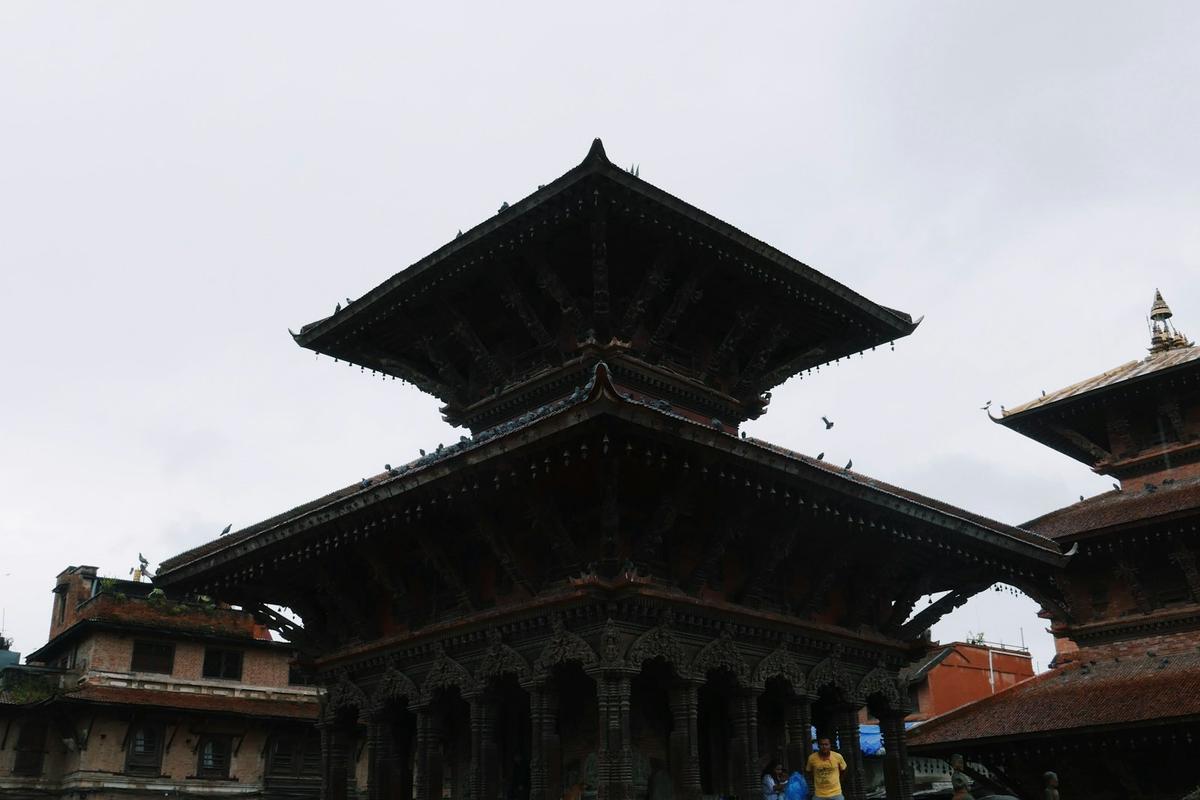
Patan lies 5 km south-east of Kathmandu, according to the Nepal Tourism Board. You can come by taxi or private car, and the time depends on traffic. Krishna Mandir is on the west side of Patan Durbar Square, facing the old royal palace, and other sights are close by.
Three to add, from the Nepal Tourism Board's Patan page:
- Patan Museum. The renovated Keshav Narayan Chowk, a courtyard of the old palace, now holds a museum of bronze artefacts.
- Golden Temple (Hiranya Varna Mahavihar). A three-storey shrine dating from the 12th century, about a five-minute walk west and north from the northern end of Durbar Square. A small separate fee may apply.
- Kumbheshwar Temple. The only five-storey pagoda in Patan, built in 1392. Its spring is said to be fed from Gosainkunda.
For more heritage sites, see our overview of temples in Kathmandu, our Kathmandu Valley travel guide, and our guide to Bhaktapur Durbar Square.
Frequently asked questions
What is the history of Krishna Mandir, Patan?
Legend says King Siddhi Narasimha Malla had a vision of Krishna and built the temple on that spot. The Nepal Tourism Board dates it to 1637 and says it is said to be the first shikhara-style temple in Nepal. It did not collapse in 2015, was restored by the Kathmandu Valley Preservation Trust and reopened to pilgrims at Janmashtami 2018.
Where is Krishna Mandir in Kathmandu?
Krishna Mandir is in Patan, the old city 5 km south-east of Kathmandu, not in Kathmandu's own Durbar Square. It stands on the west side of Patan Durbar Square, facing the old royal palace that now houses the Patan Museum. The Himalayan Times places it in Mangalbazar, Patan.
What is the Patan Durbar Square entry fee for Indians?
Indian visitors pay the SAARC rate of NPR 500 for Patan Durbar Square, according to the Nepal Tourism Board, checked 20 November 2026. Carry your passport or ID and confirm the rate at the counter, since fees can change. Hindu visitors, including Indian pilgrims, may also go inside Krishna Mandir to worship.
Does the Patan Durbar Square ticket include the museum?
Yes, for foreign visitors. The NPR 1,000 foreigners' ticket covers Patan Durbar Square including the Patan Museum, according to the Nepal Tourism Board. For Nepali citizens, the listed fees apply only to the museum: NPR 30, or NPR 15 with a student card and NPR 10 with a school letter.
Plan your Patan visit with us
Our guide to places to visit in Kathmandu shows what to pair Patan with, and pilgrims planning a longer route can start with our Nepal pilgrimage guide.
If you would like a licensed guide to walk you through the square, these trips include Patan:
- Patan, Boudhanath and Pashupatinath day tour
- Three Durbar Squares tour of the valley
- Kathmandu UNESCO World Heritage Sites day tour
Send us a WhatsApp message or use the enquiry form with your dates, and our Kathmandu team will help you plan the day.