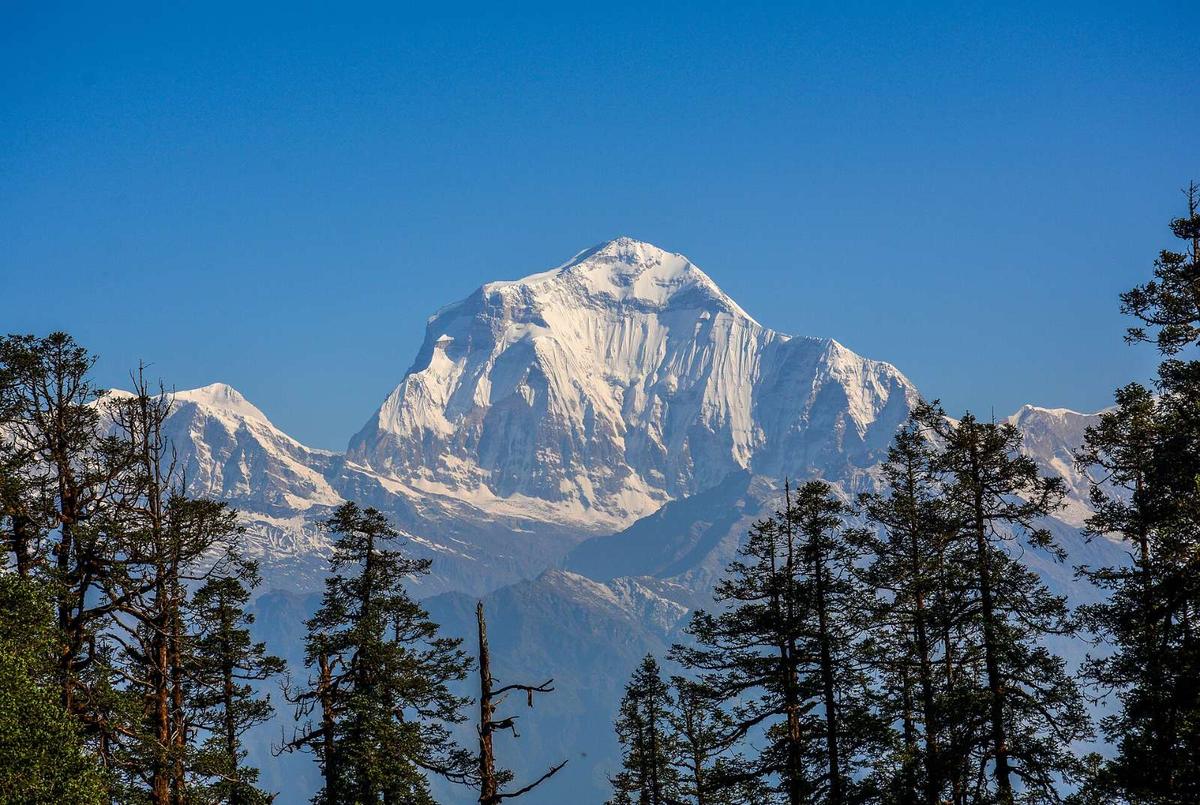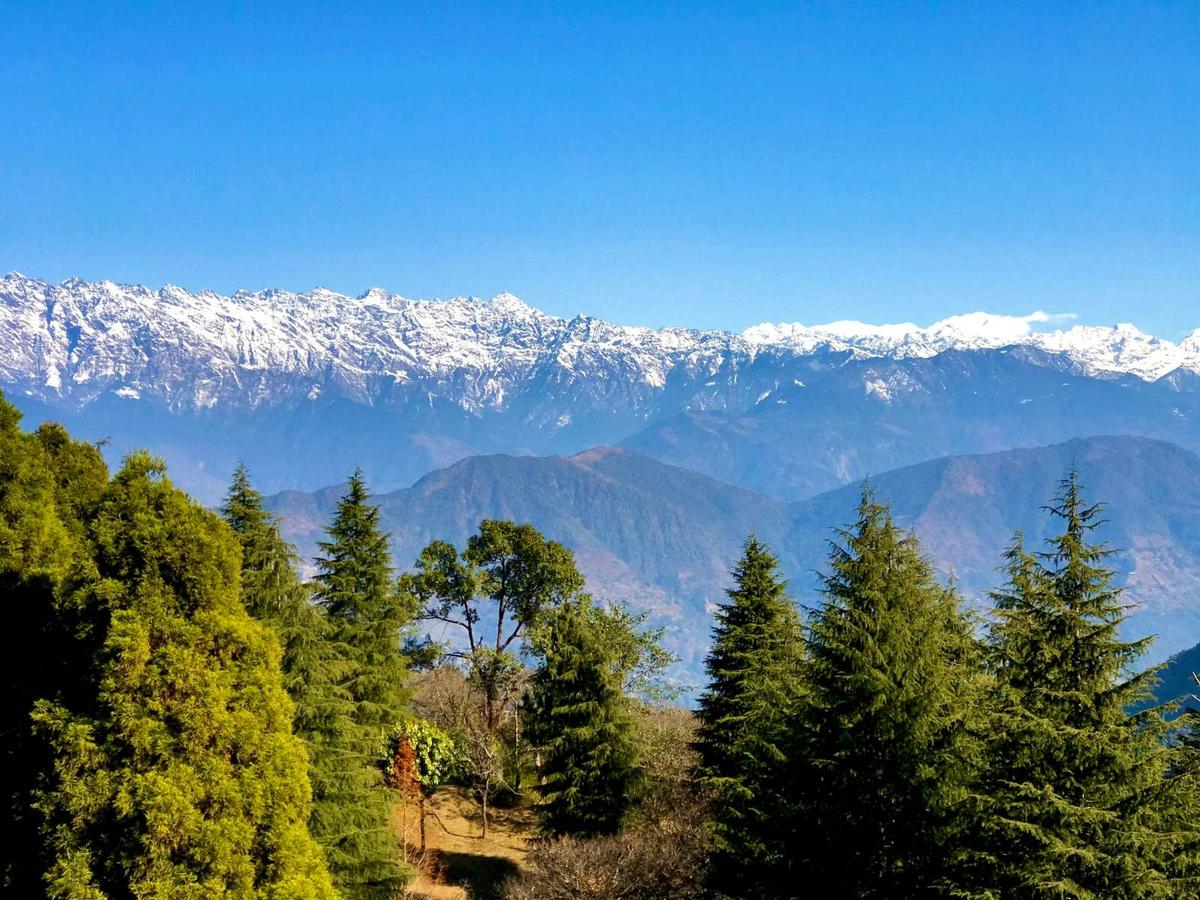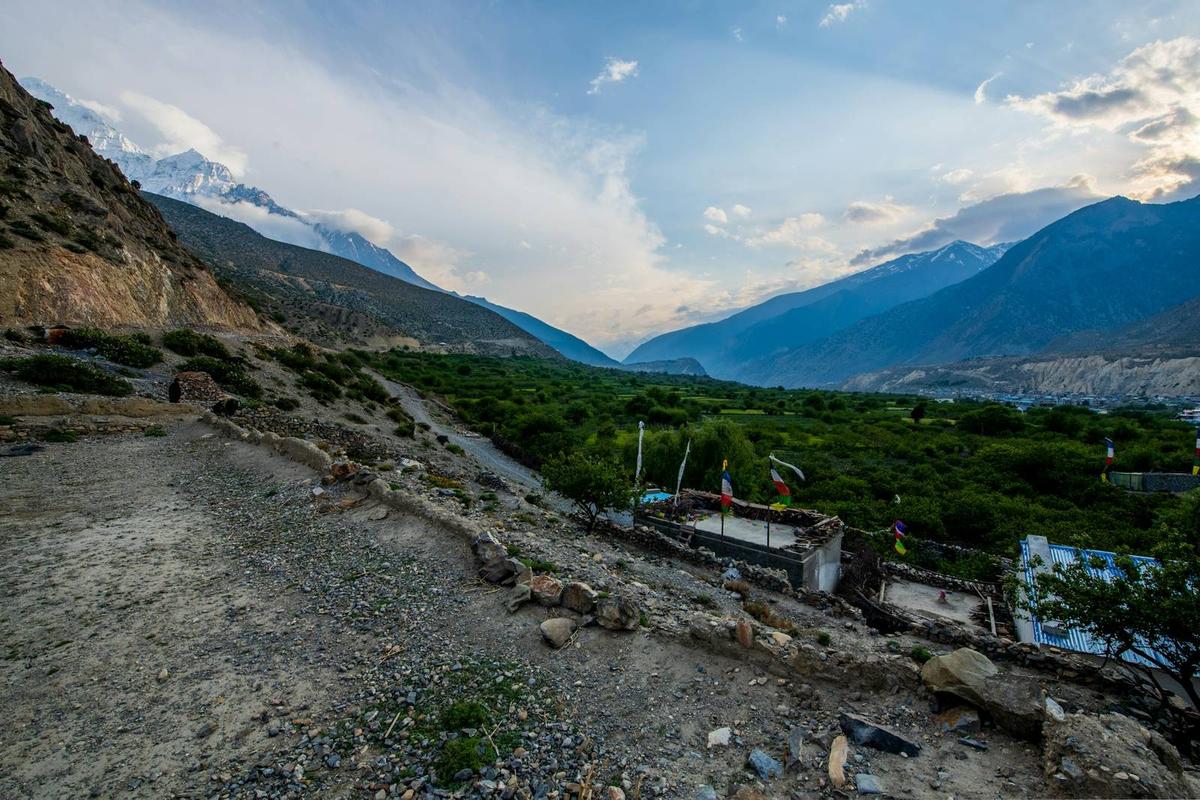
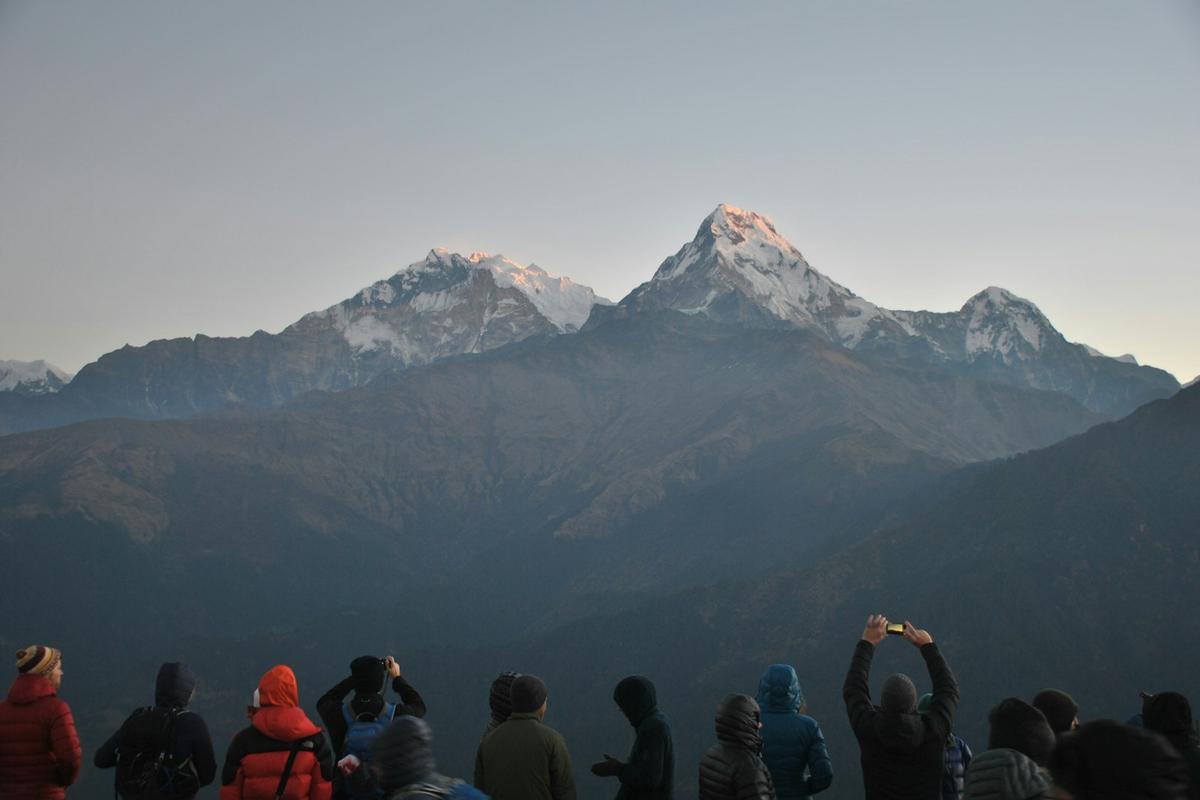
Before dawn at Ghorepani, head torches start moving up the trail behind the lodges. Poon Hill stands about 350 m above the village, a climb of 30 minutes to an hour, and people wait at the top for first light on Annapurna and Dhaulagiri. On our shortest version of this walk, you are back in Pokhara the next day.
Short treks in Nepal, as we plan them, take two to seven days. From Pokhara, Australian Camp is an easy overnight, Poon Hill and Khumai Danda take two or three days and Mardi Himal about four. From Kathmandu, Helambu needs no flight; the Everest View trek needs a week and Lukla flights. Longer routes are in our guide to the best treks in Nepal.
Updated 22 Nov 2026
In this guide
- Short treks in Nepal compared
- Which short treks fit 2 to 3 days?
- Which short treks fit 4 to 5 days?
- Which short treks fit 6 to 7 days?
- Altitude on a short trek
- Short treks from late November to February
- Guides, permits and road heads
- Frequently asked questions
- Plan your short trek with us
Key facts
- Annapurna Conservation Area (ACAP) permit
- NPR 3,000 foreigners, NPR 1,000 SAARC, per person per entry (NTNC ePermit and NTB park entry fees, checked 21 Nov 2026)
- ACAP permit bought at a checkpost
- Double fee (NTNC ePermit, checked 21 Nov 2026)
- Shivapuri Nagarjun National Park
- NPR 1,000 foreigners, NPR 600 SAARC (Park office fee schedule and NTB, checked 21 Nov 2026)
- Langtang National Park (Helambu)
- NPR 3,000 foreigners, NPR 1,500 SAARC (NTB park entry fees, checked 21 Nov 2026)
- Sagarmatha National Park
- NPR 3,000 foreigners, NPR 1,500 SAARC (NTB park entry fees, checked 21 Nov 2026)
- Khumbu Pasang Lhamu Trek-Card
- NPR 3,000; NPR 2,000 SAARC and China (Khumbu Pasang Lhamu Rural Municipality, checked 21 Nov 2026)
- Poon Hill
- 3,210 m (NTB, checked 21 Nov 2026)
- Lukla airstrip
- 2,846 m (CAAN AIP, checked 21 Nov 2026)
- Altitude risk begins
- Sleeping at about 2,450 m or higher (US CDC Yellow Book, checked 21 Nov 2026)
- Clearest skies
- October and November (NTB climate page, checked 21 Nov 2026)
Short treks in Nepal compared
"Days" is the usual range, plus our own trip length. "Highest point" is the top of the walk, not always where you sleep.
| Route | Days | Start and end | Highest point | Permit | Best months | Who it suits |
|---|---|---|---|---|---|---|
| Australian Camp and Dhampus | 1 to 2 from Pokhara | Kande to Dhampus | Australian Camp, NTB gives 2,220 m | ACAP | October to February (our trip page) | Families, a first night in the hills |
| Ghorepani Poon Hill | 2 to 5 from Pokhara; ours 2 | Pokhara, jeep to Banthanti or Ulleri | Poon Hill, 3,210 m | ACAP and a local viewpoint ticket | October and November; mid-March to mid-May for rhododendrons | Beginners and families |
| Poon Hill and Ghandruk loop | Ours 3 | Pokhara, out via Ghorepani, back via Ghandruk | Poon Hill, 3,210 m | ACAP | As Poon Hill | A first trek with a Gurung village |
| Khumai Danda | 2 to 3; ours 3 | Hemja or Saripaka to Ghachok | Korchon viewpoint, 3,682 m | ACAP, we arrange it | April to May, October to November (our trip page) | Fit walkers who want a quieter ridge |
| Panchase | 2 to 4 | Hills above Pokhara | About 2,500 m | None, says NTB's Pokhara booklet | Spring and autumn | Forest walking at a low height |
| Chisapani and Nagarkot | Ours 2, 3 or 4 | Sundarijal to Nagarkot | Borlang Bhanjyang, about 2,430 m (our figure) | Shivapuri Nagarjun National Park ticket | September to May (NTB) | Kathmandu stays, no flight |
| Mardi Himal | 4 to 7; ours 4 from Pokhara | Kande to Siding | Upper Viewpoint, about 4,200 m | ACAP | Spring and autumn | Fit walkers who want a high ridge |
| Mohare Danda | 2 to 6, depending on the start | Galeshwor on the Beni road, via Nangi | About 3,300 m | Ask us which permits apply | Spring and autumn | Community lodges, fewer people |
| Pikey Peak | Ours 5 from Kathmandu | Kathmandu by road to Dhap Bazaar | About 4,065 m | A local fee may apply; ask us | Spring and autumn | Everest range views without a Lukla flight |
| Helambu | 5 to 10; ours 6 | Sundarijal to Melamchi Bazaar | Tharepati, about 3,690 m | Shivapuri and Langtang national parks | Spring and autumn | Village culture with no flight |
| Everest View via Namche | 7 to 10; ours 7 | Kathmandu, flight to Lukla | Hotel Everest View, published at 3,880 to 3,962 m | Sagarmatha National Park and the Trek-Card | March to May, September to November (our trip page) | A week, Everest views, room for a spare day |
The takeaway: count your days, then pick a base.
Which short treks fit 2 to 3 days?
With two or three days, pick a route close to a road head: Australian Camp, Poon Hill, the Ghandruk loop, Khumai Danda or Panchase from Pokhara, or the valley rim from Kathmandu. Of these, the Poon Hill routes (Ghorepani, and Tadapani on the loop) and Khumai Danda sleep above about 2,450 m, the CDC's altitude-illness line.
Australian Camp and Dhampus
Australian Camp is one of the gentlest overnight walks from Pokhara. On our trip you drive to Kande in about 45 minutes to an hour, then walk up for 1.5 to 2 hours. NTB gives the camp's height as 2,220 m.
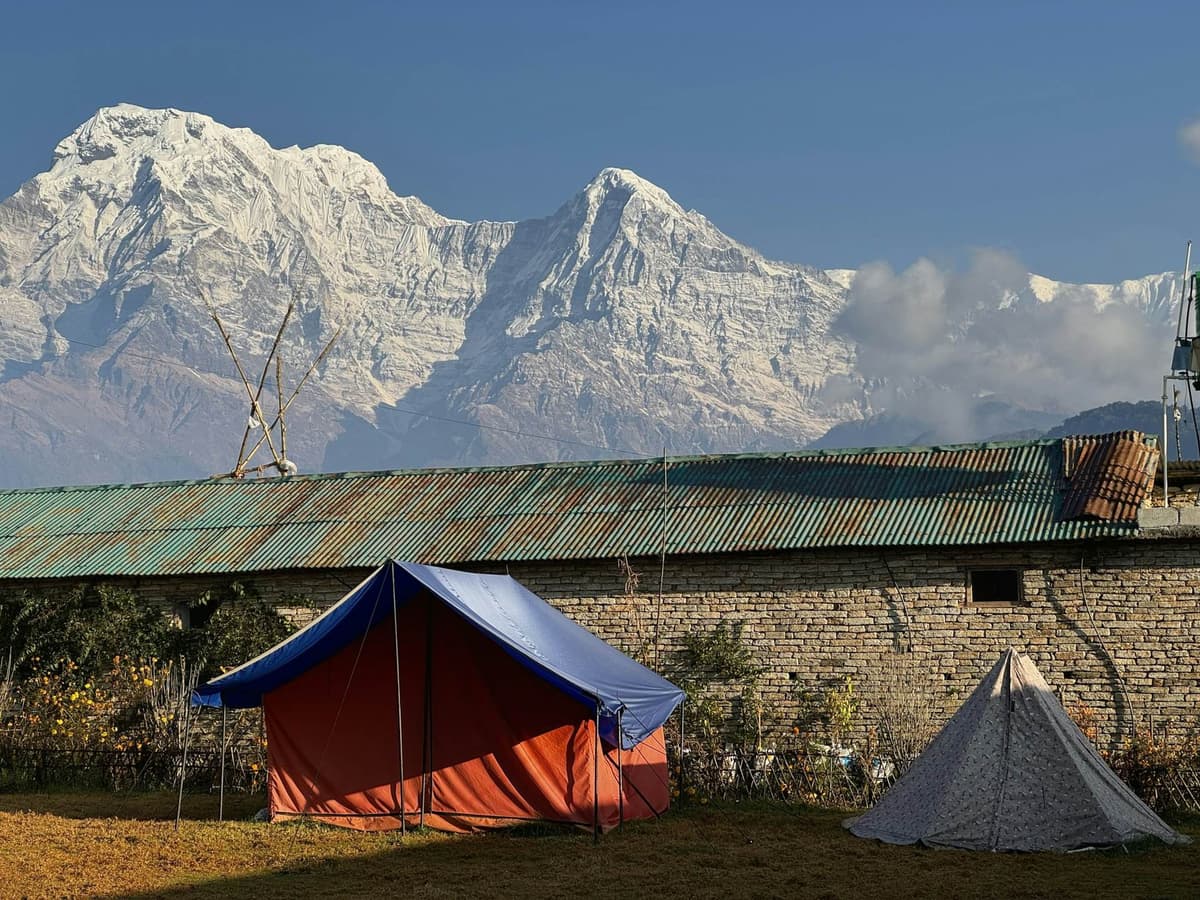
The camp is inside the Annapurna Conservation Area, so you need its entry permit, known as the ACAP permit; children below 10 do not need one. Next morning you walk down through Dhampus, about 1,650 m. Good for: young children or a spare day in Pokhara.
Ghorepani Poon Hill
Ghorepani Poon Hill is the classic short trek from Pokhara. On our trips a jeep takes you to Banthanti, or to Ulleri when the upper road is poor, in 3 to 4 hours, and you walk 3 to 4 hours to Ghorepani, about 2,860 m (published 2,850 to 2,874 m). Next morning you climb Poon Hill, 3,210 m, for sunrise.
"The Ghorepani Poon Hill Trek is one of the most popular short treks in Nepal, perfect for beginners and families. The highlight is the sunrise from Poon Hill (3,210m), where the peaks of Annapurna and Dhaulagiri glow golden."
Nepal Tourism Board, top trekking destinations page, checked 21 Nov 2026
Ours takes two days, Pokhara to Pokhara; NTB suggests three to four days for families. A local viewpoint ticket is collected at Poon Hill; Nepalnews reported it at NPR 150 for foreign visitors, so check at the gate.
The Ghandruk loop
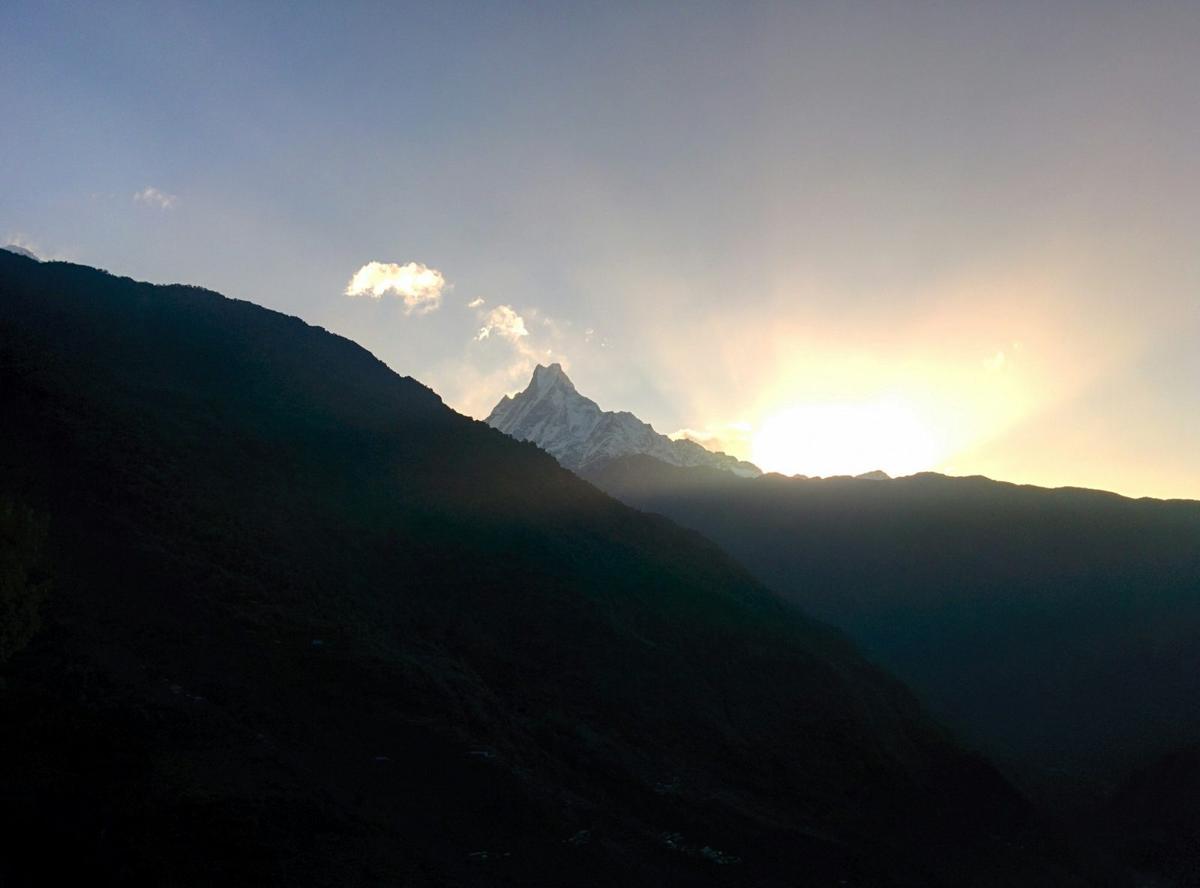
Add one day and Poon Hill becomes a loop. Our three-day version crosses the Deurali ridge to sleep at Tadapani, about 2,600 to 2,700 m, then walks 3 to 5 hours downhill to Ghandruk, which NTB calls "a traditional Gurung village". The Gurung are one of the hill peoples of the Annapurna foothills. The Nayapul to Ghandruk road, blocked by floods from 13 August 2026, had fully reopened by 22 September 2026, RSS reported.
Khumai Danda
Khumai Danda is a steeper, quieter ridge north of Pokhara ("danda" means ridge or hill in Nepali). Republica reported that "it takes only two days to trek the Saripaka-Khumaidanda-Korchang route"; ours takes three. You sleep at Khumai Danda, 3,245 m, and walk up to the Korchon viewpoint, 3,682 m (Republica).
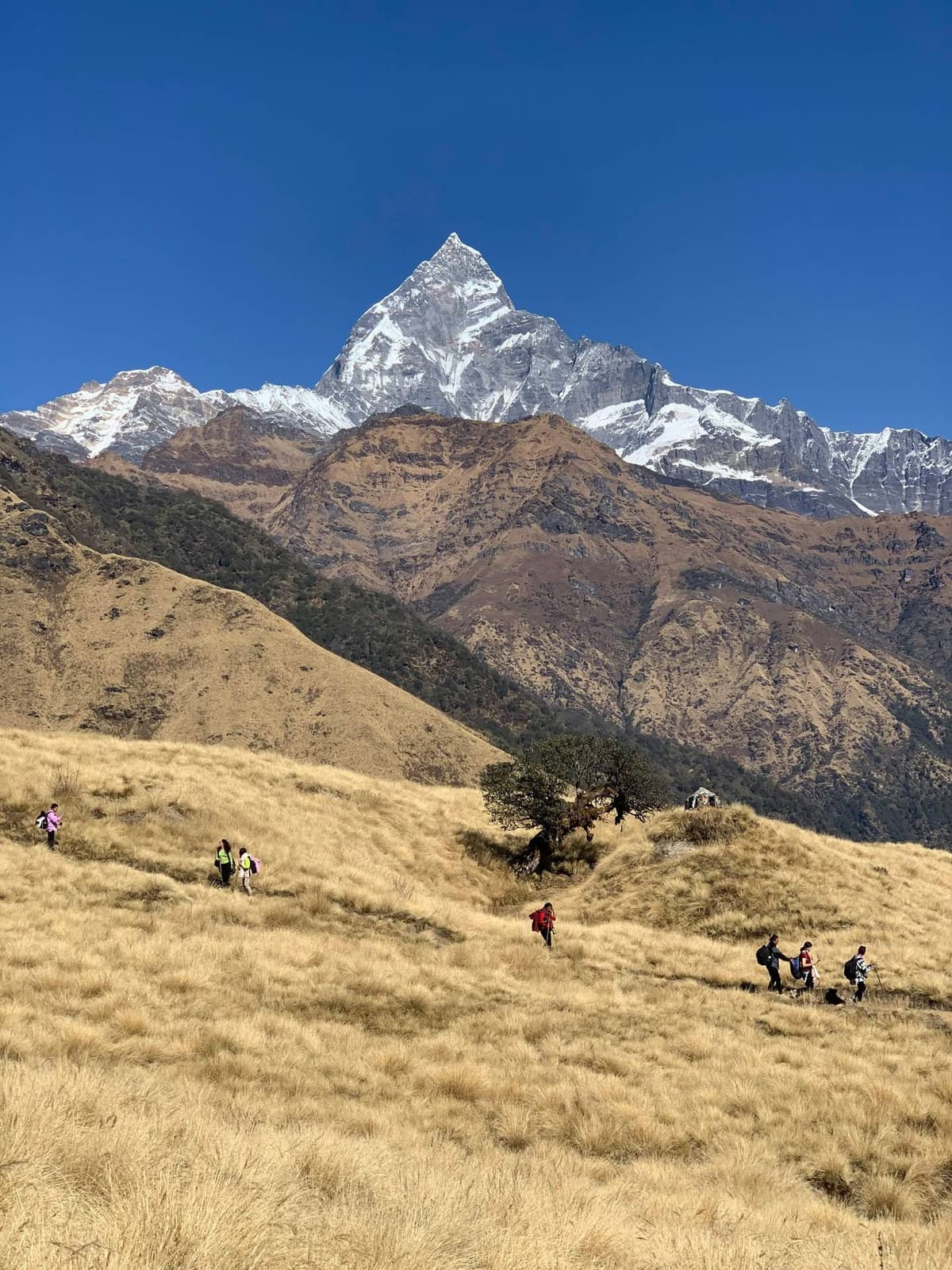
Our trip starts at Hemja, sleeps first at Hile Kharka, 2,160 m, and comes down to Ghachok. The climb to Khumai gains about 1,085 m, so walk slowly. We arrange the ACAP permit.
Chisapani and Nagarkot on the valley rim
The valley rim starts on the edge of Kathmandu, so you need no flight and only a short drive. Sundarijal, the start, is about 15 km from Kathmandu, and we tell people to allow five to seven hours to Chisapani, about 2,150 m.
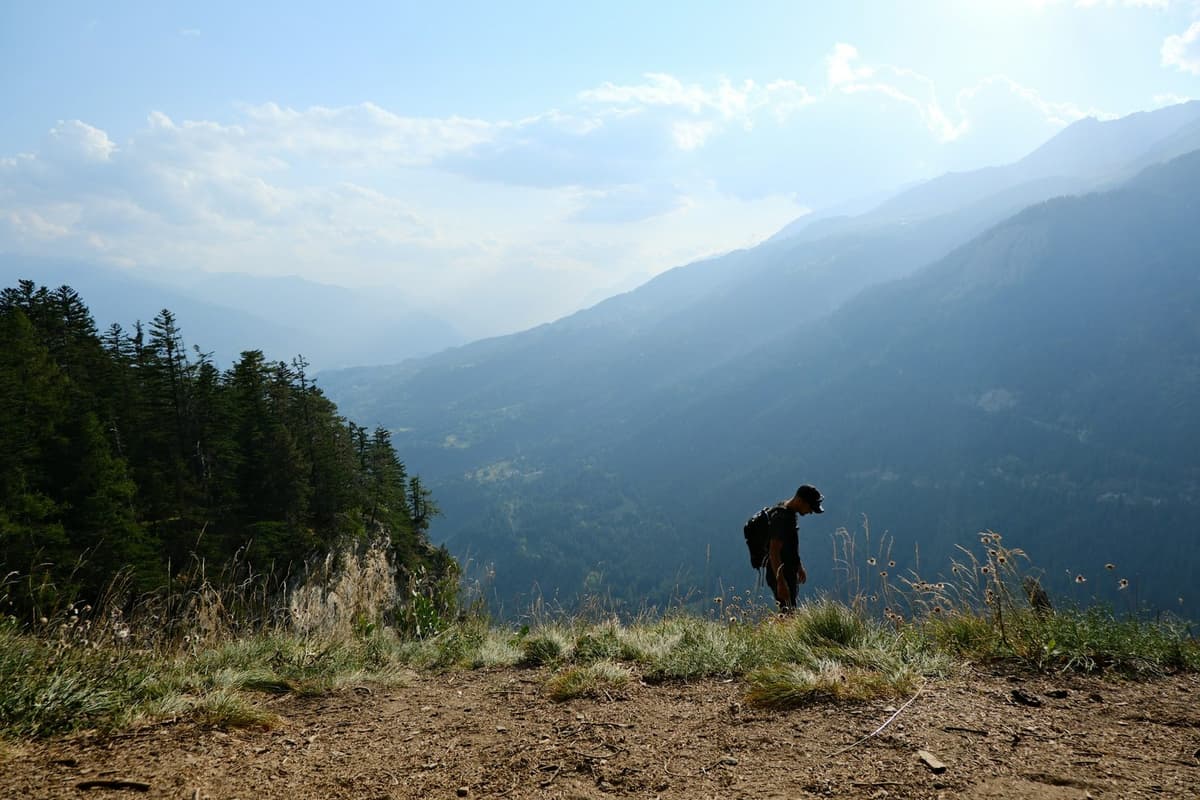
Day two to Nagarkot, about 2,100 to 2,200 m, is about seven hours on foot. We run this in two, three or four days. The Shivapuri Nagarjun National Park ticket is NPR 1,000 for foreigners and NPR 600 for SAARC nationals (citizens of the South Asian SAARC countries).
Panchase
Panchase is a forested hill above Pokhara, "situated at the confluence of five hills" in NTB's words. NTB's Pokhara booklet gives 2,513 m and two to four days, and says it needs no permit; it is a 2020 document, so we confirm before you go.
The takeaway: Poon Hill or Khumai for a big view, Australian Camp for the easiest night out, the valley rim if you are based in Kathmandu.
Which short treks fit 4 to 5 days?
Four or five days reach a higher ridge or quieter trails: Mardi Himal from Pokhara, Mohare Danda for community lodges, or Pikey Peak, reached by road from Kathmandu, for the Everest range without a Lukla flight. All three sleep above about 2,450 m, so read the altitude advice below before you choose.
Mardi Himal
NTB says the Mardi Himal Trek opened in 2012 and leads to Mardi Himal Base Camp, which it gives at 4,500 m. Trekking companies sell it in four to seven days; ours takes four from Pokhara.
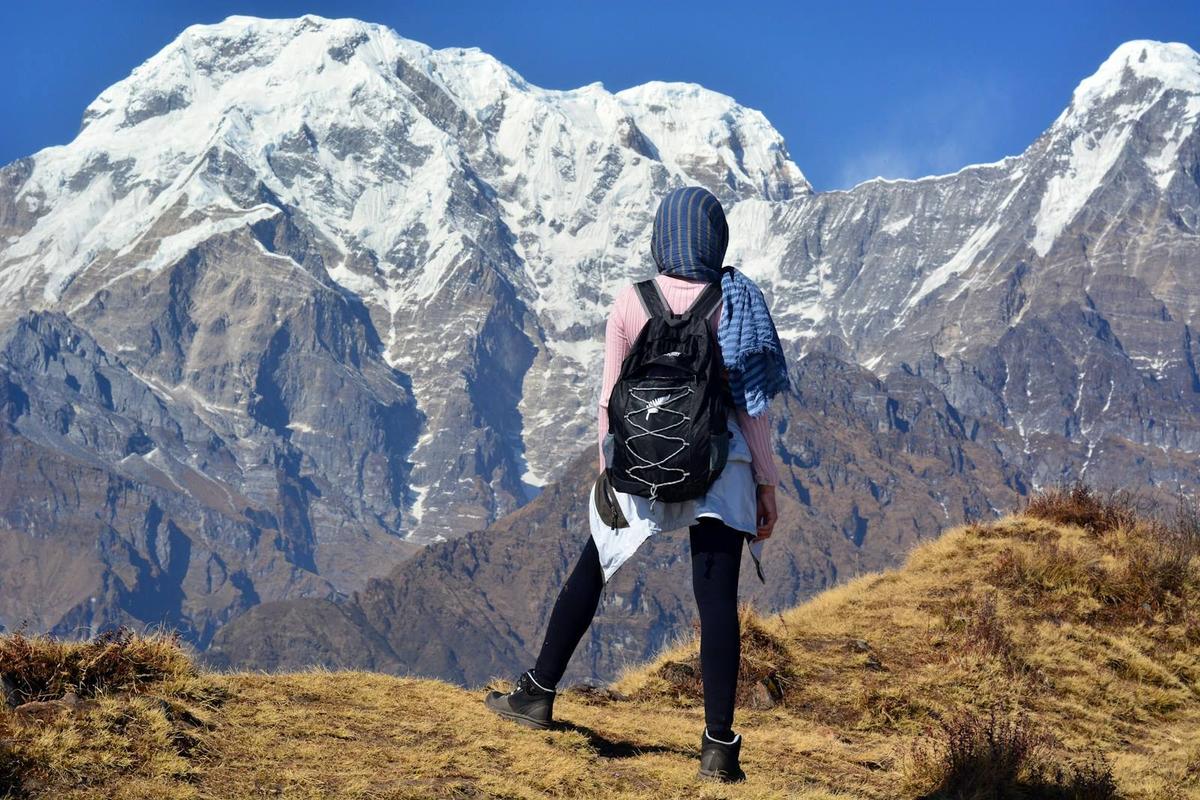
From Kande the route climbs through Forest Camp, about 2,550 m, and Low Camp, about 2,970 to 3,050 m, to High Camp, about 3,550 to 3,580 m. Most people turn round at the Upper Viewpoint, about 4,200 m (trekking companies' figure), and finish at Siding, with a jeep track to Pokhara.
On our four-day plan you climb from Forest Camp to High Camp in one day, about 1,000 m. A fifth day, with a night at Low Camp, splits that climb in two. The upper ridge is open and easy to lose in cloud, so stay with your guide and turn back if cloud comes in.
Mohare Danda
Mohare Danda is a community lodge trek reached from the Beni road. The trail climbs from Galeshwor to Nangi, about 2,300 m, then on to Mohare Danda at about 3,300 m.
Sources disagree on the permit, so ask us which permits apply. Roads in the hills west of Pokhara can close for a day or two after heavy rain, so we check the road before every departure. Our Mohare Danda trek guide covers the route in full.
Pikey Peak
Pikey Peak, in Solukhumbu district, is a trekking summit of about 4,065 m facing the Everest range. Our five-day trek starts with an 8 to 9 hour drive from Kathmandu to Dhap Bazaar, about 2,850 m, sleeps at a base camp teahouse (a simple trail lodge) at about 3,640 m, and reaches the summit for sunrise on day four.
The trade-off for skipping the flight is a long road day at each end. A local entry fee may apply, and we check and arrange it.
The takeaway: Mardi Himal for height near Pokhara, Mohare Danda for quiet villages, Pikey Peak for Everest views by road.
Which short treks fit 6 to 7 days?
With six or seven days you can start and finish in Kathmandu: Helambu with no flight, or the Everest View trek via Lukla. Our Poon Hill and Mardi Himal trips from Kathmandu also take six days, because the road to Pokhara takes most of a day each way.
Helambu
Helambu is hill country in Sindhupalchok district, home to the Hyolmo people. Our six-day trek walks from Sundarijal to Melamchi Bazaar.
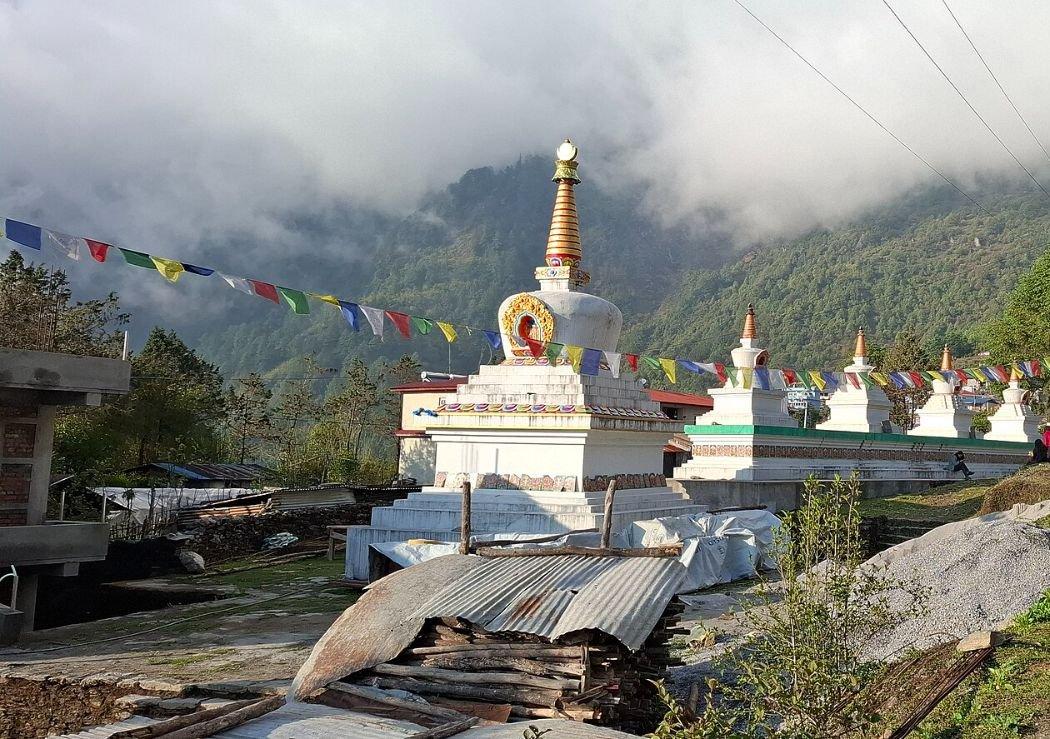
You sleep at Chisapani, about 2,150 m, Kutumsang, about 2,470 m, and Tharepati, about 3,690 m, then drop to Tarkeghyang, about 2,600 m, and Sermathang, about 2,590 m. The day from Kutumsang to Tharepati gains about 1,200 m. You need the Shivapuri Nagarjun ticket and the Langtang National Park permit; we arrange both.
Everest View trek via Lukla and Namche
The Everest View trek is the short way to see Everest from inside the Khumbu, the Sherpa homeland below the mountain. Our seven-day trek flies from Kathmandu to Lukla, 2,846 m, and sleeps at Phakding, at Namche Bazaar for two nights and at Tengboche before walking back down.
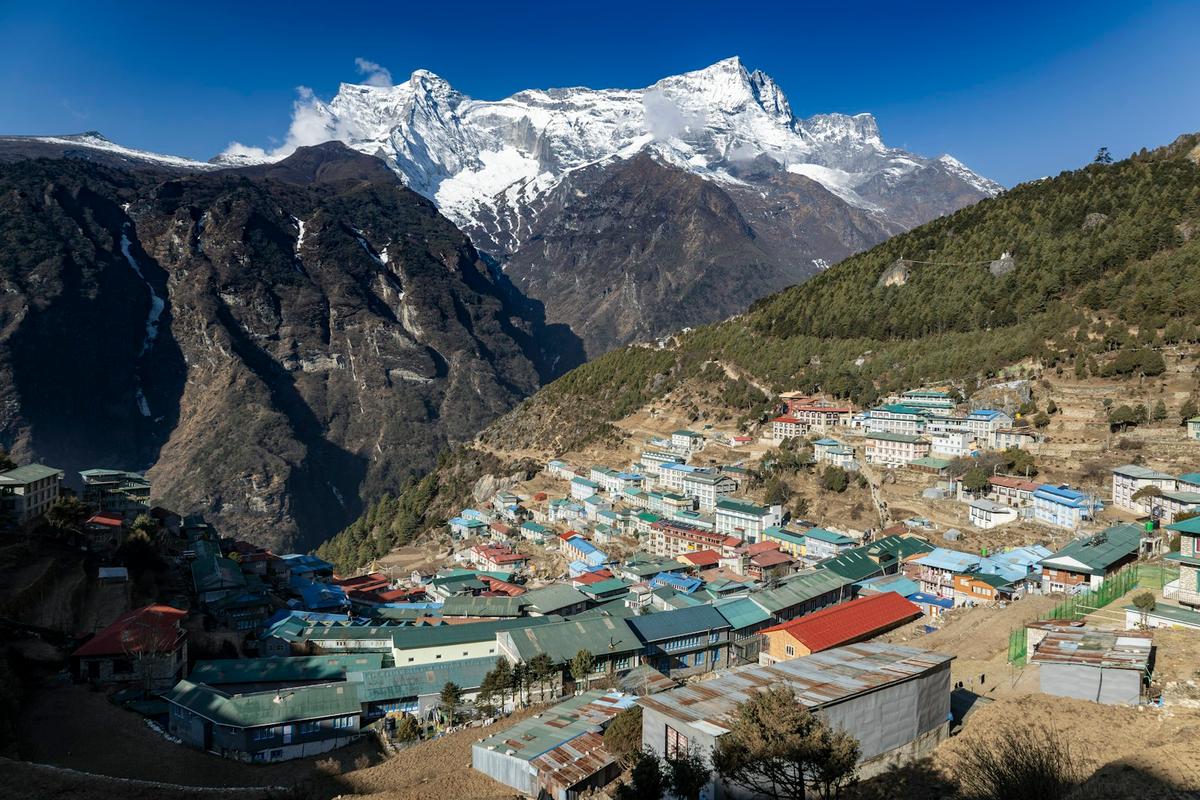
Namche Bazaar is about 3,440 m; NTB gives 3,500 m. Tengboche Monastery is about 3,860 to 3,870 m. The day from Phakding to Namche gains about 830 m, which is why our plan spends a second night there.
"It is wise to halt here for a couple of days to get acclimatized by walking up and down in the vicinity as acclimatization is a slow process."
Nepal Tourism Board, Namche Bazaar page, checked 21 Nov 2026
You need the Sagarmatha National Park permit and the Khumbu Pasang Lhamu Rural Municipality Trek-Card, issued in Lukla against your passport and a recent photo. We arrange both.
The takeaway: Helambu for village life with no flight, the Everest View trek if you can keep a spare day.
Altitude on a short trek
A short trek can still be a high one. The US CDC says anyone who has not acclimatised and sleeps at about 2,450 m (8,000 ft) or higher is at risk of altitude illness, sometimes lower. On this list, Ghorepani, Khumai Danda, Mardi Himal, Mohare Danda, Pikey Peak, Helambu and the Everest View trek all sleep above that line.
Short itineraries gain height fast: Khumai, Mardi and Helambu each have a day that gains about 1,000 m or more. The CDC adds that "children are as susceptible as adults".
- Go up slowly. Above 3,000 m (9,800 ft), the CDC advises raising your sleeping height by no more than 500 m (1,650 ft) a night, with a rest day every 3 to 4 days (Wilderness Medical Society). An extra night lower is the simplest fix on a short route.
- Walk slowly. Guides say "bistarai, bistarai", Nepali for "slowly, slowly".
- Drink enough water, and skip alcohol for the first days up high.
- Know the symptoms: headache, nausea, tiredness and poor sleep.
- Never go higher with symptoms. Rest, and go down if they get worse.
- Ask your doctor before the trip about preventive medicine such as acetazolamide. Your doctor decides the dose.
- Garlic soup and hot soups are a comforting local tradition that helps you drink more, not a proven cure.
- Severe symptoms: descend at once and get help. Our guide arranges a rescue if needed.
Our altitude sickness guide for Nepal treks goes deeper.
Short treks from late November to February
Late November to February is often clear, but cold. NTB says that "even in December and January, when winter is at its severest, there are compensating bright sun and brilliant views". Expect cold nights, short days and possible snow on the higher ridges.
NTB says average temperatures drop 6 °C for every 1,000 m you gain in altitude, so nights at Ghorepani or High Camp are much colder than in Pokhara.
- Mardi Himal: trekking companies warn that snow is possible above Forest Camp or High Camp from December to February, and the route above High Camp may close after heavy snowfall.
- Helambu, Pikey Peak and Mohare Danda: snow is possible on the higher ridges; we check with lodges before you set off.
- Lower routes: Australian Camp and the valley rim sleep below the altitude line and are the easier choice in the cold months.
Pack a down jacket, hat, gloves, thermal layers and a warm sleeping bag, and aim to reach your lodge by mid-afternoon. Our winter treks in Nepal guide lists more cold-month routes.
Guides, permits and road heads
A licensed guide walks with you on every trek we run, watching the weather and your health. On the Shivapuri routes, the park's own fee schedule says foreign and SAARC visitors must be accompanied by a guide, so on the valley rim and the first day of Helambu you walk with a park-certified guide.
We arrange the in-country permits each route needs; carry the ACAP permit for the whole trek and register at the checkposts. We found no official closure notice for these routes as of 21 November 2026, and we check every road and trail before departure.
For how hard each route feels, our easy treks in Nepal guide sorts them by difficulty rather than days.
Frequently asked questions
What are the best short treks in Nepal for beginners?
Ghorepani Poon Hill is the usual first trek; NTB calls it "perfect for beginners and families". Australian Camp is shorter and lower, at 2,220 m by NTB's figure. From Kathmandu, the valley rim walk to Chisapani sleeps at about 2,150 m and needs no flight.
What is the shortest trek in Nepal from Kathmandu?
Sundarijal to Chisapani is one of the shortest overnight treks from Kathmandu; we run it in two days. Sundarijal is about 15 km from the city, and the walk up takes five to seven hours. You need the Shivapuri Nagarjun National Park ticket. Add a day to continue to Nagarkot.
What is the best 3 day trek in Nepal?
It depends on your base. From Pokhara, the Poon Hill and Ghandruk loop is our three-day choice for a first trek, and Khumai Danda suits fit walkers who want a quieter ridge. From Kathmandu, walk the rim from Chisapani to Nagarkot. October and November usually bring the clearest skies.
Do you need a permit for Poon Hill?
Yes. Poon Hill is inside the Annapurna Conservation Area, so you need the ACAP permit: NPR 3,000 for foreigners and NPR 1,000 for SAARC nationals. It costs double at a checkpost, and children below 10 do not need one. A local viewpoint ticket, reported at NPR 150 for foreign visitors, is collected at the top.
Is there a short trek to see Everest?
Yes. The Everest View trek flies to Lukla and climbs to Namche Bazaar and Tengboche; ours takes seven days from Kathmandu. Lukla flights depend on the weather, so add at least one spare day. With no flight, Pikey Peak gives a view of the Everest range from about 4,065 m, on our five-day trek by road.
How many days is the Mardi Himal trek?
Trekking companies sell it in four to seven days; ours takes four from Pokhara and six from Kathmandu. A fifth day adds a night lower before High Camp, about 3,550 to 3,580 m, and splits the biggest climb. In winter, heavy snow can close the route above High Camp.
Plan your short trek with us
Our short trek packages in Nepal page lists our treks of two to seven days, sorted by number of days. For the classic two-day walk, see the Ghorepani Poon Hill trek from Pokhara. If you have a week and want Everest, look at the Everest View trek with Namche Bazaar.
For more routes by base, read our treks from Pokhara guide and treks from Kathmandu guide, or our guide to the best treks in Nepal for longer routes.
Tell us your dates and how many days you have, and we will suggest the route that fits. Message us on WhatsApp or use the enquiry form on any trip page.