By Uncover Nepal Guide · Checked by our Kathmandu travel team · Last checked 12 November 2026
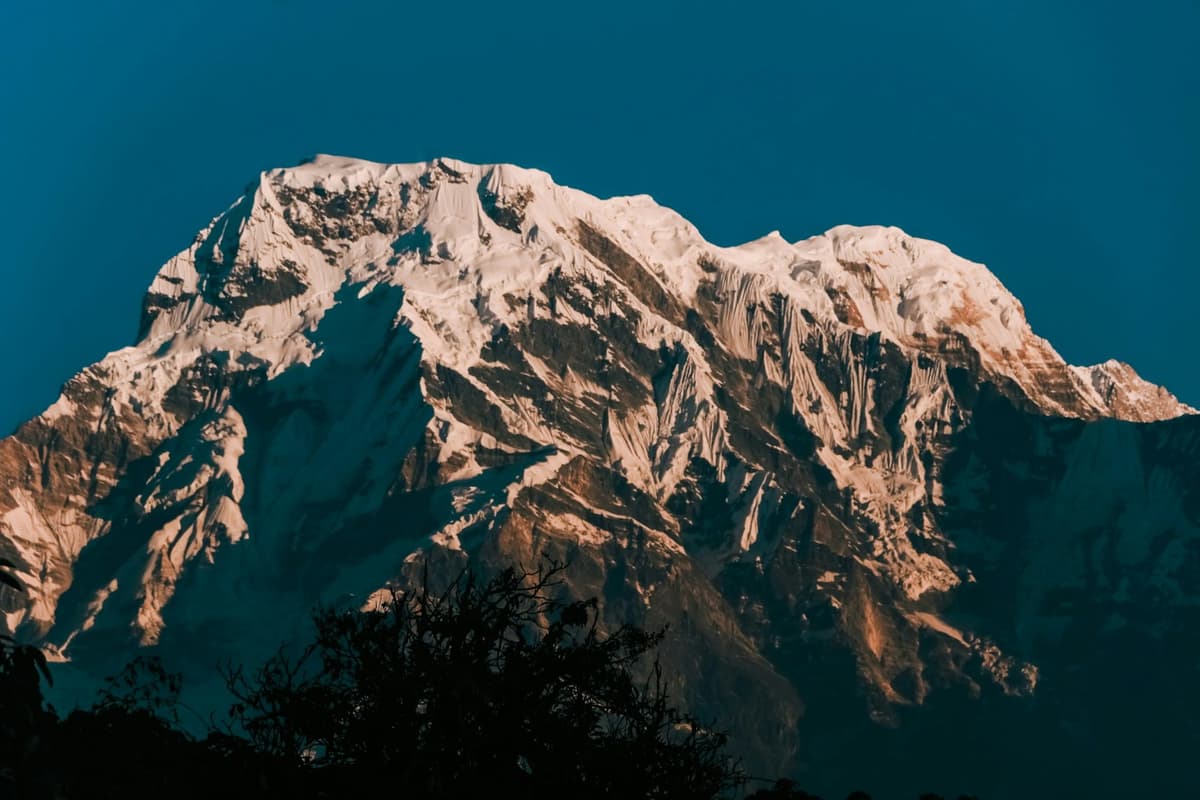
On a clear autumn morning in Pokhara, the Annapurnas fill the sky to the north, and many of the trails below them start within a few hours' drive. Some are close: from Kande, under an hour away by road, Australian Camp is a walk of 1.5 to 2 hours. Others, like Thorong La on the far side of the range, take ten days or more.
Treks from Pokhara range from one night on a ridge to about two weeks over a high pass. The short ones are Australian Camp, Ghorepani Poon Hill and Mardi Himal; the longer ones are Khopra Danda, Annapurna Base Camp and the Annapurna Circuit. Nearly all start with a jeep ride, and all of these need the ACAP permit.
If you are still choosing between regions, our guide to the best treks in Nepal compares every region. This one stays in Pokhara and asks two questions: how many days do you have, and how high do you want to sleep?
In this guide
- Which treks from Pokhara should you compare?
- How do you get from Pokhara to the trailheads?
- What are the best short treks from Pokhara?
- Which longer treks start from Pokhara?
- How high do treks from Pokhara go?
- When is the best time for Pokhara trekking?
- What are teahouses like on treks from Pokhara?
- Which permits do you need, and do you need a guide?
- Frequently asked questions
- Plan your trek from Pokhara
Key facts
- Highest points
- From Australian Camp, 2,060 m, to Thorong La, 5,416 m (Our trip data; The Kathmandu Post, 29 Oct 2026 (checked 12 Nov 2026))
- ACAP permit
- NPR 3,000 foreign nationals, NPR 1,000 SAARC nationals, per person per entry; children below 10 free (Nepal Tourism Board, park entry fees (checked 12 Nov 2026))
- Permit at a checkpost
- Double the fee if issued at a checkpost (NTNC e-permit portal (checked 12 Nov 2026))
- Poon Hill local fee
- NPR 150 for foreign visitors (Nepalnews, 10 Oct 2025 (checked 12 Nov 2026))
- Where altitude illness becomes a risk
- Sleeping at about 2,450 m or higher without acclimatising (US CDC Yellow Book (page dated 23 Apr 2025, checked 12 Nov 2026))
- Best seasons
- Spring and autumn; NTB says the clearest skies come in October and November (Nepal Tourism Board, climate page (checked 12 Nov 2026))
Which treks from Pokhara should you compare?
Compare treks from Pokhara on four things: days on the trail, the highest point, how far the road head is, and the permit. Australian Camp and Poon Hill are short and fairly low. Mardi Himal and Khopra climb higher in a few days. ABC and the Circuit are the long ones.
| Trek | Days | Highest point | Road head and drive from Pokhara | Permit |
|---|---|---|---|---|
| Australian Camp | Usually 1 to 2 days; ours 3 from Kathmandu | 2,060 m | Kande, about 45 minutes to an hour | ACAP |
| Ghorepani Poon Hill | Typically 2 to 6; ours 2 | Poon Hill 3,210 m (sleep at Ghorepani, about 2,850 m) | Nayapul, about 1.5 to 2 hours (operator figure); jeeps go on towards Ghorepani | ACAP, Poon Hill fee |
| Poon Hill and Ghandruk loop | Ours 3 | Poon Hill 3,210 m | Jeep road towards Ghorepani; road also reaches Ghandruk | ACAP, Poon Hill fee |
| Mardi Himal | Usually 4 to 7; ours 4 | Upper Viewpoint about 4,200 m; Base Camp about 4,500 m | Kande, about 45 minutes to an hour; out from Siding by jeep track | ACAP |
| Khopra Danda and Khayar Lake | Ours 8 | Khopra Danda about 3,660 m; Khayar Lake about 4,500 to 4,700 m (figures vary) | Ghandruk by jeep on our trip | ACAP |
| Annapurna Base Camp | Mostly about 7 to 12; ours 5 to 11 (some from Kathmandu) | 4,130 m | Ghandruk, Jhinu or Siwai, about 2.5 to 4 hours by jeep | ACAP |
| Annapurna Circuit | Mostly about 10 to 14; ours 10 | Thorong La 5,416 m | Long drive east to Besisahar, then a jeep to Chame | ACAP |
Our day counts are from Pokhara unless we say Kathmandu. The highest point is often a dawn walk above where you sleep: Ghorepani below Poon Hill, High Camp below the Mardi viewpoint.
How do you get from Pokhara to the trailheads?
You drive. Almost every trek from Pokhara now starts with a jeep or car to a road head, from under an hour to Kande to a long day's drive to Chame. Roads now reach deep into the Annapurna hills, which makes short trips possible but turns old walking stages into tracks.
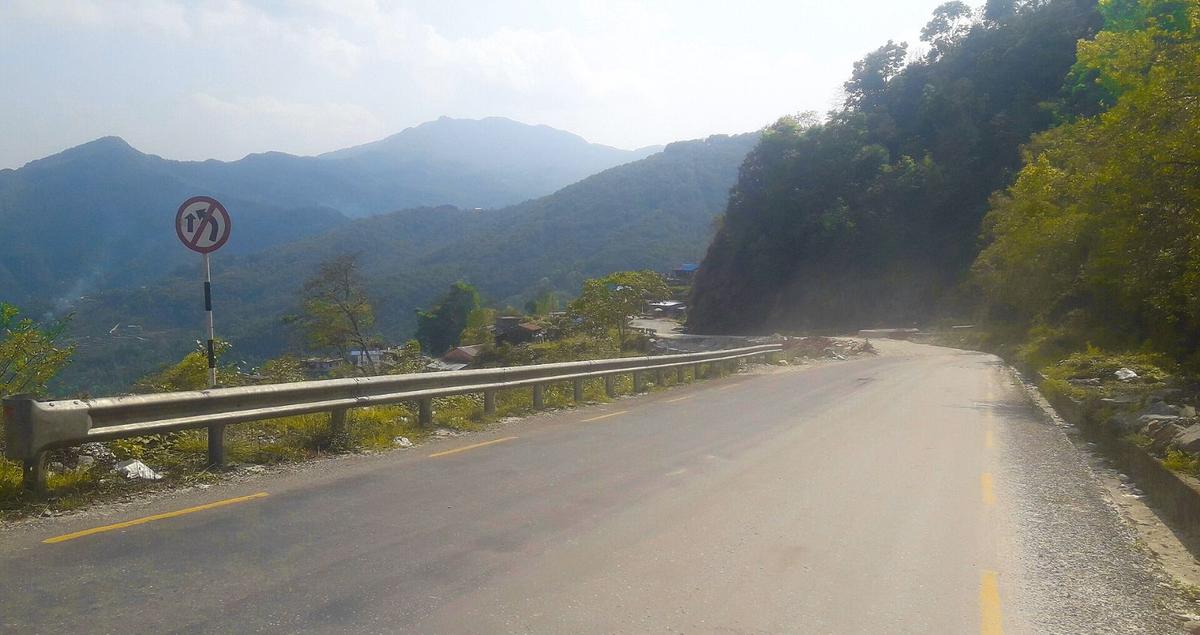
- To Kande. About 45 minutes to an hour by road, for Australian Camp and Mardi Himal.
- To Nayapul and beyond. Nayapul is about 42 km from Pokhara, about 1.5 to 2 hours by road (operator figures). Jeeps go on through Hile and Ulleri, and Ghorepani is now a few hours from Pokhara by jeep; the road can be muddy in the monsoon.
- To the ABC road heads. Ghandruk, Jhinu or Siwai, about 2.5 to 4 hours by jeep, depending on the road head and the road.
- East for the Circuit. A long drive to Besisahar, then a jeep up the mountain road to Chame, 2,670 m.
"Jeeps now ply roads where only trekkers once walked."
Nepalnews, 21 July 2026
Reaching Ghorepani once took a five-day walk, the same report says. If you would rather walk more and ride less, tell us and we will plan the days around it.
What are the best short treks from Pokhara?
The best short treks from Pokhara are Australian Camp (one night on the ridge), Ghorepani Poon Hill (two days on ours), the Poon Hill and Ghandruk loop (three days) and Mardi Himal (four days on ours). Kori Danda and Khumai Danda are quieter three-day ridge options. Pick by sleeping height as much as by days.
Most sit in our trek packages from Pokhara; Australian Camp runs as a separate trip from Kathmandu. First-timers should also read our easy treks in Nepal guide.
Australian Camp: one night on a ridge
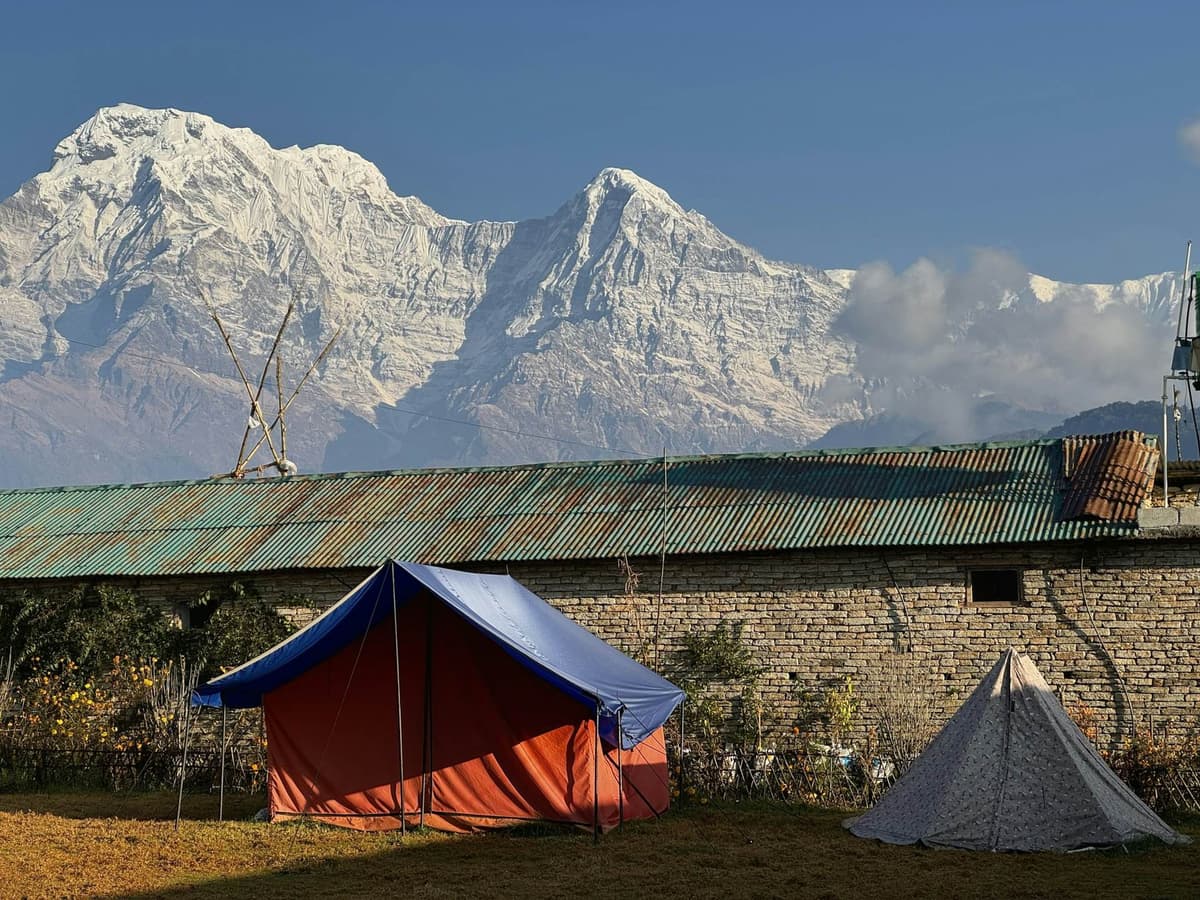
Australian Camp is the shortest and lowest trek here. You drive to Kande, walk up for about 1.5 to 2 hours, and sleep on a grassy ridge at 2,060 m facing the Annapurnas; the walk is usually done in one to two days from Pokhara. Our trip is 3 days because it starts and ends in Kathmandu, with one night on the ridge and one in Pokhara. You sleep below the height where the US CDC says altitude illness becomes a risk, and our trip page says children who walk regularly usually manage the climb.
Ghorepani Poon Hill and the Ghandruk loop
Poon Hill is the classic. You sleep at Ghorepani, about 2,850 m, and climb Poon Hill, 3,210 m, before dawn for sunrise over Dhaulagiri and the Annapurnas. Typical itineraries run 2 to 6 days from Pokhara; our shortest is 2 days with one night.
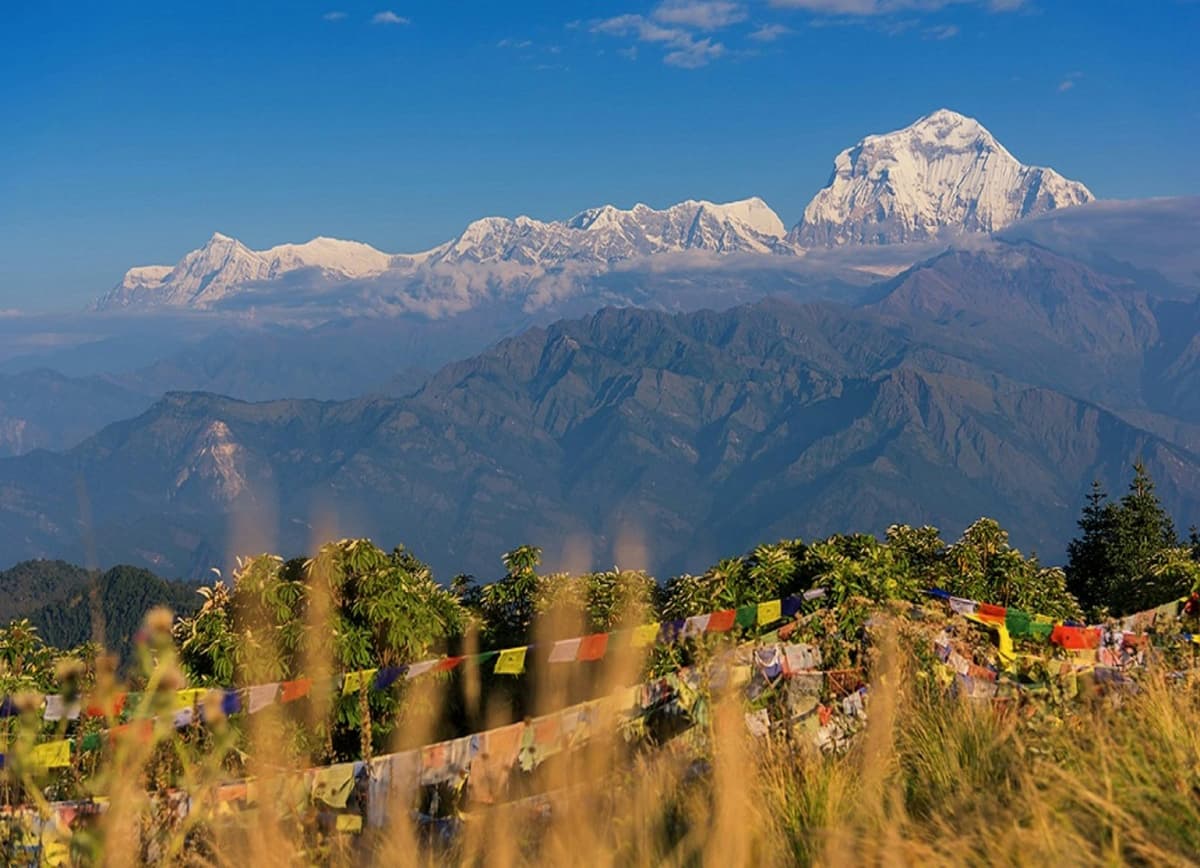
It is busy: "around 30,000 tourists visit annually", according to Ghorepani Tourist Police data reported by Nepalnews in October 2025. Poon Hill has a local fee, NPR 150 for foreign visitors (Nepalnews, 10 Oct 2025); check at the gate.
Our Poon Hill and Ghandruk loop takes 3 days and 2 nights and comes down through Ghandruk, a Gurung village the road now reaches. Our Ghorepani guide has more on the village and the climb. The honest bit: Ghorepani is above the 2,450 m line, so a mild headache on the first night is possible.
Mardi Himal: the ridge that climbs fast
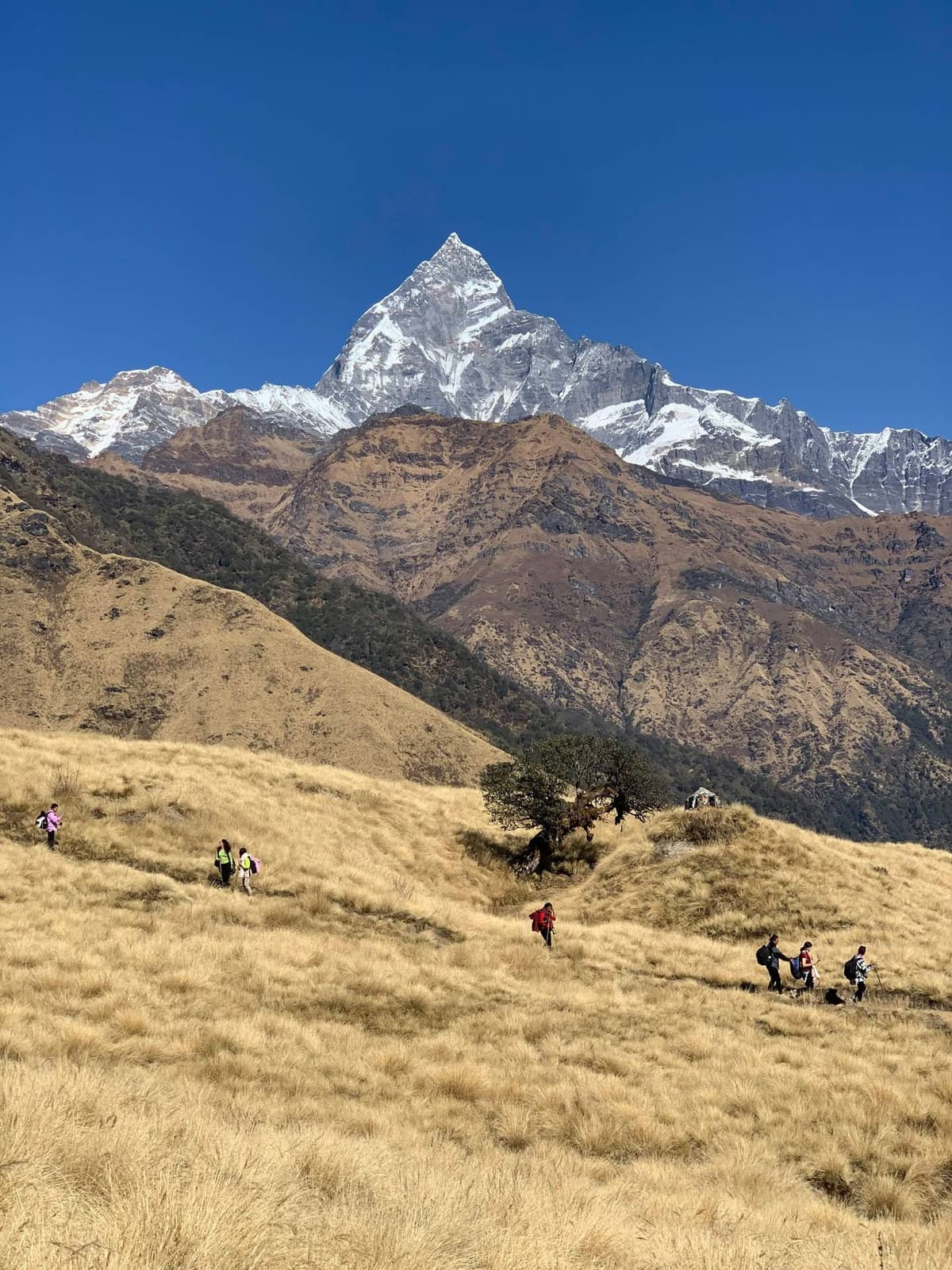
Mardi Himal is the short trek that goes high. From Kande, about 1,770 m on our trip data, the trail climbs a forested ridge to Forest Camp, about 2,550 m, and High Camp, about 3,550 to 3,600 m. An early walk from High Camp reaches the Upper Viewpoint, about 4,200 m; Base Camp is about 4,500 m. Most itineraries run 4 to 7 days on the trail. Ours is 4 days from Pokhara (6 from Kathmandu), coming down to Siding village and a local jeep track back to Pokhara.
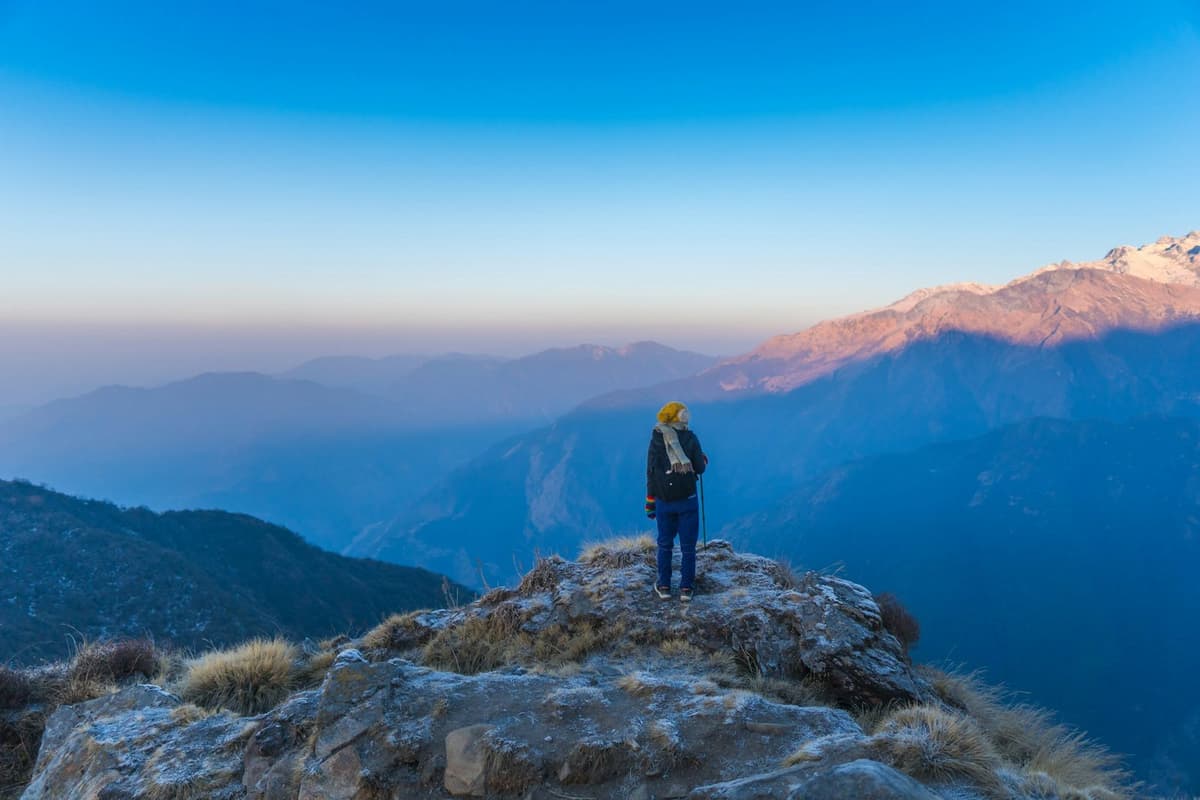
The part to know before you book: on our 4-day trip, day 2 climbs about 1,000 m, from Forest Camp to High Camp. That is a big jump in sleeping height, so Mardi suits people who are fit and happy to walk slowly; an extra night lower on the ridge is gentler. Our Mardi Himal trek cost guide covers the budget side.
Kori Danda, Khumai Danda and other ridges
For quieter ridges away from the main trails, we run Kori Danda and Khumai Danda, 3 days each from Pokhara. Kori Danda starts from the Gurung village of Sikles and sleeps on a ridge at about 3,800 m on the second night (our trip data), a fast climb for three days. Khumai Danda starts near Hemja and sleeps at 3,245 m below Machhapuchhre (Republica, March 2023). You will also hear of Panchase hill, about 2,500 m, and Mohare Danda, about 3,300 m (both operator figures); day counts vary too much between companies to quote.
Which longer treks start from Pokhara?
The longer treks from Pokhara are Khopra Danda and Khayar Lake (8 days on ours), Annapurna Base Camp (about 7 to 12 days on most itineraries) and the Annapurna Circuit (about 10 to 14 days). We also run North Annapurna Base Camp, a demanding camping route, in 5 days. All need more fitness and care with altitude.
Khopra Danda and Khayar Lake
Khopra is the longer, higher cousin of Poon Hill. The route passes Dobato, about 3,420 m, and reaches Khopra Danda, a high ridge at about 3,660 m. Khayar Lake is higher still, at about 4,500 to 4,700 m (figures vary), and on our trip it is a day walk from Khopra, so you sleep lower. Our trek is 8 days with 7 nights and suits people who have done a short trek before.
Annapurna Base Camp
ABC is the best-known long trek from Pokhara, up the Modi Khola valley to Annapurna Base Camp at 4,130 m. Ours run 5 to 11 days, the longer ones starting in Kathmandu or adding Poon Hill.
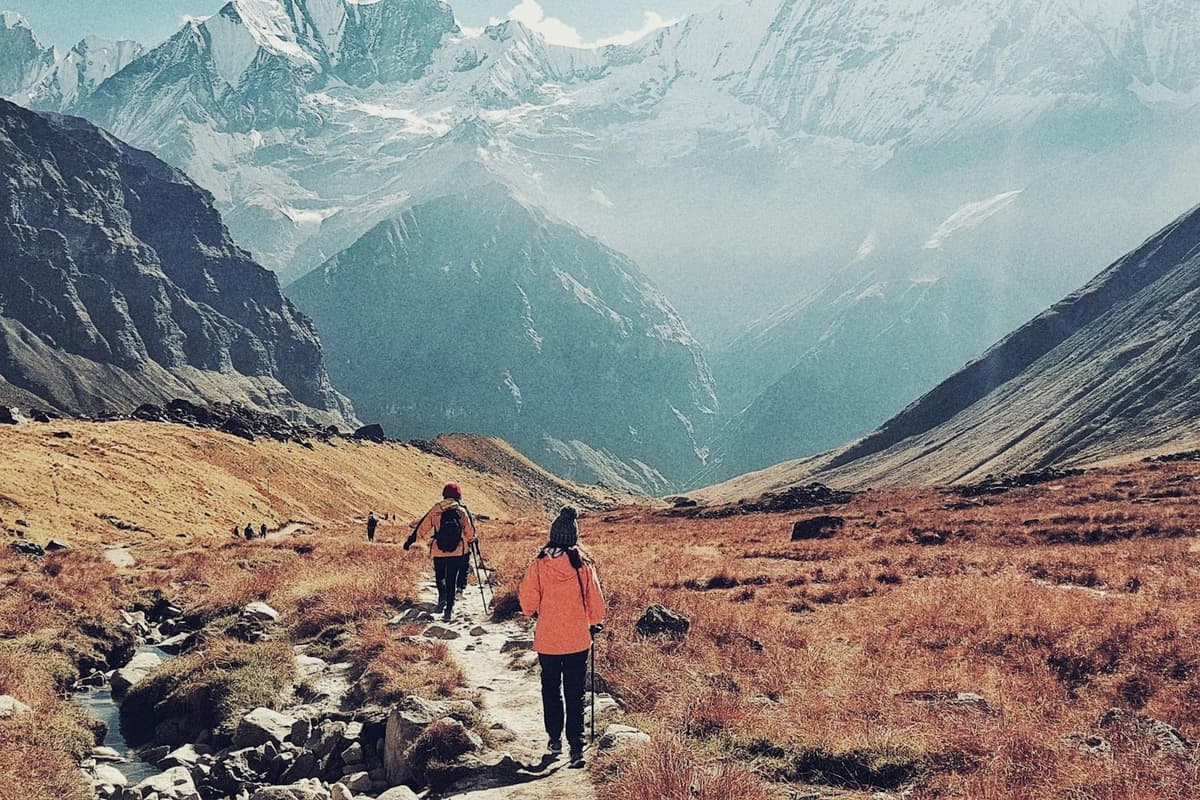
You drive to Ghandruk, Jhinu or Siwai, then walk through Chhomrong and Bamboo to Deurali, about 3,200 m. The climb from Deurali to ABC is about 900 m and it is the steep, hard part. On most short itineraries you sleep at Deurali one night and at ABC the next, which is more than the 500 m a night guidance above 3,000 m, so walk slowly and go down if symptoms appear.
None of our ABC trips includes a rest day. Adding one, or splitting the climb with a night at Machhapuchhre Base Camp, about 3,700 m, adds a day well spent. Read our ABC trek difficulty guide first.
Annapurna Circuit
Roads now reach Upper Manang on the east side and Muktinath on the west, so most itineraries run about 10 to 14 days; walking more of it takes longer. Ours from Pokhara is 10 days: the drive to Besisahar and a jeep to Chame on day 1, then Manang, about 3,500 m, and over Thorong La, 5,416 m.
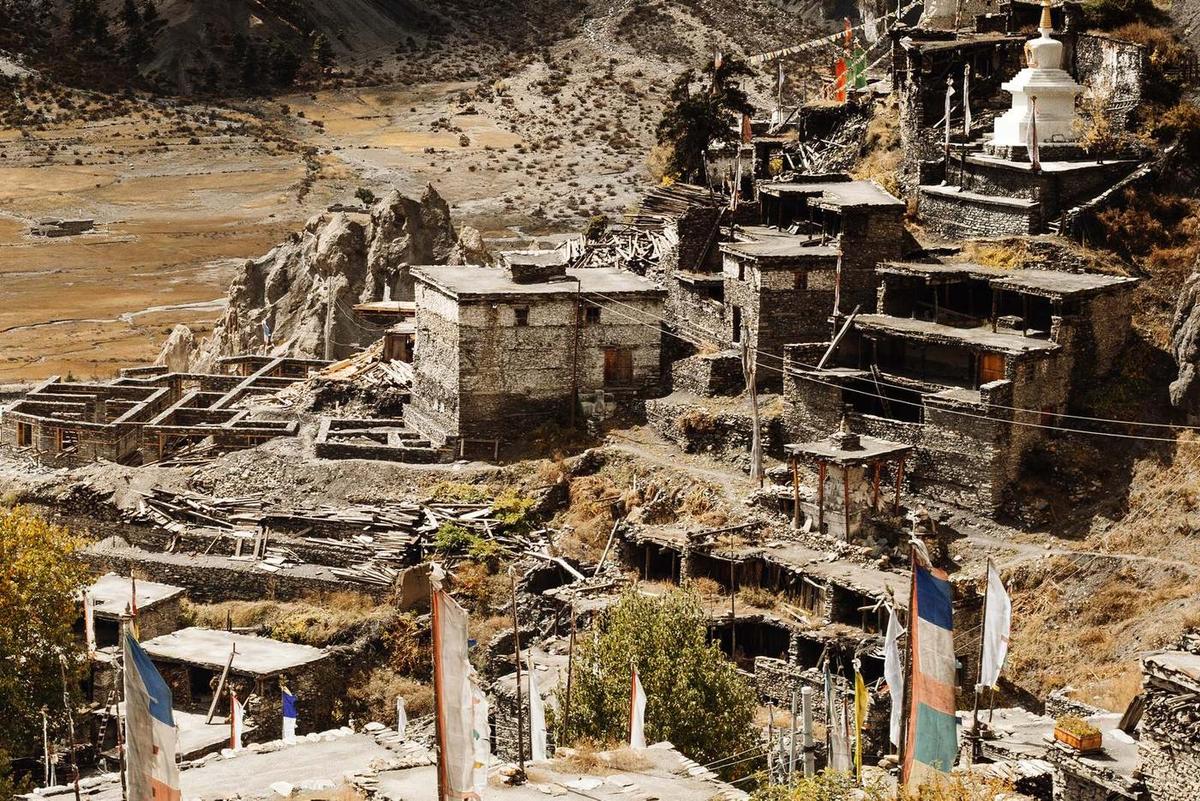
One change this season: Tara Air and Summit Air suspended Pokhara to Jomsom flights for five months, citing maintenance and low demand (Nepalnews, 22 Oct 2026), so the way back to Pokhara from the western side is by road. On the pass, your guide, who knows the route, decides when and how to cross, based on snow and the forecast.
How high do treks from Pokhara go?
Treks from Pokhara go from 2,060 m at Australian Camp to 5,416 m on Thorong La. The US CDC says anyone sleeping at about 2,450 m or higher without acclimatising is at risk of altitude illness. Only Australian Camp sleeps below that line; Ghorepani, Mardi, ABC and the Circuit sleep above it.
Pokhara is about 820 m. On any route above the line:
- Go up slowly. Above 3,000 m, do not raise your sleeping height by more than about 500 m a night, with a rest day every 3 to 4 days (Wilderness Medical Society, 2024).
- Walk slowly. "Bistarai, bistarai", slowly, slowly, as we say in Nepal.
- Drink water and skip alcohol for the first days. Garlic soup is a comforting local habit that helps you drink, not a proven cure.
- Know the symptoms: headache, nausea, tiredness, poor sleep. Never go higher with symptoms; go down if they get worse.
- Ask your doctor about preventive medicine such as acetazolamide.
- Severe symptoms (confusion, breathlessness at rest, unsteady walking) mean descend at once and get medical help. Our guide arranges a rescue if needed.
Day 2 of our 4-day Mardi trip raises your sleeping height by about 1,000 m, and the night from Deurali to ABC adds about 900 m. Both are bigger steps than that guidance, which is the best reason to add a day.
When is the best time for Pokhara trekking?
Spring and autumn are the best seasons for Pokhara trekking, and NTB says the clearest skies come after the monsoon, in October and November. June to September, the monsoon months, means wetter trails, muddier roads and more cloud on every route here, so plan a spare day if you trek then.
"the clearest skies are found after the monsoon in October and November."
Nepal Tourism Board, climate page (checked 12 November 2026)
This year the monsoon began on 19 June and fully withdrew on 14 October. Temperatures drop about 6°C for every 1,000 m you climb (NTB), so a warm afternoon by the lake still means a cold night up high. Our best time to trek in Nepal guide goes month by month.
What are teahouses like on treks from Pokhara?
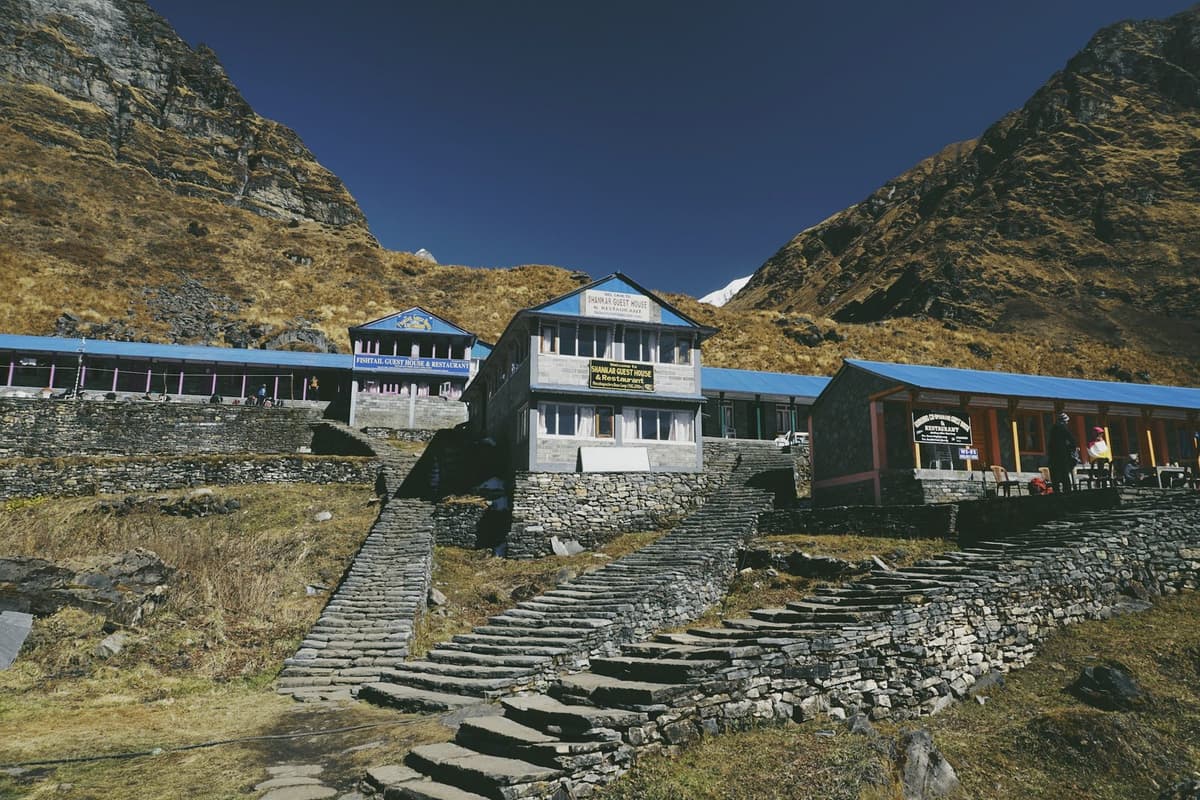
Teahouses are simple family-run lodges where you sleep and eat on the trail. Low down they are comfortable for what they are; higher up they get more basic. Expect simple rooms, a shared dining room, dal bhat (rice and lentils) and payment mostly in cash. Toilets and showers are in the FAQ below.
According to trekking companies that describe the Annapurna lodges:
- Charging and wifi. Many lodges run on solar power. Charging, often in the dining room, may cost extra; wifi is common but usually paid.
- Money. Teahouses generally do not take cards, so carry Nepali rupees from Pokhara.
At Australian Camp, our trip page notes that most rooms in the ridge lodges have attached bathrooms. At ABC and Mardi High Camp, plan for shared toilets and cold nights.
Which permits do you need, and do you need a guide?
Every trek in this guide is in the Annapurna Conservation Area, so you need the ACAP permit: NPR 3,000 for foreign nationals and NPR 1,000 for SAARC nationals, per person per entry, with children below 10 free (Nepal Tourism Board). We arrange it before you start. Issued at a checkpost, it costs double (NTNC e-permit portal).
On guides: a licensed guide walks with you on every trek we run. NTB's rule requiring a licensed guide on listed routes has applied since 1 April 2023 (NTB lists 31 March 2023), while the Khumbu Pasang Lhamu Rural Municipality says a guide is not compulsory in Khumbu, the Everest region. Check the current position before you go.
Frequently asked questions
What are the best short treks from Pokhara for 3 to 7 days?
For 3 to 7 days, the Poon Hill and Ghandruk loop (3 days on ours), Khumai Danda (3 days) and Mardi Himal (4 days on ours, usually 4 to 7) all fit. Kori Danda (3 days) and North Annapurna Base Camp (5 days, camping) also fit but climb fast and suit fit, experienced walkers. With less time, try Australian Camp or a 2-day Poon Hill.
What are toilets and showers like on teahouse treks?
Lower lodges on the main Annapurna routes often have sit-down toilets and some attached bathrooms; higher up, shared squat toilets are normal, and above about 4,000 m you may flush with a bucket. Hot showers usually cost extra and are solar or gas heated, and higher up the hot water may come as a bucket. Bring toilet paper and hand sanitiser.
Can children trek in Nepal, and which treks suit families?
Yes, but height matters more than distance. The US CDC says "Children are as susceptible as adults" to altitude illness. The UIAA Medical Commission advises against taking a preschool child to sleep higher than 3,000 to 4,000 m and prefers below 2,500 m. Australian Camp, 2,060 m, is the easiest family choice from Pokhara. Ask your doctor before you go; children below 10 enter ACAP free.
Can you drive to Ghorepani from Pokhara now?
Yes. A jeep from Pokhara now gets you to Ghorepani in a few hours, Nepalnews reported in July 2026, where it once took a five-day walk. Operators say 4WD jeeps get through Hile and Ulleri in the dry months; in the monsoon the road can be muddy and slow. Our Poon Hill trips still walk the last stretch, from the road head at Banthanti.
Plan your trek from Pokhara
Start with your days and how high you want to sleep, then look at our trek packages from Pokhara, the Mardi Himal trek from Pokhara or the Annapurna Base Camp trek. For other regions, go back to our best treks in Nepal guide.
Message us on WhatsApp or send an enquiry and we will reply with honest options.