By Uncover Nepal Guide · Checked by our Kathmandu travel team · Last checked 12 November 2026
Most weeks someone sits down in our Kathmandu office with two trek names and time for only one. Everest Base Camp is the name everyone at home knows. Annapurna Base Camp is the one a friend came back talking about.
The EBC vs ABC trek choice comes down to height, days and access. Everest Base Camp sits at 5,364 m (17,598 ft) and usually takes about 11 to 14 days from Lukla and back, reached by a weather-dependent flight. Annapurna Base Camp sits at 4,130 m (13,550 ft), takes about 7 to 12 days from Pokhara and starts by road.
Both Annapurna and Everest base camps are on our list of the best treks in Nepal, and both are teahouse treks: you sleep in lodges and need no climbing skills. Below we compare them on what actually decides it, including who each one is not for.
In this guide
- Key facts
- EBC vs ABC trek: how do they compare side by side?
- How high does each trek go, and where do you sleep?
- How many days do you need for each trek?
- How do you get to the start of EBC and ABC?
- Which is harder, Everest or Annapurna Base Camp?
- What permits and fees do you need for each trek?
- When is each trek busiest, and when should you go?
- What is the walk like on each trek?
- Should you choose EBC or ABC?
- Frequently asked questions
- Plan your trip with us
Key facts
- Everest Base Camp height
- 5,364 m; the trek's highest point is Kala Patthar, about 5,550 m (some sources 5,545 m) (Uncover Nepal fact base, checked 12 Nov 2026)
- Annapurna Base Camp height
- 4,130 m, the figure on the ACAP sign (ACAP sign, via our fact base, checked 12 Nov 2026)
- Typical length, EBC
- About 11 to 14 days Lukla to Lukla; our classic trek is 12 days Kathmandu to Kathmandu (Earth Trekkers (Aug 2026), Stingy Nomads (Mar 2026), our trip data, checked 12 Nov 2026)
- Typical length, ABC
- About 7 to 12 days from Pokhara; our versions run 5 to 11 days (Nepal Hiking Team (29 Jul 2025), our trip data, checked 12 Nov 2026)
- Start points
- EBC: flight to Lukla (2,846 m), from Ramechhap in the busiest months. ABC: jeep from Pokhara (CAAN AIP 2026; our trip data, checked 12 Nov 2026)
- Permits, EBC
- Sagarmatha National Park permit NPR 3,000 (SAARC NPR 1,500) and Khumbu Trek-Card NPR 3,000 (SAARC and China NPR 2,000) (Nepal Tourism Board; Khumbu Pasang Lhamu Rural Municipality, checked 12 Nov 2026)
- Permit, ABC
- ACAP permit NPR 3,000 (SAARC NPR 1,000) (Nepal Tourism Board park entry fees, checked 12 Nov 2026)
- Trail status
- No official closure notice found for either trail as of 12 Nov 2026 (Our search of NTB travel updates and the national press, 12 Nov 2026)
EBC vs ABC trek: how do they compare side by side?
EBC is the higher, longer trek, and it starts with a mountain flight. ABC is lower and shorter, and it starts with a jeep ride from Pokhara. Both need permits, which we arrange, and NTB names spring and autumn as the best trekking seasons.
| Everest Base Camp (EBC) | Annapurna Base Camp (ABC) | |
|---|---|---|
| Maximum height | Kala Patthar, about 5,550 m (some sources 5,545 m); base camp 5,364 m | Annapurna Base Camp, 4,130 m |
| Typical walking days | About 11 to 14 days Lukla to Lukla, plus at least one spare day for flights | About 7 to 12 days from Pokhara |
| Access | Flight to Lukla (2,846 m), about 30 minutes from Kathmandu, or from Ramechhap in the busiest months; weather-dependent | Jeep from Pokhara (about 820 m) to Ghandruk, Jhinu or Siwai, about 2.5 to 4 hours |
| Permits and official fees | Sagarmatha National Park NPR 3,000 (SAARC NPR 1,500); Khumbu Trek-Card NPR 3,000 (SAARC and China NPR 2,000) | ACAP NPR 3,000 (SAARC NPR 1,000) |
| Busiest months | October: 10,345 foreign visitors entered Sagarmatha National Park in October 2025, its busiest month | No per-route figure is published; 38,607 foreign visitors entered the whole Annapurna Conservation Area in October 2025 |
| Sleeping heights above 3,000 m | Most nights, from Namche Bazaar upwards; the highest night is at Gorak Shep, below base camp | Usually two nights on short trips: Deurali (about 3,200 m) and ABC (4,130 m), or Machhapuchhre Base Camp (about 3,700 m) if you split the climb |
| Daily climb issues | Thin air more than steepness; itineraries add rest days to acclimatise | Long stone staircases between villages, then a steep climb of about 900 m from Deurali to ABC |
| Guide on our trips | A licensed guide walks with you on every trek we run | A licensed guide walks with you on every trek we run |
How high does each trek go, and where do you sleep?
Everest Base Camp is at 5,364 m, and the trek's real high point is Kala Patthar, a viewpoint above Gorak Shep at about 5,550 m (some sources 5,545 m). Annapurna Base Camp is at 4,130 m. That difference shapes everything else: the days, the rest days and how you feel at night.
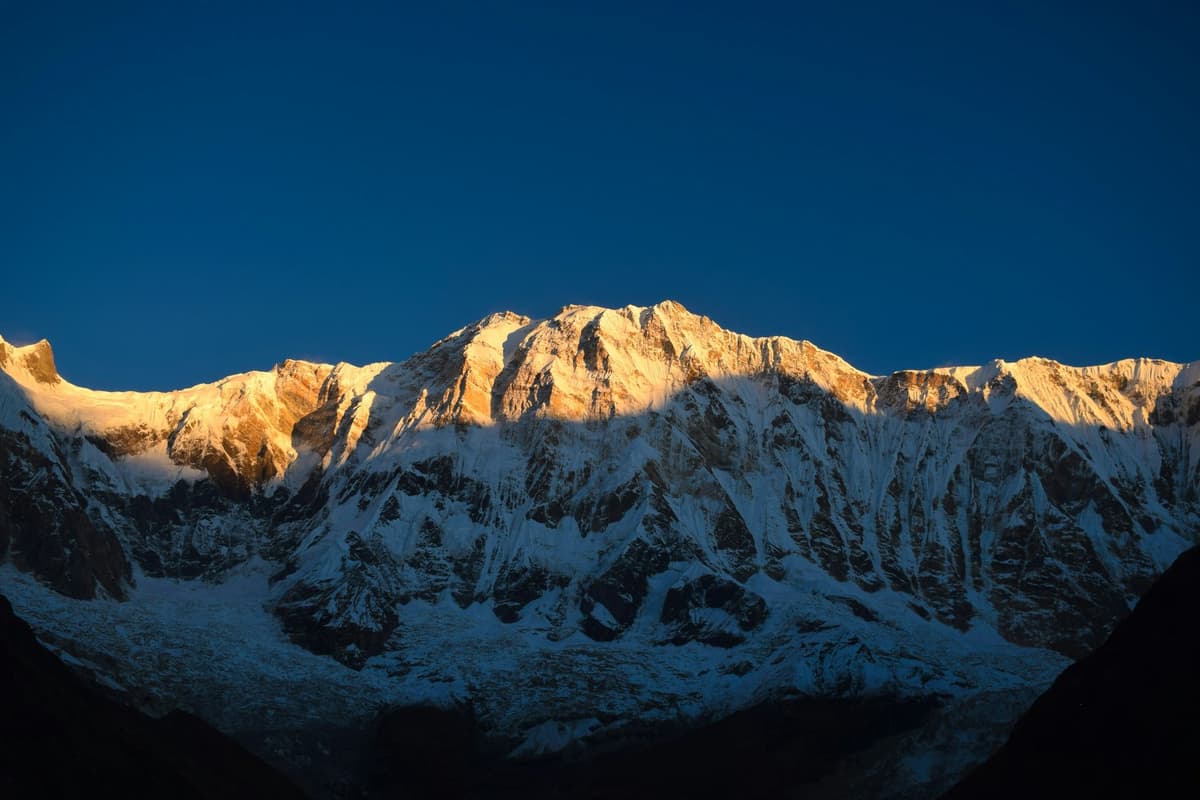
Both treks go well past the point where altitude matters. The US CDC says anyone sleeping at about 2,450 m or higher without acclimatising is at risk of altitude illness. Above 3,000 m, the Wilderness Medical Society advises not raising your sleeping height by more than about 500 m a night, with a rest day every 3 to 4 days.
On Everest, every night from Namche Bazaar upwards is above 3,000 m, so the trek climbs in stages with rest days. That is why it takes as long as it does. The highest night is at Gorak Shep, the lodges you walk from to base camp and back.
On ABC the high nights are few. Most short itineraries sleep at Deurali, about 3,200 m, and at ABC the next night. That is a climb of about 900 m, more than the 500 m guidance, so you walk it slowly and go down if symptoms appear. Some itineraries split it with a night at Machhapuchhre Base Camp, about 3,700 m (operator figure), which adds a day. If you can spare it, we think it is worth it.
How many days do you need for each trek?
Plan about 11 to 14 days Lukla to Lukla for EBC, plus at least one spare day for the flight. For ABC, most itineraries run about 7 to 12 days from Pokhara. Our classic Everest trek is 12 days Kathmandu to Kathmandu, and our ABC trips run from 5 to 11 days.
Our Everest packages run 12 to 14 days. You cannot safely rush the walk up, and the spare day for Lukla weather comes on top.
ABC is more flexible because it starts by road. Starting in Kathmandu adds the Kathmandu to Pokhara leg each way: most of a day by road, often six to nine hours with traffic and roadworks, or about 30 minutes by air. Our 7-day trip from Kathmandu uses day 1 and day 7 for that.
Be honest about the short versions. Our 5-day ABC from Pokhara is five full walking days, and none of our ABC trips includes a rest day as standard. The shorter the trip, the bigger the jumps in sleeping height. A rest day, often at Chhomrong or Bamboo, or a night at Machhapuchhre Base Camp adds one day and makes the top easier.
If you want to see Poon Hill as well, our ABC trip with Ghorepani and Poon Hill runs 9 days from Pokhara (8 days for ABC alone), or 11 days from Kathmandu (10 days for ABC alone).
How do you get to the start of EBC and ABC?
EBC starts with a flight to Lukla, a mountain airstrip at 2,846 m about 30 minutes from Kathmandu, and every Lukla flight depends on the weather. ABC starts by road: a jeep from Pokhara to a road head such as Ghandruk, Jhinu or Siwai, about 2.5 to 4 hours depending on the road head and the road.
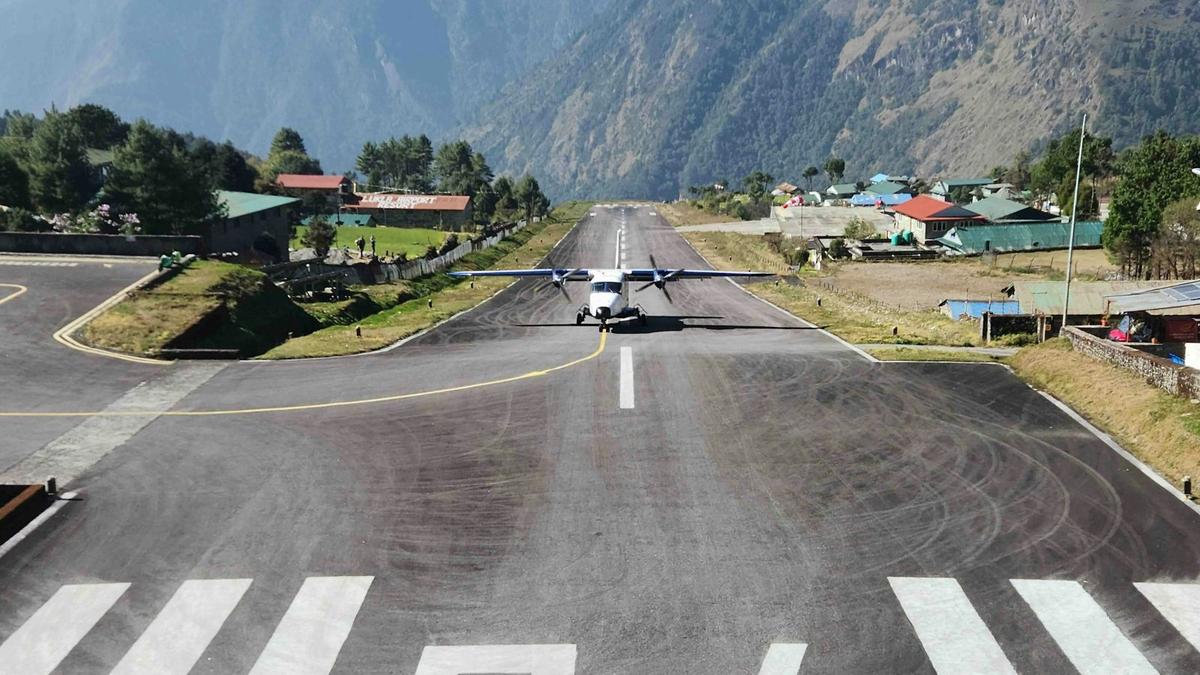
In the busiest months the government moves Lukla flights to Manthali airport in Ramechhap, about 130 km from Kathmandu and about five hours by road, usually with a pre-dawn start. We found no official notice for autumn 2026, and on 25 September, the day operators say this year's move began, The Kathmandu Post reported Lukla passengers waiting at Kathmandu airport. Check with the airline when you book which airport you fly from.
Weather closes Lukla more often than people expect: it was among five airports shut on 25 September 2026, and closed again on 30 and 31 October.
"Lukla airport, which had remained closed on Friday and Saturday because of adverse weather, resumed operations on Sunday."
The Kathmandu Post, 1 November 2026
That is why we build at least one spare day into every Everest trip. Our Lukla airport guide explains the flights and the Ramechhap drive.
ABC needs no flight unless you fly from Kathmandu to Pokhara. Pokhara sits at about 820 m, and the road now reaches Ghandruk, Jhinu and Siwai, where many trekkers start walking. Our guide to treks from Pokhara covers the road heads and the shorter walks nearby.
Which is harder, Everest or Annapurna Base Camp?
EBC is harder overall because of the height and the length: more nights in thin air and a high point of about 5,550 m. ABC is lower and shorter, but its stone staircases go on and on, and the last climb from Deurali is steep. Neither needs climbing skills. Both need steady fitness and patience.
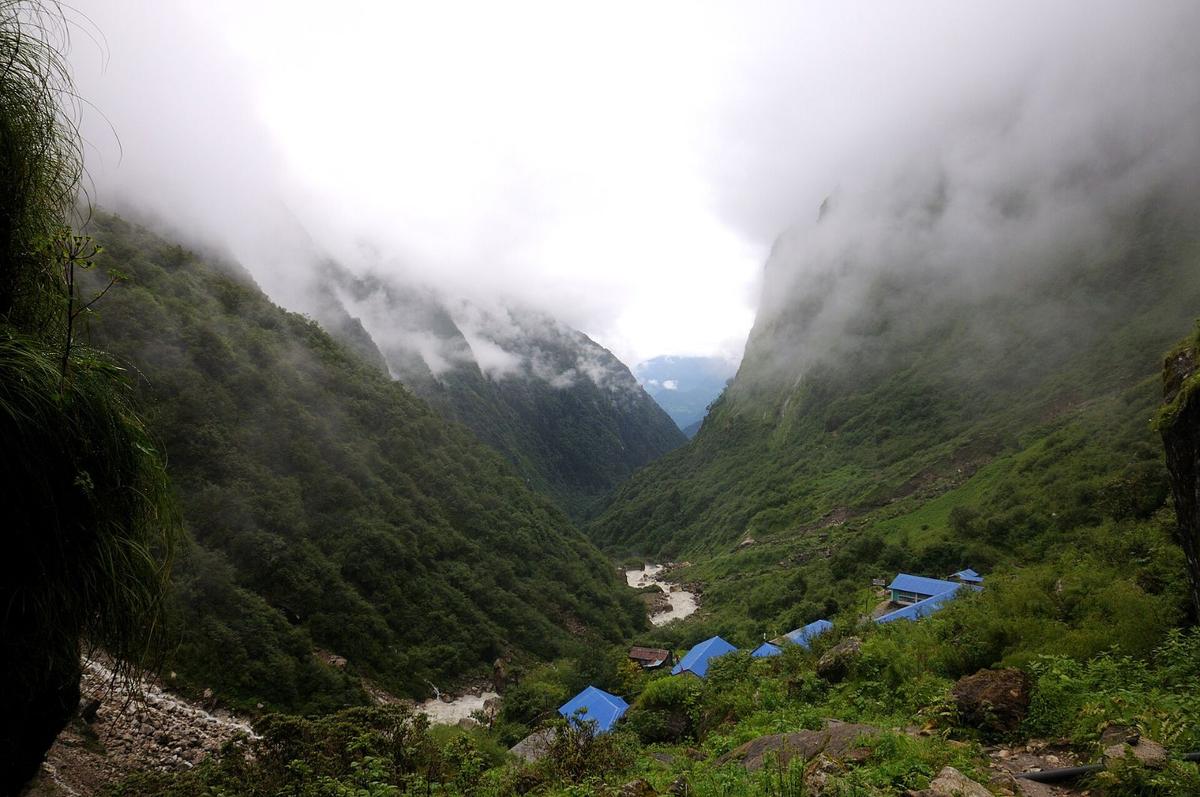
On Everest the stages above Namche look short on a map and feel long in the thin air. Our article on Everest Base Camp trek difficulty goes through it stage by stage.
On ABC the trail drops to rivers and climbs back to villages again and again, so your legs and knees work hard before the air gets thin. Then comes the climb of about 900 m from Deurali to the base camp. Our guide to Annapurna Base Camp trek difficulty is frank about the steps and the descent.
On both treks, the altitude rules are the same:
- Go up slowly. Above 3,000 m, don't raise your sleeping height by more than about 500 m a night, and take a rest day every 3 to 4 days.
- Walk slowly. As we say in Nepali, "bistarai, bistarai": slowly, slowly.
- Drink plenty of water, and skip alcohol for the first days at height.
- Know the symptoms: headache, nausea, tiredness and poor sleep.
- Never go higher with symptoms. Go down if they get worse.
- Ask your doctor before you travel about preventive medicine such as acetazolamide.
- Garlic soup and other hot soups are a comforting local habit that helps you drink. They are not a proven cure.
- Severe symptoms, such as confusion, breathlessness at rest or unsteady walking, mean you descend at once and get medical help. Our guide arranges a rescue if needed.
What permits and fees do you need for each trek?
For EBC you need the Sagarmatha National Park permit and the Khumbu Pasang Lhamu Rural Municipality Trek-Card. For ABC you need only the ACAP permit, for the Annapurna Conservation Area Project. We arrange these in-country permits for everyone trekking with us. These are the official fees (NTB and the municipality, checked 12 November 2026).
| Permit | Trek | Foreign nationals | SAARC nationals | Notes |
|---|---|---|---|---|
| Sagarmatha National Park | EBC | NPR 3,000 | NPR 1,500 | Per person per entry; children below 10 free |
| Khumbu Trek-Card | EBC | NPR 3,000 | NPR 2,000 (also China) | Issued at the Tourist Information Centre in Lukla; passport and recent photo; about 15 minutes |
| ACAP permit | ABC | NPR 3,000 | NPR 1,000 | Per person per entry; children below 10 free; costs double if bought at a checkpost |
EBC needs two permits and ABC needs one, so the official fees are higher on Everest. For what each trek costs in all, see our guide to the cost of trekking in Nepal.
When is each trek busiest, and when should you go?
Spring and autumn are the best trekking seasons for both, according to NTB, and October is the peak month on Everest. NTB says "the clearest skies are found after the monsoon in October and November." On Everest, October 2025 was the busiest month, with 10,345 foreign visitors entering Sagarmatha National Park.
The Annapurna Conservation Area saw 38,607 foreign visitors in October 2025 alone. For the whole of 2025, about 300,000 foreign visitors entered the Annapurna Conservation Area, against 47,524 for Sagarmatha National Park (49,372 in 2024). Be careful with that comparison: the Annapurna count covers the whole conservation area, including Poon Hill, the Circuit and Mustang, and no official per-route count is published. These figures cannot tell you whether the ABC trail is busier than the EBC trail.
The monsoon is the season to avoid for both. NTB notes that "Eighty percent of all the rain in Nepal is received during the monsoon (June-September)." In 2026 the monsoon began on 19 June and fully withdrew on 14 October.
Autumn 2026 has also brought snow. See the first question below for where things stand now.
What is the walk like on each trek?
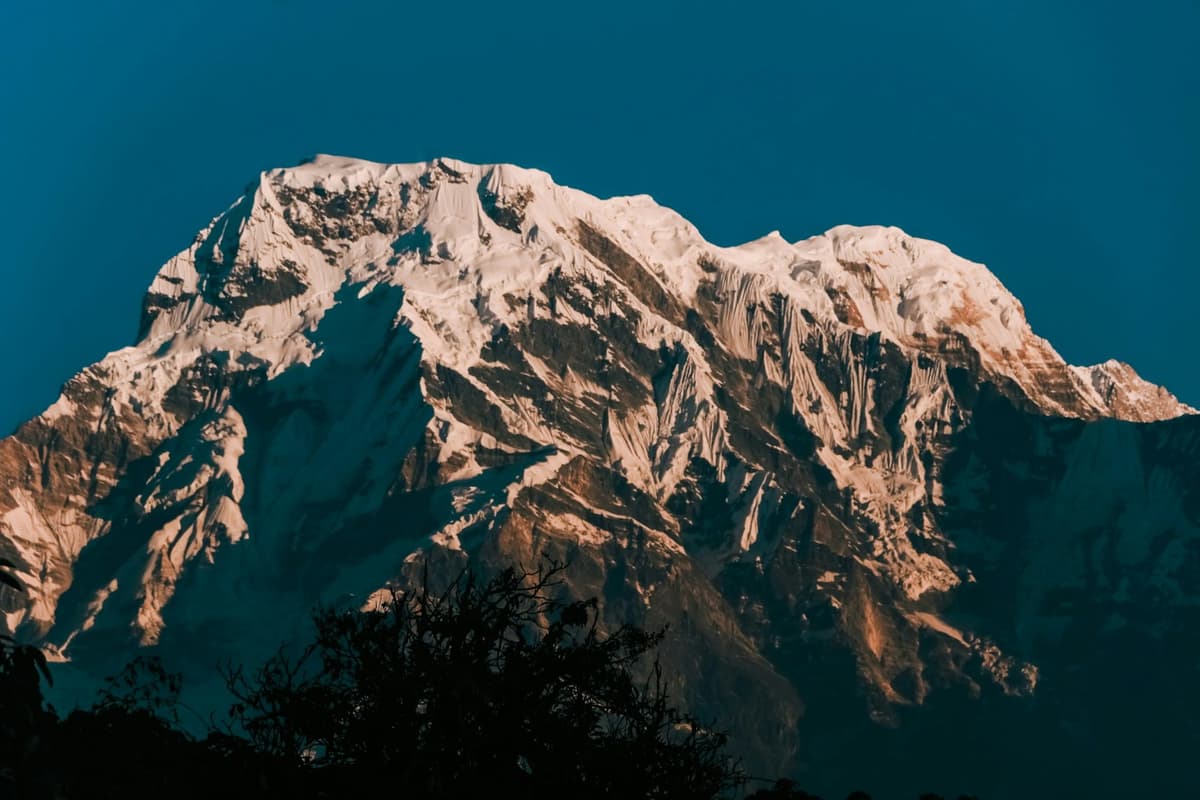
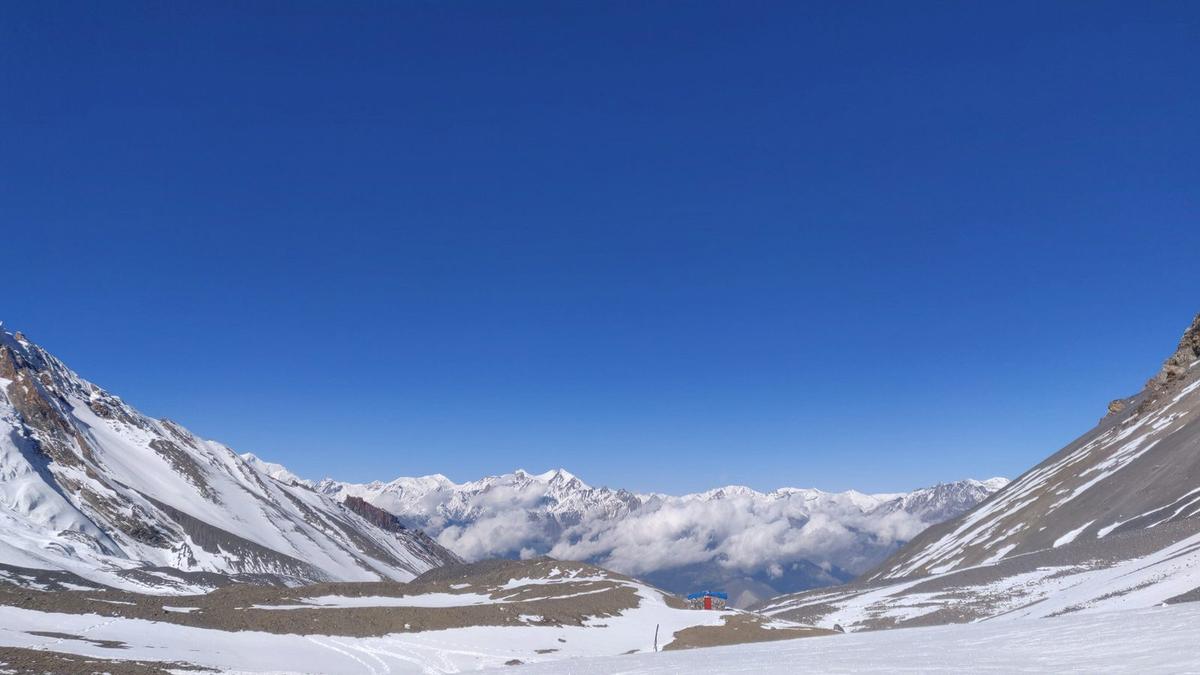
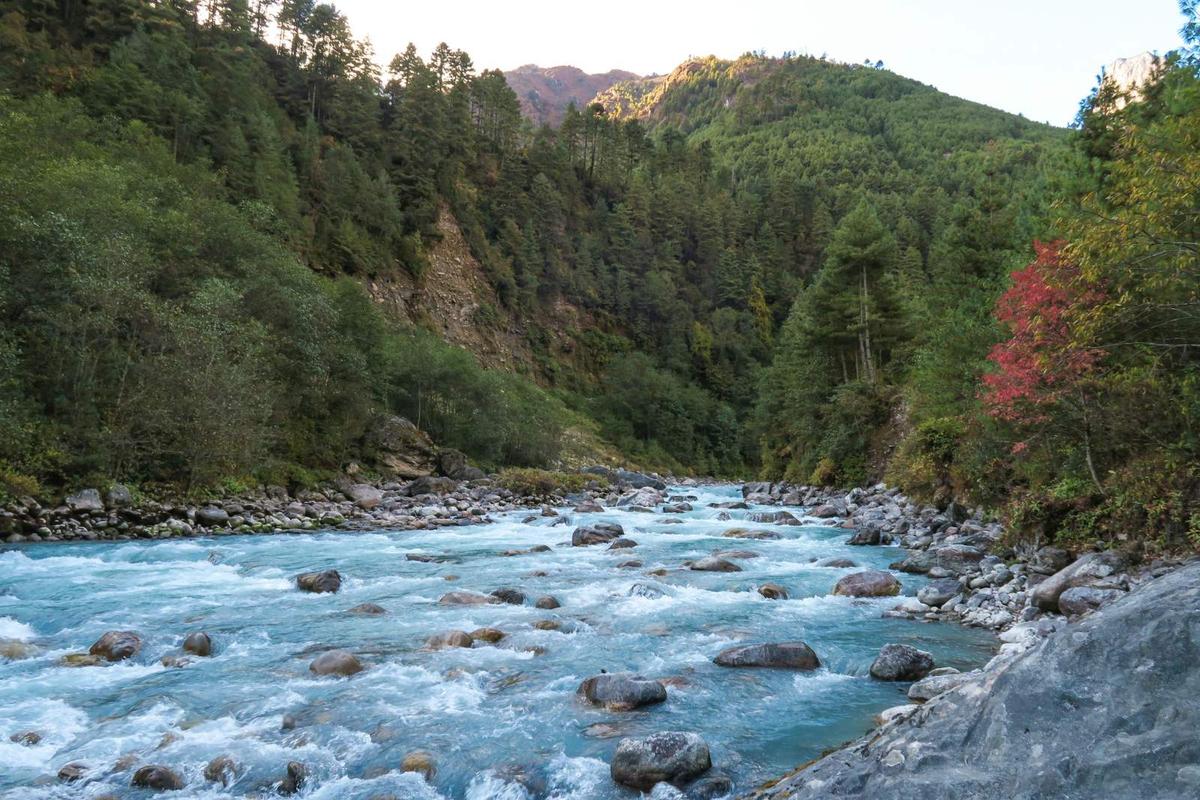
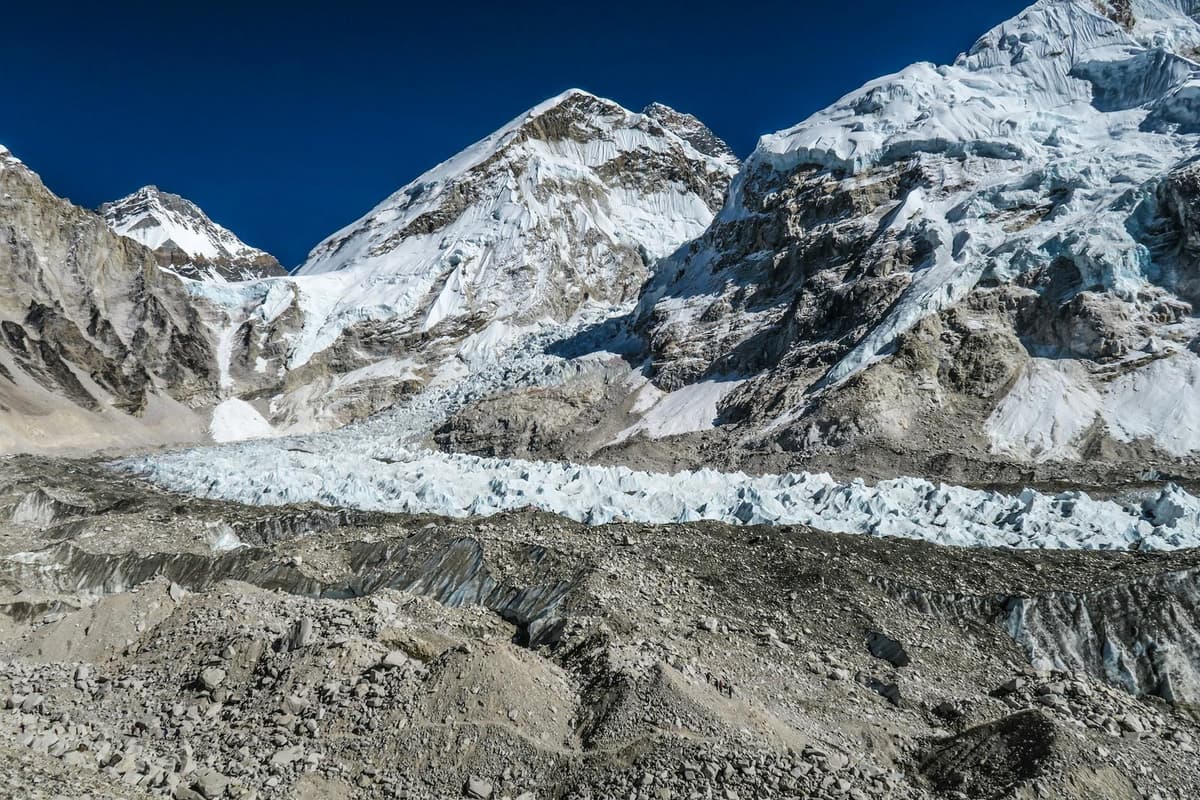
EBC follows the Khumbu valleys up through Sherpa villages and monasteries to moraine and ice below Everest. ABC climbs through farming villages, terraced fields and forest up the Modi Khola valley into the Annapurna Sanctuary, a ring of mountains around the base camp. EBC feels long and open; ABC feels greener and more enclosed.
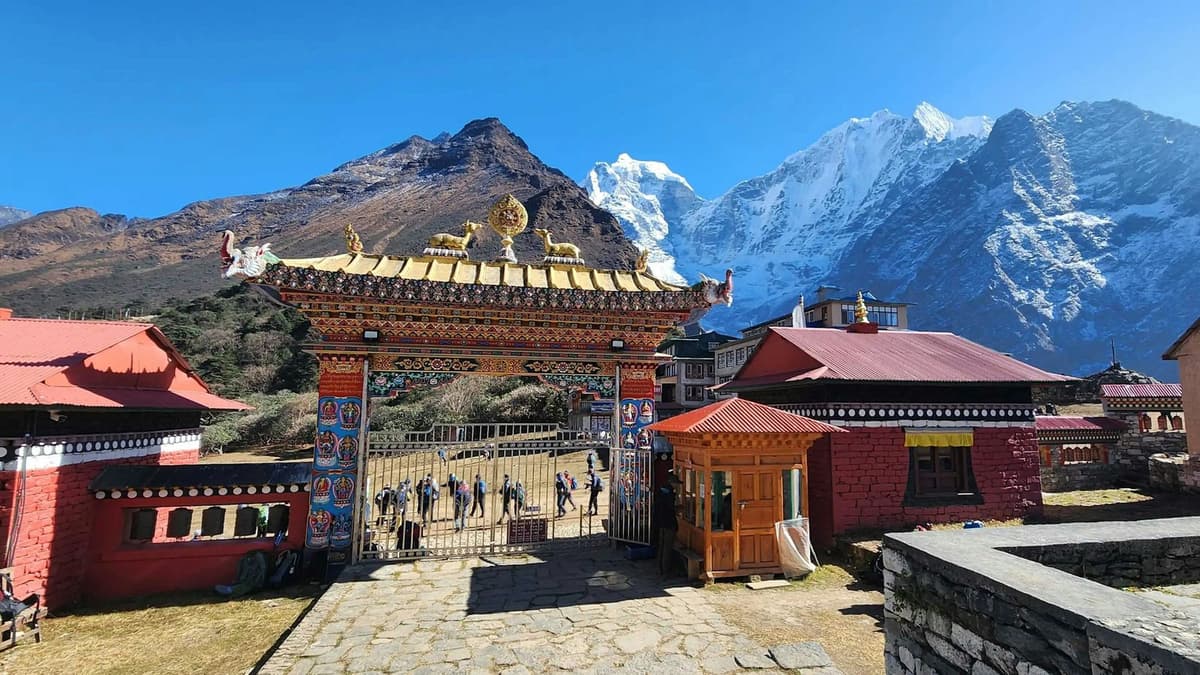
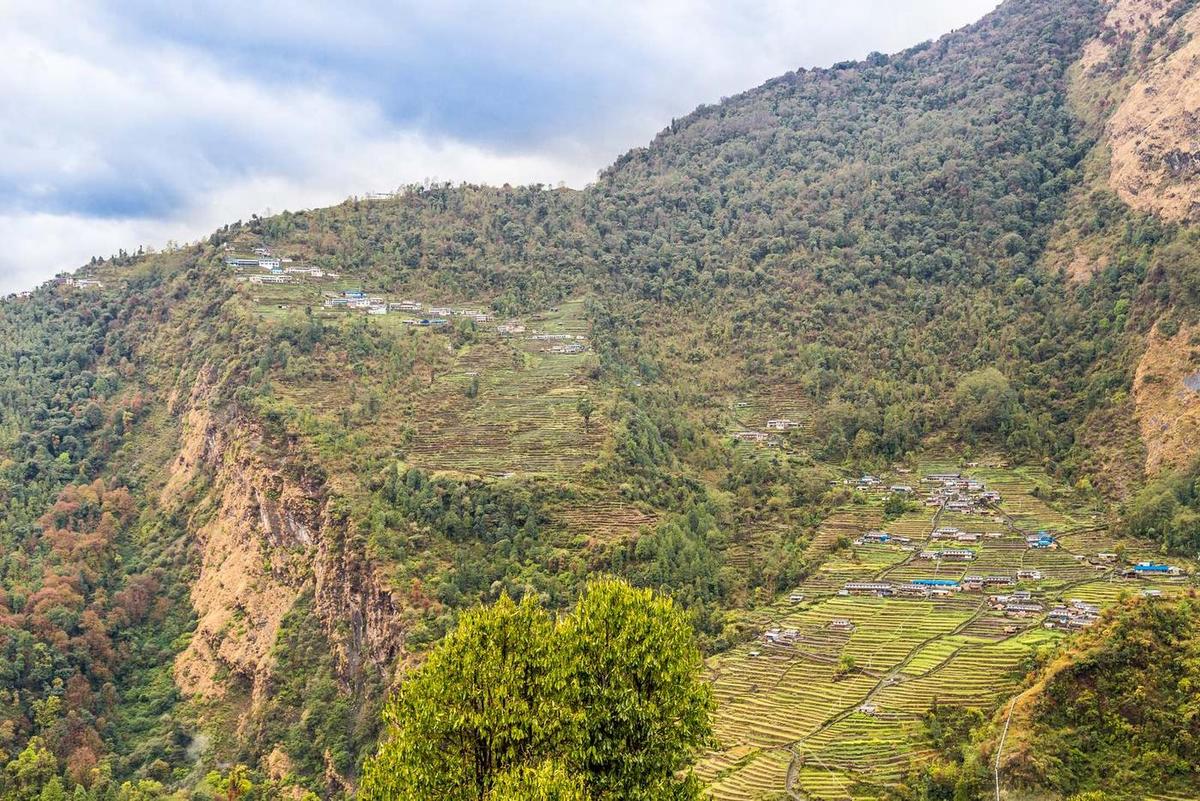
On the Everest side, Namche Bazaar is the market town where our Everest trek spends its first rest day, and Tengboche monastery is a stop on the way up. Higher up the villages thin out to lodges, Gorak Shep the last of them. Base camp itself sits below the Khumbu Icefall, and most people climb Kala Patthar for the wide view.
On the Annapurna side, Chhomrong, about 2,170 m, is the last big village. Beyond it come Bamboo, about 2,310 m, and Deurali, then the sanctuary opens out at Machhapuchhre Base Camp. On the way down, many trips stop at Jhinu Danda for the natural hot springs a short walk below the village (entry paid separately on our trips).
Teahouses are similar on both. Lower lodges often have sit-down toilets and some attached bathrooms; higher up, shared squat toilets are the norm, and above about 4,000 m you may flush with a bucket. Hot showers usually cost extra, charging may cost extra too, and wifi is common but usually paid.
Should you choose EBC or ABC?
Choose EBC if standing below the world's highest mountain matters to you and you have about two weeks plus a spare day. Choose ABC if you have closer to a week, want to start by road from Pokhara, or want your first taste of altitude without sleeping higher than 4,130 m.
Choose EBC if:
- You want Everest itself, with base camp below the Khumbu Icefall and the view from Kala Patthar.
- You have about 11 to 14 days for the walk, plus at least one spare day for Lukla.
- You are fine with a weather-dependent flight, possibly from Ramechhap after a pre-dawn drive.
- You have trekked at altitude before, or you are fit and happy to take the rest days slowly.
- You prefer long, gradual valley walking to steep staircases.
Choose ABC if:
- You have about 7 to 12 days from Pokhara, or fewer on one of our shorter versions.
- You would rather start by road than depend on a mountain flight.
- This is your first trek at altitude and you want a lower top, at 4,130 m.
- Steep stone steps and one hard last climb from Deurali don't put you off.
- You want to add Poon Hill, or spend easy days in Pokhara either side.
Skip EBC if your flight home leaves no slack after the trek. Skip ABC if your knees hate long descents on stone steps; ask us about gentler options.
Frequently asked questions
Is it safe to trek to EBC or ABC right now?
As of 12 November 2026 we found no official closure notice for the EBC or ABC trails, but conditions change with snow, so check the week you go. During Cyclone Arnab the Department of Tourism advised trekkers to avoid high areas from 28 October to 1 November, and Lukla closed on 30 and 31 October. On 11 November moderate snowfall was reported in high Himalayan areas (Spotlight Nepal). Annapurna Rural Municipality has closed the ABC trail in past storms (late October 2025). We have found no official update on trail conditions since that snow. Canada's travel advice (updated 3 November 2026) says "Exercise a high degree of caution" and warns that strikes (bandhs) can be called at short notice.
Is a guide mandatory for ABC or EBC?
Not on our trips. A licensed guide walks with you on every trek we run. On the rules, there are two positions. NTB's rule requiring a licensed guide on listed routes has applied since 1 April 2023 (NTB lists 31 March 2023). In the Everest region, the Khumbu Pasang Lhamu Rural Municipality says a guide is not compulsory in Khumbu.
Is there airport pickup in Kathmandu, and how do I get to Thamel late at night?
Kathmandu airport is about 5.5 km east of central Kathmandu, where Thamel is. An airport taxi service operates, according to CAAN. Agree the fare before you get in. Ride apps such as Pathao and inDrive work in Kathmandu, but we could not confirm app pickups at the airport. Book your first night's room and transfer before you fly. The airport closed overnight (11:45 pm to 6:30 am) until 18 May 2026, and we found no announced night closure for winter 2026 to 2027. If you are trekking with us, ask us about a pickup.
Where can I get cash, and do cards work on the EBC and ABC treks?
Get cash before you start: teahouses on both trails generally take Nepali rupees, not cards. Banks list ATMs in Thamel, at Kathmandu airport arrivals and in Pokhara. On Everest, Namche Bazaar has bank ATMs, but they do not always work, and it is the last ATM stop on the trail. Operators report ATMs at Lukla, but they are unreliable, so bring cash from Kathmandu. On ABC we found no ATM listed above the road heads, so use Pokhara. Nepali banks charge foreign cards about NPR 660 to 900 per withdrawal (bank fee schedules compiled in October 2026), and your own bank may add more. You may bring up to USD 5,000 in cash into Nepal without a customs declaration (Nepal Rastra Bank).
Can you do both Annapurna and Everest base camps in one trip?
Yes, if you have the time, but treat them as two separate treks. EBC takes about 11 to 14 days from Lukla and back plus a spare day, and ABC about 7 to 12 days from Pokhara, with the Kathmandu to Pokhara leg in between. Each needs its own permits and its own slow climb. Doing one well beats rushing both.
Plan your trip with us
Still weighing it up? Our guide to the best treks in Nepal compares the wider list. For the trips themselves, see our Everest Base Camp treks and our Annapurna Base Camp treks.
Message us on WhatsApp or send an enquiry and we will reply with honest options.