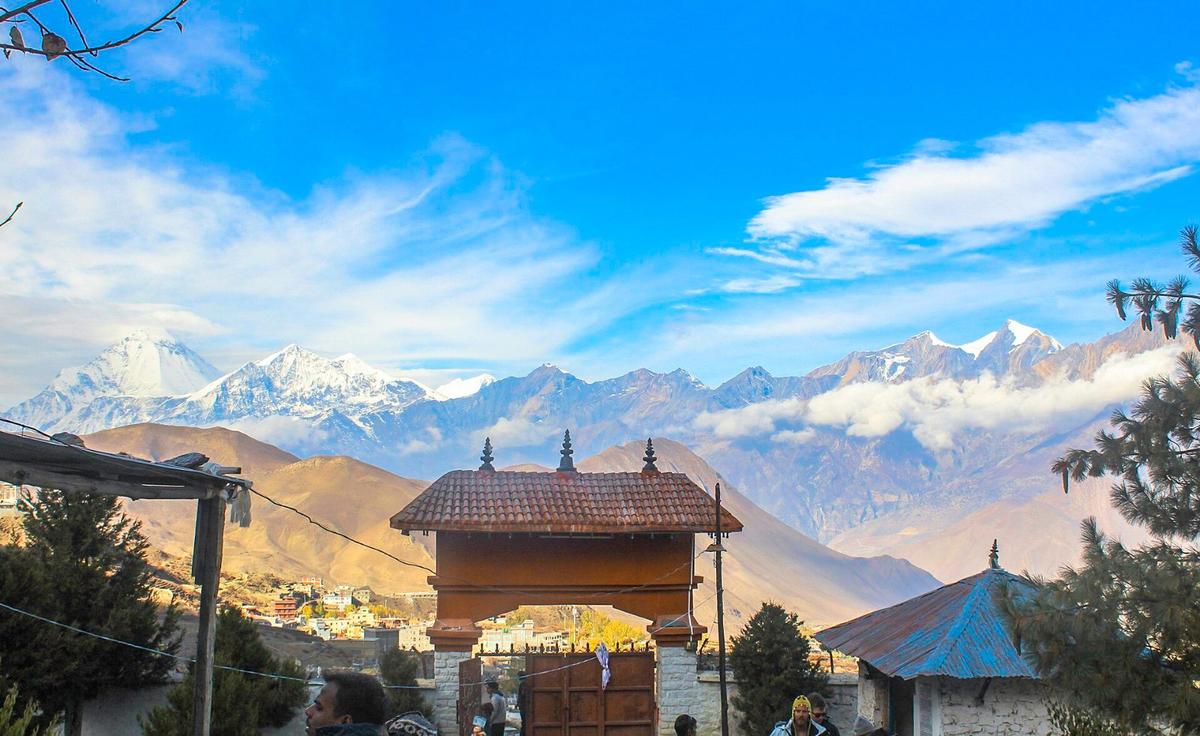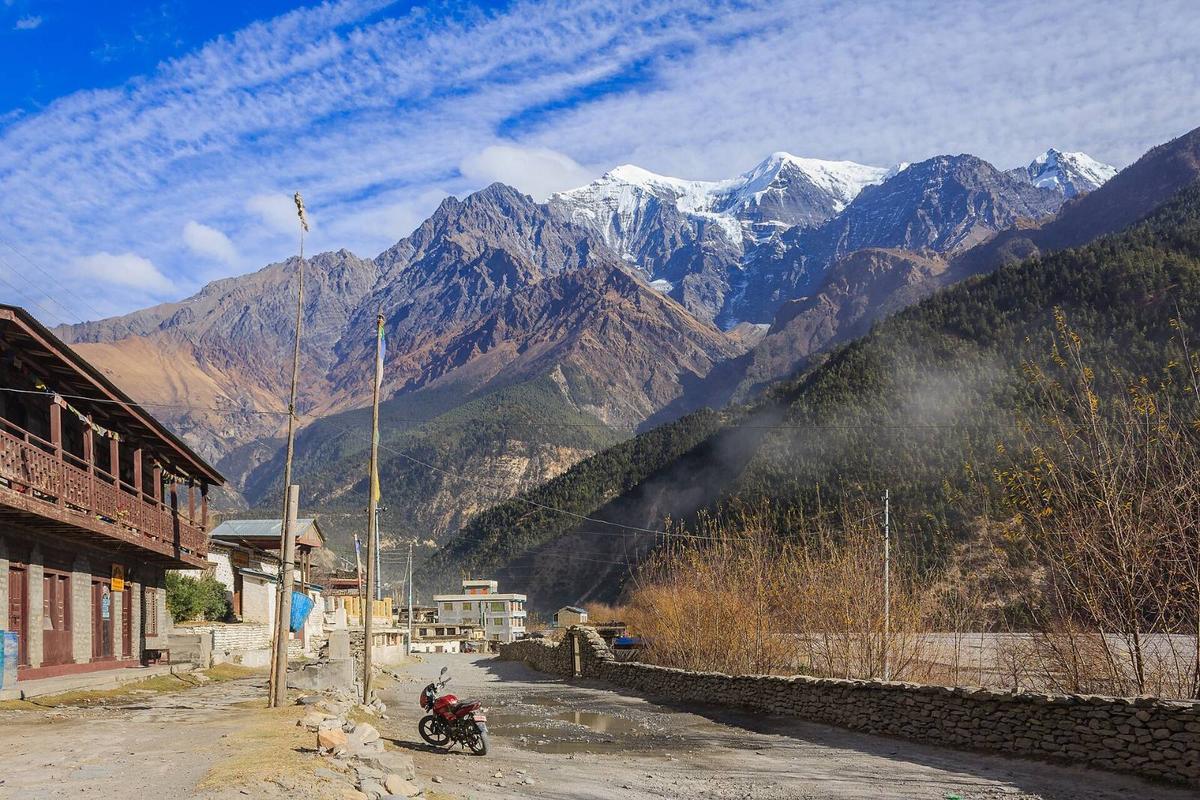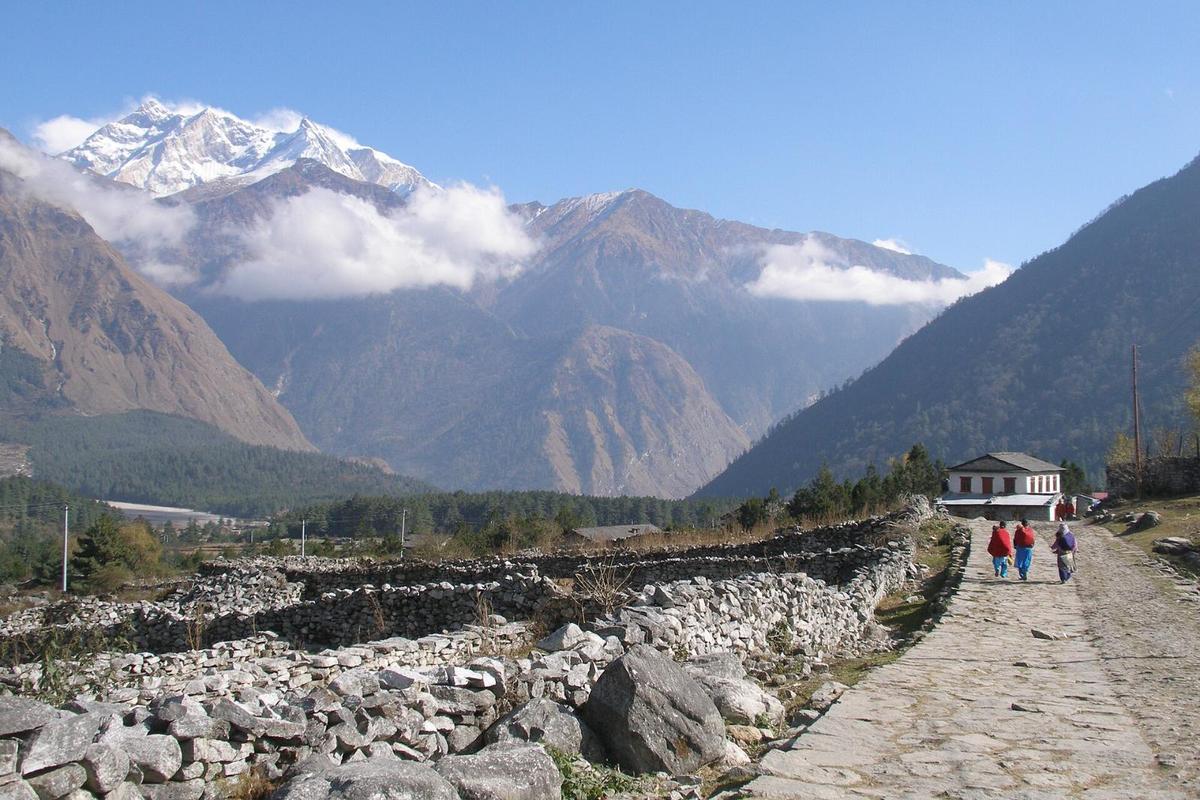
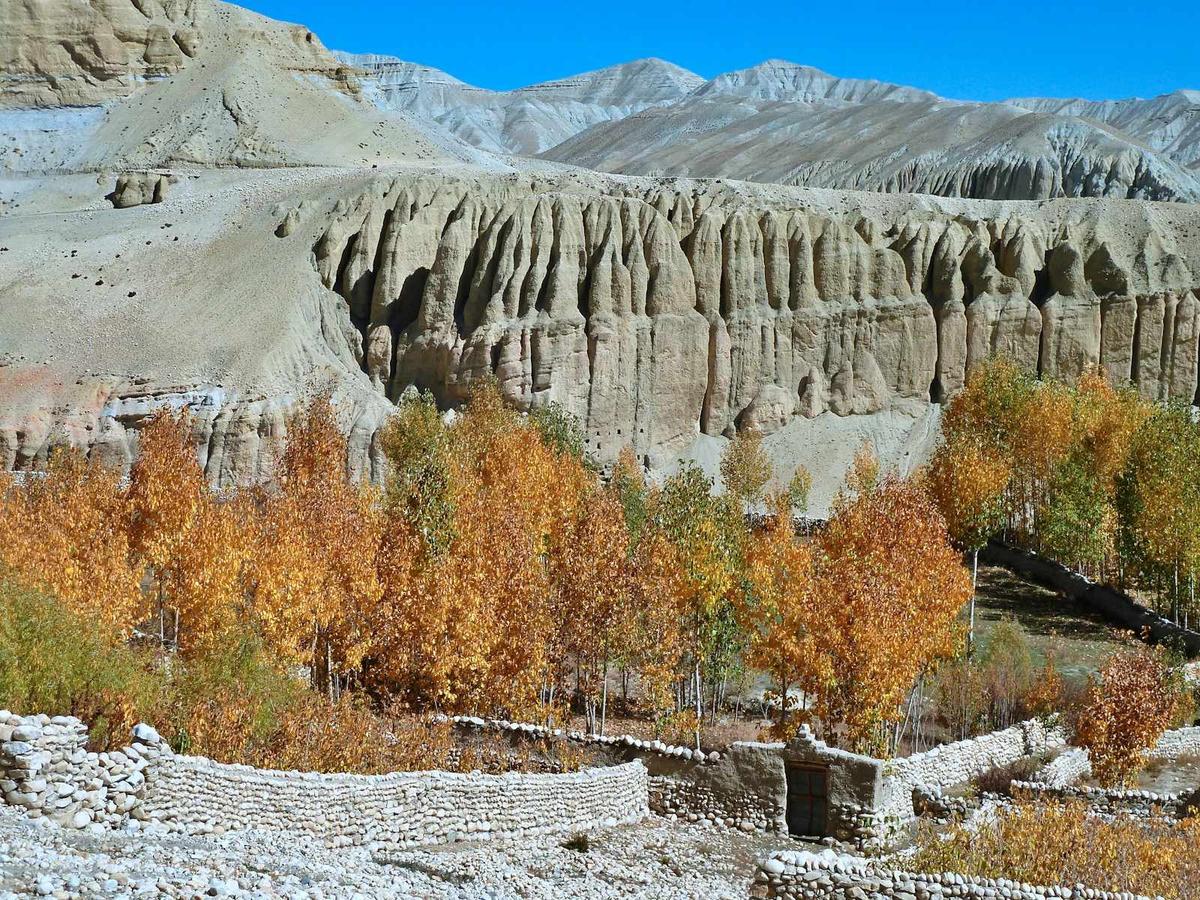
Mornings are usually the calmest part of the day in Jomsom, which is why most flights there leave early. As the day goes on, a strong wind pushes up the Kali Gandaki valley, at its strongest between Marpha and Chhusang. Rain is scarce here: Jomsom averages about 292 mm of rain and snow a year, while Lumle, on the wet side of the Annapurna range, averages 5,492 mm.
The best time to visit Mustang, Nepal, is October and November, then March to May: dry, mostly clear and outside the worst of the cold. Upper Mustang also works in the monsoon because it sits in a rain shadow, though the road below it does not. Winter brings snow and closures. For the wider region, start with our Mustang guide.
In this guide
- Best time to visit Mustang, Nepal: the short answer
- Mustang weather month by month
- Spring in Mustang (March to May)
- Monsoon in Mustang (June to September)
- Autumn in Mustang (October and November)
- Winter in Mustang (December to February)
- Festivals by season
- Getting there by season
- Altitude in every season
- Frequently asked questions
Key facts
- Weather station used
- Jomsom, 2,741 m, normals 1991 to 2020 (DHM, checked 17 Nov 2026)
- Rain and snow at Jomsom
- About 292 mm a year (DHM, checked 17 Nov 2026)
- Driest and wettest months
- November 4.6 mm; July 46.8 mm (DHM, checked 17 Nov 2026)
- Coldest month
- January, average low −1.9 °C at Jomsom (DHM, checked 17 Nov 2026)
- Upper Mustang weather data
- No official normal exists for any station there (DHM, checked 17 Nov 2026)
- Lo Manthang altitude
- About 3,800 m (UNESCO, checked 17 Nov 2026)
- Muktinath altitude
- About 3,800 m (NTB, checked 17 Nov 2026)
- Busiest months in Upper Mustang
- October and April (ACAP via The Rising Nepal, checked 17 Nov 2026)
- Upper Mustang permit
- USD 50 per person per day (NTB, checked 17 Nov 2026)
- ACAP entry permit
- NPR 3,000 foreigners, NPR 1,000 SAARC (NTB, checked 17 Nov 2026)
- Pokhara to Jomsom flights
- Scheduled flights suspended since the second half of October 2026; charters continue (Kantipur and Peoples' Review, checked 17 Nov 2026)
Best time to visit Mustang, Nepal: the short answer
For most people the best months are October and November, then March to May, with little rain, mostly clear skies and comfortable days. ACAP's staff in Lo Manthang name October and April as the busiest months.
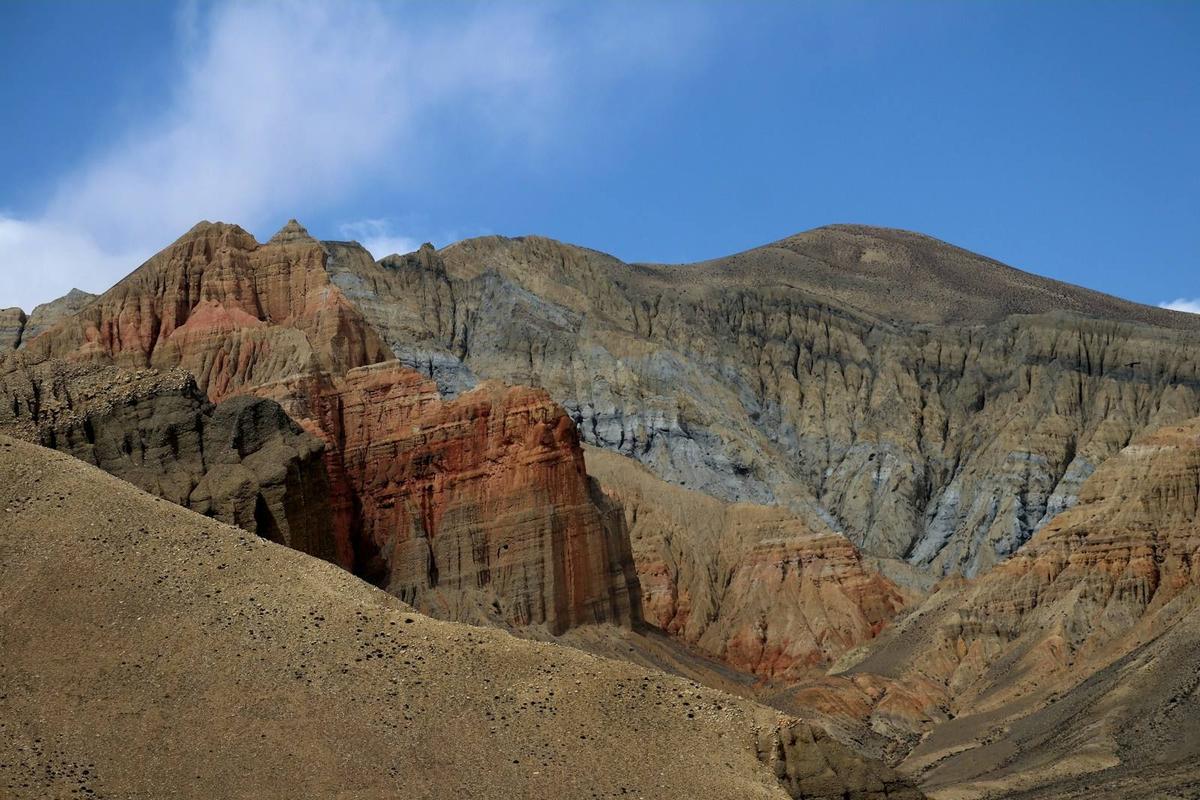
- Autumn (October and November): the driest, clearest stretch; early snow is possible.
- Spring (March to May): warming days, villagers returning and the Tiji festival; late snow still happens.
- Monsoon (June to September): Upper Mustang stays fairly dry, but the journey there is the hard part.
- Winter (December to February): cold and snowy; Lower Mustang can work on clear spells, Upper Mustang is hard going.
Our Upper Mustang and Lower Mustang guides explain how the two halves differ.
Mustang weather month by month
The only Mustang weather station with official 30-year normals is at Jomsom, 2,741 m. The table uses its DHM normals for 1991 to 2020: a guide to Jomsom and Lower Mustang. Lo Manthang is about 1,000 m higher, and NTB's rule of thumb is that air cools by about 6 °C for every 1,000 m you climb, so expect Upper Mustang to be noticeably colder, especially at night.
| Month | Average high (°C) | Average low (°C) | Rain and snow (mm) | What it means for you |
|---|---|---|---|---|
| January | 10.4 | −1.9 | 14.4 | Coldest month; snow likely higher up |
| February | 11.8 | −0.6 | 21.2 | Still wintry; roads can close in snow |
| March | 15.2 | 2.0 | 30.4 | Warming; late snow showers possible |
| April | 18.6 | 4.4 | 21.4 | Busy month; villages waking up |
| May | 20.6 | 7.8 | 18.6 | Warmest spring month; Tiji season |
| June | 22.6 | 12.1 | 31.8 | Monsoon begins; road and flights less reliable |
| July | 22.8 | 14.1 | 46.8 | Wettest month, still light rain |
| August | 22.6 | 13.8 | 43.9 | Rain shadow holds; the road is the risk |
| September | 21.3 | 11.5 | 36.0 | Apple harvest; monsoon tailing off |
| October | 18.0 | 5.5 | 18.2 | Peak season; clear days, cool nights |
| November | 14.8 | 1.5 | 4.6 | Driest month; cold nights |
| December | 12.3 | −1.2 | 5.1 | Dry but freezing nights |
Averages hide big swings: Jomsom recorded 665 mm in 2023, more than twice its normal. There is no official normal for Lo Manthang, but The Kathmandu Post reported that rainfall at Chhoser, in Lo Manthang's ward 1, rose from under 200 mm a year in 2009 to 331 mm in 2023. For the town itself, see our Jomsom guide.
Spring in Mustang (March to May)
Spring is the second-best season, and the better one for seeing Upper Mustang's villages come back to life. April is one of the two busiest months.
At Jomsom, average highs climb from 15.2 °C in March to 20.6 °C in May, with nights rising to 7.8 °C, and farming restarts in March.
Most residents of Lo Manthang and Lo-Ghekar Damodarkunda winter in lower areas and return in spring, so in early March some households may still be away.
The main caveat is late snow. In 2026 it fell across Upper Mustang, including Lo Manthang, on 4 and 5 April, and at Muktinath on 6 May. Rain and snow at blossom time are also bad for the apple crop. Pack for cold mornings even in May.
Monsoon in Mustang (June to September)
Upper Mustang is one of the few parts of Nepal that stays fairly dry in the monsoon. The catch is getting there.
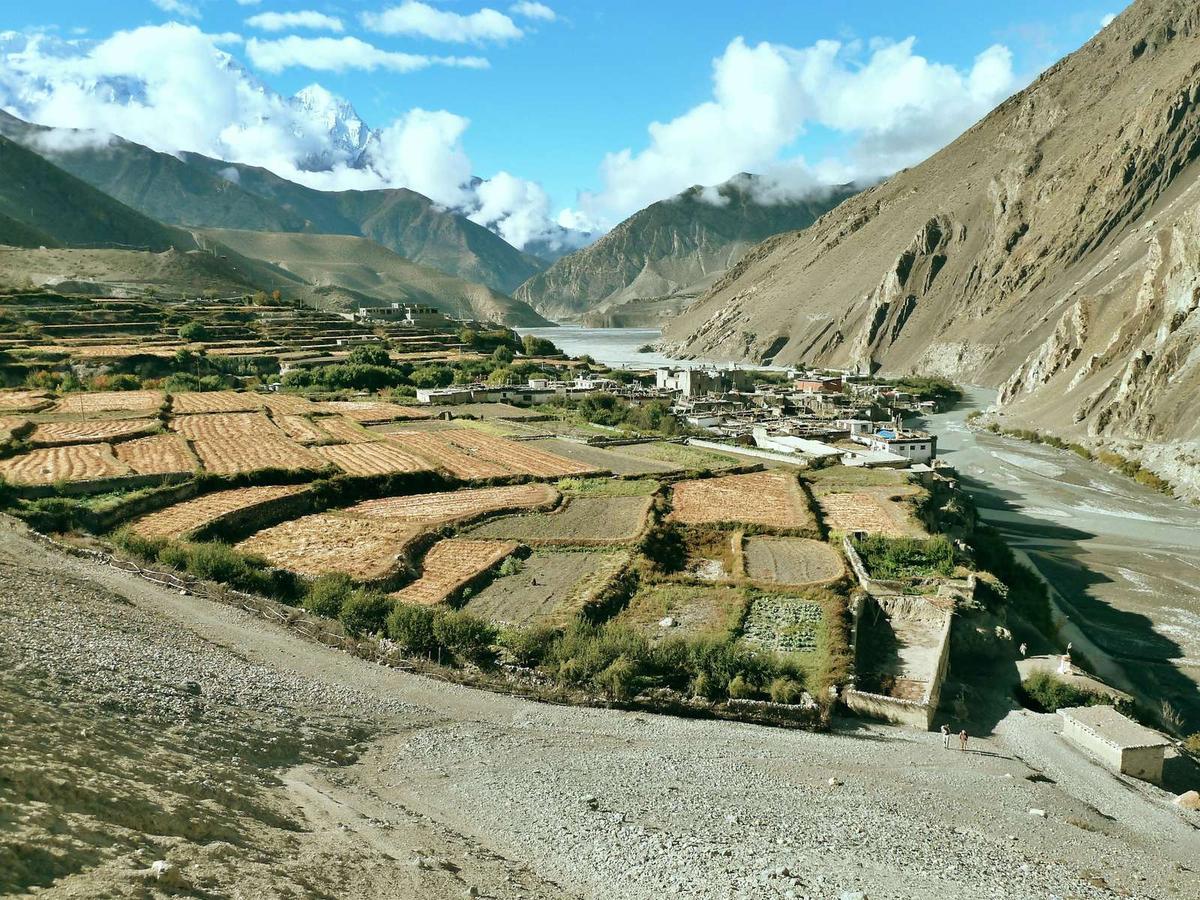
NTB says about 80 per cent of Nepal's rain falls in the monsoon, June to September, and puts it plainly: "Some places like Manang and Mustang fall in the rain-shadow behind the mountains and are mostly dry." Mustang sits behind the Annapurna and Dhaulagiri ranges. July, Jomsom's wettest month, averages 46.8 mm; Pokhara airport averages 3,868.3 mm a year.
Why the road is the weak link
The rain shadow protects the high valleys, not the road that climbs to them. In 2026 the Beni to Jomsom road reopened one way on 22 August after mudflows, and on 26 September the Jomsom to Korala road was blocked at Kalobhir and on the Kagbeni to Tangbe section, while the Beni to Jomsom section had landslides in more than six places. Late-September floods damaged the Beni to Jomsom to Korala road at 46 places, with more than 12 km collapsed. Flash floods reach the dry north too: in August 2023 one swept away homes, hotels and bridges in Kagbeni. Flights also stopped in 2026, Tara Air from 22 May and Summit Air from 2 June, until Summit Air restarted on 24 August.
If you choose the monsoon, choose it for Upper Mustang, add spare days at both ends, and accept that a landslide can hold you up.
Autumn in Mustang (October and November)
Autumn is the most reliable time to go. NTB notes that "the clearest skies are found after the monsoon in October and November", and October is one of the two busiest months in Upper Mustang.
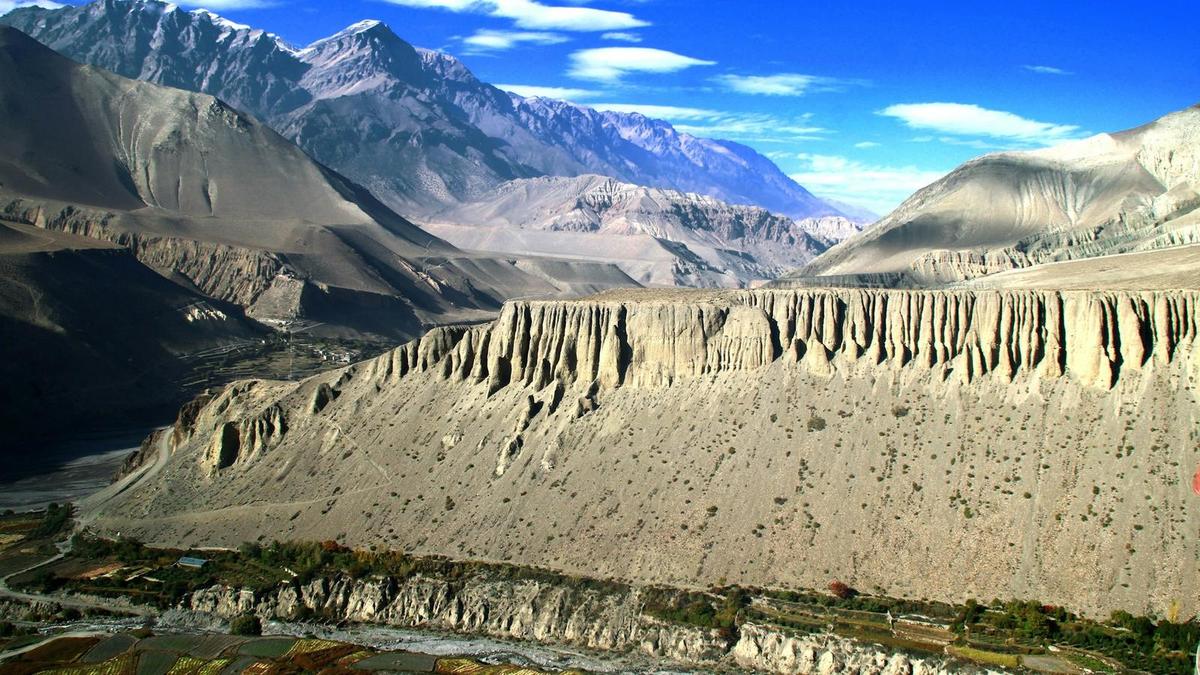
October at Jomsom averages 18.0 °C by day and 5.5 °C at night; November is drier still, with an average low of 1.5 °C.
Three things can upset an autumn trip. The monsoon can linger: in 2026 it left the country on 14 October, 12 days later than average. Early snow can arrive: it fell at Korala, Lo Manthang and Muktinath on 28 October 2025, and in Lo Manthang, Chhoser and at the Korala border at the end of October 2026, when ACAP asked tourists not to travel. And Upper Mustang thins out: residents start leaving in turns from the Nepali month of Asoj (mid-September to mid-October), and most move out in November and December. For Lo Manthang, October is the safer choice; in Lower Mustang, November is often just as good, only colder.
Winter in Mustang (December to February)
Winter is the hardest season, especially for Upper Mustang. Snow normally covers the area, flights usually pause, and many residents have moved south.
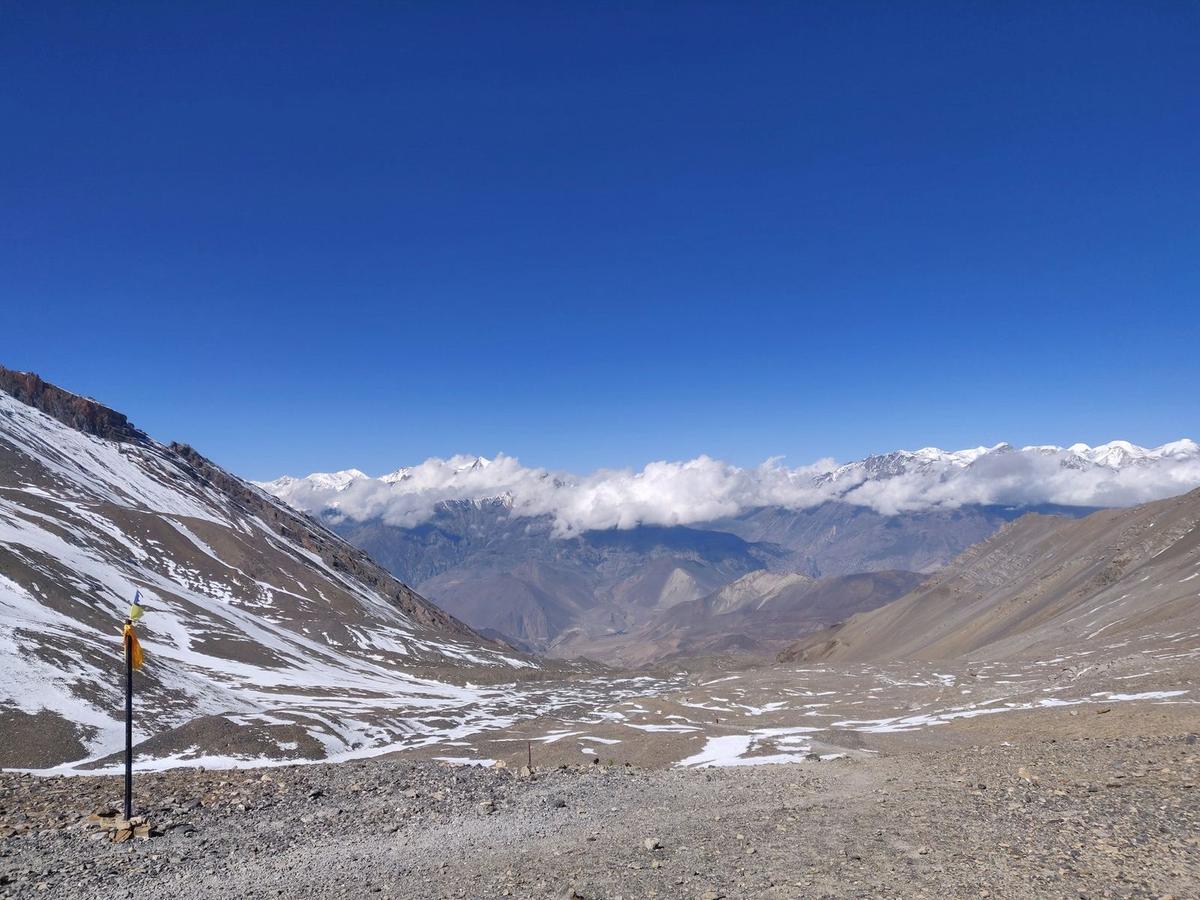
January is the coldest month at Jomsom, with a daily mean of 4.3 °C and an average low of −1.9 °C. Jomsom's lowest recorded temperature is −11.6 °C, and Lo Manthang, about 1,000 m higher, gets colder still.
The Muktinath snow record, 2025 to 2026
Last season snow fell at Muktinath from late October 2025 to early May 2026, eight times by 6 May. On 28 January 2026 it closed the Kagbeni to Muktinath road.
A winter visit to Jomsom and Muktinath is possible between snowfalls; our guide to the best time to visit Muktinath covers it in detail.
Festivals by season
Festival dates move each year, so treat the dates below as past examples, not promises.
Tiji in Lo Manthang (spring, usually May)
Tiji is Lo Manthang's spring festival. NTB says: "Tiji is held annually from the 26th to 29th of the third month in the Tibetan calendar." In 2026 it began on 13 May and ran for three days, ending on 15 May. Dates for 2027 had not been officially announced as of 17 November 2026, so wait for confirmation before you fix your travel. Rooms fill: nearly three dozen Lo Manthang hotels were full during Tiji 2026.
Yartung (August)
Yartung is celebrated every year at Janai Purnima, with horse races; in 2024 the Ranipauwa (Muktinath) festival ran from 15 to 19 August. Lo Manthang held its own three-day Yartung in mid-August 2026. The monsoon road caveats apply.
Apple season (September)
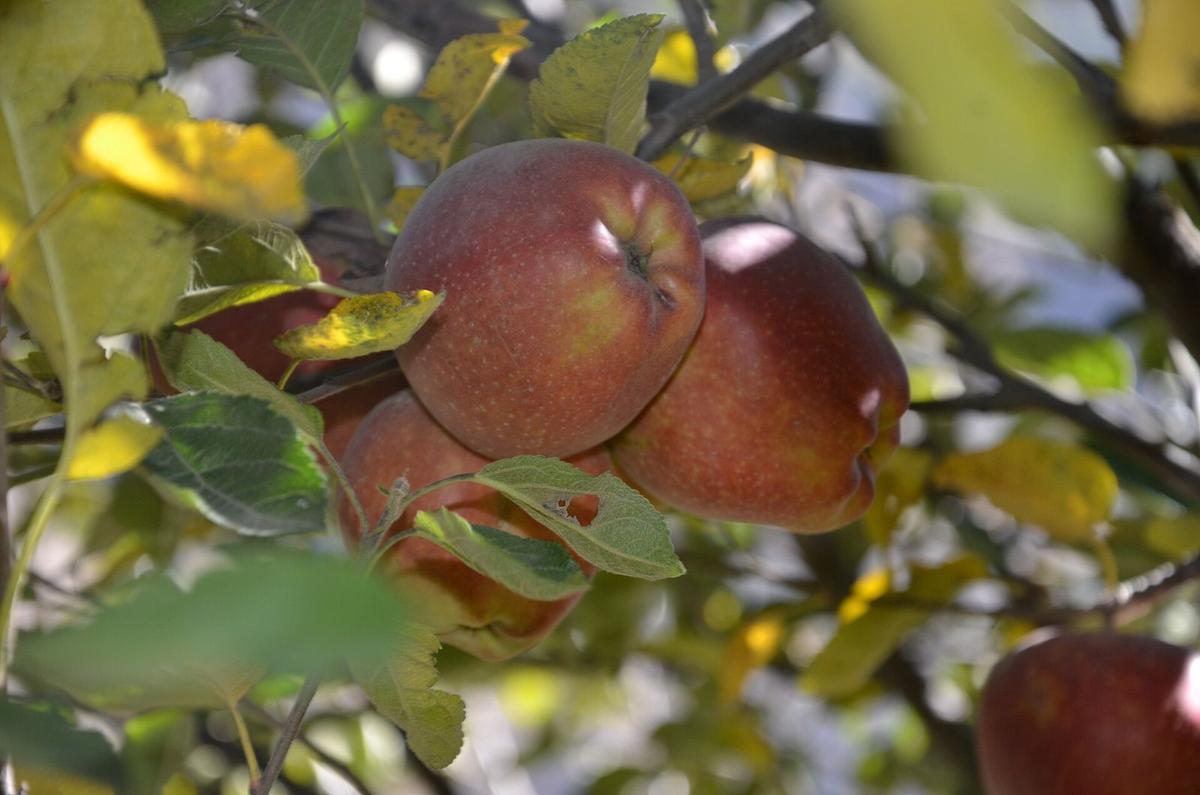
Marpha is one of Mustang's apple-growing areas. In 2026 the district schedule let picking of early Gala and Golden apples start from 1 September, later varieties from 8 September, and local varieties after September. If orchards are part of the appeal, plan for September and accept the late-monsoon road risk.
Getting there by season
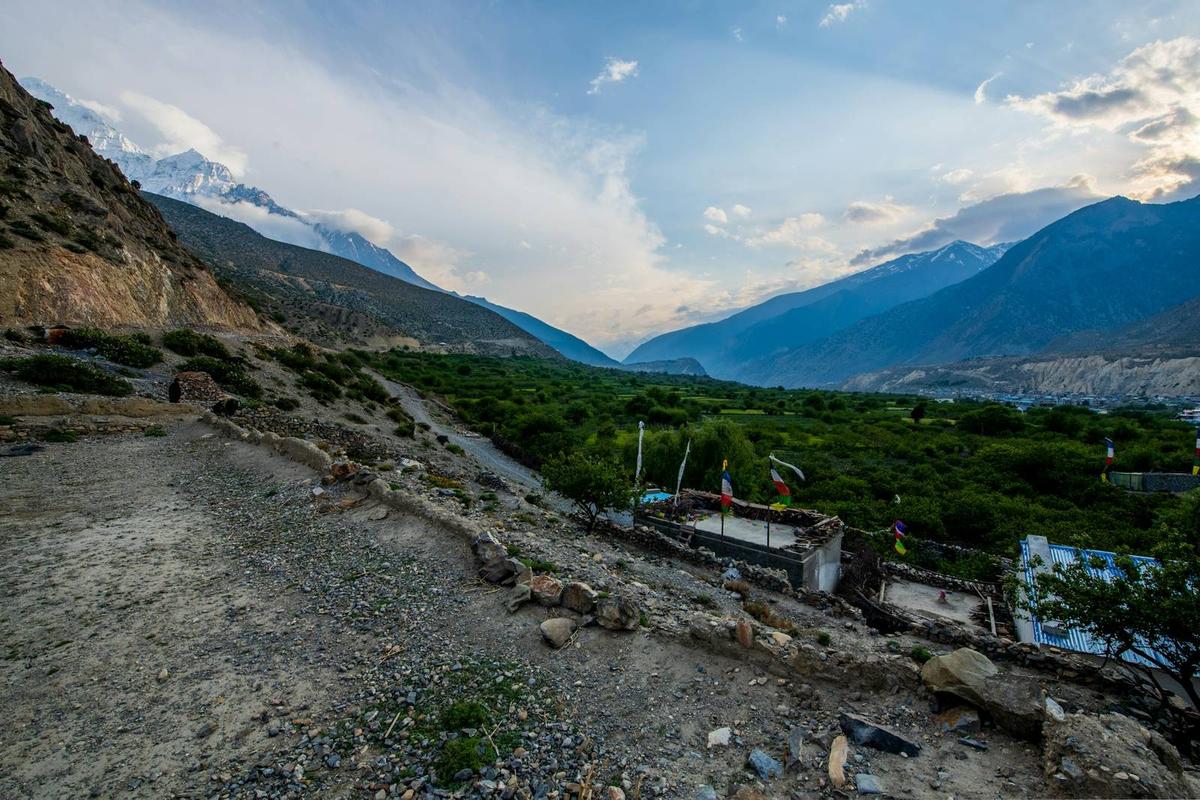
There are two ways in: the road from Beni up the Kali Gandaki, which runs on through Jomsom to Lo Manthang and the Korala border, about 202 km in all, and small-plane flights between Pokhara and Jomsom, which mostly leave in the morning because of strong afternoon winds. Our Pokhara to Mustang guide covers the route stage by stage.
| Season | Flights in a recent year | Road |
|---|---|---|
| Spring | Running again from March 2026 after the winter break | Generally open; late snow possible higher up |
| Monsoon | Paused from late May or early June, restarting late August in 2026 | Landslides and one-way traffic |
| Autumn | Tara Air and Summit Air raised flights from five to seven a day when the road was blocked in early October 2026, before the late-October suspension | Monsoon damage still being repaired |
| Winter | Paused from early December 2025 until March 2026 | Snow can close high roads |
Current status (as of 17 November 2026)
- Flights: scheduled Pokhara to Jomsom flights were suspended in the second half of October 2026; charters continue. Reasons given were passenger cancellations after the Rasuwa flood and other road blockages, and aircraft maintenance. We found no restart report, and as flights normally pause in winter, a restart before spring is uncertain.
- Beni to Jomsom road: on 3 November traffic ran one way on damaged stretches, with repairs under way; full restoration is expected to take two to three years.
- Upper Mustang road: by 5 November snow about two feet deep and ice had stopped about 1,500 vehicles on the Korala to Chhoser road; the Korala to Chhusang section was repaired temporarily and traffic was normal by 10 November.
Permits do not change with the season. The Upper Mustang restricted-area permit costs USD 50 per person per day, a daily fee set after a Cabinet decision in November 2025, and NTB says it is obtained from the Department of Immigration. Since 22 March 2026 a single traveller can get one, but must be accompanied by a licensed guide and book through a registered agency. Our Muktinath permit guide explains the ACAP entry permit.
Altitude in every season
Road trips make it easy to climb too fast. CDC guidance is that anyone sleeping at 2,450 m or higher is at risk of altitude illness. Muktinath is about 3,800 m, according to NTB, Lo Manthang is also about 3,800 m, and the Korala border pass is about 4,650 m.
- Go up slowly. Above 3,000 m, do not raise your sleeping height by more than about 500 m a night, and take a rest day every three to four days.
- Walk slowly, drink plenty of water and avoid alcohol for the first days at height.
- Know the symptoms: headache, loss of appetite, nausea and unusual tiredness. Never go higher with symptoms; if they get worse, go down.
- Ask your doctor before the trip about preventive medicine such as acetazolamide.
- Garlic soup and hot soups are a comforting local tradition, not a proven cure.
See how to avoid altitude sickness.
"The peak seasons are October and April, when tourist arrivals are the highest."
Umesh Paudel, ACAP Lo Manthang, quoted in The Rising Nepal, 2026
Frequently asked questions
Is Mustang worth visiting in the monsoon?
Yes, for Upper Mustang, if you have spare days. It sits in a rain shadow, and July, Jomsom's wettest month, averages only 46.8 mm. The risk is the journey: landslides often cut the Beni to Jomsom road, and flights paused for most of the 2026 monsoon.
Can you visit Upper Mustang in winter?
You can, but it is the hardest season to go. Snow normally covers the area from November to February, most Lo Manthang residents move south, and in January 2026 about two feet of snow lay on the road from Chhusang to Korala.
What is the coldest month in Mustang?
January. At Jomsom, the only Mustang station with official normals, it has a daily mean of 4.3 °C and an average low of −1.9 °C. Lo Manthang, about 1,000 m higher, is colder still.
Does it snow in Jomsom and Muktinath?
Yes. Muktinath had eight snowfalls in the season from late October 2025 to early May 2026, and snow closed the Kagbeni to Muktinath road in late January 2026. Most snow falls from November to February, but spring falls happen too.
Is October a good time for Mustang?
Yes, it is one of the two busiest months in Upper Mustang, with days around 18.0 °C at Jomsom and the clearest skies of the year, according to NTB. Watch for a late monsoon, as in 2026, and for early snow at the end of the month.
Do flights to Jomsom run all year?
No. Scheduled Pokhara to Jomsom flights usually pause in winter, as they did from December 2025 to March 2026, and in the monsoon. In late October 2026 they were suspended again, with charters continuing.
Plan your Mustang trip with us
If you can choose, aim for October or late spring, keep a spare day either side, and check road and flight news the week you travel. Our Mustang guide brings the region together, the Lo Manthang guide covers the walled city, and best time to visit Nepal helps with a longer trip.
For Lower Mustang by road from Kathmandu, see the Mustang and Pokhara tour by road; to fly between Kathmandu and Pokhara and drive on to Jomsom and Muktinath, the Mustang tour by flight and road; and for Lo Manthang and the Korala border by vehicle, the Upper Mustang tour by road. Not sure which fits your dates? Message us on WhatsApp or use the enquiry form on any trip page.