By Uncover Nepal Guide · Checked by our Kathmandu travel team · Updated 14 Nov 2026
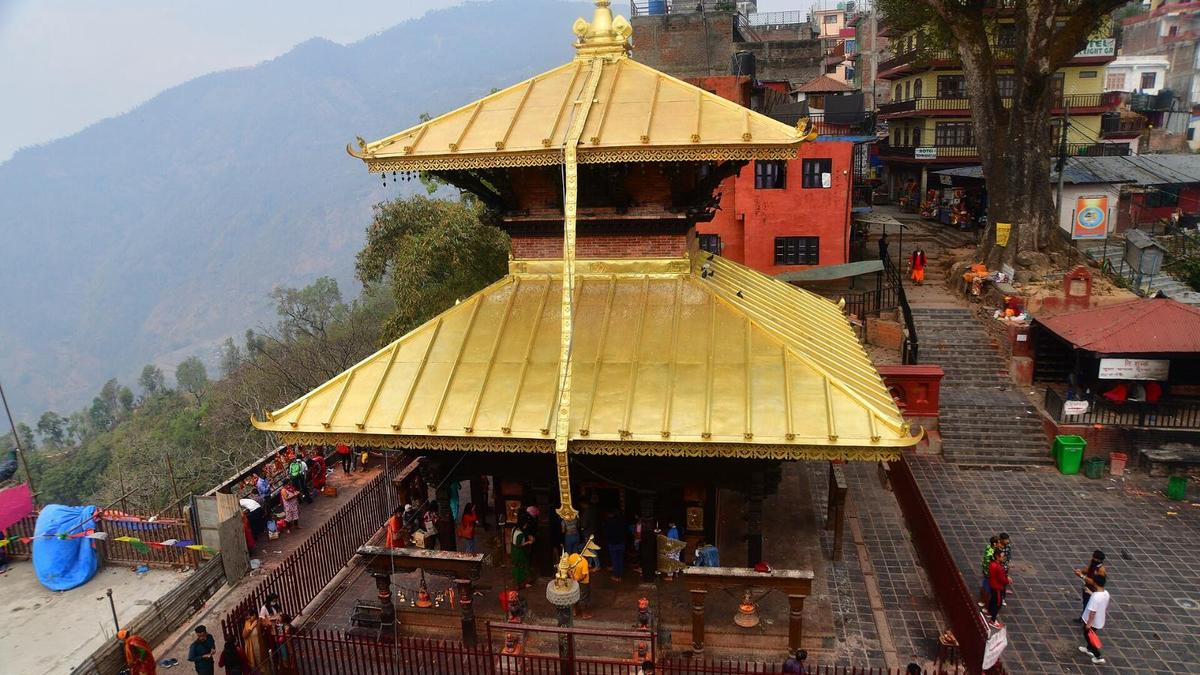
Muktinath Temple stands above the village of Ranipauwa in Mustang, at about 3,800 m (12,470 ft) according to the Nepal Tourism Board. In the three days after Dashain in October 2026, police counted more than 12,000 pilgrims here. Nine months earlier, snow shut the road from Kagbeni and the temple complex stood almost empty.
The best time to visit Muktinath Temple, for most people, is spring (March to May) or autumn (late September to November). Each has a catch: the longest queues come after Dashain and Tihar and in late May and June, and snow can fall into early May. Winter snow can shut the road; monsoon landslides hit the road below Jomsom.
It is part of our Nepal pilgrimage guide.
Key facts
- Muktinath Temple best time to visit
- Spring and autumn; clearest skies in October and November (Nepal Tourism Board (NTB), Climate page, checked 15 Nov 2026)
- Height
- About 3,800 m (12,470 ft); other published figures 3,610 m to about 3,760 m (NTB Muktinath page, checked 15 Nov 2026)
- Snow, 2025-26
- Late October 2025 to early May 2026, at least eight falls (OnlineKhabar, 28 Oct 2025; The Rising Nepal, 7 May 2026)
- Biggest recent crowd
- 12,130 pilgrims in three days, 22 to 24 Oct 2026 (District Police Office Mustang, via Khabarhub, 26 Oct 2026)
- ACAP entry permit
- NPR 3,000 foreign, NPR 1,000 SAARC, NPR 100 Nepali, per person per entry; under 10 free (NTNC e-permit and NTB fees pages, checked 15 Nov 2026)
In this guide
- When is the best time to visit Muktinath Temple?
- What is Muktinath like month by month?
- How do the seasons compare?
- When is Muktinath busiest?
- When does it snow at Muktinath?
- How does getting there change with the season?
- Does the season change the altitude risk?
- What should you pack, and when should you arrive?
- Frequently asked questions
When is the best time to visit Muktinath Temple?
Spring and autumn are the best seasons for most visitors, as the Nepal Tourism Board advises for the whole country. Autumn, after the monsoon, brings the clearest skies, and November is the driest month at Jomsom. Late spring is warmer but less settled. Choose your weeks around the crowds and the road, not only the weather.
"the clearest skies are found after the monsoon in October and November"
Nepal Tourism Board, Climate page, checked 15 November 2026
So the best time to visit Muktinath, Nepal, depends on what you want to avoid: queues (skip the days after Dashain and Tihar, and late May to June), snow (December to February, though it fell as late as 6 May in 2026) or landslides (the monsoon months).
What is Muktinath like month by month?
There is no weather station at Muktinath itself, so the table uses the nearest official one, at Jomsom (2,741 m), with DHM normals for 1991 to 2020. Muktinath is roughly 900 to 1,100 m higher than this station, so expect it colder.
NTB notes temperatures drop about 6 °C for every 1,000 m you climb; that is context, not a Muktinath reading.
| Month | Jomsom day / night (°C) | Rain (mm) | Crowds (press; 2018 hotelier view) | Road, flights and snow |
|---|---|---|---|---|
| January | 10.4 / -1.9 | 14.4 | Quiet | Snow closed the last 12 km, 27 to 30 Jan 2026 |
| February | 11.8 / -0.6 | 21.2 | Picks up as the cold eases | Scheduled flights stopped last winter |
| March | 15.2 / 2.0 | 30.4 | Building | Flights resumed in March 2026; snow 20 Mar 2026 |
| April | 18.6 / 4.4 | 21.4 | Busy from mid-April | Heaviest snow of 2025-26 on 6 Apr |
| May | 20.6 / 7.8 | 18.6 | Peak in late May | Unseasonal snow on 6 May 2026 |
| June | 22.6 / 12.1 | 31.8 | Indian pilgrim peak | Rockfall shut the road about 12 hours, 24 Jun 2026 |
| July | 22.8 / 14.1 | 46.8 | Summer pilgrims | Landslide risk below Jomsom |
| August | 22.6 / 13.8 | 43.9 | Yartung festival | Landslides blocked Beni to Jomsom, Aug 2026 |
| September | 21.3 / 11.5 | 36.0 | Busy from mid-September | Floods closed the road about two weeks in 2026 |
| October | 18.0 / 5.5 | 18.2 | Peak after Dashain | Road reopened 9 Oct 2026; first snow 27 Oct 2025 |
| November | 14.8 / 1.5 | 4.6 | Busy to about mid-month | 2026: flights suspended, road one way in places |
| December | 12.3 / -1.2 | 5.1 | Quiet | Flights stopped early December last winter |
How do the seasons compare?
Spring and autumn are the two good seasons, each with its own trade-off. The monsoon is far drier in Mustang than in Pokhara, but the road up is at its least reliable. Winter is the quietest and coldest season, when snow can close the last stretch to the temple for days.
Spring (March to May)
Days warm up, but snow has not finished: the heaviest fall of 2025-26 came on 6 April. Crowds peak in late May, when Indian schools close for the heat. In late May 2026 the Muktinath Development Committee manager said more than 15,000 people a day were visiting, about 70 per cent of them Indian (Ratopati/RSS).
Monsoon and summer (June to September)
Mustang lies in the rain shadow, so rain at the temple is rarely the problem; the road below Jomsom is. In 2026 a rockfall shut it in June, landslides blocked it in August, and floods closed it for about two weeks until 9 October. Pilgrims still come, largely Indian travellers escaping the summer heat (OnlineKhabar).
Autumn (late September to November)
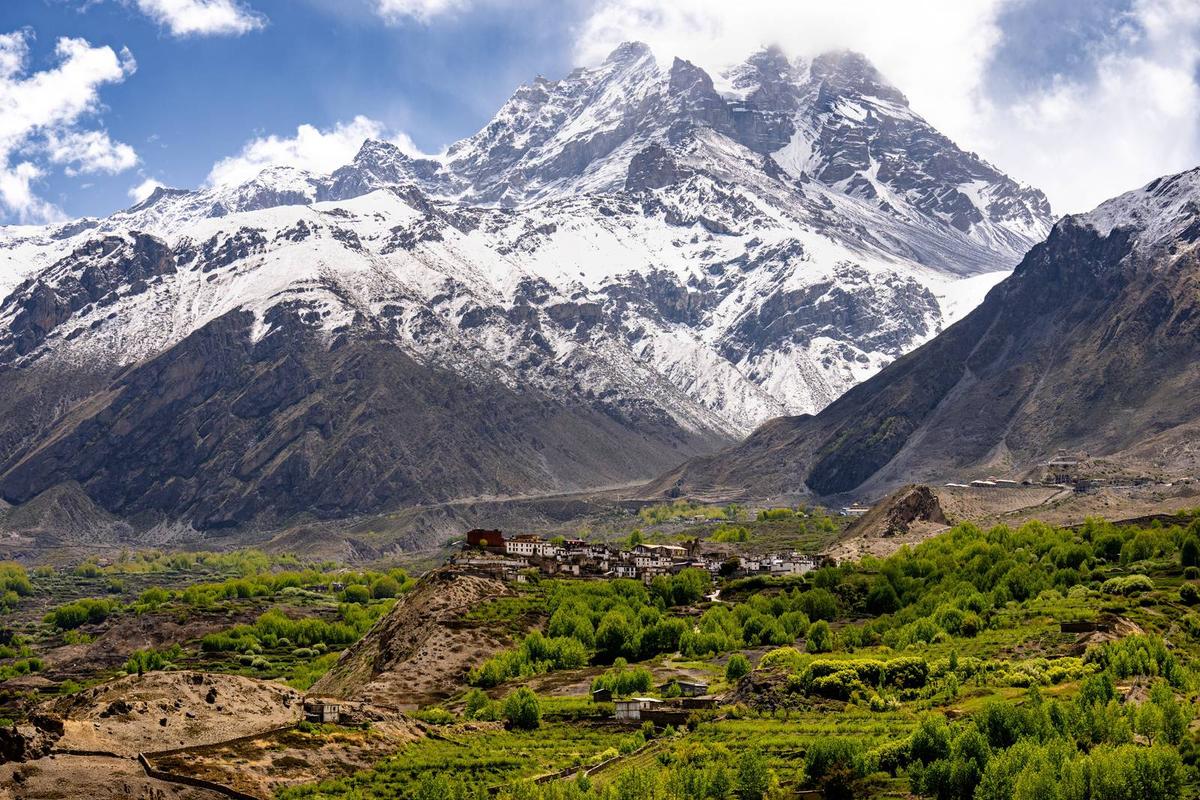
The monsoon normally leaves Nepal in early October (DHM); in 2026 it left completely only in mid-October. Then come the clearest skies; November is the driest month, with cold nights. This is the busiest pilgrim season, from Sorha Shraddha through Dashain and Tihar, and snow can come early, as on 27 October 2025.
Winter (December to February)
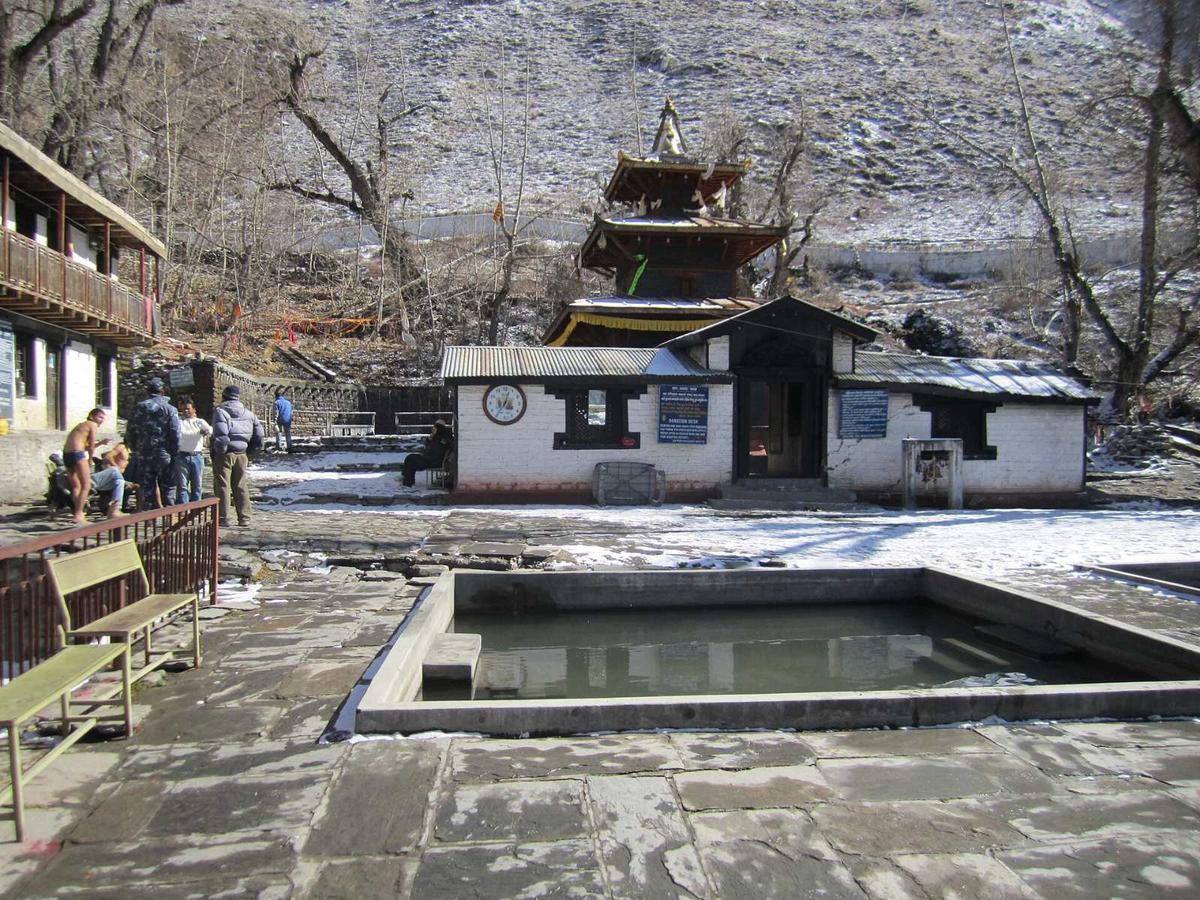
Average nights at Jomsom stay below freezing from December to February, and the temple is colder still. The temple is not reported to close for winter: during the January 2026 snow, only the daily pujas (prayer rituals) went on, the press reported. Pilgrims return in Falgun (February to March) as the cold eases.
When is Muktinath busiest?
Muktinath is busiest in the days right after Dashain and Tihar, and in late May and June, when Indian pilgrims arrive in large numbers. On those days people stand in line for hours. An ordinary day is much calmer: an August 2026 report put the usual figure at about 4,000 visitors a day.
The recent counts, from police or temple officials via the press:
- After Dashain, October 2026: 12,130 pilgrims over 22 to 24 October, District Police Office Mustang.
- Tihar rush, October 2025: more than 5,000 devotees on one Saturday morning alone (The Rising Nepal).
Two more dates fill the valley. Sorha Shraddha, the ancestor rites before Dashain, brings pilgrims to Kagbeni and Muktinath. Yartung, the horse festival at Ranipauwa, is held around Janai Purnima in August, with horse races and a final-day procession to the temple. Both follow the lunar calendar; ask us nearer the time.
When does it snow at Muktinath?
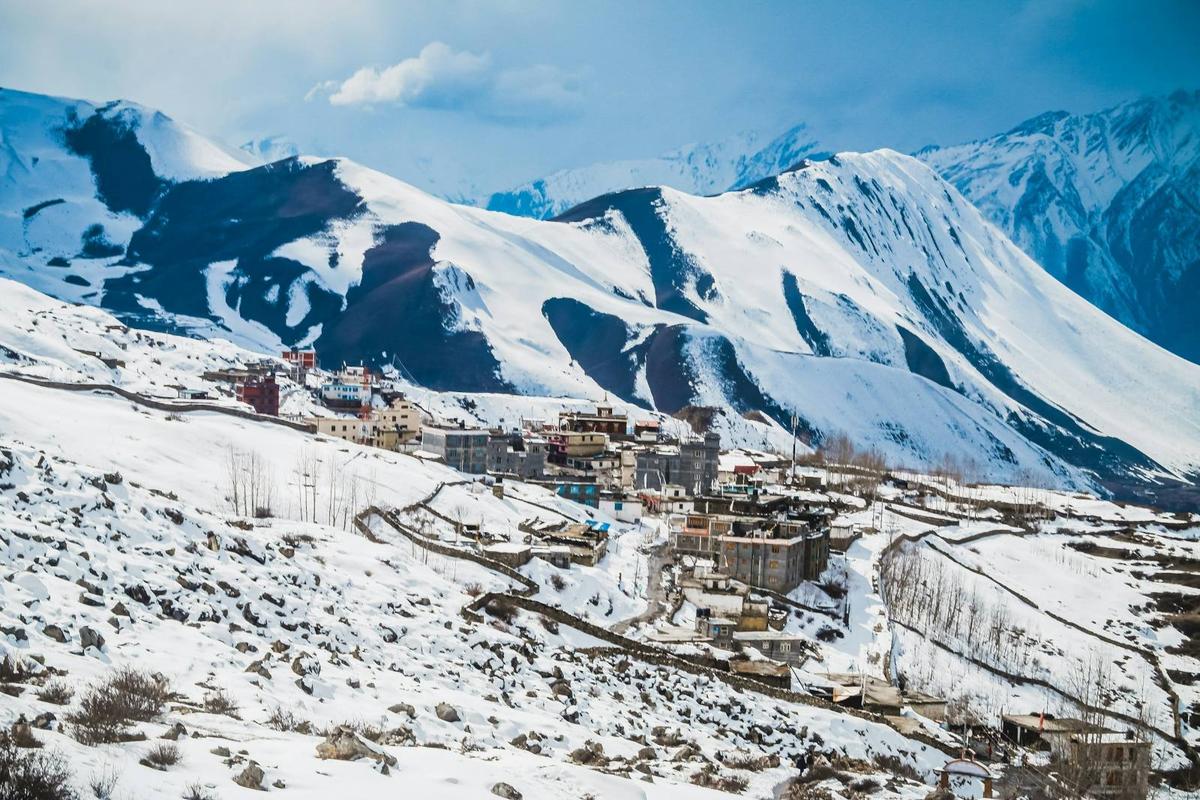
Muktinath snowfall can come any time from late October to early May. In the 2025-26 season, press reports counted at least eight snowfalls between late October 2025 and early May 2026, the heaviest on 6 April. No source publishes monthly snow averages, so read this as a recent pattern, not a rule.
- 27 October 2025: first snow of the season; officials urged people not to travel from Kagbeni to Muktinath.
- 27 to 30 January 2026: the Kagbeni to Muktinath road was blocked and pilgrims were stopped at Kagbeni.
- 6 April 2026: the heaviest fall of the season so far, according to the Muktinath Development Committee manager (Khabarhub). The path from the Ranipauwa bus park to the temple was blocked.
- 6 May 2026: unseasonal snow, the eighth fall that year.
"The 12-kilometre asphalt road to Muktinath was completely blocked on Tuesday night due to heavy snowfall."
The Rising Nepal, 30 January 2026
Cyclone Arnab brought heavy snow to Upper Mustang at the end of October 2026; we found no report of snow at Muktinath itself.
How does getting there change with the season?
The road through Beni and Jomsom is the main way up, and it is the weak link in the monsoon and after storms. Scheduled Pokhara to Jomsom flights normally stop in winter and are suspended now. Charter helicopters fly pilgrims almost daily in season, but flying straight up carries its own altitude risk.
By road, Pokhara to Jomsom takes about 7 to 10 hours. From Jomsom it is 13 km to Kagbeni and 12 km on to Muktinath. See Jomsom to Muktinath and Kathmandu to Muktinath for each leg. Our Mustang and Pokhara tour by road does not need flights; the Mustang tour by flight and road suits once they restart.
Does the season change the altitude risk?
No. Muktinath sits at about 3,800 m whatever the month, according to the Nepal Tourism Board, and the CDC treats sleeping at about 2,450 m or higher as an altitude-sickness risk. Season changes the cold and the crowds, not the thin air. What matters is how fast you go up and where you sleep.
- Go up slowly and walk slowly ("bistarai, bistarai"). Above 3,000 m, raise your sleeping height by no more than about 500 m a night, and on longer trips take a rest day every 3 to 4 days.
- Sleep lower, in Jomsom (2,736 m). The CDC says "day trips to high-altitude destinations with an evening return to a lower altitude are much less stressful on the body."
- Drink enough water and skip alcohol at first. Garlic soup is a warming local tradition, not a proven cure.
- Know the symptoms (headache, nausea, tiredness, poor sleep); never go higher with them. Ask your doctor about preventive medicine such as acetazolamide.
- Confusion, breathlessness at rest or unsteady walking mean going down at once for medical help. Our team arranges a rescue if needed.
The Himalayan Times reported 16 altitude-sickness deaths in Mustang in the year to July 2026, blamed largely on "travelling rapidly from low-lying areas to high-altitude destinations". The press describes a basic altitude treatment centre with oxygen at the temple. More in how to avoid altitude sickness.
What should you pack, and when should you arrive?
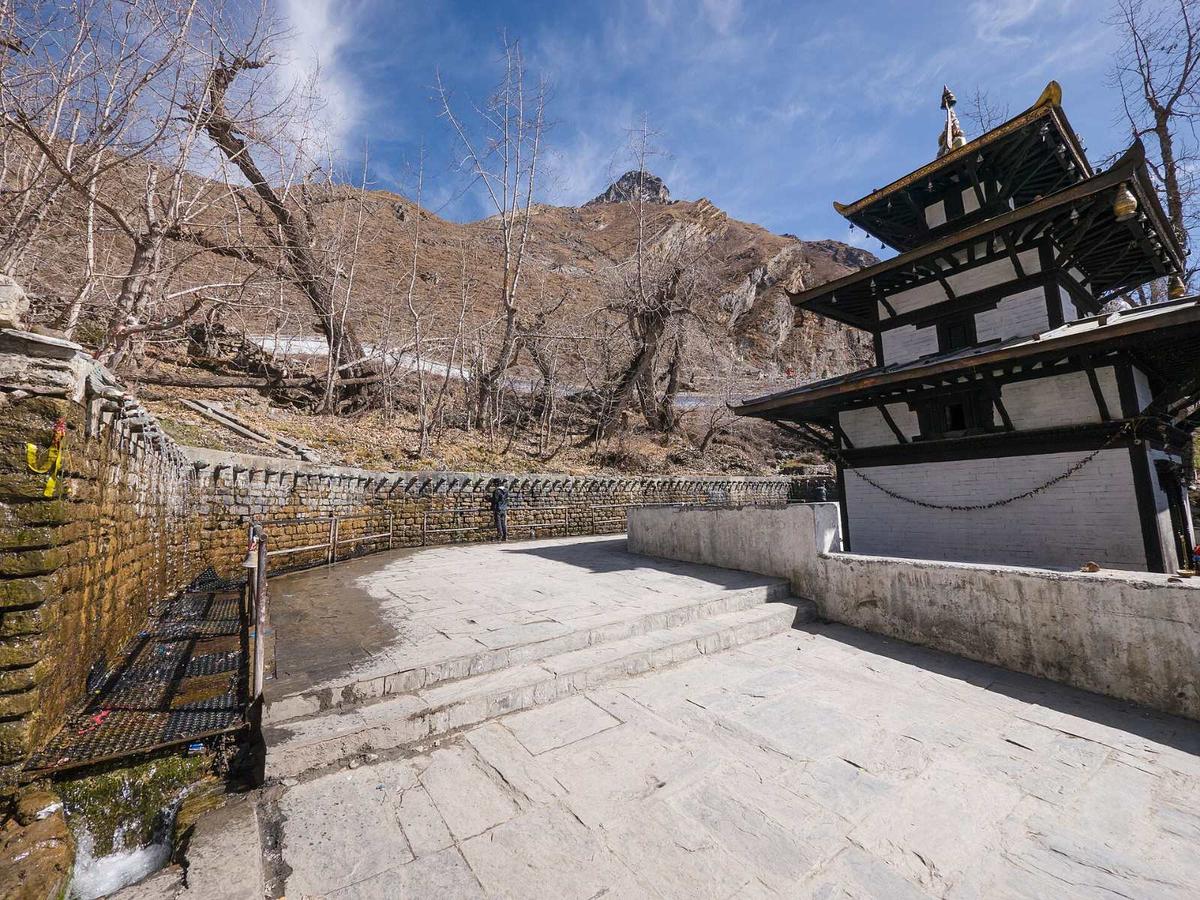
Arrive early in the morning, carry warm layers in every season, and bring a towel and dry clothes if you will bathe under the 108 spouts, because the water is icy. No official opening hours are published, so ask us or ask in Ranipauwa for the day's timings.
- Warm layers: even in July, nights at Jomsom average 14.1 °C, and the temple is colder.
- Bathing: umbrellas, plastic and raincoats are not allowed at the 108 springs, nor swimming costumes in the two ponds (The Rising Nepal, November 2025).
- ID: Indian visitors need valid ID such as a passport or an Election Commission voter ID (NTB lists other options for over-65s and under-18s); Aadhaar is not accepted (NTB). Entry is your own arrangement; see the NTB tourist visa page.
- Permit: we arrange your ACAP entry permit. Buying it at a check post costs double.
For the temple's history, read our Muktinath Temple guide.
Frequently asked questions
When is the best time to visit Muktinath?
Spring (March to May) and autumn (late September to November) suit most visitors; NTB says skies are clearest in October and November. For shorter queues, avoid the days after Dashain and Tihar and the late May to June Indian holiday peak. Early March and late November miss the peaks but bring cold nights.
Does it snow at Muktinath, and when?
Yes. In the 2025-26 season, press reports counted at least eight snowfalls at Muktinath between late October 2025 and early May 2026. The heaviest came on 6 April 2026, and snow blocked the road from Kagbeni from 27 to 30 January. Treat late October to May as possible snow.
Is Muktinath Temple open in winter?
As far as we can find, yes. No source reports a winter closure, and during the January 2026 snow the daily pujas carried on while the road from Kagbeni was shut. Getting there is the hard part: snow can close the last 12 km for days, and scheduled Jomsom flights usually stop in winter.
Is it safe to visit Muktinath with elderly parents?
Nobody can promise that, but age alone is not the main risk. The CDC says people over 50 have slightly less risk, while anyone with heart or lung disease "should consult a physician familiar with high-altitude medical issues" first. See a doctor, go up slowly, sleep lower in Jomsom and visit as a day trip.
Is there a Muktinath yatra package from India?
Yes. The Kathmandu Post describes yatra routes from Bhairahawa through the Kali Gandaki corridor taking seven to 10 days. Indian visitors need valid ID such as a passport or an Election Commission voter ID; Aadhaar is not accepted (NTB), and entry is your own arrangement. We arrange trips inside Nepal, including the ACAP permit. Ask us for a plan.
Can you visit Muktinath in the monsoon?
Yes, and many pilgrims do. Mustang is in the rain shadow: Jomsom gets 158.5 mm of rain from June to September, against 3,868.3 mm a year in Pokhara (DHM normals). The risk is the road below Jomsom, where rockfalls and landslides blocked traffic several times in 2026. Leave spare days.
Plan your visit with us
Tell us your dates and who is coming, and we will tell you honestly which weeks suit you. For other sacred sites, see our Nepal pilgrimage guide. Ask us on WhatsApp or through the enquiry form.