By Uncover Nepal Guide · Checked by our Kathmandu travel team · Updated 12 Nov 2026
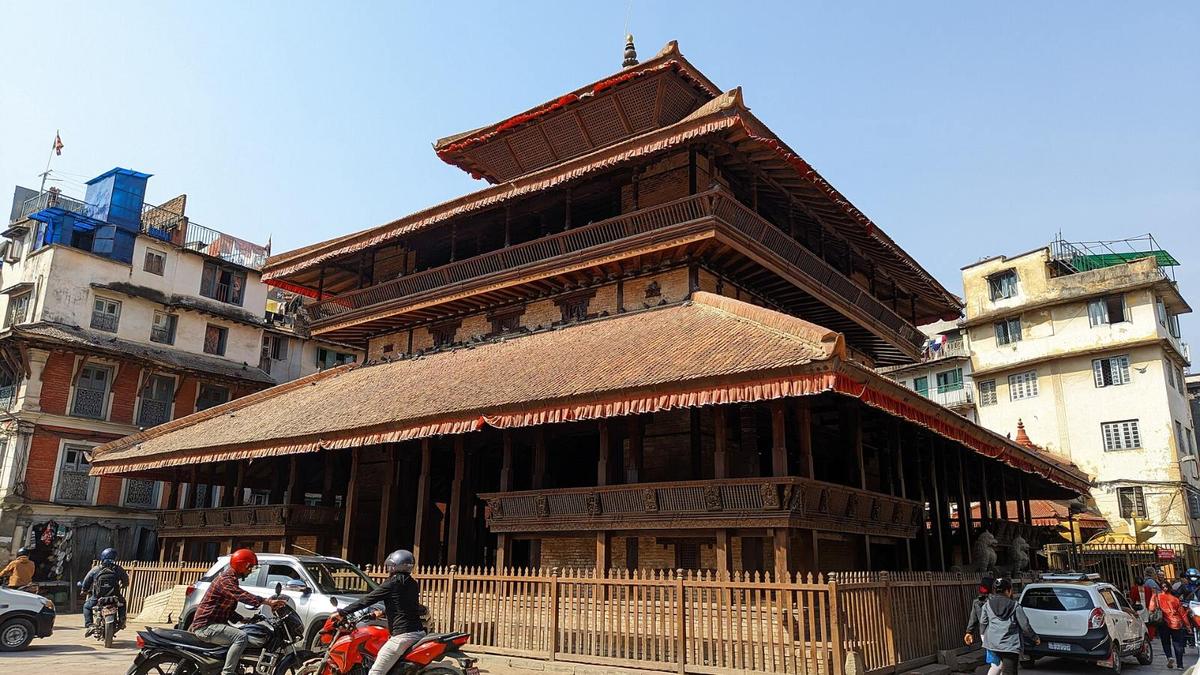
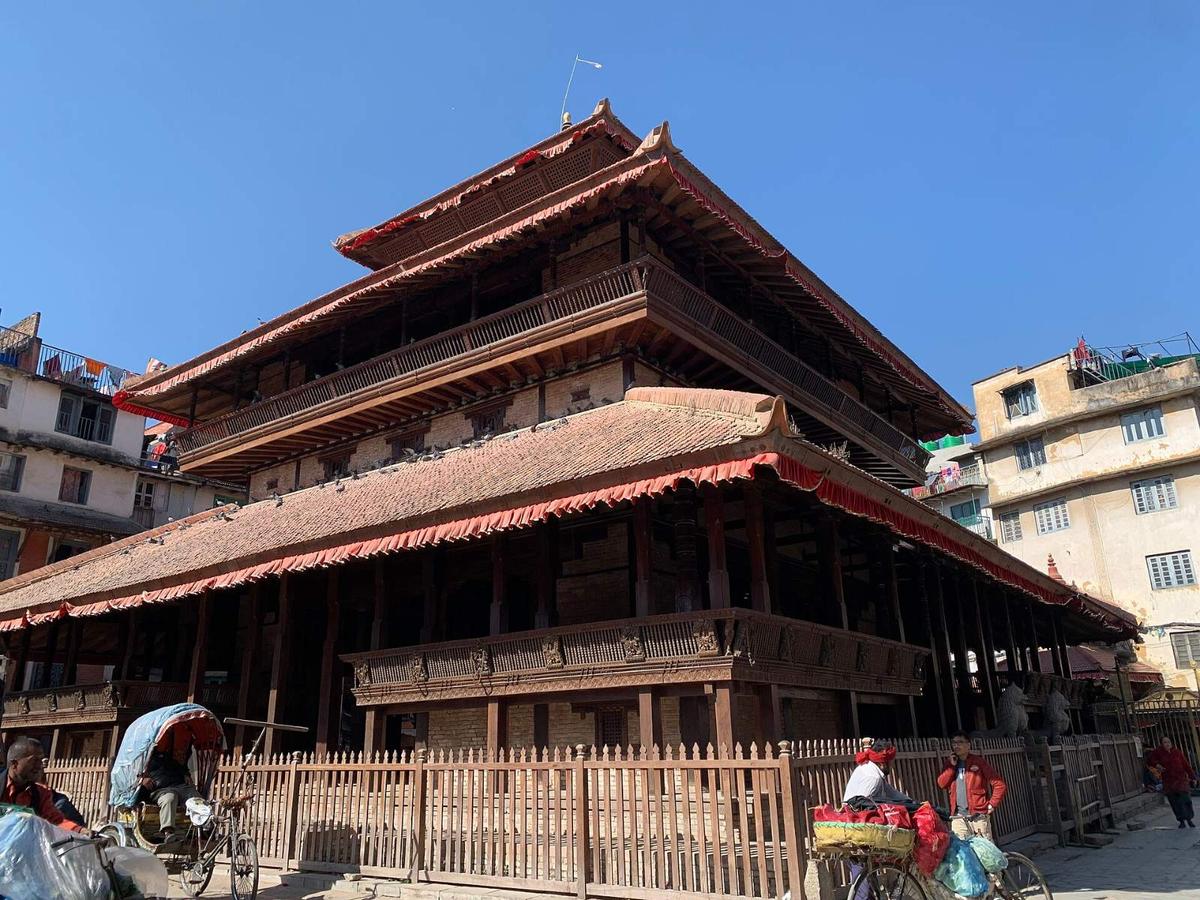
Maru Tole, on the edge of Kathmandu Durbar Square, is rarely quiet for long. Bells ring at the little Maru Ganesh shrine, motorbikes nose through the crowd and pigeons lift off the old brick plinths. In the middle of it all stands a broad, dark timber pavilion on a raised platform, rebuilt with traditional joinery after the 2015 earthquake.
Kasthamandap in Kathmandu is the great wooden rest house the city is said to be named after. It stands at Maru Tole, in the outer part of Kathmandu Durbar Square. Excavation dated its foundations to between the early 7th and early 9th centuries CE. It fell in 2015, was rebuilt by April 2022, and was last reported locked in January 2025.
Our article on places to visit in Kathmandu sets it beside the city's other sights. Here we go deeper into Kasthamandap itself: what it was for, how old it really is, the legend of the single tree, the long rebuild, and what you can and cannot see when you stand in front of it today.
Key facts
- What it is
- A wooden public rest house (sattal) and pavilion, the largest of the valley's rest houses (Nepali Times, 13 Aug 2020, 10 Nov 2026)
- Where
- Maru Tole, in the outer part of Kathmandu Durbar Square, beside Basantapur (Nepal Tourism Board; asianart.com, 2015, 10 Nov 2026)
- Name
- "Kastha" means wood and "mandapa" pavilion; the city is said to take its name from it (The Himalayan Times, 5 Apr 2022; Britannica, 10 Nov 2026)
- First sure written mention
- A manuscript dated 1143 CE names it (asianart.com, 2015; Nepali Times, 2020, 10 Nov 2026)
- Scientific dating
- Foundations dated to between the early 7th and early 9th centuries CE (Durham University, 10 Nov 2026)
- Collapse
- Fell in the earthquake of 25 April 2015 (The Himalayan Times; Nepali Times, 10 Nov 2026)
- Rebuilt
- Inaugurated by President Bidya Devi Bhandari on 4 April 2022 (The Himalayan Times; Republica, 10 Nov 2026)
- Can you go inside?
- Closed a few days after it opened; reported "locked from all sides" in January 2025; no reopening report found (The Rising Nepal, Jun 2022 and 24 Jan 2025, 10 Nov 2026)
- Ticket
- Kathmandu Durbar Square: NPR 1,000 foreign visitors, NPR 500 SAARC nationals (Nepal Tourism Board heritage fees, 10 Nov 2026)
- Hours
- None published for the square or Kasthamandap; palace museum 9 am to 5 pm, tickets to 4:30 pm (Hanuman Dhoka museum committee (updated 5 Nov 2026), 10 Nov 2026)
In this guide
- What is Kasthamandap?
- Why is Kathmandu named after Kasthamandap?
- How old is Kasthamandap?
- The legend of the single tree
- What happened to Kasthamandap in 2015?
- How was Kasthamandap rebuilt?
- Can you go inside Kasthamandap today?
- Visiting Kasthamandap Kathmandu: what to see at Maru Tole
- Tickets, hours and getting there
- Frequently asked questions
- Plan your visit
What is Kasthamandap?
Kasthamandap is a wooden public rest house, or sattal, which Nepali Times describes as the largest of the Kathmandu Valley's rest houses. It was a stopping place for merchants on the old trade route between India and Tibet, and it later came to hold a shrine to the yogi Gorakhnath, which is why many people call it a temple.
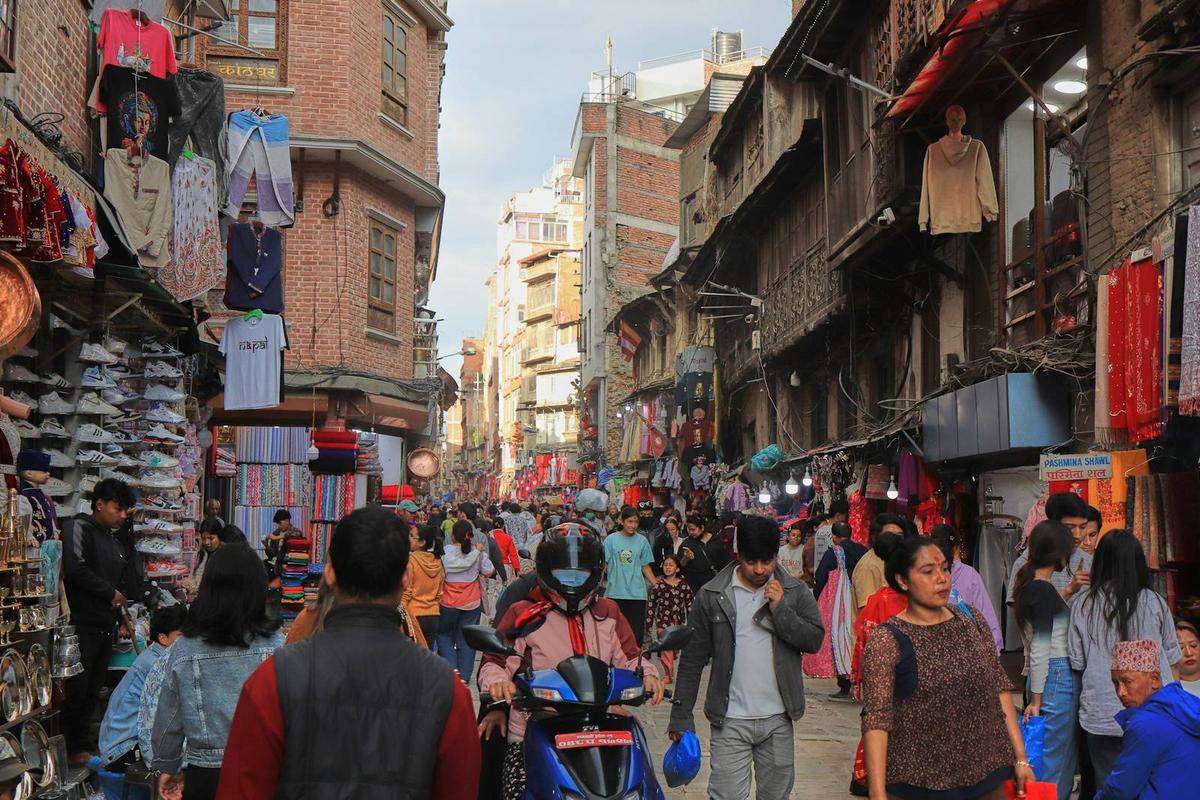
Locals have their own name for it. They call it Maru Sattal (also written Maru Satta or Marusata), after Maru Tole, the tole or neighbourhood around it. The writer Dipesh Risal, in a 2015 study for asianart.com, notes that it sits at the crossroads of that India to Tibet route and the main north to south road through the old city. Risal lists its everyday roles as rest house, council hall, social centre and marketplace. Traders slept and bargained here and neighbours met here, so when you stand in front of it, picture a covered public square more than a temple.
Who is worshipped at Kasthamandap?
The main shrine is to the yogi Gorakhnath (also spelt Gorakshanath). Asianart.com records that his stone statue stood at the centre of the main floor and was one of only two known images of him in the Kathmandu Valley. Four images of Ganesh, the elephant-headed god of beginnings, sat at the corners.
All the old images broke when the building fell in 2015. The Rising Nepal reported in June 2022 that the reconstruction committee had installed a new Gorakhnath image and four new Ganesh images. That replacement is the root of the court case that has kept the building closed, which we explain below.
Why is Kathmandu named after Kasthamandap?
By the usual account, Kathmandu takes its name from this building. "Kastha" means wood and "mandapa" means pavilion, so Kasthamandap is the wooden pavilion. The Himalayan Times called it "the source of the name 'Kathmandu'", and Britannica notes that the city's present name "refers to a wooden temple".
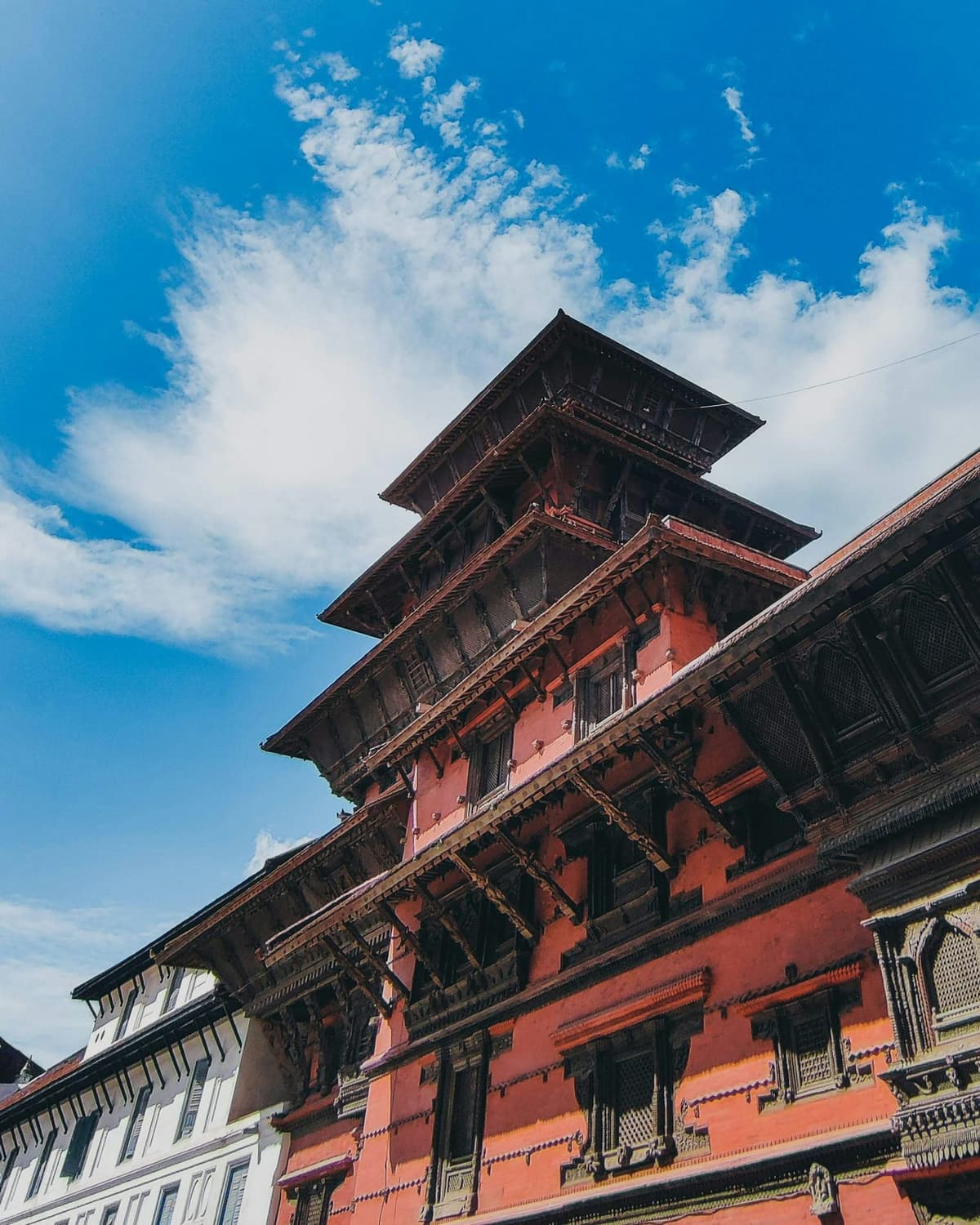
The name grew outwards from the building. Asianart.com traces how the sattal's name spread to the northern part of the city, which had earlier been known as Koligrama and then Yambu, and in time to the whole of Kathmandu.
How old is Kasthamandap?
For a long time Kasthamandap was dated to the 12th century, and a manuscript of 1143 CE already names it. After the 2015 earthquake, a dig by Nepal's Department of Archaeology and Durham University dated its foundations to between the early 7th and early 9th centuries CE. That is centuries older than its old 12th-century date.
"they indicated that it was constructed at some point between the early seventh and early ninth centuries CE"
Durham University, Resilience Within the Rubble (read 10 November 2026)
The Kathmandu Post dates the dig's finding to 24 December 2016. You will still see the 7th, 8th and 12th centuries in different articles; the excavation range is the best evidence, so it is the one we use.
Later chronicles credited a Malla king, Laxmi Narasimha Malla, with building Kasthamandap, but the manuscript evidence is centuries older. The table below sets out the main pieces of evidence in order.
| Evidence | Date | What it tells us | Source |
|---|---|---|---|
| Carved lion-headed capital (column top) | 5th to 6th centuries CE | An older carved piece from the site | Durham University |
| Carbon date of a mekh (wooden joint) | 5th century | No structure of that age has been found; more samples are needed | Nepali Times |
| Dated foundations | Early 7th to early 9th centuries CE | When the building was first raised | Durham University |
| Manuscript colophon | 1090 CE | Only a "first tentative mention" | asianart.com |
| Namasangiti manuscript reading "Sri Kasthamandape" | 1143 CE | The first sure written mention; the manuscript is held at Sakya Monastery in Tibet | asianart.com; Nepali Times |
| Dated timbers | 11th to 12th centuries CE | A major reconstruction or renovation | Durham University |
| Copper plate inscription | 1333 CE | The oldest physical record that directly links the name to the sattal | asianart.com |
| Gorakhnath shrine | Around 1379 CE | When the shrine was installed | Durham University |
The legend of the single tree
The best-known legend says Kasthamandap was built from the timber of a single tree. Nepali Times tells how tantric priests caught the tree god Kalpavriksha (Kalpa Brikshya, the wish-fulfilling tree) during the chariot festival of Machindranath, and he gave them the tree to win his release. It is a legend, not history, and it is still told.
There is a sting in the tale. Asianart.com retells that the tree god was bound by a promise to stay in the neighbourhood until the day salt and oil cost the same. By the legend, locals were to shout at the annual sattal puja, or ritual worship, that the prices were still not the same, so the god could not leave. Risal reads the story as a hint that this was a marketplace from the start.
Another telling, reported by The Rising Nepal in 2026, credits Guru Gorakhnath with producing a sapling of the wish-fulfilling tree, which was later felled to build the pavilion.
The single tree is said to have had wood to spare. According to Nepali Times, two nearby buildings, Sin Lyon Sattah (Singha Sattal) and Sin Khon Mu Baha, "are said to have been built" from the leftover timber.
What happened to Kasthamandap in 2015?
Kasthamandap collapsed in the earthquake of 25 April 2015. A blood donation drive was under way there when it fell, and both Nepali Times and The Kathmandu Post report that ten people died at the site. Its old images broke too, which later led to the court case that keeps it closed.
Why did such an old building fall? Durham University's team found two causes beyond the shaking itself. Heavy machinery used in the rescue ripped through floors and foundations that had survived the quake. And the rotten base of a timber pillar in the north-east, damaged during conservation work between the 1960s and 1980s, had been patched rather than replaced, leaving key parts freestanding and cut off from the sound foundations. Nepali Times adds that in 1960 the pavilion was hurriedly repaired with cement for the visit of Queen Elizabeth, and that one of the keystones holding the columns was placed wrongly as a result. Architect Binita Magaiya, who worked on the rebuild, told the paper that past renovations were done in a rush.
The people who rebuilt it drew a clear lesson from this.
"The traditional methods of construction would not have failed."
Rajesh Shakya, head of the Kasthamandap Reconstruction Committee, Nepali Times, 13 August 2020
How was Kasthamandap rebuilt?
Kathmandu Metropolitan City paid for and oversaw the rebuild through a citizen-led reconstruction committee, using traditional materials and joinery. Work began with a foundation stone on 14 May 2018, and President Bidya Devi Bhandari inaugurated the finished pavilion on 4 April 2022. A separate community campaign, which had pushed for a community-led rebuild, criticised the government and the city over how the work was handled.
A slow and disputed start
The Department of Archaeology's 2016 plan was criticised for using steel, industrial glue and concrete, The Kathmandu Post reported. A community group, the Campaign to Rebuild Kasthamandap, signed an agreement on 12 May 2017 with the National Reconstruction Authority, the Department of Archaeology and Kathmandu Metropolitan City for a community-led rebuild. In June 2017 the city padlocked the site, and in December 2017 it took responsibility for building Kasthamandap on its own.
Minister Rabindra Adhikari laid the foundation stone on 14 May 2018, with a steering committee under Mayor Bidya Sundar Shakya, and said the work would finish "within three years". A citizen-led Kasthamandap Reconstruction Committee of 55 members, chaired by Rajesh Shakya, brought together heritage experts, architects, officials and residents. The campaign kept up its criticism: in April 2018 it accused the government of being indifferent to the rebuilding, the national news agency RSS reported.
Timber, clay and copper
The Kathmandu Post reported that the cabinet approved timber from forests in Bardibas, Mahottari, Rautahat and Sarlahi, and that the soil mix was one part clay, two parts silt and three parts sand from Tahachal. Durham University describes mud mortar in the foundations and copper plates against damp, rot and insects. Nepali Times adds that copper shoes at the base of the timber columns and stone bases were revived, and The Rising Nepal says the pavilion was rebuilt with Newar craftsmanship, the building craft of the valley's Newar community, "without nuts and bolts".
Nepali Times reported that the measured drawings made earlier by the German architect Wolfgang Korn were central to the work, and that craftsmen had to be brought in from Bhaktapur.
"There are hardly any workers with traditional skills left in Kathmandu, and we have to bring craftsmen from Bhaktapur."
Manindra Shrestha, Kasthamandap reconstruction project manager, Nepali Times, 13 August 2020
The committee told Republica that the work took three years and eight months. The Himalayan Times reported that the city had rebuilt it "at its own expenses".
Can you go inside Kasthamandap today?
We cannot promise that you can. The rebuilt pavilion was closed to the public a few days after it opened in April 2022, over a court case about its replacement idols, and the latest news report we found, from January 2025, said it was still locked. You can see it well from the street around it; check on the day or ask us.
A case challenged the replacement of the old, broken idols with new ones. On 18 January 2022 the Supreme Court ordered that new idols should not be installed, and a contempt case was filed on 3 April 2022, the day before the inauguration.
"Hindu culture doesn't allow the worshipping of broken idols, so they were changed."
Gautam Dongol, Kasthamandap Reconstruction Committee secretary, The Rising Nepal, 28 June 2022
The handover has stalled too. In October 2023 the committee handed its reports to the city, but The Nepal Weekly reported that the city had not accepted the key. In November 2023 OnlineKhabar wrote that when it would open to the public was still uncertain. In January 2025 The Rising Nepal found the building "locked from all sides, preventing people from entering it", with the city still not having taken over responsibility.
Visiting Kasthamandap Kathmandu: what to see at Maru Tole
Even locked, Kasthamandap is worth the stop, because the little square around it, Maru Tole, holds several old shrines and rest houses that share its story. Walk round the outside of the pavilion first, then look for Maru Ganesh, the Kabindrapur pavilion and Singha Sattal, all close by.
Maru Ganesh (Ashok Binayak)
Maru Ganesh, also called Ashok Binayak (Binayak is a name for Ganesh), stands in Maru Tole and is one of the valley's four principal Ganesh temples, The Rising Nepal says. Tuesday is the main puja day. Nepal Traveller notes it is the only temple in the area without a gajur, the golden pinnacle on a temple roof, and that people make offerings here before a long journey in the belief that it brings safety.
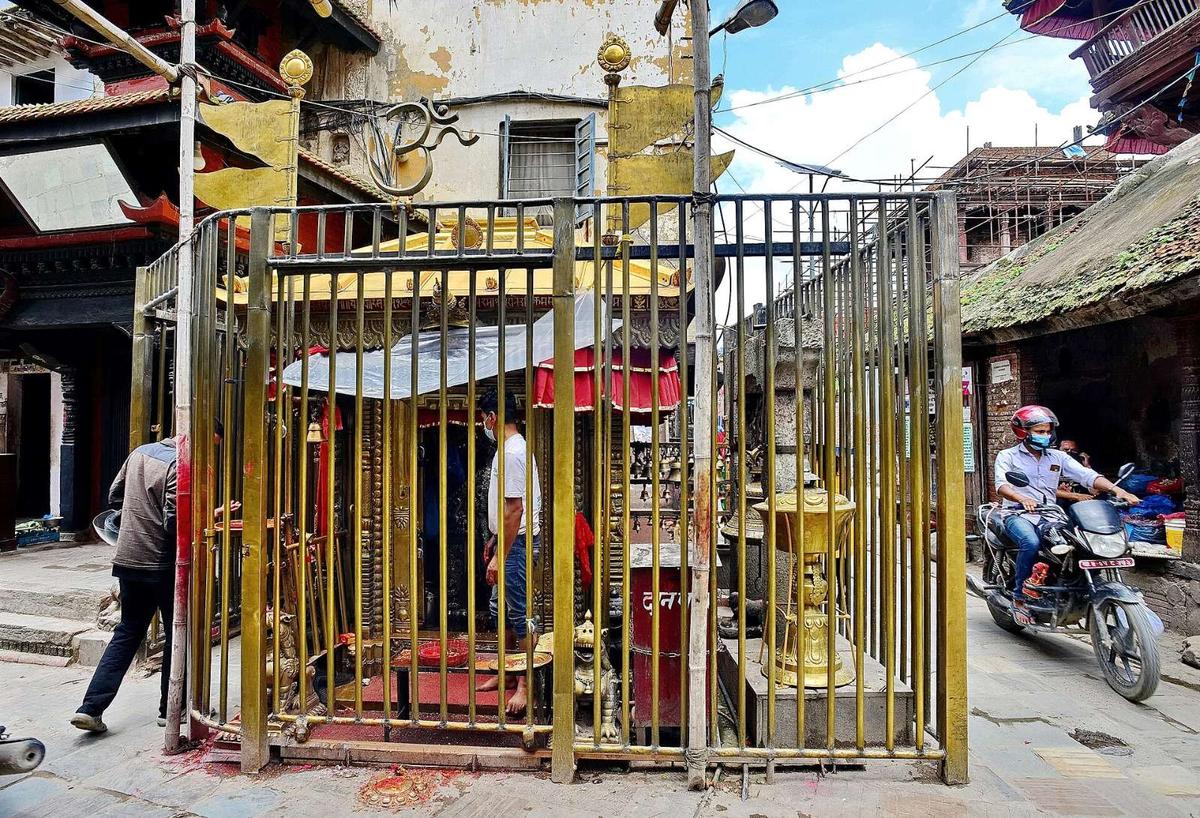
Nepal Traveller also records the belief that anyone who puts a gajur on it "dies within six months", and that the name comes from the Ashok trees that once grew around it.
Kabindrapur
On the east side of Maru Tole stands Kabindrapur, a 17th-century wooden temple and performance pavilion that, Lonely Planet notes, houses the god of music. The Rising Nepal says it was built by King Pratap Malla, who called himself Kavindra. Nepal Traveller notes that its upper levels were lost in the 1934 earthquake and never rebuilt.
Singha Sattal
Singha Sattal (Silyan Sattal) is the rest house said to be built from Kasthamandap's leftover timber. Asianart.com dates it to the 16th century, "although legend claims this one is as old as the original Kasthamandap".
Maru and Indra Jatra
Maru Tole has a part in Indra Jatra, the eight-day festival of Indra, the king of the gods. In the commonest version of the festival's origin, The Kathmandu Post explains, Indra was caught in "a garden in Maru tole" while stealing parijat flowers. The same paper notes that Prithvi Narayan Shah of Gorkha attacked Kathmandu during Indra Jatra in 1768. In 2026 the Indra Jatra holiday fell on 25 September; the 2027 date has not yet been published, but the festival usually falls in September.
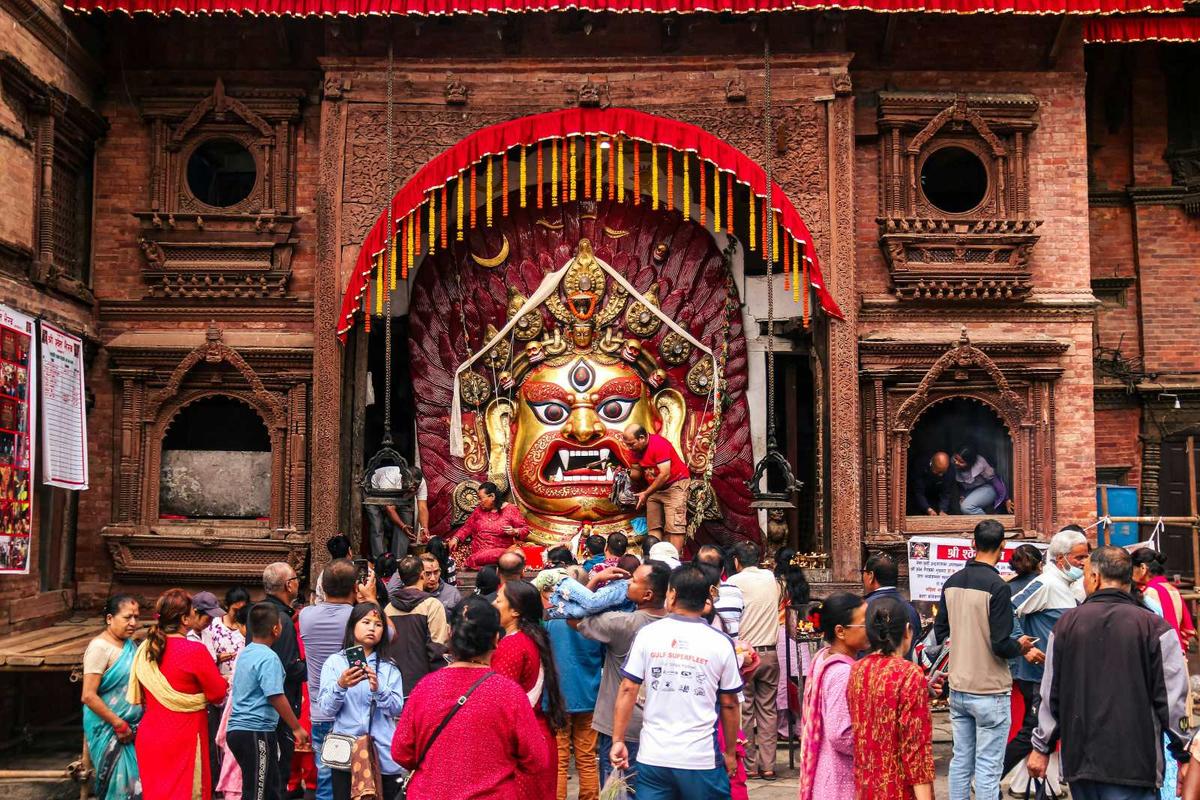
From Maru Tole the rest of the square opens up in front of you. Our article on Kathmandu Durbar Square covers the Kumari Ghar, the temples and the festivals, and our article on Hanuman Dhoka Palace takes you through the old royal palace and its museum. For the shrines beyond the square, see our round-up of temples in Kathmandu.
Tickets, hours and getting there
Kasthamandap stands in the outer part of Kathmandu Durbar Square, so plan on paying the square's fee: NPR 1,000 for foreign visitors and NPR 500 for SAARC nationals, including Indians, according to the Nepal Tourism Board. Chinese nationals pay NPR 1,000, and Nepalis and children under 10 enter free. No official hours are published for the square or for Kasthamandap.
Where to buy your ticket
Tickets are sold at booths on the roads into the square. We have not found an official map showing exactly where the ticket checks fall around Maru Tole, so buy your ticket, keep it with you and expect to show it. Carry rupees in cash for the booth.
Opening hours
The only official hours are for the palace museum, which the Hanuman Dhoka museum committee lists as 9 am to 5 pm, with tickets sold until 4:30 pm (page updated 5 November 2026). Confirm on the day if the museum is part of your plan.
Getting there from Thamel
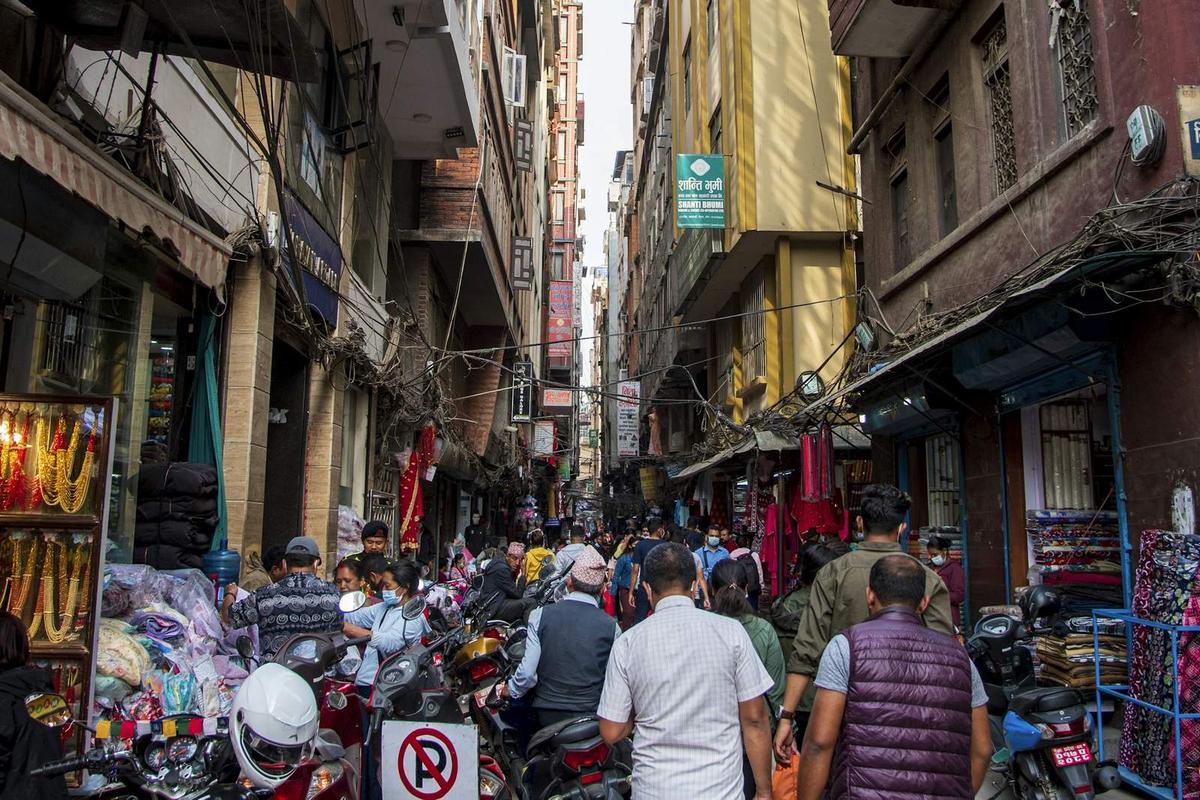
From Thamel, the travellers' quarter, you can walk to Maru Tole through the old market streets of Asan and Indra Chowk and on into the square. The lanes are narrow and busy with motorbikes, so keep to the side and watch your bag. If you are staying in Thamel, our article on things to do in Thamel has more on the neighbourhood.
Read next: Kathmandu Durbar Square: a visitor's guide and Kathmandu day trips.
Frequently asked questions
Why is Kathmandu called Kathmandu?
Kathmandu is named after Kasthamandap, the wooden rest house at Maru Tole. "Kastha" means wood and "mandapa" means pavilion. The Himalayan Times called the building "the source of the name 'Kathmandu'", and Britannica notes that the city's present name refers to a wooden temple.
How old is Kasthamandap?
Kasthamandap's foundations date to between the early 7th and early 9th centuries CE, according to a dig by Nepal's Department of Archaeology and Durham University after the 2015 earthquake. Before that it was usually dated to the 12th century. The first sure written mention is a manuscript of 1143 CE, and Durham found a major renovation in the 11th to 12th centuries.
Can you go inside Kasthamandap?
We cannot promise that you can. Kasthamandap was closed to the public a few days after it opened in April 2022, over a Supreme Court case about its replacement idols. The Rising Nepal reported in January 2025 that it was still "locked from all sides", and we have found no news report of it reopening since. You can see it from outside; check on the day or ask us.
Do I need a ticket to see Kasthamandap?
Yes, in practice. Kasthamandap stands in the outer part of Kathmandu Durbar Square, where foreign visitors pay NPR 1,000 and SAARC nationals NPR 500, according to the Nepal Tourism Board. Tickets are sold at booths on the roads into the square. We have found no official map of exactly where checks happen, so keep your ticket with you.
Which temple in Kathmandu was built from a single tree?
Kasthamandap is the building that legend says was made from one tree. In the best-known version, tantric priests caught the tree god Kalpavriksha during the Machindranath chariot festival, and he gave the tree to win his release. Another telling credits Guru Gorakhnath with producing the sapling. Nepali Times reports that two nearby buildings are said to use the leftover timber.
Plan your visit
Kasthamandap makes most sense as part of a slow walk through the old city. Our article on places to visit in Kathmandu helps you build the rest of the day around it.
If you would rather go with us, Kathmandu Durbar Square, where Kasthamandap stands, is part of our three Durbar Squares tour of Kathmandu, our Kathmandu UNESCO World Heritage Sites day tour and our slower two-day tour of Kathmandu's seven UNESCO sites. Tell us if you want time at Maru Tole and we will build it in.
Ask us on WhatsApp or through the enquiry form, and tell us your dates and what you most want to see.