





By Uncover Nepal Team · Checked by our Kathmandu travel team · Last checked 1 November 2026
On a standard Goenka Vipassana course, the wake-up bell rings at 4:00 am. Phones and smartwatches are already with the course management. Nobody talks to other students, gestures or passes notes. In Lumbini, the birthplace of the Buddha, Dhamma Janani teaches in exactly this tradition.
Vipassana in Lumbini, Nepal means a silent residential retreat at one of the two Vipassana centres the Lumbini Development Trust (LDT) lists. Dhamma Janani runs 10-day Goenka courses on a donation basis. Panditarama hosts individual Mahasi-style retreats of at least seven days. You apply to each centre directly. For the wider site, read our complete Lumbini guide.
In this guide
- Key facts
- What is Vipassana in Lumbini, and where can you do it?
- Where are the meditation centres in Lumbini?
- How does a course at Dhamma Janani work?
- How does a retreat at Panditarama work?
- Dhamma Janani and Panditarama compared
- What does a day on retreat look like?
- Do you need the Lumbini Meditation Pass?
- How to prepare for a Vipassana retreat
- Lumbini weather by month and when to go
- How do you get to Lumbini for a retreat?
- Etiquette in the Sacred Garden
- Seeing Lumbini before or after your retreat
- Frequently asked questions
- Planning your trip to Lumbini
Key facts
- Vipassana centres in Lumbini
- Dhamma Janani (Goenka tradition) and Panditarama (Mahasi tradition of Myanmar) (Lumbini Development Trust, dhamma.org and Panditarama Lumbini, checked 1 Nov 2026)
- Dhamma Janani beginner course
- 10-day course, spanning 12 days with arrival and departure (dhamma.org, checked 1 Nov 2026)
- Cost of a course or retreat
- Donation basis at Dhamma Janani; no set daily fees at Panditarama (dhamma.org and Panditarama Lumbini, checked 1 Nov 2026)
- Panditarama minimum stay
- Seven days residential (Panditarama Lumbini, checked 1 Nov 2026)
- Lumbini entry fee, per person per day
- NPR 1,000 foreign, NPR 700 SAARC and Myanmar, NPR 80 Indian, NPR 20 Nepali (Lumbini Development Trust, checked 1 Nov 2026)
- Meditation Pass, valid 12 days
- NPR 1,500 for most foreign visitors (Lumbini Development Trust, Entry Formalities, checked 1 Nov 2026)
- Getting there
- Fly Kathmandu to Bhairahawa, about 25 to 35 minutes, airlines differ; then about 18 km by road (Lumbini Development Trust, checked 1 Nov 2026)
- Driest months
- November and December (WMO and DHM climate normals, Bhairahawa, checked 1 Nov 2026)
What is Vipassana in Lumbini, and where can you do it?
Vipassana is a meditation technique that, according to dhamma.org, the Buddha developed. In Lumbini, Nepal, you learn it on a silent, residential retreat in one of two traditions: the Goenka tradition at Dhamma Janani or the Mahasi tradition of Myanmar at Panditarama. Both ask you to keep Noble Silence and to stay inside the centre for the retreat.
The dhamma.org definition: "Vipassana, which means to see things as they really are, is one of India's most ancient techniques of meditation." You do not need to be Buddhist; there is "no question of conversion".
- Goenka tradition (Dhamma Janani): taught by S.N. Goenka in the tradition of Sayagyi U Ba Khin, step by step each day.
- Mahasi tradition (Panditarama): sitting meditation and formal walking meditation throughout the day, with sitting that begins by noticing the abdomen rise and fall.
"A Vipassana course is not a rest cure, a holiday, or an opportunity for socializing."
dhamma.org, Code of Discipline, checked 1 November 2026
Takeaway: expect silence, early starts and long hours of practice, not a holiday.
Where are the meditation centres in Lumbini?
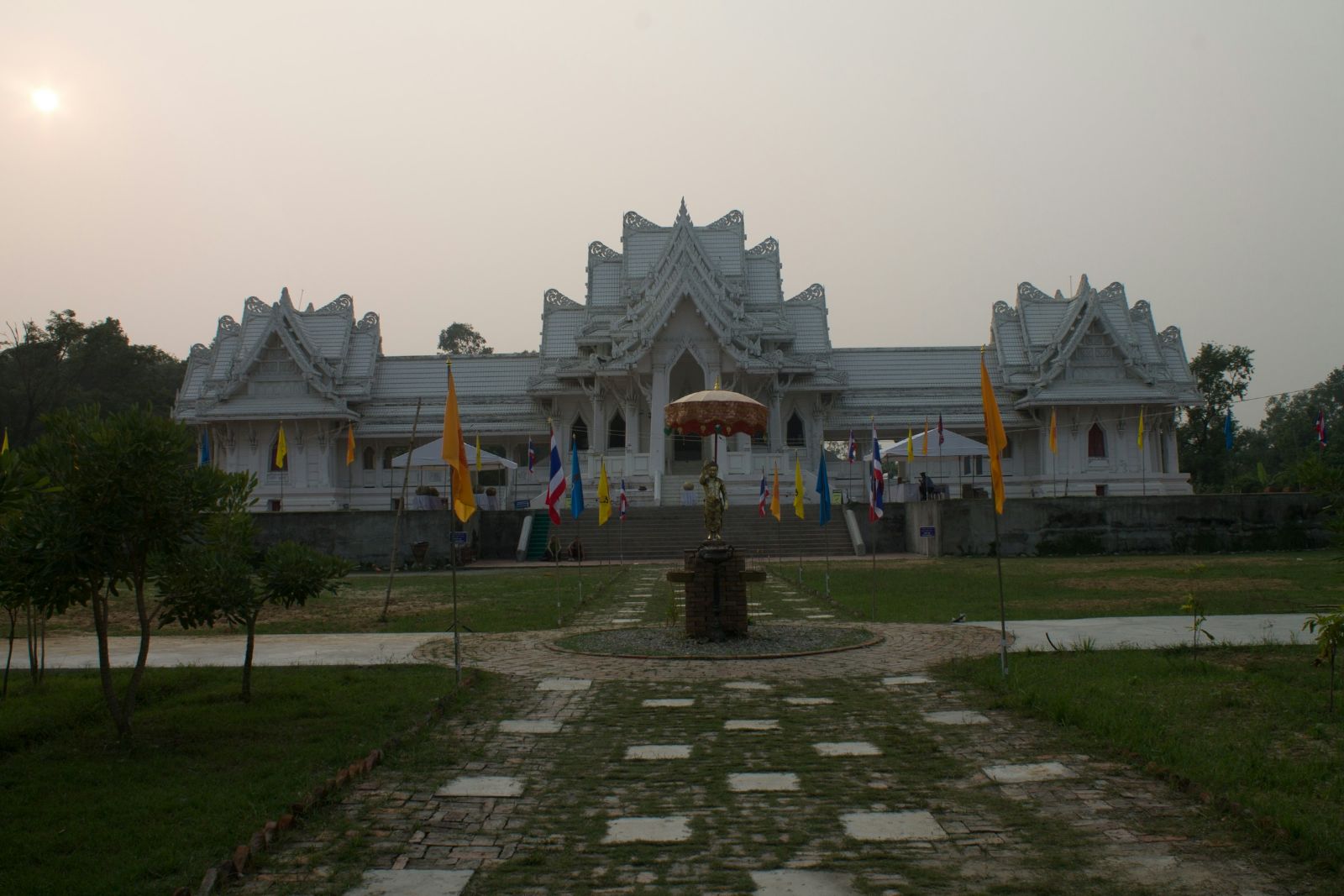
Both centres are in Lumbini's Monastic Zone, one of three zones in the master plan. Dhamma Janani is in the East Monastic Zone and Panditarama in the West Monastic Zone. A 1.6 km pedestrian walkway and a canal divide the two halves: Theravada monasteries to the east, Mahayana to the west.
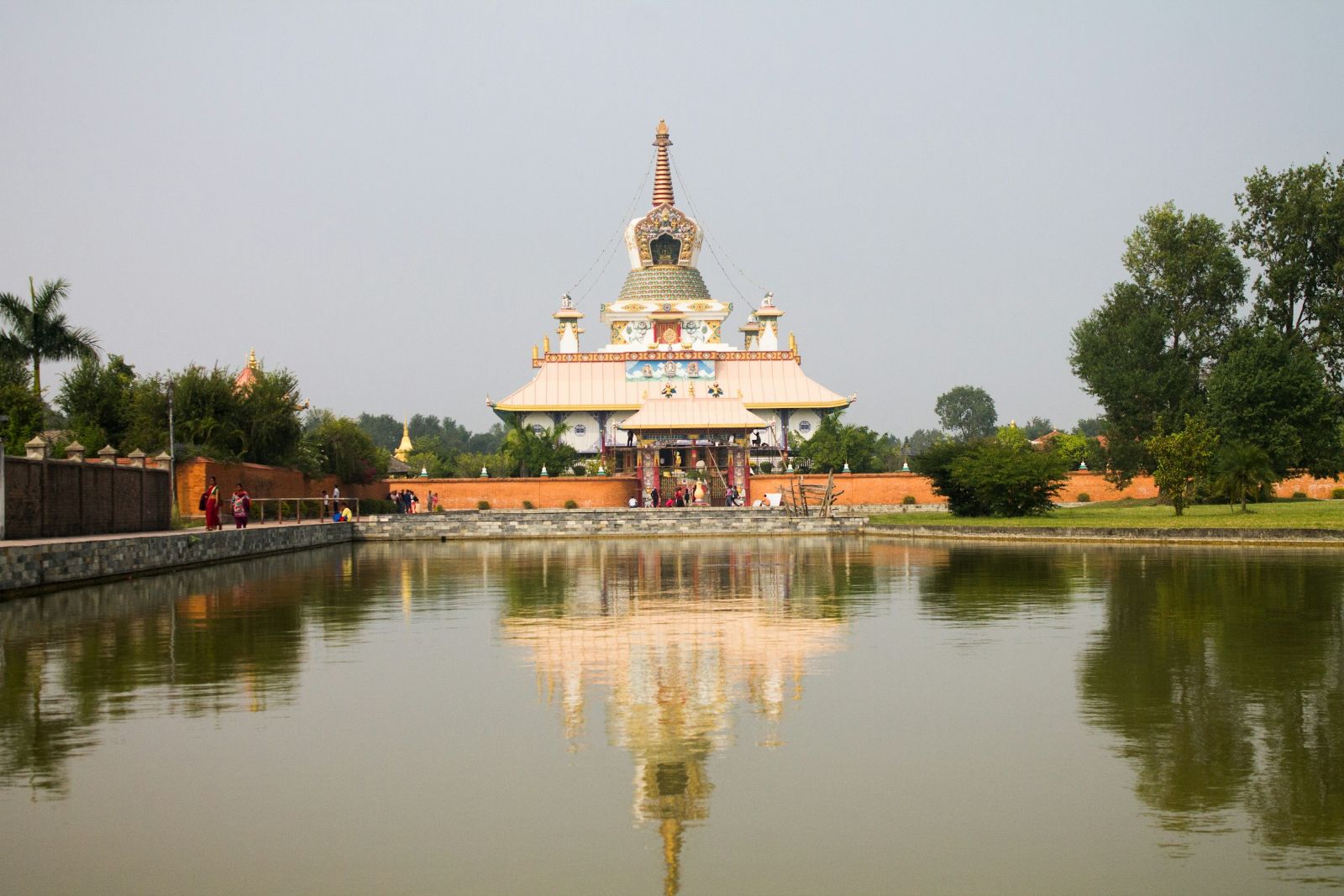
Lumbini sits on the Terai plains of Rupandehi district in southern Nepal, and has been a UNESCO World Heritage Site since 1997. We found no published meditation timetable for visitors at the monasteries, so do not count on a drop-in sitting.
Takeaway: give your driver the centre's name and its zone, East or West Monastic Zone.
How does a course at Dhamma Janani work?
Dhamma Janani runs 10-day residential courses in the Goenka tradition on a donation basis. You register between 2 and 4 pm on arrival day, meditate for ten full days, and the course ends by 7:30 am on the eleventh day. With arrival and departure, plan on 12 days. You apply online before you go.
The centre has operated since 2000. Its hall seats nearly 200 students, but it has accommodation for only about 48 men and 48 women, all with attached bath, and it warns of construction noise during courses.
First-timers take the 10-day course. Shorter and longer courses, from one day to 45 days, are for old students: those who have completed a 10-day course with S.N. Goenka or his assistant teachers. No adult minimum age is published, so ask. Instructions are usually given in Hindi, English and Nepali; check the language shown against each course.
How to apply to Dhamma Janani
Dhamma Janani publishes its course dates on dhamma.org, at the time of writing up to December 2027. Open the official Dhamma Janani course schedule, then:
- Choose an open 10-day course and read its language note.
- Click Apply and complete the online form, listing any medicines you take, prescribed or not.
- Wait: "it may take up to two weeks before receiving notification."
- If accepted, confirm you will attend. That secures your place.
- Only then book your travel.
Applications open a few months before each course. On 1 November 2026, the next 10-day course listed was 15 to 26 December, with men on the wait list.
What it costs: the donation basis
"All courses are run solely on a donation basis." There are no charges, not even for food and accommodation. Only students who have completed a 10-day course in this tradition may donate; a first-timer may give at the end.
Takeaway: the course has no fee, but travel, hotel nights and sightseeing fees are yours to cover.
How does a retreat at Panditarama work?
Panditarama Lumbini International Vipassana Meditation Center teaches intensive Vipassana in the Mahasi Sayadaw tradition of Myanmar. Its website describes no fixed course dates: you arrange an individual retreat of at least seven days, at any time of year, by contacting the centre directly.
It was inaugurated on 7 February 1999, and retreats can run to several months. Stays shorter than seven days count as part-time, without food or accommodation.
- "Meditators observe Noble Silence and keep eight precepts."
- "Meditators are expected to do 12 - 14 hours of formal practice a day." New meditators are on probation for seven days.
- Interviews are almost daily, and Dhamma talks (on the Buddha's teaching) are in English.
Contact the centre before you travel
Panditarama's website looks out of date and shows no current programme. LDT still lists the centre, but we cannot confirm it is taking retreatants this season. Its own instruction: "Please contact the center in advance before coming."
- Contact the centre, using the details on its website, with your arrival date and length of stay. First-time retreatants are asked to complete a mental-health questionnaire.
- Book no non-refundable travel until it has agreed your dates in writing.
- No reply? Dhamma Janani publishes dates and takes online applications.
Its undated retreats page gives arrival times of 8 to 10 am and 12 to 5 pm daily; confirm them when you write.
Takeaway: a Panditarama retreat is confirmed only when the centre has written back.
Dhamma Janani and Panditarama compared
The two Lumbini Vipassana centres compared, from their own pages, checked 1 November 2026.
| Dhamma Janani | Panditarama | |
|---|---|---|
| Tradition | S.N. Goenka | Mahasi Sayadaw of Myanmar |
| Zone | East Monastic Zone | West Monastic Zone |
| Format | Group courses on published dates | Individual retreats, any time of year |
| Shortest beginner stay | 10-day course, 12 days with travel days | Seven days residential |
| Cost | Donation basis | No set daily fees |
| Getting a place | Online application | Contact the centre in advance |
| Precepts | Five; old students keep three more | Eight |
| Phones | Deposited until the course ends | Contact kept to an absolute minimum |
| Meals | Simple vegetarian | Breakfast and lunch, mostly lacto-ovo-vegetarian |
| How current | Schedule updated October 2026 | Website out of date |
Takeaway: Dhamma Janani for published dates; Panditarama for a flexible stay, if you can wait for a reply.
What does a day on retreat look like?
Long and quiet. On a standard Goenka course, the wake-up bell rings at 4:00 am and lights go out at 9:30 pm, with group sittings and an evening discourse in between. Panditarama also wakes at 4:00 am and expects 12 to 14 hours of formal practice a day.
Standard Goenka 10-day course timetable from dhamma.org's Code of Discipline, which Dhamma Janani asks applicants to read; fixed points only, checked 1 November 2026.
| Time | What happens |
|---|---|
| 4:00 am | Morning wake-up bell |
| 8:00 to 9:00 am | Group sitting |
| 2:30 to 3:30 pm | Group sitting |
| 6:00 to 7:00 pm | Group sitting |
| 7:00 to 8:15 pm | Teacher's discourse |
| 9:30 pm | Retire to your own room, lights out |
At Panditarama, sitting and walking meditation alternate, and sleep is limited to four to six hours a day.
Takeaway: if you have never sat still for an hour, practise shorter sittings at home in the weeks before.
Do you need the Lumbini Meditation Pass?
Possibly, but nobody publishes the answer. The Lumbini Development Trust sells a 12-day Meditation Pass, NPR 1,500 for most foreign visitors. It does not say who must buy one, or whether a course at either centre needs one. Ask your centre whether you need one before you pay.
- Pass prices: Nepali free, Indian NPR 500, SAARC and Myanmar NPR 1,000, other nationals NPR 1,500.
- Waivers: the daily conservation fee is waived for monks, nuns, persons with disabilities and residents of the three surrounding districts, though the Trust does not say this covers the pass.
- Payment: cash, QR code or the Trust's ticket site.
Takeaway: carry some Nepali rupees for fees on the day.
How to prepare for a Vipassana retreat
Clothing
Dhamma Janani follows the Goenka code: "Clothing should be simple, modest, and comfortable." Tight, transparent or revealing clothes, such as shorts, leggings and sleeveless tops, are out. Panditarama asks for "non-distracting, modest clothing, which is loose and covers the body" and says: "It is recommended to bring a warm sleeping bag for the cold season." In January, the mean daily minimum at nearby Bhairahawa is 8.7 °C.
Code of conduct, in the centres' own words
At Dhamma Janani:
- "Noble Silence means silence of body, speech, and mind."
- "Mobile phones, smartwatches, and other electronic devices must be deposited with management until the course ends."
- "During a Vipassana course, men and women are completely separated."
- No reading or writing materials or cameras, and no prayer or religious ceremony during the course.
At Panditarama:
- "Communication with the outside world through telephone and e-mail should be kept to an absolute minimum."
- Reading and writing are kept to a minimum, socialising is strongly discouraged, and you stay within the monastic compound.
Health and medicines
Declare every medicine on the Dhamma Janani form, and ask your doctor about keeping to your usual routine during the retreat. Fasting is not permitted there.
Takeaway: pack loose, modest clothes, warm layers for winter and your declared medicines, and read your centre's full code before you apply.
Lumbini weather by month and when to go
Bhairahawa (Gautam Buddha Airport) station, 108 m, WMO/DHM climate normals 1991 to 2020. Lumbini lies about 18 km away on the same plain.
| Month | Mean daily max °C | Mean daily min °C | Rain mm | Days with 1 mm or more |
|---|---|---|---|---|
| January | 20.1 | 8.7 | 20.8 | 2.5 |
| February | 25.4 | 10.9 | 27.8 | 2.2 |
| March | 31.3 | 14.7 | 18.7 | 1.7 |
| April | 36.2 | 20.2 | 30.4 | 2.5 |
| May | 36.6 | 23.9 | 87.6 | 6.5 |
| June | 35.5 | 25.9 | 254.7 | 11.9 |
| July | 33.5 | 26.3 | 497.4 | 18.3 |
| August | 33.7 | 26.0 | 399.7 | 16.1 |
| September | 33.4 | 24.9 | 216.8 | 10.9 |
| October | 32.6 | 20.6 | 65.5 | 3.2 |
| November | 29.1 | 14.6 | 4.9 | 0.4 |
| December | 23.5 | 10.2 | 8.2 | 0.5 |
| Year | 30.9 | 18.9 | 1,632.5 | 76.7 |
- November to February: the four coolest months, with November and December the driest of the year.
- April to June: the hottest months, peaking in May at a mean maximum of 36.6 °C.
- June to September: the monsoon, wettest in July. Across Nepal, the normal onset is 13 June and withdrawal 2 October; in 2026 it began on 19 June and fully withdrew on 14 October.
- December and January: fog. In late December 2025, Kantipur reported fog cancelling domestic flights across the Terai, with Bhairahawa among the worst-hit destinations.
We suggest November to February for a first retreat, with warm layers and a spare day for fog. Course dates matter more than season: Dhamma Janani lists courses through most of the year.
Takeaway: in winter, keep a buffer day for fog. In May or June, expect real heat in the hall.
How do you get to Lumbini for a retreat?
The quickest way is to fly from Kathmandu to Bhairahawa, about 25 to 35 minutes depending on the airline, then drive about 18 km to Lumbini. Dhamma Janani says it is a 37-minute drive from the airport. By road from Kathmandu it is about 280 km and around 10 to 11 hours by bus.
- By air: LDT says flights connect Kathmandu and Bhairahawa every day; check current timetables with the airlines.
- From Pokhara or Chitwan: about 227 km and 170 km. See our Chitwan to Lumbini guide, our Pokhara to Lumbini guide and our Kathmandu to Lumbini travel guide.
- From India: Gorakhpur is about 122 km from Lumbini.
Takeaway: never fly in on the morning of registration day. One fog delay and you miss the start.
Etiquette in the Sacred Garden
The Sacred Garden holds the Maya Devi Temple, the Asoka Pillar, the Marker Stone, the Sacred Pond (Puskarini) and the ruins of viharas (monasteries) and stupas. Start at the Visitor Information Centre, where you register, pay and get free information.
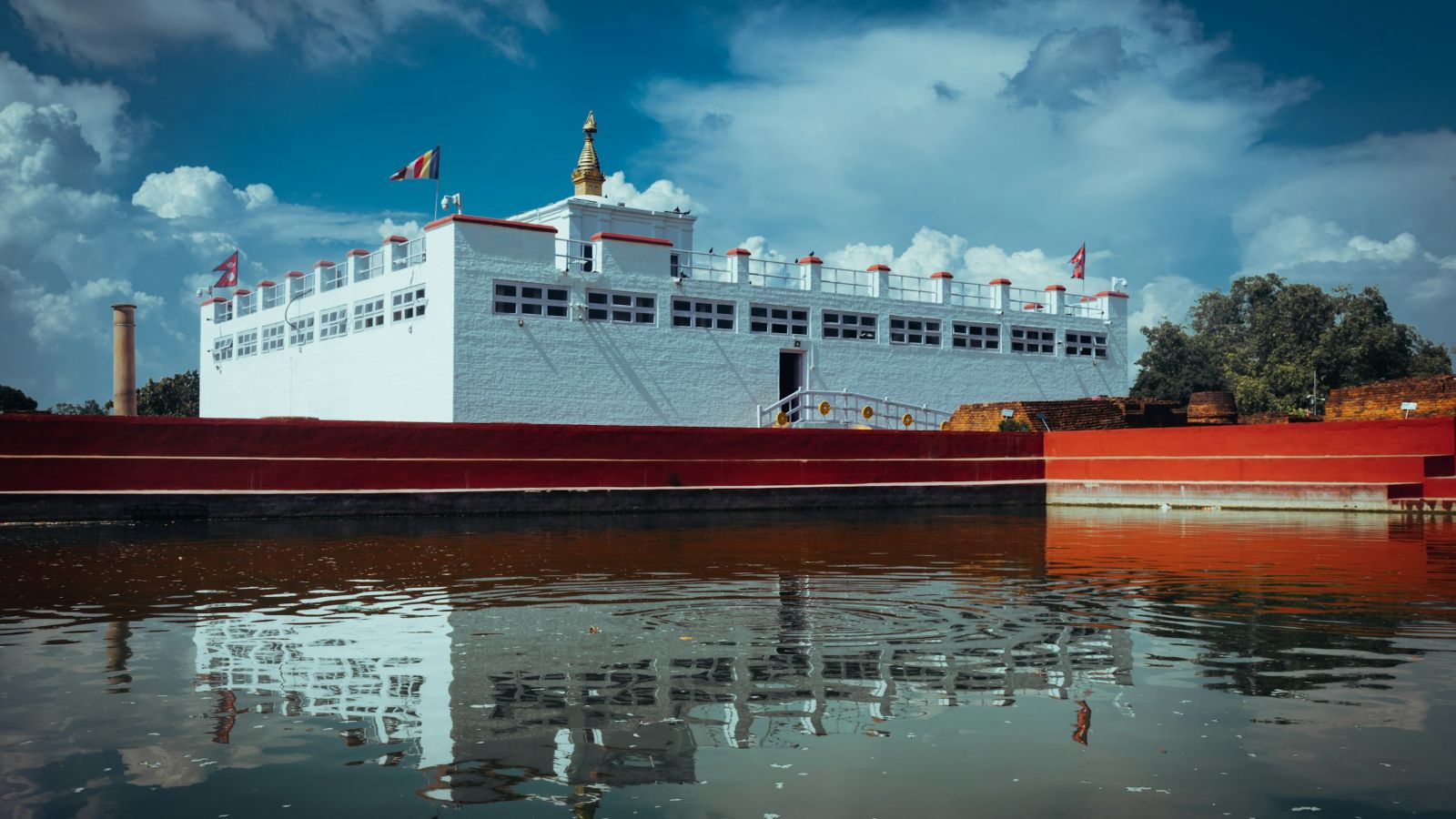
- "Entrance tickets are mandatory and must be purchased."
- "Visitors must remove their shoes before entering the temple premises."
- "Modest, respectful clothing is preferred when visiting the sacred shrine." We suggest covering shoulders and knees.
- "Food and drinks should be left outside the temple at the entrance."
- Drones need permission from the District Administration Office, the Civil Aviation Authority of Nepal and LDT.
LDT publishes camera fees but no photography rule inside the temple, so follow the signs and staff. No opening hours are published; ask at the Visitor Information Centre. Our Maya Devi Temple guide covers the temple itself.
Takeaway: wear shoes you can slip off, and finish your water before the temple.
Seeing Lumbini before or after your retreat
Dhamma Janani students stay within the course boundaries for the whole course. Panditarama accepts a few hours of sightseeing before you start, or one or two days at the end. So sightsee around the retreat, not during it.
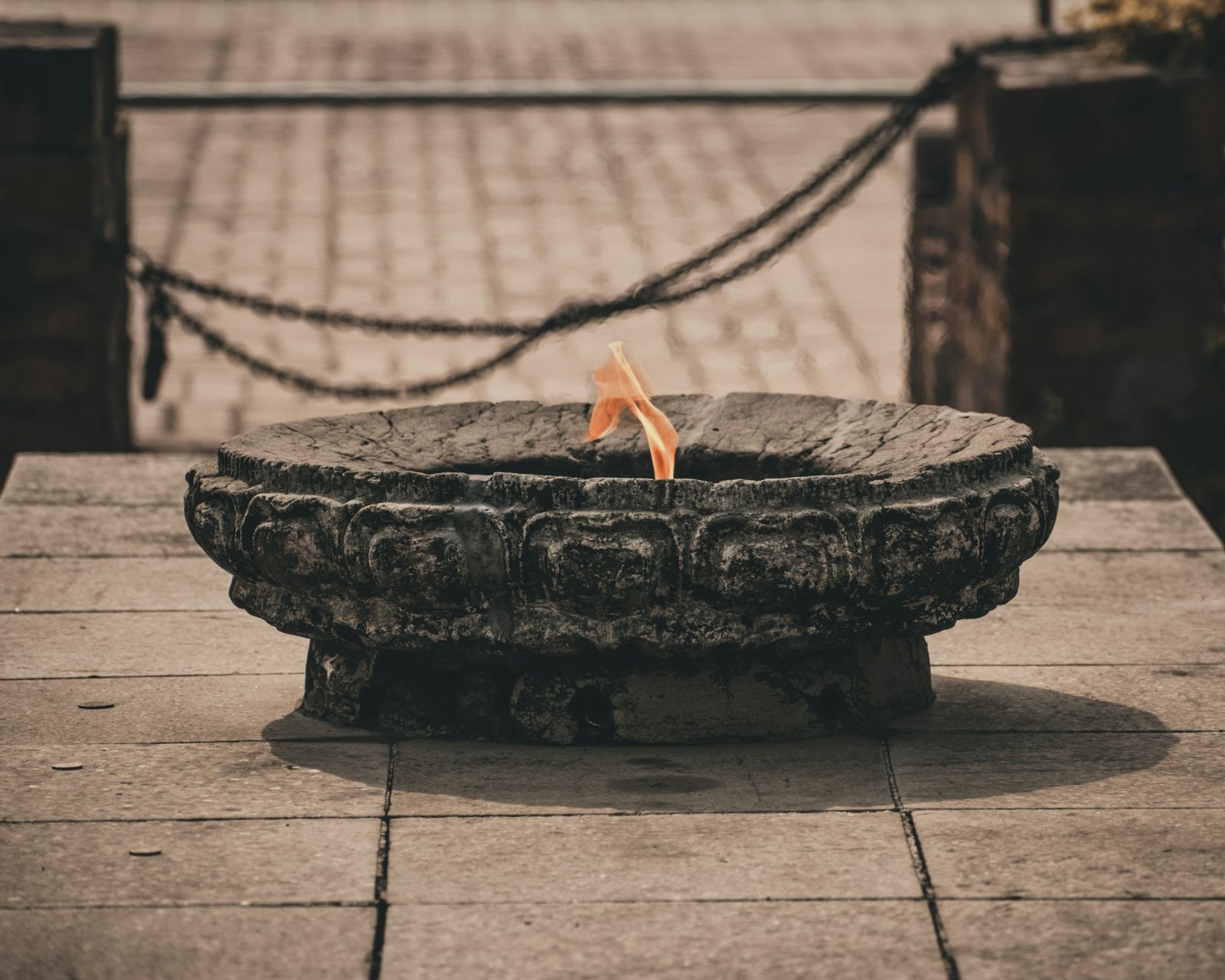
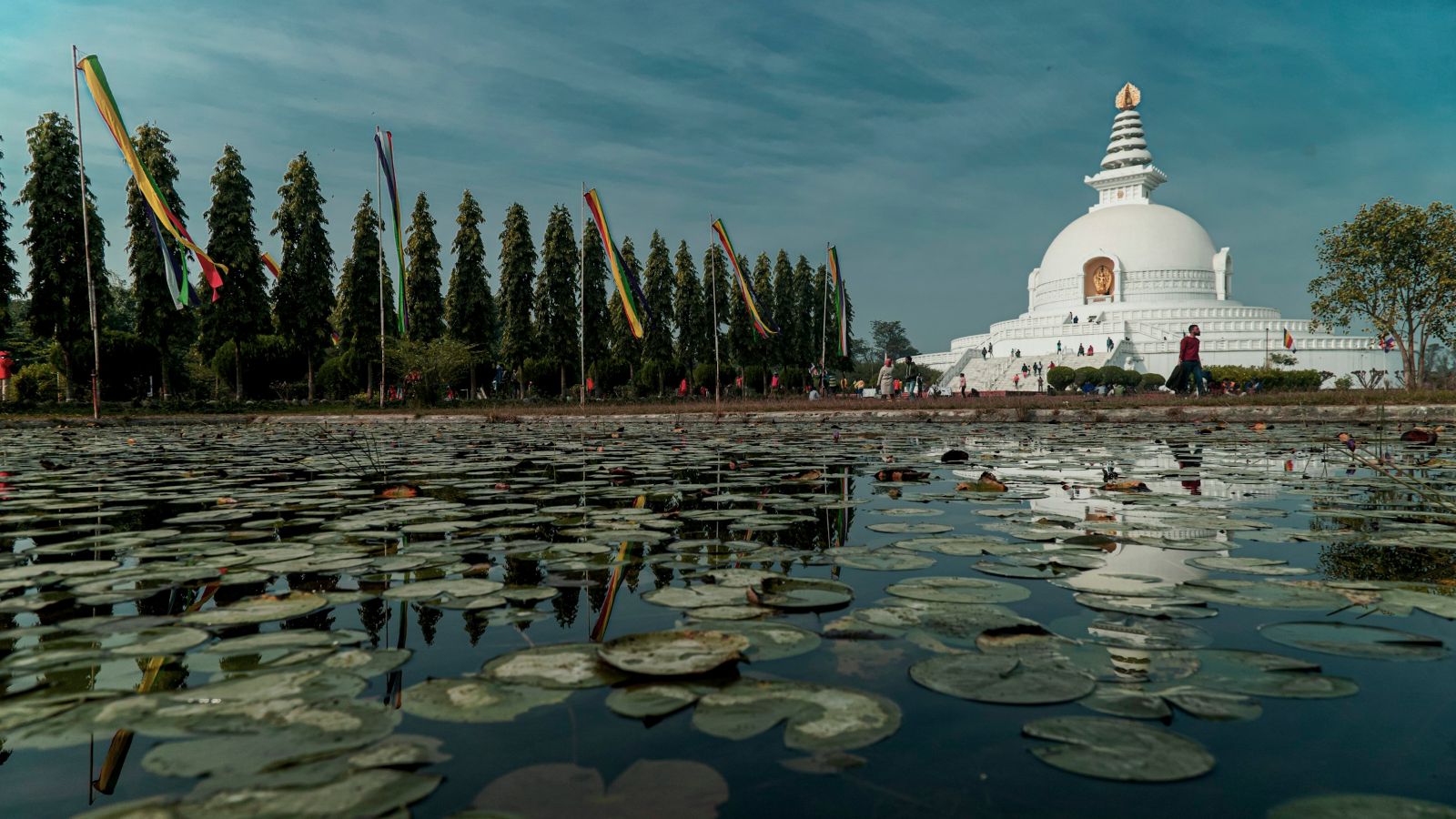
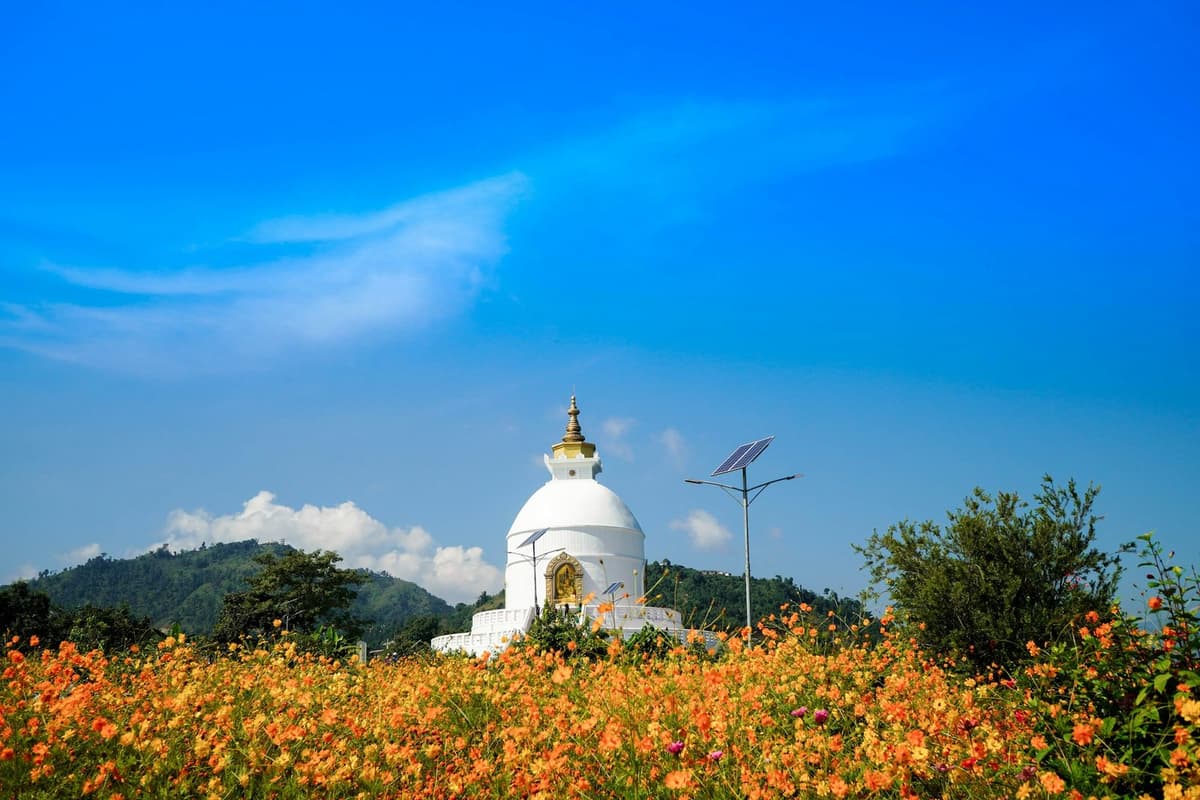
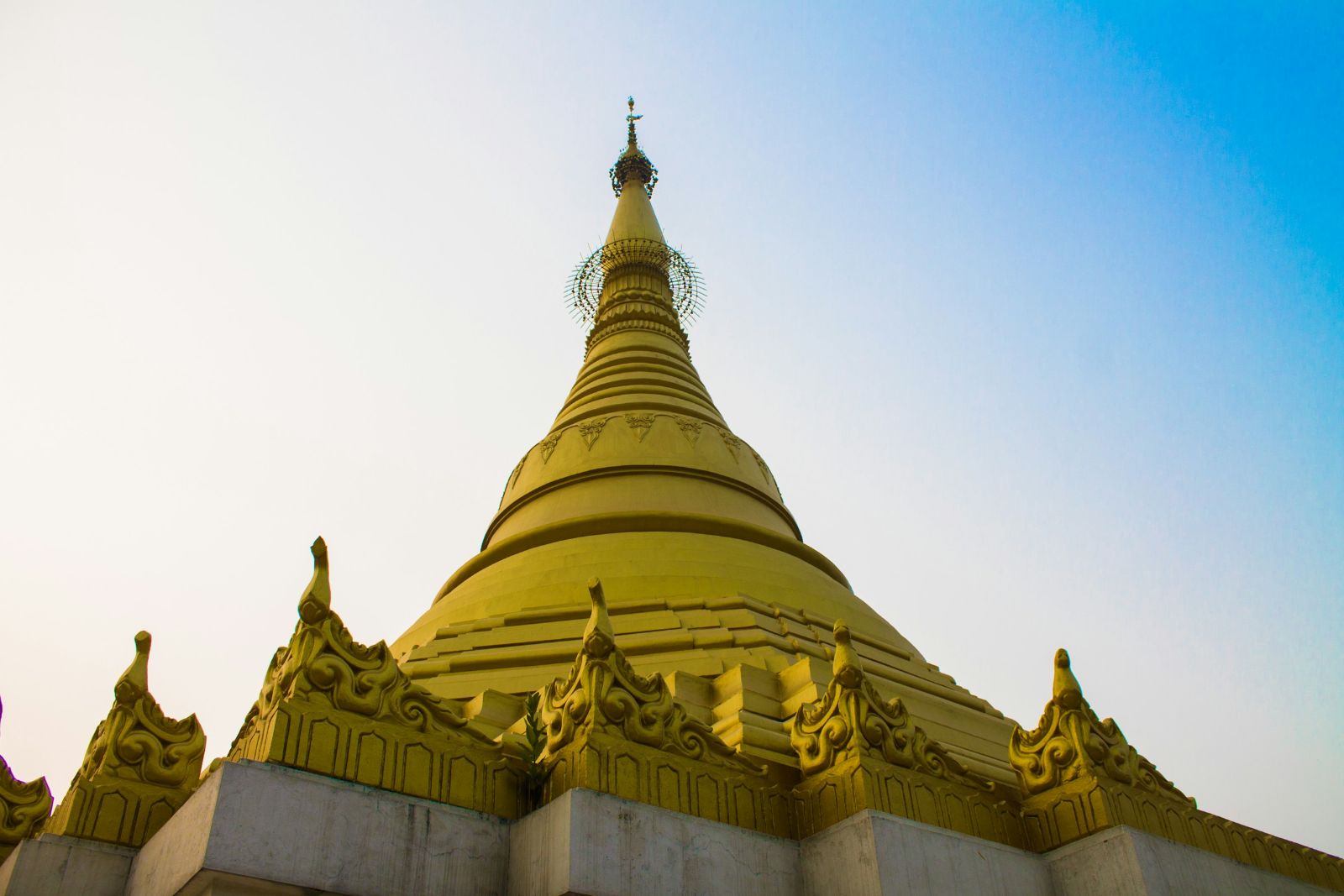
Start with our guide to places to visit in Lumbini, then see the Eternal Peace Flame in the Monastic Zone and the World Peace Pagoda. Our Lumbini monasteries guide covers the Monastic Zone. The Lumbini Museum is under renovation; our Lumbini Museum guide has the background. For a longer route, see Buddhist pilgrimage sites in Nepal.
Takeaway: the entry fee is per day, so group your sightseeing into as few days as you can.
Frequently asked questions
Can I visit Lumbini as a day trip?
For sightseeing, yes, but only by air from Kathmandu: about 25 to 35 minutes to Bhairahawa, airlines differ, then about 18 km by road. By road it is about 280 km each way. In December and January, fog can cancel flights. A retreat cannot be a day trip: a Goenka course spans 12 days and Panditarama's minimum residential stay is seven days.
What is the Lumbini Museum and what does it hold?
It is a 1970s barrel-vaulted brick building by Kenzo Tange, in the Cultural Center and New Lumbini Village zone. It holds artefacts excavated from Lumbini and Kapilavastu, including terracotta figures, stone sculptures and ancient coins. It is currently under renovation. A temporary exhibition, Lives in Clay, was launched on 16 October 2025; ask us to check whether it can be seen.
What should I wear and how should I behave at the Sacred Garden?
Wear modest, respectful clothing; we suggest covering shoulders and knees. Buy your ticket first, remove your shoes before the temple premises and leave food and drink at the entrance. On photography, follow the signs and staff. Our own advice: keep your voice low and ask before photographing monks, nuns or pilgrims.
Do I need to be Buddhist to do Vipassana in Lumbini?
No. Dhamma.org says the Buddha developed Vipassana as a technique, but its practice is not limited to Buddhists and there is no question of conversion. During a Goenka course at Dhamma Janani, though, all prayer, worship and religious ceremony is set aside. At Panditarama, every meditator keeps eight training precepts.
Planning your trip to Lumbini
For everything else about the site, read our complete Lumbini guide.
For a wider trip around Nepal's temples and heritage, see our cultural heritage tours. For a wellness break elsewhere in Nepal, there are our wellness and yoga retreats; that page does not cover Vipassana or Lumbini.
We do not book retreat places or arrange courses; you apply to Dhamma Janani or Panditarama directly. For the travel around it, such as an airport transfer or a hotel night, ask us. Message us on WhatsApp or use the enquiry form and we will reply with options.