

By Uncover Nepal Team · Checked by our Kathmandu travel team · Last checked 27 October 2026
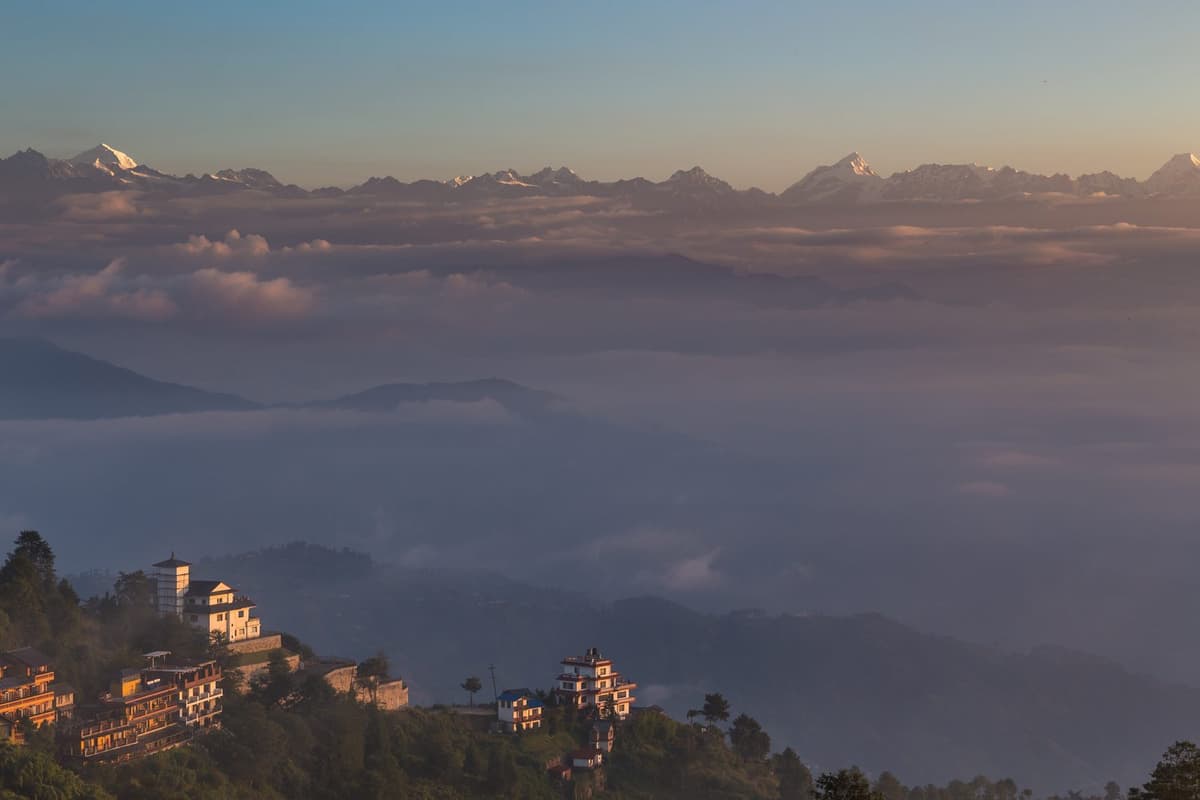
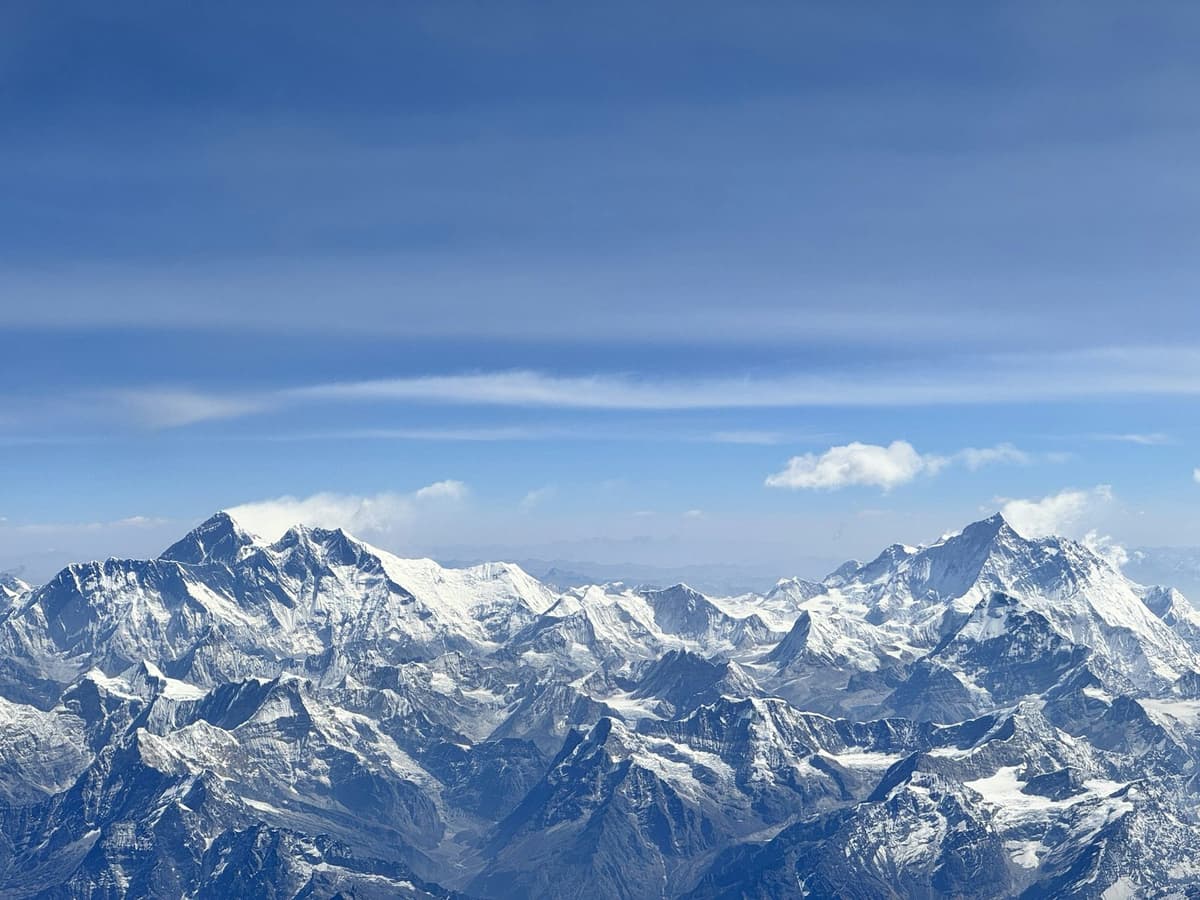
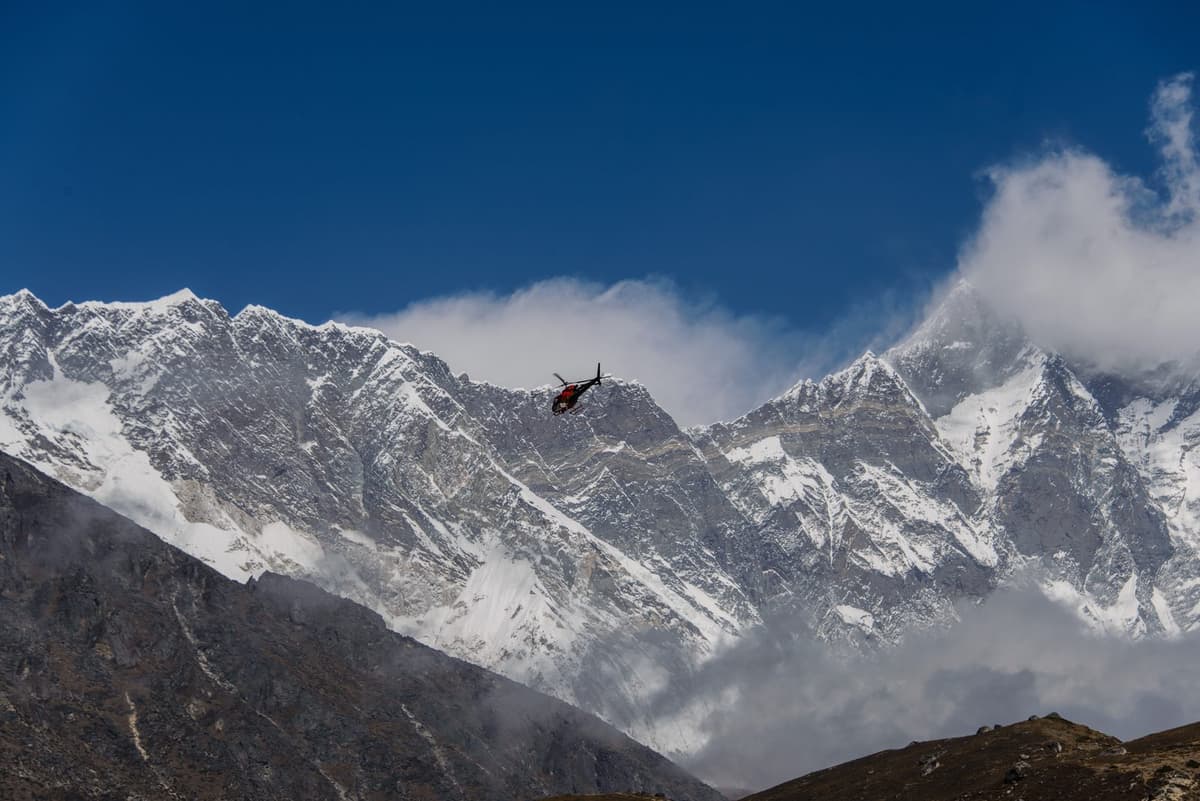
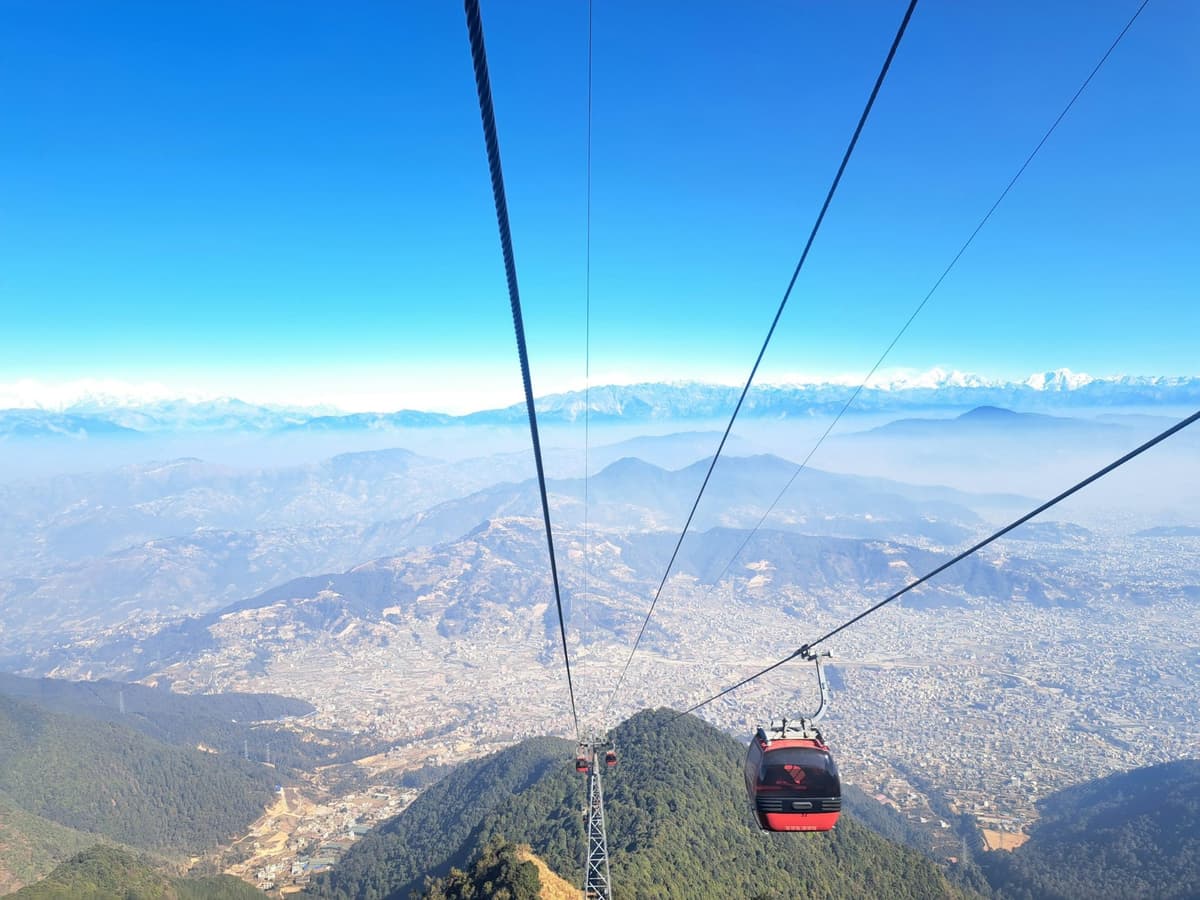
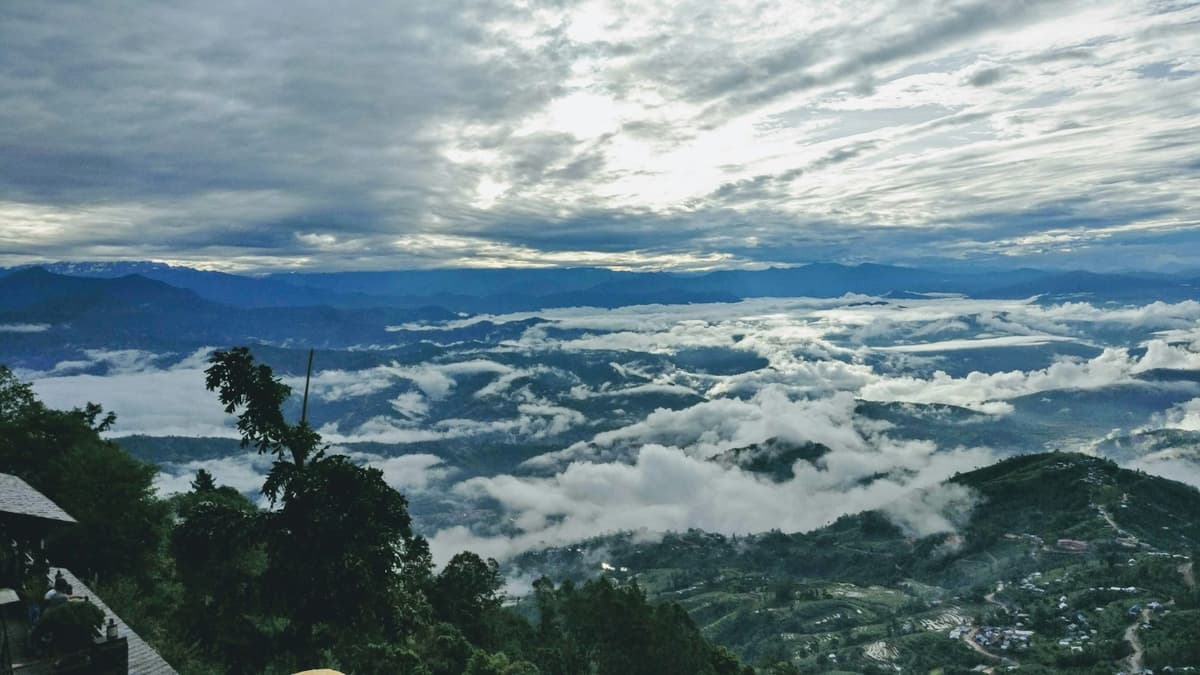
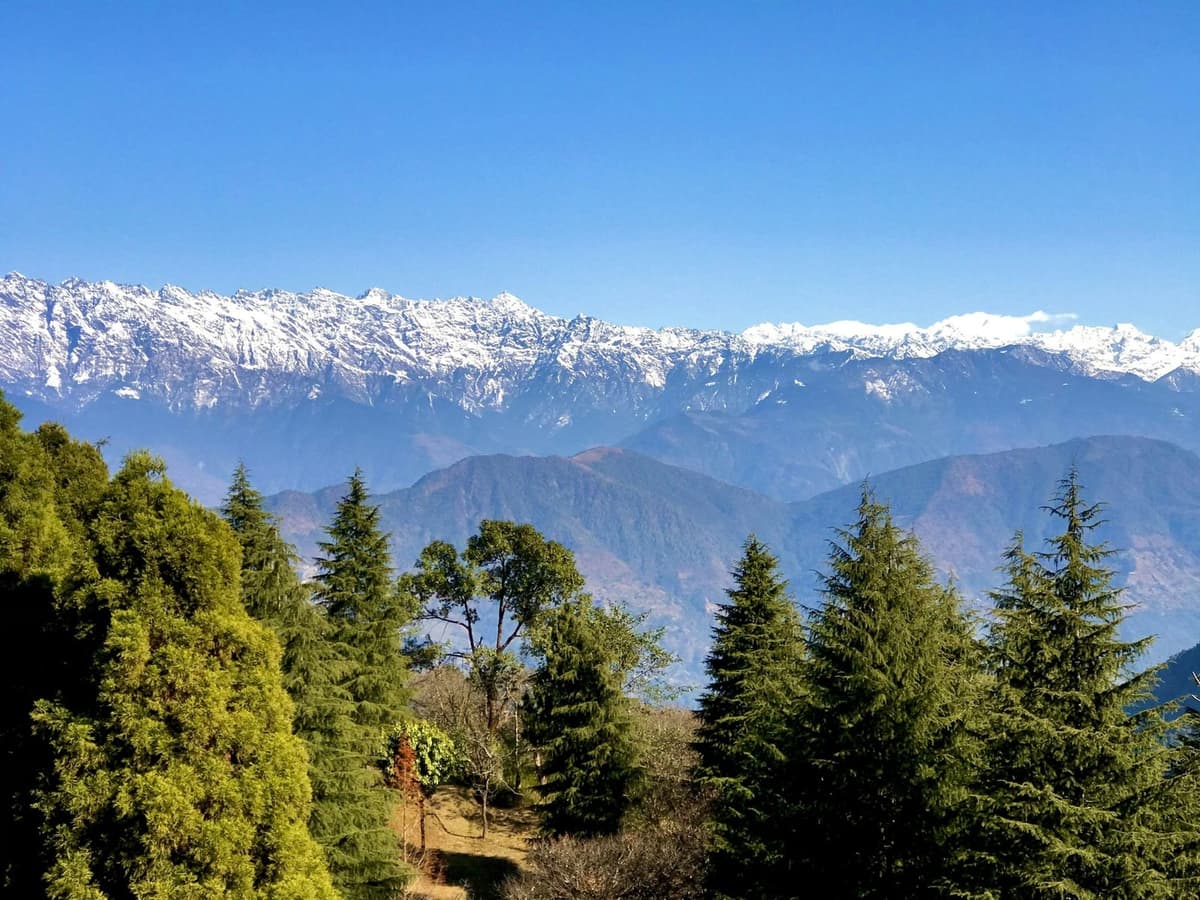
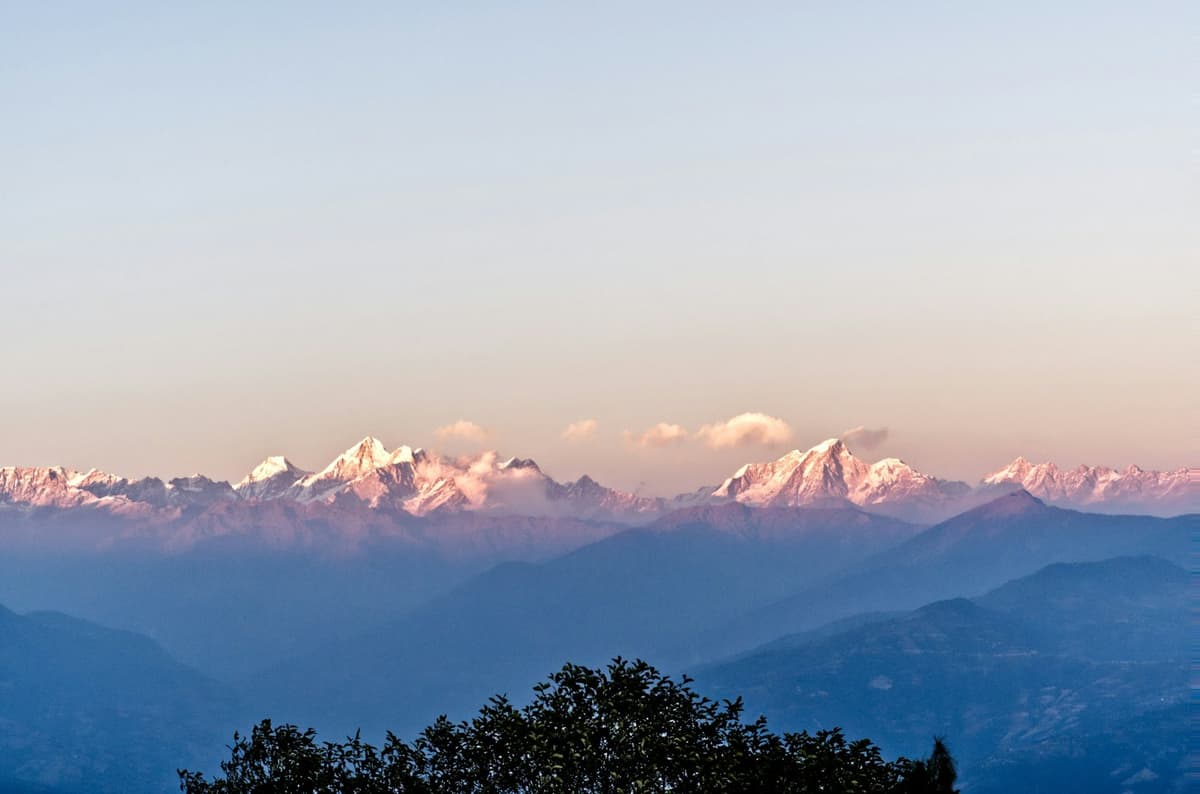
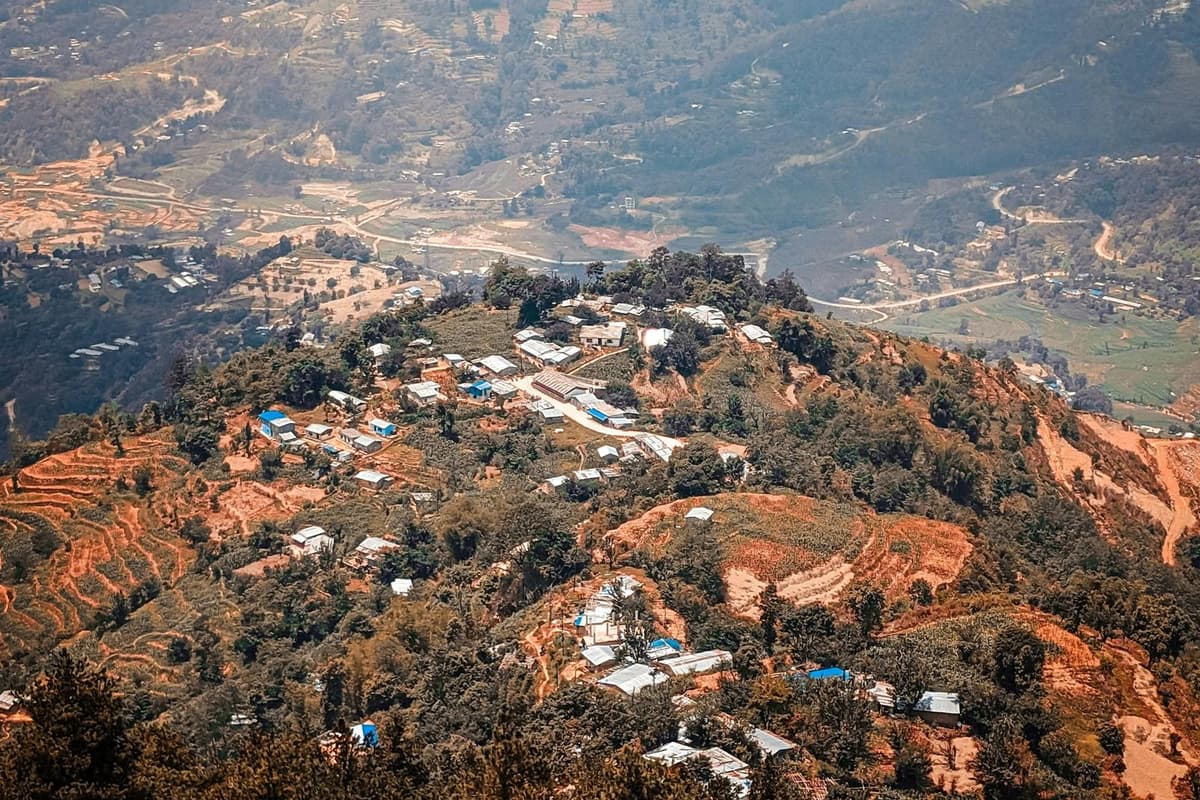
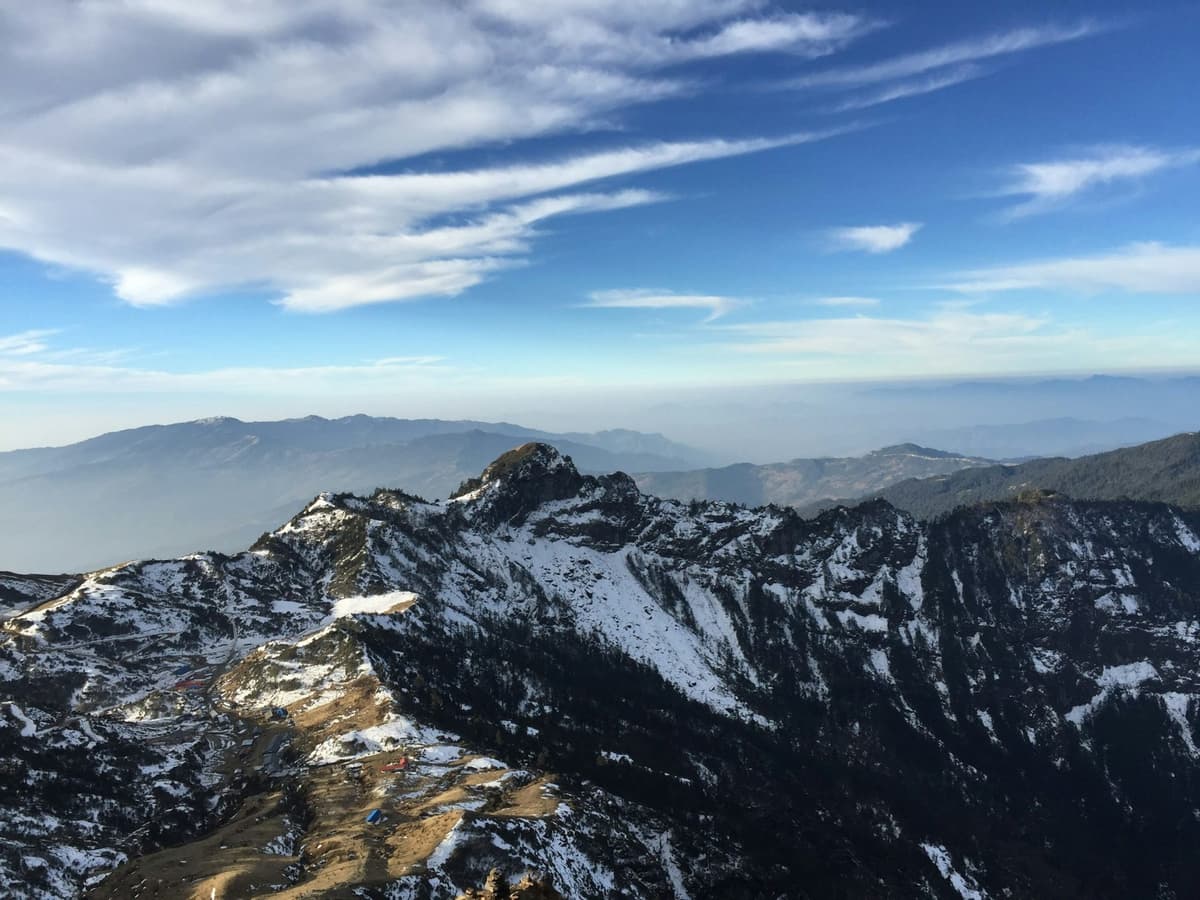
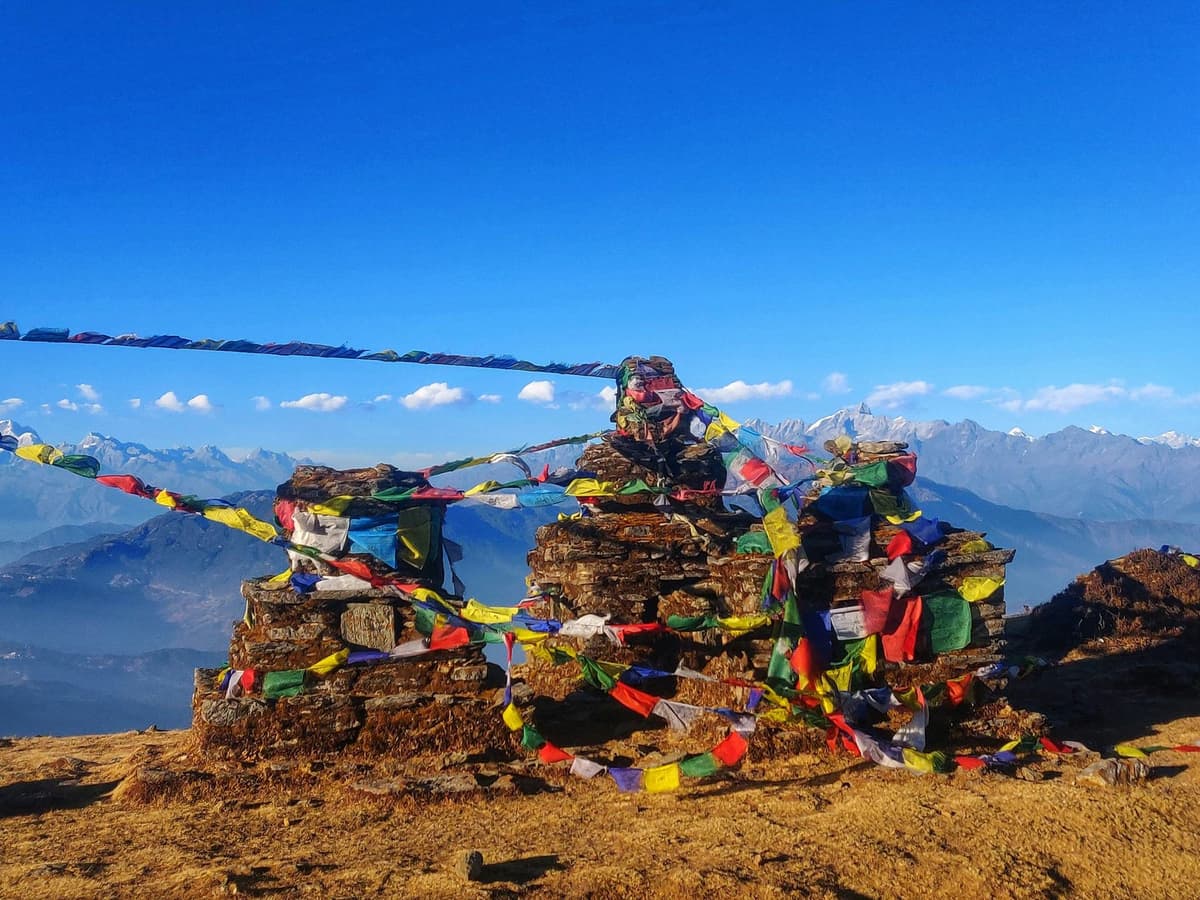
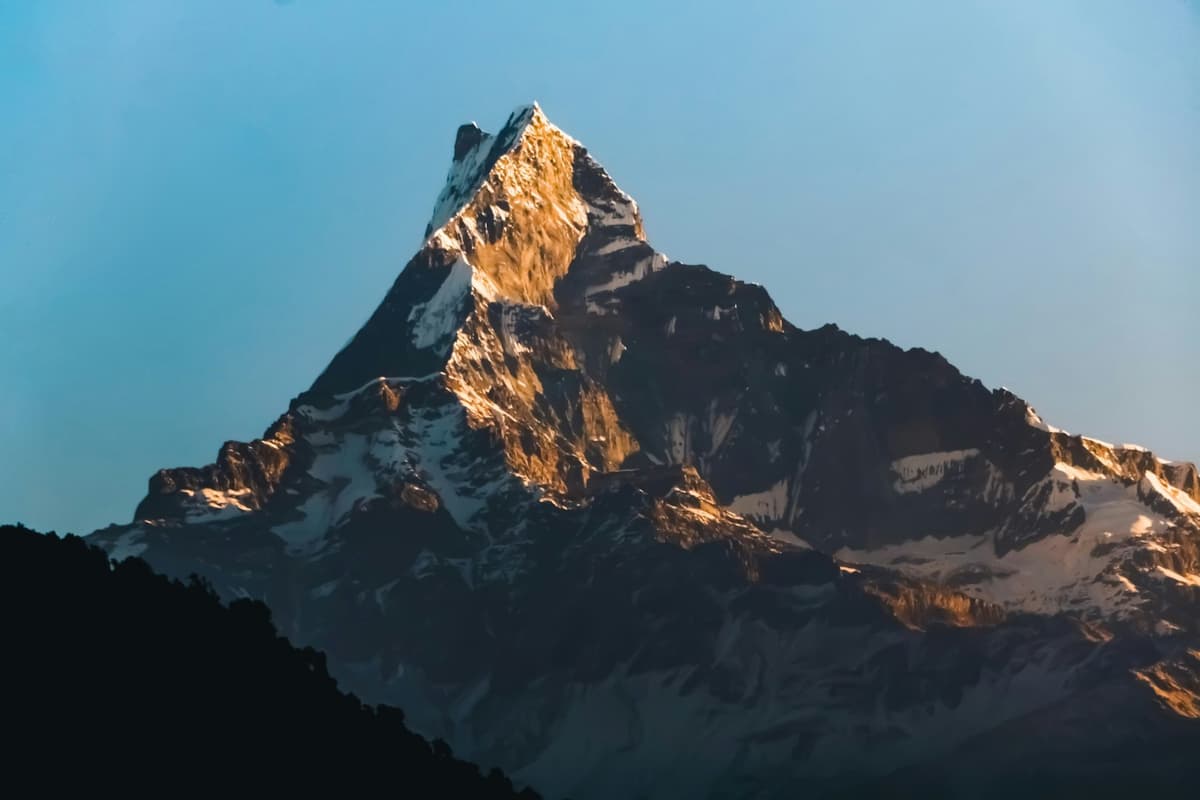
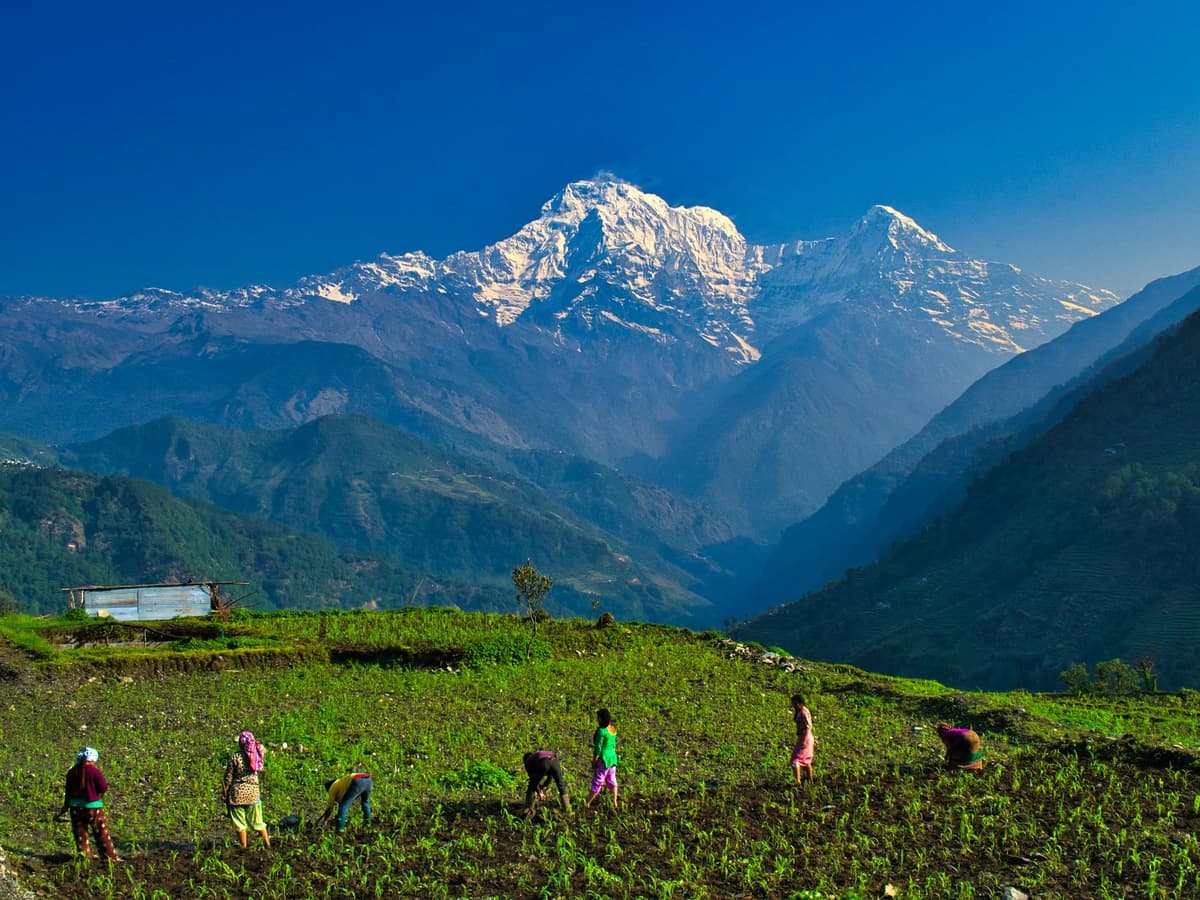
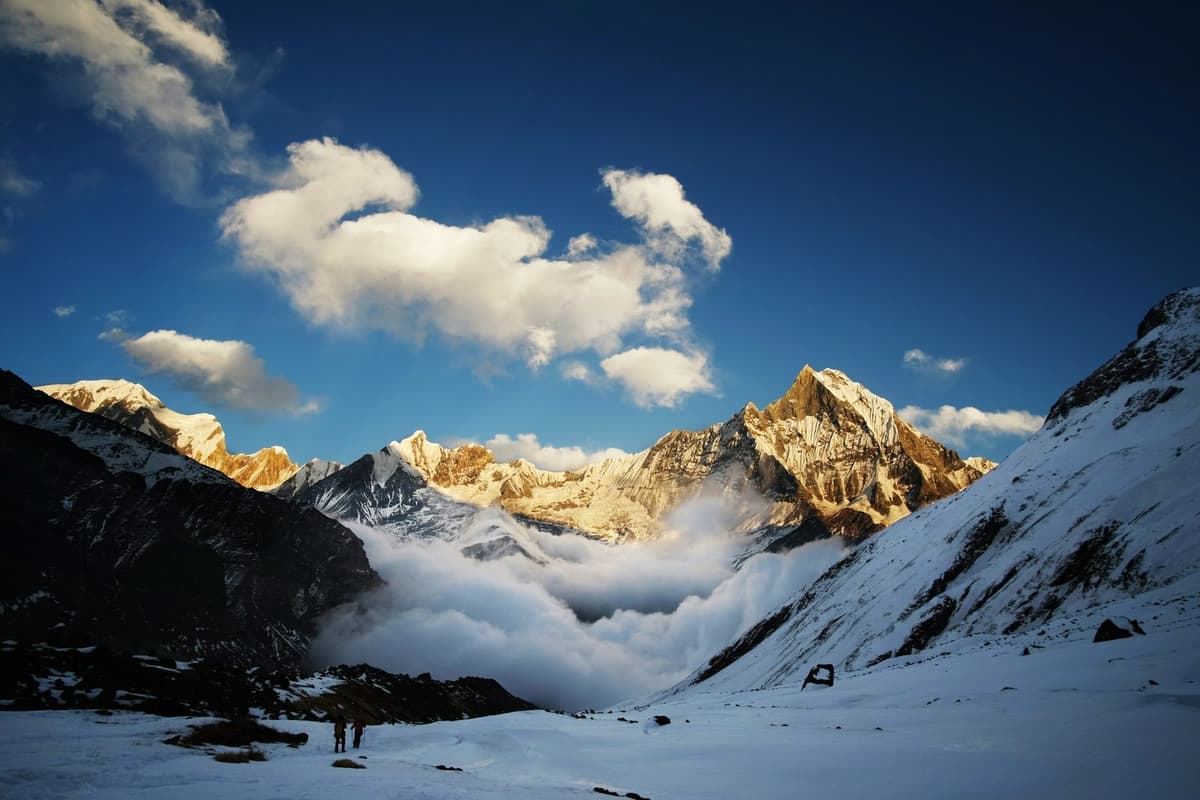
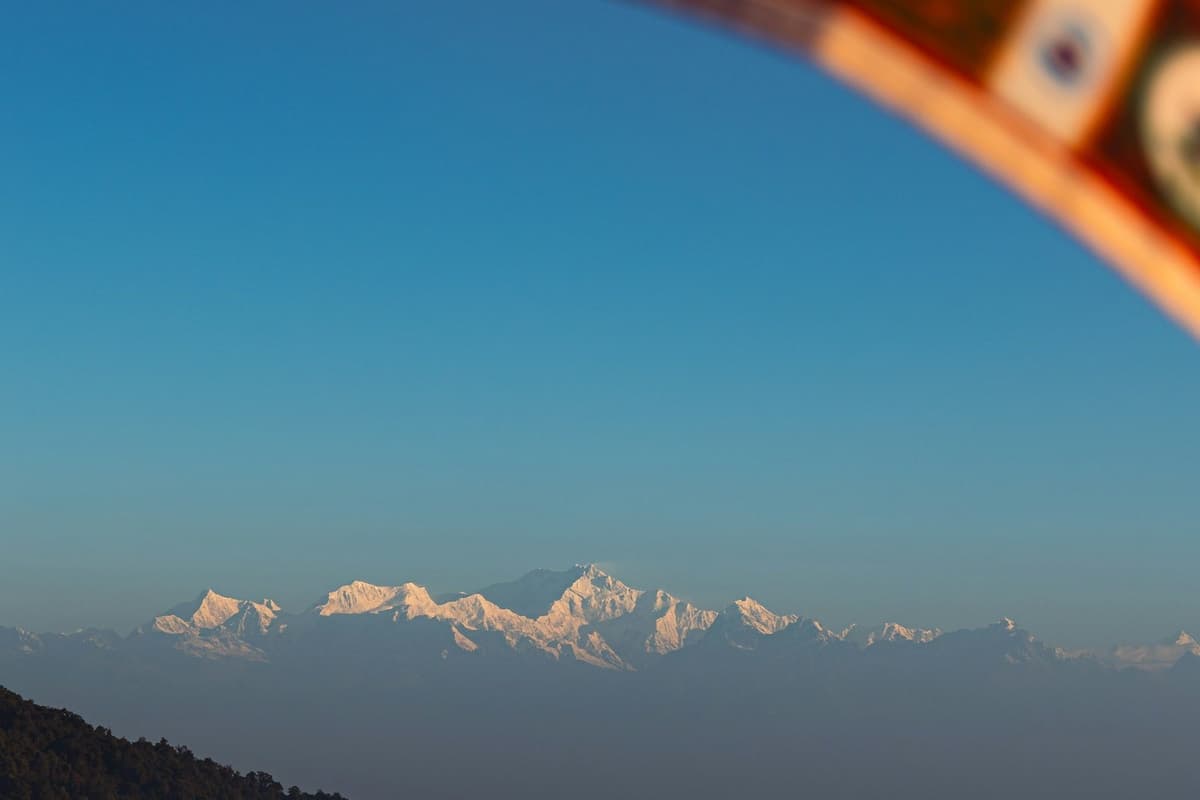
Beyond Charikot, a rougher hill road climbs to Kuri, a village of simple lodges below a bare ridge. Small cable car cabins lift people from Kuri to the ridge top, where the Kalinchowk Bhagwati temple sits in thin, cold air. On a clear morning the Rolwaling and Langtang ranges fill the skyline.
Kalinchowk is a Bhagwati goddess temple on a ridge above 3,700 m (12,139 ft) in Dolakha district. You reach it from the lodge village of Kuri, by a cable car ride of a few minutes or about an hour's uphill walk. Snow usually comes between December and March, but some winters bring very little. It is not a day trip.
For lower, gentler escapes from the city, see our guide to hill stations in Nepal. This article covers the temple, its real height, the road and cable car, the snow, and staying safe in cold and altitude.
Key facts
- Where
- Kalinchowk Bhagwati temple, Dolakha district, Bagmati Province, inside the Gaurishankar Conservation Area (Nepal Tourism Board, Bagmati Province page, 27 Oct 2026)
- Height of the temple
- Above 3,700 m (12,139 ft). Published figures differ; the Nepal Tourism Board gives 3,842 m (NTB; The Himalayan Times; Kathmandu Post, 15 Oct 2026)
- Where you sleep
- Kuri, published by the cable car company as 3,200 m (Kalinchowk Darshan Ltd, 15 Oct 2026)
- Distance from Kathmandu
- About 150 km to Kuri, by the cable car company's figure (Kalinchowk Darshan Ltd, 15 Oct 2026)
- Drive time
- About six to seven hours each way on our trip (UncoverNepal trip practice, 15 Oct 2026)
- Cable car
- Commercial service since 3 November 2018; a ride of a few minutes; check it is running (The Himalayan Times; Kathmandu Post; operator, 15 Oct 2026)
- Walk from Kuri
- About an hour uphill, longer in snow (Himal Darpan; operator, 15 Oct 2026)
- Snow
- Usually December to March; varies a lot by winter (The Himalayan Times; The Rising Nepal, 15 Oct 2026)
- Altitude risk line
- The CDC puts the risk from a sleeping altitude of 2,450 m (8,000 ft) (CDC Yellow Book, 15 Oct 2026)
What is Kalinchowk, and why do people go?
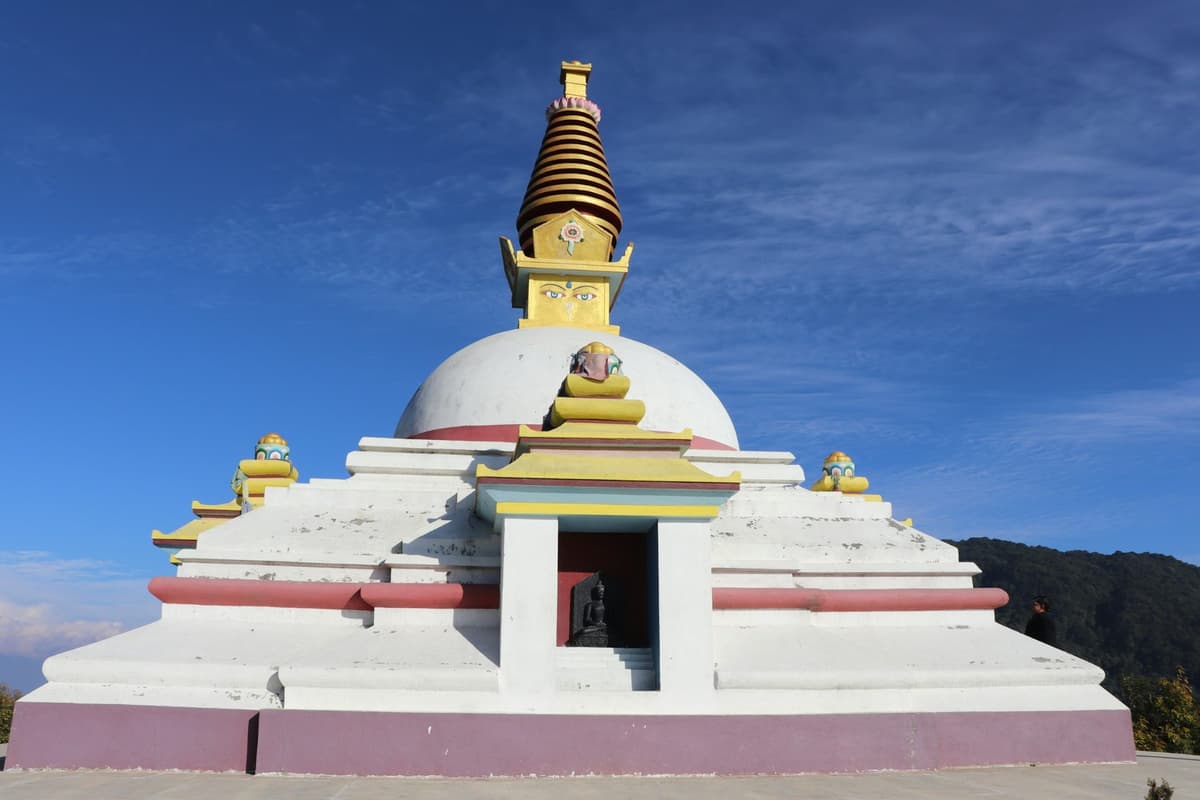
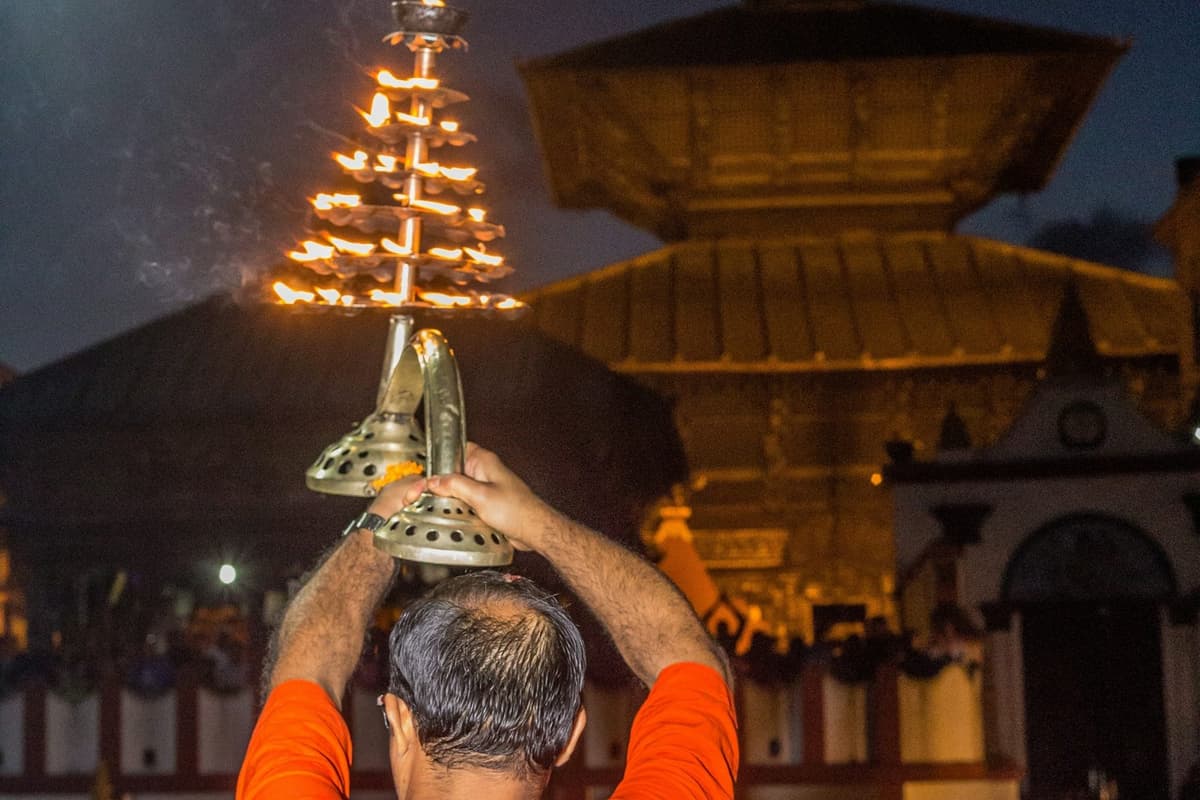
Kalinchowk is a hilltop goddess temple, Kalinchowk Bhagwati, in Dolakha district east of Kathmandu. People go for three reasons: to worship at a goddess shrine with a strong local following, to see snow within a long day's drive of the capital, and to ride the cable car up to the ridge.
The Nepal Tourism Board lists Kalinchowk Bhagwati among the key religious sites of Bagmati Province, alongside Palanchowk Bhagwati in Kavre and Dolakha Bhimsen. In its own words, the temple is:
"revered as a powerful goddess temple with strong spiritual power."
Nepal Tourism Board, Bagmati Province page
The Kathmandu Post put the local view simply: the temple is "revered by the locals as the 'shrine of the district'".
Local reporting says there is no idol here: devotees worship a small pond, or kunda, that holds water all year, as the goddess. The same reporting describes big fairs at Janai Purnima and Krishna Ashtami, when dhami-jhankri, the traditional healers of the hills, come in large numbers. We have not found dates for the next festivals, so if you want to see one, ask us closer to the time.
The Nepal Tourism Board notes that the temple lies in the Gaurishankar Conservation Area as a pilgrimage site. The surrounding area is Kalinchowk Rural Municipality, whose administrative centre is Sunakhani.
Most visitors are Nepali. In 2023 the head of the cable car company said over 85 per cent of visitors were domestic tourists, and that many foreign nationals were not aware of the place at all. Expect a domestic pilgrimage and snow destination, not a place built around foreign tourists.
How high is Kalinchowk?
The Kalinchowk temple stands above 3,700 m (12,139 ft). You will see more precise figures quoted, but they do not agree. The Nepal Tourism Board and the cable car company publish 3,842 m, The Himalayan Times gave 3,755 m in 2018, and an older OnlineKhabar piece said 4,000 m. We found no survey source.
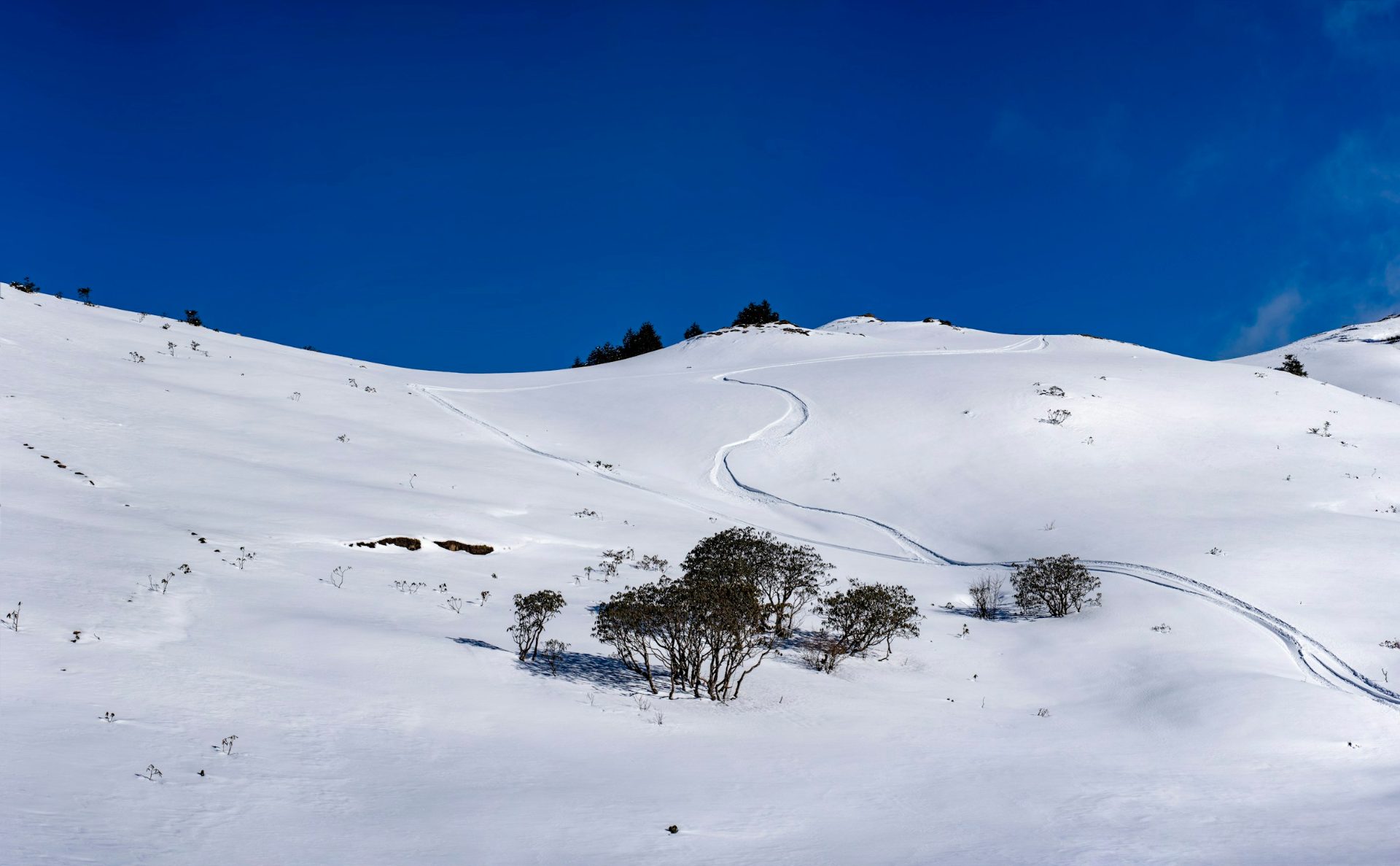
So we use the floor every source agrees on. What matters more for your body is where you sleep. You spend the night at Kuri, which the cable car company publishes as 3,200 m. That is the only published figure we found for Kuri, so treat it as approximate.
| Place | Published height | Who publishes it | How we read it |
|---|---|---|---|
| Kalinchowk temple | 3,842 m | Nepal Tourism Board; cable car company; Kathmandu Post | Most widely quoted figure |
| Kalinchowk temple | 3,755 m | The Himalayan Times, 2018 | Lower figure |
| Kalinchowk temple | 4,000 m | OnlineKhabar, 2017 | Older, rounded figure |
| Kalinchowk temple | Above 3,700 m | Our wording | What we state as fact |
| Kuri (where you sleep) | 3,200 m | Cable car company | Only source found |
Both the temple and Kuri sit well above the height at which the CDC says altitude illness becomes a risk. We cover what that means below.
How do you get from Kathmandu to Kalinchowk?
The road from Kathmandu to Kalinchowk follows the Araniko Highway east to Khadichaur, climbs a winding road to Charikot, then continues on a rougher hill road to Kuri. The cable car company puts the whole journey at about 150 km. On our trip the drive takes about six to seven hours each way.
The route in three parts:
- Kathmandu to Khadichaur, on the Araniko Highway. This is the main road east out of the valley.
- Khadichaur to Charikot. A serpentine road climbs to Charikot, the Dolakha district headquarters, about 133 km from Kathmandu by the Kathmandu Post's figure.
- Charikot to Kuri. About 18 km of rougher hill road brings you to Kuri. We found no current source on whether this stretch is paved, so expect a slower, bumpier last section.
Public buses run towards Charikot and Kuri; we have no current timetable or fare, so check the service in Kathmandu.
Can you do Kalinchowk as a day trip?
No. With about six to seven hours of driving each way on our trip, a same-day return means most of the day in a vehicle and the descent in the dark. Night travel was also suspended on parts of the Araniko Highway this autumn. Plan a night at Kuri.
Our Kathmandu day trips guide has places that genuinely work in a day.
On our Kalinchowk and Palanchowk Bhagwati tour, the stop at Palanchowk Bhagwati in Kavre breaks the journey with a second temple on the Nepal Tourism Board's list.
How does the Kalinchowk cable car work?
The Kalinchowk cable car runs from Kuri up to the temple ridge. It is operated by Kalinchowk Darshan Ltd and has run commercially since 3 November 2018, when it was the third cable car in Nepal. The ride takes a few minutes; the company gives about six minutes to the top station.
You buy tickets at Kuri: the company says there is no advance booking for now, and tickets are valid for seven days from purchase.
Is it running? We could not confirm that the cable car is operating this week. It was closed after vandalism in September 2025, and the company then announced a partial restart on one of its two systems from 22 September 2025. Phone the company or ask your lodge in Kuri before you plan around it. If it is not running, the walk is your way up.
Hours. The company's website gives more than one timetable, so we publish none. It starts early in the morning and stops in the afternoon; check the day's times at the Kuri ticket office.
Kalinchowk cable car fares
The operator lists these fares, in Nepali rupees, inclusive of local taxes and VAT. We checked them on 27 October 2026, and the company says rates may change without notice.
| Rider | One way (NPR) | Return (NPR) |
|---|---|---|
| Regular (Nepali) | 400 | 600 |
| Indian citizen | 640 | 960 |
| Foreigners | 760 | 1,300 |
| Nepali student, senior citizen or differently abled (with proof) | Not listed | 500 |
Children up to 3 ft ride free, and children above 3 ft and up to 4 ft pay a child rate, which the company's page does not show. The company lists no separate fare for other SAARC nationals, so we cannot tell you which row applies. Ask at the counter about both. Note that Indian visitors pay a separate cable car fare even though Indians count as SAARC nationals for conservation-area fees.
How long is the walk from Kuri to the temple?
The walk from Kuri to the Kalinchowk temple takes about an hour uphill, longer in snow or ice. The cable car company says an hour to an hour and a half. Before the cable car opened, this walk was the only way up.
How to walk it well:
- Start early, so you have daylight in hand for the way down.
- Go at a slow, steady pace. You start from Kuri, published as 3,200 m, soon after a long drive up from Kathmandu. Stop and rest whenever you need to.
- Take the cable car if you feel unwell, or stay at Kuri.
- Watch the descent in snow. Packed snow and ice make the way down harder than the way up. Use poles or traction aids if you have them, and turn back if the path is glazed.
- Carry water and a warm layer. The ridge top is open to the wind.
When does Kalinchowk get snow?
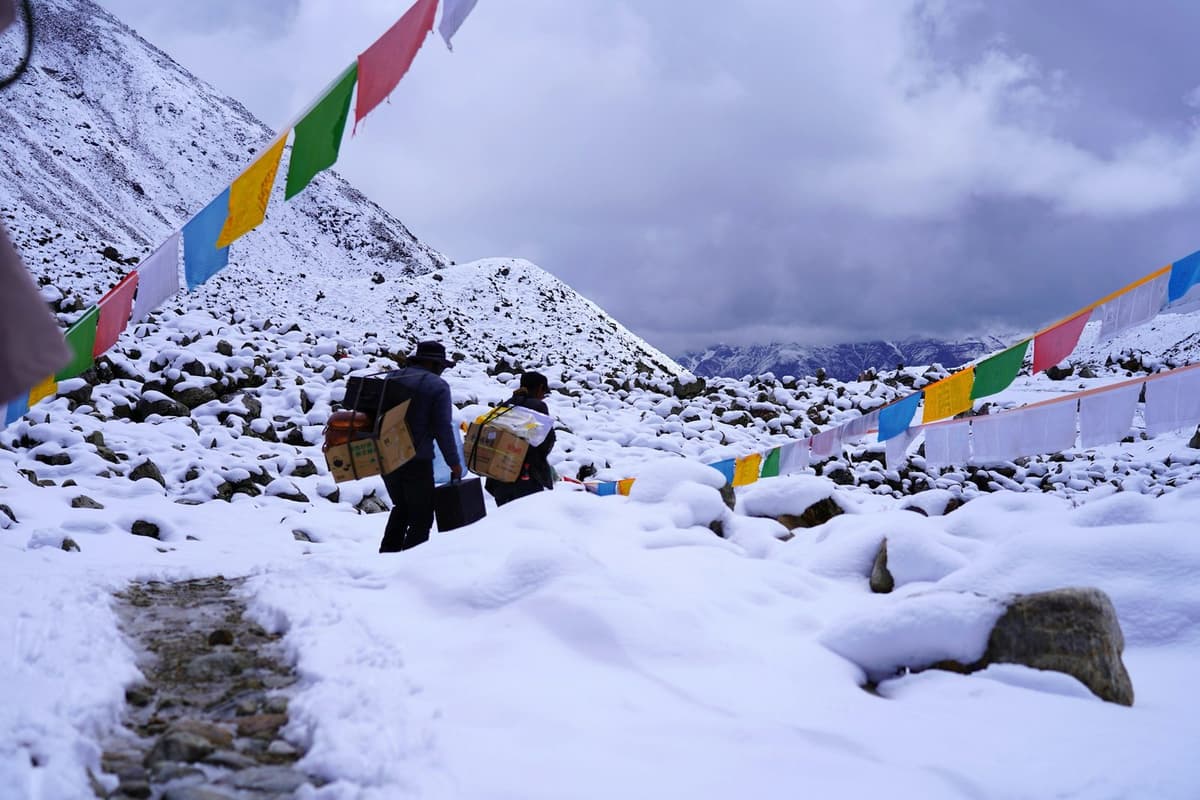
Kalinchowk snow usually comes between December and March, and that is when most visitors come to see it. It is never certain. In the winter of 2024 to 2025, Dolakha had no snow at all by 1 February, and Kalinchowk was bare. Snow can also come late: in 2023 a heavy fall came in March.
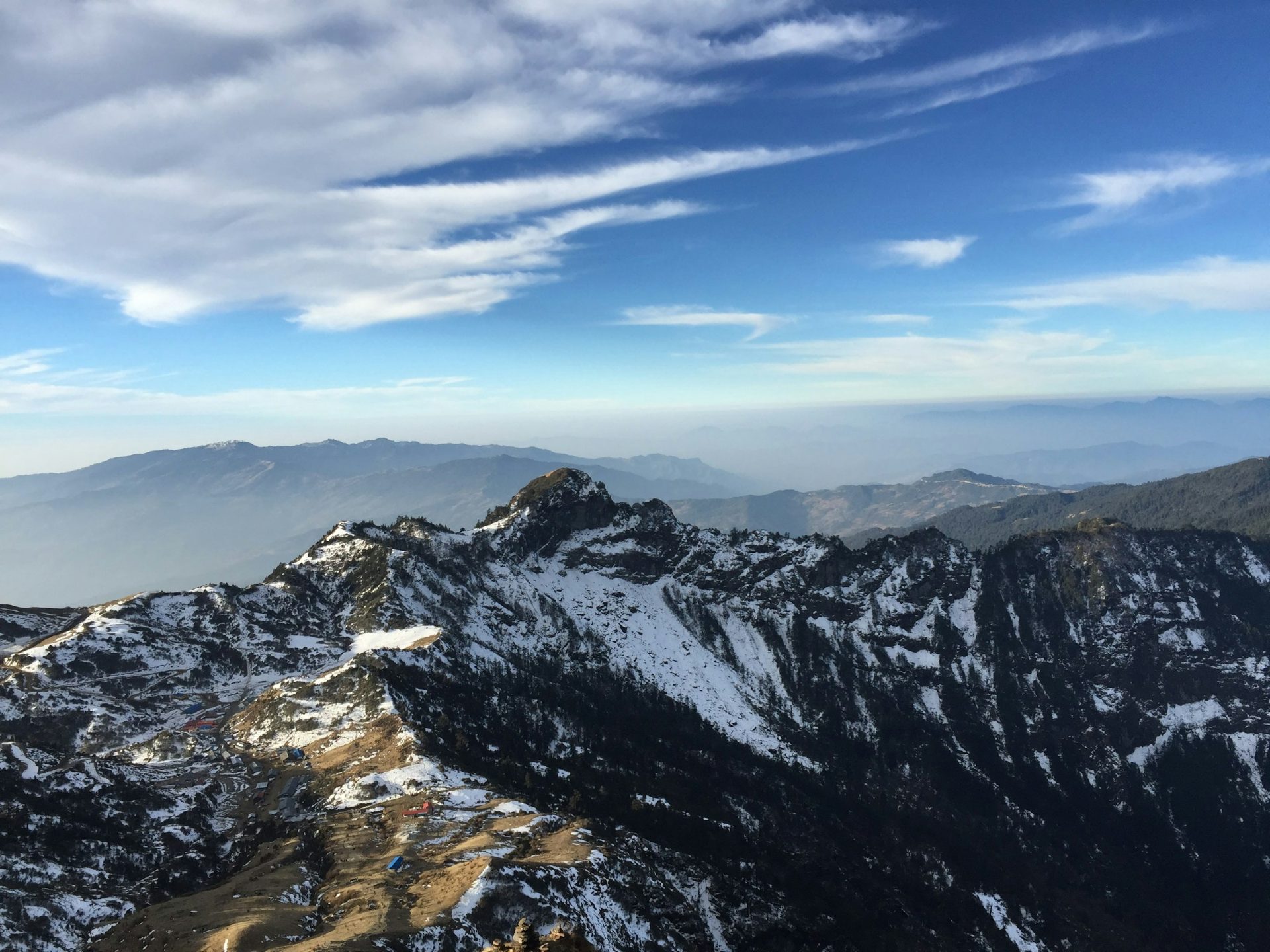
The head of the cable car company described the pattern, and its risk, to The Himalayan Times in March 2023:
"Although many tourists visit Kuri between December and March to enjoy the snowfall and indulge in activities like skiing and snowboarding, the delay in snowfall in the region this year has affected the tourist flow."
Ashok Siwakoti, CEO, Kalinchowk Darshan Ltd, The Himalayan Times, 1 March 2023
In that same weak-snow winter he said weekend visitors had fallen from over 5,000 to just over 2,000. Then, on 20 and 21 March 2023, Kalinchowk had its third snowfall of the year, with more than a foot of snow reported around Kuri.
What this means for planning:
- Keep your dates flexible if snow is the point, and watch the reports.
- Go soon after a fresh fall, and expect company. The Kathmandu Post noted that the area is "generally crowded during weekends and when it is blanketed with thick snow", so a midweek visit after fresh snow is the quieter choice.
- Skiing and snowboarding are offered at Kuri in snow season, according to the cable car company. We have no providers or prices to recommend.
If you are in Nepal in winter and want other ideas for the season, see our guide to Nepal in December.
What the weather is like lower down
We found no weather station at Kuri or Kalinchowk. The nearest with long-term records is Jiri, at 1,877 m, more than 1,300 m below Kuri. Its averages show the pattern only: winters are dry and cold even far lower down. The Nepal Tourism Board notes that average temperatures drop about 6°C for every 1,000 m you climb.
Jiri, 1,877 m, averages for 1991 to 2020. Kalinchowk is far higher and much colder.
| Month | Average daily high (°C) | Average nightly low (°C) | Rain or snow (mm) |
|---|---|---|---|
| October | 21.8 | 9.4 | 73.7 |
| November | 18.5 | 3.6 | 10.6 |
| December | 15.2 | −0.4 | 7.2 |
| January | 14.4 | −1.7 | 17.3 |
| February | 16.5 | 0.7 | 26.3 |
| March | 19.7 | 3.6 | 47.6 |
Is Kalinchowk safe in winter?
The main winter risks at Kalinchowk are slips on icy paths, cold nights in simple lodges, being stuck when snow blocks the road, and altitude. You can manage most of them by preparing well and staying flexible. In February 2019 about 700 people were stranded after sudden snow and brought out by police teams.
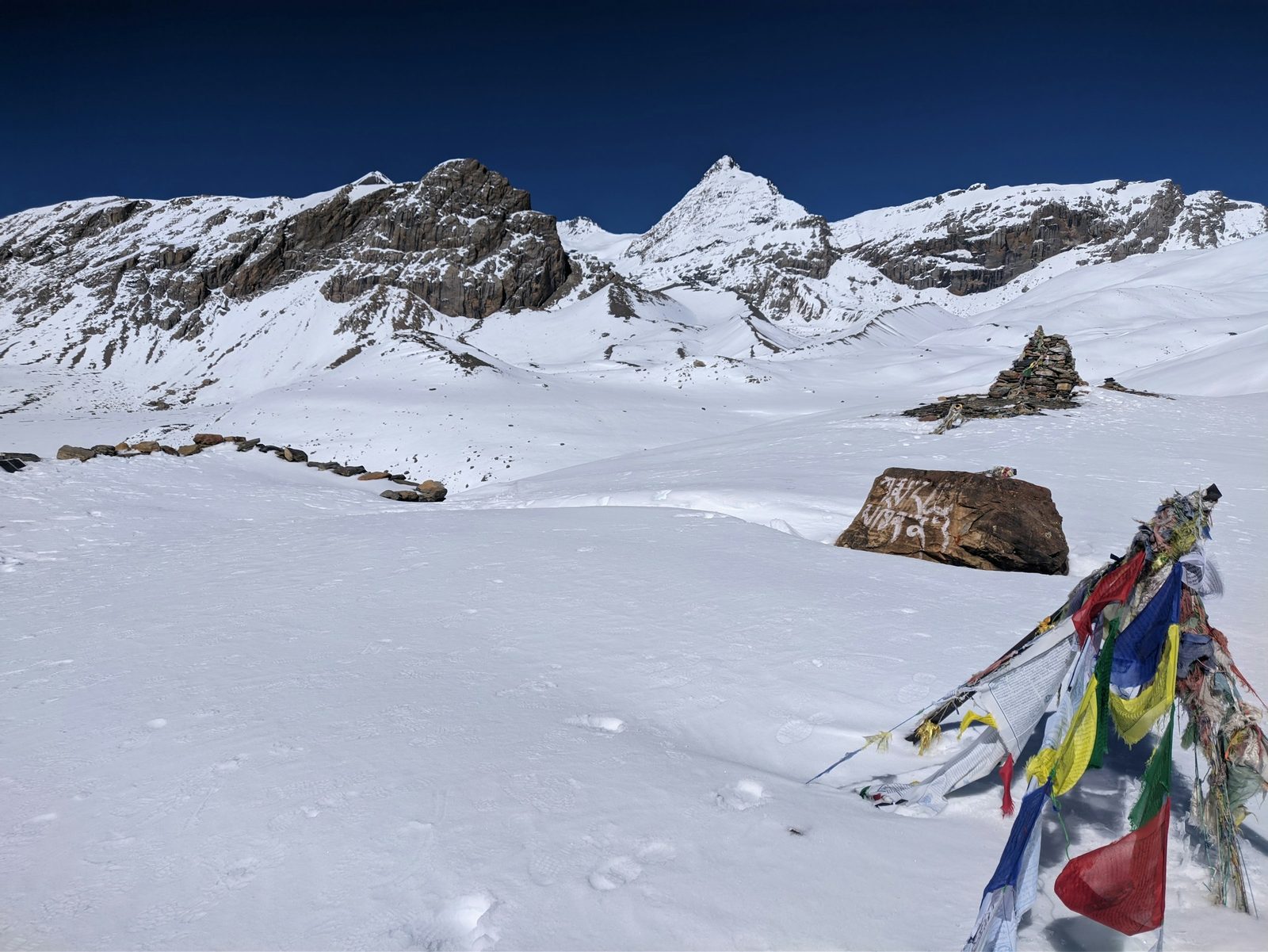
A joint Nepal Police and Armed Police Force team brought them to safety, nearly 120 of them by vehicle; the report mentions no deaths or injuries. It shows how quickly a snow weekend can turn into nights you did not plan for.
Cold: step by step
- Pack for freezing nights. Bring a warm down or synthetic jacket, a fleece, thermal base layers, a warm hat, gloves and thick socks. Lodges at Kuri are simple, and rooms can be cold.
- Wear waterproof boots with good grip. Trainers soak through in snow and slide on ice.
- Keep dry. Change out of damp socks and layers as soon as you are indoors.
- Never sleep with a charcoal, wood or gas heater burning in a closed room. These can give off carbon monoxide, which you cannot smell. If you use a heater in the evening, turn it off and open a window a crack before you sleep.
- Eat hot meals and drink warm fluids.
Ice and snow on foot: step by step
- Use the cable car on icy days if it is running.
- Carry traction aids or walking poles if you plan to walk in snow.
- Walk on fresh snow rather than polished, packed tracks, which are where most slips happen.
- Start down early. Leave the ridge well before dark; temperatures fall fast once the sun goes.
- Turn back if the path is glazed with ice. Coming down an icy slope is harder and more dangerous than going up.
- Keep children close and in waterproof clothing; they get cold much faster than adults.
Snow-blocked roads: step by step
- Check the road before you leave Kathmandu. Ask your lodge in Kuri and check the latest news. On our trip, we check the road before you set off.
- Drive in daylight only. This autumn night travel was suspended on parts of the Araniko Highway.
- Build in a spare day. If heavy snow is forecast, assume you may stay an extra night.
- Carry essentials in the vehicle: water, snacks, a charged power bank, any medicines you take and a warm layer you can reach.
- If snow starts while you are at Kuri, talk to your driver and lodge about leaving early.
- If you are stranded, stay with your vehicle or lodge, keep warm and follow instructions from the police, as visitors did in 2019.
Is altitude sickness a risk at Kalinchowk?
Yes. The CDC says any unacclimatised traveller going to a sleeping altitude of 2,450 m (8,000 ft) or more, and sometimes lower, is at risk of altitude illness. At Kalinchowk you sleep at Kuri, published as 3,200 m, and you get there in a single day from Kathmandu. Take it seriously.
The usual advice is to gain height slowly. Kalinchowk breaks that rule, because the vehicle and cable car take you from about 1,300 m in Kathmandu to Kuri in one day. Some people feel nothing; others get a headache, poor sleep or worse.
Altitude: step by step
- Walk slowly on arrival and on the way up to the temple. Let your breathing set the pace.
- Drink water steadily through the day.
- Avoid alcohol on your first evening at Kuri. It makes symptoms worse and hides them.
- Know the symptoms: headache, nausea or vomiting, unusual tiredness, dizziness and poor sleep.
- Never go higher with symptoms. If you feel unwell at Kuri, skip the temple until you feel better, or take the cable car rather than walking.
- Go down if symptoms get worse. At Kalinchowk that means driving back down towards Charikot. Confusion, stumbling or breathlessness at rest are emergencies: descend at once.
- Ask your doctor before the trip about preventive medicine such as acetazolamide, especially if you have heart or lung conditions, are pregnant, or are travelling with young children or older relatives.
- Garlic soup and hot soups are a comforting local tradition, not a proven cure. Enjoy them, but do not rely on them.
Our guide on how to avoid altitude sickness goes into more detail.
Where do you stay at Kuri?
You stay at Kuri, the small village below the temple and the lower station of the cable car. It has dozens of simple lodges, and when Kuri is full, visitors drop back to Charikot and Dolakha Bazaar for beds and food. Expect basic rooms and cold nights.
Snow weekends bring big crowds. In January 2019 about 10,000 people were reported to have visited Dolakha over one Friday and Saturday, and Kuri's hotels were reported fully booked for a week. Book ahead for snow-season weekends, or go midweek.
Do you need a permit or fee for Kalinchowk?
Kalinchowk lies inside the Gaurishankar Conservation Area, whose entry fee the Nepal Tourism Board lists as NPR 3,000 for foreign visitors and NPR 1,000 for SAARC nationals, per person per entry. We could not confirm whether this fee is collected from Kalinchowk visitors. Check locally before you go.
Nepalis pay NPR 100, and children under 10 enter free. What we cannot find is any official page, notice or press report saying it is charged at Kuri or on the Charikot to Kuri road. Before our travellers set off, we check whether it is being collected for Kalinchowk visitors and arrange it if it is.
Indian nationals count as SAARC nationals for conservation-area fees. Your Nepal visa and international flights are your own arrangement; Indian nationals need no visa, and the official information is on the Nepal Tourism Board visa page.
What else is there to see near Kalinchowk?
The best add-ons near Kalinchowk are the Dolakha Bhimsen temple in Dolakha Bazaar, the snowy viewpoint at Kharidhunga on the way up, and Palanchowk Bhagwati in Kavre on the drive from Kathmandu. On a clear day the Kalinchowk ridge itself looks out to the Rolwaling and Langtang ranges.
- Dolakha Bhimsen (Bhimeshwor). In Dolakha Bazaar, about 4 km east of Charikot. The Nepal Tourism Board calls it a famous Hindu temple with a strong following among traders, and the Kathmandu Post reports a local belief that political change or disaster follows if the statue sweats.
- Kharidhunga. On the road before Charikot, it gets winter snow of its own and looks out to Rolwaling and Langtang.
- Sailung. The area's other winter snow destination; the Kathmandu Post ranked Kalinchowk first and Sailung second.
- The mountain view. Mount Gaurishankar and the Rolwaling range stand to the north of Dolakha.
Frequently asked questions
When is the best time to see snow at Kalinchowk?
The best chance of snow at Kalinchowk is between December and March, when most visitors come for it. It is never certain: by 1 February 2025 Dolakha had had no snow that winter, while in 2023 a heavy fall came as late as 20 to 21 March. Keep your dates flexible.
Can I visit Kalinchowk as a day trip from Kathmandu?
No, not comfortably. On our trip the drive to Kuri takes about six to seven hours each way, so a same-day return would mean most of the day in a vehicle and driving down in the dark. Plan at least one night at Kuri, which also gives you an unhurried morning at the temple.
How long does it take to walk from Kuri to Kalinchowk temple?
About an hour uphill, and longer in snow or ice. The cable car company says an hour to an hour and a half. Walk slowly, because you are already well above the height where altitude can affect you. If you feel unwell, take the cable car or rest at Kuri rather than pushing on.
Is the Kalinchowk cable car open, and can I book tickets in advance?
The cable car has run since November 2018, was closed after vandalism in September 2025 and partly restarted later that month, and we could not confirm it is operating this week, so phone the company or ask your lodge before you go. The company says there is no advance booking for now: you buy tickets at Kuri, and they are valid for seven days from purchase.
Is altitude sickness a risk at Kalinchowk?
Yes. You sleep at Kuri, published as 3,200 m, after a single day's drive from Kathmandu, and the CDC says the risk starts from a sleeping altitude of 2,450 m. Walk slowly, drink water, avoid alcohol on the first night, and never go higher with a headache or nausea. If symptoms worsen, drive back down.
Are there hotels at Kuri, Kalinchowk?
Yes. Kuri has dozens of simple lodges, and when it fills up on snow weekends, visitors drop back to Charikot and Dolakha Bazaar. Rooms are basic and nights are cold, so bring warm layers. On weekends after fresh snow, book ahead; in January 2019 Kuri's hotels were reported fully booked for a week.
Planning your Kalinchowk trip
Our Kalinchowk and Palanchowk Bhagwati tour covers the drive, the night at Kuri and both temples, and we check the cable car, road and any conservation-area fee before you set off.
If the altitude, the long drive or the uncertain snow put you off, our guide to hill stations in Nepal has lower, easier places.
Send us your dates and group size on WhatsApp or through our enquiry form, and we will tell you honestly whether Kalinchowk is the right trip for you.