
by gomayu
Search Tours or Places

Dakshinkali Temple, Kathmandu: Visiting and What to Know

19 min read Posted 06 Nov 2026Updated 02 Nov 2026
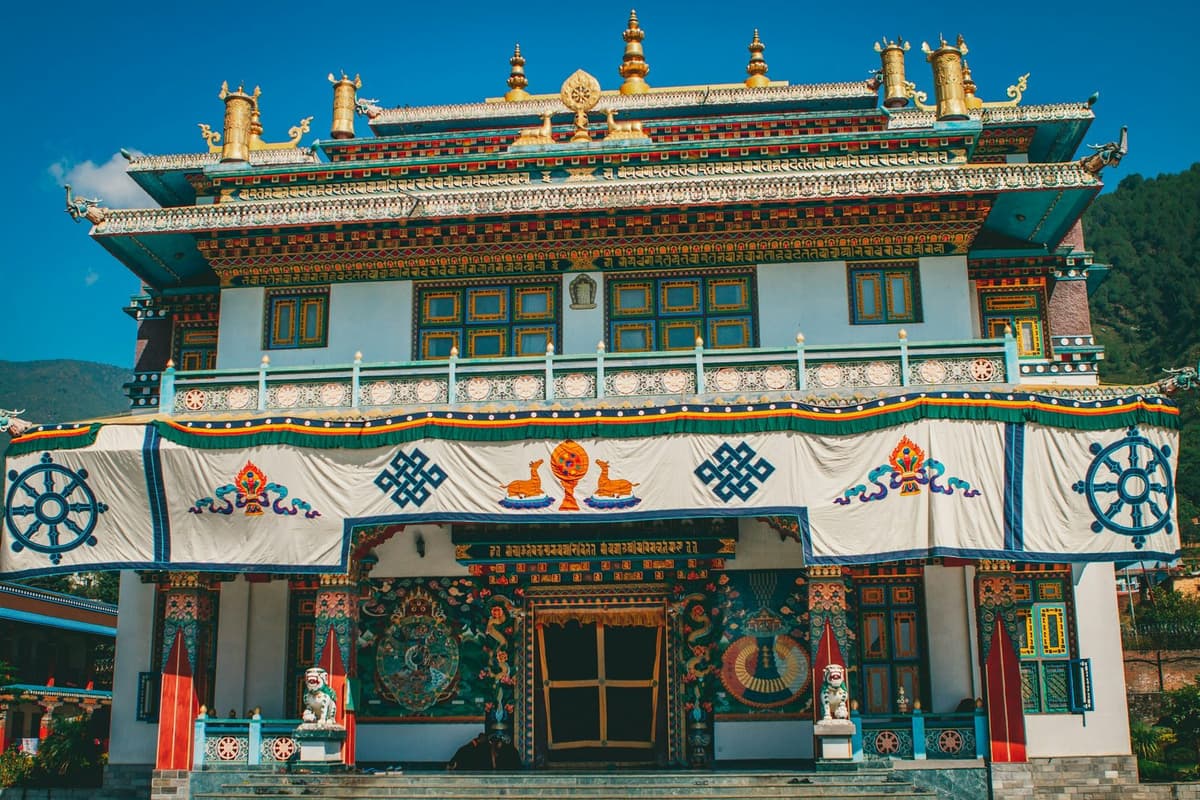
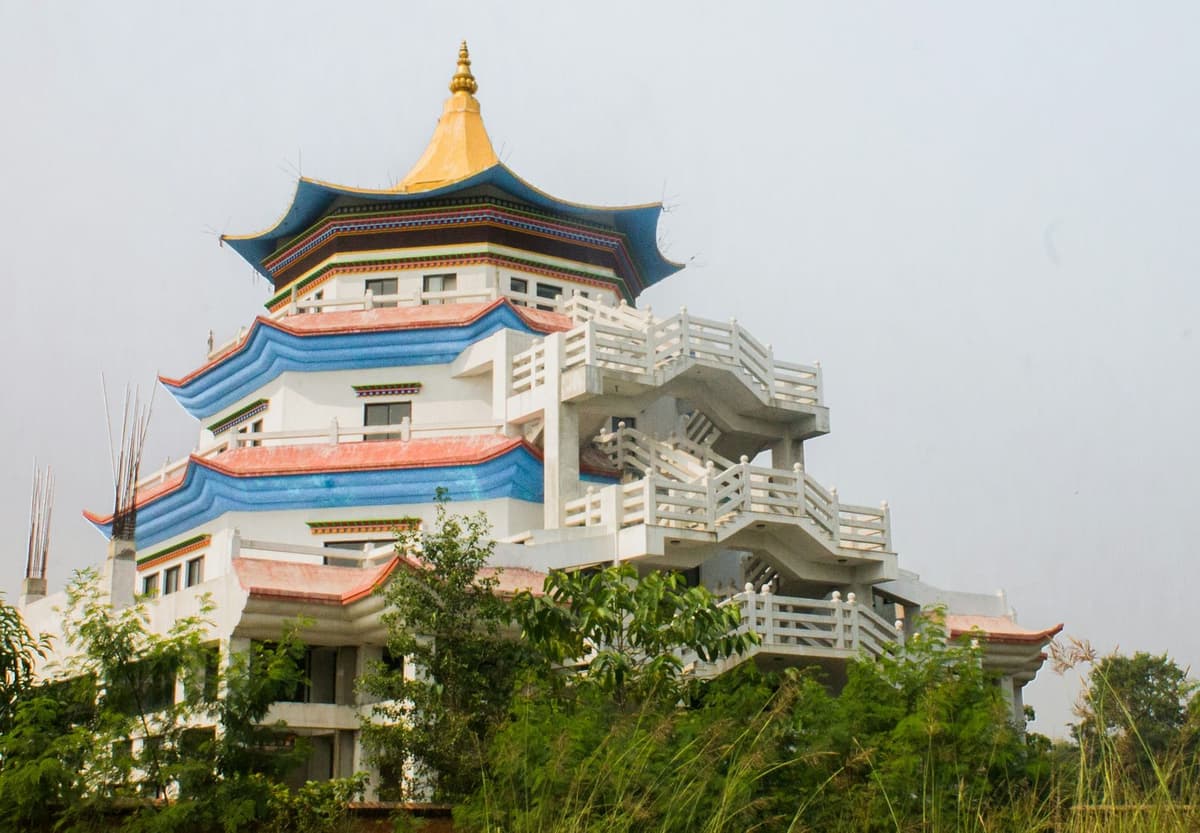
Painted facade of a Tibetan Buddhist monastery at Pharping, near Dakshinkali Temple

The road south from Kathmandu runs past Chobhar and Taudaha lake, then climbs to Pharping on the valley rim. Just beyond the village, a long, steep flight of steps drops past stalls into a wooded ravine where two holy streams meet, and a black image of Kali, dressed in gold and silver, stands under an open-sided roof.

By Uncover Nepal Team · Checked by our Kathmandu travel team · Last checked 2 November 2026

On a Dakshinkali Temple Kathmandu day trip, you travel about 22 km south to Kali's shrine, about 1 km beyond Pharping. Anyone can visit the temple area; the inner courtyard is for Hindu worshippers. Tuesdays, Saturdays and Dashain bring crowds and ritual animal sacrifices. Among the places to visit in Kathmandu, this is one to time by the weekday.

Key facts

Where
Southern end of the Kathmandu Valley, in ward 6 of Dakshinkali Municipality, Kathmandu district (NTB; Kafle 2022 (2 Nov 2026))
Distance
About 22 km south of Kathmandu (NTB (2 Nov 2026))
Nearest town
About 1 km beyond Pharping, which lies 18 km south of Kathmandu (NTB; Kafle 2022 (2 Nov 2026))
Dedicated to
The goddess Kali, in her fierce form; the name means "Kali of the south" (NTB (2 Nov 2026))
Shakti Peeth?
NTB lists it among the best-known Shakti Peeths, but its Shakti Peeth guide says it is not a canonical one (NTB (2 Nov 2026))
Busiest times
Tuesdays and Saturdays, when ritual animal sacrifices are performed, and Dashain (NTB (2 Nov 2026))
Who can go in
Anyone can visit the temple area; the inner courtyard is for Hindu worshippers, by practice, not a posted rule (Kafle 2022; Lonely Planet France (2 Nov 2026))
Entry ticket
Not on NTB's heritage-site fee list; we found no ticket (NTB fee list (2 Nov 2026))
Hours
No official hours; a 2022 study recorded a daily closure, 11:30 am to 1 pm (Kafle 2022 (2 Nov 2026))
Getting there
Tourist bus, taxi or public bus; local buses to Pharping from Ratna Park and Lagankhel (NTB; Lonely Planet, Nov 2025 (2 Nov 2026))

In this guide

  • What is Dakshinkali Temple?
  • What happens at Dakshinkali, and on which days?
  • How can you visit if you would rather not see a sacrifice?
  • Can non-Hindus enter Dakshinkali Temple?
  • Dakshinkali Temple Kathmandu: how far is it and how do you get there?
  • Is there an entry fee or a set opening time?
  • When is the best time to visit Dakshinkali?
  • How should you behave and take photos at Dakshinkali?
  • What should you bring?
  • What else is near Dakshinkali?
  • Frequently asked questions
  • Plan your visit

What is Dakshinkali Temple?

Dakshinkali is a temple to the goddess Kali, worshipped here in her fierce form, at the southern end of the Kathmandu Valley. The name means "Kali of the south". Kali is regarded as a form of Parvati, the wife of Shiva. Families often come here to give thanks after a wish has been granted.

Is Dakshinkali a Shakti Peeth?

It depends which Nepal Tourism Board (NTB) page you read. NTB's Dakshinkali page calls it one of the most famous Shakti Peeths, or goddess shrines, in Kathmandu. NTB's newer guide to Shakti Peeths is more careful:

"The Dakshinkali Temple lies about 22 kilometers south of Kathmandu, in Pharping, and is dedicated to the fierce goddess Kali. While not a canonical Shakti Peeth, it holds immense importance in Nepalese Shakta practice. The temple is famous for animal sacrifices, which are performed especially on Tuesdays, Saturdays, and during the Dashain festival."

Nepal Tourism Board, Shakti Peeths and Shakti shrines of Nepal (accessed November 2026)

So both positions come from the same official body: one NTB page counts it among the valley's best-known Shakti Peeths, another notes it is not a canonical one. For devotees, its importance is not in doubt. If your trip is a pilgrimage, our Nepal pilgrimage guide covers sacred sites across the country.

History and legend

The written history is thin. A peer-reviewed 2022 study of the temple puts it this way:

"Although Kali Devi has been established and worshiped in this place since ancient period, the importance of this place increased after the reign of the king Pratap Malla."

Dol Raj Kafle, Patan Prospective Journal, December 2022

Local legend, as retold in the Austria-Forum online encyclopedia, fills in the rest. The 17th-century Kathmandu king Pratap Malla is said to have dreamed of building a temple to Kali, and the temple is said to stand on the ruins of an earlier shrine. We found no record that confirms either story, so read them as legend.

What the shrine looks like

The temple stands where two holy streams meet in a wooded ravine. A priest interviewed for the 2022 study named them as the Poornawati and the Udharwati. From the road and the stalls, a long, steep flight of steps leads down to the temple.

The shrine itself is open-sided: a roof held up on four metal pillars and chains, with no enclosing walls. The image of the goddess is black, dressed in gold and silver. Images of Ganesh and the Ashtamatrika mother goddesses stand beside her, and ten stone lions, five on each side, and two large bells mark the entrance.

Who looks after the temple

The main priest comes from the Karmacharya family, and Maharjan families serve as Bhandare, a second order of priests who are also regarded as the temple's guardians. The Dakshinkali Area Development Committee looks after about 56 hectares around the temple; management passed to Dakshinkali Municipality, which is named after the temple, on 2 October 2020.

What happens at Dakshinkali, and on which days?

Hindus come to worship Kali, and ritual animal sacrifice is part of that worship. NTB says the temple is most crowded on Tuesdays and Saturdays, when sacrifices are performed. Sacrifices are also made during the Dashain festival, the temple's busiest time. Many devotees bring no animal at all and offer flowers, fruit and butter lamps instead.

We explain this plainly because knowing what to expect lets you choose your day. We do not describe the ritual itself, and we do not judge it. It is a living religious practice, and many of the families you see are giving thanks for a wish granted.

Why animals are offered here

For many families, an offering at Dakshinkali is a vow fulfilled. The 2022 study records that people offer a sacrifice after a wish has been granted. Lonely Planet names male goats and cockerels as the main animals offered, and the 2022 study also lists buffalo, sheep and ducks. NTB notes that "Nepal's Shakti Peeths never accept female animals for sacrifice".

Offerings without an animal

Many devotees bring no animal. They offer flowers, fruit, coconuts, rice and butter lamps, and receive tika, the blessing mark on the forehead. A Republica report on goddess shrines at Dashain's Maha Ashtami noted that people who did not sacrifice animals offered vegetables and fruit in their place. You do not need to make an offering to visit.

Dashain and the larger offerings

Dashain is the temple's busiest time. The 2022 study records thousands of visitors over the nine days of Dashain, from Ghatasthapana to Navami. In 2026 Kathmandu police listed Dakshinkali among the sensitive religious sites given extra security over Dashain, Tihar and Chhath.

Dashain 2026 is over: the Tika day, Vijaya Dashami, was 21 October 2026. Dashain falls in September or October, and each year the Nepal Calendar Determination Committee fixes the festival's auspicious times. Ask us for the 2027 dates once they are officially published.

The same study also records a larger ritual offering twice a year, on set lunar dates in the months of Baishakh and Bhadra. If you would rather not see sacrifices, ask us about those dates before you fix your day.

How can you visit if you would rather not see a sacrifice?

Choose the day first. Avoid Tuesdays, Saturdays and Dashain, when sacrifices are performed and the crowds are largest. On the other days the temple is quieter, though we cannot promise you will see no offering at all. Once there, keep back from the terraces where onlookers watch the courtyard.

We have no reliable source for the time of day when sacrifices take place, so we do not give one. The day of the week matters far more. Here is how we suggest you plan it, step by step:

  1. Pick a quieter day. Sunday, Monday, Wednesday, Thursday or Friday, outside Dashain. Ask us about the two larger offering days in Baishakh and Bhadra.
  2. Avoid the midday break. A 2022 study recorded a daily closure from 11:30 am to 1 pm for cleaning and worship. Hours can change, so check locally. If you arrive then, see Pharping first.
  3. Decide at the top of the steps. The steps lead down past stalls to the temple. You can turn back at any point and spend the time at Pharping's caves and temples instead.
  4. Do not take the viewing spot. Non-Hindus usually watch from the terraces and steps above the courtyard. If you do not want to see, stay higher up the steps rather than at the edge of the terraces.
  5. If a sacrifice begins while you are there, look away quietly towards the trees, step back from the edge and wait or walk slowly back up. Keep your face neutral and say nothing. No one expects a visitor to watch.
  6. Do not photograph or film, whatever you see.
  7. If you feel unwell, sit down away from the flow of people, drink some water and take the climb back up slowly.
  8. If you are travelling with children, tell them what the temple is for before you go, and decide together whether to go down the steps.

If you travel with us, tell us and we will plan around it.

Can non-Hindus enter Dakshinkali Temple?

Yes, as far as the temple area. Visitors of any faith can walk down to Dakshinkali and see the shrine. The inner courtyard around the shrine is for Hindu worshippers, and others watch from the terraces and steps above. This is practice, not a posted rule we could find, so follow what temple staff tell you on the day.

The sources fit together. The 2022 study says the area does not restrict visitors of other religions, while Lonely Planet's French-language guide and the Austria-Forum online encyclopedia describe the inner courtyard as for Hindus only.

Compare Pashupatinath in Kathmandu, where non-Hindus may not enter the main temple but can walk the ghats and terraces and watch the evening aarti. Our Pashupatinath Temple guide covers it. We found no rule that requires a guide to visit Dakshinkali.

Dakshinkali Temple Kathmandu: how far is it and how do you get there?

Dakshinkali is about 22 km south of Kathmandu, about 1 km beyond Pharping, which NTB places 18 km south of the city. NTB says tourist buses, taxis and public transport all reach the shrine. Published travel times run from about 45 minutes by taxi to about 90 minutes by local bus, and traffic can add more.

Option Published travel time Notes
Taxi or private car About 45 minutes (Kafle 2022, citing a 2020 source) Quicker than the bus; agree the fare and waiting time first
Local bus About 90 minutes (Lonely Planet, 19 Nov 2025) Buses to Pharping from Ratna Park in Kathmandu and Lagankhel in Patan
Tourist bus or tour Not published NTB lists tourist buses among the ways to reach the shrine

Treat the taxi figure as a clear-road time. We give no fares or bus frequency, because the figures we found were too old to trust.

What you pass on the way

The road runs south past Chobhar and Taudaha lake before it climbs to Pharping. Shesh Narayan is in Pharping, on the way to Dakshinkali, so it is an easy stop on the way down or back.

Is there an entry fee or a set opening time?

We could not confirm either. Dakshinkali is not on the Nepal Tourism Board's heritage-site entry-fee list, and we found no entry ticket. We found no official opening hours either. A 2022 study recorded a daily closure from 11:30 am to 1 pm for cleaning and worship. Treat that as a guide and check locally.

Small local charges, such as parking and shoe-keeping, are collected by the area committee. We found no published amounts, so we give none; carry some small Nepali rupee notes. The committee's income also comes from picnic spots and stalls around the temple.

The midday closure comes from a priest's account in the 2022 study, not a posted notice, and we found no source for opening or closing times. If the temple or municipality publishes hours or a fee, we will update this page.

When is the best time to visit Dakshinkali?

It depends on what you want to see. To see the temple at its most devout and crowded, go on a Tuesday or a Saturday, or during Dashain. For a calmer visit, choose another day outside Dashain. On any day, avoid the midday closure recorded in 2022, from 11:30 am to 1 pm.

When What to expect Suits
Tuesday Crowds and ritual animal sacrifices Seeing the temple's devotional life
Saturday Crowds and ritual animal sacrifices; Lonely Planet's French edition calls Saturday the main day Seeing the temple's devotional life
Sunday, Monday, Wednesday, Thursday, Friday Quieter than Tuesdays and Saturdays First visits, families, anyone who would rather not see a sacrifice
Dashain (September or October) Busiest time, with sacrifices; extra police in 2026 Devotees; expect crowds
Ashadh and Shrawan (roughly mid-June to mid-August) More Indian pilgrims Pilgrims who like company
Every day, 11:30 am to 1 pm (2022 record) Shrine closed for cleaning and worship Use the time to see Pharping
Monsoon (roughly mid-June to early October) Wet, slippery steps Anyone with grippy shoes and patience

Local festivals

The 2022 study lists local festivals including the Harishankar Jatra, held on the last Saturday of the month of Bhadra (August to September), as well as Gai Jatra and the Bajrayogini Jatra. At Shesh Narayan, a large fair is held on Ekadashi in the months of Ashadh and Kartik. Dates move each year with the Nepali calendar, so ask us for the year you travel.

How should you behave and take photos at Dakshinkali?

Treat Dakshinkali as a place of worship first and a sight second. Dress modestly, keep your voice low, give way to families carrying offerings, stay out of the inner courtyard unless you are Hindu, and do not photograph the sacrifices or families making offerings. We found no posted photography rule; this is our advice.

Step by step:

  1. Dress. Cover your shoulders and knees.
  2. Shoes. There is a shoe-keeping service at the temple, so wear shoes you can slip off and on easily, and follow what local families do.
  3. On the steps. Keep to one side and let people carrying offerings pass.
  4. At the bottom. Unless you are Hindu, stay on the terraces and steps above the courtyard, and follow what temple staff tell you.
  5. Sound. The only music allowed inside the temple area is bhajan, devotional singing. No music from your phone, no loud calls.
  6. Touching. Do not touch the image, the offerings or anything used in worship.
  7. Photos. Take no photos of the sacrifices or of families making offerings, and ask before photographing anyone.
  8. Offerings. You are welcome to offer flowers or fruit, as many devotees do, but you do not have to.

What should you bring?

Bring shoes with good grip, modest clothes, small Nepali rupee notes and water. The long, steep steps are the hardest part of the visit, especially the climb back up, and the small local charges have no published amounts, so carry change.

  • Grippy shoes you can slip off, for the steps and the shoe-keeping area.
  • Clothes that cover shoulders and knees, plus a light layer for the shady ravine.
  • Small rupee notes for parking, shoe-keeping and any offering.
  • Water and a snack for the climb back up.
  • A rain jacket in the monsoon months.
  • Flowers or fruit if you want to make an offering.
  • Hand sanitiser.
  • A plan for Pharping, in case you decide not to go down.

What else is near Dakshinkali?

Plenty, and it is worth building the day around it. Pharping, about 1 km away, has Buddhist caves, monasteries and the Vajrayogini temple. Shesh Narayan is on the way. The Chobhar gorge and Taudaha lake are on the road from Kathmandu. Hattiban is the forested ridge above Pharping.
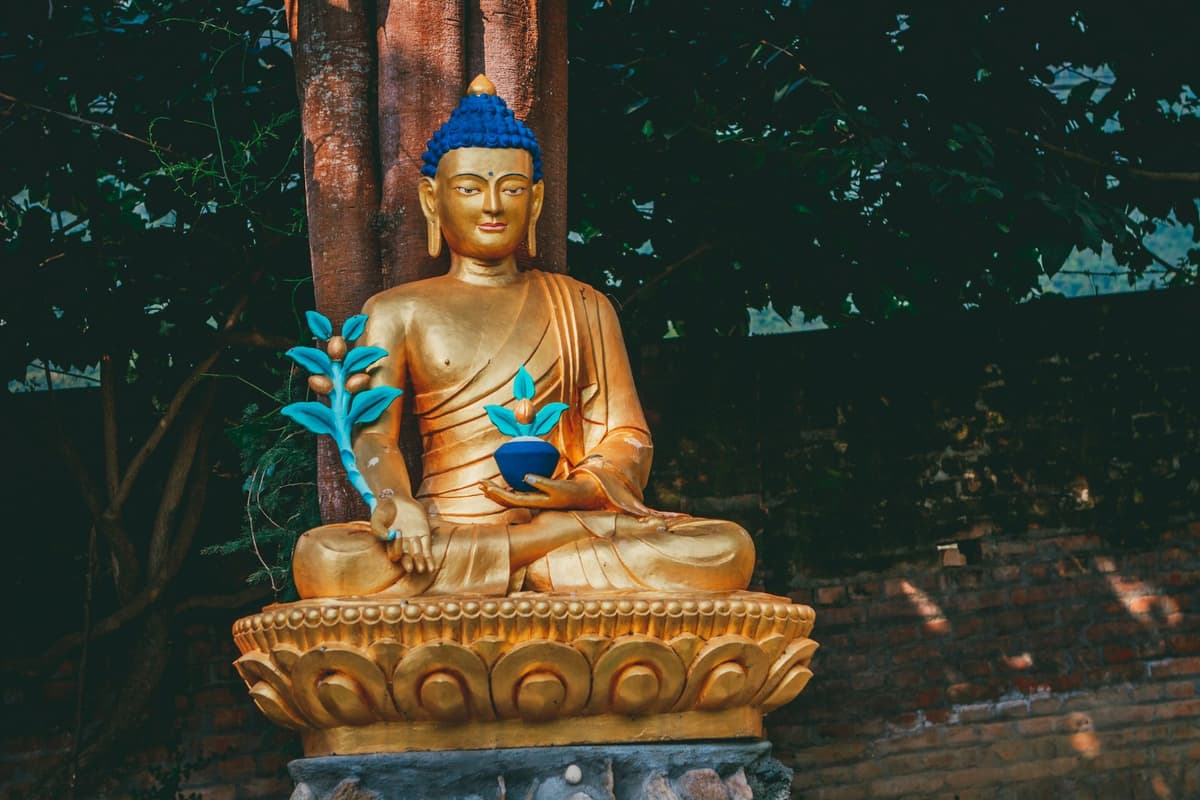
Golden seated Buddha statue under a tree at Pharping, south of Kathmandu
Pharping is a centre of Tibetan Buddhist practice.

Pharping: caves, Vajrayogini and monasteries

Pharping sits on a hilltop on the valley rim, 18 km south of Kathmandu. Its main attraction, says NTB, is a 17th-century temple housing a gilded image of the goddess Bajra Jogini, also written Vajrayogini.
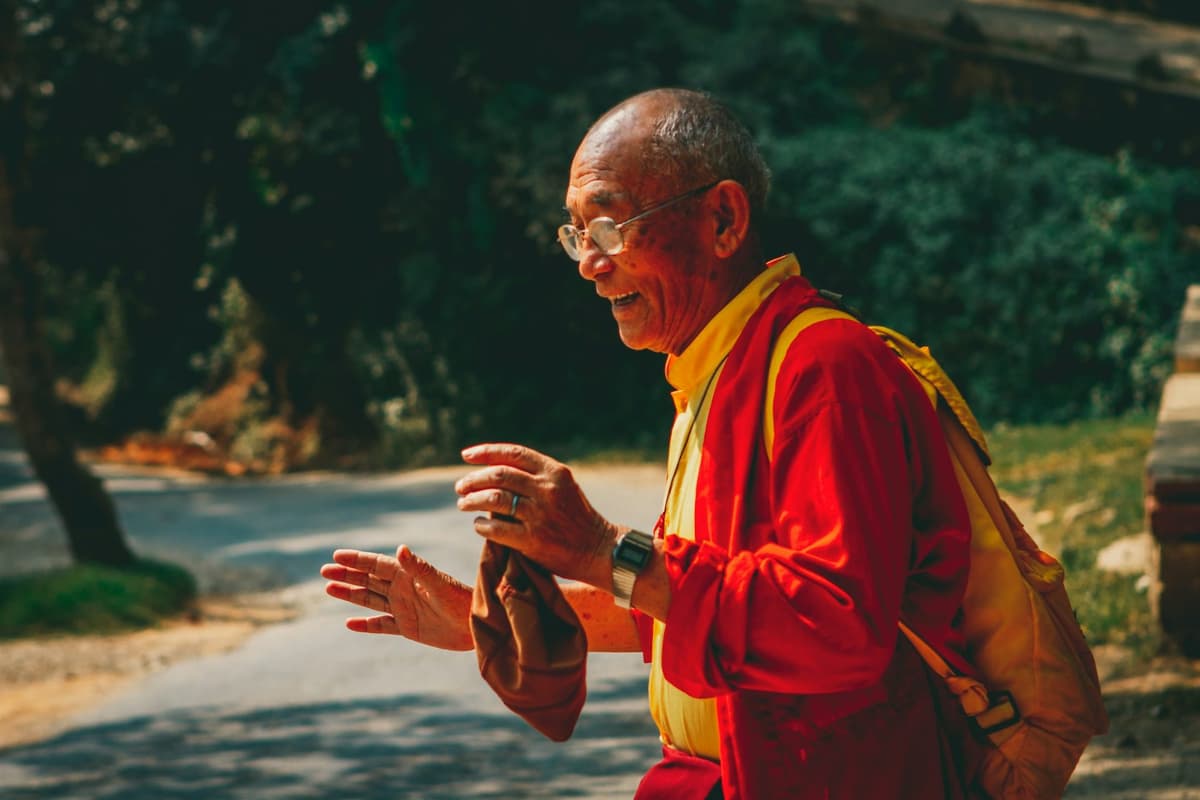
Elderly monk in red robes on a road in Pharping
Monasteries and retreat centres surround Pharping.

NTB also points to a cave with a hand-print of the Buddhist saint Padmasambhava, also known as Guru Rinpoche, on the rock over its entrance. Pharping has two caves linked with Padmasambhava: the Asura Cave, the "upper cave", and the Yanglesho cave below it, the "lower cave". By tradition, Padmasambhava meditated first at Yanglesho, then at the Asura Cave. The Asura Cave area is also linked with Gorakhnath, who is revered by Hindu yogis, and Gorakhnath is listed among the municipality's main religious sites.

Pharping is a centre of Tibetan Buddhist practice, with many monasteries and retreat centres around the town. The same courtesy applies as at the temple: quiet voices, modest clothes, and ask before you photograph anyone at prayer.

Shesh Narayan

Shesh Narayan is in Pharping, on the way to Dakshinkali. It is a Vishnu temple built on a cliff known for its stalactites, and one of the valley's four main Narayan temples; the others are Changu Narayan, Ichangu Narayan and Bishankhu Narayan. The temple also has ponds; a 2016 OnlineKhabar feature counts seven. A large fair is held at the four Narayan temples on Ekadashi in the months of Ashadh and Kartik.

Chobhar gorge, Taudaha and Kirtipur

NTB tells the valley's founding legend here: the bodhisattva Manjushree cut open the side of a mountain with his sword at the place now called Chobhar, and the lake that filled the valley drained out. The road to Dakshinkali runs past the gorge and Taudaha lake.

Kirtipur stands on a ridge about 8 km south-west of the city, about 30 minutes away. From there you can hike to the Chobhar gorge, or go birdwatching at Taudaha lake, south of Kirtipur. For more walks on the valley's edges, see our Kathmandu hiking guide.

Hattiban

If you would rather stay in the area than visit for the day, Hattiban is the forested ridge above Pharping where our climbing and camping trips run.

Putting the day together

Follow the road. Stop at the Chobhar gorge and Taudaha lake on the way out, then Shesh Narayan as you reach Pharping, then Pharping's caves and Vajrayogini temple, and finish at Dakshinkali. If you reach Dakshinkali close to the midday closure recorded in 2022, swap the order and see Pharping first. For other ideas in the valley, see our guide to Kathmandu day trips.

Frequently asked questions

What happens at Dakshinkali, and on which days?

Hindus worship the goddess Kali, and ritual animal sacrifices are performed, especially on Tuesdays and Saturdays, when the temple is most crowded, and during Dashain. The animals are mainly male goats and cockerels, and Nepal's Shakti Peeths never accept female animals. Many devotees offer flowers, fruit and butter lamps instead and receive tika. Other days are quieter.

Can non-Hindus enter Dakshinkali Temple?

Yes, visitors of any faith can visit the temple area and see the shrine. The inner courtyard around the shrine is for Hindu worshippers; others watch from the terraces and steps above. We found no posted official rule, so this is practice rather than law: follow what temple staff tell you on the day.

How far is Dakshinkali from Kathmandu?

Dakshinkali is about 22 km south of Kathmandu, about 1 km beyond the village of Pharping. Published travel times run from about 45 minutes by taxi to about 90 minutes by local bus, with traffic able to add more. Local buses to Pharping leave from Ratna Park in Kathmandu and Lagankhel in Patan.

Is there an entry fee at Dakshinkali Temple?

We found no entry ticket. Dakshinkali is not on the Nepal Tourism Board's heritage-site entry-fee list. The area committee does collect small local charges, such as parking and shoe-keeping, but we found no published amounts, so carry a few small rupee notes. We will update this page if a fee is published.

What is the best day to visit Dakshinkali?

If you would rather not see a sacrifice, go on a Sunday, Monday, Wednesday, Thursday or Friday outside Dashain. Sacrifices and crowds peak on Tuesdays, Saturdays and at Dashain, so go then to see the temple's devotional life at its fullest. On any day, avoid the midday closure a 2022 study recorded, from 11:30 am to 1 pm.

Can you take photos at Dakshinkali Temple?

We found no posted official photography rule at Dakshinkali. Our advice is simple: take no photos or video of the sacrifices or of families making offerings, and ask before you photograph anyone. If anyone objects to any photo, put the camera away.

Plan your visit

Dakshinkali fits easily into a day south of the city with Pharping, Shesh Narayan and the Chobhar gorge. Choose your day with care, and check the road before you set off.

Our Hattiban climbing and sound-healing retreat is based on the ridge above Pharping and includes a visit to the temple, and our off-route Kathmandu Valley tour also stops at Dakshinkali. If you would rather not see a sacrifice, tell us and we will plan around it.

Ask us on WhatsApp or through the enquiry form, and tell us your dates. For the rest of the valley, start with our guide to the places to visit in Kathmandu.
Tags
DakshinkaliPharpingKathmandu ValleyHindu templesKathmandu day tripsDashain
Share
U
Uncover Nepal Team
Writer at Uncover Nepal
More in Temples & cultureSee all Temples & culture

Dakshinkali Temple, Kathmandu: Visiting and What to Know

19 min read Posted 06 Nov 2026Updated 02 Nov 2026
Painted facade of a Tibetan Buddhist monastery at Pharping, near Dakshinkali Temple

The road south from Kathmandu runs past Chobhar and Taudaha lake, then climbs to Pharping on the valley rim. Just beyond the village, a long, steep flight of steps drops past stalls into a wooded ravine where two holy streams meet, and a black image of Kali, dressed in gold and silver, stands under an open-sided roof.

By Uncover Nepal Team · Checked by our Kathmandu travel team · Last checked 2 November 2026

On a Dakshinkali Temple Kathmandu day trip, you travel about 22 km south to Kali's shrine, about 1 km beyond Pharping. Anyone can visit the temple area; the inner courtyard is for Hindu worshippers. Tuesdays, Saturdays and Dashain bring crowds and ritual animal sacrifices. Among the places to visit in Kathmandu, this is one to time by the weekday.

Key facts

Where
Southern end of the Kathmandu Valley, in ward 6 of Dakshinkali Municipality, Kathmandu district (NTB; Kafle 2022 (2 Nov 2026))
Distance
About 22 km south of Kathmandu (NTB (2 Nov 2026))
Nearest town
About 1 km beyond Pharping, which lies 18 km south of Kathmandu (NTB; Kafle 2022 (2 Nov 2026))
Dedicated to
The goddess Kali, in her fierce form; the name means "Kali of the south" (NTB (2 Nov 2026))
Shakti Peeth?
NTB lists it among the best-known Shakti Peeths, but its Shakti Peeth guide says it is not a canonical one (NTB (2 Nov 2026))
Busiest times
Tuesdays and Saturdays, when ritual animal sacrifices are performed, and Dashain (NTB (2 Nov 2026))
Who can go in
Anyone can visit the temple area; the inner courtyard is for Hindu worshippers, by practice, not a posted rule (Kafle 2022; Lonely Planet France (2 Nov 2026))
Entry ticket
Not on NTB's heritage-site fee list; we found no ticket (NTB fee list (2 Nov 2026))
Hours
No official hours; a 2022 study recorded a daily closure, 11:30 am to 1 pm (Kafle 2022 (2 Nov 2026))
Getting there
Tourist bus, taxi or public bus; local buses to Pharping from Ratna Park and Lagankhel (NTB; Lonely Planet, Nov 2025 (2 Nov 2026))

In this guide

  • What is Dakshinkali Temple?
  • What happens at Dakshinkali, and on which days?
  • How can you visit if you would rather not see a sacrifice?
  • Can non-Hindus enter Dakshinkali Temple?
  • Dakshinkali Temple Kathmandu: how far is it and how do you get there?
  • Is there an entry fee or a set opening time?
  • When is the best time to visit Dakshinkali?
  • How should you behave and take photos at Dakshinkali?
  • What should you bring?
  • What else is near Dakshinkali?
  • Frequently asked questions
  • Plan your visit

What is Dakshinkali Temple?

Dakshinkali is a temple to the goddess Kali, worshipped here in her fierce form, at the southern end of the Kathmandu Valley. The name means "Kali of the south". Kali is regarded as a form of Parvati, the wife of Shiva. Families often come here to give thanks after a wish has been granted.

Is Dakshinkali a Shakti Peeth?

It depends which Nepal Tourism Board (NTB) page you read. NTB's Dakshinkali page calls it one of the most famous Shakti Peeths, or goddess shrines, in Kathmandu. NTB's newer guide to Shakti Peeths is more careful:

"The Dakshinkali Temple lies about 22 kilometers south of Kathmandu, in Pharping, and is dedicated to the fierce goddess Kali. While not a canonical Shakti Peeth, it holds immense importance in Nepalese Shakta practice. The temple is famous for animal sacrifices, which are performed especially on Tuesdays, Saturdays, and during the Dashain festival."

Nepal Tourism Board, Shakti Peeths and Shakti shrines of Nepal (accessed November 2026)

So both positions come from the same official body: one NTB page counts it among the valley's best-known Shakti Peeths, another notes it is not a canonical one. For devotees, its importance is not in doubt. If your trip is a pilgrimage, our Nepal pilgrimage guide covers sacred sites across the country.

History and legend

The written history is thin. A peer-reviewed 2022 study of the temple puts it this way:

"Although Kali Devi has been established and worshiped in this place since ancient period, the importance of this place increased after the reign of the king Pratap Malla."

Dol Raj Kafle, Patan Prospective Journal, December 2022

Local legend, as retold in the Austria-Forum online encyclopedia, fills in the rest. The 17th-century Kathmandu king Pratap Malla is said to have dreamed of building a temple to Kali, and the temple is said to stand on the ruins of an earlier shrine. We found no record that confirms either story, so read them as legend.

What the shrine looks like

The temple stands where two holy streams meet in a wooded ravine. A priest interviewed for the 2022 study named them as the Poornawati and the Udharwati. From the road and the stalls, a long, steep flight of steps leads down to the temple.

The shrine itself is open-sided: a roof held up on four metal pillars and chains, with no enclosing walls. The image of the goddess is black, dressed in gold and silver. Images of Ganesh and the Ashtamatrika mother goddesses stand beside her, and ten stone lions, five on each side, and two large bells mark the entrance.

Who looks after the temple

The main priest comes from the Karmacharya family, and Maharjan families serve as Bhandare, a second order of priests who are also regarded as the temple's guardians. The Dakshinkali Area Development Committee looks after about 56 hectares around the temple; management passed to Dakshinkali Municipality, which is named after the temple, on 2 October 2020.

What happens at Dakshinkali, and on which days?

Hindus come to worship Kali, and ritual animal sacrifice is part of that worship. NTB says the temple is most crowded on Tuesdays and Saturdays, when sacrifices are performed. Sacrifices are also made during the Dashain festival, the temple's busiest time. Many devotees bring no animal at all and offer flowers, fruit and butter lamps instead.

We explain this plainly because knowing what to expect lets you choose your day. We do not describe the ritual itself, and we do not judge it. It is a living religious practice, and many of the families you see are giving thanks for a wish granted.

Why animals are offered here

For many families, an offering at Dakshinkali is a vow fulfilled. The 2022 study records that people offer a sacrifice after a wish has been granted. Lonely Planet names male goats and cockerels as the main animals offered, and the 2022 study also lists buffalo, sheep and ducks. NTB notes that "Nepal's Shakti Peeths never accept female animals for sacrifice".

Offerings without an animal

Many devotees bring no animal. They offer flowers, fruit, coconuts, rice and butter lamps, and receive tika, the blessing mark on the forehead. A Republica report on goddess shrines at Dashain's Maha Ashtami noted that people who did not sacrifice animals offered vegetables and fruit in their place. You do not need to make an offering to visit.

Dashain and the larger offerings

Dashain is the temple's busiest time. The 2022 study records thousands of visitors over the nine days of Dashain, from Ghatasthapana to Navami. In 2026 Kathmandu police listed Dakshinkali among the sensitive religious sites given extra security over Dashain, Tihar and Chhath.

Dashain 2026 is over: the Tika day, Vijaya Dashami, was 21 October 2026. Dashain falls in September or October, and each year the Nepal Calendar Determination Committee fixes the festival's auspicious times. Ask us for the 2027 dates once they are officially published.

The same study also records a larger ritual offering twice a year, on set lunar dates in the months of Baishakh and Bhadra. If you would rather not see sacrifices, ask us about those dates before you fix your day.

How can you visit if you would rather not see a sacrifice?

Choose the day first. Avoid Tuesdays, Saturdays and Dashain, when sacrifices are performed and the crowds are largest. On the other days the temple is quieter, though we cannot promise you will see no offering at all. Once there, keep back from the terraces where onlookers watch the courtyard.

We have no reliable source for the time of day when sacrifices take place, so we do not give one. The day of the week matters far more. Here is how we suggest you plan it, step by step:

  1. Pick a quieter day. Sunday, Monday, Wednesday, Thursday or Friday, outside Dashain. Ask us about the two larger offering days in Baishakh and Bhadra.
  2. Avoid the midday break. A 2022 study recorded a daily closure from 11:30 am to 1 pm for cleaning and worship. Hours can change, so check locally. If you arrive then, see Pharping first.
  3. Decide at the top of the steps. The steps lead down past stalls to the temple. You can turn back at any point and spend the time at Pharping's caves and temples instead.
  4. Do not take the viewing spot. Non-Hindus usually watch from the terraces and steps above the courtyard. If you do not want to see, stay higher up the steps rather than at the edge of the terraces.
  5. If a sacrifice begins while you are there, look away quietly towards the trees, step back from the edge and wait or walk slowly back up. Keep your face neutral and say nothing. No one expects a visitor to watch.
  6. Do not photograph or film, whatever you see.
  7. If you feel unwell, sit down away from the flow of people, drink some water and take the climb back up slowly.
  8. If you are travelling with children, tell them what the temple is for before you go, and decide together whether to go down the steps.

If you travel with us, tell us and we will plan around it.

Can non-Hindus enter Dakshinkali Temple?

Yes, as far as the temple area. Visitors of any faith can walk down to Dakshinkali and see the shrine. The inner courtyard around the shrine is for Hindu worshippers, and others watch from the terraces and steps above. This is practice, not a posted rule we could find, so follow what temple staff tell you on the day.

The sources fit together. The 2022 study says the area does not restrict visitors of other religions, while Lonely Planet's French-language guide and the Austria-Forum online encyclopedia describe the inner courtyard as for Hindus only.

Compare Pashupatinath in Kathmandu, where non-Hindus may not enter the main temple but can walk the ghats and terraces and watch the evening aarti. Our Pashupatinath Temple guide covers it. We found no rule that requires a guide to visit Dakshinkali.

Dakshinkali Temple Kathmandu: how far is it and how do you get there?

Dakshinkali is about 22 km south of Kathmandu, about 1 km beyond Pharping, which NTB places 18 km south of the city. NTB says tourist buses, taxis and public transport all reach the shrine. Published travel times run from about 45 minutes by taxi to about 90 minutes by local bus, and traffic can add more.

Option Published travel time Notes
Taxi or private car About 45 minutes (Kafle 2022, citing a 2020 source) Quicker than the bus; agree the fare and waiting time first
Local bus About 90 minutes (Lonely Planet, 19 Nov 2025) Buses to Pharping from Ratna Park in Kathmandu and Lagankhel in Patan
Tourist bus or tour Not published NTB lists tourist buses among the ways to reach the shrine

Treat the taxi figure as a clear-road time. We give no fares or bus frequency, because the figures we found were too old to trust.

What you pass on the way

The road runs south past Chobhar and Taudaha lake before it climbs to Pharping. Shesh Narayan is in Pharping, on the way to Dakshinkali, so it is an easy stop on the way down or back.

Is there an entry fee or a set opening time?

We could not confirm either. Dakshinkali is not on the Nepal Tourism Board's heritage-site entry-fee list, and we found no entry ticket. We found no official opening hours either. A 2022 study recorded a daily closure from 11:30 am to 1 pm for cleaning and worship. Treat that as a guide and check locally.

Small local charges, such as parking and shoe-keeping, are collected by the area committee. We found no published amounts, so we give none; carry some small Nepali rupee notes. The committee's income also comes from picnic spots and stalls around the temple.

The midday closure comes from a priest's account in the 2022 study, not a posted notice, and we found no source for opening or closing times. If the temple or municipality publishes hours or a fee, we will update this page.

When is the best time to visit Dakshinkali?

It depends on what you want to see. To see the temple at its most devout and crowded, go on a Tuesday or a Saturday, or during Dashain. For a calmer visit, choose another day outside Dashain. On any day, avoid the midday closure recorded in 2022, from 11:30 am to 1 pm.

When What to expect Suits
Tuesday Crowds and ritual animal sacrifices Seeing the temple's devotional life
Saturday Crowds and ritual animal sacrifices; Lonely Planet's French edition calls Saturday the main day Seeing the temple's devotional life
Sunday, Monday, Wednesday, Thursday, Friday Quieter than Tuesdays and Saturdays First visits, families, anyone who would rather not see a sacrifice
Dashain (September or October) Busiest time, with sacrifices; extra police in 2026 Devotees; expect crowds
Ashadh and Shrawan (roughly mid-June to mid-August) More Indian pilgrims Pilgrims who like company
Every day, 11:30 am to 1 pm (2022 record) Shrine closed for cleaning and worship Use the time to see Pharping
Monsoon (roughly mid-June to early October) Wet, slippery steps Anyone with grippy shoes and patience

Local festivals

The 2022 study lists local festivals including the Harishankar Jatra, held on the last Saturday of the month of Bhadra (August to September), as well as Gai Jatra and the Bajrayogini Jatra. At Shesh Narayan, a large fair is held on Ekadashi in the months of Ashadh and Kartik. Dates move each year with the Nepali calendar, so ask us for the year you travel.

How should you behave and take photos at Dakshinkali?

Treat Dakshinkali as a place of worship first and a sight second. Dress modestly, keep your voice low, give way to families carrying offerings, stay out of the inner courtyard unless you are Hindu, and do not photograph the sacrifices or families making offerings. We found no posted photography rule; this is our advice.

Step by step:

  1. Dress. Cover your shoulders and knees.
  2. Shoes. There is a shoe-keeping service at the temple, so wear shoes you can slip off and on easily, and follow what local families do.
  3. On the steps. Keep to one side and let people carrying offerings pass.
  4. At the bottom. Unless you are Hindu, stay on the terraces and steps above the courtyard, and follow what temple staff tell you.
  5. Sound. The only music allowed inside the temple area is bhajan, devotional singing. No music from your phone, no loud calls.
  6. Touching. Do not touch the image, the offerings or anything used in worship.
  7. Photos. Take no photos of the sacrifices or of families making offerings, and ask before photographing anyone.
  8. Offerings. You are welcome to offer flowers or fruit, as many devotees do, but you do not have to.

What should you bring?

Bring shoes with good grip, modest clothes, small Nepali rupee notes and water. The long, steep steps are the hardest part of the visit, especially the climb back up, and the small local charges have no published amounts, so carry change.

  • Grippy shoes you can slip off, for the steps and the shoe-keeping area.
  • Clothes that cover shoulders and knees, plus a light layer for the shady ravine.
  • Small rupee notes for parking, shoe-keeping and any offering.
  • Water and a snack for the climb back up.
  • A rain jacket in the monsoon months.
  • Flowers or fruit if you want to make an offering.
  • Hand sanitiser.
  • A plan for Pharping, in case you decide not to go down.

What else is near Dakshinkali?

Plenty, and it is worth building the day around it. Pharping, about 1 km away, has Buddhist caves, monasteries and the Vajrayogini temple. Shesh Narayan is on the way. The Chobhar gorge and Taudaha lake are on the road from Kathmandu. Hattiban is the forested ridge above Pharping.

Golden seated Buddha statue under a tree at Pharping, south of Kathmandu
Pharping is a centre of Tibetan Buddhist practice.

Pharping: caves, Vajrayogini and monasteries

Pharping sits on a hilltop on the valley rim, 18 km south of Kathmandu. Its main attraction, says NTB, is a 17th-century temple housing a gilded image of the goddess Bajra Jogini, also written Vajrayogini.

Elderly monk in red robes on a road in Pharping
Monasteries and retreat centres surround Pharping.

NTB also points to a cave with a hand-print of the Buddhist saint Padmasambhava, also known as Guru Rinpoche, on the rock over its entrance. Pharping has two caves linked with Padmasambhava: the Asura Cave, the "upper cave", and the Yanglesho cave below it, the "lower cave". By tradition, Padmasambhava meditated first at Yanglesho, then at the Asura Cave. The Asura Cave area is also linked with Gorakhnath, who is revered by Hindu yogis, and Gorakhnath is listed among the municipality's main religious sites.

Pharping is a centre of Tibetan Buddhist practice, with many monasteries and retreat centres around the town. The same courtesy applies as at the temple: quiet voices, modest clothes, and ask before you photograph anyone at prayer.

Shesh Narayan

Shesh Narayan is in Pharping, on the way to Dakshinkali. It is a Vishnu temple built on a cliff known for its stalactites, and one of the valley's four main Narayan temples; the others are Changu Narayan, Ichangu Narayan and Bishankhu Narayan. The temple also has ponds; a 2016 OnlineKhabar feature counts seven. A large fair is held at the four Narayan temples on Ekadashi in the months of Ashadh and Kartik.

Chobhar gorge, Taudaha and Kirtipur

NTB tells the valley's founding legend here: the bodhisattva Manjushree cut open the side of a mountain with his sword at the place now called Chobhar, and the lake that filled the valley drained out. The road to Dakshinkali runs past the gorge and Taudaha lake.

Kirtipur stands on a ridge about 8 km south-west of the city, about 30 minutes away. From there you can hike to the Chobhar gorge, or go birdwatching at Taudaha lake, south of Kirtipur. For more walks on the valley's edges, see our Kathmandu hiking guide.

Hattiban

If you would rather stay in the area than visit for the day, Hattiban is the forested ridge above Pharping where our climbing and camping trips run.

Putting the day together

Follow the road. Stop at the Chobhar gorge and Taudaha lake on the way out, then Shesh Narayan as you reach Pharping, then Pharping's caves and Vajrayogini temple, and finish at Dakshinkali. If you reach Dakshinkali close to the midday closure recorded in 2022, swap the order and see Pharping first. For other ideas in the valley, see our guide to Kathmandu day trips.

Frequently asked questions

What happens at Dakshinkali, and on which days?

Hindus worship the goddess Kali, and ritual animal sacrifices are performed, especially on Tuesdays and Saturdays, when the temple is most crowded, and during Dashain. The animals are mainly male goats and cockerels, and Nepal's Shakti Peeths never accept female animals. Many devotees offer flowers, fruit and butter lamps instead and receive tika. Other days are quieter.

Can non-Hindus enter Dakshinkali Temple?

Yes, visitors of any faith can visit the temple area and see the shrine. The inner courtyard around the shrine is for Hindu worshippers; others watch from the terraces and steps above. We found no posted official rule, so this is practice rather than law: follow what temple staff tell you on the day.

How far is Dakshinkali from Kathmandu?

Dakshinkali is about 22 km south of Kathmandu, about 1 km beyond the village of Pharping. Published travel times run from about 45 minutes by taxi to about 90 minutes by local bus, with traffic able to add more. Local buses to Pharping leave from Ratna Park in Kathmandu and Lagankhel in Patan.

Is there an entry fee at Dakshinkali Temple?

We found no entry ticket. Dakshinkali is not on the Nepal Tourism Board's heritage-site entry-fee list. The area committee does collect small local charges, such as parking and shoe-keeping, but we found no published amounts, so carry a few small rupee notes. We will update this page if a fee is published.

What is the best day to visit Dakshinkali?

If you would rather not see a sacrifice, go on a Sunday, Monday, Wednesday, Thursday or Friday outside Dashain. Sacrifices and crowds peak on Tuesdays, Saturdays and at Dashain, so go then to see the temple's devotional life at its fullest. On any day, avoid the midday closure a 2022 study recorded, from 11:30 am to 1 pm.

Can you take photos at Dakshinkali Temple?

We found no posted official photography rule at Dakshinkali. Our advice is simple: take no photos or video of the sacrifices or of families making offerings, and ask before you photograph anyone. If anyone objects to any photo, put the camera away.

Plan your visit

Dakshinkali fits easily into a day south of the city with Pharping, Shesh Narayan and the Chobhar gorge. Choose your day with care, and check the road before you set off.

Our Hattiban climbing and sound-healing retreat is based on the ridge above Pharping and includes a visit to the temple, and our off-route Kathmandu Valley tour also stops at Dakshinkali. If you would rather not see a sacrifice, tell us and we will plan around it.

Ask us on WhatsApp or through the enquiry form, and tell us your dates. For the rest of the valley, start with our guide to the places to visit in Kathmandu.
Tags
DakshinkaliPharpingKathmandu ValleyHindu templesKathmandu day tripsDashain
Share
U
Uncover Nepal Team
Writer at Uncover Nepal
More in Temples & cultureSee all Temples & culture