
By Uncover Nepal Team · Checked by our Kathmandu travel team · Last checked 27 October 2026
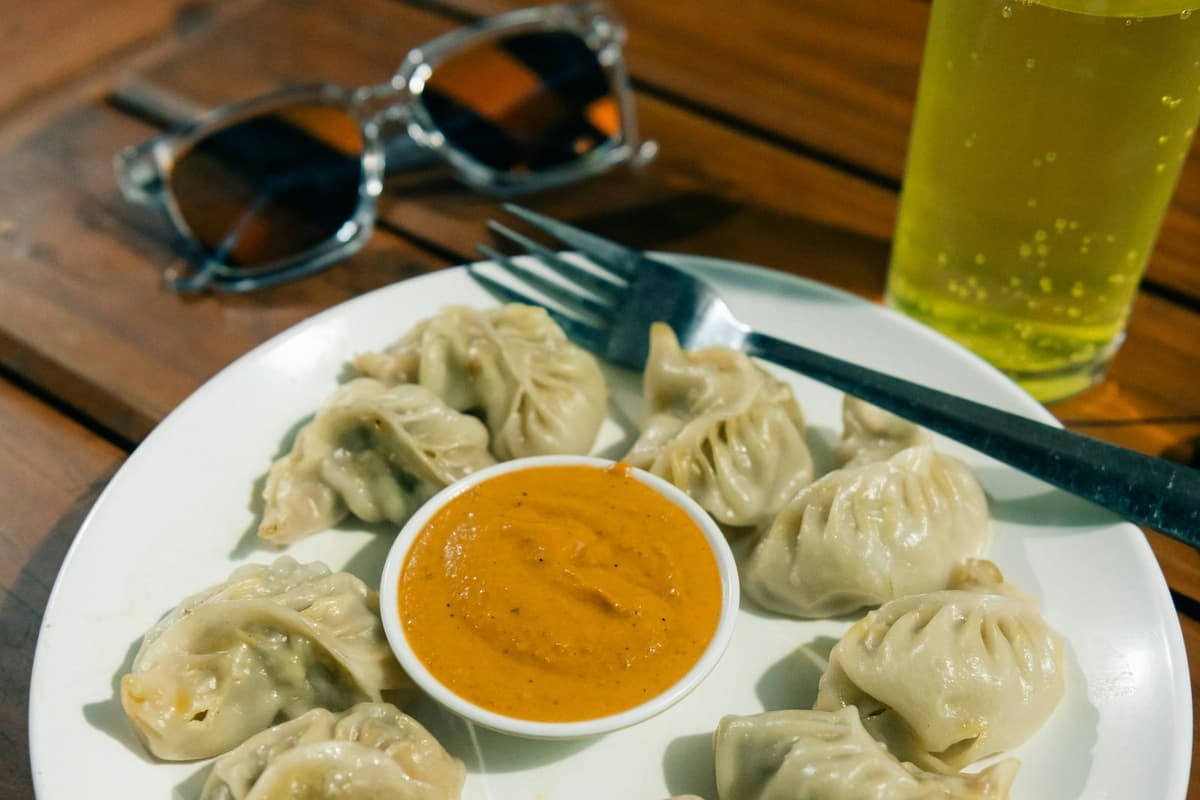
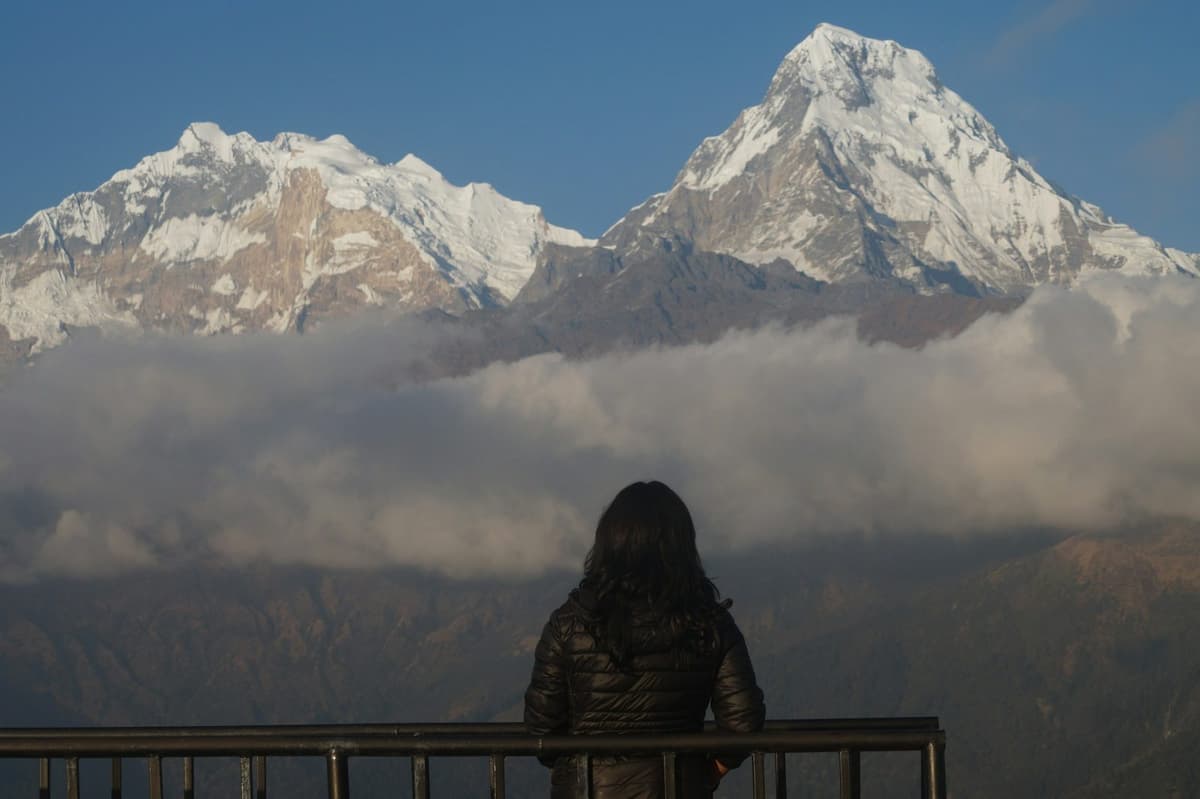
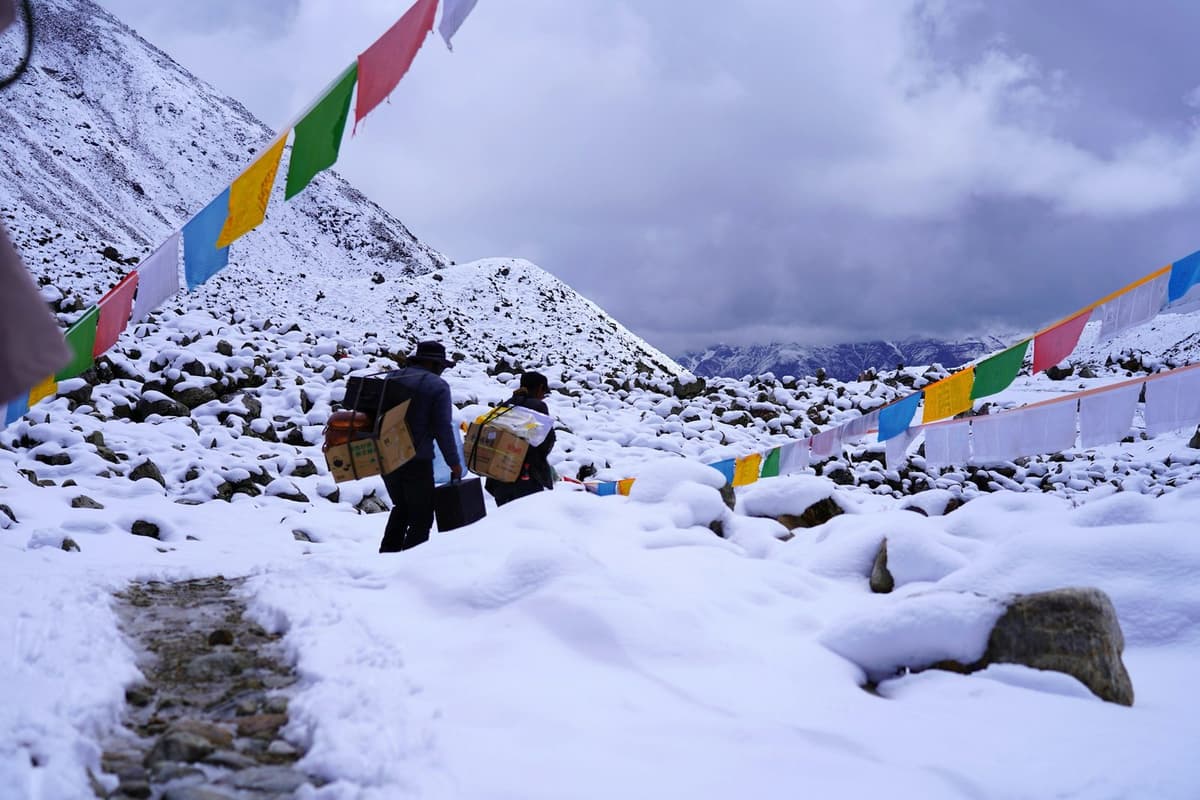
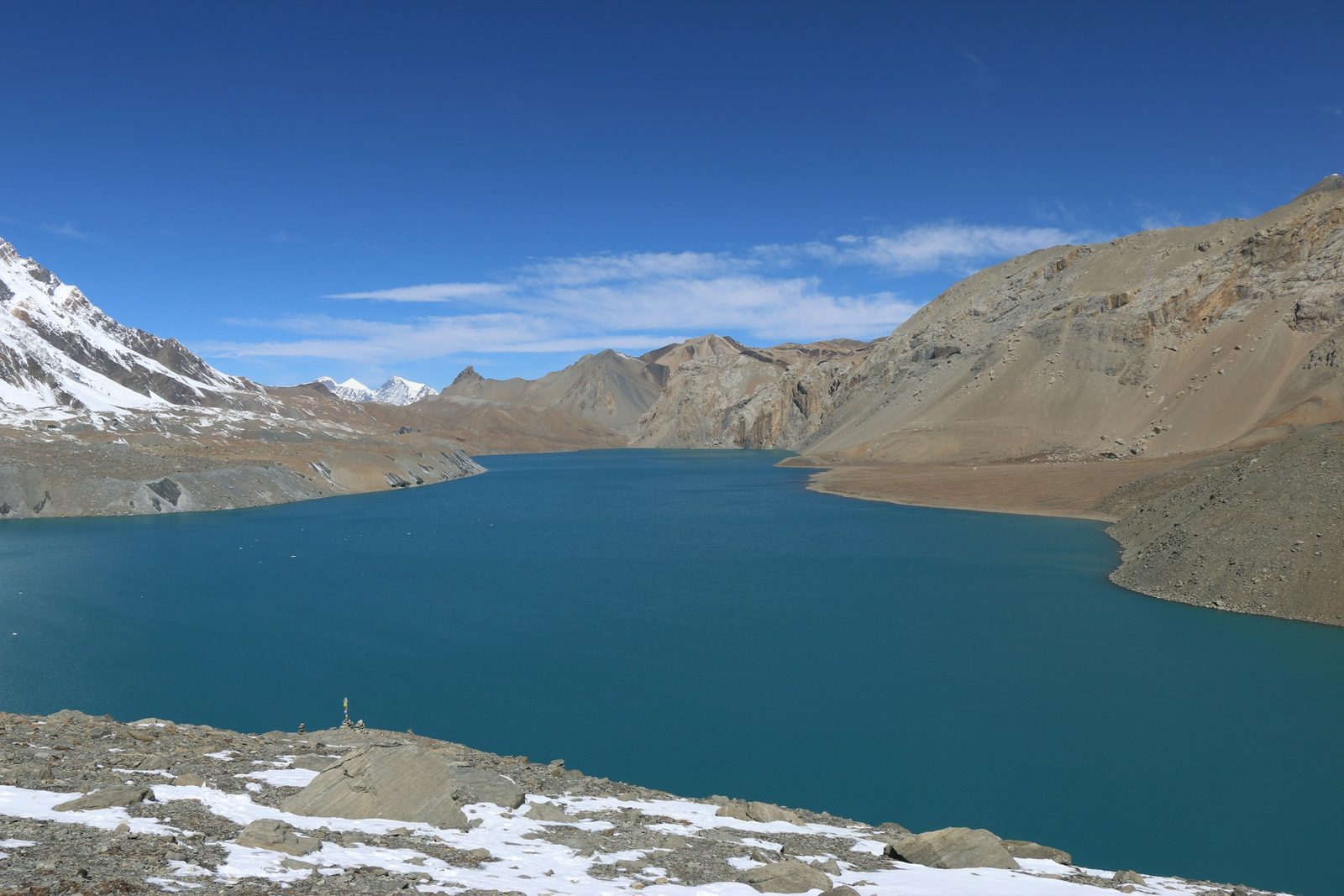
At Thorong High Camp, the night before the pass, a trekker reads the menu on the dining-room wall: dal bhat, black tea, hot chocolate. The dal bhat, the breakfast and the tea all cost more than they did in Chame a few days earlier, because everything on that menu was carried up the valley. The rupees in the pocket have to last until Muktinath, on the far side of the pass.
The Annapurna Circuit trek cost, in our worked example of 12 days from Kathmandu with a licensed guide, is about USD 720 on a tight budget and USD 1,487 mid-range. That covers the ACAP permit, buses, jeeps, teahouses, food, wages and tips. Visa, international flights, insurance and gear are extra.
If you are still choosing between the Circuit and the shorter walk into the Sanctuary, our Annapurna Base Camp trek page and our comparison of Annapurna Base Camp, the Circuit and Poon Hill set the options side by side. Everything below is built from published 2025 and 2026 price ranges, not a quote for one of our trips, and converted at USD 1 = NPR 152.60, the Nepal Rastra Bank selling rate for 27 October 2026. Check the day's rate before you plan to the dollar.
In this guide
- Key facts
- Annapurna Circuit trek cost: the 12-day budget, line by line
- Permits: the ACAP fee and nothing else on the main circuit
- Getting there and back: bus and jeep fares
- The Jomsom flight: an optional swap, suspended for now
- Teahouse rooms, food and extras as you climb
- Guide, porter and tips: what you pay and what staff earn
- Insurance and helicopter rescue
- Cash, ATMs and cards
- How to keep the Annapurna Circuit trek cost down, safely
- What makes the trek cost more or less
- Frequently asked questions
Key facts
- 12-day estimate from Kathmandu
- About USD 720 (budget) or USD 1,487 (mid-range), before visa, flights, insurance and gear (Our arithmetic on 2025 to 2026 published ranges, 27 Oct 2026)
- Exchange rate used
- USD 1 = NPR 152.60 (Nepal Rastra Bank selling rate for 27 Oct 2026, as reported by Onlinekhabar, 27 Oct 2026)
- Permit
- ACAP: NPR 3,000 foreign (about USD 20), NPR 1,000 SAARC; under 10 free; double at a check-post (NTNC e-permit portal, 27 Oct 2026)
- Other permits
- None found for the main circuit; the Nar Phu side valley needs a restricted-area permit (NTNC; NTB, 27 Oct 2026)
- Typical length
- About 10 to 18 days, depending on how much road you drive (Operator and first-hand pages, 2025 to 2026, 27 Oct 2026)
- Jomsom flights
- Scheduled flights suspended from 19 and 21 Oct 2026, reported for about five months; charters continue (Airline notices, reported by People's Review, HimalPress and Nepal News, 27 Oct 2026)
- Money
- Carry rupees; do not count on an ATM after Besisahar (Operator guides, 2025 to 2026, 27 Oct 2026)
Annapurna Circuit trek cost: the 12-day budget, line by line
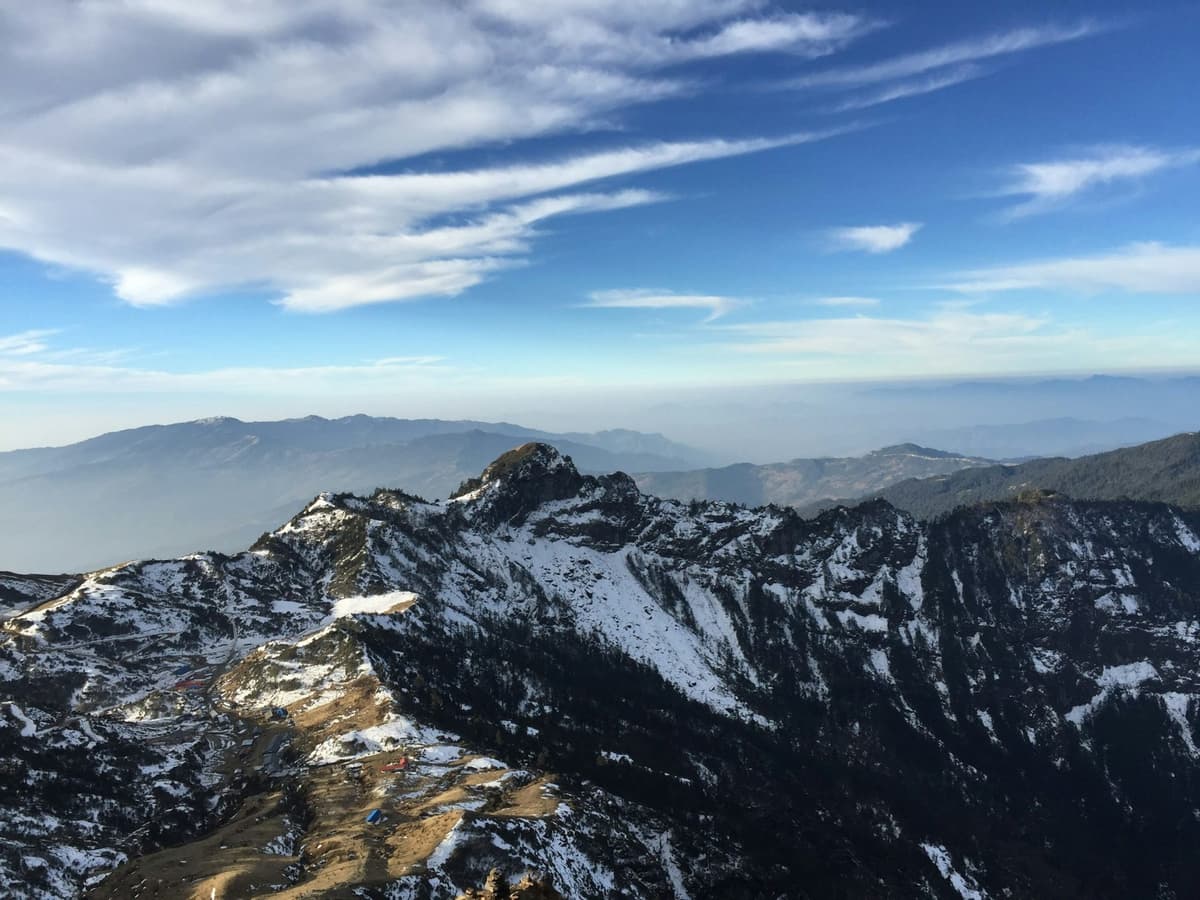
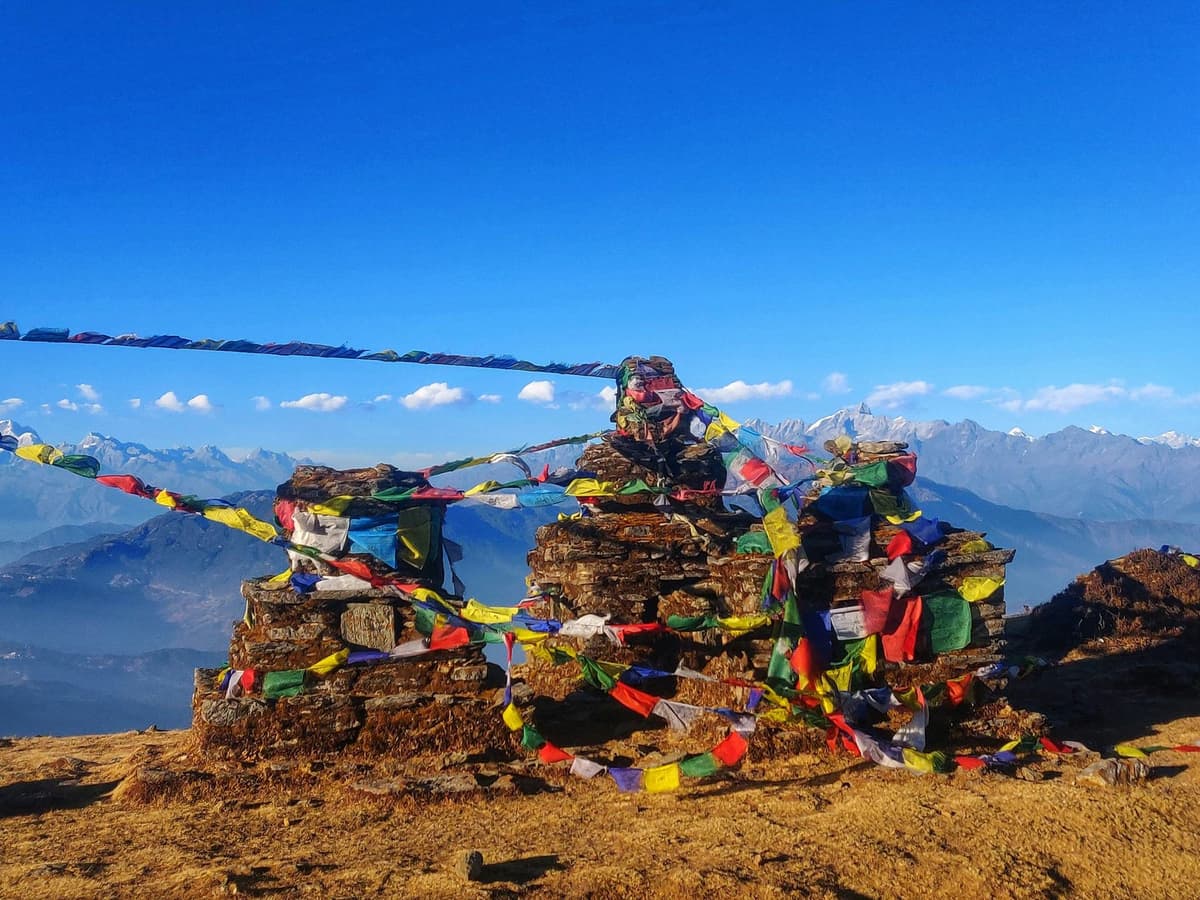
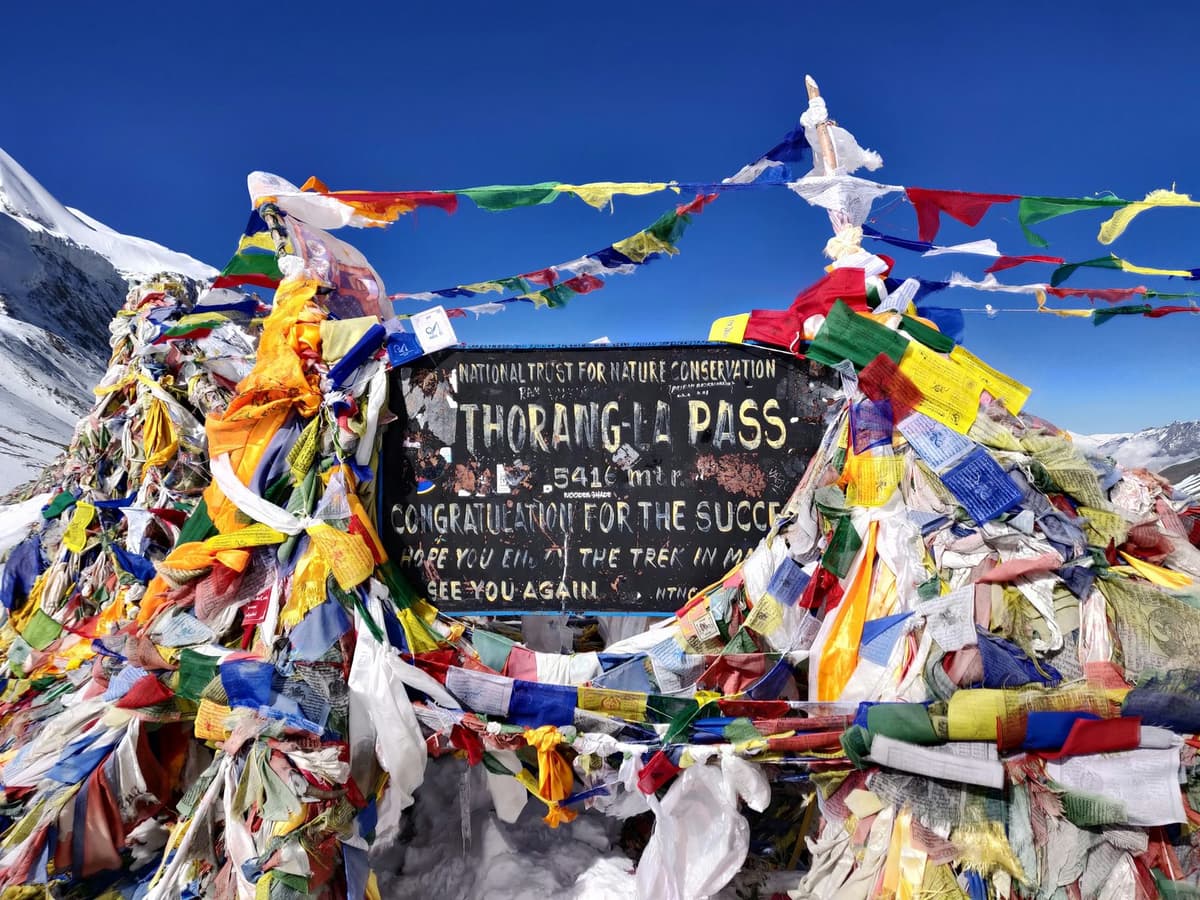
Our example is 12 days from Kathmandu and back: bus to Besisahar, jeep to Chame, on foot via Pisang, Manang (rest day), Yak Kharka and Thorong Phedi (spare day), over Thorong La, 5,416 m (17,769 ft), to Muktinath, then by road via Jomsom to Pokhara and Kathmandu. That is 10 lodge nights (three below about 3,000 m, seven from Pisang up), 10 days of meals and 11 days of wages.
The budget column takes the low end of each published range, with a licensed guide and no porter; the mid-range column takes the upper end, with a porter. Rupees are converted at USD 1 = NPR 152.60 (Nepal Rastra Bank, 27 October 2026).
| Item | Budget (USD) | Mid-range (USD) | How we worked it out |
|---|---|---|---|
| ACAP permit, foreign national | 20 | 20 | NPR 3,000 / 152.60 = 19.66 |
| Kathmandu to Besisahar | 4.59 | 25 | Public bus NPR 700; tourist bus USD 25 |
| Besisahar to Chame, shared jeep | 9.83 | 30 | NPR 1,500 a seat; USD 30 a seat |
| Muktinath to Jomsom, shared jeep | 10 | 15 | Low and high end of USD 8 to 15 |
| Jomsom to Pokhara | 7.86 | 11.80 | Bus NPR 1,200; jeep NPR 1,800 |
| Pokhara to Kathmandu, tourist bus | 8 | 20 | Booking listings from about USD 8; operator pages USD 20 |
| Transport subtotal | 40 | 102 | 40.28 and 101.80, rounded |
| Rooms, 10 nights | 56 | 111 | 3 x NPR 500 + 7 x NPR 1,000 = NPR 8,500 (USD 55.70); 3 x NPR 1,000 + 7 x NPR 2,000 = NPR 17,000 (USD 111.40) |
| Food, 10 days | 264 | 364 | 3 x USD 18 + 7 x USD 30; 3 x USD 28 + 7 x USD 40 |
| Showers, charging, Wi-Fi | 10 | 43 | 3 x NPR 200 shower + 10 x NPR 100 charge = NPR 1,600 (USD 10.48); 5 x NPR 300 + 10 x NPR 200 + 10 x NPR 300 Wi-Fi = NPR 6,500 (USD 42.60) |
| Licensed guide, 11 days | 275 | 385 | 11 x USD 25; 11 x USD 35 |
| Porter, 11 days | 0 | 275 | None; 11 x USD 25 |
| Guide tip | 55 | 110 | 11 x USD 5; 11 x USD 10 |
| Porter tip | 0 | 77 | None; 11 x USD 7 |
| Trek total | 720 | 1,487 | 20 + 40 + 56 + 264 + 10 + 275 + 55 = 720; 20 + 102 + 111 + 364 + 43 + 385 + 275 + 110 + 77 = 1,487 |
| Optional: fly Jomsom to Pokhara, when flights run | + 127 to 172 | + 123 to 168 | Fare of about USD 135 to 180, less the road fare saved |
Not in the totals: visa, international flights, city hotels, insurance, gear, snacks, drinking water and personal spending. On the trail, rooms, food and extras come to about USD 33 a day on the budget plan and USD 52 mid-range. The biggest line is people: wages and tips make up almost half of the budget total and more than half of the mid-range one.
Permits: the ACAP fee and nothing else on the main circuit
The only permit the main Annapurna Circuit needs is the Annapurna Conservation Area Project (ACAP) entry permit. It costs NPR 3,000 for foreign nationals (about USD 20) and NPR 1,000 for SAARC nationals, including Indians (about USD 7), tax included; children below 10 need none. One permit covers both the Manang and Mustang sides. It is valid for a single entry, and paying online adds a 2.9% gateway charge.
Buy it through the NTNC e-permit portal; when you travel with us, we arrange it. Either way, have it before the trail:
"Double fees will be charged for permits issued at Check-Posts."
National Trust for Nature Conservation, ACAP e-permit page, read 27 October 2026
At a check-post, then, the foreign rate becomes NPR 6,000.
We found no other official fee for the main circuit. Side trips differ: the Nar Phu valley needs a restricted-area permit, and Upper Mustang, north of Kagbeni, has its own permit at USD 50 per person per day.
Getting there and back: bus and jeep fares
Buses to Besisahar leave from Gongabu, the New Bus Park in Kathmandu, and take about six to nine hours. The road on to Chame, about 60 to 65 km, is Manang's only road link, and the drive takes most of a day, depending on the road.
| Leg | Option | Published fare, 2025 to 2026 |
|---|---|---|
| Kathmandu to Besisahar | Public bus | About NPR 700 to 1,500 |
| Kathmandu to Besisahar | Tourist bus | About USD 15 to 25 |
| Kathmandu to Besisahar | Private jeep or car | About USD 150 to 220 per vehicle |
| Besisahar to Chame | Shared jeep | From about NPR 1,500 to about USD 30 a seat |
| Besisahar to Chame | Public bus | NPR 740 at its launch in April 2025; check it is running |
| Muktinath to Jomsom | Shared jeep | About USD 8 to 15 |
| Jomsom to Pokhara | Bus or jeep | About NPR 1,200 by bus, NPR 1,800 by jeep |
| Pokhara to Kathmandu | Tourist bus | About USD 8 to 25, depending on the bus |
Sources: dated operator and booking pages, 2025 to 2026; the Chame bus from Meroauto and The Rising Nepal.
Going in. Above Chame, a district fare committee sets jeep fares; in August 2025 it cut them sharply, and we found no current figure. One operator quotes USD 40 to 50 a seat to drive straight from Besisahar to Manang. It saves days but skips the slow climb your body needs. ACAP recorded 25 tourist deaths from altitude sickness in the conservation area in 2025/26, and its chief linked many cases to people driving straight to high places such as Muktinath.
Coming out. Buses run to Muktinath, 23 km north of Jomsom; from Jomsom, the road via Beni to Pokhara takes a long day, about six to nine hours. Pokhara to Kathmandu is six to nine hours by road or about 30 minutes by air.
The Jomsom flight: an optional swap, suspended for now
The Jomsom to Pokhara flight closed for the season in late October 2026: Tara Air stopped scheduled flights from 19 October and Summit Air from 21 October, and the suspension was reported as about five months. Charter flights continue.
Scheduled Jomsom flights usually stop in winter and in the monsoon; in 2025-26 they stopped in December and restarted in March. When they run, flights leave in the morning, because the wind builds later in the day.
Operator and booking pages put the fare at about USD 135 to 180 one way for foreigners; we found no airline fare sheet, so it sits in our table as an optional swap, not in the totals. Check with the airline for the current schedule; we can book it once services return.
"Furthermore, trekkers returning from the Annapurna Circuit are often exhausted or injured. These travelers, who rely on flights to return safely, will be severely impacted by the suspension of flights."
Tirtha Raj Subedi, president of TAAN Gandaki, in a statement reported by HimalPress, 19 October 2026
Teahouse rooms, food and extras as you climb
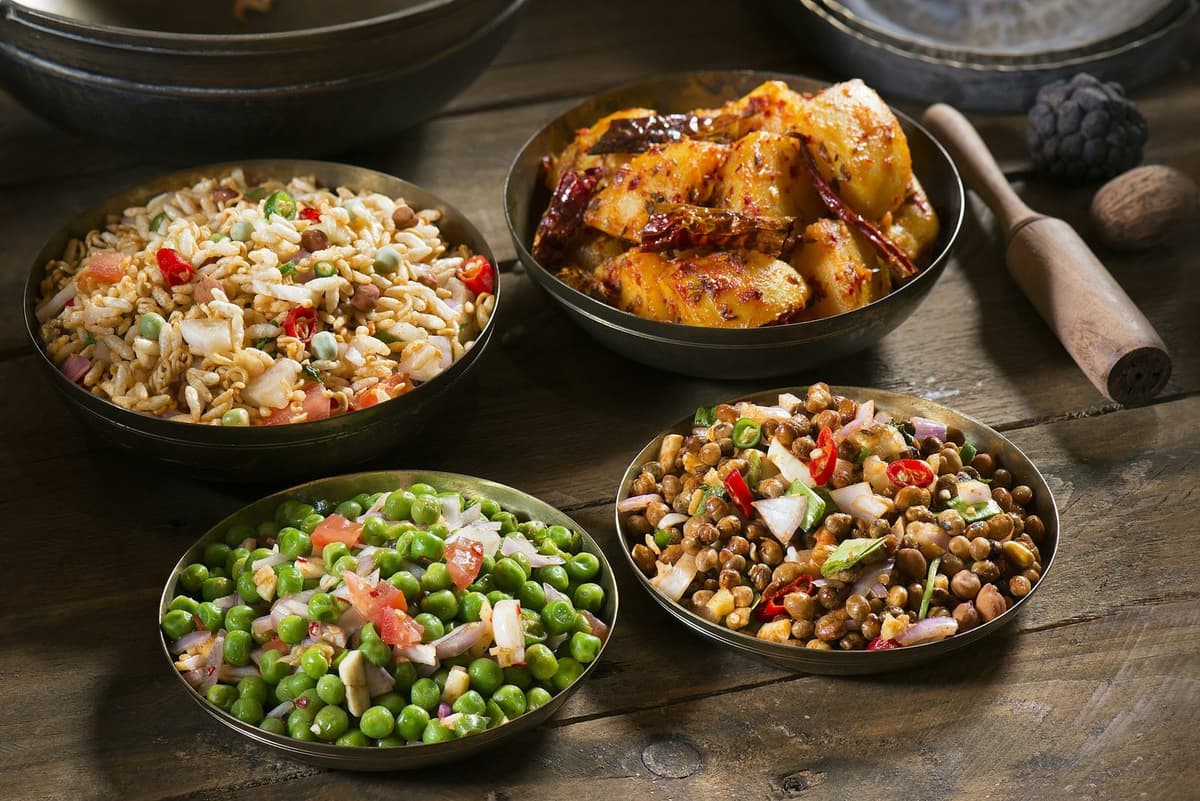
Rooms are cheap; food is where the money goes. Below about 3,000 m a room costs about NPR 500 to 1,000 a night; from Manang up to Thorong Phedi and High Camp, about NPR 1,000 to 2,000, roughly USD 7 to 13. Many lodges charge little or nothing for the room if you eat dinner and breakfast there, and more if you eat elsewhere. A room with an attached bathroom costs more, about USD 15 to 25 by one operator's figures.
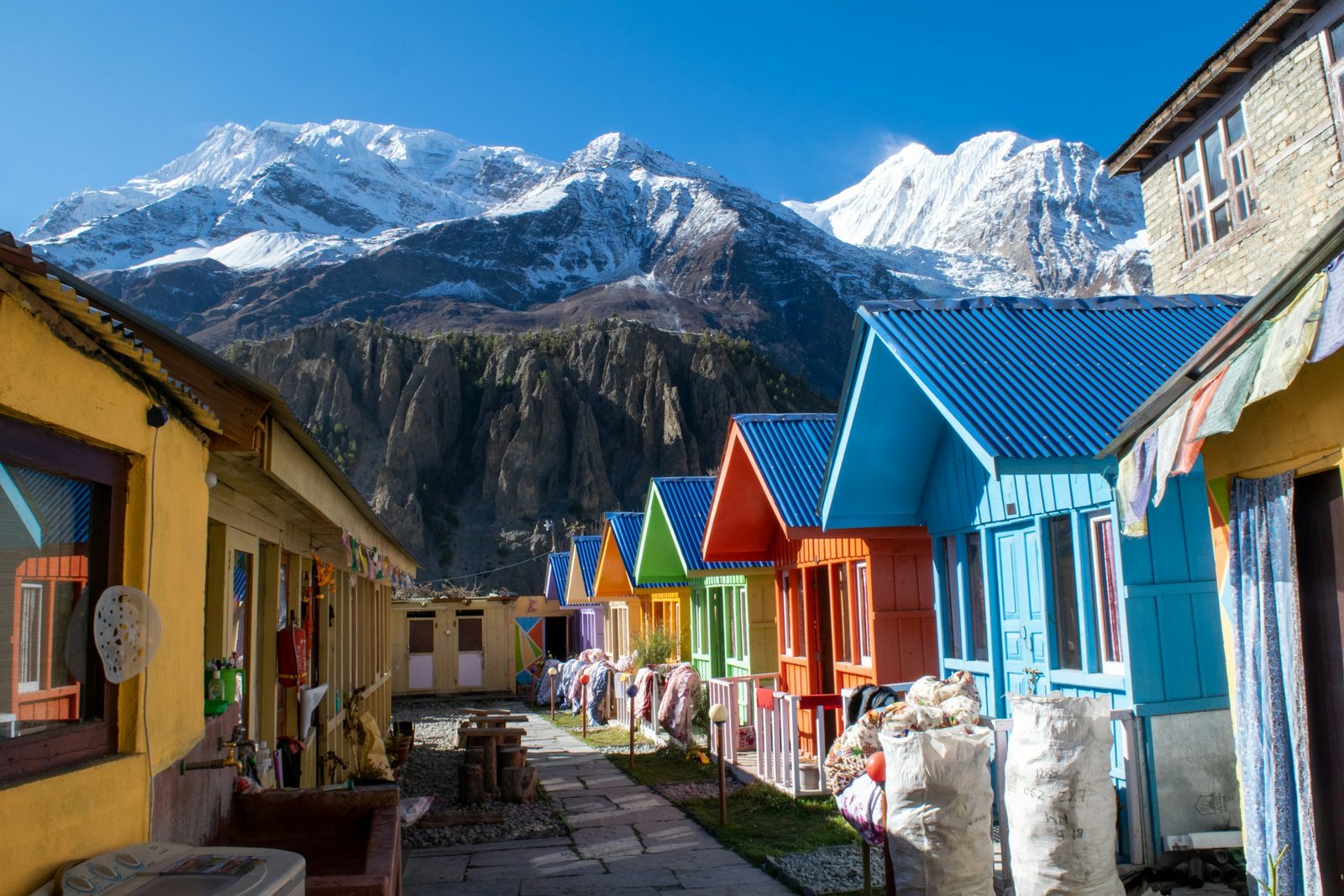
These menu prices, in rupees, were photographed by one Kathmandu operator on its 2026 Circuit trips:
| Stop | Dal bhat | Breakfast | Hot drink |
|---|---|---|---|
| Chame | 800 | 1,000 | Black tea 100 |
| Manang | 770 | 900 | Milk tea 130 |
| Yak Kharka | 950 | 1,100 to 1,200 | Black tea 100 |
| Thorong High Camp | 1,200 | 1,400 | Black tea 200; hot chocolate 370 |
| Muktinath | 700 (vegetable) | 850 to 1,200 | Black tea 100; hot chocolate 210 |
A plate of dal bhat runs roughly USD 5 to 8, more near the pass. Prices climb with the trail, though not in a straight line: dal bhat in Manang cost slightly less than in Chame. Breakfast, two plates of dal bhat and two black teas come to NPR 2,800 in Chame, about USD 18, and NPR 4,200 at High Camp, about USD 28.
One operator's 2026 guide puts a day of meals and drinks at about USD 18 to 28 in the lower villages and USD 30 to 40 or more near Muktinath and Thorong La; our two columns use the ends of those bands.
Extras. Bottled water rises from about NPR 100 at the trailhead to NPR 300 to 400 at High Camp by one operator's count, so carry a bottle and refill it. A hot shower costs a few hundred rupees (operators quote about USD 2 to 4), and one operator finds it often unavailable above Manang. Charging and Wi-Fi are free at some lodges and a few hundred rupees at others; Wi-Fi often costs NPR 100 to 500 a session and is slow and patchy higher up.
Guide, porter and tips: what you pay and what staff earn
A licensed guide walks with you on every trek we run. Two numbers matter here: what you pay, and what staff earn. TAAN, the Trekking Agencies' Association of Nepal, set these standard daily wages from 17 July 2023, the first rise since November 2018; one Kathmandu company calls them an industry agreement rather than a law.
| Role (TAAN title) | Minimum daily wage | About USD |
|---|---|---|
| Trekking guide | NPR 3,100 | 20 |
| Assistant trekking guide | NPR 2,800 | 18 |
| Porter-guide | NPR 2,500 | 16 |
| Porter | NPR 2,400 | 16 |
Those are wages paid to staff, not prices for trekkers; we found no later revision. What trekkers pay is higher: operator pages from 2025 and 2026 put a licensed guide hired directly at about USD 25 to 35 a day, a porter at about USD 18 to 25, and a porter-guide, who guides and carries, at about USD 22 to 32. Before you agree a rate, ask who pays the staff's transport, food and beds.
Tips are customary but voluntary. Operators commonly suggest about USD 5 to 12 a day for a guide and USD 5 to 8 for a porter. Give them in rupees at the end of the trek, in an envelope, handed to each person directly.
Insurance and helicopter rescue
Insurance is not in our totals, because the price depends on your age, nationality, insurer and trip length; operator pages quote roughly USD 50 to 200. Ask your insurer, and check the policy covers trekking to 5,416 m, the height of Thorong La, and helicopter evacuation.
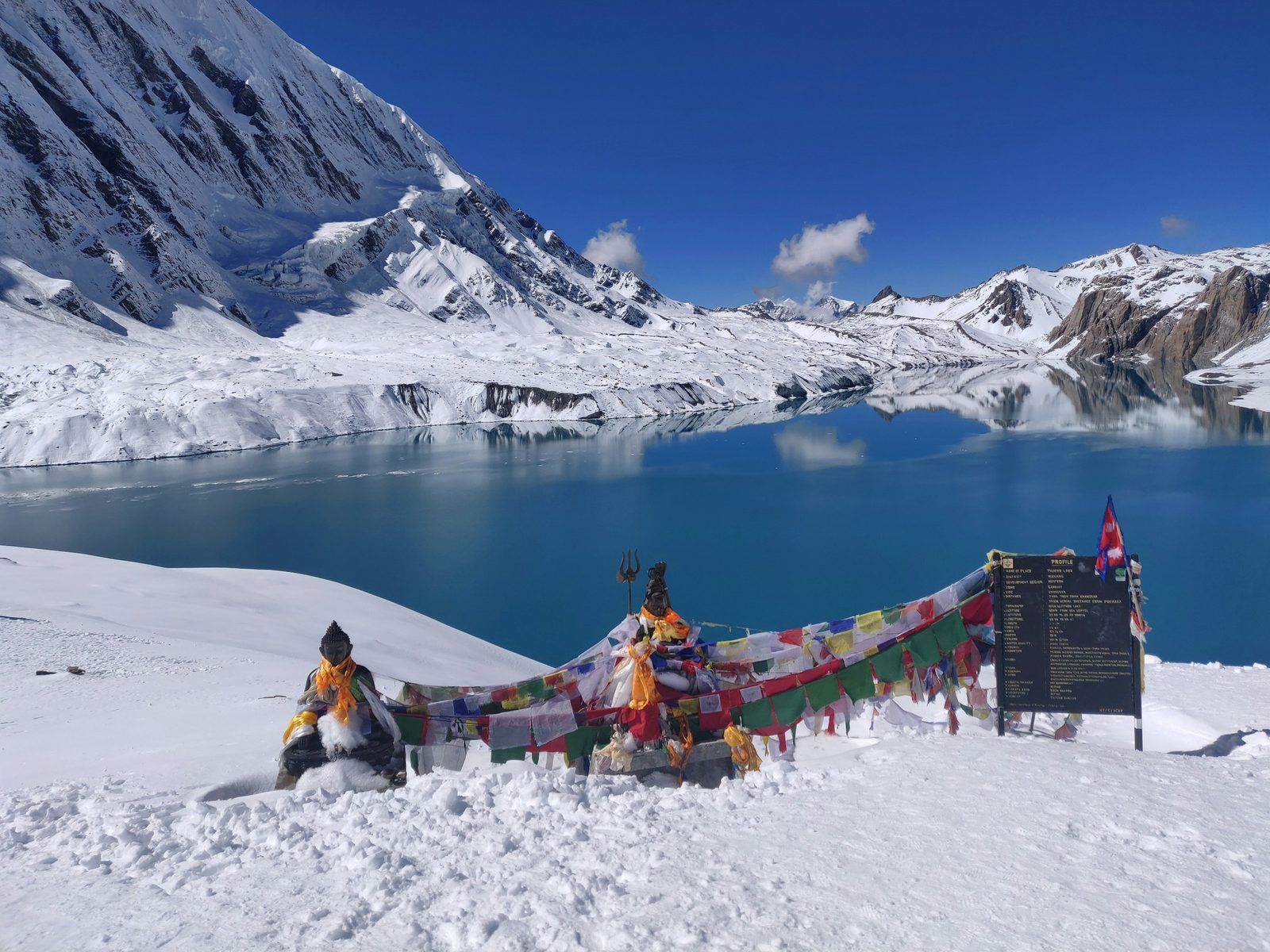
HRA doctors who staffed the Manang aid post put a helicopter evacuation from Manang at about USD 2,500 in the 2023 season, writing in Wilderness & Environmental Medicine, and noted that it was possible "only in daylight and in good weather conditions". Without insurance, a rescue from high on the Circuit can cost several thousand US dollars. For the crossing itself, read our guide to Thorong La Pass.
Cash, ATMs and cards
Plan to pay cash: teahouses on the trail generally do not take cards. Besisahar has banks, but do not count on an ATM after that. Some guides list machines in Chame, Manang and Jomsom, others say there are none, and those that list them warn they run out of cash or fail. Carry all the rupees you need from Kathmandu or Pokhara. Your bank and the Nepali bank may both charge per withdrawal. In our example, the trail part of the budget (rooms, food, showers, charging and Wi-Fi) comes to about NPR 50,000 on the budget plan and about NPR 79,000 mid-range, before tips and any wages you pay in cash. Add a margin for a spare day or a delay.
How to keep the Annapurna Circuit trek cost down, safely
The savings we would make:
- Buy the ACAP permit before you reach the trail. At a check-post it costs double.
- Eat dinner and breakfast where you sleep. Many lodges charge little or nothing for the room if you do.
- Take the public bus to Besisahar. It costs a fraction of a private jeep.
- Share a porter. One porter often carries for two trekkers.
- Refill rather than buy bottles. Bottled water gets dearer as you climb.
- Draw your rupees in the city. ATMs on the trail are unreliable or absent.
- Never save money on acclimatisation. A spare day costs roughly USD 65 to 130 on our two plans; a rushed ascent can cost the whole trek.
Altitude illness can start from a sleeping altitude of about 2,450 m, according to the CDC. Above about 3,000 m, add no more than about 500 m of sleeping height a night, plan an extra night for every 1,000 m, and take the rest day in Manang, about 3,500 m. Walk slowly, drink water, avoid alcohol early on, learn the symptoms, never go higher with them, and go down if they get worse. Ask your doctor about preventive medicine such as acetazolamide. Our guide to altitude sickness on Nepal treks covers the warning signs.
What makes the trek cost more or less
Days are the biggest lever. Most itineraries run about 10 to 18 days, depending on how much of the road you drive and how you leave Jomsom. Each extra day on the high trail, including side trips such as Tilicho Lake, adds roughly USD 65 to 130 to our two plans.
Our own Annapurna Circuit trips run 10 to 14 days: 10 from Pokhara, 11 from Kathmandu, 13 with Tilicho Lake and 14 with Poon Hill and Tilicho. None of them uses the Jomsom flight: three drive out from Muktinath through Jomsom, and the 14-day trip walks out via Tatopani and Ghorepani, so the suspension does not change them. Our Annapurna Circuit trek from Pokhara takes a jeep to Chame and starts walking on day 2. For the shorter Sanctuary walk, our Annapurna Base Camp trek cost guide uses the same method.
Read next: Annapurna Circuit altitude profile and Muktinath Temple guide.
Frequently asked questions
How much does the Annapurna Circuit trek cost in USD?
For a 12-day trek from Kathmandu with a licensed guide, our worked example comes to about USD 720 on a tight budget and USD 1,487 mid-range, at USD 1 = NPR 152.60 (Nepal Rastra Bank, 27 October 2026). Visa, international flights, insurance and gear are extra.
How much is the ACAP permit, and does Manang need another permit?
The ACAP entry permit costs NPR 3,000 for foreign nationals and NPR 1,000 for SAARC nationals, tax included, and children under 10 need none. Buy it in advance, because a permit issued at a check-post costs double. It is the only permit the main circuit needs, Manang included. The Nar Phu side valley needs a separate restricted-area permit.
How much does a guide or porter cost per day on the Annapurna Circuit?
Operator pages put a licensed guide hired directly at about USD 25 to 35 a day and a porter at about USD 18 to 25. What staff are paid is lower: TAAN's standard daily wages since 17 July 2023 are NPR 3,100 for a guide and NPR 2,400 for a porter. A licensed guide walks with you on every trek we run.
Can you fly from Jomsom to Pokhara, and what does it cost?
Not on scheduled flights at the moment: Tara Air stopped from 19 October 2026 and Summit Air from 21 October, reported for about five months, though charters continue. When flights run, the fare is about USD 135 to 180 one way for foreigners, by operator and booking pages. The road via Beni has reopened: about NPR 1,200 by bus or NPR 1,800 by jeep.
How much cash should you carry, and are there ATMs on the Annapurna Circuit?
Carry all your rupees from Kathmandu or Pokhara. Besisahar has banks, but ATMs further up are unreliable or absent, and teahouses generally do not take cards. In our 12-day example, rooms, food and extras come to about NPR 50,000 on a budget or NPR 79,000 mid-range, before tips and any wages you pay in cash.
How many days do you need for the Annapurna Circuit?
Most itineraries run about 10 to 18 days, depending on how much of the road you drive and how you leave Jomsom. Our own trips run 10 to 14 days. Keep at least one spare day for acclimatisation or weather; on our figures each extra high day adds roughly USD 65 to 130.
Plan your Annapurna Circuit with us
We are a Kathmandu team: we arrange your ACAP permit, licensed guide, porter, lodges and transport inside Nepal, and check the roads, pass and flights before you leave. Our Annapurna Circuit trek page shows the route and the trips on it; if the Sanctuary still tempts you, compare it on our Annapurna Base Camp trek page. Send us your dates and group size on WhatsApp or through our enquiry form, and we will quote exactly.
Your Nepal visa and international flights are your own arrangements; we do not arrange them. For reference, NTB lists tourist visas on arrival at USD 30 for 15 days, USD 50 for 30 days and USD 125 for 90 days, and Indian nationals need no visa. Check the Nepal Tourism Board tourist-visa page before you travel.