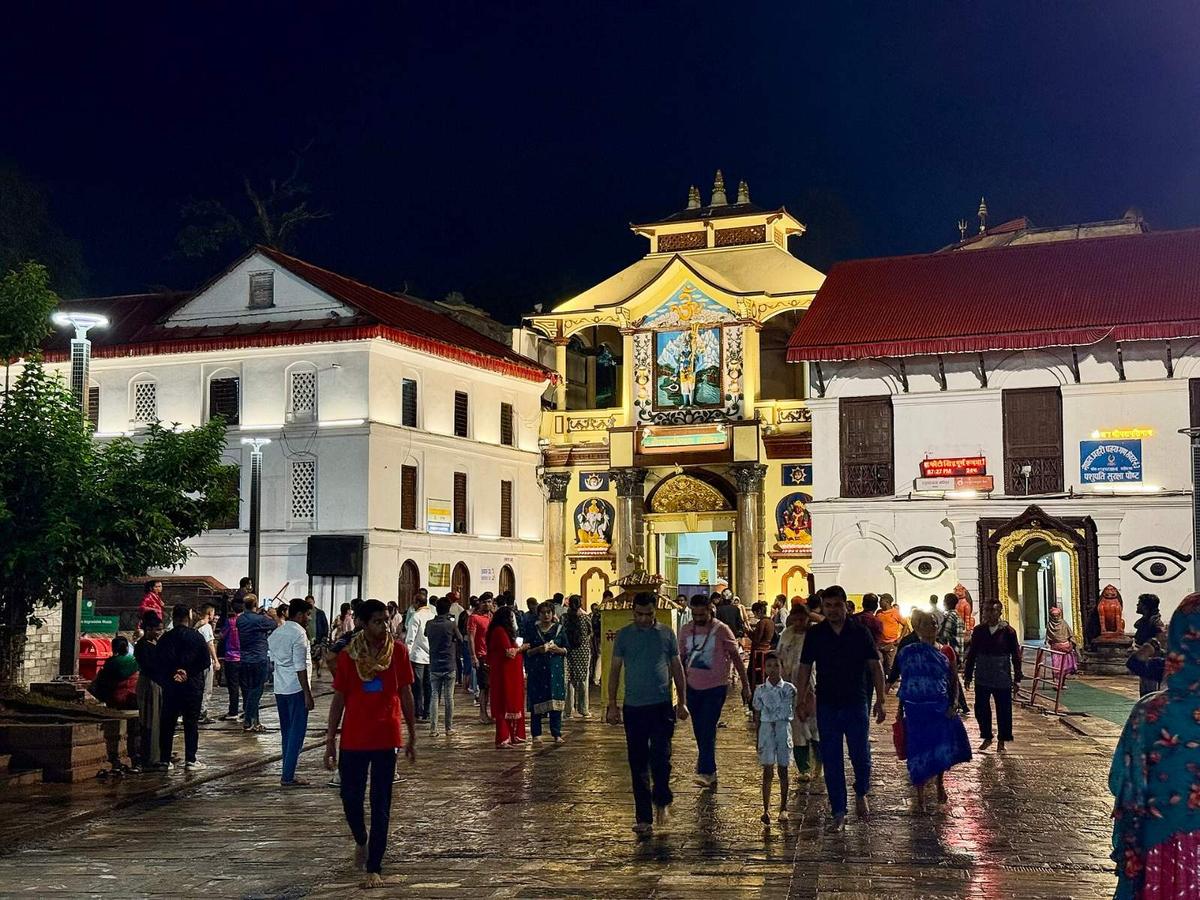
From the stone terraces across the Bagmati, the two-tiered gilded roof of Pashupatinath catches the late light. Bells ring from a courtyard you cannot see, incense drifts over the water, and on the wooded slope behind you deer are kept in honour of a shape that, the legends say, Shiva once took.
The Pashupatinath Temple story runs on legend and on record. Legend says a cow poured her milk over a buried linga and that Shiva roamed this forest as a deer. The record rests on a stone inscription dated AD 733, on old Nepali chronicles, and on a present temple that the trust running it dates to 1697.
For the wider city, see our guide to places to visit in Kathmandu. Here we keep the legends marked as legends and tie each piece of history to its evidence.
Key facts
- What the name means
- "Lord of animals": pashu (animal) and pati (lord) (Wikipedia, Pashupati; PADT About page, checked 22 Nov 2026)
- The deity
- Shiva as Pashupati, worshipped as a linga; PADT describes five faces (pashupati.org.np/about, checked 22 Nov 2026)
- Oldest dated evidence we cite
- Stone stele of King Jayadeva II, dated AD 733, just inside the west gate (Siddham inscription in02087, checked 22 Nov 2026)
- Present temple
- Built in 1697 by King Bhupalendra Malla of Kantipur, per PADT; other dates appear in print (pashupati.org.np/pasupatinath-temple, checked 22 Nov 2026)
- Style
- Pagoda with a two-tiered gilded roof and silver-covered doors (PADT temple page; Wikipedia, checked 22 Nov 2026)
- Priests
- Bhatta priests of south Indian origin; the head priest is the mool bhatta (Outlook, 10 Jan 2009; Himal Southasian, 2009, checked 22 Nov 2026)
- Run by
- Pashupati Area Development Trust (PADT), set up in 2043 BS (1986/87) (pashupati.org.np/about, checked 22 Nov 2026)
- World Heritage
- Kathmandu Valley inscribed in 1979; Pashupati is one of seven Monument Zones (UNESCO WHC list/121 and WHC news item of 25 Jun 2007, checked 22 Nov 2026)
- 2015 earthquake
- The main temple remained intact (Kathmandu Post, 3 Jan 2016, checked 22 Nov 2026)
- Who may enter
- Main sanctum for Hindus only; non-Hindus watch from the ghats and east-bank terraces (PADT home page; NTB, checked 22 Nov 2026)
- Location
- About 5 km east of the city centre, on the Bagmati, a short walk from Gaushala (ntb.gov.np/pashupatinath, checked 22 Nov 2026)
In this guide
- What does Pashupati mean?
- The cow and the buried linga
- The deer in the forest
- How is Pashupatinath linked to Kedarnath?
- How old is Pashupatinath?
- Who built the temple?
- The building, the linga and the Nandi
- Why are the priests from south India?
- Why do non-Hindus watch from across the river?
- Pashupati in modern times
- Timeline of the Pashupatinath Temple story
- Legend vs history, side by side
- Seeing the story today
- Frequently asked questions
What does Pashupati mean?
Pashupati means "lord of animals", from the Sanskrit pashu, animal, and pati, lord. The Pashupati Area Development Trust (PADT), which runs the temple, adds a deeper reading: a person bound by ignorance is like a pashu, and Shiva is the lord who sets them free. Here Shiva is worshipped as a linga.
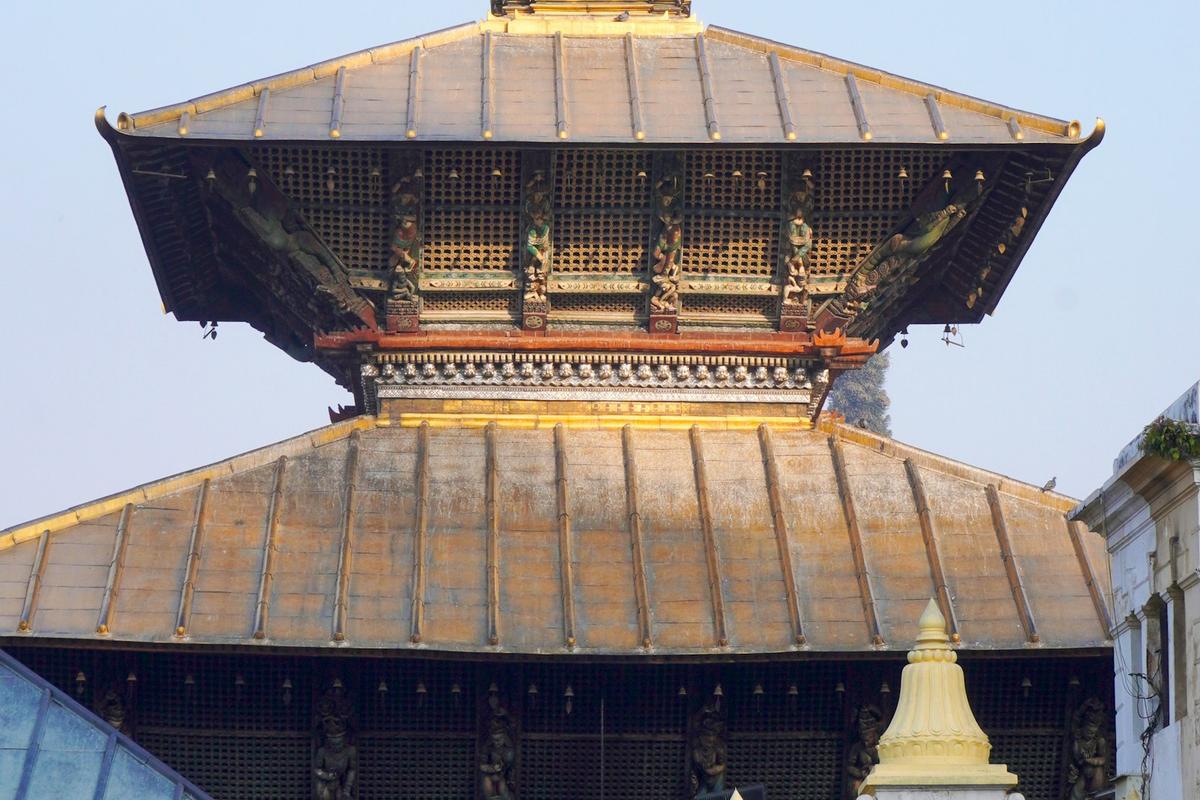
The legends keep returning to that lord of animals and that stone: a cow, a deer, a bull and a linga found in the ground.
The cow and the buried linga
PADT tells the best-known story in one line: "Legends hold that the deity was discovered by a divine cow that poured milk on a sacred spot in the forest."
A fuller version survives in a Nepali chronicle, a vamshavali, that Daniel Wright published in English in 1877. The story goes that the old temple had fallen and the god's light lay buried under the ruins. A cow called Ne gave no milk at home but ran daily to one spot, where milk flowed from her udder. The chief cowherd dug there, found the light, and was consumed by it. The sage Ne Muni then made the cowherd's son, Bhuktamana, king, and Pashupati was "discovered in his reign". The chronicle also ties the sage to the name Nepal itself; that is tradition, not settled history.
The deer in the forest
Another legend puts Shiva in the woods. In the 1877 chronicle, Brahma, Vishnu and Maheswara (Shiva) appear as deer, and the place is named Mrigasthali "after the three deities who appeared in the form of deer".
In one telling from the Nepala Mahatmya, Shiva and Parvati roam the Shleshmantaka forest as a deer and a doe. Brahma, Vishnu and Indra catch the deer by its horn, the horn breaks, and Shiva tells them to install the pieces as lingas. Wright's chronicle explains the forest's name more plainly, "from there being many Sleshmantak (Lapsi) trees", and says Mahadeva showed himself there "having come from Badri Kedar".
The legend has left something you can still see. NTB notes that in the forest around the temple a "deer is reared in captivity to revere the animal form that Lord Shiva took". In 1877 Wright found the same hill "alive with monkeys" and wrote, "This wood is the Mrigasthali of Nepalese tradition."
Guhyeshwari and the Sati story
The goddess has her own temple in the Area. PADT calls Guhyeshwari a Shakti Peeth, "a place of worship of Lord Shiva's first wife, Sati Devi", and "the second most important religious and cultural temple after Pashupatinath Temple". NTB says that here too non-Hindus are denied entry.
How is Pashupatinath linked to Kedarnath?
Through a story of Shiva hiding as a bull. PADT, citing the Shiva Purana, says "Lord Pashupatinath is regarded as the head of Kedareshwor, the deity of the famous Kedareshwor Temple in India". In 2009, though, Kedarnath's head priest declared Doleshwor Mahadev, in Bhaktapur district, to be the head. Pilgrims honour both.
In the Panch Kedar legend, the Pandavas sought Shiva after the Kurukshetra war. He hid as a bull; Bhima grabbed it, and it sank and reappeared in parts: the hump at Kedarnath, the arms at Tungnath, the face at Rudranath, the navel at Madhyamaheshwar and the hair at Kalpeshwar. Pashupatinath is not one of those shrines. The head is claimed in Nepal, by two temples.
Doleshwor, about 20 km from the capital, is covered in our guide to temples in Kathmandu.
How old is Pashupatinath?
No one knows when worship began here. PADT traces the earliest references to the Shivalinga to the Skanda Purana, a text whose date is contested. The oldest dated evidence we can point to is Licchavi: a stone inscription of King Jayadeva II, dated AD 733, standing just inside the temple's west gate.
The stele is dated "Samvat 157", which in the Manadeva era works out to AD 733. It records the king's marriage to Queen Rajyamati, daughter of Sri Harshadeva, and a gift to the god. In the 1885 translation by Georg Bühler and Bhagwanlal Indraji, one passage reads: "This precious silver lotus, placed over Hara's Linga, together with lotuses which on all sides surround it to do it honour". Hara is a name of Shiva.
So the linga was being honoured with silver in AD 733. The stone does not tell us when worship began.
Who built the temple?
The chronicles credit a king named Supushpa Deva with the first temple, and PADT places him in the Licchavi period. The trust says the present temple "was built in 1697 AD by King Bhupalendra Malla of Kantipur". Some books give 1692, and some name a different Malla king, but most place it in the late 17th century.
The main source for Supushpa is the Gopalarajavamshavali, a late 14th-century chronicle of Nepal's kings compiled under Jayasthiti Malla. It credits Sri Supushpadeva with building the temple of Sri Pashupati Bhattaraka, but no dated inscription names him, so treat him as the chronicles' founder. The same chronicle records that a mid-14th-century raid by Sultan Shamsuddin broke the Pashupatinath icon into three pieces.
PADT says the temple "must have been rebuilt a number of times", and the story is that termites ate the earlier, mainly wooden building. The Malla kings, from the 13th to the 18th century, greatly expanded the complex with shrines, ghats and dharmashalas for pilgrims. Bhupalendra Malla reigned in Kantipur, old Kathmandu, from 1687 to 1700, so a 1697 date fits the trust's account.
The building, the linga and the Nandi
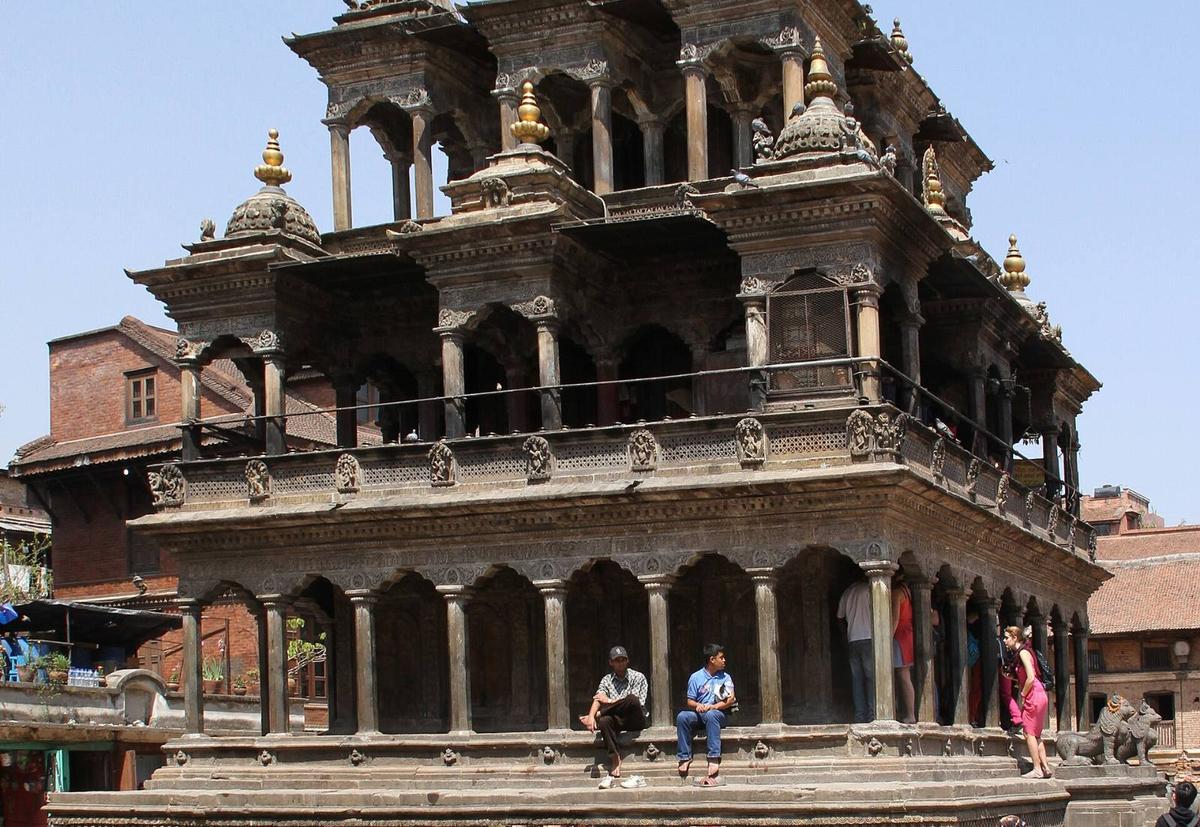
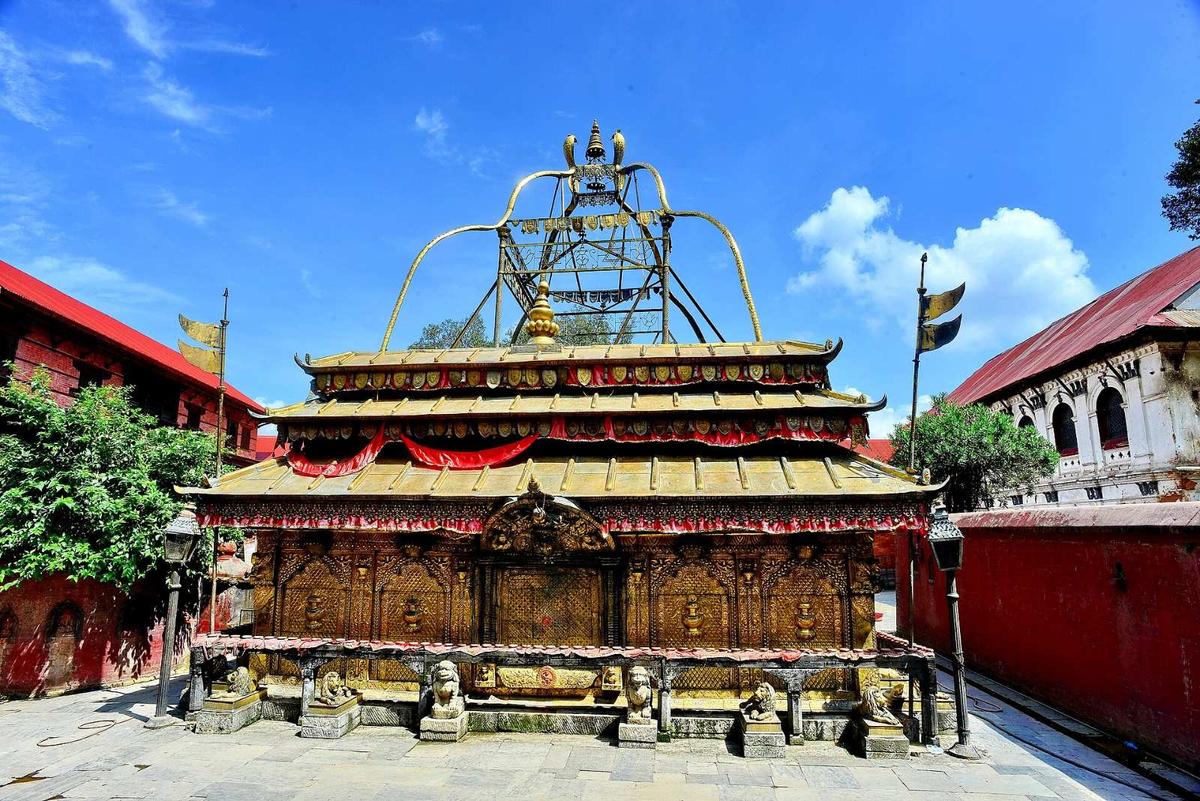
The temple is a pagoda with a two-tiered gilded roof. PADT describes "golden gilded roofs, silver and golden gilded doors, brilliant wooden and metal carvings in the tympanum and the struts". Wright's description of 1877 reads much the same.
"It is a handsome building in the pagoda style, with a brazen gilt roof, and large richly carved silver gates."
Daniel Wright (ed.), History of Nepal, Cambridge University Press, 1877, p. 21
The linga and its faces
PADT describes Pashupati with five faces: Tatpurusha, Aghora, Sadyojata, Vamadeva and Ishana. On the stone, four faces look out to the four directions, and tradition counts a fifth, Ishana, facing the sky. Non-Hindu visitors never see the linga.
Nandi, Shiva's bull
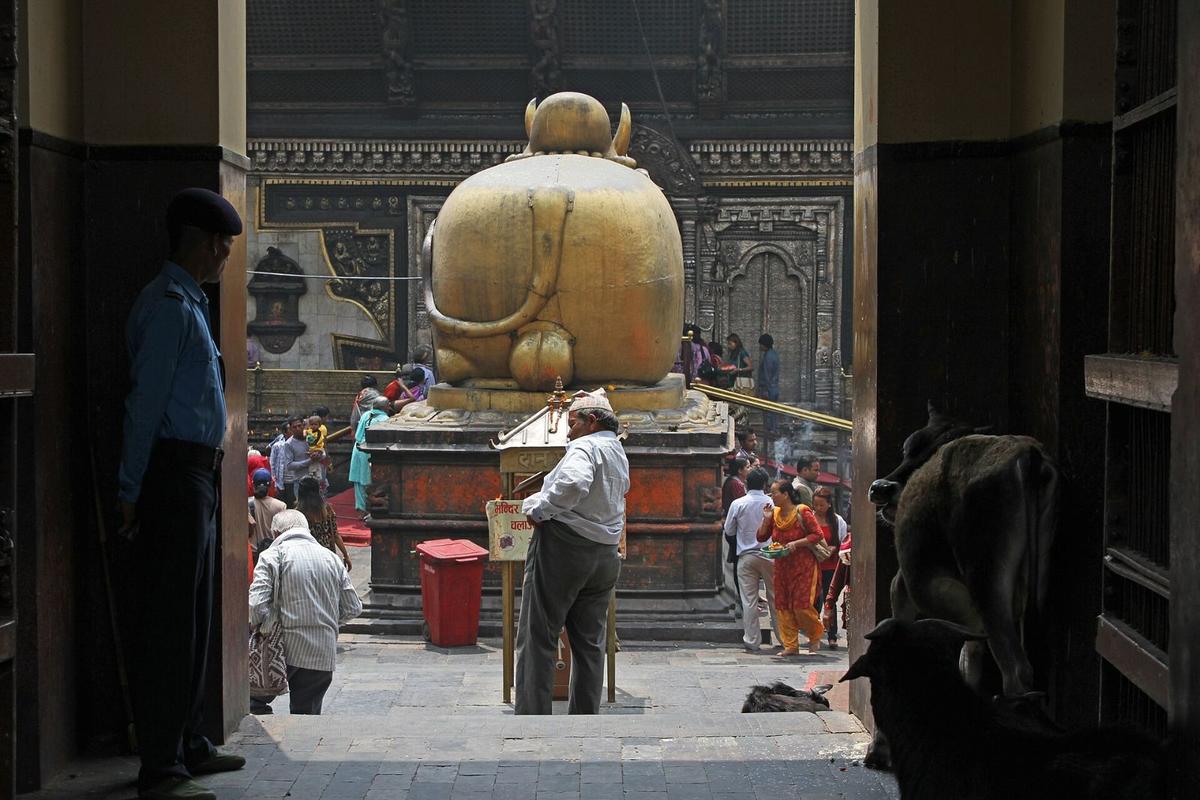
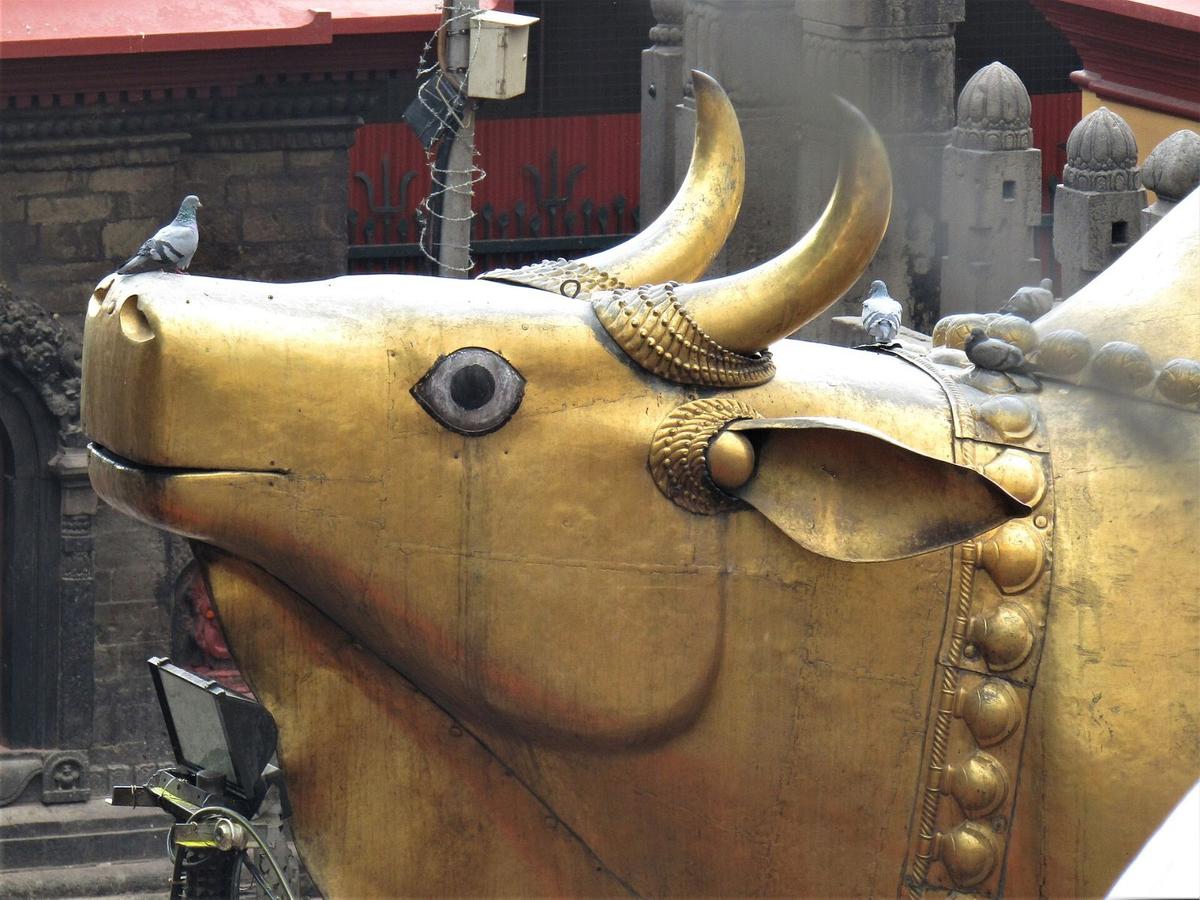
In the west courtyard a large gilded brass Nandi faces the temple. From outside the west gate non-Hindus can see its back, as close as they come to the inner courtyard.
Why are the priests from south India?
Because of a custom that has run for centuries. Tradition links the south Indian priests to Adi Shankaracharya. A Nepali chronicle translated in 1877 credits the 15th-century king Yaksha Malla with bringing Bhatta Brahmans from the south; other writers date the custom of a south Indian head priest to the 18th century.
The chronicle says Yaksha Malla, "having studied the rules made by Shankaracharya, appointed Bhatta Brahmans from the south of India to worship Pashupatinatha". He reigned from around 1428 until 1482.
Today the head priest is the mool bhatta, assisted by local Bhandaris, and only the Bhatta priests touch the linga. The custom was tested in January 2009: after the head priest and two Bhattas resigned, the government appointed Nepali priests; after court action and protests, the decision was reversed within days and the south Indian priests returned.
Why do non-Hindus watch from across the river?
Because the main temple is reserved for Hindus. PADT states that "Non-Hindu visitors are not permitted inside the main sanctum" and that "Observation from surrounding ghats is permitted". NTB says non-Hindus "must satisfy themselves by observing from the terraces just across the Bagmati River to the east".
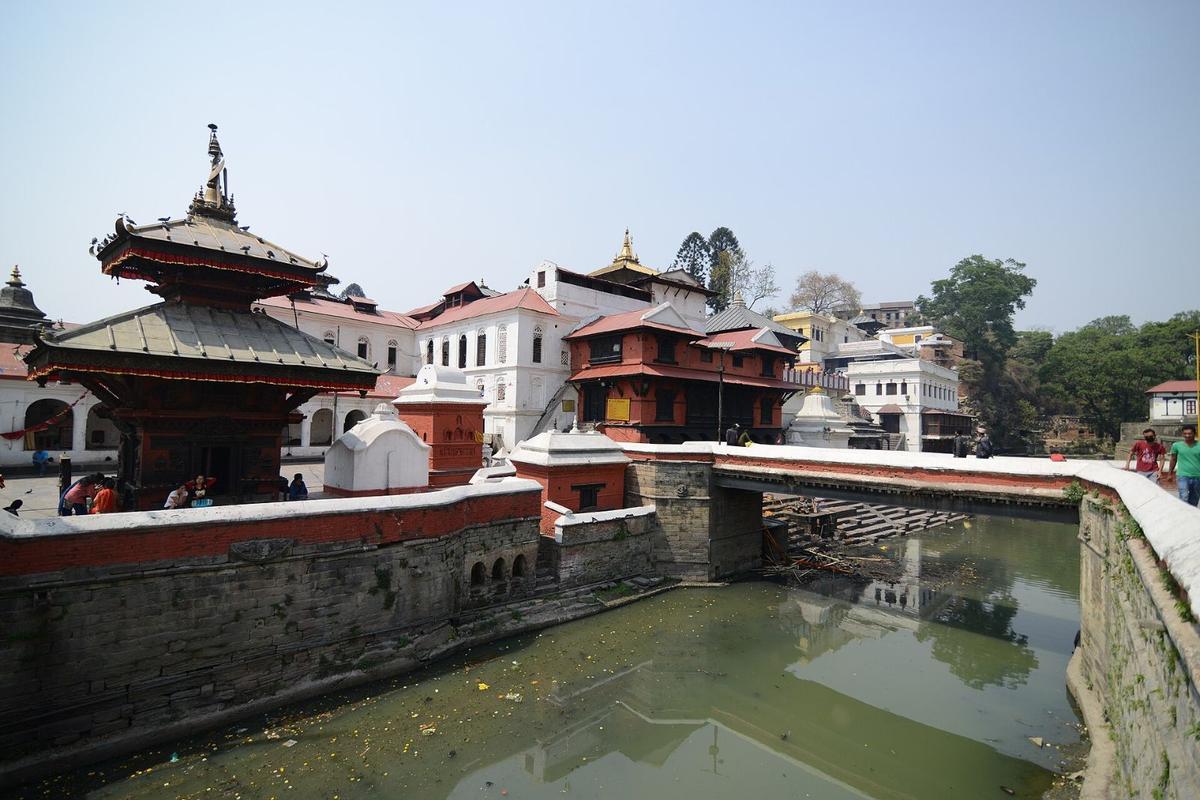
No official source dates the start of the rule, but it was in force in 1877, when Wright wrote that "no European is ever allowed to approach even the outer wall of the temple". The trust restated the Hindus-only rule in a press release posted on 7 October 2026. How it works at the gate today is explained in our Pashupatinath temple tickets guide.
Pashupati in modern times
The temple and the wider Area are run by PADT, set up in 2043 BS (1986/87) as an autonomous institution. In 1979 UNESCO inscribed the Kathmandu Valley on the World Heritage List, with Pashupati one of its seven Monument Zones. UNESCO's statement of value reads: "The seven monument ensembles represent an exceptional testimony to the traditional civilization of the Kathmandu Valley."
The wider Area
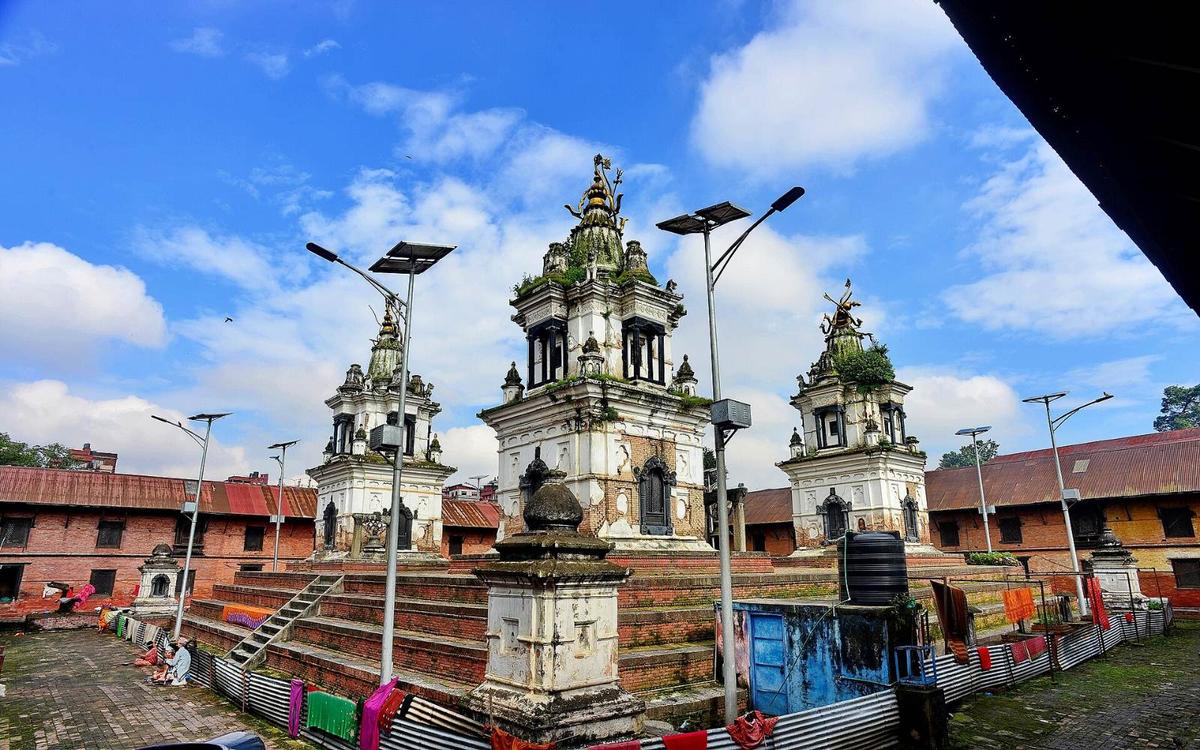
The Gorakhnath temple, in the shikhara style, dates to the eighteenth century and holds the footprint of Guru Gorakhnath. Panchadeval is a group of five Shiva temples in a courtyard ringed by a three-storeyed sattal, which PADT says took three generations of 19th-century Shah kings to build.
Arya Ghat, on the Bagmati, is described by PADT as one of the most prominent cremation ghats; Hindus believe last rites there help the soul attain moksha. It is a place of mourning, and our visitor guide to Pashupatinath covers how to behave there.
The 2015 earthquake
The main temple came through the earthquake of 25 April 2015; in the Kathmandu Post's words, "the main temple of Lord Shiva... remained intact". The rest of the Area was hit hard: the Post reported on 3 January 2016 that "around 90 percent of structures in the PADT area had been damaged".
Timeline of the Pashupatinath Temple story
Undated rows are legend; dated rows rest on the evidence named.
| Period or year | What happened | Evidence |
|---|---|---|
| Undated (legend) | A cow pours milk on a sacred spot; a cowherd digs and finds the god's buried light | PADT About page; Nepali chronicle in Wright, 1877 |
| Undated (legend) | Shiva roams the Shleshmantaka forest as a deer; his broken horn becomes lingas | Nepala Mahatmya retelling; Wright, 1877 |
| Licchavi period, first millennium AD | Chronicles credit Supushpa Deva with the first temple | Gopalarajavamshavali; PADT (chronicle claim, no dated inscription) |
| AD 733 | Jayadeva II's stele records a silver lotus placed over the linga | Inscription inside the west gate; Bühler and Indraji, 1885 |
| Mid-14th century | A raid by Sultan Shamsuddin breaks the icon into three pieces | Gopalarajavamshavali |
| Late 14th century | The Gopalarajavamshavali is compiled under Jayasthiti Malla | Manuscript in the National Archives, Kathmandu |
| 15th century (c. 1428 to 1482) | Yaksha Malla appoints Bhatta Brahmans from south India, per a chronicle | Wright, 1877, p. 188 |
| Malla period (13th to 18th century) | The complex grows with shrines, ghats and dharmashalas | PADT About page |
| 1697 | The present temple is built under King Bhupalendra Malla of Kantipur; other dates appear in print | PADT temple page |
| 18th century | The Gorakhnath temple | PADT monuments page |
| 19th century | Panchadeval is built over three generations of Shah kings | PADT Panchadeval page |
| 1877 | Wright describes the pagoda and notes Europeans are kept from the outer wall | Wright, History of Nepal, p. 21 |
| 1979 | Kathmandu Valley, with Pashupati, joins the World Heritage List | UNESCO WHC |
| 2043 BS (1986/87) | PADT is set up | PADT About page |
| 2003 to 2007 | The whole valley property is on the List of World Heritage in Danger | UNESCO WHC news, 25 Jun 2007 |
| January 2009 | Priest dispute; the government reverses within days | AFP/Taipei Times; Outlook; AsiaNews, 2009 |
| 2009 | Kedarnath's head priest declares Doleshwor Mahadev the head | NTB |
| 25 April 2015 | Earthquake: the main temple stays intact; wide damage across the Area | Kathmandu Post, 3 Jan 2016 |
| 7 October 2026 | PADT restates the Hindus-only rule in a press release | PADT news page |
Legend vs history, side by side
A quick way to tell which strand you are hearing.
| Theme | What legend or tradition says | What the evidence shows |
|---|---|---|
| Finding the linga | A cow poured milk on the spot and a cowherd dug it up | No one knows when worship began; the oldest dated evidence we cite is the AD 733 stele |
| The deer | Shiva roamed the forest as a deer and his broken horn became lingas | Deer are still kept in the forest by the temple to honour that form, per NTB |
| Shiva's head | Pashupatinath is the head of Kedarnath's Shiva, per PADT citing the Shiva Purana | In 2009 Kedarnath's head priest named Doleshwor Mahadev the head |
| The first builder | Supushpa Deva built the first temple | He appears only in chronicles, with no dated inscription |
| The present temple | The earlier wooden temple was lost to termites, the story goes | PADT dates the present temple to 1697 under Bhupalendra Malla; other dates exist |
| The priests | The custom goes back to Adi Shankaracharya | A chronicle credits Yaksha Malla in the 15th century; others say the 18th; the custom is centuries old |
Seeing the story today
Start at the west gate, where the Nandi's back is visible and the AD 733 stele stands just inside. Then cross to the east-bank terraces for the roof, the ghats and the deer forest of Mrigasthali. Dress modestly: PADT asks for "modest and traditional dress", and NTB says leather items must be left outside the temple complex. Hours, aarti times and fees are in our visitor and tickets guides.
Maha Shivaratri, which NTB calls "the most important festival observed here", falls on 6 March 2027, a public holiday. The crowds are old: in 1877 Wright noted that every February "from 10,000 to 20,000 pilgrims from the plains of Hindustan come to visit Pashupati". For the pilgrim's view, read our Nepal pilgrimage guide.
Ways to visit with us
- Patan, Boudhanath and Pashupatinath day tour: a day tour
- Boudhanath and Pashupatinath aarti tour: ending with the evening aarti
- Kathmandu UNESCO World Heritage sites day tour: the valley's heritage sites, Pashupati included
Our guide to the best places to visit in Kathmandu puts Pashupati in context. If you would like the story told on the spot, send us a WhatsApp message or an enquiry with your dates.
Frequently asked questions
Who built Pashupatinath Temple?
The chronicles credit a king named Supushpa Deva with the first temple, and PADT places him in the Licchavi period. According to the trust, the present building was built in 1697 by King Bhupalendra Malla of Kantipur. Some books give 1692 or name a different Malla king.
How old is Pashupatinath Temple?
Nobody knows when worship began here. The oldest dated evidence we can point to is a stone inscription of King Jayadeva II, dated AD 733, just inside the west gate, which records a silver lotus placed over the linga. The present temple building dates, according to PADT, to 1697.
What is the connection between Pashupatinath and Kedarnath?
Both belong to a legend of Shiva hiding as a bull. In the Panch Kedar story the hump stayed at Kedarnath. PADT, citing the Shiva Purana, calls Pashupatinath the head of Kedarnath's Shiva. In 2009 Kedarnath's head priest declared Doleshwor Mahadev, in Bhaktapur district, to be the head. Pilgrims honour both.
Why are the priests at Pashupatinath from South India?
Tradition links them to Adi Shankaracharya. A chronicle translated in 1877 says the 15th-century king Yaksha Malla appointed Bhatta Brahmans from the south, while other writers date the custom of a south Indian head priest to the 18th century. Either way the custom has run for centuries, and only the Bhattas touch the linga.
Why can't non-Hindus enter Pashupatinath Temple?
PADT reserves the main temple for Hindus: non-Hindu visitors are not permitted inside the main sanctum, and observation from the surrounding ghats is permitted. The rule is long-standing and was already in force in 1877. Our Pashupatinath tickets and entry guide explains how it works at the gate today.
What is the story of the cow at Pashupatinath?
According to legend, a cow poured her milk on a sacred spot in the forest, and the deity was found there. In a Nepali chronicle translated in 1877, a cow called Ne ran daily to one spot, a cowherd dug there and found the god's buried light. The trust does not name the cow.
Updated 21 Nov 2026 by our Kathmandu travel team.