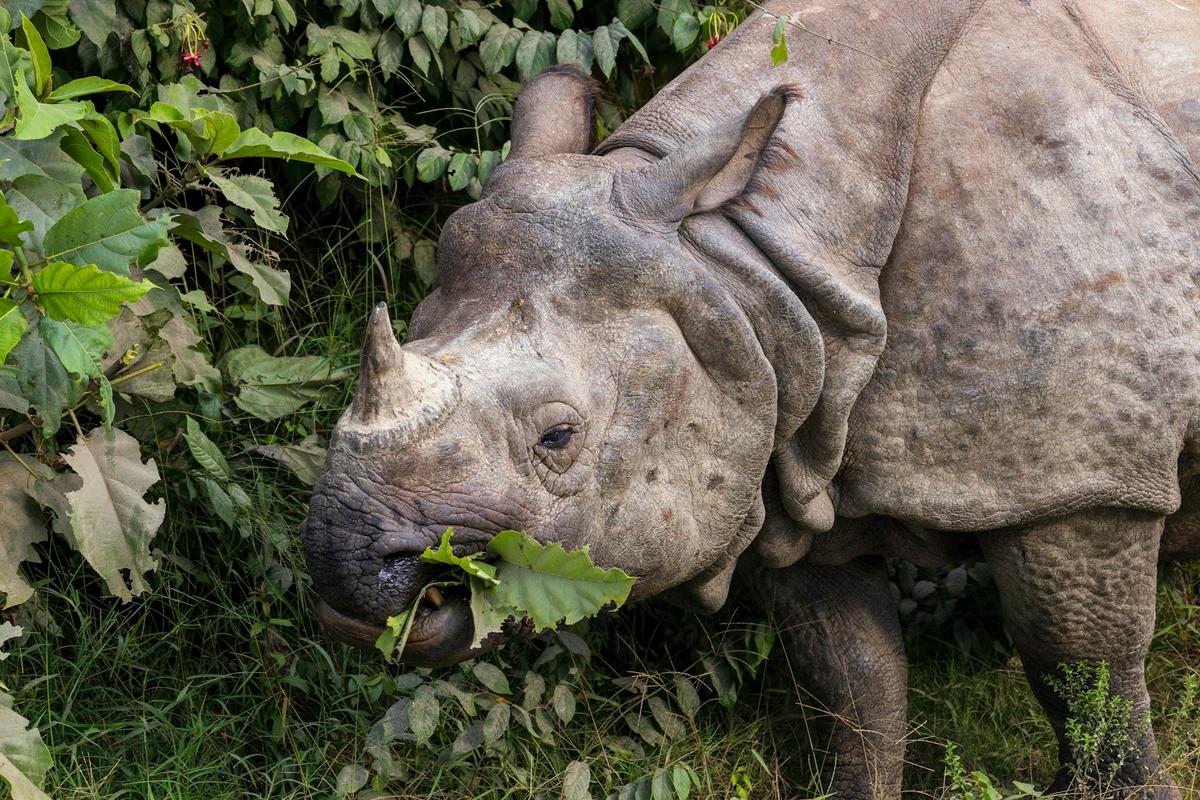
On the Rapti River at the edge of Chitwan National Park, dugout canoes drift past sandbanks where gharials, the narrow-snouted fish-eating crocodiles, lie out in the sun. Rhinos graze the tall grass on the far bank. Far to the east, red pandas live up in the trees of the community forests of Ilam and Taplejung.
The best places to see Nepal wildlife are its 13 national parks, one wildlife reserve, one hunting reserve and six conservation areas, covering 23.39% of the land. For rhinos and tigers, go to the Terai (the southern lowlands), above all Chitwan and Bardia. Red pandas live in the hill and mountain forests, and snow leopards higher still.
This article is the national overview. For Chitwan itself, read our complete guide to Chitwan National Park.
Updated 22 Nov 2026
In this guide
- How many national parks does Nepal have?
- Where can you see Nepal wildlife, park by park?
- Where can you see one-horned rhinos?
- How many tigers are there in Nepal?
- Where can you see red pandas?
- Where do snow leopards live?
- Where do elephants, gharials and dolphins live?
- Where can you see blackbuck, swamp deer and wild buffalo?
- Where should you go for birds?
- When is the best time to see wildlife?
- How do park entry fees and guide rules work?
- Frequently asked questions
- Plan your Nepal wildlife trip with us
Key facts
- Protected areas
- 13 national parks, 1 wildlife reserve, 1 hunting reserve, 6 conservation areas; 23.39% of land (DNPWC, checked 20 Nov 2026)
- One-horned rhinos
- 752 in the 2021 national count (NTNC, 11 Apr 2021)
- Bengal tigers
- 429 in the 2026 survey (355 in 2022) (DNPWC figures via The Kathmandu Post, 30 Jul 2026)
- Snow leopards
- 397 estimated (The Himalayan Times, 21 Apr 2025)
- Wild elephants
- About 230 (rough estimate) (Elephant Conservation Action Plan for Nepal 2025-2035 (NTNC), 2025)
- Red pandas
- No reliable national count; published estimates vary widely (Red Panda Conservation Action Plan 2019-2023 (2019) and Mongabay, 4 Jul 2025)
- Bird species
- 904 recorded (Nepal Bird Record Committee, via The Kathmandu Post, 5 Oct 2026)
- Chitwan entry fee
- NPR 2,000 foreigners, NPR 1,000 SAARC, NPR 150 Nepali (Chitwan National Park office and NTB, checked 20 Nov 2026)
How many national parks does Nepal have?
Nepal has 13 national parks, one wildlife reserve, one hunting reserve and six conservation areas, with 13 buffer zones around them, according to the Department of National Parks and Wildlife Conservation (DNPWC). Together they cover 23.39% of Nepal's land. The newest park is Chhayanath in Mugu district, created in 2025.
DNPWC's office list includes Chhayanath, carved from part of Shey Phoksundo National Park (Himalayan Tribune, September 2025). The 13 are Chitwan, Sagarmatha (the Everest region), Langtang, Rara, Khaptad, Shey Phoksundo, Bardia, Makalu Barun, Shivapuri Nagarjun, Banke, Shuklaphanta, Parsa and Chhayanath. The wildlife reserve is Koshi Tappu, the hunting reserve is Dhorpatan, and the conservation areas are Annapurna, Kanchenjunga, Manaslu, Krishnasar (Blackbuck), Api Nampa and Gaurishankar.
Where can you see Nepal wildlife, park by park?
Chitwan holds most of Nepal's rhinos and the most tigers, and Bharatpur, its nearest city, is 146 km by road from Kathmandu. Bardia in the west has the second-highest tiger count. Koshi Tappu in the east has wild buffalo and birds, and the Nepal Tourism Board (NTB) names Shuklaphanta for swamp deer. Red pandas and snow leopards live higher up.
| Park | Region | Headline animals | Nearest airport or road | Entry fee in NPR: foreigner / SAARC / Nepali |
|---|---|---|---|---|
| Chitwan National Park | Central Terai | Rhino, tiger, gharial, more than 500 bird species | Bharatpur: 20 minutes by air or 146 km by road from Kathmandu | 2,000 / 1,000 / 150 |
| Bardia National Park | Western Terai | Tiger, rhino, Gangetic dolphin | Nepalgunj: 1 hour by air or 516 km by road from Kathmandu, then about 3 hours (95 km) by road | 1,500 / 750 / 100 |
| Shuklaphanta National Park | Far-western Terai | Swamp deer, tiger, rhino, blackbuck | Ask us | 1,500 / 750 / 100 |
| Parsa National Park | Central Terai | Tiger, wild elephant | Ask us | 1,500 / 750 / 100 |
| Banke National Park | Western Terai | Tiger | Ask us | 1,500 / 750 / 100 |
| Koshi Tappu Wildlife Reserve | Eastern Terai | Wild water buffalo, migratory birds | Biratnagar: 50 minutes by air or 500 km by road from Kathmandu | 1,500 / 750 / 100 |
| Blackbuck Conservation Area | Bardiya district | Blackbuck | About 45 km from Bardia National Park | 2,000 / 500 / 100 |
| Makalu Barun, Sagarmatha, Shey Phoksundo | High mountains | Red panda, snow leopard | Ask us | 3,000 / 1,500 / 100 |
Distances are NTB's, except the Blackbuck area (The Kathmandu Post). Fees are from NTB's fee table, checked 20 November 2026. We have found no official distance for Shuklaphanta, Parsa or Banke, so ask us. For Chitwan, see our guide to getting from Kathmandu to Chitwan.
Where can you see one-horned rhinos?
Chitwan, by a long way. Nepal's last national rhino count, in 2021, found 752 greater one-horned rhinos: 694 in and around Chitwan, 38 in Bardia, 17 in Shuklaphanta and three in Parsa. That was up from 645 in 2015, according to the National Trust for Nature Conservation (NTNC).
DNPWC's Chitwan leaflet calls the park home to the "second largest population of Greater One-horned Rhinoceros in the world". Why is 2021 still the latest figure? The next count, planned for 2024 to 2025, was held up by budget, equipment shortages and technical discussions (Kantipur, April 2026). DNPWC is now considering DNA sampling and camera traps instead of the old method of counting rhinos by sight from elephants. A committee will first prepare a protocol and run pilot studies; no census date had been announced when The Kathmandu Post reported this on 23 September 2026.
"Risk is high, and it is also difficult to obtain the actual data."
Haribhadra Acharya, DNPWC senior ecologist, on the old census method, The Kathmandu Post, 23 September 2026
The same report says no rhino has been killed by poachers in Chitwan since October 2023. For where rhinos are usually seen inside the park, see our Chitwan rhino and wildlife guide.
How many tigers are there in Nepal?
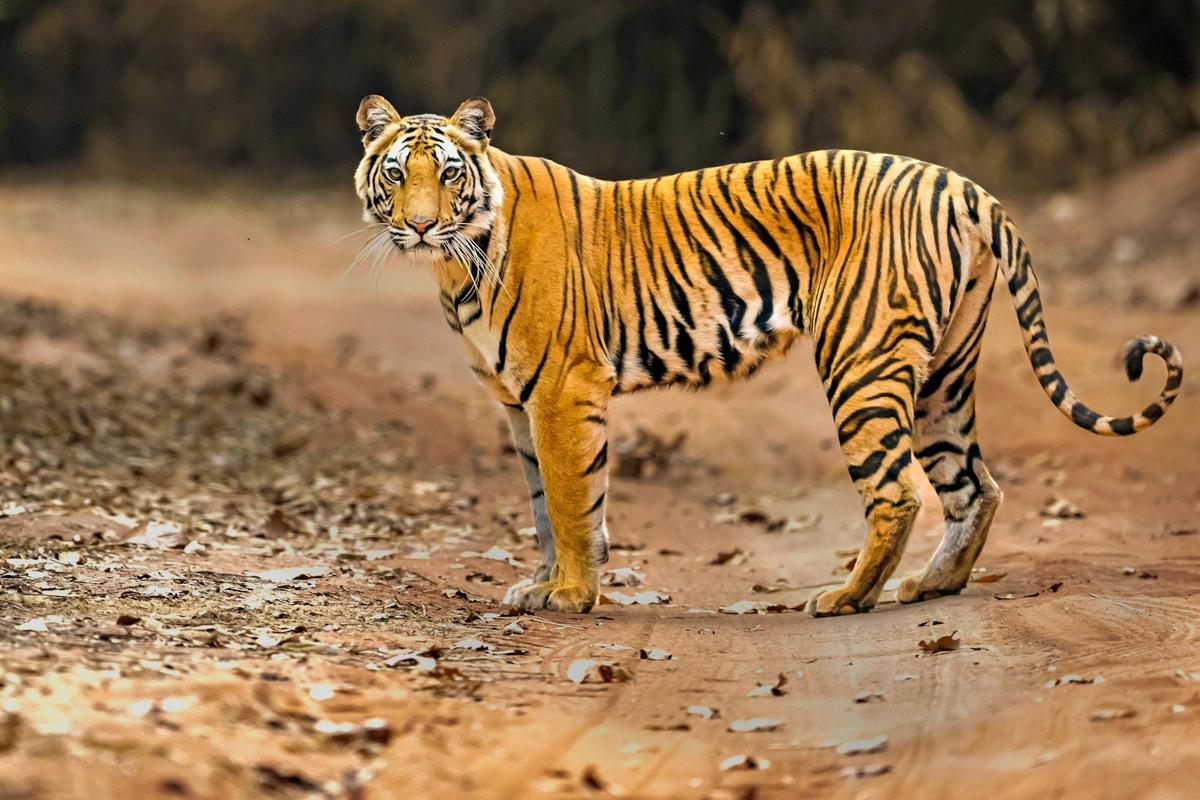
Nepal has 429 wild Bengal tigers, according to the 2026 national survey. Camera traps ran from 31 December 2025 to 23 April 2026, and DNPWC released the result on World Tiger Day, 29 July 2026. That is up from 355 in 2022. The survey counted them in five Terai parks.
| Park | Tigers in 2022 | Tigers in 2026 |
|---|---|---|
| Chitwan | 128 | 145 |
| Bardia | 125 | 112 |
| Parsa | 41 | 71 |
| Banke | 25 | 51 |
| Shuklaphanta | 36 | 50 |
Source: The Kathmandu Post and OnlineKhabar, July 2026. Bardia was the only park where the number fell.
"Habitat management and long-term conservation planning will become even more important as tiger numbers increase."
Dil Bahadur Pun, chief conservation officer, Chitwan National Park, The Kathmandu Post, 30 July 2026
No one can promise a sighting, so treat a tiger as a bonus.
Where can you see red pandas?
Red pandas live in the hill and mountain forests from Langtang National Park east to the Kanchenjunga Conservation Area, according to NTB. In the east, community forests in Ilam and Taplejung host visitors through homestays and conservation eco-trips. There is no reliable national count, and published estimates vary too widely to quote.
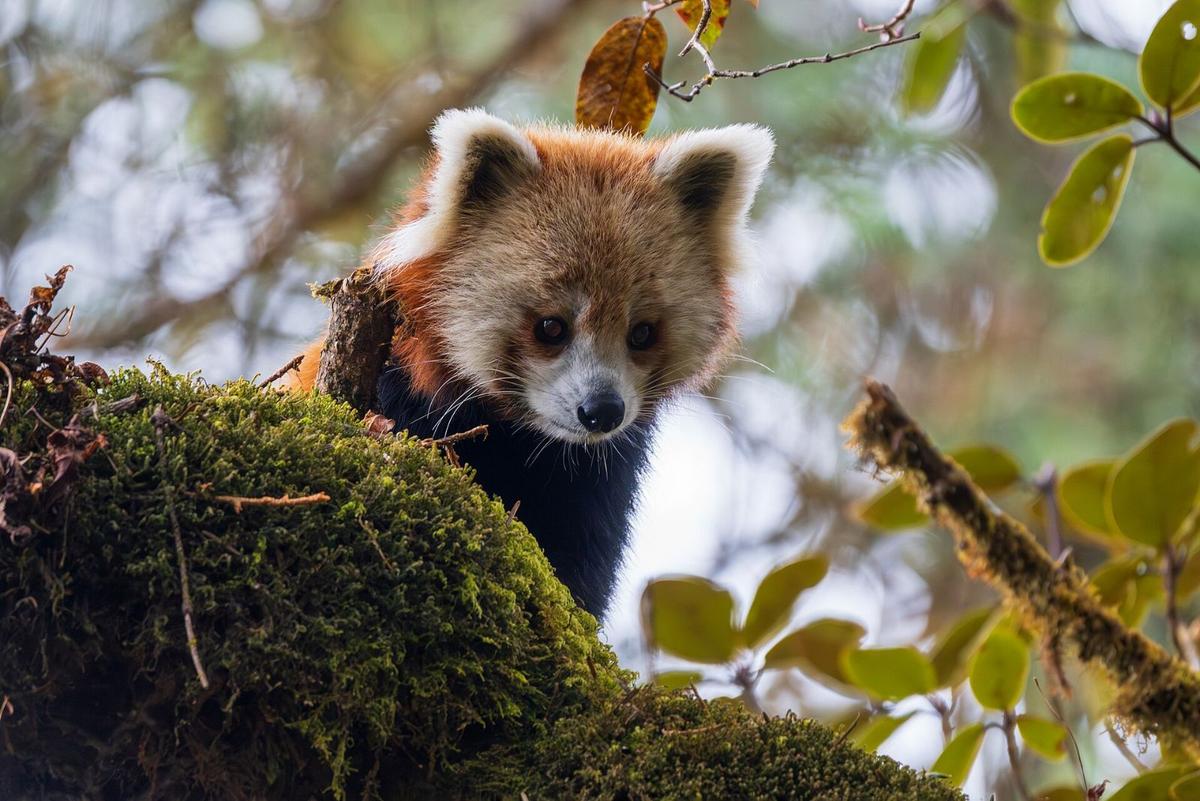
"Red pandas, rarely seen because of their shy nature, are found around the Langtang National Park to Kanchenjunga Conservation Area."
Nepal Tourism Board, "Wildlife in Nepal", checked 20 November 2026
The government's Red Panda Conservation Action Plan for Nepal 2019-2023 lists Langtang, Rara, Sagarmatha, Makalu Barun and Shey Phoksundo national parks, Dhorpatan Hunting Reserve, and the Gaurishankar and Kanchenjunga conservation areas among the protected areas where red pandas have been reported. A 2016 national survey confirmed them in 24 districts, the plan puts their range at 2,000 to 4,800 m, and almost 70% of their habitat lies outside protected areas.
Mongabay reported in July 2025 that the Panchthar-Ilam-Taplejung corridor shelters roughly a quarter of Nepal's red pandas, that Puwamajhuwa village in Ilam was declared the country's first community-based conservation area, and that about 15 homestays operate in the corridor. Red Panda Network, a conservation charity, runs eco-trips there.
The action plan says red pandas live in trees and are most active around dawn and dusk. They are listed as Endangered by IUCN and fully protected under Nepali law.
Where do snow leopards live?
Snow leopards live high in the mountains, at 3,000 to 5,500 m, and Nepal's national estimate puts them at 397. The estimate, published in April 2025 and led by DNPWC and the Department of Forests and Soil Conservation, used camera traps and scat DNA collected from 2015 to 2024 in seven study regions.
NTNC says about 60% of them live in what the report calls the Western landscape, and nearly 42% of their habitat lies outside protected areas. DNPWC names Annapurna, Kanchenjunga and Manaslu conservation areas and Langtang, Makalu Barun, Sagarmatha and Shey Phoksundo national parks as snow leopard habitat. No one can promise a sighting.
Where do elephants, gharials and dolphins live?
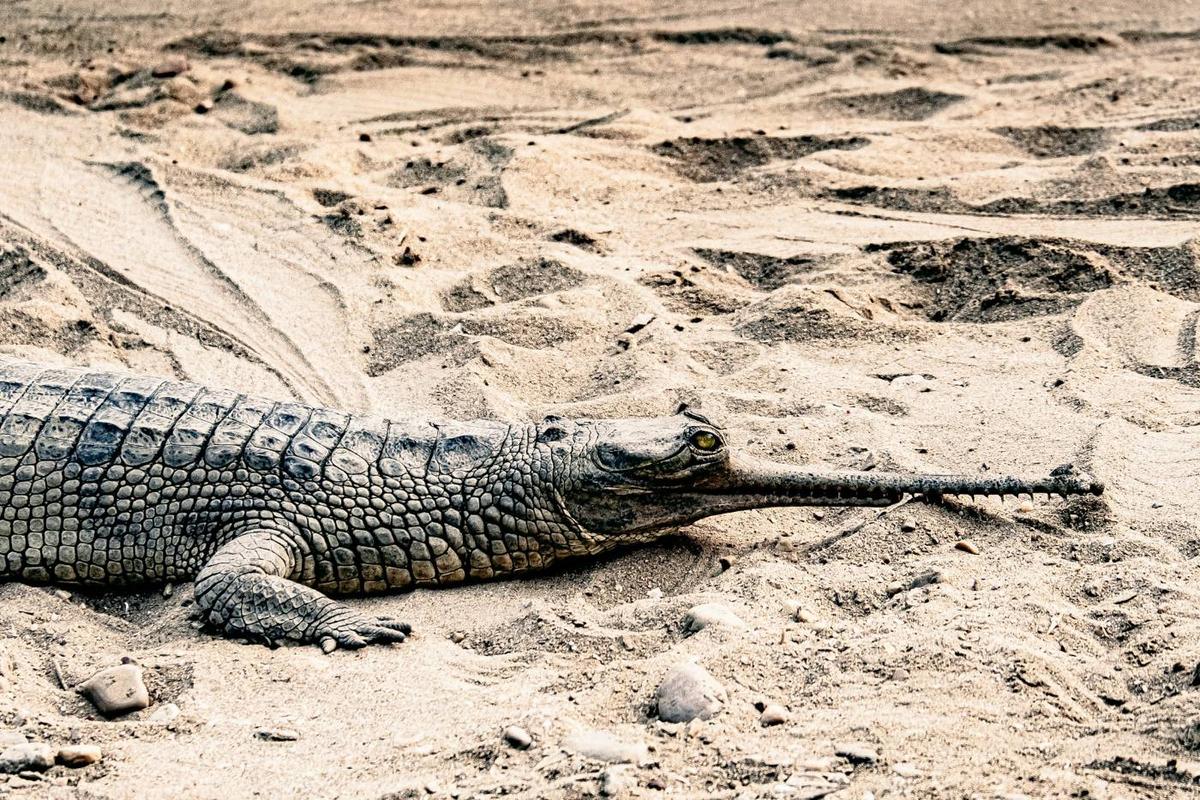
Wild elephants roam the Terai, gharials live in Chitwan's rivers, and Gangetic dolphins survive in small numbers in a few large rivers. The government's rough estimate is about 230 wild elephants, and a December 2025 count put the gharials in the Rapti and Narayani rivers at 366.
Wild elephants. The Elephant Conservation Action Plan for Nepal 2025-2035 describes an eastern group from Jhapa to Chitwan and a western group from Kapilvastu to Kanchanpur, with about 150 crossing the border with India regularly. Parsa alone has 60 to 65 resident wild elephants, The Kathmandu Post reported on 16 November 2026.
Gharials and muggers. Nepal has two native crocodiles, the fish-eating gharial and the marsh mugger, and NTB credits a breeding project with bringing the gharial back from extinction. Chitwan National Park's count from 6 to 14 December 2025 put the total at 231 gharials in the Rapti and 135 in the Narayani, up from 352 in total the year before (The Kathmandu Post, 20 December 2025).
Gangetic dolphins. NTB says they live in the Narayani and Karnali rivers, and DNPWC also lists them in the Koshi at Koshi Tappu. Numbers are very low: The Kathmandu Post reported in January 2026 that a survey saw three dolphins in the southern Karnali, against five in a 2016 government survey.
Where can you see blackbuck, swamp deer and wild buffalo?
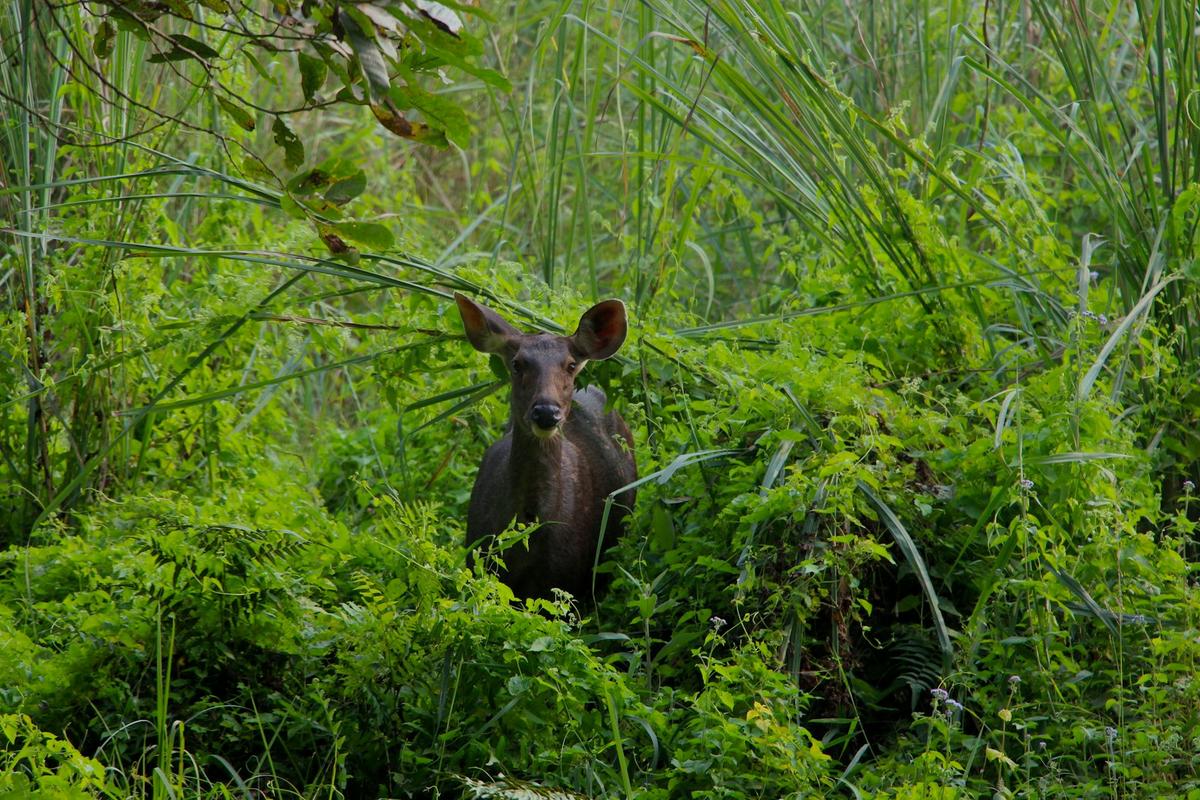
Go west for blackbuck and swamp deer, and east for wild water buffalo. Blackbuck live at Khairapur in Bardiya district and in Shuklaphanta, swamp deer live in Shuklaphanta, and Koshi Tappu was set up in 1976 for Nepal's last wild water buffalo, which numbered 498 in the 2021 count.
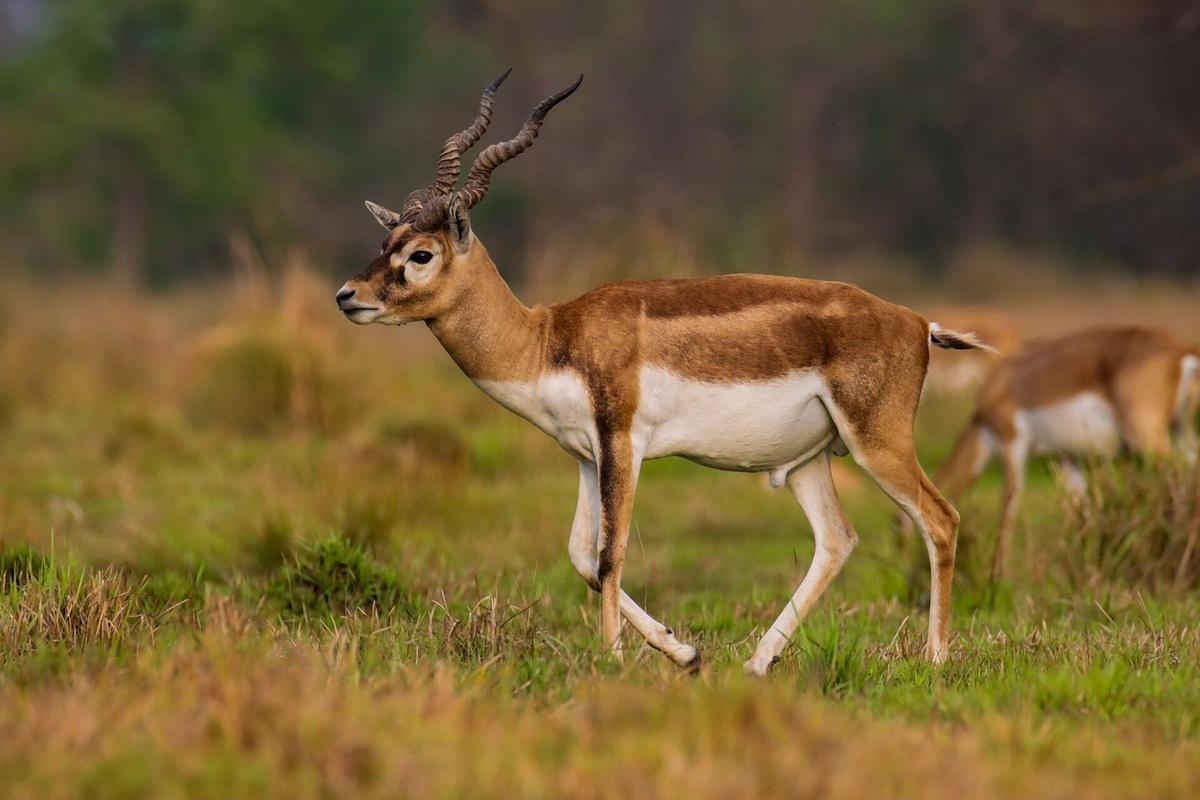
Blackbuck. The Blackbuck Conservation Area at Khairapur, Gulariya, was declared in March 2009 (The Kathmandu Post). On 6 October 2026 the Post reported 210 blackbuck, down from 242 the previous fiscal year. Shuklaphanta also has a herd, grown from 42 animals moved there in 2012 and 2015 to 306 by May 2025, the Post reported.
Swamp deer.
"The western Tarai jungles of Suklaphanta are home to the swamp deer, while the endangered blackbucks are located in the Bardia region."
Nepal Tourism Board, "Wildlife in Nepal", checked 20 November 2026
A drone count of Shuklaphanta's swamp deer began on 21 April 2026; we have not seen a published result, so we give no number.
Wild water buffalo. Locally called arna, they are the reason Koshi Tappu Wildlife Reserve exists. DNPWC says there were 63 when the reserve was established in 1976, and The Kathmandu Post reported 498 in the 2021 census. The reserve's chief conservation officer told the Post it is the only natural habitat for arna in Nepal.
Where should you go for birds?
For birds, go to Koshi Tappu Wildlife Reserve, where DNPWC says visitors come from September to February to see migratory birds. Nepal now has 904 recorded bird species, after the Nepal Bird Record Committee confirmed a collared kingfisher in Dhanusha (The Kathmandu Post, 5 October 2026). Chitwan has more than 500 species and Bardia over 230.
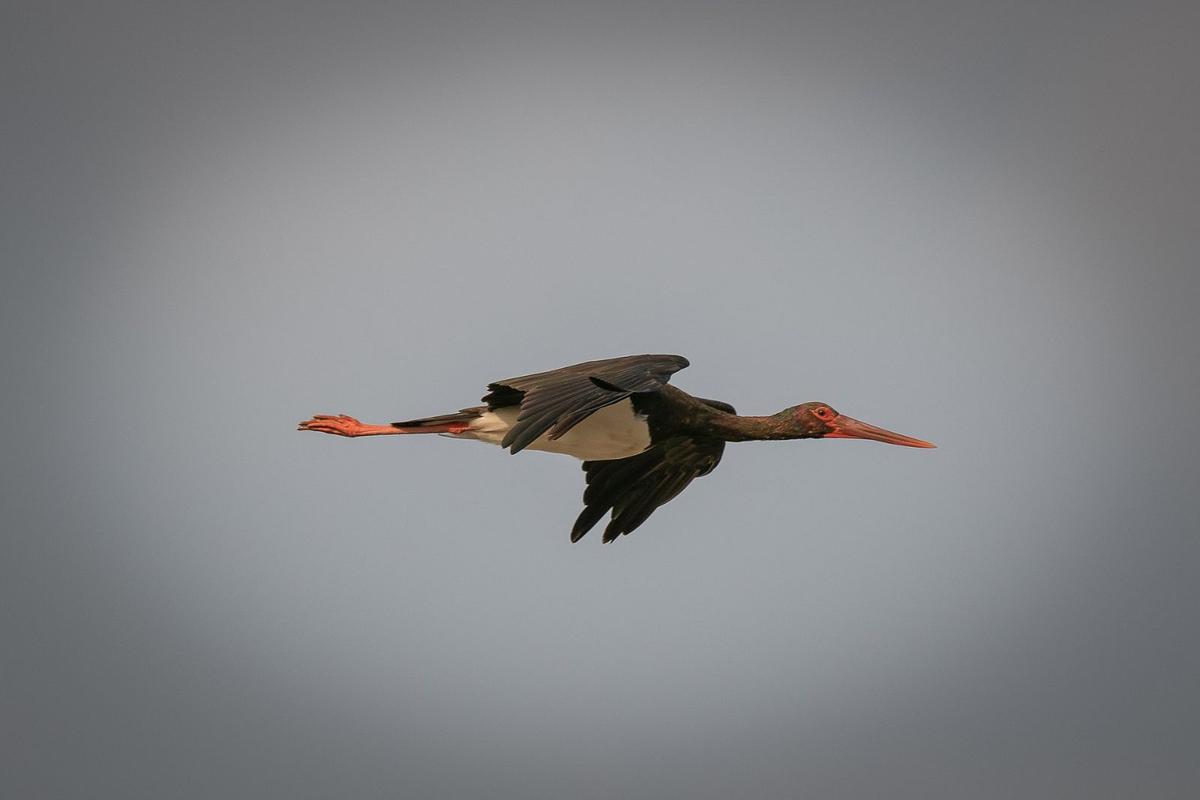
Koshi Tappu sits on the floodplain of the Sapta Koshi river, with its headquarters at Kusaha in Sunsari district. It became Nepal's first Ramsar site, a wetland of international importance, on 17 December 1987. DNPWC says migration usually peaks around mid-March, and the reserve's birds include the endangered swamp partridge and Bengal florican.
When is the best time to see wildlife?
For the Terai parks, official sources point to October to March or April: NTB gives October to March for Chitwan, Bardia's park office gives its dry season as October to early April, and DNPWC points birders to Koshi Tappu from September to February. July to September is rainy, and some safaris close.
| Park | Best months (official source) | Also worth knowing |
|---|---|---|
| Chitwan | October to March (NTB) | April to June is hot; DNPWC says visibility is good after the winter season |
| Bardia | October to early April (park office) | The dry season |
| Koshi Tappu | September to February (DNPWC) | Migration usually peaks around mid-March |
For the whole country, see our guide to the best time to visit Nepal.
How do park entry fees and guide rules work?
You pay a per-person entry fee that depends on the park and your nationality, and for jungle walks you go with a park-certified guide. Chitwan costs NPR 2,000 for foreigners, NPR 1,000 for SAARC nationals (including Indians) and NPR 150 for Nepalis. The park-by-park table above has the other fees.
Four details are worth knowing:
- Children under 10 enter free at every park and reserve in NTB's fee table.
- Per entry or per day. NTB's table says per person per entry, but DNPWC's Chitwan and Koshi Tappu leaflets say per person per day. On a multi-day stay, budget for paying per day. Fees can change; check NTB's park entry fee page.
- Where to pay. At the Tourist Service Center in Bhrikutimandap, Kathmandu, or at the park entry points. You need a park entry permit to enter any protected area.
- Guides. DNPWC's Chitwan and Koshi Tappu leaflets say a guide is a must for a jungle walk. This comes from the parks' own visitor leaflets.
The Chitwan park office also bans walking in the park between sunset and sunrise and asks visitors not to disturb plants or animals or buy illegal animal or plant products.
Frequently asked questions
How many rhinos are there in Nepal?
Nepal's last national count, in 2021, found 752 greater one-horned rhinos, up from 645 in 2015. Chitwan held 694, Bardia 38, Shuklaphanta 17 and Parsa three. The next census had no date as of September 2026 (The Kathmandu Post), so 752 is still the latest national figure.
How many tigers are in Nepal in 2026?
Nepal has 429 wild tigers, according to the national survey DNPWC released on 29 July 2026, up from 355 in 2022. Chitwan has the most with 145, followed by Bardia with 112, Parsa with 71, Banke with 51 and Shuklaphanta with 50.
Where can I see a red panda in Nepal?
In the hill and mountain forests from Langtang National Park east to the Kanchenjunga Conservation Area, says NTB. For visitors, the community forests of Ilam and Taplejung in the far east have homestays and Red Panda Network eco-trips. Red pandas live in trees and are most active around dawn and dusk, so a sighting is never certain.
How many national parks are there in Nepal?
Nepal has 13 national parks, according to DNPWC's list of protected-area offices, the newest being Chhayanath in Mugu, created in 2025. There is also one wildlife reserve (Koshi Tappu), one hunting reserve (Dhorpatan) and six conservation areas. Some older pages, including the summary on DNPWC's home page, still say 12.
Is Bardia or Chitwan better for wildlife?
Chitwan is easier to reach and has far more rhinos; Bardia is more remote and has the second-highest tiger count of any park. The 2021 count found 694 rhinos in Chitwan and 38 in Bardia, and the 2026 survey found 145 tigers in Chitwan and 112 in Bardia. Bharatpur, for Chitwan, is 146 km by road from Kathmandu; Bardia is 95 km beyond Nepalgunj, which is 516 km by road.
Can you see tigers in Nepal?
Yes. The 2026 survey counted wild Bengal tigers in five Terai parks: Chitwan, Bardia, Parsa, Banke and Shuklaphanta. A sighting is never certain, though. Go for the rhinos, the birds and the forest itself.
Plan your Nepal wildlife trip with us
For a first visit, we usually suggest Chitwan: rhinos, tigers, gharials and more than 500 bird species, with Bharatpur 146 km by road from Kathmandu. Our complete guide to Chitwan National Park covers safaris, seasons and fees in depth, and our list of places to visit in Chitwan helps you fill the days around the park. Fitting wildlife into a longer trip? See things to do in Nepal.
Good starting points for planning:
- Our jungle safari and wildlife trips
- The Chitwan jungle safari tour from Kathmandu
- A Pokhara and Chitwan tour by flight
Thinking about Bardia, Koshi Tappu or the red panda forests of the east? Send us a WhatsApp message or use the enquiry form with your dates, and we will tell you what is practical.