By Uncover Nepal Guide · Checked by our Kathmandu travel team · Last checked 12 November 2026
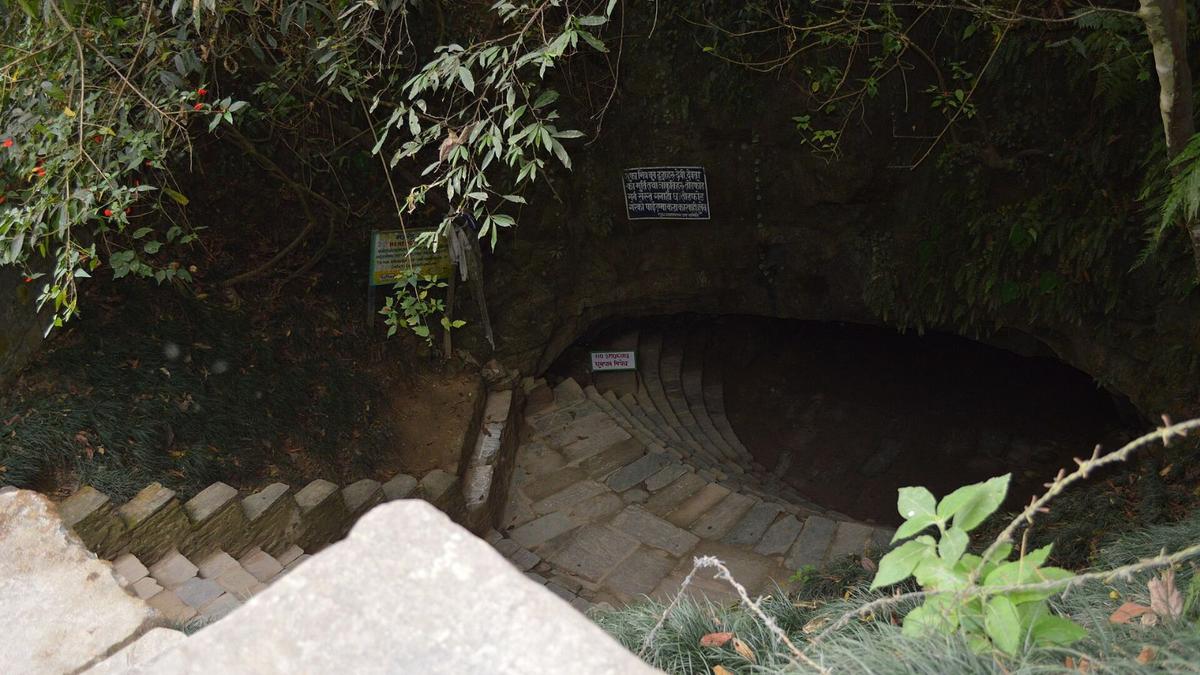
On the edge of Batulechaur, north of Pokhara, stone steps lead down into a dark opening in the rock and the air turns cool and damp. Inside, a line of dim bulbs picks out wet limestone. A short walk away, the Bat Cave has no lights at all: only torch beams, a slippery floor and a ceiling crowded with bats.
Mahendra Cave, or Mahendra Gufa, is a limestone cave at Batulechaur, about 8 km north of Pokhara, with electric lighting, stalactites, stalagmites and a small Shiva shrine. The Bat Cave, Chamero Gufa, is about a ten-minute walk away. It is unlit, wet and home to a large bat colony, with a tight squeeze at the exit.
Both caves are on the list in our guide to things to do in Pokhara. This page covers what each one is like inside, who should skip the Bat Cave, what we know about tickets, and how they compare with the other caves in Pokhara.
In this guide
- Key facts
- What is Mahendra Cave?
- Where is Mahendra Cave and how do you get there?
- What is it like inside Mahendra Cave?
- Are there bats in Mahendra Cave?
- What is the Bat Cave (Chamero Gufa) like?
- What is the Mahendra Cave ticket price?
- How do the caves in Pokhara compare?
- How many caves are there in Pokhara?
- Can you combine Mahendra Cave with Gupteshwor and Davis Falls?
- When is the best time to visit the caves?
- What should you bring?
- Frequently asked questions
- Plan your Pokhara days with us
Key facts
- Where
- Batulechaur, about 8 km north of Pokhara, in Pokhara Metropolitan City ward 16; the Bat Cave is in the same ward (Nepal Tourism Board, Mahendra Gupha page; Pokhara Metropolitan City tourism site (both undated, checked 12 Nov 2026))
- From Lakeside
- About 30 minutes by taxi (Nepal Traveller, 24 Jul 2026 (checked 12 Nov 2026))
- Mahendra Cave to Bat Cave
- About a ten-minute walk (Nepal Traveller, 24 Jul 2026 (checked 12 Nov 2026))
- Who runs them
- Bindhyabasini Secondary School at Batulechaur, through a cave committee under the school (PokharaViews, Feb 2025; Republica, Nov 2018 (checked 12 Nov 2026))
- Tickets
- No official rate card online. Last published rates: NPR 150 foreign, NPR 80 SAARC, NPR 50 Nepali (July 2026, the same as 2022 to 2023 figures). Check at the counter (Nepal Traveller, Jul 2026; Showcaves.com, 2023 (checked 12 Nov 2026))
- Opening hours
- Daytime; no official hours published, so check locally (Our checks, 12 Nov 2026)
- What the rock is
- Limestone, with stalactites and stalagmites, believed to have formed during the Pleistocene (Nepal Tourism Board, undated (checked 12 Nov 2026))
- Mahendra Cave length
- Published lengths vary, from 125 m (the city's figure) to more than 200 m (Pokhara Metropolitan City; Nepal Traveller, Jul 2026; Showcaves.com (checked 12 Nov 2026))
- Lighting
- Mahendra Cave: electric, but it can be dim. Bat Cave: unlit (Koju and Chalise, J. Sci. Eng., 2012; Showcaves.com; Nepal Traveller, Jul 2026 (checked 12 Nov 2026))
- Bats in the Bat Cave
- About 21,000 counted roosting in February 2011 (Koju and Chalise, J. Sci. Eng., 2012 (checked 12 Nov 2026))
What is Mahendra Cave?
Mahendra Cave is a natural limestone cave on the northern edge of Pokhara. The Nepal Tourism Board writes the name Mahendra Gupha; in Nepali, gufa or gupha simply means cave. It is named after King Mahendra, and its older local name was Adhero Bhawan, the "Dark House".
"Located about 8 km north of Pokhara and locally known as the House of Bats, the caves were accidentally discovered in 1950s by young shepherds."
Nepal Tourism Board, Mahendra Gupha page (undated, read 12 November 2026)
The royal name came through a newspaper. The culture scholar Satya Mohan Joshi visited in 1953 and wrote about the cave in the Newari newspaper Nepal. King Mahendra read the piece, came to see the cave for himself, and it was named after him. Sources disagree on the year of that royal visit, so we leave it out.
The science came later. A team of speleologists from the United Kingdom studied the cave for the first time in 1976, according to the Nepal Tourism Board, which describes the limestone as "full of interesting features of stalactites and stalagmites" and "believed to have formed during the Pleistocene epoch".
Today the cave and its neighbour, the Bat Cave, are owned and managed by Bindhyabasini Secondary School at Batulechaur, through a cave committee under the school.
Where is Mahendra Cave and how do you get there?
Mahendra Cave is at Batulechaur, in ward 16 of Pokhara Metropolitan City, about 8 km north of Pokhara according to the Nepal Tourism Board. From Lakeside it is about 30 minutes by taxi, and the Bat Cave is about a ten-minute walk from Mahendra Cave, so one taxi ride covers both.
That puts them in a different part of town from Gupteshwor Mahadev Cave. Gupteshwor Mahadev Cave and Davis Falls are in Chhorepatan, in the south-west, while Mahendra Cave and the Bat Cave are in the north. If you are staying in Lakeside, think of them as two separate outings rather than one loop.
The simplest way is a taxi from Lakeside, or a driver as part of a Pokhara sightseeing day. Agree the fare and whether the driver waits before you set off, because the two caves sit close together and you will want the same car to take you back.
What is it like inside Mahendra Cave?
Mahendra Cave is a short, lit walk through a damp limestone passage. The main part has electric lighting, but it can be dim, so a torch or your phone light helps you see the formations and your footing. Published lengths vary from 125 m to more than 200 m, so it is a compact visit, not an expedition.
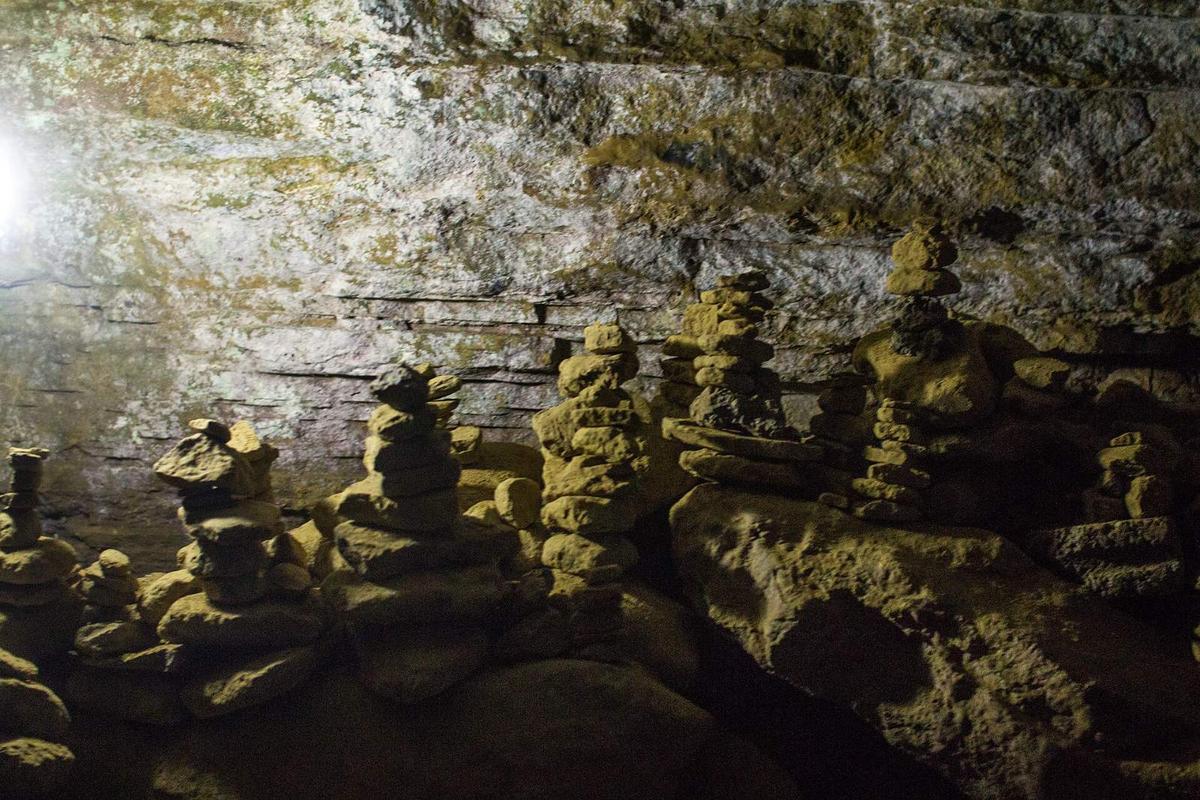
You go down the stone steps at the entrance and into a passage of damp rock. The interesting part is the shapes: stalactites hanging from the roof and stalagmites rising from the floor. Look, but try not to touch them.
The floor is uneven and can be wet, so watch your footing in the dim light. Nothing here is technical. If you can manage stone steps and a slippery path, you can manage Mahendra Cave.
The Shiva shrine
Like many caves in Nepal, Mahendra Cave is also a place of worship. A 2012 study of the cave describes "a sculpture of Hindu god Shiva" in its lit central part. Our photo shows a small Shiva lingam shrine with a Nepali sign beside it.
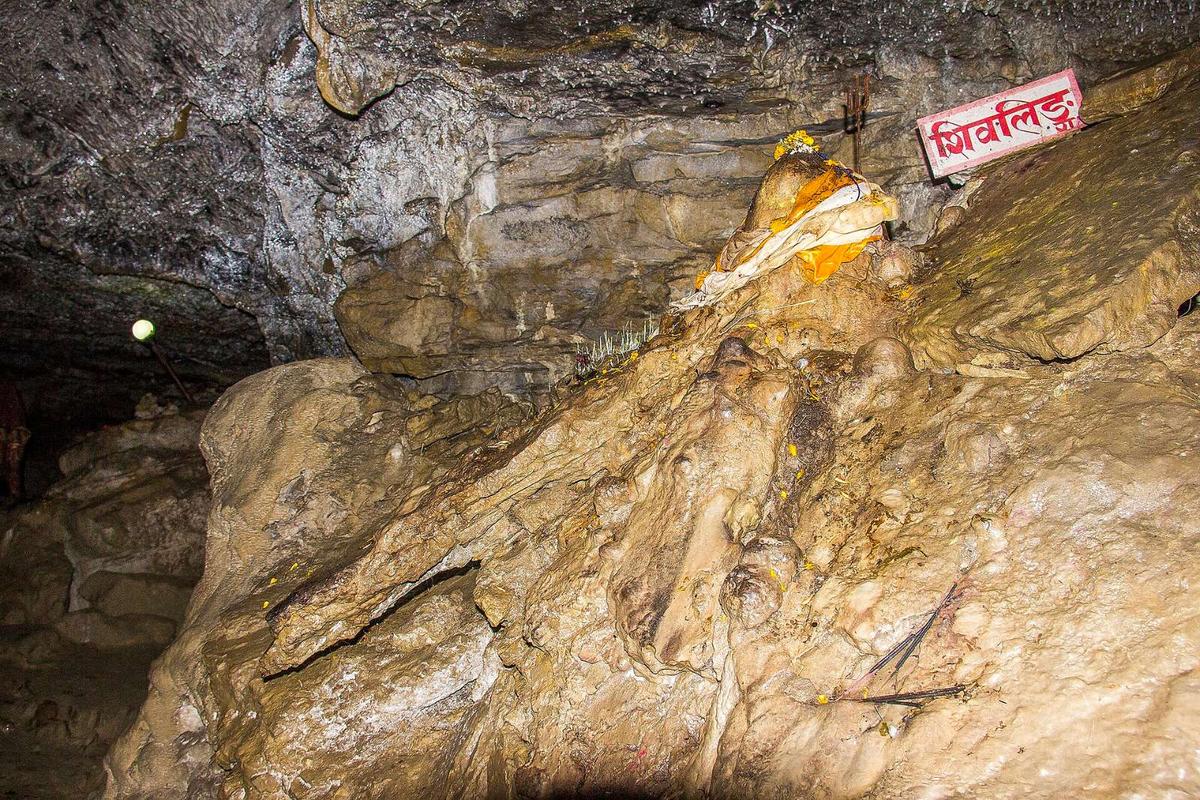
Treat it as you would any shrine: keep your voice down, do not step over offerings, and ask before photographing anyone who is praying.
Are there bats in Mahendra Cave?
A few, but not many. In a study carried out in December 2010 and February 2011, researchers saw only seven bats in Mahendra Cave and recorded three species: Hipposideros armiger, Rhinolophus macrotis and Rhinolophus affinis. If you want to see bats in numbers, the Bat Cave nearby is the place.
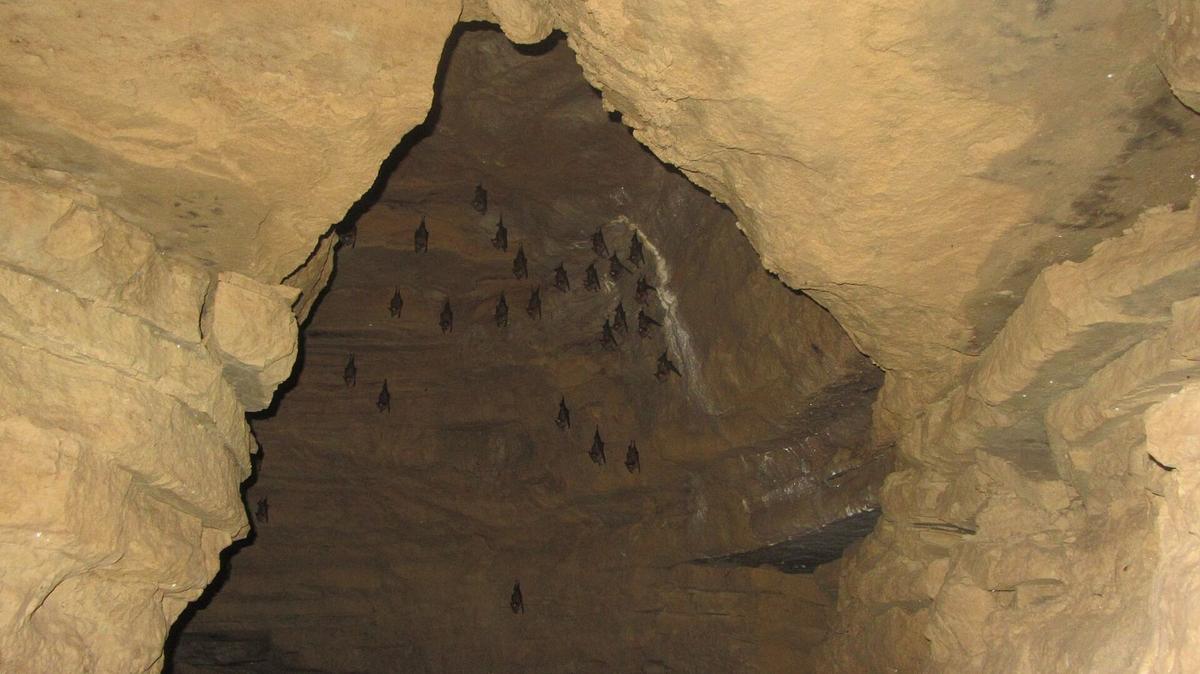
If you do spot bats on the roof here, as in our photo, give them space: no flash, no torch beam held on them, and no tapping the rock to make them move.
What is the Bat Cave (Chamero Gufa) like?
The Bat Cave is dark, wet and crowded with bats, and it ends in a tight, rocky exit that you have to squeeze and climb through. It has no fixed lighting, so you need your own torch or phone light. For many visitors it is the more memorable of the two caves; for some it is simply too tight.
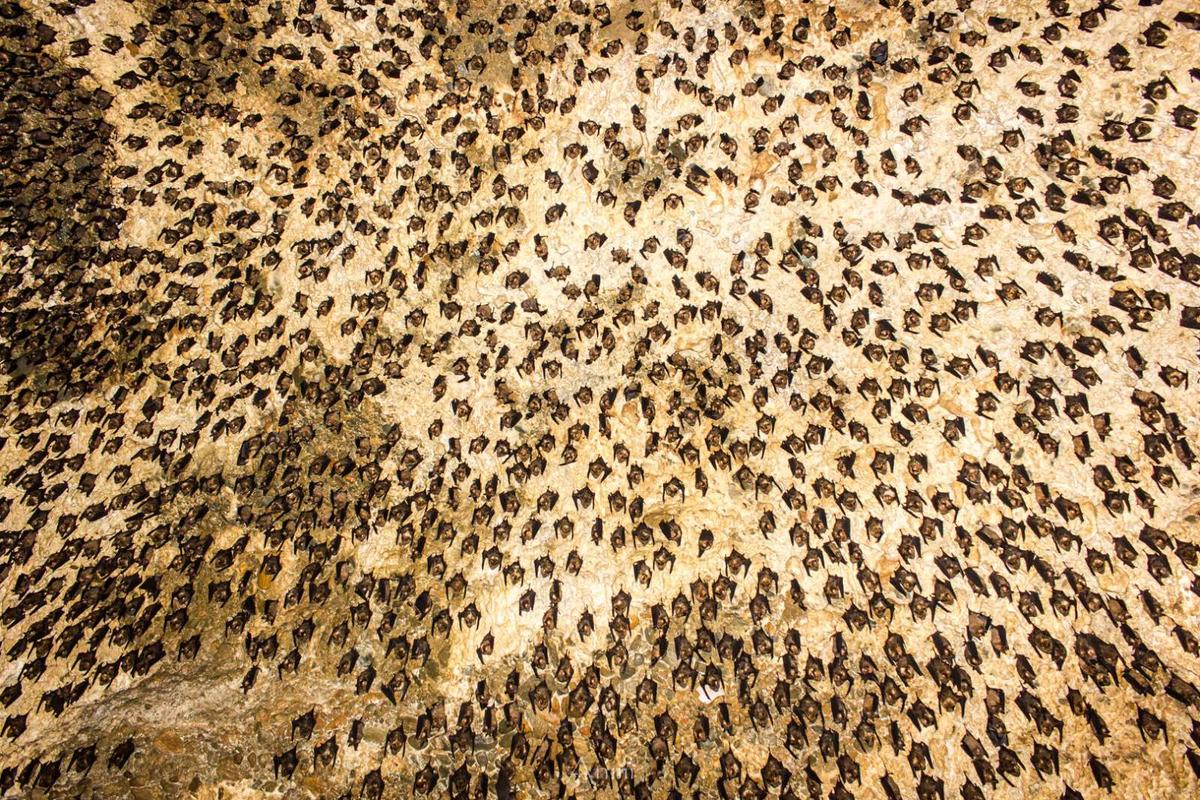
Its Nepali name is Chamero Gufa, also written Chamere or Chameri Gupha; chamero means bat. It was found by local people in the 1980s and is run by the same school as Mahendra Cave.
The colony is the reason to come. Researchers counted about 21,000 bats roosting in Chamero Gufa in February 2011 (21,280 by their count). Bats caught there were Hipposideros armiger, a roundleaf bat, and Rhinolophus macrotis, a horseshoe bat, and travel writers describe the colony as mostly roundleaf and horseshoe bats. Shine your light on the ceiling and you see them hanging in clusters, as in our photo.
The cave has one entrance and a narrower exit that needs some climbing. Local belief says only those who have not sinned can pass through it. The floor is wet and slippery the whole way, and the squeeze near the exit is the part that decides whether the Bat Cave is for you.
What is the Mahendra Cave ticket price?
There is no official rate card for Mahendra Cave or the Bat Cave online. The most recent published rates we found, in a Nepal Traveller guide of July 2026, are NPR 150 for foreign visitors, NPR 80 for SAARC visitors and NPR 50 for Nepali visitors, the same as 2022 to 2023 sources. Check at the counter.
| Visitor | Last published rate | Year and source |
|---|---|---|
| Foreign visitors | NPR 150 | July 2026 (Nepal Traveller); same in 2022 to 2023 sources |
| SAARC visitors | NPR 80 | July 2026 (Nepal Traveller); same in 2022 to 2023 sources |
| Nepali visitors | NPR 50 | July 2026 (Nepal Traveller); same in 2022 to 2023 sources |
| Students (Bat Cave) | NPR 30 | December 2022 (a travel blog); not confirmed since |
These are published figures, not an official notice, and Nepal Traveller itself advises checking the signage, so check at the counter. The two caves sell separate tickets; Nepal Traveller says the Bat Cave's rate is close to Mahendra Cave's. Carry small notes in Nepali rupees for the counters, as you would at Davis Falls and Gupteshwor.
Opening hours are the other gap. Both caves are open in the daytime, but we found no official hours, so check locally before you go, especially if you plan to arrive late in the afternoon.
How do the caves in Pokhara compare?
Mahendra Cave is the easy, lit one; the Bat Cave is the dark, tight one with the bats; Gupteshwor Mahadev Cave is the working shrine with an underground waterfall. If you are short of time, choose one pair. The table shows which suits you, and who should skip each.
| Cave | Location | What you see | Time needed (our view) | Fee status | Who should skip it |
|---|---|---|---|---|---|
| Mahendra Cave | Batulechaur, ward 16, about 8 km north of Pokhara | Lit limestone passage, stalactites, stalagmites, a small Shiva shrine, a few bats | A short walk-through; pair it with the Bat Cave | Last published NPR 150 foreign (July 2026); check at the counter | Anyone expecting a large, brightly lit show cave |
| Bat Cave (Chamero Gufa) | Same ward, about a ten-minute walk from Mahendra Cave | Unlit chamber with a large bat colony; tight exit with climbing | Slow going in the dark, with extra time for the squeeze | Close to Mahendra Cave's rate (July 2026); check at the counter | Claustrophobia, trouble squeezing and climbing, or a real fear of bats |
| Gupteshwor Mahadev Cave | Chhorepatan, ward 17, across the road from Davis Falls | Spiral staircase, a stalagmite worshipped as a Shiva lingam, an inner section beside the underground fall | Combine it with Davis Falls across the road | Counter rates for Nepali, foreign and student visitors, not published online | Anyone unsteady on wet steps (inner section); no photos at the main shrine |
For the full picture of the shrine cave, read our Gupteshwor Mahadev Cave guide.
How many caves are there in Pokhara?
More than most visitors realise. Two earlier studies of the valley's bats reported 16 caves in the Pokhara Valley, along with 18 bat species, according to a 2021 paper in the Journal of Threatened Taxa that cites them. Only a handful are on the usual sightseeing route, and this guide covers the three best known.
Pokhara Metropolitan City's own tourism site also lists Sita Cave in ward 32, Harihar Cave in ward 20 and Aambat Cave in ward 25. Republica has named Harihar and Kumari caves among the smaller caves of the city. We have not checked access, tickets or facilities at any of these, so treat them as places to ask about locally rather than to plan a day around.
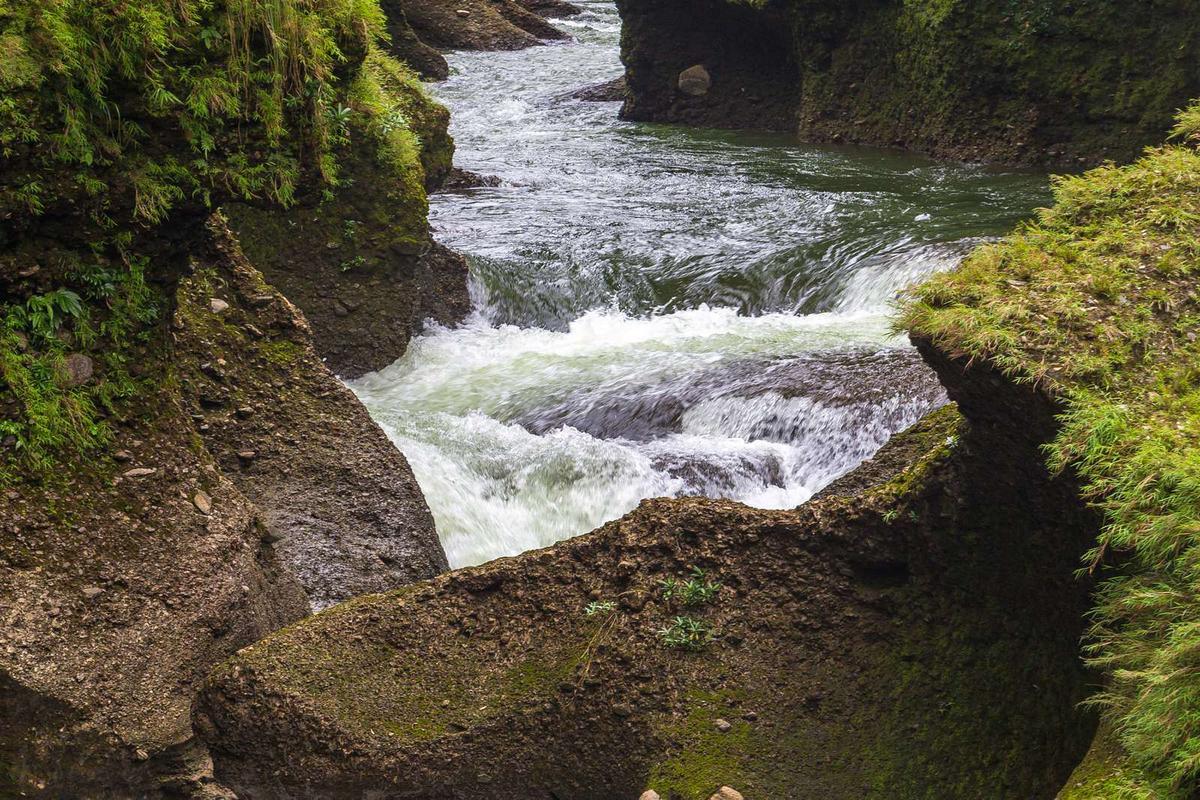
Water shapes much of this landscape. You can watch it at Davis Falls, where the stream from Phewa Lake drops into a gorge and runs underground; Gupteshwor is one of the caves that water has cut.
Can you combine Mahendra Cave with Gupteshwor and Davis Falls?
You can, but they are on opposite sides of the city. Mahendra Cave and the Bat Cave are in the north at Batulechaur; Gupteshwor Mahadev Cave and Davis Falls face each other across the road in Chhorepatan, about 2 km south-west of Pokhara's old airport on the Siddhartha Highway. We suggest two separate outings.
Gupteshwor is open about 7 am to 6 pm, with separate counter rates for Nepali visitors, foreign visitors and students that are not published online. Its inner section, beside the underground fall, closes in the rainy season, and we found no notice of its reopening after the 2026 monsoon, so ask at the gate. Photos are not allowed at the main shrine.
Davis Falls, run by Chhorepatan Secondary School, is open 6 am to 6 pm according to the city tourism website. Published ticket figures for the falls disagree, so check the board at the gate. Our Davis Falls guide covers it in detail.
If you only have time for one pair, choose by what you want. For a shrine, a staircase and moving water, go south to Gupteshwor and Davis Falls. For limestone shapes and bats, go north to Batulechaur.
When is the best time to visit the caves?
The caves are worth keeping for a cloudy day, because they do not need a view. The Nepal Tourism Board says "the clearest skies are found after the monsoon in October and November", so on clear autumn mornings put Sarangkot or the Peace Pagoda first and save the caves for later or for a grey day.
The International Mountain Museum is the other good grey-day choice in Pokhara; our Mountain Museum guide explains what is inside.
The monsoon changes things underground. We found no official rule that closes Mahendra Cave or the Bat Cave in the rains, but expect water, mud and slippery floors. The Bat Cave, already wet and dark, is at its hardest then. At Gupteshwor, the inner section beside the waterfall closes in the rainy season.
In 2026 the monsoon withdrew fully from Nepal on 14 October, so November visits are in the dry season. The Bat Cave is wet and slippery whatever the month, though, so do not expect dry rock even now.
What should you bring?
Bring a light, shoes with grip and small cash in Nepali rupees. Mahendra Cave's lighting can be dim and the Bat Cave has none, the floors can be wet and muddy, and the ticket counters need cash. Nothing else is needed, and a big bag only gets in the way at the Bat Cave exit.
- A head torch or a phone with a charged battery. Mahendra Cave's lighting can be dim, and the Bat Cave has none.
- Shoes with a good grip that you do not mind getting muddy. Sandals and flip-flops are a poor choice.
- Small notes in Nepali rupees for the ticket counters.
- Clothes you do not mind brushing against wet rock, especially for the Bat Cave.
- A small bag, or none. Leave larger bags in the car or with someone who is not doing the squeeze.
- Something to wipe your hands afterwards. The rock is damp and the Bat Cave floor is not clean.
Frequently asked questions
What are the Bat Cave and Mahendra Cave like?
Mahendra Cave is a short limestone passage with electric lighting, stalactites, stalagmites and a small Shiva shrine, easy for most visitors. The Bat Cave, Chamero Gufa, is unlit, wet and slippery, with a large bat colony on the ceiling and a tight exit that needs some climbing. Skip the Bat Cave if you are claustrophobic or find squeezing and climbing hard.
Are Davis Falls and Gupteshwor Cave worth visiting?
Yes, and they are easy to pair, because they sit across the road from each other in Chhorepatan, south-west Pokhara. Gupteshwor is a working Shiva shrine with a stalagmite lingam; its inner section beside the underground fall closes in the rainy season, so ask at the gate whether it has reopened. Davis Falls is where the stream from Phewa Lake drops into a gorge. Read our Gupteshwor Mahadev Cave guide for detail.
How do I get from Pokhara to Muktinath or Jomsom?
By road, for now. Both airlines on the Pokhara to Jomsom route suspended scheduled flights in October 2026, Tara Air from 19 October and Summit Air from 21 October. Nepal News reported a five-month suspension with charter flights continuing, and we found no restart notice by 12 November. The Beni to Jomsom road partly reopened after flood repairs in mid-October 2026, with muddy, damaged stretches still slowing traffic, so check it before you go. Muktinath is at about 3,800 m, according to NTB. See our Muktinath Temple guide.
How do I get from Pokhara to Lumbini or Chitwan?
By tourist bus or car, and tourist buses leave in the morning. The Lumbini Development Trust gives 227 km to Lumbini; tourist buses to Bhairahawa, near Lumbini, take roughly 6 to 8 hours, and Buddha Air lists a 20-minute flight there on the days it runs. Chitwan is about 160 km. Published times differ: a travel guide updated in January 2026 gives five to six hours by tourist bus, while our own trips by car usually take three to five hours. See Pokhara to Lumbini and Kathmandu to Chitwan. We do not sell flights.
How many days should I spend in Pokhara?
In our team's view, two full days cover the classic sights at an easy pace. Add a third for Begnas, a flight or a short hike, and extra days for any trek. The caves fit well into the third day, or into a cloudy afternoon, since they need no view. This is our suggestion, not a rule; stay longer if you like to travel slowly.
Plan your Pokhara days with us
If you want the caves, the lakes and the viewpoints in one easy plan, start with our guide to things to do in Pokhara. Our Bandipur and Pokhara lakeside tour, the Australian Camp tour from Pokhara and the relaxed Kathmandu, Pokhara and Bandipur tour all include time in Pokhara; tell us if you want the caves in your days and we will say honestly whether they fit.
Message us on WhatsApp or send an enquiry and we will reply with honest options.