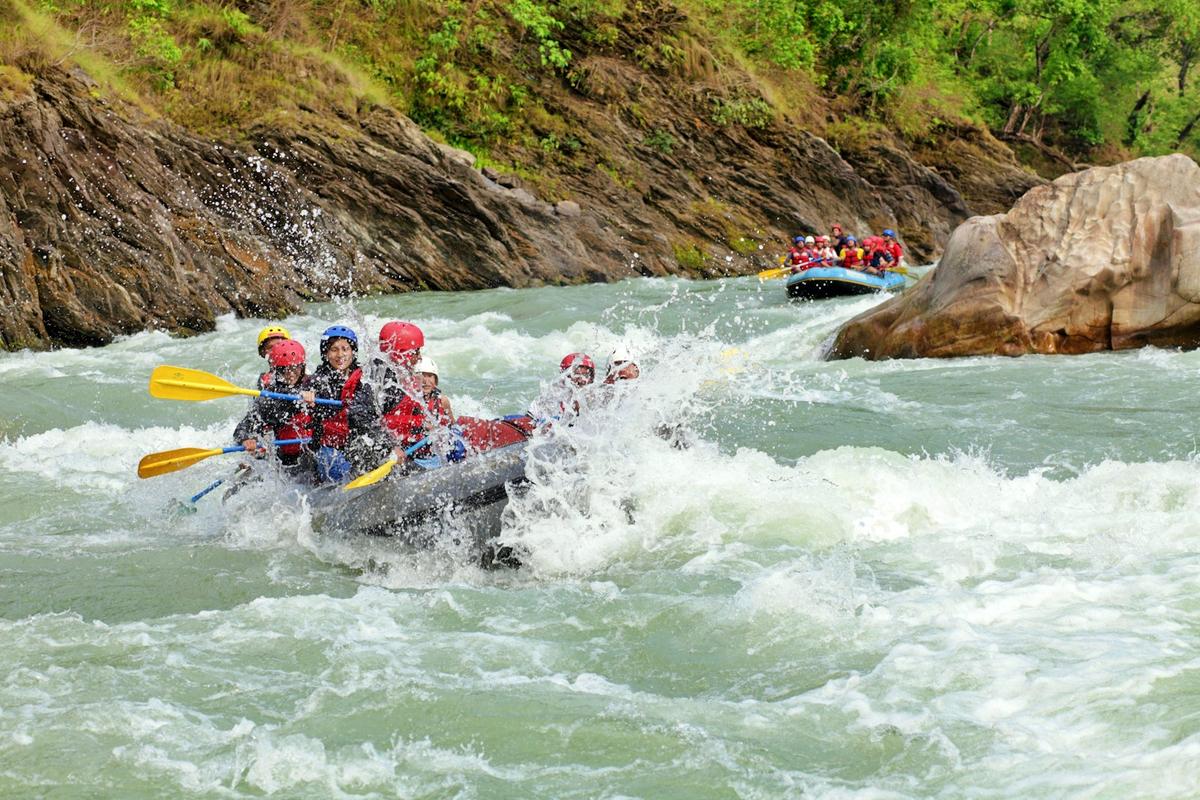
At Charaudi on the Prithvi Highway, about two and a half to three hours by road from Kathmandu, the rafts wait on the riverbank below the road. Before anyone climbs in, the guide hands out life jackets and helmets and explains exactly what to do if the raft flips. Then the boat pushes off into the current of the Trishuli.
Rafting rivers in Nepal range from half-day splashes near Pokhara to expeditions of eight to ten days on big, remote rivers. Most first-timers choose the Trishuli or the lower Bhote Koshi for one or two days. The main seasons are October to mid-December and March to early May, and every trip must go through a registered, licensed rafting agency.
For the wider picture of where to go in the country, start with our guide to Nepal tourist places.
Updated 24 Nov 2026
In this guide
- Rafting rivers in Nepal compared by grade, days and season
- What do the rafting grades mean?
- Short trips: one or two days on the water
- Expedition rivers: three days and more
- When is the best time to raft in Nepal?
- River status in late 2026: check before you book
- Rafting rules: licences, guides and permits
- How safe is rafting on Nepal's rivers?
- What to wear and bring
- Kayaking in Nepal
- Frequently asked questions
Key facts
- Grading scale
- Rapids graded 1 to 6 on the international scale (Nepal Tourism Board, checked 23 Nov 2026)
- Main seasons
- October to mid-December and March to early May (Nepal Tourism Board trade site, checked 23 Nov 2026)
- Monsoon
- Normally 13 June to 2 October; most rivers too high to raft (Department of Hydrology and Meteorology; Nepal Tourism Board, checked 23 Nov 2026)
- Most popular river
- Trishuli, one to three days, grade 3 to 3+ (Nepal Tourism Board; Rough Guides, checked 23 Nov 2026)
- Longest classic trips
- Sun Koshi (270 km) and Karnali, eight to ten days each (Nepal Tourism Board, checked 23 Nov 2026)
- Who can run trips
- Licensed rafting agencies only; river guides need a government permit (Rafting Rules 2063; Nepal Tourism Board, checked 23 Nov 2026)
- Rafting permit for visitors
- None; the river permit system ended in 1999 (Rough Guides; Wikipedia, checked 23 Nov 2026)
- Trishuli after the 2026 flood
- Galchhi to Mugling declared fit to raft on 6 Oct 2026 (NARA, via OnlineKhabar, checked 23 Nov 2026)
- Prithvi Highway
- Closed 11:00 to 16:00 daily at Ghoptebhir from 21 Nov 2026, until further notice; check before you travel (District Traffic Police Office, Chitwan, via OnlineKhabar and Khabarhub, checked 23 Nov 2026)
Rafting rivers in Nepal compared by grade, days and season
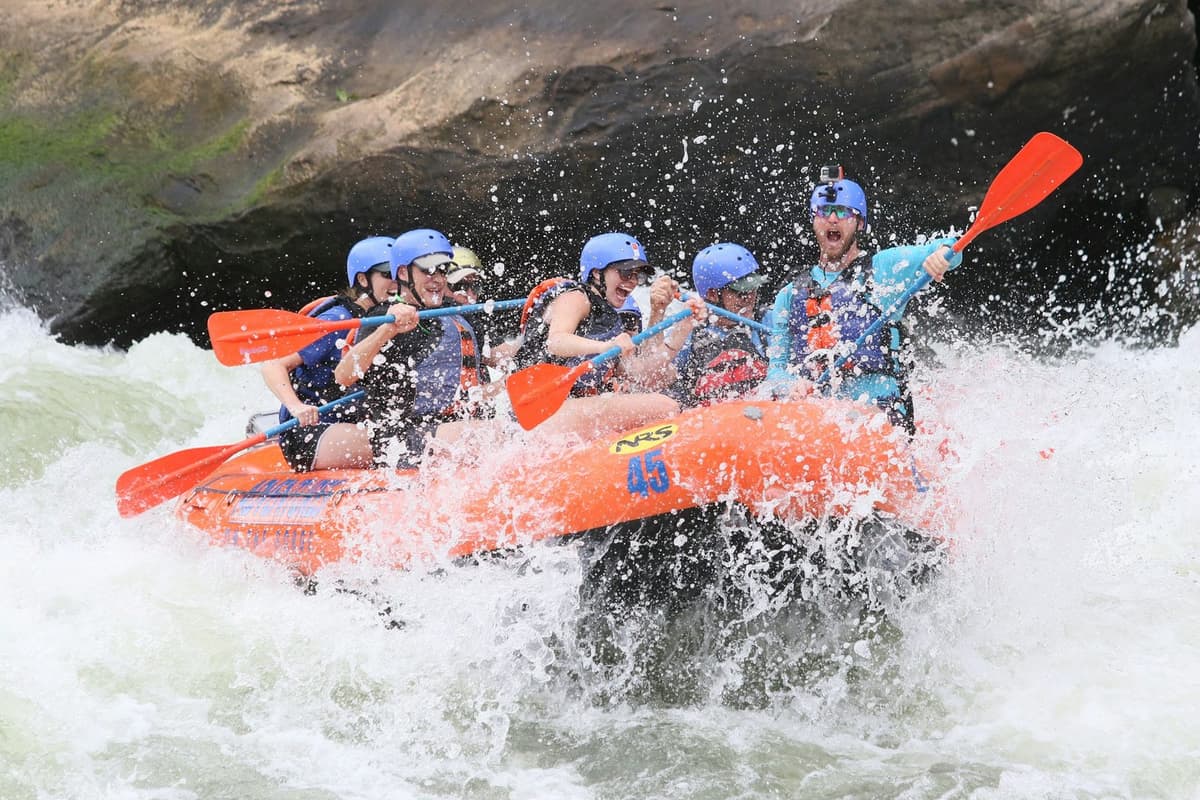
Choose a river by three things: the grade you can handle, the number of days you have, and the month you travel. The table puts the ten main rafting rivers side by side, with the Seti split into its upper and lower runs. Where sources disagree on the grade, we show the range and name the source.
One caution: the Nepal Tourism Board (NTB) trade site grades whole rivers, so its numbers often run higher than the commercial sections most people raft, and every grade moves with the water level.
| River | Region | Grade range (source) | Typical days | Best months | Who it suits |
|---|---|---|---|---|---|
| Trishuli | Beside the Prithvi Highway, between Kathmandu, Pokhara and Chitwan | 3 to 3+ (NTB trade site, Rough Guides); bigger at high water | 1 to 3 days; most people do 1 or 2 | September to early December and March to early June; busiest October and November | First-timers, families with older children, short breaks |
| Bhote Koshi (Sindhupalchok) | Beside the Araniko Highway, towards the Tibet border | Upper river 4 to 5 (NTB trade site); lower Sukute run about 3 (Rough Guides) | 1 to 2 days | Bigger water late October and November; cold from December to late February | Upper: experienced rafters. Lower: first-timers short on time |
| Upper Seti | Just above Pokhara | 3+ (Rough Guides) | Half a day | High water, September to early November | Pokhara visitors with a free morning or afternoon |
| Lower Seti | Damauli to the Trishuli confluence, between Pokhara and Chitwan | 2 to 3 (NTB brochure, Rough Guides) | 2 days | Warm water; usually runs in the monsoon; a winter favourite | Families, beginners, winter trips, kayak courses |
| Kali Gandaki | North-west of Pokhara | 3 to 4+ by section and flow (NTB brochure 3 to 4; NTB trade site 4 to 4+; Rough Guides 4-) | 3 days on the river | Mid-October to mid-December, March and April | Fit rafters who want a remote canyon and mountain views |
| Marsyangdi | Below Besisahar, Annapurna region | 4 to 5 (NTB, Rough Guides); NTB trade site up to 5+ | 2 to 4 river days | Especially November | Experienced rafters only |
| Sun Koshi | Dolalghat east to Chatara | 3 to 4 (Rough Guides, NTB brochure); NTB trade site 4 to 5 | 8 to 10 days (270 km) | Mid-September to late October, May to early June | A first expedition: gentle start, bigger water later |
| Karnali | Far west, ending near Bardia National Park | 3 to 5 (Rough Guides 4; NTB brochure 3 to 5; NTB trade site 4 to 5) | 8 to 10 days | Low to medium water, especially March and April | Experienced rafters who want big water and wildlife |
| Tamor | Far east; Kanchenjunga views on the trek in | 4 to 5 (NTB brochure; Rough Guides 4) | About 10 to 11 days including the trek in | Late October to late November | Experienced rafters who also want a trek |
| Arun | East, reached by air to Tumlingtar | 3 to 4 (NTB brochure, 2009) | 5 river days after a 3-day trek | The main dry seasons (NTB general advice) | Expedition rafters after a remote eastern river |
| Bheri | West, reached via Nepalgunj | 2 to 3+ (NTB brochure "easy"; Rough Guides 3+) | 4 to 8 days | The main dry seasons (NTB general advice) | Families and anglers who want a gentle multi-day trip |
About 16 rivers are commonly listed as open for rafting (Kathmandu Post), while NTB's visitor page lists seven. This guide covers the ten you are most likely to see offered, plus a newer one, the Mahakali.
What do the rafting grades mean?
Rapids in Nepal are graded from 1 to 6 on the international scale, often written I to VI. Grade 1 is moving water with small waves. Grade 5 is long, violent water near the limit of what can be run. Grade 6 is rarely attempted. The rivers in this guide sit between grade 2 and grade 5.
| Grade | American Whitewater definition | Where you meet it in Nepal |
|---|---|---|
| I | "Very easy with small, regular waves and riffles." | Calm stretches between rapids; Trishuli trips that start lower down, from Kuringhat or Mugling, are mostly floats |
| II | "Easy rapids and waves requiring some maneuvering." | The Lower Kali Gandaki, parts of the Lower Seti and the Bheri |
| III | "Moderate difficulty with large waves and features requiring skilled maneuvering." | The Trishuli, the lower Bhote Koshi near Sukute, the Upper Seti (3+) |
| IV | "Difficult with powerful rapids and hazardous features requiring precise maneuvering." | The Marsyangdi, the Karnali, the Tamor, the Kali Gandaki at its harder end |
| V | "Very difficult with long rapids and strong turbulence…"; "Near the limits of navigation." | The upper Bhote Koshi at higher flows, the Marsyangdi at its hardest, the Upper Karnali (experts only) |
| VI | Run, if at all, only by expert teams in ideal conditions, with a real risk to life (Rough Guides, paraphrased) | Outside commercial rafting |
A plus or minus marks the harder or easier end of a grade, so 3+ is a strong 3. Water level matters even more. NTB's 2009 brochure gives the Bhote Koshi as grade 3 at lower flows and grade 4 to 5 at higher flows, and Rough Guides notes that "a given trip will take less time in high water". Ask what grade a river is running in the month you travel, not what grade it has in a brochure.
On a first trip, grade 3 with a good guide is plenty: you paddle hard through the rapids and rest between them. Grade 4 and above is for fit people who have rafted before and can handle a swim in fast water.
Short trips: one or two days on the water
Most visitors raft for a day or two as part of a wider trip, on one of four rivers: the Trishuli and the Bhote Koshi from Kathmandu, and the Upper and Lower Seti from Pokhara.
Trishuli: the classic first river
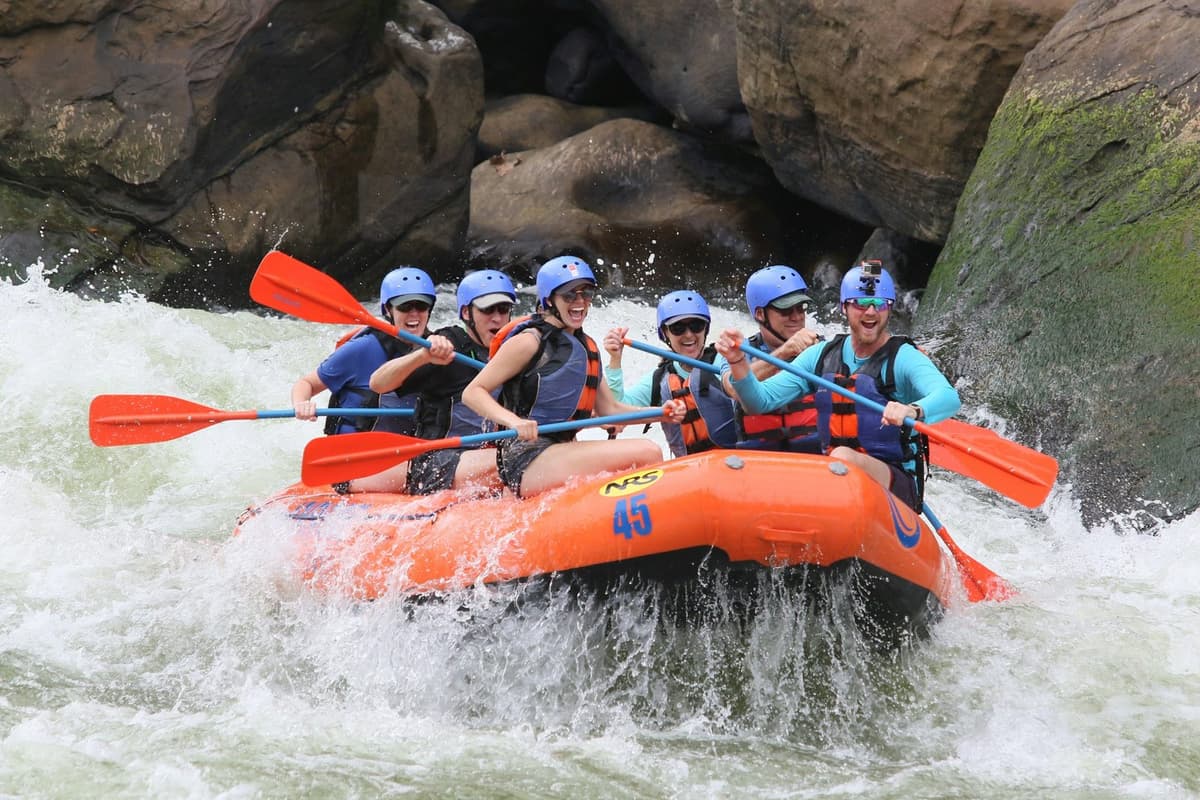
The Trishuli is the most popular rafting river in the country, and Rough Guides reckons it carries about half of all raft trips. It runs beside the Prithvi Highway, the main road between Kathmandu, Pokhara and Chitwan, so it fits into a journey you are already making, with riverside camps and resorts along the banks.
The usual put-in is Charaudi, about two and a half to three hours by road from Kathmandu. The best whitewater, according to Rough Guides, is between Charaudi and Kuringhat; trips that start lower, from Kuringhat or Mugling, are mostly gentle floats. Expect grade 3 to 3+ in the main seasons, with bigger water at high flows.
Trips last one to three days, and most people do one or two; an overnight adds a riverside camp. October and November are the busiest months. Our Trishuli River rafting guide covers sections and camps in depth.
Bhote Koshi (Sindhupalchok): steep and close to Kathmandu
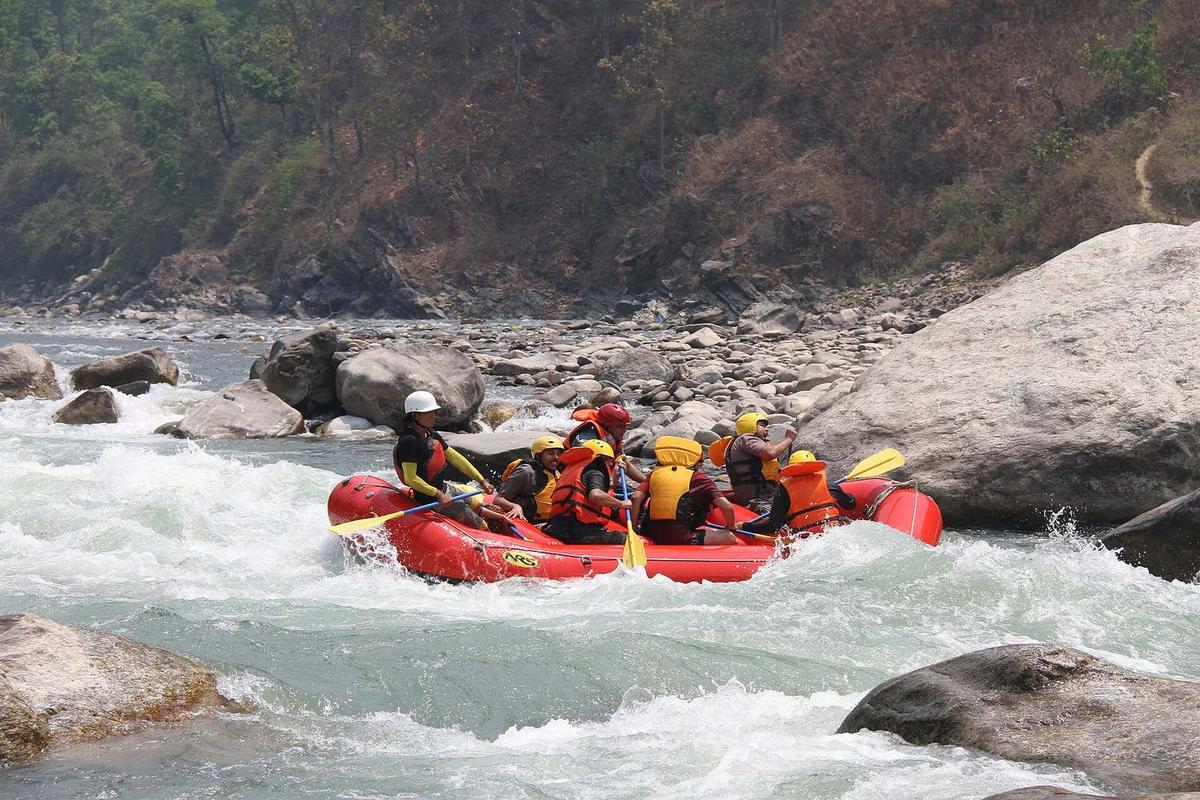
The rafting Bhote Koshi is in Sindhupalchok district, beside the Araniko Highway that runs north-east from Kathmandu towards the Tibet border. Rough Guides calls it "probably the steepest and hardest commercial rafting river in Nepal", and it offers two quite different trips.
- The upper run is the steep one. NTB's trade site grades the river 4 to 5, the grade its 2009 brochure gives at higher flows. It is for experienced, fit rafters.
- The lower run, which Rough Guides calls the Upper Sun Koshi (lower Bhote Koshi), usually finishes at Sukute Beach. Rough Guides grades it 3 in peak season. It is a lively first river for people short on time.
The Sukute area is about 70 km from Kathmandu, two to three hours by road. The water is bigger in late October and November, and cold from December to late February, so in winter choose a company that supplies wetsuits and paddle jackets. A bungee jump runs on the same river, so people often pair the two (see our guide to bungee jumping in Nepal); our Bhote Koshi rafting and bungee guide has the road and resort detail.
Upper Seti: a half day from Pokhara
The Upper Seti is Pokhara's half-day river. The start is about 30 minutes by road from town, and the run gives about 90 minutes of whitewater, from just above Hyemja to the dam at Bajar, above Pokhara. Rough Guides grades it 3+. It is at its best at high water, from September to early November.
It slots easily into a Pokhara stay, and our list of things to do in Pokhara has ideas for the rest of the day. Getting to Pokhara takes most of a day by road from Kathmandu, often six to nine hours with traffic and roadworks, or about 30 minutes by air.
Lower Seti: warm water and gentle rapids
The Lower Seti runs from Damauli down to Gai Ghat, where it meets the Trishuli: 32 km over two days, according to NTB's brochure. Operators say Damauli is about an hour and a half from Pokhara. NTB calls the Seti "one of the warmest rivers", and Rough Guides mentions warm water and geothermal springs, which is why it is a favourite for winter trips and for kayak courses. Rapids are grade 2 to 3.
This is the river to choose with children or nervous first-timers, and it usually runs even in the monsoon. One Pokhara operator's usual minimum age for its family trip here is five, depending on the water, the child's size and swimming ability: an operator policy, not a national rule.
Expedition rivers: three days and more
On a multi-day trip you camp on river beaches and travel through remote canyons for days at a time. It takes more planning and, on the harder rivers, real experience.
Kali Gandaki
The Kali Gandaki is a three-day river trip. The put-in is north-west of Pokhara (Beni or Naya Pul, depending on the source), and the run ends at a dam near the Andi Khola confluence. Rough Guides describes a remote canyon with Annapurna views and limited camping beaches. Grades range from 3 to 4+ depending on the section and the flow. The best months are mid-October to mid-December, and March and April.
The Lower Kali Gandaki is a separate, quieter trip of grade 2, starting from Ramdi Ghat, about five hours from Pokhara.
Marsyangdi
The Marsyangdi comes down from the Annapurna region. Trips start near Khudi or Bhulbule and run down to the Kathmandu to Pokhara highway. Expect two to four river days of continuous, technical water, grade 4 to 5. Rough Guides singles out November, with low water and clear mountain views. This is for experienced rafters only.
Sun Koshi
The Sun Koshi is the long eastern classic: 270 km from Dolalghat to Chatara over eight to ten days, according to NTB. Dolalghat is about three hours from Kathmandu. The first days are gentle, then the rapids grow: NTB's brochure reaches its first long grade 4 rapid on the fourth day. Rough Guides describes remote canyons, white-sand camps and few other groups. The season is mid-September to late October and May to early June; from December to March the whitewater largely disappears.
Karnali
The Karnali is Nepal's biggest river, and Rough Guides says its rapids are biggest in the first three days. Getting there takes a flight of about an hour from Kathmandu to Nepalgunj, then a long drive. The trip lasts eight to ten days and finishes in the Bardia National Park area, with wildlife on the lower river. Rough Guides grades it 4 (NTB says 4 to 5) and calls the Upper Karnali grade 5, for experts only. Rough Guides prefers low to medium water, especially March and April. If your trip ends inside the national park, ask whether a park entry fee applies.
Tamor
The Tamor, in the far east, begins with a trek. NTB's brochure describes a flight to Biratnagar, a drive into the hills and a four-day walk to the put-in, about 10 to 11 days in all. Rough Guides puts the put-in at Dobhan, with Kanchenjunga views on the way in. Grades are 4 to 5. The best months are late October to late November, at medium flows.
Arun, Bheri and Mahakali
The Arun, in the east, starts with a flight of about an hour to Tumlingtar and a three-day trek, then five days of mostly grade 3 to 4 technical rafting (NTB brochure, 2009). The Bheri, in the west, is a gentler multi-day alternative to the Karnali, reached via Nepalgunj, with golden cliffs, beaches and fishing; trips run four to eight days. On the Mahakali, in Sudurpaschim in the far west, commercial rafting was formally inaugurated in March 2026; section and grade details were not published, so ask before you plan around it.
When is the best time to raft in Nepal?
The main rafting seasons are October to mid-December and March to early May, according to the Nepal Tourism Board. Autumn brings warm days and lively water after the monsoon; spring brings long, warm days. Winter suits a few warmer rivers with shorter days on the water. From June to September most rivers are too high to raft safely.
"…usually planned in the dry seasons from October through mid-December and March through early May."
Nepal Tourism Board, trade site, "Rafting / Kayaking / Canoeing" page, checked 23 Nov 2026
NTB's 2009 brochure gives a wider window, September to early December and March to early June, and each river has its own best months (see the table above).
Autumn: October to mid-December
"October is one of the most popular times for rafting in Nepal due to warm water and long hot days."
Nepal Tourism Board, "Rafting in Nepal" brochure, 2009
Rough Guides calls mid to late October and November the peak season, with water levels "more manageably exciting" than straight after the monsoon. This is when the Trishuli is busiest, the Upper Seti and Bhote Koshi run high, and the Tamor and Marsyangdi are at their best.
Winter: December to February
"During the winter, the days are short and the water is cold, which calls for shorter trips each day."
Nepal Tourism Board, "Rafting in Nepal" brochure, 2009
Winter is quieter, and many operators stop running trips. It is not as cold on the water as you might think, because most raftable sections lie below 500 m (about 1,640 ft), according to Rough Guides. The warm Seti is the winter favourite. The Bhote Koshi is cold, so wear a wetsuit, and on the Sun Koshi much of the whitewater disappears.
Spring: March to May
Rough Guides rates March and April the best months overall: long, warm days, with the water rising through the season as snow melts and pre-monsoon storms arrive. The Karnali is especially good in March and April, and the Sun Koshi has a second season from May to early June.
Monsoon: June to September
"Between June and September, the monsoon floods most rivers making them too risky for rafting."
Nepal Tourism Board, "Rafting in Nepal" brochure, 2009
The monsoon normally arrives on 13 June and withdraws on 2 October (Department of Hydrology and Meteorology). At its peak, from July to mid-September, Rough Guides says river volume is "ten or more times greater than in February and March", and the big rivers are off-limits to all but experts. NTB names the Trishuli and the Seti as rivers that can usually be run in the monsoon. There is no government ban on monsoon rafting; operators simply scale back or stop on most rivers.
River status in late 2026: check before you book
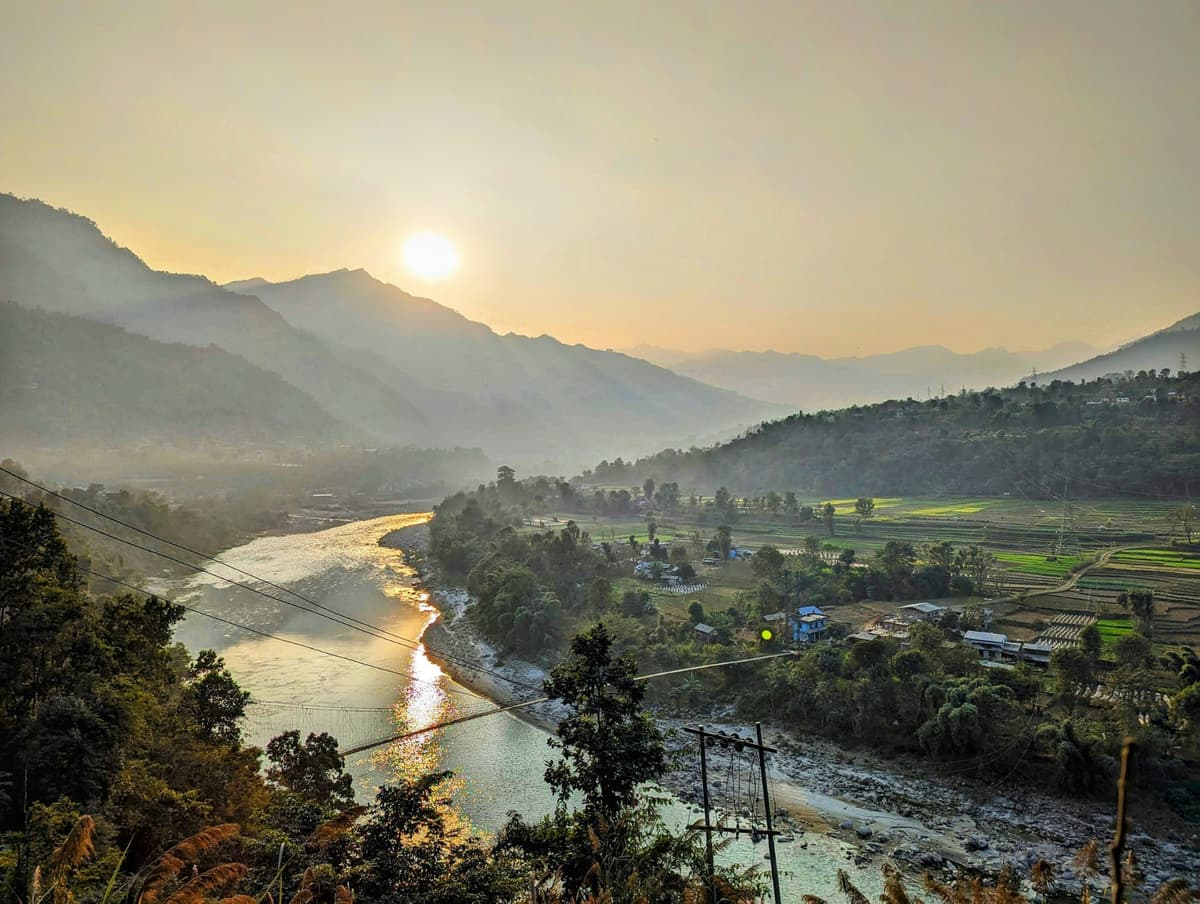
This section reflects what we could confirm by 23 November 2026. Rivers change after every monsoon.
Trishuli: open again, with new rapids
On 26 August 2026 a deadly flood on the Bhote Koshi in Rasuwa ran down into the Trishuli. Rafting on the Trishuli was halted for safety after the flood changed its flow and level.
On 6 October 2026, after a field inspection by river experts, guides and a technical team, the Nepal Association of Rafting Agents (NARA), the industry body, declared the Galchhi to Mugling stretch fit to raft. New rapids had formed in places and some channels had shifted. That was an industry decision; we found no separate government notice. At least one established operator was still holding its Trishuli trips on 2 November.
So the Trishuli is open, but it is not the river it was a year ago. Ask which section your operator now uses and whether its guides have run it since it reopened.
Pokhara rivers: running, operators report
A Pokhara operator reported that the remnant of Cyclone Arnab, at the end of October, had little or no impact on its rivers. On 2 November it listed the Upper Seti half-day run and the Lower Seti two-day and family trips as open, and the season's first three-day Kali Gandaki trip as set for 6 to 8 November. These are operator reports, not official notices.
Bhote Koshi and the other rivers: not confirmed
We found no 2026 closure of rafting on the Sindhupalchok Bhote Koshi. The Araniko Highway was hit by landslides from mid-July 2026, with single-lane reopenings in late August, so ask about the road as well as the river. We could not confirm the current status of the Sun Koshi, Karnali, Marsyangdi, Tamor or Bheri. Check before you book; we can find out for you.
Prithvi Highway closure at Ghoptebhir
At the time of writing (23 November 2026), the Nagdhunga to Mugling road is closed to traffic at Ghoptebhir, in Ichchhakamana Rural Municipality in Chitwan, from 11:00 to 16:00 every day. The closure began on Saturday 21 November 2026 "until further notice", while crews cut back a slope hit by repeated dry landslides. Officials asked the contractor to finish within five days, so it may already be lifted when you read this.
Ghoptebhir is about 3 km from Mugling on the Kathmandu side, below the usual Trishuli put-ins, but the closure can delay your onward drive to Pokhara or Chitwan after a trip. Check whether it is still in force before you travel.
Rafting rules: licences, guides and permits
The legal framework is the Rafting Rules 2063 (2006 in the Western calendar).
"All rafters must go through a registered rafting agency."
Nepal Tourism Board, "Rafting in Nepal" brochure, 2009
- Licensed businesses only. Nobody may run a rafting business without a government licence.
- Licensed guides. River guides need a government permit, must be trained through a government-recognised agency, and may only work on rivers the government has opened. The permit comes from the government, not from NARA.
- Opened rivers only. Foreign visitors may raft only on rivers opened for rafting.
- Safety gear. Operators must provide life jackets and helmets, and NTB's advice is simple: wear them.
- Insurance for staff. Operators must carry personal accident insurance for their guides and workers.
Just as useful is what the rules leave out. There is no national minimum age and no swimming test; operators set their own limits. There is no rafting permit or river fee for visitors, since the permit system ended in 1999. And the rules do not require safety kayakers, or a second raft on every trip: those are good practice, so ask about them.
How safe is rafting on Nepal's rivers?
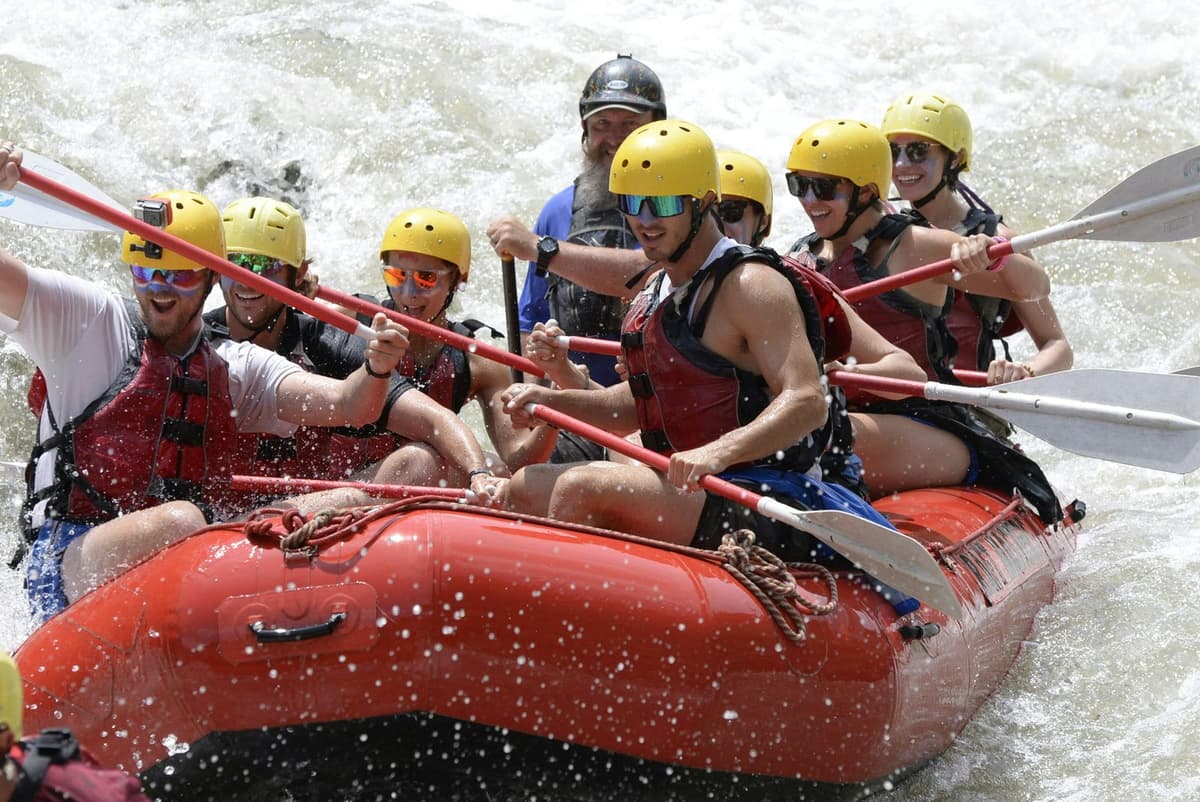
Rafting on Nepal's rivers is reasonably safe when the river's grade matches your experience, you travel in the main seasons, and you go with a licensed agency whose licensed guide briefs you and supplies a life jacket and helmet. The risk rises with water level, so the month and the operator matter more than anything you do in the raft.
The steps that matter:
- Choose the right river. A first trip belongs on grade 2 or 3 water.
- Check the operator. Rough Guides suggests a NARA member, life jackets that are not old, helmets, a full first-aid kit, a proper safety briefing, at least two rafts, and guides trained in first aid and experienced on that river. On high water, or rivers harder than grade 2, ask for self-bailing rafts and safety kayakers too.
- Follow the guide. The guide gives the commands, picks the line through each rapid and explains what to do if the raft flips. Do what they say.
- Keep your life jacket and helmet on the whole time, not just in the rapids. As American Whitewater puts it: "Always wear a life jacket."
- Know how to swim a rapid. Float on your back, feet up and downstream (see the quote below), and never stand up: "Do not attempt to stand in fast-moving water."
- Take the cold seriously. Watch for "uncontrollable shaking, loss of coordination, or difficulty speaking", the signs of hypothermia, and tell the guide at once.
- Know the flood warning. If you hear an unusual thunderous sound from upstream, move to high ground immediately. It can be the sign of a landslide or glacial lake flood coming down the river.
- Tell your guide if you cannot swim, before you set off. And check that your travel insurance covers rafting; we recommend cover but do not sell it.
"When swimming in shallow or obstructed rapids, lie on your back with your feet held high and pointed downstream."
American Whitewater, Safety Code, revised 2024
What to wear and bring
Dress to get soaked. NTB's packing list, trimmed to what still makes sense:
- River sandals or water shoes that stay on your feet in the water (no flip-flops)
- Quick-drying shorts and a long-sleeved shirt against the sun
- A fleece and a waterproof jacket for cold stretches and evenings
- A cap, and sunglasses with a strap
- Waterproof sunscreen (SPF 15 or higher) and lip balm
- A water bottle, a head torch for camps, and a small personal first-aid kit
- In winter: waterproof trousers, an extra fleece and warm shoes for camp
In cold or wet weather bring thermal tops and trousers; the better companies provide wetsuits, thermal tops and paddling jackets (Rough Guides). American Whitewater's rule of thumb: "When the water temperature is below 50ºF, a wetsuit or drysuit is essential." (50ºF is 10ºC.) We found no published water temperatures for Nepal's rafting sections, so in winter ask for a wetsuit rather than guess. Leave valuables at your hotel: anything you take on the raft will get wet unless it is in a dry bag.
Kayaking in Nepal
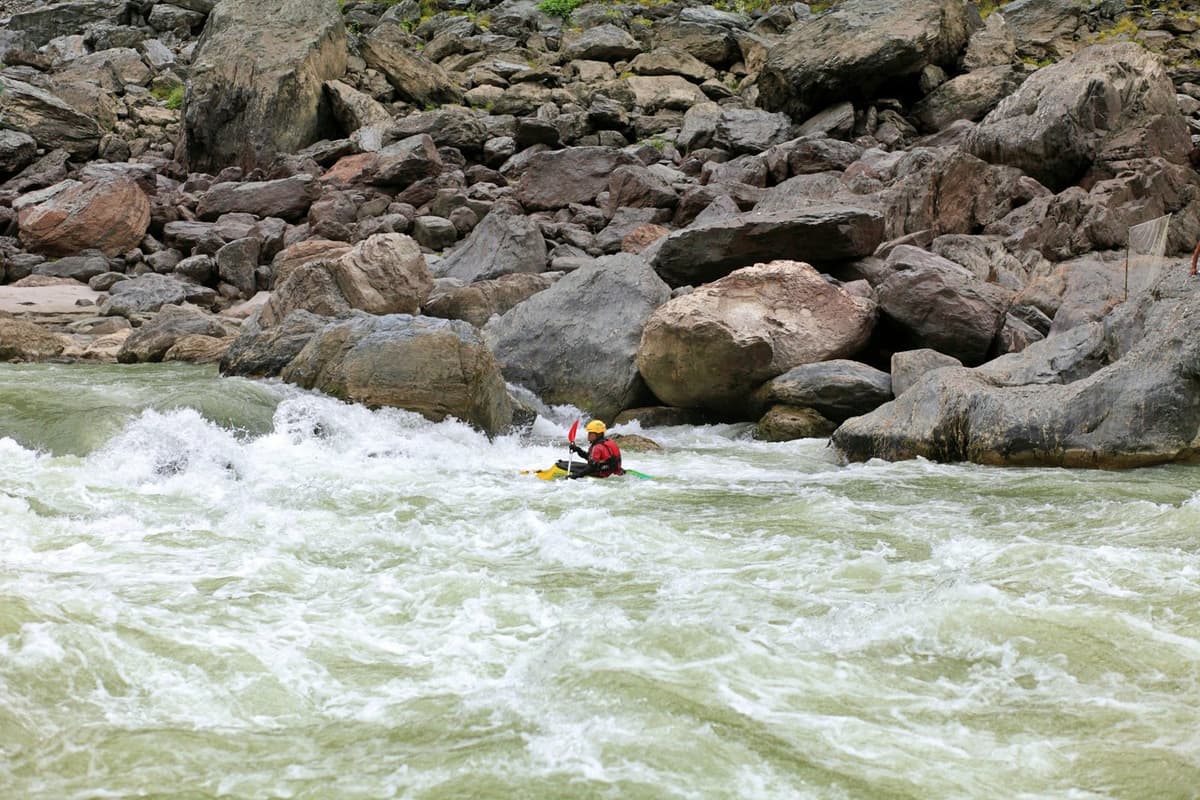
If a raft is not enough, you can learn to paddle your own boat. Most kayak schools are in Pokhara, with others at riverside resorts on the Bhote Koshi and the Upper Sun Koshi. A typical beginner course in Pokhara, as Rough Guides describes it, starts with a half-day introduction on Phewa Tal, Pokhara's lake, then about four days on the Seti with raft support. The warm Seti is a good place to practise rolling the kayak upright after a capsize.
"You could also sign up to be a part of the growing kayaking community in Nepal."
Nepal Tourism Board, "Rafting & Kayaking" page, checked 23 Nov 2026
Frequently asked questions
Is it safe to raft on Nepal's rivers?
It is reasonably safe on a river graded for your experience, in the main seasons, with a licensed agency whose licensed guide briefs you and supplies a life jacket and helmet. The rules require the licence and that gear; safety kayakers and a second raft on your trip are good practice, so ask for them. After the 2026 flood, check the river's current status before you book.
What is the best month to raft in Nepal?
October to mid-December and March to early May are the main rafting seasons, according to the Nepal Tourism Board. Autumn brings warm days and lively water; spring brings long, warm days. A few warmer rivers such as the Seti run in winter. Most rivers are too high in the monsoon, June to September.
Which Nepali river is best for rafting?
It depends on your days and experience. For a first trip, the Trishuli is the most popular choice, grade 3 to 3+ over one or two days, and the lower Bhote Koshi near Sukute is a short alternative. Experienced rafters choose the Marsyangdi or the upper Bhote Koshi. The Sun Koshi and the Karnali are eight to ten-day expeditions.
What is the minimum age for rafting on Nepal's rivers?
There is no national minimum age: Nepal's Rafting Rules and the Nepal Tourism Board set none, so each operator decides. One Pokhara operator usually takes children from five on its gentle Lower Seti family trip, and our Trishuli day trip suits ages from about ten upwards. NTB notes that with children on board the guide takes full control with oars.
Do you need to be able to swim to raft in Nepal?
No. There is no swimming test in Nepal's rules, and you wear a life jacket throughout. Tell your guide before you set off if you cannot swim. If you fall in, American Whitewater's advice is to lie on your back with your feet high and pointed downstream, and never to stand in fast water. Gentle rivers such as the Lower Seti suit non-swimmers best.
Can you raft in Nepal during the monsoon?
Only on a few rivers, and with care. The Nepal Tourism Board says the monsoon floods most rivers between June and September, making them too risky, but names the Trishuli and the Seti as rivers that can usually be run. There is no government ban; most operators stop or switch rivers. Ask about the current water level before you book.
Plan your rafting trip with us
Pick the river by grade, days and month, then check its current state before you commit. If you are building rafting into a longer journey, our guide to Nepal tourist places helps you plan the rest of the route. These are the rafting trips we run:
- All our rafting and kayaking trips
- Trishuli River rafting day trip
- Sukute Beach rafting on the Bhote Koshi
Send us a WhatsApp message or use the enquiry form with your dates, and our Kathmandu team will help you plan.