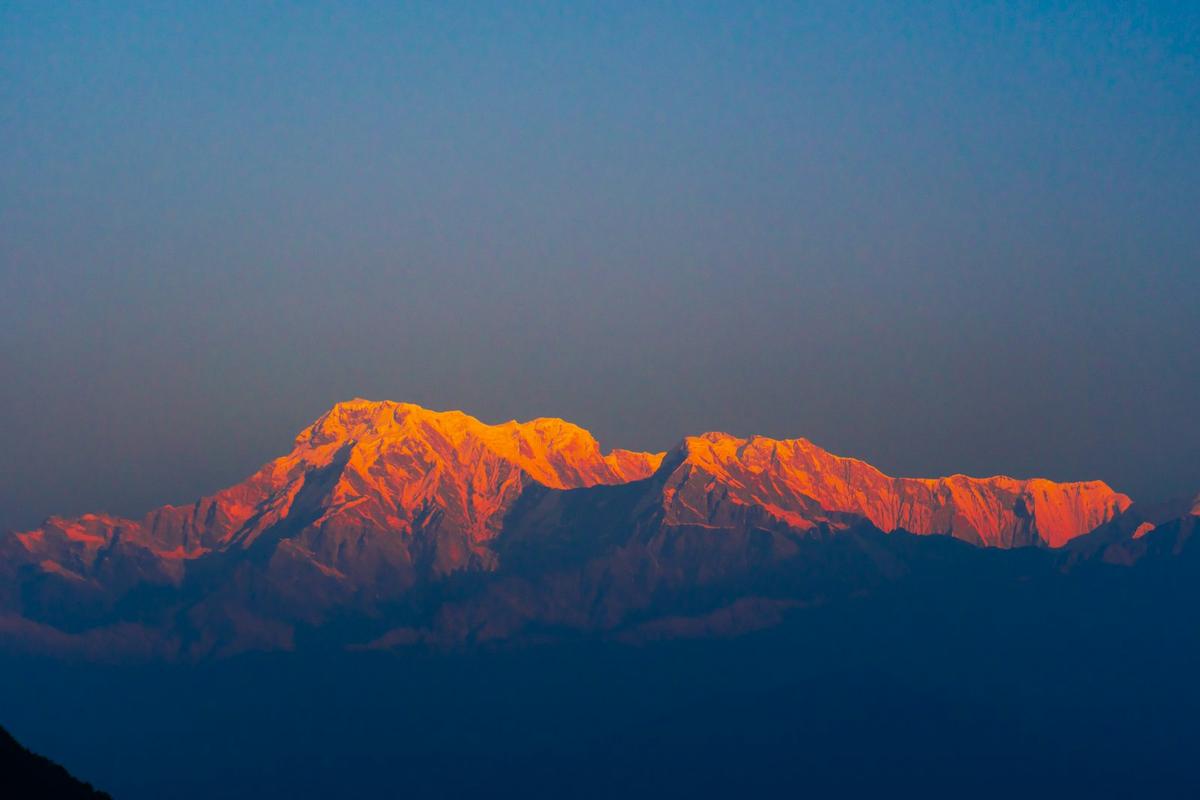
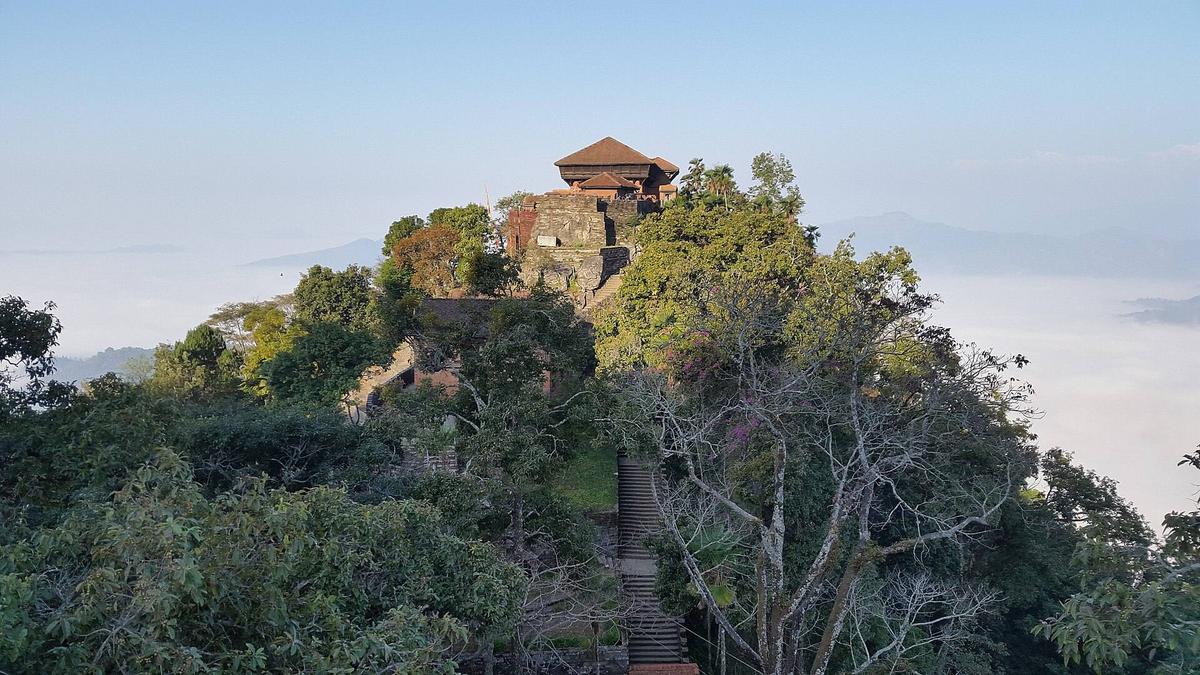
From Gorkha bazaar, a long flight of stone steps climbs out of the old town to a ridge. At the top, a brick and timber palace and a carved temple stand side by side, and on a clear winter morning you may see Manaslu, Ganesh Himal and the Annapurnas to the north. This is where the Shah kings began.
Gorkha Durbar is a fort, palace and temple complex on the ridge above Gorkha bazaar, and the birthplace of Prithvi Narayan Shah, the king who unified Nepal. You reach it on about 1,500 stone steps or by road to a rear car park. It is a rewarding history stop among Nepal's hill towns and day trips.
Updated 20 Nov 2026
In this guide
- What is Gorkha Durbar?
- Who built Gorkha Durbar, and how old is it?
- Why is Gorkha Durbar linked to Prithvi Narayan Shah?
- What you see inside the Gorkha Durbar complex
- Visiting the Kalika temple: customs, sacrifices and photos
- How do you reach Gorkha Durbar?
- Climbing the Gorkha Durbar steps
- Gorkha Museum at Tallo Durbar
- How did the 2015 earthquake affect Gorkha Durbar?
- When is the best time to visit Gorkha Durbar?
- Where to stay and eat in Gorkha
- Frequently asked questions
- Plan your visit to Gorkha Durbar with us
Key facts
- What it is
- Fort, palace and temple complex on a ridge above Gorkha bazaar (Lonely Planet; Gorkha Municipality, checked 21 Nov 2026)
- Built
- Early 17th century, in the reign of King Ram Shah (NTB says 16th century) (Kathmandu Post 2019 and 2020; NTB Gorkha page, checked 21 Nov 2026)
- Famous for
- Birthplace of Prithvi Narayan Shah, born 1723 (NTB Gorkha page; Britannica, checked 21 Nov 2026)
- Height above town
- About 300 m above the old bazaar (Kathmandu Post, Oct 2019, checked 21 Nov 2026)
- Stone steps
- About 1,500 from the bazaar, 30 minutes to an hour on foot (Lonely Planet; Kathmandu Post; NTB, checked 21 Nov 2026)
- From Kathmandu
- About 141 km by road (Gorkha Municipality, checked 21 Nov 2026)
- From Pokhara
- About 106 km by road, via Aanbu Khaireni (Kathmandu Post, Jan 2020, checked 21 Nov 2026)
- Heritage status
- On UNESCO's Tentative List since 1996, not a World Heritage Site (UNESCO; Department of Archaeology, checked 21 Nov 2026)
- Gorkha Museum
- In Tallo Durbar, usually closed on Tuesdays and public holidays (Nepal News, Mar 2021, checked 21 Nov 2026)
- Clearest skies
- October and November (NTB climate page, checked 21 Nov 2026)
What is Gorkha Durbar?
Gorkha Durbar is the old royal palace of the Shah kings of Gorkha, set on a ridge high above Gorkha bazaar. Durbar means palace. Lonely Planet calls it a fort, palace and temple in one. The complex also holds the Kalika temple and a cave shrine of the yogi Gorakhnath.
NTB says this is the hill where the Shah kings "started their 239-year long reign", and seven Shah kings ruled from the palace before Prithvi Narayan Shah. The district takes its name from the sage Gorakhnath and the goddess Gorakh Kali, NTB notes. "The medieval palace complex of Gorkha" has been on UNESCO's Tentative List since 1996, a step towards listing rather than World Heritage status.
Takeaway: this is a working religious site as much as a monument, so you share the terraces with worshippers.
Who built Gorkha Durbar, and how old is it?
King Ram Shah built Gorkha Durbar in the early 17th century. The Kathmandu Post dates it to "circa 1610", and Ram Shah reigned from about 1606 to 1636. NTB's Gorkha page says the palace was built "in the 16th century by Ram Shah", so you will see both in print.
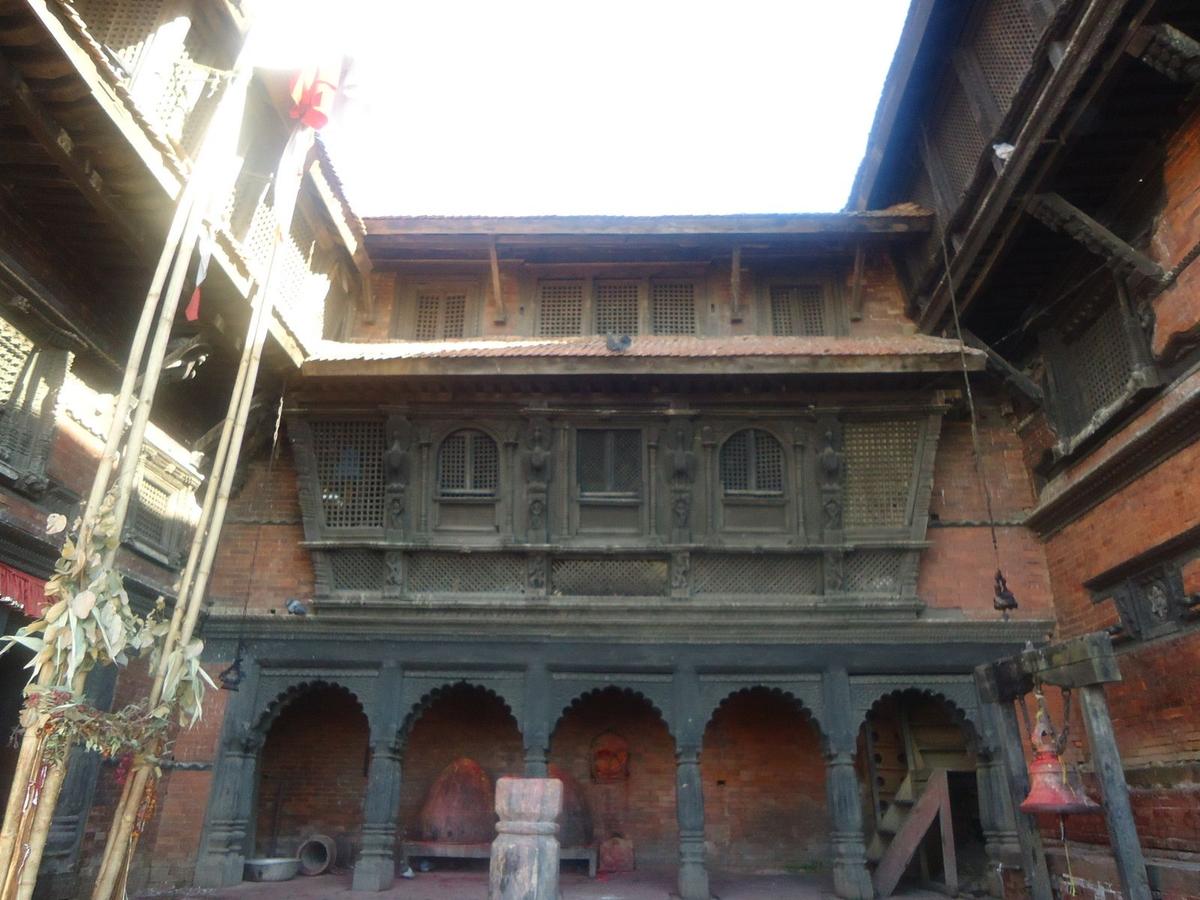
The palace is in the Newar style, the brick and carved-wood tradition of the Kathmandu Valley. It has four storeys if you count the Buingal, the top floor, with arched windows on the third floor. In the Rangmahal, the hall linking the palace and the Kalika temple, Ratopati reports a drum inscribed BS 1666 that King Chhatra Shah offered to Kalika. BS is Bikram Sambat, the Nepali calendar.
Takeaway: if a sign gives a different century, the builder's reign points to the 1600s.
Why is Gorkha Durbar linked to Prithvi Narayan Shah?
Prithvi Narayan Shah, the king who unified Nepal, was born at the Gorkha palace in 1723. He became king of Gorkha in 1743 (some sources say 1742) and set out from this ridge on the campaigns that joined the hill states and the Kathmandu Valley into one kingdom, with Kathmandu as its capital.
- 1744: his forces take the hill fort of Nuwakot.
- 1768: he attacks Kathmandu during the Indra Jatra festival and later annexes it, as The Kathmandu Post puts it. Patan falls the same year.
- 1769: Bhaktapur falls, completing the conquest of the valley.
- 1775: he dies.
His teachings, the Dibya Upadesh (divine counsel), describe Nepal as "a yam between two rocks", in Nepali "dui dhunga bichko tarul", as The Kathmandu Post rendered it in 2024.
Ratopati reports that he was born in a room on the right side of the palace's ground floor, and that the room is kept closed.
Takeaway: you cannot enter the birth room, so see the Gorkha Museum below for his story in objects.
What you see inside the Gorkha Durbar complex
The Gorkha Durbar complex spreads across the ridge top, with the lower palace, now the museum, down in the bazaar. Each part has its own customs.
| Part | What it is | Visitor note |
|---|---|---|
| Gorkha Durbar palace | Four-storey Newar-style palace, rebuilt after the 2015 earthquake | The birth room is kept closed; look up at the carved windows |
| Kalika (Gorakhkali) temple | East-facing, palace-style temple with a metal spire | Only priests and attendants go inside; remove leather shoes and belts |
| Rangmahal | Hall linking the palace and the temple | Colours are played from here on Tika day of Dashain |
| Gorakhnath cave shrine | Cave shrine of the yogi Gorakhnath just below the palace | Kanphata yogis, an order that follows Gorakhnath, worship here daily |
| Upallo Kot | The upper fort, a municipal viewpoint, restored by April 2023 | A short walk on a path; trees may block part of the view |
| Tallo Durbar | The lower palace in Gorkha bazaar, now the Gorkha Museum | Usually closed on Tuesdays and public holidays |
The Gorakhnath shrine is known for rota, a baked rice bread offered from each season's new harvest.
Takeaway: leave time on the ridge for the walk out to Upallo Kot, not just the palace and temple.
Visiting the Kalika temple: customs, sacrifices and photos
You can visit the Kalika temple terrace, but no visitor goes inside the inner shrine. Ratopati reports that only the main priest and the Bhirkote and Bhitariya attendants enter the main worship room, and devotees pray at the southern door. Lonely Planet says non-Hindus may watch from the terrace. Remove leather shoes and belts first.
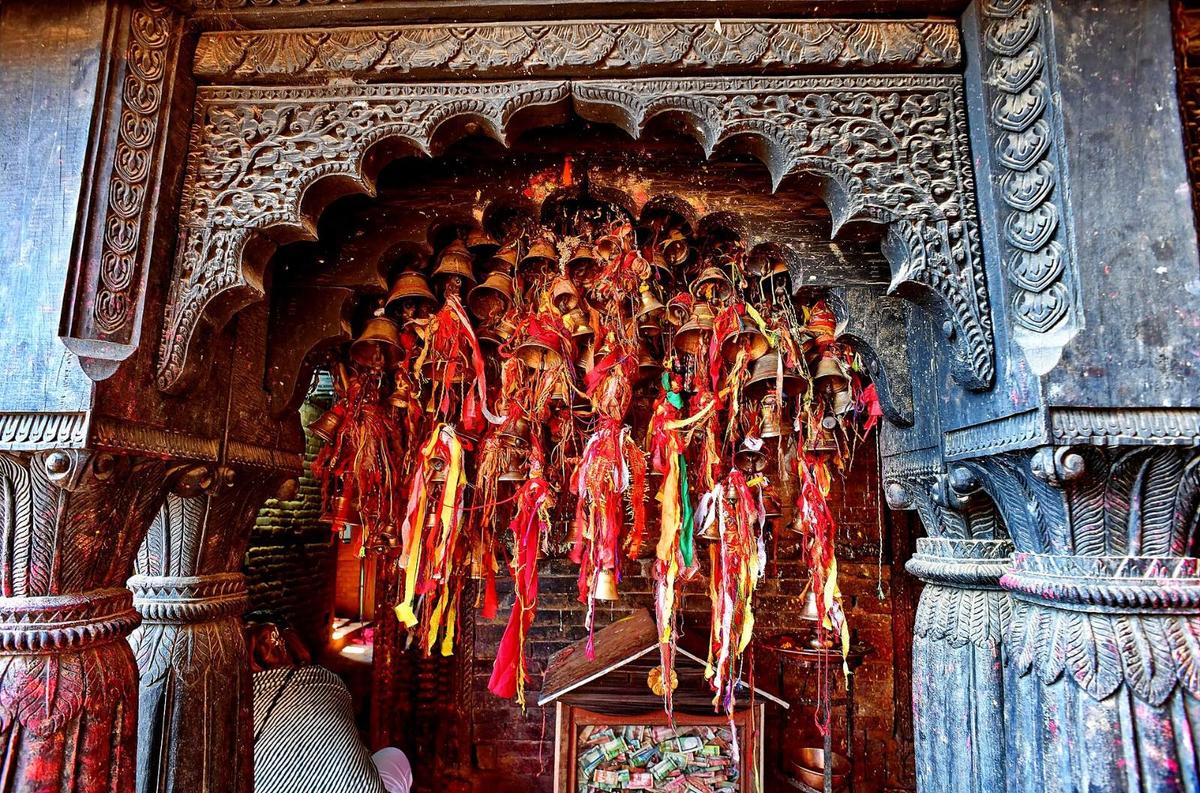
Gorakhkali is the name of the goddess Kalika here, so both names mean the same temple. Lonely Planet describes its carved timber as "a psychedelic 17th-century fantasy of peacocks, demons and serpents".
Animal sacrifice is part of worship. Two 2026 travel guides say goats and chickens are often in the area, especially on Saturdays. The main festival day is Maha Ashtami, the eighth day of Dashain, the great autumn festival. On Maha Ashtami 2025, The Annapurna Express reported devotees gathering from early morning, government-sanctioned sacrifices from after 2 pm, and then the temple opening to the public for offerings. Each Dashain the Phulpati, a bundle of sacred flowers and leaves, is sent from this temple to Hanuman Dhoka Palace in Kathmandu.
"The practice of offering prayers at Hanuman Dhoka only starts after Phulpati arrives from Gorkha."
Sharda Prasad Bhattarai, head priest of the Kalika temple, in "Phulpati sent to Hanuman Dhoka from Gorkha Durbar", The Kathmandu Post, 10 October 2024
There is no published photography rule. A Kathmandu Post writer in 2019 was scolded by a priest, perhaps for taking photos, and only noticed a no-camera sign on the way down. Practical steps:
- Take off your shoes before the brick platform in front of the temple.
- Look for signs and ask before you photograph near the temple.
- If you would rather not see sacrifices, avoid Saturdays and the eighth day of Dashain.
How do you reach Gorkha Durbar?
Gorkha bazaar is about 141 km from Kathmandu by road, usually five to six hours, longer with roadworks. You leave the Prithvi Highway at Aanbu Khaireni (also spelt Abu Khaireni or Aabukhaireni) and drive about 24 km up a branch road. From the bazaar, climb the stone steps or take the road to a car park below the rear gate.
| From | Route | Distance | Note |
|---|---|---|---|
| Kathmandu | Prithvi Highway to Aanbu Khaireni, then the branch road | About 141 km | Usually five to six hours |
| Pokhara | Prithvi Highway to Aanbu Khaireni, then the branch road | About 106 km | Check timings locally |
| Gorkha bazaar | Stone steps to the palace | About 1,500 steps | 30 minutes to an hour on foot |
| Gorkha bazaar | Road via Satipipal and Gairikuwa to the rear car park | No published figure | Then a short walk |
By public transport, buses and minivans leave from the Gongabu (New Bus Park) area in Kathmandu. Or take a Kathmandu to Pokhara tourist bus to Aanbu Khaireni and a local bus up to Gorkha. Our guide to the Kathmandu to Pokhara road covers the highway, and you can add Manakamana temple and its cable car to the same drive.
What this means for your day: coming from Kathmandu, you pass Ghoptebhir and Mugling before the Gorkha turn-off at Aanbu Khaireni, so leave at first light and aim to be past them before 11:00, or plan to drive on after 16:00. Check road news, or message us, the day before you travel, and keep water and snacks in the car. Even after this closure ends, leaving early makes sense: in 2026 a landslide at Krishnabhir in Dhading shut the highway for 18 days, and rain in late October brought one-way stretches again.
Climbing the Gorkha Durbar steps
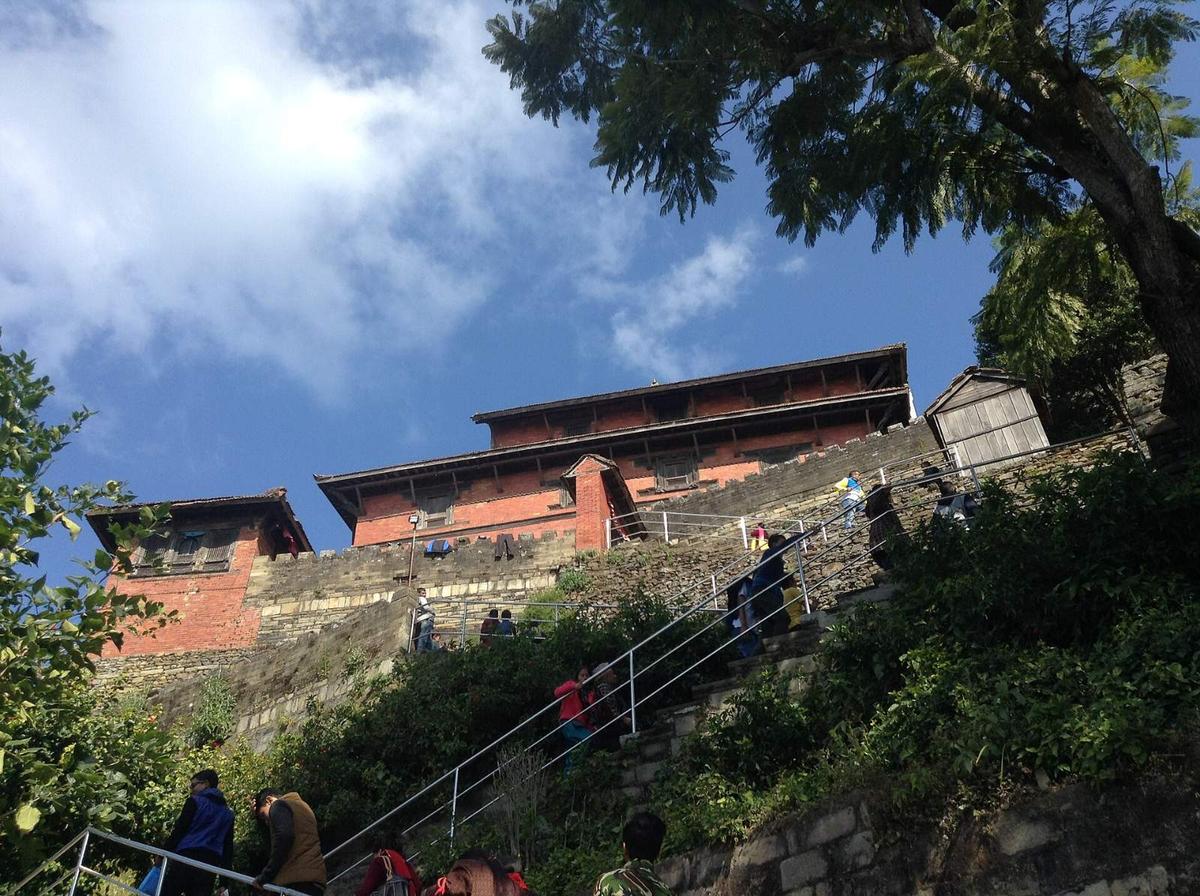
About 1,500 stone steps lead from Gorkha bazaar to the palace, which sits about 300 m above the old town. Allow 30 minutes to an hour, with rests. If steps are hard for you, take a taxi up the road to the car park below the rear gate and walk a short way to the palace.
- Start early, before the sun is high, and carry water.
- Wear shoes with grip that slip off easily for the temple.
- Walk slowly and stop often. Worn stone can be slippery after rain.
Gorkha Museum at Tallo Durbar
The Gorkha Museum fills Tallo Durbar, the lower palace in Gorkha bazaar, about a five-minute walk from the bus park. The building dates from 1835, under King Rajendra Bikram Shah, and opened as a museum in June 2008. It is usually closed on Tuesdays and public holidays.
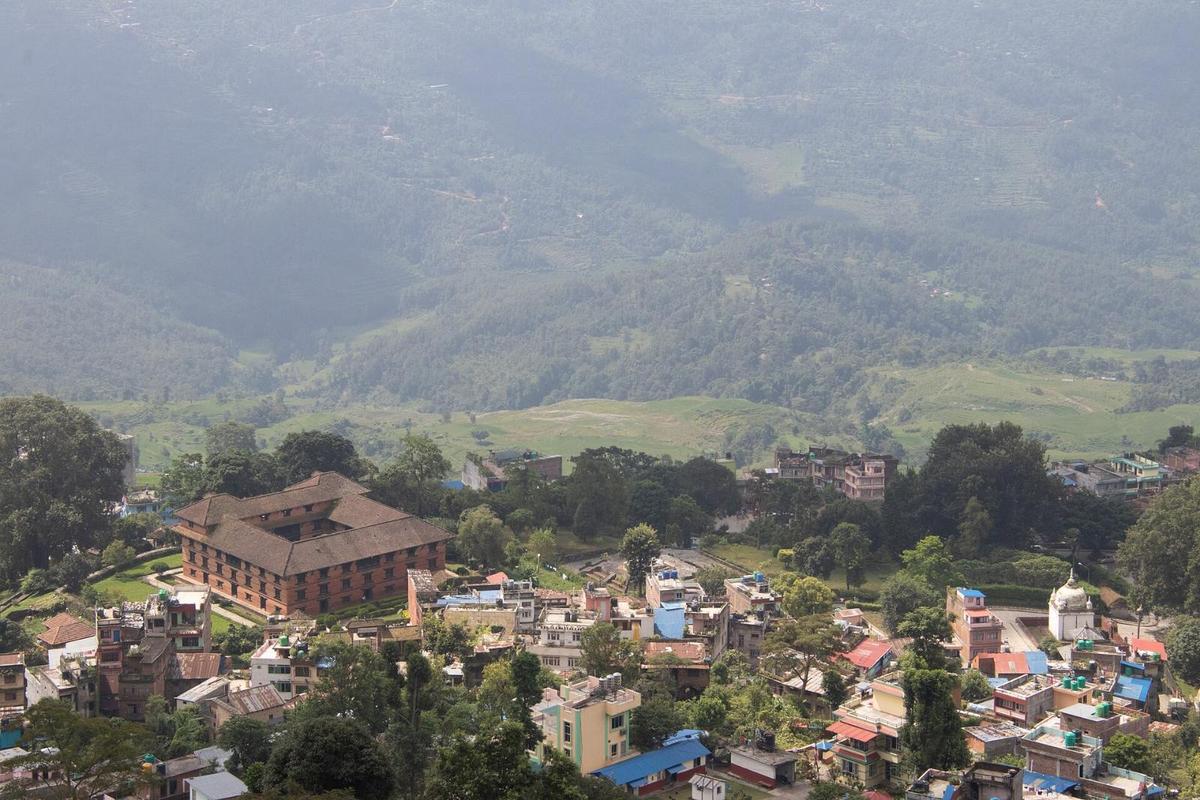
Its 12 exhibition rooms include a Shah dynasty genealogy room, a Dibya Upadesh room and an oil painting room. You see personal items of Prithvi Narayan Shah, weapons, unification-era utensils, ethnic costumes and musical instruments, plus the building's carved windows. Since August 2026 a cannon with shells is on display, and a disabled-friendly path runs from the main entrance to Museum Chowk.
The museum is popular with Nepali visitors. In fiscal year 2081/82 (2024/25) it had 122,733 visitors, the most since it opened, of whom 36,298 were students, so you may share the rooms with school groups.
We could not find an official, dated entry fee or opening hours for the museum or the hilltop palace. Fees vary, so check at the gate, and arrive before mid-afternoon.
How did the 2015 earthquake affect Gorkha Durbar?
The magnitude 7.8 earthquake of 25 April 2015 had its epicentre at Barpak in Gorkha district, about 85 km north-west of Kathmandu. The Kathmandu Post reported Gorkha Durbar "damaged beyond repair", so the palace was taken down and rebuilt. Ratopati wrote in February 2026 that "reconstruction work has now been completed".
The rebuild contract was signed in November 2017. After missed deadlines, the palace was finished by April 2023, while the Kalika temple was strengthened rather than rebuilt.
Takeaway: much of the palace you walk through is new brick and timber, while the temple carries the older work.
When is the best time to visit Gorkha Durbar?
October and November give the clearest skies, NTB says, and winter is your best chance of seeing Manaslu (8,163 m), Ganesh Himal and the Annapurnas from the ridge. In warmer months the view is mainly the town and the Trishuli valley. Most of Nepal's rain falls in the monsoon, June to September.
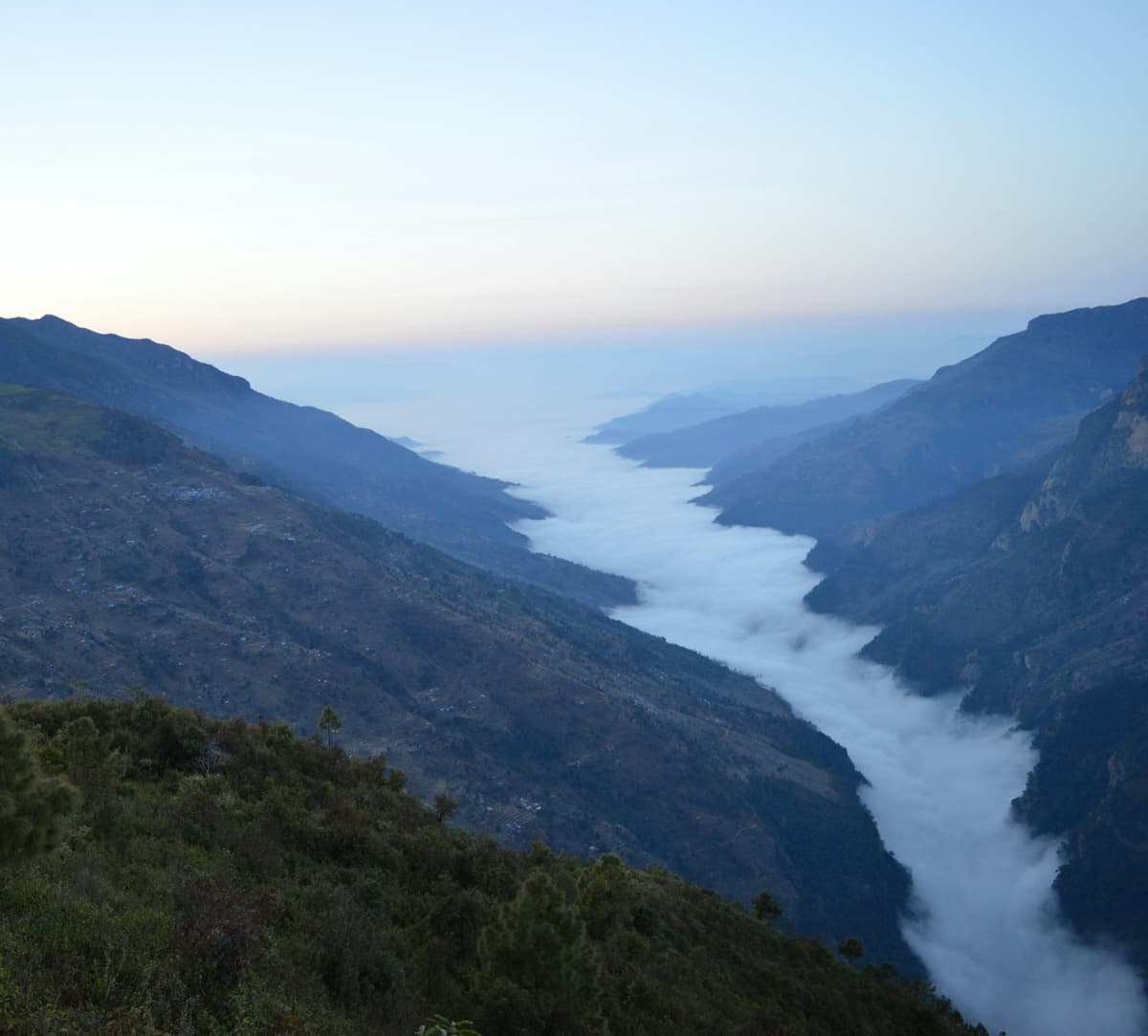
The valley below is the one the Trishuli River runs through. The 2026 monsoon withdrew from Nepal on 14 October, 12 days later than normal (DHM).
A climate table for the Gorkha station at 1,097 m (period not stated) gives November days around 22 °C and nights around 11 °C, with little rain. The ridge is higher and a little cooler, so bring a warm layer for early mornings in winter.
Where to stay and eat in Gorkha
Gorkha bazaar has simple hotels and homestays rather than luxury hotels, as The Kathmandu Post noted. Staying one night lets you climb in the cool of the morning.
Local food is hill cooking: dal bhat tarkari (rice, lentil soup and vegetable curry), gundruk (fermented dried greens) with dhindo (a thick flour porridge), and kodo ko roti (millet flatbread).
Frequently asked questions
What is the height of Gorkha Durbar?
NTB says the palace stands on a hilltop "at a height of around 1,000 meters". Other published figures are higher, up to about 1,400 m, and the municipality's highest point is 1,522 m, so treat any single figure with care. What is certain is the climb: the palace sits about 300 m above the old bazaar.
How many steps are there to Gorkha Durbar?
There are about 1,500 stone steps from Gorkha bazaar to the palace, according to Lonely Planet and The Kathmandu Post. No official count exists. Allow 30 minutes to an hour to climb, with rests. If the steps are too much, a road runs up to a car park below the rear gate, a short walk from the palace.
Is there an entrance fee for Gorkha Durbar?
We could not find an official, dated fee for the hilltop palace or for the Gorkha Museum. Published figures come from travel websites and older press and do not agree, so check at the gate and carry small notes in Nepali rupees. The museum is usually closed on Tuesdays and public holidays, so plan your day around that.
Where was Prithvi Narayan Shah born?
Prithvi Narayan Shah was born at Gorkha Durbar, the palace of the Shah kings of Gorkha, in 1723. Ratopati reports that he was born in a room on the right side of the palace's ground floor, which is kept closed to visitors. You can see objects from his life in the Gorkha Museum below.
How far is Gorkha from Kathmandu?
Gorkha is about 141 km from Kathmandu by road, according to Gorkha Municipality. The drive usually takes five to six hours, longer with roadworks. You follow the Prithvi Highway to Aanbu Khaireni, then climb about 24 km on a branch road. Check highway news the day before you travel.
Plan your visit to Gorkha Durbar with us
Gorkha Durbar fits well into a few days on the road from Kathmandu. Our Gorkha, Bandipur and Kathmandu tour and the three-day Bandipur and Gorkha tour both include the palace, and the Trishuli rafting, Bandipur and Gorkha tour adds rafting on the Trishuli. We plan each drive around the latest road news.
For the next stop, read our guides to Bandipur, a hill town on the same road and Manakamana temple, or browse more hill towns and day trips in Nepal.
Message us on WhatsApp or use the enquiry form on any trip page.