By Uncover Nepal Guide · Checked by our Kathmandu travel team · Updated 14 Nov 2026
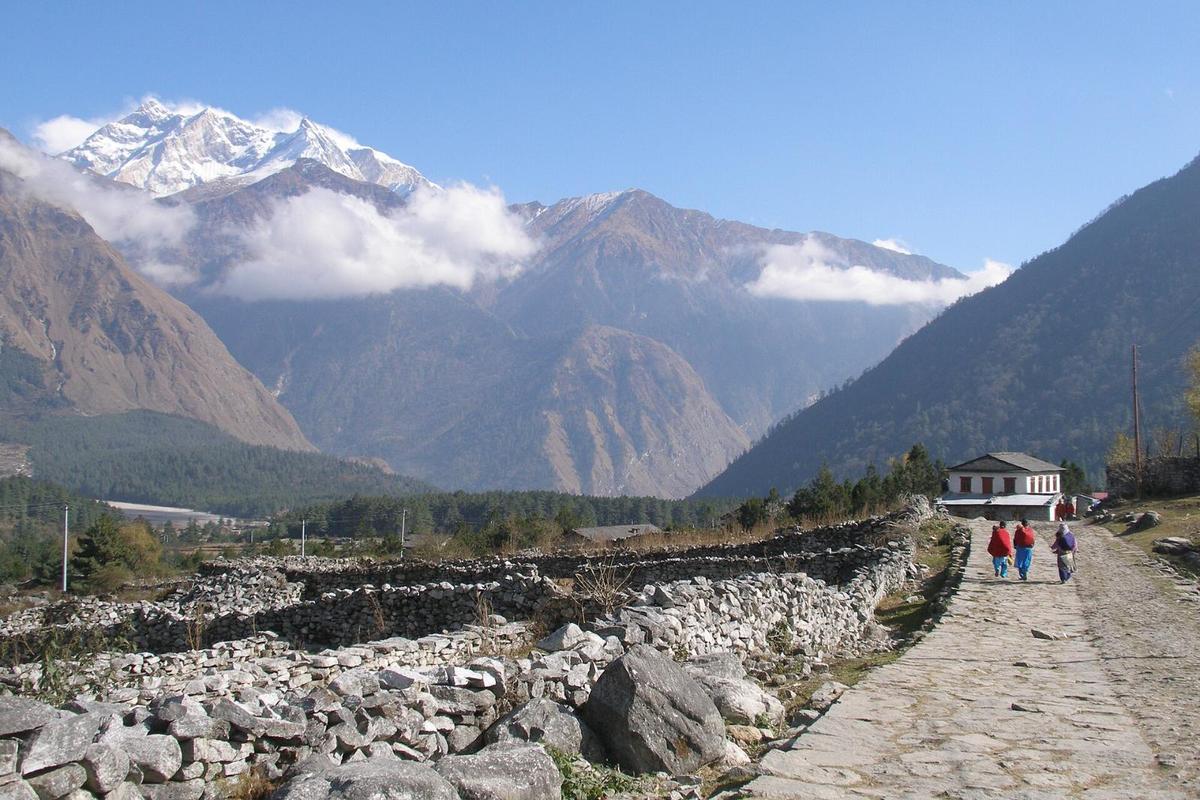
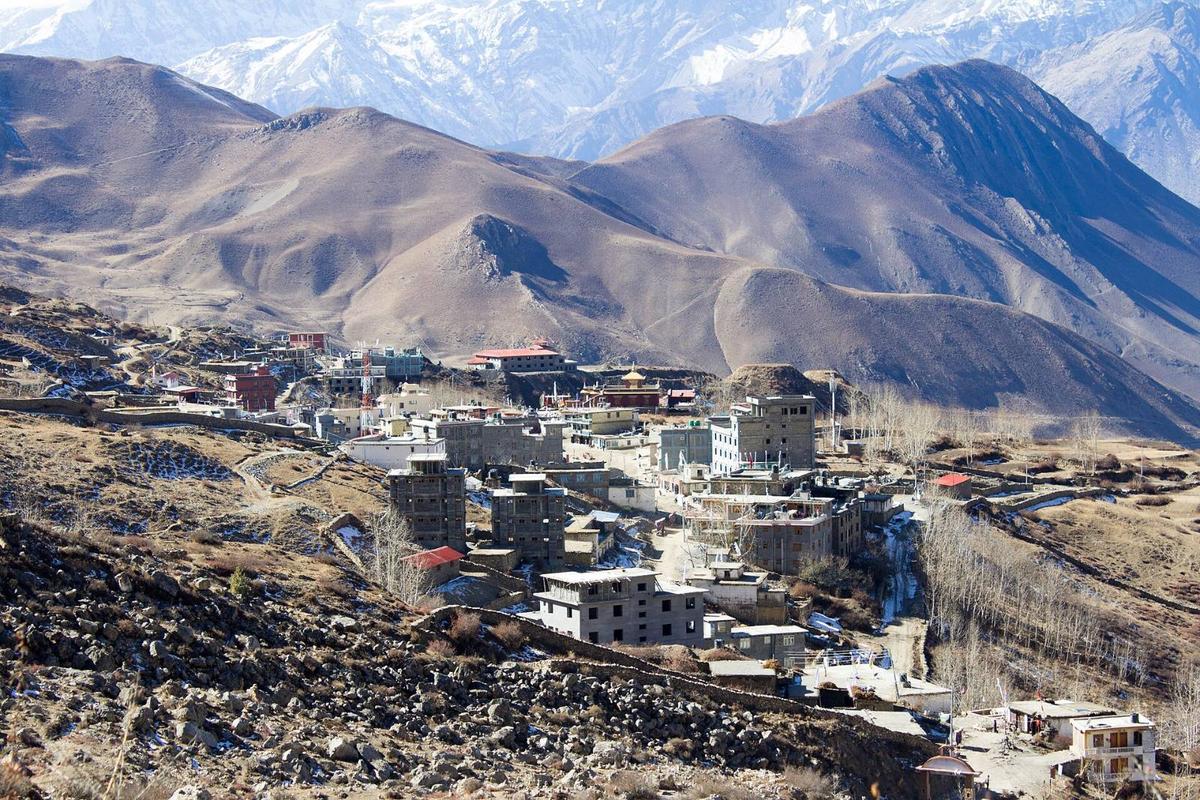
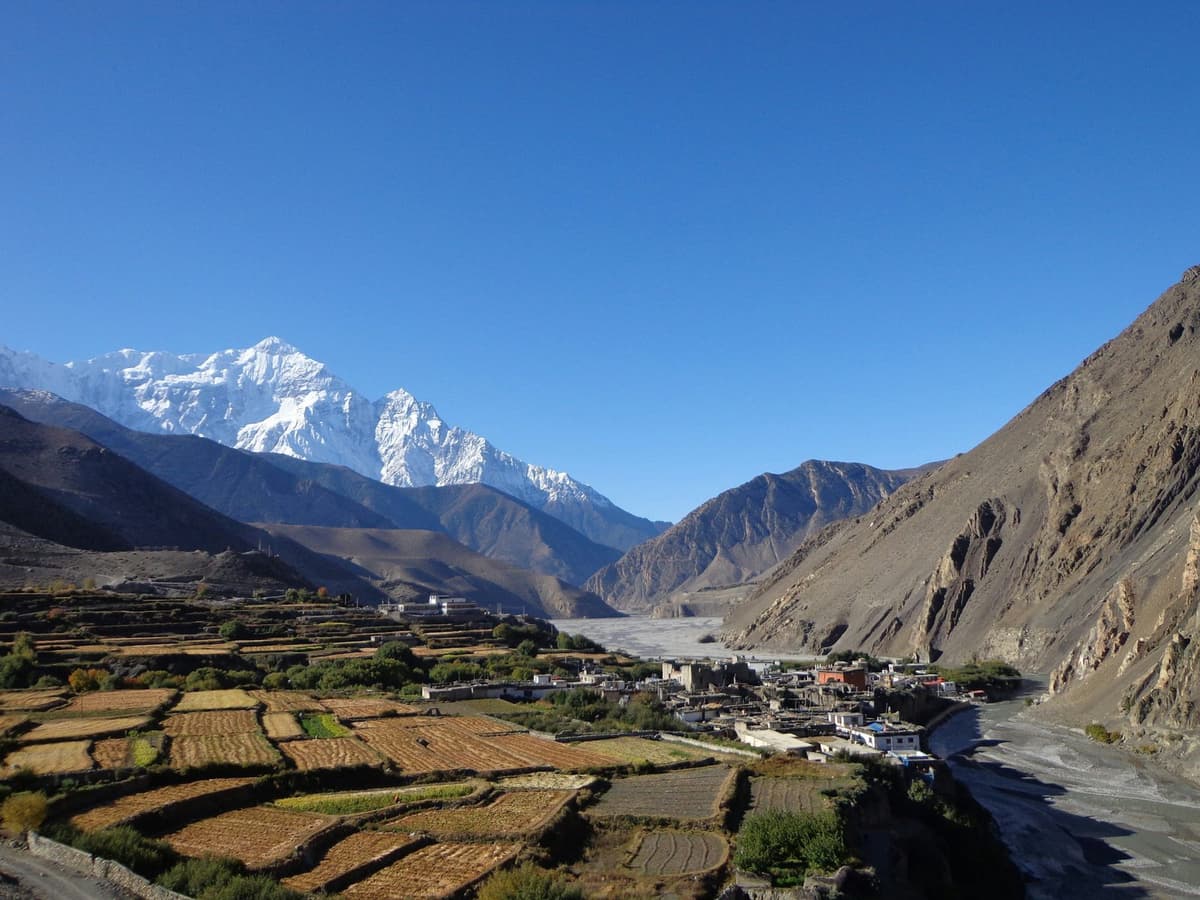
From Kagbeni, a 12 km paved road climbs past Jharkot to Ranipauwa and the temple just above it. The hills are dry and bare, and the air is noticeably thinner than in Pokhara.
The Muktinath elevation is about 3,800 m (about 12,470 ft), according to the Nepal Tourism Board. Other published figures range from 3,610 m to about 3,760 m, and we found no official survey height. Every figure is high enough to cause altitude sickness, so how fast you get there matters more than the exact number.
This guide is part of our Nepal pilgrimage guide.
Key facts
- Muktinath elevation
- About 3,800 m (about 12,470 ft) (Nepal Tourism Board, checked 15 Nov 2026)
- Jomsom airport
- 2,736 m (8,976 ft) (CAAN, checked 15 Nov 2026)
- Jomsom to Muktinath
- About 25 km (13 km to Kagbeni, 12 km up) (OnlineKhabar 2024; The Rising Nepal, 30 Jan 2026)
- Where altitude risk starts
- Sleeping at about 2,450 m (8,000 ft) or higher (CDC Yellow Book, checked 15 Nov 2026)
- Permit
- ACAP entry permit only (NTB and NTNC e-permit, checked 15 Nov 2026)
- Help at the temple
- Treatment centre with oxygen (The Himalayan Times, 10 Jul 2026)
In this guide
- What is the Muktinath elevation?
- How much height do you gain on the way up?
- Why is a day trip from Jomsom easier on the body?
- Is it risky to fly or drive straight up?
- How should you plan the ascent?
- Is Muktinath safe for elderly pilgrims?
- What are the signs of altitude sickness?
- Why do the temple rituals feel tiring?
- Which permit do you need?
- Frequently asked questions
What is the Muktinath elevation?
The Nepal Tourism Board puts Muktinath at about 3,800 m (about 12,470 ft), and we use that figure. Newspapers, Wikipedia and a foundation named after the temple have printed lower heights, from 3,610 m to about 3,760 m. None cites a survey, so treat every number as approximate.
| Published height | Where it appeared | Date |
|---|---|---|
| 3,800 m | Nepal Tourism Board | Checked 15 Nov 2026 |
| 3,800 m | The Himalayan Times; The Rising Nepal | 19 May 2018; 27 May 2026 |
| 3,762 m (12,343 ft) | Wikipedia infobox, no citation | Checked 15 Nov 2026 |
| 3,750 m (12,300 ft) | Muktinath Foundation International, Netherlands | Checked 15 Nov 2026 |
| 3,710 m | The Himalayan Times | 26 Sep 2021 |
| 3,700 m | The Rising Nepal | 18 Nov 2023 |
| 3,610 m (about 11,840 ft) | The Rising Nepal | 26 Oct and 24 Nov 2025 |
The Rising Nepal alone has printed three different heights. The spread is about 190 m; for your health it makes little difference.
How much height do you gain on the way up?
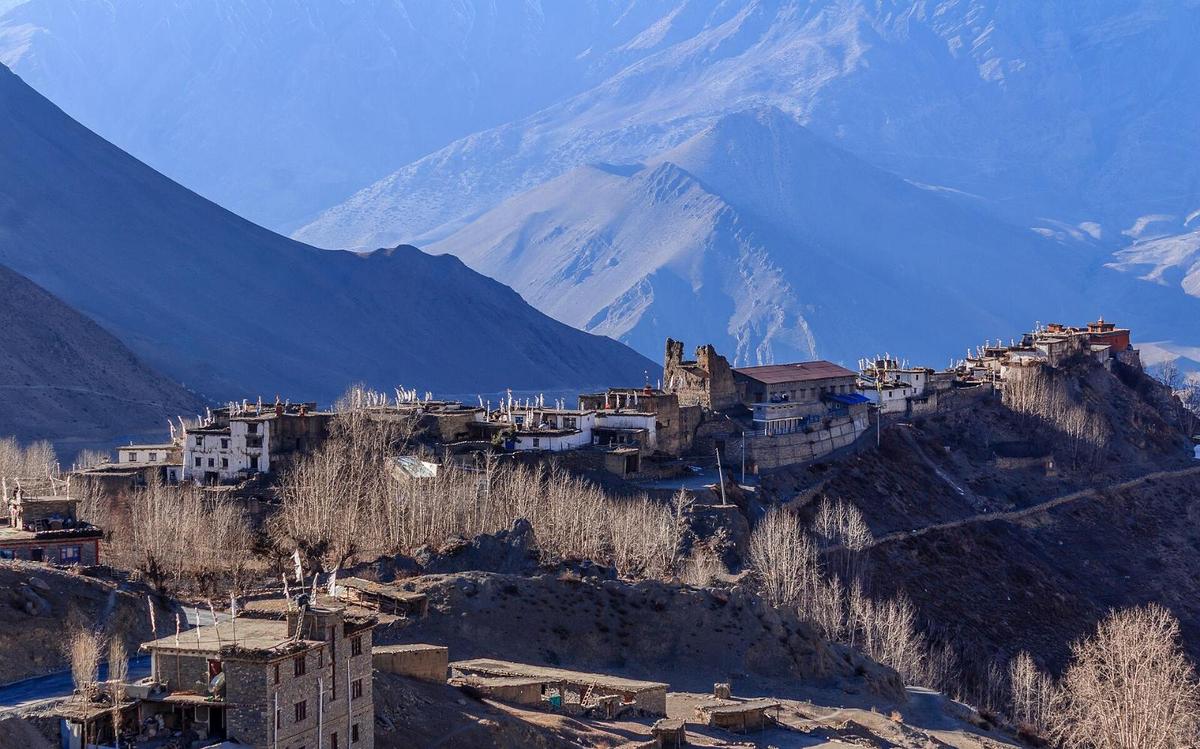
A lot, and quickly. Jomsom is about 1,900 m higher than Pokhara, and the road covers that in one long day. From Jomsom to the temple you gain roughly another 900 to 1,100 m, depending on which Muktinath height you take. That is most of the climb in one or two days.
| Place | Height | Source | Gain from the stop before |
|---|---|---|---|
| Kathmandu (airport) | About 1,340 m (about 4,400 ft) | CAAN | Starting point |
| Pokhara | About 820 m (about 2,690 ft) | DHM | Lower than Kathmandu |
| Jomsom (airport) | 2,736 m (8,976 ft) | CAAN | About 1,900 m |
| Muktinath | About 3,800 m (about 12,470 ft) | NTB | About 900 to 1,100 m |
The US Centers for Disease Control and Prevention (CDC) says anyone not yet adjusted who sleeps at about 2,450 m (8,000 ft) or higher is at risk. Jomsom is above that line; Muktinath is far above it.
Why is a day trip from Jomsom easier on the body?
Because you sleep lower than you visit. The risk depends mostly on where you sleep, so going up to the temple in the morning and returning to Jomsom for the night asks far less of your body than a night at Muktinath. The two are about 25 km apart by road.
"day trips to high-altitude destinations with an evening return to a lower altitude are much less stressful on the body."
CDC Yellow Book, "High-Altitude Travel and Altitude Illness", checked 15 November 2026
The CDC also advises against going straight from below about 1,200 m to a sleeping height above about 2,750 m (9,000 ft) in one day. Pokhara to a night in Jomsom sits just inside that line; Pokhara to a night at Muktinath breaks it by a long way.
Is it risky to fly or drive straight up?
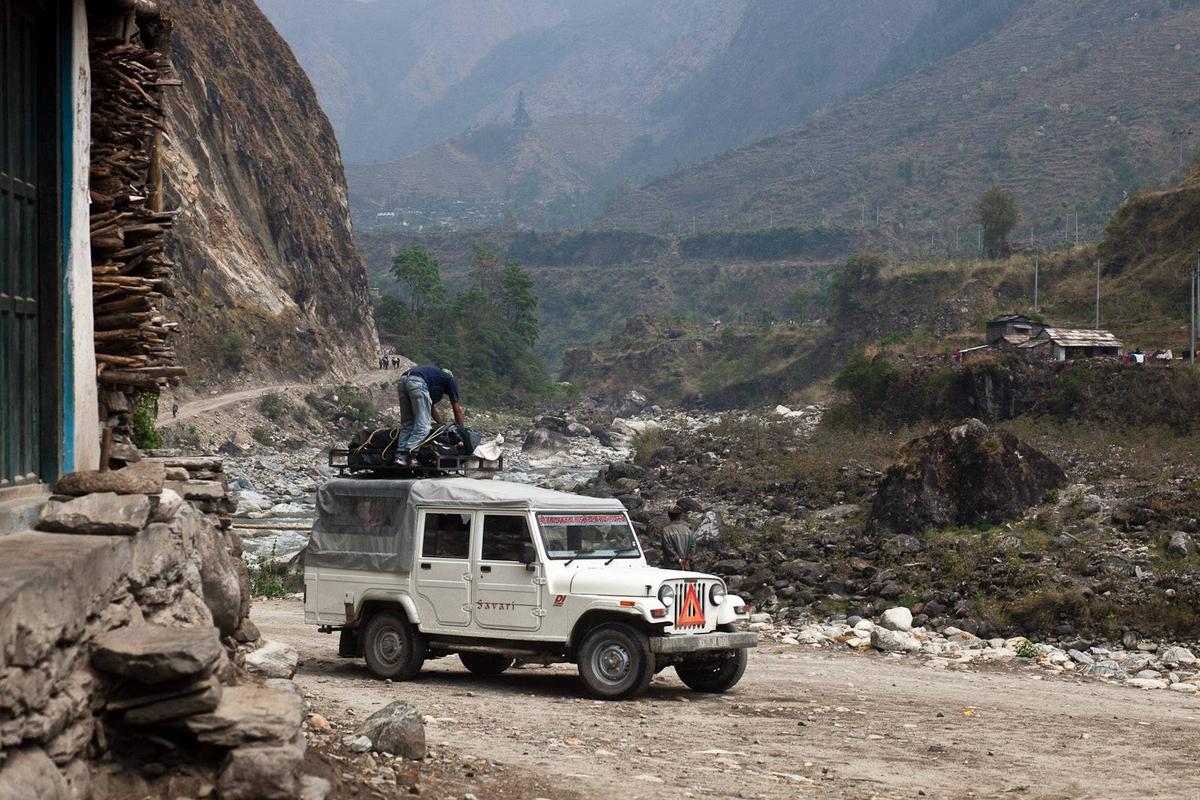
Yes, it is the riskiest way to arrive, because you skip the slow climb that lets your body adjust. A helicopter from Kathmandu puts you roughly 2,300 to 2,500 m higher in one flight; from Pokhara the jump is about 3,000 m. A jeep pushing up from Pokhara in one go is similar.
NHS fitfortravel puts it simply: "If you can, avoid flying directly to somewhere at high altitude". TravelHealthPro, the UK's national travel health service, notes that "travellers flying or driving directly to high altitude locations may be unable to ascend gradually".
In July 2026 The Himalayan Times reported 16 altitude-sickness deaths in Mustang in the year to July, which health officials blamed largely on "travelling rapidly from low-lying areas to high-altitude destinations". That is why we wrote this guide.
Helicopter visits
Chartered helicopters carry pilgrims to Muktinath almost daily, and helicopter visitors to Mustang's religious sites are "required to be accompanied by at least one representative of a security agency" (The Rising Nepal, October 2026). If you fly in, keep the visit short, walk slowly, fly back down the same day and watch everyone that evening.
How should you plan the ascent?
Climb in stages: sleep in Jomsom or lower before the temple, go up in the morning, and come back down to sleep. Keeping the night low is much less stressful on the body, as the CDC notes. Leave a spare day too, because roads and weather in Mustang often change plans.
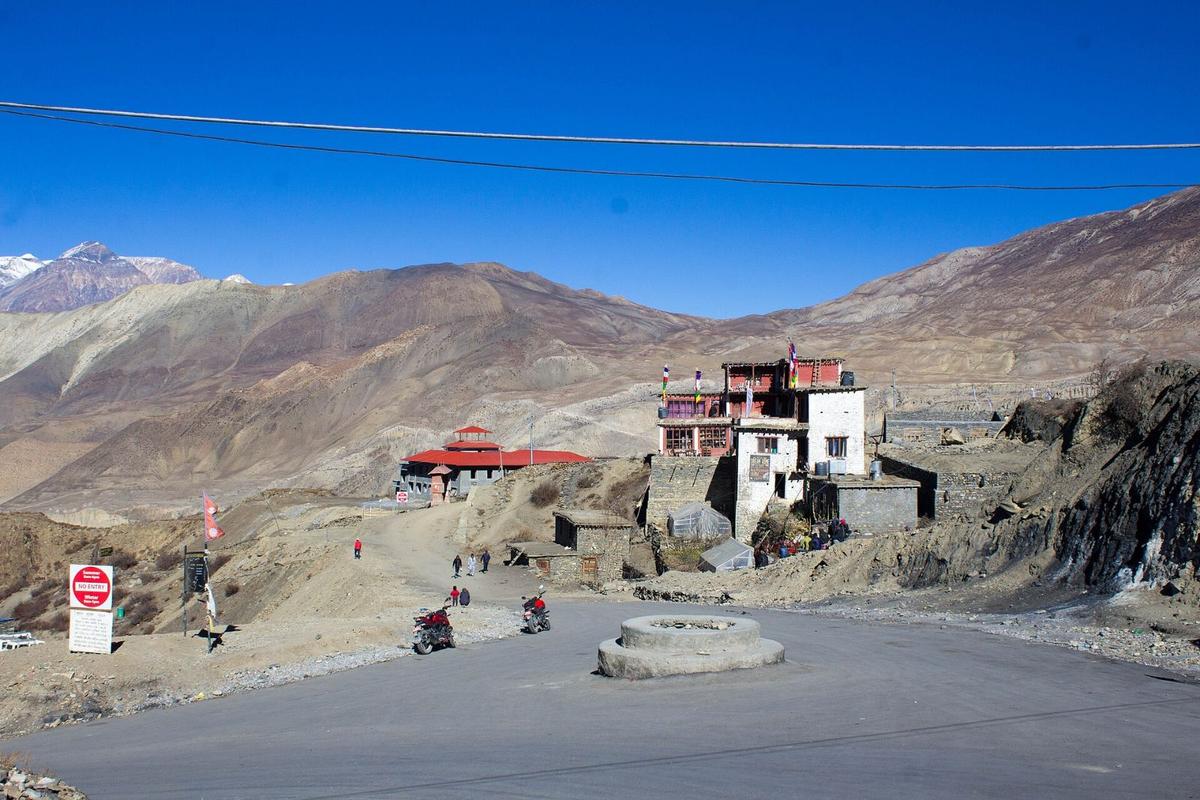
- Drive from Pokhara up the Kali Gandaki valley to Jomsom, about 7 to 10 hours, or break the drive with a night lower in the valley.
- Sleep in Jomsom (2,736 m); a second night there gives your body more time.
- Go up to Muktinath in the morning and take the temple slowly.
- Come back down to Jomsom, or lower, to sleep. If anyone feels unwell at the top, go down the same day.
Sleeping at Ranipauwa, just below the temple, puts your night close to the temple's height, several hundred metres above Jomsom, and that is harder on the body.
The proven basics:
- Above 3,000 m (9,800 ft), raise your sleeping height by no more than about 500 m (1,650 ft) a night, with a rest day every 3 to 4 days on longer trips (CDC; Wilderness Medical Society).
- Walk slowly, "bistarai, bistarai", as we say in Nepali.
- Drink enough water and avoid alcohol for the first days at height.
- Ask your doctor before the trip about preventive medicine, for example acetazolamide.
Garlic soup and other hot soups, served in almost every teahouse, are warming and help you drink more: a comforting local tradition, not a proven cure.
Is Muktinath safe for elderly pilgrims?
Nobody can promise that, but age alone is not the main risk. The CDC lists elderly travellers under "likely no extra risk" and says people over 50 have slightly less risk than younger adults. Speed of ascent and existing heart or lung conditions matter far more, so the family doctor should advise first.
The CDC says people with coronary artery disease, chronic lung disease or sleep apnoea, even if well controlled, "should consult a physician familiar with high-altitude medical issues before undertaking such travel".
For older parents:
- Tell their doctor the height, about 3,800 m, well before the trip.
- Choose the day visit from Jomsom over a night at the top, and avoid flying straight up if the doctor has doubts.
- Agree in advance that the family turns back if anyone feels unwell.
What are the signs of altitude sickness?
The main sign is a headache, often with nausea, loss of appetite, dizziness, tiredness or poor sleep. Symptoms usually start 2 to 12 hours after arrival, according to the CDC, so they may appear on the drive back. Never go higher with symptoms, and go down if they get worse.
What to do
- Stop climbing; do not carry on to the temple with a headache and nausea.
- Rest, drink water and keep warm. If symptoms do not ease, go down.
- Severe symptoms mean descend at once and get medical help: confusion, breathlessness while resting, or unsteady walking. For fluid on the lungs, the CDC says that in most circumstances "descent is urgent and mandatory".
Medical help at the temple
A basic altitude treatment centre with oxygen runs at the temple premises, operated by Province Hospital Jomsom and Baragung Muktichhetra Rural Municipality (The Himalayan Times, July 2026); Khabarhub reported in April 2026 that it had treated 684 pilgrims in nine months. It is not a hospital: for anything serious, go down to Province Hospital in Jomsom. Ask us whether it is staffed before a winter visit.
Why do the temple rituals feel tiring?
Because pilgrims do a lot in thin, cold air. The Nepal Tourism Board describes 108 sacred waterspouts "where pilgrims take a ritual bath", and there are two ponds on the temple premises. Running under cold water at about 3,800 m, then standing wet in the wind, takes far more out of you than at home.
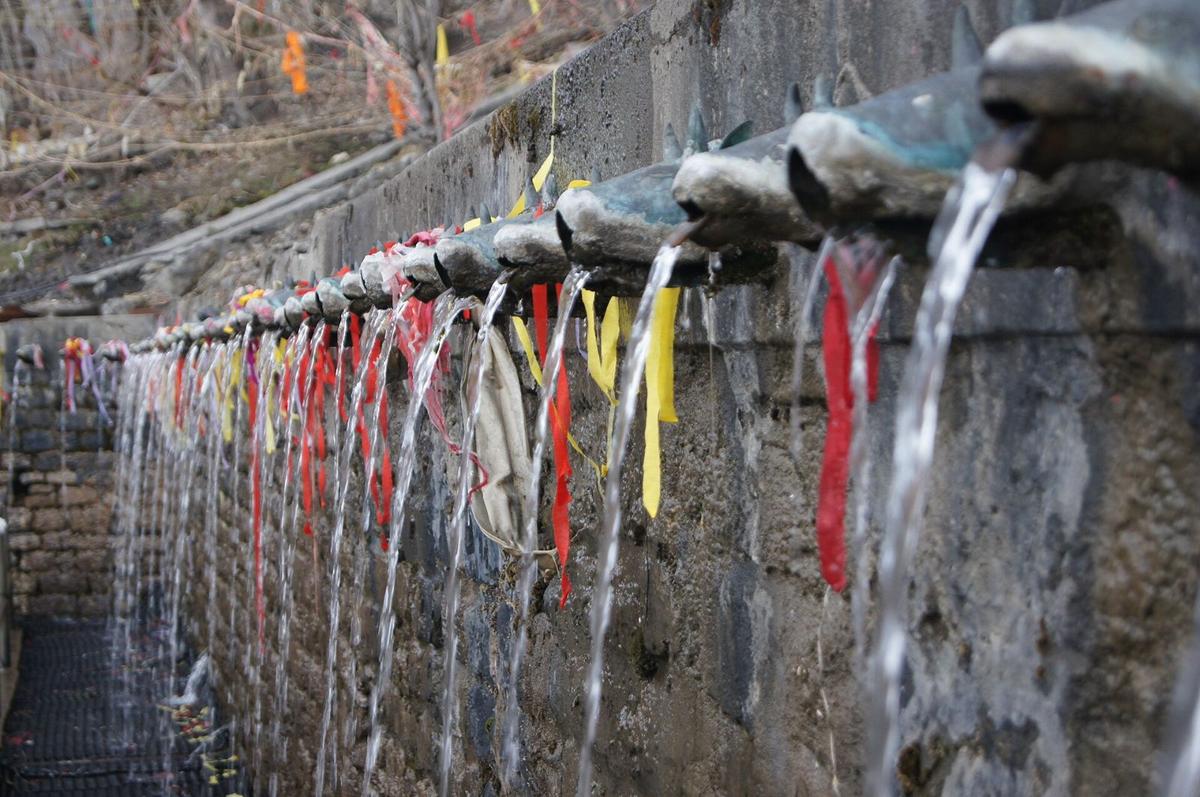
NTB says the site "is sacred to both Hindus and Buddhists", and the Jwala Mai shrine keeps its eternal blue flame. Our Muktinath temple guide covers the rituals in detail.
- Eat first, bathe early in your visit, and change straight into dry, warm clothes.
- Umbrellas, plastic and raincoats are not allowed at the spouts, nor swimming costumes in the ponds (The Rising Nepal, November 2025).
- Rest between the spouts, ponds and shrines.
Which permit do you need?
Only the Annapurna Conservation Area (ACAP) entry permit. Muktinath is outside the Upper Mustang restricted area, which begins north of Kagbeni. ACAP costs NPR 3,000 per person per entry for foreign visitors, NPR 1,000 for SAARC nationals including Indian pilgrims, and NPR 100 per person per entry for Nepali citizens (NTB).
Children under 10 do not need a permit. Online permits carry a 2.9% payment gateway charge, and permits issued at a check post cost double. There is a counter at Ghasa on the road up, and we arrange ACAP for travellers we host.
Frequently asked questions
What is the elevation of Muktinath?
The elevation of Muktinath is about 3,800 m (about 12,470 ft), according to the Nepal Tourism Board. Other published figures run from 3,610 m to about 3,760 m, and we found no official survey height. For the right season, see our guide to the best time to visit Muktinath.
Is Muktinath safe for elderly parents?
Nobody can promise that, but the CDC lists elderly travellers as likely to face no extra risk from altitude. Heart and lung conditions, and going up too fast, matter more. Ask their doctor first, sleep in Jomsom or lower, visit the temple in the morning and come back down the same day.
Do you get altitude sickness at Muktinath?
You can. At about 3,800 m, Muktinath is well above the 2,450 m sleeping height where the CDC says risk begins, and the risk is highest after flying or driving straight up. A headache is the usual first sign. Read our guide on how to avoid altitude sickness.
Do I need a permit for Muktinath?
Yes, the ACAP entry permit, and only that one, because Muktinath is outside the Upper Mustang restricted area. It costs NPR 3,000 for foreign visitors and NPR 1,000 for SAARC nationals, per person per entry, and double if issued at a check post.
How far is Jomsom to Muktinath?
About 25 km: 13 km from Jomsom to Kagbeni, then 12 km of paved road up to Muktinath. The Nepal Tourism Board calls it a five-hour walk, or you can go by jeep. Fares vary; ask us. Our Jomsom to Muktinath guide has the route in detail.
Can I do Muktinath in one day from Pokhara?
By road, we do not advise it. The drive to Jomsom alone takes about 7 to 10 hours, and the road is open only one way on damaged stretches. Reaching the temple the same day means climbing about 3,000 m, then sleeping high or driving back through the night. A night in Jomsom first is far easier on the body.
Plan your visit with us
Take the height in stages: sleep low, go up in the morning and come back down. For Nepal's other sacred sites, see our Nepal pilgrimage guide. For a road trip, see our Mustang tour from Pokhara by road, or for the restricted north beyond Kagbeni, which needs a separate permit, the Upper Mustang tour by road.
Ask us on WhatsApp or through the enquiry form, and tell us who is travelling.