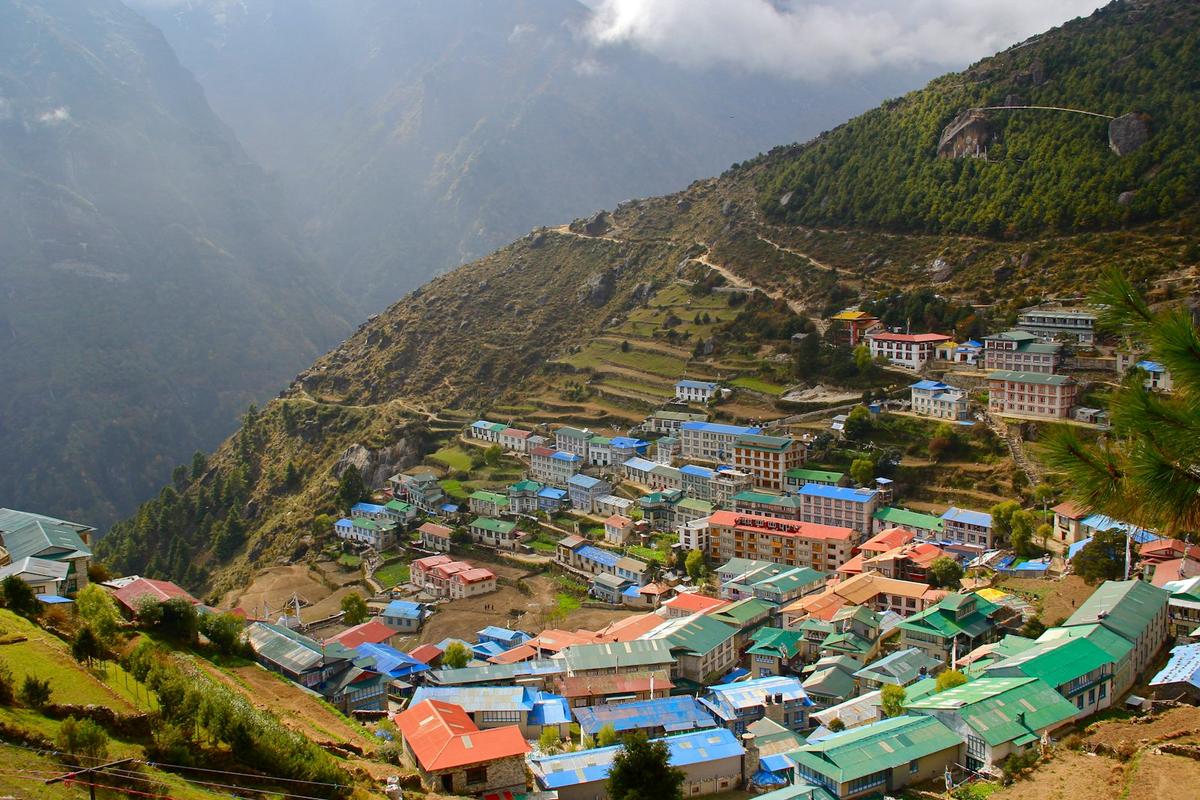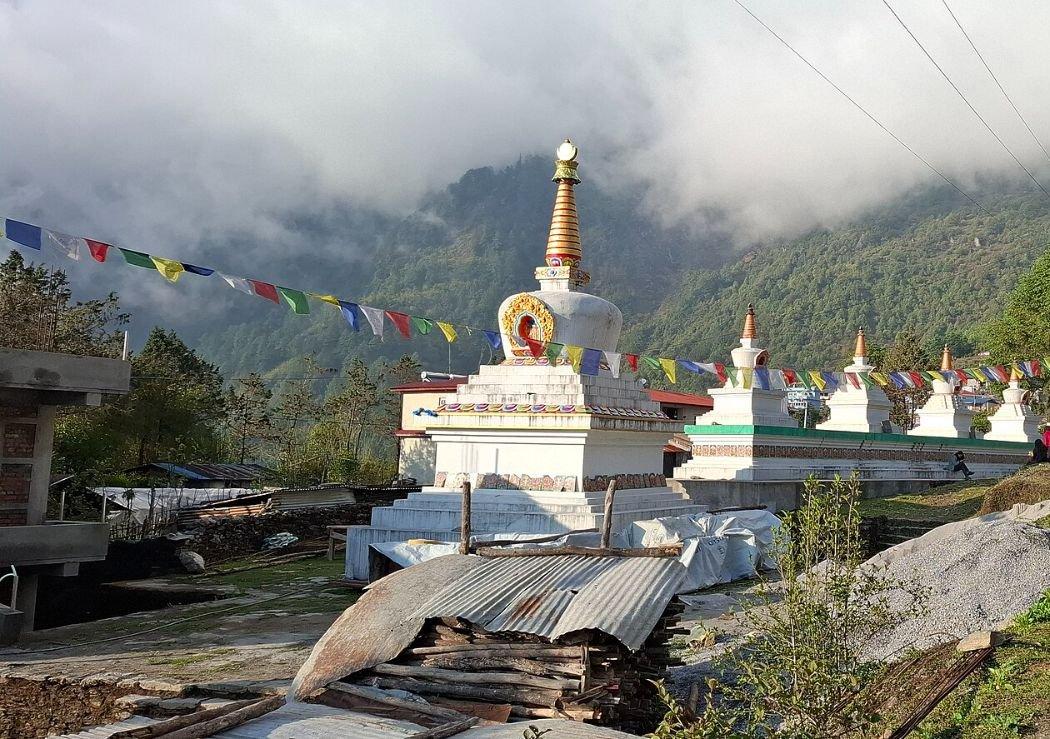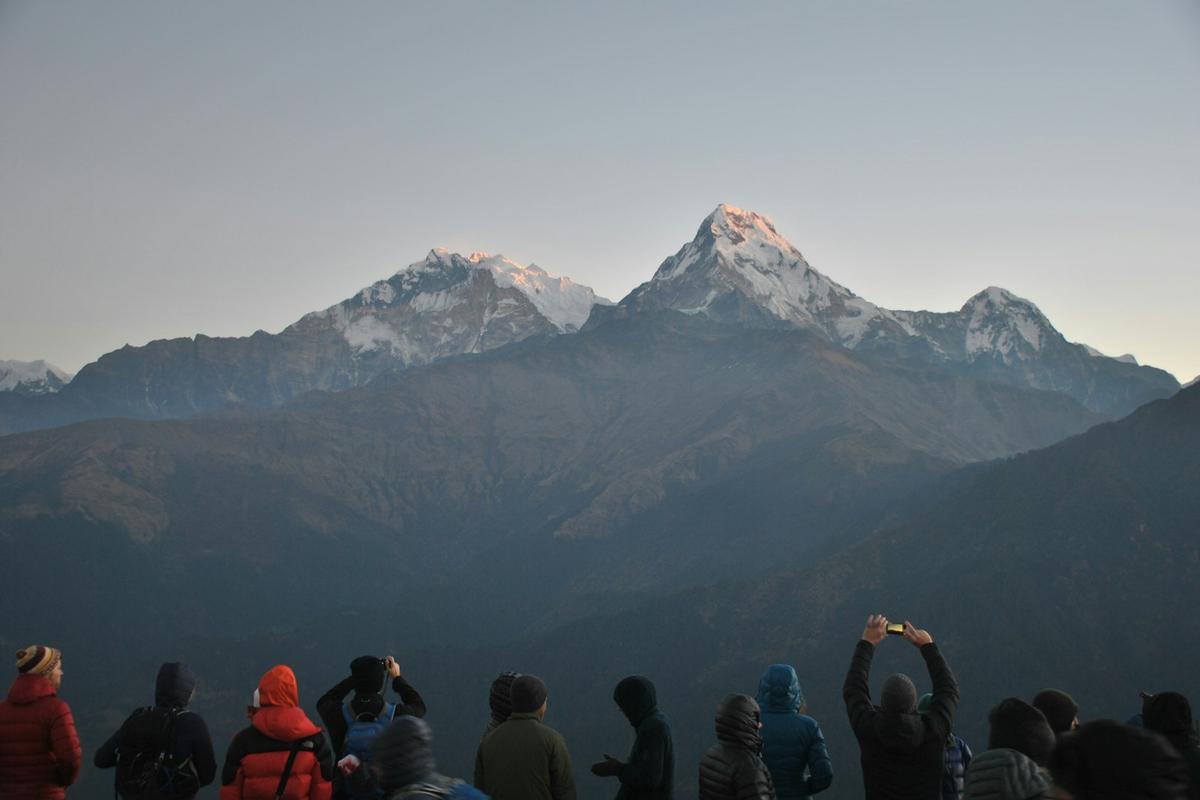
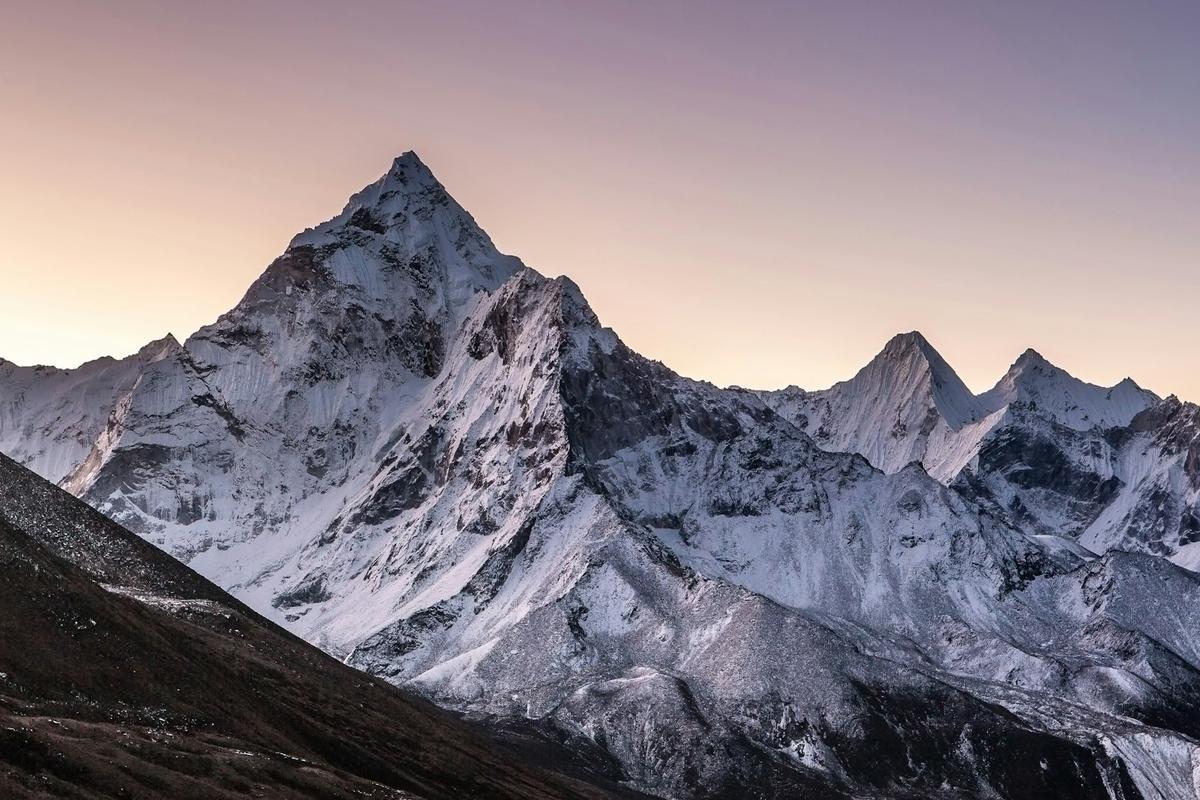
On a clear November morning in the Khumbu, frost whitens the stone walls of the lodge gardens and Ama Dablam stands sharp against a hard blue sky. The sun reaches the valley floor late and slips behind the ridges early. By late afternoon most trekkers are back round the dining-room stove, hands wrapped around a cup of tea.
Trekking in Nepal in November is one of the most reliable choices of the year: the monsoon has gone, the air is dry and the mountain views are usually at their clearest. The trade-off is short days and nights below freezing at altitude. This guide covers November only; for every route and season, see our guide to the best treks in Nepal.
Key facts
- Monsoon in 2026
- Fully withdrawn from Nepal on 14 October, 12 days later than the 2 October average (Himalayan Times and Republica, reporting DHM, checked 27 Nov 2026)
- Kathmandu in November
- Average high 23.6 °C, low 8.4 °C, 6.4 mm of rain in the month (DHM normals 1991 to 2020, via Wikipedia climate table, checked 27 Nov 2026)
- Namche Bazaar station (3,450 m)
- Average high 9.1 °C, low minus 3.8 °C in November (FAO climate data, period not stated, via Wikipedia, checked 27 Nov 2026)
- Daylight in Kathmandu
- About 11 hours 7 minutes on 1 November, about 10 hours 33 minutes on 30 November (2026 sunrise and sunset calculators, checked 27 Nov 2026)
- High passes
- Thorong La 5,416 m, Cho La 5,420 m, Larkya La 5,106 m (ACAP, Kathmandu Post and DNPWC figures, checked 27 Nov 2026)
- Lukla flights in peak months
- Most leave from Ramechhap (Manthali), not Kathmandu, and all depend on the weather (Kantipur, 4 Oct 2026, checked 27 Nov 2026)
In this guide
- Is November a good month for trekking in Nepal?
- What is the weather like on the trails in November?
- Can snow close the high passes in November?
- Nepal trekking in November: which route suits you?
- How busy are the trails, and how do Lukla flights work?
- Which festivals fall in November?
- What should you pack, and how do you stay safe at altitude?
- Plan your November trek with us
- Frequently asked questions
Is November a good month for trekking in Nepal?
Yes. November sits in the heart of the autumn season, after the monsoon and before the deep cold of winter. Rain is rare, skies are usually clear and the main teahouse routes are open. The catches are cold nights higher up, short days, busy trails early in the month and the chance of a storm on the high passes.
"The clearest skies are found after the monsoon in October and November."
Nepal Tourism Board, Climate in Nepal, ntb.gov.np
The Nepal Tourism Board (NTB) says about 80% of the country's rain falls in the June to September monsoon. In 2026 the monsoon had left Nepal by 14 October, 12 days later than the 2 October average of the Department of Hydrology and Meteorology (DHM), and it also withdrew after 2 October in every year from 2020 to 2025. So early October can still be wet, while November is reliably dry. The Lukla weather station records 102.9 mm of rain in an average October and only 6.2 mm in November.
If you feel the cold badly, read our guide to the best time to trek in Nepal, or see how things change a few weeks later in Nepal in December.
What is the weather like on the trails in November?
Dry, bright and cold at both ends of the day. Kathmandu averages a high of 23.6 °C and a low of 8.4 °C in November. Each station higher up is colder, and at Namche Bazaar the average November night falls below freezing. The high passes and Everest Base Camp are colder again.
| Station (route) | Height | Average high | Average low | November rain | Data |
|---|---|---|---|---|---|
| Kathmandu airport (start of most treks) | 1,337 m | 23.6 °C | 8.4 °C | 6.4 mm | DHM, 1991 to 2020 |
| Lumle (Pokhara side of Poon Hill and ABC) | 1,738 m | about 18 °C | about 9 °C | very little | DHM, 1991 to 2020, rounded |
| Jomsom (west side of the Annapurna Circuit) | 2,741 m | 14.8 °C | 1.5 °C | 4.6 mm | DHM, 1991 to 2020 |
| Lukla (gateway to Everest) | 2,786 m | 13.8 °C | 2.4 °C | 6.2 mm | DHM, 1991 to 2020 |
| Humde, Manang (east side of the Annapurna Circuit) | 3,401 m | 11.4 °C | minus 2.9 °C | not given | DHM, November 2024 only |
| Namche Bazaar (Everest trail) | 3,450 m | 9.1 °C | minus 3.8 °C | 11 mm | FAO, period not stated |
Manang can turn properly cold: DHM's Humde station recorded minus 8.2 °C on 24 November 2024, one cold snap in one year. Above Namche the data runs out; we found no published November averages for Lobuche or Gorak Shep, so we will not print a night temperature for Everest Base Camp. For a sense of scale, the Pyramid research station near Lobuche, at 5,035 m, averages about minus 2.5 °C across the whole year.
The days are short. In Kathmandu the sun rises at about 6:14 am and sets at about 5:22 pm on 1 November; by 30 November it is about 6:36 am and 5:09 pm (2026 times). Start walking soon after breakfast, aim to reach the lodge by mid-afternoon, and keep a warm layer, gloves and a headtorch in your daypack.
Can snow close the high passes in November?
Yes, it can. There is no fixed "first snow" date for Thorong La, Larkya La or Cho La, and heavy snow can come in late autumn in any year. One storm can close a crossing for days. Your guide, who knows the route, decides when and how to cross, based on snow and the forecast.
On 27 September 2026 heavy snow blocked the Thorong La route for more than two weeks until local people, operators and security staff cleared it. In 2025 heavy snow from the night of 27 October hit Tilicho and Thorong La, and on 4 November the Kathmandu Post reported the route fully open again. In late October 2026, ahead of Cyclone Arnab, the Department of Immigration stopped issuing trekking permits for high-risk Himalayan areas from 29 to 31 October.
What to do on a pass route in November:
- Build at least one spare day into the plan.
- Check the DHM forecast with your guide the evening before a crossing.
- Carry microspikes and gaiters if your guide suggests them.
- Know your lower option, such as Gokyo without Cho La.
Nepal trekking in November: which route suits you?
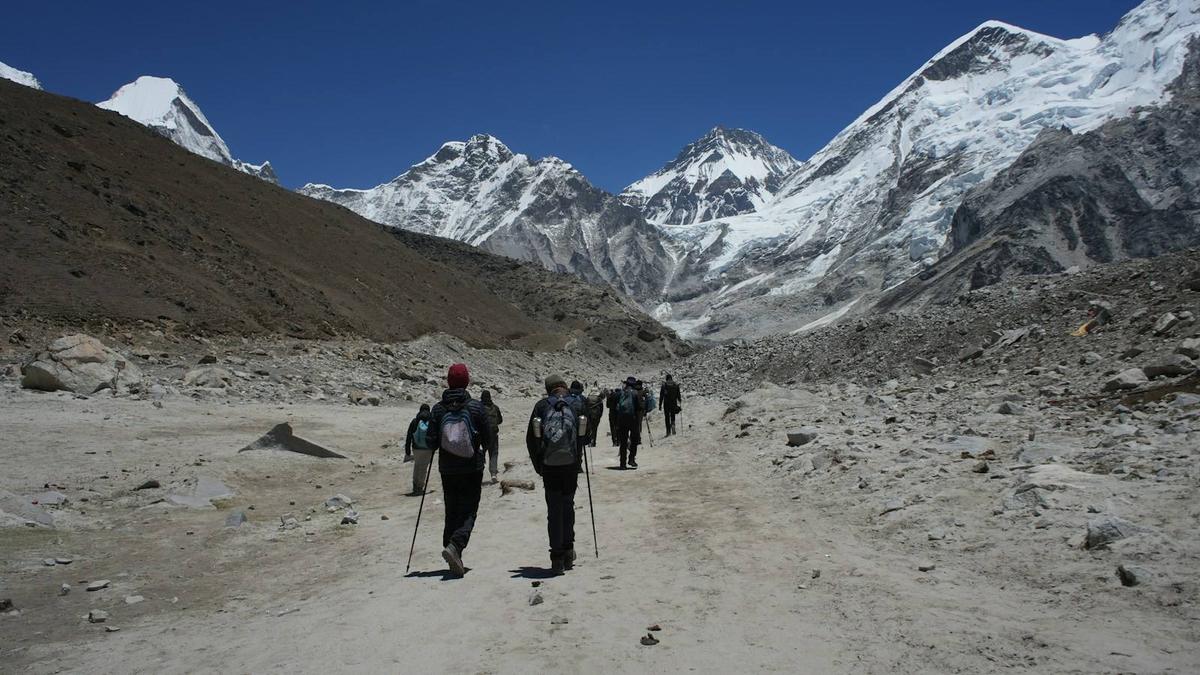
Almost every classic teahouse route works in November. Everest Base Camp, Gokyo and Annapurna Base Camp are at their most reliable. Poon Hill and Mardi Himal give big views in fewer days. The pass routes, the Three Passes, the Annapurna Circuit and Manaslu, work too if you accept the risk of a snow delay.
| Route | Highest point | Usual length | November in one line |
|---|---|---|---|
| Everest Base Camp | 5,364 m at base camp; Kala Patthar about 5,550 to 5,650 m | 11 to 14 days, Lukla to Lukla | Clear and cold; busy early in the month; flights mostly via Ramechhap |
| Gokyo Lakes | Gokyo Ri 5,357 m | about 10 days in one operator's plan | Same clear weather as Base Camp, with no pass unless you add Cho La |
| Everest Three Passes | Kongma La 5,535 m | 20 to 22 days, door to door | For fit, experienced trekkers; snow on any pass can force a change |
| Annapurna Base Camp | 4,130 m | about 7 to 12 days from Pokhara | Reliable views; snow above Machhapuchhre Base Camp after storms |
| Ghorepani Poon Hill | 3,210 m | two or three days from Pokhara | Short and lower; cold, clear sunrise mornings |
| Mardi Himal | Base Camp about 4,500 m; High Camp about 3,550 to 3,600 m | four to six days | Short ridge trek; frosty nights at High Camp |
| Annapurna Circuit | Thorong La 5,416 m | about 7 to 10 days on foot; up to about 18 with less driving | Busiest weeks of the pass season; cross early in the day |
| Manaslu Circuit | Larkya La 5,106 m (5,160 m also published) | 12 days on our trip; a loop of about 177 km | Restricted area; check current road access to the trailhead |
| Kathmandu Valley rim hikes | Below the snow line | a day | Mild days and clear mountain views for a short stay |
Everest region
Everest Base Camp sits at 5,364 m, and Kala Patthar, the sunrise viewpoint above it, is about 5,550 to 5,650 m depending on the source. Our classic trek is 12 days from Kathmandu to Kathmandu. The Three Passes route adds Kongma La (5,535 m), Cho La (5,420 m) and Renjo La (about 5,360 m, though some operators give up to about 5,440 m), so it is the route most exposed to a storm. We arrange the Sagarmatha National Park permit and the Khumbu Pasang Lhamu Rural Municipality entry permit.
Annapurna region
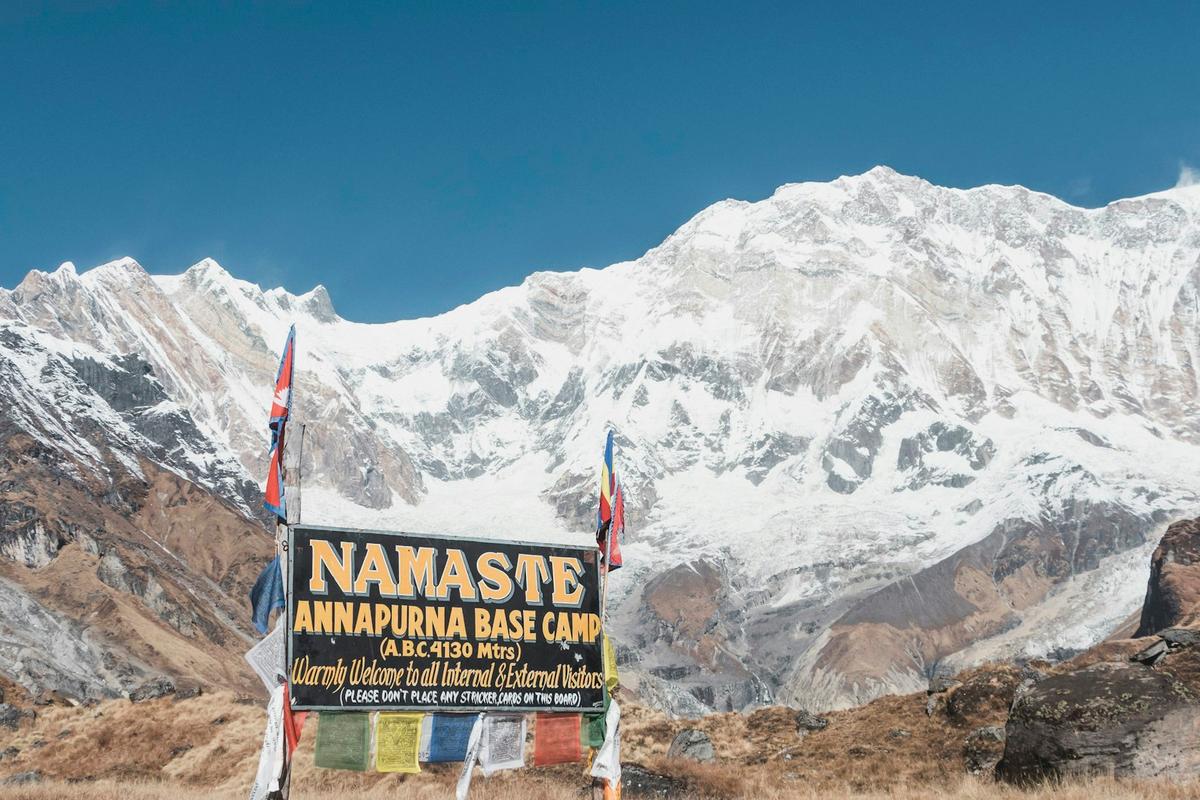
Annapurna Base Camp is 4,130 m, the height on the ACAP sign. In the late-October storm of 2025 officials closed the trail, with snow from Machhapuchhre Base Camp (3,700 m) upwards. The Annapurna Circuit crosses Thorong La at 5,416 m, the ACAP figure (NTB's Muktinath page gives 5,380 m). Mid-October to mid-November 2026 was the pass's busiest month, with 6,164 people crossing into Mustang. We arrange your Annapurna Conservation Area (ACAP) permit.
Manaslu region
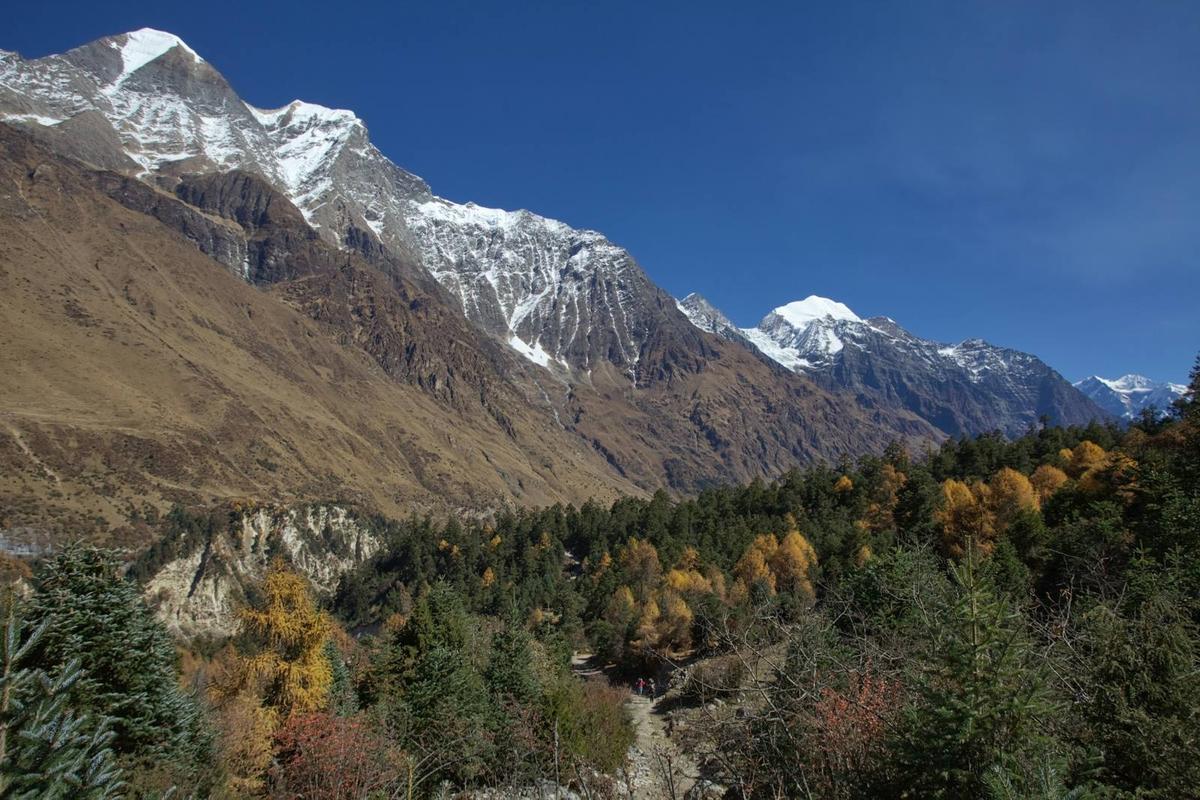
A flash flood on the Budhi Gandaki on 11 October 2026 damaged Manaslu's trails, bridges and access road; the Trekking Agencies' Association of Nepal (TAAN) reported the route open again after partial repairs in late October. Before you book, check current road access to the Manaslu trailhead with us. Manaslu is a restricted area. Since 22 March 2026 a single traveller can get the permit, a licensed trekking guide is mandatory, and the permit goes through a registered agency, which we handle for you.
Shorter and lower treks
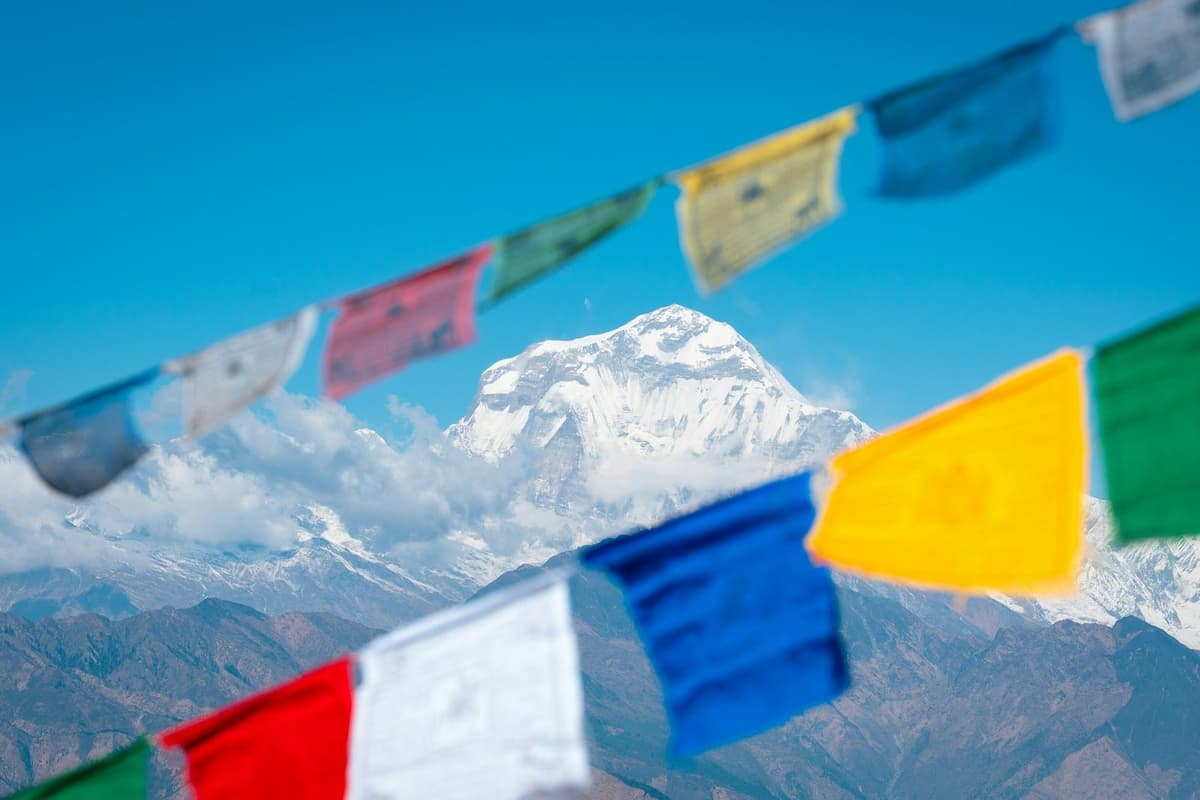
With a week or less, Poon Hill (3,210 m) takes two or three days from Pokhara. Mardi Himal takes four to six days, with High Camp at about 3,550 to 3,600 m. Both stay below the big passes. Our guide to short treks in Nepal compares them.
How busy are the trails, and how do Lukla flights work?
Busy, especially early in the month. The Sagarmatha National Park office counts Asoj, Kartik and Mangsir, roughly mid-September to mid-December in the Nepali calendar, as the Everest region's peak months. In 2026 the Annapurna Conservation Area counted 46,247 foreign visitors in Kartik (mid-October to mid-November), up from 32,936 in Asoj.
We found no sourced figure for how much quieter late November is, so we will not promise empty trails. Start early, and step to the hill side, never the drop side, when yaks pass.
In the busiest months most Lukla flights leave from Ramechhap (Manthali airport), not Kathmandu, and every flight depends on the weather. In autumn 2026 the switch began in late September. The drive to Manthali usually takes about 4 to 5 hours with a pre-dawn start, then about 20 minutes in the air to Lukla's 2,846 m airstrip. One operator says a weather closure can leave a backlog of two or three days.
Which festivals fall in November?
Tihar, the five-day festival of lights, follows the lunar calendar, so its dates move each year. In 2026 the five days ran from 7 to 11 November, with Laxmi Puja, the night of worship for the goddess of wealth, on 8 November and Bhai Tika, when sisters bless their brothers, on 11 November.
The Tihar public holidays ran from 8 to 12 November 2026, and Chhath was a public holiday on 15 November. Government offices close on the holidays, and we plan permit paperwork around them. Mani Rimdu, the masked dance festival at Tengboche Monastery, is usually in October or November (2026: 26 to 28 October, according to one trekking agency). If it matters to you, ask us to check the dates for your year.
What should you pack, and how do you stay safe at altitude?
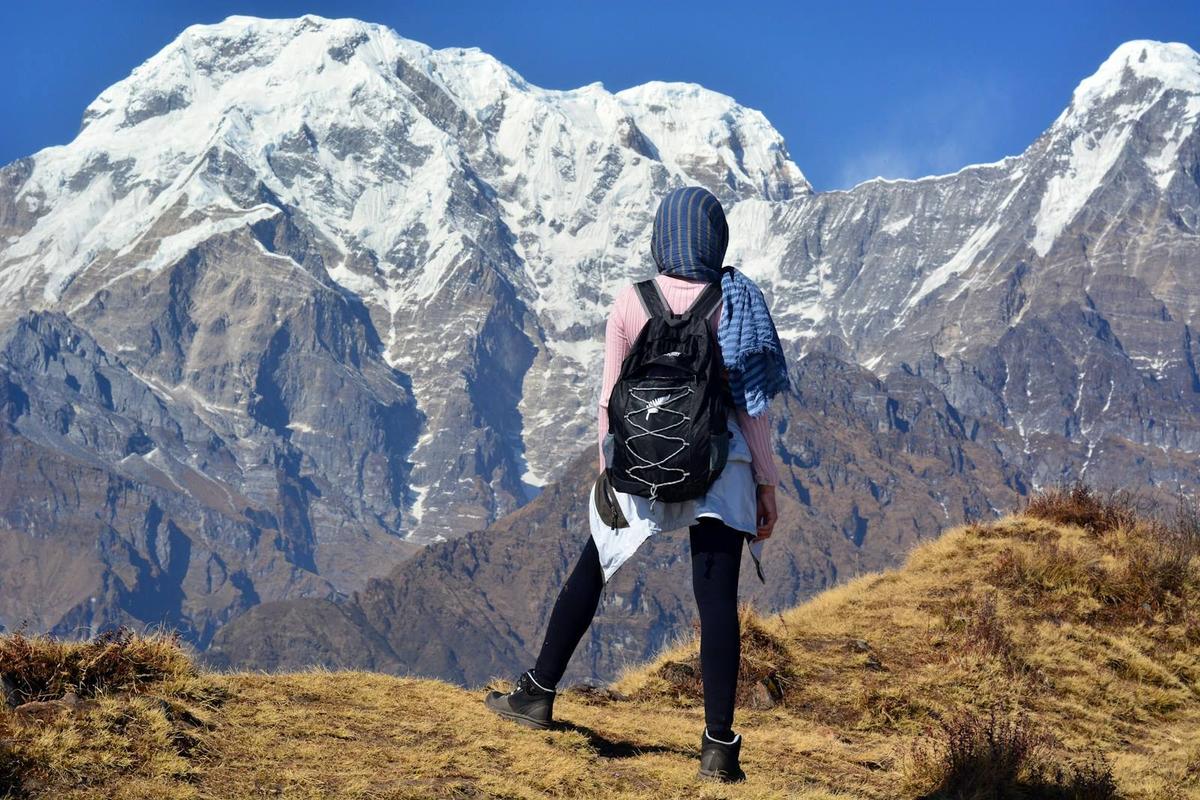
Pack for frosty mornings, warm middays and freezing nights: a down jacket, a sleeping bag for below-freezing nights (teahouse bedrooms are not heated), thermal layers, a warm hat, gloves, sunglasses, sunscreen and lip balm. Altitude illness can start from a sleeping height of about 2,450 m, and cold, dry air makes it easy to drink too little.
- Thin and thick gloves. Thin for cold morning walking, thick for viewpoints and passes.
- A power bank kept warm. Cold drains batteries, so sleep with it in your bag.
- Water treatment and an insulated bottle. Dry air means you lose water without noticing.
Our Nepal trekking packing list covers the rest. On the trail:
- Above 3,000 m, do not raise your sleeping height by more than about 500 m a night, and take a rest day every 3 to 4 days.
- Walk slowly. Guides say "bistarai, bistarai", Nepali for "slowly, slowly".
- Drink enough water, and no alcohol in the first days up high.
- Know the symptoms: headache, nausea, tiredness and poor sleep. Never go higher with symptoms, and go down if they get worse.
- Ask your doctor before the trip about preventive medicine such as acetazolamide.
- Garlic soup and other hot soups are a comforting local tradition that helps you drink more. They are not a proven cure.
Plan your November trek with us
A licensed trekking guide walks with you on every trek we run. For this November or next, tell us your dates and fitness and we will suggest a route. The Everest Base Camp trek and the Annapurna Base Camp trek are the most reliable November choices, and the Manaslu Circuit trek suits experienced trekkers once you have checked road access with us.
We arrange the in-country permits; your Nepal visa and international flights are your own arrangement. For other seasons and routes, go back to our best treks in Nepal guide. Message us on WhatsApp or send an enquiry from any trip page and our Kathmandu team will reply.
Frequently asked questions
Is November a good month to trek in Nepal?
Yes. November comes after the monsoon, and the Nepal Tourism Board names October and November as the months with the clearest skies. In 2026 the monsoon had left Nepal by 14 October. Expect dry trails, sharp mountain views, short days and nights below freezing at altitude.
How cold does it get on the way to Everest Base Camp in November?
It gets colder the higher you go. The Lukla weather station averages 13.8 °C by day and 2.4 °C at night in November, and Namche Bazaar 9.1 °C and minus 3.8 °C. No reliable November averages are published for Lobuche or Gorak Shep, but nights there are much colder than Namche. Bring a down jacket and a warm sleeping bag.
Is November too crowded for trekking in Nepal?
November is peak season, so the main routes are busy, especially early in the month. The Annapurna Conservation Area counted 46,247 foreign visitors from mid-October to mid-November 2026. Crowds matter most at viewpoints and popular villages, and an early start helps.
Will the high passes have snow in November?
They can. There is no fixed first-snow date, and heavy snow can come in late autumn in any year; in 2025 a late-October storm closed Thorong La until early November. Many November days are clear, but one storm can shut a pass for days. Your guide, who knows the route, decides when and how to cross, based on snow and the forecast.
Do Lukla flights leave from Kathmandu in November?
In the busiest months most Lukla flights leave from Ramechhap (Manthali airport), about 4 to 5 hours' drive from Kathmandu with a pre-dawn start, then about 20 minutes in the air. Every flight depends on the weather and delays happen, so leave at least one spare day before your flight home.
Which lower route suits a November week in Nepal?
Ghorepani Poon Hill is a good first choice: it reaches 3,210 m and takes two or three days from Pokhara, with clear sunrise views in November. Mardi Himal gives a little more height in four to six days, with High Camp at about 3,550 to 3,600 m.
Last checked 27 Nov 2026 by our Kathmandu travel team.